


Country
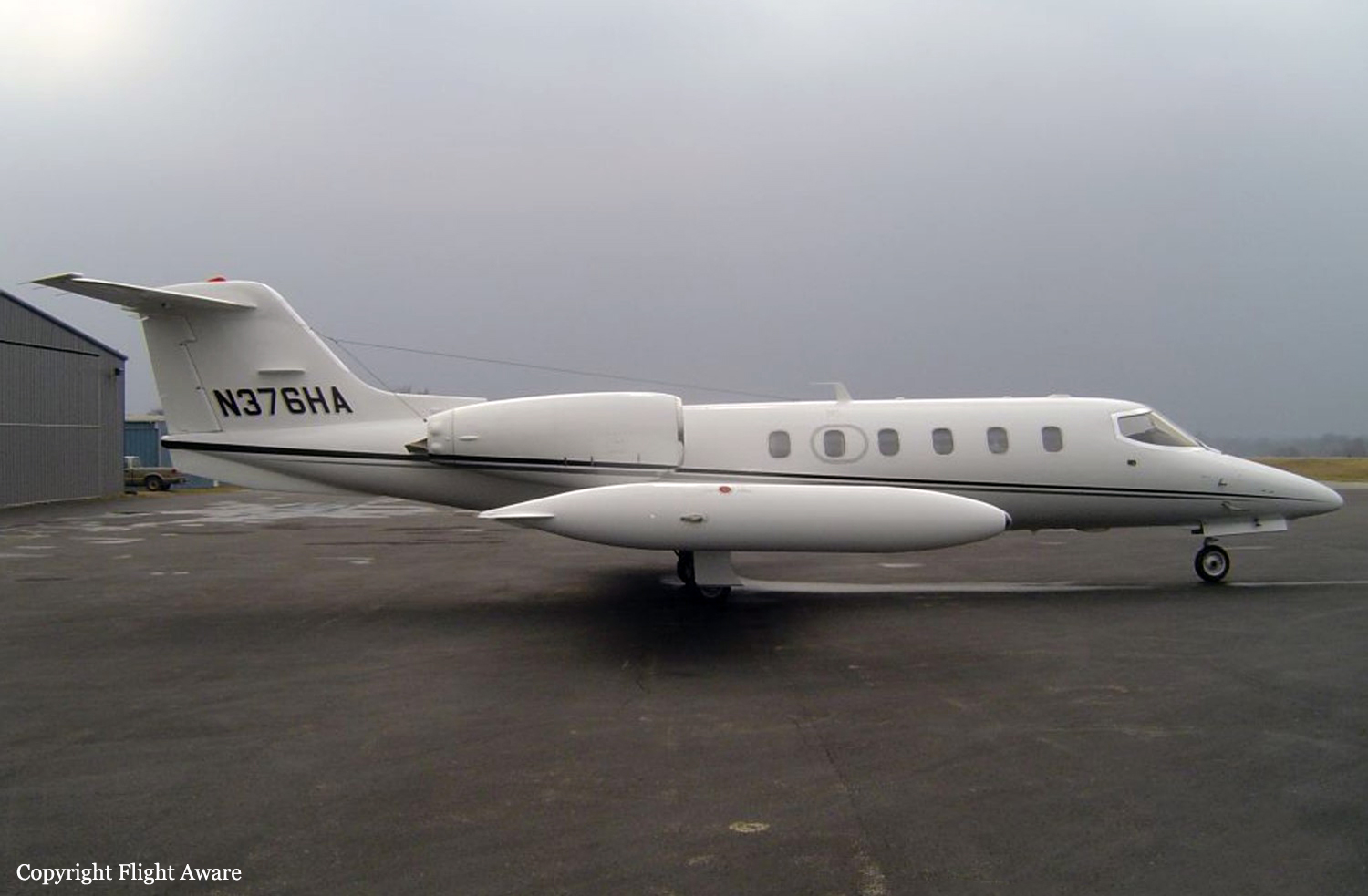
Crash of a Learjet 35A in Jeffersonville
Date & Time:
Mar 21, 2010
Registration:
N376HA
Survivors:
Yes
Schedule:
Lexington – Jeffersonville
MSN:
35-477
YOM:
1982
Crew on board:
0
Crew fatalities:
Pax on board:
0
Pax fatalities:
Other fatalities:
Total fatalities:
0
Circumstances:
For unknown reasons, the aircraft landed hard at Jeffersonville-Clark County Airport. There were no injuries among the people on board and the aircraft was damaged beyond repair due to severe damages to the left wing and the tail section.
Probable cause:
No investigation conducted by the NTSB.
Crash of a Learjet 35A in Manaus
Date & Time:
Mar 7, 2010 at 1535 LT
Operator:

Registration:
PT-LJK
Survivors:
Yes
Schedule:
Palm Beach – Aguadilla – Manaus – Rio de Janeiro
MSN:
35-372
YOM:
1981
Crew on board:
2
Crew fatalities:
Pax on board:
4
Pax fatalities:
Other fatalities:
Total fatalities:
0
Captain / Total hours on type:
754.00
Copilot / Total hours on type:
410
Circumstances:
The aircraft was completing an ambulance flight from Palm Beach to Rio de Janeiro with intermediate stops in Aguadilla and Manaus, carrying one patient, a medical team and two pilots. During the takeoff roll from 10 at Manaus-Eduardo Gomes Airport, just before V1 speed, the crew heard a loud noise coming from the right side of the airplane. In the mean time, the aircraft started to deviate to the right. The captain decided to abandon the takeoff procedure and initiated a braking maneuver. Unable to stop within the remaining distance, the aircraft overran and came to rest 400 metres past the runway end. All six occupants escaped uninjured while the aircraft was damage beyond repair.
Probable cause:
The following findings were identified:
- The external tyre on the right main gear deflated during the takeoff roll,
- The crew retarded the power levers and deployed the spoilers,
- The crew did not use the parachute, judging the relative low speed and thinking this was an optional equipment,
- Technical analysis on the right main gear revealed that the six bolts on the external wheel torque were approximately 90% lower than foreseen, which may contributed to the tyre deflection.
- The external tyre on the right main gear deflated during the takeoff roll,
- The crew retarded the power levers and deployed the spoilers,
- The crew did not use the parachute, judging the relative low speed and thinking this was an optional equipment,
- Technical analysis on the right main gear revealed that the six bolts on the external wheel torque were approximately 90% lower than foreseen, which may contributed to the tyre deflection.
Final Report:
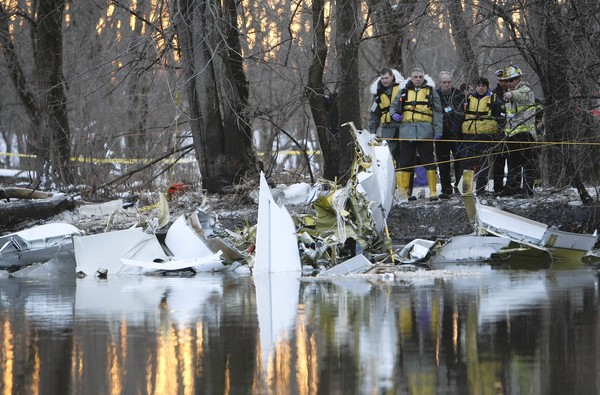
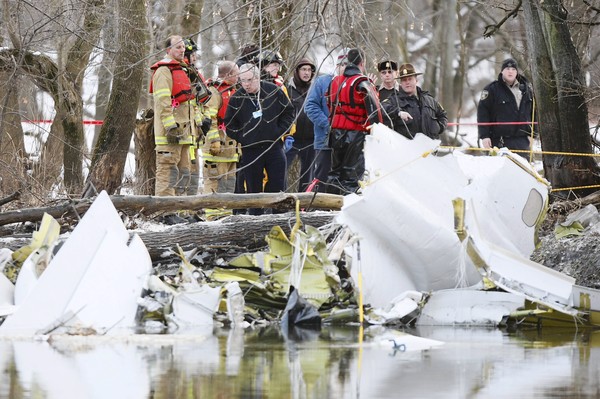
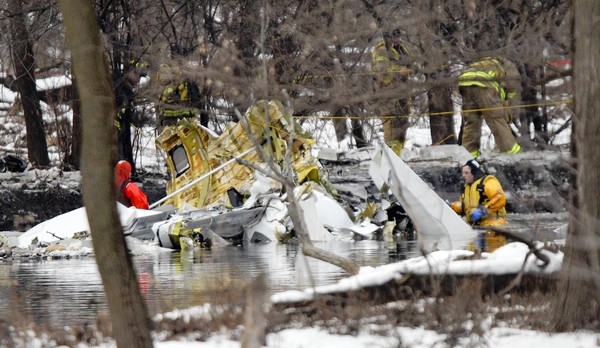
Crash of a Learjet 35A in Chicago: 2 killed
Date & Time:
Jan 5, 2010 at 1327 LT
Operator:

Registration:
N720RA
Survivors:
No
Schedule:
Pontiac - Chicago
MSN:
156
YOM:
1977
Flight number:
RAX988
Crew on board:
2
Crew fatalities:
Pax on board:
0
Pax fatalities:
Other fatalities:
Total fatalities:
2
Captain / Total hours on type:
3500.00
Copilot / Total hours on type:
2400
Aircraft flight hours:
15734
Circumstances:
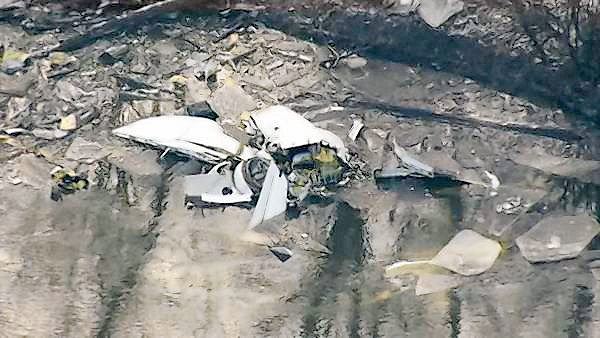
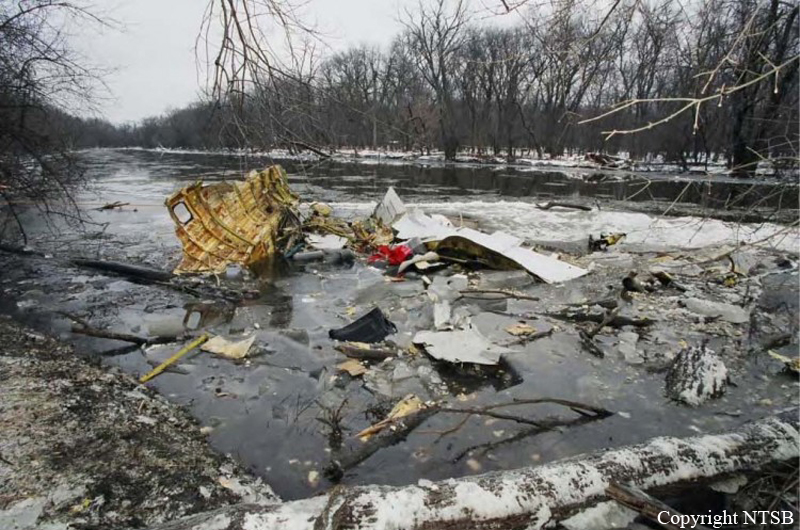
The flight was scheduled to pick up cargo at the destination airport and then deliver it to another location. During the descent and 14 minutes before the accident, the airplane encountered a layer of moderate rime ice. The captain, who was the pilot flying, and the first officer, who was the monitoring pilot, made multiple statements which were consistent with their awareness and presence of airframe icing. After obtaining visual flight rules conditions, the flight crew canceled the instrument flight rules clearance and continued with a right, circling approach to the runway. While turning into the base leg of the traffic pattern, and 45 seconds prior to the accident, the captain called for full flaps and the engine power levers were adjusted several times between 50 and 95 percent. In addition, the captain inquired about the autopilot and fuel balance. In response, the first officer stated that he did not think that the spoilerons were working. Shortly thereafter, the first officer gave the command to add full engine power and the airplane impacted terrain. There was no evidence of flight crew impairment or fatigue in the final 30 minutes of the flight. The cockpit voice recorder showed multiple instances during the flight in which the airplane was below 10,000 feet mean sea level that the crew was engaged in discussions that were not consistent with a sterile cockpit environment, for example a lengthy discussion about Class B airspeeds, which may have led to a relaxed and casual cockpit atmosphere. In addition, the flight crew appears to have conducted checklists in a generally informal manner. As the flight was conducted by a Part 135 operator, it would be expected that both pilots were versed with the importance of sterile cockpit rules and the importance of adhering to procedures, including demonstrating checklist discipline. For approximately the last 24 seconds of flight, both pilots were likely focusing their attention on activities to identify and understand the reason for the airplane's roll handling difficulties, as noted by the captain's comment related to the fuel balance. These events, culminating in the first officer's urgent command to add full power, suggested that neither pilot detected the airplane's decaying energy state before it reached a critical level for the conditions it encountered. Light bulb filament examination revealed that aileron augmentation system and stall warning lights illuminated in the cockpit. No mechanical anomalies were found to substantiate a failure in the aileron augmentation system. No additional mechanical or system anomalies were noted with the airplane. A performance study, limited by available data, could not confirm the airplane's movements relative to an aileron augmentation system or spoileron problem. The level of airframe icing and its possible effect on the airplane at the time of the accident could not be determined.
Probable cause:
A loss of control for undetermined reasons.
Final Report:
Crash of a Learjet 35A in Guadalajara
Date & Time:
Aug 2, 2008
Registration:
XB-KPB
Survivors:
Yes
MSN:
35-379
YOM:
1981
Crew on board:
2
Crew fatalities:
Pax on board:
4
Pax fatalities:
Other fatalities:
Total fatalities:
0
Circumstances:
Shortly after takeoff from Guadalajara-Miguel Hidalgo y Costilla Airport, the crew encountered high voltage problems. While trying to resolve the issue, the electrical system failed. The crew informed ATC and was cleared to return for an emergency landing. Upon touchdown, the landing gear collapsed. The aircraft slid on its belly and came to rest, bursting into flames. All six occupants escaped uninjured while the aircraft was destroyed.

