Crash of a Douglas DC-3 in Taipei: 2 killed

Date & Time: Dec 12, 1948
Type of aircraft:
Operator:
Survivors:
Yes
Schedule:
Shanghai – Taipei
Country:
Region:
Crew on board:
2
Crew fatalities:
Pax on board:
8
Pax fatalities:
Other fatalities:
Total fatalities:
2
Circumstances:
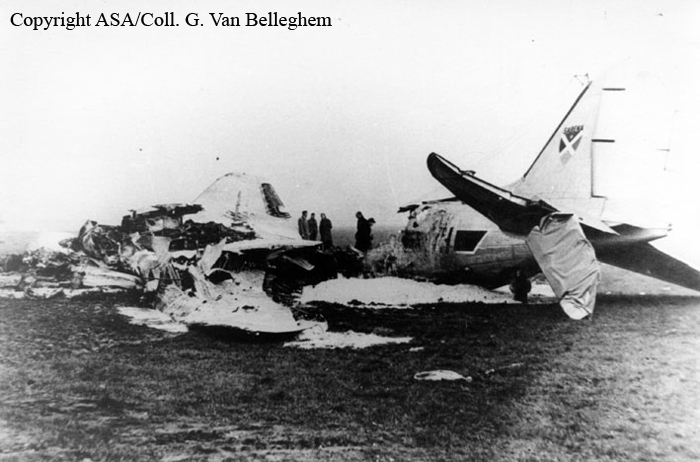
Crashed on landing at Taipei-Songshan Airport. Both pilots were killed and all eight passengers were injured.

Crash of a Douglas DC-3-178 in Burlington

Date & Time: Sep 20, 1948 at 1141 LT
Type of aircraft:
Operator:
Registration:
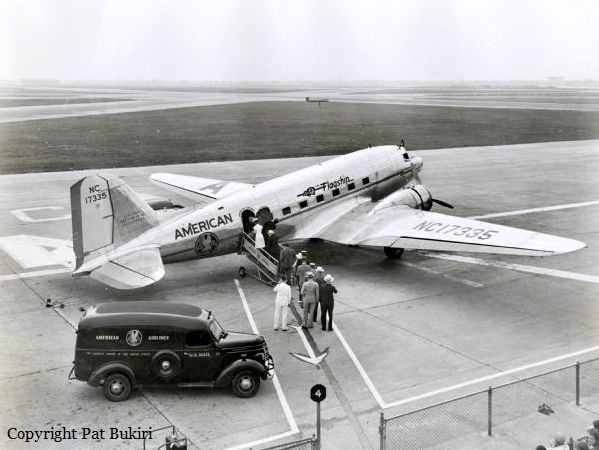
NC17335
Survivors:
Yes
Schedule:
Montreal – Burlington – New York
MSN:
1921
YOM:
1937
Flight number:
COL003
Crew on board:
3
Crew fatalities:
Pax on board:
14
Pax fatalities:
Other fatalities:
Total fatalities:
0
Captain / Total flying hours:
3727
Captain / Total hours on type:
2537.00
Copilot / Total flying hours:
5417
Copilot / Total hours on type:
1517
Aircraft flight hours:
34238
Circumstances:
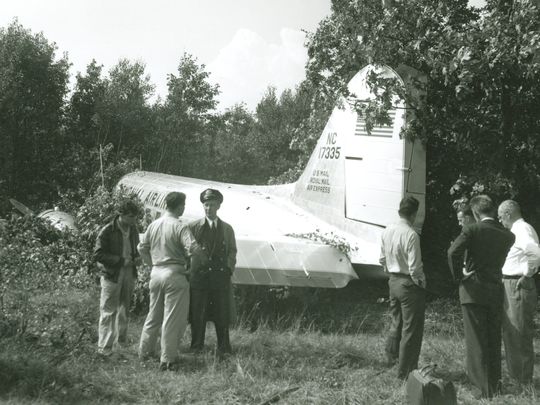
The flight departed Montreal at 1112LT and was cleared to Burlington by the Civil Aeronautics Air Route Traffic Control to proceed In accordance with visual flight rules. A message was received from the aircraft, by the Colonial radio at Burlington, indicating that it was over the Grand Isle Fan Marker, approximately 25 miles northwest of Burlington at 1135. Colonial radio acknowledged the report and transmitted the latest local weather ceiling 800 feet, visibility 1 mile in heavy rain. This report was acknowledged. Nearing the airport, light rain was encountered. The flight asked Burlington Tower for its existing traffic, and being in the approach control area, farther asked permission to make an approach from its present position. After checking with Boston Air Route Traffic Control establishing that no traffic was in the area, the aircraft was cleared to approach VFR. The windshield wipers were turned on and simultaneously wit passing over the range station at an altitude of approximately 700 feet and sighting the airport, the tower called and stated that it had the ship in sight and that the flight was cleared to land. Flight 3 previously had been informed that the surface wind was west, variable to northwest, 5 mph, and due to a heavy rain occurring east of the airport the pilot elected to use Runway 1. The aircraft headed southwest in order to widen the pattern and establish a downwind leg at a suitable distance from the runway. During the turn to final approach the flaps and landing gear were extended, and descent was made toward the airport aligned with Runway 01. The aircraft landed long and was unable to stop within the remaining runway, overran and came to rest in trees. All 17 occupants escaped slightly injured while the aircraft was damaged beyond repair.
Probable cause:
The Board determines that the probable cause of this accident was the pilot's action in landing too fast and too far down the wet runway following a high approach.
The following factors were considered as contributory:
- The captain elected to land on Runway 1, approximately 3,600 feet in length, the surface wind being west variable, northwest 5 mph,
- Touchdown was at a distance of 1,875 feet from the approach end of the runway, followed by no perceptible deceleration of the aircraft,
- The aircraft again became airborne only 175 feet from the end of the runway, and as a result struck trees adjacent to the airport.
Final Report:

Crash of a Douglas R4D-6 near Miami: 10 killed

Date & Time: Aug 5, 1948
Type of aircraft:
Operator:
Registration:
17285
Flight Type:
Survivors:
No
Schedule:
Norfolk – Opa Locka
MSN:
14505/25950
YOM:
1944
Location:
Crew on board:
10
Crew fatalities:
Pax on board:
0
Pax fatalities:
Other fatalities:
Total fatalities:
10
Circumstances:
The crew was descending to Opa Locka Airport when the aircraft collided with a Stearman while 11 miles north of Miami. Both aircraft dove into the ground and crashed. While both occupants of the Stearman were able to bail out and were found alive, all 10 crew members of the R4D-6 inbound from Norfolk NAS were killed. The exact circumstances and causes of the in flight collision remains unknown.

Crash of a Douglas DC-3 in the Orizaba Peak: 14 killed

Date & Time: Jul 1, 1948 at 1500 LT
Type of aircraft:
Operator:
Flight Phase:
Survivors:
No
Site:
Schedule:
Minatitlán – Mexico City
Country:
Crew on board:
2
Crew fatalities:
Pax on board:
12
Pax fatalities:
Other fatalities:
Total fatalities:
14
Circumstances:
En route, the crew encountered poor weather conditions with heavy rain falls and thunderstorm activity. The airplane hit the slope of Orizaba Peak located northeast of Ciudad Serdán. The wreckage was found three days later and all 14 occupants were killed. The aircraft was performing a special flight for the US-Mexico Foot and Mouth Disease Commission.

Crash of a Douglas DC-3 in Cebu City

Date & Time: May 17, 1948
Type of aircraft:
Operator:
Registration:
PI-C143
Flight Phase:
Survivors:
Yes
Schedule:
Cebu City – Manila
MSN:
13780
YOM:
1944
Location:
Country:
Region:
Crew on board:
3
Crew fatalities:
Pax on board:
14
Pax fatalities:
Other fatalities:
Total fatalities:
0
Circumstances:
Shortly after takeoff, while in initial climb, the aircraft stalled and crashed in a field. All 17 occupants were injured and the aircraft was destroyed.

Crash of a Douglas C-47A-50-DL on the Mt Hamilton: 2 killed

Date & Time: Mar 8, 1948 at 1800 LT
Type of aircraft:
Registration:
NC64722
Flight Type:
Survivors:
No
Site:
Schedule:
Seattle – San Francisco
MSN:
10052
YOM:
1943
Crew on board:
2
Crew fatalities:
Pax on board:
0
Pax fatalities:
Other fatalities:
Total fatalities:
2
Captain / Total flying hours:
5552
Captain / Total hours on type:
3926.00
Copilot / Total flying hours:
3542
Copilot / Total hours on type:
1630
Aircraft flight hours:
3534
Circumstances:
The flight departed from Seattle, Washington, at approximately 1300, March 8, 1948, with a crew consisting of George S. Griebel, pilot, and William F. Grund, co-pilot. It carried 800 gallons of fuel, but no passengers or cargo, weighing at the time of take-off 21.963 pounds. At 1615, the flight reported over Red Bluff, California, at 12.000 feet, and requested clearance to descend to and cruise at 10.000 feet. Oakland Airway Traffic Control granted the request, and also cleared the flight to the Moffett radio range station. 25 miles southeast of San Francisco Municipal Airport, San Francisco, California. At 1715, the flight advised San Francisco Approach Control that it as holding northwest of the Moffett radio range station at 10,000 feet. In reply, San Francisco Approach Control directed the flight to hold between the Moffett radio range station and a point 2 minutes northwest of it. At the same time the flight was advised to expect clearance to the San Francisco Municipal Airport at 1745. Between 1717 and 1734 the flight, while flying its holding pattern, received clearance and descended from 10,000 to 6,000 feet. At 1741, it was cleared to make a “straight in” approach to the San Francisco Airport. It was directed to report when it crossed the Moffett radio range station and 4,000 feet, and to report again when it had descended below the overcast, A minute later, at 1742, the flight reported leaving the Moffett radio range station and 4,000 feet. Though the San Francisco Tower called repeatedly, this was the last communication received from the flight.
Between 1755 and 1805 a rancher in the vicinity of Mt. Hamilton heard a noise he thought to be either thunder or blasting. About 1945, after driving to another part of his ranch, he observed fire in the hills and realized then that the noise he had thought to be thunder was that of an aircraft crashing. It was midnight before a searching party reached the wreckage, which was approximately 20 miles east-southeast (on a bearing of 110 degrees) from the Moffett radio range station, and at an elevation of 1,800 feet.
Probable cause:
The Board determines that the probable cause of this accident was the flight’s deviation from its clearance and from approved instrument procedure.
Final Report:

Crash of a Douglas DC-3D in London-Heathrow: 20 killed

Date & Time: Mar 2, 1948 at 2114 LT
Type of aircraft:
Operator:
Registration:
OO-AWH
Survivors:
Yes
Schedule:
Brussels – London
MSN:
43154
YOM:
1947
Region:
Crew on board:
3
Crew fatalities:
Pax on board:
19
Pax fatalities:
Other fatalities:
Total fatalities:
20
Circumstances:
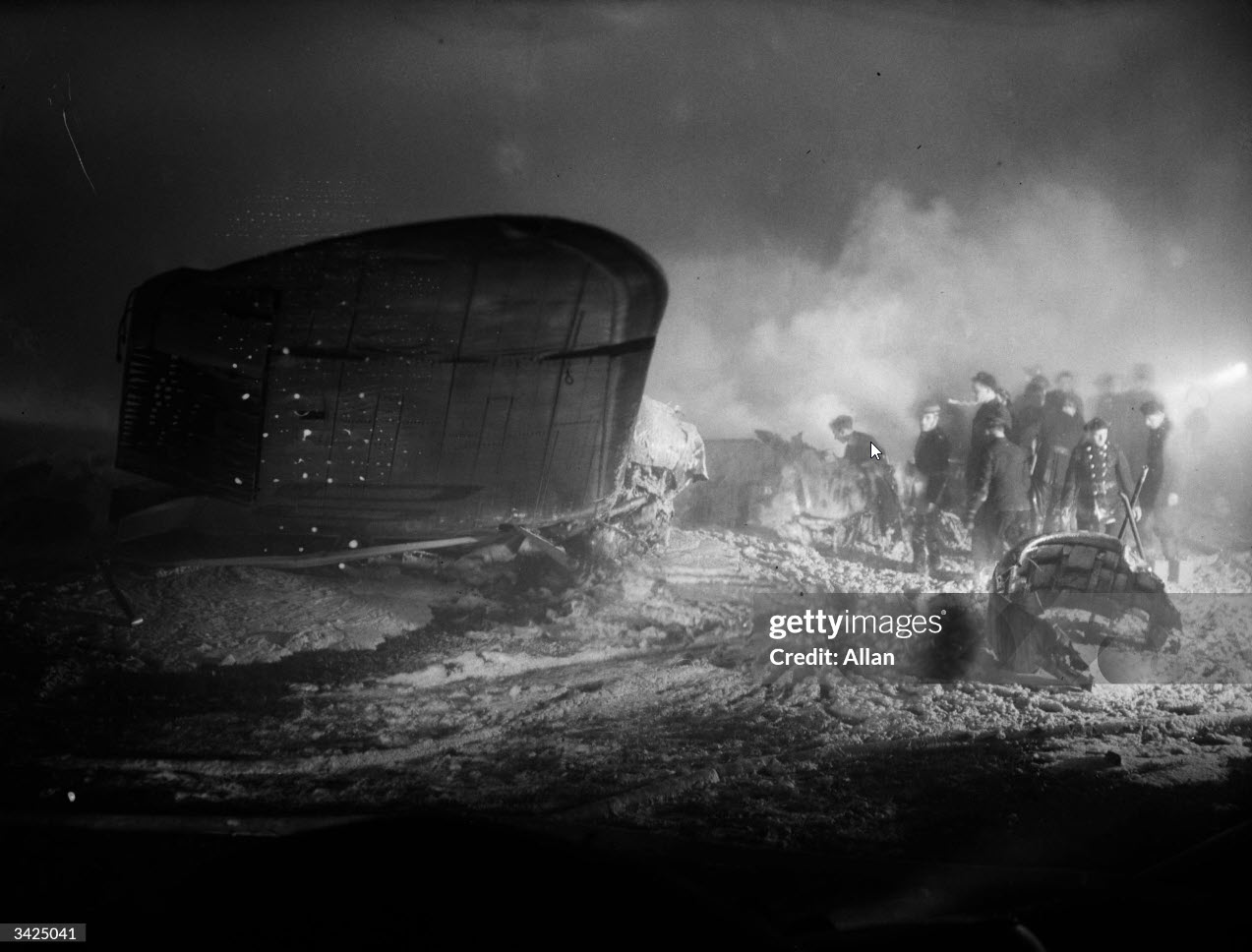
The approach to London-Heathrow Airport was completed in reduced visibility due to the night and foggy conditions. On final, the airplane impacted the ground, exploded and came to rest short of the runway threshold, bursting into flames. Two passengers survived the crash and were seriously injured while 20 other occupants were killed.
Crew:
Henri Goblet, pilot,
Jean Lomba, radio operator,
Louis De Geyndt, steward.
Probable cause:
The pilot continued the approach below the minimum safe altitude and was unable to distinguish the ground due to the low visibility caused by night and fog. At the time of the accident, the visibility was 200 yards.

Crash of a Douglas DC-3 in Mati: 12 killed

Date & Time: Feb 23, 1948
Type of aircraft:
Registration:
PI-C262
Flight Phase:
Survivors:
No
Country:
Region:
Crew on board:
3
Crew fatalities:
Pax on board:
9
Pax fatalities:
Other fatalities:
Total fatalities:
12
Circumstances:
Crashed shortly after takeoff from Mati, killing all 12 occupants.

Crash of a Douglas DC-3 off Ciudad del Carmen: 1 killed

Date & Time: Feb 10, 1948
Type of aircraft:
Flight Phase:
Flight Type:
Survivors:
Yes
Schedule:
Brownsville – Ciudad del Carmen
Country:
Crew on board:
2
Crew fatalities:
Pax on board:
0
Pax fatalities:
Other fatalities:
Total fatalities:
1
Circumstances:
The crew was on his way from Brownsville to Ciudad del Carmen to pick up a load of seafood for the US market. While cruising vertical to the Gulf of Mexico, the right engine failed, forcing the crew to ditch the aircraft 24 km off Ciudad del Carmen. While preparing a life raft, the American pilot Neil Womack fell into the water and was drowned. The Mexican copilot Esteban de León was rescued by the crew of a ship christened 'Roatán' nine days later.
Probable cause:
Failure of the right engine.