


Date & Time:
Mar 2, 1948 at 2115 LT
Type of aircraft:
Douglas DC-3
Operator:

Registration:
OO-AWH
Flight Phase:
Landing (descent or approach)
Flight Type:
Scheduled Revenue Flight
Survivors:
Yes
Schedule:
Brussels – London
MSN:
43154
YOM:
1947
Country:
United Kingdom
Region:
Europe
Crew on board:
3
Crew fatalities:
3
Pax on board:
19
Pax fatalities:
17
Other fatalities:
0
Total fatalities:
20
Aircraft flight hours:
1648
Circumstances:
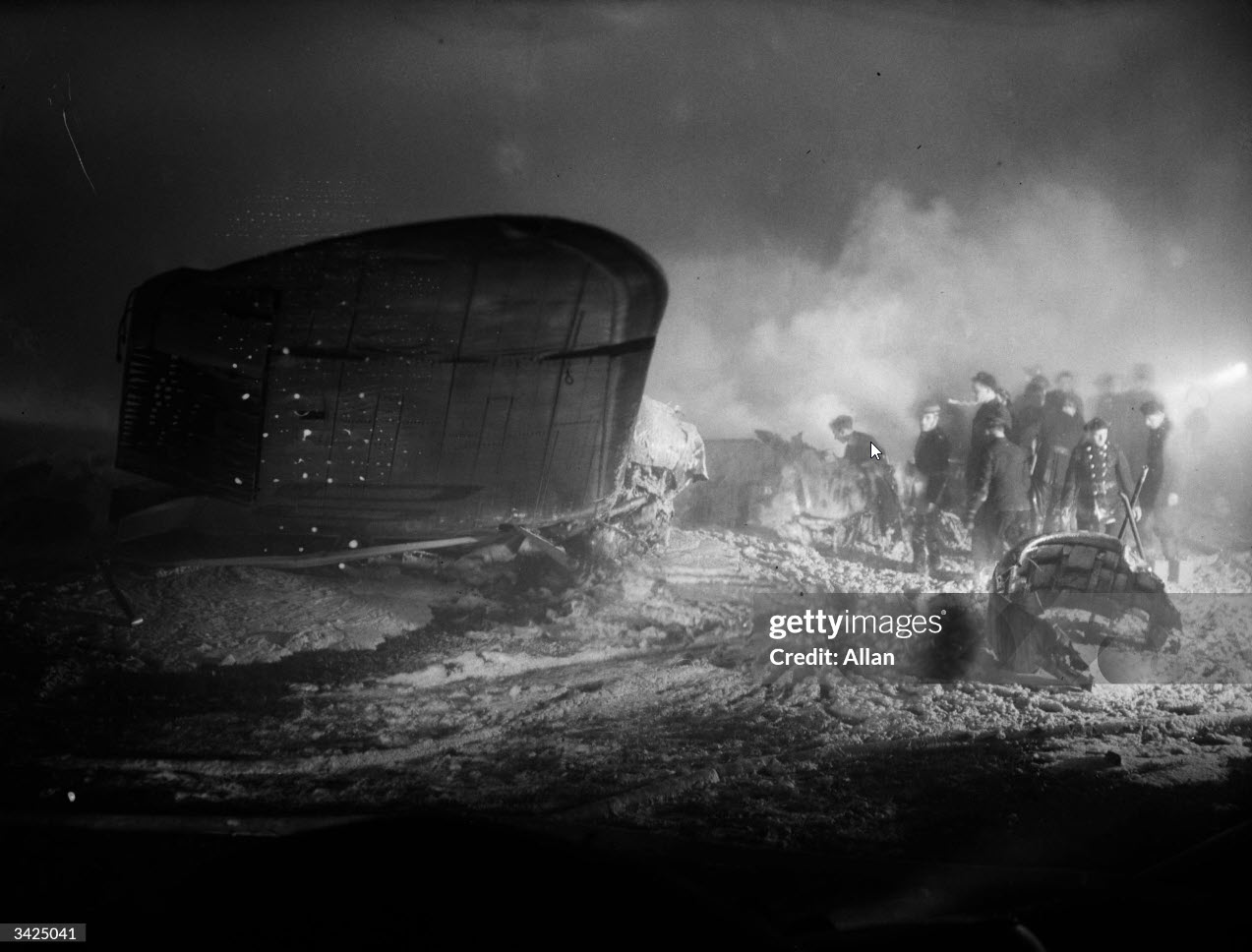
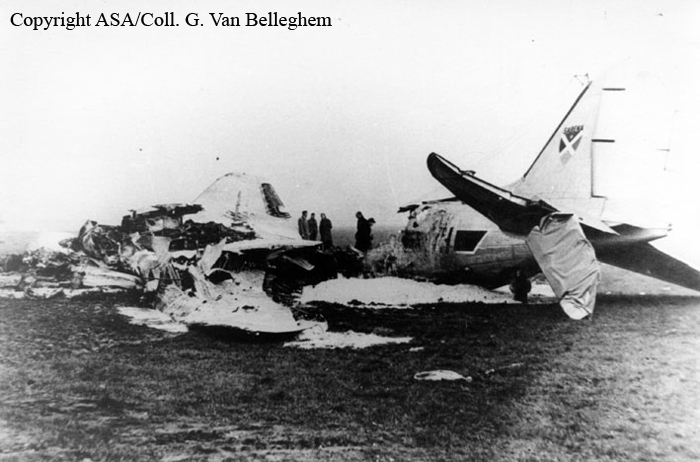
The approach to London-Heathrow Airport was completed in reduced visibility due to the night and fog (visibility estimated to be 200-400 metres). Upon landing, the airplane went out of control and crashed 160 metres from the runway centerline, bursting into flames. Two passengers survived the crash and were seriously injured while 20 other occupants were killed.
Crew:
Henri Goblet, pilot,
Jean Lomba, radio operator,
Louis De Geyndt, steward.
Crew:
Henri Goblet, pilot,
Jean Lomba, radio operator,
Louis De Geyndt, steward.
Probable cause:
It has been established that the aircraft was in a normal configuration as it approached the runway threshold. It is highly probable that the aircraft touched down in a normal or near-normal manner. A few seconds later, the aircraft crashed into the ground off the runway, approximately 160 meters from its centerline, without any physical evidence of the cause of this abnormal sequence of events being found. A plausible explanation can, however, be found by assuming that the aircraft did indeed touch the ground somewhat abruptly, causing it to bounce. The reaction on the ground, with a standard landing gear, causes the aircraft to pitch up. Its angle of attack increases. In its momentum, the aircraft finds the energy necessary to climb to a certain height above the ground; only by pushing the control forward forcefully can the pilot keep the aircraft on the ground. We must assume that the pilot did not do so, and allowed the aircraft to regain altitude without, however, increasing engine power, which would have allowed the aircraft to sustain itself normally. Under such conditions, the aircraft could not follow a normal flight path, and the so-called “loss of speed” sequence, accompanied by a turn and a nosedive, was inevitable. Certain circumstances make this hypothesis particularly plausible: landing conditions with zero visibility; the high-intensity sodium lights lining the runway extend only 360 meters from the runway threshold; and finally, the fact that the pilot had his headlights on at the end of the approach suggests that he was trying to see something. Unfortunately, as his lights illuminated the fog, they must have presented him with a white, opaque wall and completely disoriented him.
Final Report:
OO-AWH.pdf6.15 MB

