Crash of a Douglas C-47D near Amatrice: 4 killed

Date & Time: Mar 16, 1960
Operator:

Registration:
43-48899
Flight Phase:
Flight Type:
Survivors:
No
Site:
Schedule:
Aviano – Gioia del Colle
MSN:
14715/26160
YOM:
1944
Location:
Country:
Region:
Crew on board:
4
Crew fatalities:
Pax on board:
0
Pax fatalities:
Other fatalities:
Total fatalities:
4
Circumstances:
In unclear circumstances, the airplane struck the west slope of Monti della Laga located near Amatrice. All four crew members were killed.
Crew:
Cpt Jess Edward Montgomery, pilot,
Cpt Albert Joseph Henrion, copilot,
Sgt Elmer Arthur Kludt, radio operator,
Cdt Frantz Egidy.

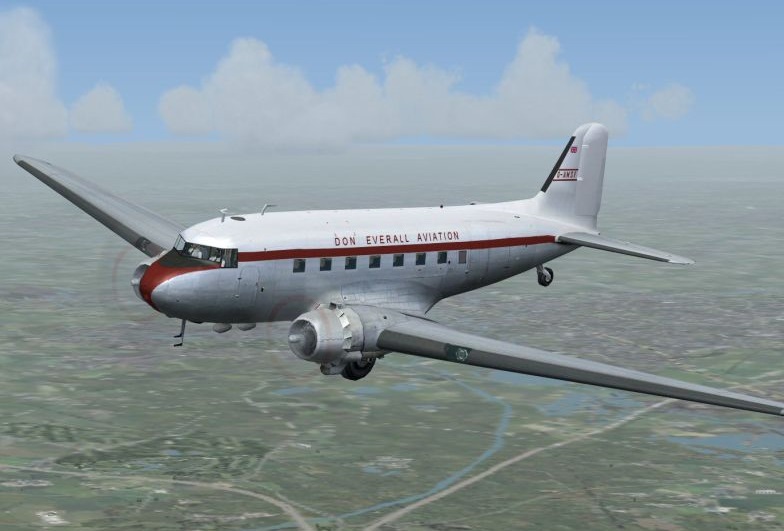
Crash of a Douglas C-47B-5-DK in Birmingham

Date & Time: Mar 5, 1960
Operator:
Registration:
G-AMSF
Flight Phase:
Survivors:
Yes
MSN:
14380/25825
YOM:
1944
Region:
Crew on board:
3
Crew fatalities:
Pax on board:
28
Pax fatalities:
Other fatalities:
Total fatalities:
0
Circumstances:
At liftoff, while in initial climb, the airplane banked right, causing the right wing tip to struck the ground. The aircraft struck the ground and came to rest with a small fire on the left engine that was quickly extinguished. All 31 occupants were evacuated safely while the aircraft was damaged beyond repair.
Probable cause:
Failure of the right engine during takeoff.

Crash of a Douglas C-47A-25-DK off Rio de Janeiro: 26 killed

Date & Time: Feb 25, 1960 at 1307 LT
Operator:
Registration:
PP-AXD
Survivors:
No
Schedule:
Campos de Goytacazes – Rio de Janeiro
MSN:
13326
YOM:
1944
Flight number:
RL751
Country:
Crew on board:
4
Crew fatalities:
Pax on board:
22
Pax fatalities:
Other fatalities:
Total fatalities:
26
Circumstances:
The R4D-6 left Buenos Aires at 0825LT on a flight to Rio de Janeiro, carrying a delegation of musicians who would take part to a ceremony dedicated to the official visit in Rio de Janeiro of the US President Eisenhower. At 12:56 the crew reported over the BAGRE fix, entering the Rio Approach Control zone. The plane then descended to 1500 m reaching the Ilha Rasa (IH) NDB at 13:05. The crew were then instructed to arrive over the RJ NDB at 1800 m altitude and continue to the KX NDB descending to 1500 m. At the KX NDB the plane could enter the approach path for Galeao Airport. At 13:07 the flight reported passing over RJ at 1800 m, but the plane was in fact still approaching the NDB! False radio compass indications in the area are not uncommon; they are influenced by a steel cable car in the area. REAL DC-3 PP-AXD had left Campos at 12:10 for a flight to Rio de Janeiro. The flight reported at the Porto das Caixas fix at 12:58. at 1650 m. He was told to head for the RJ NDB at 1800 m and was later cleared for 1500 m to carry out the Victor Procedure for an approach to Santos Dumont Airport. The DC-3 overflew the RJ NDB at 13:06 at 1700 m. While carrying out the standard 180° turn to the left, the DC-3 was hit on its right side in an upward direction by the US Navy DC-6. The collision occurred at about 1600 m; the DC-3 crashed into the bay just southeast of Sugar Loaf Mountain; the DC-6 crashed into the bay just north of the mountain.
Probable cause:
According to the Brazilian Investigations Board, the accident was attributed to an error of the personnel (pilot of the DC-6) due to improper piloting procedure when flying on authorized instrument flight. The pilot disobeyed the instructions transmitted by Rio Approach Control. An investigation by the US Navy came to a different cause: The accident cannot be attributed to either of the aircraft involved, the manner in which either was operated, or to any
significant actions or errors of the crews. The roles of the language problem, the lack of modern air navigation and control aids and the methods of aircraft traffic control used at Rio de Janeiro, although extremely material, do not attain the status of immediate causes of the accident according to the evidence adduced. Had these matters been different, in one or more respects favorable to greater air safety, this accident might have been avoided. These problems were, however, common to the flights of all aircraft in the area and were well known by the pilots and controller to exist. It is evident that uncertainty on the part of the controller as to the original position of the DC-3; his underestimation of the time factors, including aircraft reaction time; and his lack of appreciation of the communications difficulties and the increasing seriousness of the situation, combined to create the conditions which led to the collision.

Crash of a Douglas C-47 in Havana: 4 killed

Date & Time: Feb 25, 1960
Flight Phase:
Flight Type:
Survivors:
No
Country:
Crew on board:
3
Crew fatalities:
Pax on board:
0
Pax fatalities:
Other fatalities:
Total fatalities:
4
Circumstances:
Just after takeoff from Havana-Ciudad Libertad Airport, while climbing, the airplane went out of control and crashed in flames onto a hangar. All three crew members and one person in the hangar were killed.

Crash of a Douglas R4D-5 on Mt Hòn Cháy: 3 killed

Date & Time: Feb 17, 1960
Operator:
Registration:
17244
Flight Type:
Survivors:
No
Site:
Schedule:
Saigon – Hué
MSN:
13997/25442
YOM:
1944
Country:
Region:
Crew on board:
3
Crew fatalities:
Pax on board:
0
Pax fatalities:
Other fatalities:
Total fatalities:
3
Circumstances:
While descending to Hué Airport on a cargo flight from Saigon, the twin engine airplane struck the slope of Mt Hòn Cháy (839 meters high) located 39 km southeast of the destination airport. All three crew members were killed.

Crash of a Douglas C-47 off Brindisi: 5 killed

Date & Time: Jan 20, 1960
Operator:
Registration:
MM61770
Flight Phase:
Flight Type:
Survivors:
No
Location:
Country:
Region:
Crew on board:
5
Crew fatalities:
Pax on board:
0
Pax fatalities:
Other fatalities:
Total fatalities:
5
Circumstances:
Shortly after takeoff from Brindisi Airport, while climbing, the airplane crashed into the sea few dozen yards off shore. SAR were conducted but eventually suspended three days later as no trace of the aircraft nor the crew was found. The wreckage was finally located in a depth of 18 meters about 1,8 km off shore.

Crash of a Douglas R4D-8 at Byrd Station

Date & Time: Jan 6, 1960
Operator:
Registration:
17154
Flight Type:
Survivors:
Yes
MSN:
43373
YOM:
1944
Country:
Region:
Crew on board:
0
Crew fatalities:
Pax on board:
0
Pax fatalities:
Other fatalities:
Total fatalities:
0
Circumstances:
Crashed in whiteout conditions while attempting to land at Byrd Station on a supply mission. There were no casualties but the aircraft was written off.

Crash of a Douglas C-47A-20-DK near Taksing: 9 killed

Date & Time: Jan 3, 1960 at 1040 LT
Operator:
Registration:
VT-CGG
Flight Phase:
Flight Type:
Survivors:
No
Site:
Schedule:
Jorhat - Taksing - Jorhat
MSN:
12821
YOM:
1944
Country:
Region:
Crew on board:
8
Crew fatalities:
Pax on board:
1
Pax fatalities:
Other fatalities:
Total fatalities:
9
Aircraft flight hours:
17868
Circumstances:
The crew left Jorhat on a supply mission to Taksing, Arunachal Pradesh. Following a navigation error, the aircraft went into a narrow valley and the captain, not familiarized with the region, made a turn to leave the area when the airplane stalled and crashed in a mountainous terrain. The aircraft was destroyed and all nine occupants were killed.
Probable cause:
The accident was attributed to an error of navigation which caused the pilot to enter a wrong valley. During an attempt to turn back in a restricted area, the aircraft stalled and crashed. The fact that this was the pilot's first flight to this dropping zone, and he was not familiar with the terrain, contributed to the accident.

Crash of a Douglas C-47A-70-DL in San Jose de Chiquitos: 11 killed

Date & Time: Dec 31, 1959
Operator:
Registration:
CP-584
Flight Phase:
Survivors:
No
Schedule:
San José de Chiquitos – La Paz
MSN:
19226
YOM:
1943
Country:
Crew on board:
4
Crew fatalities:
Pax on board:
7
Pax fatalities:
Other fatalities:
Total fatalities:
11
Circumstances:
Crashed few minutes after takeoff from San José de Chiquitos. The airplane was destroyed and all 11 occupants were killed.