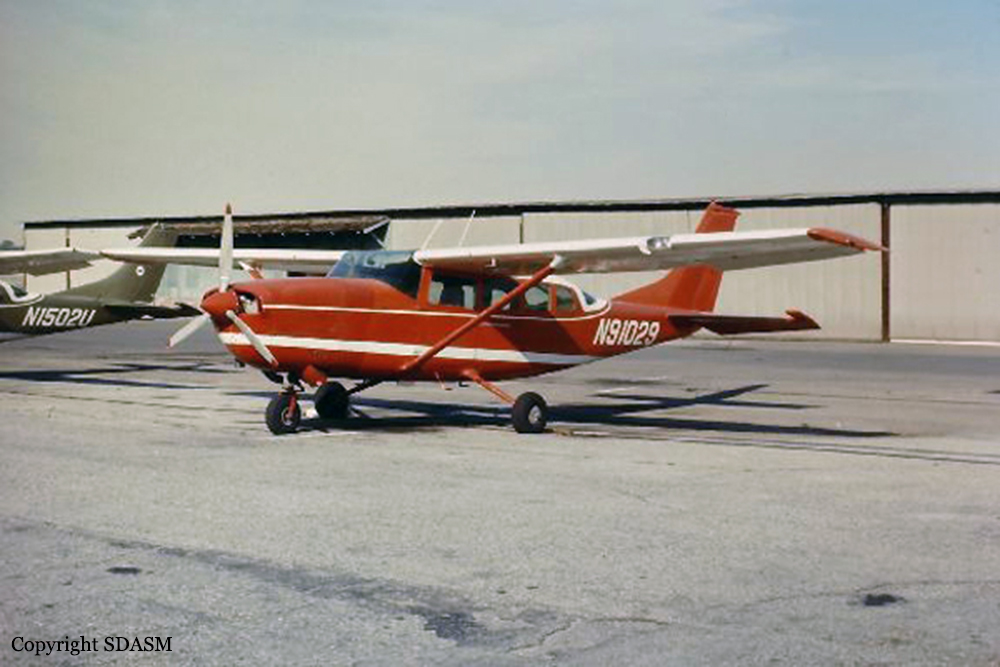
Crash of a Cessna 207 Skywagon near Bethel: 6 killed

Date & Time: Dec 7, 1999 at 1300 LT
Operator:

Registration:
N1747U
Flight Phase:
Survivors:
No
Schedule:
Bethel - Nightmute
MSN:
207-0347
YOM:
1976
Location:
Crew on board:
1
Crew fatalities:
Pax on board:
5
Pax fatalities:
Other fatalities:
Total fatalities:
6
Captain / Total flying hours:
2255
Captain / Total hours on type:
390.00
Aircraft flight hours:
10363
Circumstances:
The airline transport pilot departed on a CFR Part 135 scheduled passenger flight to a remote coastal village. When the flight did not return, an aerial search was initiated. The wreckage was located the following day along the pilot's intended route, about 49 miles from the departure airport. The airplane had collided with flat, featureless, snow-covered, terrain. A pilot that departed about one minute after the accident airplane's departure, had a similar route of flight. He characterized the weather conditions along the accident airplane's route as overcast, with ceilings ranging between 2,500 and 4,500 feet. He said that as he approached the area of the accident, he encountered 'a wall of weather' starting from the ground, with tops at 1,500 feet. He added that visibility was low, with fog and varied layers of cloud cover. The pilot stated that he changed his route in order to avoid the worsening weather conditions. He added that with satisfactory weather conditions, and given the intended destination of the accident airplane, the standard route of flight would be directly over the location of the accident site. No pre accident anomalies were noted with the accident airplane.
Probable cause:
The pilot's continued VFR flight into instrument meteorological conditions. Factors associated with the accident were low ceilings, fog, and snow-covered terrain.
Final Report:


Crash of a Cessna 207 Skywagon near Puerto Ayacucho: 5 killed

Date & Time: Oct 12, 1999 at 0830 LT
Registration:
YV-745C
Flight Phase:
Survivors:
Yes
Schedule:
Puerto Ayacucho – San Juan de Manapiare
MSN:
207-0660
YOM:
1981
Country:
Crew on board:
1
Crew fatalities:
Pax on board:
7
Pax fatalities:
Other fatalities:
Total fatalities:
5
Circumstances:
Few minutes after takeoff from Puerto Ayacucho Airport, the pilot reported technical problems. Shortly later, radio and radar contacts were lost. The wreckage was found in the jungle 10 days later. The pilot and three passengers were killed and four other people were found alive. One of the survivor died from his injuries nine days later.

Crash of a Cessna 207 Skywagon in Artannes-sur-Thouet: 1 killed

Date & Time: Sep 4, 1999
Operator:
Registration:
F-GRAY
Flight Phase:
Flight Type:
Survivors:
No
MSN:
207-0777
YOM:
1984
Country:
Region:
Crew on board:
1
Crew fatalities:
Pax on board:
0
Pax fatalities:
Other fatalities:
Total fatalities:
1
Circumstances:
Crashed in unknown circumstances, killing the pilot, sole on board.

Crash of a Cessna 207A Stationair 8 II near Kotzebue: 1 killed

Date & Time: Apr 14, 1999 at 0930 LT
Registration:
N73188
Flight Phase:
Flight Type:
Survivors:
No
Schedule:
Noorvik - Kotzebue
MSN:
207-0568
YOM:
1981
Crew on board:
1
Crew fatalities:
Pax on board:
0
Pax fatalities:
Other fatalities:
Total fatalities:
1
Captain / Total flying hours:
10000
Captain / Total hours on type:
7800.00
Aircraft flight hours:
16790
Circumstances:
The certificated airline transport pilot departed on a flight to a remote village about 37 miles away. The trip was the first since an annual inspection had been completed the day before. The pilot departed with fuel only in the left wing tank. The right wing tank was empty. About 35 minutes later, the pilot was on a return flight to his original departure airport that was within Class E airspace. During the pilot's absence, the airport visibility had decreased to 1 1/2 mile. Instrument meteorological conditions, and special VFR procedures were in use. A 'MAYDAY' was heard over the common traffic advisory frequency, and was monitored by the local flight service station. The voice of the pilot was recognized as the accident pilot. Search personnel found the airplane on a flat area of a frozen, snow-covered lagoon. The weather at the accident site was described as fog, with flat lighting conditions. The wreckage path was oriented away from higher terrain around the destination airport which is located on a peninsula. The airplane had crashed in a nose down attitude, and came to rest inverted. The engine separated completely from the airframe. An examination of the engine revealed fuel throughout, and mechanical continuity. The vacuum pump's internal support post, on which the internal block rotated, was found fractured through 70 percent of its diameter from fatigue, the remaining portion of fracture was overstress. The airplane was equipped with a standby vacuum system. An examination of the airframe located a combination screwdriver in the left wing. The handle was shattered. No flight control cable impingement was observed.
Probable cause:
The pilot's continued VFR flight into instrument meteorological conditions, spatial disorientation, and an inadvertent stall. Factors in the accident were weather conditions consisting of snow and mist, and flat lighting conditions.
Final Report:

Crash of a Cessna 207A Skywagon in Manokotak

Date & Time: Dec 17, 1998 at 1740 LT
Operator:
Registration:
N1764U
Flight Phase:
Survivors:
Yes
Site:
Schedule:
Dillingham – Togiak – Manokotak – Togiak – Dillingham
MSN:
207-0364
YOM:
1976
Flight number:
UYA611
Crew on board:
1
Crew fatalities:
Pax on board:
1
Pax fatalities:
Other fatalities:
Total fatalities:
0
Captain / Total flying hours:
1600
Captain / Total hours on type:
700.00
Aircraft flight hours:
7283
Circumstances:
The certificated commercial pilot and the pilot-rated, nonrevenue passenger, departed at night from a remote village airport on the last leg of a VFR scheduled air taxi flight. The destination airport was 17 nautical miles northeast of the departure point. After departure, the pilot said he encountered severe turbulence and entered a snow squall where the visibility dropped below 1 mile. The pilot said he was in instrument meteorological conditions, and a strong surface wind was blowing the airplane toward the southwest. He began correcting his course toward the southeast, and then collided with a snow-covered hill. The passenger said that light snow showers were falling in the area, along with turbulence and strong winds from the northeast. After departing on the accident flight, snow showers intensified, and the pilot turned toward the south, away from the intended destination. About 10 minutes after takeoff, the passenger inquired about the direction of flight, and the pilot said he was going to head to the coast and follow it to the destination. The visibility was about 1 mile. No ground features were visible until the passenger saw snow-covered terrain about 3 feet below the airplane. The airplane then collided with terrain. The pilot indicated he obtained a weather briefing from an FAA Flight Service Station.
Probable cause:
The pilot's continued VFR flight into instrument meteorological conditions. Factors in the accident were dark night conditions, snow covered terrain, and low ceilings.
Final Report:

Crash of a Cessna 207A Skywagon in Koror: 9 killed

Date & Time: Nov 17, 1998
Registration:
RP-C606
Survivors:
No
MSN:
207-0105
YOM:
1969
Location:
Country:
Region:
Crew on board:
2
Crew fatalities:
Pax on board:
7
Pax fatalities:
Other fatalities:
Total fatalities:
9
Circumstances:
The single engine airplane was completing a charter flight with seven passengers and two pilots on board. While approaching Koror Airport, the crew encountered poor weather conditions with limited visibility due to heavy rain falls. The crew decided to abandon the approach and made a go-around procedure. Few minutes later, a second attempt to land was also abandoned, as well as a third and a fourth attempt. During the fifth approach, the aircraft crashed few km from the airport, killing all nine occupants. It was reported that the crew was trying to land under VFR mode in IMC conditions.

Crash of a Cessna 207 Skywagon on Mt Noak: 1 killed

Date & Time: Sep 17, 1998 at 1430 LT
Registration:
N1809Q
Flight Phase:
Flight Type:
Survivors:
No
Site:
Schedule:
Kotzebue - Point Hope
MSN:
207-0787
YOM:
1984
Location:
Crew on board:
1
Crew fatalities:
Pax on board:
0
Pax fatalities:
Other fatalities:
Total fatalities:
1
Captain / Total flying hours:
8891
Captain / Total hours on type:
446.00
Aircraft flight hours:
12268
Circumstances:
The airline transport pilot departed on a CFR Part 135 cargo/mail flight for a remote coastal village. When the flight did not reach the destination, an aerial search was initiated. The wreckage was located the following day in mountainous terrain, 21 miles from the departure airport. The airplane had collided with rising terrain. An AIRMET for mountain obscuration in clouds and precipitation was issued for the pilot's planned route of flight. A pilot that departed about 20 minutes after the accident airplane's departure, had a similar route of flight. He characterized the weather conditions along the accident airplane's route as 'very low visibility with rain, fog and varied layers of cloud cover.' This pilot stated that he changed his route in order to avoid the worsening weather conditions. He added that with satisfactory weather conditions, and given the intended destination of the accident airplane, the standard route of flight would be directly over the mountain that the accident airplane collided with.
Probable cause:
The pilot's continued VFR flight into instrument meteorological conditions. Factors associated with the accident were low ceilings, mountainous/hilly terrain features, rain, and fog.
Final Report:

Crash of a Cessna T207A Stationair 8 II on Mt Duida: 5 killed

Date & Time: Mar 23, 1998 at 1206 LT
Registration:
YV-2557P
Flight Phase:
Survivors:
No
Site:
Schedule:
Toqui - Puerto Ayacucho
Country:
Crew on board:
1
Crew fatalities:
Pax on board:
4
Pax fatalities:
Other fatalities:
Total fatalities:
5
Circumstances:
After takeoff from Toqui Airport, the pilot encountered poor visibility due to thick smoke coming from forest fire. While climbing, the single engine aircraft struck the slope of Mt Duida and crashed six minutes after takeoff. The wreckage was found few days later and all five occupants were killed, among them two US citizens and two Canadians.

Crash of a Cessna T207 Skywagon in Homer: 1 killed

Date & Time: Feb 6, 1998 at 1245 LT
Operator:
Registration:
N91029
Flight Phase:
Flight Type:
Survivors:
No
Schedule:
Homer - English Bay
MSN:
207-0020
YOM:
1969
Location:
Crew on board:
1
Crew fatalities:
Pax on board:
0
Pax fatalities:
Other fatalities:
Total fatalities:
1
Captain / Total flying hours:
1358
Captain / Total hours on type:
48.00
Aircraft flight hours:
11192
Circumstances:
The certificated commercial pilot was departing on a 14 CFR 135 cargo flight. The airplane lifted off and climbed to about 200 feet. Instead of turning right toward the intended destination, the airplane began a left turn toward the runway. The angle of bank increased to about 45 degrees. The airplane then nosed down, and descended into snow covered terrain, about 200 yards north of the runway. Examination of the engine revealed the number six cylinder head was fractured, and slightly separated from the cylinder barrel. The area around the point of separation was blackened and oily. Similar discoloration was noted on the inside of the engine cowl. A metallurgical examination of the cylinder head revealed a fatigue fracture along a large segment of the thread root radius between the 5th and 6th threads. The engine's cylinder compression is part of the operator's approved airworthiness inspection program. The number six cylinder compression, recorded 121 hours before the accident, was noted as 60 PSI. The last engine inspection, 27 hours before the accident, did not include a record of the engine compression.
Probable cause:
A fatigue failure, and partial separation of the number 6 engine cylinder head assembly, the operator's inadequate progressive inspection performed by company maintenance personnel, and the pilot's inadvertent stall during a maneuvering turn toward an emergency landing area.
Final Report:

Crash of a Cessna T207A Skywagon in Arusha: 5 killed

Date & Time: Feb 3, 1998 at 0725 LT
Operator:
Registration:
5H-PAT
Flight Phase:
Survivors:
No
Schedule:
Arusha - Zanzibar
Country:
Region:
Crew on board:
1
Crew fatalities:
Pax on board:
4
Pax fatalities:
Other fatalities:
Total fatalities:
5
Captain / Total flying hours:
1700
Captain / Total hours on type:
300.00
Circumstances:
After takeoff from Arusha Airport runway 09, while climbing, the pilot declared an emergency following an engine failure. While attempting to return, he lost control of the airplane that crashed 1,200 metres from the runway, bursting into flames. All five occupants were killed, among them four Italian citizens.
Probable cause:
The exact cause of the engine failure could not be determined with certainty. The aircraft was maintained according to published procedures. At the time of the accident, the engine had 1,245 flying hours and the next maintenance was scheduled within 155 flying hours.