Country
code
West Flanders
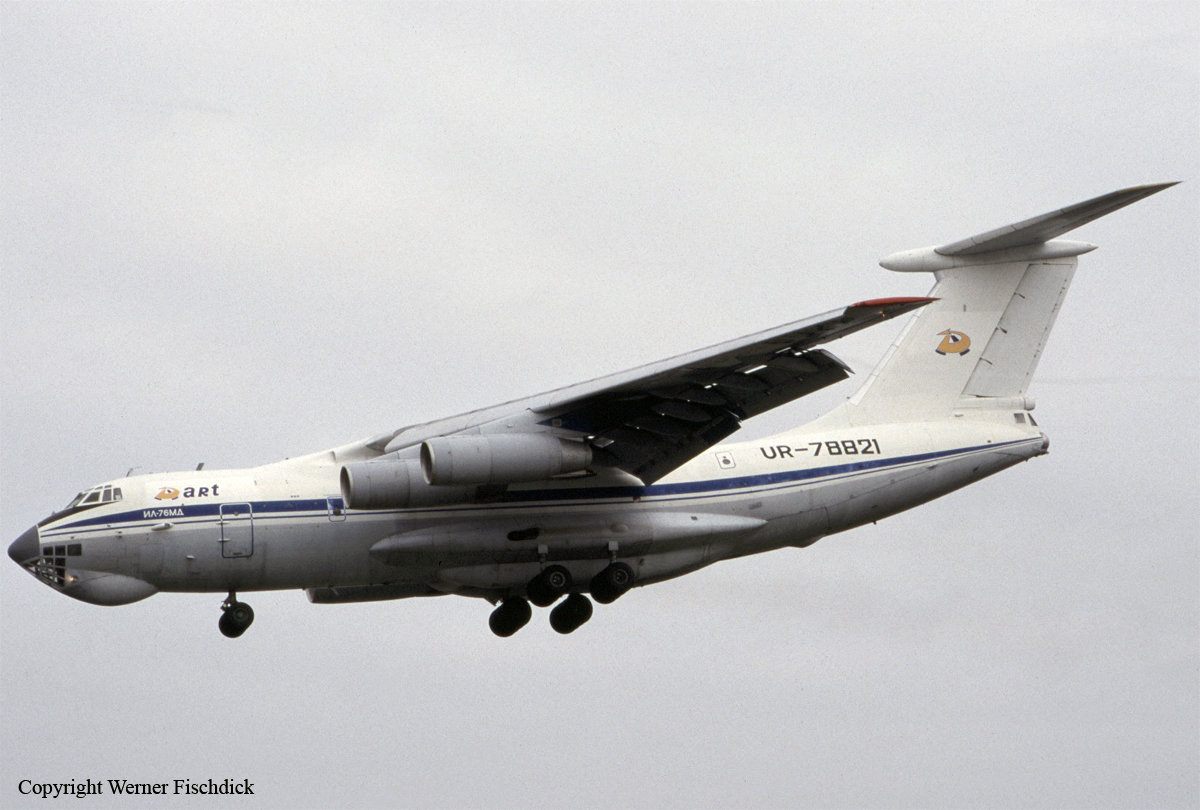
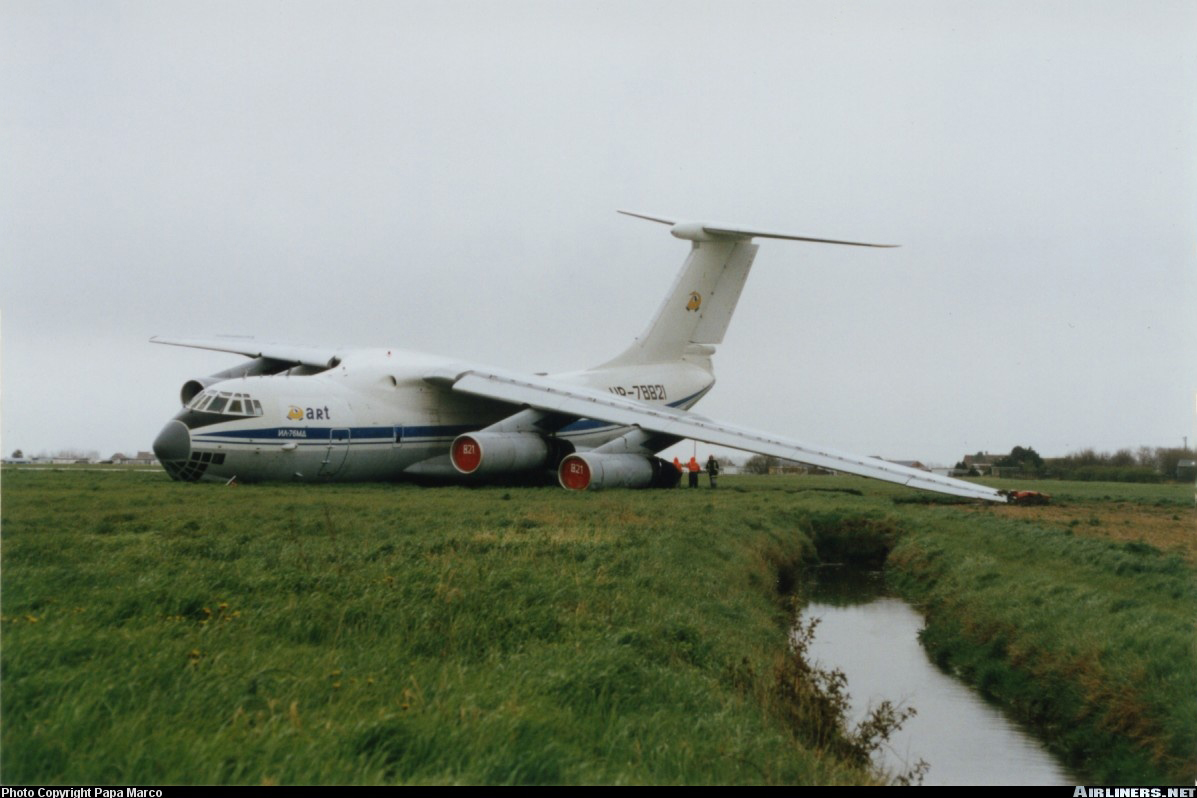
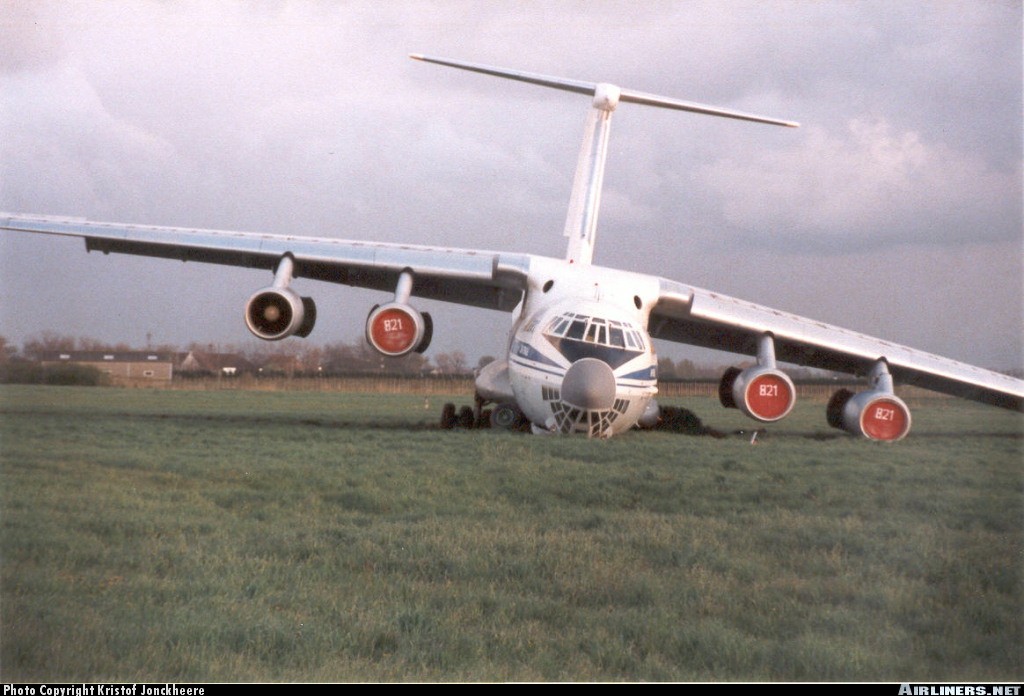
Crash of an Ilyushin II-76MD in Ostend
Date & Time:
Apr 18, 2001
Registration:
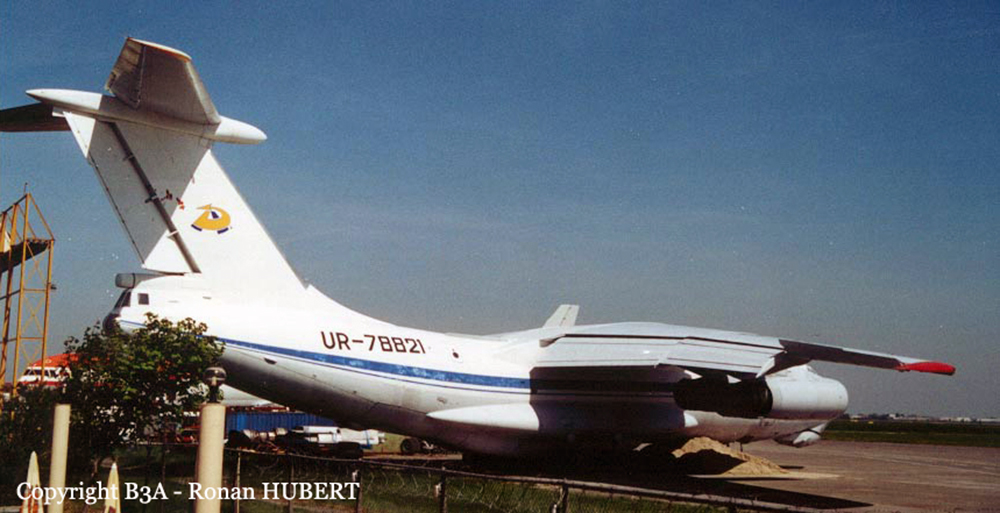
UR-78821
Survivors:
Yes
Schedule:
Ostend - Algiers - Conakry
MSN:
00934 96914
YOM:
1989
Crew on board:
8
Crew fatalities:
Pax on board:
0
Pax fatalities:
Other fatalities:
Total fatalities:
0
Circumstances:
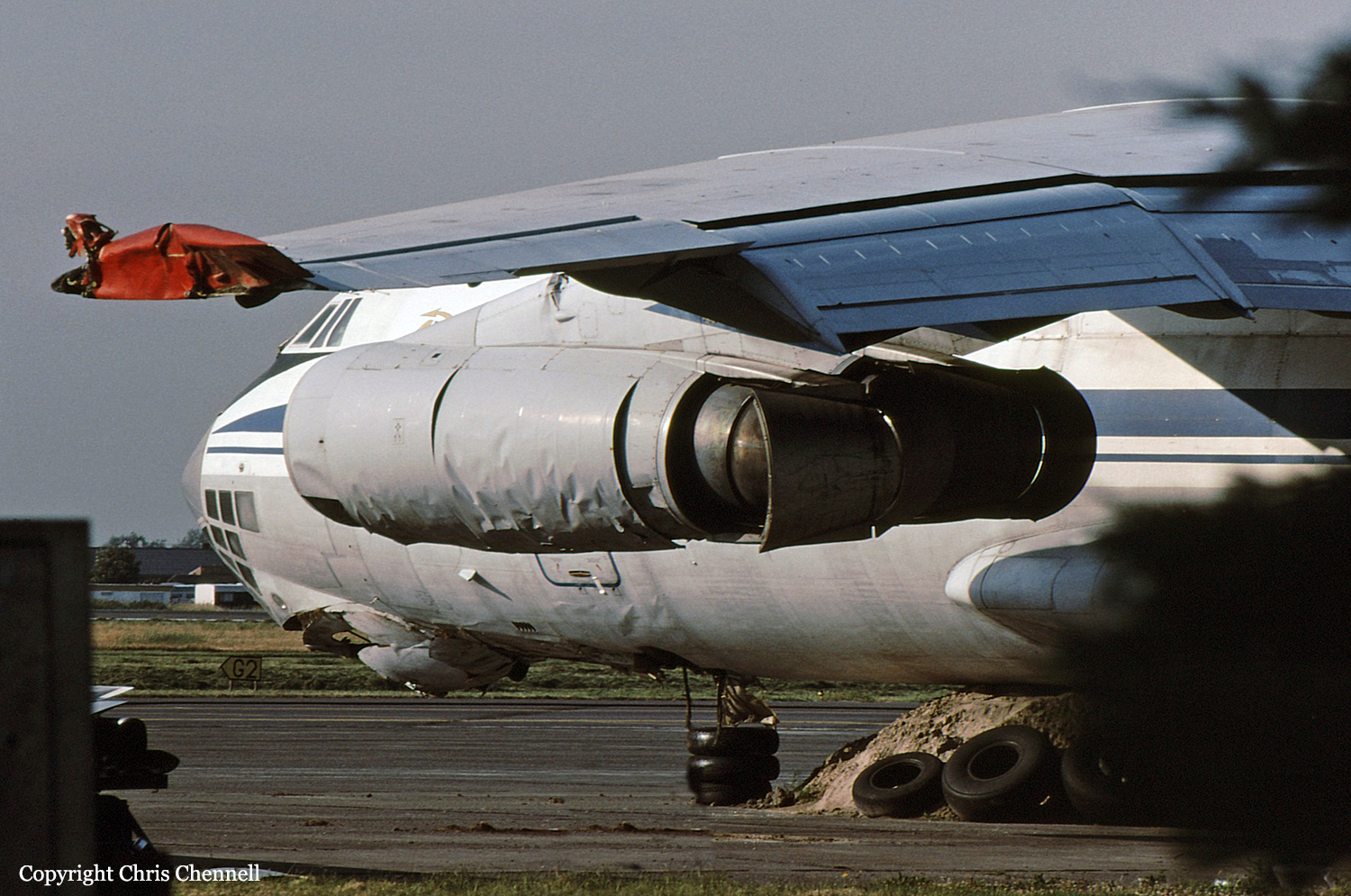
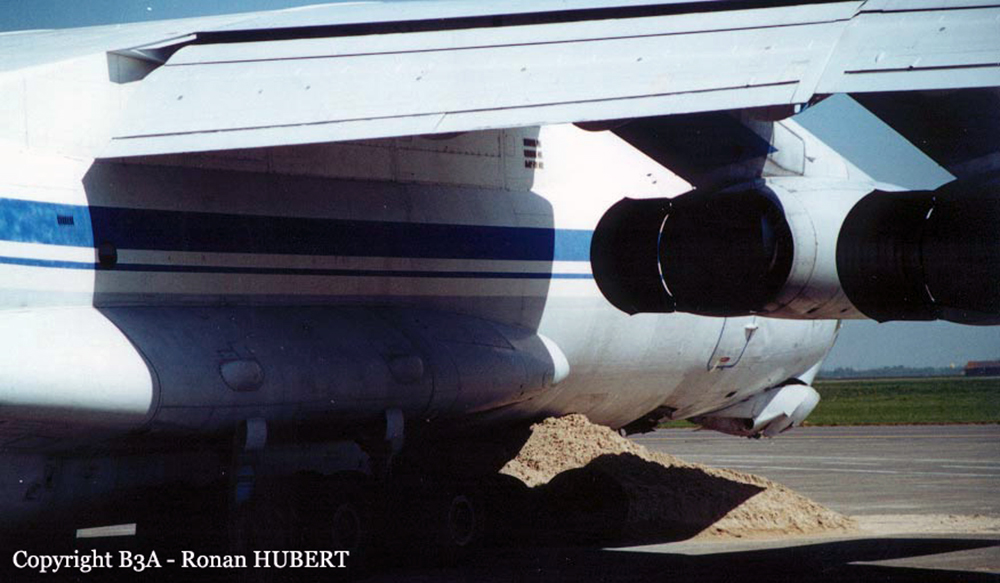
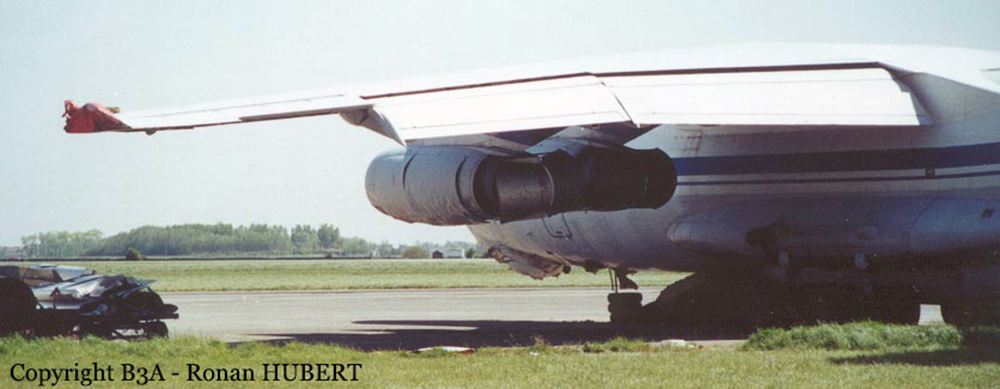
The four engine aircraft was engaged in a cargo flight from Ostend to Conakry with an intermediate stop in Algiers, carrying eight crew members and a load consisting of 32 tons of paint and medical supplies for the Guinean market. During the takeoff roll on runway 26 at Ostend Airport, an engine fire warning light came on in the cockpit panel. The captain decided to abandon the takeoff procedure and initiated an emergency braking maneuver. Unable to stop within the remaining distance, the aircraft overran for about 40 metres then lost its nose gear and came to rest on its left wing, damaging both left engine nacelles and the wingtip as well as the fuselage that was bent upward the cockpit area. All eight crew members escaped uninjured while the aircraft was damaged beyond repair.
Probable cause:
No technical anomalies were found on the aircraft and the engine fire warning light came on by error.
Crash of a Boeing 707-355C in Ostend
Date & Time:
Nov 14, 1998 at 0544 LT
Operator:

Registration:
5N-VRG
Survivors:
Yes
Schedule:
Ostend - Lagos
MSN:
19664
YOM:
1968
Flight number:
VGO302
Crew on board:
5
Crew fatalities:
Pax on board:
0
Pax fatalities:
Other fatalities:
Total fatalities:
0
Aircraft flight hours:
67790
Aircraft flight cycles:
15984
Circumstances:
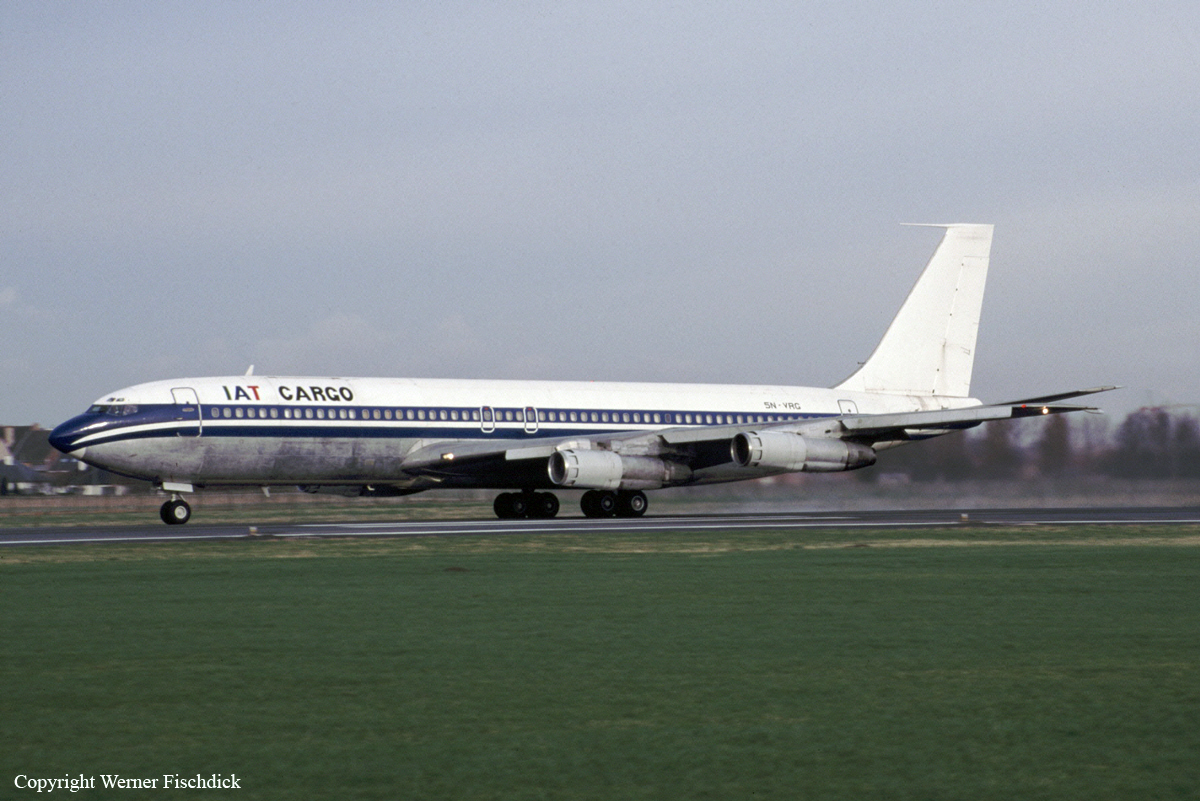
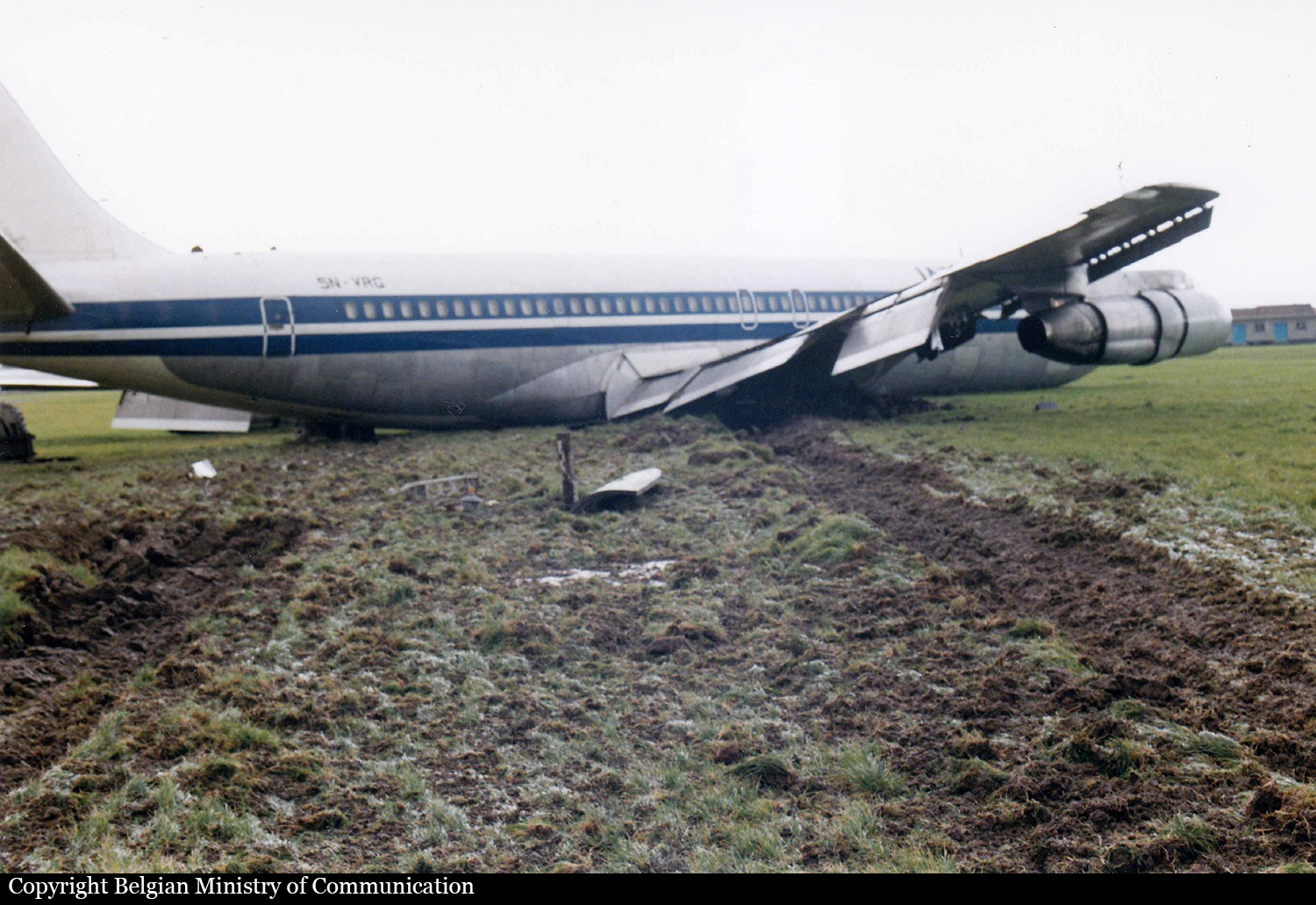
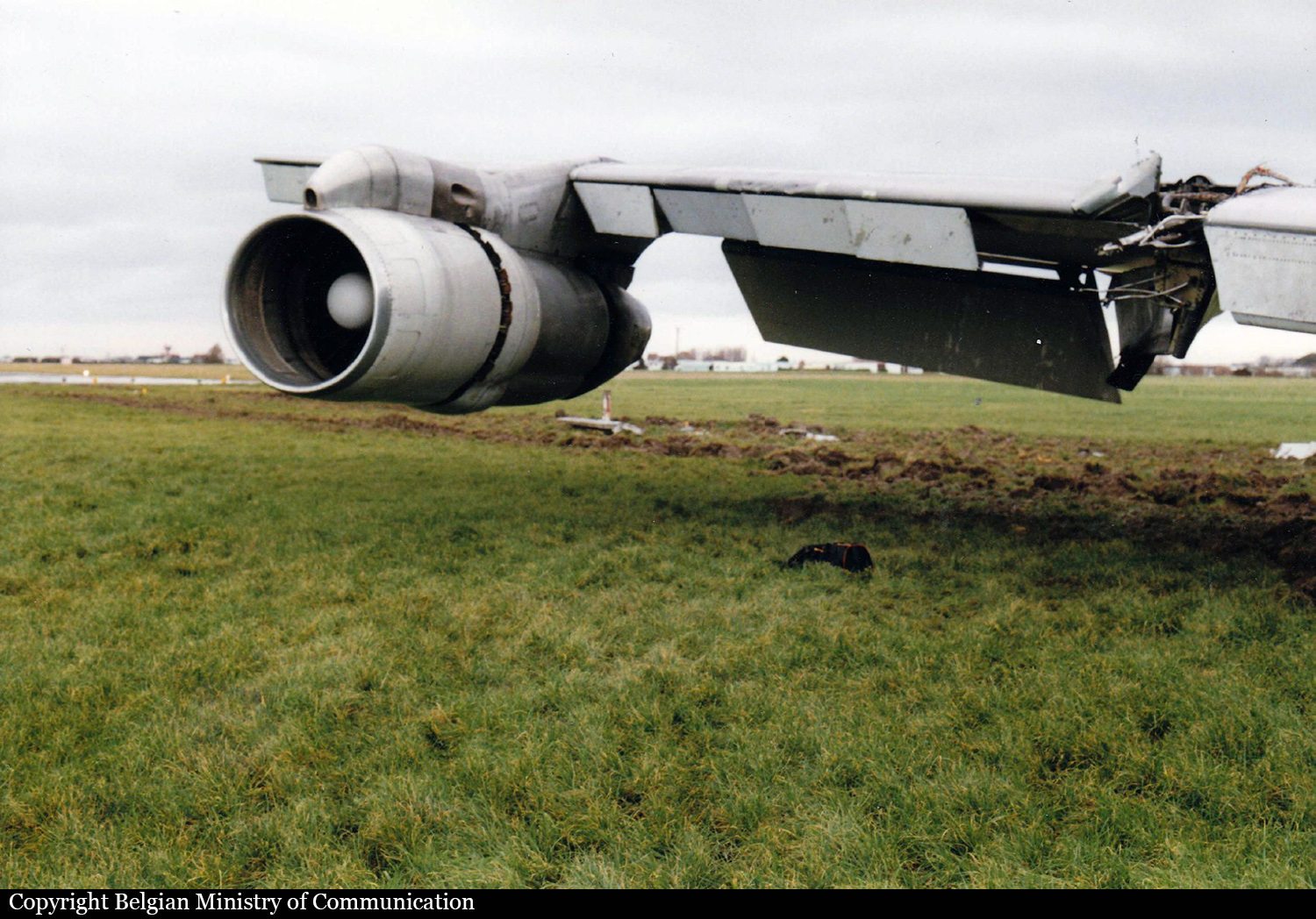
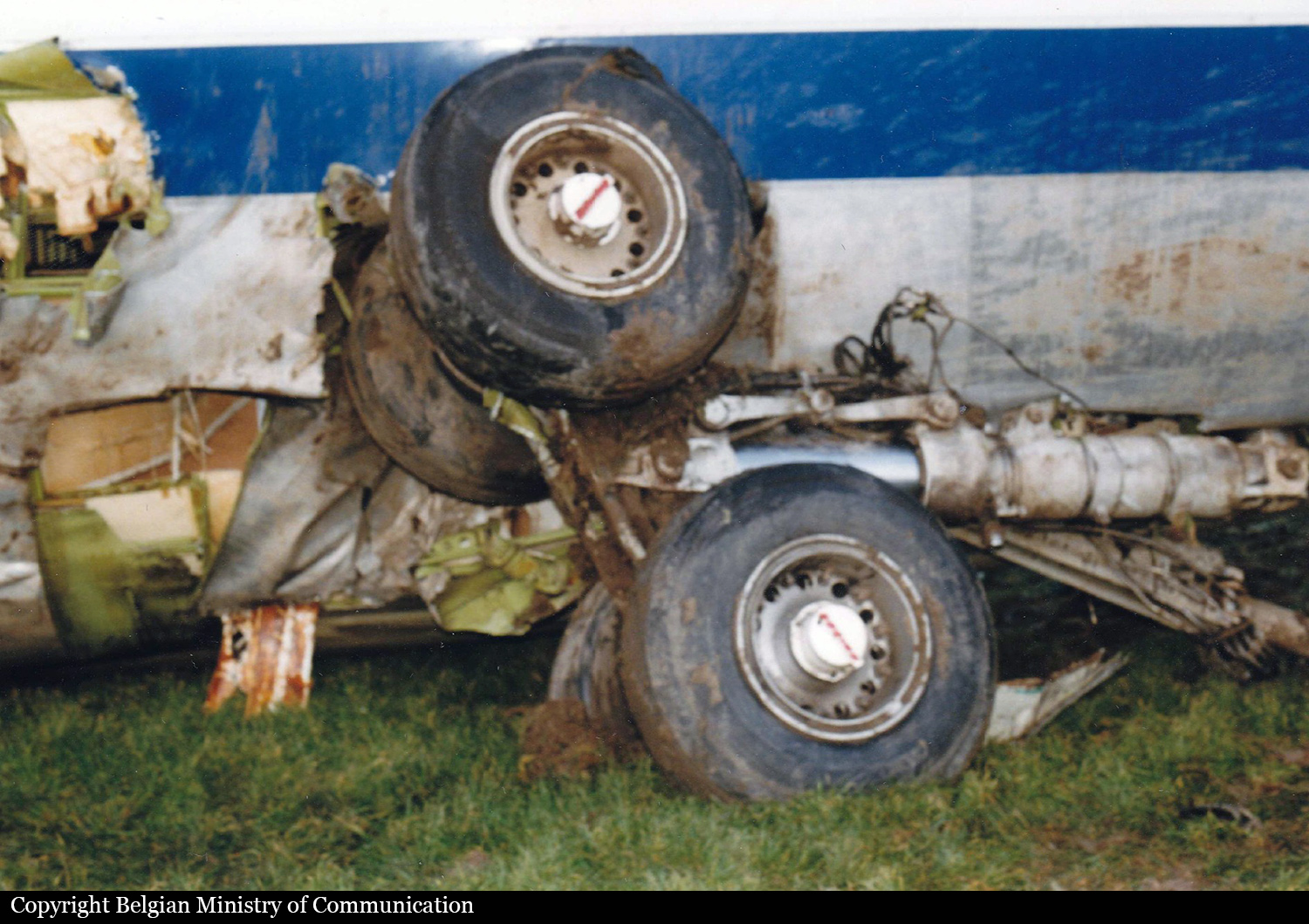
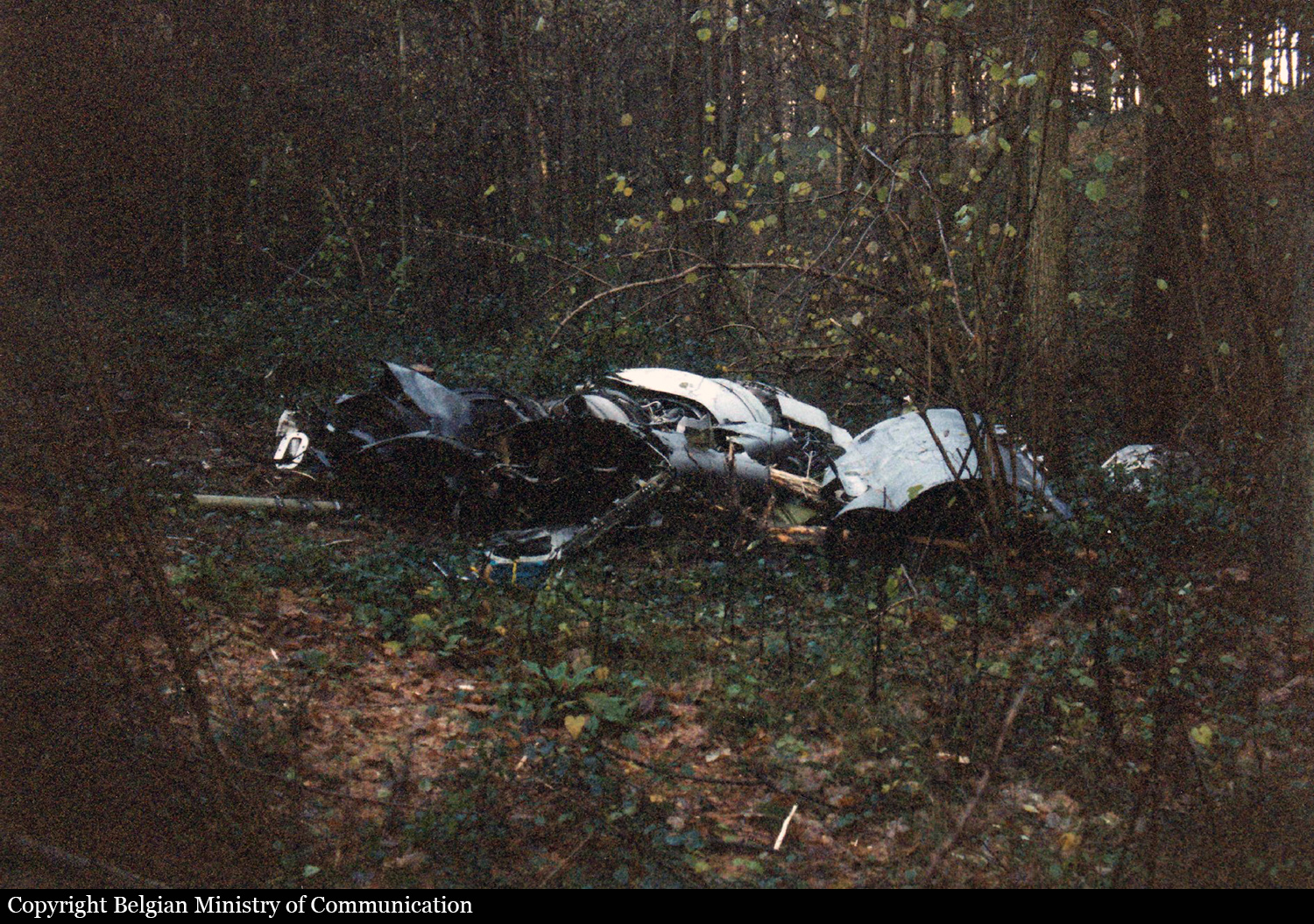
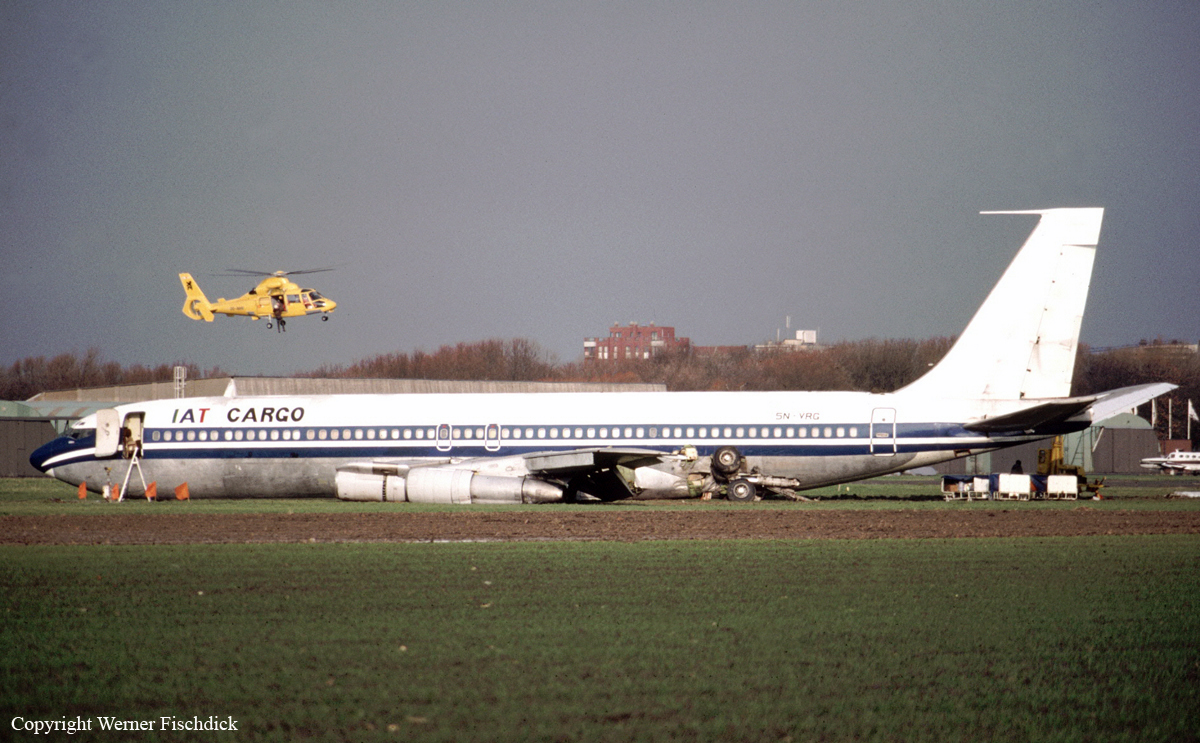
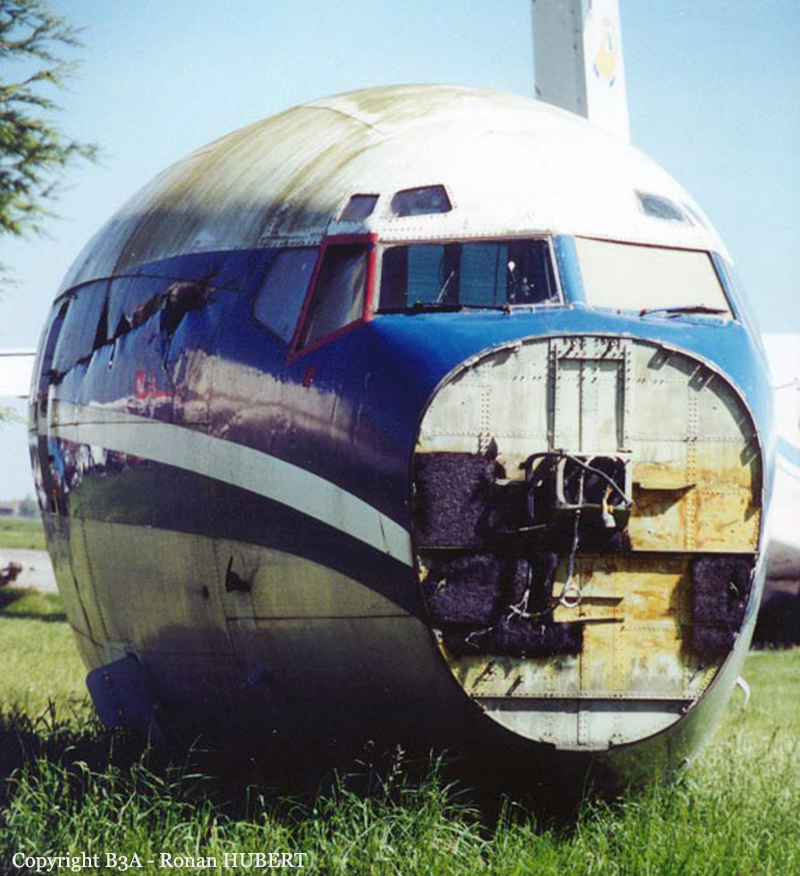
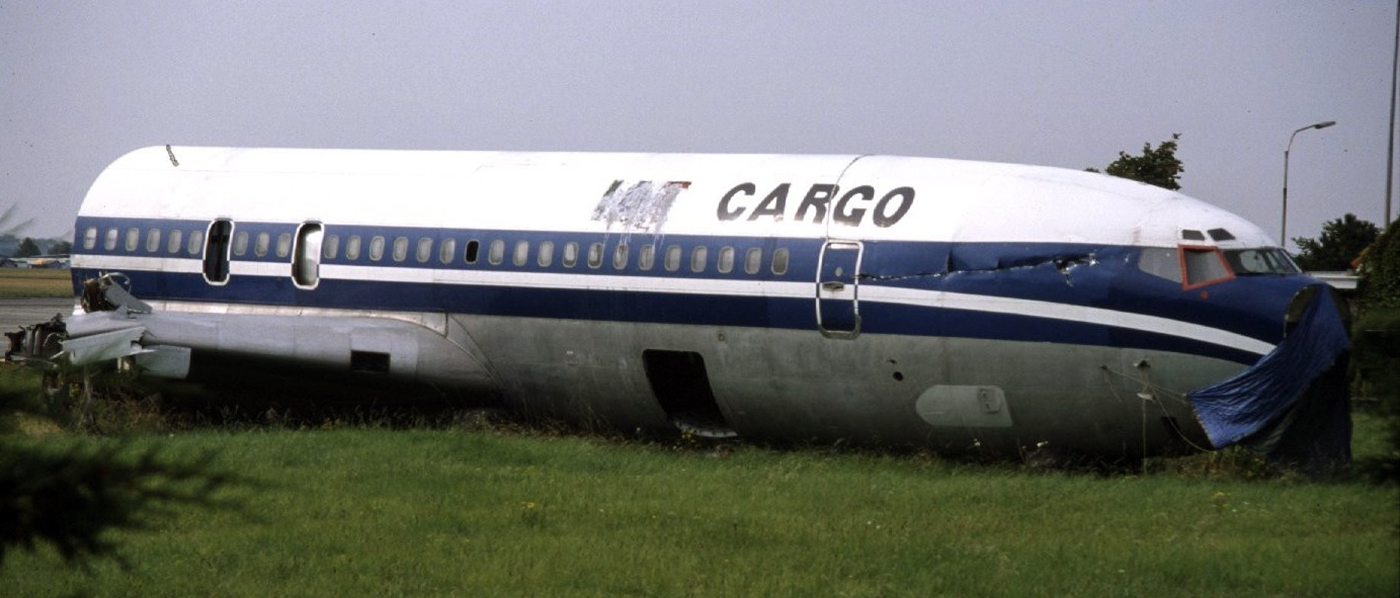
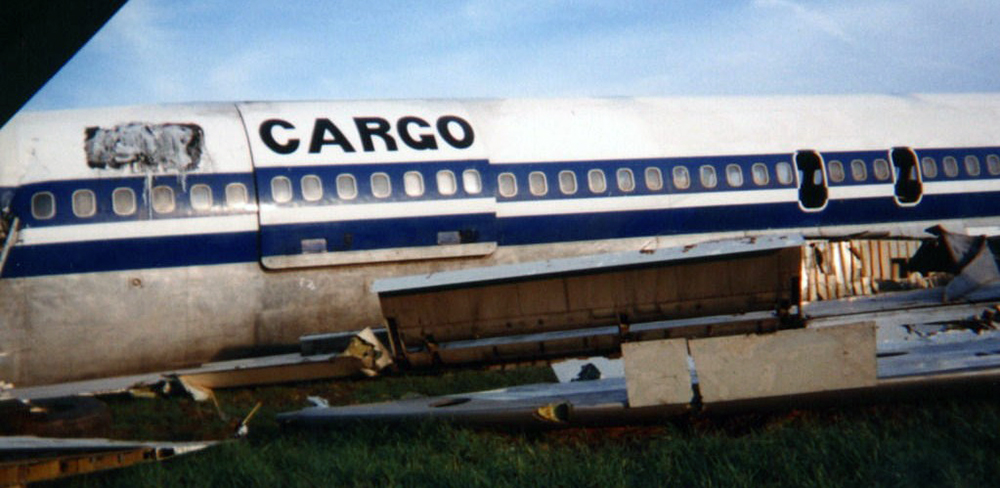
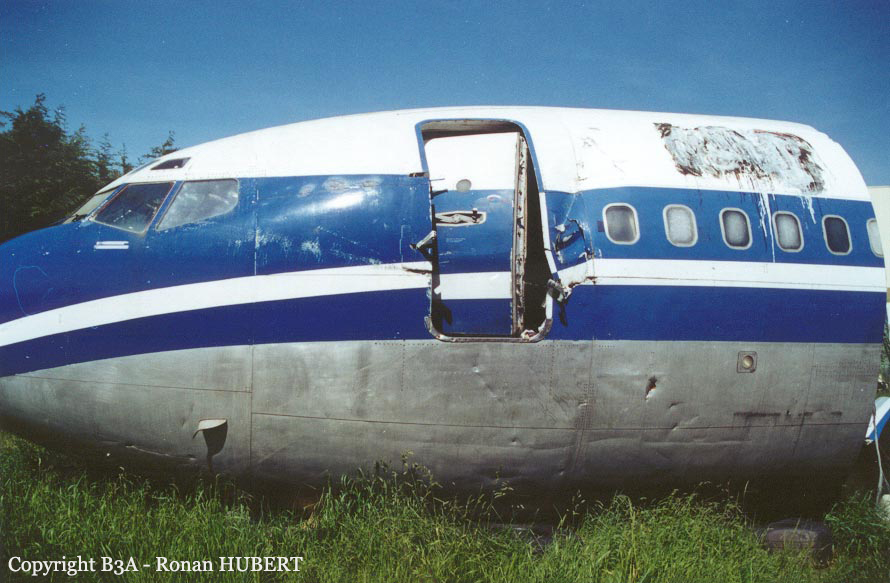
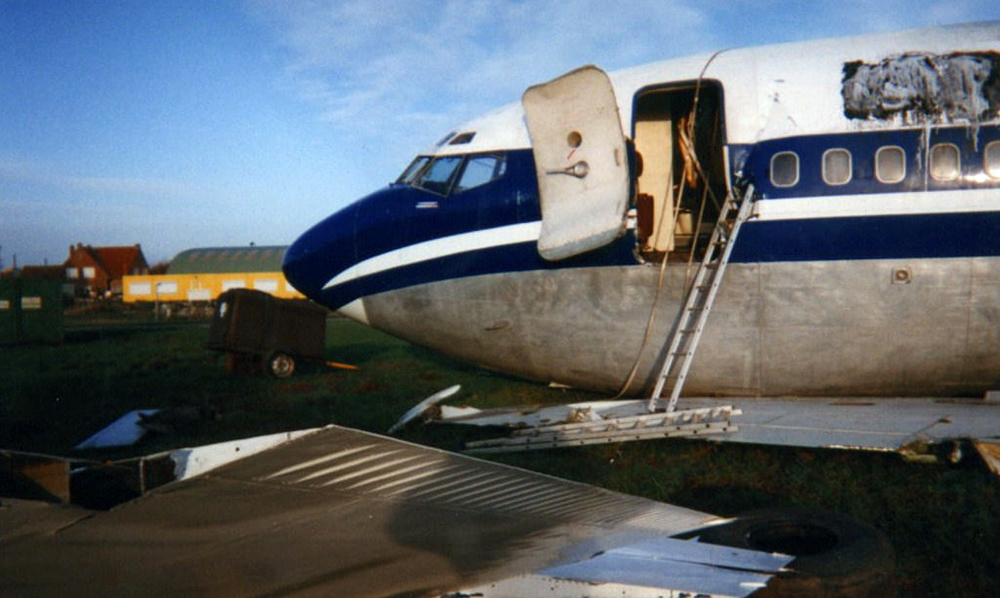
The aircraft departed Ostend Airport at 0328LT on a cargo flight to Lagos, carrying five crew members and a load of 35 tons of electronics. About 20 minutes into the flight, while cruising at an altitude of 24,000 feet over the border between Brussels and Paris ARTCC, the crew informed ATC about severe turbulences. Few seconds later, he reported the loss of the engine n°3 that separated and elected to return to Ostend. After being cleared, the crew started a circuit and while descending to Ostend Airport, the hydraulic systems failed. The crew completed a holding pattern to burn fuel and was later cleared to land on runway 26. After touchdown, the aircraft was unable to stop within the remaining distance, overran, lost its undercarriage, slid for few dozen metres and eventually came to rest near the localizer antenna. All five crew members escaped uninjured while the aircraft was damaged beyond repair.
Probable cause:
Laboratory analyses revealed the presence of a fatigue crack on the inner mid spar fitting of the engine n°3. The crack has been present for a reasonable time. The Airworthiness Directive 93-11-02 asks the replacement of the fittings by improved model at least for July 97. The fittings of engine n°3 were from the old design. Due to the non application of AD 93-11-02, the aircraft was in a non-airworthy condition.
Final Report:


Crash of a Max Holste M.H.1521C Broussard in Kooigem
Date & Time:
Oct 28, 1972 at 1755 LT
Registration:
F-BEHE
Survivors:
Yes
Schedule:
Marcq-en-Barœl - Marcq-en-Barœl
MSN:
07C
YOM:
1957
Crew on board:
1
Crew fatalities:
Pax on board:
0
Pax fatalities:
Other fatalities:
Total fatalities:
0
Aircraft flight hours:
4761
Circumstances:
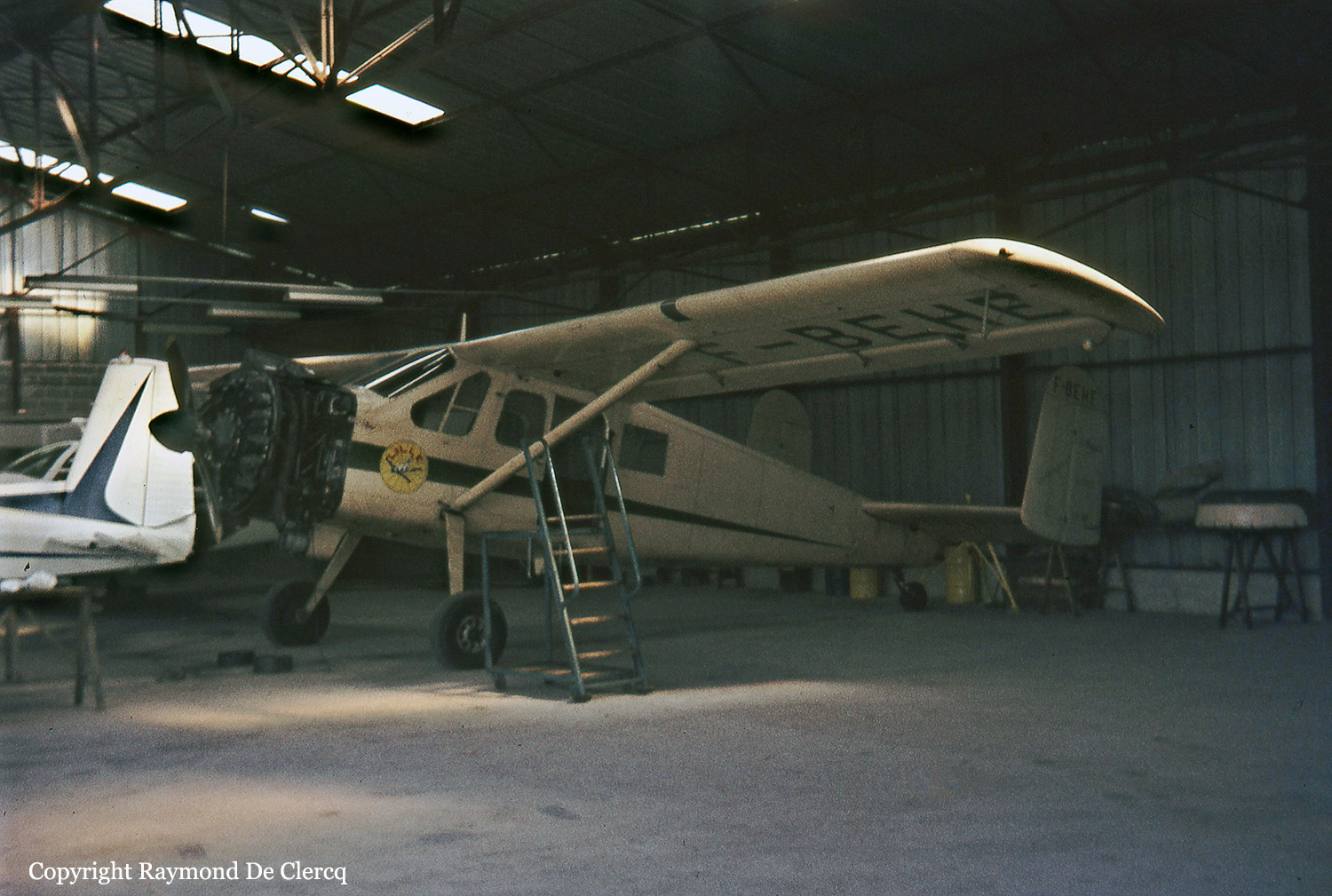
The single engine airplane departed Marcq-en-Barœl Aerodrome (Bondues, north of Lille) on a local skydiving mission. On board were few skydivers (exact number unknown) and one pilot. After all skydivers jumped out, the pilot was forced to leave the aerodrome zone because of the deterioration of the weather conditions. While cruising at an altitude of 1,700 metres, the engine lost power and the action of the pilot were without any effect. He reduced his altitude and attempted an emergency landing when the airplane crash landed in an open field located in Kooigem, Belgium, some 20 km east northeast of Marcq-en-Barœl Aerodrome. The pilot escaped unhurt and the airplane was damaged beyond repair.
Probable cause:
Permission was granted to return the aircraft to its base so that the technical investigation could continue there. The cause of the accident was not investigated as the investigation was set to continue in France.
Final Report:
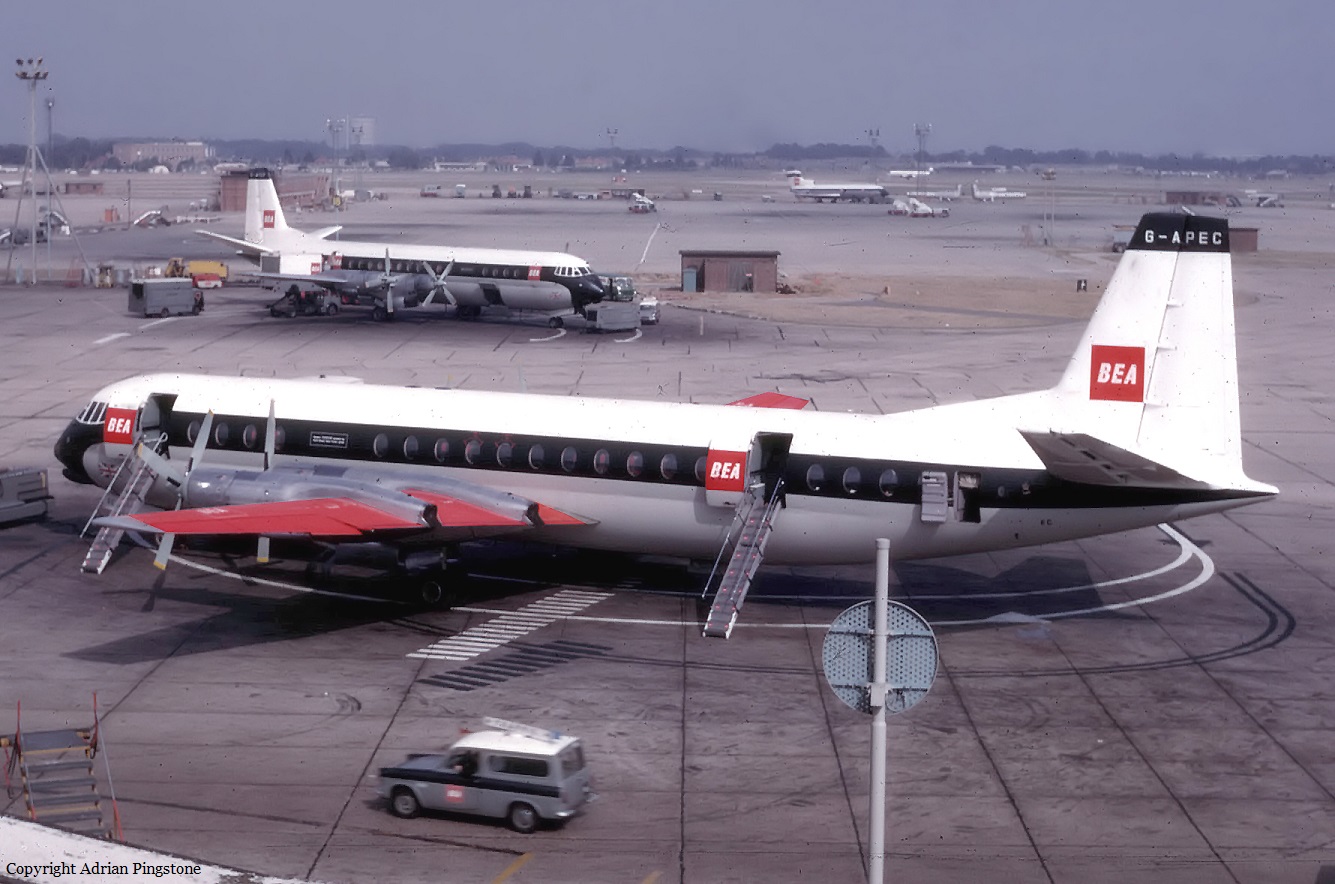
Crash of a Vickers 951 Vanguard in Aarsele: 63 killed
Date & Time:
Oct 2, 1971 at 1110 LT
Operator:

Registration:
G-APEC
Survivors:
No
Schedule:
London - Salzburg
MSN:
706
YOM:
1959
Flight number:
BE706
Crew on board:
8
Crew fatalities:
Pax on board:
55
Pax fatalities:
Other fatalities:
Total fatalities:
63
Captain / Total hours on type:
1927.00
Copilot / Total hours on type:
764
Aircraft flight hours:
21683
Aircraft flight cycles:
17261
Circumstances:
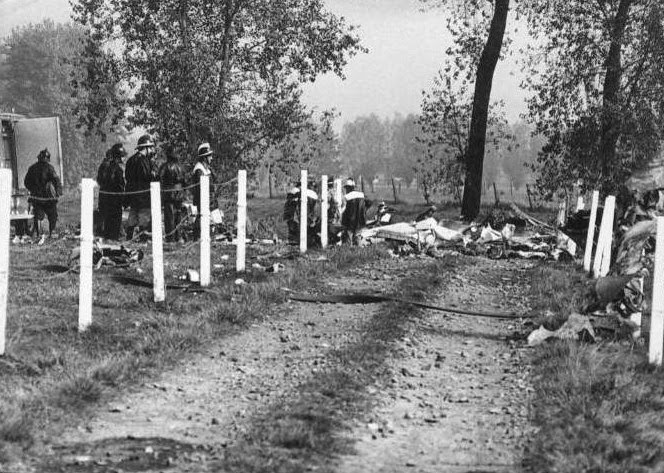
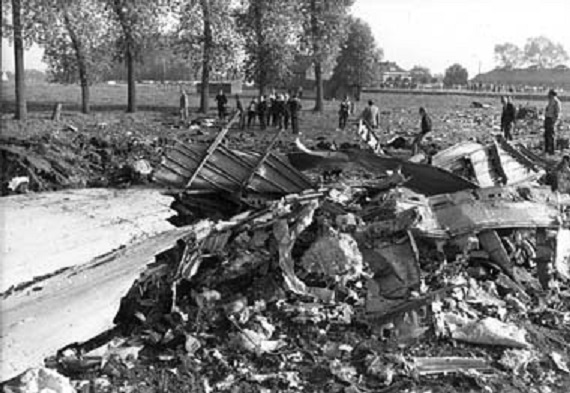
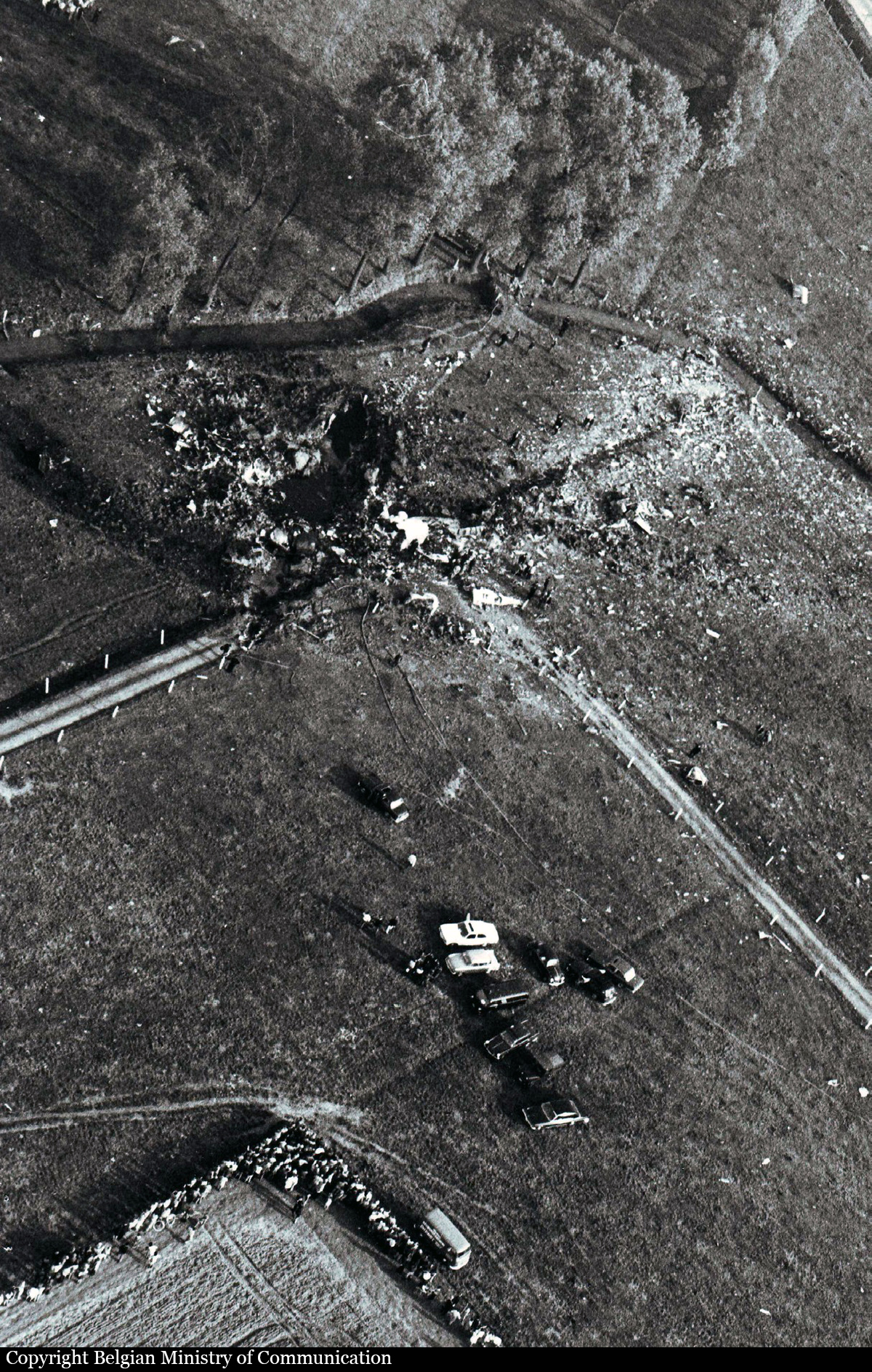
En route from London-Heathrow to Salzburg at an altitude 19,000 feet, the rear pressure bulkhead ruptured. An explosive decompression of the fuselage occurred, causing serious interior damage and severe distortion of upper tailplane skin attachments. The tail surfaces subsequently detached, causing the airplane to enter a steep dive. The Vanguard spiraled down out of control and crashed in a field next to a highway. During the investigation corrosion was found in the lower part of the rear pressure bulkhead underneath plating that was bonded to the structure. The bond was completely delaminated in this area and the bulkhead material literally eaten away. Fluid contamination, perhaps from the lavatory, was thought to have been the root cause for the corrosion.
Probable cause:
The accident was caused by the rupture of the rear pressure bulkhead, which led to the separation both tailplanes in flight and caused the aircraft to dive into the ground.
Final Report:
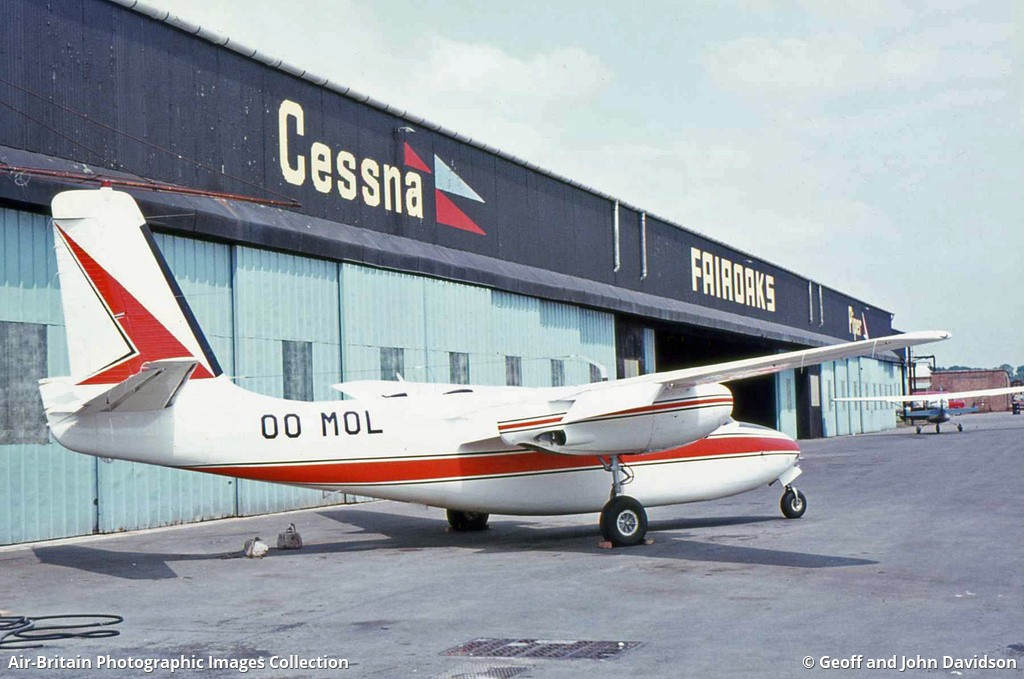
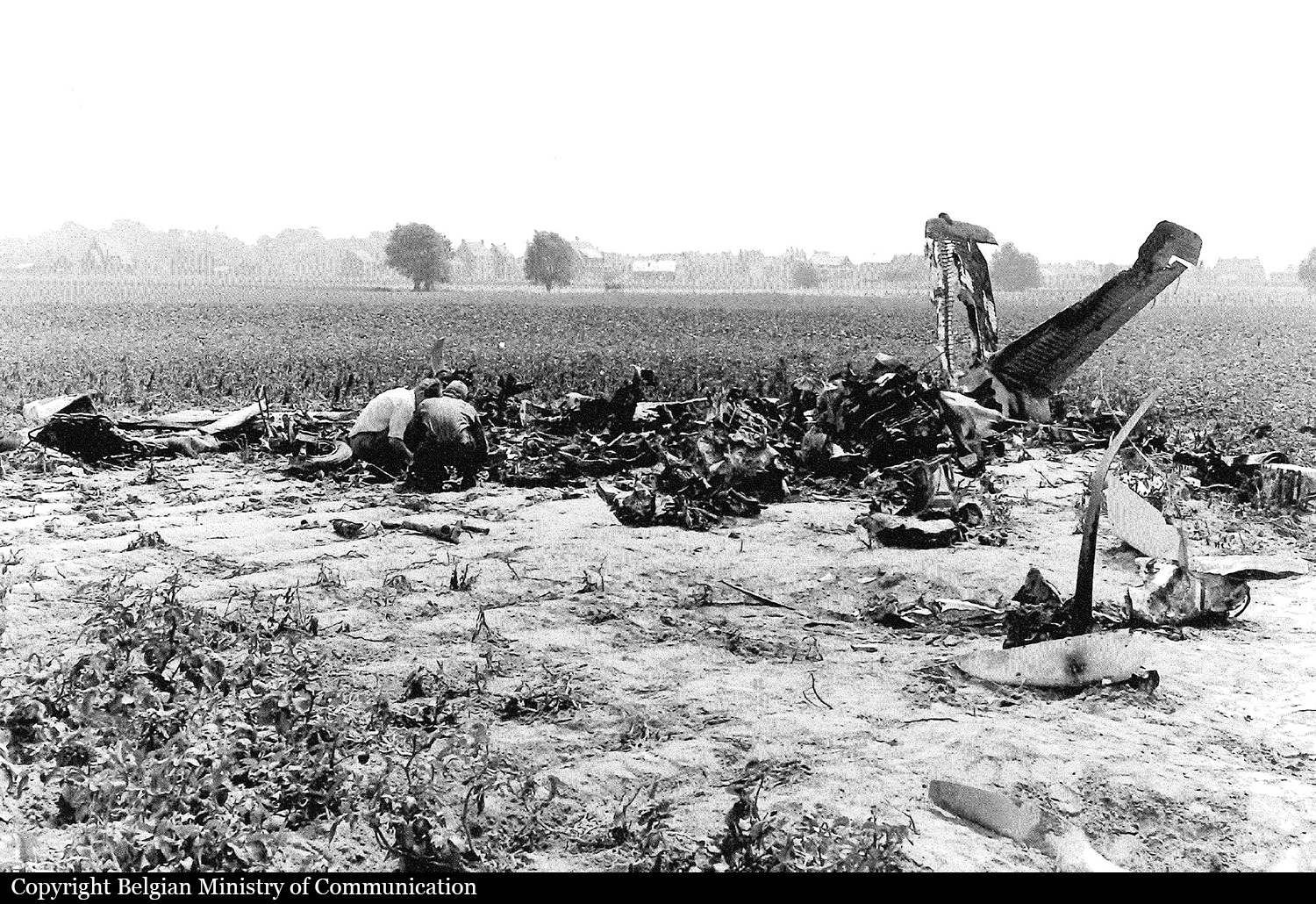
Crash of a Rockwell Grand Commander 680 in Moorsele: 3 killed
Date & Time:
Jul 10, 1970 at 1910 LT
Operator:

Registration:
OO-MOL
Survivors:
No
Schedule:
London-Gatwick - Moorsele
MSN:
680-516-186
YOM:
1958
Crew on board:
1
Crew fatalities:
Pax on board:
2
Pax fatalities:
Other fatalities:
Total fatalities:
3
Captain / Total hours on type:
9.00
Aircraft flight hours:
2225
Circumstances:
The twin engine airplane departed London-Gatwick Airport on a VFR flight to Moorsele, carrying two passengers and one pilot. On final approach to runway 22, the pilot completed two low passes over the runway. After the second low pass, at a height of about 100 metres, he initiated a sharp turn to the left when the airplane stalled, nosed down and crashed 250 from the runway threshold, bursting into flames. The airplane was totally destroyed and all three occupants were killed.
Probable cause:
The accident is believed to have been caused by an improper control maneuver. While executing a steep turn, the aircraft entered a stall, followed by a spin. Given the low altitude at which the maneuver was performed, normal flight could not be regained.
Final Report:

Crash of a Cessna 401 in Snaaskerke
Date & Time:
Dec 9, 1969 at 1552 LT
Operator:

Registration:
D-IFLI
Survivors:
Yes
Schedule:
Cologne - Ostend
MSN:
401-0033
YOM:
1967
Crew on board:
1
Crew fatalities:
Pax on board:
0
Pax fatalities:
Other fatalities:
Total fatalities:
0
Circumstances:
The pilot departed Cologne Airport on a solo executive flight to Ostend. While descending to the destination airport, he was positioning the aircraft into a tailwind for a visual approach when both engines stopped simultaneously. He informed ATC he could not reach the airport, reduced his altitude and attempted an emergency landing when the airplane crashed in an open field located in Snaaskerke, 4 km southeast of the airport. The pilot was injured and the airplane was destroyed.
Probable cause:
The cause of the emergency landing was the nearly simultaneous failure of both engines due to a lack of fuel, resulting from a prolonged usage of the auxiliary fuel tanks.
The following findings were identified:
- During the cruise flight, both engines were connected to the auxiliary tanks.
- After 38 minutes of flight, both engines shut down almost simultaneously due to a lack of fuel.
- The pilot did not pay sufficient attention to the fuel levels in the auxiliary tanks. He did not monitor the gauges for these tanks. - The pilot disregarded the recommendation in the Owner’s Manual not to use the auxiliary tanks during the final approach (below 1,000 feet).
- The pilot failed to perform the critical actions necessary for a rapid restart of the engines.
- The pilot did not follow the recommended procedure for a forced landing with both engines out.
- The flight ended in a stall at very low altitude.
- There was sufficient fuel remaining in both main tanks.
The following findings were identified:
- During the cruise flight, both engines were connected to the auxiliary tanks.
- After 38 minutes of flight, both engines shut down almost simultaneously due to a lack of fuel.
- The pilot did not pay sufficient attention to the fuel levels in the auxiliary tanks. He did not monitor the gauges for these tanks. - The pilot disregarded the recommendation in the Owner’s Manual not to use the auxiliary tanks during the final approach (below 1,000 feet).
- The pilot failed to perform the critical actions necessary for a rapid restart of the engines.
- The pilot did not follow the recommended procedure for a forced landing with both engines out.
- The flight ended in a stall at very low altitude.
- There was sufficient fuel remaining in both main tanks.
Final Report:
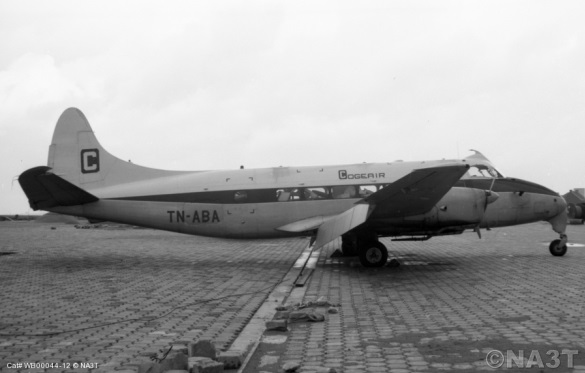
Crash of a De Havilland DH.114 Heron 1B in Ruddervoorde
Date & Time:
Jul 11, 1969 at 1642 LT
Operator:

Registration:
TN-ABA
Survivors:
Yes
Schedule:
Charleroi – London-Gatwick
MSN:
14034
YOM:
1953
Crew on board:
1
Crew fatalities:
Pax on board:
0
Pax fatalities:
Other fatalities:
Total fatalities:
0
Captain / Total hours on type:
0.00
Aircraft flight hours:
16723
Circumstances:
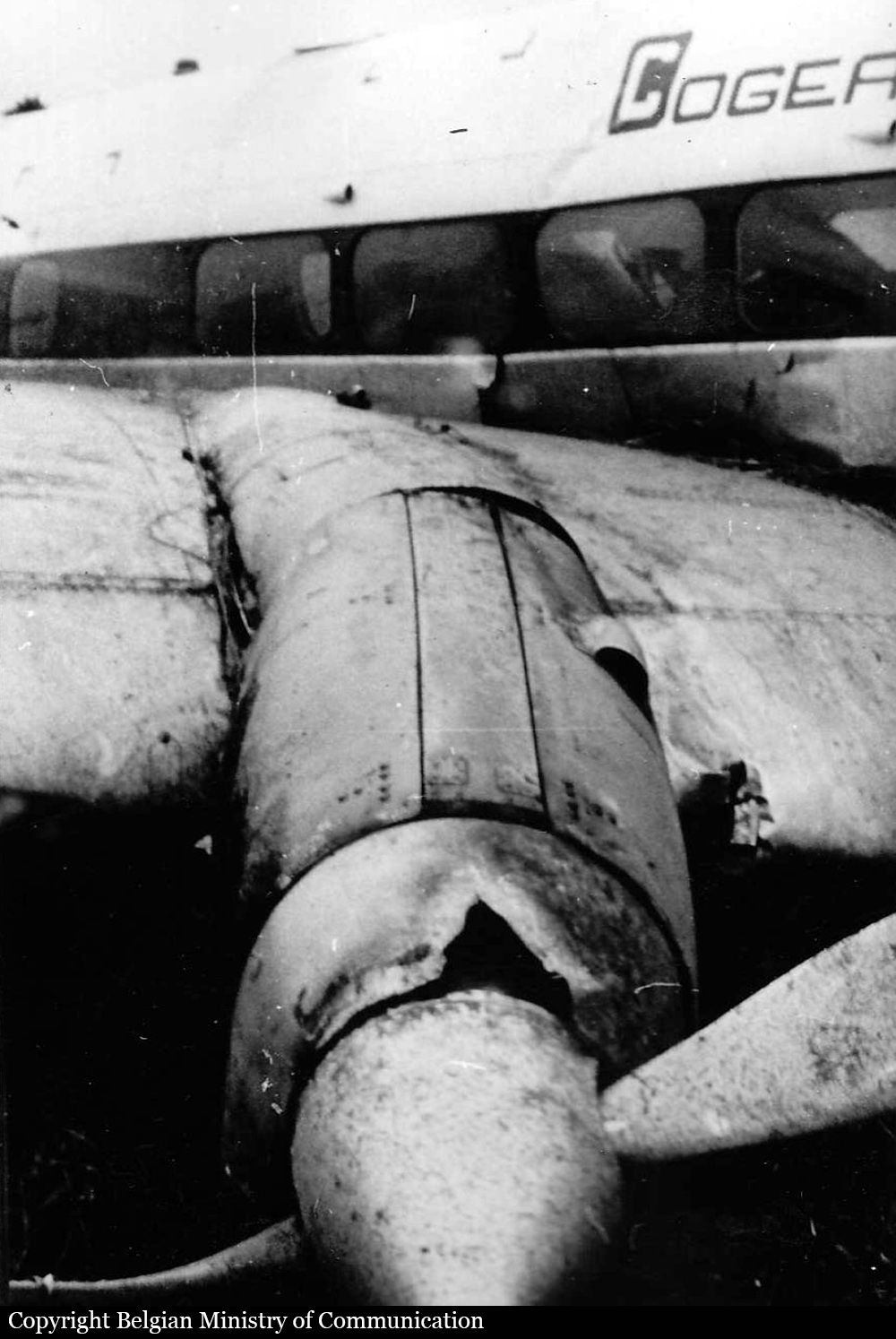
The airplane arrived in Charleroi on January 24 and was parked there since. In June, a ferry permit was issued and on July 11, it was decided to ferry the airplane from Charleroi to London-Gatwick Airport. The pilot departed Charleroi-Gosselies Airport at 1551LT. At 1634LT, while at cruising altitude, the engine n°4 suffered vibrations and the pilot decided to shut it down. Three minutes later, the engine n°3 emitted smoke then caught fire. The pilot was able to shut it down but for unknown reason could not feather its propeller. He reduced his altitude and attempted to make an emergency landing when the airplane struck trees and crash landed in a potatoes field. The pilot was unhurt while the aircraft was considered as damaged beyond repair. The pilot's total flying hours was 8,530 with zero experience on this type of aircraft.
Probable cause:
The cause of the accident was the in-flight failure of two engines. The initial cause of this failure was most likely due to a failure to follow the manufacturer’s prescribed procedure for restarting the engines after a relatively long period of inactivity.
Final Report:

Crash fo a De Havilland DHC-2 Beaver AL1 off Zeebrugge: 1 killed
Date & Time:
Jan 24, 1962 at 1843 LT
Operator:

Registration:
XP813
Survivors:
No
Schedule:
Antwerp – Manston
MSN:
1469
YOM:
1961
Crew on board:
1
Crew fatalities:
Pax on board:
0
Pax fatalities:
Other fatalities:
Total fatalities:
1
Circumstances:
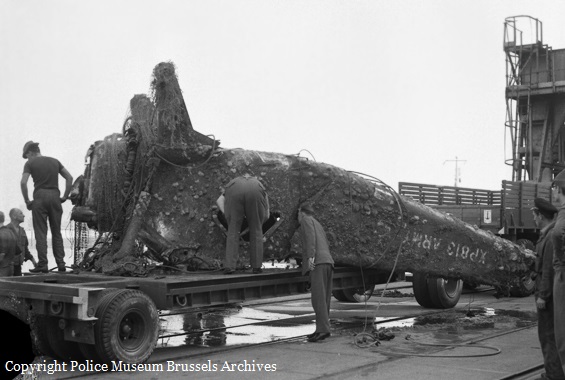
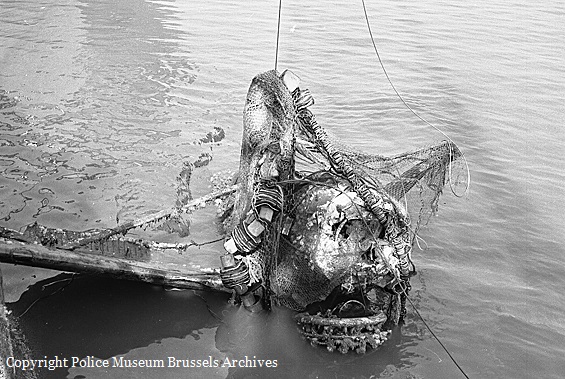
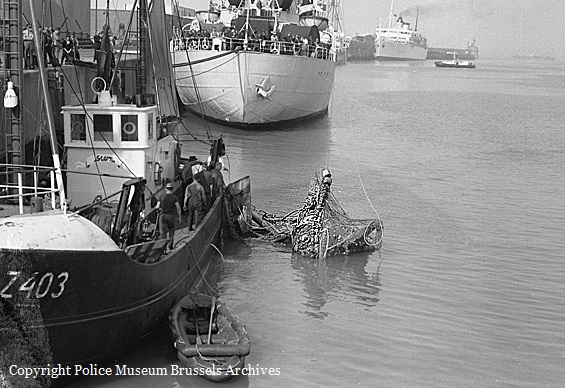
En route from Antwerp to Manston, Kent, the single engine aircraft went out of control and crashed into the sea off Zeebrugge (WZC de Noordhinder). The pilot was killed and the aircraft was later recovered.
Crew:
WO2 S. Mousley, pilot.
Crew:
WO2 S. Mousley, pilot.
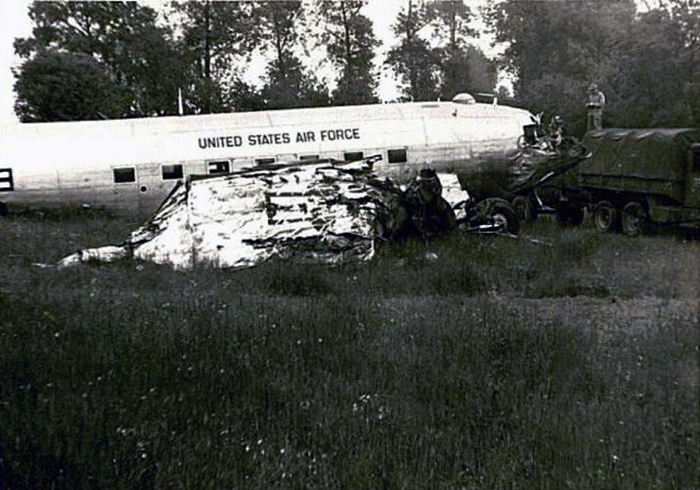
Crash of a Douglas C-47D in Deftinge
Date & Time:
May 28, 1955 at 1315 LT
Operator:

Registration:
43-48479
Survivors:
Yes
Schedule:
Paris – Copenhagen
MSN:
14295/25740
YOM:
1944
Crew on board:
5
Crew fatalities:
Pax on board:
0
Pax fatalities:
Other fatalities:
Total fatalities:
0
Circumstances:
The airplane departed Paris-Orly on a flight to Copenhagen-Kastrup. While overflying Belgium, the crew encountered technical issues with an engine. The captain ordered his crew to bail out, and sole on board, he elected to make an emergency landing when the airplane hit trees, lost its tail and crashed in a field. The pilot was uninjured while the aircraft was damaged beyond repair. All four other crew members were uninjured as well.
Probable cause:
Engine failure.