Crash of a Piper PA-31T-1040 Cheyenne III in Sachs Harbour: 5 killed

Date & Time: Sep 22, 1989
Type of aircraft:
Operator:
Registration:
C-GBDH
Survivors:
No
MSN:
31-8375003
YOM:
1983
Country:
Crew on board:
1
Crew fatalities:
Pax on board:
4
Pax fatalities:
Other fatalities:
Total fatalities:
5
Circumstances:
On final approach to Sachs Harbour Airport, the pilot encountered limited visibility due to fog when the aircraft crashed in a lake located 600 meters short of runway. All five occupants were killed.
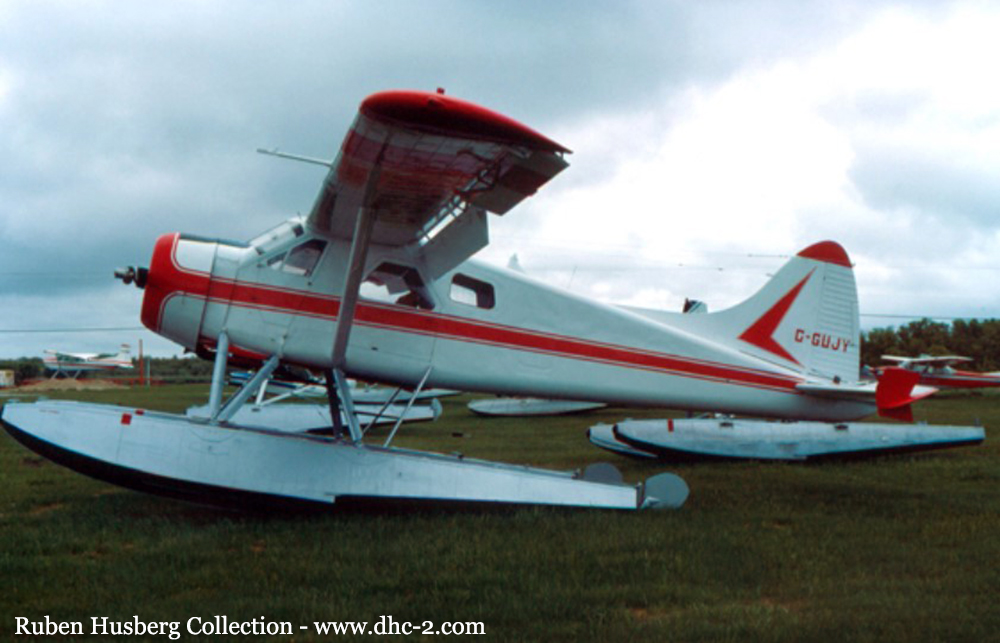
Crash of a De Havilland DHC-2 Beaver near Taltheilei Narrows: 6 killed

Date & Time: Aug 21, 1989 at 1105 LT
Type of aircraft:
Registration:
C-GUJY
Flight Phase:
Survivors:
No
Schedule:
Taltheilei Narrows – Yellowknife
MSN:
393
YOM:
1952
Country:
Crew on board:
1
Crew fatalities:
Pax on board:
5
Pax fatalities:
Other fatalities:
Total fatalities:
6
Captain / Total flying hours:
2026
Captain / Total hours on type:
789.00
Aircraft flight hours:
6488
Circumstances:
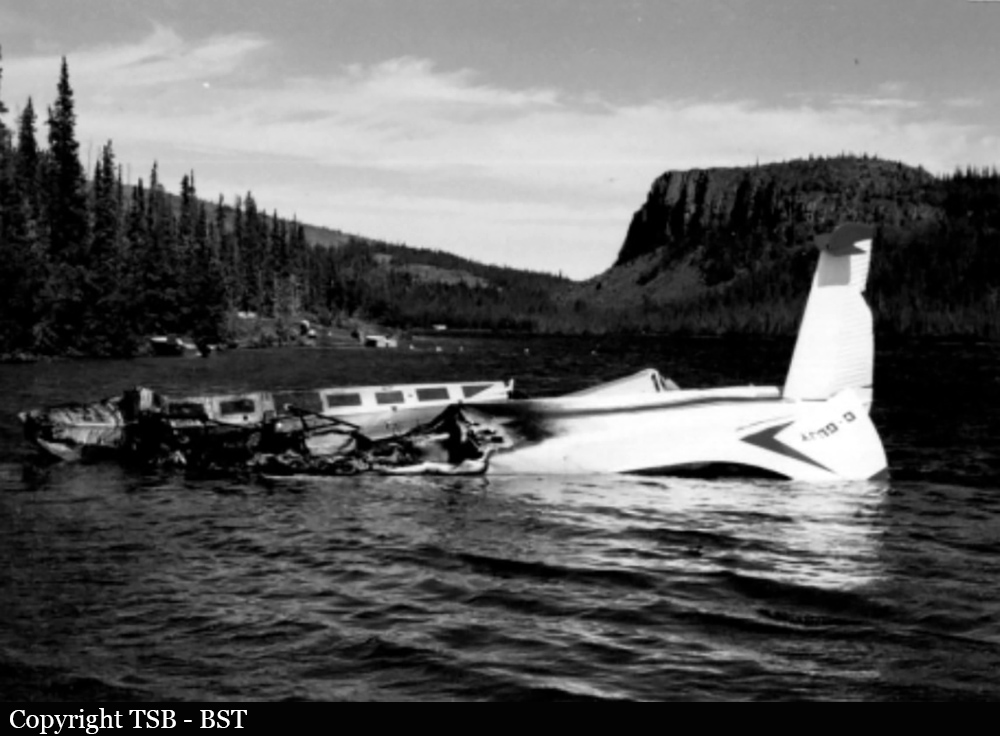
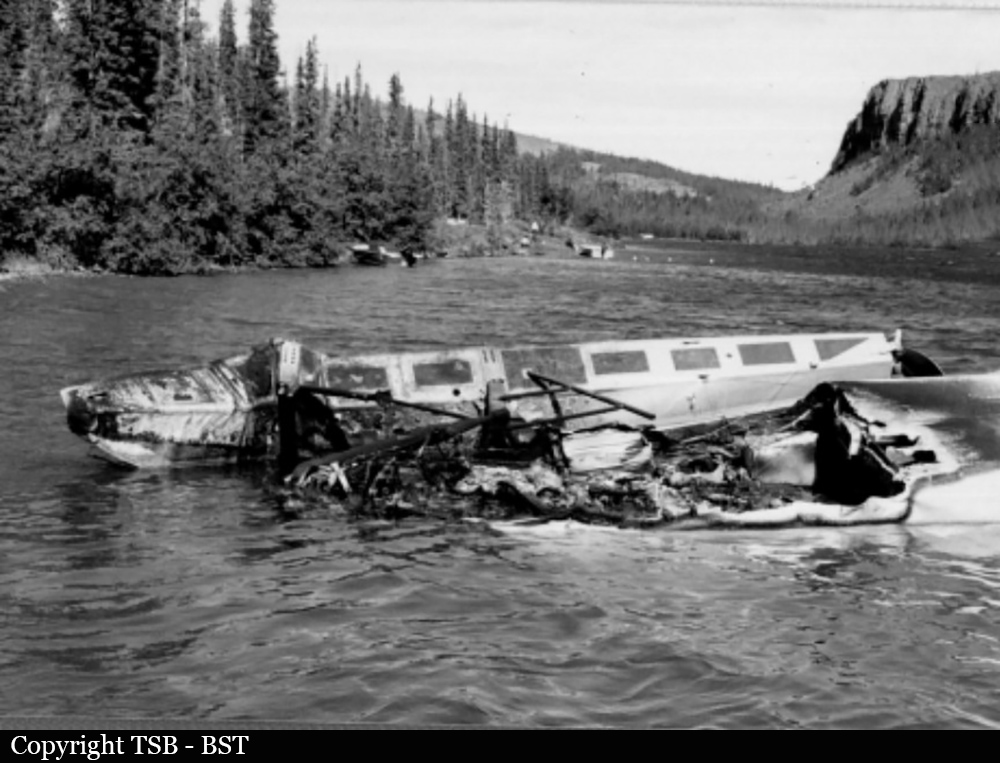
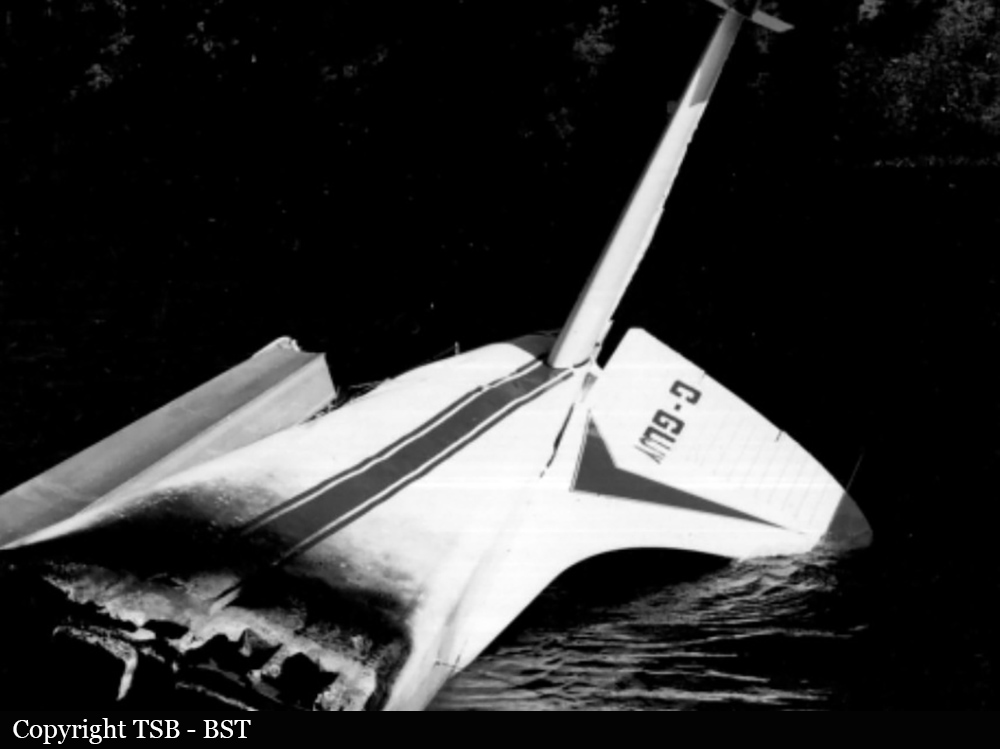
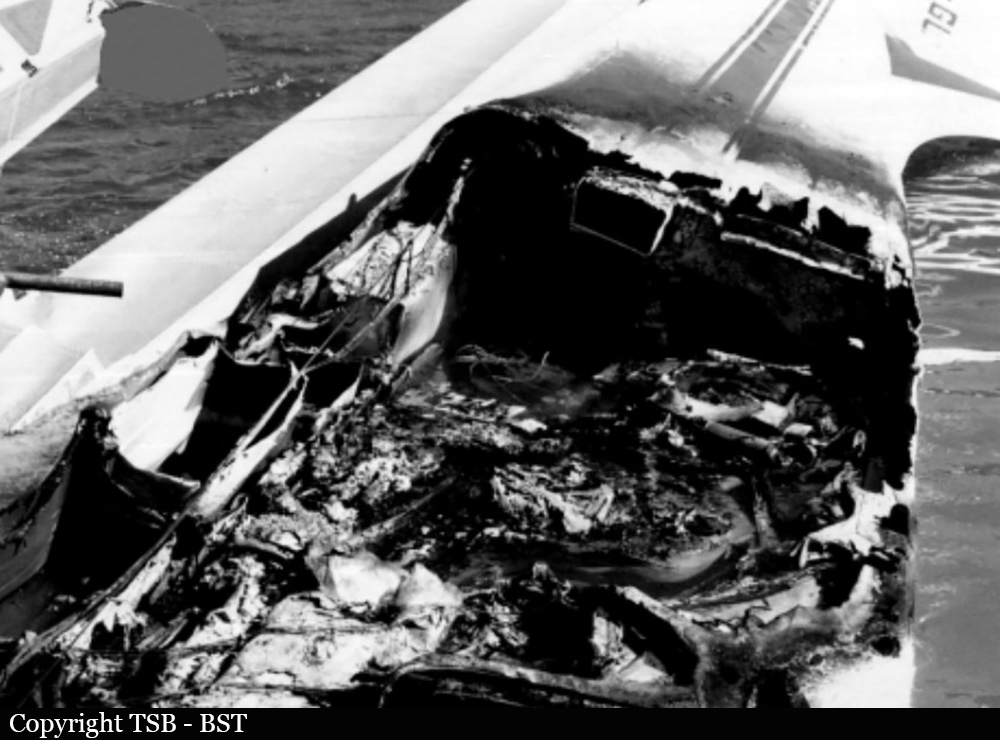
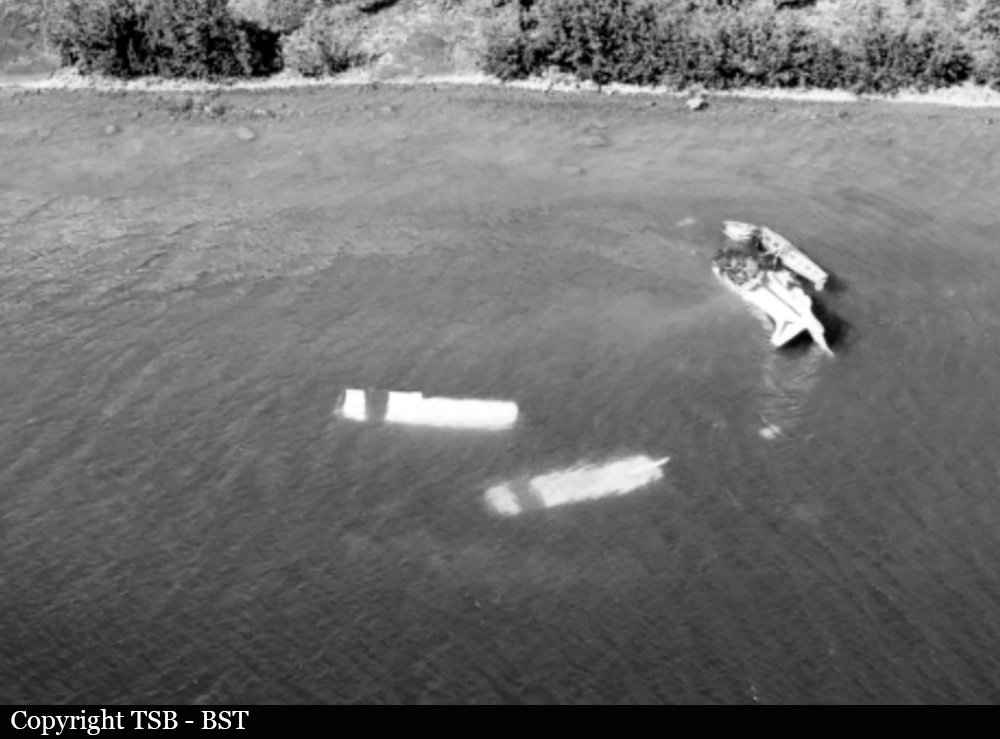
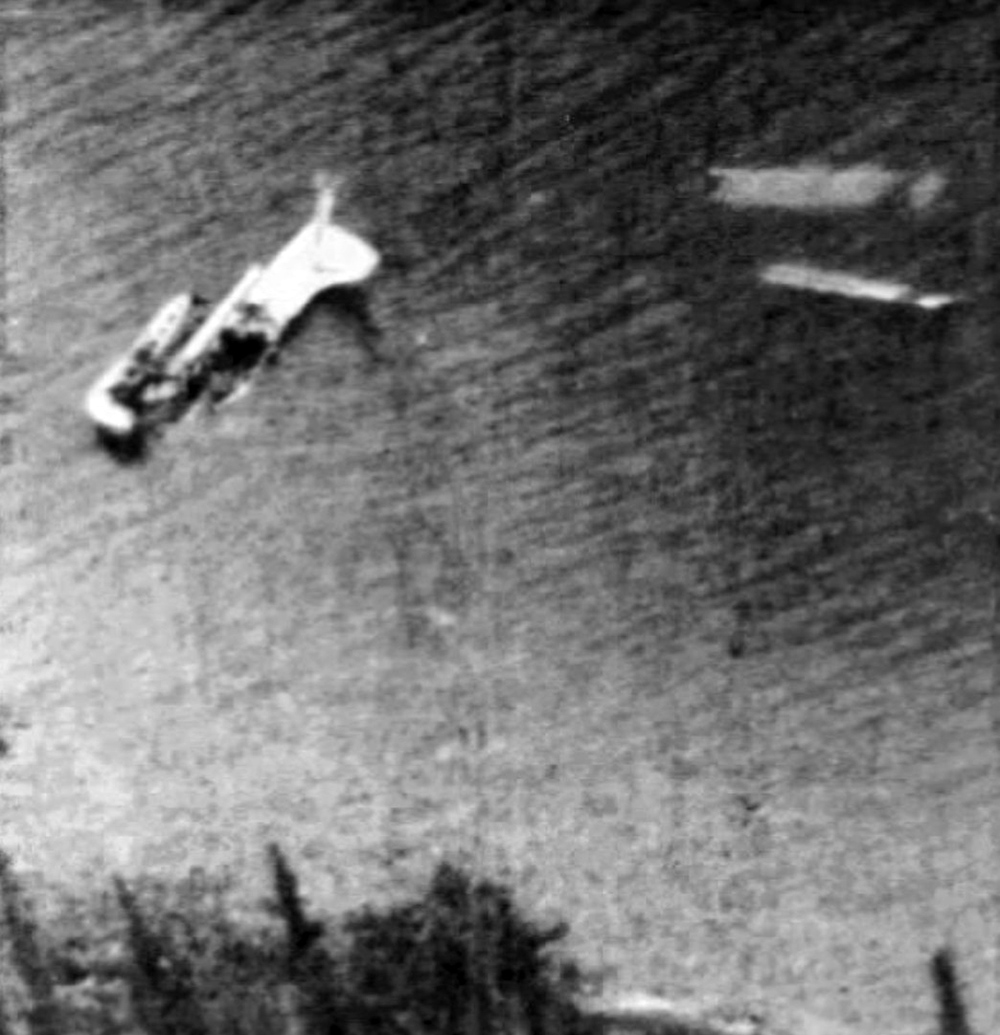
The float-equipped Beaver aircraft, with only the pilot on board, departed a fishing lodge located at Taltheilei Narrows, Northwest Territories on the north shore of Great Slave Lake, and flew to a sheltered bay 10 NM southwest of the lodge. The pilot landed, and five sports-fishermen boarded the aircraft from a group of small fishing boats. The passengers were to be flown to Yellowknife, NWT, a distance of 80 NM. A second float-equipped aircraft, loaded with the fishermen's baggage, circled overhead. The Beaver was observed to backtrack toward the entrance of the bay, then turn and take off in a northeasterly direction. After liftoff, the Beaver was seen to climb to an estimated height of 100 to 200 feet above the water surface, the enter a left turn, descend, and strike shallow water near the shore in a steep, nose-down, left-wing-low attitude. On impact with the water, both wings separated from the fuselage. Black smoke and fire were observed coming from the fuselage area. The pilot of the second aircraft attracted the attention of the fishing guides in the boats, who rushed to the accident scene. When the second aircraft landed in the bay, the fire was well developed and had enveloped the right side of the fuselage, which was above the water level. The pilot and five passengers died. The accident occurred at 1105LT at latitude 62° 26' N, longitude 111° 38' W, during the hours of daylight, at an elevation of approximately 514 feet above sea level.
Probable cause:
The pilot stalled the aircraft while attempting a downwind turn in conditions of severe wind shear, and he was unable to regain control of the aircraft before it struck the water.
Final Report:

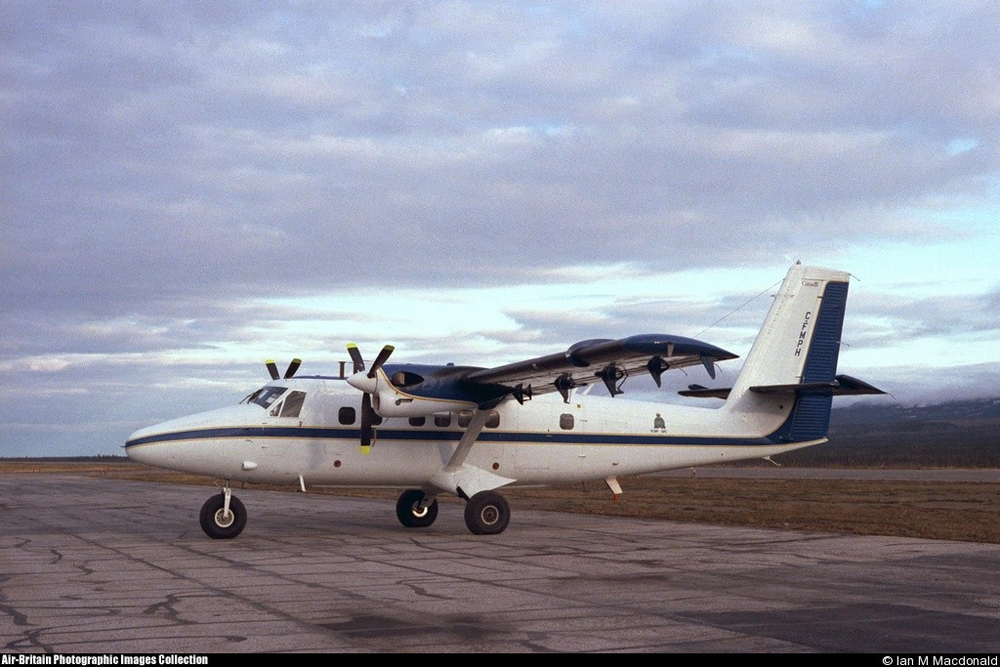
Crash of a De Havilland DHC-6 Twin Otter 300 in Colville Lake

Date & Time: May 27, 1989 at 1130 LT
Operator:
Registration:
C-FMPH
Flight Phase:
Flight Type:
Survivors:
Yes
Schedule:
Colville Lake - Fort Good Hope
MSN:
319
YOM:
1971
Country:
Crew on board:
1
Crew fatalities:
Pax on board:
4
Pax fatalities:
Other fatalities:
Total fatalities:
0
Circumstances:
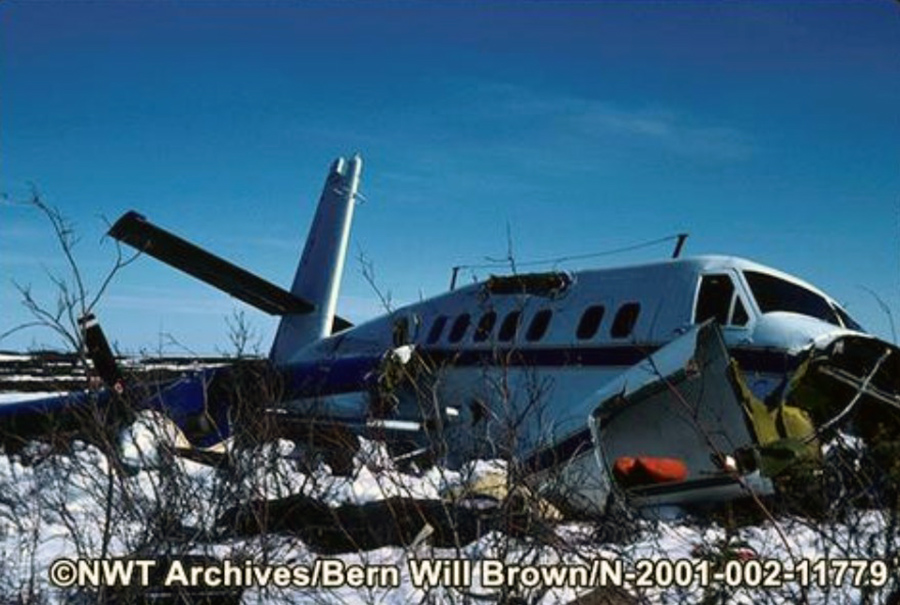
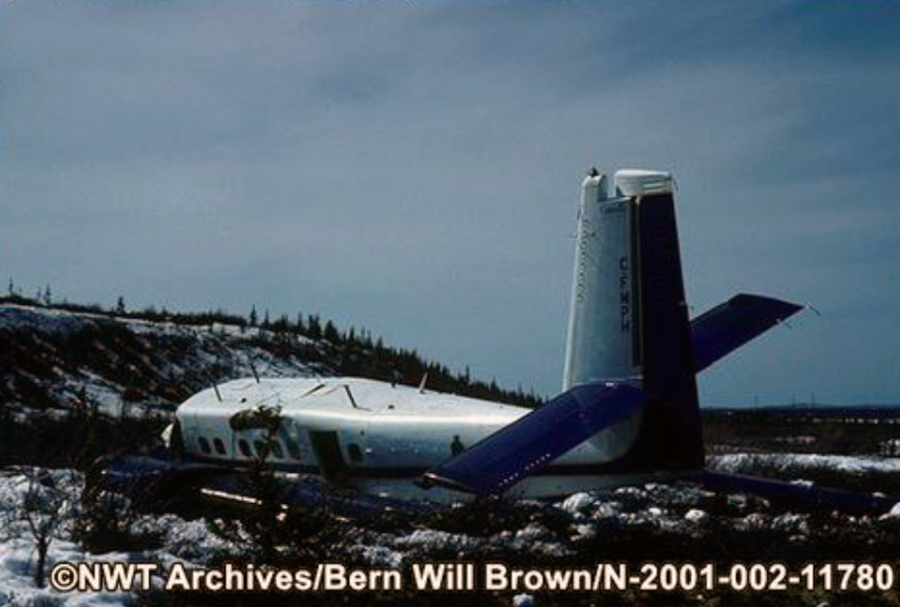
While taking off from a gravel airstrip at Colville Lake, the twin engine aircraft went out of control, veered off runway and collided with an airport building. All five occupants were rescued and the aircraft was damaged beyond repair.

Crash of a Beechcraft B90 King Air in Fort Simpson: 3 killed

Date & Time: Oct 16, 1988
Type of aircraft:
Operator:
Registration:
C-GDOM
Survivors:
No
MSN:
LJ-368
YOM:
1968
Country:
Crew on board:
1
Crew fatalities:
Pax on board:
2
Pax fatalities:
Other fatalities:
Total fatalities:
3
Circumstances:
On final approach to Fort Simpson Airport, the twin engine crashed 3 km short of runway, bursting into flames. All three occupants were killed.

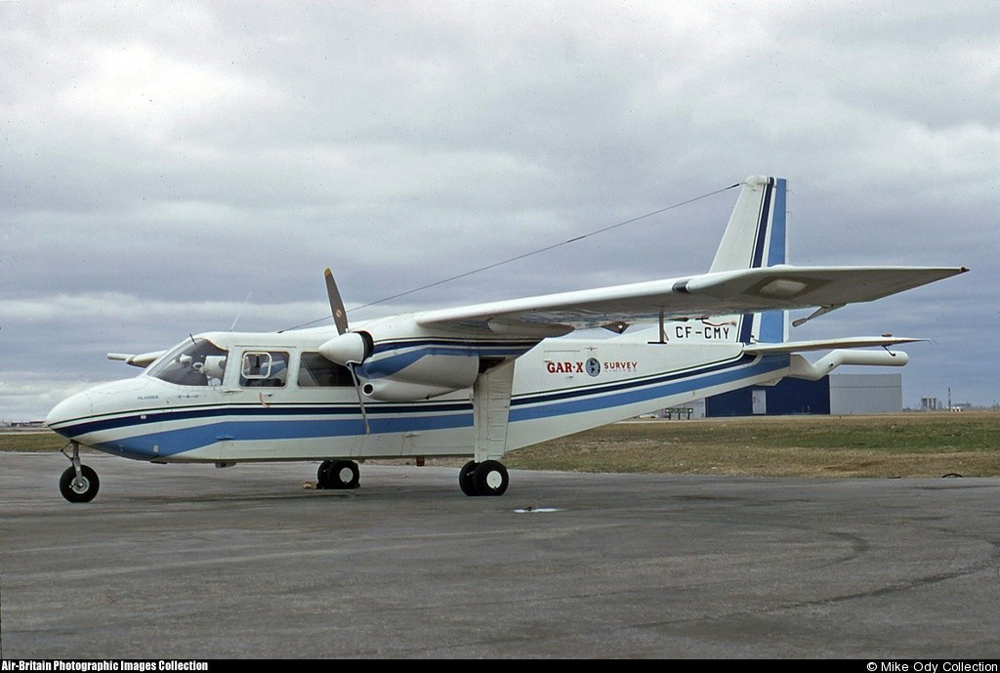
Crash of a Britten-Norman BN-2A-27 Islander in Norman Wells

Date & Time: Dec 17, 1986 at 1749 LT
Type of aircraft:
Registration:
C-FCMY
Flight Type:
Survivors:
Yes
MSN:
169
YOM:
1970
Country:
Crew on board:
1
Crew fatalities:
Pax on board:
0
Pax fatalities:
Other fatalities:
Total fatalities:
0
Circumstances:
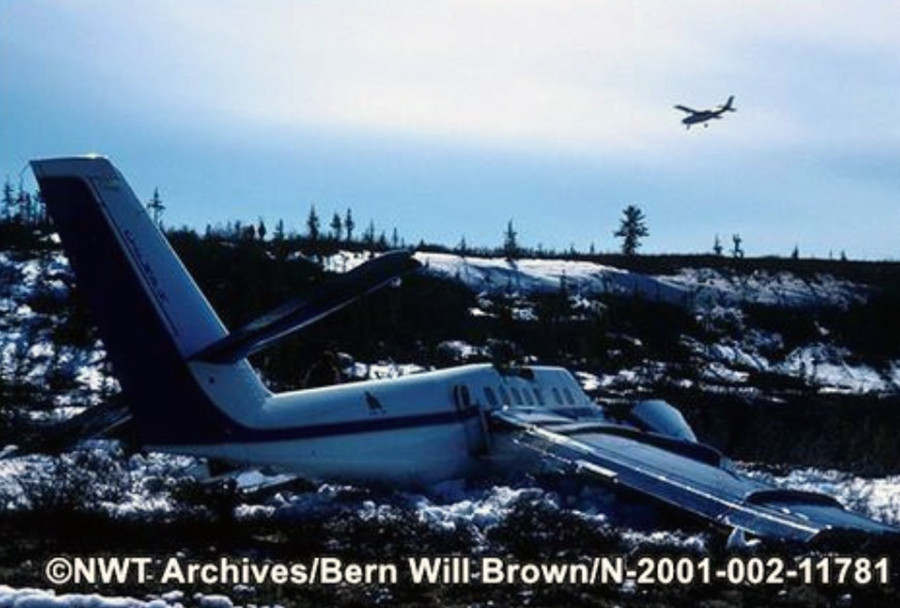
The BN-2A Islander was on a night visual approach to Norman Wells (YVQ) in conditions of low ceilings and reduced visibility. At 500 feet above ground level (agl), the aircraft was in and out of the cloud base, and the pilot observed lights below. Believing he was over the town of Norman Wells, the pilot descended in an attempt to get below the cloud base for a visual right-hand circling approach to runway 08. The pilot was turning onto a northerly heading, when the aircraft struck the ice of the Mackenzie River. The right main gear broke off, and the aircraft bounced and remained airborne for approximately half a mile. It then skidded 600 feet along smooth ice into an area where large blocks of ice brought the aircraft to a stop.
Probable cause:
The following findings were reported:
- The pilot mistook the lights of the oil installations for the lights of the town,
- In an attempt to maintain visual contact with the ground, the pilot descended below a reported 500-foot cloud base in an area where the cloud merged with ground fog, with the result that the aircraft descended to ground level,
- The unserviceable instrument panel light for the pilot's altimeter prevented the pilot from having continuous altitude information.

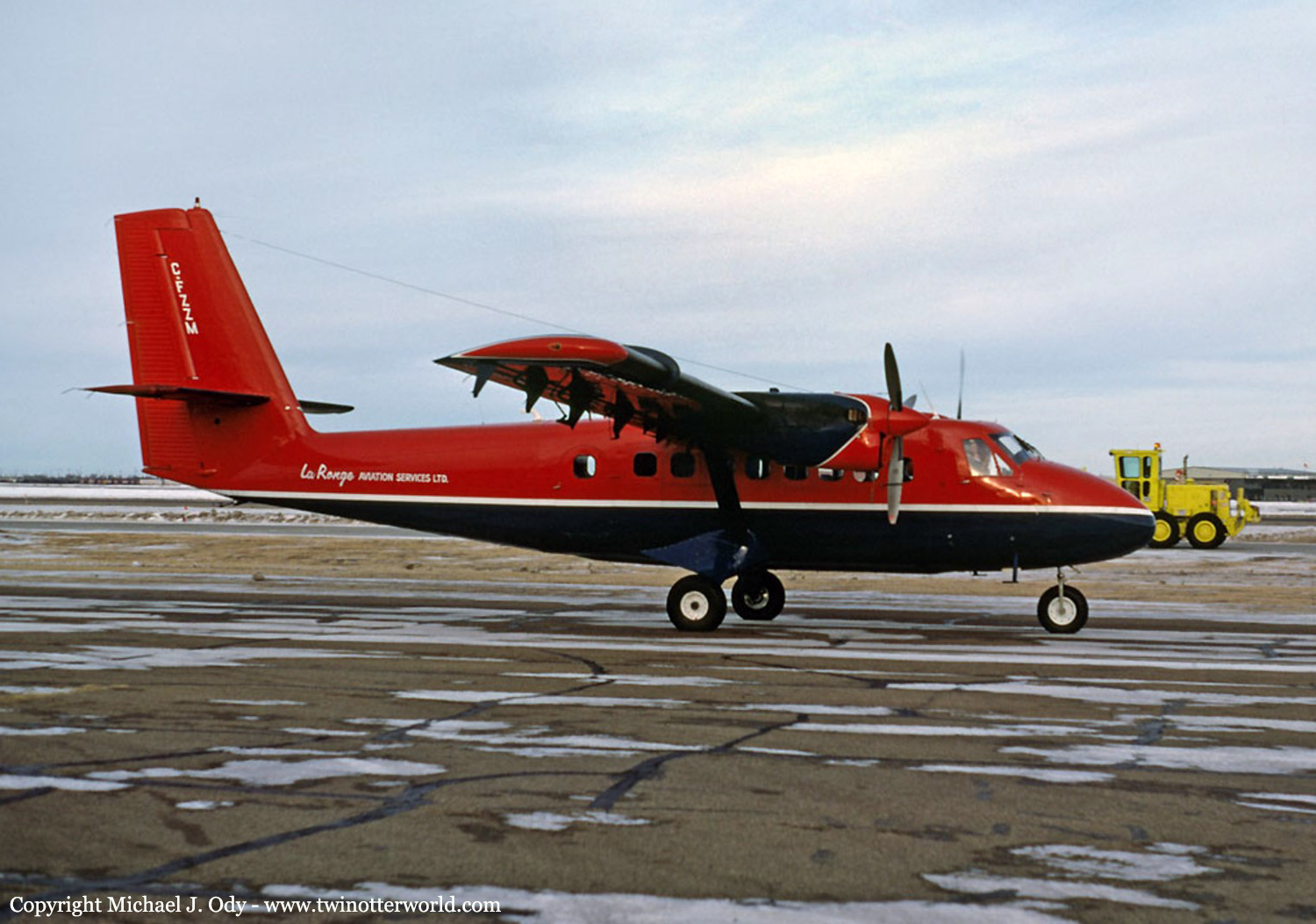
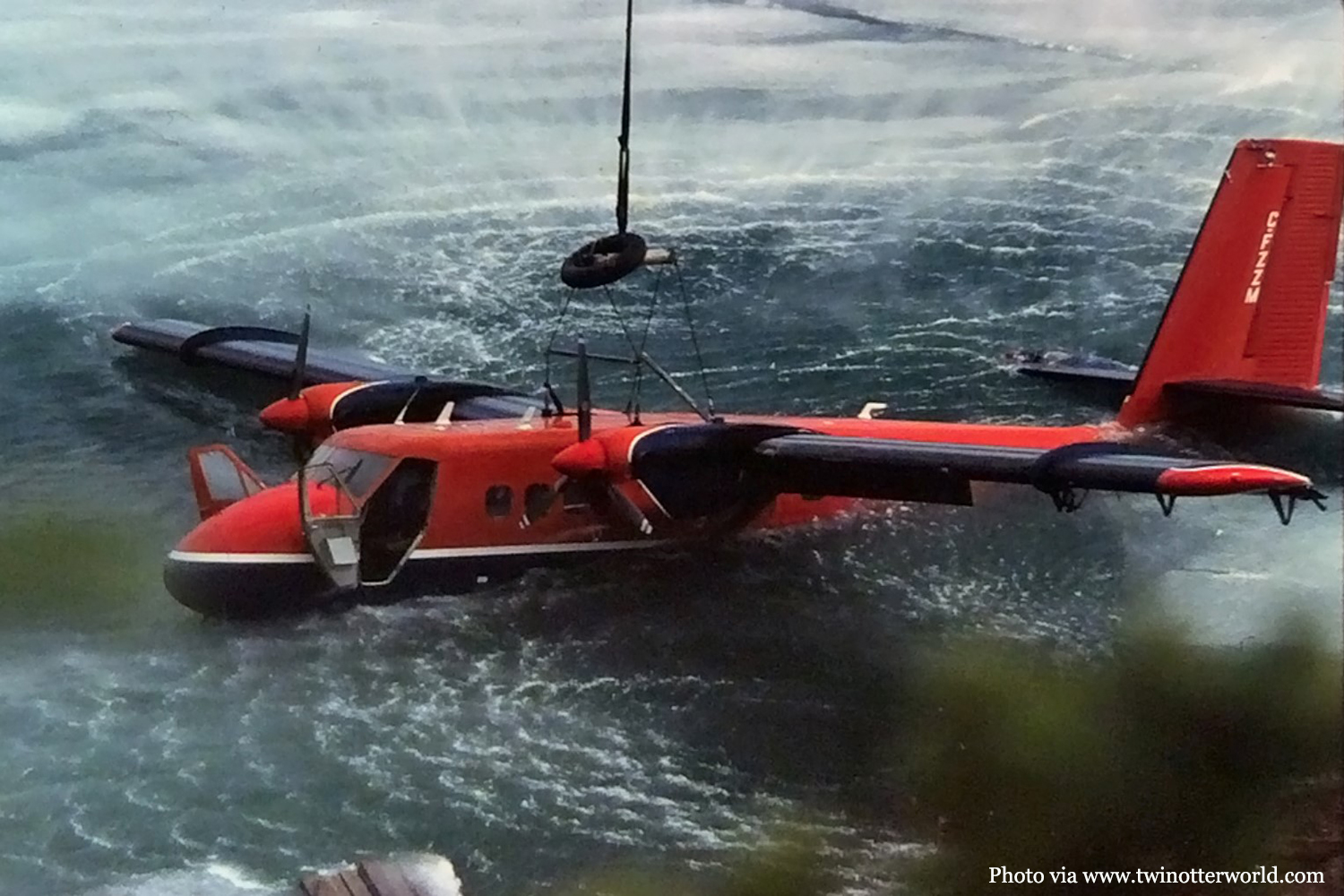
Crash of a De Havilland DHC-6 Twin Otter 200 in Reliance

Date & Time: May 25, 1986
Operator:
Registration:
C-FZZM
Survivors:
Yes
MSN:
156
YOM:
1968
Country:
Crew on board:
0
Crew fatalities:
Pax on board:
0
Pax fatalities:
Other fatalities:
Total fatalities:
0
Circumstances:
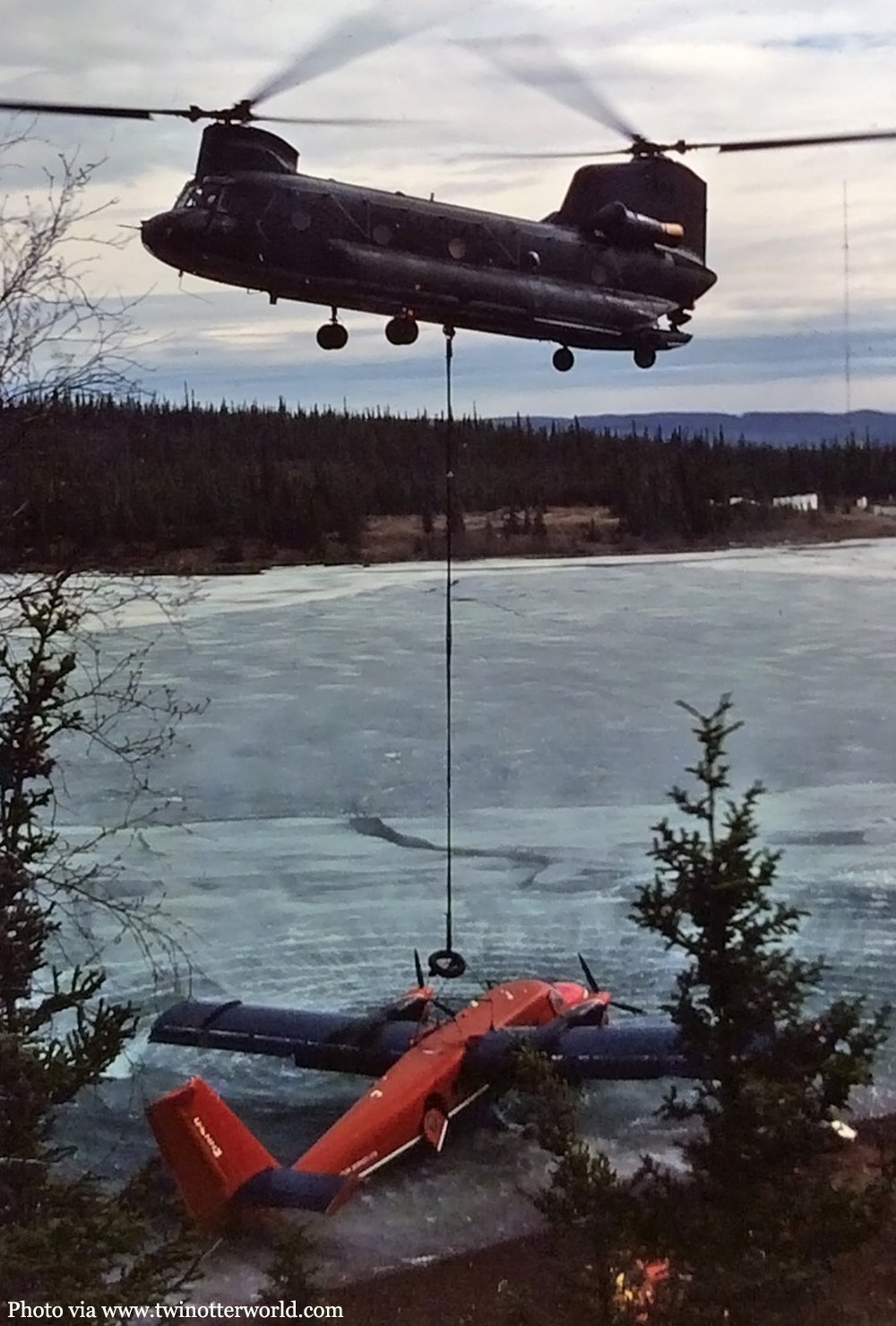
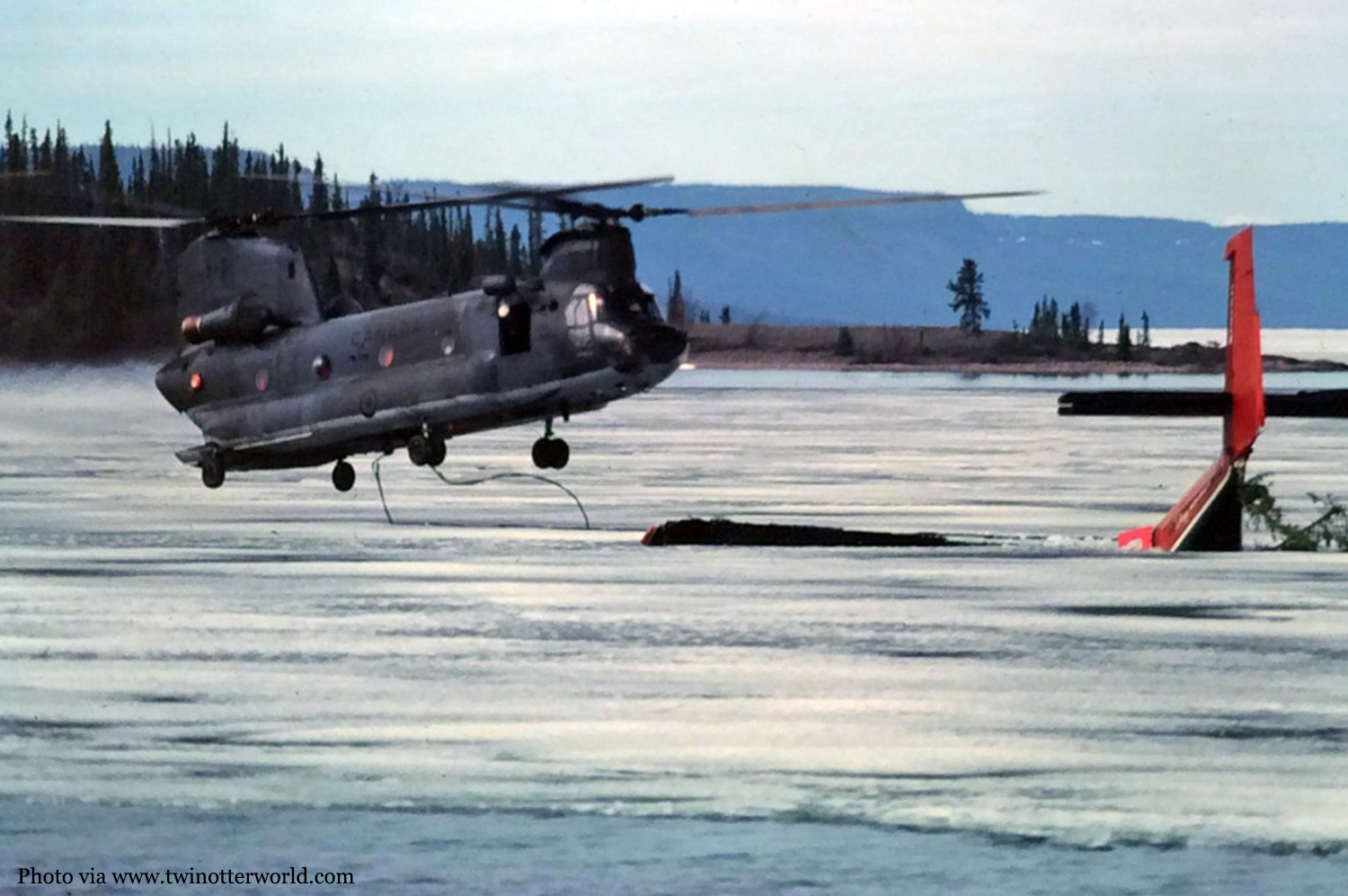
On approximately 25-May-1986, the aircraft landed on lake ice at Reliance, NWT; while taxiing the nose gear settled into a crack in the ice. The people of the community managed to prevent the aircraft from sinking further using pallets and empty drums. While the insurance company assessed methods of possibly removing the aircraft it continued to sink, eventually to a depth where only the tail remained above water. A military Chinook helicopter was eventually dispatched to Reliance, and it successfully lifted the aircraft out of the lake, and set it down in front of the weather station pending preparations to sling load it 143 nm to Yellowknife. After lift off, and a distance of approximately 200 yards the helicopter's load master elected to drop the aircraft, which plowed nose first into the lake, through the remaining lake ice. Some parts were salvageable and barged back to Yellowknife, however the aircraft was a total loss.
Text & photos : www.twinotterworld.com

Crash of a De Havilland DHC-6 Twin Otter 200 in Fort Franklin: 7 killed

Date & Time: Oct 9, 1984 at 1730 LT
Registration:
C-FPPL
Survivors:
No
Schedule:
Fort Norman - Fort Franklin
MSN:
115
YOM:
1968
Flight number:
NAS097
Country:
Crew on board:
2
Crew fatalities:
Pax on board:
5
Pax fatalities:
Other fatalities:
Total fatalities:
7
Aircraft flight hours:
23645
Circumstances:
The aircraft departed Fort Norman at 16:51 and arrived overhead Fort Franklin at approximately 17:15. Because Fort Franklin was shrouded in fog, a local resident contacted the pilot on a portable VHF transceiver and advised him that there was little or no visibility. The pilot replied that he did not think he would be able to land. The resident drove to the airstrip and contacted the pilot again when he heard the aircraft returning. He advised the pilot that visibility was 200-300 feet. The pilot then asked if this was the vertical or horizontal visibility. At that moment the Twin Otter struck a 200-foot-high telecommunications tower while in controlled level fight. Part of the right wing broke off and the aircraft slowly rolled over before striking the ground. The decision of the pilot to continue the approach in foggy weather were possibly influenced by the effects of stress and a greater than usual personal need to complete the flight. The stress was probably caused by the fact that the pilot had been involved in four accidents since March 1984. Although he was a very experienced pilot, his previous employer terminated his employment on 31 August 1984. In their opinion, his ability to make operational decisions was in question. The pilot was hired by Nahanni Air Services one month later.
Probable cause:
The following findings were reported:
- The weather at Fort Franklin was unsuitable for the flight,
- The flight was continued into weather below that which is required for VFR flight,
- An approach to the aerodrome was attempted using the radar altimeter to provide terrain clearance,
- The pilot descended to an altitude below the height of the telecommunications tower,
- A lack of official weather observations and of communications facilities at Fort Franklin deprived the pilot of reliable local weather information on which to base his decisions,
- There exists in the more remote areas of Canada a different attitude with regard to the assessment of risk in flight operations; it is likely that this attitude influenced the decisions and actions of the pilot,
- The operational decisions of the pilot may have been influenced by the effects of stress and a greater than usual personal need to complete the flight,
- Company management may have had a better appreciation of the risk potential associated with the recent events in the pilot's life, if they had more awareness of the effects of stress on performance.

Crash of a De Havilland DHC-6 Twin Otter 200 in Paulatuk: 2 killed

Date & Time: Dec 17, 1983 at 1310 LT
Registration:
C-FGJK
Survivors:
Yes
Schedule:
Inuvik - Paulatuk
MSN:
213
YOM:
1969
Country:
Crew on board:
1
Crew fatalities:
Pax on board:
11
Pax fatalities:
Other fatalities:
Total fatalities:
2
Circumstances:
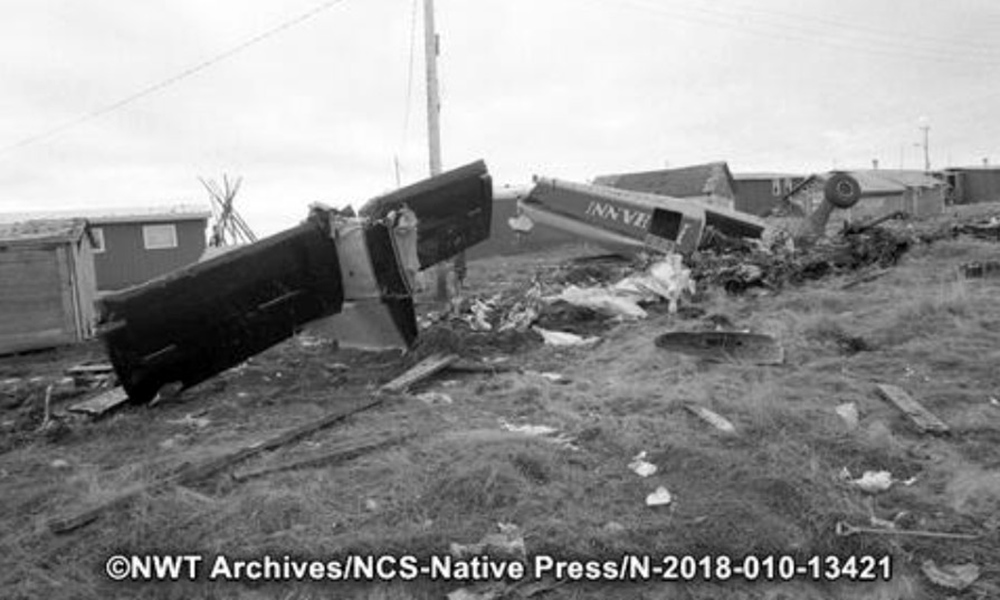
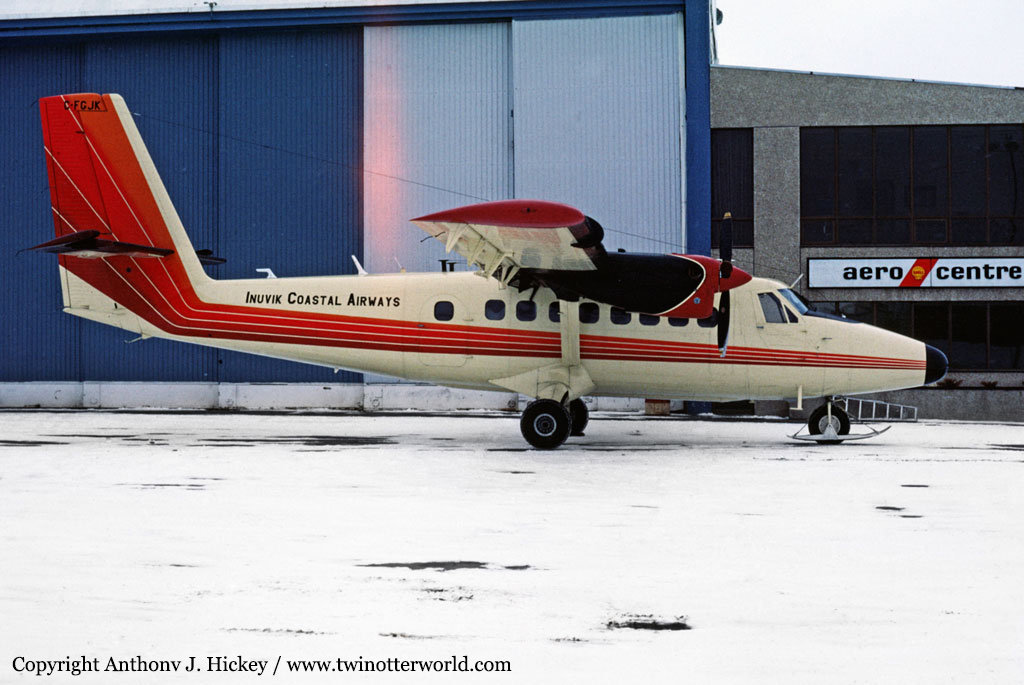
On approach to Paulatuk Airport, the pilot encountered marginal weather conditions with strong cross winds and blowing snow. On short final, while making a transition from visual to instruments flight rules, the pilot decided to initiate a go-around when the left wing struck the ground. Out of control, the aircraft veered to the left and came to rest. The pilot and a passenger were killed while 10 other occupants were injured.
Probable cause:
It was determined that the accident was the consequence of the combination of the following factors:
- The Paulatuk aerodrome runway is not oriented to correspond with the prevailing winds,
- Environment Canada does not produce an aerodrome forecast for Paulatuk,
- As the aircraft landed, the crosswind from the right increased appreciably reducing visibility in blowing snow,
- During the overshoot, as the pilot was making the transition from visual to instrument flight conditions, control of the aircraft was lost,
- The aircraft was overloaded by 840 lbs.

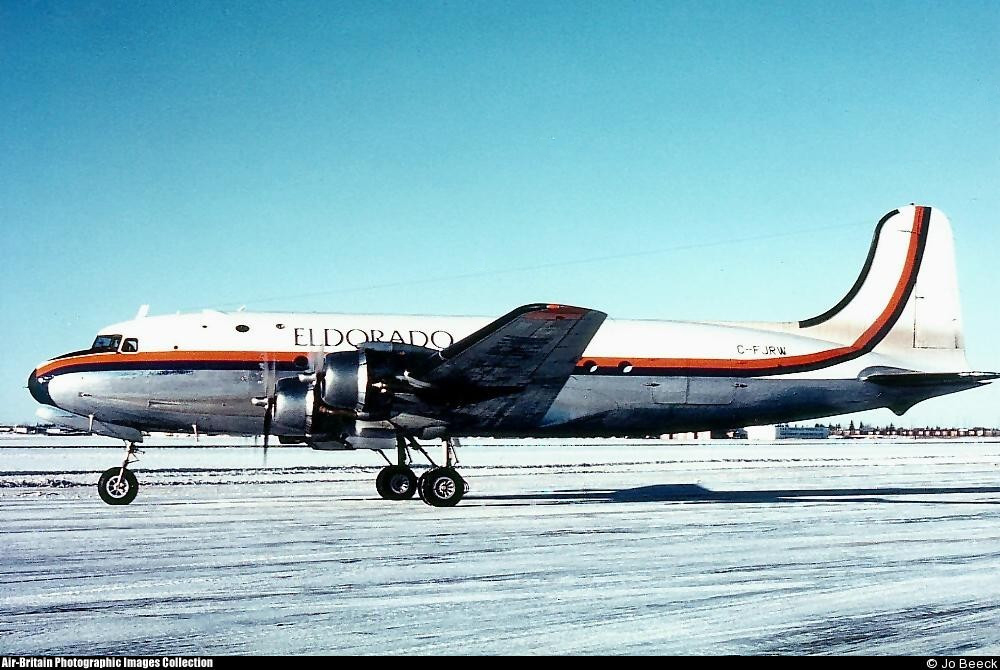
Crash of a Douglas DC-4-1009 in Spence Bay

Date & Time: Dec 2, 1981
Type of aircraft:
Operator:
Registration:
C-FJRW
Flight Type:
Survivors:
Yes
Schedule:
Winnipeg - Spence Bay
MSN:
42983
YOM:
1946
Country:
Crew on board:
3
Crew fatalities:
Pax on board:
0
Pax fatalities:
Other fatalities:
Total fatalities:
0
Circumstances:
On final approach to Spence Bay Airstrip, the four engine airplane struck the ground 50 feet short of runway threshold and about four feet below its elevation. The left main gear and the left wing were partially torn off and the aircraft crash landed and came to rest. All three crew members escaped with minor injuries.

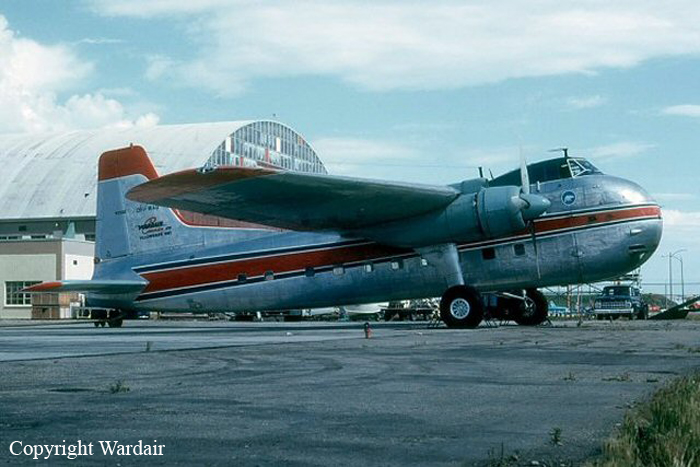
Crash of a Bristol 170 Freighter 31M in Hay River: 1 killed

Date & Time: Nov 20, 1977
Type of aircraft:
Operator:
Registration:
C-FWAD
Flight Phase:
Flight Type:
Survivors:
Yes
MSN:
13253
YOM:
1956
Country:
Crew on board:
2
Crew fatalities:
Pax on board:
0
Pax fatalities:
Other fatalities:
Total fatalities:
1
Circumstances:
After takeoff from Hay River, while climbing to a height of 200 feet, the crew lost control of the airplane that crashed near the airport. A pilot was killed while the second occupant was seriously injured.
Probable cause:
It was determined that the crew lost control of the airplane after the cargo shifted during initial climb. It is believed that the cargo was not properly stowed.