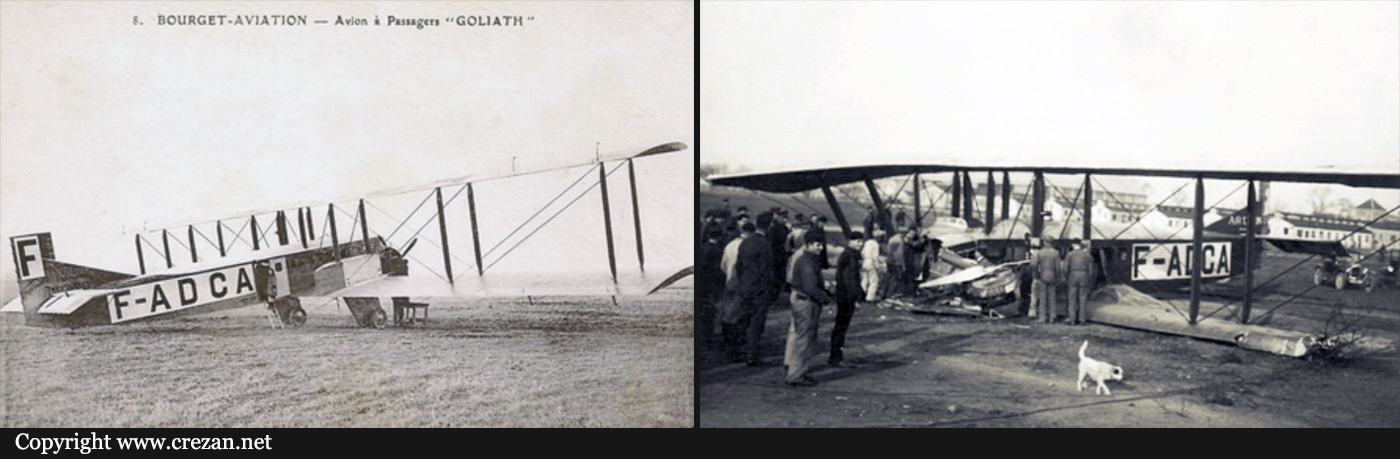
Crash of a Farman F.63bis Goliath in Penshurst

Date & Time: May 2, 1930 at 0930 LT
Type of aircraft:
Operator:
Registration:
F-ADCA
Flight Phase:
Flight Type:
Survivors:
Yes
Schedule:
Paris - Croydon
MSN:
33
YOM:
1921
Location:
Region:
Crew on board:
2
Crew fatalities:
Pax on board:
0
Pax fatalities:
Other fatalities:
Total fatalities:
0
Circumstances:
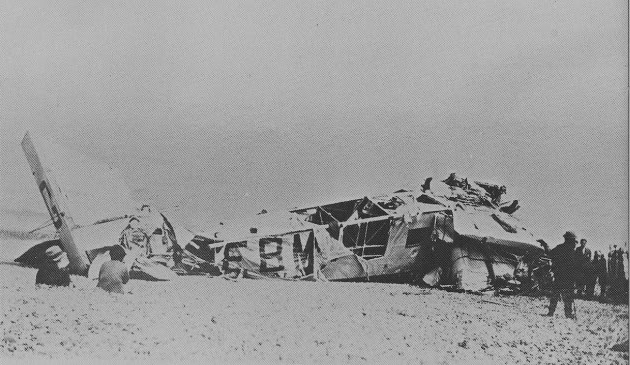
The aircraft departed Paris-Le Bourget Airport in the early morning on a cargo flight to Croydon, carrying two crew members and a load of 550 kg of various goods and mail. En route, the pilot Henri Roth encountered technical problems while flying in poor visibility due to foggy conditions. After passing over Tonbridge, the airplane was low on fuel and the pilot attempted to make an emergency landing at Penshurst Aerodrome. The airplane was unable to stop within the remaining distance, impacted a hedge and crashed near a road. Both crew members escaped uninjured while the aircraft was damaged beyond repair.
Probable cause:
Emergency landing caused by a fuel exhaustion.

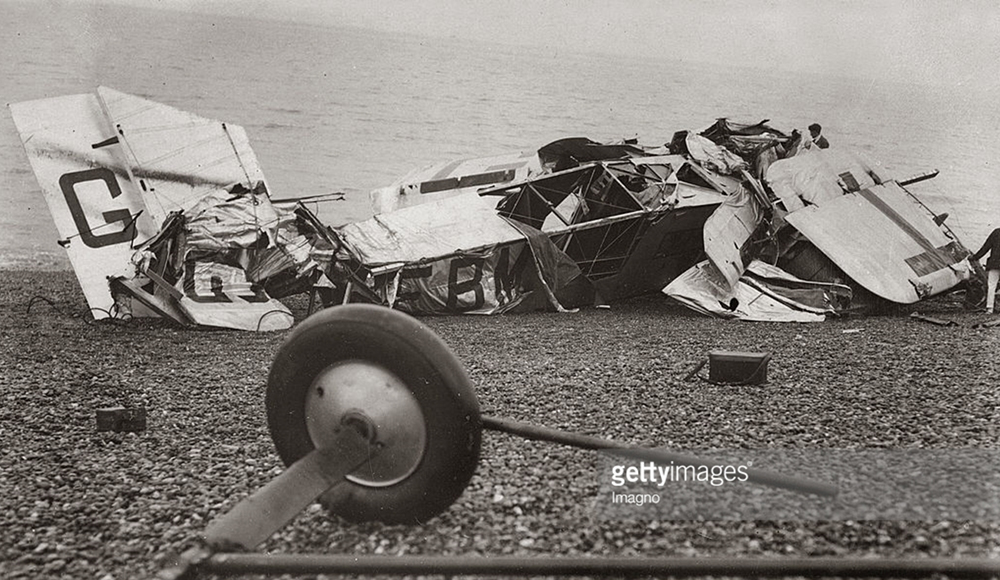
Crash of a De Havilland DH.60 Moth in Smarden

Date & Time: Feb 27, 1930
Type of aircraft:
Operator:
Registration:
G-EBPM
Flight Phase:
Flight Type:
Survivors:
Yes
Schedule:
Lympne - Lympne
MSN:
353
YOM:
1927
Location:
Region:
Crew on board:
2
Crew fatalities:
Pax on board:
0
Pax fatalities:
Other fatalities:
Total fatalities:
0
Circumstances:
The crew departed Lympne on a local training flight. En route, the pilot-in-command lost control of the airplane that crashed in a prairie in Smarden, about 12 km west of Ashford. The aircraft was destroyed and both occupants were injured.

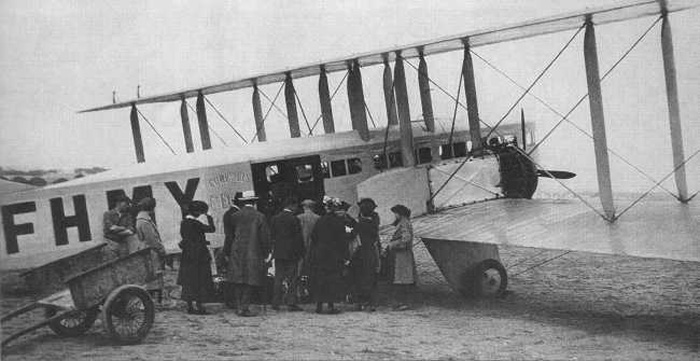
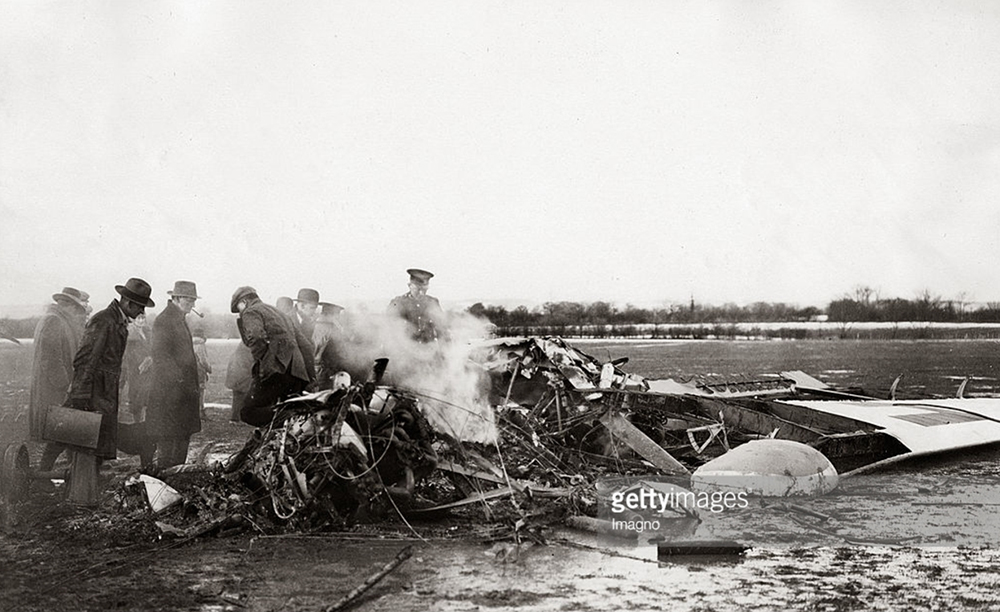
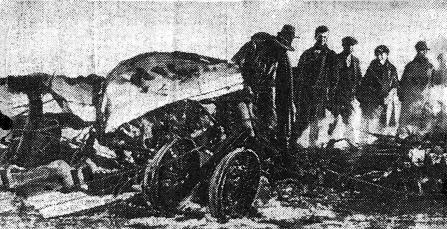
Crash of a Farman F.63bis Goliath in Marden: 2 killed

Date & Time: Feb 10, 1930 at 1250 LT
Type of aircraft:
Operator:
Registration:
F-FHMY
Flight Phase:
Survivors:
Yes
Schedule:
Paris - Croydon
MSN:
21/6844
YOM:
1920
Location:
Region:
Crew on board:
3
Crew fatalities:
Pax on board:
3
Pax fatalities:
Other fatalities:
Total fatalities:
2
Circumstances:
The aircraft departed Paris-Le Bourget Airport at 1005LT bound for Croydon. Fifteen minutes later, engine problems forced the crew to return to Le Bourget. Spark plugs were changed and the crew took off again at 1045LT. While cruising in the vicinity of Maidstone, Kent, the crew heard a loud bang coming from the rear of the aircraft. A part of the stabilizer detached and pilot reduced his altitude when all passengers were positioned in the rear of the cabin. On approach to a snow covered field located in Marden, at a height of 15 metres, the pilot cut both engines when the aircraft gain height and climbed to a height of 30 metres. Then it stalled and crashed on the ground, bursting into flames. The passenger Hugh Curzon who was unhurt, could rescue and evacuate all three crew members who were injured, but was unable to rescue both other passengers who remained prisoners of the cabin under fire.
Crew:
Henri Nevot, pilot,
Mr. Le Sollier, mechanic,
Mr. Alveaux, radio.
Passengers:
Hugh Curzon, employee of Cook Company in Paris,
Mr. & Mrs. A. Hodges, US citizen who get back to England following a honeymoon in Paris.
Probable cause:
According to investigations, the accident was the consequence of fatigue of the upper front strut of the right tail which failed in flight, causing the spar to fail as well. Investigators confirmed that the crew and the operator does not have any responsibility in the accident.

Crash of a De Havilland DH.60G Moth of Folkestone

Date & Time: Dec 24, 1929 at 1515 LT
Type of aircraft:
Registration:
G-AADV
Flight Type:
Survivors:
Yes
MSN:
998
YOM:
1929
Location:
Region:
Crew on board:
1
Crew fatalities:
Pax on board:
1
Pax fatalities:
Other fatalities:
Total fatalities:
0
Circumstances:
The pilot and his passenger departed Lympne Aerodrome in the afternoon. The pilot attempted to land with this float equipped airplane off Sandgate, Folkestone. But the sea was rough and the aircraft crashed on landing. Both occupants were rescued and the aircraft was damaged beyond repair.

Crash of a Handley Page H.P.30 off Dungeness: 7 killed

Date & Time: Jun 17, 1929 at 1130 LT
Type of aircraft:
Operator:
Registration:
G-EBMT
Flight Phase:
Survivors:
Yes
Schedule:
Croydon – Paris – Basel – Zurich
MSN:
W.10/4
YOM:
1925
Location:
Region:
Crew on board:
2
Crew fatalities:
Pax on board:
11
Pax fatalities:
Other fatalities:
Total fatalities:
7
Circumstances:
While overflying the Channel at an altitude of 3,000 feet, the right engine failed. The pilot attempted to return to England but some three miles off Dungeness, as he was unable to maintain a safe altitude, he ditched the aircraft. Both crew and four passengers escaped and were slightly injured while all seven other occupants were killed. The aircraft was named 'City of Ottawa'.
Crew:
Rudolf Paul David Brailli, pilot,
Nigel Robert Barnett, flight engineer.
Probable cause:
The right engine stopped following the failure of the fourth connecting rod due to fatigue.
Final Report:

Crash of a Farman F.63bis Goliath in Paddock Wood

Date & Time: May 19, 1929
Type of aircraft:
Operator:
Registration:
F-GEAI
Flight Phase:
Flight Type:
Survivors:
Yes
Schedule:
Croydon – Paris
MSN:
24
YOM:
1921
Region:
Crew on board:
2
Crew fatalities:
Pax on board:
0
Pax fatalities:
Other fatalities:
Total fatalities:
0
Circumstances:
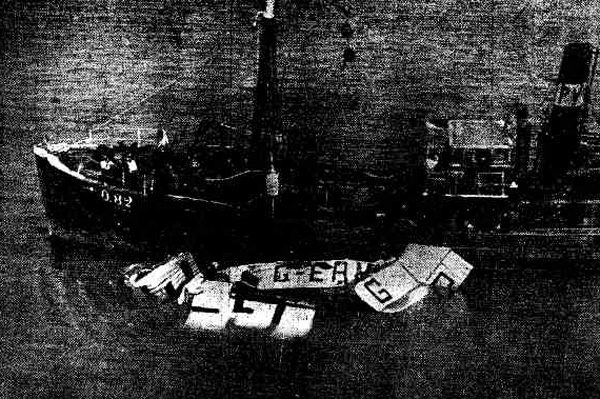
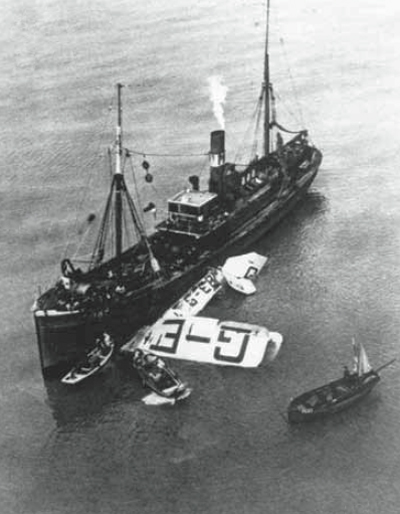
While cruising east of Tonbridge, the crew was forced to attempt an emergency landing due to unknown technical problems. The aircraft crashed in a field located near the Paddock Wood railway station, bursting into flames. Both crew members escaped with minor injuries and the aircraft named 'Vendée' was destroyed by a post crash fire.

Crash of a De Havilland DH.60 Moth in Lympne

Date & Time: Mar 27, 1929 at 1700 LT
Type of aircraft:
Operator:
Registration:
G-EBNN
Flight Phase:
Flight Type:
Survivors:
Yes
Schedule:
Lympne - Lympne
MSN:
260
YOM:
1926
Location:
Region:
Crew on board:
2
Crew fatalities:
Pax on board:
0
Pax fatalities:
Other fatalities:
Total fatalities:
0
Circumstances:
Shortly after takeoff from Lympne, while climbing, the engine failed. The pilot lost control of the aircraft that crashed in a field one km northeast of the airfield. The aircraft was destroyed and both occupants were injured, among them H. G. Travers, instructor.
Probable cause:
Engine failure.

Crash of a Fairey IIID at RAF Eastchurch: 3 killed

Date & Time: Jan 30, 1929 at 1130 LT
Type of aircraft:
Operator:
Registration:
N9759
Flight Type:
Survivors:
No
Schedule:
Eastchurch - Eastchurch
MSN:
F.623
YOM:
1925
Region:
Crew on board:
3
Crew fatalities:
Pax on board:
0
Pax fatalities:
Other fatalities:
Total fatalities:
3
Circumstances:
The crew was completing a local training flight at RAF Eastchurch. On approach, the aircraft entered an uncontrolled descent and crashed in a field. All three crew members were killed.
Crew:
F/O Geoffrey Hugh Conningsby Ingle,
LAC Frank Nelson Howick,
AC2 George Henry Johnson.

Crash of a De Havilland DH.60X Moth in Lympne

Date & Time: Oct 13, 1928
Type of aircraft:
Operator:
Registration:
G-EBSS
Flight Phase:
Flight Type:
Survivors:
Yes
Schedule:
Lympne - Lympne
MSN:
423
YOM:
1927
Location:
Region:
Crew on board:
1
Crew fatalities:
Pax on board:
0
Pax fatalities:
Other fatalities:
Total fatalities:
0
Circumstances:
The pilot Guy Skinner was performing a local training flight at Lympne Airport. While completing a looping at a height of 1,000 feet, he lost control of the aircraft that entered a spin. He was able to bail out and was slightly injured while the airplane crashed in a field located in Selby Farm near airport.

Crash of a Short S.7 Mussel off Rochester

Date & Time: Aug 24, 1928
Type of aircraft:
Operator:
Registration:
G-EBMJ
Flight Type:
Survivors:
Yes
Schedule:
Rochester - Rochester
MSN:
S.678
YOM:
1925
Region:
Crew on board:
1
Crew fatalities:
Pax on board:
0
Pax fatalities:
Other fatalities:
Total fatalities:
0
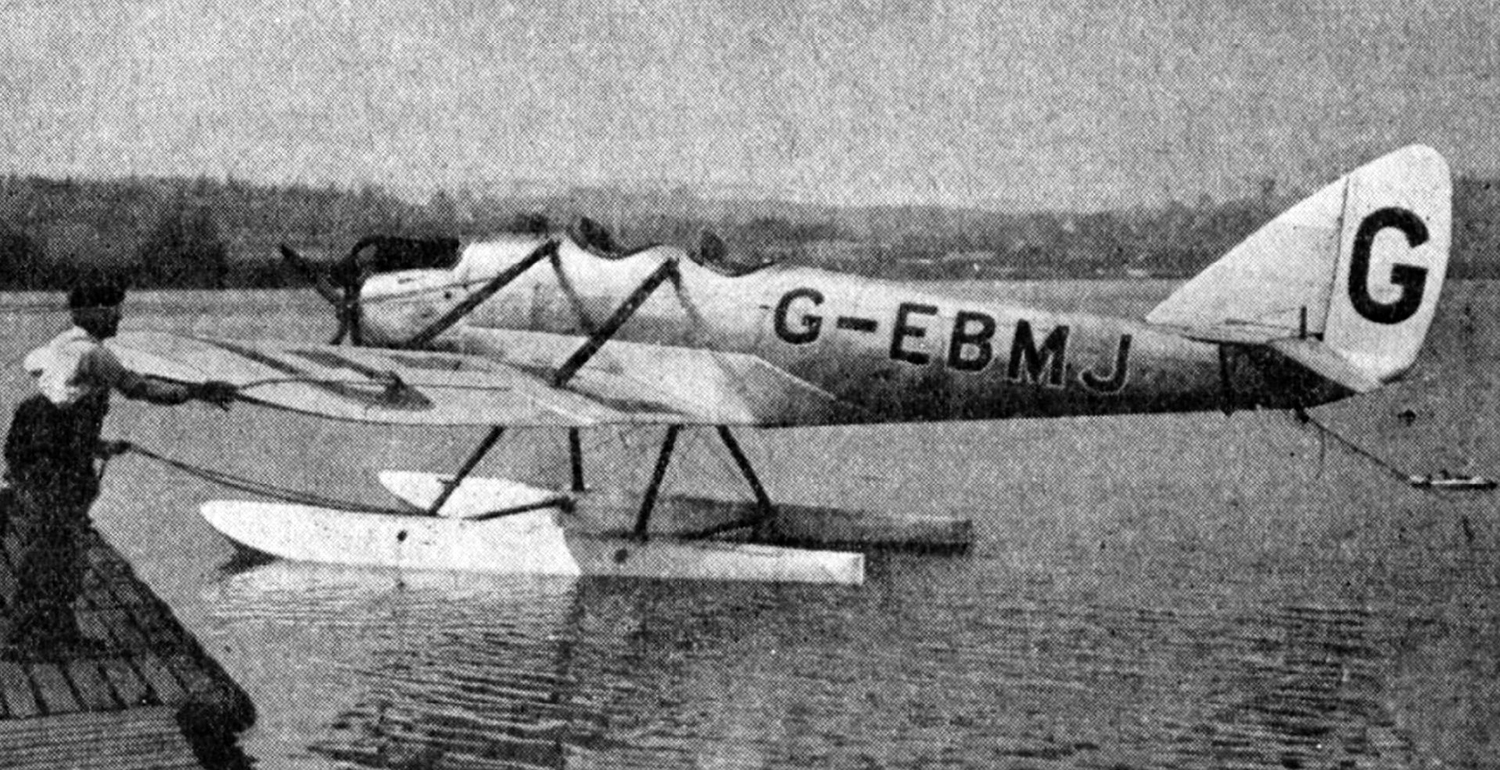
Circumstances:
The pilot was performing a test flight on this first Mussel prototype. Upon landing on the Medway River, off Rochester, the aircraft overturned and came to rest upside down. While the pilot was slightly injured, the aircraft was lost.