Crash of a Cessna 208B Grand Caravan in Kotzebue

Date & Time: Mar 2, 2003 at 1504 LT
Type of aircraft:
Operator:
Registration:
N205BA
Flight Type:
Survivors:
Yes
Schedule:
Shungnak - Kotzebue
MSN:
208B-0890
YOM:
2001
Crew on board:
1
Crew fatalities:
Pax on board:
0
Pax fatalities:
Other fatalities:
Total fatalities:
0
Captain / Total flying hours:
25600
Captain / Total hours on type:
4200.00
Aircraft flight hours:
2082
Circumstances:
Prior to departing on an air taxi flight, the airline transport certificated pilot obtained a weather briefing and filed a VFR flight plan for a trip from his home base, to several remote villages, and return. The area forecast contained an AIRMET for IFR conditions and mountain obscuration due to clouds and light snow. The terminal forecast contained expected conditions that included visibilities ranging from 3 to 3/4 mile in blowing snow, a vertical visibility of 500 feet, and wind speeds from 14 to 22 knots. During the filling of the flight plan, an FAA flight service station specialist advised that VFR flight was not recommended. The pilot acknowledged the weather information and departed. When the pilot took off on the return flight from an airport 128 miles east of his home base, the pilot reported that the visibility at his base was greater than 6 miles. As he neared his home base, the visibility had decreased and other pilots in the area were requesting special VFR clearances into the Class E surface area. The pilot requested a special VFR clearance at 1441, but had to hold outside the surface area for other VFR and IFR traffic. At 1453, a METAR at the airport included a wind 080 of 26 knots, and a visibility of 1 mile in blowing snow. While holding about 7 miles north of the airport, the pilot provided a pilot report that included deteriorating weather conditions east of the airport. Once the pilot was cleared to enter the surface area at 1458, he was provided with an airport advisory that included wind conditions of 25 knots, gusting to 33 knots. While the pilot was maneuvering for the approach, a special aviation weather observation at 1501 included a wind condition of 26 knots, and a visibility of 3/4 mile in blowing snow. The pilot said he established a GPS waypoint 4 miles from the runway and descended to 1,000 feet. He continued inbound and descended to 300 feet. At 1 mile from the airport, the pilot said he looked up from the instrument panel but could not see the airport. He also stated that he was in a whiteout condition. The airplane collided with the snow-covered sea ice, about 1 mile from the approach end of the runway threshold at 1504.
Probable cause:
The pilot's continued VFR flight into instrument meteorological conditions, and his failure to maintain altitude/clearance above the ground, resulting in a collision with snow and ice covered terrain during the final approach phase of a VFR landing. Factors in the accident were whiteout conditions and snow-covered terrain.
Final Report:
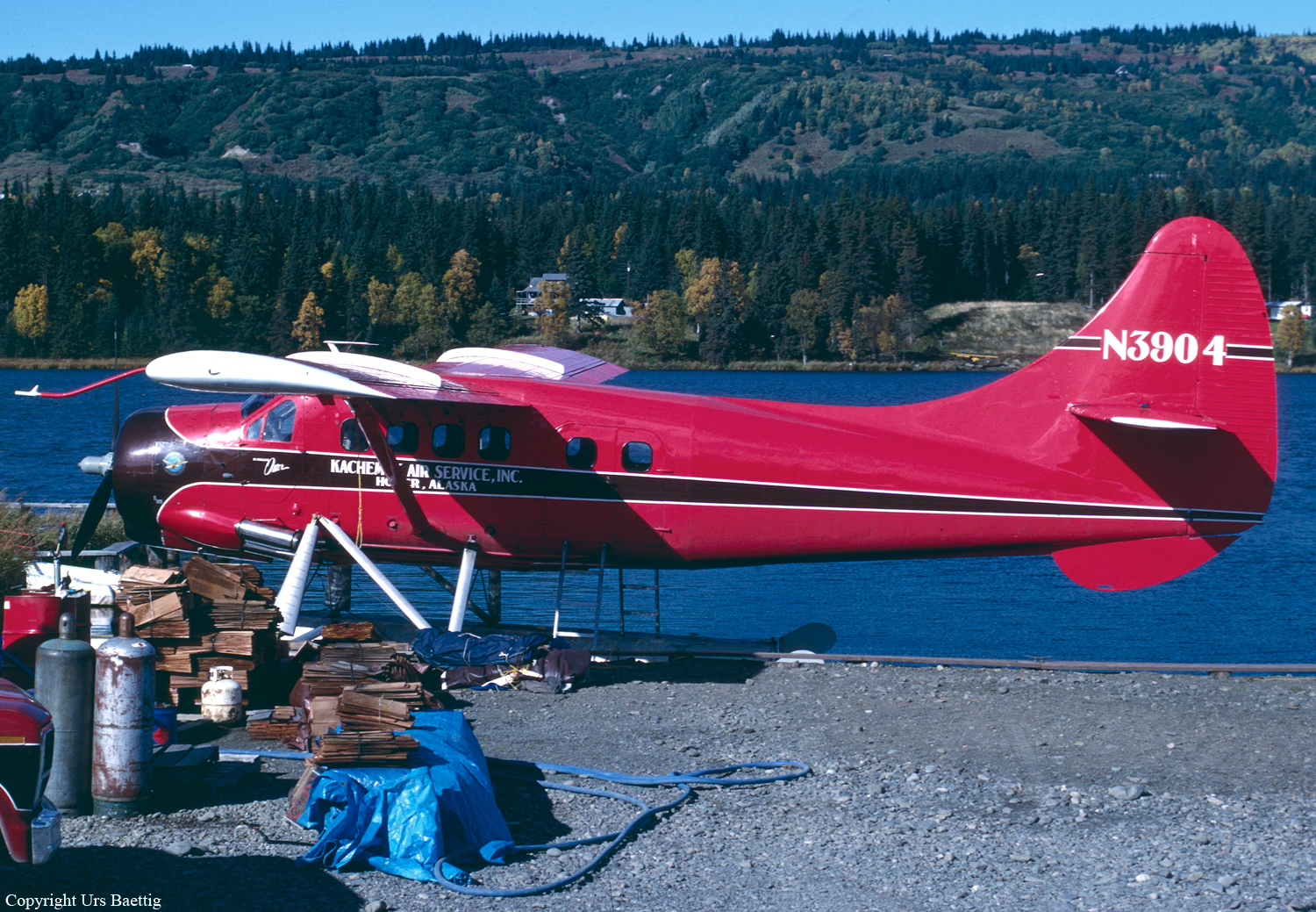

Crash of a De Havilland DHC-3 Otter in Nikolai

Date & Time: Dec 28, 2002 at 1230 LT
Type of aircraft:
Registration:
N3904
Flight Type:
Survivors:
Yes
Schedule:
Nikolai – Wasilla
MSN:
54
YOM:
1954
Location:
Crew on board:
1
Crew fatalities:
Pax on board:
1
Pax fatalities:
Other fatalities:
Total fatalities:
0
Captain / Total flying hours:
4000
Captain / Total hours on type:
400.00
Aircraft flight hours:
16437
Circumstances:
The commercial certificated pilot reported that just after takeoff in a wheel/ski equipped airplane, he heard a very loud bang, followed by a loud rattling noise. As he turned towards the departure airstrip, he had difficulty using the airplane's rudder pedals. Using a combination of aileron input and the remaining amount of rudder control, he was able to maneuver the airplane for a landing on the airstrip. He said that as the airplane passed over the approach end of the airstrip, it drifted to the right, and he initiated a go-around. The airplane subsequently collided with a stand of trees bordering the airstrip, and sustained structural damage to the wings, fuselage, and empennage. In a written statement to the NTSB, the pilot stated that he suspected that the right elevator's outboard and center hinges or hinge pins failed, allowing the right elevator to swing rearward and jam the airplane's rudder. An FAA airworthiness inspector traveled to the accident scene to examine the airplane. He reported that the right elevator was discovered about 150 feet behind the airplane, within the wreckage debris path through a stand of trees. He said that the right elevator sustained a significant amount of damage along the leading edge, which would normally be protected by the horizontal stabilizer. The FAA inspector examined the airplane's horizontal stabilizer in the area where the right and left elevators connect, and noted signs of new paint on the rivets that held the torque tube support assembly, indicating recent reinstallation or replacement of the torque tube support assembly. He indicated that the torque tube support assembly was installed at a slight angle to the right, which allowed the right elevator to eventually slip off of the center and outboard hinge pins. The inspector said that witness marks on the center and outboard hinge pins showed signs of excessive wear towards the outboard portion of each pin. The inspector noted that a review of the airplane's maintenance records failed to disclose any entries of repair/replacement of the elevator torque tube support assembly.
Probable cause:
An improper and undocumented major repair of the elevator torque tube support assembly by an unknown person, which resulted in an in-flight disconnection of the airplane's right elevator, and a jammed rudder. A factor associated with the accident is the inadequate inspection of the airplane by company maintenance personnel.
Final Report:

Crash of a Cessna 207 Skywagon in Marshall

Date & Time: Oct 28, 2002 at 2000 LT
Operator:
Registration:
N91090
Flight Phase:
Flight Type:
Survivors:
Yes
Site:
Schedule:
Marshall - Bethel
MSN:
207-0069
YOM:
1969
Location:
Crew on board:
1
Crew fatalities:
Pax on board:
0
Pax fatalities:
Other fatalities:
Total fatalities:
0
Captain / Total flying hours:
1745
Captain / Total hours on type:
115.00
Aircraft flight hours:
14551
Circumstances:
The commercial pilot was positioning the airplane from the departure airport to another airport. The flight took place on a dark night with overcast skies, and no discernible horizon. The pilot departed and climbed to a cruise altitude between 1,200 and 1,400 feet msl. About 4 miles south of the departure airport, the airplane collided with an east-west ridge at 1,200 feet msl. The ridgeline is perpendicular to the direct route of flight between the departure and destination airports, and rises from west to east with a summit elevation of 1,714 feet msl. The departure airport was a newly commissioned airport 3 miles east-northeast of the old airport. The accident flight was the pilot's second trip to the new airport, and his first night departure from either the old or new airport. Direct flight from the new airport to the destination airport requires a higher altitude to clear the ridgeline than does a direct flight from the old airport. A direct flight from the old airport crosses the same ridgeline farther to the west, where the elevation of the ridge is less than 500 feet msl.
Probable cause:
The pilot's failure to maintain clearance from terrain, which resulted in an in-flight collision with a ridgeline. Factors contributing to the accident were the high terrain, the pilot's inadequate preflight planning, and the dark night light conditions.
Final Report:

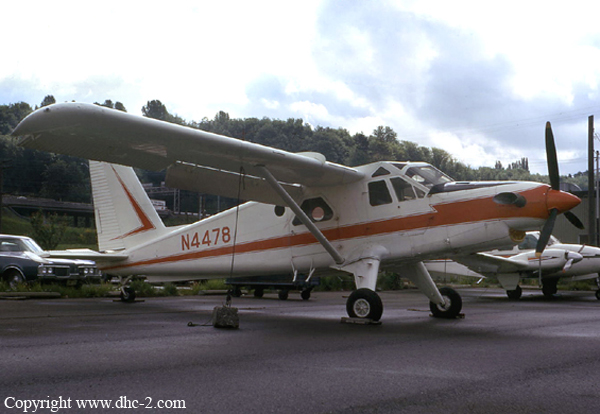
Crash of a De Havilland DHC-2 Beaver near Aleknagik: 1 killed

Date & Time: Aug 28, 2002 at 1600 LT
Type of aircraft:
Registration:
N4478
Survivors:
Yes
Schedule:
Dillingham - Lake Nerka
MSN:
1653
YOM:
1966
Crew on board:
1
Crew fatalities:
Pax on board:
2
Pax fatalities:
Other fatalities:
Total fatalities:
1
Captain / Total flying hours:
26300
Captain / Total hours on type:
200.00
Aircraft flight hours:
8847
Circumstances:
The amphibious float-equipped airplane was returning to a lodge located on a remote lake after picking up supplies. The airplane departed from a paved runway on an airport. En route to the destination lake, the pilot noted the airplane would not attain its normal cruise airspeed and attitude. Believing the airplane was tail heavy, the pilot asked the aft cabin passenger to move forward. Upon touchdown on the lake, the airplane nosed down into the water. As the airplane nosed down, the supplies, which were not secured in the aft cabin, came forward, and pinned the pilot and front seat passenger against the instrument panel. The passenger in the aft cabin lifted as many of the supplies off the pilot and front seat passenger as he could, before he had to exit the sinking airplane. Both the pilot and front seat passenger exited the submerged airplane under their own power, but the pilot did not reach the surface. An autopsy of the pilot disclosed that he had drowned. A postaccident inspection of the airplane revealed the wheels had not been retracted after takeoff on the runway, consequently the airplane landed on the lake with the wheels fully extended. The front seat passenger said that the pilot did not use a checklist prior to landing.
Probable cause:
The pilot's failure to use a checklist to ensure the airplane was in the proper landing configuration, which precipitated an inadvertent water landing on amphibious floats with the wheels extended. A factor contributing to the accident was the pilot's failure to secure the cargo in the aft cabin.
Final Report:

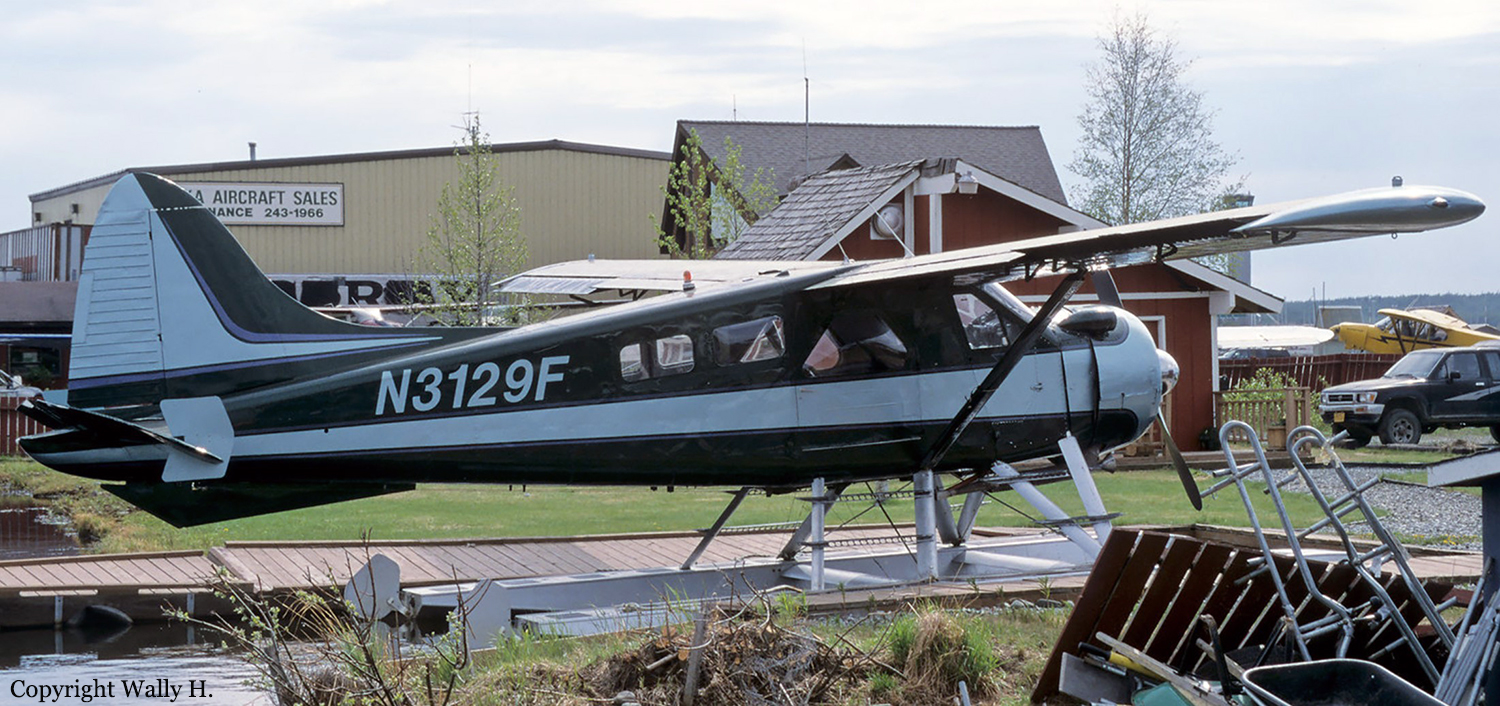
Crash of a De Havilland DHC-2 Beaver near Port Alsworth: 4 killed

Date & Time: Jul 12, 2002 at 1145 LT
Type of aircraft:
Operator:
Registration:
N3129F
Flight Phase:
Survivors:
No
Site:
Schedule:
Anchorage - Iliamna
MSN:
903
YOM:
1956
Crew on board:
1
Crew fatalities:
Pax on board:
3
Pax fatalities:
Other fatalities:
Total fatalities:
4
Captain / Total flying hours:
4745
Captain / Total hours on type:
258.00
Aircraft flight hours:
12698
Circumstances:
The commercial pilot of the float-equipped airplane was transporting passengers to a lodge at a remote lake. When the airplane did not arrive at the lake, a search was initiated, and two days later the wreckage of the airplane was located on the side of a box canyon about the 2,400 foot elevation level. The canyon is oriented approximately east-west, and the wreckage was distributed along a 100 foot debris field on the north flank of the canyon. Ground scars and wreckage distribution were consistent with the airplane impacting terrain in a steep left bank while executing a turn to reverse direction. No evidence of any preimpact mechanical anomalies was discovered.
Probable cause:
The pilot's failure to maintain clearance from terrain while maneuvering inside a box/blind canyon, resulting in an in-flight collision with terrain. A factor contributing to the accident was the box/blind canyon.
Final Report:

Crash of a Beechcraft E18S in Juneau: 1 killed

Date & Time: Apr 10, 2002 at 1625 LT
Type of aircraft:
Operator:
Registration:
N686Q
Flight Phase:
Flight Type:
Survivors:
No
MSN:
BA-400
YOM:
1959
Location:
Crew on board:
1
Crew fatalities:
Pax on board:
0
Pax fatalities:
Other fatalities:
Total fatalities:
1
Captain / Total flying hours:
22820
Circumstances:
The certificated airline transport pilot was departing on a 14 CFR Part 91 personal flight. The purpose of the flight was to deliver a load of wooden roofing shakes to a friend's remote lodge. Witnesses reported that just after takeoff, as the airplane climbed to about 200 to 300 feet above the ground, the airplane abruptly pitched up about 70 degrees, and drifted to the right. The airplane continued to turn to the right as the nose of the airplane lowered momentarily. As the airplane flew very slowly the landing gear was extended. The nose of the airplane pitched up again, the right wing dropped, and the airplane descended. One witness described the descent as: "The wings rocked back and forth as it descended, like a card in the wind, with the nose of the airplane slightly higher." The airplane impacted shallow water in an area of tidal mud flats. A postaccident investigation revealed that the estimated gross weight of the airplane at takeoff was 11,500.8 pounds, 1,400.8 pounds in excess of the airplane's maximum takeoff gross weight. The airplane's center of gravity could not be calculated due to the fact that the exact location/station of the cargo could not be determined. Examination of the airplane revealed no evidence of any preimpact mechanical anomalies.
Probable cause:
The pilot's excessive loading of the airplane that precipitated an inadvertent stall/mush during the initial climb.
Final Report:

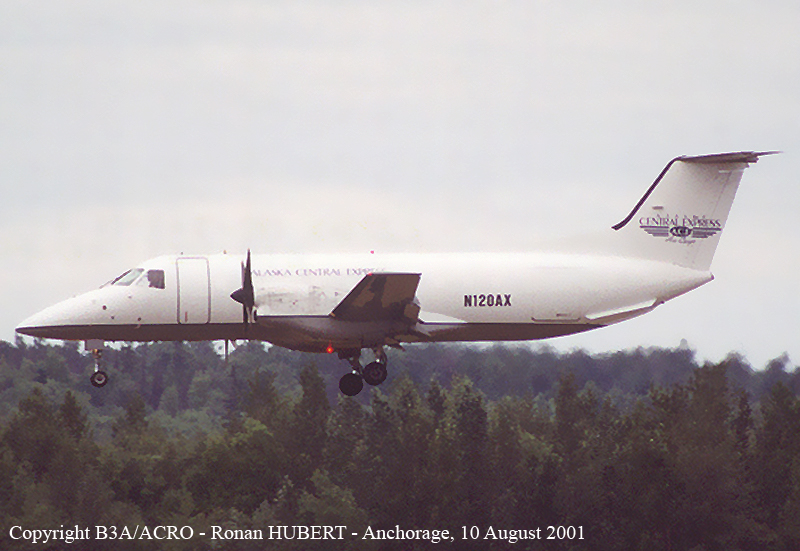
Crash of an Embraer EMB-120RT Brasília in Bethel

Date & Time: Oct 16, 2001 at 2130 LT
Type of aircraft:
Operator:
Registration:
N120AX
Flight Type:
Survivors:
Yes
Schedule:
Anchorage - Bethel
MSN:
120-164
YOM:
1989
Location:
Crew on board:
2
Crew fatalities:
Pax on board:
0
Pax fatalities:
Other fatalities:
Total fatalities:
0
Captain / Total flying hours:
8526
Captain / Total hours on type:
961.00
Copilot / Total flying hours:
2725
Copilot / Total hours on type:
644
Aircraft flight hours:
26295
Circumstances:
The captain and first officer were conducting a localizer DME back course approach to runway 36 in a twin-engine turboprop airplane during a night cargo flight under IFR conditions. The minimum visibility for the approach was one mile, and the minimum descent altitude (MDA) was 460 feet msl (338 feet agl). Prior to leaving their cruise altitude, the first officer listened to the ATIS information which included an altimeter setting of 29.30 inHg. No other altimeter information was received until the crew reported they were inbound on the approach. At that time, tower personnel told the crew that the visibility was one mile in light snow, the wind was from 040 degrees at 22 knots, and the altimeter setting was 29.22 inHg. The crew did not reset the airplane altimeters from 29.30 to 29.22. At the final approach fix (5 miles from the runway), the captain began a descent to the MDA. Thirty-six seconds before impact, the first officer cautioned the captain about the airplane's high airspeed. Due to strong crosswinds, the captain disconnected the autopilot 22 seconds before impact. He said he pushed the altitude hold feature on the flight director at the MDA. Eighteen seconds before impact, the airplane leveled off about 471 feet indicated altitude, but then descended again 9 seconds later. The descent continued until the airplane collided with the ground, 3.5 miles from the runway. The crew said that neither the airport, or the snow-covered terrain, was observed before impact. The crew reported that the landing lights were off. The airplane was not equipped with a ground proximity warning system.
Probable cause:
The captain's continued descent below the minimum descent altitude which resulted in impact with terrain during an instrument landing approach. Factors contributing to the accident were the flightcrew's failure to reset the altimeters to the correct altimeter setting, and meteorological conditions consisting of snow obscuration that limited visibility, and the ambient night light conditions.
Final Report:

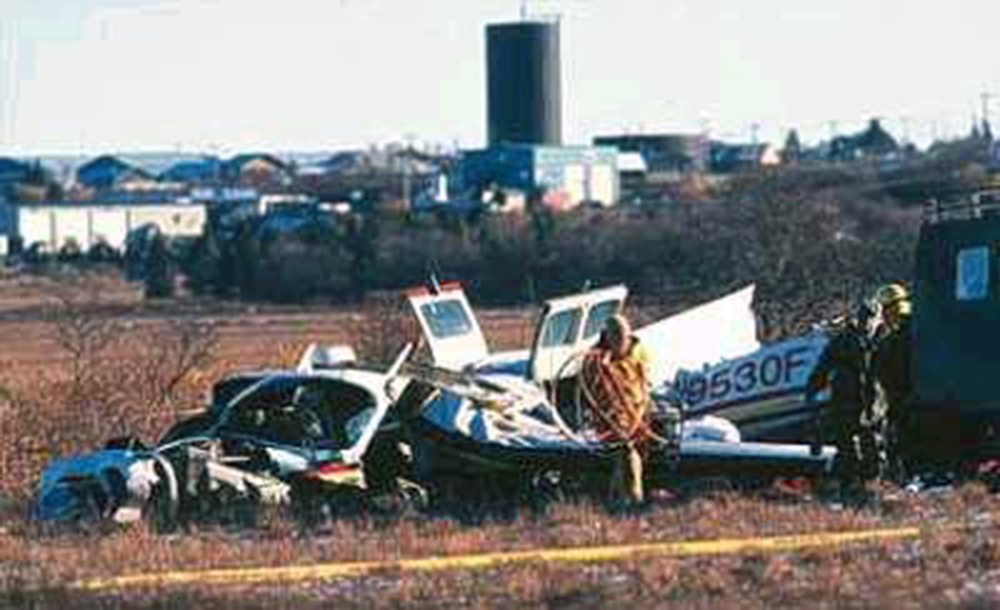
Crash of a Cessna 208 Caravan I in Dillingham: 10 killed

Date & Time: Oct 10, 2001 at 0926 LT
Type of aircraft:
Operator:
Registration:
N9530F
Flight Phase:
Survivors:
No
Schedule:
Dillingham – King Salmon
MSN:
208-0088
YOM:
1986
Flight number:
KS350
Crew on board:
1
Crew fatalities:
Pax on board:
9
Pax fatalities:
Other fatalities:
Total fatalities:
10
Captain / Total flying hours:
3100
Captain / Total hours on type:
869.00
Aircraft flight hours:
10080
Circumstances:
The airplane was parked outside on the ramp the night before the accident and was subjected to rain, snow, and temperatures that dropped below 32 degrees F. Other pilots whose airplanes were also parked outside overnight stated that about 1/4 to 1/2 inch of snow/frost covered a layer of ice on their airplanes the morning of the accident. Because of these conditions, ramp personnel deiced the accident airplane with a heated mixture of glycol and water. The PenAir ramp supervisor who conducted the deicing stated that he believed the upper surface of the wing was clear of ice but that he did not physically touch the wing to check for the presence of ice. Investigators were unable to determine whether the accident pilot visually or physically checked the wing and tail surfaces for contamination after the accident airplane was deiced. However, the airplane's high-wing configuration would have hindered the pilot's ability to see residual clear ice on the surface of the wing after the deicing procedures. Company records indicate that the certificated commercial pilot completed his initial CE-208 flight training 2 months before the accident and had accumulated a total of 74 hours in this make and model of airplane. The airplane, with the pilot and nine passengers onboard, crashed shortly after takeoff from runway 01. A witness observed that the airplane's flight appeared to be normal until the airplane suddenly pitched up, rolled 90 degrees to the left, and yawed to the left. The airplane then descended nose-down until it disappeared from view. Data from the engine monitoring system revealed that the maximum altitude obtained during the accident flight was about 651 feet mean sea level. The airplane crashed in a level attitude. Investigators found no evidence of pre-impact failures in the structure, flight control systems, or instruments. Further, examination of the engine and propeller revealed no pre-impact failures and that the engine was running when the airplane hit the ground.
Probable cause:
An in-flight loss of control resulting from upper surface ice contamination that the pilot-in-command failed to detect during his preflight inspection of the airplane. Contributing to the accident was the lack of a preflight inspection requirement for CE-208 pilots to examine at close range the upper surface of the wing for ice contamination when ground icing conditions exist.
Final Report:

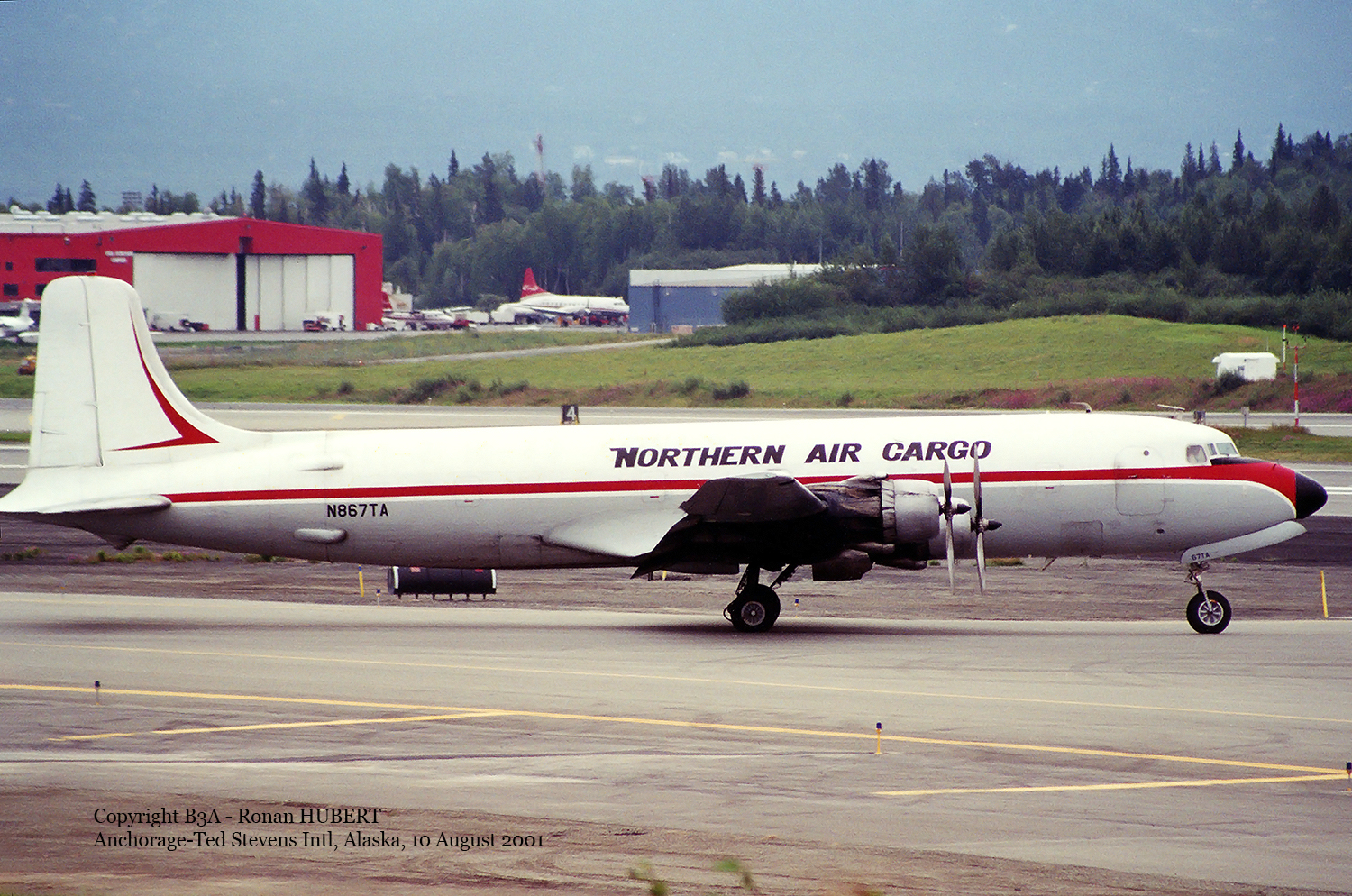
Crash of a Douglas DC-6BF in Nuiqsut

Date & Time: Sep 25, 2001 at 1609 LT
Type of aircraft:
Operator:
Registration:
N867TA
Flight Type:
Survivors:
Yes
Schedule:
Deadhorse - Nuiqsut
MSN:
45202
YOM:
1957
Flight number:
NAC690
Location:
Crew on board:
3
Crew fatalities:
Pax on board:
0
Pax fatalities:
Other fatalities:
Total fatalities:
0
Captain / Total flying hours:
22000
Captain / Total hours on type:
14000.00
Copilot / Total flying hours:
6100
Copilot / Total hours on type:
3000
Aircraft flight hours:
7754
Circumstances:
The crew was conducting a GPS instrument approach in a Douglas DC-6B airplane under IFR conditions. Both pilots were certificated and type-rated in the Douglas DC-6B airplane. The first pilot, seated in the right seat, was one of the company's senior check airman, and possessed a right seat dependency endorsement. The second pilot, seated in the left seat, had less experience in the DC-6B airplane. It had been previously agreed that the second pilot would fly the leg of the flight on which the accident occurred. The first pilot reported that light snow showers were present, with visibility reported at 4 miles. During final approach as the airplane passed over the airstrip threshold, a higher than normal sink rate was encountered. He said that the initial touchdown was "firm," but was thought to be within acceptable tolerances. Just after touchdown, the left wing broke free from the airplane at the wing to fuselage attach point. The airplane veered to the left, continued off the left side of the 5,000 feet long by 75 feet runway, down an embankment, and came to rest in an area of wet, tundra covered terrain. A postcrash fire heavily damaging the center section of the fuselage. The cockpit voice recorder (CVR) revealed that as the airplane progressed along the approach, the first pilot says: "You're only one mile from it....Take it on down ah three." As the airplane passes over the runway threshold, the first pilot says: "Keep that, keep that (expletive) power off.... Just push forward on the nose." The sound of impact is heard 4 seconds later. The minimum descent altitude (MDA) for the approach is 400 feet msl (383 feet agl). A contract weather observer reported lower ceilings, with about 1 mile visibility, over the approach end of the runway at the same time as the accident.
Probable cause:
The flightcrew's continued use of an unstabilized GPS approach. Factors associated with the accident were low ceilings, and the inadequate coordination between the crew.
Final Report:

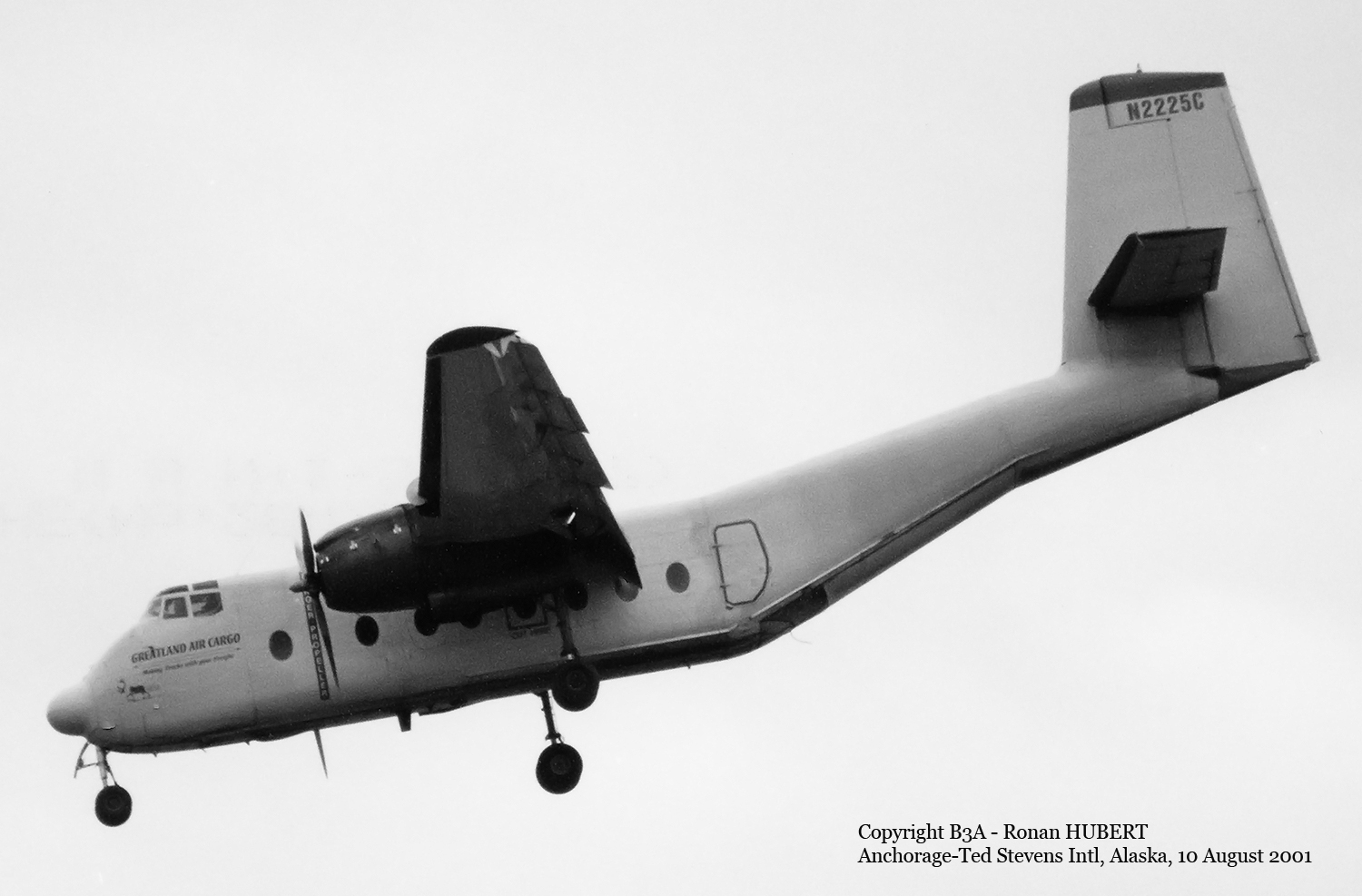
Crash of a De Havilland DHC-4 Caribou in Port Alsworth

Date & Time: Aug 29, 2001 at 1900 LT
Type of aircraft:
Operator:
Registration:
N2225C
Flight Type:
Survivors:
Yes
Schedule:
Iliamna - Port Alsworth
MSN:
215
YOM:
1964
Crew on board:
2
Crew fatalities:
Pax on board:
0
Pax fatalities:
Other fatalities:
Total fatalities:
0
Captain / Total flying hours:
6200
Captain / Total hours on type:
559.00
Copilot / Total flying hours:
10000
Circumstances:
The captain and the first officer were landing a short takeoff and landing (STOL) cargo airplane on a private, dirt and gravel surface runway. The airplane was configured for landing with 40 degrees of flaps. During the landing approach, variations in indicated airspeed and ground speed indicated windshear conditions. About 100 to 200 feet above the ground, the airplane encountered a downdraft and began to drift to the right of the runway centerline. The captain said she increased engine power and applied full left aileron and rudder, but could not gain directional or pitch control of the airplane. The right wing struck trees, short of the runway threshold, increasing the airplane's right yaw. The captain said that as the airplane neared the ground, she pulled the engine throttles off. The airplane struck the ground with the right main landing gear and right front portion of the fuselage. The airplane then pivoted to the right, 180 degrees from the approach heading. The owner of the airport reported that wind conditions from the east may produce downdrafts in the area of runway 05. He indicated that at the time of the accident, the wind was blowing from the east about 15 knots. The first officer reported the captain appeared to be attempting to maintain a stabilized approach angle by varying the pitch attitude of the airplane. A review of company training literature revealed that the airplane is especially sensitive to slight wind shear, and wind gusts as low as 5 knots when operating at low airspeeds. Pilots are cautioned that when flying the aircraft at low speeds, a large application of the aileron control may be required to maintain wings level. During gusty wind conditions, the threshold airspeed should be increased by one-half the gust factor, and any lateral displacement should be corrected rapidly. If a wing is allowed to drop beyond corrective action of full aileron, power should be increased immediately to regain level flight.
Probable cause:
The captain's failure to maintain the proper glidepath, and improper short field landing procedures. Factors in the accident were a downdraft, and the captain's inadequate evaluation of the weather conditions.
Final Report: