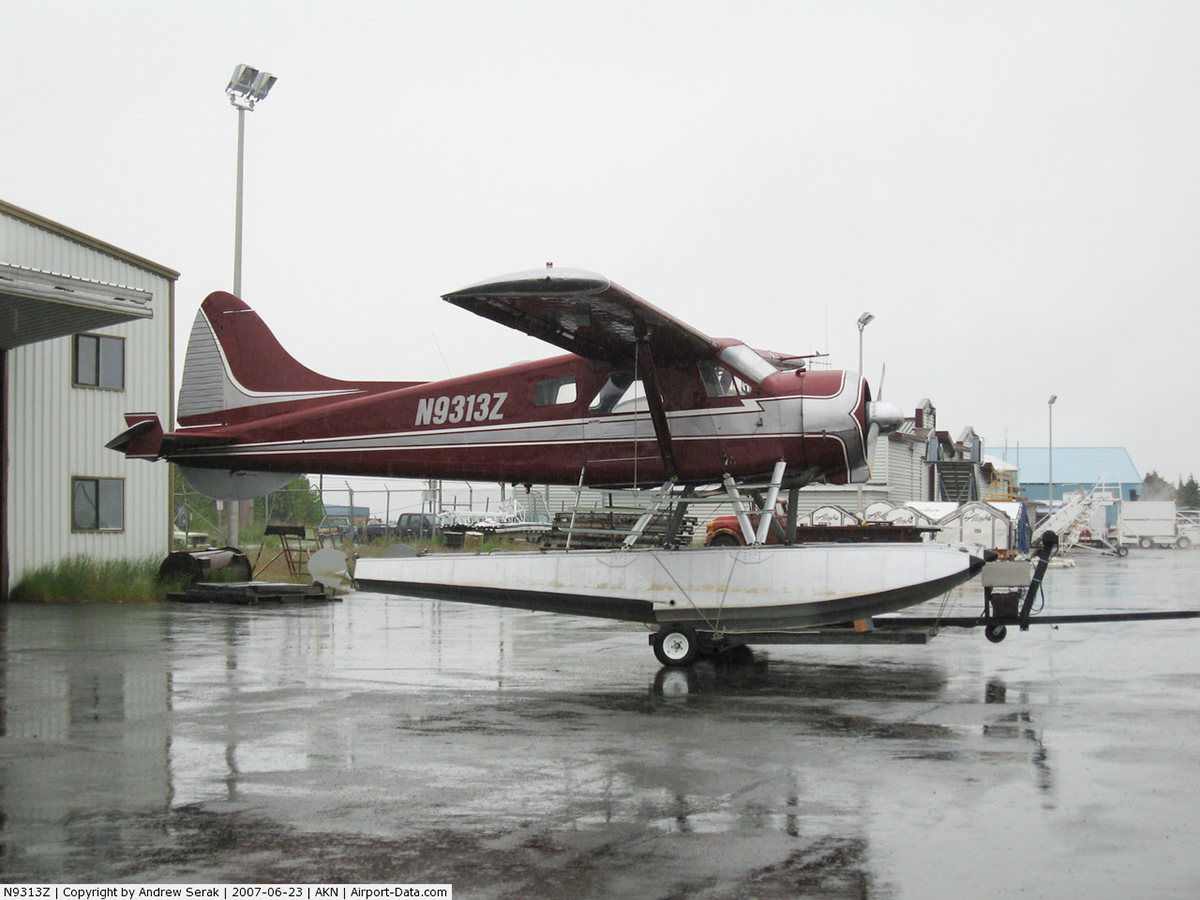
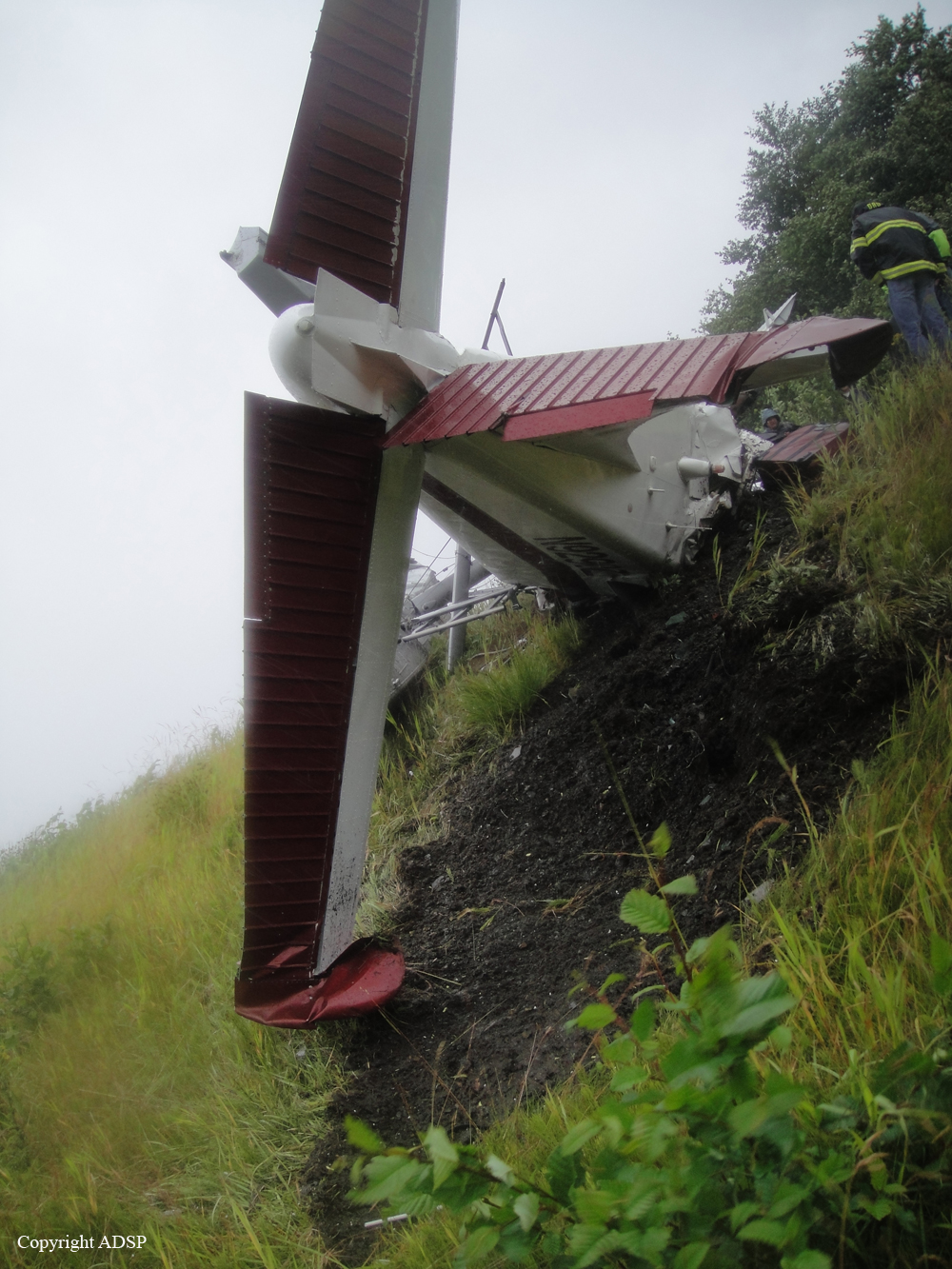
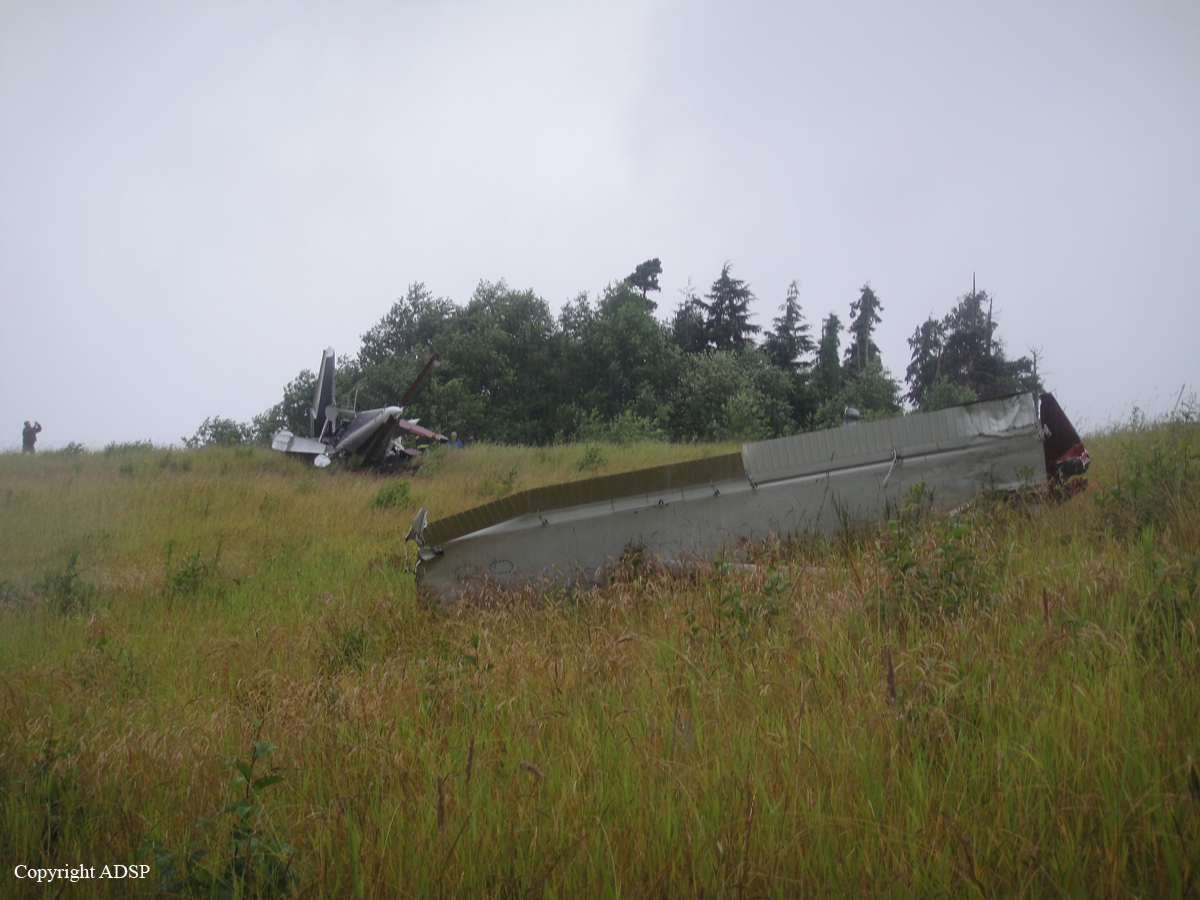
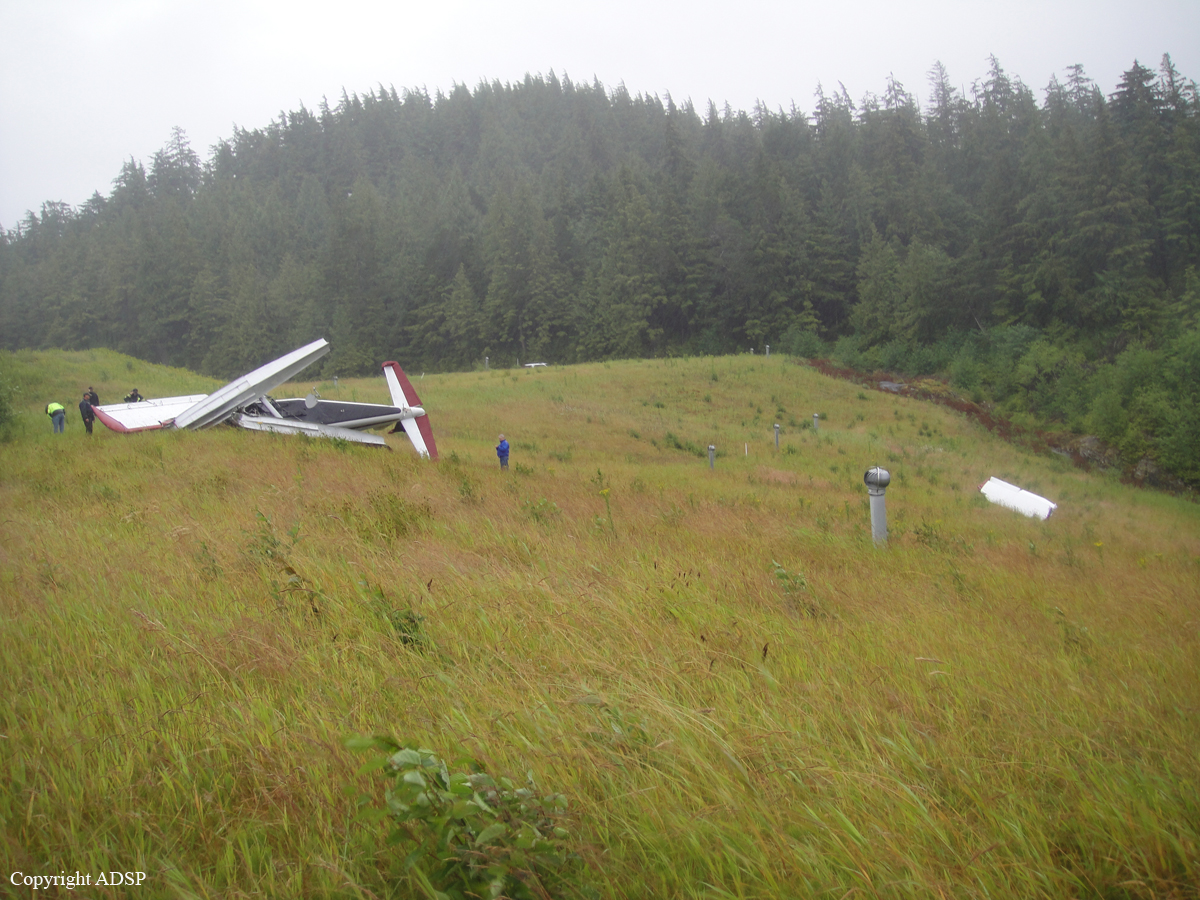
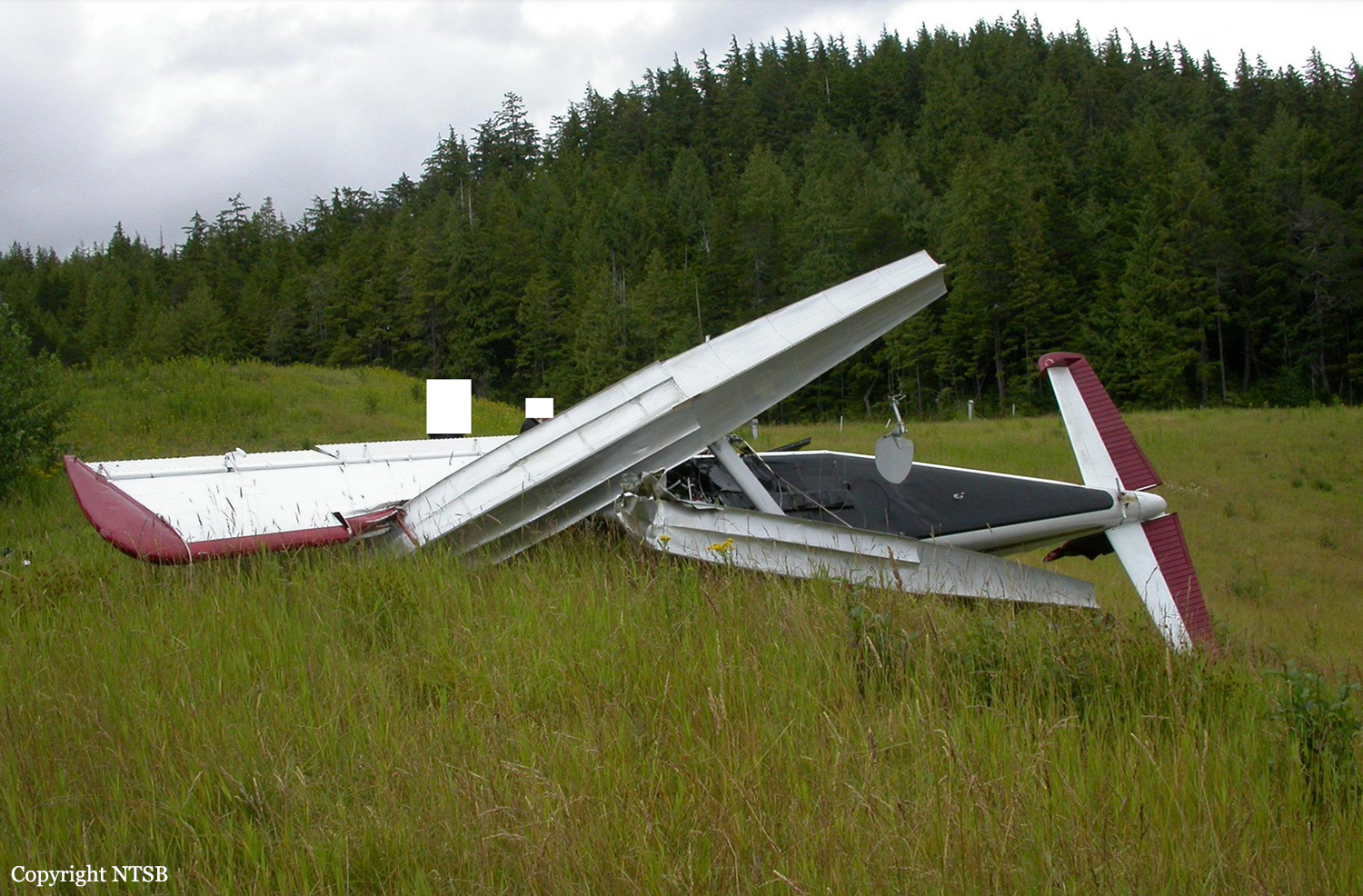
Crash of a De Havilland DHC-2 Beaver in the Kaminshak Bay: 4 killed

Date & Time: Aug 21, 2010 at 1412 LT
Type of aircraft:
Operator:
Registration:
N9313Z
Flight Phase:
Survivors:
No
Schedule:
Swikshak Lagoon - King Salmon
MSN:
441
YOM:
1953
Crew on board:
1
Crew fatalities:
Pax on board:
3
Pax fatalities:
Other fatalities:
Total fatalities:
4
Captain / Total flying hours:
4112
Aircraft flight hours:
4946
Circumstances:
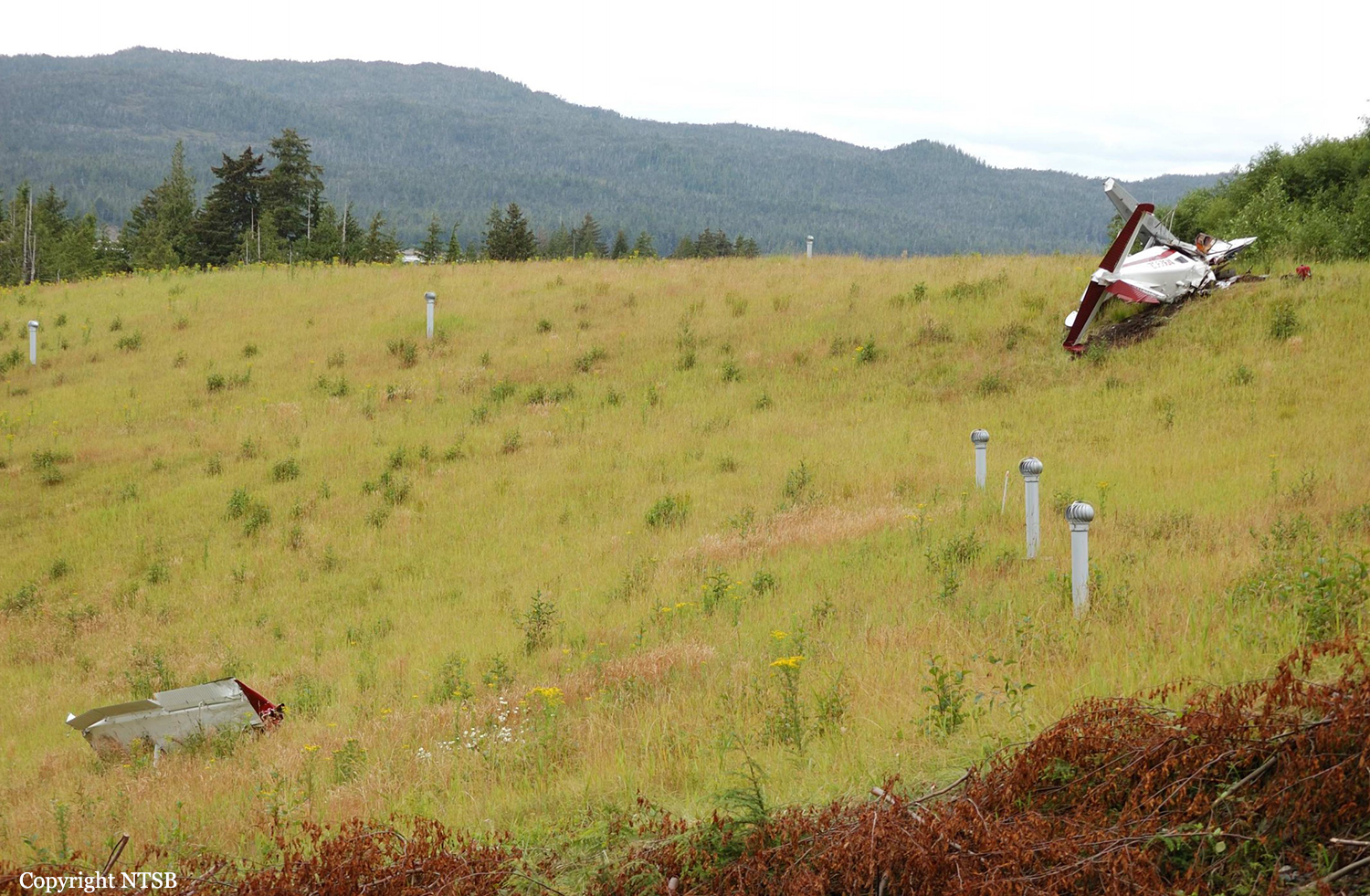
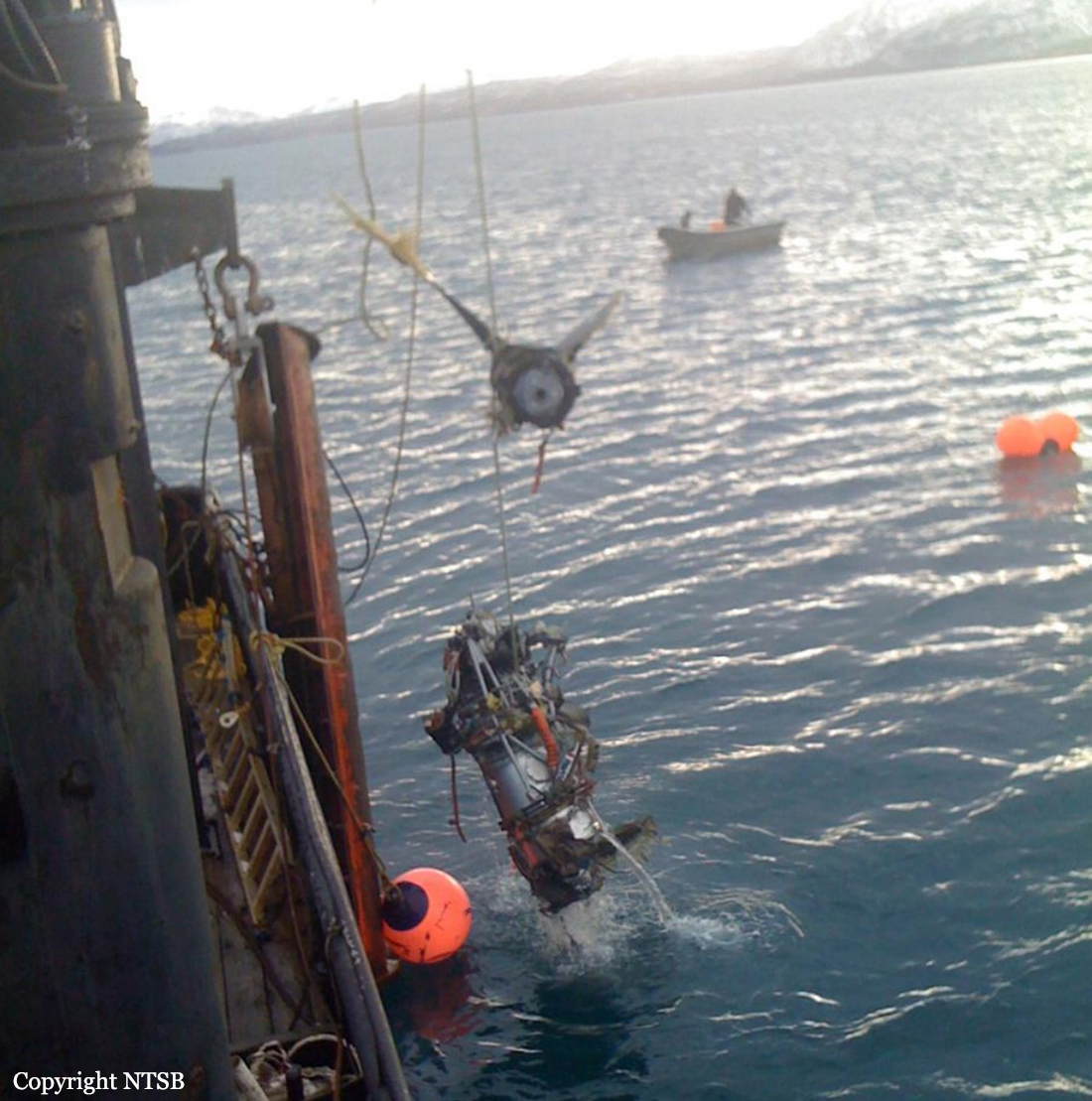
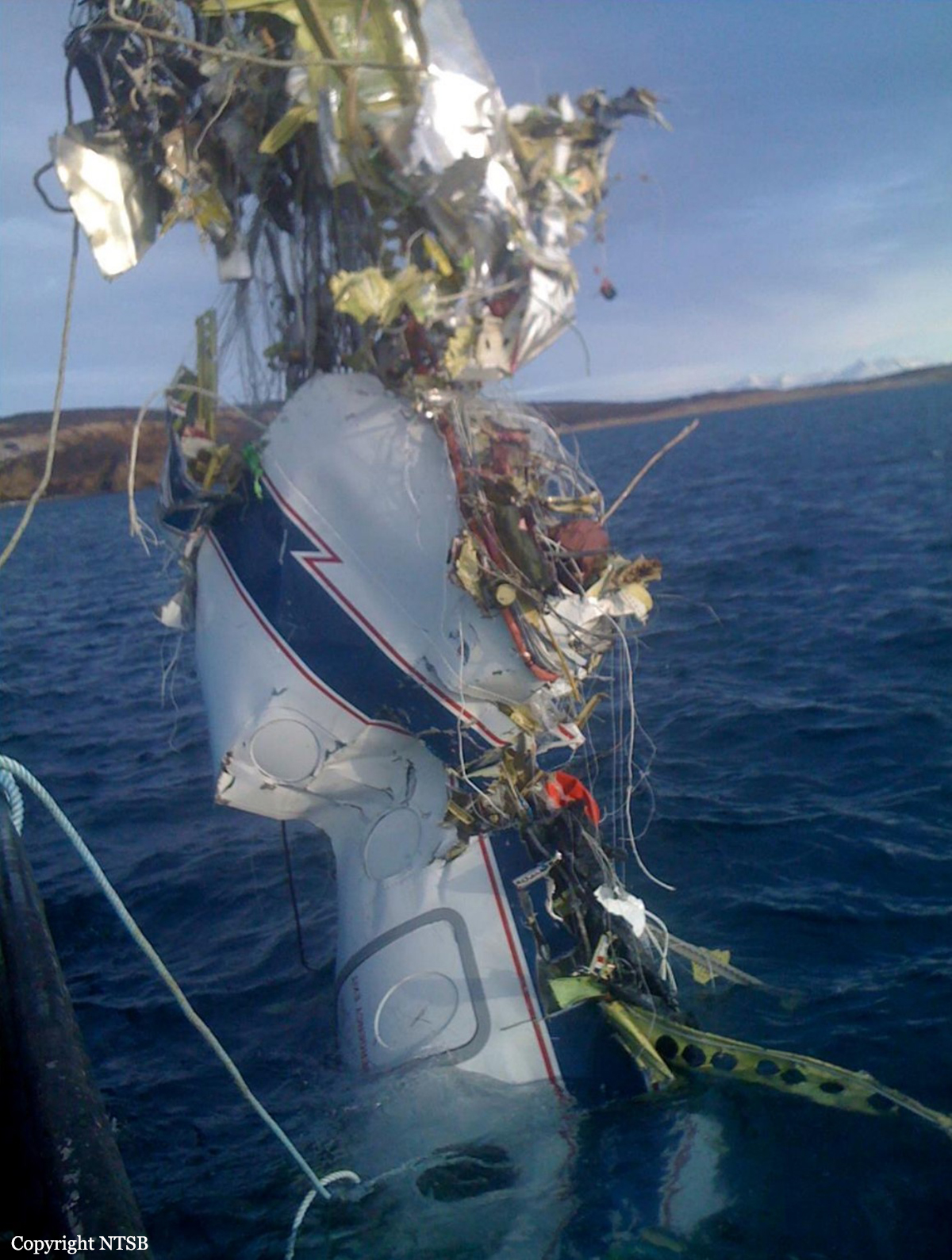
The commercial pilot departed a remote, oceanside lagoon in a float-equipped airplane with three passengers on an on-demand air taxi flight in reduced visibility and heavy rain. When the airplane did not reach its destination, the operator reported the airplane overdue. Extensive search-and-rescue efforts along the coast and inland failed to find the wreckage. After the search ended, small portions of the fragmented airplane washed ashore about 28 miles northeast of the departure lagoon. The remainder of wreckage has not been located despite sonar searches of the ocean near where the wreckage was found. A stowed tent and duffel bag, which were reported to be aboard the airplane, were also found ashore near the wreckage location. The tent and duffel bag exhibited evidence of exposure to a high temperature environment, such as a fire. However, there was no evidence indicating that the fire occurred in flight. The lack of soot on the undamaged areas of the items, as well as the very abrupt demarcation line between the damaged portion and the undamaged material, is consistent with these items floating in the water and being exposed to a fuel fire on the surface of the water, rather than having been exposed to a fire in the airplane’s cargo compartment. Due to the fragmentation of the recovered wreckage, it is likely that the airplane collided with ocean’s surface while in flight; however, because the engine and a majority of the wreckage have not been found, the sequence of events leading to the accident could not be determined.
Probable cause:
Undetermined.
Final Report:

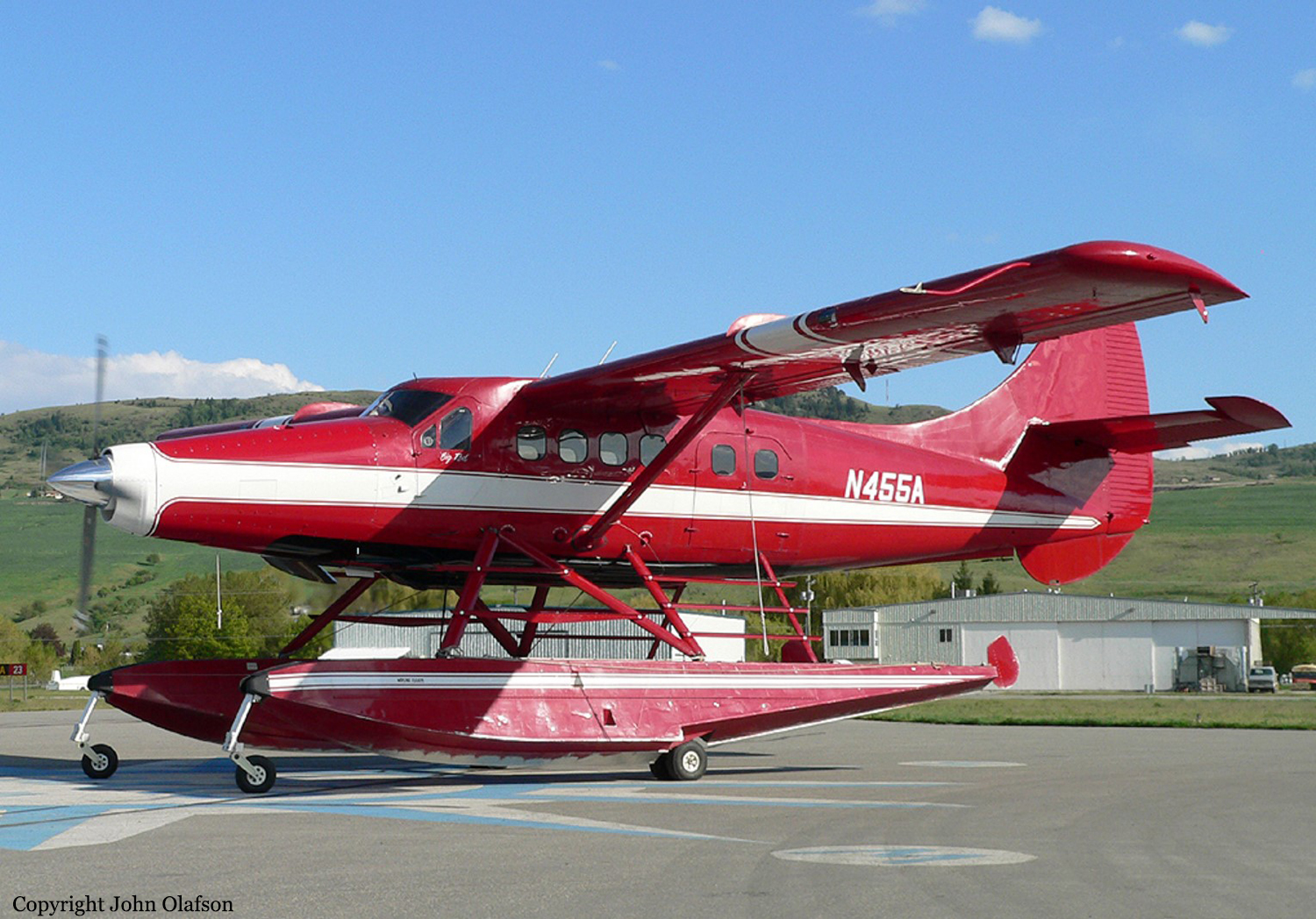
Crash of a De Havilland DHC-3T Turbo Otter near Aleknagik: 5 killed

Date & Time: Aug 9, 2010 at 1442 LT
Type of aircraft:
Operator:
Registration:
N455A
Flight Phase:
Survivors:
Yes
Site:
Schedule:
Nerka Lake - Nushagak River
MSN:
206
YOM:
1957
Crew on board:
1
Crew fatalities:
Pax on board:
8
Pax fatalities:
Other fatalities:
Total fatalities:
5
Captain / Total flying hours:
28768
Captain / Total hours on type:
35.00
Aircraft flight hours:
9372
Circumstances:
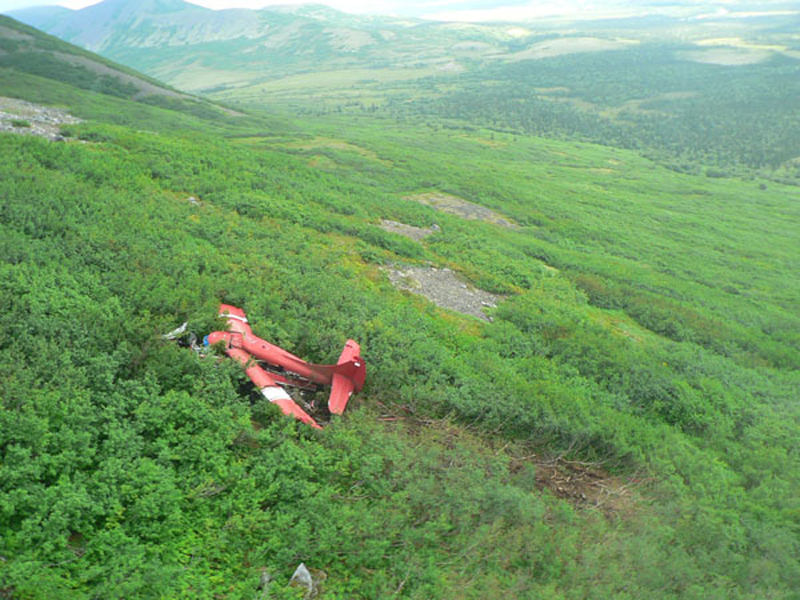
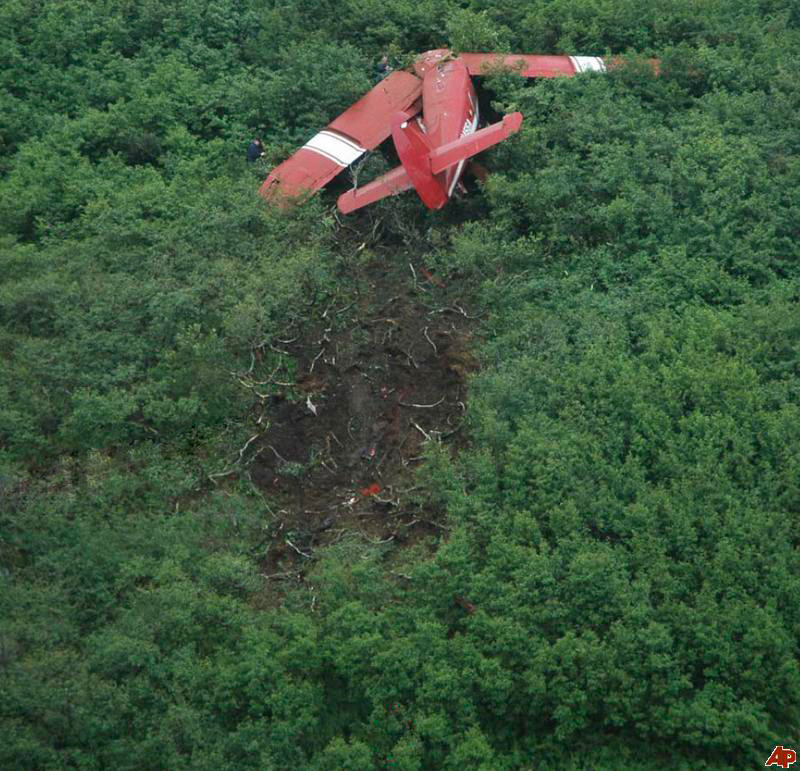
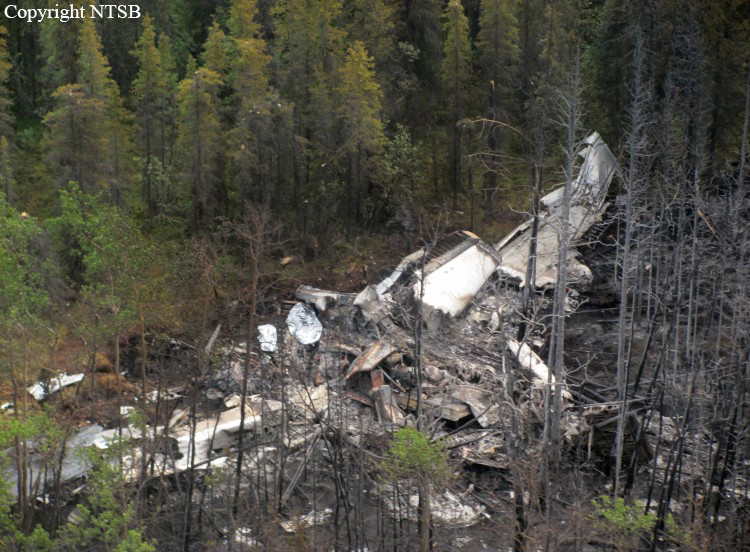
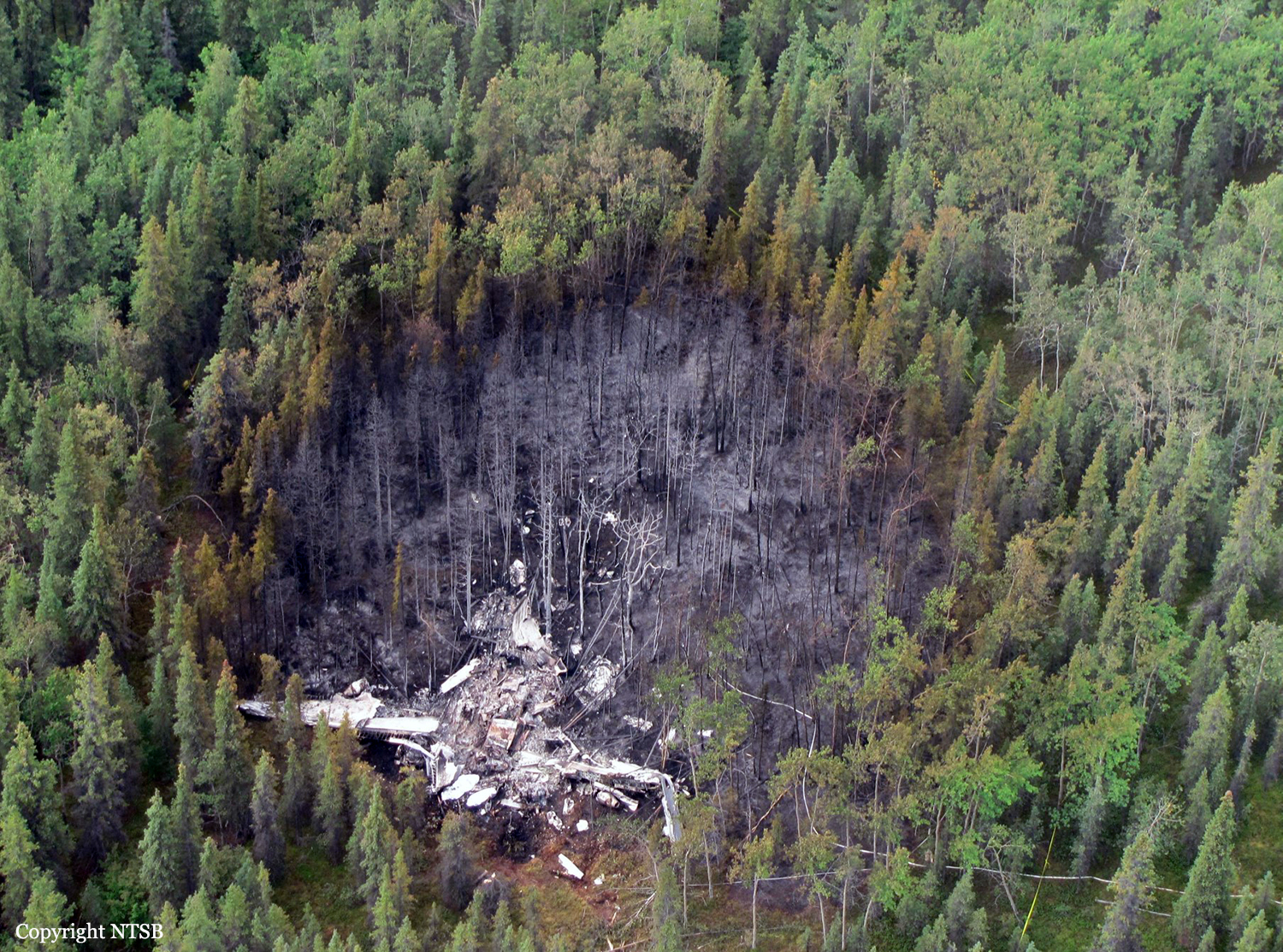
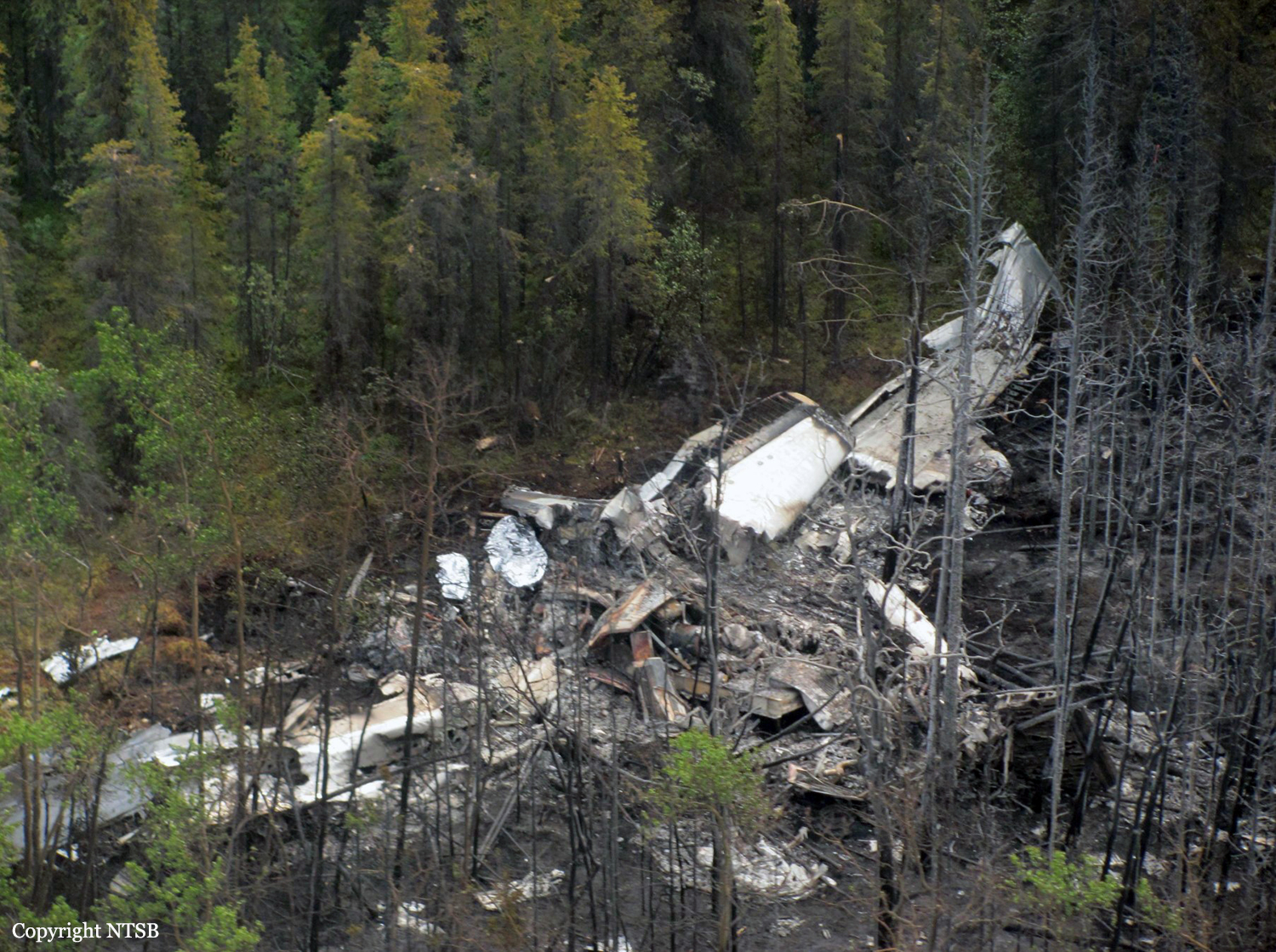
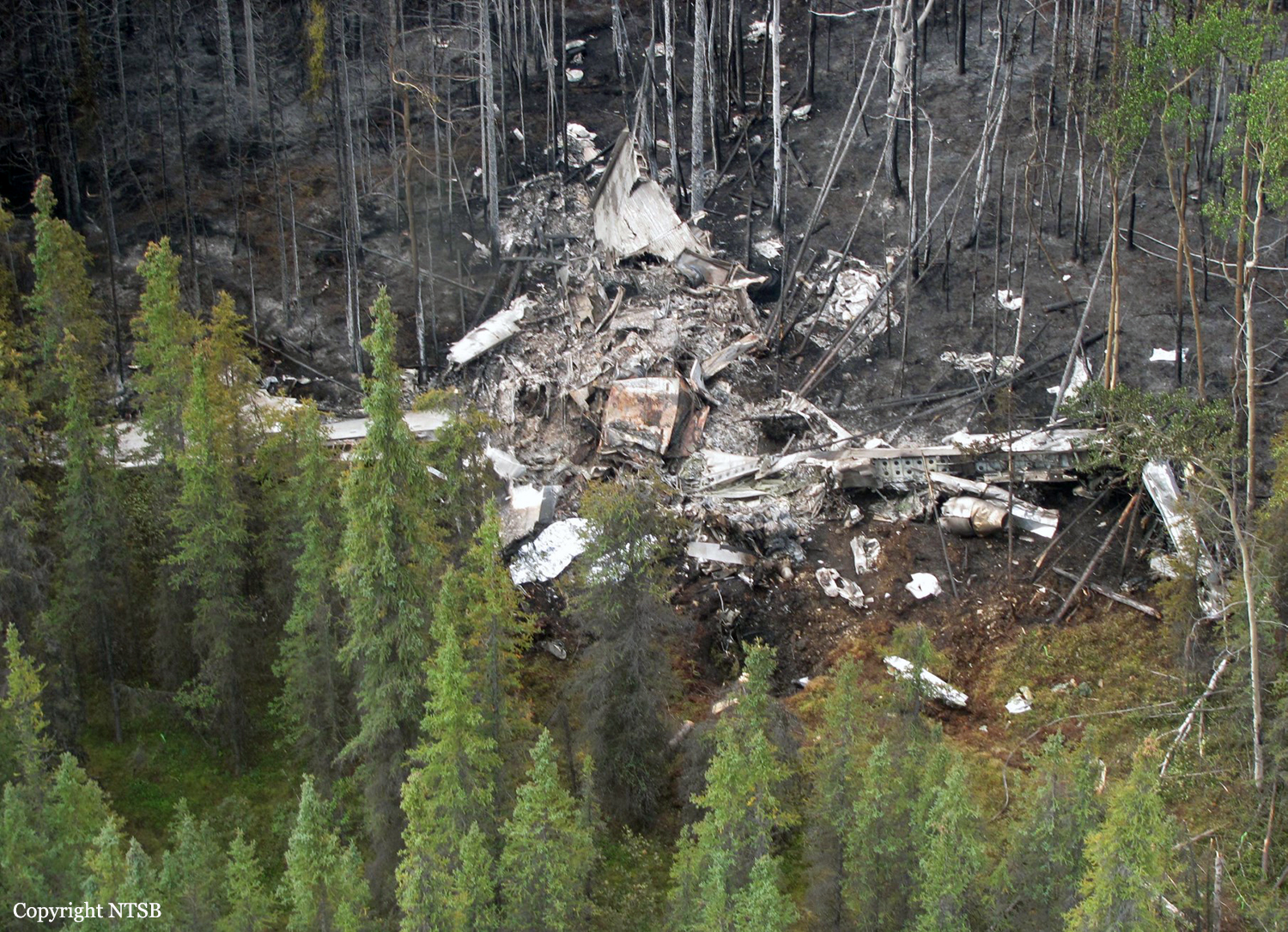
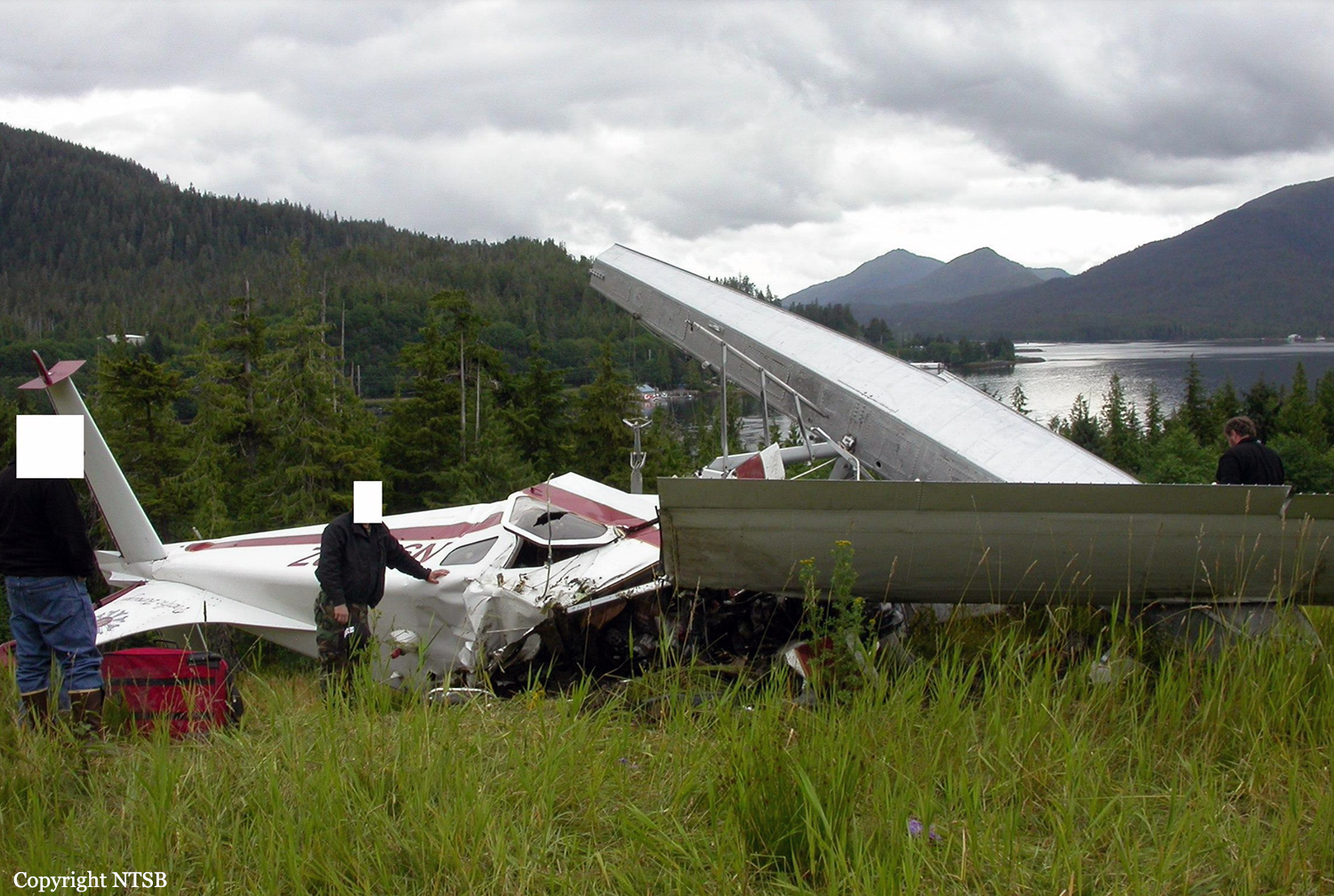
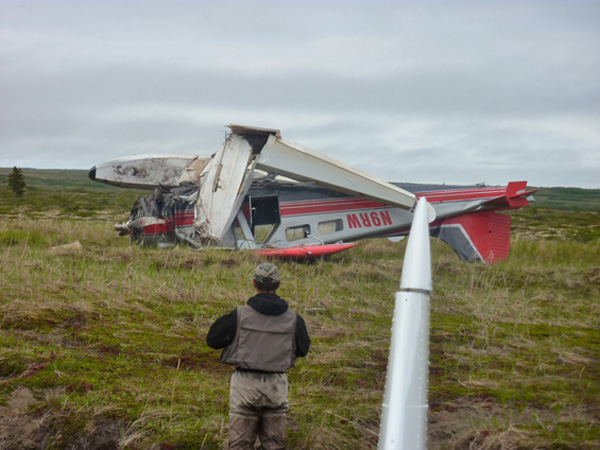
On August 9, 2010, about 1442 Alaska daylight time, a single-engine, turbine-powered, amphibious float-equipped de Havilland DHC-3T airplane, N455A, impacted mountainous, tree-covered terrain about 10 nautical miles (nm) northeast of Aleknagik, Alaska. The airline transport pilot and four passengers received fatal injuries, and four passengers received serious injuries. The airplane sustained substantial damage, including deformation and breaching of the fuselage. The flight was operated by GCI Communication Corp. (GCI), of Anchorage, Alaska, under the provisions of 14 Code of Federal Regulations (CFR) Part 91. About the time of the accident, meteorological conditions that met the criteria for marginal visual flight rules (MVFR) were reported at Dillingham Airport (DLG), Dillingham, Alaska, about 18 nm south of the accident site. No flight plan was filed. The flight departed about 1427 from a GCI-owned private lodge on the shore of Lake Nerka and was en route to a remote sport fishing camp about 52 nm southeast on the Nushagak River. According to GCI lodge personnel, the purpose of the flight was to transport the lodge guests to the fishing camp for an afternoon of fishing. The GCI lodge manager stated that the accident pilot had flown previously that morning in the accident airplane to DLG, where he dropped off another GCI pilot and then returned to the lodge. Sky Connect tracking system data for the accident airplane showed that, on that previous trip, the accident pilot departed the lodge for DLG about 0902 and returned about 1120. A review of DLG flight service station (FSS) recordings revealed that, about 1105, during the return flight from DLG to the lodge, the accident pilot filed a pilot report (PIREP) in which he reported ceilings at 500 feet, visibility of 2 to 3 miles in light rain, and “extremely irritating…continuous light chop” turbulence that he described as “kind of that shove-around type stuff rather than just bumps.” According to GCI lodge personnel, when the pilot returned to the lodge, he stated that the weather was not conducive for a flight to the fishing camp because of the turbulence and low ceilings. Passengers from the accident flight and GCI personnel indicated during postaccident interviews that, by the time that they had lunch about 1300, the weather had improved, and the group discussed with the pilot the option of going to the fishing camp. One passenger characterized the conversation as casual and stated that no pressure was placed on the pilot to make the flight or to depart by a certain time. The GCI lodge manager and some passengers stated that they thought that the pilot checked the weather on the computer during lunch, and the guest party co-host (one of GCI’s senior vice presidents) stated that the pilot informed him about 1400 that he was comfortable taking the group to the fishing camp if the group wanted to go. The GCI lodge manager stated that, before the airplane departed, he sent an e-mail to the fishing camp to indicate that the guests were coming, and personnel there informed him that the pilot had already contacted them. The lodge manager stated that he went down to the dock to help push the airplane off and that, when the flight departed, he could see all of Jackknife Mountain across the lake. (The mountain’s highest peak, which is about 3 nm from the dock, is depicted as 2,326 feet above mean sea level [msl] on an aviation sectional chart, and the elevation of Lake Nerka is depicted as about 40 feet msl on a topographical map.) He stated that the weather included broken ceilings about 2,000 feet above ground level (agl) with some blue patches in the sky and good visibility. The flight route from the lodge to the fishing camp traversed Class G airspace; 14 CFR 91.155 specifies that, for daytime flights below 1,200 feet agl, the flight must be flown clear of clouds and in conditions that allow at least 1 mile flight visibility. During a postaccident interview, the passenger who was in the right cockpit seat stated that, when the airplane departed, the visibility was “fine.” He stated that the pilot went a different direction during takeoff (compared to the passenger’s experiences during previous flights to the fishing camp) and that the pilot said it was to avoid “wind and weather.” The passenger described the weather as cloudy above with light turbulence. He stated that the airplane stayed below the clouds and that he noticed water “running across” the outside of the windshield before he fell asleep about 10 minutes into the flight. Another passenger, who was seated in the second seat behind the pilot on the left side of the airplane, stated that some fog was present beneath the airplane but that he did not think that the airplane flew into any clouds. He estimated that he fell asleep about 3 to 4 minutes after departure. The passenger who was in the first seat behind the pilot on the left side of the airplane stated in an initial interview that he could not see well out his side window and that he had no indication of the weather; however, in a subsequent interview, he stated that, once the airplane was airborne, he could not see the ground and could see only “white-out” conditions outside the airplane. He stated in the subsequent interview that he did not know if the airplane had climbed into clouds initially or if it had entered clouds at some point along the way. The passenger who was in the third seat behind the pilot on the left side of the airplane stated that the pilot kept the airplane below the cloud ceiling and flew along the tree line, followed streams, and maneuvered to avoid terrain. The passenger stated that the airplane banked into a left turn (he said that the bank angle was not unusual) and then immediately impacted terrain. Neither he nor the other passenger who was awake at the time of impact recalled noticing any unusual maneuvering, unusual bank or pitch angles, or change in engine noises that would indicate any problem before the airplane impacted terrain. The wreckage was found at an elevation of about 950 feet msl in steep, wooded terrain in the Muklung Hills, about 16 nm southeast of the GCI lodge. Figure 1 shows the accident site (view looking north-northwest).
Probable cause:
The pilot's temporary unresponsiveness for reasons that could not be established from the available information. Contributing to the investigation's inability to determine exactly what occurred in the final minutes of the flight was the lack of a cockpit recorder system with the ability to capture audio, images, and parametric data.
Final Report:

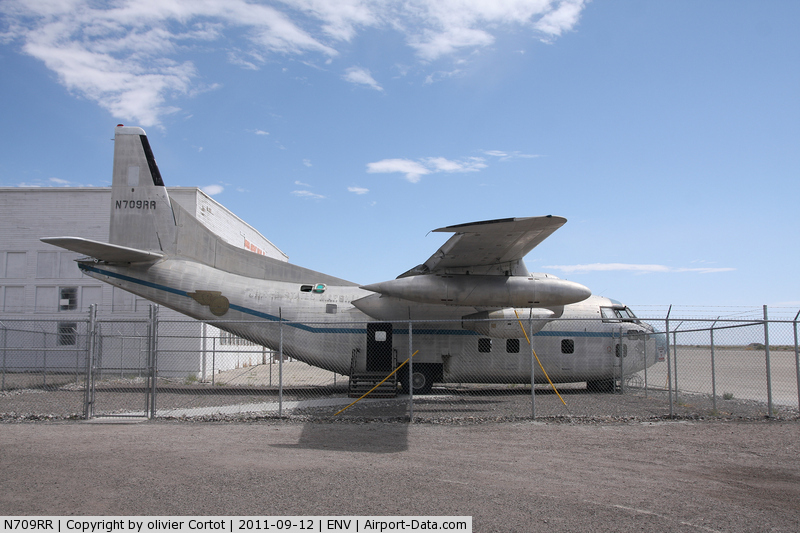
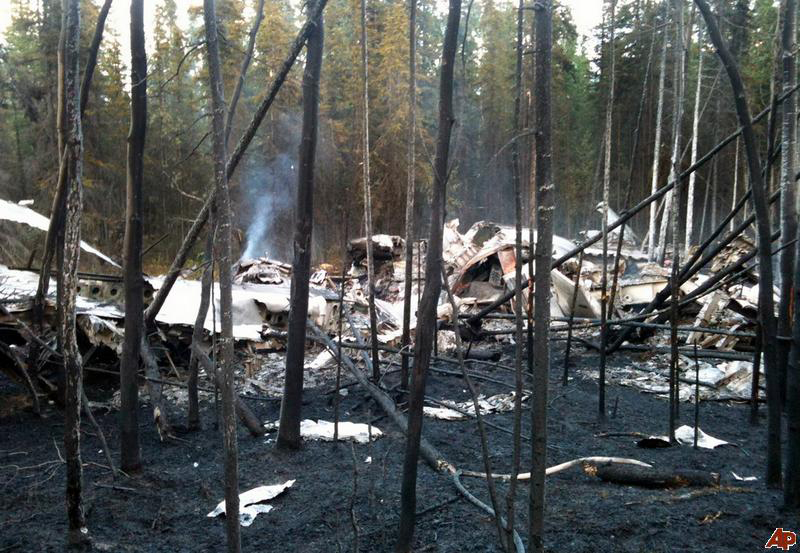
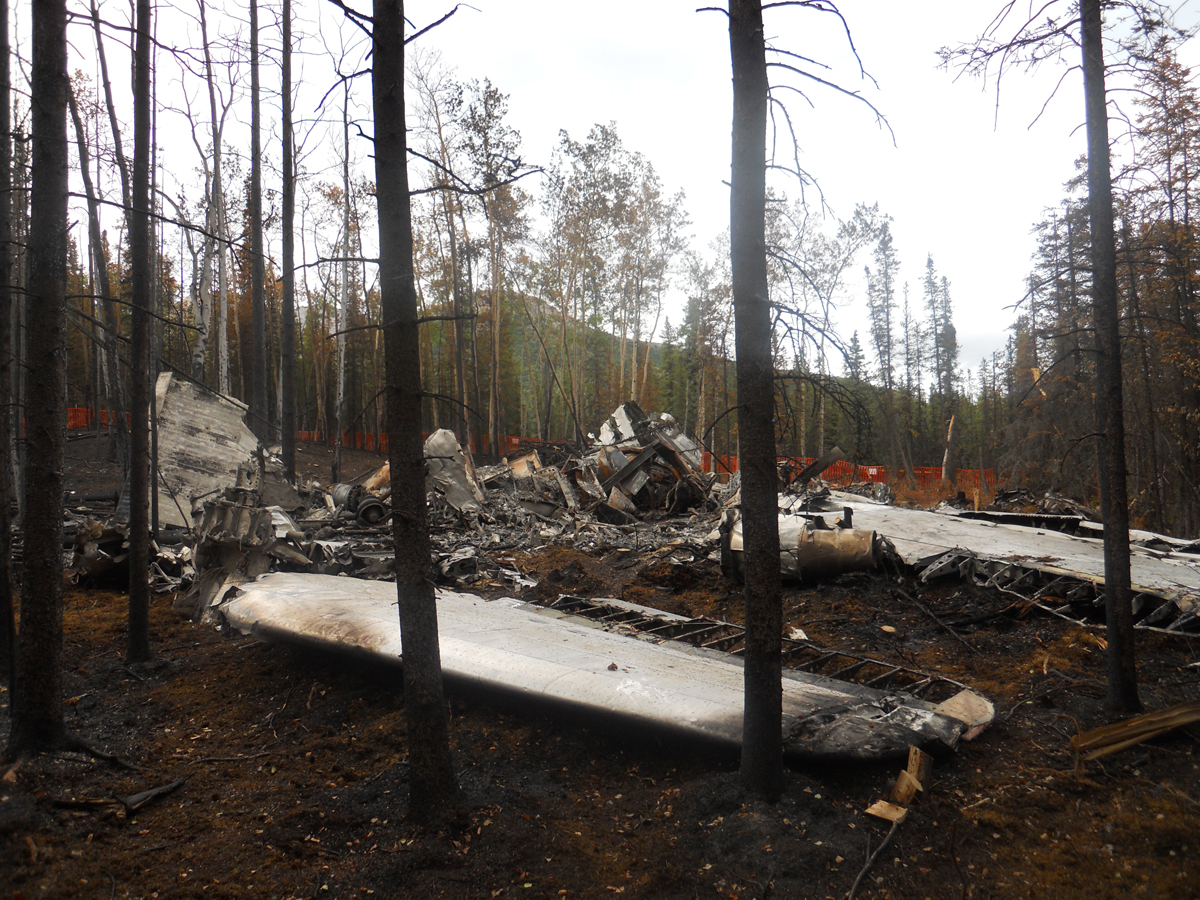
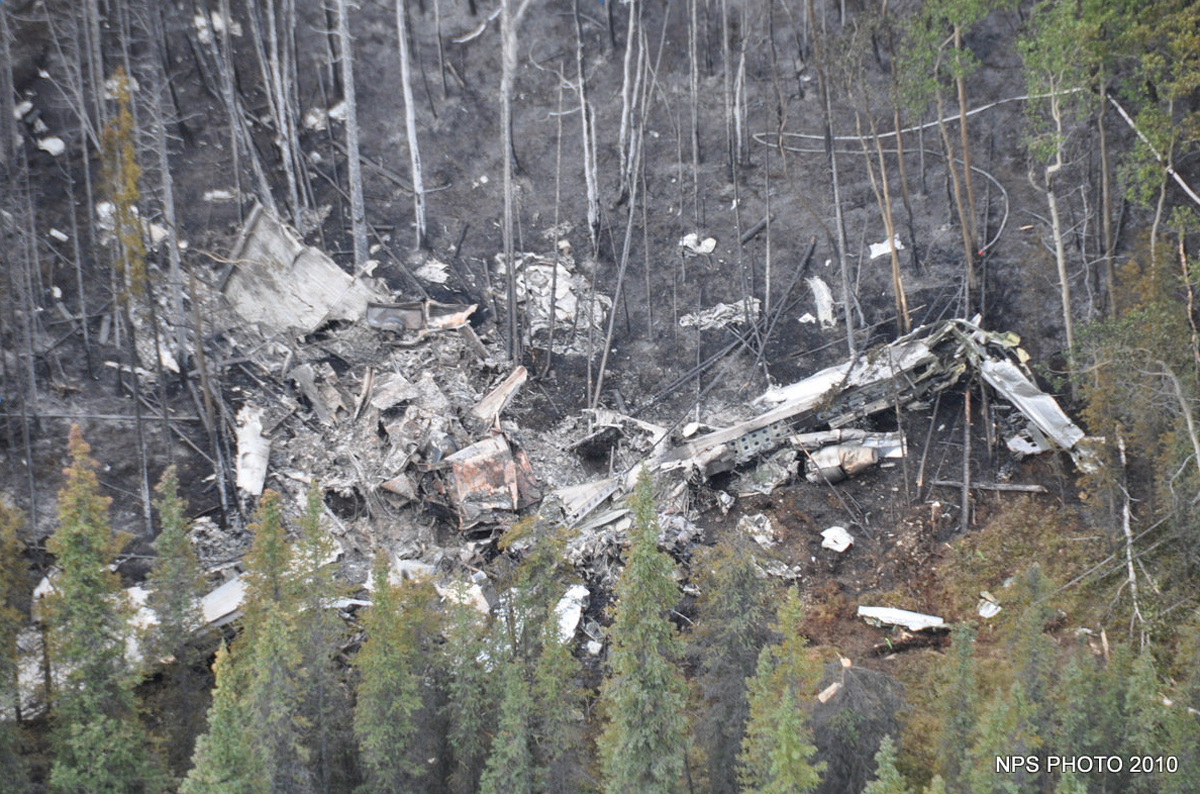
Crash of a Fairchild C-123K Provider in the Denali National Park: 3 killed

Date & Time: Aug 1, 2010 at 1500 LT
Type of aircraft:
Registration:
N709RR
Flight Phase:
Flight Type:
Survivors:
No
Site:
Schedule:
Palmer - Unalakleet
MSN:
20158
YOM:
1954
Crew on board:
2
Crew fatalities:
Pax on board:
1
Pax fatalities:
Other fatalities:
Total fatalities:
3
Captain / Total flying hours:
20000
Circumstances:
The pilot, co-pilot and the passenger departed on a day VFR cross country flight in a large, 1950's era former military transportb category airplane to deliver cargo. The pilot did not file a flight plan, and had no communication with any air traffic control facility during the flight. While en route, witnesses saw the airplane fly slowly across a valley near the entrance of a national park, which was not the intended route of flight. The airplane suddenly pitched up, stalled, and dived into wooded terrain within the park. Two pilot-rated witnesses said the engines were operating at the time of the accident, and the landing gear was retracted. An on-scene examination of the burned airplane structure and engines revealed no evidence of any preaccident mechanical deficiencies, or any evidence that the cargo had shifted during the flight. A former military pilot who had experience in the accident type airplane, stated that the airplane was considered unrecoverable from a stall, and for that reason, pilots did not typically practice stalls in it. He also indicated that if a problem was encountered with one of the two piston engines on the airplane, the auxiliary jet engine on the affected side should be started to provide additional thrust. Given the lack of mechanical deficiencies discovered during postaccident inspection, the absence of any distress communications, and the fact that neither of the two auxiliary jet engines had been started to assist in the event of a piston engine malfunction, it is likely the pilot allowed the airplane to lose airspeed and enter a low altitude stall from which he was unable to recover.
Probable cause:
The pilot's failure to maintain adequate airspeed to avoid a low altitude stall, resulting in a loss of control and collision with terrain.
Final Report:

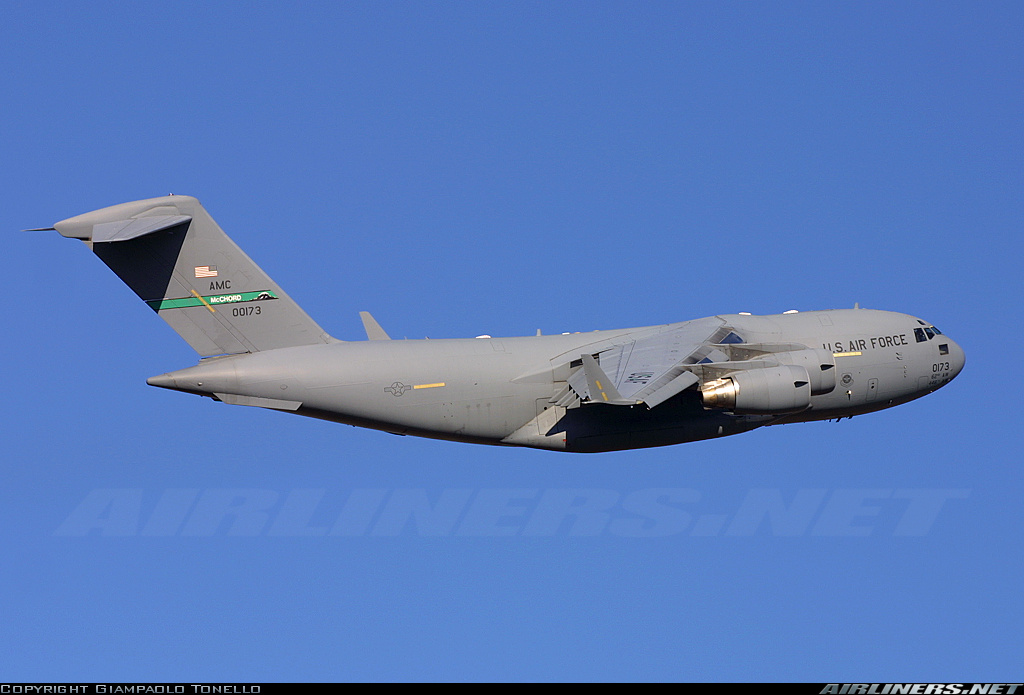
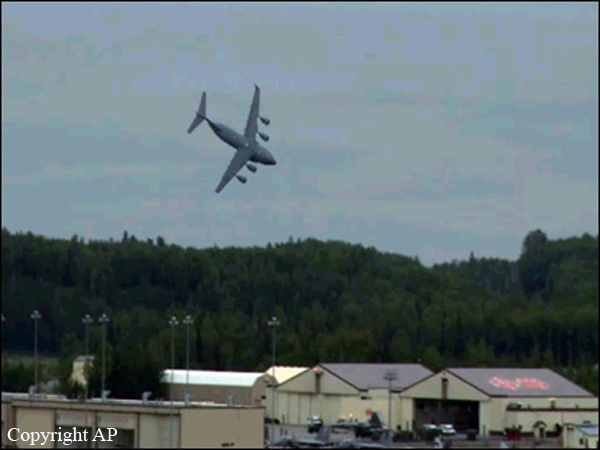
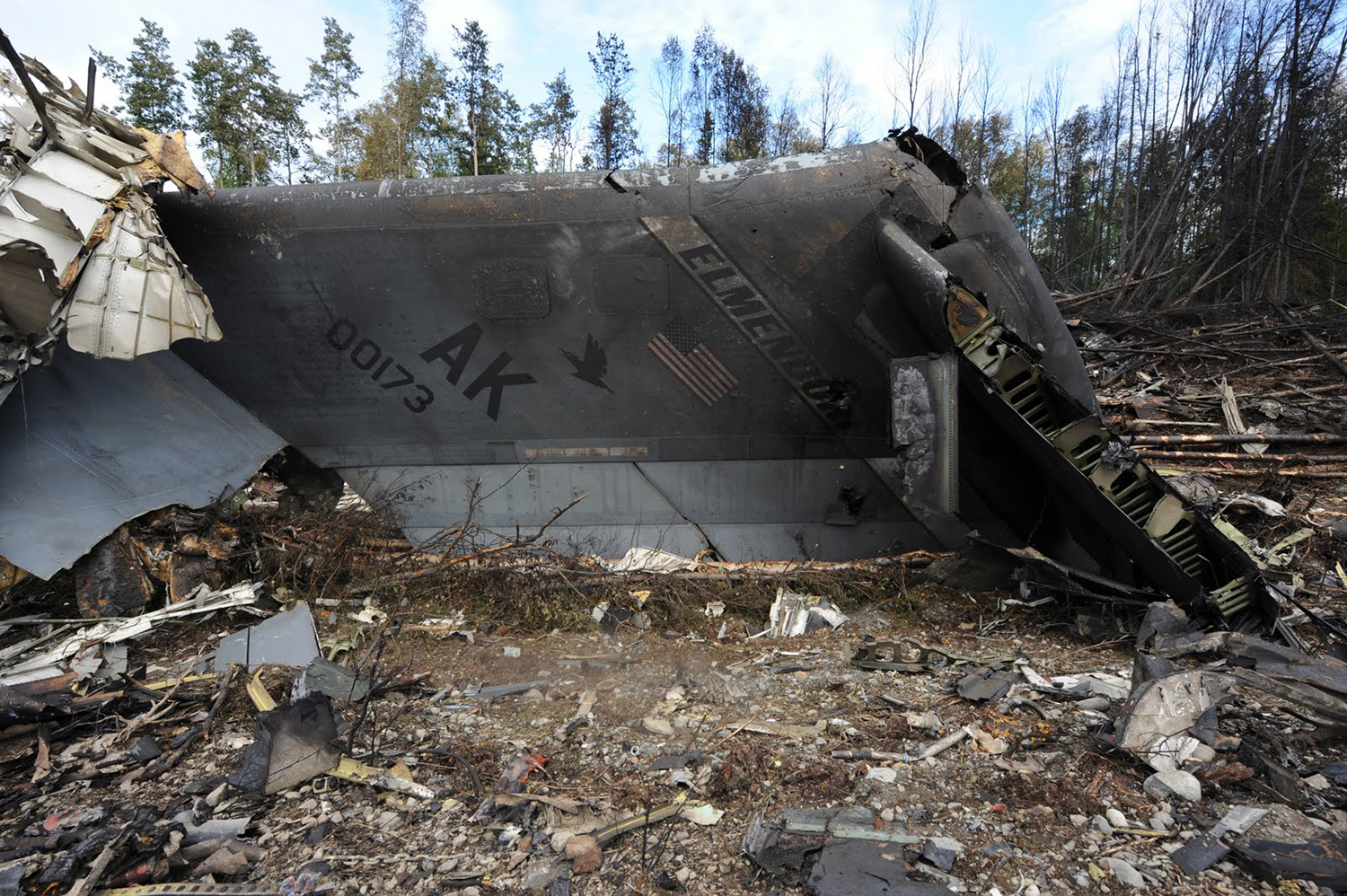
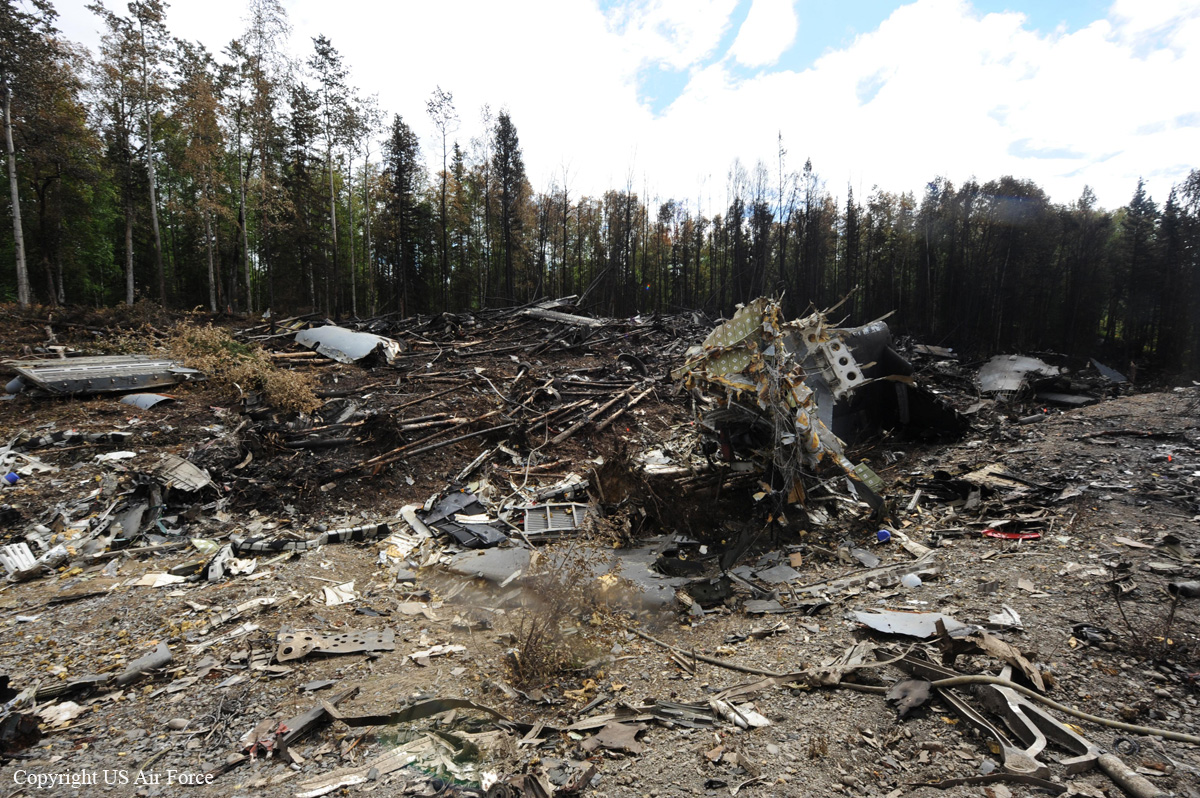
Crash of a McDonnell Douglas C-17A Globemaster III at Elmendorf AFB: 4 killed

Date & Time: Jul 28, 2010 at 1822 LT
Operator:
Registration:
00-0173
Flight Phase:
Flight Type:
Survivors:
No
Schedule:
Elmendorf AFB - Elmendorf AFB
MSN:
P-73
YOM:
2000
Crew on board:
4
Crew fatalities:
Pax on board:
0
Pax fatalities:
Other fatalities:
Total fatalities:
4
Circumstances:
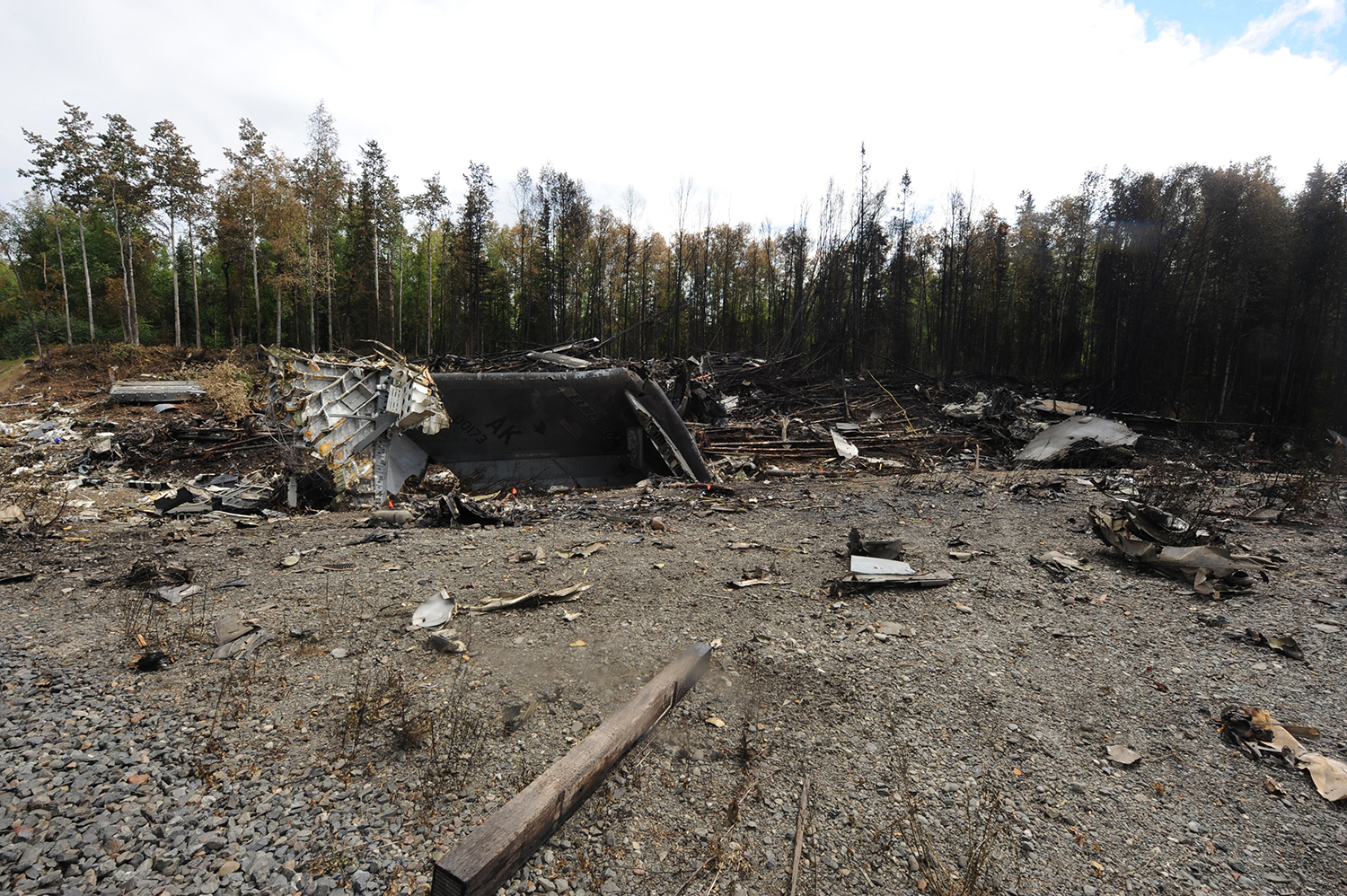
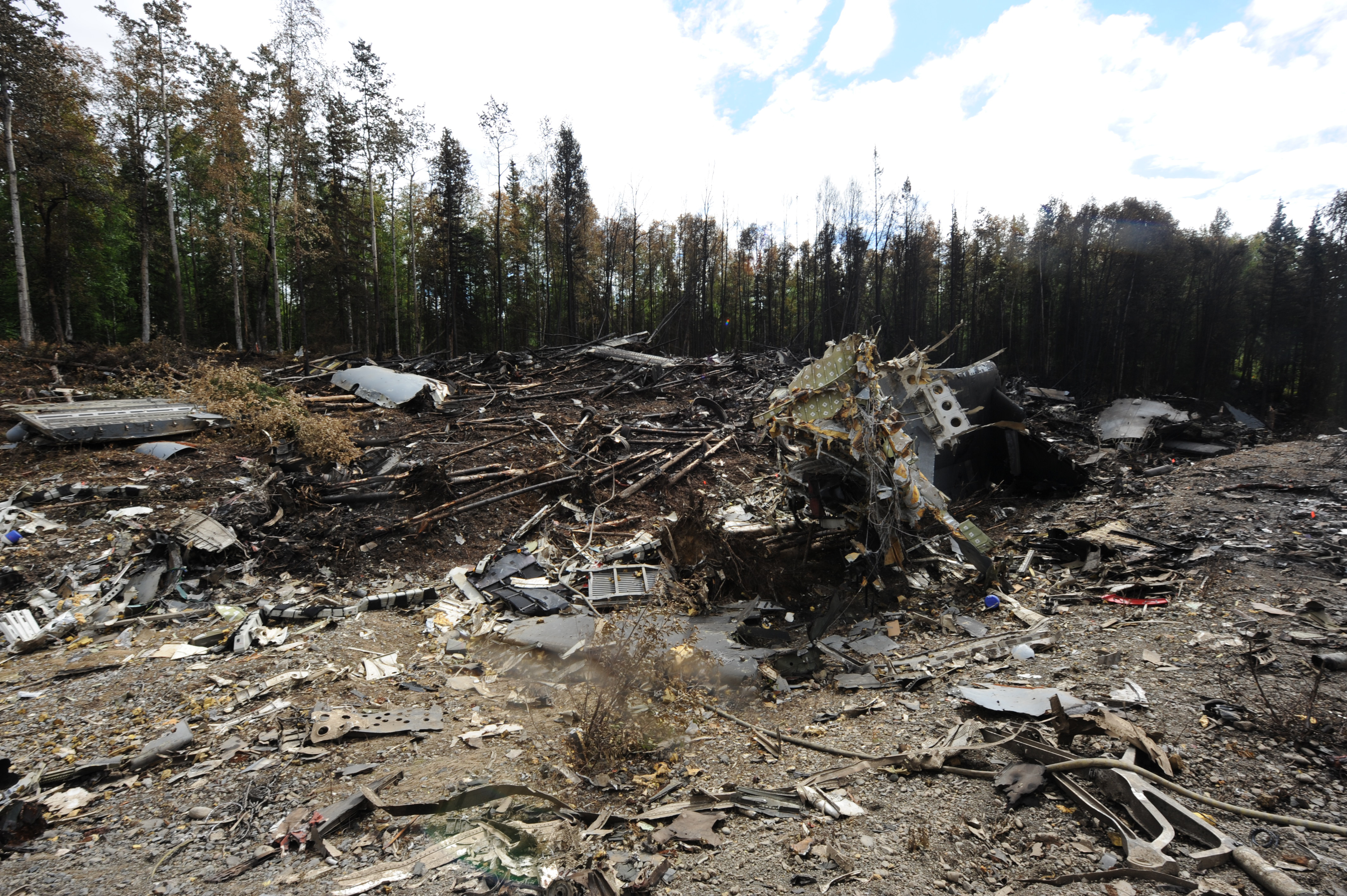
The crew was engaged in a training exercise in preparation to the 'Thunder Air Show' taking part at Elmendorf-Richardson AFB on 31JUL2010. Shortly after take off from runway 06, the pilot-in-command initiated a first turn to the left then a steep turn to the right when the aircraft entered an uncontrolled descent and crashed in a huge explosion in a wooded area located some 3 km northwest of the airbase. The aircraft was totally destroyed by impact forces and a post crash fire and all four crew members were killed.
Probable cause:
The board president found clear and convincing evidence that the cause of the mishap was pilot error. The pilot violated regulatory provisions and multiple flight manual procedures, placing the aircraft outside established flight parameters at an attitude and altitude where recovery was not possible. Furthermore, the copilot and safety observer did not realize the developing dangerous situation and failed to make appropriate inputs. In addition to multiple procedural errors, the board president found sufficient evidence that the crew on the flight deck ignored cautions and warnings and failed to respond to various challenge and reply items. The board also found channelized attention, overconfidence, expectancy, misplaced motivation, procedural guidance, and program oversight substantially contributed to the mishap.

Crash of a De Havilland DHC-2 Beaver in Ketchikan: 1 killed

Date & Time: Jul 23, 2010 at 0727 LT
Type of aircraft:
Operator:
Registration:
N9290Z
Flight Phase:
Flight Type:
Survivors:
No
Schedule:
Thorne Bay - Ketchikan
MSN:
1387
YOM:
1959
Crew on board:
1
Crew fatalities:
Pax on board:
0
Pax fatalities:
Other fatalities:
Total fatalities:
1
Captain / Total flying hours:
5300
Captain / Total hours on type:
4500.00
Aircraft flight hours:
21065
Circumstances:
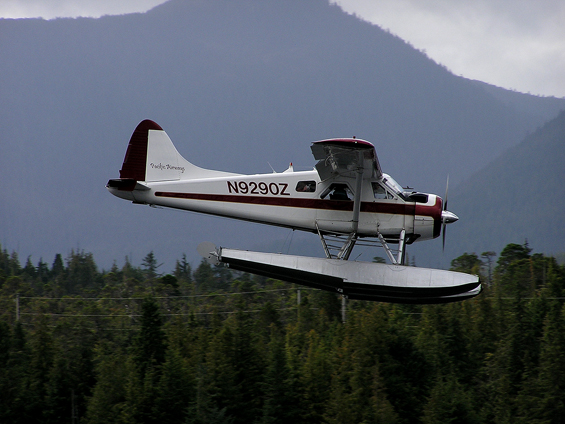
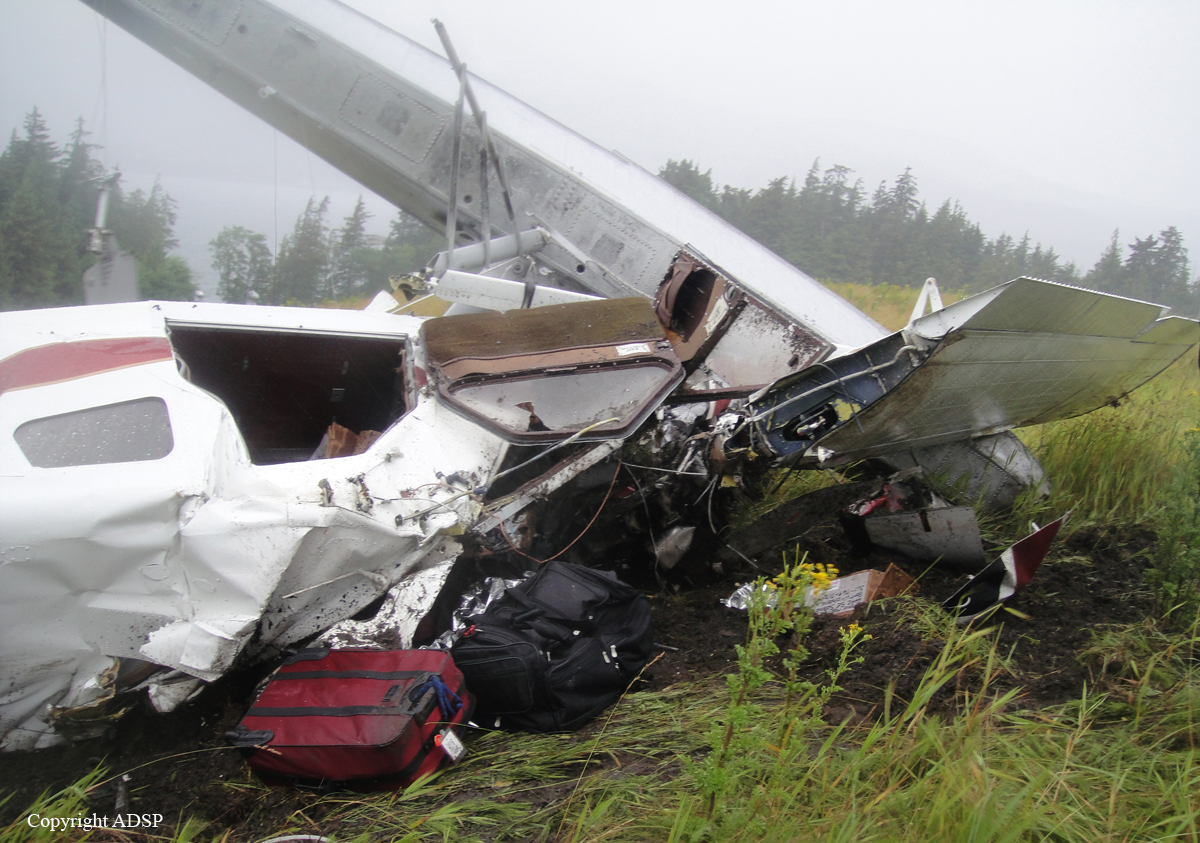
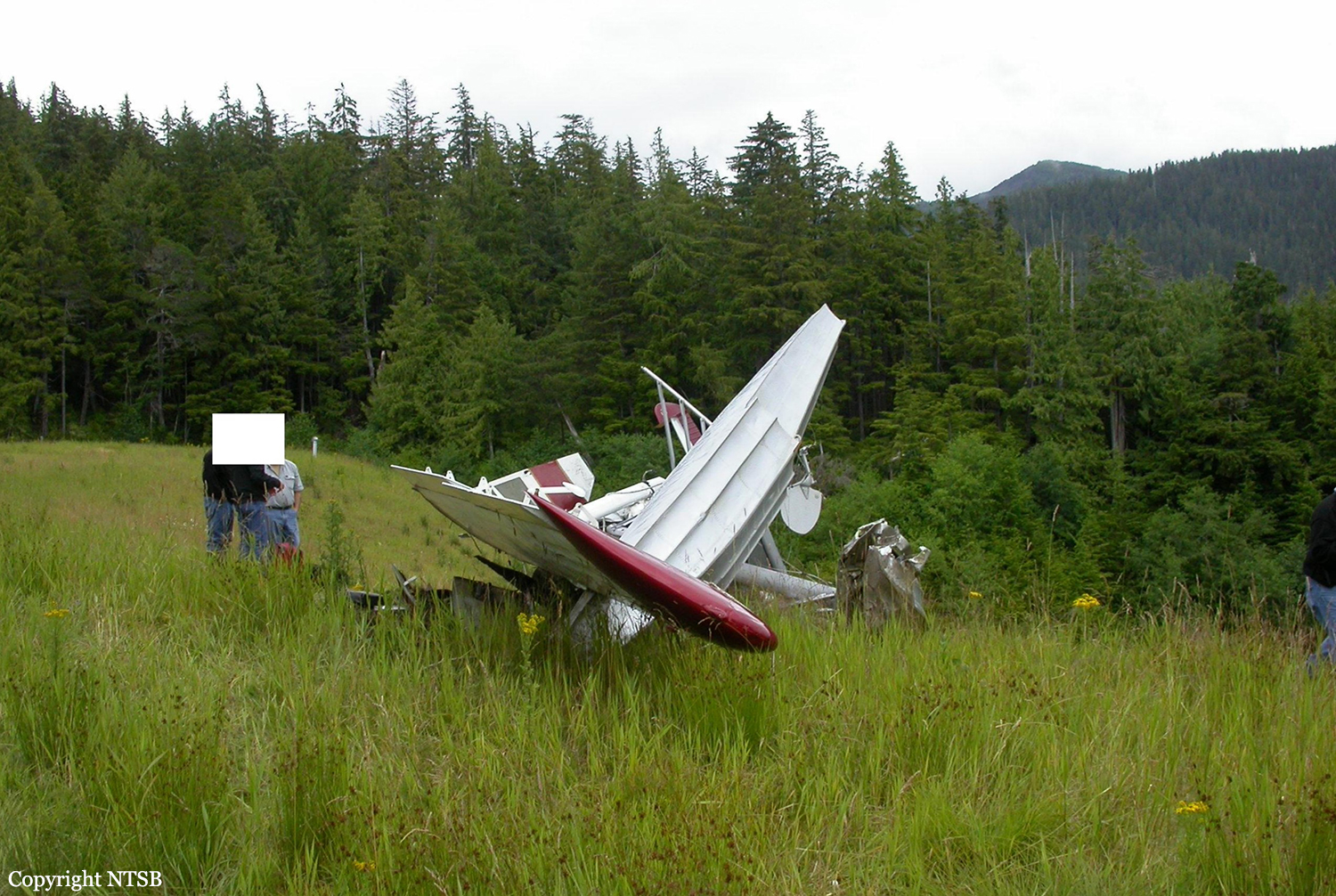
The pilot had been advised by the Federal Aviation Administration flight service station (FSS) specialist to remain clear of the destination airport until the specialist could issue a special visual flight rules clearance. Instrument meteorological conditions prevailed at the airport, with a strong southeasterly wind. About 8 minutes after initial contact, the FSS specialist attempted to contact the pilot to issue the clearance but received no response. A witness about 0.5 mile southeast of the accident site said he saw the accident airplane flying very low over the treetops. He said the weather conditions consisted of low clouds, rain, and gusty southeasterly wind estimated at 30 to 40 knots. He said that, as the airplane passed overhead, it turned sharply to the left. As he watched the airplane, the wings rocked violently from side to side, and the nose pitched up and down. As the airplane passed low over hilly, tree-covered terrain, it rolled to the right, the right wing struck a large tree and separated, and the airplane descended behind a stand of trees. Pilots flying in the accident area reported strong wind with significant downdrafts and turbulence. A postaccident examination of the airplane did not disclose any preimpact mechanical malfunctions. Given the lack of mechanical deficiencies and the reports of turbulence and downdrafts, as well as the witness’ account of the airplane’s physical movements, it is likely that the pilot encountered significant terrain-induced turbulence and downdrafts while flying at low altitude. The area surrounding the accident site and portions of the pilot's earlier flight path were bordered by large areas of open and protected water, several of which were suitable for landing the float-equipped airplane.
Probable cause:
The pilot’s decision to continue the flight toward his destination in significant turbulence and downdrafts, and his subsequent failure to maintain control of the airplane while flying low over rising terrain.
Final Report:

Crash of a De Havilland DHC-2 Beaver in Kukaklek Lake

Date & Time: Jun 27, 2010 at 1730 LT
Type of aircraft:
Operator:
Registration:
N9RW
Flight Phase:
Survivors:
Yes
Schedule:
Kukaklek Lake - Kukaklek Lake
MSN:
1095
YOM:
1957
Crew on board:
1
Crew fatalities:
Pax on board:
6
Pax fatalities:
Other fatalities:
Total fatalities:
0
Captain / Total flying hours:
5000
Captain / Total hours on type:
2000.00
Circumstances:
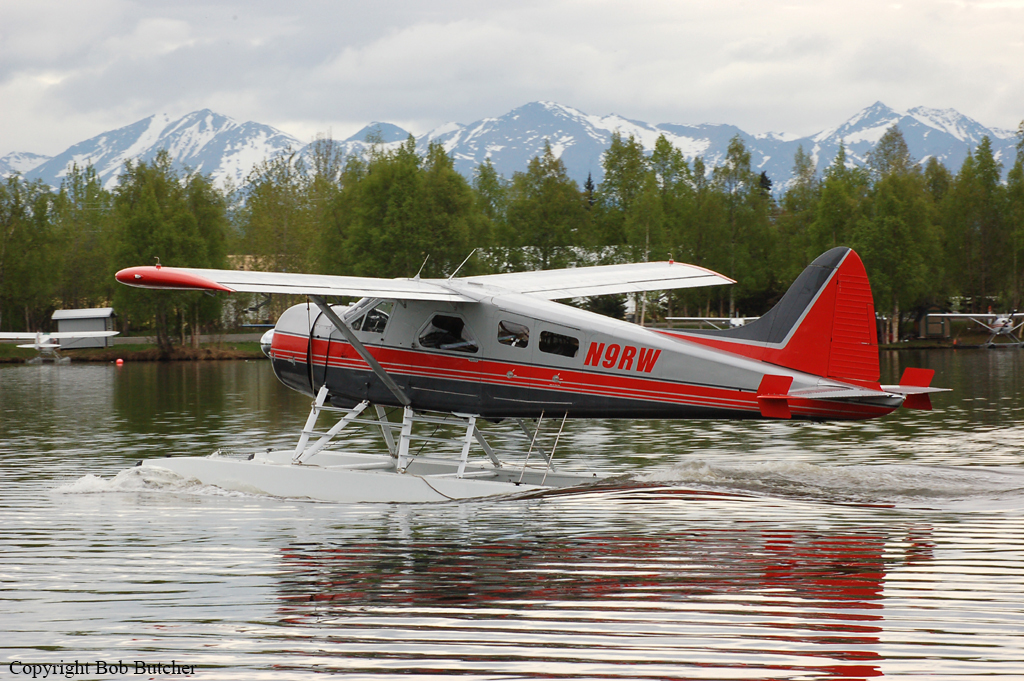
The commercial pilot was taking off on a passenger flight in conjunction with a remote lodge operation under Title 14, CFR Part 91. The pilot said he picked up passengers in the float-equipped airplane on a beach, and water-taxied out into the lake for takeoff. He said he taxied out about 1,200 feet, reversed course into the wind, and initiated a takeoff. He said when the airplane reached his predetermined abort point, the airplane was still on the water, and might not lift off in time to avoid the terrain ahead. The pilot said rather than abort the takeoff he elected to apply full power and continue the takeoff. He said the airplane collided with the bank, and nosed over. The pilot said there were no preaccident mechanical anomalies with the airplane. The owner of the company said the lake was about 1 mile wide where the pilot elected to takeoff. He said the airplane received substantial damage to the wings and fuselage. He also said the passengers related to him that the engine sounded fine, but they did not think the pilot taxied out very far into the lake.
Probable cause:
The pilot's decision to use only a portion of the available takeoff area, which resulted in a collision with terrain during takeoff.
Final Report:

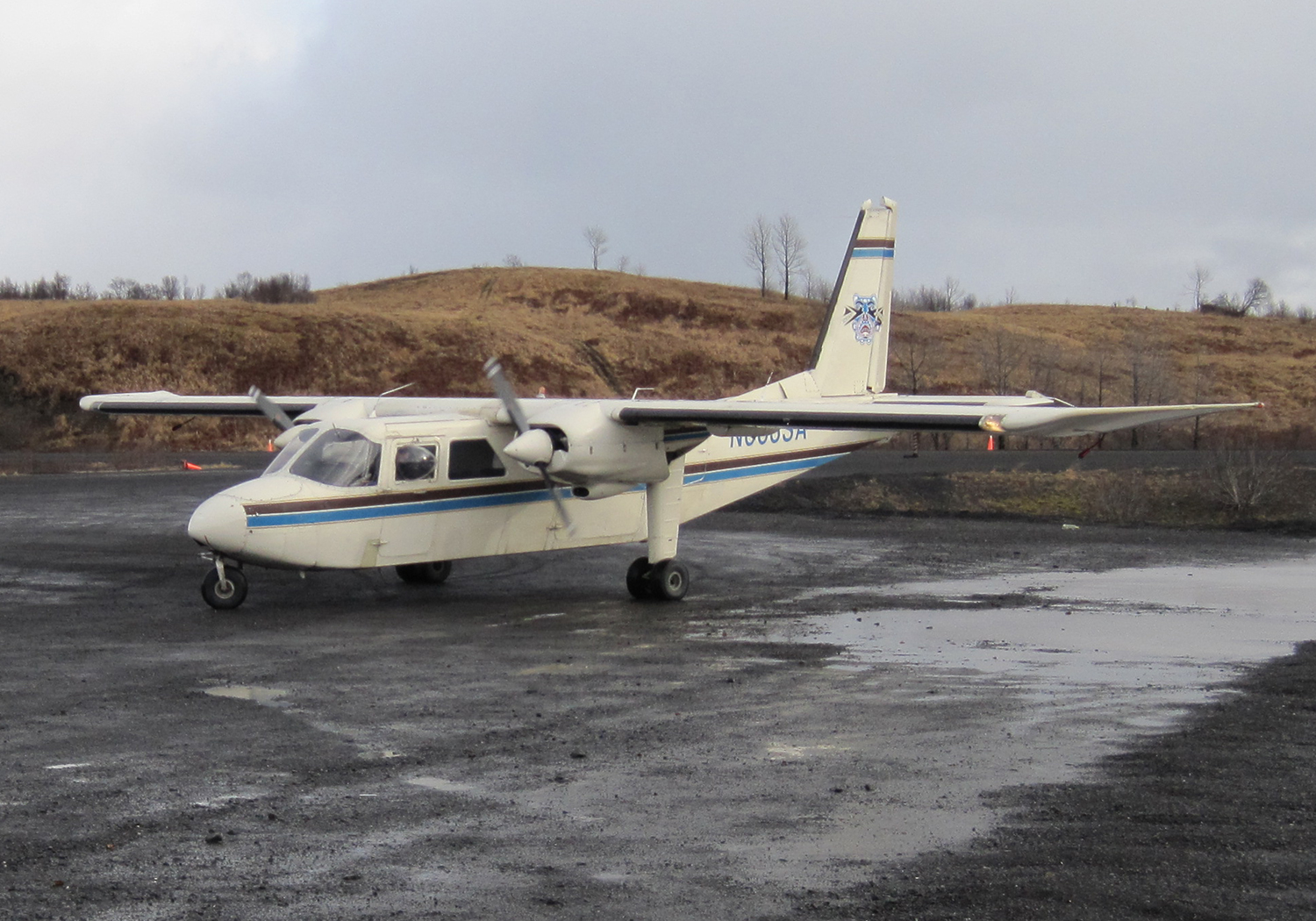
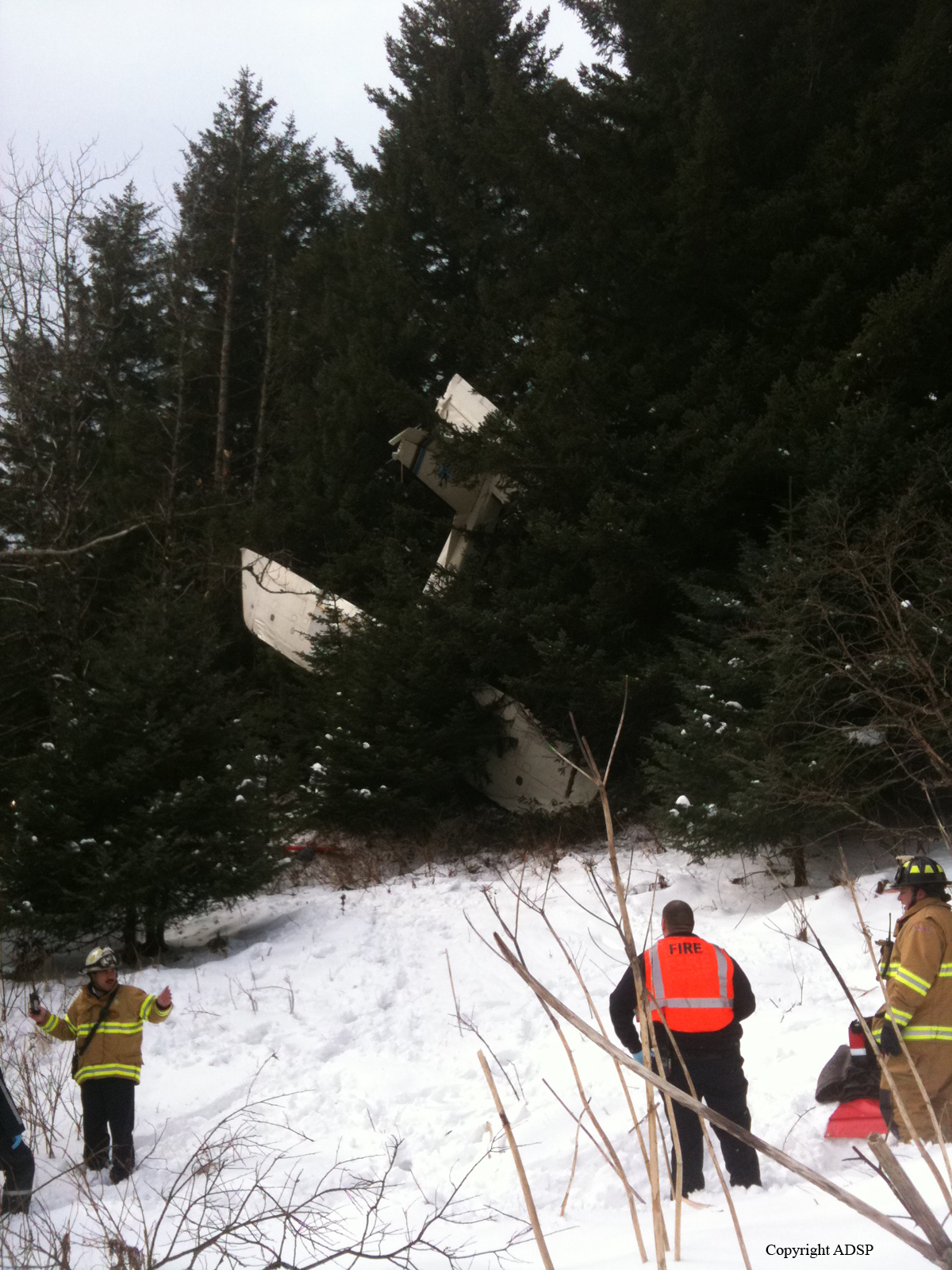
Crash of a Britten-Norman BN-2A-21 Islander in Kodiak

Date & Time: Mar 15, 2010 at 1243 LT
Type of aircraft:
Operator:
Registration:
N663SA
Flight Phase:
Survivors:
Yes
Schedule:
Kodiak - Old Harbor
MSN:
4
YOM:
1967
Flight number:
8D501
Location:
Crew on board:
1
Crew fatalities:
Pax on board:
2
Pax fatalities:
Other fatalities:
Total fatalities:
0
Captain / Total flying hours:
7370
Captain / Total hours on type:
106.00
Aircraft flight hours:
11348
Circumstances:
The airline transport pilot was taking off on a passenger flight under Title 14, CFR Part 135, when the accident occurred. He reported that during takeoff the wind was reported from 290-300 degrees, at 15 knots, gusting to 27 knots. He chose to make an intersection takeoff on runway 25 at its intersection with runway 29, rather than use the full length of runway 29. He said his airspeed did not develop as quickly as he had anticipated, and that with his airspeed lagging and poor climb performance, he realized the airplane was not going to clear the ridge at the end of the runway. He said he initiated a right descending turn to maintain his airspeed, but impacted trees alongside the runway. He reported that the airplane sustained substantial damage to the wings and fuselage when it impacted trees. He said there were no mechanical problems with the airplane prior to the accident.
Probable cause:
The pilot's failure to maintain clearance from rising terrain during takeoff resulting in collision with trees.
Final Report:

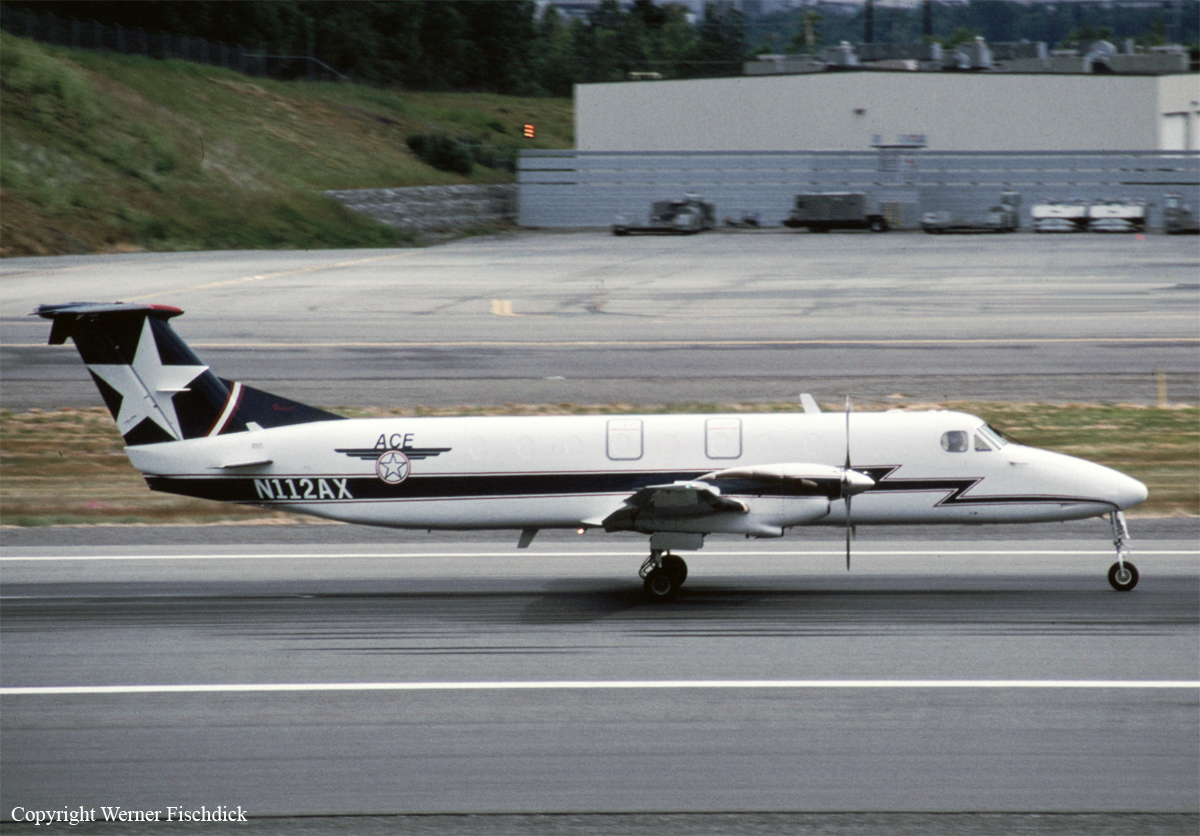
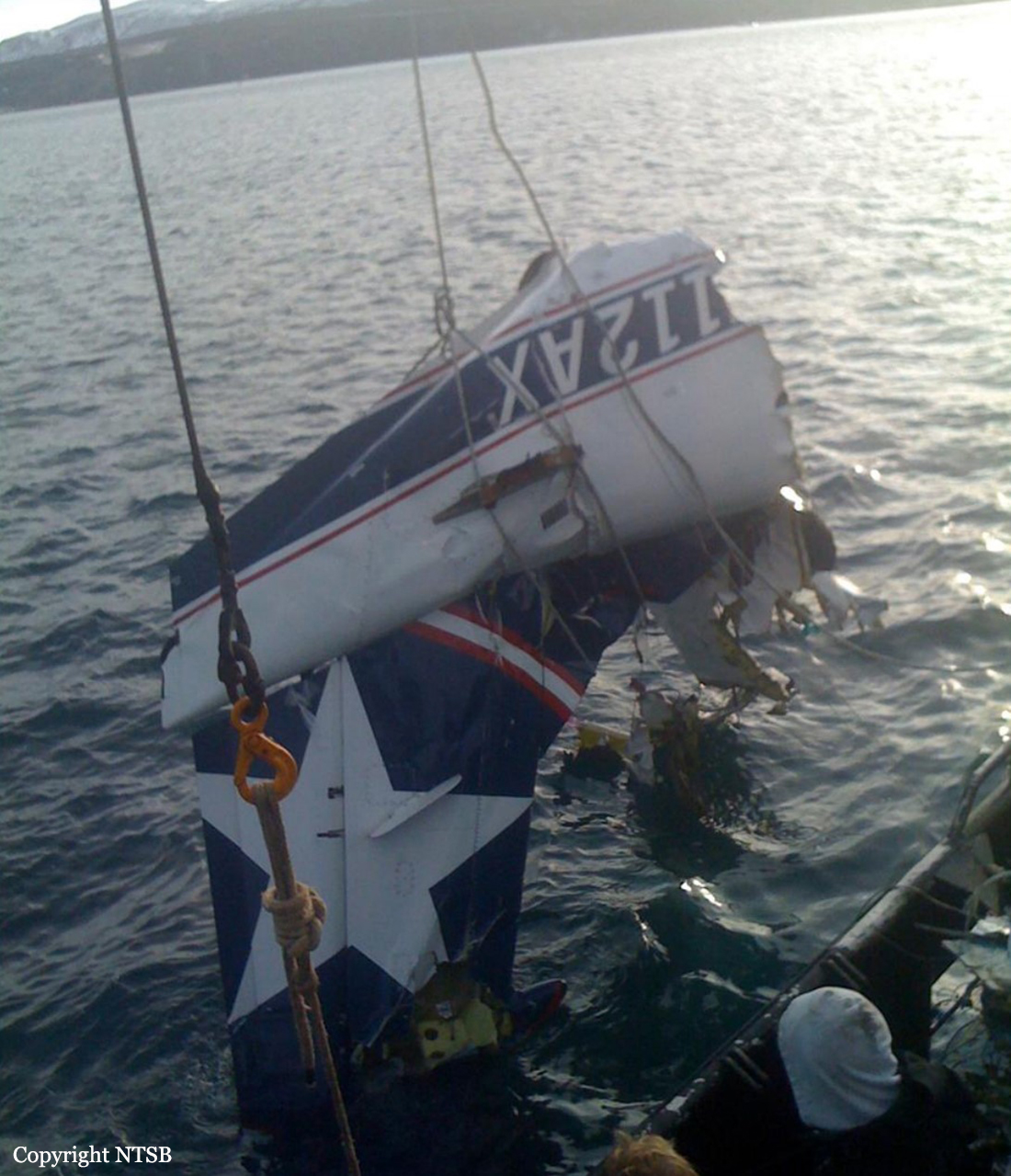
Crash of a Beechcraft 1900C-1 off Sand Point: 2 killed

Date & Time: Jan 21, 2010 at 2345 LT
Type of aircraft:
Operator:
Registration:
N112AX
Flight Phase:
Flight Type:
Survivors:
No
Schedule:
Sand Point - Anchorage
MSN:
UC-45
YOM:
1988
Flight number:
AER22
Crew on board:
2
Crew fatalities:
Pax on board:
0
Pax fatalities:
Other fatalities:
Total fatalities:
2
Captain / Total flying hours:
3700
Captain / Total hours on type:
3080.00
Copilot / Total flying hours:
1000
Copilot / Total hours on type:
280
Aircraft flight hours:
56184
Aircraft flight cycles:
45158
Circumstances:
The crew departed on a commercial cargo flight during dark night, visual meteorological conditions on an instrument flight rules flight plan. The departure end of the runway is adjacent to an ocean bay, and wind gusts up to 26 knots were reported. Local residents north of the airport reported stronger wind, estimated between 50 and 60 knots. A fuel truck operator, who was familiar with the crew’s normal routine, reported that, before the airplane taxied to the runway, it remained on the ramp for 6 or 8 minutes with both engines operating, which he described as very unusual. There were no reports of radio communications with the flight crew after the airplane departed. The airplane crashed about 1 mile offshore, and the fragmented wreckage sank in ocean water. Because of the fragmented nature of the wreckage and ocean current, the complete wreckage was not recovered. The cockpit area forward of the wings was extensively fragmented, thus the validity of any postaccident cockpit and instrument findings was unreliable. Likewise, structural damage to the airframe precluded determining flight control continuity. Both propellers had witness marks consistent with operating under engine power and within their normal operating range. A postaccident examination of the engines and recovered components did not disclose any evidence of a mechanical malfunction. Due to the lack of mechanical deficiencies of the engines and propellers, and the extensive airframe fragmentation consistent with a high-speed water impact, it is likely that the crew had an in-flight loss of control of an unknown origin before impact.
Probable cause:
An in-flight loss of control for an undetermined reason, which resulted in an uncontrolled descent.
Final Report:

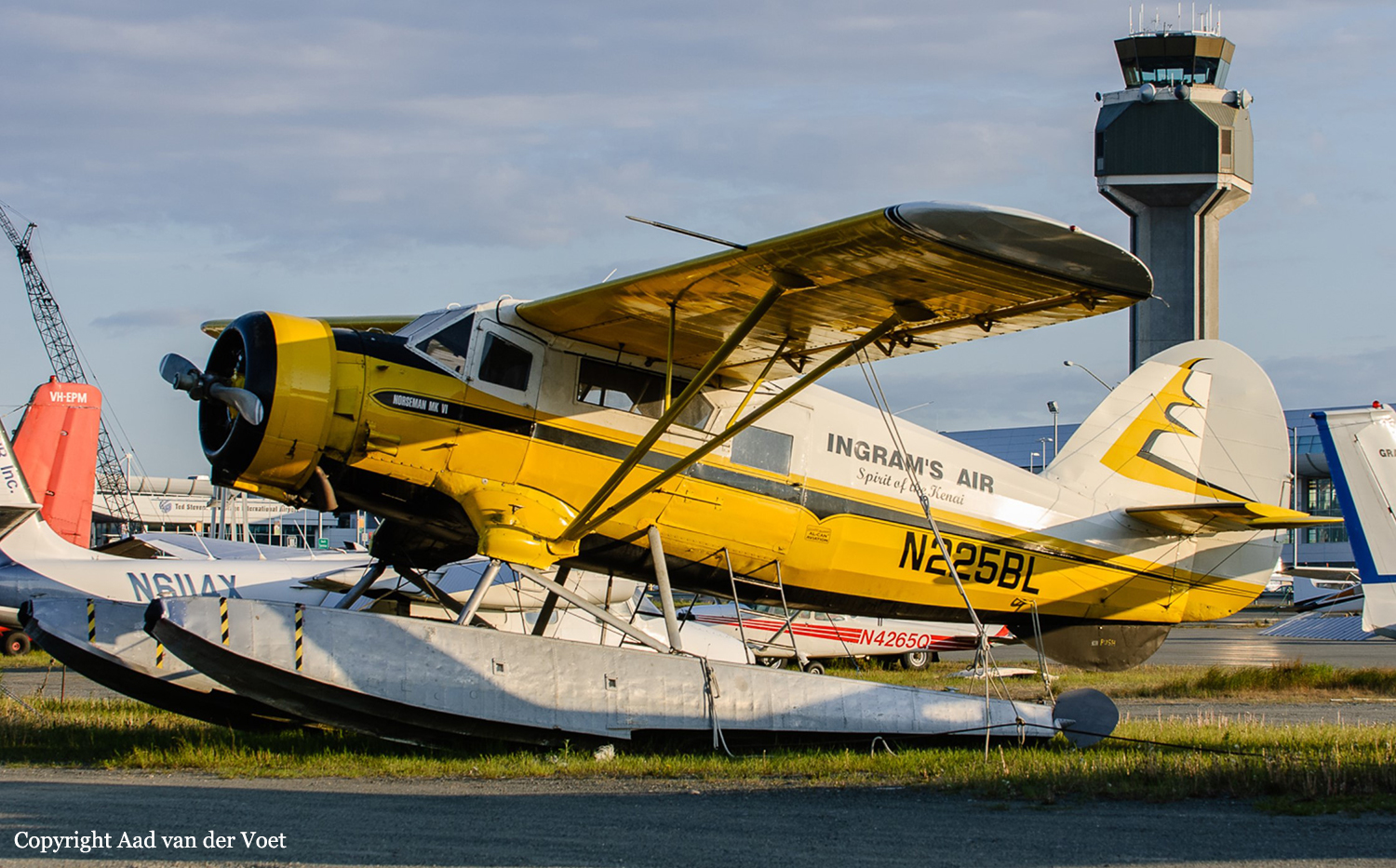
Crash of a Noorduyn Norseman IV in Akiachak

Date & Time: Jul 11, 2009 at 1300 LT
Type of aircraft:
Operator:
Registration:
N225BL
Survivors:
Yes
Schedule:
Bethel – Tuluksak
MSN:
542
YOM:
1944
Location:
Crew on board:
1
Crew fatalities:
Pax on board:
1
Pax fatalities:
Other fatalities:
Total fatalities:
0
Captain / Total flying hours:
8500
Captain / Total hours on type:
100.00
Aircraft flight hours:
15729
Circumstances:
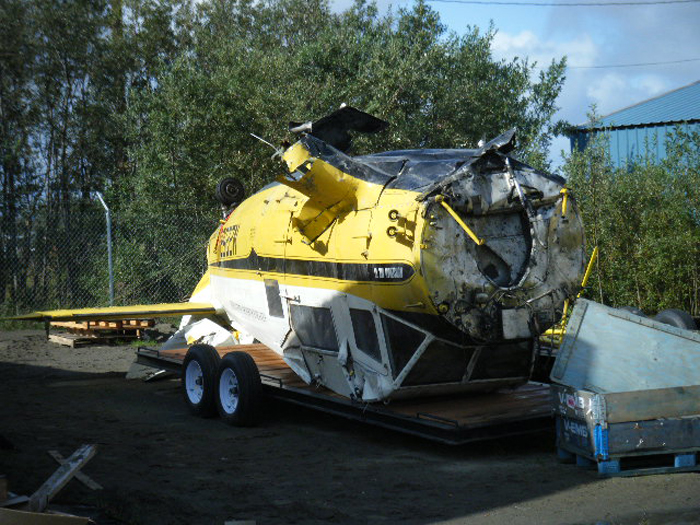
The airline transport pilot was on a Title 14, CFR Part 135 passenger flight. The pilot said during cruise flight he heard a loud bang, and the engine started running rough. He said he diverted to the nearest airport, but the engine quit completely, and he was unable to reach the runway. The airplane subsequently collided with terrain, sustaining substantial damage to both wings and the fuselage. An examination of the engine revealed that a locking screw had backed out of one of the anti-vibration counterweights on the crankshaft, scoring the interior back surface of the engine case. The unsecured counterweight then moved from its position in the crankshaft, and was likely struck by the engine's master rod, which shattered the weight, and liberated it from its normal location. The liberated counterweight was struck by internal moving parts, creating several component failures, and ultimately an engine seizure.
Probable cause:
The loss of engine power due to the failure of a crankshaft component, resulting in an off airport landing.
Final Report:

Crash of a Cessna 207 Skywagon in Crooked Creek

Date & Time: Jun 16, 2009 at 1620 LT
Operator:
Registration:
N1623U
Survivors:
Yes
Schedule:
Aniak – Sleetmute – Crooked Creek
MSN:
207-0223
YOM:
1973
Crew on board:
1
Crew fatalities:
Pax on board:
2
Pax fatalities:
Other fatalities:
Total fatalities:
0
Captain / Total flying hours:
1388
Captain / Total hours on type:
486.00
Aircraft flight hours:
9089
Circumstances:
The commercial pilot was on a Title 14, CFR Part 91, other work use flight when the accident occurred. As he approached his destination airport, he said he saw a large rain squall moving over the airport, and he elected to remain south of the airport to allow time for it to move. He reported that while maneuvering the airplane at 1,000 feet msl, all engine power was lost. Unable to restore engine power, the pilot selected a marshy tree-covered area as a forced landing site. The airplane sustained substantial damage to the fuselage during the forced landing. The NTSB discovered no mechanical problems with the engine during a postaccident teardown and examination.
Probable cause:
A total loss of engine power for an undetermined reason.
Final Report: