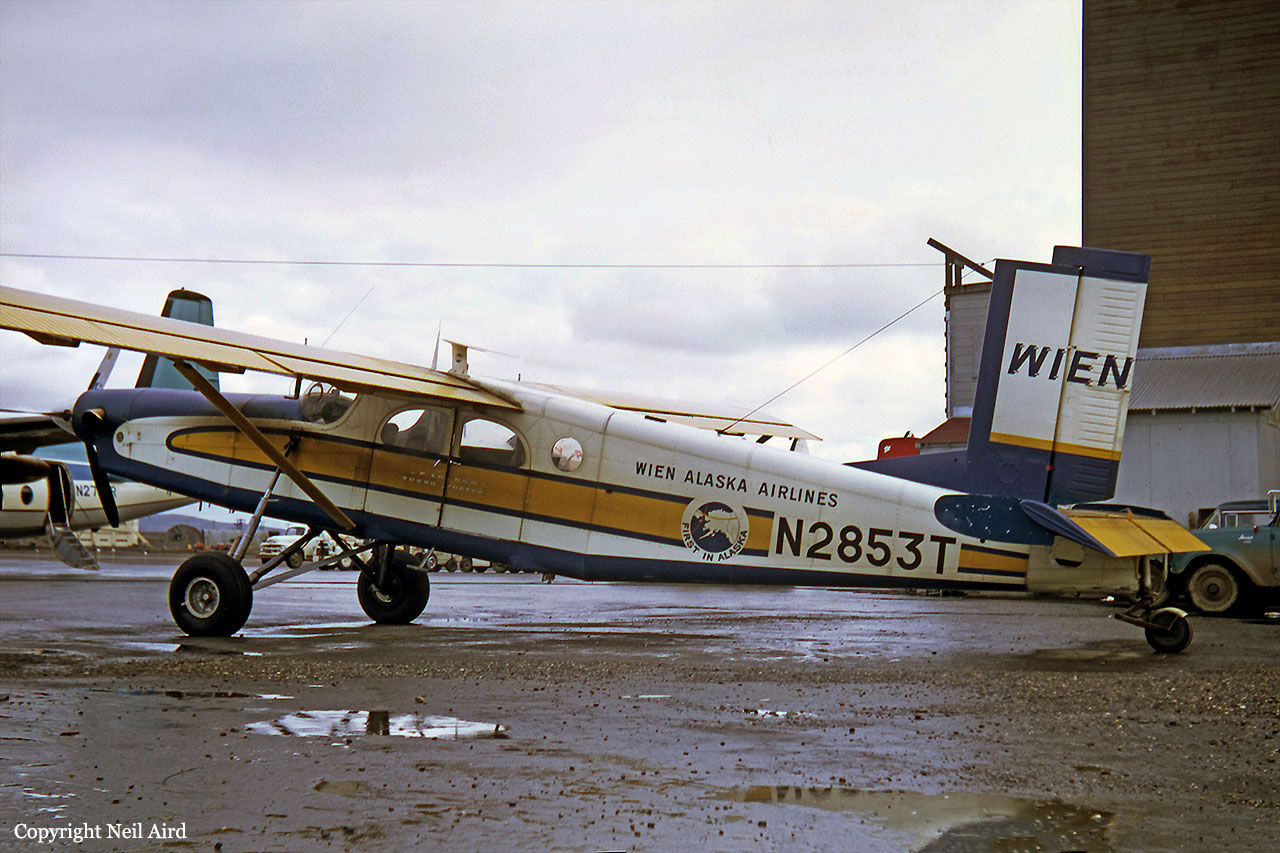
Crash of a Pilatus PC-6/B-H2 Turbo Porter in Chevak

Date & Time: Aug 12, 1969 at 0945 LT
Operator:

Registration:
N2853T
Survivors:
Yes
Schedule:
Bethel – Chevak
MSN:
574
YOM:
1965
Location:
Crew on board:
1
Crew fatalities:
Pax on board:
8
Pax fatalities:
Other fatalities:
Total fatalities:
0
Captain / Total flying hours:
25953
Captain / Total hours on type:
4047.00
Circumstances:
Upon landing at Chevak, the right main gear collapsed. The airplane veered off runway and came to a halt. All nine occupants escaped uninjured but the aircraft was considered as damaged beyond repair.
Probable cause:
Failure of the right main gear on landing. The following factors were considered as contributing:
- Poorly maintained runway surface,
- Overload failure,
- Unfavorable wind conditions,
- Right gear caught in rut on runway.
Final Report:

Crash of a SCAN-30 at Elusive Lake: 2 killed

Date & Time: Jul 13, 1969 at 1505 LT
Type of aircraft:
Operator:
Registration:
N58Q
Survivors:
No
Schedule:
Sagwon - Elusive Lake
MSN:
27
YOM:
1949
Location:
Crew on board:
1
Crew fatalities:
Pax on board:
1
Pax fatalities:
Other fatalities:
Total fatalities:
2
Captain / Total flying hours:
2200
Circumstances:
Upon landing at Elusive Lake near Barrow, the amphibian plane bounced, went out of control, crashed and sank. Both occupants were killed.
Probable cause:
Improper level off and improper recovery from bounced landing on part of the pilot who received his type rating last July 1st.
Final Report:

Crash of a Lockheed P-3A-40-LO Orion in Adak

Date & Time: Jun 3, 1969
Type of aircraft:
Operator:
Registration:
151363
Flight Phase:
Flight Type:
Survivors:
Yes
Schedule:
Adak - Jacksonville
MSN:
185-5076
YOM:
1964
Location:
Crew on board:
8
Crew fatalities:
Pax on board:
0
Pax fatalities:
Other fatalities:
Total fatalities:
0
Circumstances:
During the takeoff roll at Adak Airport, the pilot-in-command pull the control column and started to rotate when the copilot reported a technical problem (smoke hatch blew open). The crew decided to abort the takeoff procedure and started an emergency braking manoeuvre. Few seconds later, the airplane veered off runway to the left and struck an obstacle, causing the right wing to be torn off. The airplane came to rest in flames down an embankment. All eight crew members escaped with minor injuries while the aircraft was destroyed.

Crash of a Cessna 402A on Mt McKinley: 1 killed

Date & Time: May 24, 1969 at 1815 LT
Type of aircraft:
Operator:
Registration:
N4524Q
Flight Phase:
Survivors:
No
Site:
Schedule:
Anchorage - Kantishna
MSN:
402A-0024
YOM:
1969
Crew on board:
1
Crew fatalities:
Pax on board:
0
Pax fatalities:
Other fatalities:
Total fatalities:
1
Captain / Total flying hours:
8340
Captain / Total hours on type:
40.00
Circumstances:
The pilot departed Anchorage on a survey flight to Kantishna, taking part to a SAR mission after a helicopter was missing. On approach to Mt McKinley, the airplane went out of control and crashed onto a slope of the the mountain. The wreckage was found a day later and the pilot was killed.
Probable cause:
The aircraft stalled in flight because de pilot failed to maintain flying speed. The following findings were reported:
- Downdrafts,
- Flaps found extended to 30°,
- Wind gusting up to 20 knots.
Final Report:

Crash of a Canadair CL-44D4-2 in Anchorage

Date & Time: May 1, 1969 at 0811 LT
Type of aircraft:
Operator:
Registration:
N446T
Flight Type:
Survivors:
Yes
Schedule:
West Kuparuk - Anchorage
MSN:
15
YOM:
1962
Flight number:
109
Crew on board:
4
Crew fatalities:
Pax on board:
0
Pax fatalities:
Other fatalities:
Total fatalities:
0
Captain / Total flying hours:
4000
Captain / Total hours on type:
350.00
Circumstances:
Upon landing on runway 06L at Anchorage-Intl Airport, the right main gear collapsed. The airplane went out of control, veered off runway to the right and came to rest in flames. All four occupants were injured, two of them seriously, and the aircraft was totally destroyed by a post crash fire.
Probable cause:
It was determined that the copilot was the PIC at the time of the accident and he failed to level off properly. An excessive load upon touchdown caused the right main gear to collapse.
The following factors were considered as contributing:
- inadequate supervision of flight on part of the captain,
- pilot fatigue,
- seat belt not fastened,
- overload failure.
Final Report:

Crash of a De Havilland DHC-2 Beaver off Craig: 9 killed

Date & Time: Apr 19, 1969 at 1300 LT
Type of aircraft:
Registration:
N167W
Flight Phase:
Survivors:
No
MSN:
8
YOM:
1949
Location:
Crew on board:
1
Crew fatalities:
Pax on board:
8
Pax fatalities:
Other fatalities:
Total fatalities:
9
Captain / Total flying hours:
1862
Captain / Total hours on type:
175.00
Circumstances:
Shortly after takeoff from the bay of Craig, while in initial climb, the pilot completed a first turn when control was lost. The single engine airplane stalled and crashed into the sea few dozen yards offshore. The aircraft sank and all nine occupants were killed.
Probable cause:
The accident was probably caused by the fact that the pilot failed to obtain/maintain flying speed during initial climb. It was observed to make a steep and nose high turn.
Final Report:

Crash of a De Havilland DHC-6 Twin Otter in Lake Minchumina: 1 killed

Date & Time: Mar 13, 1969 at 1552 LT
Operator:
Registration:
N4901
Survivors:
Yes
Schedule:
Fairbanks – Lake Minchumina – Bethel
MSN:
3
YOM:
1966
Crew on board:
1
Crew fatalities:
Pax on board:
4
Pax fatalities:
Other fatalities:
Total fatalities:
1
Captain / Total flying hours:
10104
Captain / Total hours on type:
796.00
Circumstances:
On final approach to Lake Minchumina Airport, the pilot encountered whiteout conditions and lost control of the airplane that crashed few dozen metres short of runway. A passenger was killed while four other occupants were injured.
Probable cause:
Loss of control after the pilot suffered spatial disorientation on final approach in whiteout conditions.
Final Report:

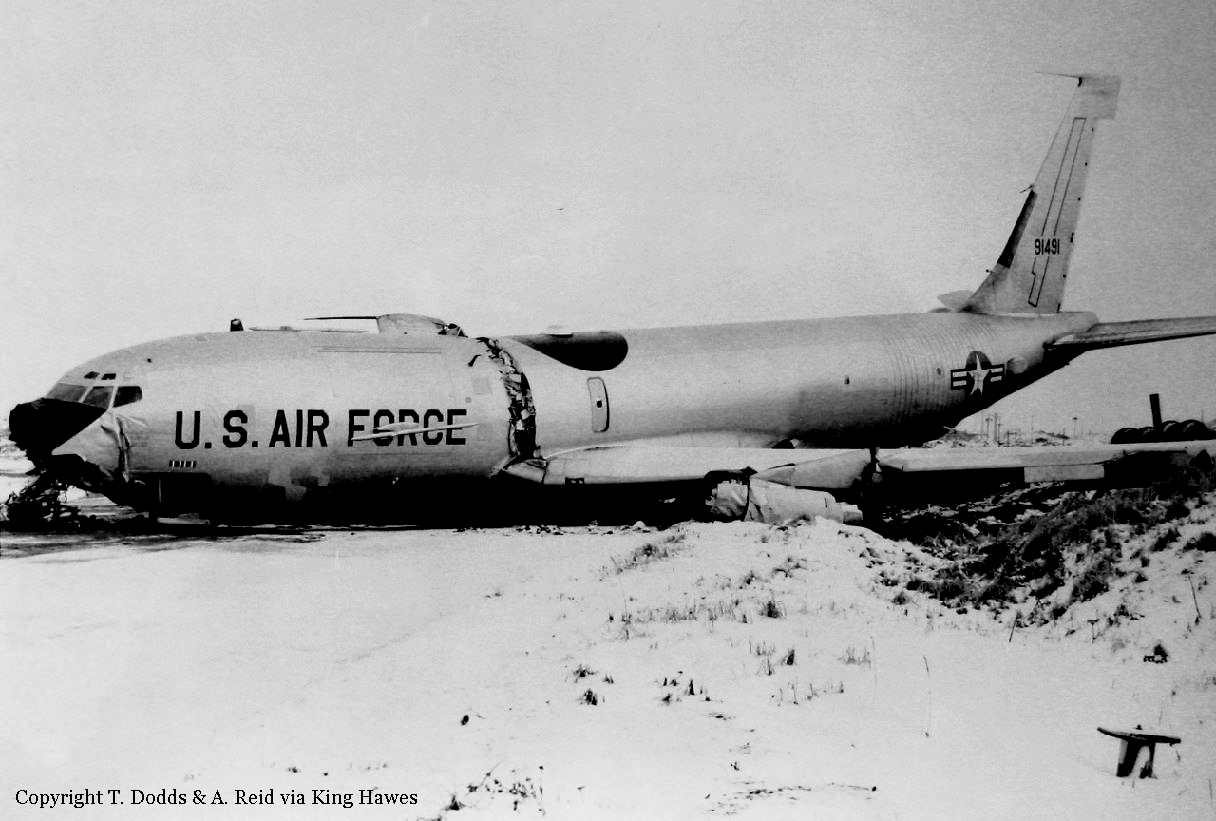
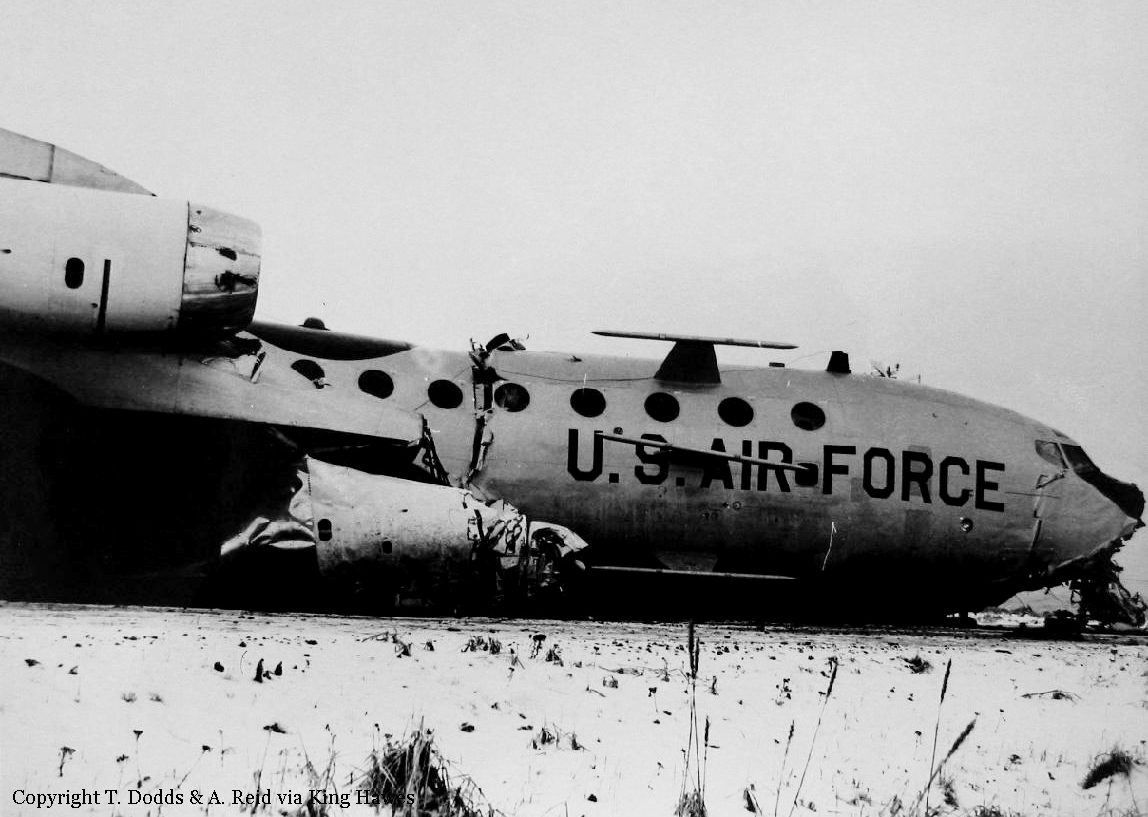
Crash of a Boeing RC-135S in Shemya

Date & Time: Jan 13, 1969 at 0030 LT
Type of aircraft:
Operator:
Registration:
59-1491
Survivors:
Yes
Schedule:
Shemya - Shemya
MSN:
17979/394
YOM:
1960
Location:
Crew on board:
4
Crew fatalities:
Pax on board:
14
Pax fatalities:
Other fatalities:
Total fatalities:
0
Circumstances:
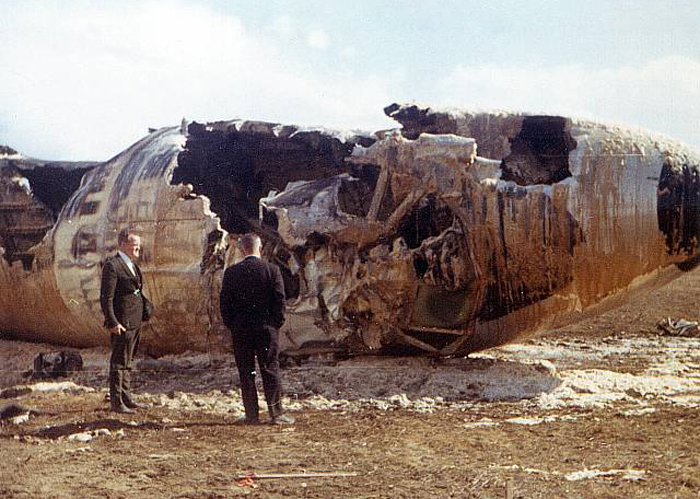
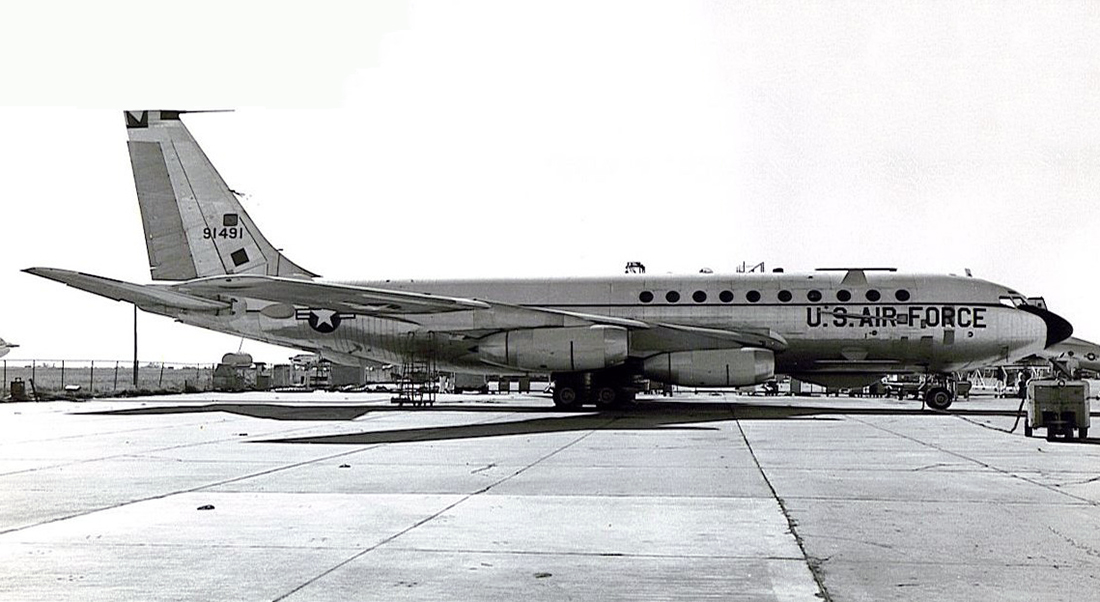
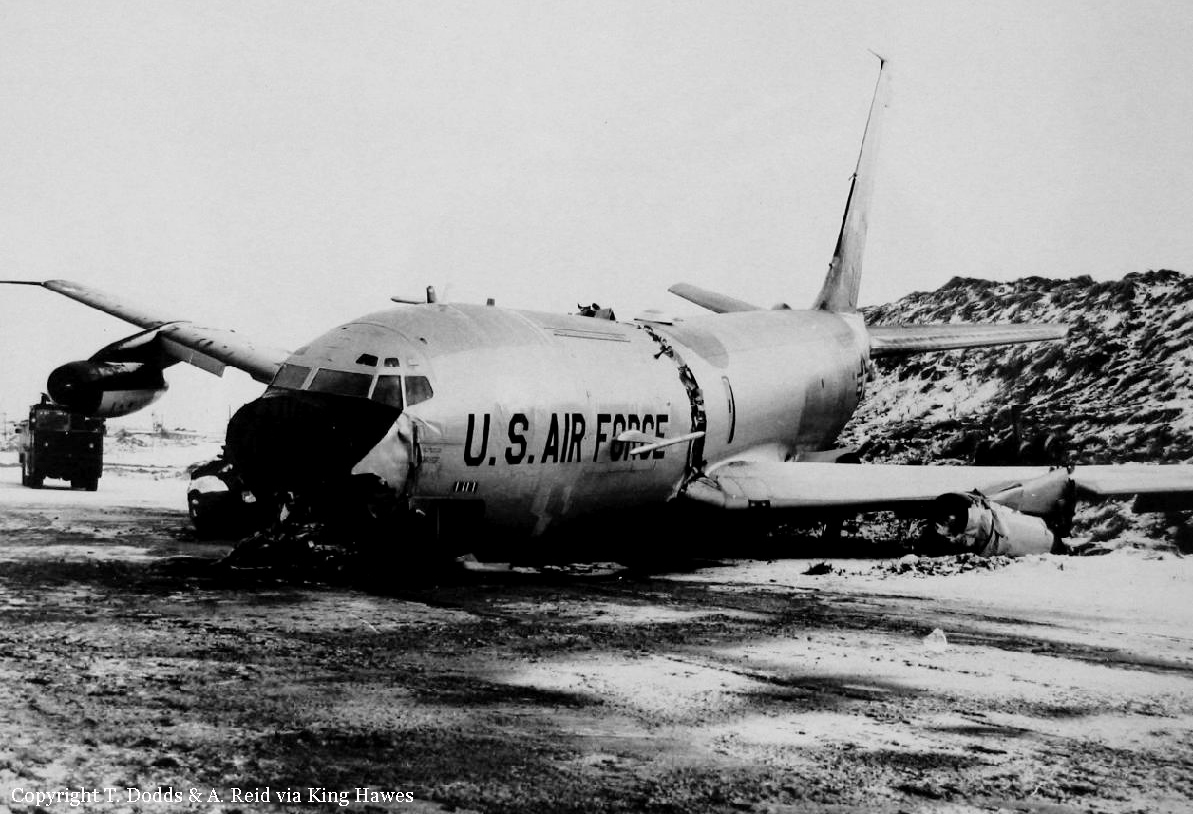
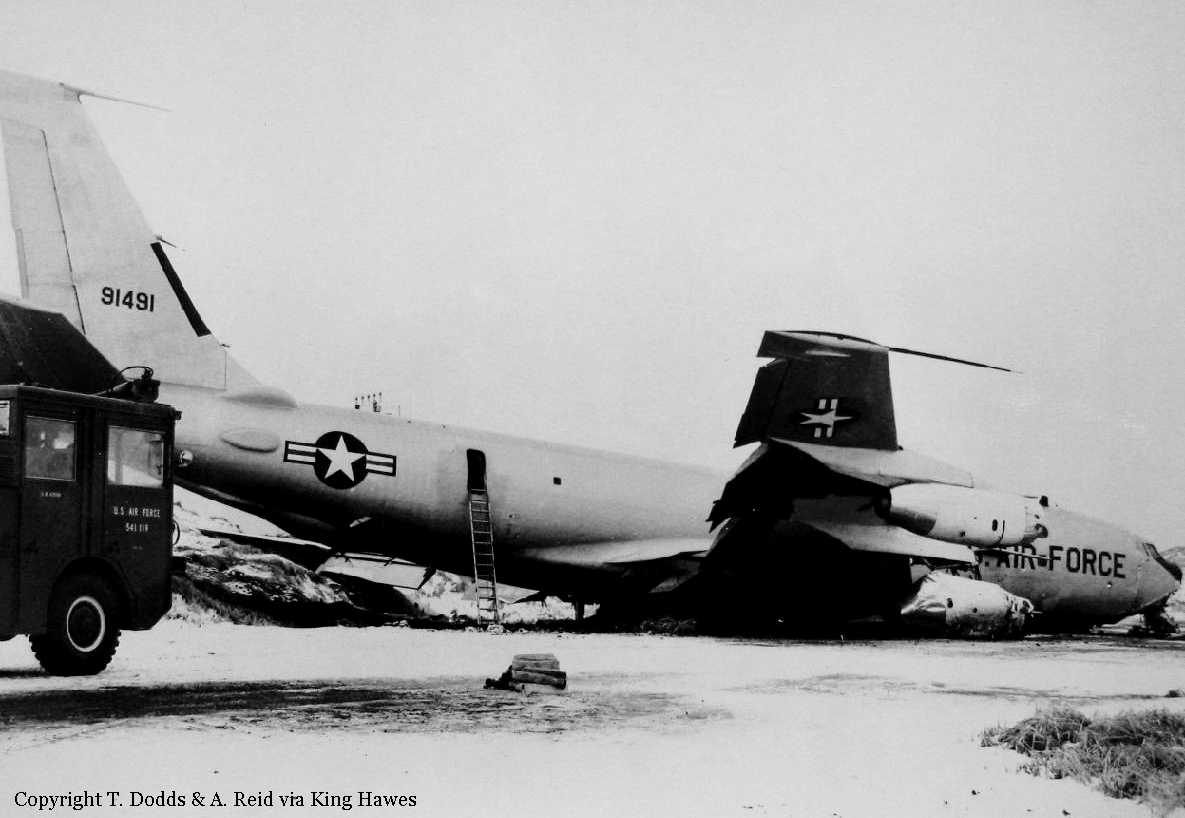
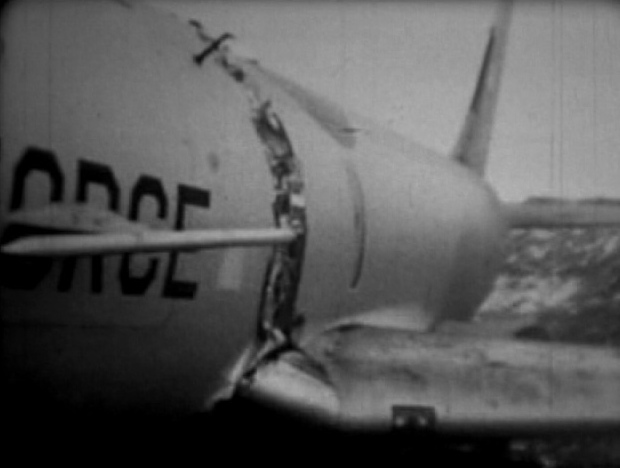
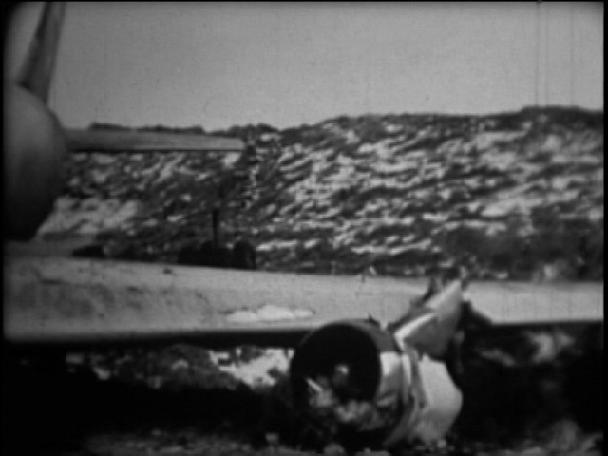
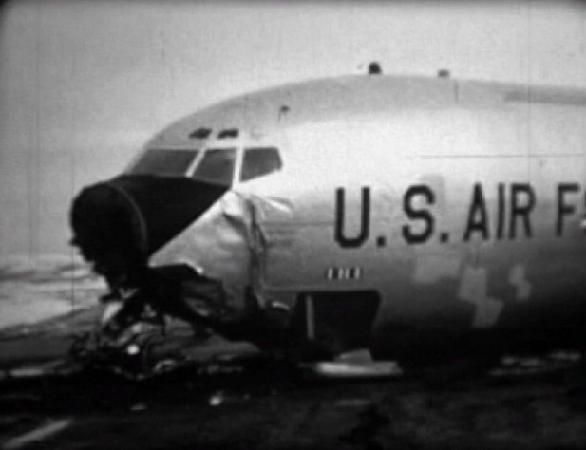
The crew was returning to Shemya following a reconnaissance mission. After touchdown on an icy runway, the airplane encountered difficulties to stop within the remaining distance, overran and came to rest few dozen yards farther. While the aircraft was damaged beyond repair, all 18 occupants were evacuated safely.

Crash of a Boeing 707-321C at Elmendorf AFB: 3 killed

Date & Time: Dec 26, 1968 at 0615 LT
Type of aircraft:
Operator:
Registration:
N799PA
Flight Phase:
Flight Type:
Survivors:
No
Schedule:
San Francisco – Elmendorf – Tokyo – Đà Nẵng – Cam Ranh Bay
MSN:
18824/397
YOM:
1964
Flight number:
PA799
Crew on board:
3
Crew fatalities:
Pax on board:
0
Pax fatalities:
Other fatalities:
Total fatalities:
3
Captain / Total flying hours:
15207
Captain / Total hours on type:
3969.00
Copilot / Total flying hours:
9813
Copilot / Total hours on type:
2813
Circumstances:
The aircraft christened 'Clipper Racer' departed San Francisco on a cargo flight to Cam Ranh Bay, Vietnam with en route stops at Elmendorf AFB, Tokyo and Đà Nẵng. Because of below minima weather at Anchorage International Airport, the aircraft landed at Elmendorf AFB. Several delays were experienced before the flight taxied out at 06:02. Flight 799 was given a void time of 06:15 by Oceanic Control to avoid traffic conflict. If the crew failed to make that time, it would result in a 45 min delay. When the checklist item "wing flaps" was called, the 'follow me' truck arrived to guide them to runway 23. From then on the crew were busy steering the plane on the slippery taxiways and talking to Oceanic Control resp. The aircraft was cleared for takeoff at 06:14. The stick shaker sounded shortly after VR (154 kts). The aircraft rotated climbed slowly. The right wing contacted the snow covered ground 94 feet left of the extended centerline at a distance of 2760 feet from the runway. The aircraft rolled inverted and broke up.
Probable cause:
An attempted takeoff with the flaps in a retracted position. This resulted from a combination of factors:
- Inadequate cockpit checklist and procedures,
- A warning system inadequacy associated with cold weather operations,
- Ineffective control practices regarding manufacturer's Service Bulletins,
- Stresses imposed upon the crew by their attempts to meet an air traffic control deadline.
Final Report:

Crash of a Lockheed L-382B-10C Hercules in Prudhoe Bay: 2 killed

Date & Time: Dec 24, 1968 at 0430 LT
Type of aircraft:
Operator:
Registration:
N760AL
Flight Type:
Survivors:
Yes
Schedule:
Fairbanks - Prudhoe Bay
MSN:
4229
YOM:
1967
Crew on board:
4
Crew fatalities:
Pax on board:
0
Pax fatalities:
Other fatalities:
Total fatalities:
2
Captain / Total flying hours:
18000
Captain / Total hours on type:
936.00
Circumstances:
During the final approach completed by night, the crew encountered poor weather conditions with snow falls. At an altitude of 200 feet, the pilot-in-command lost sight of the runway and decided to attempt a go-around when the airplane struck obstacles and crashed short of runway. Two crew members were killed while two others were injured.
Probable cause:
The accident was probably caused by the combination of the following factors:
- The pilot-in-command continued under VFR mode into adverse weather conditions,
- Delayed in initiating go-around,
- Downdrafts,
- Obstruction to vision,
- Blowing snow,
- Pilot lost visual reference due to blowing snow.
Final Report: