Crash of a De Havilland DHC-2 Beaver off Lyall Haarbour: 6 killed
Date & Time:
Nov 28, 2009 at 1603 LT
Operator:

Registration:
C-GTMC
Survivors:
Yes
Schedule:
Vancouver - Mayne Island - Pender Island - Lyall Harbour - Vancouver
MSN:
1171
YOM:
1958
Crew on board:
1
Crew fatalities:
Pax on board:
7
Pax fatalities:
Other fatalities:
Total fatalities:
6
Captain / Total hours on type:
2350.00
Circumstances:
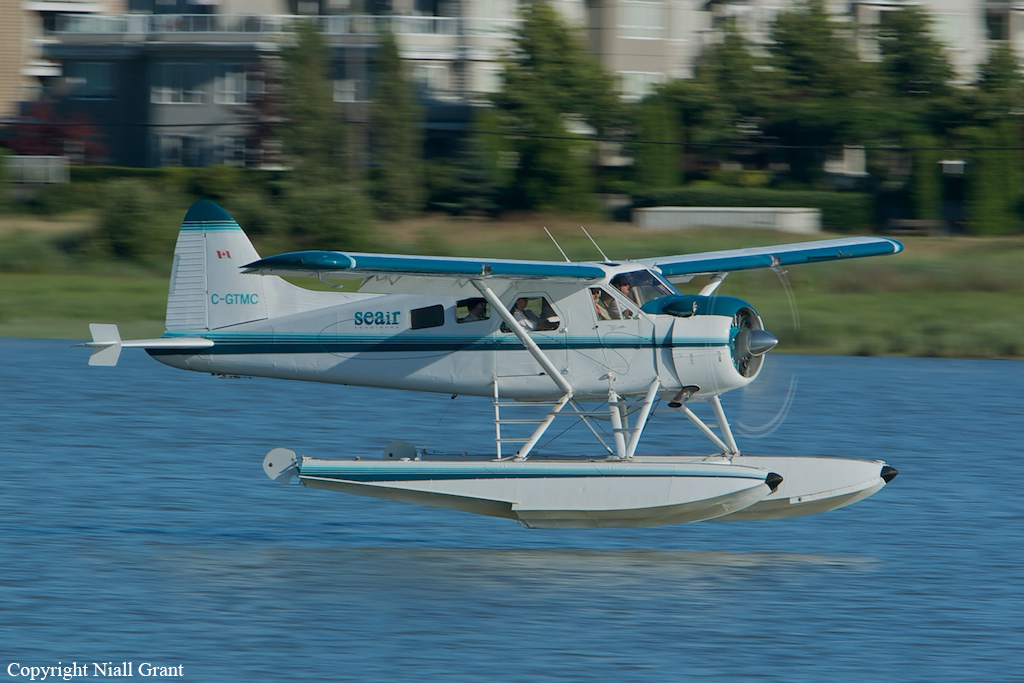
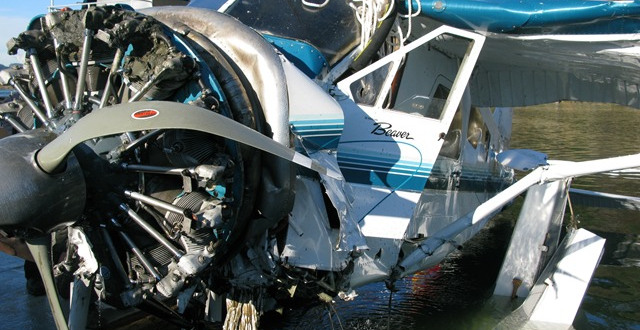
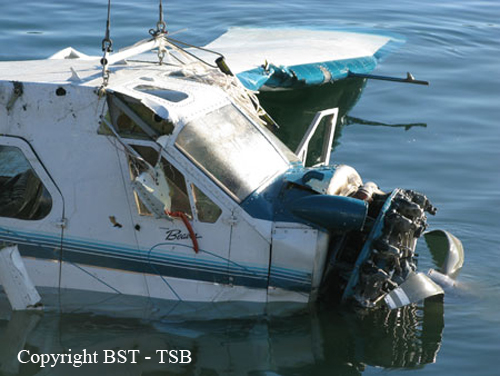
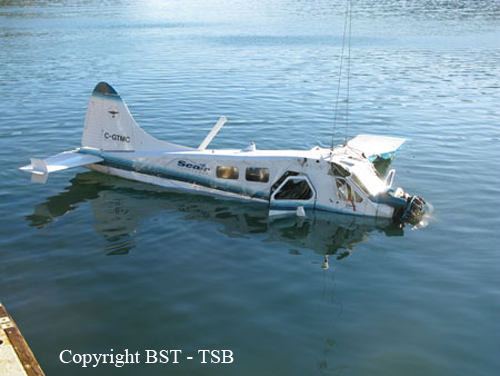
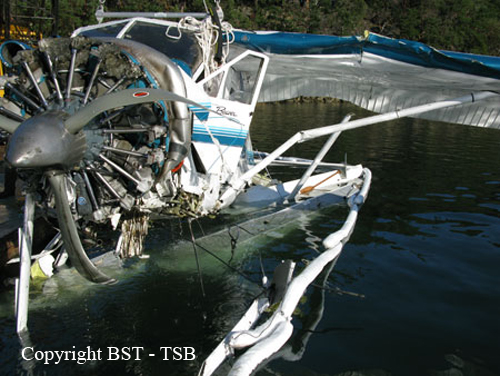
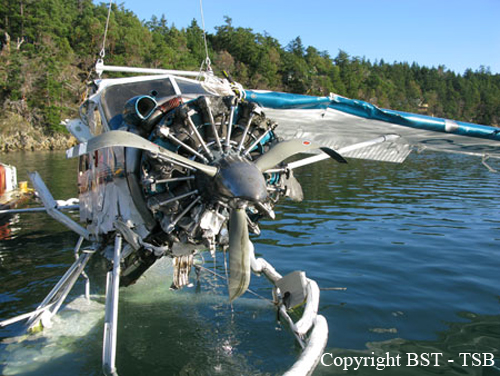
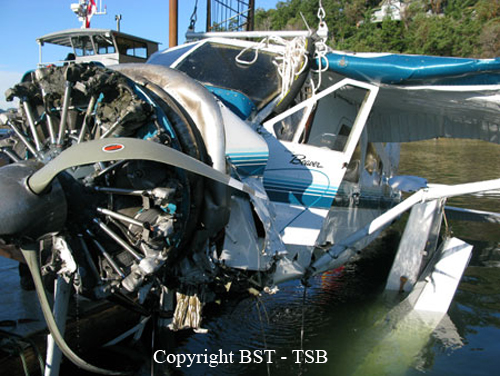
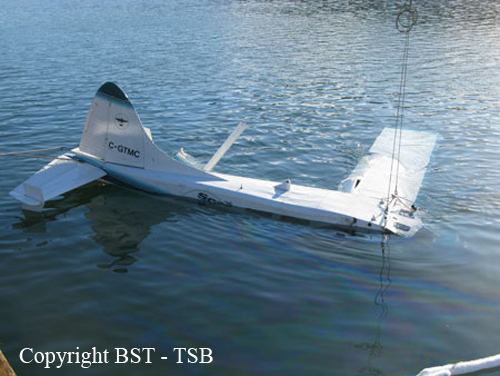
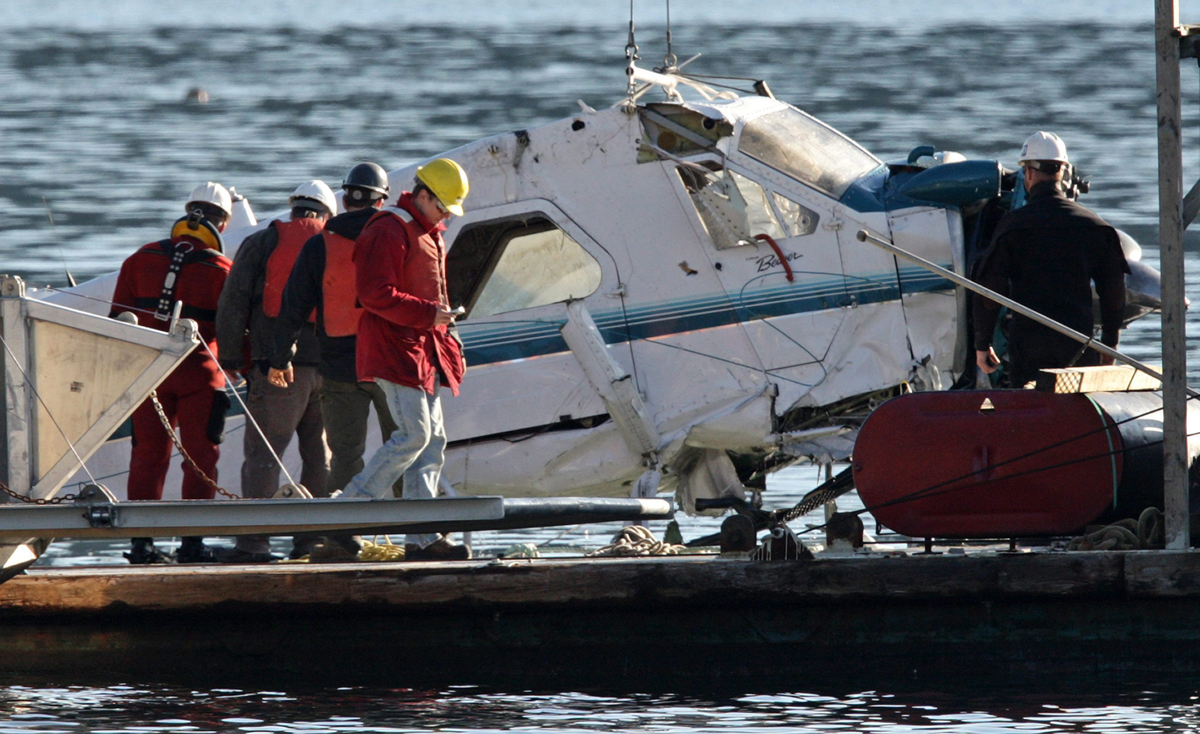
The Seair Seaplanes Beaver was departing Lyall Harbour, Saturna Island, for the water aerodrome at the Vancouver International Airport, British Columbia. After an unsuccessful attempt at taking off downwind, the pilot took off into the wind towards Lyall Harbour. At approximately 1603 Pacific Standard Time, the aircraft became airborne, but remained below the surrounding terrain. The aircraft turned left, then descended and collided with the water. Persons nearby responded immediately; however, by the time they arrived at the aircraft, the cabin was below the surface of the water. There were 8 persons on board; the pilot and an adult passenger survived and suffered serious injuries. No signal from the emergency locator transmitter was heard.
Probable cause:
Findings as to Causes and Contributing Factors:
1. The combined effects of the atmospheric conditions and bank angle increased the load factor, causing an aerodynamic stall.
2. Due to the absence of a functioning stall warning system, in addition to the benign stalling characteristics of the Beaver, the pilot was not warned of the impending stall.
3. Because the aircraft was loaded in a manner that exceeded the aft CG limit, full stall recovery was compromised.
4. The altitude from which recovery was attempted was insufficient to arrest descent, causing the aircraft to strike the water.
5. Impact damage jammed 2 of the 4 doors, restricting egress from the sinking aircraft.
6. The pilot’s seat failed and he was unrestrained, contributing to the seriousness of his injuries and limiting his ability to assist passengers.
Findings as to Risk:
1. There is a risk that pilots will inadvertently stall aircraft if the stall warning system is unserviceable or if the audio warnings have been modified to reduce noise levels.
2. Pilots who do not undergo underwater egress training are at greater risk of not escaping submerged aircraft.
3. The lack of alternate emergency exits, such as jettisonable windows, increases the risk that passengers and pilots will be unable to escape a submerged aircraft due to structural damage to primary exits following an impact with the water.
4. If passengers are not provided with explicit safety briefings on how to egress the aircraft when submerged, there is increased risk that they will be unable to escape following an impact with the water.
5. Passengers and pilots not wearing some type of flotation device prior to an impact with the water are at increased risk of drowning once they have escaped the aircraft.
1. The combined effects of the atmospheric conditions and bank angle increased the load factor, causing an aerodynamic stall.
2. Due to the absence of a functioning stall warning system, in addition to the benign stalling characteristics of the Beaver, the pilot was not warned of the impending stall.
3. Because the aircraft was loaded in a manner that exceeded the aft CG limit, full stall recovery was compromised.
4. The altitude from which recovery was attempted was insufficient to arrest descent, causing the aircraft to strike the water.
5. Impact damage jammed 2 of the 4 doors, restricting egress from the sinking aircraft.
6. The pilot’s seat failed and he was unrestrained, contributing to the seriousness of his injuries and limiting his ability to assist passengers.
Findings as to Risk:
1. There is a risk that pilots will inadvertently stall aircraft if the stall warning system is unserviceable or if the audio warnings have been modified to reduce noise levels.
2. Pilots who do not undergo underwater egress training are at greater risk of not escaping submerged aircraft.
3. The lack of alternate emergency exits, such as jettisonable windows, increases the risk that passengers and pilots will be unable to escape a submerged aircraft due to structural damage to primary exits following an impact with the water.
4. If passengers are not provided with explicit safety briefings on how to egress the aircraft when submerged, there is increased risk that they will be unable to escape following an impact with the water.
5. Passengers and pilots not wearing some type of flotation device prior to an impact with the water are at increased risk of drowning once they have escaped the aircraft.
Final Report:
Crash of a Travel Air 4000 in Fort Myers
Date & Time:
Nov 14, 2009 at 1018 LT
Registration:
N3823
Survivors:
Yes
Schedule:
Fort Myers - Fort Myers
MSN:
306
YOM:
1927
Crew on board:
1
Crew fatalities:
Pax on board:
2
Pax fatalities:
Other fatalities:
Total fatalities:
0
Captain / Total hours on type:
60.00
Aircraft flight hours:
5284
Circumstances:
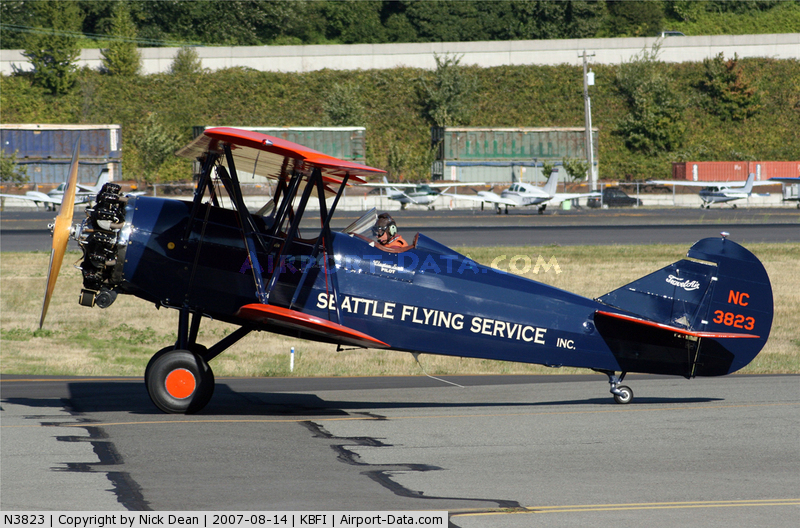
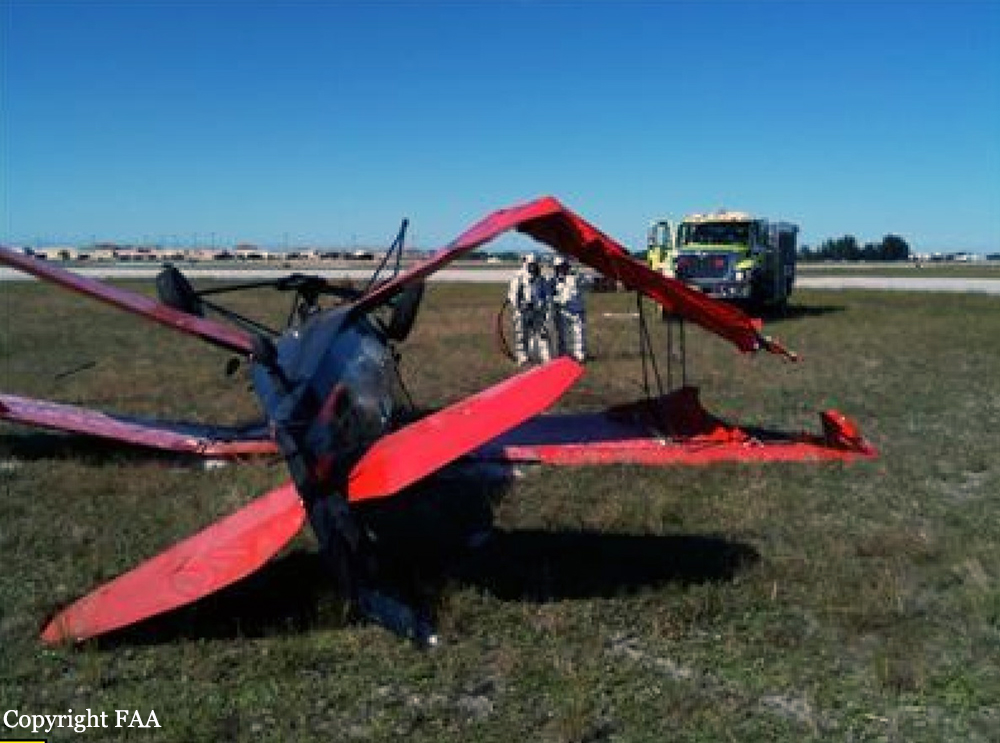
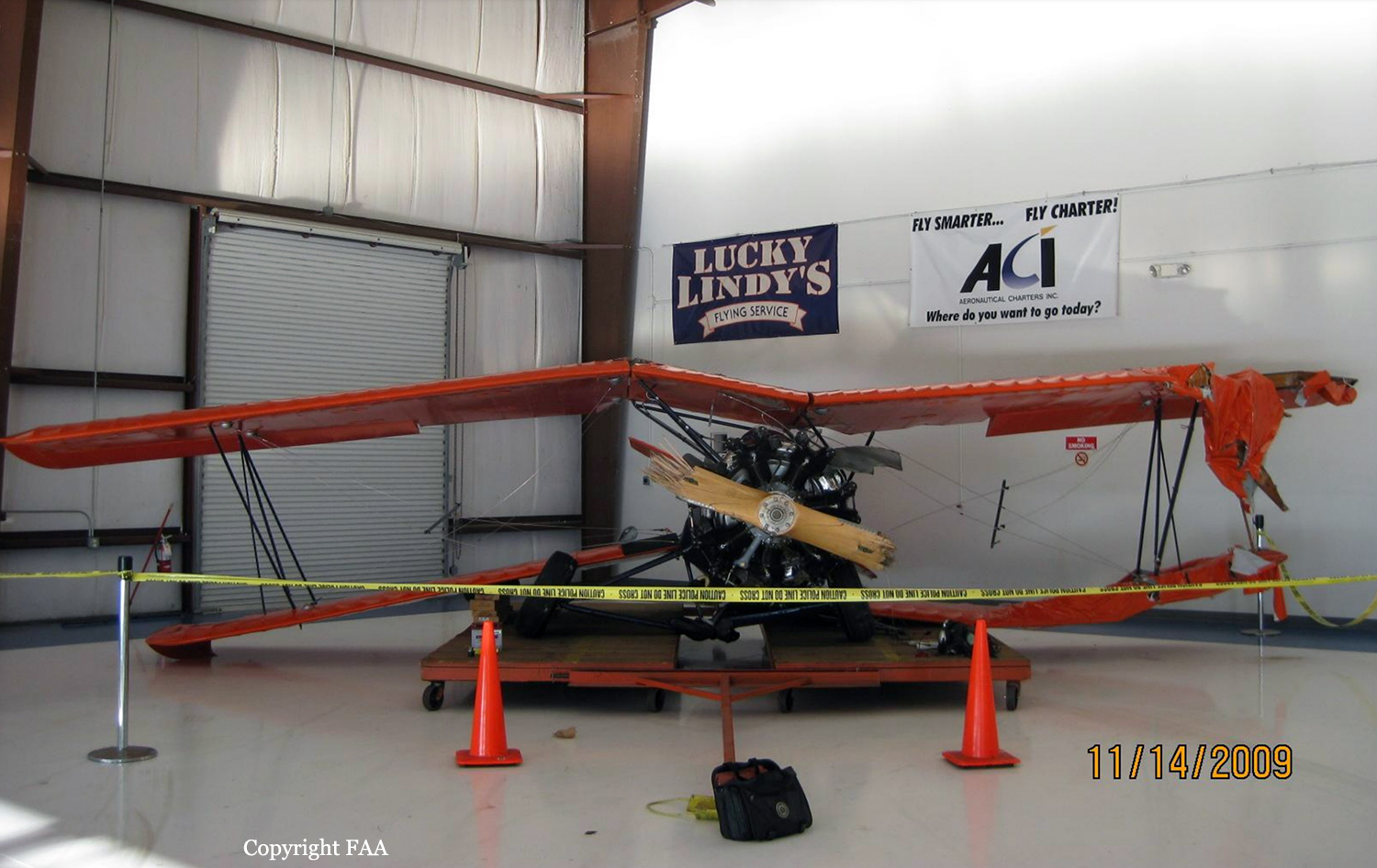
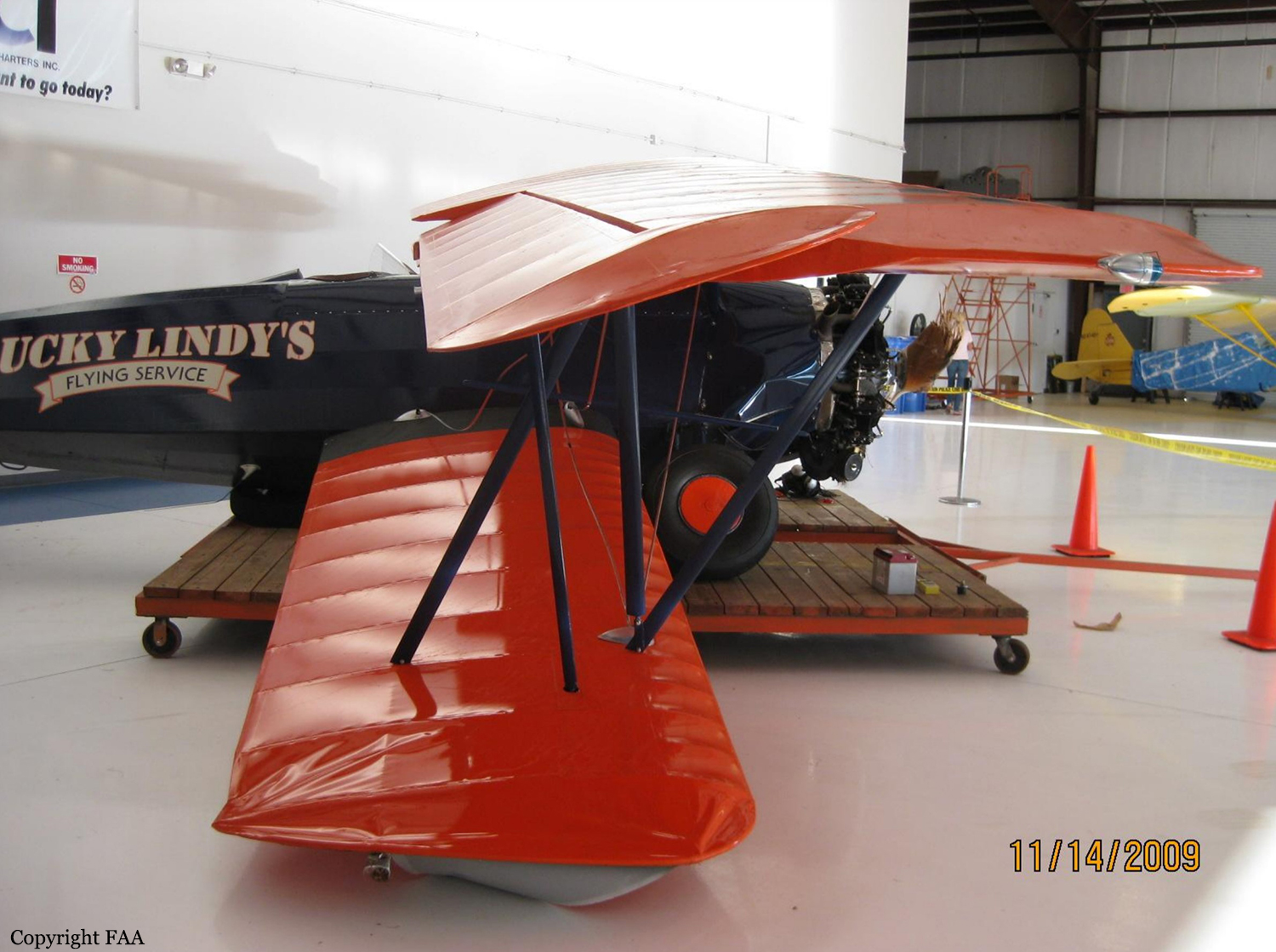
During approach, the pilot of the tailwheel-equipped biplane flew along at 20-30 feet above the runway until he was at midfield. The biplane touched down, bounced back in to the air, touched down again, and bounced once more prior to touching down for a third time in a nose-high attitude. The biplane then veered to the right, the right wing dipped, and the biplane cartwheeled, coming to rest inverted. The pilot had 60 hours of flight experience in the biplane. The previous owner had advised the pilot that landing the biplane took patience to land it perfectly and that attempting to land the biplane on asphalt with low experience could cause the biplane to bump repeatedly. He also advised that if the pilot pulled back on the control stick too soon during landing it could result in ballooning and porpoising.
Probable cause:
The pilot's improper recovery from a bounced landing and failure to maintain directional control, which resulted in a ground loop. Contributing to the accident was the pilot's minimal experience in the airplane make and model.
Final Report:

Crash of a Beechcraft B200 Super King Air in Greenville
Date & Time:
Nov 9, 2009 at 1009 LT
Registration:
N337MT
Survivors:
Yes
Schedule:
Greenville - Greenville
MSN:
BB-1628
YOM:
1998
Crew on board:
1
Crew fatalities:
Pax on board:
2
Pax fatalities:
Other fatalities:
Total fatalities:
0
Aircraft flight hours:
3060
Circumstances:
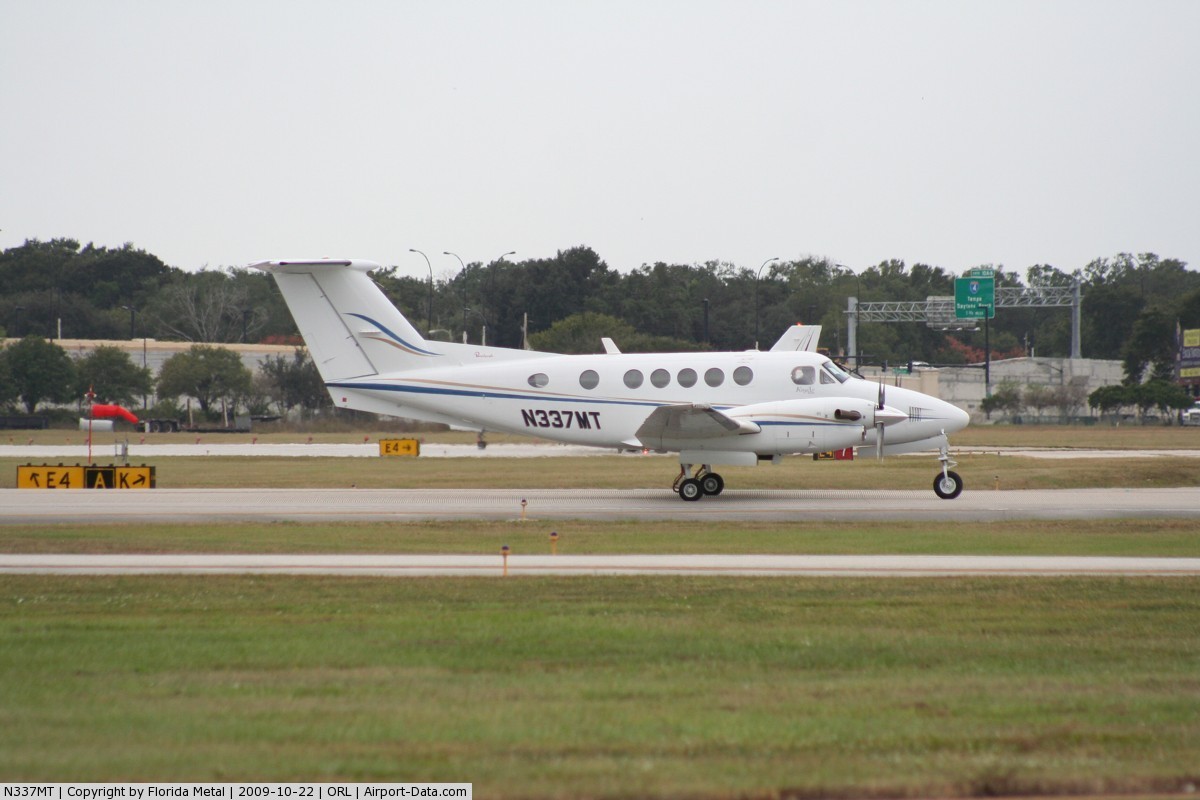
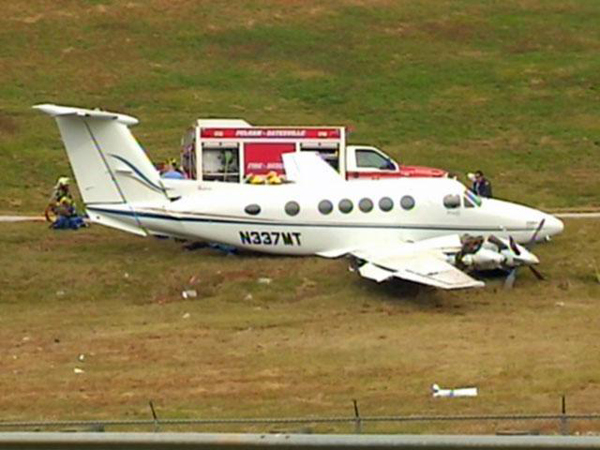
The pilot flew the airplane to a maintenance facility and turned it in for a phase inspection. The next morning, he arrived at the airport and planned a local flight to evaluate some avionics issues. He performed a preflight inspection and then went inside the maintenance facility to wait for two avionic technicians to arrive. In the meantime, two employees of the maintenance facility test ran the engines on the accident airplane for about 30 to 35 minutes in preparation for the phase inspection. The pilot reported that he was unaware that the engine run had been performed when he returned to the airplane for the local flight. He referred to the flight management system (FMS) fuel totalizer, and not the aircraft fuel gauges, when he returned to the airplane for the flight. He believed that the mechanics who ran the engines did not power up the FMS, which would have activated the fuel totalizer, thus creating a discrepancy between the totalizer and the airplane fuel gauges. The mechanics who performed the engine run reported that each tank contained 200 pounds of fuel at the conclusion of the engine run. The B200 Pilot’s Operating Handbook directed pilots not take off if the fuel quantity gauges indicate in the yellow arc or indicate less than 265 pounds of fuel in each main tank system. While on final approach, about 23 minutes into the flight, the right engine lost power, followed by the left. The pilot attempted to glide to the runway with the landing gear and flaps retracted, however the airplane crashed short of the runway. Only residual fuel was found in the main and auxiliary fuel tanks during the inspection of the wreckage. The tanks were not breached and there was no evidence of fuel leakage at the accident site.
Probable cause:
A loss of engine power due to fuel exhaustion as a result of the pilot’s failure to visually verify that sufficient fuel was on board prior to flight.
Final Report:
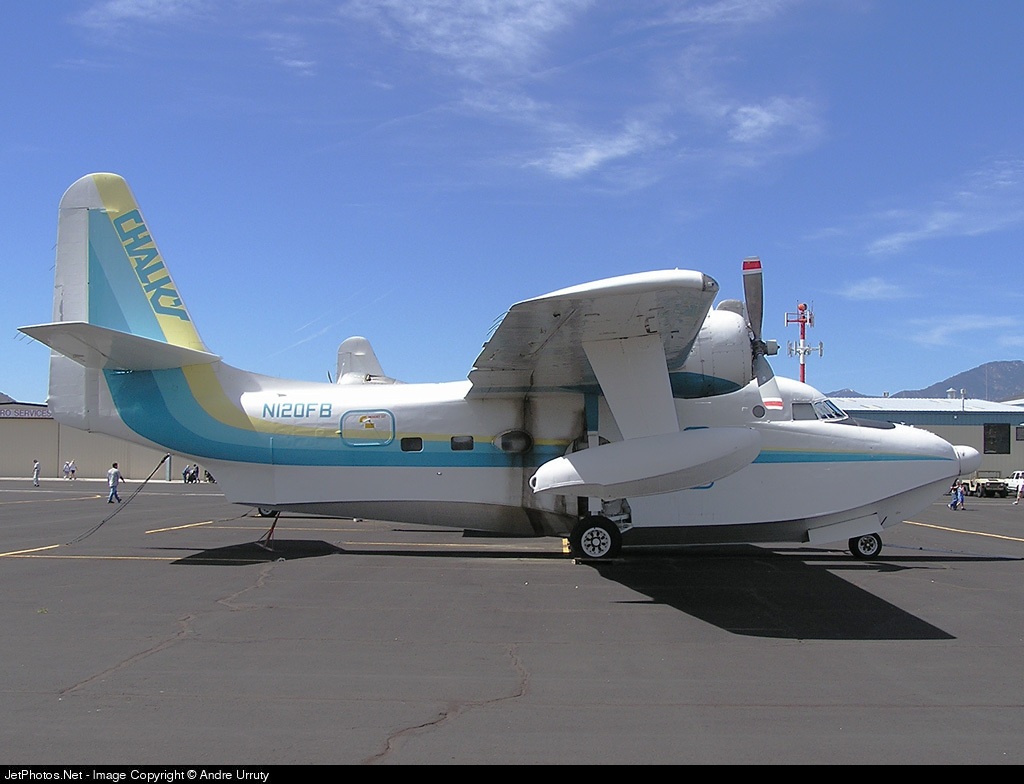
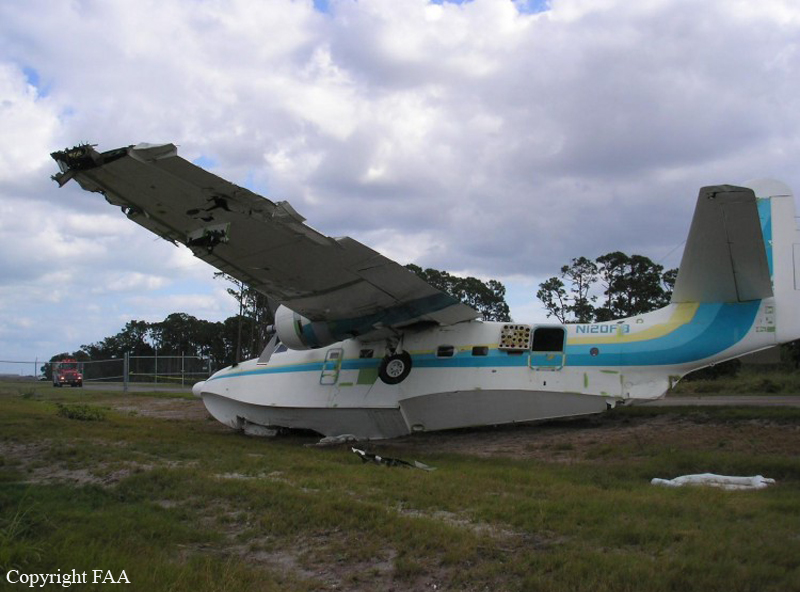
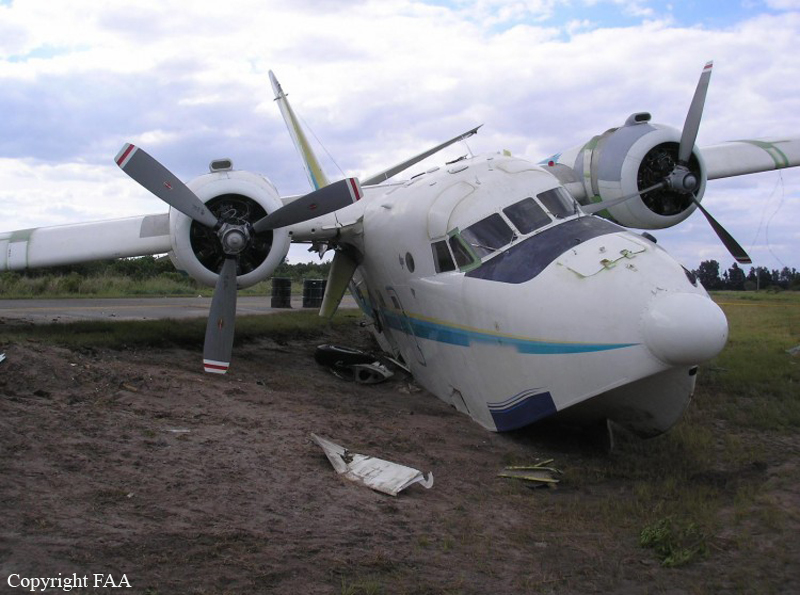
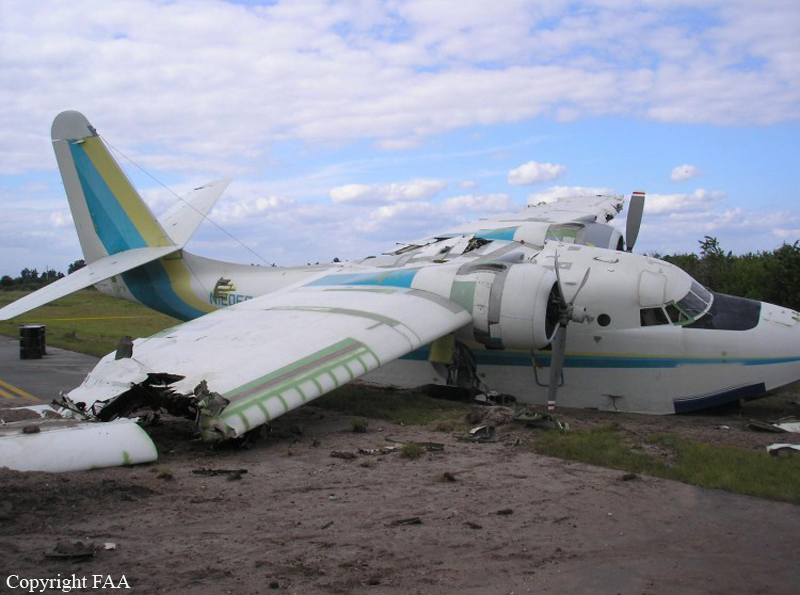
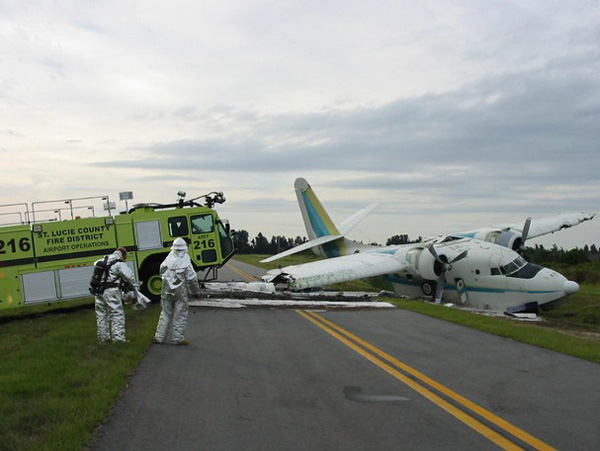
Crash of a Grumman G-111 Albatross in Fort Pierce
Date & Time:
Nov 5, 2009 at 1534 LT
Registration:
N120FB
Survivors:
Yes
Schedule:
Fort Pierce - Okeechobee
MSN:
G-331
YOM:
1953
Crew on board:
2
Crew fatalities:
Pax on board:
1
Pax fatalities:
Other fatalities:
Total fatalities:
0
Captain / Total hours on type:
14.00
Copilot / Total hours on type:
1100
Aircraft flight hours:
3747
Circumstances:
The pilot stated that during the landing gear retraction he heard a loud bang, followed by three to four smaller bangs. The first officer confirmed that the left engine was the affected engine and immediately began feathering the propeller. Once the propeller had been feathered, the captain confirmed the action by looking outside and noticing the propeller in the feathered position. The captain further reported that the right engine was producing the maximum power available and was indicating 55 inches of manifold pressure. Unable to achieve airspeed of greater than 95 to 96 knots indicated, the captain attempted to return to the airport for an emergency landing; however, he was unable to maintain altitude and attempted to land on an airport perimeter road, impacting the airport fence and a sand berm in the process. A cursory examination of the engine and system components revealed no evidence of a preimpact mechanical malfunction.
Probable cause:
A total loss of left engine power and subsequent failure of the airplane to maintain airspeed and altitude on the remaining engine for undetermined reasons.
Final Report: