Country
Operator Image

Crash of a Yakovlev Yak-42 in Sverdlovsk: 4 killed

Date & Time: Sep 14, 1990 at 0153 LT
Type of aircraft:
Operator:
Registration:
CCCP-42351
Survivors:
Yes
Schedule:
Volgograd – Sverdlovsk – Ekaterinbourg
MSN:
18 11 379
YOM:
1988
Flight number:
SU8175
Country:
Region:
Crew on board:
5
Crew fatalities:
Pax on board:
124
Pax fatalities:
Other fatalities:
Total fatalities:
4
Aircraft flight hours:
4509
Aircraft flight cycles:
2824
Circumstances:
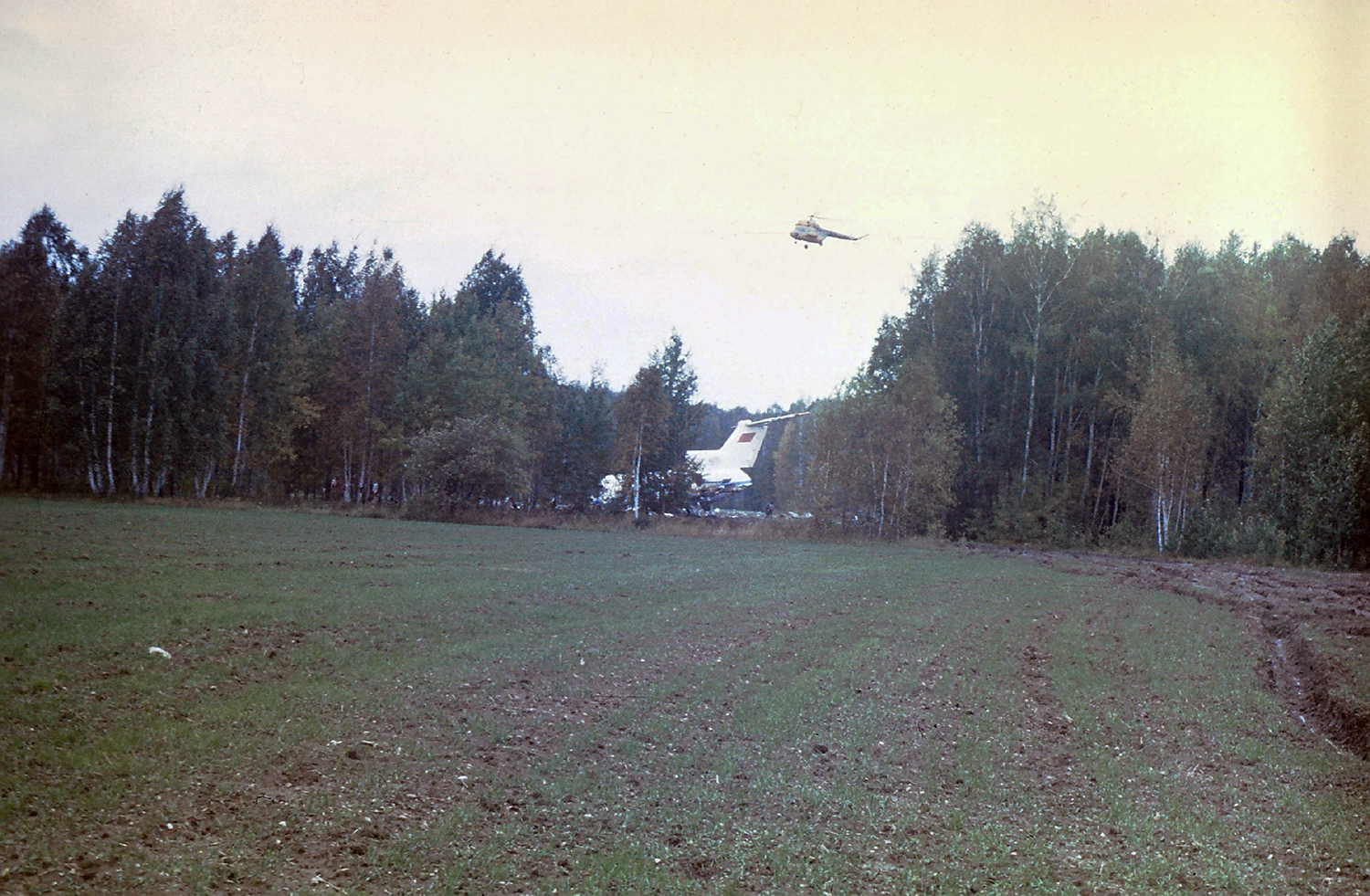
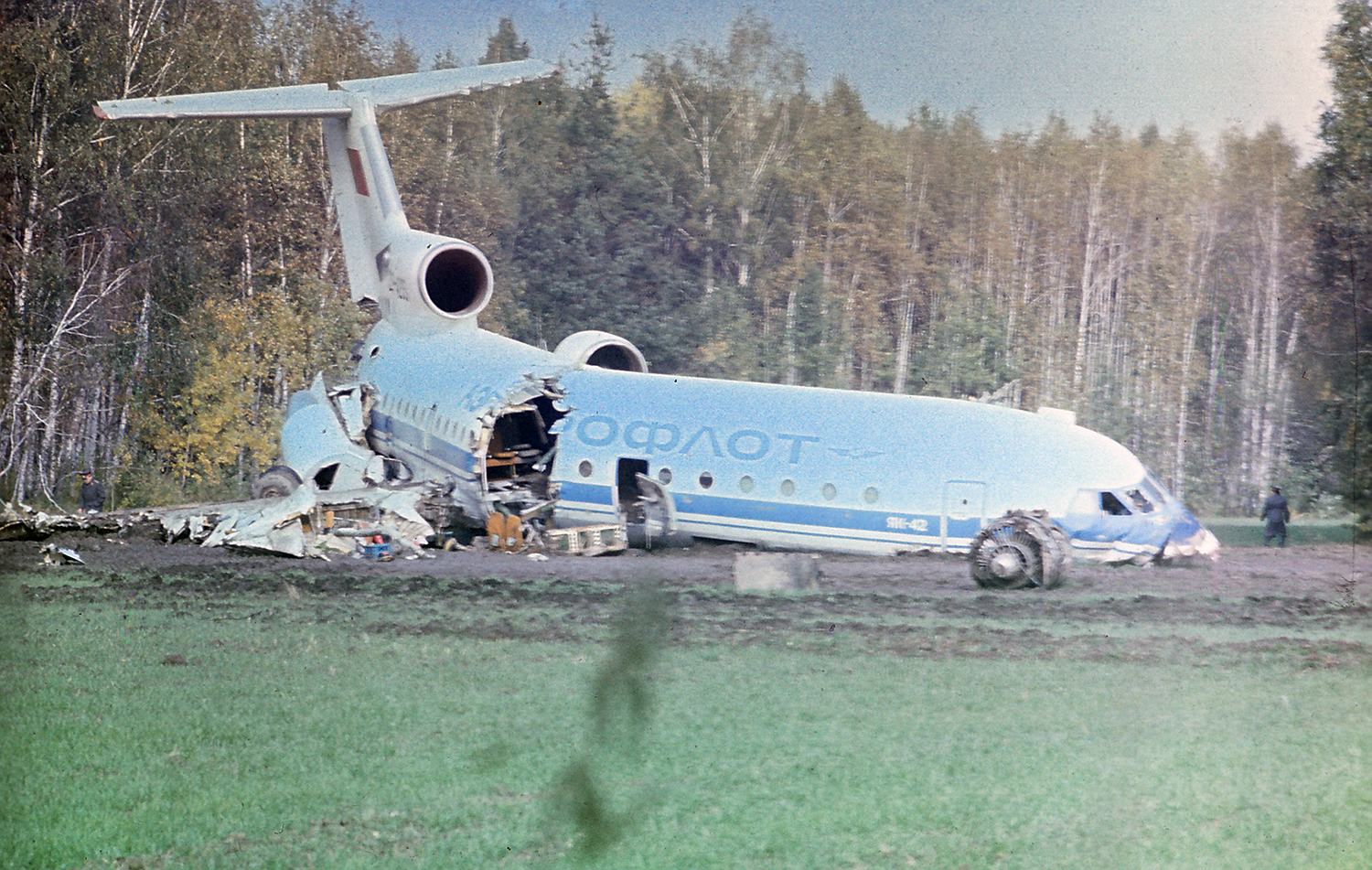
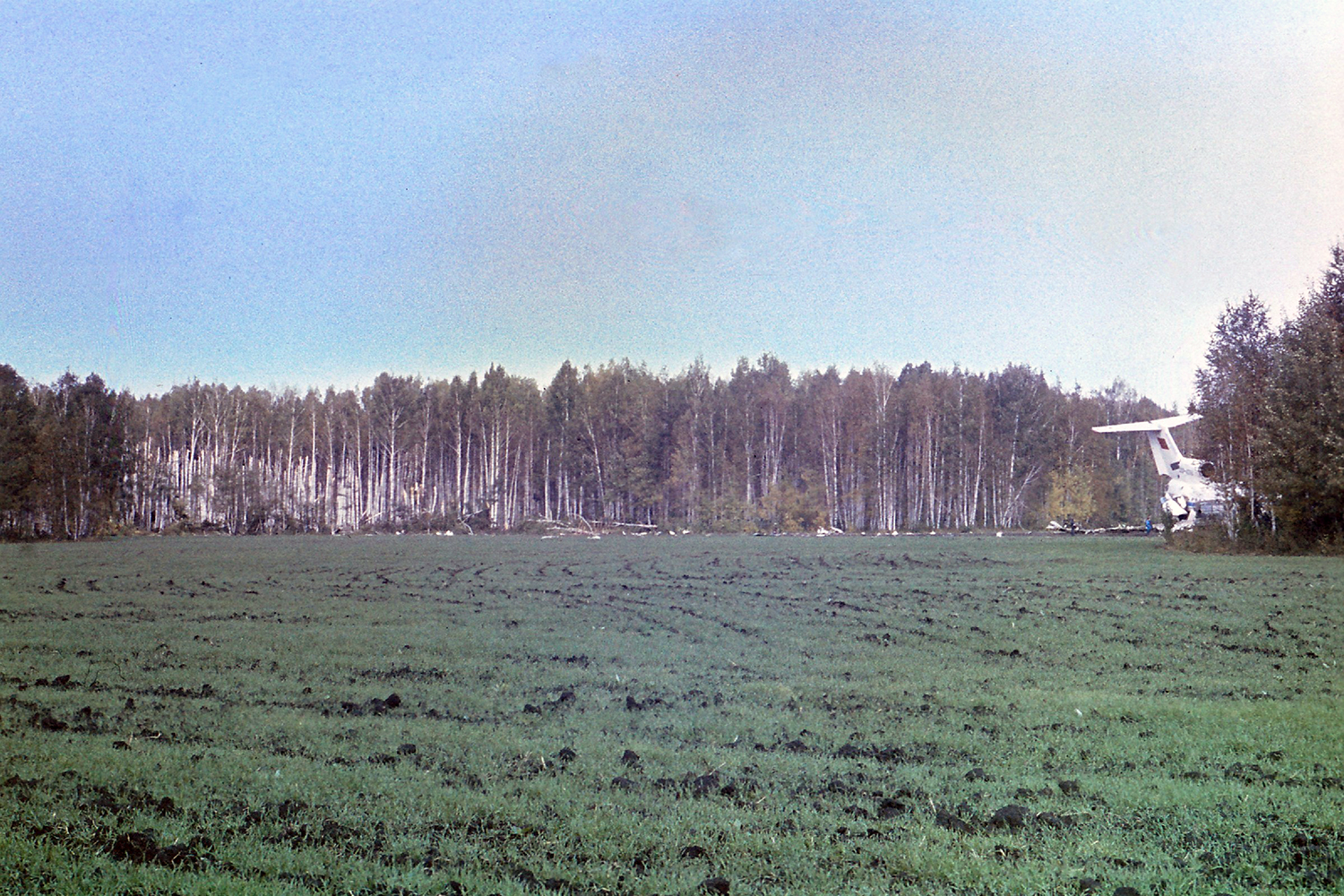
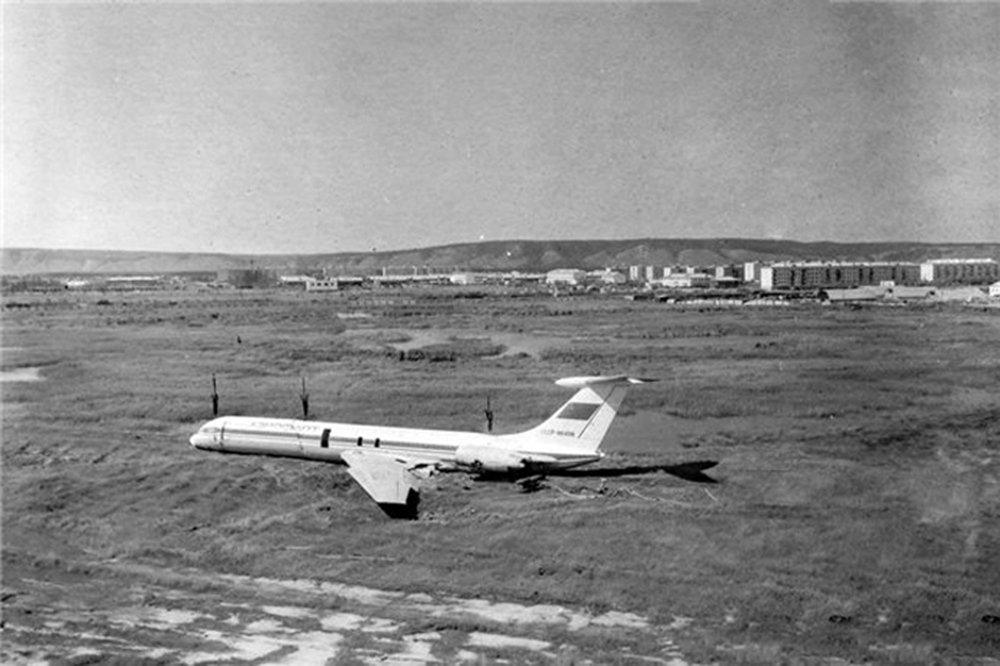
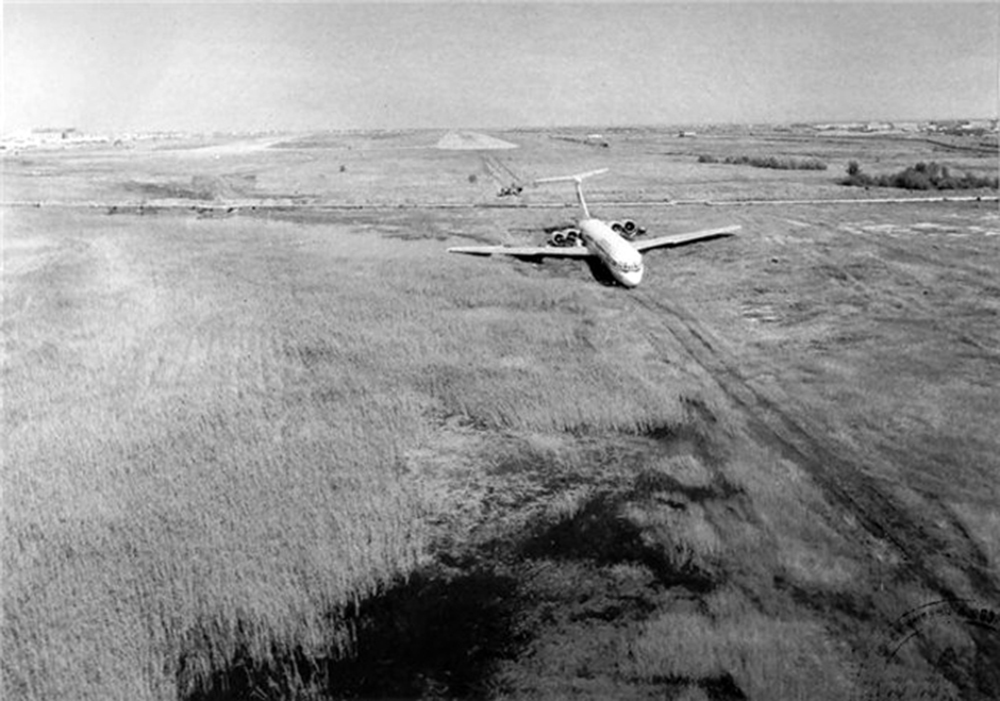
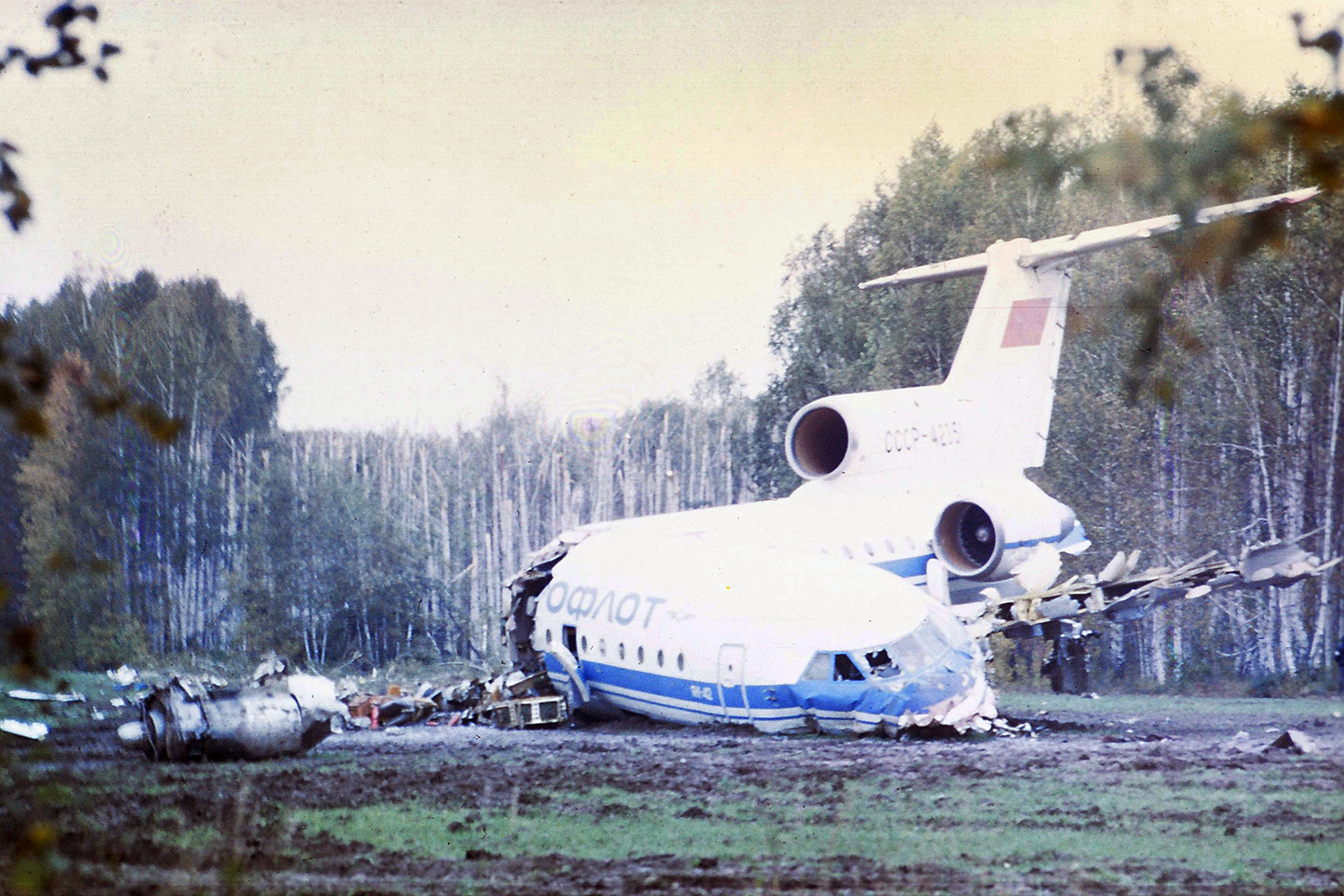
Following an uneventful flight from Volgograd, the crew started a night descent to Sverdlovsk-Koltsovo Airport. On final approach, the crew failed to realize he was misaligned and that his altitude was insufficient when the aircraft struck trees. It descended until it crashed in an open field located 1,700 meters short of runway 08 threshold and came to rest, broken in two. Three passengers and a crew member were killed while all other occupants were evacuated, among them 40 were wounded.
Probable cause:
The accident was the consequence of the combination of the following factors:
- Crew fatigue due to excessive duty calendar,
- The crew neglected several procedures and adopted a wrong approach configuration,
- The aircraft was not properly aligned on the glide and was approaching at an insufficient altitude,
- The crew failed to initiate a go-around procedure,
- Lack of crew coordination,
- Absence of crew crosscheck on approach.
Ground accident of a Yakovlev Yak-40 in Pavlodar

Date & Time: Sep 9, 1990
Type of aircraft:
Operator:
Registration:
CCCP-87451
Flight Phase:
Survivors:
Yes
MSN:
9 43 08 36
YOM:
1974
Country:
Region:
Crew on board:
0
Crew fatalities:
Pax on board:
0
Pax fatalities:
Other fatalities:
Total fatalities:
0
Aircraft flight hours:
24311
Aircraft flight cycles:
16579
Circumstances:
Destroyed while parked at Pavlodar Airport after being struck by another Yak-40 registered CCCP-87914 that crashed upon landing. There were no casualties.

Crash of a Yakovlev Yak-40K in Pavlodar

Date & Time: Sep 9, 1990
Type of aircraft:
Operator:
Registration:
CCCP-87914
Survivors:
Yes
MSN:
9 73 03 55
YOM:
1977
Country:
Region:
Crew on board:
4
Crew fatalities:
Pax on board:
18
Pax fatalities:
Other fatalities:
Total fatalities:
0
Aircraft flight hours:
17930
Aircraft flight cycles:
12388
Circumstances:
On approach to Pavlodar Airport, the crew was instructed by ATC to turn left in order to provide enough space for another aircraft that was approaching the same airfield. On short final, at an altitude of 50 meters and some 300 meters short of runway threshold, the aircraft was 51 meters to the left of the runway centerline. Instead of initiating a go-around procedure, the crew decided to continue the approach and the aircraft landed on the right half of the runway, some 7-10 meters from the left edge, at a speed of 205 km/h and with a rate of descent of 2.5 m/sec. The aircraft bounced and touched down 30 meters further. The aircraft went out of control, veered off runway to the right and eventually collided with another Yakovlev Yak-40 registered CCCP-87451 that was parked on the apron. Both aircraft were destroyed and all 22 occupants were evacuated safely.
Probable cause:
Failure of the crew to recognize he was landing on a non paved runway and his failure to initiate a go-around procedure as the landing maneuver was obviously missed.

Crash of a PZL-Mielec AN-2R near Dzhazator: 3 killed

Date & Time: Sep 5, 1990 at 1537 LT
Type of aircraft:
Operator:
Registration:
CCCP-40433
Flight Phase:
Survivors:
Yes
Site:
Schedule:
Dzhazator - Kosh-Agach
MSN:
1G223-59
YOM:
1987
Flight number:
SU4778
Country:
Region:
Crew on board:
2
Crew fatalities:
Pax on board:
6
Pax fatalities:
Other fatalities:
Total fatalities:
3
Aircraft flight hours:
2035
Aircraft flight cycles:
2496
Circumstances:
The single engine aircraft departed Dzhazator at 1512LT on a flight to Kosh-Agach, carrying five Ukrainian tourists, one local guide and two pilots. Weather conditions were poor with low ceiling and rain falls. As the visibility was insufficient (below minimums), the crew mistakenly followed a wrong course after departure and the aircraft first entered the Ak-Alakha canyon then the Chad valley. In whiteout conditions, the crew saw a mountain and initiated a right turn when the aircraft struck trees and crashed in a wooded area. There was no fire. The wreckage was found 23 km south of Dzhazator. Both pilots and a passenger were killed while five other occupants were seriously injured.
Probable cause:
The crew's decision to initiate the flight in below minima weather conditions with low ceiling, rain and snow. The crew got disoriented after takeoff and did not realize he was not following the correct route. Also, he continued the flight at an unsafe altitude.

Crash of a PZL-Mielec AN-28 in Rushan

Date & Time: Aug 18, 1990 at 1343 LT
Type of aircraft:
Operator:
Registration:
CCCP-28761
Survivors:
Yes
MSN:
1AJ004-10
YOM:
1987
Country:
Region:
Crew on board:
0
Crew fatalities:
Pax on board:
0
Pax fatalities:
Other fatalities:
Total fatalities:
0
Circumstances:
On short final to Rushan Airport, the aircraft lost height and struck the ground 40 meters short of runway threshold and came to rest. There were no casualties but the aircraft was considered as damaged beyond repair.
Probable cause:
The pilot-in-command inadvertently moved the throttles into idle position on short final, causing the aircraft to lose height and to struck the ground with a positive acceleration of 4,42 g.

Crash of a Yakovlev Yak-40 near Stepanakert: 47 killed

Date & Time: Aug 1, 1990 at 1009 LT
Type of aircraft:
Operator:
Registration:
CCCP-87453
Survivors:
No
Site:
Schedule:
Yerevan - Stepanakert
MSN:
9 43 10 36
YOM:
1974
Flight number:
SU35D
Country:
Region:
Crew on board:
4
Crew fatalities:
Pax on board:
43
Pax fatalities:
Other fatalities:
Total fatalities:
47
Circumstances:
The aircraft operated on a passenger service from Yerevan-Erebuni Airport to Stepanakert Airport. In addition to 30 passengers with tickets, the crew took on board 13 unregistered passengers. With this heavy load, the captain requested a lower altitude, 4,500 meters, for the flight. This was granted by ATC, while the regular altitude on the route was 5,100-6,600 meters with a minimum safe height of 4,516 meters. At 09:59, at a distance of 21 km after passing the Azizbekov NDB, the crew was taken over by a controller of Kafan Airport. The controller instructed to keep the height of 4,500 meters to the point of descent. The flight was the cleared down to 3,900 meters and the aircraft descended over mountains covered by a cloud deck with an upper boundary of 3,000-3,300 meters. However, the flight crew never reported their exact position and the controller did not check it on radar. The flight reached the altitude of 3,900 meters at 10:07, and continued descending without informing the controller. At 10:08, the captain requested to contact Stepanakert, while giving a false report that the flight altitude was 3,900 meters. Not observing the aircraft, not knowing its actual flight altitude and not having direct communication with the controller at Stepanakert, the Kafan ATC controller allowed the crew to switch to the Stepanakert frequency. The captain reported to the controller that they were at an altitude of 3,900 meters and requested permission to descend to 2,400 meters. The controller at Stepanakert, having no radar facilities to monitor the aircraft, permitted a descent to 3,000 meters the NDB. At 10:09:57, the aircraft collided with a rocky mountain slope at an altitude of 2,520 meters while descending in clouds. All 47 occupants were killed.
Probable cause:
The accident was caused by a combination of the following factors:
- The captain's violations of the flight rules set forth in the policy documents manifested in unsatisfactory navigation, straightening the route and premature unauthorized descent to a height below the minimum safety altitude, which resulted in a collision with a mountain.
- Violations of ATC rules in their zones by ATC dispatchers of Erebuni, Kafan and Stepanakert airports, expressed in failure to comply with the rules of air traffic control and non-interference in the actions of the crew who violated the rules of navigation and flight regime, which did not allow timely prevention of the aircraft collision with an obstacle. The dispatchers at Yerevan-Stepanakert have a stereotype of work: to allow those conditions of approach, which the crews requested. These violations became possible due to shortcomings in the organization of flight work, flights and air traffic control at the Yerevan-Stepanakert MVL of the Armenian and Azerbaijani State Administration.

Crash of a PZL-Mielec AN-2R in Usugli

Date & Time: Aug 1, 1990
Type of aircraft:
Operator:
Registration:
CCCP-40413
Flight Phase:
Survivors:
Yes
Schedule:
Chita – Usugli – Tungokochen
MSN:
1G223-37
YOM:
1987
Country:
Region:
Crew on board:
3
Crew fatalities:
Pax on board:
0
Pax fatalities:
Other fatalities:
Total fatalities:
0
Circumstances:
The aircraft departed Chita on a flight to Tungokochen with an intermediate stop in Usugli, carrying three crew members who were engaged in a forest survey mission. The takeoff roll in Usugli was long and the airplane took off after a distance of 400 meters. During initial climb, at a height of 100 meters, the pilot initiated a left turn when the aircraft stalled and crashed in a swamp. All three occupants were injured and the aircraft was destroyed.
Probable cause:
It was determined that the total weight of the aircraft was 150-200 kilos above MTOW. The crew failed to abandon the departure procedure when the takeoff roll was abnormally long.

Crash of a PZL-Mielec AN-2T in Nerpo

Date & Time: Jul 26, 1990
Type of aircraft:
Operator:
Registration:
CCCP-44962
Survivors:
Yes
MSN:
1G26-05
YOM:
1962
Country:
Region:
Crew on board:
3
Crew fatalities:
Pax on board:
2
Pax fatalities:
Other fatalities:
Total fatalities:
0
Circumstances:
The aircraft was engaged in a survey flight against potential forest fire, carrying two observers and three crew members. Upon landing on a remote strip in the region of Nerpo, the aircraft encountered strong winds and was unable to stop in time so it collided with trees and came to rest. All five occupants escaped uninjured and the aircraft was damaged beyond repair.
Probable cause:
Unfavorable and winds encountered on landing.

Ground accident of a PZL-Mielec AN-2R in Gomel

Date & Time: Jul 13, 1990
Type of aircraft:
Operator:
Registration:
CCCP-70511
Flight Phase:
Flight Type:
Survivors:
Yes
MSN:
1G144-22
YOM:
1973
Country:
Region:
Crew on board:
0
Crew fatalities:
Pax on board:
0
Pax fatalities:
Other fatalities:
Total fatalities:
0
Circumstances:
Parked at Gomel Airport, the aircraft was subject to engine test runs. In unknown circumstances, it went out of control and collided with another parked AN-2 registered CCCP-40842. There were no injuries while both aircraft were damaged beyond repair.

Crash of an Ilyushin II-62M in Yakutsk

Date & Time: Jul 1, 1990 at 0019 LT
Type of aircraft:
Operator:
Registration:
CCCP-86456
Survivors:
Yes
Schedule:
Moscow - Yakutsk
MSN:
2623717
YOM:
1976
Country:
Region:
Crew on board:
10
Crew fatalities:
Pax on board:
99
Pax fatalities:
Other fatalities:
Total fatalities:
0
Circumstances:
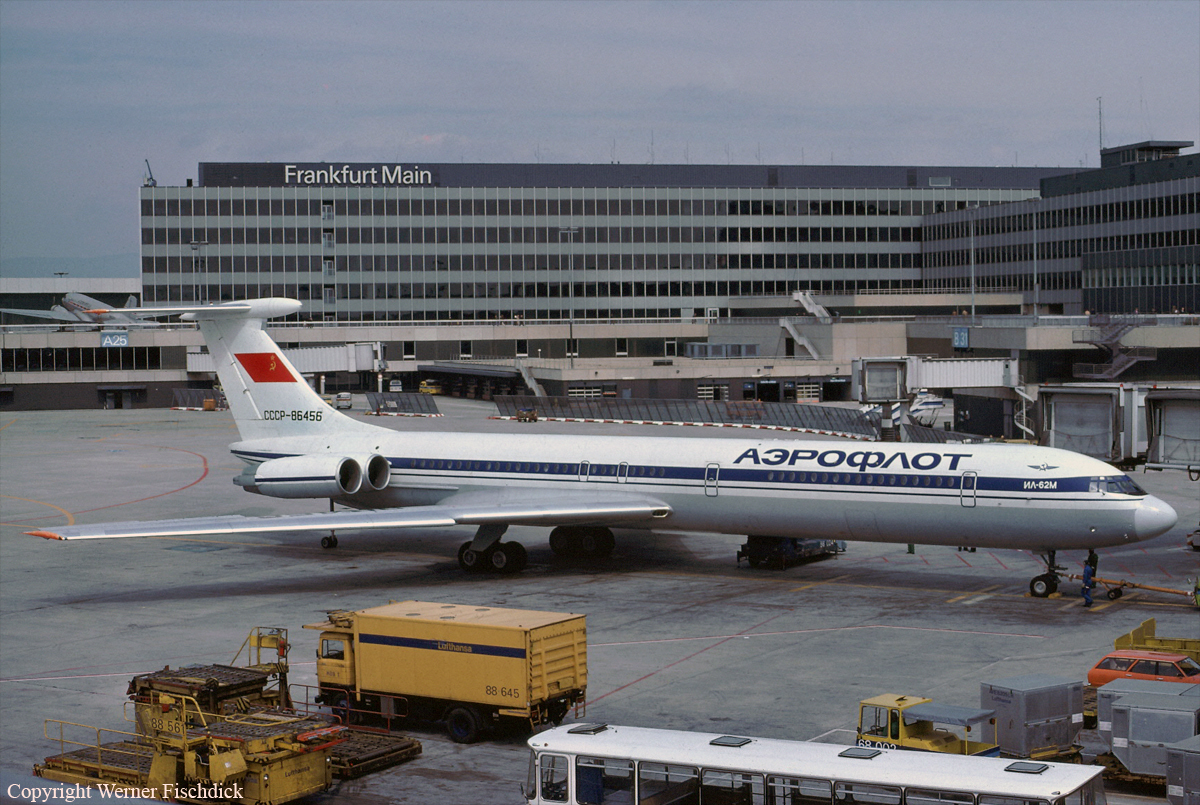
The four engine aircraft departed Moscow-Domodedovo Airport at 1237LT with 99 passengers and 10 crew members on board. Following an uneventful flight of 5 hours and 42 minutes, the crew started the approach to Yakutsk-Intl Airport by night. After touchdown on runway 23 (3,300 meters long), the flight engineer mistakenly selected reverse thrust on engine n°2 and 3 only, letting both engines n°1 and 4 running at takeoff power. Both pilots took few seconds to identify the problem and the aircraft's speed was about 265-270 km/h and there were 655 meters of remaining runway. The captain attempted an emergency braking procedure when all tyres burst and the aircraft overran runway at a speed of 200 km/h, lost its undercarriage and came to rest 397 meters further, broken in three. All 109 occupants were evacuated, among them six were injured, two seriously. The aircraft was written off.
Probable cause:
The accident was the consequence of an error on part of the flight engineer who mistakenly selected reverse thrust on engine n°2 and 3 only, letting both engines n°1 and 4 running at takeoff power.
The following contributing factors were reported:
- The spoilers could not deploy because reverse thrust was not activated on all four engines,
- The crew was disorganized during the landing phase,
- Poor crew coordination,
- The mistake committed by the flight engineer was identified too late by the rest of the flying crew, ¨
- Heavy verbal charge during the landing phase,
- Insufficient professional skills of the flight engineer.