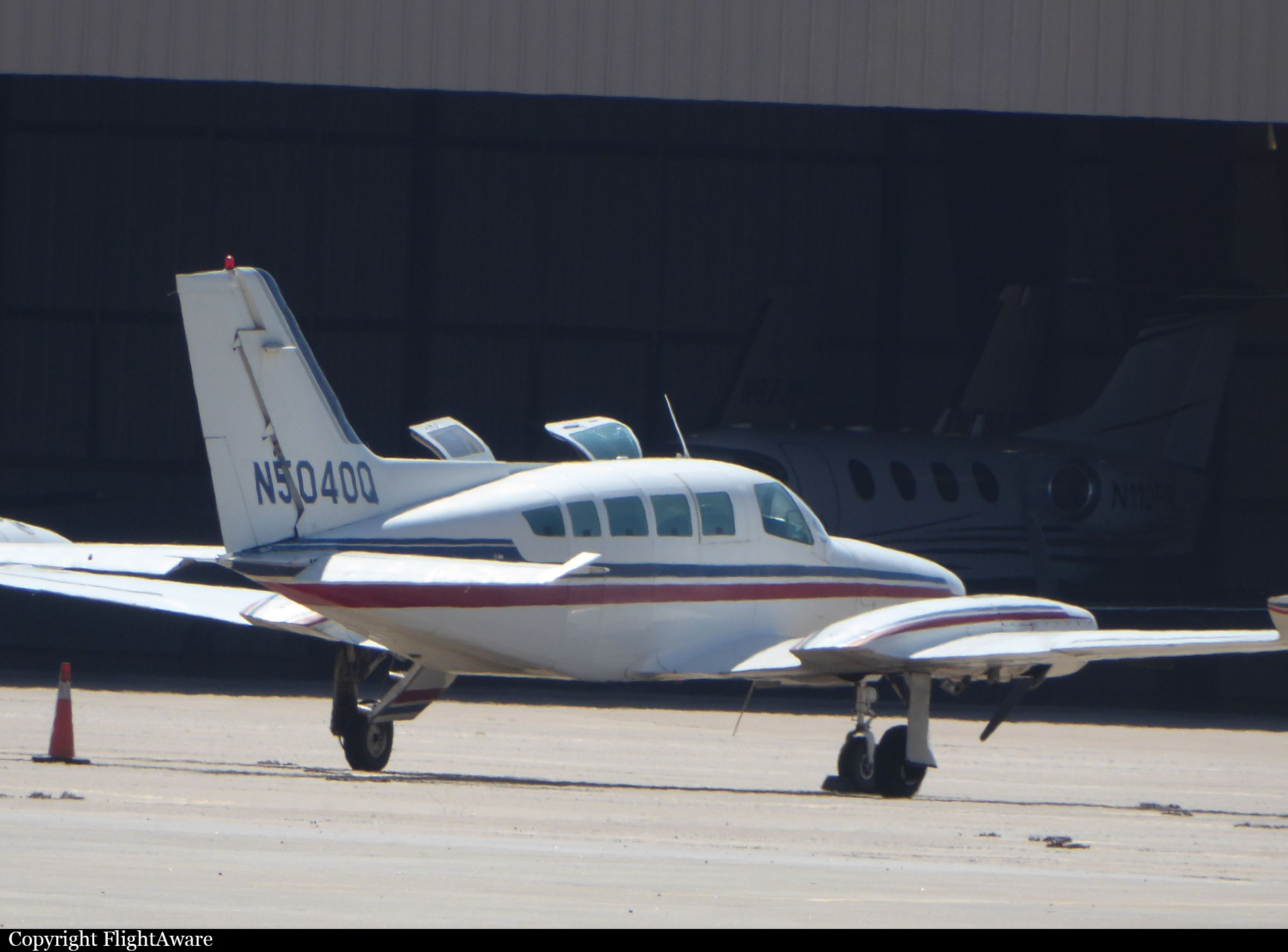
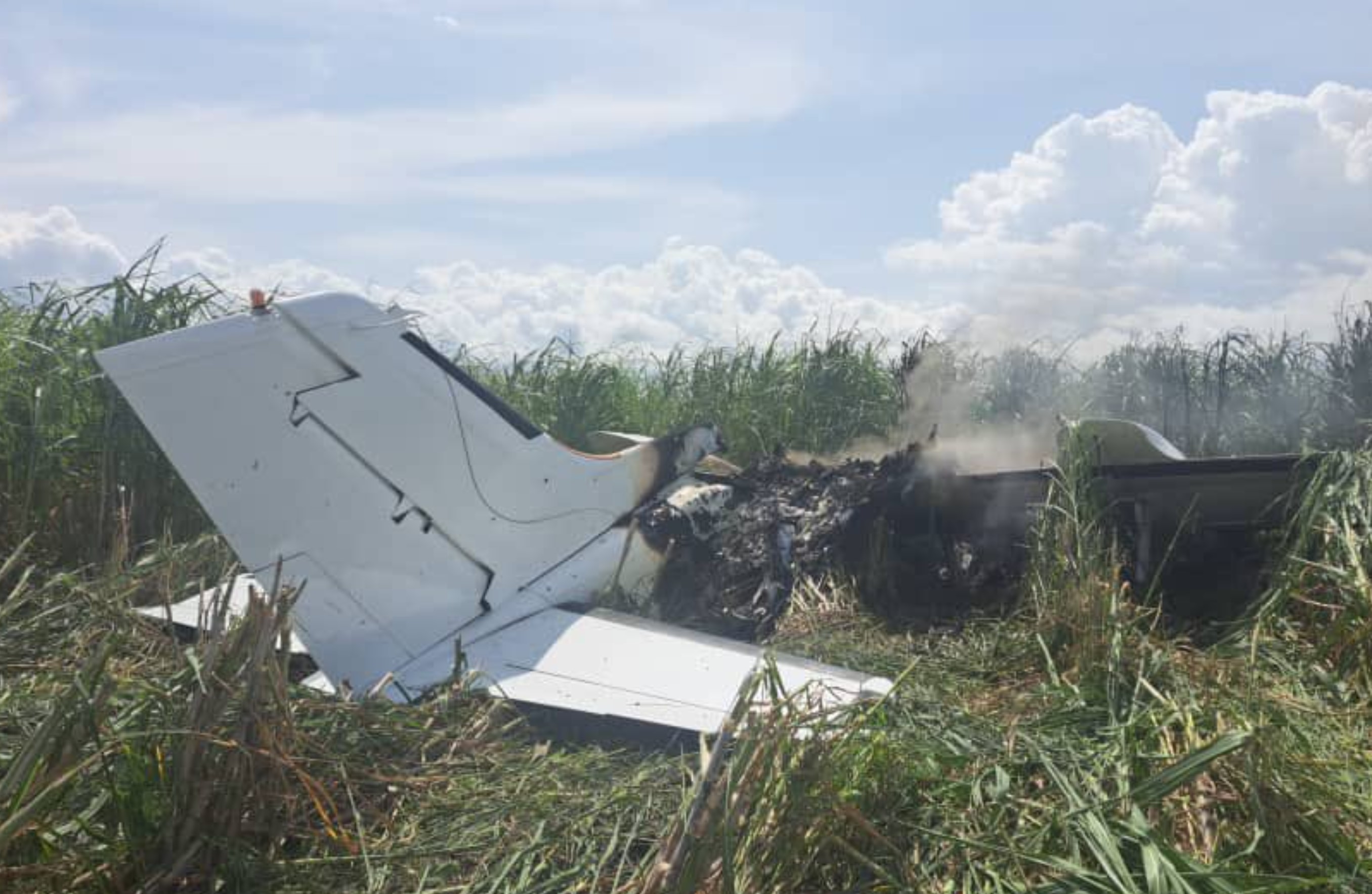
Crash of a Cessna 402B near Chaparral: 2 killed

Date & Time: Jul 14, 2024
Type of aircraft:
Operator:
Registration:
N5040Q
Flight Phase:
Flight Type:
Survivors:
No
MSN:
402B-0347
YOM:
1973
Country:
Crew on board:
2
Crew fatalities:
Pax on board:
0
Pax fatalities:
Other fatalities:
Total fatalities:
2
Circumstances:
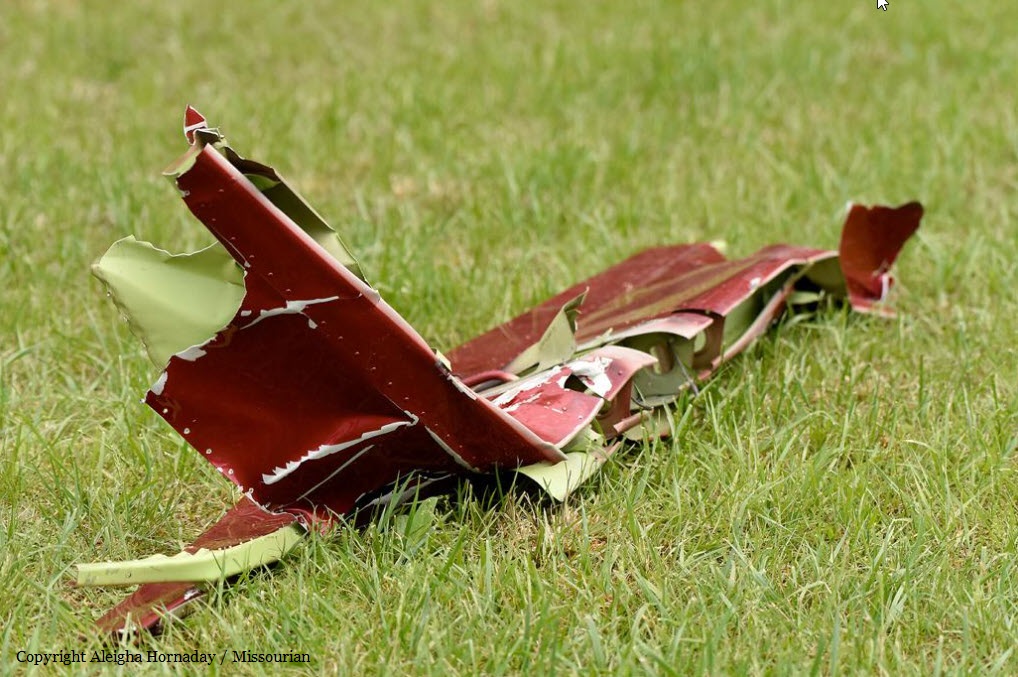
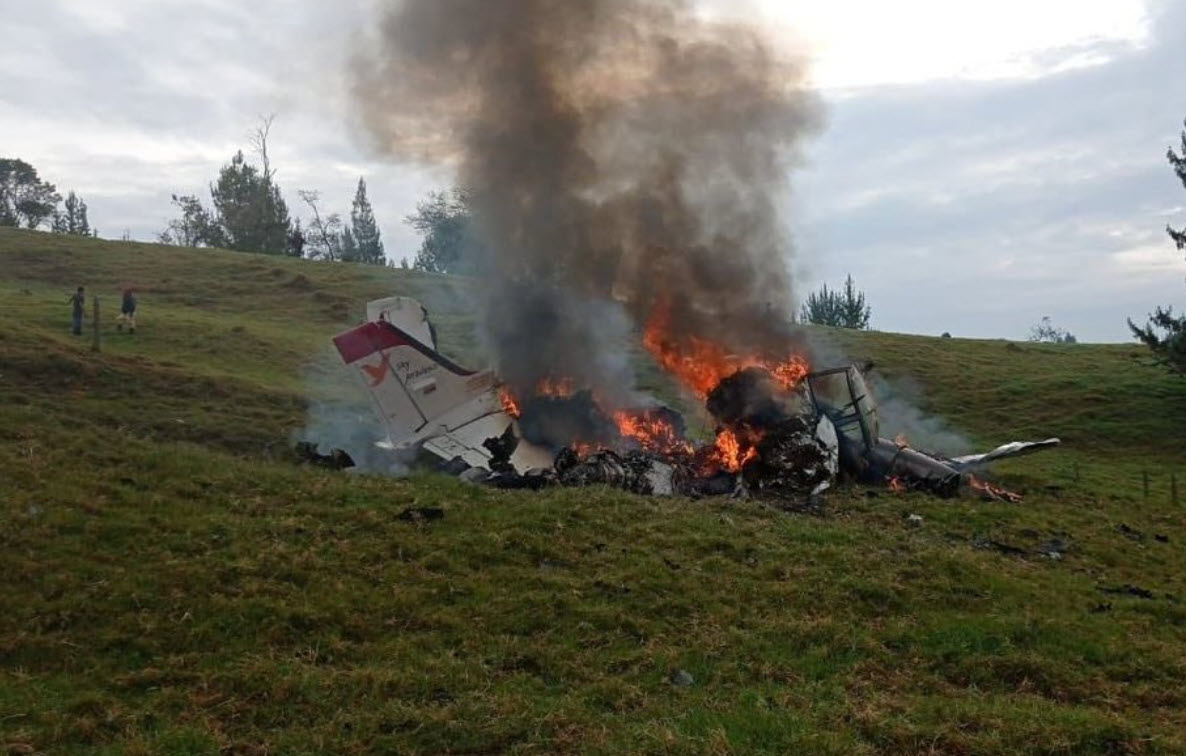
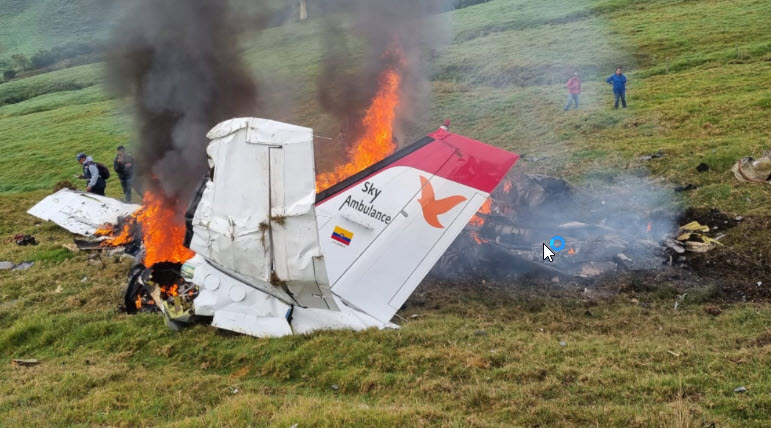
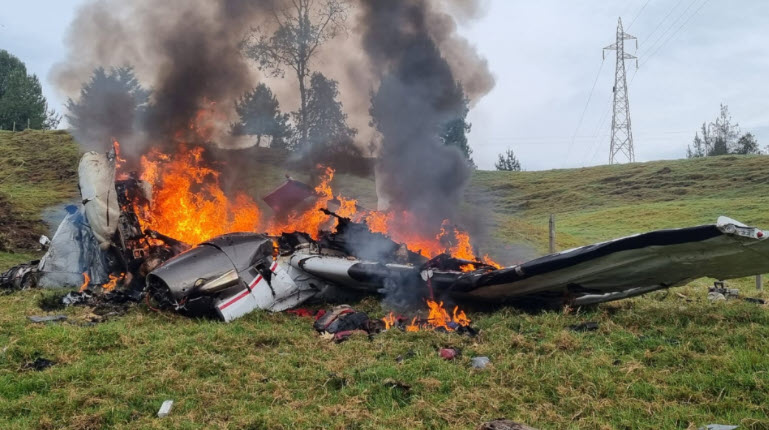
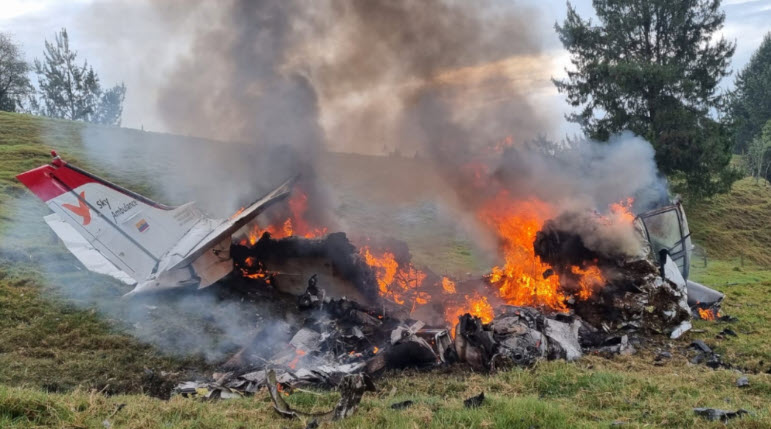
Apparently engaged in an illegal mission, the twin engine airplane crashed in unknown circumstances in a plantation located in the region of Chaparral, State of Portuguesa, Venezuela. The airplane was destroyed by a post crash fire and both occupants were killed. The registration may be false.

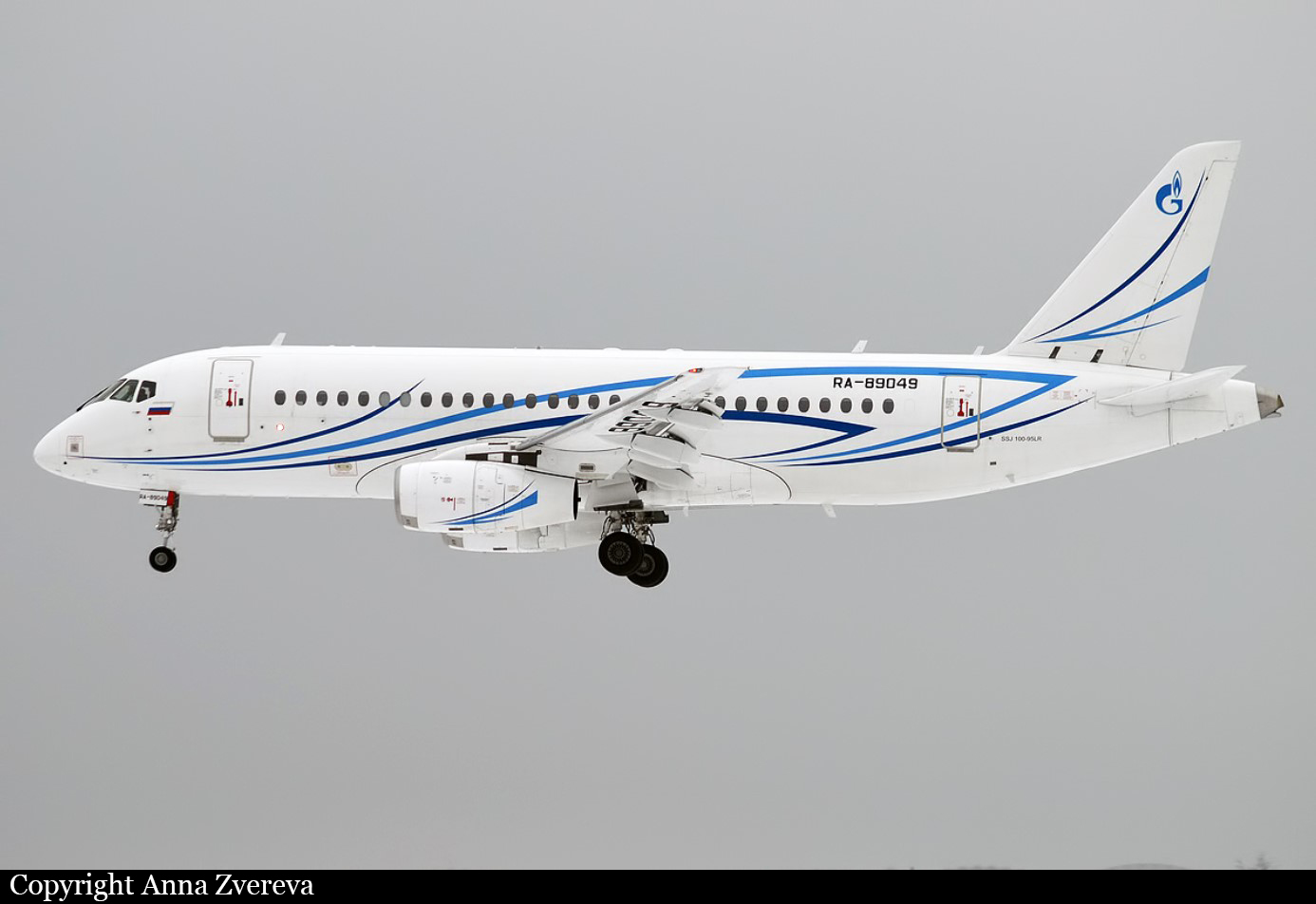
Crash of a Sukhoi Superjet 100-95LR near Apraksino: 3 killed

Date & Time: Jul 12, 2024 at 1459 LT
Type of aircraft:
Operator:
Registration:
RA-89049
Flight Phase:
Flight Type:
Survivors:
No
Schedule:
Lukhovitsy - Moscow
MSN:
95078
YOM:
2014
Flight number:
GZP9608
Country:
Region:
Crew on board:
3
Crew fatalities:
Pax on board:
0
Pax fatalities:
Other fatalities:
Total fatalities:
3
Captain / Total flying hours:
13220
Captain / Total hours on type:
5001.00
Copilot / Total flying hours:
12518
Copilot / Total hours on type:
3944
Aircraft flight hours:
7183
Aircraft flight cycles:
3071
Circumstances:
Following maintenance, the airplane departed Lukhovitsy-Tretyakovo Airport Runway 10 at 1452LT on a short ferry flight to Moscow-Vnukovo Airport. The crew of three was returning to base. During initial climb, at an altitude of 950 feet and an indicated airspeed of 140 knots, the autopilot was engaged. The aircraft then initiated a left turn in accordance with departure procedures. With a rate of climb of 1,000 feet per minute, the crew retracted the flaps when an audible alert informed the pilots of an airspeed inconsistency. At that moment, the pilots checked the airspeed parameters and confirmed that the values ​​were identical on the left and right displays, namely 180 knots. While maintaining a constant altitude of 5,000 feet, the aircraft displayed a pitch angle between 5° and 7° and an angle of attack fluctuating between 9.5° and 13.5°. The oscillations of these values ​​are synchronous and correspond to the deflection of the elevator. Suddenly, the stabilizer went into a dive and remained deployed for 16 seconds in a position between -3.2° and -0.5°. With the pitch angle decreasing from 5° to -3.5°, the aircraft started to descend. The autopilot was disengaged and the captain took over the controls. At an altitude of 4,600 feet, with an indicated airspeed at 280 knots, both pilots realized that the airspeed value was unreliable. The aircraft then stabilized at an altitude of 4,500 feet for 20 seconds before beginning a slight climb when the indicated airspeed exceeded the maximum operational speed of 308 knots. Having reached a high angle of attack, the spoilers deployed automatically, but due to the increased engine power, the aircraft's speed did not decrease. With a lift coefficient decreasing after the spoilers were deployed, the aircraft began its descent. With the throttles at takeoff speed and the spoilers deployed, the aircraft continued its descent before rolling to the right. The crew reduced the throttles to idle, but all their efforts were without effect. At a speed of 365 knots, in a 25° nose-down attitude and a 25° right bank, the airplane crashed in a dense wooded area located 1,500 metres west of the village of Apraksino, some 25 km northwest of the departure airport. The airplane disintegrated on impact and all three crew members were killed.
Probable cause:
The accident was the consequence of the activation and simultaneous operation of the protections of the fly-by-wire system for maximum airspeed and angle of attack. The activation of the airspeed protection function became possible after the crew exceeded the indicated airspeed limit due to uncertainty caused by an abnormal in-flight situation. This situation was characterized by the absence of the expected response of the aircraft to crew control inputs, excessively high angles of attack not consistent with the indicated airspeed, and the absence of operational recommendations for flight crews in the event of a fly-by-wire (FBW) system failure (since such a scenario was not included in the RRJ-95 Abnormal Procedures Checklist). The angle-of-attack (AoA) protection function was triggered because the consolidated angle-of-attack value reached the threshold for its activation, as a result of erroneous (excessively high) readings from the angle-of-attack sensors of the two primary air data systems. The erroneous angle-of-attack indications were caused by the mix-up of the covers of the left and right angle-of-attack sensors during their removal/installation, resulting from violations of the RRJ-95 Maintenance Manual requirements during maintenance at the aircraft repair facility.
Final Report:

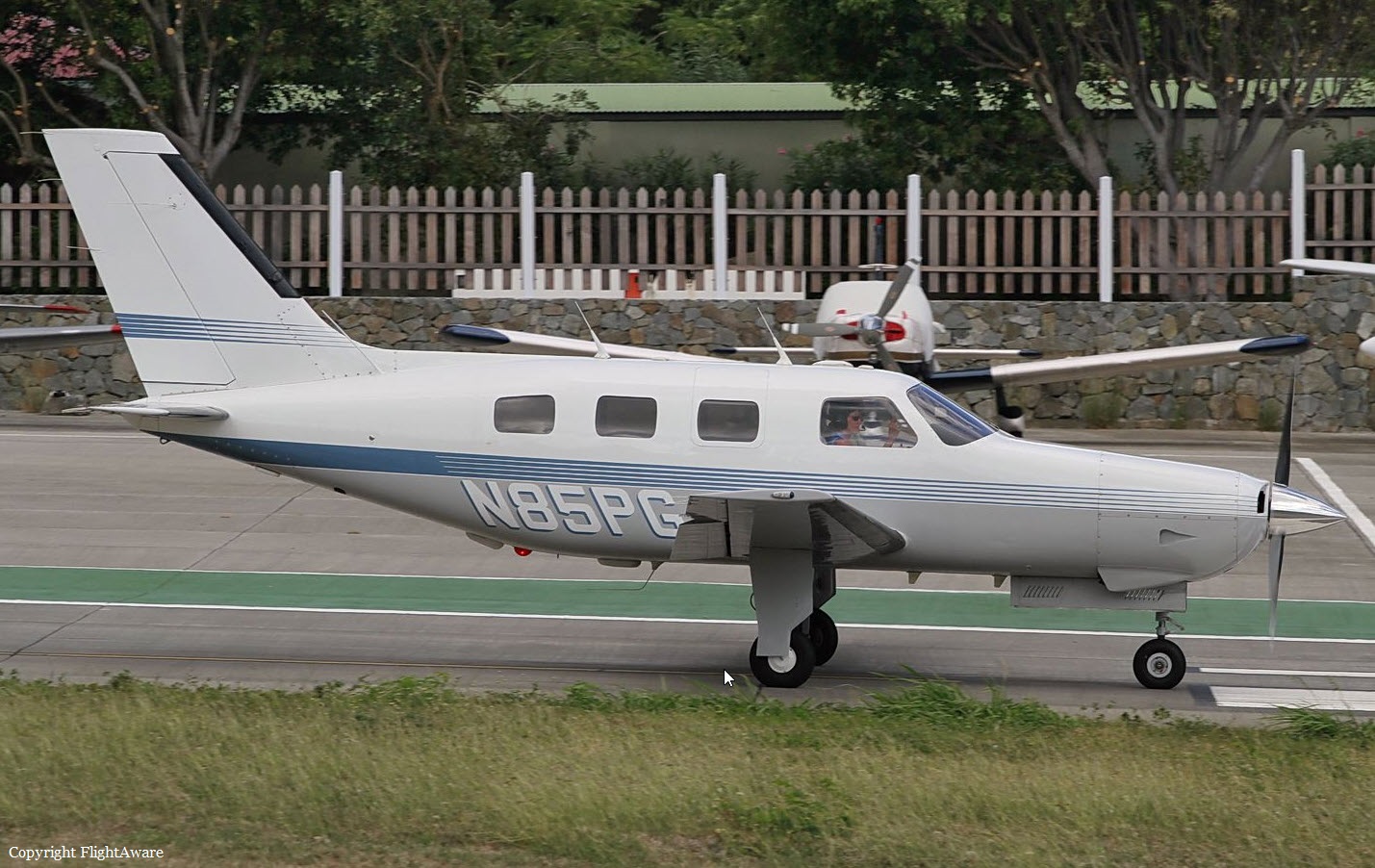
Crash of a Piper PA-46-310P Malibu near Trout Creek: 5 killed

Date & Time: Jun 30, 2024 at 1355 LT
Operator:
Registration:
N85PG
Flight Phase:
Flight Type:
Survivors:
No
Schedule:
Oneonta - Charleston
MSN:
46-8508066
YOM:
1985
Crew on board:
1
Crew fatalities:
Pax on board:
4
Pax fatalities:
Other fatalities:
Total fatalities:
5
Captain / Total flying hours:
1460
Aircraft flight hours:
6024
Circumstances:
The pilot filed an instrument flight rules (IFR) flight plan from the departure airport with an estimated time en route of 2 hours 47 minutes and a cruising altitude of 12,000 ft mean sea level (msl). The flight planning application the pilot used to file the flight plan provided weather briefing information, which included a convective SIGMET active for the time and route of flight and pilot weather reports (PIREPs) for turbulence and moderate chop; however, it could not be determined whether the pilot reviewed this information. The flight departed about 45 minutes after the pilot’s filed departure time. Flight track data and air traffic control communications showed that, about 1 minute after departing, the pilot contacted air traffic control (ATC) to obtain an IFR clearance. The controller cleared the pilot to his destination as filed, issued a climb to 10,000 ft msl, and provided a weather advisory for moderate and heavy precipitation along the route, which the pilot acknowledged. About 4 minutes later, the controller issued the pilot a climb to 12,000 ft msl, which the pilot acknowledged. About that time, the controller began a position relief briefing with a relieving controller, which took about 2 minutes. About 2 minutes later, the new controller queried the pilot after observing that the flight had deviated left of course. The flight track data showed that, just before the query from the controller, the airplane deviated from its southwesterly ground track and began a 45-second, right 270° turn starting at an altitude of 9,800 ft msl. While in the turn, the airplane descended to an altitude of 8,700 ft msl before climbing back to an altitude of 9,800 ft msl when the airplane rolled out on an easterly ground track. About 1 minute after the query from the controller, the pilot responded, stating he had “lost” something, followed by a similar transmission 27 seconds later. This was the last transmission heard that could be attributed to the accident airplane. The airplane continued on a wavering east track for about 40 seconds, descending back down to 8,700 ft msl before climbing to 9,025 ft msl, after which the airplane entered a tight, right, descending spiral until track data was lost. The airplane crashed in a dense wooded area located in Trout Creek and was totally destroyed. All five occupants were killed.
Probable cause:
The pilot’s loss of airplane control in flight due to spatial disorientation during a climb to cruise altitude in instrument meteorological conditions and turbulence, which resulted in the in-flight breakup of the airplane. Contributing to the accident was the pilot’s continued flight into an area of known convective activity.
Final Report:

Crash of a Piper PA-46-500TP Malibu Meridian in Marianna: 2 killed

Date & Time: May 12, 2024 at 1957 LT
Registration:
N241PM
Flight Phase:
Flight Type:
Survivors:
No
Schedule:
Pensacola - Batesville
MSN:
46-97150
YOM:
2003
Crew on board:
1
Crew fatalities:
Pax on board:
1
Pax fatalities:
Other fatalities:
Total fatalities:
2
Circumstances:
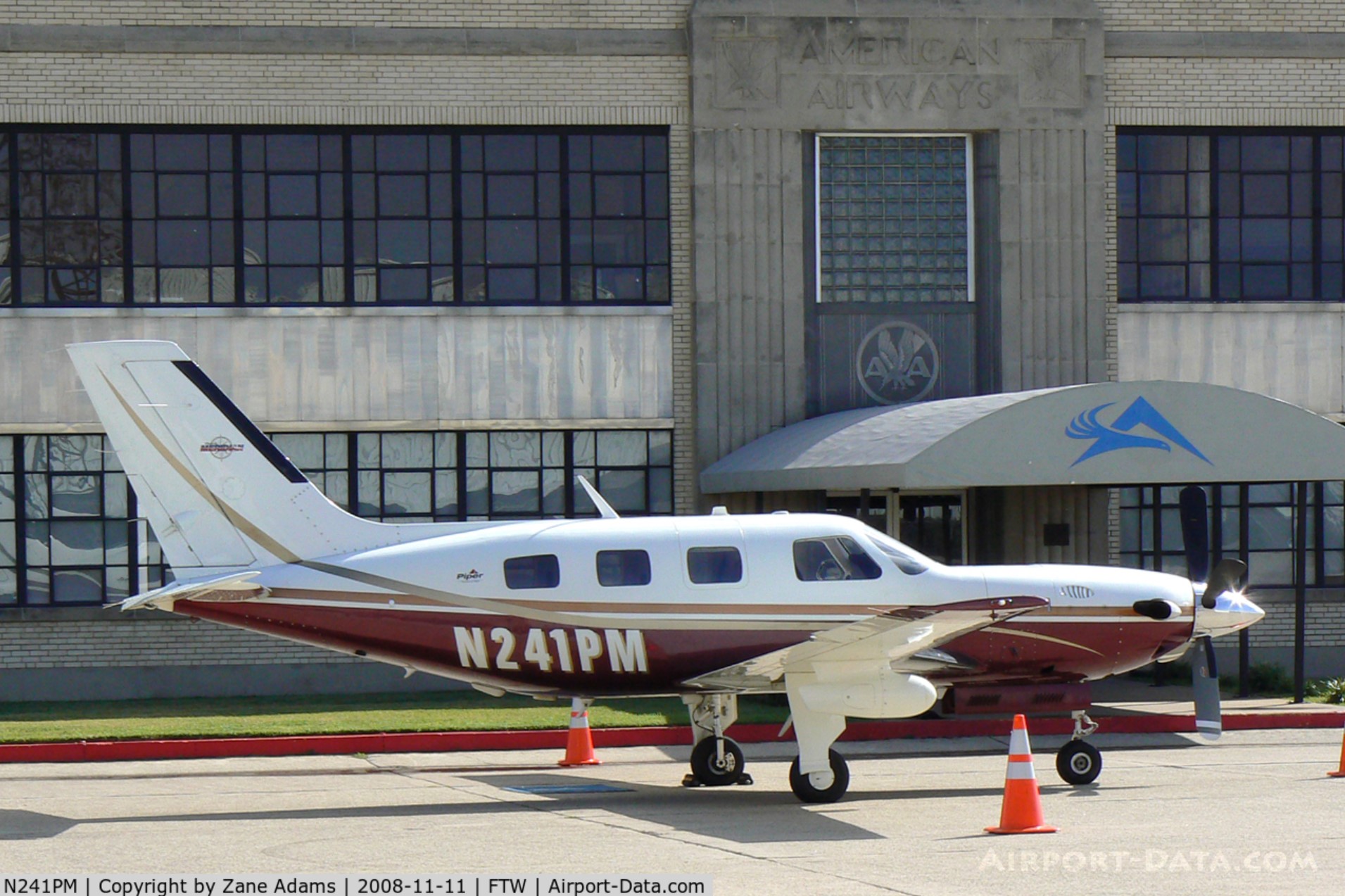
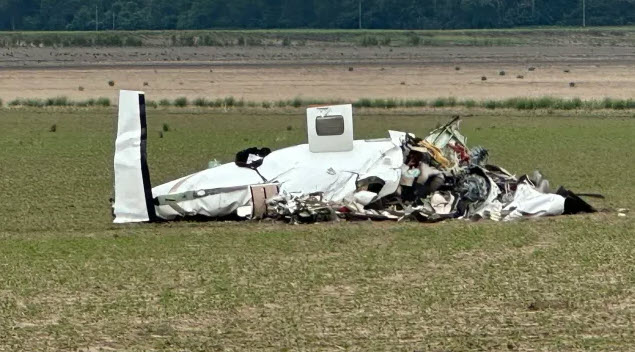
The single engine airplane departed Pensacola Regional Airport, Florida, on a private flight to Batesville, Arkansas, with two people on board. About 1,5 hour into the flight, while cruising at an altitude of 28,000 feet, the pilot initiated a descent when control was lost. The airplane crashed in an open field located southeast of Marianna and was destroyed. Both occupants were killed.

Crash of a Rockwell Grand Commander 690 in Palmyra: 2 killed

Date & Time: May 5, 2024 at 0854 LT
Registration:
N690BM
Flight Phase:
Flight Type:
Survivors:
No
Schedule:
Manassas - Georgetown
MSN:
690-11311
YOM:
1976
Crew on board:
1
Crew fatalities:
Pax on board:
1
Pax fatalities:
Other fatalities:
Total fatalities:
2
Captain / Total flying hours:
3817
Captain / Total hours on type:
18.00
Aircraft flight hours:
9069
Circumstances:
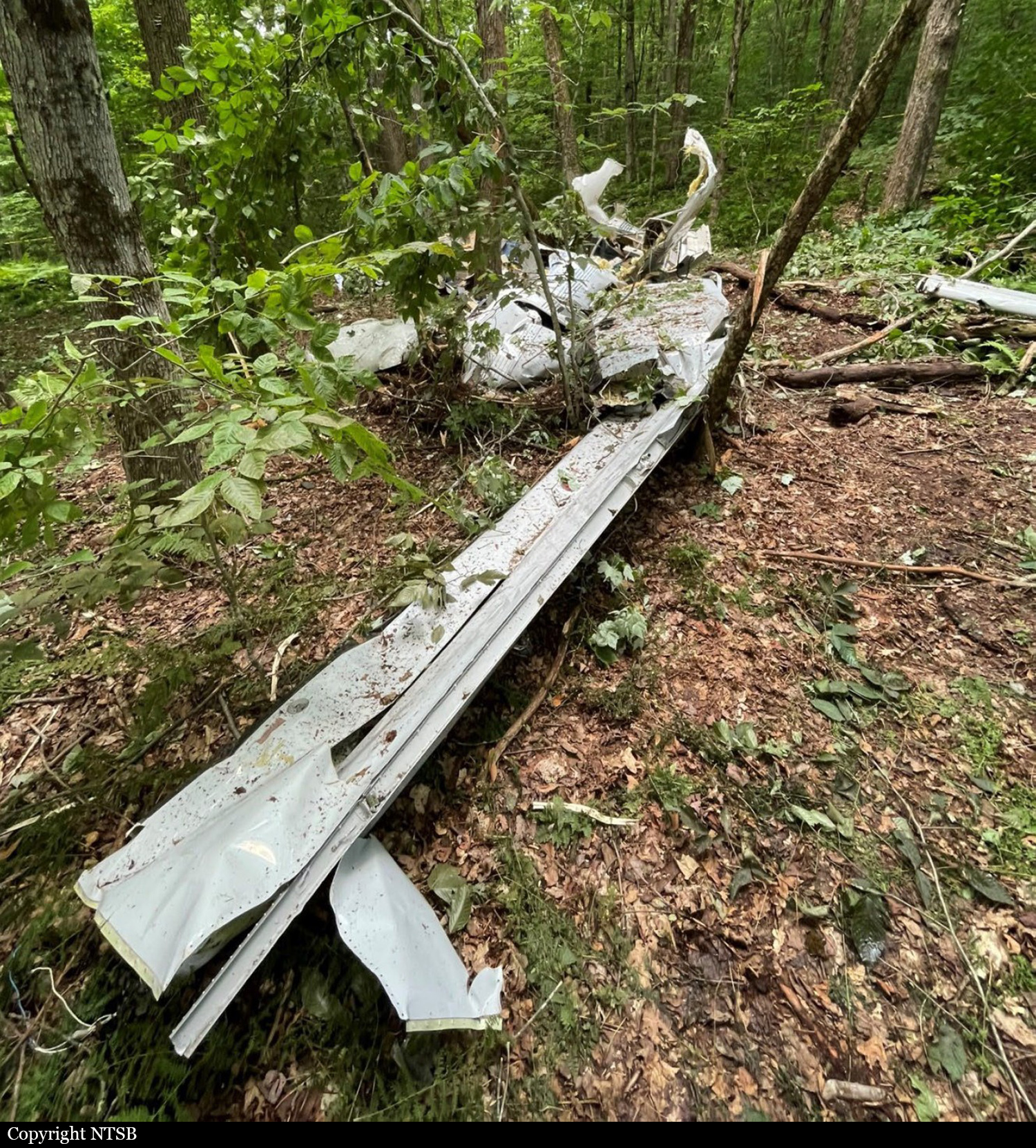
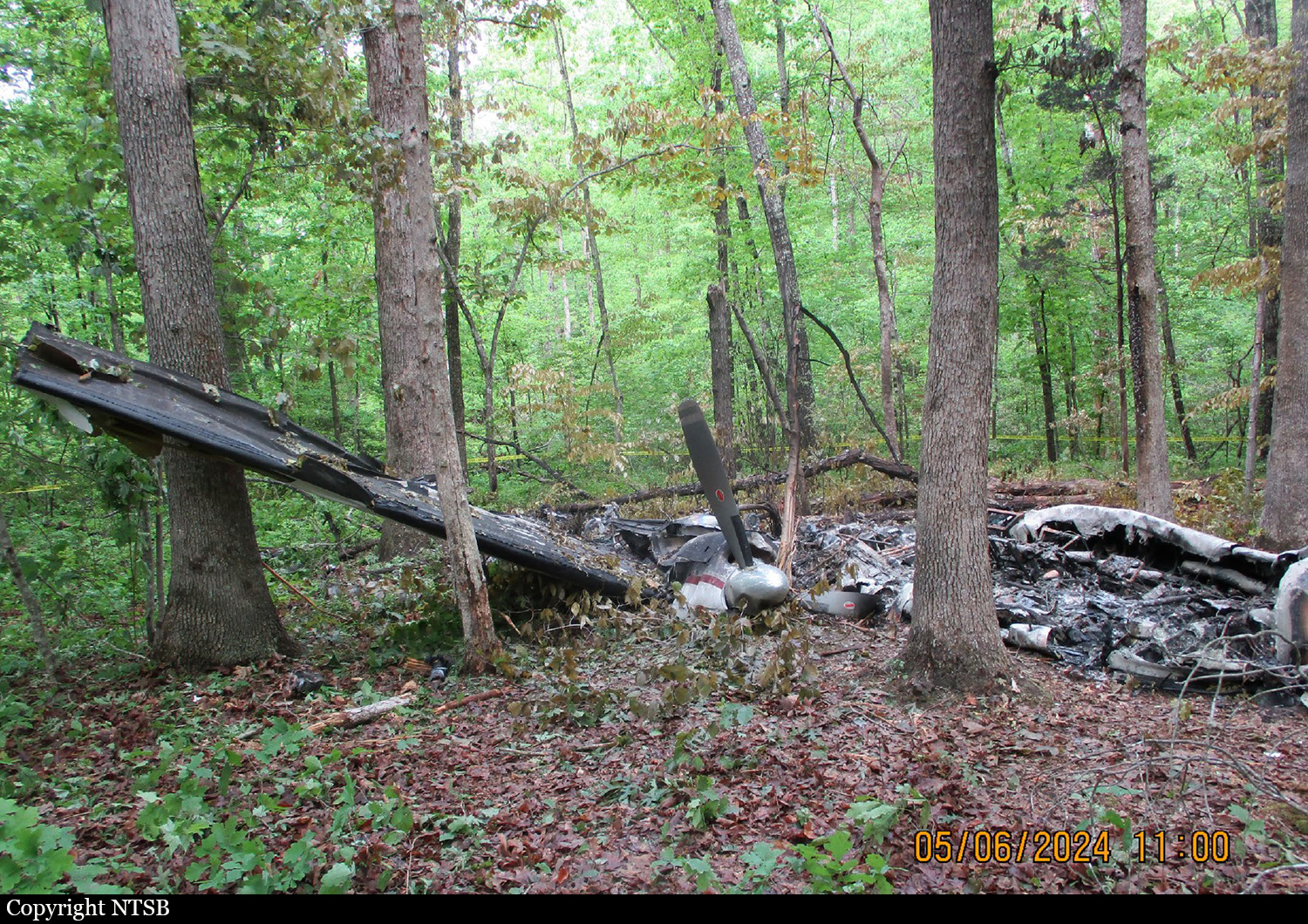
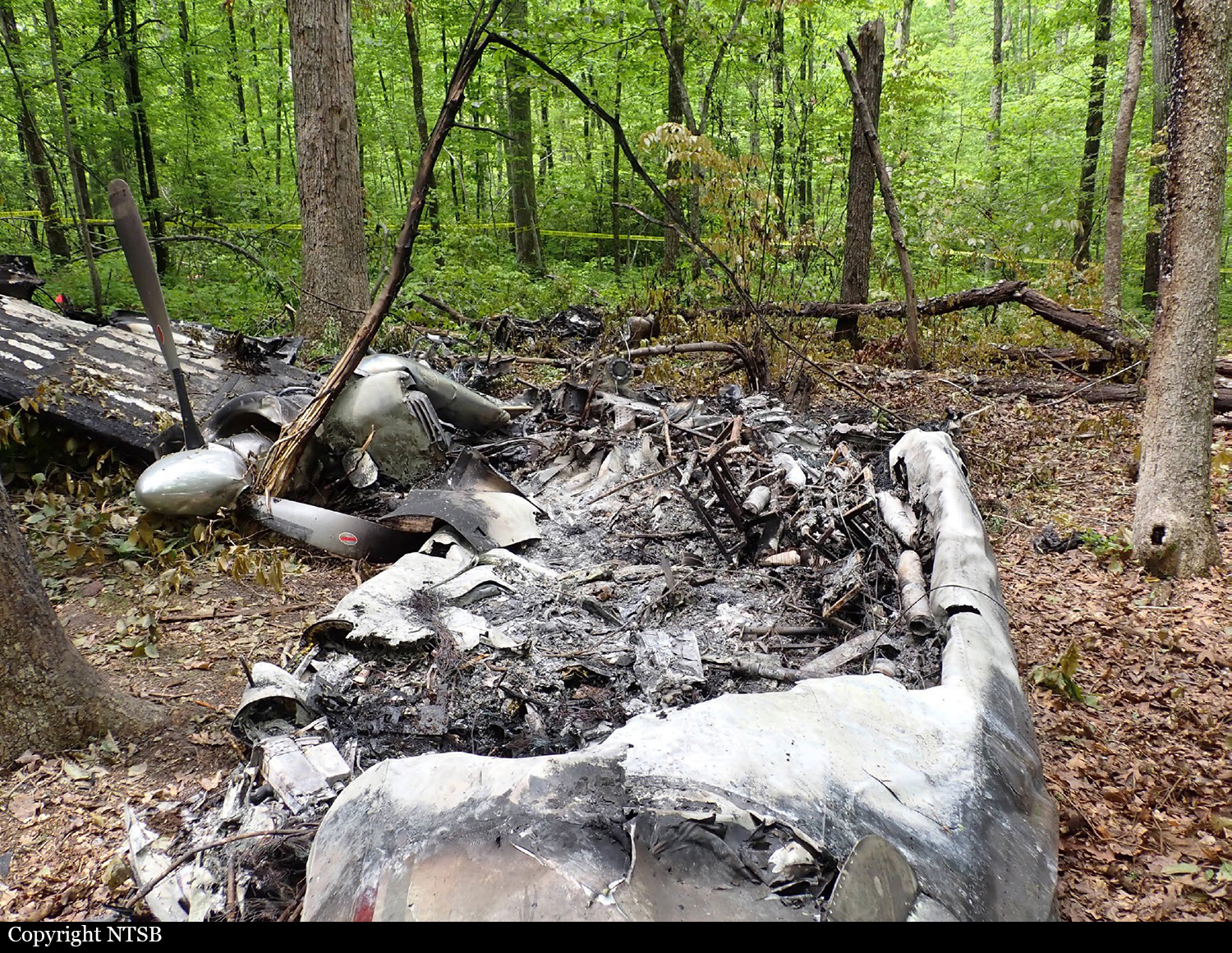
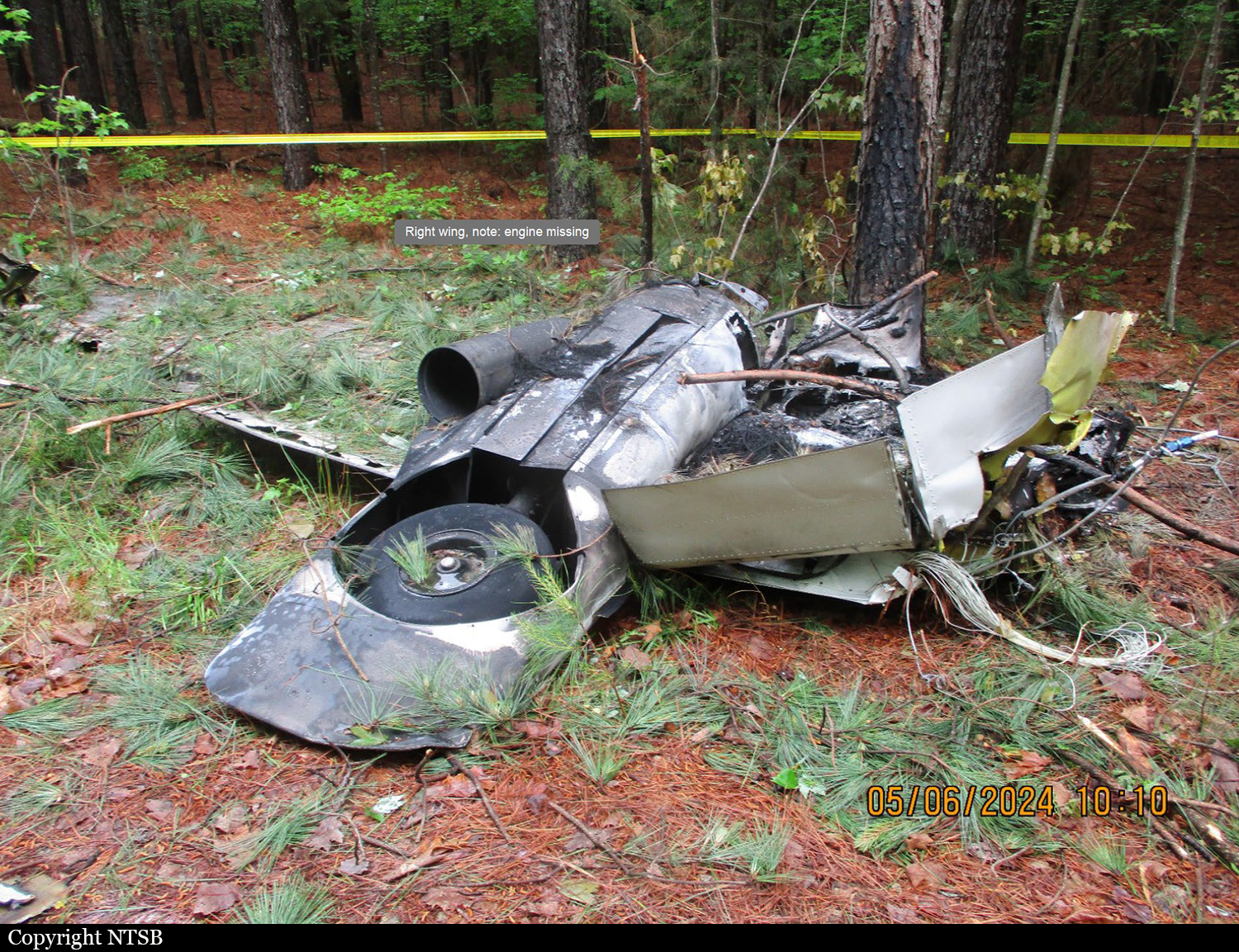
The airplane was in cruise flight at 20,000 ft on an instrument flight rules (IFR) cross-country flight when the pilot reversed course. When an air traffic controller queried the pilot, he replied, “we have lost…we need to climb.” The controller then asked the pilot, “what is your issue?” and the pilot responded, “we have lost autopilot.” There were no further communications received from the pilot and radar contact with the airplane was lost shortly thereafter. A witness who saw the airplane as it descended toward ground impact described that it was on fire. The wreckage of the airplane was heavily fragmented and scattered amongst a wooded area, with a debris path over 3 miles long. The left wing, left engine, left propeller, and empennage were heavily burnt and found at the main wreckage site. The right wing was separated at the wing root and was found 1/4-mile north of the main wreckage. The right wing was fire damaged, and the right engine and right propeller were not located. The vertical and horizontal stabilizers were found about 3/4-mile north of the main wreckage. All fractures exhibited overstress features consistent with an in-flight breakup. Mapping of the wreckage indicated that the tail components likely separated first, followed by the right wing. This structural failure resulted in the horizontal and vertical stabilizers deforming and subsequently separating from the airplane. The lack of heat damage indicated that this separation occurred before the fire and that the inflight fire observed by the witness was likely a result of the inflight breakup. No evidence of any mechanical malfunctions or failures that would have preceded the inflight breakup was found during the postaccident wreckage examination. Both occupants were killed.
Probable cause:
The pilot’s loss of control following an encounter with structural icing, which resulted in an inflight breakup of the airplane.
Final Report:

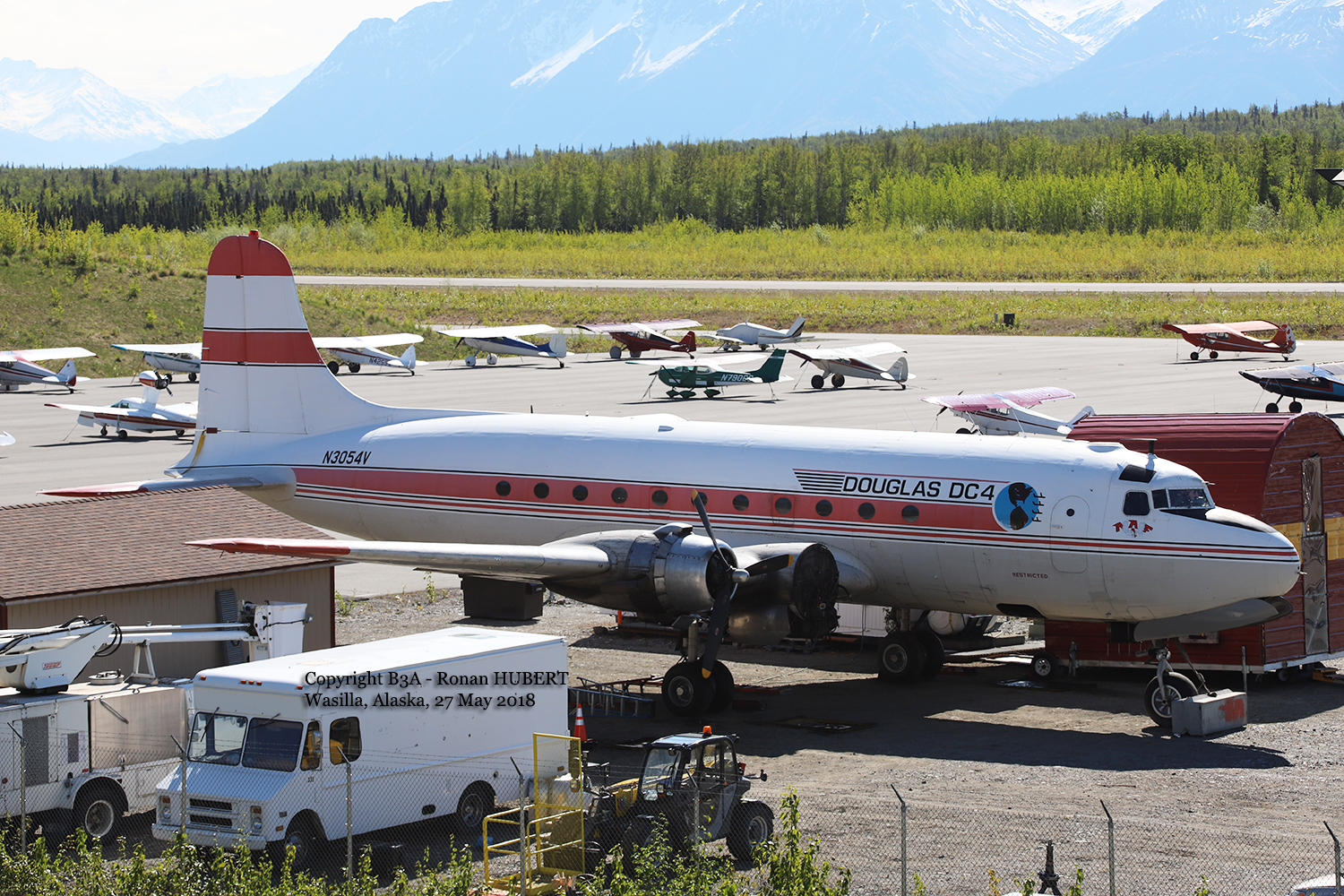
Crash of a Douglas C-54D-DC Skymaster in Fairbanks: 2 killed

Date & Time: Apr 23, 2024 at 1003 LT
Type of aircraft:
Operator:
Registration:
N3054V
Flight Phase:
Flight Type:
Survivors:
No
Schedule:
Fairbanks – Kobuk
MSN:
10547
YOM:
1945
Crew on board:
2
Crew fatalities:
Pax on board:
0
Pax fatalities:
Other fatalities:
Total fatalities:
2
Captain / Total flying hours:
35547
Copilot / Total flying hours:
10769
Aircraft flight hours:
24726
Circumstances:
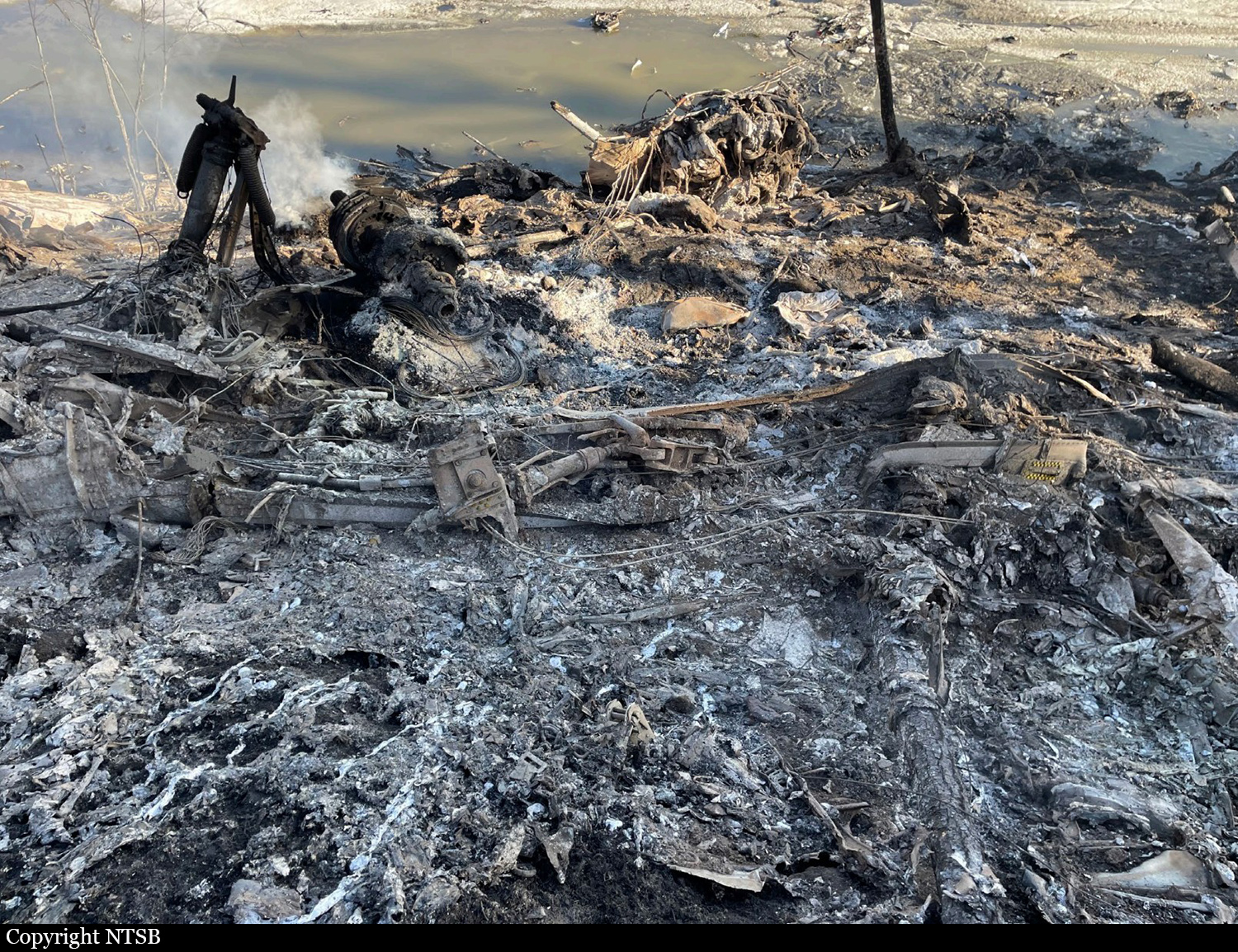
The purpose of the flight was to transport 3,400 gallons of unleaded fuel and two 100-gallon propane tanks from Fairbanks International Airport (FAI), to Kobuk Airport (OBU), Kobuk, Alaska. The airplane departed about 0955. An eyewitness reported seeing the airplane flying to the west and stated that the far left engine was not running. They also noticed a small, white plume of smoke coming from that engine. The airplane started to turn to the south, and at that point he noticed that the engine was on fire. About three minutes after departure, the pilot reported to air traffic control that there was a fire onboard and began a left turn back to the airport. Video surveillance showed white smoke begin to develop behind the No. 1 engine, followed by flames. Seconds later, a bright white explosion could be seen just behind the No. 1 engine. The airplane then entered an uncontrolled, descending left turn into terrain. The No. 1 engine separated from the wing about 100 ft above the ground and landed on a frozen river. About two minutes later, the video showed a large explosion. The University of Alaska Fairbanks (UAF) detected multiple low frequency sound (infrasound) signals associated with the accident. Based on the data collected by UAF, the first explosion was at 1001, the airplane impacted terrain at 1003, and the second explosion was at 1006. The airplane was totally destroyed by impact forces and a post crash fire and both crew members were fatally injured.
Probable cause:
A loss of power of the No. 1 engine for reasons that could not be determined, and the incorrect installation of a B-nut fitting in the propeller feathering system, which allowed engine oil to spray onto the exhaust system when the propeller was feathered following the loss of engine power. Contributing to the accident was an incorrectly repaired fuel leak, which resulted in an explosion that separated the aileron bell housing that resulted in a loss of control and subsequent impact with terrain.
Final Report:

Crash of a Piper PA-46-350P Malibu Mirage near Hartsburg: 1 killed

Date & Time: Apr 16, 2024 at 1205 LT
Registration:
N451MA
Flight Phase:
Flight Type:
Survivors:
No
Schedule:
Madison - Siloam Springs
MSN:
46-36541
YOM:
2012
Crew on board:
1
Crew fatalities:
Pax on board:
0
Pax fatalities:
Other fatalities:
Total fatalities:
1
Captain / Total flying hours:
1458
Captain / Total hours on type:
78.00
Aircraft flight hours:
1370
Circumstances:
The airplane was on an instrument flight rules flight and air traffic control (ATC) provided the pilot with vector guidance to avoid an active military operations area (MOA). The controller informed the pilot that he would only be able to deviate to the left of his course due to the active MOA. At that time, the airplane was in an area of developing convective weather activity and likely in instrument meteorological conditions. The pilot reported to ATC that he encountered freezing rain. ATC communications revealed that the pilot requested to deviate to the left of his course due to weather, including mention of encountering freezing rain, which ATC approved. Flight track data showed the airplane entered a descending left turn. A performance study based on the aircraft track data showed that, during the turn, the airplane’s roll angle reached 70°, the pitch angle reached -17° and then -34°, and the calibrated airspeed exceeded both the airplane's published never exceed speed (VNE), and its maximum operating maneuvering speed (VO). During the turn, the airplane’s structure broke apart, and wreckage was distributed along a 3-mile path. The flight path depicted in the flight track data was consistent with a loss of airplane control. The airplane was destroyed and the pilot was killed.
Probable cause:
The pilot’s encounter with convective weather conditions, which resulted in a loss of airplane control, the exceedance of the airplane’s never exceed speed, and the resulting overload failure of the horizontal stabilizer and subsequent failure of the airplane’s wings.
Final Report:

Crash of a Beechcraft C90 King Air near Yarumal: 4 killed

Date & Time: Mar 21, 2024 at 0720 LT
Type of aircraft:
Operator:
Registration:
HK-4684
Flight Phase:
Flight Type:
Survivors:
No
Schedule:
Montería - Medellín
MSN:
LJ-934
YOM:
1981
Country:
Crew on board:
2
Crew fatalities:
Pax on board:
2
Pax fatalities:
Other fatalities:
Total fatalities:
4
Captain / Total flying hours:
12182
Captain / Total hours on type:
432.00
Copilot / Total flying hours:
242
Copilot / Total hours on type:
51
Aircraft flight hours:
11704
Circumstances:
The twin engine airplane departed Montería-Los Garzones Airport on an ambulance flight to Medellín, carrying two pilots, a doctor and a nurse. About 30 minutes into the flight, while cruising at an altitude of 19,000 feet, the airplane initiated a descent and the speed started to decrease until it stalled and crashed in a prairie, bursting into flames. All four occupants were killed.

Crash of a Beriev A-50U near Yeysk: 10 killed

Date & Time: Feb 23, 2024 at 1844 LT
Type of aircraft:
Operator:
Registration:
RF-50610
Flight Phase:
Flight Type:
Survivors:
No
MSN:
00834 84538
YOM:
1989
Country:
Region:
Crew on board:
10
Crew fatalities:
Pax on board:
0
Pax fatalities:
Other fatalities:
Total fatalities:
10
Circumstances:
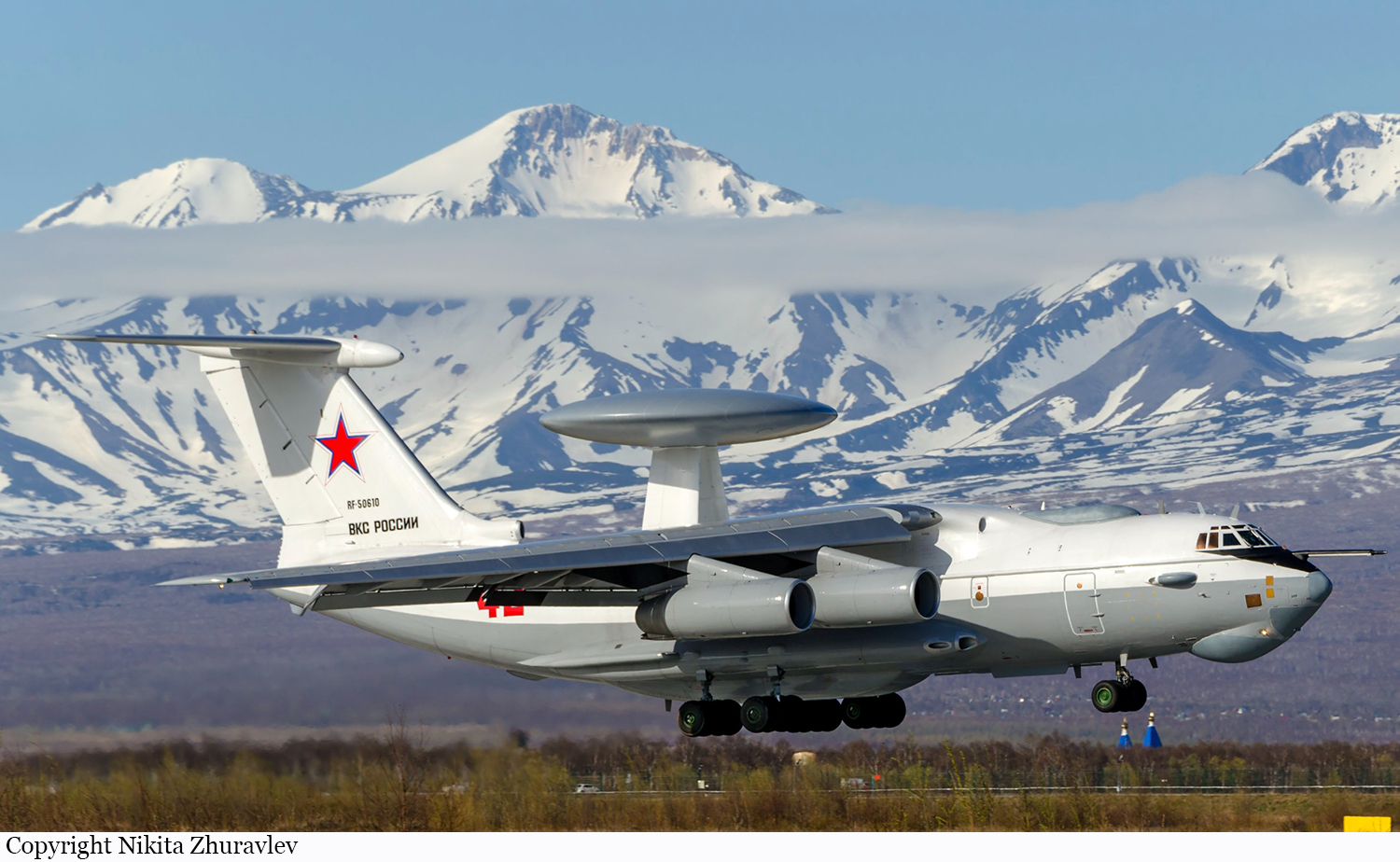
While cruising at night in the region of Yeysk, the four engine airplane was shot down by enemy fire and crashed in an open field located near Yeysk. All 10 occupants were killed. The airplane was operated by the 610th Center of Combat Application and coded 42 Red. Ukraine's military intelligence agency confirmed Russian A-50 military aircraft had been downed as a result of a joint operation with the Air Force.

Crash of a Hawker 900XP in Westwater: 2 killed

Date & Time: Feb 7, 2024 at 1048 LT
Type of aircraft:
Operator:
Registration:
N900VA
Flight Phase:
Flight Type:
Survivors:
No
Schedule:
Grand Junction - Tacoma
MSN:
HA-0020
YOM:
2007
Location:
Crew on board:
2
Crew fatalities:
Pax on board:
0
Pax fatalities:
Other fatalities:
Total fatalities:
2
Captain / Total flying hours:
8188
Captain / Total hours on type:
70.00
Copilot / Total flying hours:
15734
Copilot / Total hours on type:
2249
Aircraft flight hours:
4704
Circumstances:
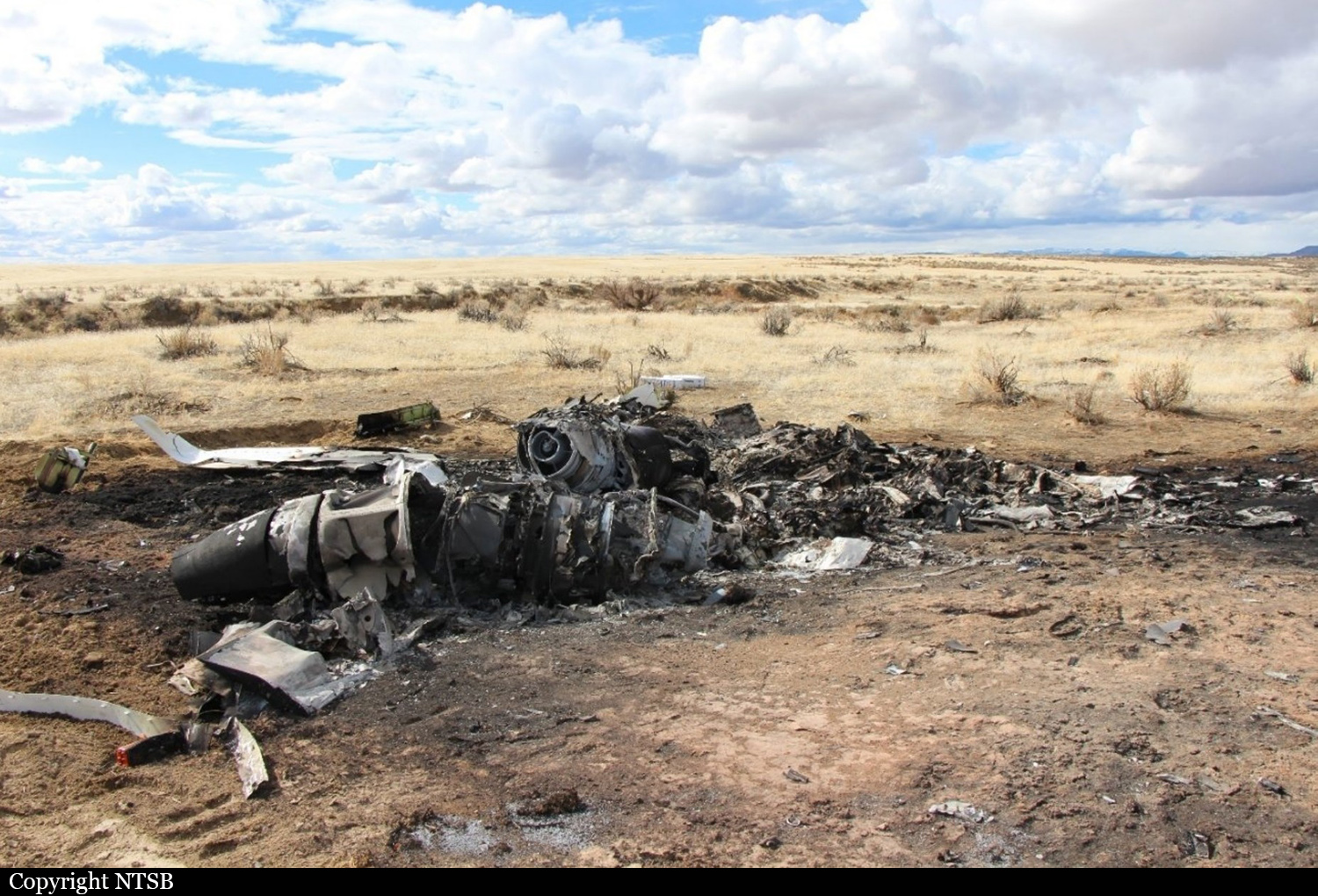
The airplane departed Grand Junction Airport at 1037LT on a positioning flight to Tacoma, following a routine maintenance. The crew was conducting a stall test in the airplane following the recent removal, inspection, and reinstallation of the wing leading edges and de-ice panels as part of routine maintenance. The airplane departed normally, entered a climbing right turn to the northeast, and leveled off about 20,000 feet mean sea level (msl). In its final minute of flight, the airplane entered a rapid vertical descent consistent with a flat spin and never recovered. It crashed in an uninhabited area located in Westwater, eastern Utah, near the border with Colorado. The airplane was mostly consumed by a post crash fire and was highly fragmented, which precluded a complete and thorough wreckage examination of the airframe and engines. Both pilots were killed.
Probable cause:
The flight crew’s decision to conduct a post-maintenance stall test in an area of icing conditions, which resulted in wing contamination that significantly decreased the airplane’s critical angle of attack. Also causal was the airplane manufacturer’s lack of training and experience requirements for the flight crew to safely conduct the stall test, which resulted in an attempted remedial action that aggravated the aerodynamic stall and led to a loss of control from which they were unable to recover. Contributing to the accident was the flight crew’s failure to follow the test conditions regarding cloud clearance, altitude limit, visual meteorological conditions, and ensuring all external surfaces were free from ice.
Final Report: