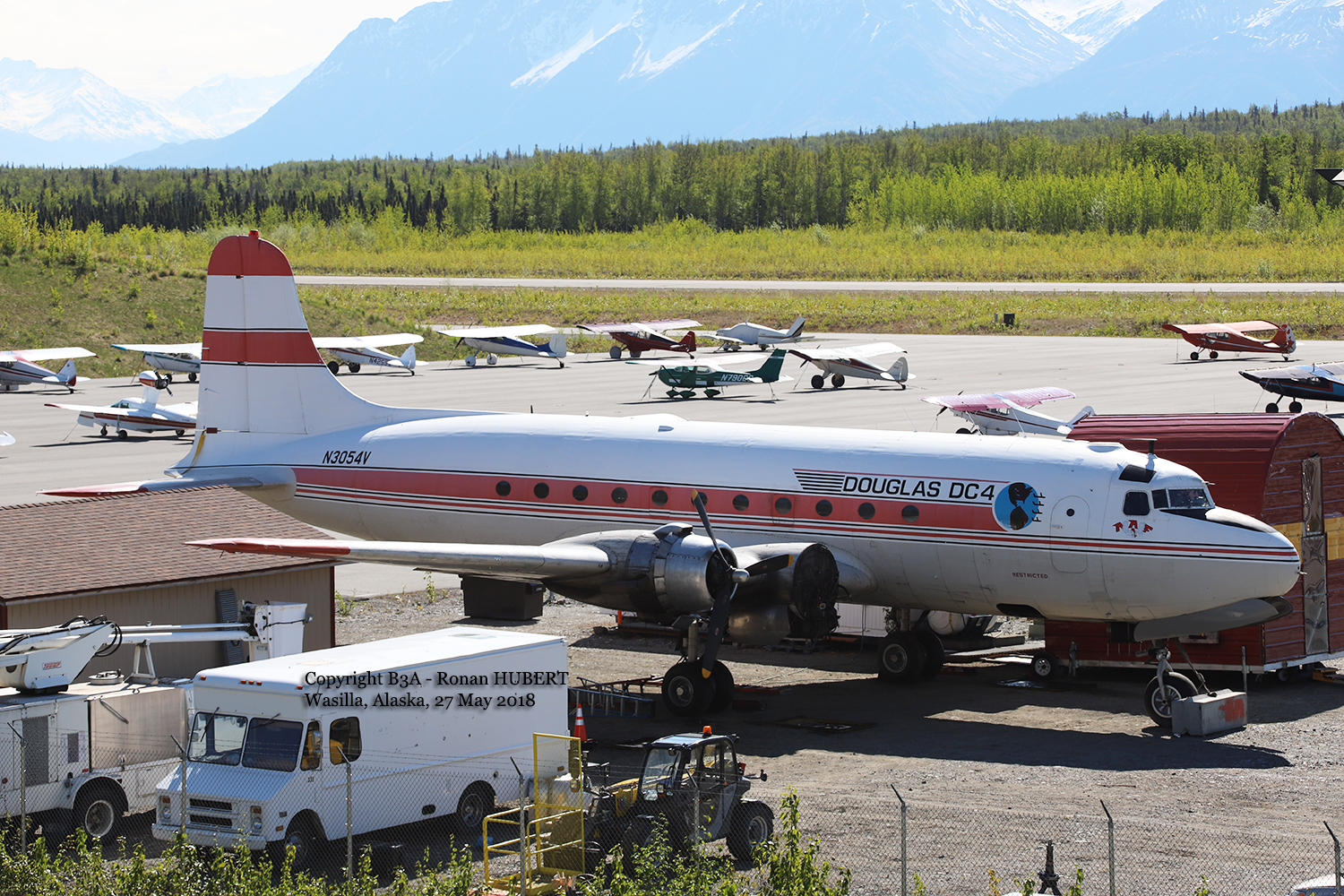
Crash of a Douglas C-54D-DC Skymaster in Fairbanks: 2 killed

Date & Time: Apr 23, 2024 at 1003 LT
Type of aircraft:
Operator:
Registration:
N3054V
Flight Phase:
Flight Type:
Survivors:
No
Schedule:
Fairbanks – Kobuk
MSN:
10547
YOM:
1945
Crew on board:
2
Crew fatalities:
Pax on board:
0
Pax fatalities:
Other fatalities:
Total fatalities:
2
Captain / Total flying hours:
35547
Copilot / Total flying hours:
10769
Aircraft flight hours:
24726
Circumstances:
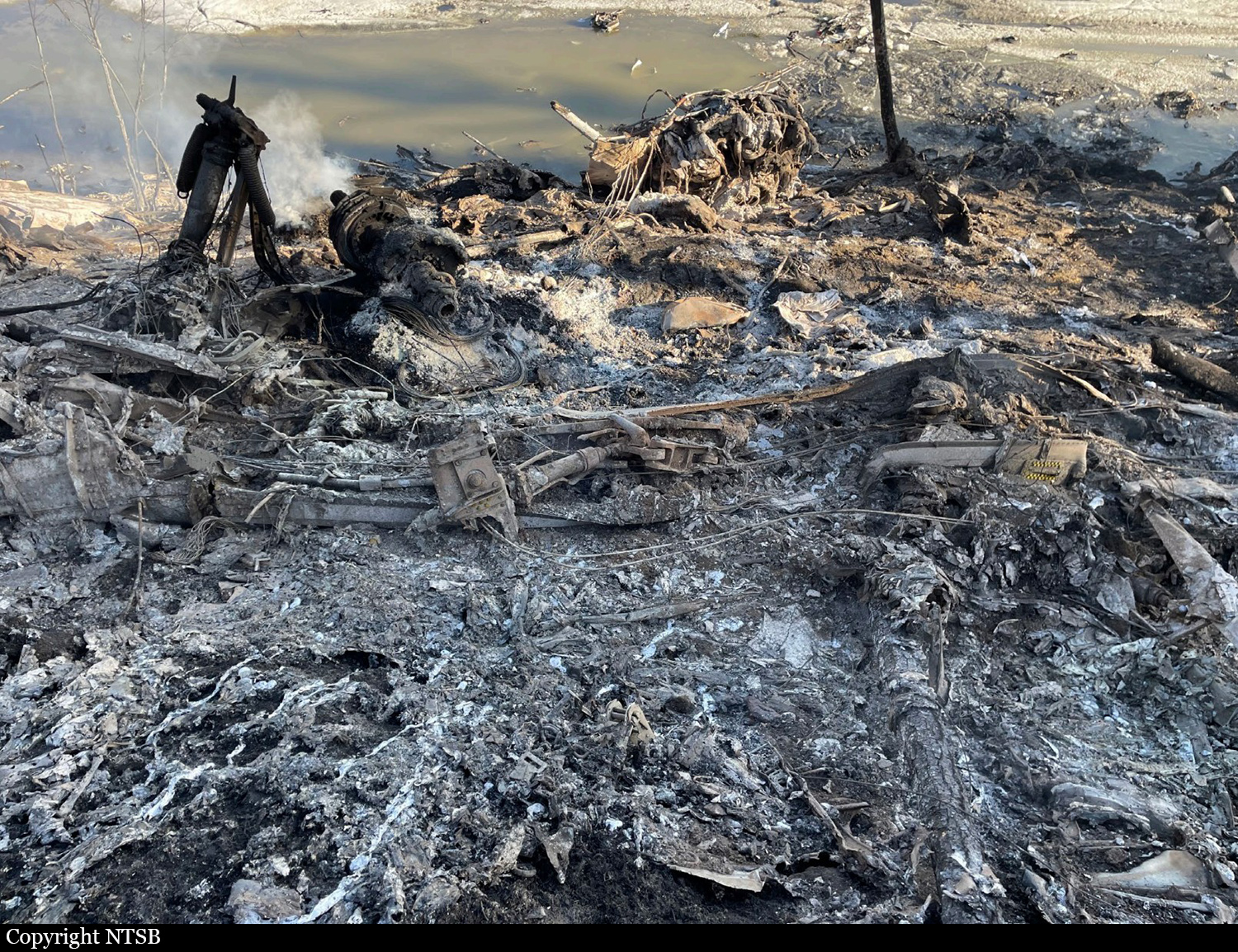
The purpose of the flight was to transport 3,400 gallons of unleaded fuel and two 100-gallon propane tanks from Fairbanks International Airport (FAI), to Kobuk Airport (OBU), Kobuk, Alaska. The airplane departed about 0955. An eyewitness reported seeing the airplane flying to the west and stated that the far left engine was not running. They also noticed a small, white plume of smoke coming from that engine. The airplane started to turn to the south, and at that point he noticed that the engine was on fire. About three minutes after departure, the pilot reported to air traffic control that there was a fire onboard and began a left turn back to the airport. Video surveillance showed white smoke begin to develop behind the No. 1 engine, followed by flames. Seconds later, a bright white explosion could be seen just behind the No. 1 engine. The airplane then entered an uncontrolled, descending left turn into terrain. The No. 1 engine separated from the wing about 100 ft above the ground and landed on a frozen river. About two minutes later, the video showed a large explosion. The University of Alaska Fairbanks (UAF) detected multiple low frequency sound (infrasound) signals associated with the accident. Based on the data collected by UAF, the first explosion was at 1001, the airplane impacted terrain at 1003, and the second explosion was at 1006. The airplane was totally destroyed by impact forces and a post crash fire and both crew members were fatally injured.
Probable cause:
A loss of power of the No. 1 engine for reasons that could not be determined, and the incorrect installation of a B-nut fitting in the propeller feathering system, which allowed engine oil to spray onto the exhaust system when the propeller was feathered following the loss of engine power. Contributing to the accident was an incorrectly repaired fuel leak, which resulted in an explosion that separated the aileron bell housing that resulted in a loss of control and subsequent impact with terrain.
Final Report:
Ground accident of a Douglas C-54G Skymaster in San Juan

Date & Time: Mar 22, 2012 at 1915 LT
Type of aircraft:
Registration:
N406WA
Flight Phase:
Flight Type:
Survivors:
Yes
Schedule:
Christiansted – San Juan
MSN:
35944
YOM:
1945
Country:
Crew on board:
2
Crew fatalities:
Pax on board:
0
Pax fatalities:
Other fatalities:
Total fatalities:
0
Circumstances:
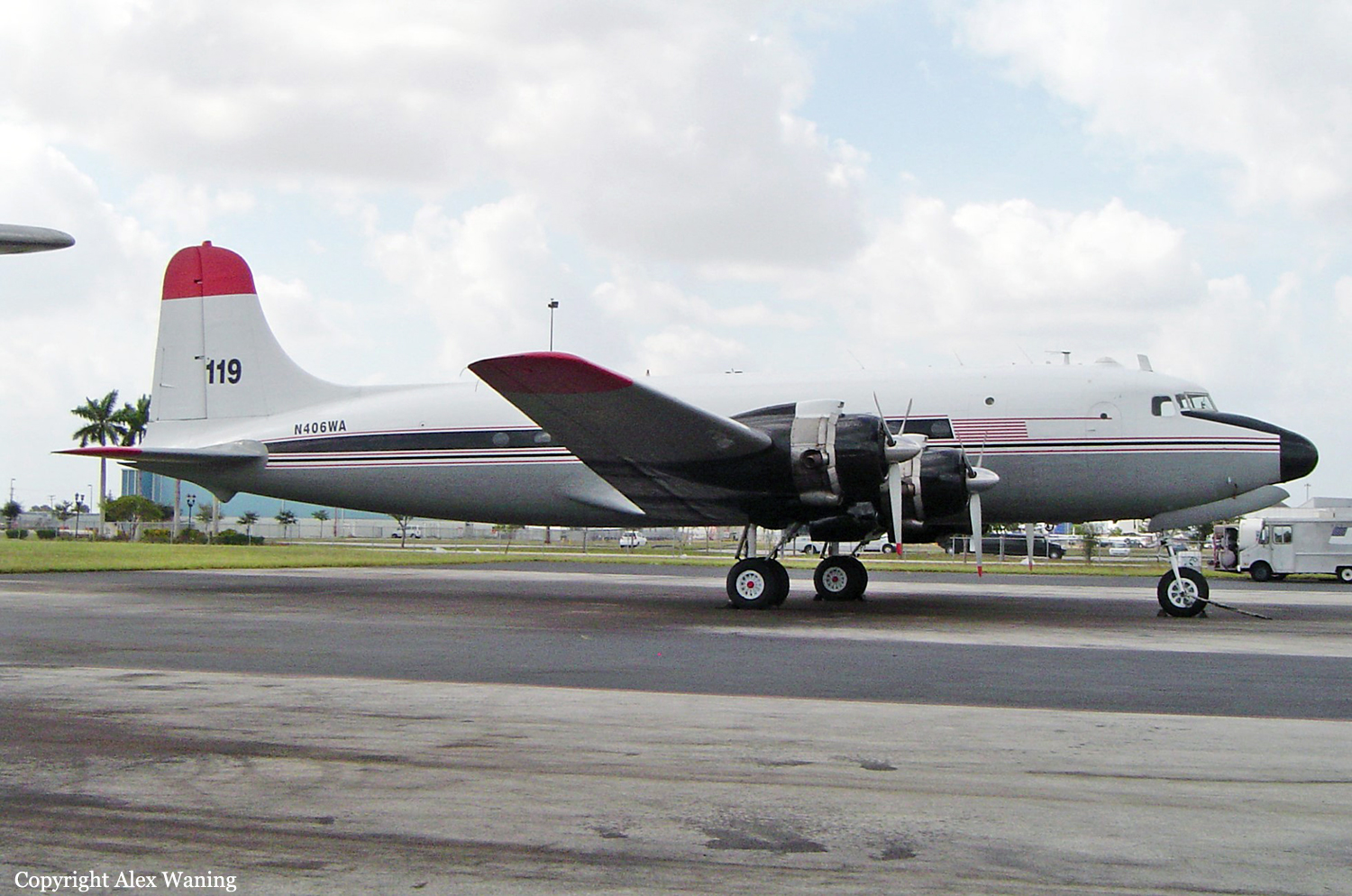
Following an uneventful cargo flight from Christiansted-Henry E. Rohlsen Airport, the crew completed the landing normally at San Juan-Luis Muñoz Marin Airport. While taxiing to the ramp, the nose gear collapsed and the aircraft came to rest. Both pilots escaped uninjured and the aircraft was damaged beyond repair.
Probable cause:
No investigations were conducted by the NTSB.

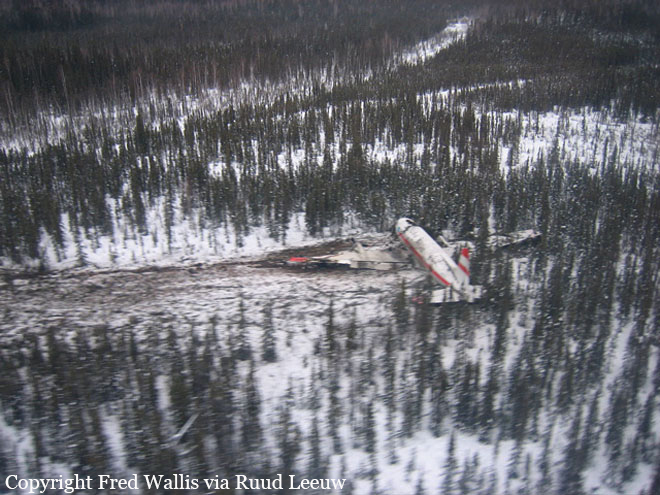
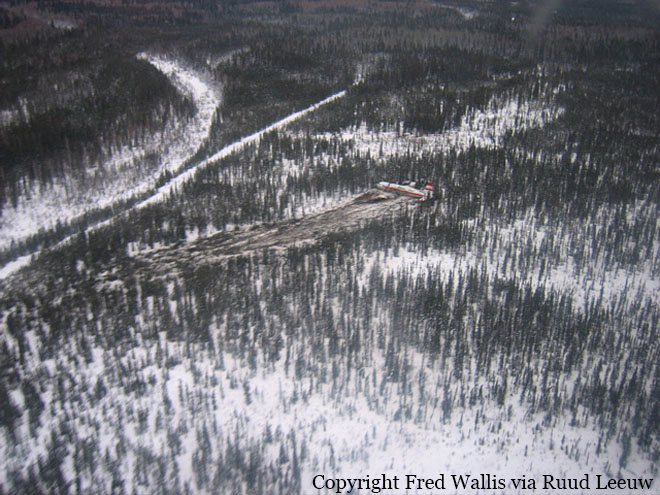
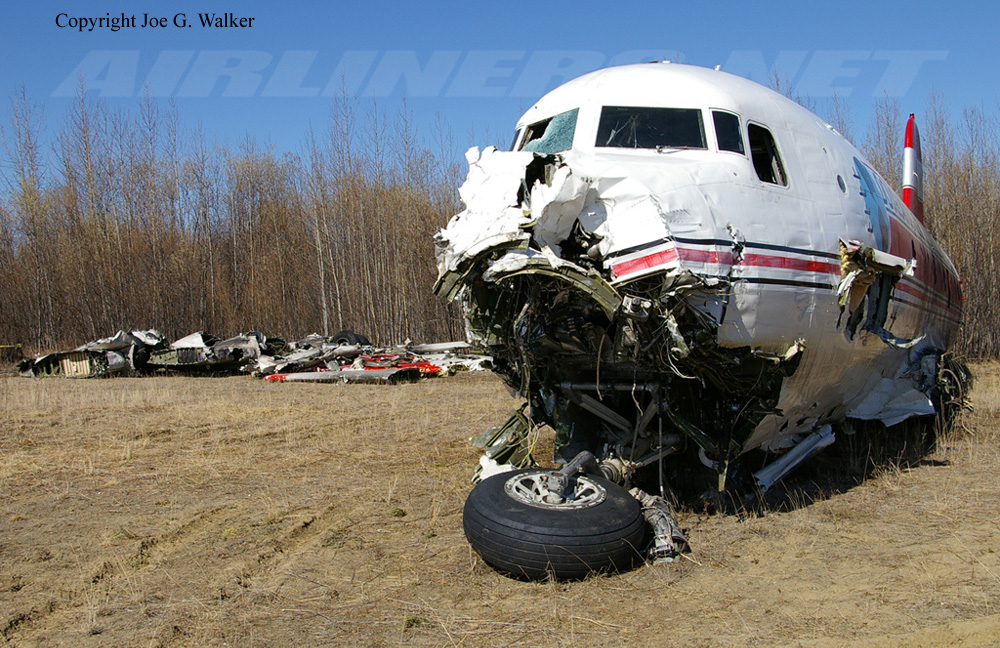
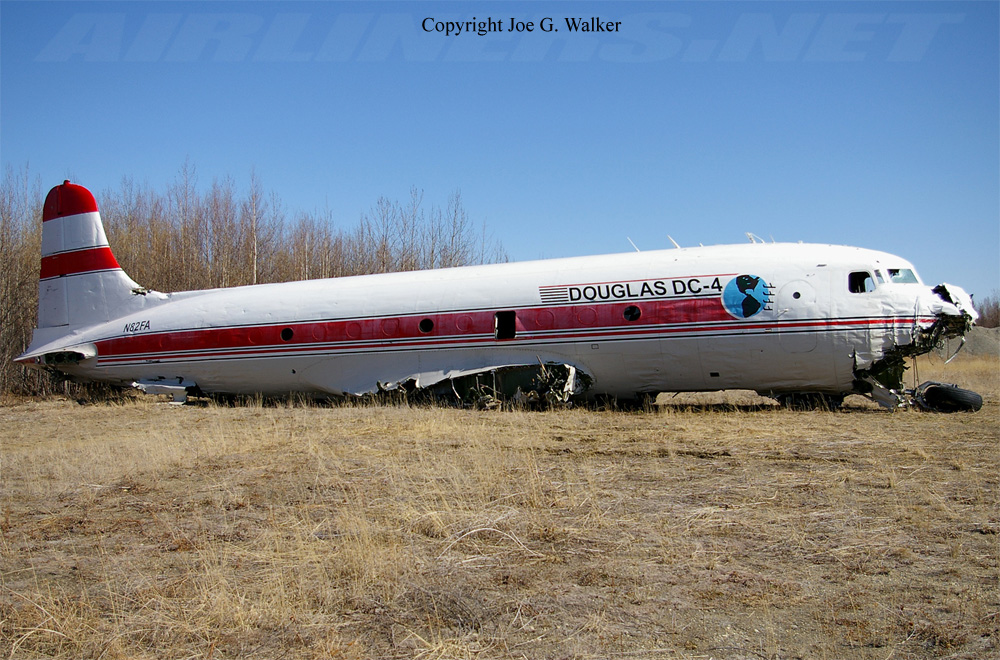
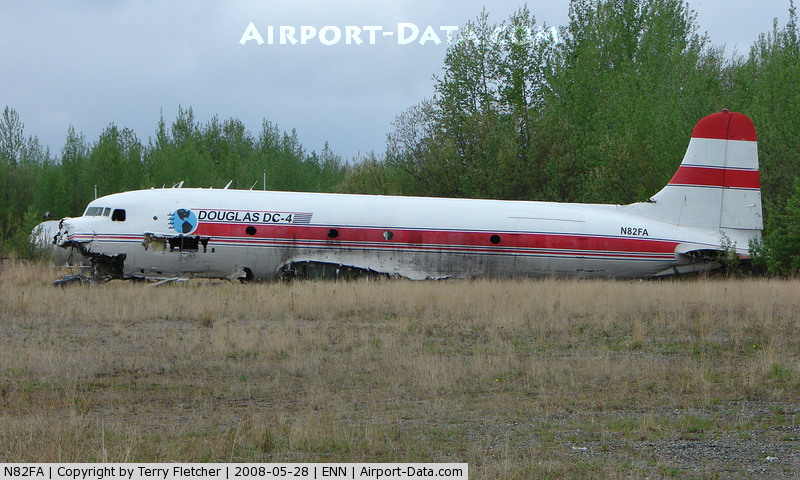
Crash of a Douglas C-54G-DC Skymaster near Nenana

Date & Time: Jan 17, 2007 at 1550 LT
Type of aircraft:
Operator:
Registration:
N82FA
Flight Phase:
Flight Type:
Survivors:
Yes
Schedule:
Fairbanks - Nixon Fork Mine
MSN:
35960
YOM:
1945
Location:
Crew on board:
2
Crew fatalities:
Pax on board:
0
Pax fatalities:
Other fatalities:
Total fatalities:
0
Captain / Total flying hours:
2750
Captain / Total hours on type:
1550.00
Copilot / Total flying hours:
796
Copilot / Total hours on type:
61
Aircraft flight hours:
28933
Circumstances:
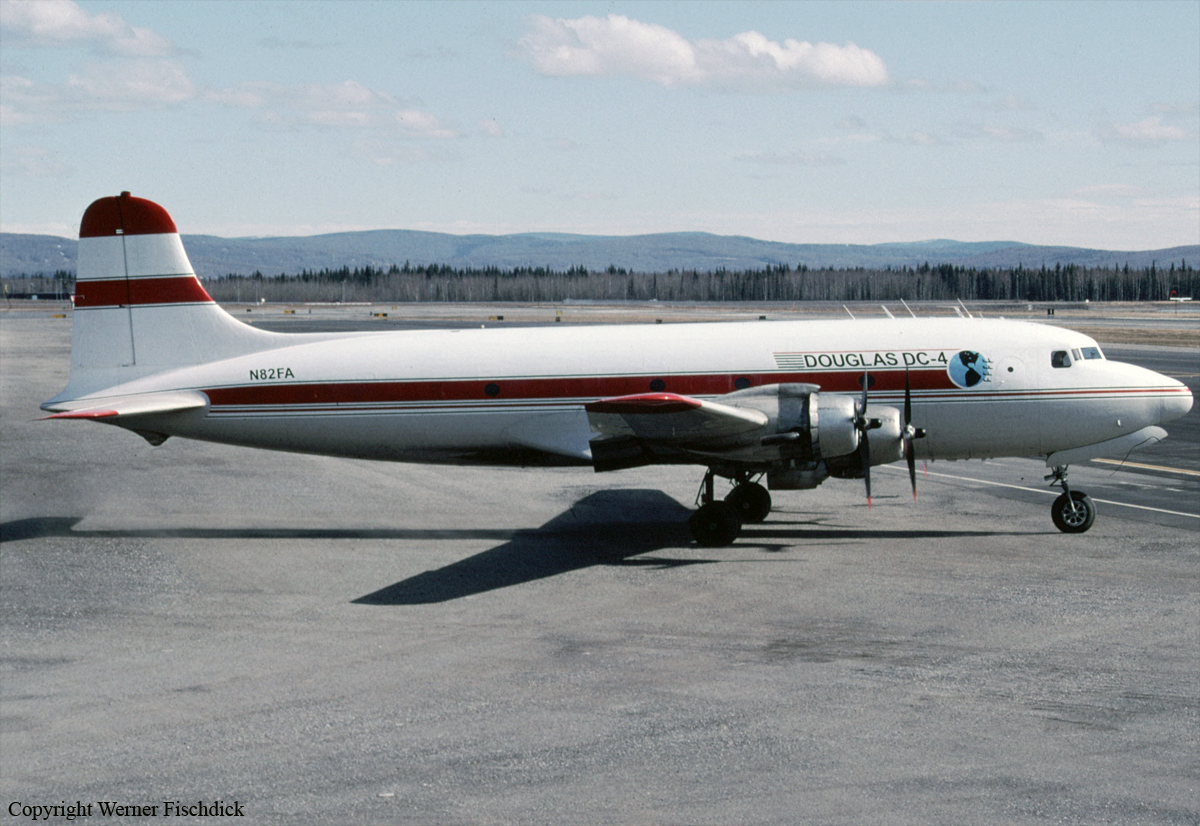
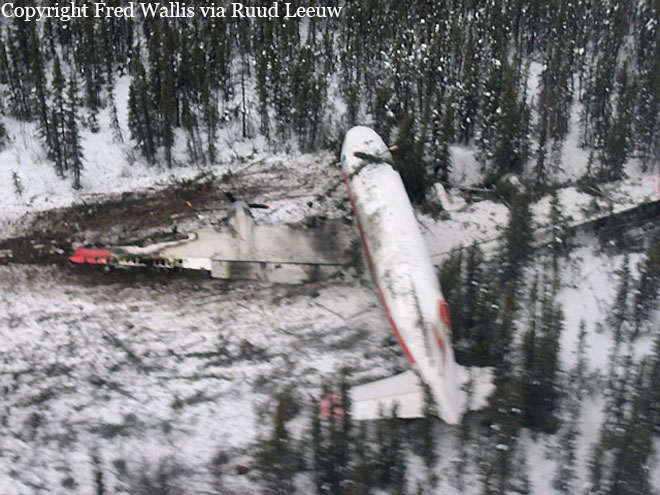
The flight crew was delivering a cargo of fuel in the four-engine airplane under Title 14, CFR Part 125, when the airplane lost power in the number 2 engine. The captain elected to shut the engine down and return to the airport. He said during the shutdown procedure, the engine caught fire, and that the fire extinguishing system was activated. The crew thought the fire was out, but it erupted again, and the captain elected to land the airplane gear-up on the snow covered tundra. Once on the ground, the left wing was consumed by fire. An inspection by company maintenance personnel revealed that an overhauled engine cylinder had failed at its base, resulting in a fire. The airplane was not examined by the NTSB due to its remote location.
Probable cause:
The failure of an engine cylinder during cruise flight, which resulted in an in-flight fire, and subsequent emergency gear-up landing on snow-covered tundra. A factor in the accident was the failure of the fire suppression equipment to extinguish the fire.
Final Report: