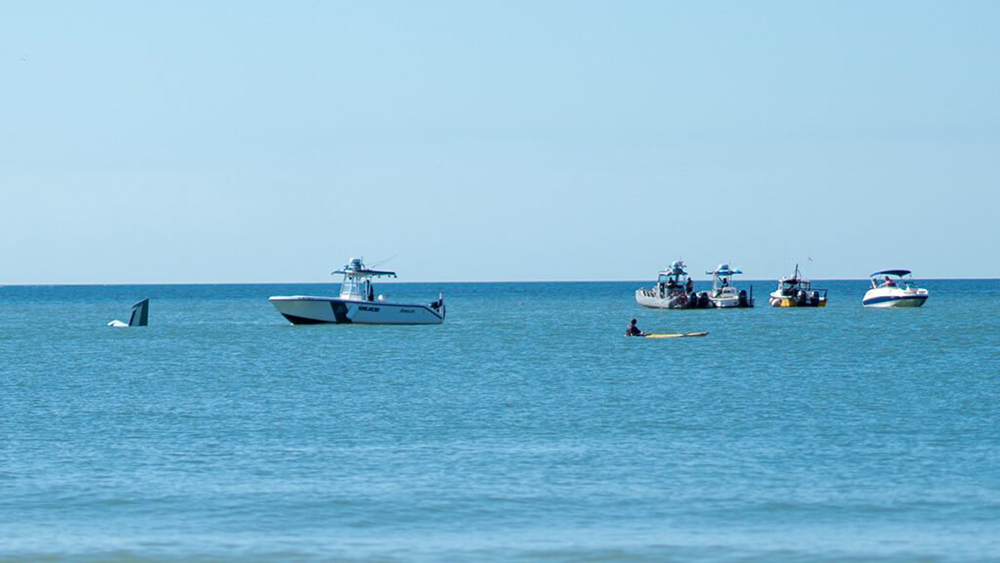
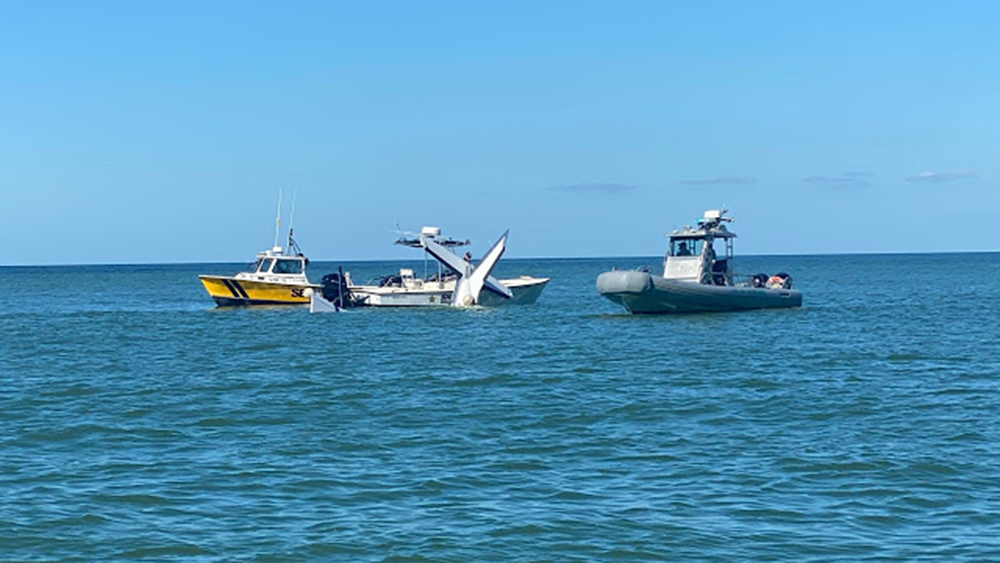
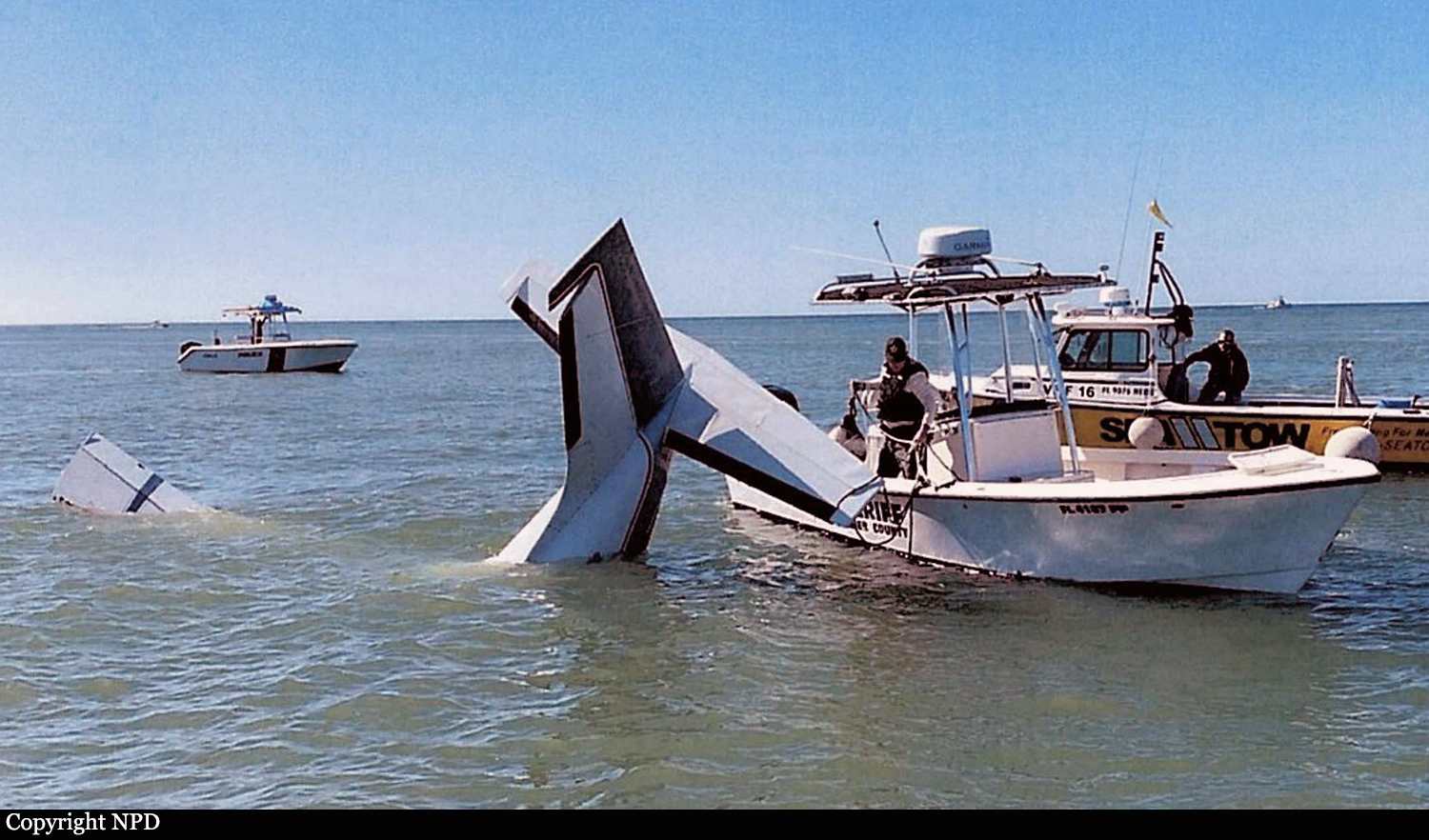
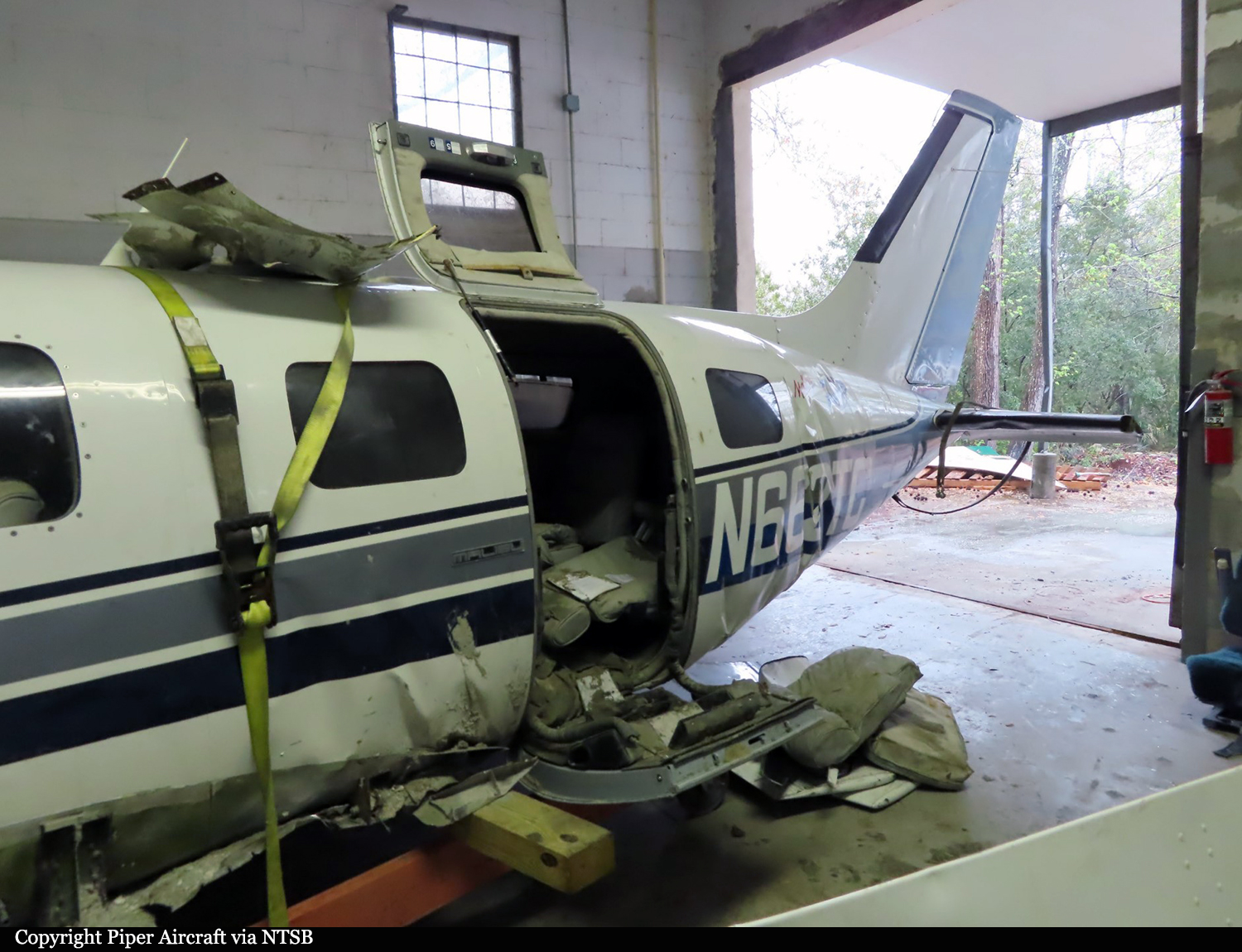
Crash of a Piper PA-46-310P Malibu off Naples

Date & Time: Dec 19, 2020 at 1216 LT
Operator:
Registration:
N662TC
Flight Type:
Survivors:
Yes
Schedule:
Sarasota - Key West
MSN:
46-8508095
YOM:
1985
Location:
Crew on board:
1
Crew fatalities:
Pax on board:
1
Pax fatalities:
Other fatalities:
Total fatalities:
0
Captain / Total flying hours:
3462
Captain / Total hours on type:
890.00
Aircraft flight hours:
3462
Circumstances:
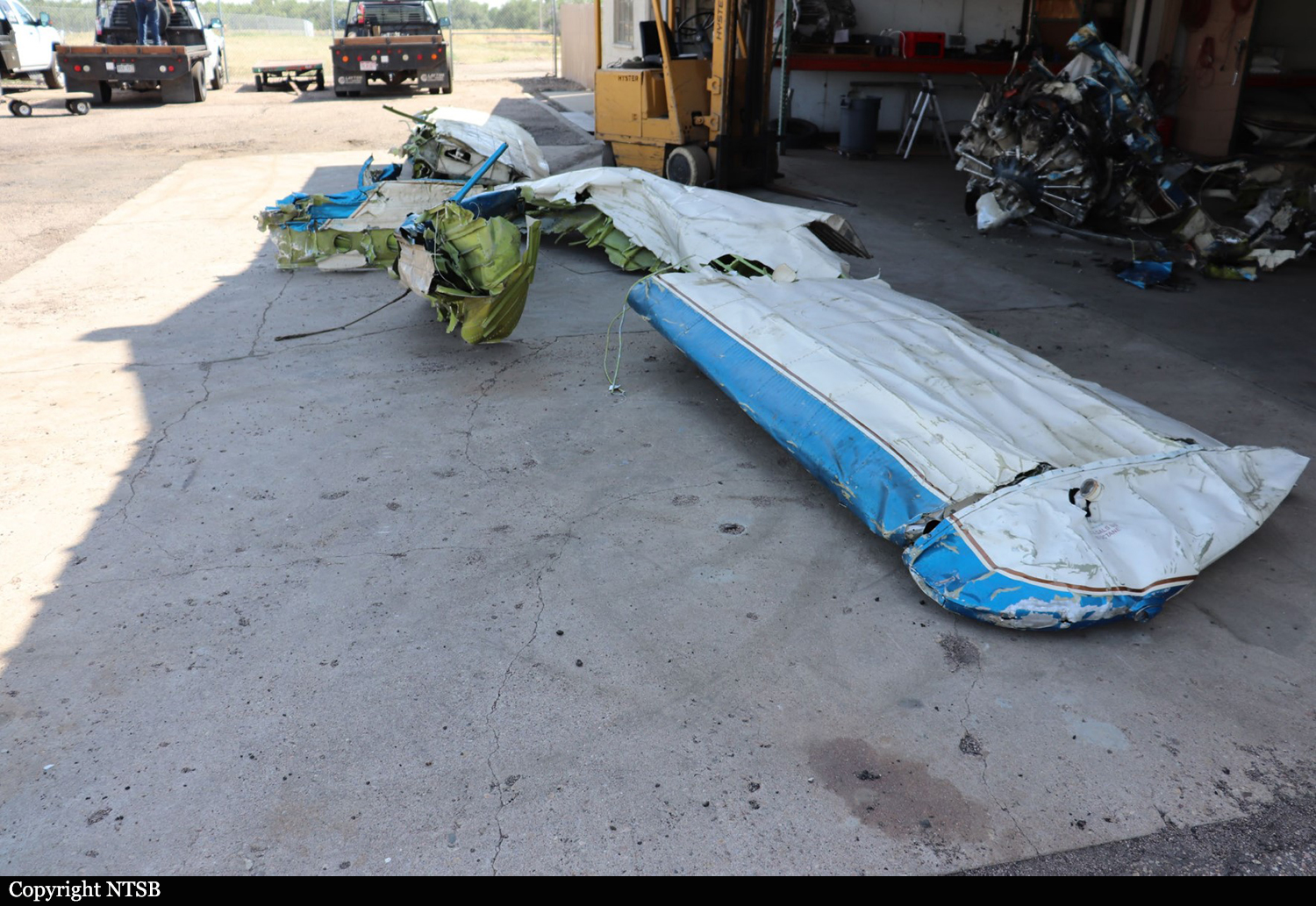
After takeoff from his home airport with about 50 gallons of fuel in each fuel tank, the pilot climbed to 7,000 ft and proceeded to his destination. When he was about halfway there, he switched from the right fuel tank to the left fuel tank. Immediately after switching fuel tanks, the engine started to sputter and lost power. The pilot switched back to the right fuel tank but there was no change. He then tried different power settings, adjusted the mixture to full rich and switched tanks again without regaining engine power. The pilot advised air traffic control (ATC) that he was having an engine problem and needed to land at the nearest airport. ATC instructed him contact the control tower at the nearest airport and cleared him to land. The pilot advised the controller that he was not going to be able to make it to the airport and that he was going to land in the water. During the water landing, the airplane came to a sudden stop. The pilot and his passenger then egressed, and the airplane sank. An annual inspection of the airplane had been completed about 2 months prior to the accident and test flights associated with the annual inspection had all been done with the fuel selector selected to the right fuel tank, and this was the first time he had selected the left fuel tank since before the annual inspection. The airplane was equipped with an engine monitor that was capable of recording engine parameters. Examination of the data revealed that around the time of the loss of engine power, exhaust gas temperature and cylinder head temperature experienced a rapid decrease on all cylinders along with a rapid decrease of turbine inlet temperature, which was indicative of the engine being starved of fuel. Examination of the wreckage did not reveal any evidence of any preimpact failures or malfunctions of the airplane or engine that would have precluded normal operation. During examination of the fuel system, the fuel selector was observed in the RIGHT fuel tank position and was confirmed to be in the right fuel tank position with low pressure air. However, when the fuel selector was positioned to the LEFT fuel tank position, continuity could not be established with low pressure air. Further examination revealed that a fuel selector valve labeled FERRY TANK was installed in the left fuel line between the factory-installed fuel selector and the left fuel tank. The ferry tank fuel selector was observed to be in the ON position, which blocked continuity from the left fuel tank to the engine. Continuity could only be established when the ferry tank fuel selector was positioned to the OFF position. With low pressure air, no continuity could be established from the ferry tank fuel line that attached to the ferry tank’s fuel selector. The ferry tank fuel selector valve was mounted between the pilot and copilot seats on the forward side of the main wing spar in the area where the pilot and copilot would normally enter and exit the cockpit. This location was such that the selector handle could easily be inadvertently kicked or moved by a person or object. A guard was not installed over the ferry tank fuel selector valve nor was the selector valve handle safety wired in the OFF position to deactivate the valve even though a ferry tank was not installed. Review of the airplane’s history revealed that about 3 years before the accident, the airplane had been used for an around-the-world flight by the pilot and that prior to the flight, a ferry tank had been installed. A review of maintenance records did not reveal any logbook entries or associated paperwork for the ferry tank installation and/or removal, except for a copy of the one-page fuel system schematic from the maintenance manual with a handwritten annotation (“Tank”), and hand drawn lines, both added to it in blue ink. A review of Federal Aviation Administration records did not reveal any record of a FAA Form 337 (Major Repair or Alteration) or a supplemental type certificate for installation of the ferry tank or the modification to the fuel system.
Probable cause:
The inadvertent activation of the unguarded ferry tank fuel selector valve, which resulted in fuel starvation and a total loss of engine power.
Final Report:

Crash of a Pilatus PC-12 NGX in the Pacific Ocean

Date & Time: Nov 6, 2020 at 1520 LT
Type of aircraft:
Registration:
N400PW
Flight Phase:
Flight Type:
Survivors:
Yes
Schedule:
Santa Maria - Hilo
MSN:
2003
YOM:
2020
Country:
Region:
Crew on board:
2
Crew fatalities:
Pax on board:
0
Pax fatalities:
Other fatalities:
Total fatalities:
0
Captain / Total flying hours:
2740
Captain / Total hours on type:
22.00
Circumstances:
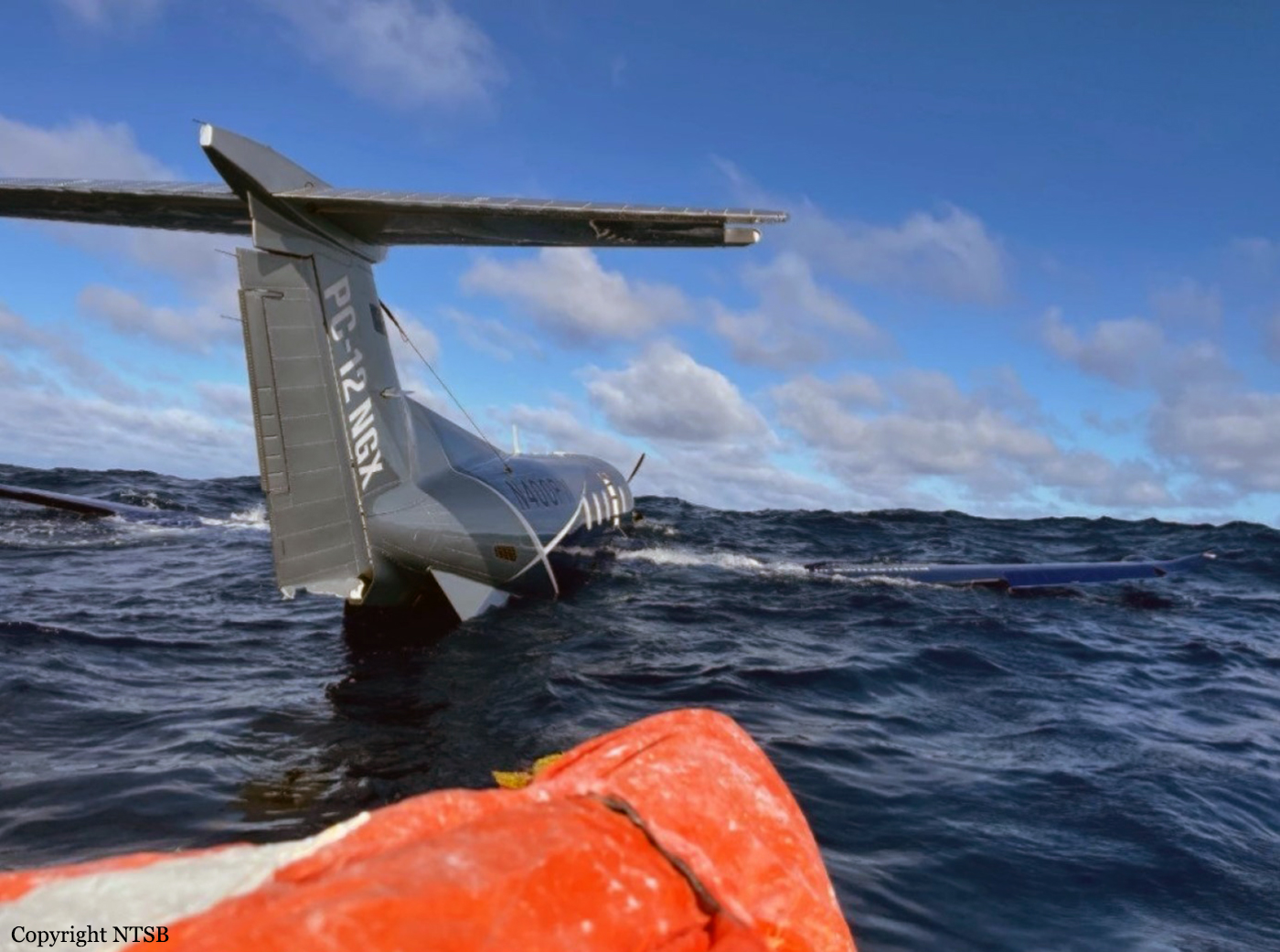
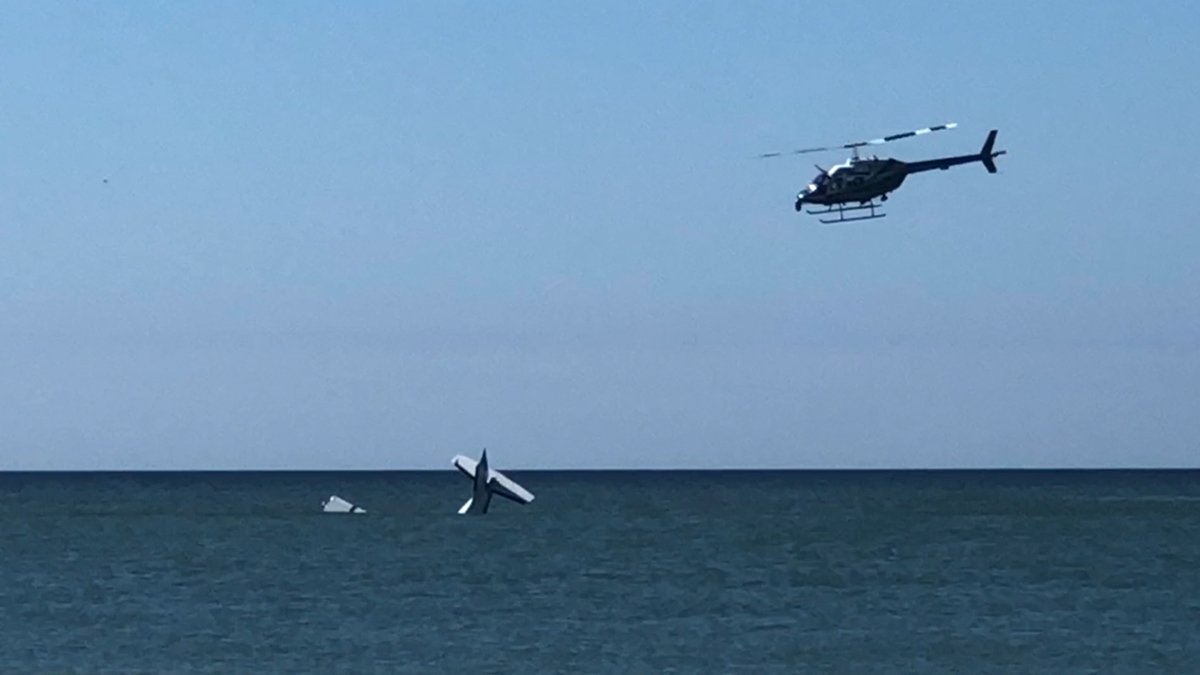
On November 6, 2020, about 1600 Pacific standard time, a Pilatus PC-12, N400PW, was substantially damaged when it was ditched in the Pacific Ocean about 1000 miles east of Hilo, Hawaii. The two pilots sustained no injuries. The airplane was operated as a Title 14 Code of Federal Regulations Part 91 ferry flight. According to the pilot-in-command (PIC), who was also the ferry company owner, he and another pilot were ferrying a new airplane from California to Australia. The first transoceanic leg was planned for 10 hours from Santa Maria Airport (KSMX), Santa Maria, California to Hilo Airport (PHTO), Hilo, Hawaii. The manufacturer had an auxiliary ferry fuel line and check valve installed in the left wing before delivery. About 1 month before the trip, the pilot hired a ferry company to install an internal temporary ferry fuel system for the trip. The crew attempted the first transoceanic flight on November 2, but the ferry fuel system did not transfer properly, so the crew diverted to Merced Airport (KMCE), Merced, California. The system was modified with the addition of two 30 psi fuel transfer pumps that could overcome the ferry system check valve. The final system consisted of 2 aluminum tanks, 2 transfer pumps, transfer and tank valves, and associated fuel lines and fittings. The ferry fuel supply line was connected to the factory installed ferry fuel line fitting at the left wing bulkhead, which then fed directly to the main fuel line through a check valve and directly to the turbine engine. The installed system was ground and flight checked before the trip. According to Federal Aviation Administration automatic dependent surveillance broadcast (ADS-B) data, the airplane departed KSMX about 1000. The pilots each stated that the ferry fuel system worked as designed during the flight and they utilized the operating procedures that were supplied by the installer. About 5 hours after takeoff, approaching ETNIC intersection, the PIC climbed the airplane to flight level 280. At that time, the rear ferry fuel tank was almost empty, and the forward tank was about 1/2 full. The crew was concerned about introducing air into the engine as they emptied the rear ferry tank, so the PIC placed the ignition switch to ON. According to the copilot (CP), she went to the cabin to monitor the transparent fuel line from the transfer pumps to ensure positive fuel flow while she transferred the last of the available rear tank fuel to the main fuel line. When she determined that all of the usable fuel was transferred, and fuel still remained in the pressurized fuel line, she turned the transfer pumps to off and before she could access the transfer and tank valves, the engine surged and flamed out. The PIC stated that the crew alerting system (CAS) fuel low pressure light illuminated about 5 to 15 seconds after the transfer pumps were turned off, and then the engine lost power and the propeller auto feathered. The PIC immediately placed the fuel boost pumps from AUTO to ON. The CP went back to her crew seat and they commenced the pilot operating handbook’s emergency checklist procedures for emergency descent and then loss of engine power in flight. According to both crew members, they attempted an engine air start. The propeller unfeathered and the engine started; however, it did not reach flight idle and movement of the power control lever did not affect the engine. The crew secured the engine and attempted another air start. The engine did not restart and grinding sounds and a loud bang were heard. The propeller never unfeathered and multiple CAS warning lights illuminated, including the EPECS FAIL light (Engine and Propeller Electronic Control System). The crew performed the procedures for a restart with EPECS FAIL light and multiple other starts that were unsuccessful. There were no flames nor smoke from either exhaust pipe during the air start attempts. About 8,000 ft mean sea level, the crew committed to ditching in the ocean. About 1600, after preparing the survival gear, donning life vests, and making mayday calls on VHF 121.5, the PIC performed a full flaps gear up landing at an angle to the sea swells and into the wind. He estimated that the swells were 5 to 10 ft high with crests 20 feet apart. During the landing, the pilot held back elevator pressure for as long as possible and the airplane landed upright. The crew evacuated through the right over wing exit and boarded the 6 man covered life raft. A photograph of the airplane revealed that the bottom of the rudder was substantially damaged. The airplane remained afloat after landing. The crew utilized a satellite phone to communicate with Oakland Center. The USCG coordinated a rescue mission. About 4 hours later, a C-130 arrived on scene and coordinated with a nearby oil tanker, the M/V Ariel, for rescue of the crew. According to the pilots, during the night, many rescue attempts were made by the M/V Ariel; however, the ship was too fast for them to grab lines and the seas were too rough. After a night of high seas, the M/V Ariel attempted rescue again; however, they were unsuccessful. That afternoon, a container ship in the area, the M/V Horizon Reliance, successfully maneuvered slowly to the raft, then the ship’s crew shot rope cannons that propelled lines to the raft, and they were able to assist the survivors onboard. The pilots had been in the raft for about 22 hours. The airplane was a new 2020 production PC-12 47E with a newly designed Pratt and Whitney PT6E-67XP engine which featured an Engine and Propeller Electronic Control System. The airplane is presumed to be lost at sea.
Probable cause:
A total loss of engine power due to fuel starvation for reasons that could not be determined based on the available evidence.
Final Report:

Crash of a Gulfstream GIII in the Laguna del Tigre National Park: 2 killed

Date & Time: Oct 29, 2020
Type of aircraft:
Operator:
Registration:
N461AR
Flight Phase:
Flight Type:
Survivors:
No
MSN:
384
YOM:
1983
Country:
Crew on board:
2
Crew fatalities:
Pax on board:
0
Pax fatalities:
Other fatalities:
Total fatalities:
2
Aircraft flight hours:
10920
Circumstances:
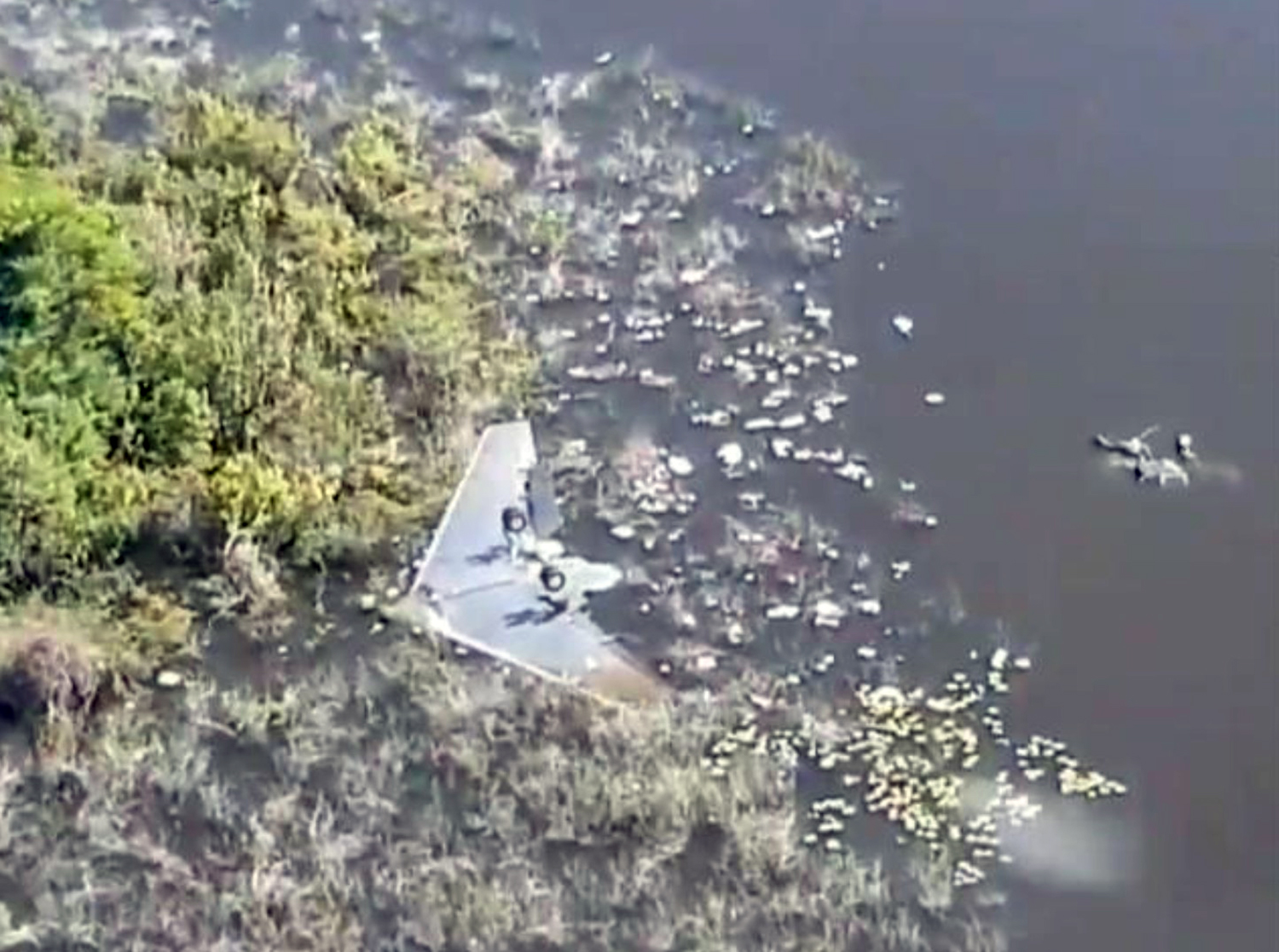
Probably engaged in an illegal flight, the aircraft crashed in unknown circumstances in an isolated and swampy area located in the Laguna del Tigre National Park. The wreckage was found on November 2 about 7 km south from the Mexican border. Two dead bodies were found and the aircraft was destroyed.

Crash of a Rockwell Sabreliner 75A near Punto Fijo: 2 killed

Date & Time: Aug 10, 2020
Type of aircraft:
Operator:
Registration:
N400RS
Flight Phase:
Flight Type:
Survivors:
No
MSN:
380-25
YOM:
1978
Country:
Crew on board:
2
Crew fatalities:
Pax on board:
0
Pax fatalities:
Other fatalities:
Total fatalities:
2
Circumstances:
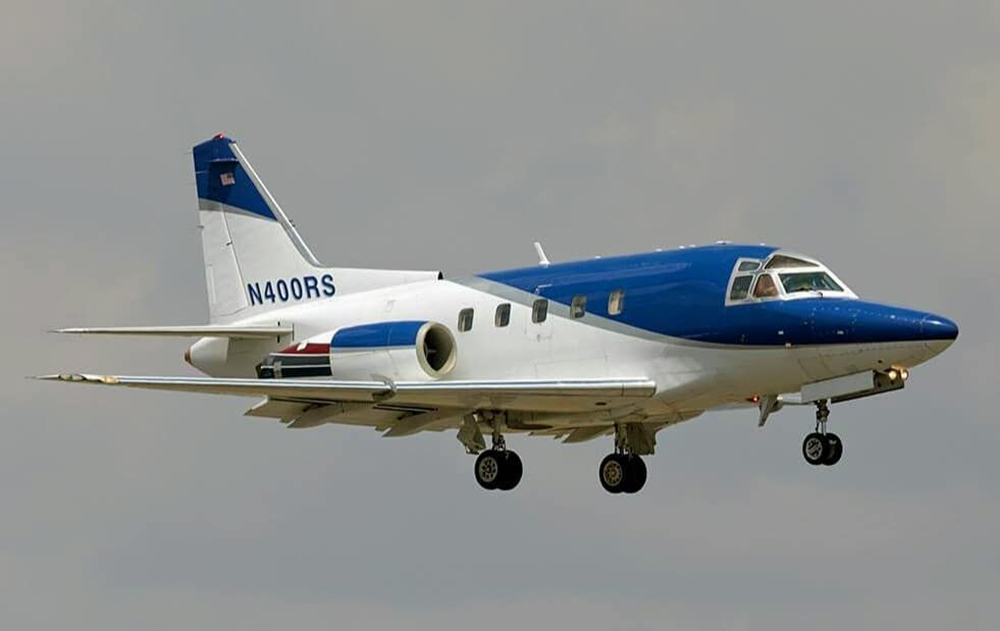
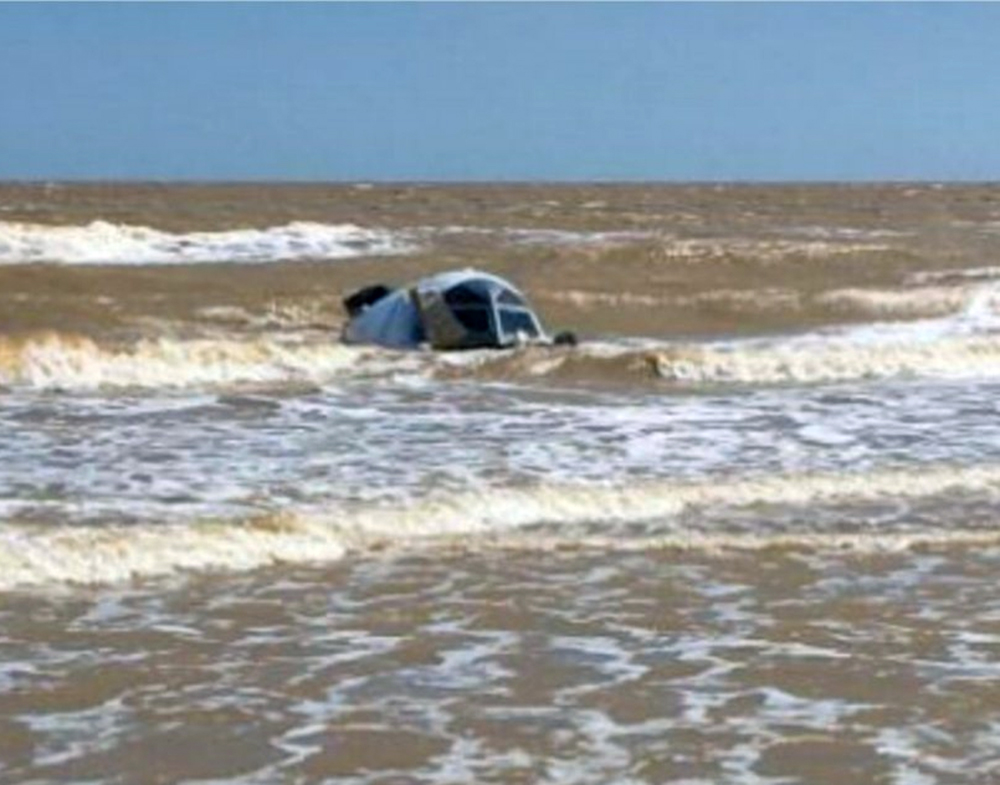
The aircraft entered the Venezuelan airspace without flight plan and authorisation. While flying over the Paraguaña Peninsula at low altitude, the crew was forced to land when control was lost. The aircraft crashed in shallow water few meters offshore, lost its tail and both wings. Both pilots were killed.

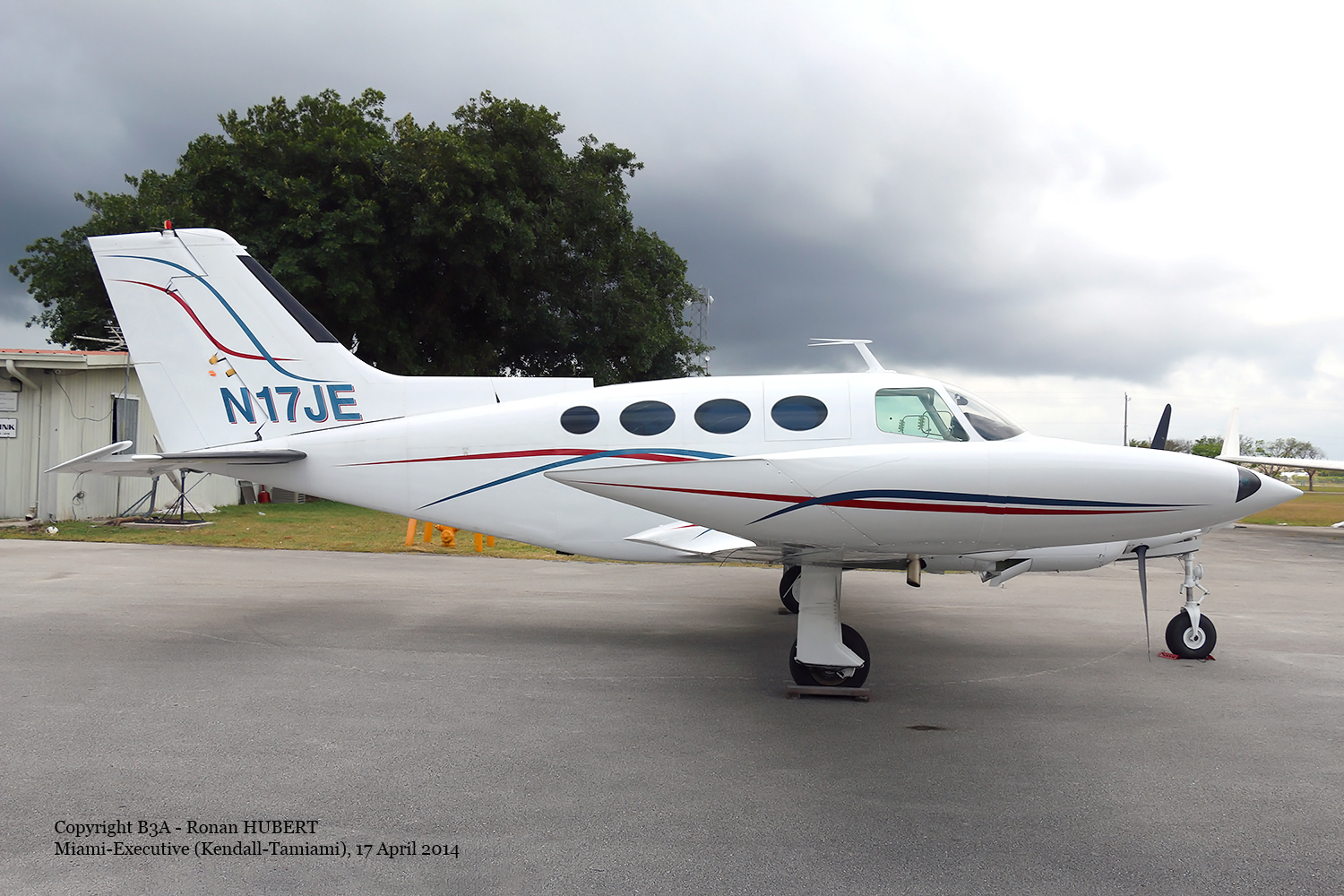
Crash of a Cessna 401A in the Lake Maracaibo

Date & Time: Aug 1, 2020
Type of aircraft:
Registration:
N17JE
Flight Phase:
Flight Type:
Survivors:
Yes
Schedule:
Puerto Plata – Santa Cruz de Barahona
MSN:
401A-0082
YOM:
1969
Country:
Crew on board:
1
Crew fatalities:
Pax on board:
2
Pax fatalities:
Other fatalities:
Total fatalities:
0
Circumstances:
The twin engine aircraft departed Puerto Plata-Gregorio Luperón Airport at 1718LT on a flight to Santa Cruz de Barahona. En route, the pilot was informed that this airport is closed to all traffic after 1700LT and decided to return to Puerto Plata. A last radio communication was recorded with ATC when the aircraft disappeared from radar screens eight minutes later. Dominican authorities thought the aircraft may have crashed in the septentrional mountain range and SAR operations were initiated. Few hours later, the wreckage was found in a marshy area of the Lake Maracaibo, more than 1,000 km south of Puerto Plata. All three occupants were found alive and arrested while the aircraft was damaged beyond repair. Venezuelan authorities reported the aircraft and its occupants were engaged in an illegal narcotic flight.

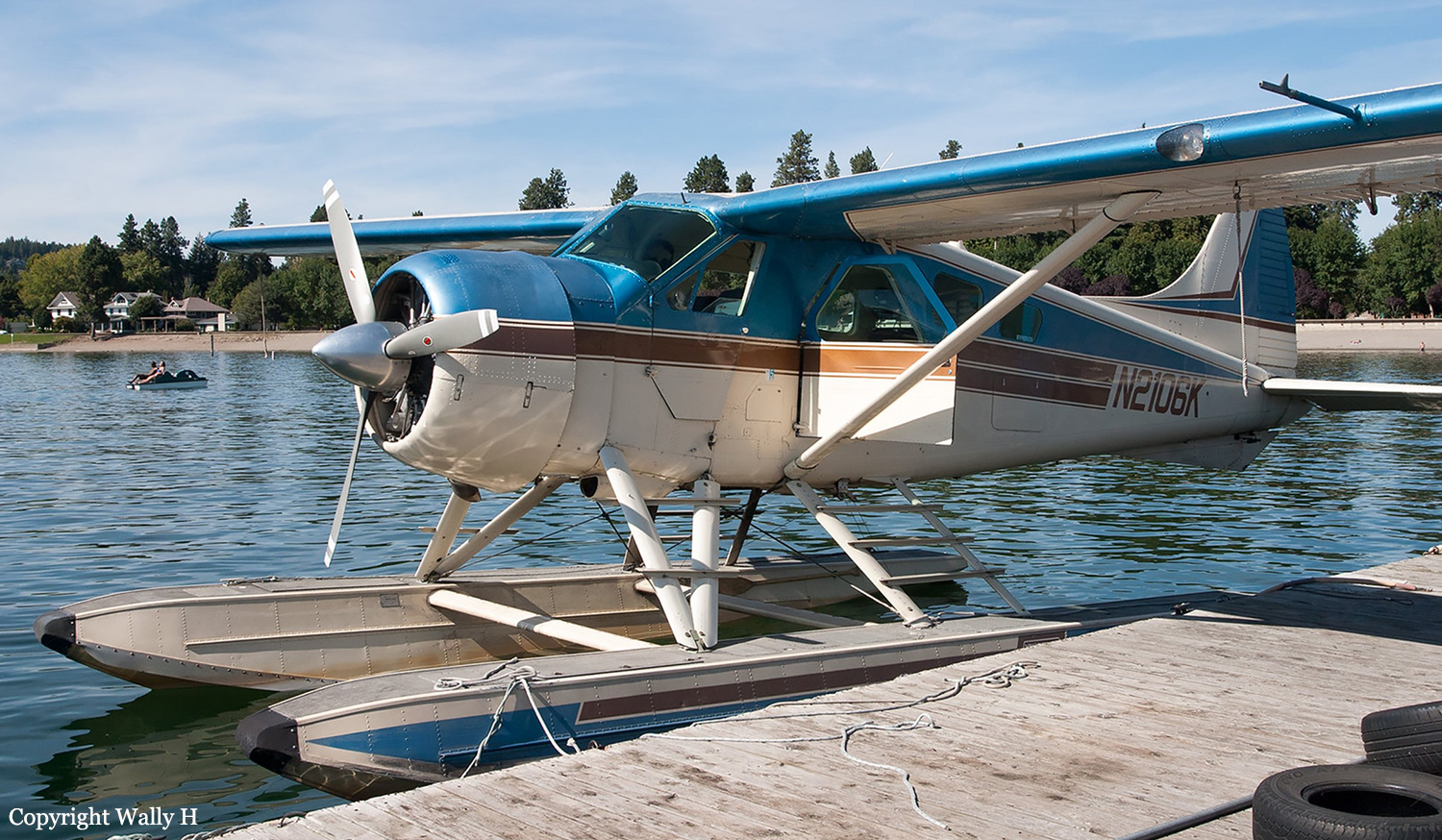
Crash of a De Havilland DHC-2 Beaver in Lake Coeur d'Alene: 6 killed

Date & Time: Jul 5, 2020 at 1422 LT
Type of aircraft:
Operator:
Registration:
N2106K
Flight Phase:
Survivors:
No
Schedule:
Coeur d'Alene - Coeur d'Alene
MSN:
1131
YOM:
1957
Crew on board:
1
Crew fatalities:
Pax on board:
5
Pax fatalities:
Other fatalities:
Total fatalities:
6
Captain / Total flying hours:
21173
Captain / Total hours on type:
217.00
Aircraft flight hours:
6171
Circumstances:
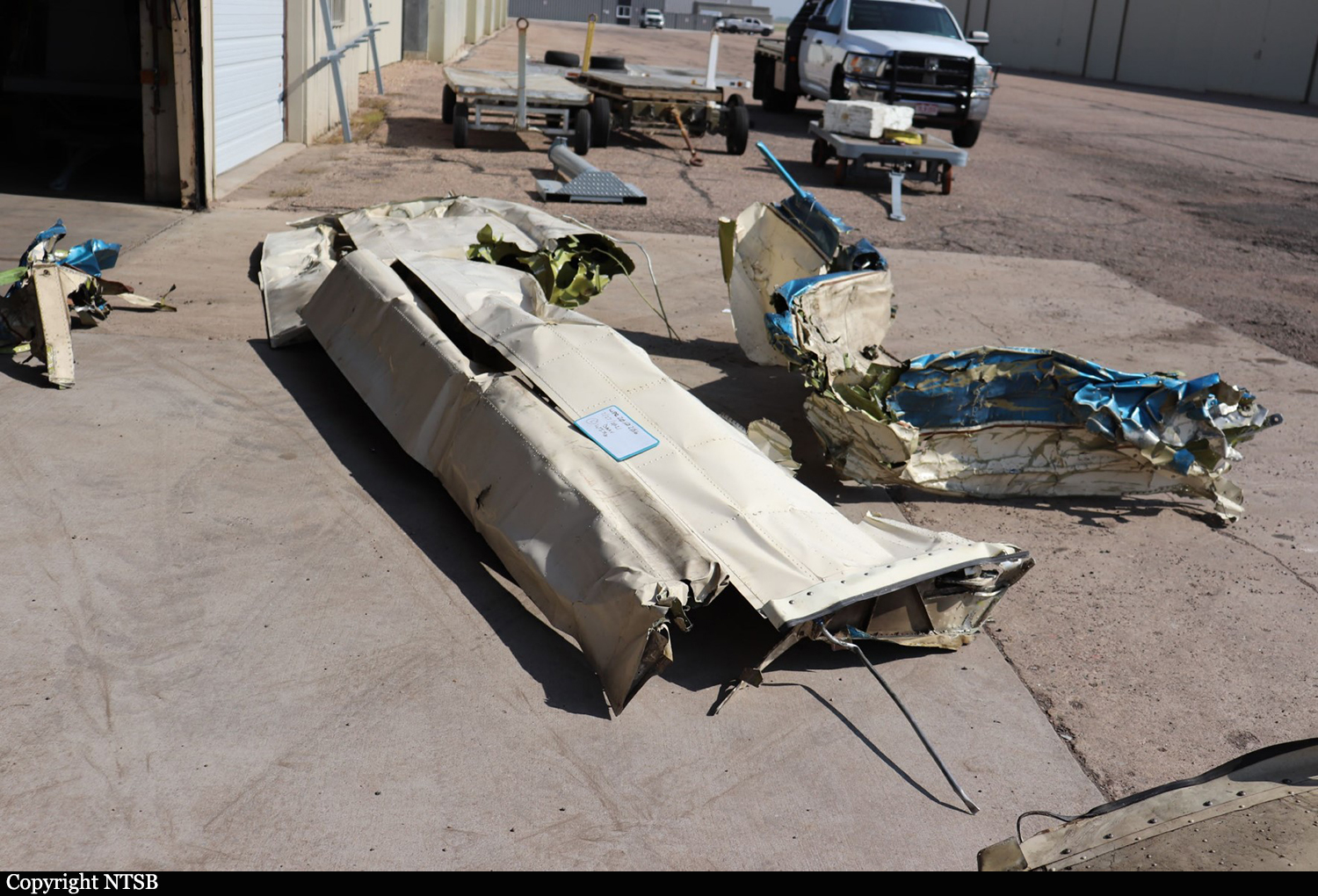
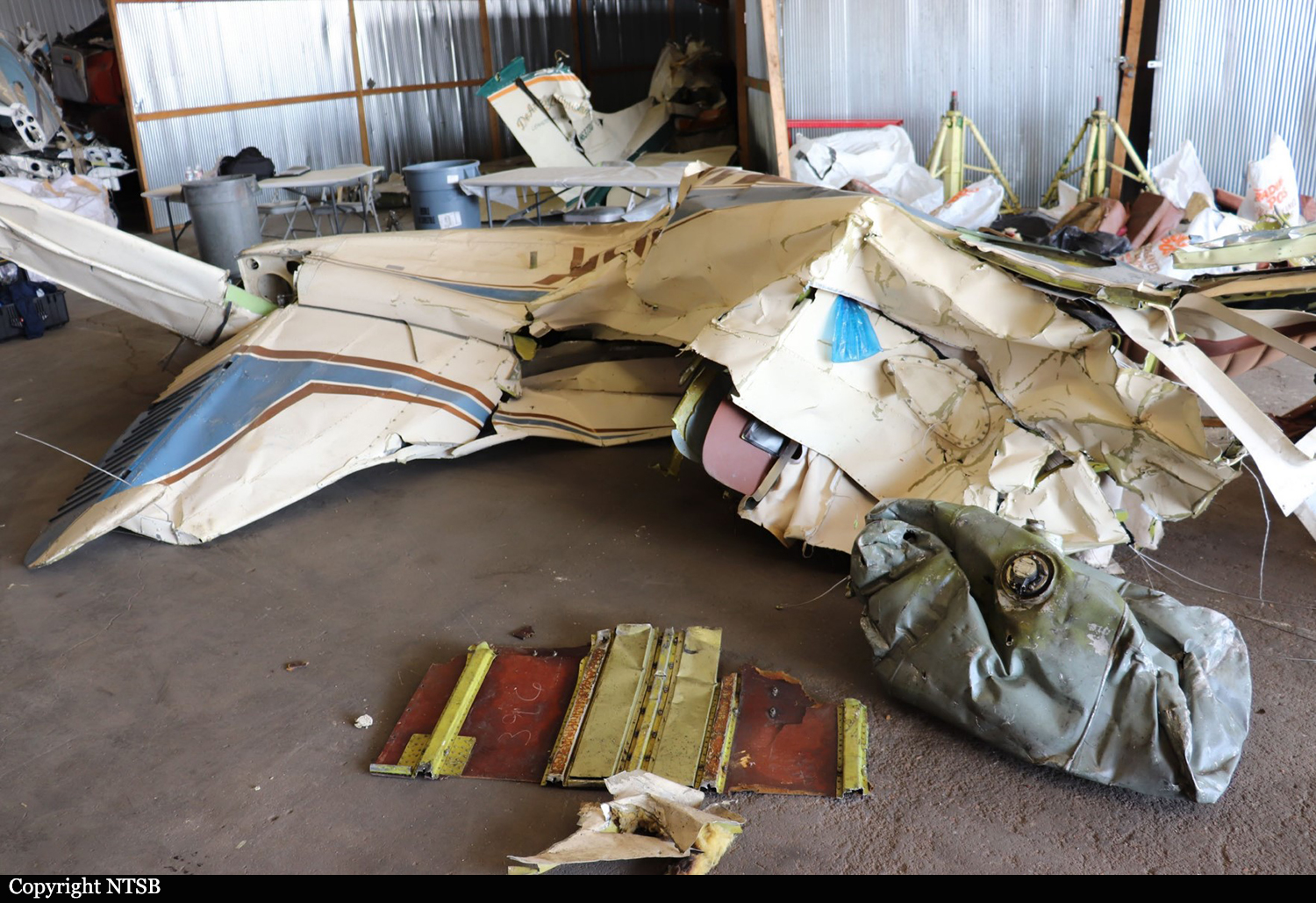
The float-equipped De Havilland DHC-2 was on a tour flight, and the Cessna 206 was on a personal flight. The airplanes collided in midair over a lake during day visual meteorological conditions. No radar or automatic dependent surveillance-broadcast data were available for either airplane. Witnesses reported that the airplanes were flying directly toward each other before they collided about 700 to 800 ft above the water. Other witnesses reported that the Cessna was at a lower altitude and had initiated a climb before the collision. Review of 2 seconds of video captured as part of a witness’ “live” photo showed that both airplanes appeared to be in level flight before the collision. No evidence of any preexisting mechanical malfunction was observed with either airplane. Recovered wreckage and impact signatures were consistent with the upper fuselage of the Cessna colliding with the floats and the lower fuselage of the De Havilland. The impact angle could not be determined due to the lack of available evidence, including unrecovered wreckage. The available evidence was consistent with both pilots’ failure to see and avoid the other airplane.
Probable cause:
The failure of the pilots of both airplanes to see and avoid the other airplane.
Final Report:

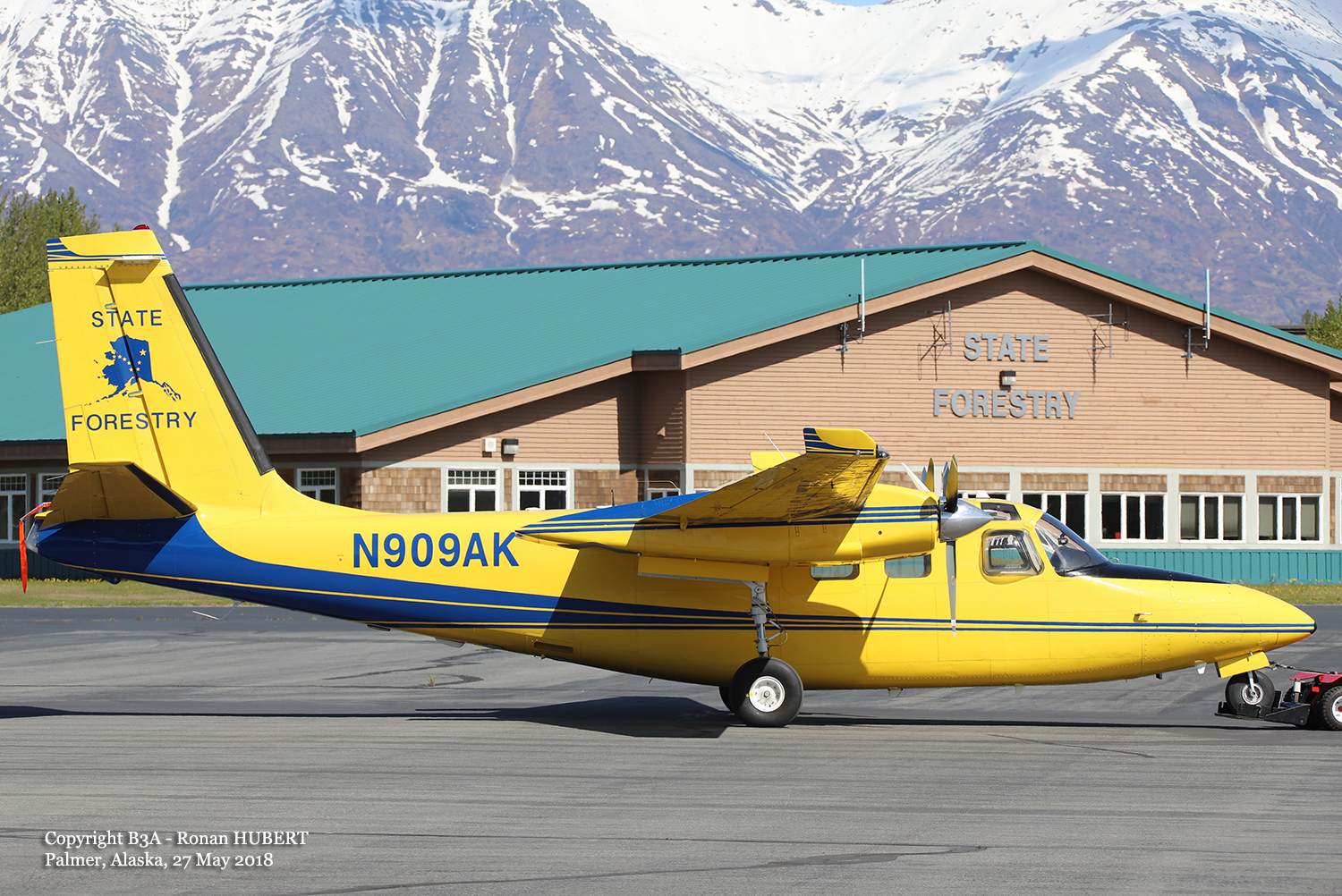
Crash of a Rockwell Shrike Commander 500S off Aniak

Date & Time: May 28, 2020 at 1600 LT
Operator:
Registration:
N909AK
Flight Phase:
Survivors:
Yes
Schedule:
Aniak - Aniak
MSN:
500-3232
YOM:
1975
Location:
Crew on board:
1
Crew fatalities:
Pax on board:
3
Pax fatalities:
Other fatalities:
Total fatalities:
0
Captain / Total flying hours:
4869
Captain / Total hours on type:
30.00
Aircraft flight hours:
6966
Circumstances:
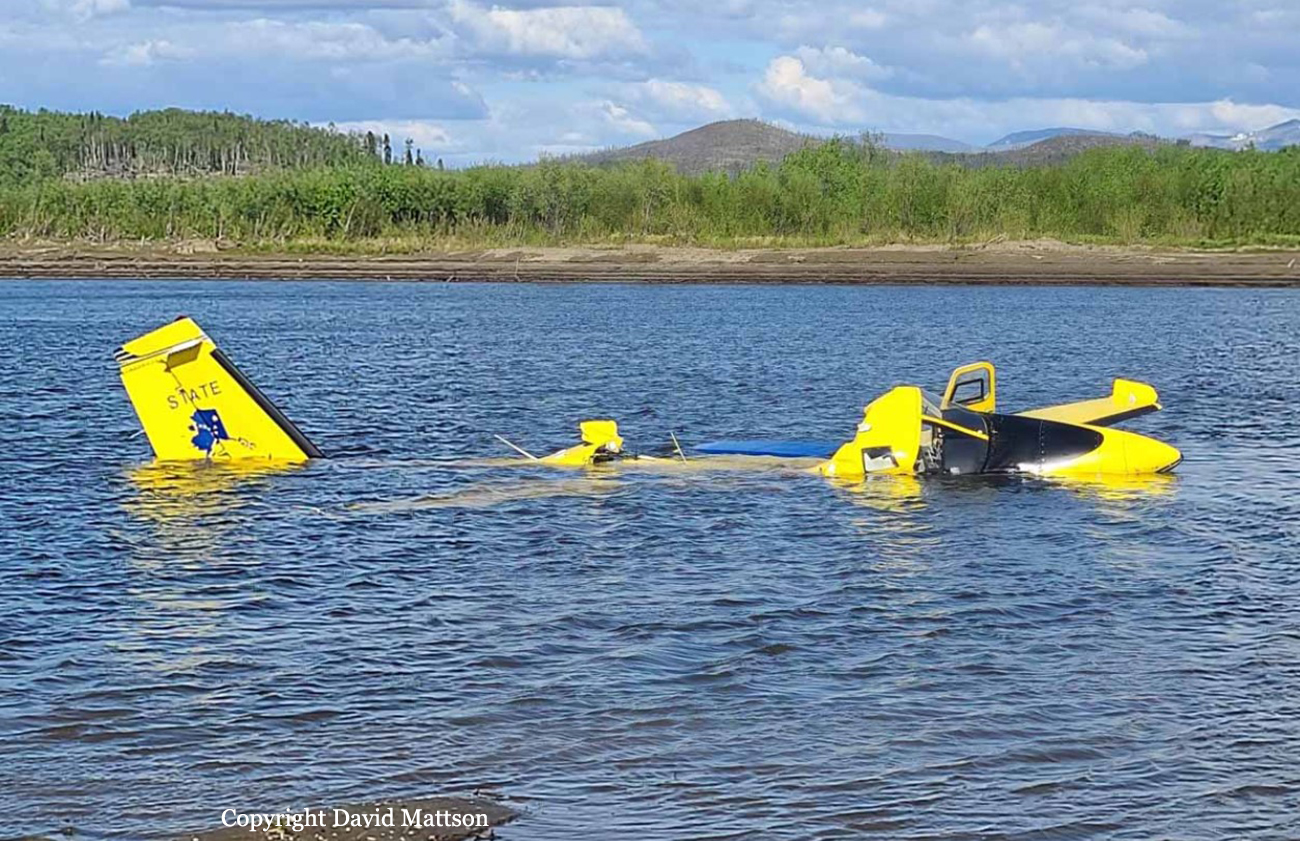
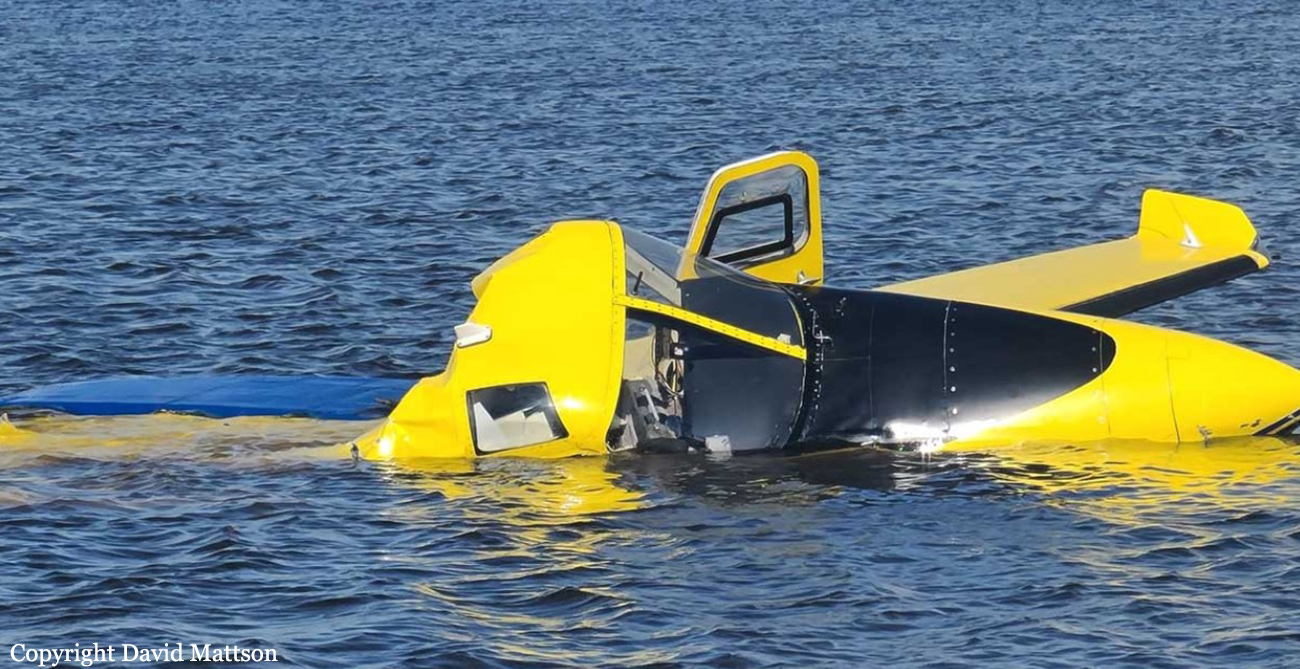
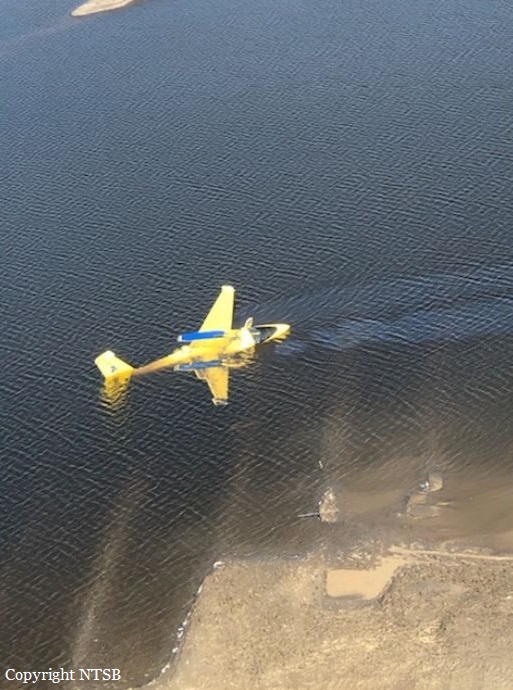
On May 28, 2020, about 1600 Alaska daylight time, an Aero Commander 500S airplane, N909AK sustained substantial damage when it was involved in an accident near Aniak, Alaska. The pilot and three passengers sustained serious injuries. The airplane was operated as a Title 14 Code of Federal Regulations Part 91 public aircraft flight. The airplane was owned by the State of Alaska and operated by the Division of Forestry. According to the pilot, after arriving in Aniak, he had the local fuel vendor's ground service personnel refuel the airplane. He then signed the fuel receipt, and he returned to the airplane's cockpit to complete some paperwork before departure. Once the paperwork was complete, he then loaded his passengers, started the airplane's engines, and taxied to Runway 29 for departure. The pilot said that shortly after takeoff, and during initial climb, he initially noticed what he thought was mechanical turbulence followed by a reduction in climb performance, and the airplane's engines began to lose power. Unable to maintain altitude and while descending about 400 ft per minute, he selected an area of shallow water covered terrain as an off-airport landing site. The airplane sustained substantial damage during the landing. The fueler reported that he was unfamiliar with the airplane, so he queried the pilot as to where he should attach the grounding strap and the location of the fuel filler port. Before starting to refuel the airplane, he asked the pilot "do you want Prist with your Jet" to which the pilot responded that he did not. After completing the refueling process, he returned to his truck, wrote "Jet A" in the meter readings section of the prepared receipt, and presented it to the pilot for his signature. The pilot signed the receipt and was provided a copy. The fueler stated that he later added "no Prist" to his copy of the receipt, and that he did not see a fuel placard near the fueling port. A postaccident examination revealed that the reciprocating engine airplane had been inadvertently serviced with Jet A fuel. A slightly degraded placard near the fuel port on the top of the wing stated, in part: "FUEL 100/100LL MINIMUM GRADE AVIATION GASOLINE ONLY CAPACITY 159.6 US GALLONS."
Probable cause:
Loss of engine power after the aircraft has been refueled with an inappropriate fuel.
Final Report:

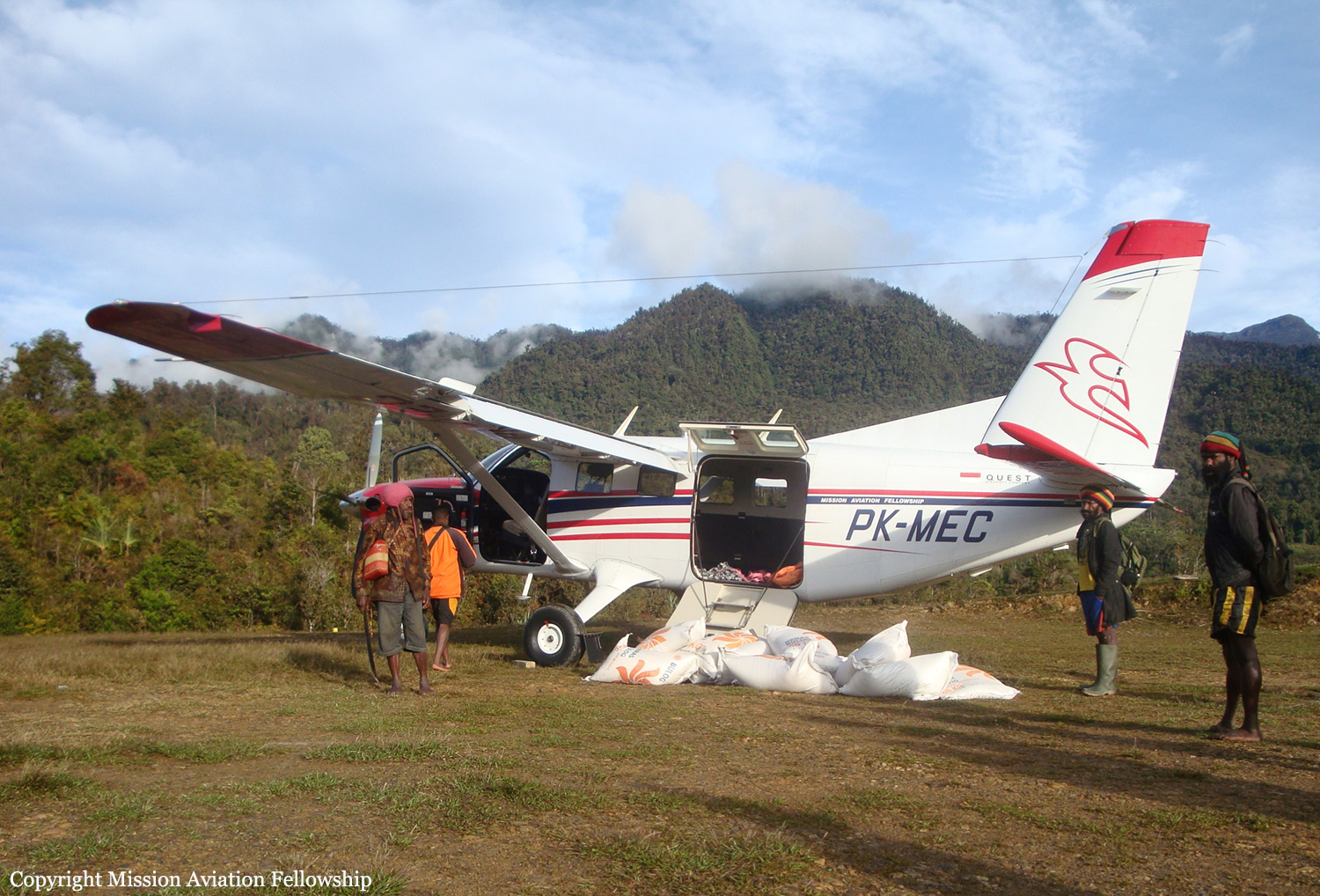
Crash of a Quest Kodiak 100 off Sentani: 1 killed

Date & Time: May 12, 2020 at 0628 LT
Type of aircraft:
Operator:
Registration:
PK-MEC
Flight Phase:
Flight Type:
Survivors:
No
Schedule:
Jayapura - Mamit
MSN:
100-0026
YOM:
2009
Country:
Region:
Crew on board:
1
Crew fatalities:
Pax on board:
0
Pax fatalities:
Other fatalities:
Total fatalities:
1
Captain / Total flying hours:
1357
Captain / Total hours on type:
185.00
Aircraft flight hours:
4707
Aircraft flight cycles:
9379
Circumstances:
On 12 May 2020, a Quest Kodiak 100 aircraft, registration PK-MEC, was being operated by Mission Aviation Fellowship (MAF) as a cargo flight from Sentani Airport (WAJJ), Jayapura, Papua with intended destination of Mamit Airstrip (WAVS) Tolikara, Papua. The pilot was the only person on board for this flight and the aircraft carried 694 kgs of cargo goods. At 0622 LT (2122 UTC), the pilot of PK-MEC aircraft requested clearance to the Sentani Tower controller to start aircraft engine and flying to Mamit at radial 241° with intended cruising altitude 10,000 feet. The Sentani Tower controller approved the request. At 0627 LT, on daylight condition, the aircraft took off from runway 12 of Sentani Airport, thereafter, the Sentani Tower controller advised to the pilot of PK-MEC to contact Jayapura Radar controller. At 0628LT, the pilot of PK-MEC declared “MAYDAY” on Jayapura Radar radio frequency. The Jayapura Radar controller tried to contact pilot of PK-MEC four times but no answer. At 0630 LT, the Jayapura Radar Controller requested the pilot of PK-RCE that was just took off from Sentani to visually observe the position of PK-MEC aircraft. Few minutes later, the pilot of PK-RCE reported to Jayapura Radar controller that some debris were seen on Sentani Lake and some boats were moving toward the debris location. The pilot of PK-RCE assumed that PK-MEC aircraft had crashed to the lake. The pilot fatally injured. The wreckages have been recovered including the Global Positioning System (GPS) data card.

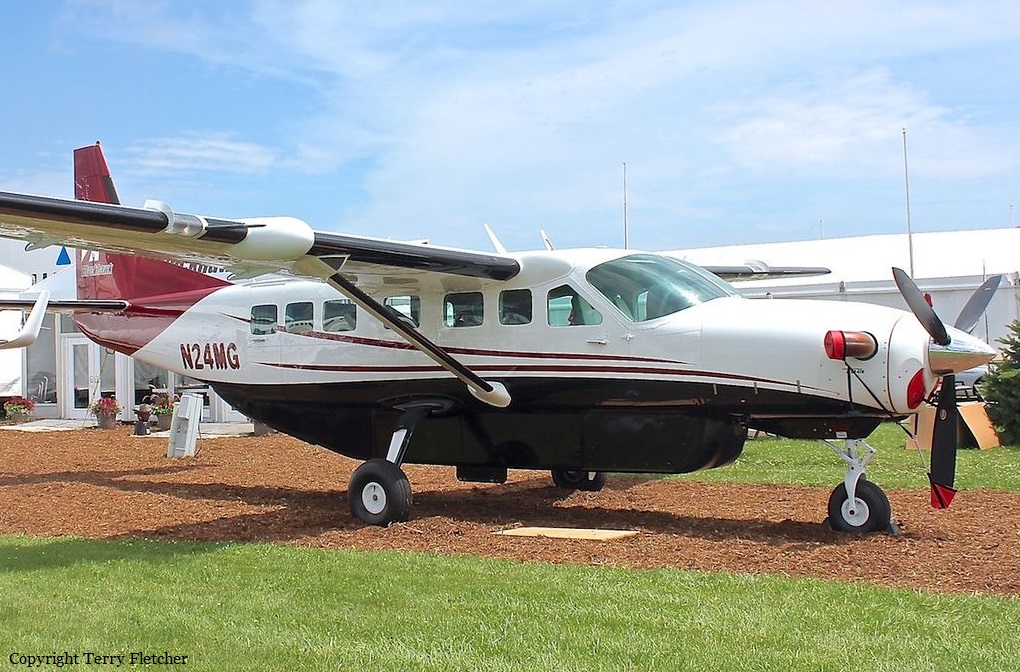
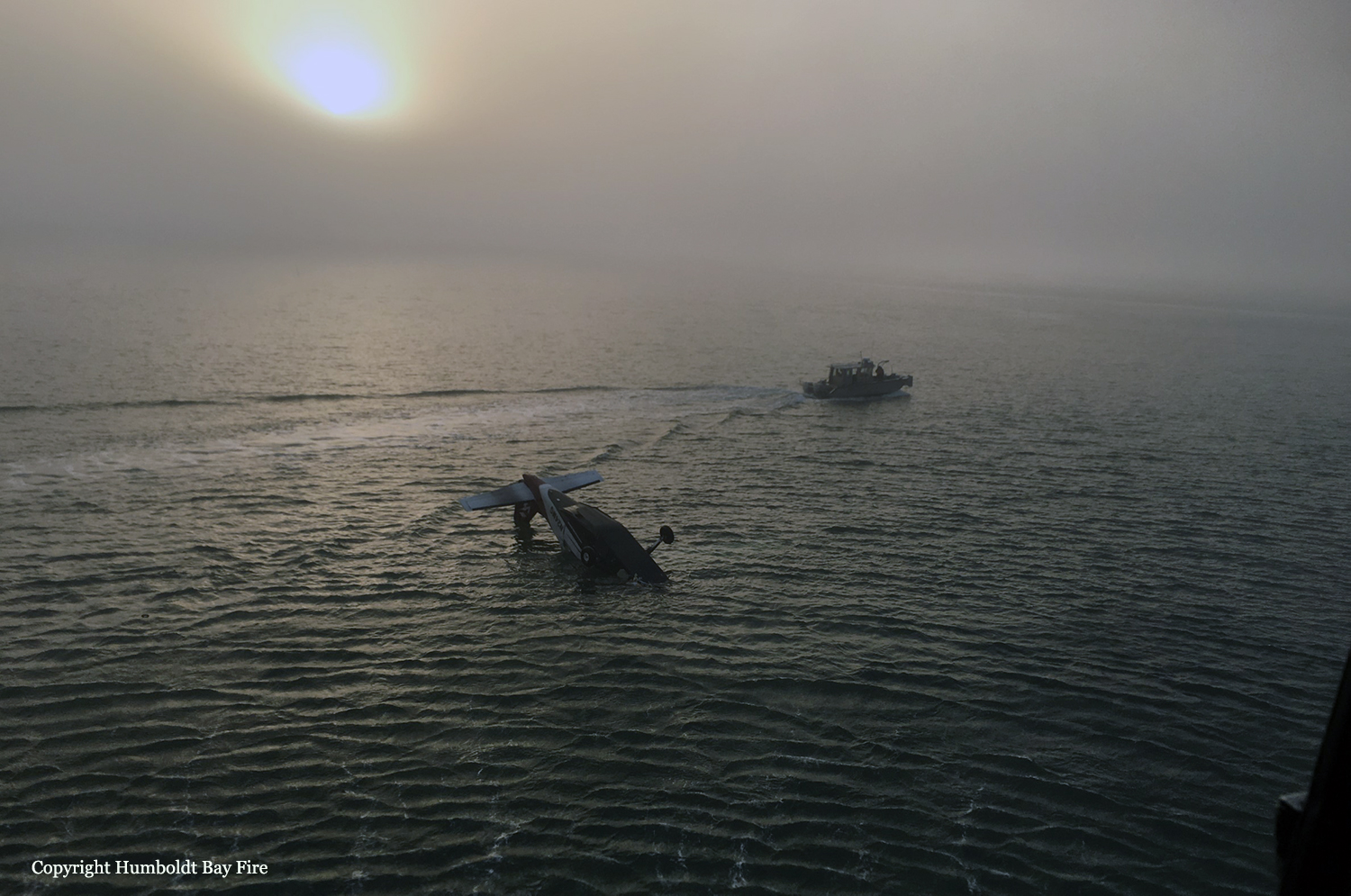
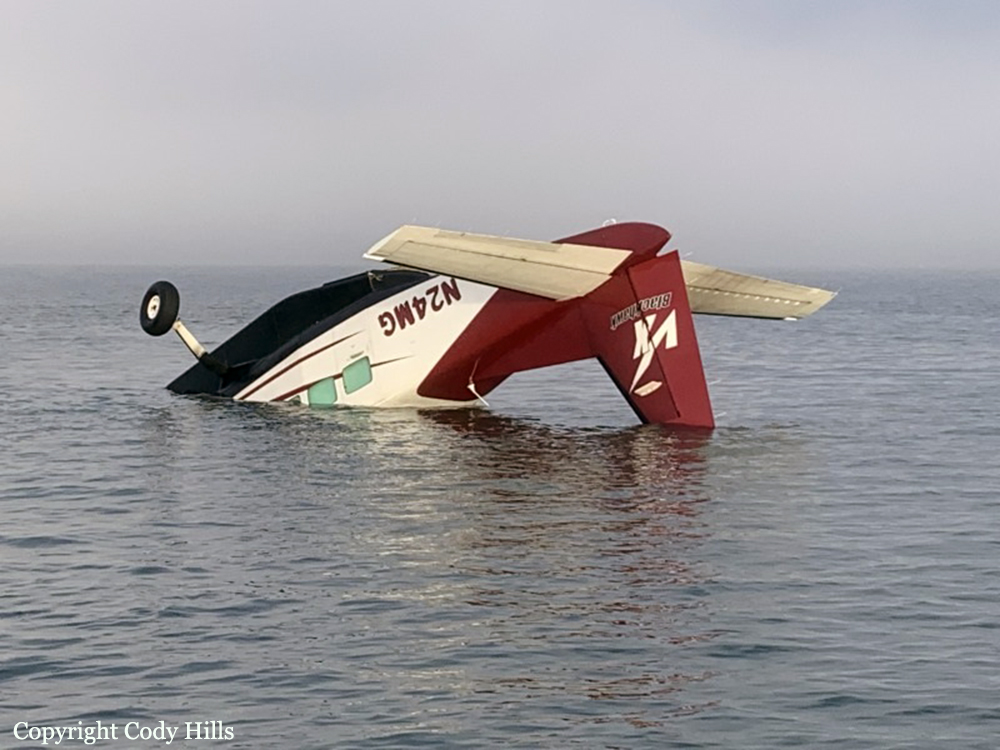
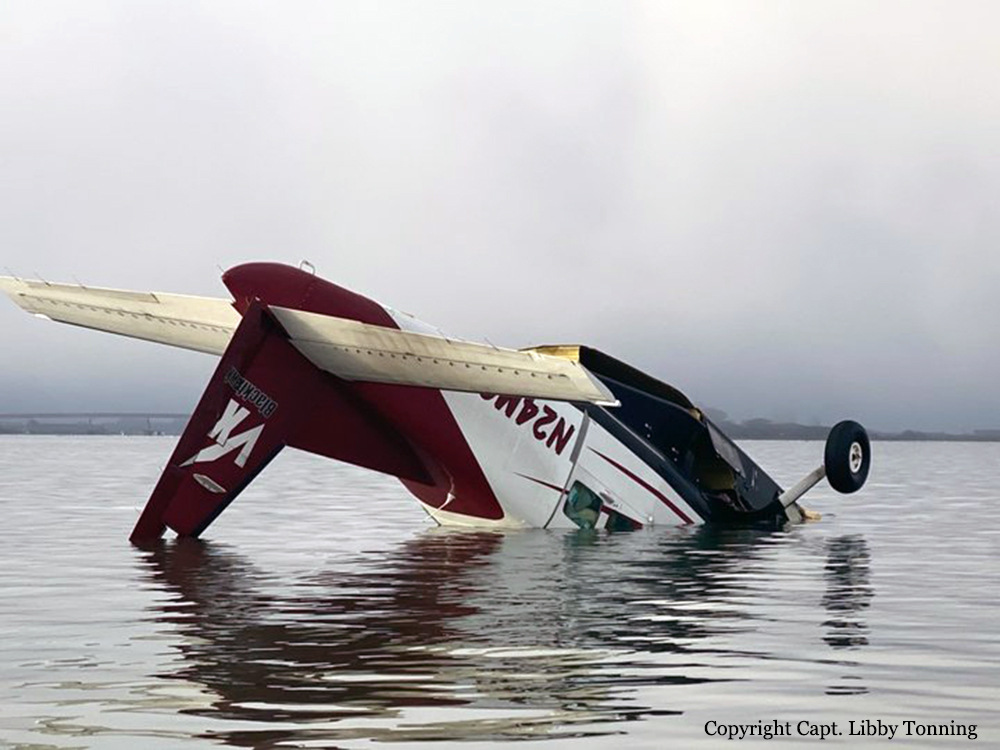
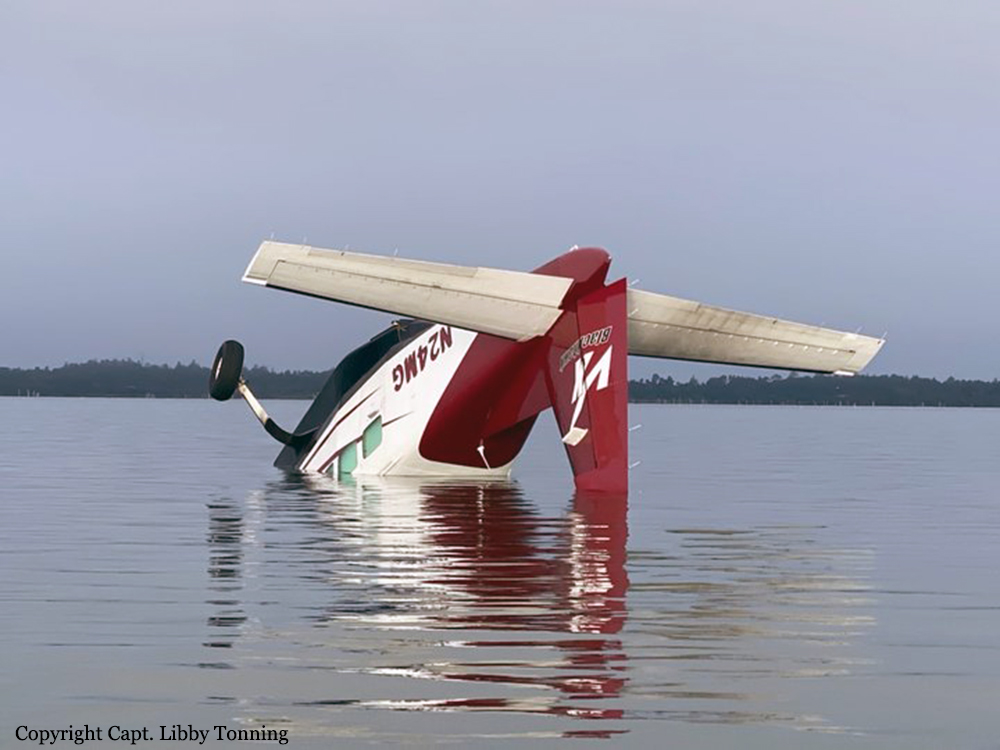
Crash of a Cessna 208B Grand Caravan off Eureka

Date & Time: Feb 6, 2020 at 0656 LT
Type of aircraft:
Operator:
Registration:
N24MG
Flight Type:
Survivors:
Yes
Schedule:
Sacramento – Eureka
MSN:
208B-0850
YOM:
2000
Flight number:
BXR1966
Crew on board:
1
Crew fatalities:
Pax on board:
0
Pax fatalities:
Other fatalities:
Total fatalities:
0
Captain / Total flying hours:
10156
Captain / Total hours on type:
1282.00
Aircraft flight hours:
19184
Circumstances:
While the pilot was on a visual approach to the airport and descending over water on the left base leg, about 100 ft above the water's surface, the airplane entered instrument meteorological conditions with no forward visibility. The pilot looked outside his left window to gauge the airplane's altitude and saw "black waves of water approaching extremely rapidly." He tried to pull back on the yoke to initiate a climb, but the nosewheel contacted the water. Subsequently, the airplane nosed over and came to rest inverted in the water. The pilot reported that there were no preaccident mechanical malfunctions or failures with the airplane that would have precluded normal operation.
Probable cause:
The pilot's delayed response to initiate a go-around during a night visual approach over water after the airplane entered instrument meteorological conditions, which resulted in a loss of forward visibility and subsequent impact with the water.
Final Report:
Crash of a Beechcraft B200 King Air off Dutch Harbor

Date & Time: Jan 16, 2020 at 0806 LT
Operator:
Registration:
N547LM
Flight Phase:
Flight Type:
Survivors:
Yes
Schedule:
Dutch Harbor - Adak
MSN:
BB-1642
YOM:
1998
Crew on board:
1
Crew fatalities:
Pax on board:
2
Pax fatalities:
Other fatalities:
Total fatalities:
0
Captain / Total flying hours:
6470
Captain / Total hours on type:
756.00
Aircraft flight hours:
7058
Circumstances:
According to the pilot, when the airplane’s airspeed reached about 90 knots during the takeoff roll, he applied back pressure to the control yoke to initiate the takeoff and noted a brief positive rate of climb followed by a sinking sensation. The airspeed rapidly decayed, and the stall warning horn sounded. To correct for the decaying airspeed, he lowered the nose then pulled back on the airplane’s control yoke and leveled the wings just before impacting the ocean. The pilot stated there were no pre accident mechanical malfunctions or anomalies that would have precluded normal operation. Wind about the time of the accident was recorded as 110º downwind of the airplane at 15 knots gusting to 28 knots. The passengers recalled that the pilot’s preflight briefing mentioned the downwind takeoff but included no discussion of the potential effect of the wind conditions on the takeoff. The airplane’s estimated gross weight at the time of the accident was about 769.6 pounds over its approved maximum gross weight, and the airplane’s estimated center of gravity was about 8.24 inches beyond the approved aft limit at its maximum gross weight. It is likely that the pilot’s decision to takeoff downwind and operate the airplane over the maximum gross weight with an aft center of gravity led to the aerodynamic stall during takeoff and loss of control. Downwind takeoffs result in higher groundspeeds and increase takeoff distance. While excessive aircraft weight increases the takeoff distance and stability, and an aft center of gravity decreases controllability. Several instances of the operator’s noncompliance with its operational procedures and risk mitigations were discovered during the investigation, including two overweight flights, inaccurate and missing information on aircraft flight logs, and the accident pilot’s failure to complete a flight risk assessment for the accident flight. The operator had a safety management system (SMS) in place at the time of the accident that required active monitoring of its systems and processes to ensure compliance with internal and external requirements. However, the discrepancies noted with several flights, including the accident flight, indicate that the operator’s SMS program was inadequate to actively monitor, identify, and mitigate hazards and deficiencies.
Probable cause:
The pilot’s improper decision to takeoff downwind and to load the airplane beyond its allowable gross weight and center of gravity limits, which resulted in an aerodynamic stall and loss of control. Contributing to the accident was the inadequacy of the operator’s safety management system to actively monitor, identify, and mitigate hazards and deficiencies.
Final Report: