Crash of a Douglas C-47A-85-DL in Croydon: 12 killed

Date & Time: Jan 25, 1947 at 1141 LT
Type of aircraft:
Registration:
VP-YFD
Flight Phase:
Survivors:
Yes
Schedule:
Croydon – Rome – Salisbury
MSN:
19979
YOM:
1944
Location:
Region:
Crew on board:
5
Crew fatalities:
Pax on board:
18
Pax fatalities:
Other fatalities:
Total fatalities:
12
Circumstances:
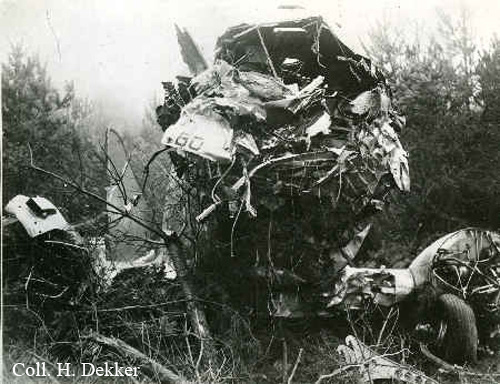
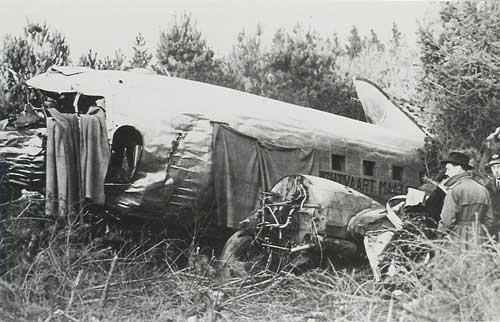
Shortly after takeoff from runway 12, while climbing to a height of some 100 feet in snow falls, the aircraft banked right, stalled and crashed on a parked CSA C-47 registered OK-WDB. Two technicians were working on the Czech C-47 for a maintenance control. Both aircraft were destroyed by fire. While both technicians were slightly injured, 11 people on board the VP-YFD were injured while 12 others were killed, among them the captain, Edward Spencer, founder and owner of this company based in Salisbury, Rhodesia. The aircraft was still registered NC32975.
Probable cause:
On rotation, the aircraft was in stall conditions due to the combination of several factors such as heavy weight, fuselage, wings and empennage covered by snow, poor techniques on part of the pilot, poor judgement and fatigue on part of the crew.
The Ministry of Civil Aviation instituted "an inspection of Certificates of Airworthiness, Certificates of Safety and crew licences" at airfields under their control to ensure these documents were in order. The aircraft did not have a CofA, nor a valid Certificate of Safety, and no member of crew held a Navigators licence nor a licence to sign a Certificate of Safety.

Crash of an Avro 685 York I in RAF Oakington

Date & Time: Jan 16, 1947
Type of aircraft:
Operator:
Registration:
MW228
Flight Type:
Survivors:
Yes
MSN:
MW228
YOM:
1946
Region:
Crew on board:
0
Crew fatalities:
Pax on board:
0
Pax fatalities:
Other fatalities:
Total fatalities:
0
Circumstances:
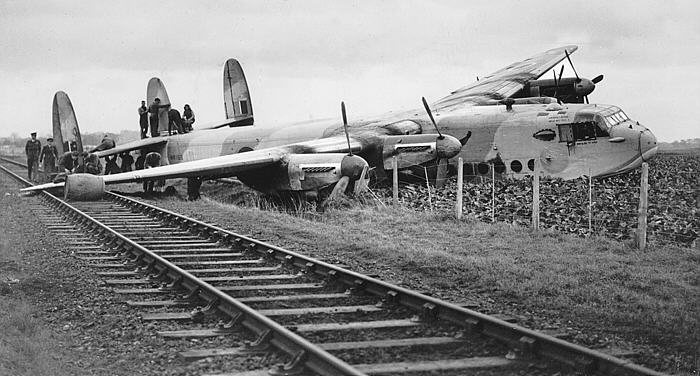
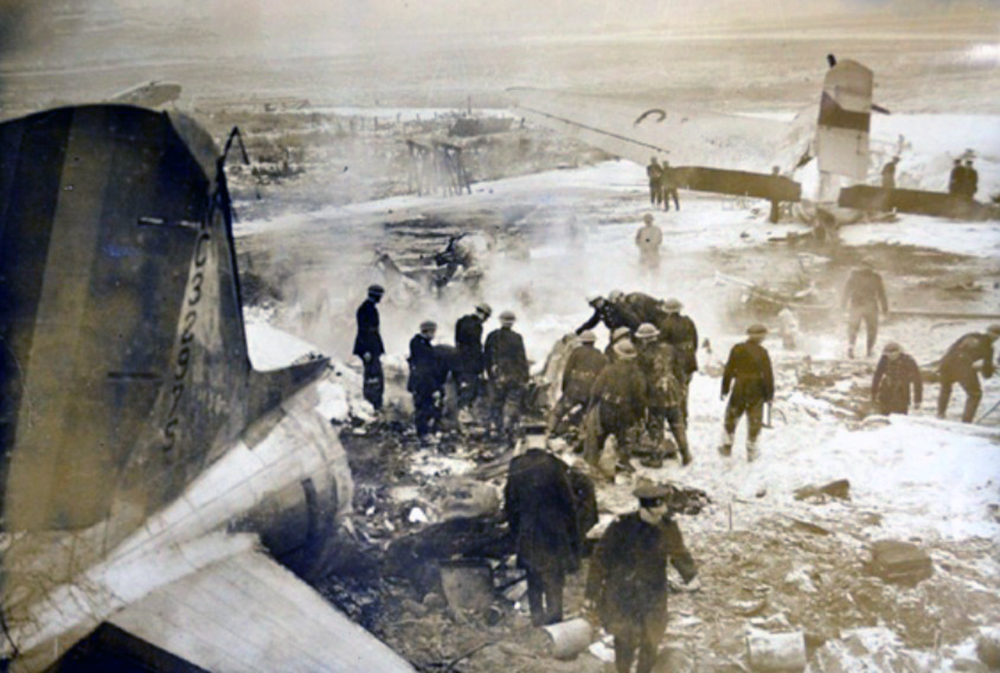
On touchdown, an undercarriage collapse. The aircraft skidded for several yards before coming to rest. There were no injuries but the aircraft was damaged beyond repair. It appears that, for undetermined reason, the undercarriage were partially deployed and not locked upon landing.

Crash of a Douglas C-47A-1-DK in Stowting: 8 killed

Date & Time: Jan 11, 1947 at 1730 LT
Operator:
Registration:
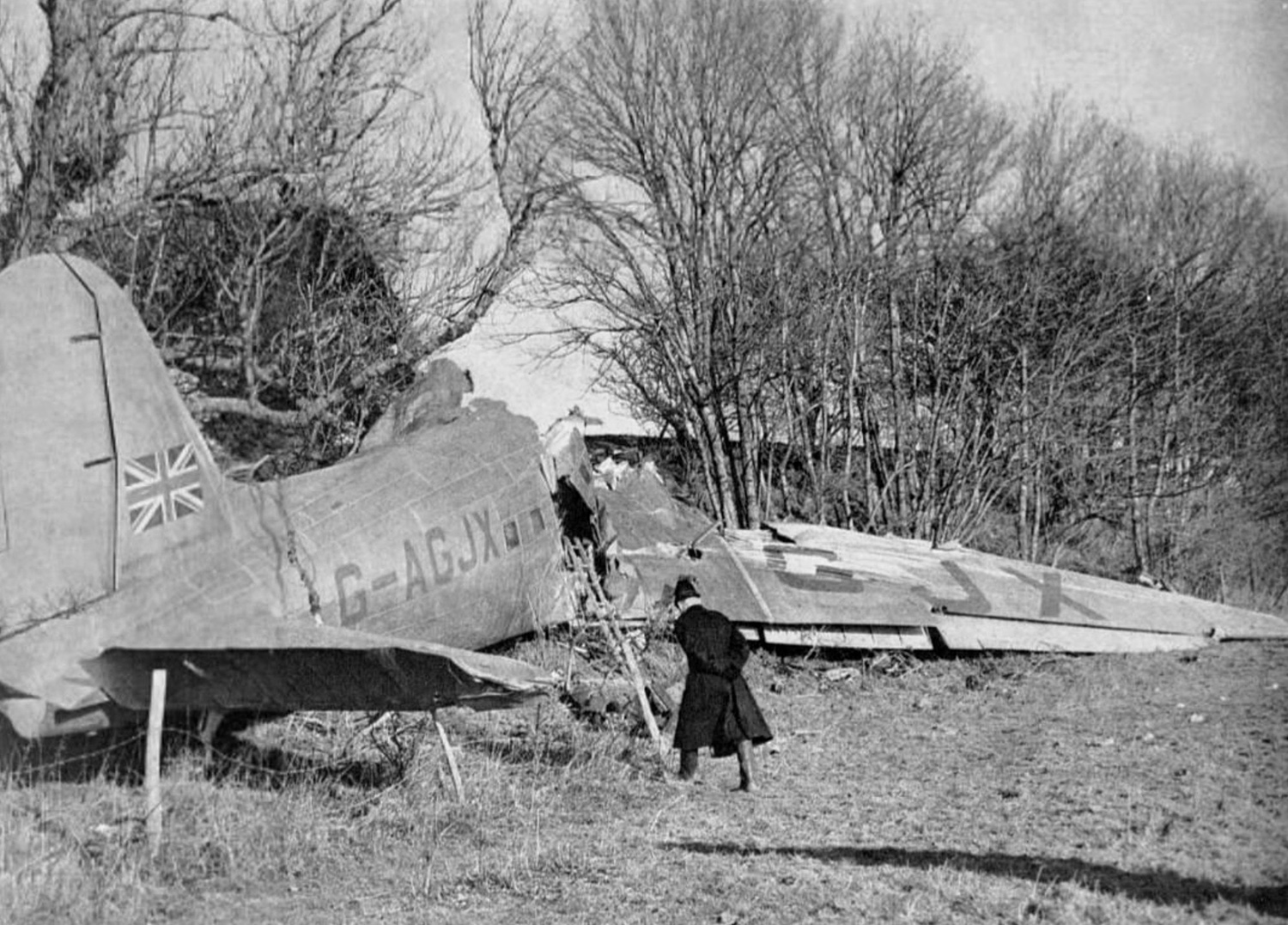
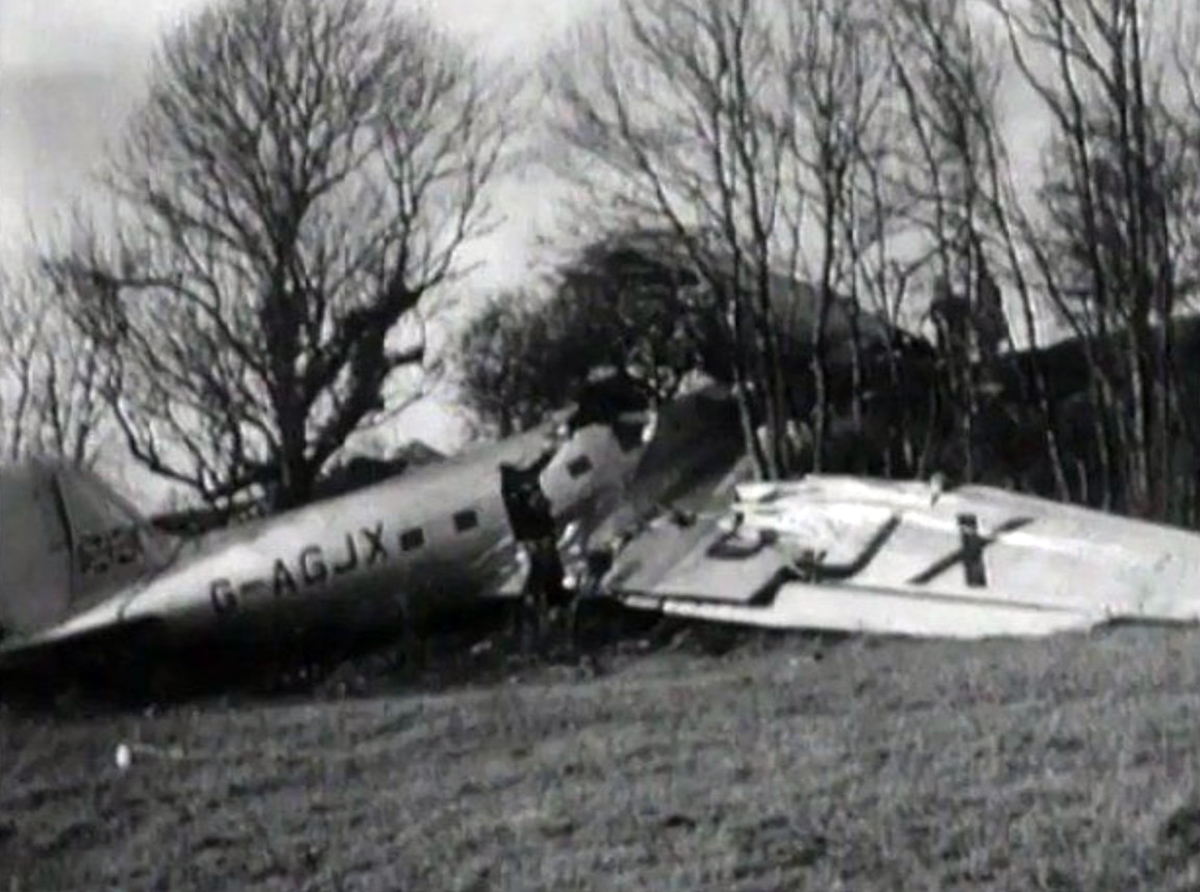
G-AGJX
Flight Phase:
Survivors:
Yes
Schedule:
London – Bordeaux – Lagos
MSN:
12014
YOM:
1944
Location:
Region:
Crew on board:
5
Crew fatalities:
Pax on board:
11
Pax fatalities:
Other fatalities:
Total fatalities:
8
Circumstances:
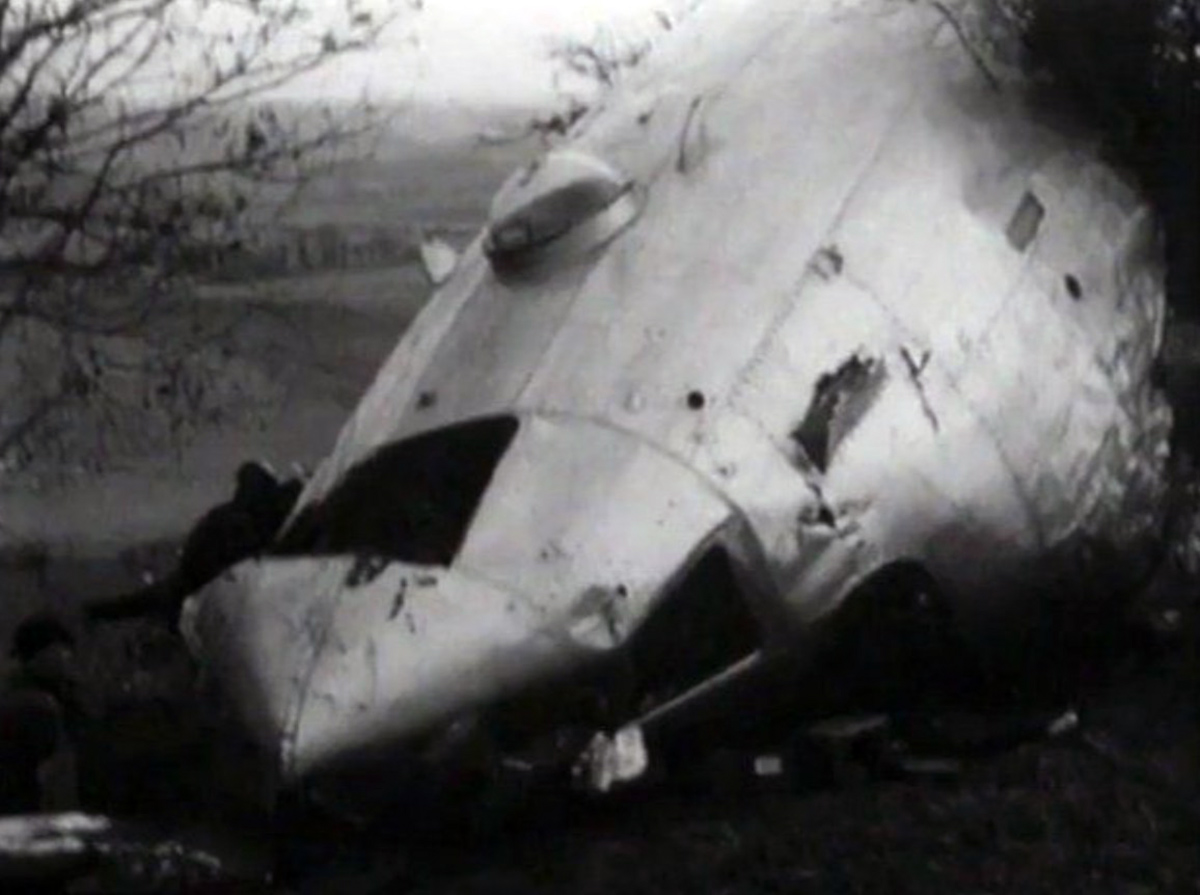
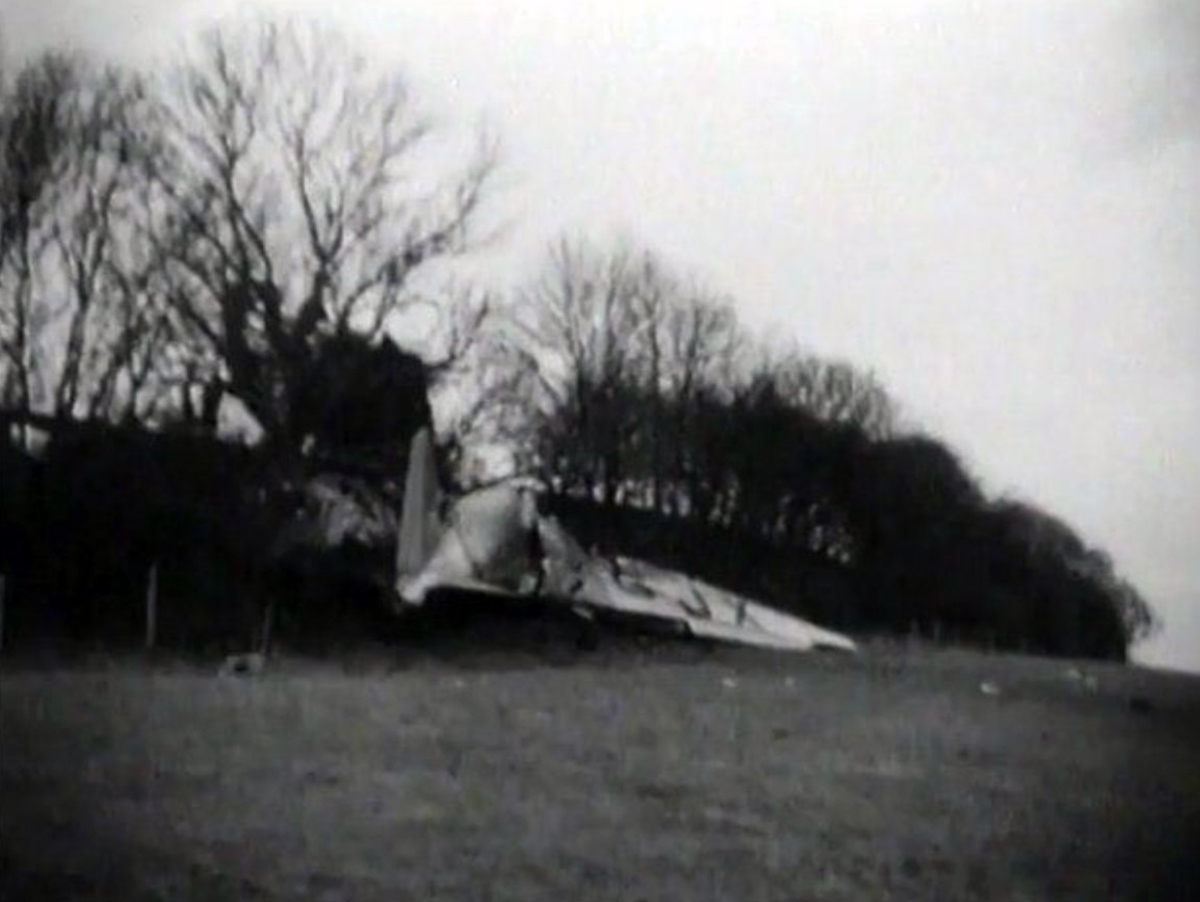
The aircraft left London at 0930LT on a flight to Lagos with an ETA at 1400LT in Bordeaux, an intermediate stop. While descending to Bordeaux-Mérignac Airport, the crew encountered poor weather conditions and decided not to land. The captain diverted to Paris-Le Bourget instead Toulouse but was unable to land, because the weather was poor. He elected to divert to Cormeilles-en-Vexin but again, landing was impossible. He finally decided to return to London but while overflying Kent, fuel exhausted and the crew was forced to make an emergency landing. The aircraft crashed in a field located in Stowting and was destroyed. Four crew members and four passengers were killed.
Probable cause:
The accident was due to the following chain of circumstances:
- The weather conditions encountered throughout the flight.
- Bad crewing, as a result of which three of the four operational members of the crew were unfamiliar with the route London - Bordeaux (and Toulouse).
- The captain's failure to ensure that he had all the necessary navigational and landing aid information for that part of the route. In this respect the navigator cannot be considered blameless.
- The unfortunate chance intervention of the York at Bordeaux but for which it seems likely the aircraft would have landed there. In spite of this delay the aircraft could, in fact, have landed as it was then the only one in the vicinity and all radio facilities were at its disposal.
- The captain's decision to go to Le Bourget before ascertaining the weather conditions there in preference to returning to the UK. His navigator had given him ETA's at London and Le Bourget of 1518LT and 1443LT respectively, and he knew Le Bourget. In the light of the evidence it is clear the aircraft would have had more than half an hour's fuel remaining it he had returned direct to England.
- The captains failure to inform Le Bourget of his 1440LT ETA until six minutes earlier. This gave the French station very short notice at a time when much traffic was being handled there in QBI conditions.
- The inability of Cormeilles-en-Vexin to handle two aircraft at once owing to the lack of a second channel, as stated in the French Notice to Airmen No. 49 of 21.10.46.
- The captain's failure to ask Regional Control for further guidance after the failure to establish contact with Cormeilles-en-Vexin between 1447LT, when he acknowledged the diversion and 1514LT when he asked for a QDM.
- The decision of the captain then to try and reach England having regard to his fuel situation at that stage of the flight.

Crash of a Boeing TB-17H Flying Fortress off Lerwick

Date & Time: Jan 3, 1947
Operator:
Registration:
44-83771
Flight Phase:
Survivors:
Yes
Schedule:
Keflavik - Keflavik
MSN:
34212
Region:
Crew on board:
5
Crew fatalities:
Pax on board:
0
Pax fatalities:
Other fatalities:
Total fatalities:
0
Circumstances:
At 1430LT on 2nd January 1947 an SB-17 belonging to 1386th AAF Base Unit Air Sea Rescue took off from Keflavik airfield, Iceland on a local flight expected to last 2 to 3 hours, however approx 1 hour after leaving the field a snow storm developed and the crew now on instruments and were given instructions by ATC to fly to Prestwick as the visibility at Keflavik was too bad, and so a flight plan was arranged and radioed to the pilot. Expecting this to be just a local flight, the navigator was without proper charts, they had no Wireless Op on board, and little fuel for any marginal error. Drift readings were taken and bearings using the astro compass and radio compass were taken, though stronger than forecast headwinds slowed the aircraft down and it took much longer to reach their turning over Scotland, also heavy cloud hindered any visual contact, but eventually an island, that of Shetland was spotted and it was estimated that they should reach the Scottish mainland within 30 minutes, however, as they continued past their ETA, no land was sited and the Navigator suggested they do a 180 degree turn and head back to the Island, this they did and back over Shetland at approx midnight, they flew a few miles off shore, jettisoned the lifeboat, circled a number of times firing off flares, then with an estimated guess of less than an hours fuel left,the pilot gave the order to abandon the aircraft, then putting it on a SW course on autopilot, he left the aircraft himself. Three of the crew landed on the Shetland mainland itself, one came down on a tiny island in Braewick Voe, and another landed in the sea and struggled to unhitch his chute, but fortunately the wind blew him towards the shore. After a long night with the Co-Pilot suffering a sprained knee, and the Pilot suffering exposure, all were eventually found and taken to hospital where they were given hot drinks and blankets, and treated for their injuries. The Fortress went down in the sea somewhere to the West of the Shetland mainland at a location yet to be discovered. Maybe one day a fishing boat will pull up a piece of wreckage identified as coming off a Flying Fortress and the last resting place of 44-83771 will be known.
Crew (1386 BU):
1/Lt W. E. Dee, pilot,
1/Lt M. H. Craven Jr., copilot,
1/Lt W. L. Pilcher, navigator,
H. E. Shields, flight engineer,
R. M. Gessert, flight engineer.
Source: http://www.aviation-safety.net/wikibase/wiki.php?id=99049

Crash of a Douglas DC-3A in Whitchurch

Date & Time: Jan 3, 1947
Type of aircraft:
Operator:
Registration:
G-AGJU
Flight Type:
Survivors:
Yes
MSN:
12169
YOM:
1943
Region:
Crew on board:
3
Crew fatalities:
Pax on board:
0
Pax fatalities:
Other fatalities:
Total fatalities:
0
Circumstances:
On touchdown, the aircraft went out of control and came to rest. All three crew members were unhurt while the aircraft was damaged beyond repair.

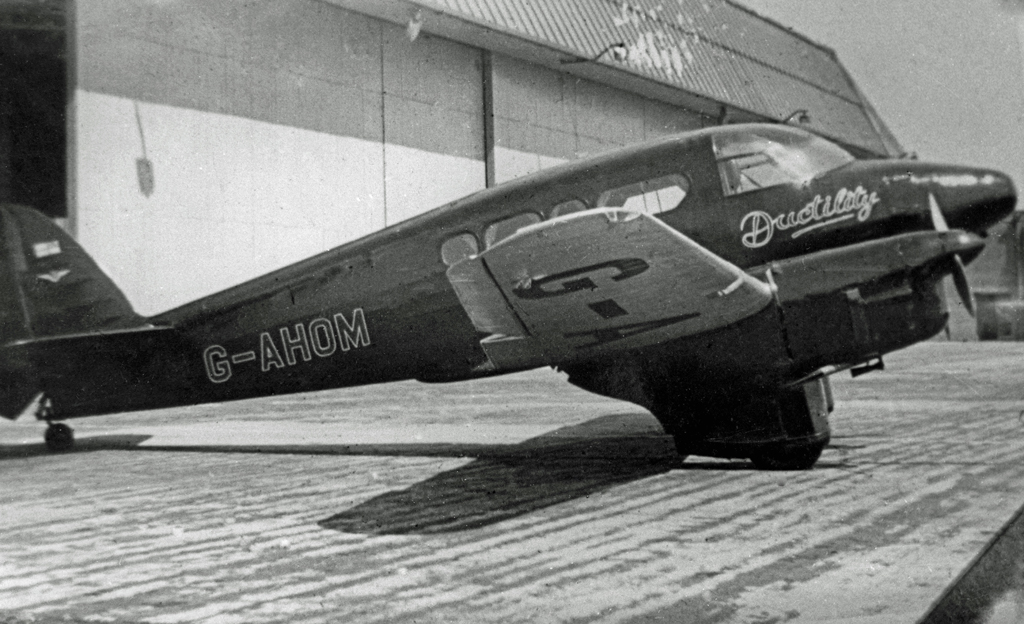
Crash of a Percival Q.6 Petrel in United Kingdom

Date & Time: Dec 24, 1946
Type of aircraft:
Registration:
G-AHOM
Flight Phase:
Survivors:
Yes
MSN:
Q.42
YOM:
1946
Region:
Crew on board:
0
Crew fatalities:
Pax on board:
0
Pax fatalities:
Other fatalities:
Total fatalities:
0
Circumstances:
Crashed in unknown circumstances somewhere in UK. There were no casualties.

Crash of a Douglas C-47A-10-DK in Ruislip

Date & Time: Dec 19, 1946
Operator:
Registration:
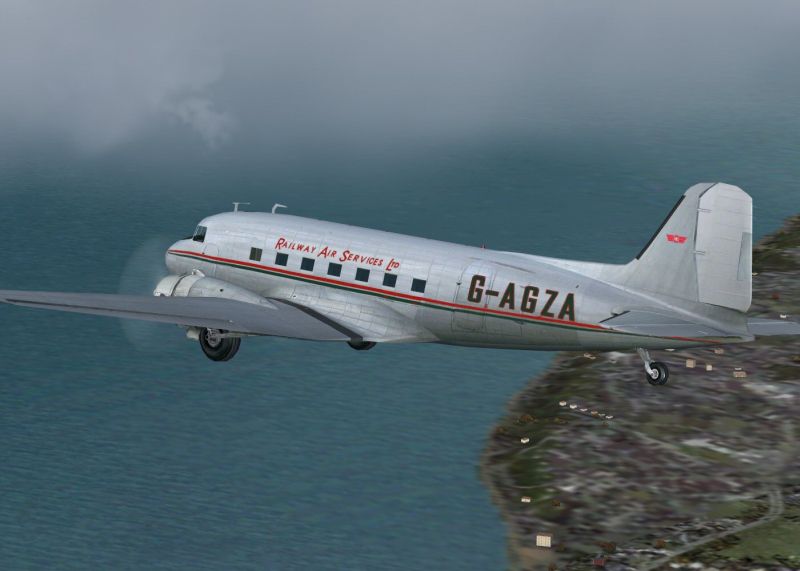
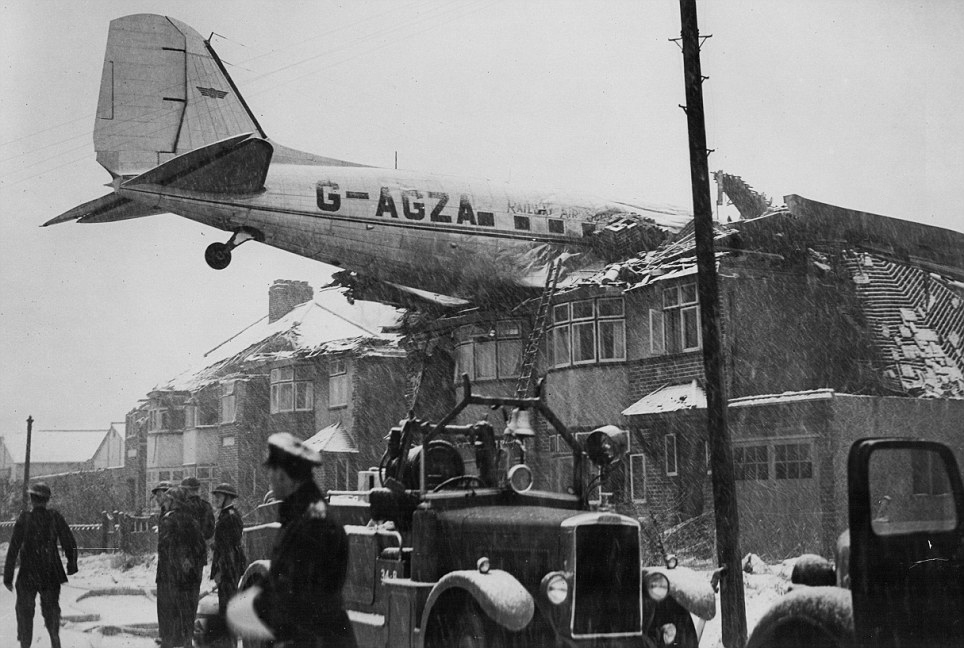
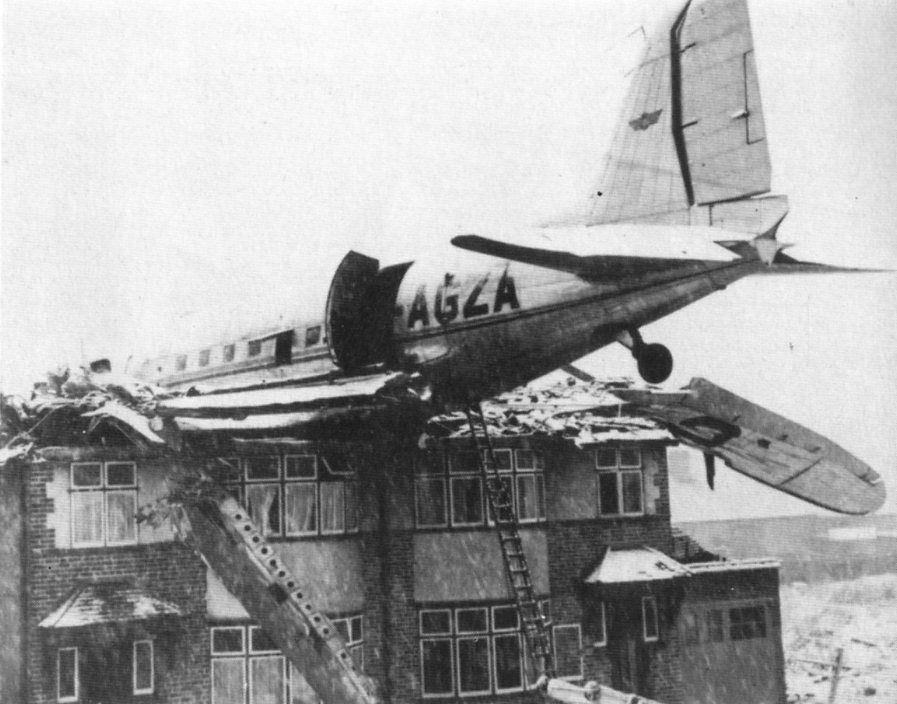
G-AGZA
Flight Phase:
Survivors:
Yes
Site:
Schedule:
Northolt – Glasgow
MSN:
12455
YOM:
1944
Region:
Crew on board:
4
Crew fatalities:
Pax on board:
1
Pax fatalities:
Other fatalities:
Total fatalities:
0
Circumstances:
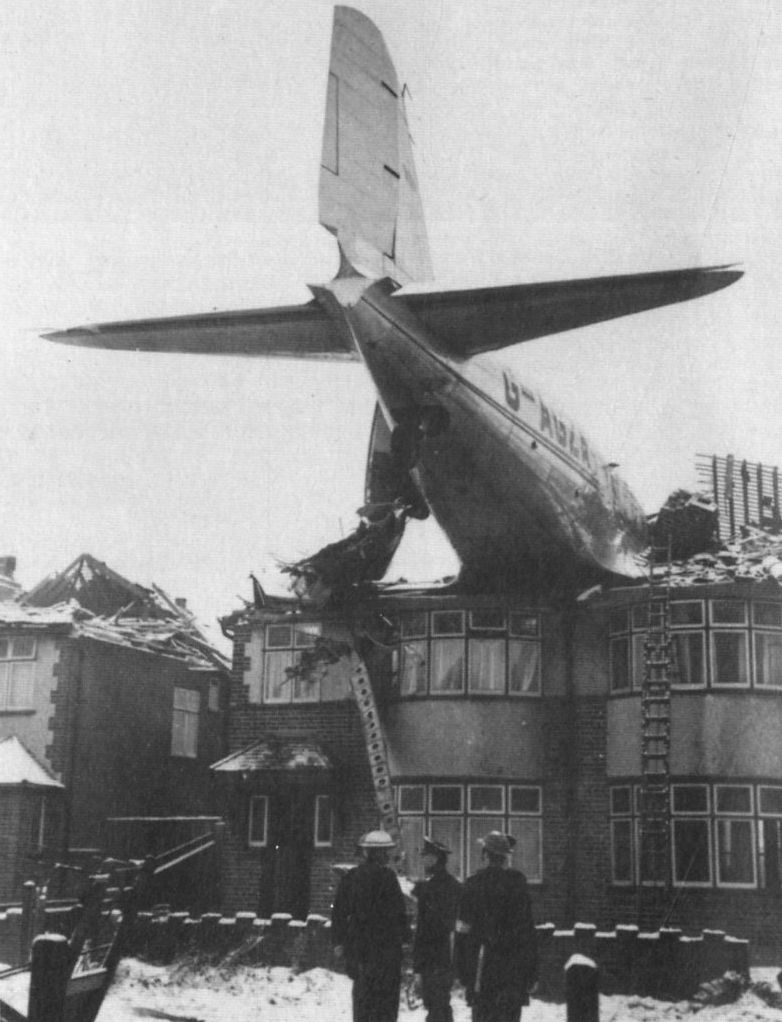
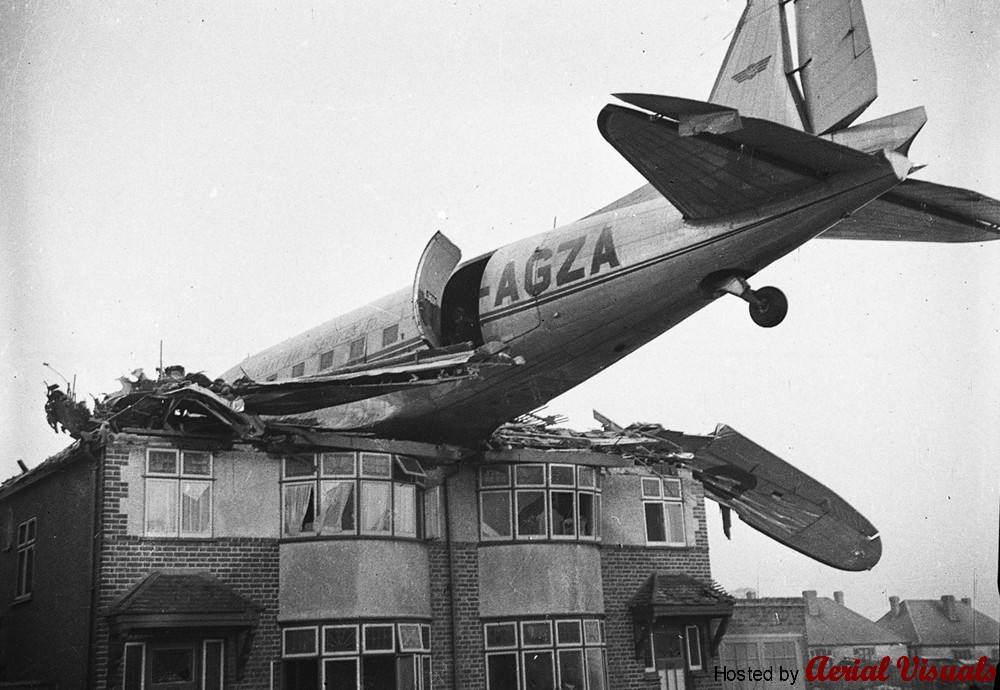
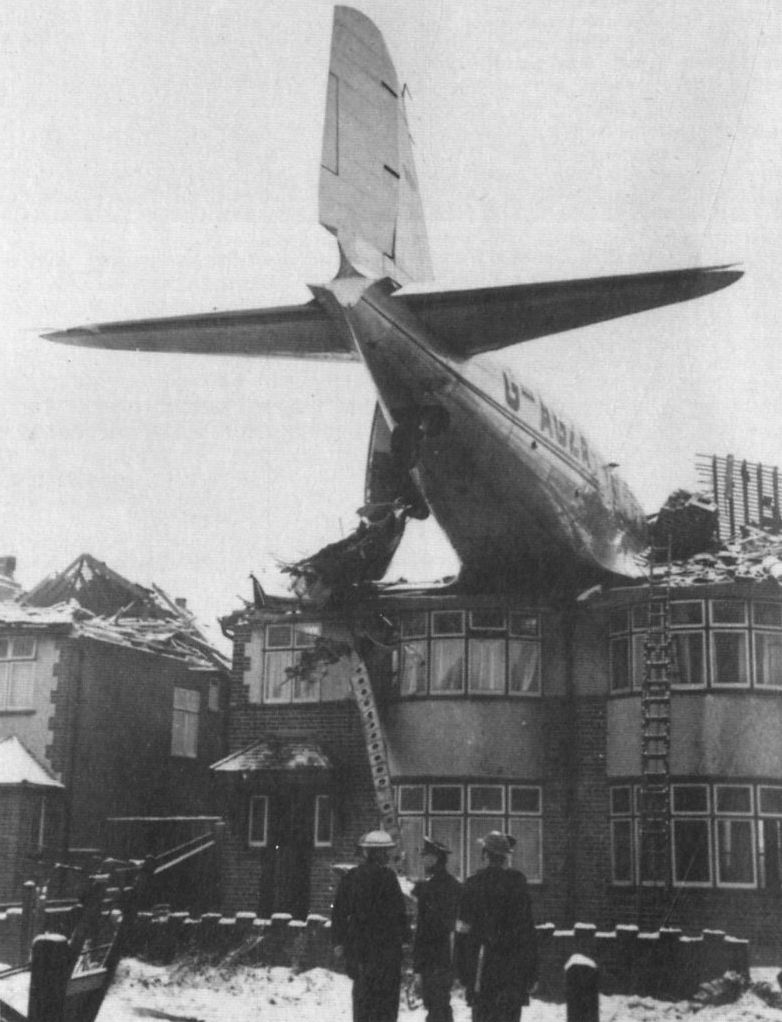
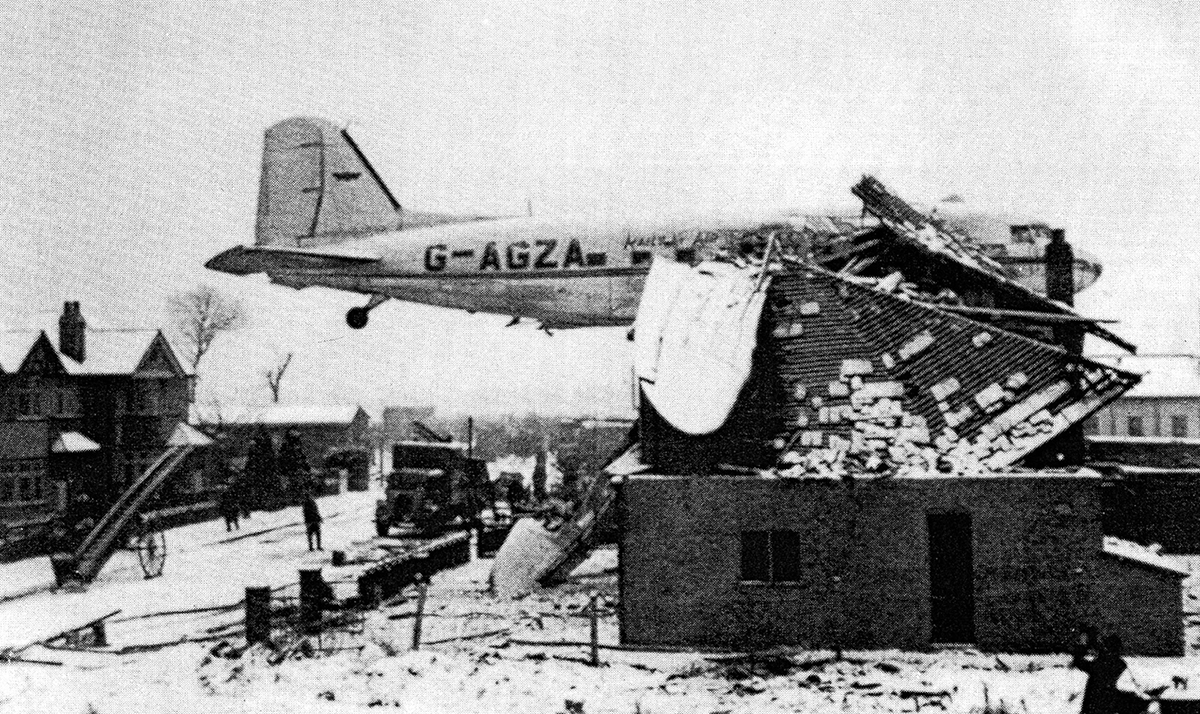
The airport of Northolt was closed for arrivals for few hours and only few departures were allowed. After as long waiting time, the crew of G-AGZA received the permission to takeoff bound for Glasgow. The pilot increased power on both engines, started the takeoff procedure and completed the rotation at a speed of 85 knots. Shortly after takeoff, the aircraft encountered serious difficulties to gain height and was in a constant stall attitude. Then, it hit a house located in Ruislip, north of the airfield, and came to rest on its roof. Fortunately, the aircraft did not caught fire and the cabin remained quite intact. All five occupants were injured, the captain seriously. Into the damaged house, a fourth months baby was miraculously found unhurt.
Probable cause:
It was determined that the crew did not prepare the flight properly and forgot to remove the snow on the aircraft prior to takeoff. Due to snow falls, the fuselage, wings, elevators and tail were covered by snow. Thus, the performances were reduced, the aerodynamic properties were modified, the airspeed was insufficient, the total weight was to high with too much drag as well.

Crash of an Avro 685 York C.1 in RAF Brize Norton

Date & Time: Nov 28, 1946
Type of aircraft:
Operator:
Registration:
MW168
Flight Phase:
Flight Type:
Survivors:
Yes
Schedule:
Brize Norton - Brize Norton
MSN:
MW168
YOM:
1945
Region:
Crew on board:
5
Crew fatalities:
Pax on board:
0
Pax fatalities:
Other fatalities:
Total fatalities:
0
Circumstances:
During the takeoff roll, directional control was lost. The crew tried to take over but the aircraft overran, went through a railroad and came to rest. All five crew members were unhurt while the aircraft was damaged beyond repair.
Probable cause:
Loss of control on takeoff caused by a loss of power on engine number two.

Crash of a Douglas DB-7 Boston III in RAF Locking: 8 killed

Date & Time: Nov 22, 1946
Operator:
Registration:
AL467
Flight Type:
Survivors:
Yes
Schedule:
Gosport - Locking
Region:
Crew on board:
4
Crew fatalities:
Pax on board:
0
Pax fatalities:
Other fatalities:
Total fatalities:
8
Circumstances:
On final approach to RAF Locking, while on a flight from Gosport, the aircraft was too low and hit with its left main gear a double-decker bus carrying 22 RAF Airmen. The left main gear was sheared off, the pilot continued the approach and was able to land. On touchdown, the aircraft skidded on runway and came to rest. All four occupants were unhurt while the aircraft was damaged beyond repair. The bus was destroyed and eight crew were killed while 14 others were seriously injured. For unknown reason, the pilot was performing a too low approach and did not realized the presence of the bus.

Crash of a Douglas C-47A-25-DK in Shere

Date & Time: Nov 6, 1946 at 0845 LT
Operator:
Registration:
PH-TBO
Survivors:
Yes
Schedule:
Amsterdam – Croydon
MSN:
13638
YOM:
1944
Location:
Region:
Crew on board:
5
Crew fatalities:
Pax on board:
15
Pax fatalities:
Other fatalities:
Total fatalities:
0
Circumstances:
The aircraft entered the London Control Zone when QBI conditions (compulsory IFR conditions) were in force. When the pilot estimated that he flew over the Croydon MF beacon, he had actually passed it two or three minutes earlier. He continued to fly on a westerly course for three or four minutes until receiving instructions that he was next to land, and that the landing direction was 120 degrees M. The aircraft then began to descend again and after receiving several QDM's the pilot turned on to the course for Croydon. The pilot levelled out at an indicated altitude of 1,200 feet and the undercarriage was lowered. Almost immediately after, whilst still flying in cloud, the aircraft struck the tops of trees and crashed. The pilot had set the altimeter to the sea level pressure instead of airfield pressure. Consequently the aircraft's height would be about 230 feet lower than that indicated by the altimeter.
Source:
http://aviation-safety.net/database/record.php?id=19461106-0
Probable cause:
Flying into high ground in conditions of low cloud and poor visibility. This must be attributed to errors on the part of the pilot who, preparatory to landing at Croydon Airport in QBI conditions.
Failed to navigate his aircraft with sufficient degree of care to avoid high ground when descending through cloud.
During the descent misinterpreted the height of the aircraft as indicated by his altimeter.