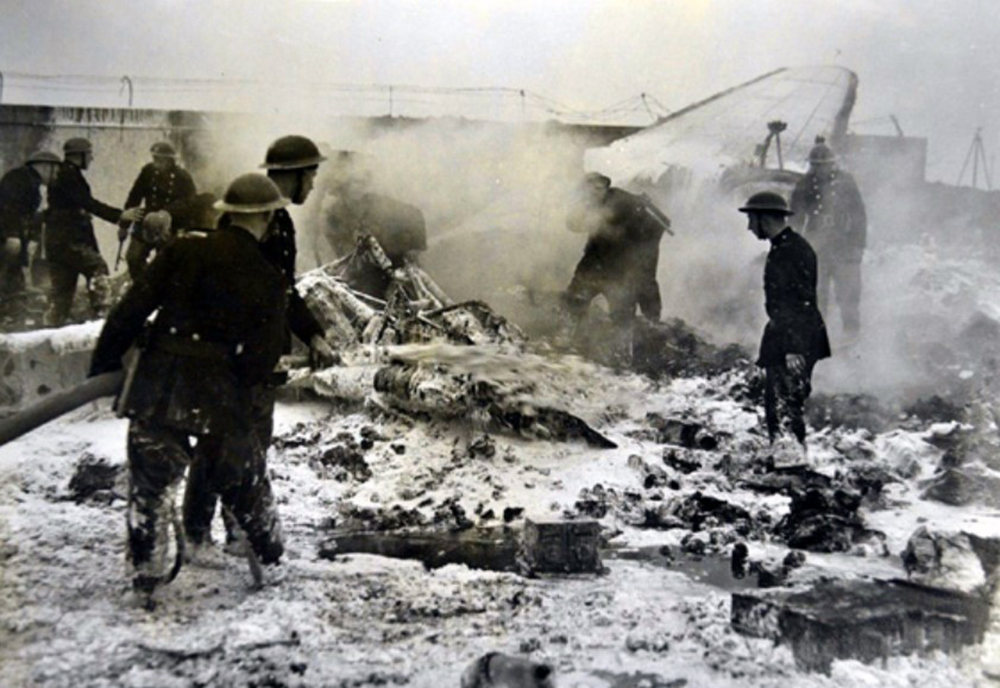
Crash of a Douglas C-47B-5-DK near Dalry: 6 killed

Date & Time: Apr 10, 1947
Operator:
Registration:
K-14
Flight Phase:
Flight Type:
Survivors:
No
Site:
MSN:
14712/26157
YOM:
1944
Location:
Region:
Crew on board:
3
Crew fatalities:
Pax on board:
3
Pax fatalities:
Other fatalities:
Total fatalities:
6
Circumstances:
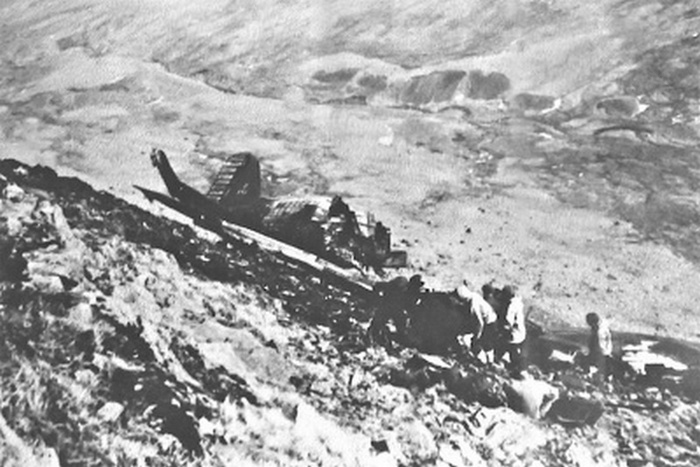
While cruising in poor weather conditions, the aircraft hit the slope of a mountain located in the region of Dalry. All six occupants were killed.

Crash of an Avro 652 Anson I near Aylesbury: 3 killed

Date & Time: Mar 27, 1947
Type of aircraft:
Operator:
Registration:
LV209
Flight Phase:
Flight Type:
Survivors:
No
Site:
Schedule:
Halton - Halton
Region:
Crew on board:
3
Crew fatalities:
Pax on board:
0
Pax fatalities:
Other fatalities:
Total fatalities:
3
Circumstances:
The crew was engaged in a training sortie from RAF Halton. While cruising in marginal weather conditions, the twin engine aircraft hit the slope of a hill located 12 miles south of Aylesbury. All three crew members were killed and the aircraft was destroyed. It appears that the crew did not prepare the mission properly and failed to ask about meteorological conditions prior to the flight. The crew did not take advantage of their radio systems and at the time of the accident, radio contacts with local ATC based at RAF Halton were difficult.

Crash of an Avro 685 York C.1 in RAF Lyneham

Date & Time: Mar 14, 1947
Type of aircraft:
Operator:
Registration:
MW202
Flight Type:
Survivors:
Yes
MSN:
MW202
YOM:
1945
Region:
Crew on board:
0
Crew fatalities:
Pax on board:
0
Pax fatalities:
Other fatalities:
Total fatalities:
0
Circumstances:
On touchdown, the undercarriage collapsed. The aircraft slid on its belly for several yards before coming to rest. There were no casualties but the aircraft was written off. It is believed that the aircraft was under maintenance prior to this flight, and the technicians made some mistakes while checking the hydraulic systems. It is reported that on approach, the undercarriage could be lowered properly, but on touchdown, they collapsed because they were not locked.

Crash of a De Havilland DH.104 Dove I in Chewton Common: 3 killed

Date & Time: Mar 13, 1947 at 1808 LT
Type of aircraft:
Operator:
Registration:
G-AHRA
Flight Type:
Survivors:
No
Schedule:
Bournemouth - Bournemouth
MSN:
4003
YOM:
1946
Region:
Crew on board:
2
Crew fatalities:
Pax on board:
1
Pax fatalities:
Other fatalities:
Total fatalities:
3
Circumstances:
Two pilots and one engineer were conducting a one hour test flight from Bournemouth-Hurn Airport. While circling around the airport, the crew encountered poor weather conditions but the captain informed ground he was able to reach the airfield. Shortly later, while flying at low height, the twin engine aircraft hit tree tops and crashed in a wooded area located in Chewton Common, southeast of the airport. All three occupants were killed.
It was reported in the final report that the flight was planned to obtain fuel consumption figures of the Gypsy 70 engine under cruising conditions & Captain R. G. Buck, the pilot, took off from Hurn at 1620LT, his intention being to carry out a flight of one hour duration below the cloud which was then at 1,200 feet. No notification of the flight was made to flying control until the time of take-off & no weather forecast was requested or given. It is presumed that the test was satisfactorily concluded for at 1714LT the Captain requested permission to join the circuit prior to landing. This was given together with weather information & Q.F.E. Weather conditions then began to deteriorate rapidly, cloud base lowering to 800 feet with rain. Capt. Buck gave his position as being over Bournemouth Pier at 1724LT and was instructed not to fly above 1,500 feet owing to the presence of another aircraft at 2,000 feet. Rockets & Very lights were fired & at 1735LT the pilot announced that he could see the airfield. He immediately carried out a left-hand circuit at an estimated height of 200 feet with the undercarriage down, at times going out of view into low cloud & rain. An approach at about 50 feet on runway 170 was attempted but the pilot failed to line-up with the runway & passed over the center of the airfield & disappeared in a right hand circuit. After a similar unsuccessful attempt to land, the controller gave permission for landing on any runway & gave further assistance by lighting sodium funnels. Capt. Buck then asked for a diversion stating " No radio, VHF not working & endurance three hours." At 1804LT he was told the best weather was in the London area & that London Airport had G.C.A & could work him on 5100 kc/s. The suggestion was not acted upon so the controller proposed he should make a further attempt to land at Hurn. Capt. Buck's reply was " Do not know where I am, but will try to find you." At approximately 1808LT the aircraft struck a row of trees & crashed in an adjoining copse. Weather conditions were bad with fine drizzle, a cloud base of 60 feet & visibility down to as little as 200 yards.
Probable cause:
In the opinion of the Inspector the accident was the result of the aircraft striking trees whilst flying low in conditions of poor visibility. The only recommendation made was that the present location of the inertia crash switch be reconsidered. Owing to the high inertia required to actuate this switch it was felt that a position such as the belly of the fuselage adjacent to the nose of the aircraft would be more desirable.


Crash of a Beechcraft C-45 Expeditor near Haverigg

Date & Time: Mar 11, 1947
Type of aircraft:
Operator:
Registration:
44-47194
Flight Phase:
Flight Type:
Survivors:
Yes
Site:
Schedule:
Prestwick – Bovingdon
MSN:
7125
Region:
Crew on board:
2
Crew fatalities:
Pax on board:
0
Pax fatalities:
Other fatalities:
Total fatalities:
0
Circumstances:
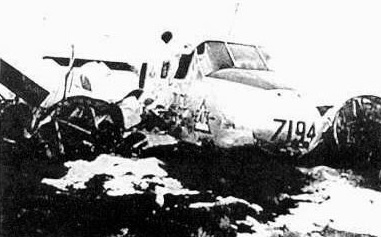
While flying at an altitude of some 2,000 feet over the Peak District National Park on a flight from Prestwick to Bovingdon, the crew encountered poor weather conditions and low visibility due to heavy snow falls. The twin engine aircraft hit the top of the Black Combe Hill and crash landed in deep snow. Both crew were slightly injured and walked away for few hours to find help. The aircraft was damaged beyond repair and abandoned on site.
Crew:
Cpt William J. Daner, pilot,
1st Lt Arthur Garner, copilot.

Crash of a Handley Page H.P.71 Halifax IX near Leek: 8 killed

Date & Time: Feb 13, 1947 at 1100 LT
Operator:
Registration:
RT922
Flight Phase:
Flight Type:
Survivors:
No
Site:
Schedule:
Fairford - Fairford
Region:
Crew on board:
6
Crew fatalities:
Pax on board:
2
Pax fatalities:
Other fatalities:
Total fatalities:
8
Circumstances:
The aircraft was performing a demo flight from RAF Fairford with a crew of six and two British journalists. Enroute, while cruising in marginal weather conditions, the aircraft hit the slope of a hill located 8 miles east of Leek. The aircraft was destroyed and all 8 occupants were killed.
Crew (47th Squadron):
S/Lr Donald Don McIntyre, pilot,
F/Lt Ernest Smith, navigator,
W/O Gordon Victor Chapman, bomb aimer,
W/O Richard Sydney Kearns, flight engineer,
F/Sgt Kenneth Charles Pettit, wireless operator,
Sgt William Thomas Sherry, glider pilot.
Passengers:
David William Savill,
Joseph John Reardon.
Source:
http://www.peakdistrictaircrashes.co.uk/pages/peakdistrict/peakdistrictrt922.htm

Crash of an Avro 652A Anson I in Croydon

Date & Time: Feb 12, 1947
Type of aircraft:
Operator:
Registration:
G-AHKJ
Flight Type:
Survivors:
Yes
Schedule:
Croydon - Croydon
YOM:
1946
Location:
Region:
Crew on board:
1
Crew fatalities:
Pax on board:
1
Pax fatalities:
Other fatalities:
Total fatalities:
0
Circumstances:
Following an aerial photography mission, the twin engine aircraft was returning to Croydon Airport when, on final approach, it crashed in a field short of runway. Both occupants were unhurt while the aircraft was damaged beyond repair.

Crash of an Avro 685 York C.1 in RAF Waterbeach

Date & Time: Feb 11, 1947
Type of aircraft:
Operator:
Registration:
MW242
Flight Type:
Survivors:
Yes
MSN:
SET20
YOM:
1946
Region:
Crew on board:
0
Crew fatalities:
Pax on board:
0
Pax fatalities:
Other fatalities:
Total fatalities:
0
Circumstances:
Following an unstabilized approach, the aircraft landed hard. On touchdown, the right main gear collapsed and the aircraft veered off runway before coming to rest. There were no casualties but the aircraft was written off.
Probable cause:
It was determined that the crew continued the approach in reduced visibility due to a windshield covered by ice. The landing was so hard that the right main gear collapsed.

Crash of a Douglas C-47B-10-DK Dakota C.4 in Middle Aston

Date & Time: Feb 1, 1947
Operator:
Registration:
KJ971
Flight Phase:
Flight Type:
Survivors:
Yes
Schedule:
Upper Heyford - Upper Heyford
MSN:
14820/26265
YOM:
1944
Region:
Crew on board:
4
Crew fatalities:
Pax on board:
0
Pax fatalities:
Other fatalities:
Total fatalities:
0
Circumstances:
The crew was completing a training sortie from RAF Upper Heyford. In flight, the instructor deliberately shut down an engine to simulate a failure. Few minutes later, one of the pilot under instruction inadvertently shot down the second engine. The crew was unable to restart the engine and the instructor decided to attempt an emergency landing. The aircraft belly landed in a pasture located in Middle Aston, about 2 miles northwest of the airfield. The aircraft came to rest and was written off while all four crew members were unhurt.
Probable cause:
The crew inadvertently shot down an engine in flight.

Ground accident of a Douglas C-47A-30-DL in Croydon

Date & Time: Jan 25, 1947 at 1141 LT
Type of aircraft:
Operator:
Registration:
OK-WDB
Flight Phase:
Survivors:
Yes
MSN:
9503
YOM:
1943
Location:
Region:
Crew on board:
0
Crew fatalities:
Pax on board:
0
Pax fatalities:
Other fatalities:
Total fatalities:
0
Circumstances:
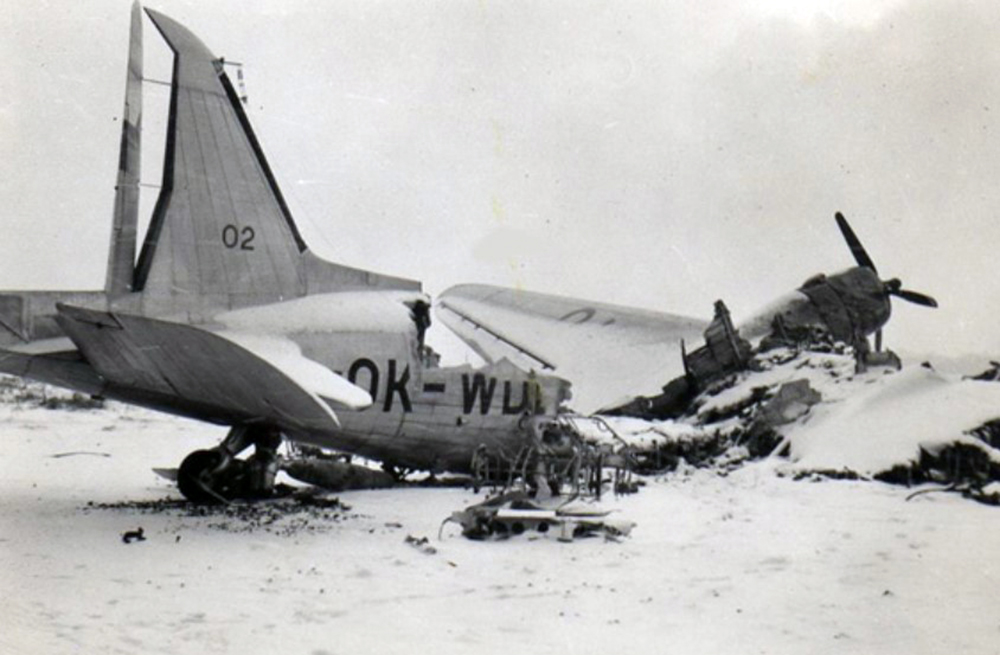
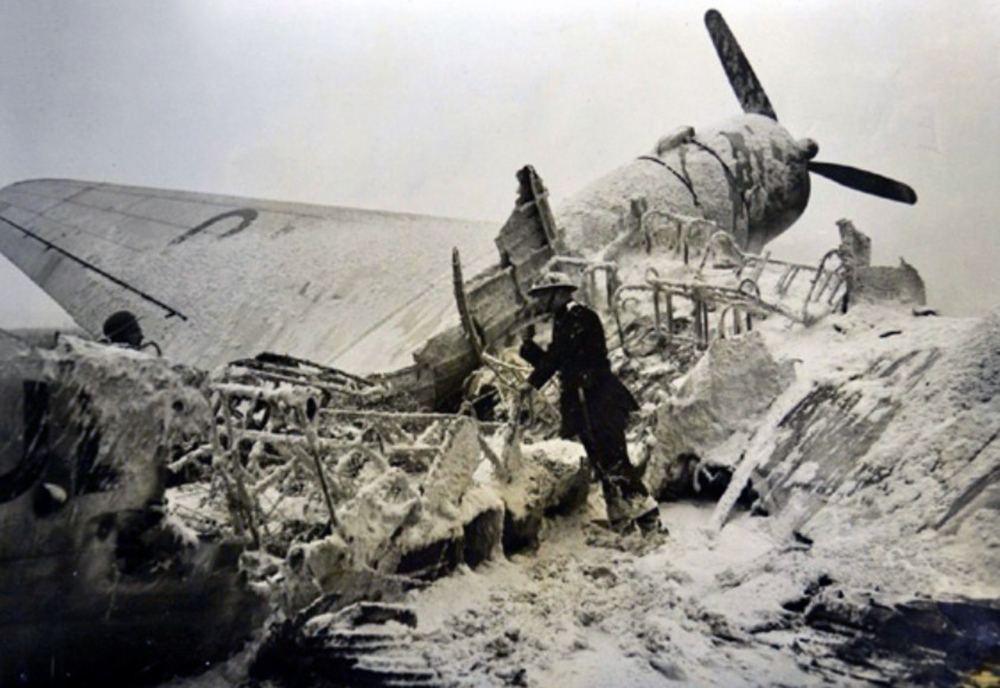
Parked on the apron and subject to a maintenance control by two technicians, the aircraft was destroyed by fire after being hit by a Spencer Airways C-47 registered VP-YFD that crashed on takeoff. Both technicians were slightly injured.