


Region
code
UK
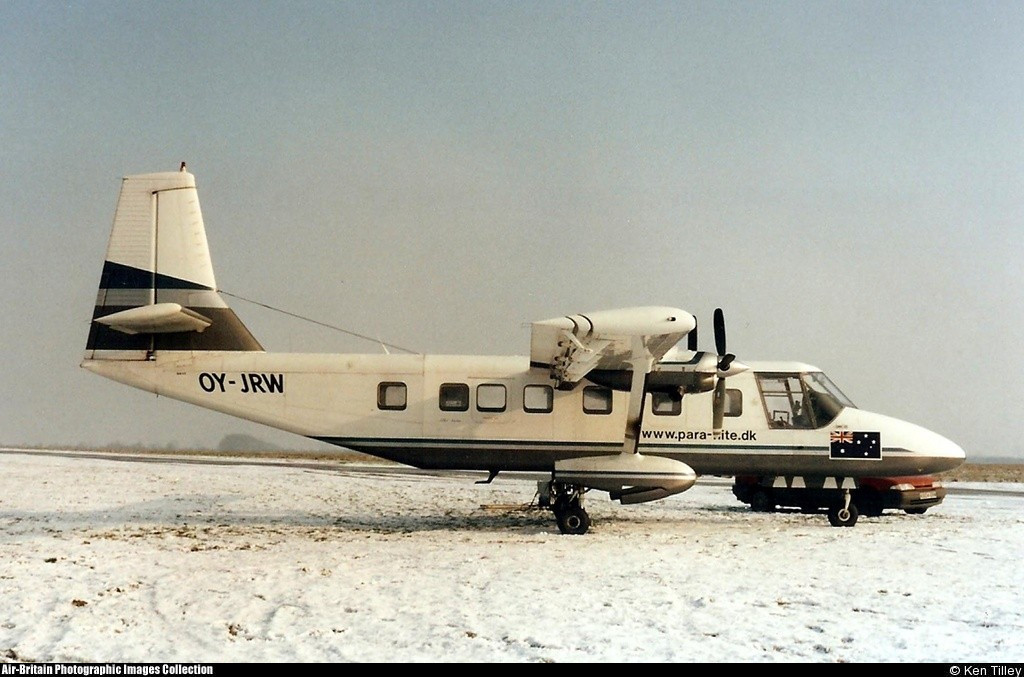
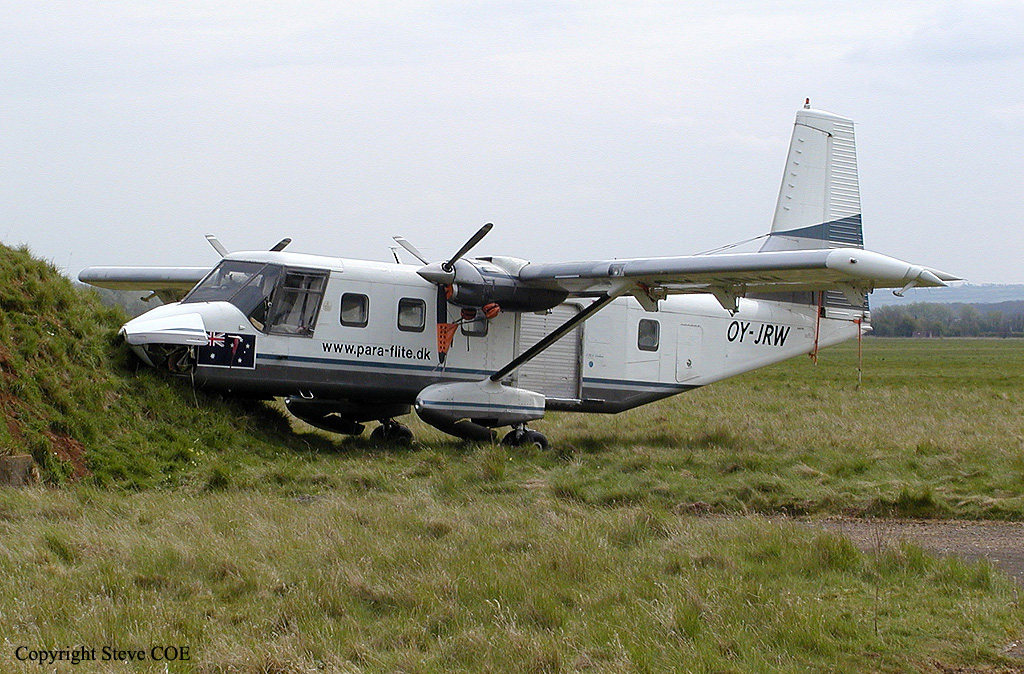
Crash of a GAF Nomad N.24A in Weston-on-the-Green
Date & Time:
Apr 13, 2002 at 0830 LT
Registration:
OY-JRW
Survivors:
Yes
Schedule:
Weston-on-the-Green - Weston-on-the-Green
MSN:
117
YOM:
1981
Crew on board:
2
Crew fatalities:
Pax on board:
13
Pax fatalities:
Other fatalities:
Total fatalities:
0
Captain / Total hours on type:
51.00
Circumstances:
A series of parachute flights had been planned from Weston-on-the-Green. The forecast conditions were good, predicting a surface wind of 360°/10 kt, visibility 30 km, with no significant weather and some strato-cumulus cloud with a base of 3,000 feet. The first flight, which consumed 144 lb of fuel, was completed successfully with 12 parachutists jumping from 12,000 feet. Thirteen parachutists boarded for the second flight and the aircraft was cleared to take off from the dry surface of grass Runway 01 (take off run available 3,194 feet). The surface wind at the time was 360°/15 kt with no significant weather and the temperature was 15°C. The pilot subsequently reported that he checked the condition levers were set to 100% N2, the flaps were set to 10° and that the trim was set in the take off range. He also reported that the company recommended power of 738°C turbine outlet temperature (TOT), and 89 pounds per square inch (psi) manifold pressure were set and achieved during the take off run. This power setting was equivalent to the 'Max Cruise Rating' as specified in the 'Operating Limits' section of the aircraft manual and no take off performance charts or data concerning 'take off distance required' (TODR) and 'accelerate stop distance required' (ASDR) information was available. The maximum take off power available (5 minute limit) was 810°C TOT and 102 psi. At approximately 80 to 83 kt (scheduled rotation speed 71 kt) the pilot pulled back on the control column. He reported that, 'the aircraft felt more nose heavy', 'the aircraft nose did not rise and he perceived that the aircraft was no longer accelerating'. He decided to abort the take off, commenced braking and set the condition levers to the full reverse position. As the aircraft decelerated he turned it to the right in order to avoid trees and bushes ahead. The aircraft struck a small earth mound, whilst still travelling at about 15-20 kt, and came to an abrupt halt. The pilot shut down both engines and selected the fuel and the battery to OFF. The crew and passengers evacuated the aircraft unaided.
Probable cause:
The pilot had successfully completed a similar flight in the same aircraft, in benign meteorological conditions and the available evidence suggests that the aircraft was serviceable. He reported that during the second take off run 'the company recommended take off power of 738°C TOT and 89 psi was set and achieved'. The take off was therefore attempted with only 89 -90% of the maximum power available. This would have had the effect of not only increasing the take off distance but also the 'ASDR' to achieve a successful rejected take off from a speed at or beyond normal rotate speed. With the flap position and trim set correctly for take off the pilot attempted to rotate the aircraft between 80 to 83 kt, at least 9 kt above the scheduled rotation speed of 71 kt. If the aircraft loading had been within the limits of mass and CG prompt rotation of the aircraft should have occurred. This however did not happen and instead the pilot felt the aircraft to be 'more nose heavy than normal'. The exact mass and CG for this flight are uncertain. If the CG position was at the forward limit for the calculated mass, control column forces would have been high but not sufficiently high to prevent a successful takeoff. Extreme forces would only have been encountered if the aircraft CG position was significantly in error. It is therefore considered that for the second takeoff of the day the aircraft CG was significantly forward of the forward CG limit.
Final Report:
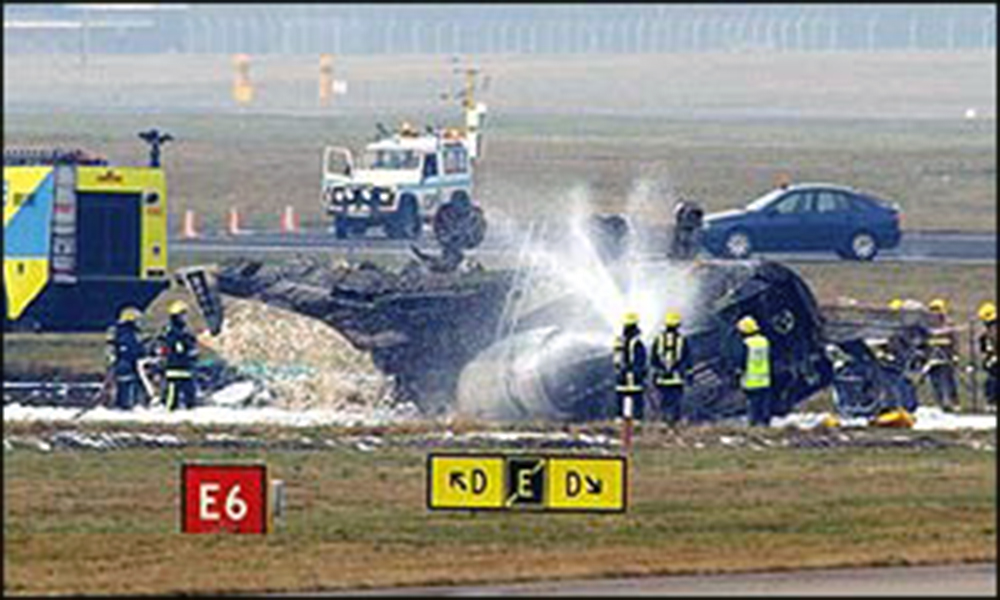
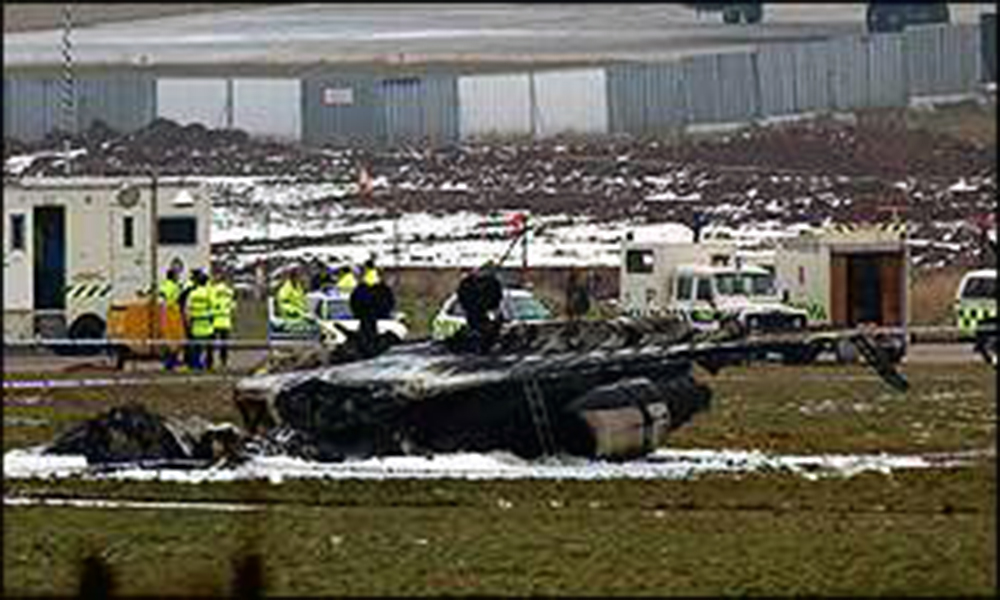
Crash of a Canadair CL-604 Challenger in Birmingham: 5 killed
Date & Time:
Jan 4, 2002 at 1207 LT
Operator:

Registration:
N90AG
Survivors:
No
Schedule:
Birmingham - Bangor - Duluth
MSN:
5414
YOM:
1999
Crew on board:
2
Crew fatalities:
Pax on board:
3
Pax fatalities:
Other fatalities:
Total fatalities:
5
Captain / Total hours on type:
800.00
Copilot / Total hours on type:
800
Aircraft flight hours:
1594
Aircraft flight cycles:
797
Circumstances:
Following ATC clearance, engine start was at 1156 hrs and N90AG was cleared to taxi at 1201 hrs. All radio calls during the accident flight were made by the commander, seated in the right cockpit seat. During taxi, the crew completed their normal Before Takeoff Checks; these included confirmation that the control checks had been completed and that anti-ice might be required immediately after takeoff. Flap 20 had been selected for takeoff and the following speeds had been calculated and briefed by the pilots: V1 137 kt; VR 140 kt; V2 147 kt. By 1206 hrs, the aircraft was cleared to line up on Runway 15. At 1207 hrs, N90AG was cleared for takeoff with a surface wind of 140°/8 kt. The pilot in the left seat was handling the controls. Takeoff appeared normal up to lift-off. Rotation was started at about 146 kt with the elevator position being increased to 8°, in the aircraft nose up sense, resulting in an initial pitch rate of around 4°/second. Lift-off occurred 2 seconds later, at about 153 kt and with a pitch attitude of about 8° nose-up. Once airborne, the elevator position was reduced to 3° aircraft nose-up whilst the pitch rate increased to about 5°/second. Immediately after lift-off, the aircraft started to bank to the left. The rate of bank increased rapidly and 2 seconds after lift-off the bank angle had reached 50°. At that point, the aircraft heading had diverged about 10° to the left. Opposite aileron, followed closely by right rudder, was applied as the aircraft started banking; full right aileron and full right rudder had been applied within 1 second and were maintained until the end of the recording. As the bank angle continued to increase, progressively more aircraft nose-up elevator was applied. Stick-shaker operation initiated 3.5 seconds after lift-off and the recorders ceased 2 seconds later. The aircraft struck the ground, inverted, adjacent to the runway. The last recorded aircraft attitude was approximately 111° left bank and 13° nose-down pitch; the final recorded heading was about 114° (M). The aircraft was destroyed by impact forces and a post crash fire and all five occupants were killed, among them John Shumejda, President of the Massey-Ferguson Group and Ed Swingle, Vice President. The aircraft was leased by AGCO Massey-Ferguson.
Probable cause:
Causal factors:
1. The crew did not ensure that N90AG’s wings were clear of frost prior to takeoff.
2. Reduction of the wing stall angle of attack, due to the surface roughness associated with frost contamination, to below that at which the stall protection system was effective.
3. Possible impairment of crew performance by the combined effects of a non-prescription drug, jet-lag and fatigue.
1. The crew did not ensure that N90AG’s wings were clear of frost prior to takeoff.
2. Reduction of the wing stall angle of attack, due to the surface roughness associated with frost contamination, to below that at which the stall protection system was effective.
3. Possible impairment of crew performance by the combined effects of a non-prescription drug, jet-lag and fatigue.
Final Report:

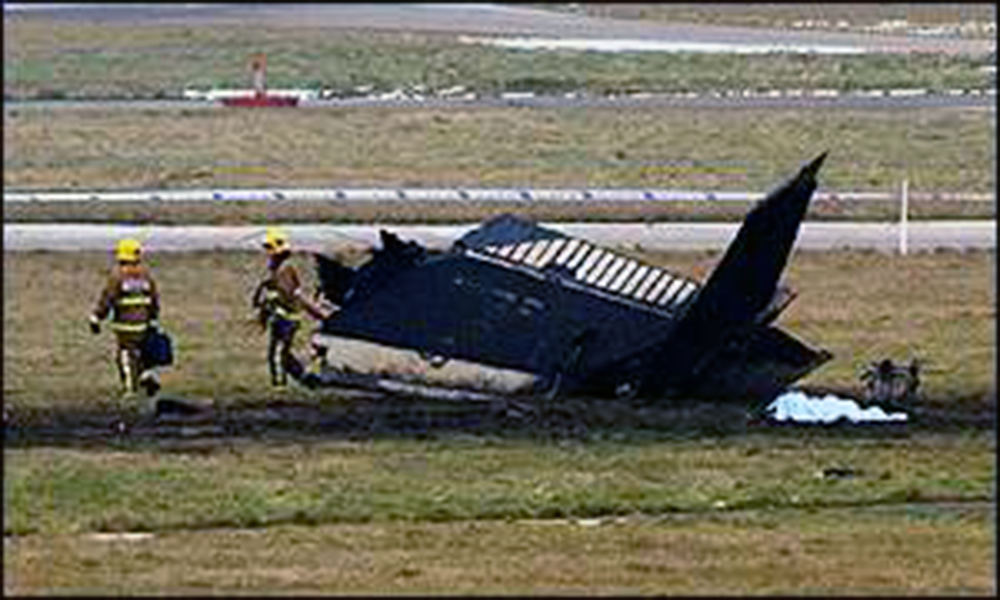
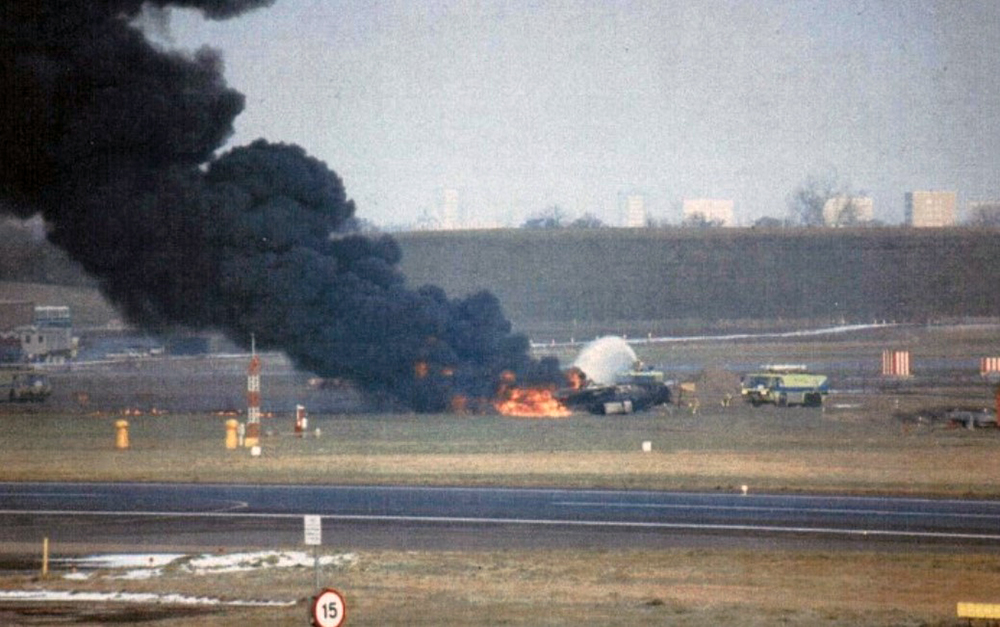
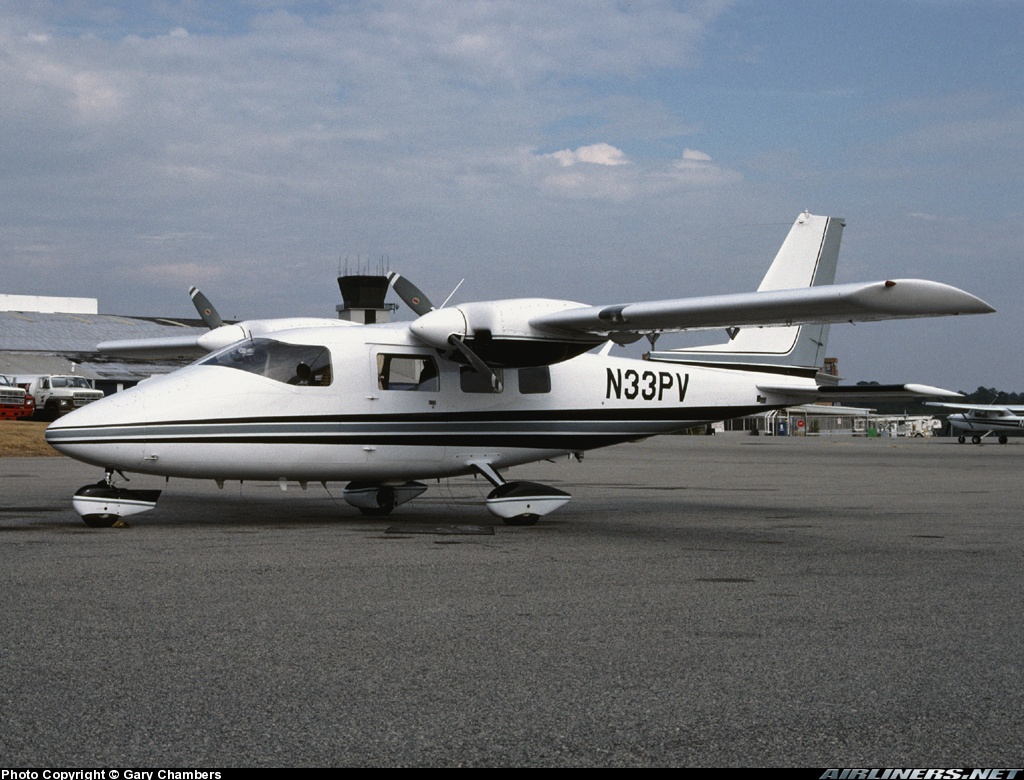
Crash of a Partenavia P.68TC in Gratwich
Date & Time:
Jun 3, 2001 at 1317 LT
Operator:

Registration:
N33PV
Survivors:
Yes
Schedule:
Meaux – Liverpool – Henstridge
MSN:
347-33/TC
YOM:
1984
Crew on board:
1
Crew fatalities:
Pax on board:
4
Pax fatalities:
Other fatalities:
Total fatalities:
0
Captain / Total hours on type:
159.00
Circumstances:
The five occupants left Guernsey on 24 May and flew direct to Vannes in Normandy. The pilot routinely cruised at power settings of 2,350 RPM and 32 inches Manifold Pressure giving a speed of 140 KIAS. The flight to Vannes would have taken some 44 minutes in still air and records recovered from the aircraft indicated that it lasted 50 minutes. The aircraft was parked at Vannes for a few days on level ground. No fuel was uplifted before leaving Vannes and the aircraft departed on 31 May to fly to Meaux on the eastern outskirts of Paris. The records indicate that this 254 nm flight lasted 2 hours 5 minutes. The aircraft was parked on level ground at Meaux for a few days. On the morning of 3 June, the day of the accident, the owner taxied the aircraft to the aero club's fuel pumps at Meaux to have the fuel tanks replenished. She believes she may have dipped the tanks before refuelling began but she could not remember the resultant quantities. Whilst the aircraft was being refuelled, the pilot left its vicinity and went into the club premises to file her flight plan, check the weather and pay the fuel and airport charges. The fuel receipt was completed for 157 litres of 100LL AVGAS When the refuelling operator had finished filling the left wing tank he moved towards the right wing but received instructions from a member of the pilot's family that there was no need to refuel the right wing tank. A different member of the family stated, soon after the accident, that this was because the right fuel tank gauge was indicating 2/3 full. Shortly afterwards the pilot returned to the aircraft. She did not dip the tanks after refuelling. On leaving Meaux the pilot recalled that the right tank gauge indicated "almost full" whilst the left tank gauge indicated "a bit less". Her intentions were to fly from Meaux to the airstrip near Liverpool where three persons would disembark and she would then return to Henstridge. There were no refuelling facilities at the Liverpool landing strip and she planned to complete both legs without refuelling. She did so on the basis that the aircraft's endurance on full tanks was about 6 hours and she planned to be airborne for less than this. (The still air flight time was later calculated to be 41/4 hours and the prevailing winds were westerly). The aircraft departed Meaux at 1020 hrs and was flown uneventfully and in VMC conditions towards Liverpool via Compiegne, Abbeville, Lydd, Clacton and Cambridge. The autopilot was disengaged throughout the flight and the pilot could not recall using abnormal amounts of rudder or roll control (the aircraft had no aileron trim). Specifically, she was not aware of any marked imbalance in roll or any abnormal fuel gauge readings. At 1246 hrs when the aircraft was at 3,500 feet altitude and south of Leicester the pilot contacted East Midlands Approach and requested a Flight Information Service en-route to the Lichfield NDB. At 1312 hrs she transmitted a Mayday message on the East Midlands frequency stating that she had "lost" the right engine. The controller responded with information that the nearest airfield was Tatenhill in her six o'clock at about 10 miles range. The pilot turned to the right and took-up a south-westerly track towards Tatenhill. About one minute later, when asked to confirm her altitude, the pilot reported "I HAVE NO ENGINES NOW" followed by "TO DO A FORCED LANDING PAPA VICTOR, OH NO ITS GOING AGAIN". The controller continued providing vectors to Tatenhill whilst his assistant briefed Tatenhill's radio operator and West Drayton's Distress and Diversion cell on the developing situation. At 1315:40 hrs, when the aircraft was 10 miles northwest of Tatenhill at 2,800 feet altitude, the pilot reported "NO ENGINES ... W'ELL HAVE TO FIND A FIELD". The last recorded RTF message from the pilot at 1316:50 hrs was "I HAVE A HI... HILL ERM A FIELD ON A". The pilot was heavily sedated in hospital for some time after the accident and she could remember little of the final stages of the glide approach. The aircraft passed low beside a farmhouse and crash-landed in a field of soft earth with a significant up-slope in the landing direction.
Probable cause:
The accident arose partly through significantly asymmetric fuel quantities in the two wing tanks before the aircraft took off. The pilot was critically injured in the accident and heavily sedated for some time afterwards, which may explain why she could remember few details of the refuelling process at Meaux. Because she left the aircraft during the refuelling operation, she may have been unaware that only the left tank had been replenished. A representative of the flying club at Meaux stated that the club accepted payment for fuel only by French cheque or in cash, and that the pilot paid in cash and appeared to spend all her remaining French currency. However, after paying all the charges at Meaux, the pilot's family had several hundred Francs and some French currency cheques with them and consequently, the inability to pay for more fuel was not an issue. Moreover, no explanation was offered as to how a pilot could pay for 157 litres of fuel before it had been delivered without the refueller receiving instructions to deliver that quantity. The pilot could not remember her instructions to the refueller but her instructions to a family member who remained with the aircraft were that if the left tank was between one half and two thirds full, the right tank was to be filled to within two inches of the filler neck. The pilot now believes that there may have been some confusion between the identification of 'left' and 'right' tanks. Nevertheless, if the fuel tank quantities were similar before the refuelling, it is surprising that the pilot was unaware of any tendency to roll towards the heavier left wing after take-off. Moreover, it is also surprising that the fuel gauges, which worked correctly when tested, did not give early warning of low fuel contents in one tank. The loss of power from the right engine was consistent with exhaustion of the fuel supply from the right wing tank which had not been replenished since the aircraft left Guernsey. Had it not been for the mis-positioned fuel selector valve, the pilot should have had ample fuel to land safely at Tatenhill on one engine, a procedure which she had been adequately trained to accomplish. This option was thwarted when air from the empty right tank reached the left engine. At that moment the left engine began to run intermittently and ultimately the pilot had no option but to execute a forced landing. The pilot chose a brown field in which to land because she feared the aircraft might turn over if she landed in a field of standing crop. The upward slope of the field, the soft earth and the 'clean' wing configuration all contributed to a very heavy forced landing. The pilot did not remember feathering the right propeller (it had been feathered) and she could not explain why she had touched down with the flaps retracted. Nevertheless, the tone of the pilot's voice on the radio suggested that she was coping well with an unpleasant and unforeseen situation. The East Midlands air traffic controller's performance was exemplary.
Final Report:
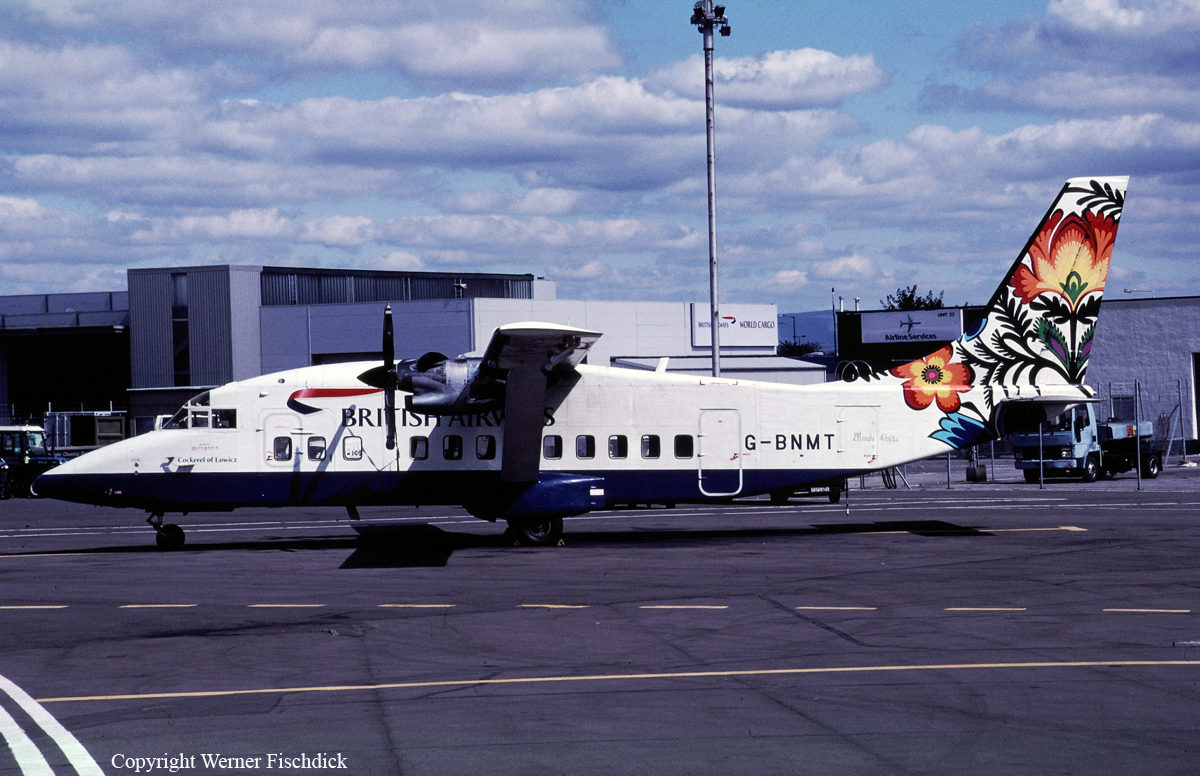
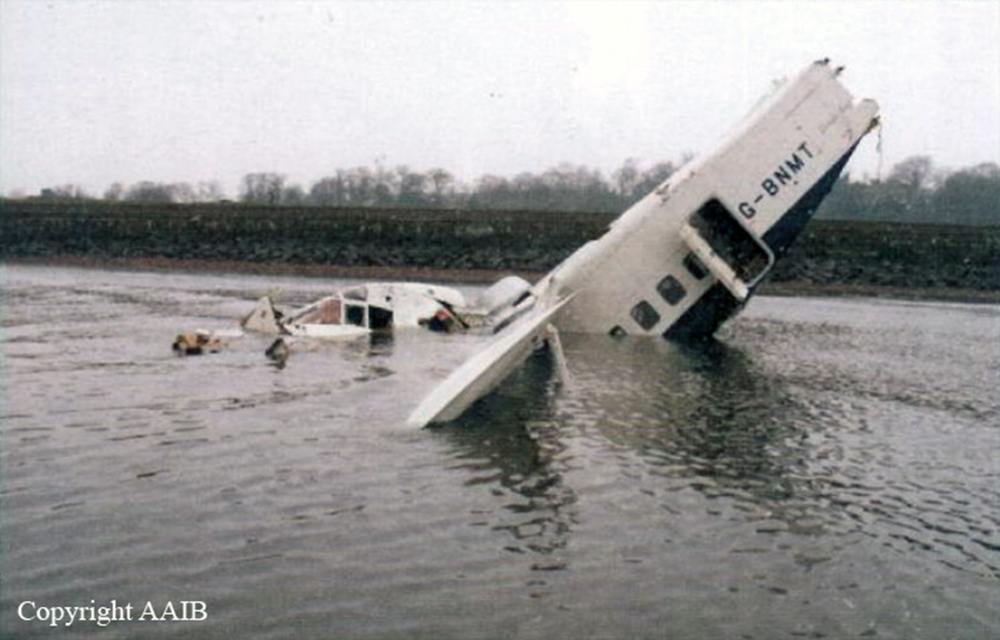
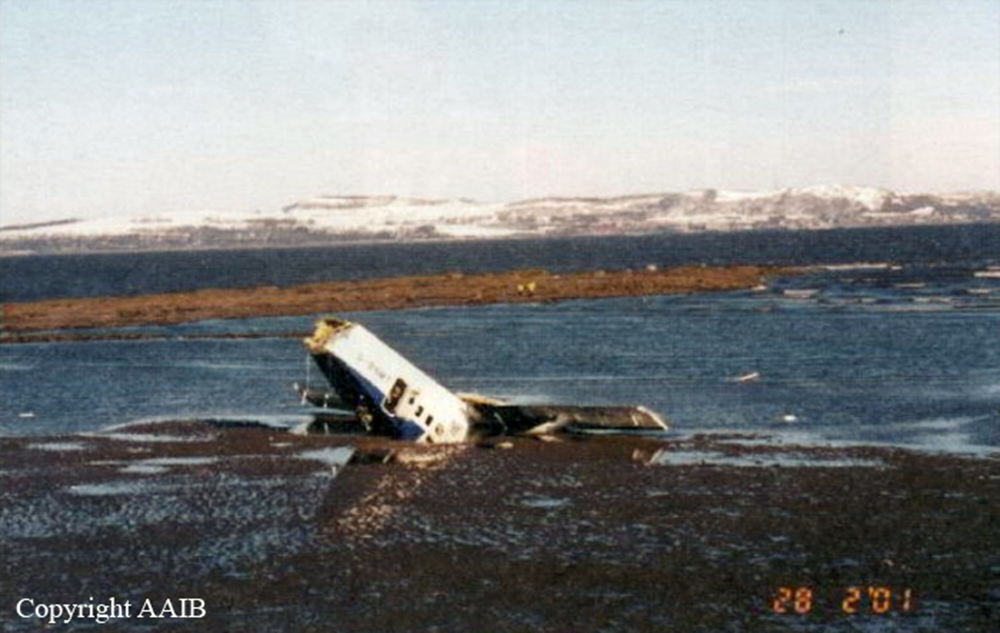
Crash of a Short 360-300 off Edinburgh: 2 killed
Date & Time:
Feb 27, 2001 at 1731 LT
Operator:

Registration:
G-BNMT
Survivors:
No
Schedule:
Edinburgh – Belfast
MSN:
3723
YOM:
1987
Flight number:
LOG670A
Crew on board:
2
Crew fatalities:
Pax on board:
0
Pax fatalities:
Other fatalities:
Total fatalities:
2
Captain / Total hours on type:
972.00
Copilot / Total hours on type:
72
Circumstances:
The aircraft landed at Edinburgh Airport, Scotland, at 00:03 and was parked there on Stand 31 in conditions including light and moderate snowfall. After preparation for a Royal Mail charter flight 670A to Belfast, start clearance was given at 15:03. At 15:12 hrs the crew advised ATC they were shutting down due to a technical problem. The crew then advised their company that a generator would not come on line. An avionics technician carried out diagnosis during which both engines were ground-run twice. No fault was found and the flight crew requested taxi clearance at 17:10. A normal take off from runway 06 was carried out followed by a reduction to climb power at 1,200 feet amsl. At 2,200 feet amsl the aircraft anti-icing systems were selected on. Three seconds later the torque on each engine reduced rapidly to zero. A MAYDAY call was made by the crew advising that they had experienced a double engine failure. The aircraft was ditched in the Firth of Forth estuary some 100 meters from the shoreline near Granton Harbour. Both pilots were killed. Weather reported just before the accident with a temperature of +2°C, dewpoint of -3°C, visibility of more then 10 km, broken clouds at 4500 feet and cover at 8000 feet.
Probable cause:
The following causal factors were identified:
1) The operator did not have an established practical procedure for flight crews to fit engine intake blanks (‘bungs’) in adverse weather conditions. This meant that the advice contained in the aircraft manufacturer’s Maintenance Manual ‘Freezing weather-precautions’ was not complied with. Furthermore intake blanks were not provided on the aircraft nor were any readily available at Edinburgh Airport.
2) A significant amount of snow almost certainly entered into the engine air intakes as a result of the aircraft being parked heading directly into strong surface winds during conditions of light to moderate snowfall overnight.
3) The flow characteristics of the engine intake system most probably allowed large volumes of snow, ice or slush to accumulate in areas where it would not have been readily visible to the crew during a normal pre-flight inspection.
4) At some stage, probably after engine ground running began, the deposits of snow, ice or slush almost certainly migrated from the plenum chambers down to the region of the intake anti-ice vanes. Conditions in the intakes prior to takeoff are considered to have caused re-freezing of the contaminant, allowing a significant proportion to remain in a state which precluded its ingestion into the engines during taxi, takeoff and initial climb.
5) Movement of the intake anti-icing vanes, acting in conjunction with the presence of snow, ice or slush in the intake systems, altered the engine intake air flow conditions and resulted in the near simultaneous flameout of both engines.
6) The standard operating procedure of selecting both intake anti-ice vane switches simultaneously, rather than sequentially with a time interval, eliminated a valuable means of protection against a simultaneous double engine flameout.
1) The operator did not have an established practical procedure for flight crews to fit engine intake blanks (‘bungs’) in adverse weather conditions. This meant that the advice contained in the aircraft manufacturer’s Maintenance Manual ‘Freezing weather-precautions’ was not complied with. Furthermore intake blanks were not provided on the aircraft nor were any readily available at Edinburgh Airport.
2) A significant amount of snow almost certainly entered into the engine air intakes as a result of the aircraft being parked heading directly into strong surface winds during conditions of light to moderate snowfall overnight.
3) The flow characteristics of the engine intake system most probably allowed large volumes of snow, ice or slush to accumulate in areas where it would not have been readily visible to the crew during a normal pre-flight inspection.
4) At some stage, probably after engine ground running began, the deposits of snow, ice or slush almost certainly migrated from the plenum chambers down to the region of the intake anti-ice vanes. Conditions in the intakes prior to takeoff are considered to have caused re-freezing of the contaminant, allowing a significant proportion to remain in a state which precluded its ingestion into the engines during taxi, takeoff and initial climb.
5) Movement of the intake anti-icing vanes, acting in conjunction with the presence of snow, ice or slush in the intake systems, altered the engine intake air flow conditions and resulted in the near simultaneous flameout of both engines.
6) The standard operating procedure of selecting both intake anti-ice vane switches simultaneously, rather than sequentially with a time interval, eliminated a valuable means of protection against a simultaneous double engine flameout.
Final Report:
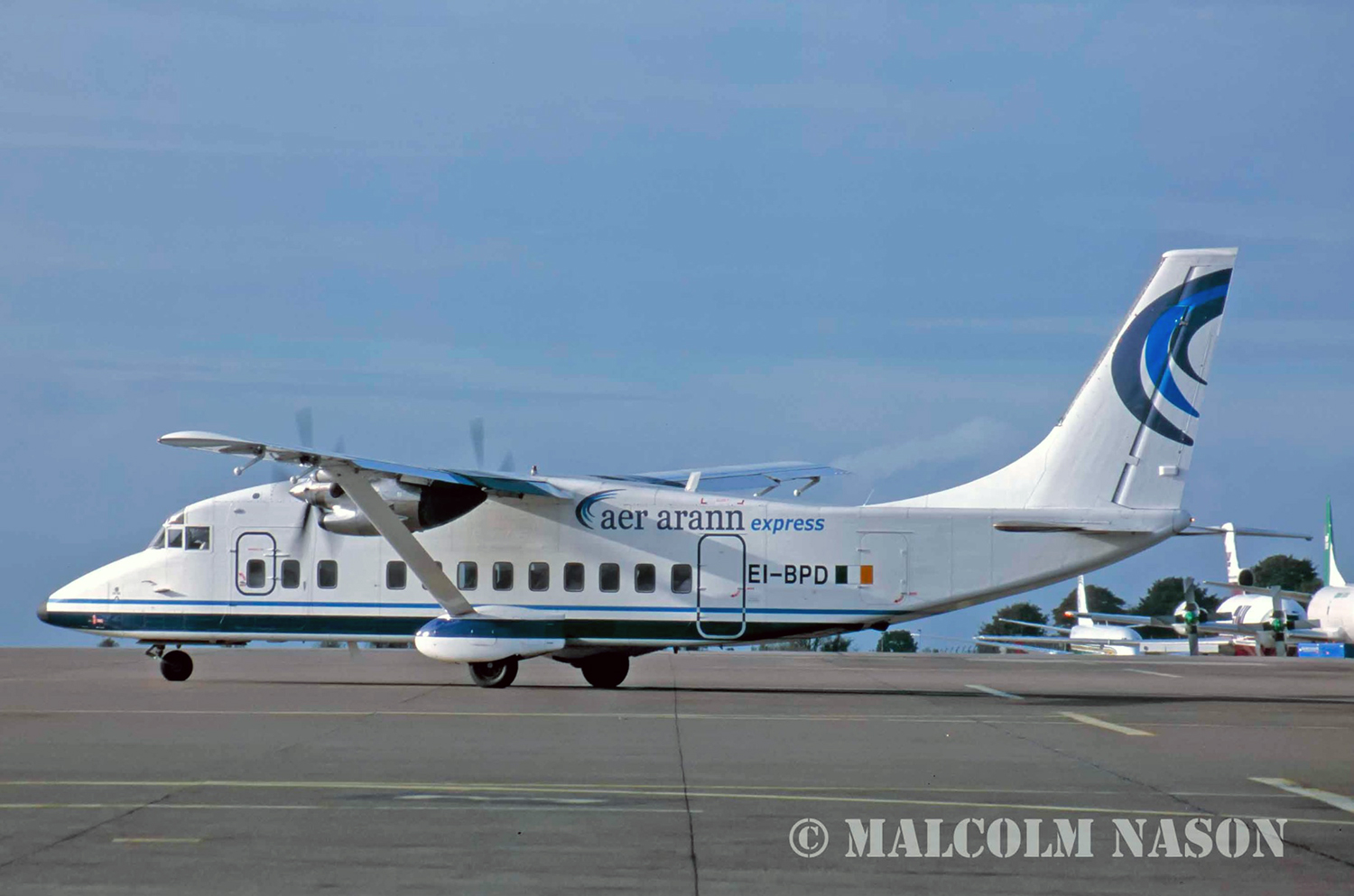
Crash of a Short 360-100 in Sheffield
Date & Time:
Feb 4, 2001 at 1921 LT
Operator:

Registration:
EI-BPD
Survivors:
Yes
Schedule:
Dublin – Sheffield
MSN:
3656
YOM:
1984
Crew on board:
3
Crew fatalities:
Pax on board:
25
Pax fatalities:
Other fatalities:
Total fatalities:
0
Captain / Total hours on type:
1392.00
Circumstances:
The crew were planned to fly a scheduled passenger flight from Dublin to Sheffield airport and the commander was the handling pilot for the flight. Both pilots had operated into Sheffield between five and ten times in the previous three months. The aircraft, which was serviceable, took off from Dublin at 1814 hrs and was routed to Sheffield via the VOR/DME navigation beacon at Wallasey at FL90. Prior to descent, the crew obtained the most recent information from the Automatic Terminal Information Service (ATIS); this report, timed at 1820 hrs, was identified as 'Information Hotel'. The reported conditions at Sheffield were: surface wind variable at 03 kt, visibility 4,000 metres in rain and snow, a few clouds at 600 feet, scattered cloud at 1,200 feet and broken cloud at 3,000 feet, the temperature and dew point were coincident at +1°C and the QNH was 989 hPa. Air traffic control was passed to the Sheffield approach controller when the aircraft was 12 nm from the overhead at which time it was descending to 5,000 feet on the QNH. The crew were informed that the current ATIS was now 'Information India' and the aircraft was cleared to descend to 3,000 feet when within 10 nm of the airport. 'Information India', timed at 1850 hrs, contained no significant changes from 'Information Hotel'. The aircraft weight for the landing was calculated to be 11,100 kg with an associated threshold speed of 103 kt. The aircraft was cleared for the ILS/DME procedure for Runway 28 and the crew requested the QFE which was 980 hPa. The decision height for the approach was 400 feet. During the initial stages of the manually flown ILS approach the commander's flight director warning flag appeared briefly but then disappeared and did not reappear during the remaining period of flight. The de-ice boots had been selected to 'ON' early in the descent when the aircraft had briefly encountered light icing. These de-ice boots were selected to 'OFF' when at 5 nm from the runway at which stage there were no indications of icing and the indicated outside air temperature was +5°C. (This is indicative of an actual air temperature of +2°C.) At 1918:11 hrs the crew reported that they were established on the localiser. When the aircraft intercepted the glidepath, the flaps were set to 15° correctly configuring the aircraft for the approach. The handling pilot recalled that initially the rate of descent was slightly higher than the expected 650 ft/min leading him to suspect the presence of a tailwind, however, the rate of descent returned to a more normal value when approximately 4 nm from the runway. The propellers were set to the maximum rpm at 1,200 feet agl. When the crew reported that they were inside 4 nm they were cleared to land and passed the surface wind, which was variable at 2 kt; they were also warned that the runway surface was wet. Both pilots saw the runway lights when approaching 400 feet agl; the flaps were selected to 30° and confirmed at that position. Both pilots believed that the airspeed was satisfactory but, as the commander checked back on the control column for the landing, the rate of descent increased noticeably and the aircraft landed firmly. Both pilots believed that the power levers were in the flight idle position and neither was aware of any unusual control inputs during the landing flare. Two separate witnesses saw the aircraft during the later stages of the approach and the subsequent landing, one of these witnesses was in the control tower and the other was standing in front of the passenger terminal. They both saw the aircraft come into view at a height of approximately 400 feet and apparently travelling faster than normal. They described the aircraft striking the ground very hard with the left wing low; both heard a loud noise coincident with the initial contact. They then reported that the aircraft bounced before hitting the ground again, this time with the nose wheel first, before bouncing once more. Crew statements and flight data evidence indicate that the aircraft lifted no more than 8 feet before settling on the runway and then remained on the ground. The aircraft was then seen to travel about half way along the runway before slewing to the left and running onto the grass. When the aircraft stopped the left wing tip appeared to be touching the grass. When the aircraft came to rest the tower controller asked the crew if they required assistance, this call was timed at 1921:15 hrs. The crew asked for the fire services to be placed on standby but the controller judged that the situation required an immediate and full emergency response and activated the fire and rescue services. The airfield fire services arrived at the aircraft at 1924 hrs and all the passengers had been evacuated by 1925 hrs. The South Yorkshire fire and rescue services arrived at 1933 hrs and assisted in ferrying passengers to the terminal building.
Probable cause:
Evidence from the CVR indicated that the flight was conducted in a thoroughly professional manner in accordance the operator's normal procedures until the final stages of the approach. The recorded data indicate that three seconds prior to touchdown the propeller blade angle changed from the flight range to the ground range. Coincident with this change the CVR recorded sounds consistent with the propellers 'disking' and the FDR indicated that the aircraft then decelerated longitudinally and accelerated downwards. The engineering investigation revealed that the propeller control rigging and the operation of the flight idle baulk were correct. Selection of ground fine requires the pilot to firstly release the flight idle baulk and then lift and pull the propeller levers further back, this combined action rapidly becomes a programmed motor skill in the routine of daily operations. It is therefore possible that the handling pilot unintentionally selected the propellers into the ground fine position whilst still in the air.
Final Report:
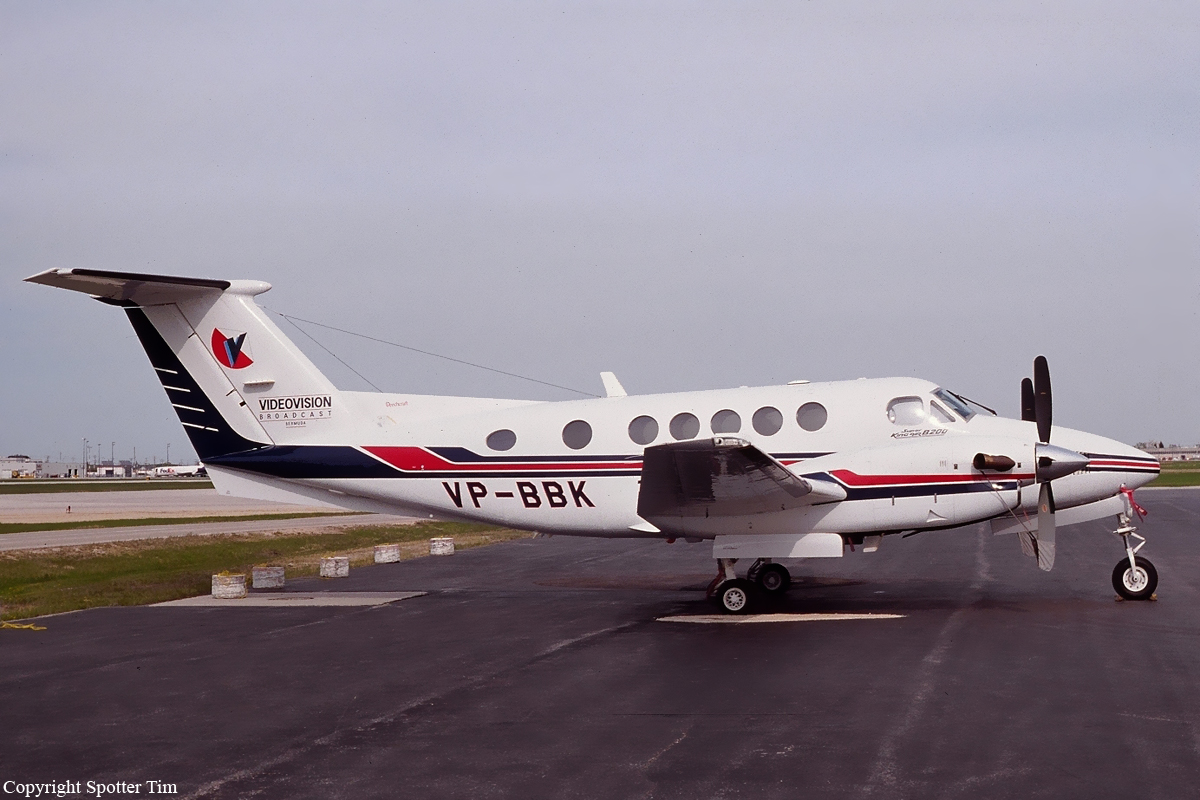
Crash of a Beechcraft B200 Super King Air in Blackbushe: 5 killed
Date & Time:
Dec 23, 2000 at 1351 LT
Operator:

Registration:
VP-BBK
Survivors:
No
Schedule:
Blackbush - Palma de Mallorca
MSN:
BB-1519
YOM:
1995
Crew on board:
1
Crew fatalities:
Pax on board:
4
Pax fatalities:
Other fatalities:
Total fatalities:
5
Captain / Total hours on type:
1243.00
Circumstances:
The aircraft, with the pilot and four passengers on board, departed Blackbushe from Runway 08 in fog with a visibility of less than 500 metres. As the aircraft reached the upwind end of the runway it was seen to bank to the left before disappearing from view. It crashed 13 seconds later into a factory complex where a major fire ensued. All on board were fatally injured. A substantial amount of the aircraft structure was consumed by fire. Engineering examination of that which remained showed that there was no malfunction found within the engines, propellers or controls that would have affected the flight. Analysis of the cockpit voice recorder however showed a reduction in one of the propellers rpm as the aircraft rotated that would have led to thrust asymmetry. Through a combination of lack of visual reference, confusion as to the cause of the power reduction and possible disorientation the pilot lost control of the aircraft and although he may have realised the situation seconds before impact with the ground there was insufficient height available to effect a safe recovery.
Probable cause:
Whilst the CVR does not provide any comments by the pilot as to the problems he was experiencing, spectral analysis of the CVR recording indicates that a significant difference in propeller rpm occurred at rotation when the pilot would normally have removed his right hand from the power levers. There was no evidence of a malfunction in either engine or the propeller control systems thus it is probable that migration of a power lever(s) occurred due to insufficient friction being set on the power lever friction control. The fiction control had been slackened during recent maintenance and it was possible that it was not adjusted sufficiently by the pilot during his checks prior to takeoff. His simulator training had included engine failures but as far as could be established, the pilot had not encountered or been trained for the situation of power lever(s) migration during takeoff. With his level of experience the pilot should have controlled the resultant asymmetric thrust and in reasonable conditions continued the takeoff to a safe height where analysis of the problem could have been carried out. In the event the takeoff was carried out in extremely low visibility conditions leading to the pilot's total loss of any ground references within seconds of lift off. Having controlled the aircraft initially the lack of visual reference with the ground, possible confusion with attitude instrument bank angle display, physical disorientation brought about by cockpit activity and confusion as to the exact nature of the problem led the pilot to lose control of the aircraft at a low altitude. The unusual attitude developed by the aircraft and the reason for the power asymmetry may have been recognised by the pilot several seconds before impact however there was insufficient height available for him to effect a safe recovery. The transition from visual to instrument flight in the low visibility conditions existing at the time of departure was considered to be a major contributory factor in this accident.
Final Report:
Crash of a Piper PA-60 Aerostar (Ted Smith 602P) in Fortingall: 1 killed
Date & Time:
Nov 30, 2000 at 1635 LT
Operator:

Registration:
N64719
Survivors:
No
Schedule:
Linz – Newcastle – Keflavik – Narsarsuaq – Goose Bay – New York
MSN:
60-8365-006
YOM:
1983
Crew on board:
1
Crew fatalities:
Pax on board:
0
Pax fatalities:
Other fatalities:
Total fatalities:
1
Circumstances:
Start-up, taxi and take-off were apparently normal with an IFR clearance for a noise abatement right turn-out on track towards the Talla VOR beacon. Soon afterwards the pilot was given clearance to join controlled airspace on track towards Talla at FL 140 and to expect the flight planned level of FL 200 when cleared by Scottish Radar. As the aircraft was climbing through FL 120 the Talla sector controller first cleared the pilot to climb to FL140 and then almost immediately re-cleared him to climb to FL 200. The pilot replied "ER NEGATIVE I WOULD LIKE TO MAINTAIN ONE FOUR ZERO FOR THE TIME BEING" and the controller granted his request. At 16:21 hrs the pilot transmitted "SCOTTISH NOVEMBER SIX FOUR SEVEN ONE NINE ER REQUESTING HIGHER TO GET OUT OF SOME ICING". Initially the controller offered FL 160 but the pilot replied "IF POSSIBLE TWO ZERO ZERO". Immediately he was given clearance to climb to FL 205, the correct quadrantal cruising altitude. Recorded radar data showed that for the next six minutes, the aircraft's rate of climb and airspeed were erratic. The pilot made one brief transmission of "SCOTTISH" at about 16:30 hrs but nothing more was said by him or the controller for another 20 seconds. Then the controller said "NOVEMBER SIX FOUR SEVEN ONE NINE ER I SEE YOU'RE IN THE TURN DO YOU HAVE A PROBLEM". There was no reply and so the controller repeated his message, eventually receiving the reply "YES I HAVE ER AN EMERGENCY". The controller asked the pilot to "SQUAWK SEVEN SEVEN ZERO ZERO" but the pilot replied "HANG ON". By this time the aircraft was descending rapidly in a gentle right turn. The controller twice asked the pilot for the nature of his problem but the pilot asked the controller to 'HANG ON FOR A MOMENT". The controller could see the aircraft was near high ground and losing altitude rapidly. He twice passed messages to this effect to the pilot but he did not receive an immediate reply. At 16:33 hrs the pilot transmitted "CAN YOU GET ME ER SOMEWHERE WHERE I CAN LAND I CAN'T MAINTAIN ALTITUDE AT ALL". Immediately the controller instructed the pilot to take up an easterly heading and gave him the aircraft's position relative to the airport at Perth. The controller then asked the pilot for his flight conditions (twice) to which the pilot eventually replied "I'M COMING OUT OF ER THE CLOUDS NOW" followed by "JUST BREAKING OUT". The controller then said "ROGER DO YOU HAVE ANY POWER AT ALL OR HAVE YOU LOST THE ENGINE". The pilot replied "I GOT POWER AGAIN BUT I HAVE NO CONTROL". That was his last recorded RTF transmission made at 16:34:40 hrs. The final radar return placed the aircraft at an altitude of 3,150 feet overhead Drummond Hill which is on the north bank of Loch Tay, near the village of Fortingall, and rises to 1,500 feet amsl.
Probable cause:
On vacating FL140, the aircraft's climb rate was so erratic at 140 KIAS that it seems likely that by then, the aircraft had already gathered sufficient ice to seriously affect its performance. If all the
turbocharger inlets had become partially blocked, then manually selecting both engines to alternate air induction should have introduced warmer air into the turbochargers and restored power. The description of engine operation in the Superstar manual states:
'If manifold pressure continues to decrease after opening the manual alternate air, it is an indication that turbocharger inlets are still restricted and the engine may become normally aspirated through the automatic alternate air door located below the induction air filter'.
Normal aspiration reduces the manifold pressure to ambient or less and at FL140 the ambient pressure is about 17.6 inches which is less than half the climb rated manifold pressure. That might explain the inability to climb above FL 160 but it would also have deprived the pilot of pressurisation. There was no change in his voice consistent with donning an oxygen mask so he may not have lost pressurisation completely. Nevertheless, since he lost control at around FL160 and 110 KIAS, and because the aircraft initially turned to the right, a combination of airframe icing and asymmetric power loss seem the most likely explanation for the sustained loss of control. The split in the EDP diaphragm which almost certainly occurred during this flight may have contributed to an asymmetric power problem. Alternatively, the pilot might have become mildly hypoxic and decided to begin an emergency descent. If so, he did not declare an emergency at the time he started to descend, although he did utter the word "SCOTTISH" after control was lost, so he was conscious even if his mental abilities had been impaired by hypoxia. On balance, the tone of his voice and his initial failure to respond to ATC messages suggested that the descent was begun through loss of control rather than a deliberate act followed by loss of control. At the time of the accident the aircraft had been flying below the freezing level (8,000 feet) for about five minutes and much of the airframe and induction system ice may have melted. The would-be rescuers would have taken at least five minutes to reach the crash site and so the fact that none of them reported seeing or treading on any ice was not surprising. Witness and propeller evidence indicated that power had been restored on at least one engine but there seemed to be insufficient power to climb out of Glen Lyon. The aircraft was out of control when it crashed at low speed from a sharp turning manoeuvre. Before this manoeuvre the pilot may have had partial control, albeit with a power problem which prevented him from climbing, and he finally lost control totally when he attempted to turn around within the confines of the Glen. He had no choice but to attempt the turn since, had he not turned, he would have flown into the side of the hill above the crash site.
turbocharger inlets had become partially blocked, then manually selecting both engines to alternate air induction should have introduced warmer air into the turbochargers and restored power. The description of engine operation in the Superstar manual states:
'If manifold pressure continues to decrease after opening the manual alternate air, it is an indication that turbocharger inlets are still restricted and the engine may become normally aspirated through the automatic alternate air door located below the induction air filter'.
Normal aspiration reduces the manifold pressure to ambient or less and at FL140 the ambient pressure is about 17.6 inches which is less than half the climb rated manifold pressure. That might explain the inability to climb above FL 160 but it would also have deprived the pilot of pressurisation. There was no change in his voice consistent with donning an oxygen mask so he may not have lost pressurisation completely. Nevertheless, since he lost control at around FL160 and 110 KIAS, and because the aircraft initially turned to the right, a combination of airframe icing and asymmetric power loss seem the most likely explanation for the sustained loss of control. The split in the EDP diaphragm which almost certainly occurred during this flight may have contributed to an asymmetric power problem. Alternatively, the pilot might have become mildly hypoxic and decided to begin an emergency descent. If so, he did not declare an emergency at the time he started to descend, although he did utter the word "SCOTTISH" after control was lost, so he was conscious even if his mental abilities had been impaired by hypoxia. On balance, the tone of his voice and his initial failure to respond to ATC messages suggested that the descent was begun through loss of control rather than a deliberate act followed by loss of control. At the time of the accident the aircraft had been flying below the freezing level (8,000 feet) for about five minutes and much of the airframe and induction system ice may have melted. The would-be rescuers would have taken at least five minutes to reach the crash site and so the fact that none of them reported seeing or treading on any ice was not surprising. Witness and propeller evidence indicated that power had been restored on at least one engine but there seemed to be insufficient power to climb out of Glen Lyon. The aircraft was out of control when it crashed at low speed from a sharp turning manoeuvre. Before this manoeuvre the pilot may have had partial control, albeit with a power problem which prevented him from climbing, and he finally lost control totally when he attempted to turn around within the confines of the Glen. He had no choice but to attempt the turn since, had he not turned, he would have flown into the side of the hill above the crash site.
Final Report:

