Crash of a Boeing 737-4Y0 in Pontianak

Date & Time: Nov 2, 2010 at 1118 LT
Type of aircraft:
Operator:
Registration:
PK-LIQ
Survivors:
Yes
Schedule:
Jakarta – Pontianak
MSN:
24911/2033
YOM:
1991
Flight number:
JT712
Country:
Region:
Crew on board:
6
Crew fatalities:
Pax on board:
169
Pax fatalities:
Other fatalities:
Total fatalities:
0
Captain / Total flying hours:
8190
Copilot / Total flying hours:
656
Aircraft flight hours:
49107
Aircraft flight cycles:
28889
Circumstances:
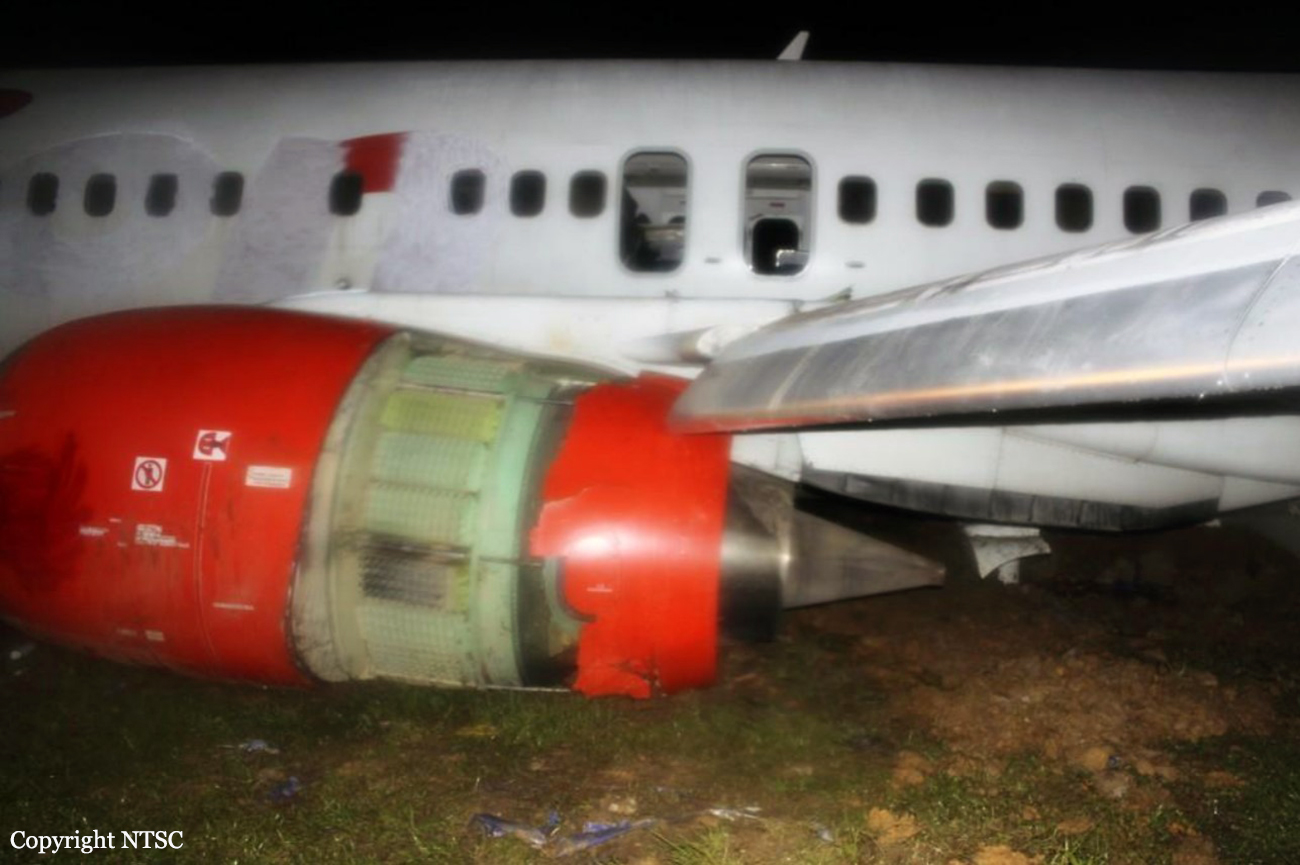
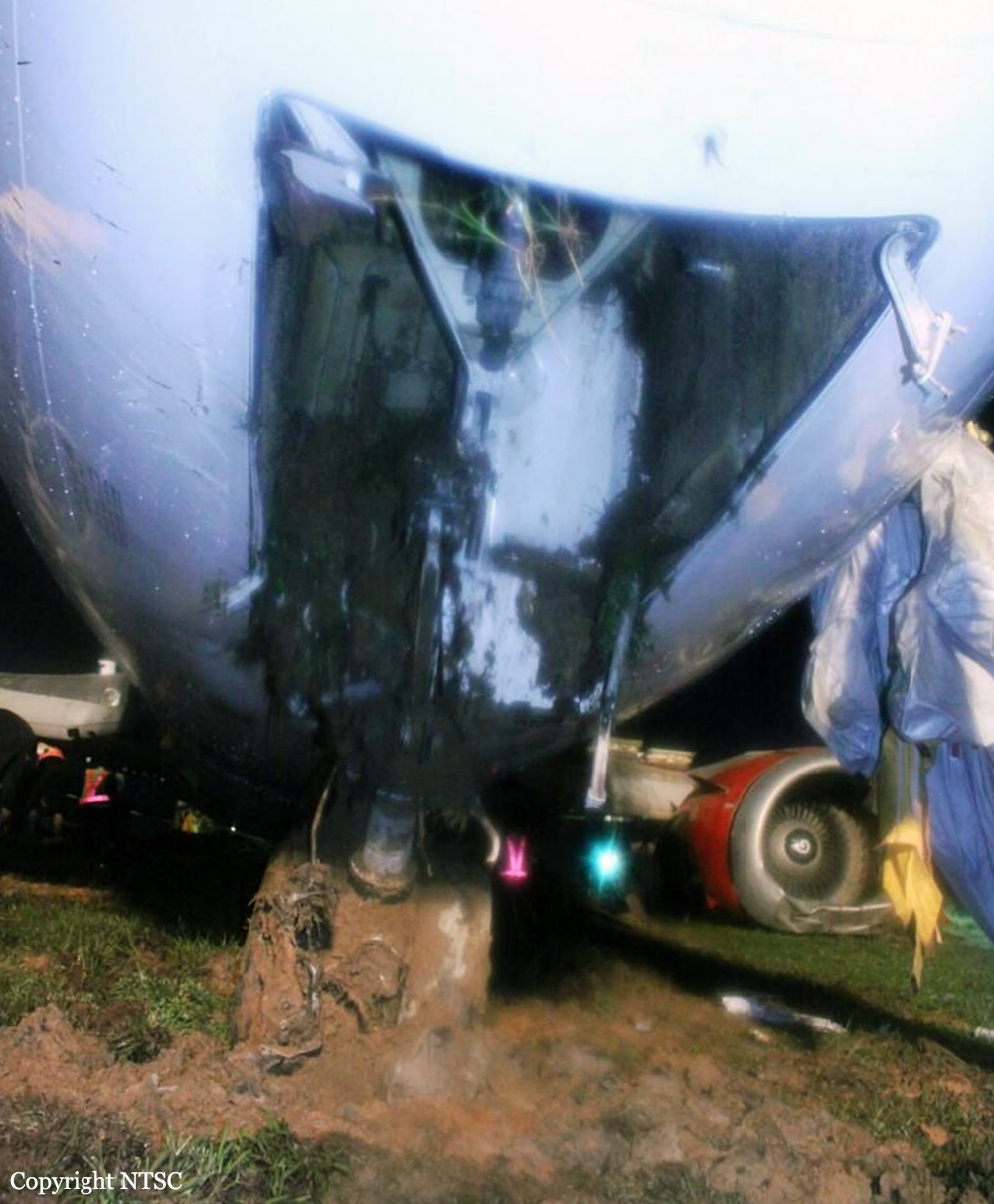
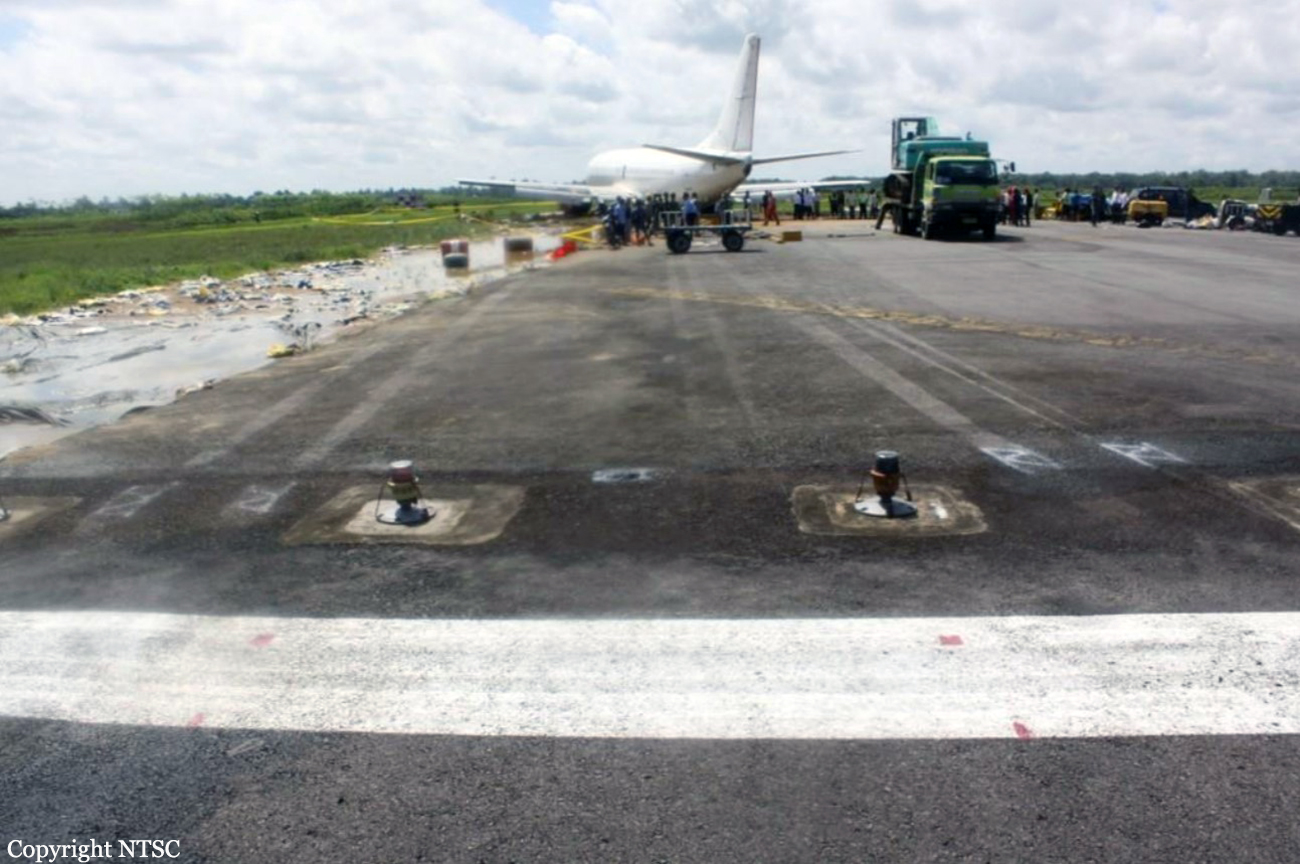
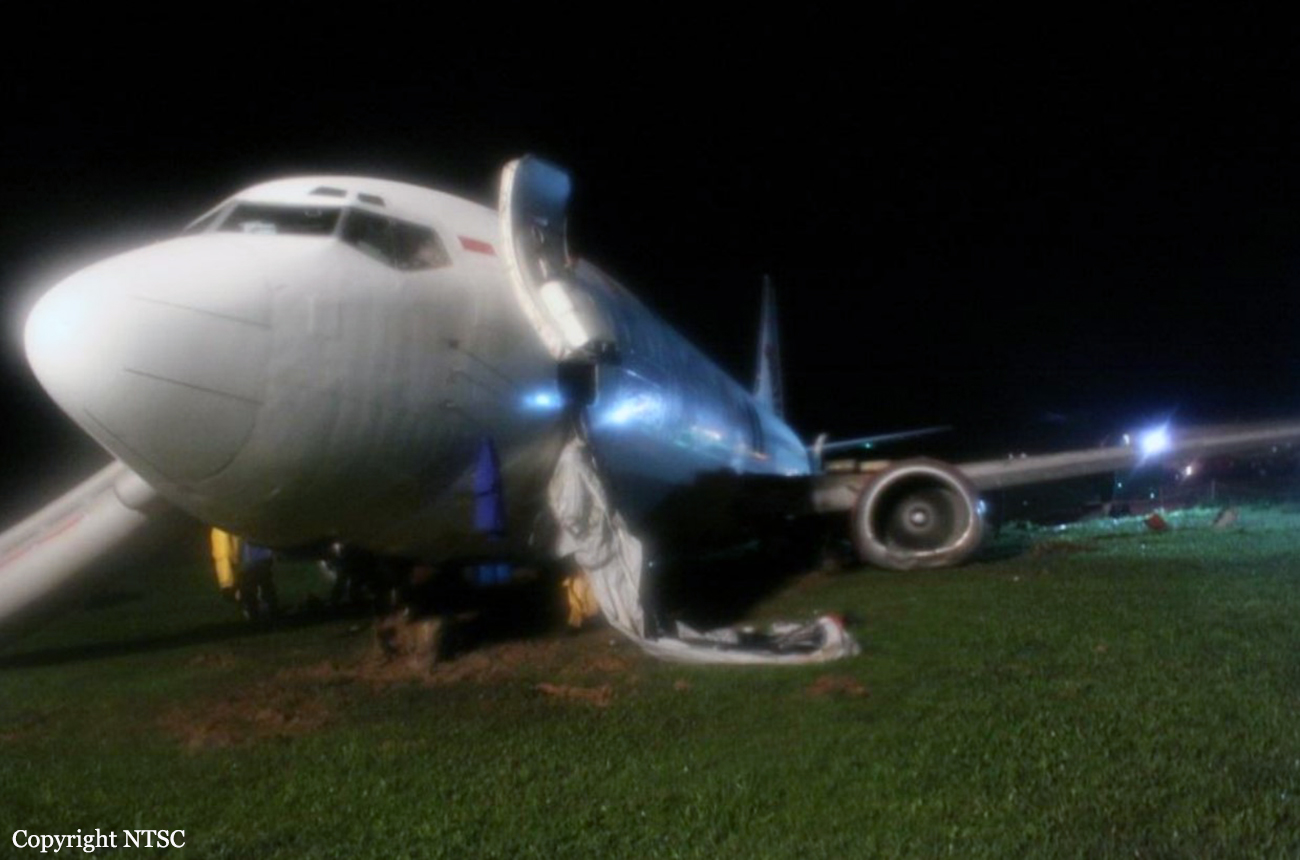
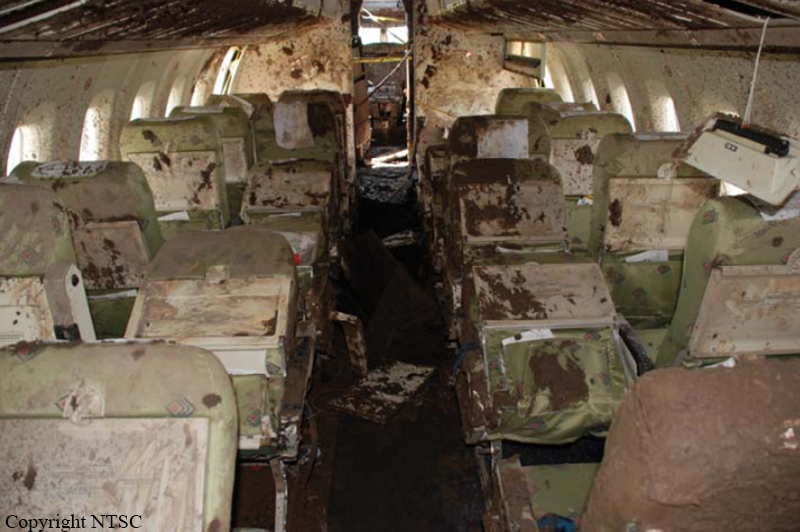
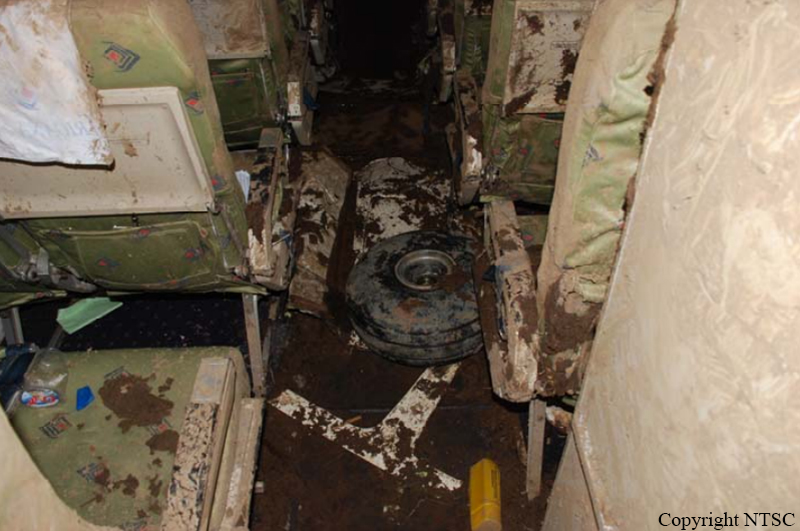
On 2 November 2010, a Boeing Company B737-400 aircraft, registered PK-LIQ, was being operated by Lion Mentari Airlines on a passenger schedule flight with flight number JT 712. This flight was the first flight for the crew and was scheduled for departure at 09.30 LT (02.30 UTC). On board the flight was 175 person included 2 pilots and 4 flight attendants and 169 passengers consisted 2 infants and one engineer. The pilots stated that the aircraft had history problem on the difficulty of selection the thrust reversers and automatic of the speed brake deployment. This problem was repetitive since the past three months. The aircraft pushed back at 0950 LT (0250 UTC). During taxi out, the yaw damper light illuminated for two times. The pilot referred to the Quick Reference Handbook (QRH) which guided the pilot to turn off the yaw dumper switch then back to turn on. Considered to these problems, the pilot asked the engineer to come to cockpit and asked to witness the problem. The aircraft departed Soekarno Hatta International Airport, Jakarta at 1012 LT (0312 UTC) with destination of Supadio Airport, Pontianak. The Pilot in Command acted as pilot flying (PF) and the Second in Command acted as pilot monitoring (PM). The flight to Pontianak until commenced for descent was uneventful. Prior to descend, the PF performed approach crew briefing with additional briefing included review of the past experiences on the repetitive problems of thrust reversers which sometimes hard to operate and the speed brake failed to auto deploy. Considering these problems, the PF asked to the PM to check and to remind him to the auto deployment of the speed brake after the aircraft touch down. During descend, the pilot was instructed by Pontianak Approach controller to conduct Instrument Landing System (ILS) approach for runway 15 and was informed that the weather was slight rain. On the initial approach, the auto pilot engaged, flaps 5° and aircraft speed 180 knots. After the aircraft captured the localizer at 1300 feet, the PF asked to the PM to select the landing gear down, flaps 15° and the speed decreased to 160 knots. The PF aimed to set the flaps landing configuration when the glide slope captured. When the glide slope captured, the auto pilot did not automatically follow the glide path and the aircraft altitude maintained at 1300 feet, resulted in the aircraft slightly above the normal glide path. The PF realized the condition then disengaged the auto pilot and the auto throttle simultaneously, and fly manually to correct the glide path by pushing the aircraft pitch down. While trying to regain the correct the glide path, the PF commanded for flaps 40° and to complete the landing checklist. The flap lever has been selected to 40°, but the indicator indicated at 30°. Realized to the flaps indication, the PF asked the landing speed for flaps 30° configuration in case the flaps could not move further to 40°. When aircraft altitude was 600 feet and the pilots completing the landing checklist, the PM reselected the flap from 30° to 40° and was successful. The pilots realized that the aircraft touched down was beyond the touchdown zone and during the landing roll the PF tried to select the thrust reverser but the levers were hard to select and followed by the speed brake failed to automatic-deploy. The pilots did not feel the deceleration, and then the PF applied maximum manual braking and selected the speed brake handle manually. Afterward, the thrust reversers successfully operated and a loud sound was heard prior to the aircraft stop. The Supadio tower controller on duty noticed that the aircraft was about to overrun the runway and immediately pressed the crash bell. The aircraft stopped at approximately 70 meters from the runway or 10 meters from the end of stop-way. The PIC then commanded to the flight attendants to evacuate the passengers through the exits. No one injured in this accident.
Probable cause:
The following factors were identified:
- Inconsistency to the Aircraft Maintenance Manual (AMM) for the rectifications performed during the period of the reversers and auto speed brake deployment problem was might probably result of the unsolved symptom problems.
- The decision to land during the un-stabilized approach which occurred from 1000 feet to 50 feet above threshold influenced by lack of crew ability in assessing to accurately perceive what was going on in the flight deck and outside the airplane.
- The effect of delayed of the speed brake and thrust reverser deployment effected to the aircraft deceleration which required landing distance greater than the available landing distance.
Final Report:
Crash of a PZL-Mielec M28-05PI Skytruck near Wami: 5 killed

Date & Time: Oct 27, 2010 at 1630 LT
Type of aircraft:
Operator:
Registration:
P-4204
Flight Phase:
Flight Type:
Survivors:
No
Schedule:
Nabire – Ambon – Ujung Pandang – Jakarta
MSN:
AJE003-07
YOM:
2004
Country:
Region:
Crew on board:
2
Crew fatalities:
Pax on board:
3
Pax fatalities:
Other fatalities:
Total fatalities:
5
Circumstances:
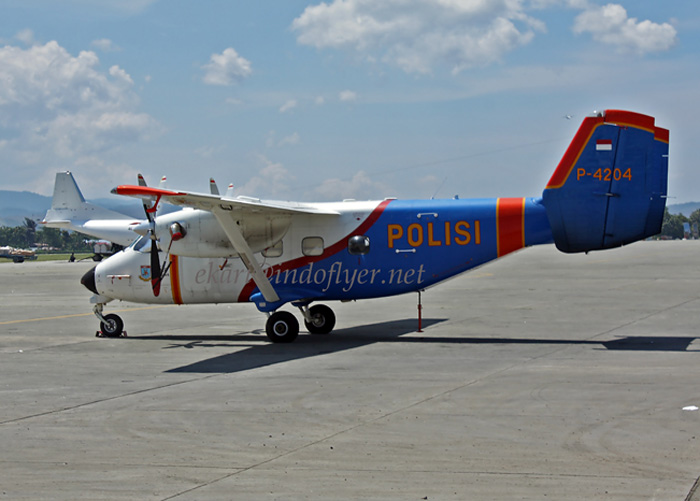
The twin engine aircraft departed Nabire Airport at 1555LT and was carrying three police officers and two pilots who were returning to Jakarta after they delivered aid to the victims of Wasior floods in West Papua. Two intermediate stops were scheduled in Ambon and Ujung Pandang (Makassar). En route, the aircraft crashed in unknown circumstances near Wami, most probably due to poor weather conditions. The wreckage was found a day later and all five occupants were killed.

Crash of a Boeing 737-322 in Manokwari

Date & Time: Apr 13, 2010 at 1055 LT
Type of aircraft:
Operator:
Registration:
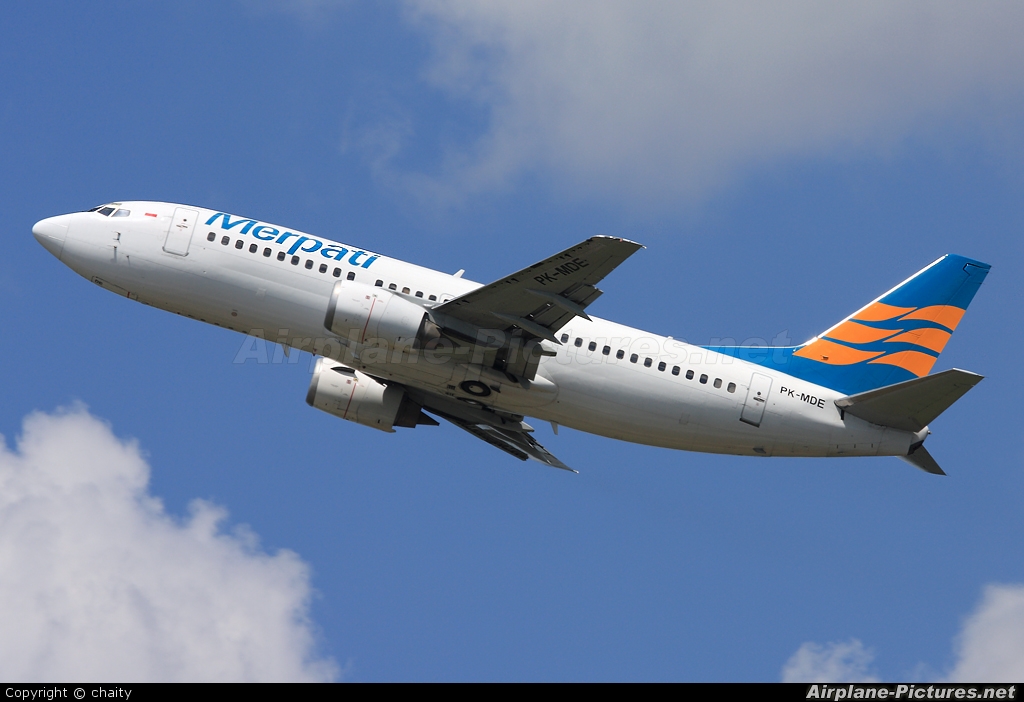
PK-MDE
Survivors:
Yes
Schedule:
Ujung Pandang - Sorong - Manokwari
MSN:
24660/1838
YOM:
1990
Flight number:
MZ836
Country:
Region:
Crew on board:
7
Crew fatalities:
Pax on board:
103
Pax fatalities:
Other fatalities:
Total fatalities:
0
Captain / Total flying hours:
16450
Copilot / Total flying hours:
22139
Aircraft flight hours:
54759
Aircraft flight cycles:
38485
Circumstances:
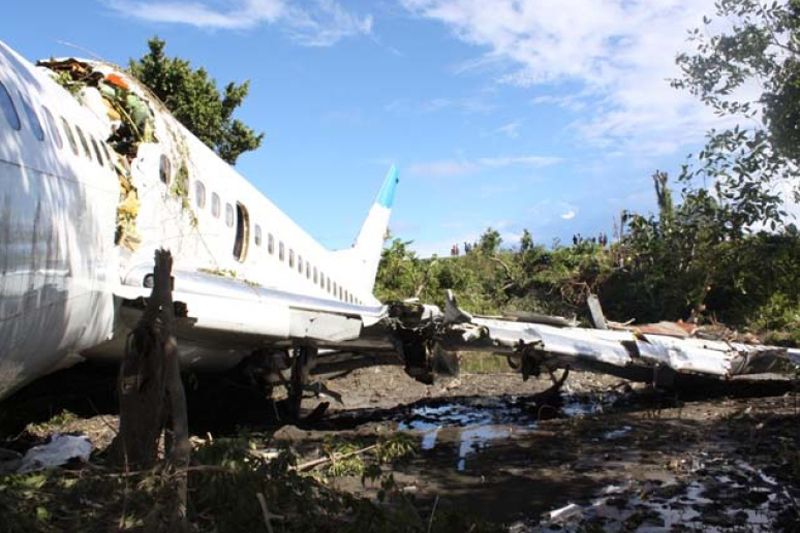
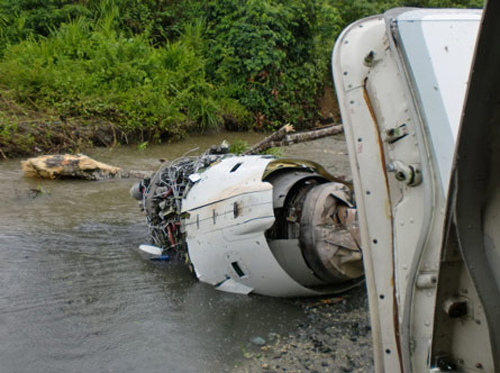
On 13 April 2010, a Boeing B737-300 aircraft registered PK-MDE was being operated by PT. Merpati Nusantara Airline as a scheduled passenger flight MZ 836, from Hasanuddin Airport, Makassar, Sulawesi to Rendani Airport, Manokwari, Papua. It made a transit stop at Domine Eduard Osok Airport, Sorong, Papua. The aircraft departed from Makassar at 2010 UTC and landed at Sorong at 2214 UTC. The scheduled departure time from Sorong was 2235, but due to heavy rain over Manokwari, the departure was delayed for about two hours. The pilot in command was the pilot flying, and the copilot, who also held a command rating on the aircraft, was the support/monitoring pilot. The aircraft subsequently departed Sorong 2 hours and 43 minutes later, at 0118. The observed weather report issued by Badan Meteorologi dan Geofisika (BMG) Manokwari for takeoff and landing at 0100 indicated that the weather was “continuous slight rain, horizontal visibility of 3 to 4 kilometers, cloud overcast cumulus-stratocumulus, westerly wind at 5 knots”. The aircraft’s dispatch release from Sorong indicated that the flight was planned under the Instrument Flight Rules (IFR). The destination, Manokwari, had no published instrument approach procedure. Terminal area operations, including approach and landing, were required to be conducted under the Visual Flight Rules (VFR). At 0146 the crew made the first direct contact with Rendani Radio and reported their position as 14 Nm from Manokwari, and maintaining altitude 10,500 feet. Following this radio contact, Rendani Radio informed the crew that the weather was continuous slight rain, visibility 3 kilometers, cloud overcast with cumulus stratocumulus at 1,400 feet, temperature 24 degrees Celsius, QNH 1012 hectopascals. The transcript of the Rendani Radio communications with the aircraft indicated that controller then instructed the crew to descend and joint right downwind for runway 35, and to report when overhead the airport. Shortly after, the crew reported overhead the airport at 5,000 feet. The controller then instructed the crew to report when they were on final approach for runway 35. The crew acknowledged this instruction. At 0154 the crew reported that they were on final for runway 35. The controller informed them that the wind was calm, runway condition was wet and clear. The crew read back the wind condition and that the runway was clear, but did not mention the wet runway condition. According to the Rendani Airport Administrator’s report to the investigation, the aircraft was observed to make a normal touchdown on the runway at about 0155, about 120 meters from the approach end of runway 35. The report stated that the aircraft’s engine reverser sound was not heard during landing roll. Witnesses on board the aircraft also stated that the aircraft made a smooth landing, and the engine reversers were not heard during the landing roll. During the landing roll, the aircraft veered to the left about 140 meters from the end of runway 35, then overran the departure end of runway 35. At about 0156 it came to a stop 205 meters beyond the end of the runway in a narrow river; the Rendani River. The Observed Weather Report issued by BMG Manokwari for takeoff and landing at 0200 (4 minutes after the accident) indicated that the weather was continuous moderate rain, with a horizontal visibility of 4 kilometers, cloud overcast cumulus stratocumulus, south-westerly wind at 5 knots. The airport rescue and fire fighting unit was immediately deployed to assist the post crash evacuation. Due to the steep terrain 155 meters from the end of runway 35, the rescuers had to turn back and use the airport’s main road to reach the aircraft. The accident site was in an area of shallow muddy water surrounded by mangrove vegetation. The aircraft was substantially damaged. Nearby residents, police and armed forces personnel assisted the evacuation from the aircraft. The Rendani Airport Administrator reported that the passengers and crew members were evacuated and moved from the site by 0230. They were taken to the Manokwari General Hospital, and Manokwari Naval Hospital for further medical treatment.
Final Report:

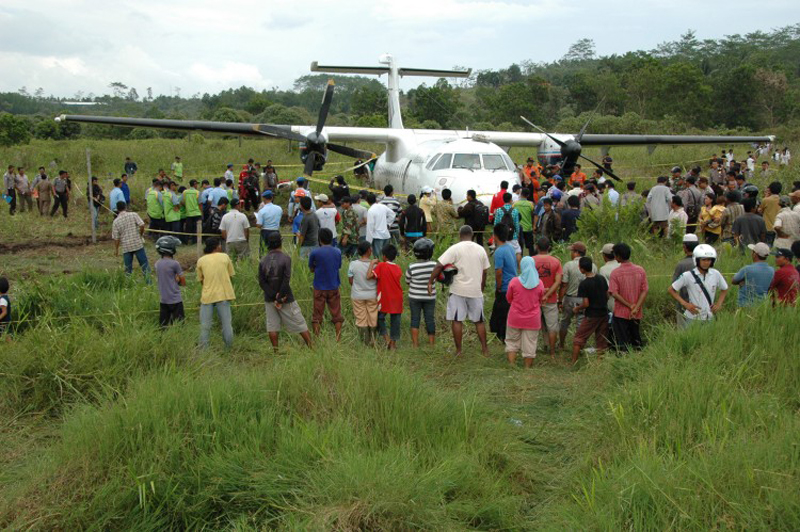
Crash of an ATR42-300 near Balikpapan

Date & Time: Feb 11, 2010 at 1150 LT
Type of aircraft:
Operator:
Registration:
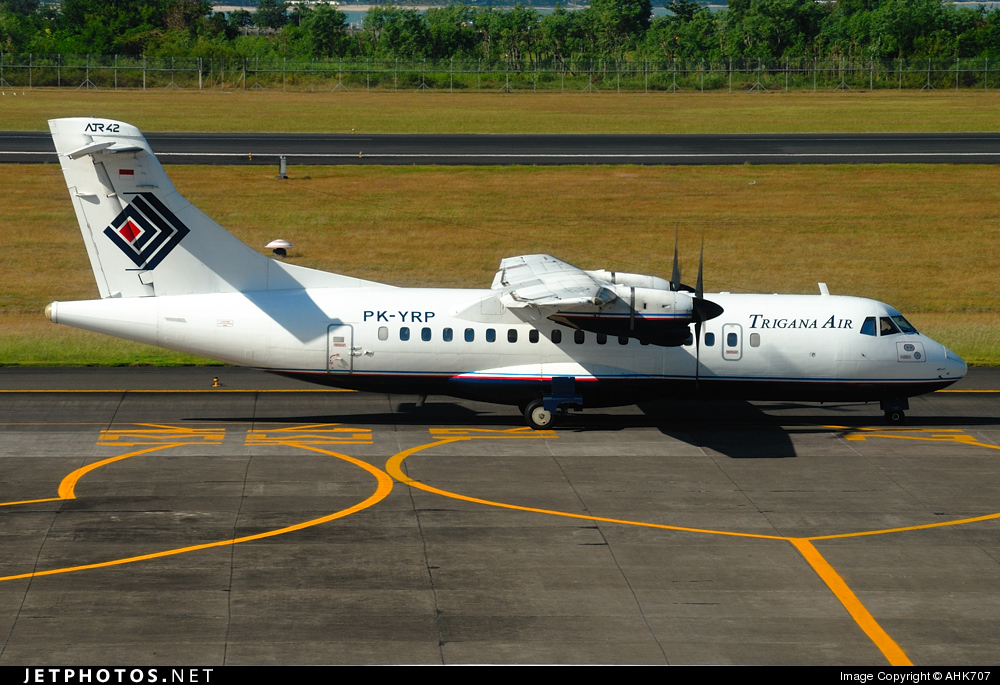
PK-YRP
Flight Phase:
Survivors:
Yes
Schedule:
Tanjung Redep - Samarinda
MSN:
50
YOM:
1987
Flight number:
TGN162
Country:
Region:
Crew on board:
6
Crew fatalities:
Pax on board:
46
Pax fatalities:
Other fatalities:
Total fatalities:
0
Captain / Total flying hours:
12000
Copilot / Total flying hours:
2000
Aircraft flight hours:
34414
Aircraft flight cycles:
42107
Circumstances:
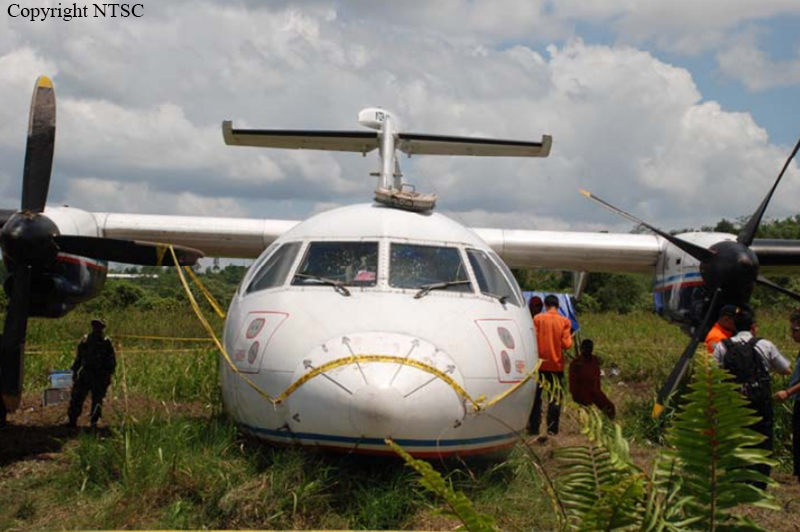
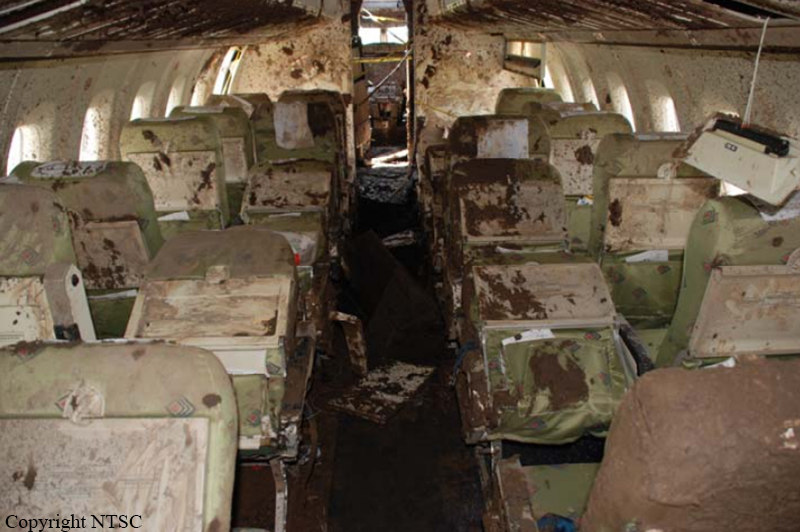
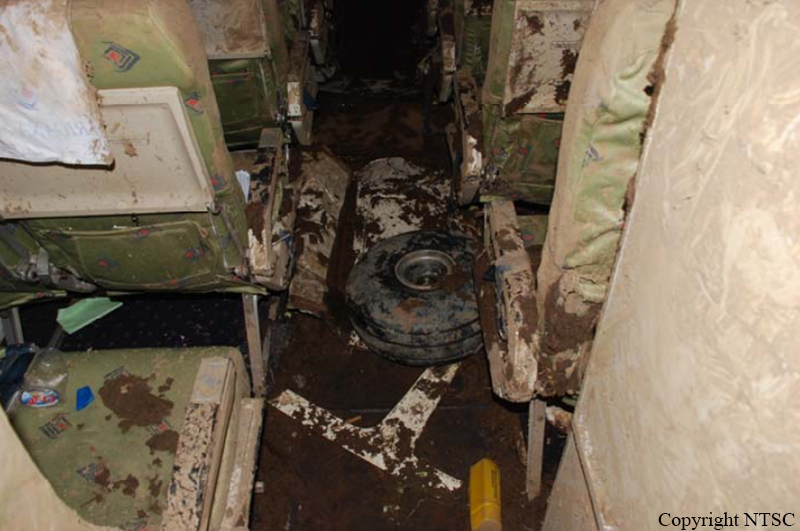
On 11 February 2010, an Avions de Transport Regional ATR 42-300 aircraft, registered PK-YRP, was being operated by Trigana Air Service on a scheduled passenger service between Kalimarau Airport Berau (BEJ) and Samarinda (SRI) as flight TGN162. There were 52 persons on board; two pilots, one engineer, two flight attendants, one flight dispatcher and 46 passengers (43 adults, one child, and two infants). The aircraft departed from Berau at 0230 UTC1 and climbed to Flight Level 140. Balikpapan approach cleared the crew to track from en-route Way Point LOLOT direct to Samarinda. After transferring to Temindung Tower, Samarinda, the crew was cleared to track direct to left downwind for runway 04. The controller informed them that the wind was 060/12 knots. The crew did not report any abnormalities and the aircraft operation appeared to be normal. During the final approach for runway 04, the left ECU light illuminated followed by low oil pressure and torque indications. The Pilot in Command decided to go around, divert to Balikpapan, and carry out the QRH engine shut-down procedure. They commenced the climb to 4000 ft with the left engine inoperative. Approximately 16 Nm from Balikpapan Airport, while climbing through 3,800 feet, the right ECU light illuminated, immediately followed by low oil pressure and low torque indications. The right engine then failed. The crew broadcast a MAYDAY to Balikpapan Approach and decided to conduct a forced landing into a clear field in the Samboja area, about 16 Nm from the Balikpapan Airport. The PIC gave instructions to the Flight Attendant to prepare the passengers for an emergency landing. After the aircraft came to a stop the PIC initiated an evacuation.
Probable cause:
The both engine were lack of fuel before flame out, it was indicated the fuel management was out of control during flight that might be a misleading of fuel quantity indication. The proper analysis could not be carried out due to both FDR and CVR were un-operated.
Final Report:
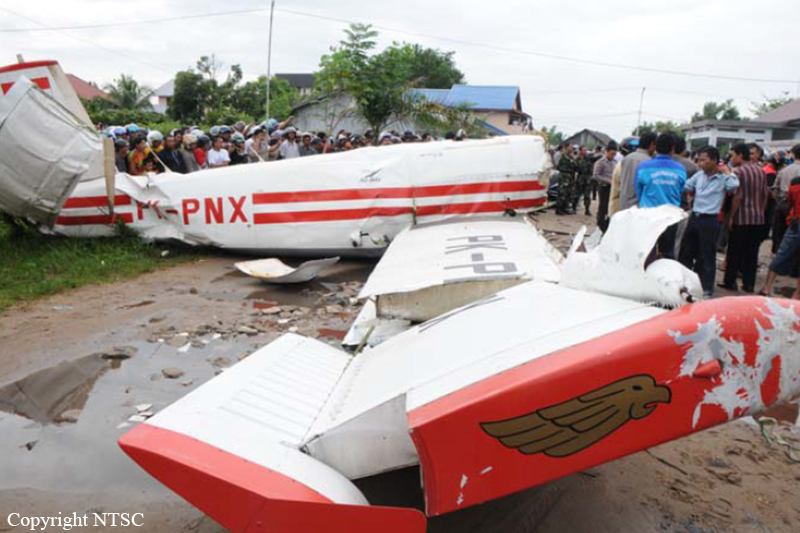
Crash of a Fletcher FU-24-950 in Ketapang: 2 killed

Date & Time: Dec 31, 2009 at 0826 LT
Type of aircraft:
Operator:
Registration:
PK-PNX
Flight Phase:
Flight Type:
Survivors:
No
Site:
Schedule:
Ujung Tanjung - Jambi - Pangkal Pinang - Ketapang - Tangar
MSN:
187
YOM:
1970
Country:
Region:
Crew on board:
1
Crew fatalities:
Pax on board:
1
Pax fatalities:
Other fatalities:
Total fatalities:
2
Captain / Total flying hours:
2892
Captain / Total hours on type:
641.00
Circumstances:
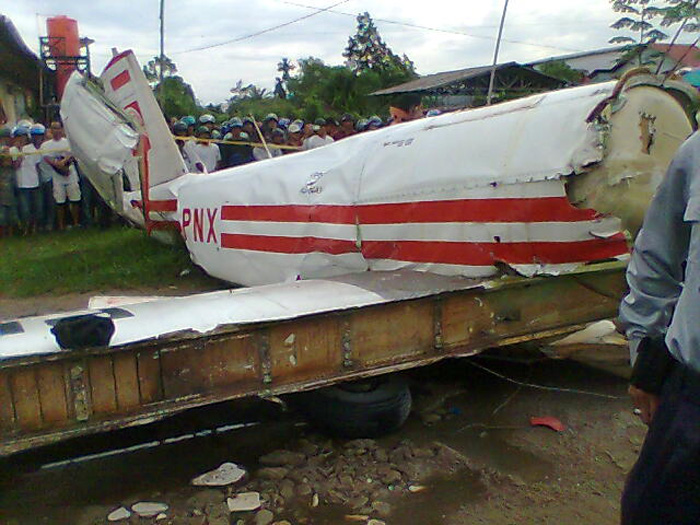
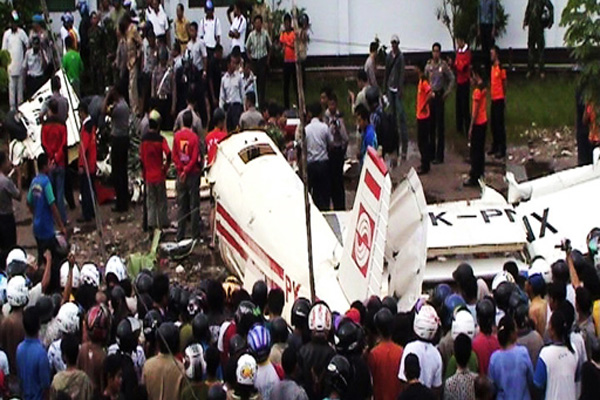
The aircraft was completing a ferry flight from Ujung Tanjung/Pekanbaru home base to Tangar airstrip, Center of Kalimantan, with reference flight approval number D09-038960 and Security Clearance number AU05-033328, person on board was one pilot and one engineer. On 29 December 2009, the aircraft departed from Ujung Tanjung, transit at Jambi and stop overnight at Pangkal Pinang Airport, Bangka with total flight time was 3 hours. On the next day 30 December 2009, the aircraft continuing flight from Pangkal Pinang to Rahadi Oesman Airport, Ketapang, West Kalimantan and overnight at Ketapang with total flight time is 1:40 hours. On the next day 31 December 2009, the aircraft plan to continued flight to Tangar Airstrip. The aircraft was airworthy prior departure and dispatched from Ketapang with the following sequence:
a. The pilot requested for start the engine at 01:17 UTC4 (08:17 Local Time);
b. At 01:24 the pilot requested for taxi, and the ATC gave clearance via taxiway “A”. The pilot requested intersection runway 17 and approved by ATC
c. The ATC requested for reported when ready for departure, and the pilot reported ready for departure, then the ATC gave the departure clearance.
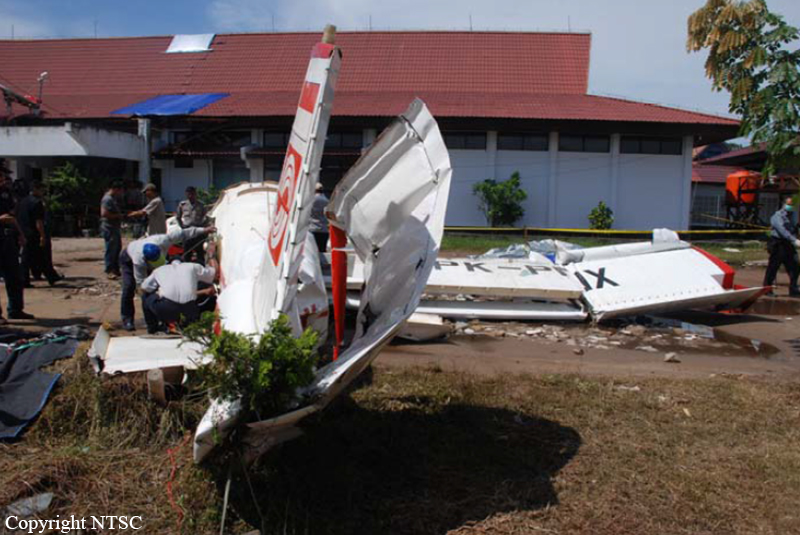
d. At 01:25, the aircraft was departed and crashed at 01:26 striking the roof of the hospital and broken down into pieces at the parking area in which have had approximate 1.5 Kilometer to the left side from the flight path centreline. The aircraft was substantially damage and the crew on board consist of one pilot in command and one aircraft maintenance engineer; both of them were fatally injured.
Probable cause:
The investigation concluded that the aircraft engine was not in power during impact with the hospital roof. There was a corroded fuel pump, that indicated of contaminated fuel.
Findings:
• The aircraft was airworthy prior departure.
• The pilot was fit for flight.
• The booster pump was found of an evident of surface corrosion on the spring, plate and van pump indicated that contaminated fuel.
• Referred to the Fletcher Flight Manual and Pilot Operating Handbook chapter 3.10. Fuel System Failure, the booster pump must have been operated prior to flight.
• The propeller blades were on fine pitch and no sign of rotating impact. The engine was not in powered when hit the ground.
• No evidence damage related to the engine prior to the occurrence.
Final Report:
Crash of a Boeing 737-301 in Ujung Pandang

Date & Time: Dec 21, 2009 at 0151 LT
Type of aircraft:
Operator:
Registration:
PK-MDH
Survivors:
Yes
Schedule:
Surabaya – Ujung Pandang
MSN:
23932/1554
YOM:
1988
Flight number:
MZ766
Country:
Region:
Crew on board:
6
Crew fatalities:
Pax on board:
102
Pax fatalities:
Other fatalities:
Total fatalities:
0
Circumstances:
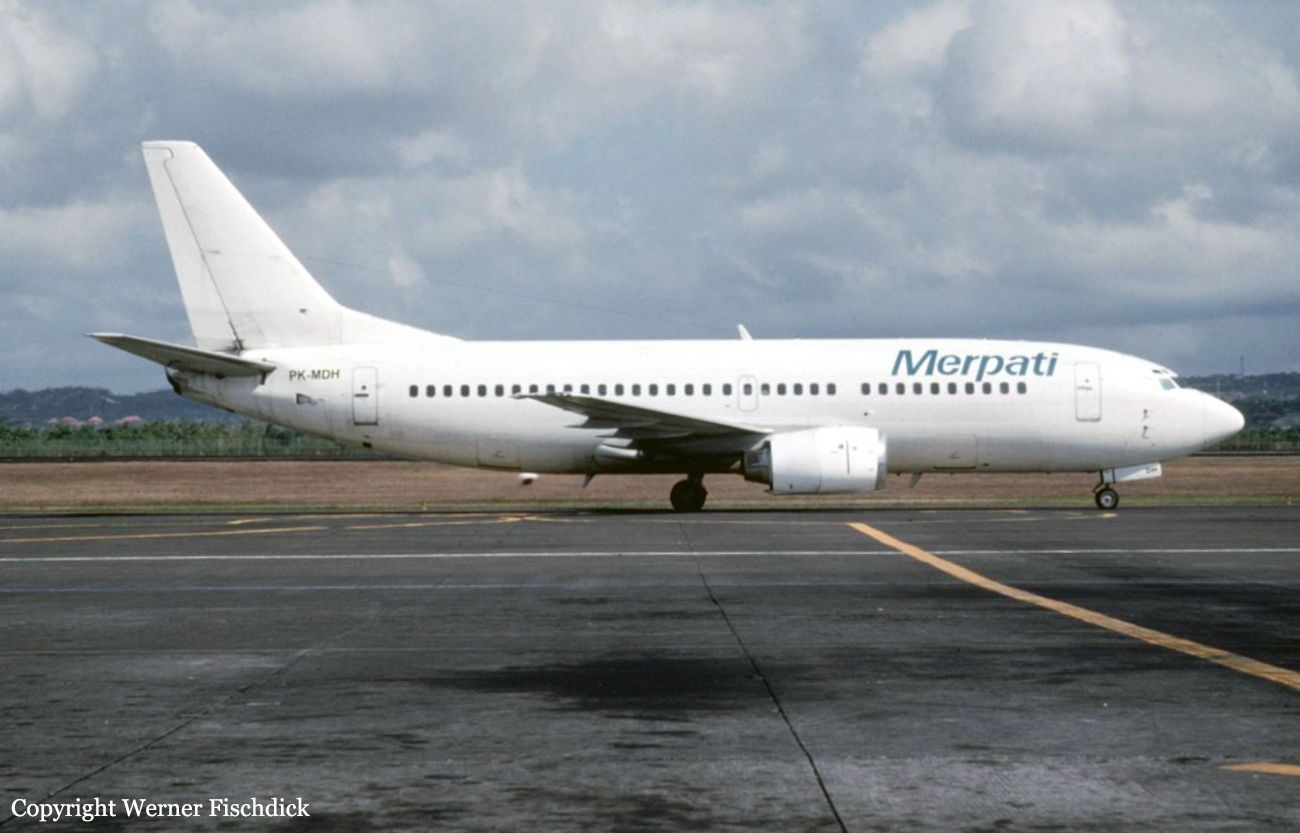
Following an uneventful flight from Surabaya-Juanda Airport, the crew started a night approach to Ujung Pandang-Sultan Hasanuddin Airport (Makassar). On short final, at a height of 50 feet, the aircraft descended fast and landed nose first. A tyre burst on impact and the aircraft was stopped following a normal landing course. All 108 occupants evacuated safely and the aircraft was damaged beyond repair due to fuselage damages.

Crash of a Fokker 100 in Kupang

Date & Time: Dec 2, 2009 at 2215 LT
Type of aircraft:
Operator:
Registration:
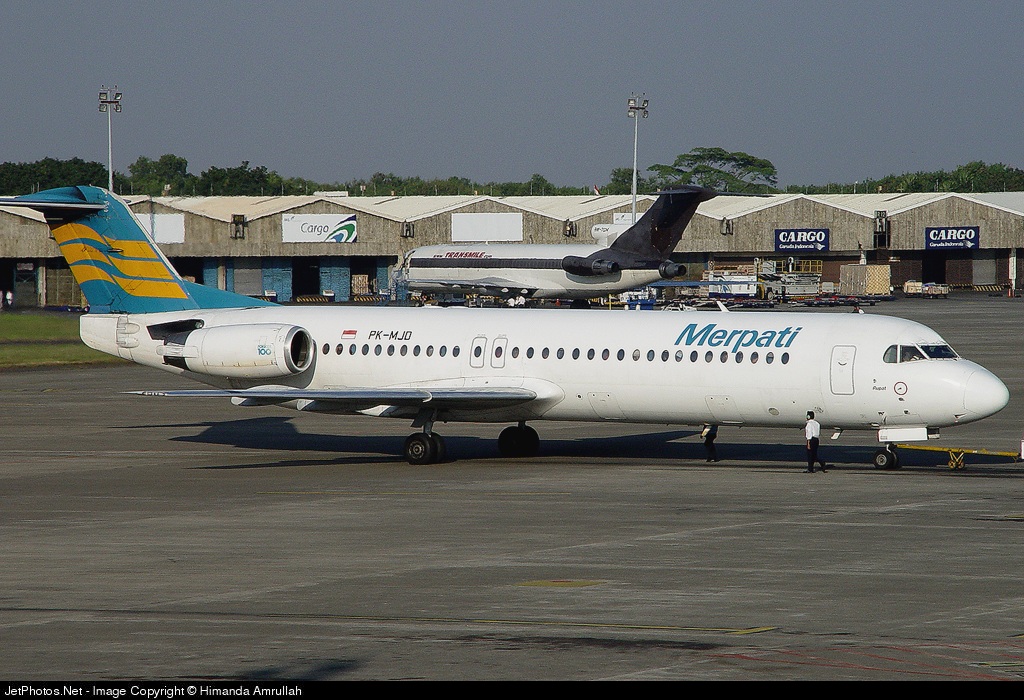
PK-MJD
Survivors:
Yes
Schedule:
Ujung Pandang - Kupang
MSN:
11474
YOM:
1993
Flight number:
MZ5840
Country:
Region:
Crew on board:
7
Crew fatalities:
Pax on board:
88
Pax fatalities:
Other fatalities:
Total fatalities:
0
Captain / Total flying hours:
18776
Copilot / Total flying hours:
7074
Aircraft flight hours:
29637
Aircraft flight cycles:
29450
Circumstances:
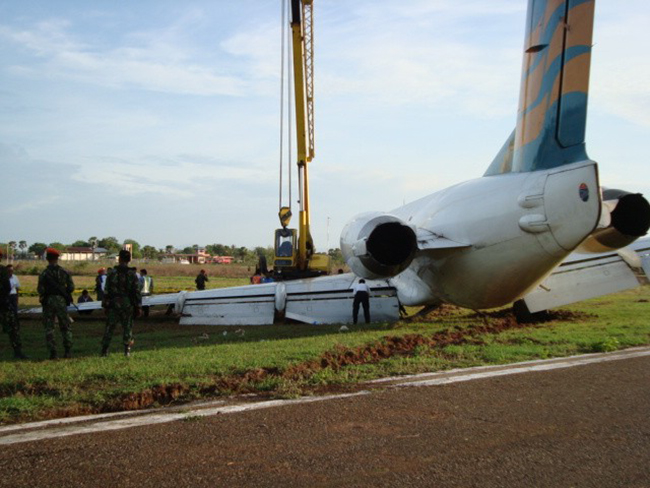
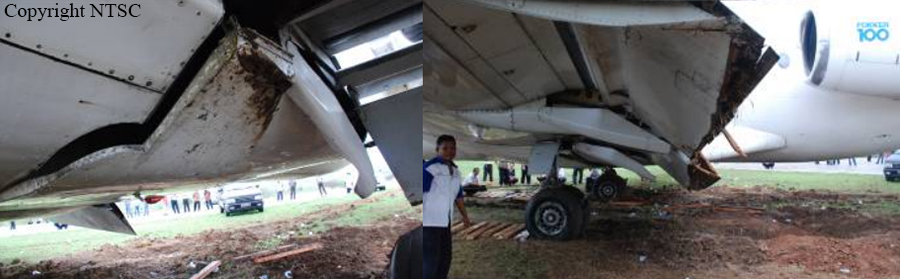
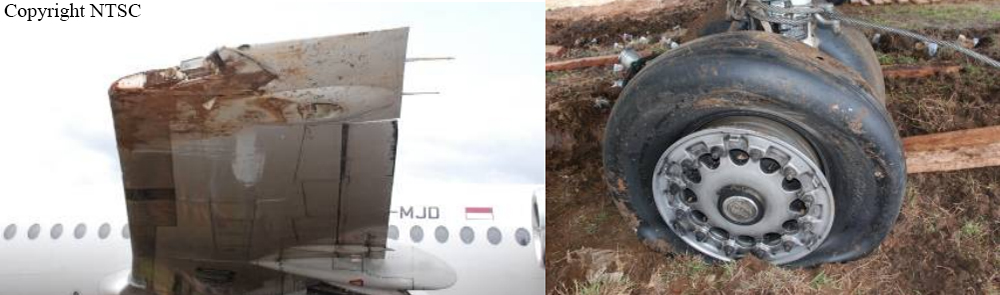
PK-MJD was on passenger schedule flight from Sultan Hasanuddin Airport, Makassar with destination El Tari Airport, Kupang, East Nusa Tenggara. The flight number was Merpati 5840 and carried 94 person on board consist of 88 passengers including four children and four infants, two pilot and four flight attendant. A maintenance engineer was on-board in this flight. Acting as pilot flying was the Second in Command (SIC) while the Pilot in Command acted as Pilot Monitoring. On approach, the pilot selected landing gear to down position. The left main landing gear indicator light was showed red, its means that the left main landing gear was not in down position and unsafe for landing. The pilot reported to the Air Traffic Controller (ATC) for a go-around and requested an area for holding to solve the problem. The ATC gave a clearance to hold over Kupang bay. The pilot tried to solve the problem by conducting the procedure according to the emergency checklist, including selected the landing gear by alternate selector. The pilot then requested to the ATC to fly at low altitude over the airport and asked to the ATC to observe the landing gear condition. The pilot also asked through the company radio for an engineer on-ground to observe visually the landing gear condition. The pilot then returned to the holding area, repeated the procedure but unsuccessful. Both pilots and engineer had a discussion and decided to attempt un-procedural method to make the landing gear down. Prior making these efforts the pilot announced to the passengers about the problem and their attempts that might be unpleasant to the passengers. After all attempts to lower the landing gear had failed, the pilot decided to land with the left main landing gear in up position. The pilot also asked the flight attendant to prepare for an abnormal landing. The ATC were prepared the airport fire fighting and ambulance, and also contacted the local police, armed forces, and hospitals and asking for additional ambulances. The ATC then informed the pilot that the ground support was ready. On short final the pilot instructed ‘brace for impact’ and the FA repeated that instruction to all passengers. The aircraft touched down at the touch down zone on runway 07. The pilot flying held the left wing as long as possible and kept the aircraft on the centre line, and the pilot monitoring shut down both engines. The aircraft stopped at about 1,200 meters from the beginning of runway 07, on the left shoulder of the runway and the FA instructed to the passengers to keep calm and to evacuate the aircraft. The pilot continued the procedures for emergency. The evacuation was performed through all door and window exits. No one was injured on this serious incident.
Probable cause:
The debris trapped in the chamber between the orifice and the stopper of the restrictor check valve, it caused the orifice closed. This condition was resulted the hydraulic flow from the actuator blocked and caused the left main landing gear jammed at up position.
Final Report:
Crash of a PZL-Mielec M-28-05PI in Mulia: 4 killed

Date & Time: Nov 2, 2009 at 1200 LT
Type of aircraft:
Operator:

Registration:
P-4202
Flight Type:
Survivors:
No
Site:
Schedule:
Jayapura – Mulia
MSN:
AJE003-04
YOM:
2004
Country:
Region:
Crew on board:
4
Crew fatalities:
Pax on board:
0
Pax fatalities:
Other fatalities:
Total fatalities:
4
Circumstances:
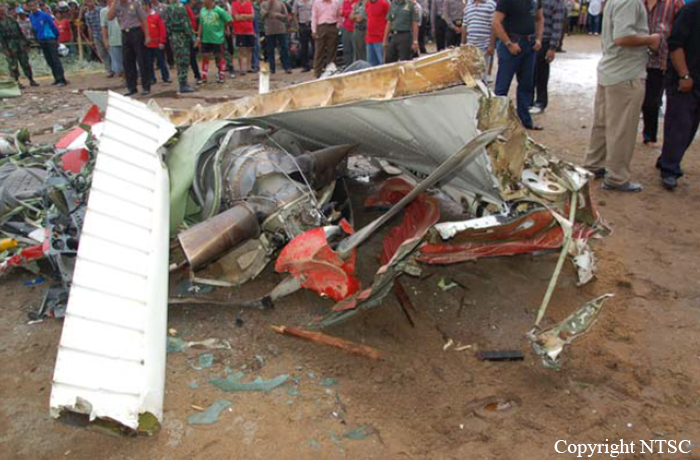
The twin engine aircraft departed Jayapura-Sentani Airport on a flight to Mulia, carrying four crew members and a load of logistics support dedicated to the Puncak Jaya Police Department. While approaching Mulia in marginal weather conditions, the aircraft struck the slope of a mountain located 33 km northwest of Mulia. The wreckage was found two days later and all four occupants were killed.
Probable cause:
Controlled flight into terrain.

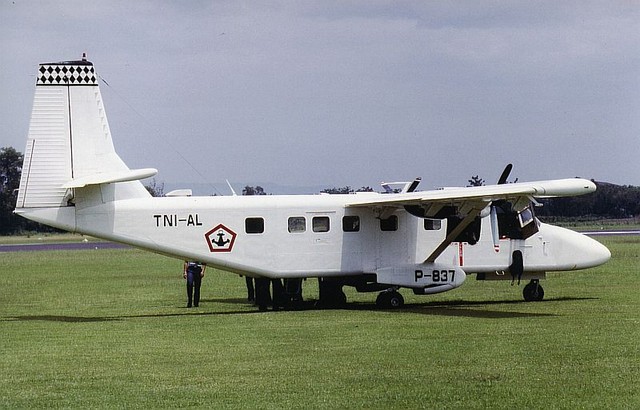
Crash of a GAF Nomad N.24A in Long Apung: 5 killed

Date & Time: Sep 7, 2009 at 1428 LT
Type of aircraft:
Operator:
Registration:
P-837
Flight Phase:
Survivors:
Yes
Schedule:
Long Bawan - Tarakan
MSN:
135
YOM:
1982
Country:
Region:
Crew on board:
3
Crew fatalities:
Pax on board:
6
Pax fatalities:
Other fatalities:
Total fatalities:
5
Circumstances:
While performing a maritime patrol flight, the aircraft crashed in unknown circumstances in the region of Long Apung. Five occupants were killed while four others were seriously injured.

Crash of a De Havilland DHC-6 Twin Otter 300 near Oksibil: 15 killed

Date & Time: Aug 2, 2009 at 1100 LT
Operator:
Registration:
PK-NVC
Flight Phase:
Survivors:
No
Site:
Schedule:
Jayapura - Oksibil
MSN:
626
YOM:
1979
Flight number:
MZ9760D
Country:
Region:
Crew on board:
3
Crew fatalities:
Pax on board:
12
Pax fatalities:
Other fatalities:
Total fatalities:
15
Captain / Total flying hours:
8387
Captain / Total hours on type:
8387.00
Copilot / Total flying hours:
1207
Copilot / Total hours on type:
1207
Aircraft flight hours:
27336
Circumstances:
On the morning of Sunday, 2 August 2009, a de Havilland DHC-6 Twin Otter aircraft, registered PK-NVC, operated by PT. Merpati Nusantara Airlines as flight number MZ-7960D, departed from Sentani Airport, Jayapura for Oksibil Airport. The flight was planned in accordance with the visual flight rules (VFR). There were 15 persons on board; two pilots, one engineer, 10 adult passengers and two infants. The estimated flight time was 50 minutes. The fuel on board was sufficient for 2 hours and 50 minutes flight time. About 15 minutes prior to the estimated time of arrival at Oksibil the crew of another aircraft informed the Twin Otter crew that the weather in the Oksibil area was partly cloudy. There were no further reports of radio transmissions from the Twin Otter, and it did not arrive at Oksibil. A search was initiated at the time the aircraft would have run out of fuel. On the morning of 4 August 2009, searchers located the wreckage of the Twin Otter at an elevation of about 9,300 feet about 6 Nm from Oksibil. The aircraft was destroyed by impact forces, and all of the occupants were fatally injured.
Probable cause:
The pilots did not maintain visual flight procedures when flying below lowest safe altitude, and the aircraft was flown into cloud in the vicinity of gap north west of Oksibil. In conclusion, the accident was consistent with controlled flight into terrain.
Final Report: