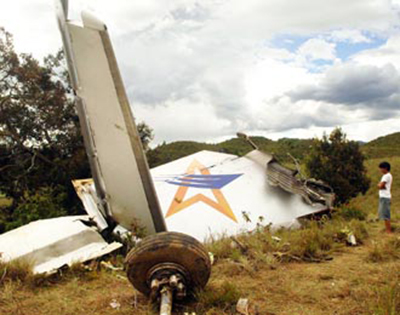
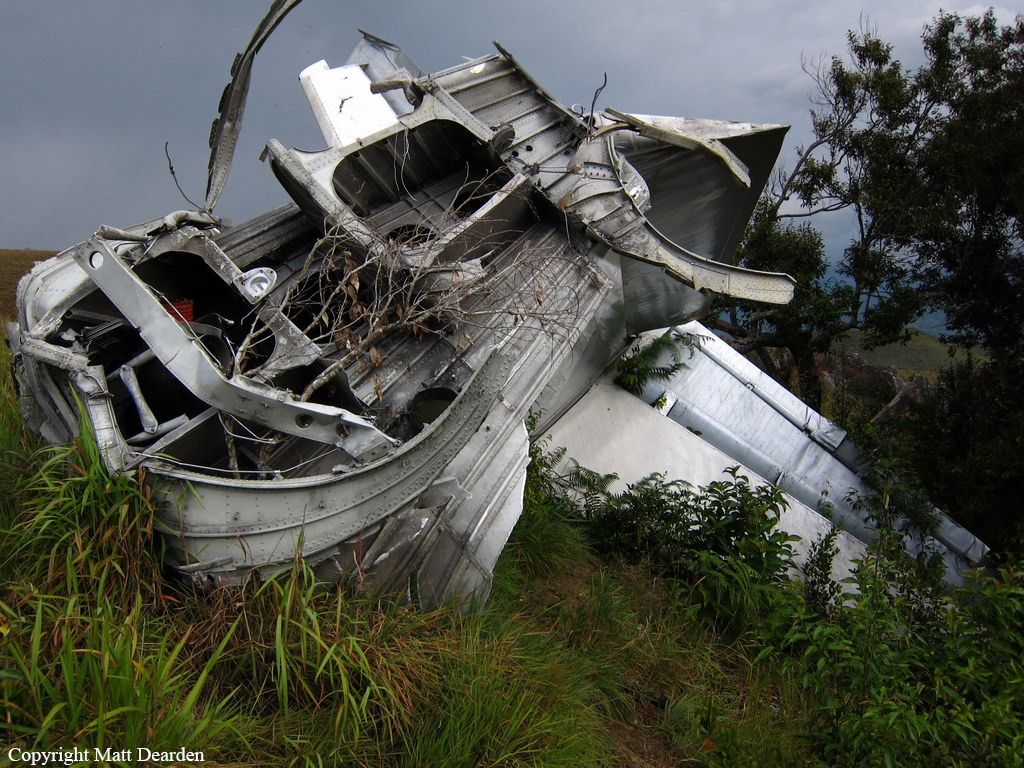
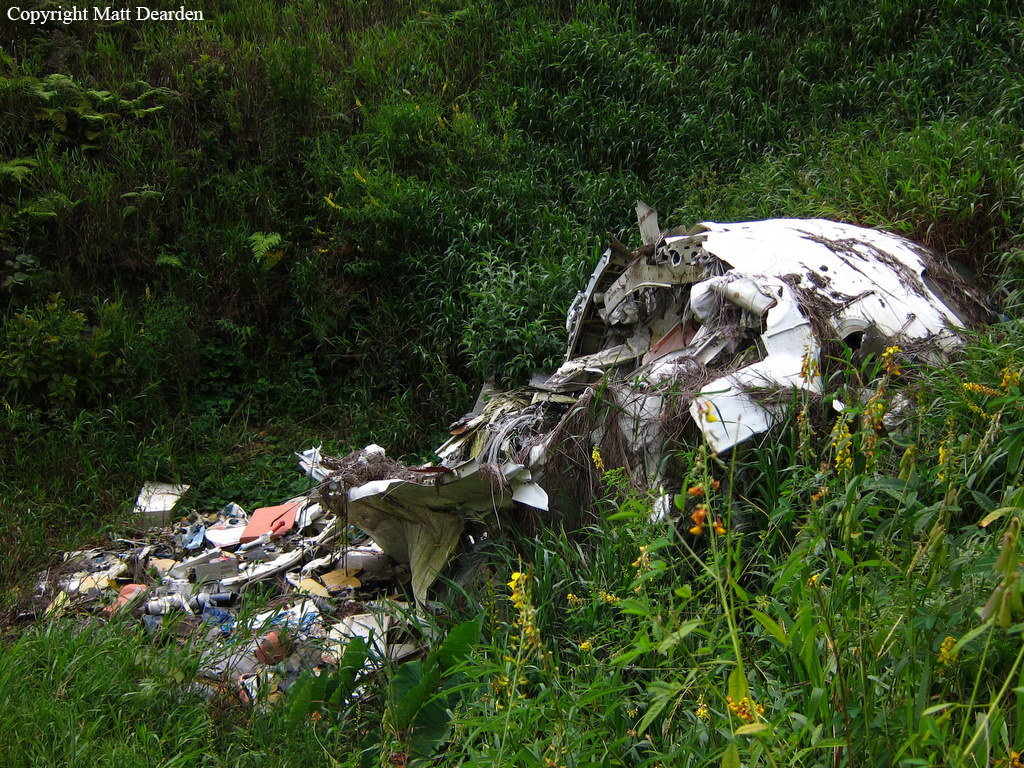
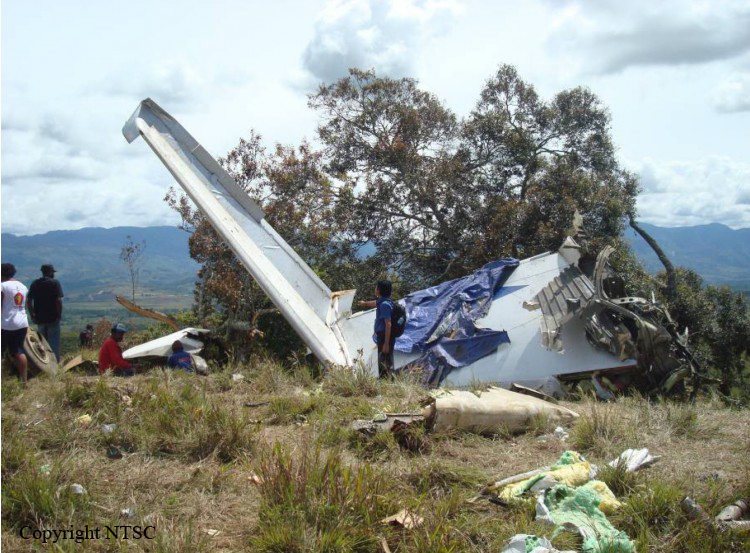
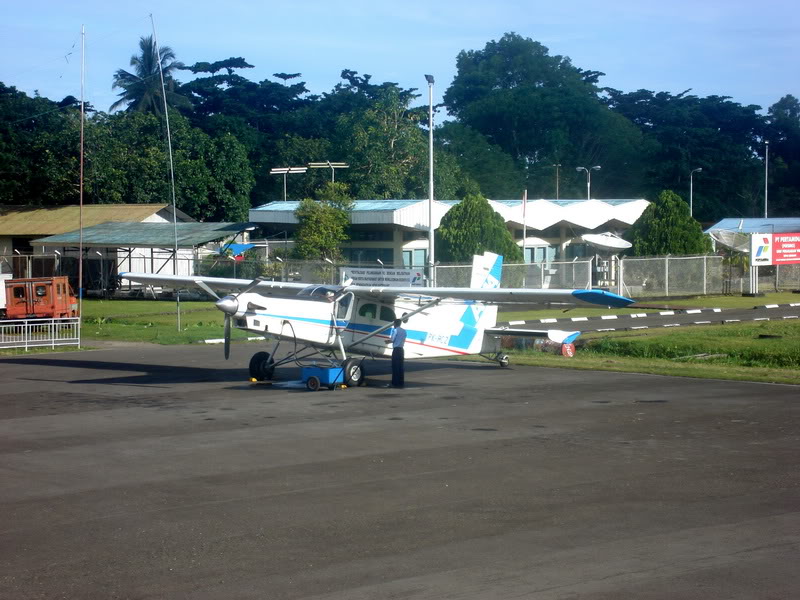
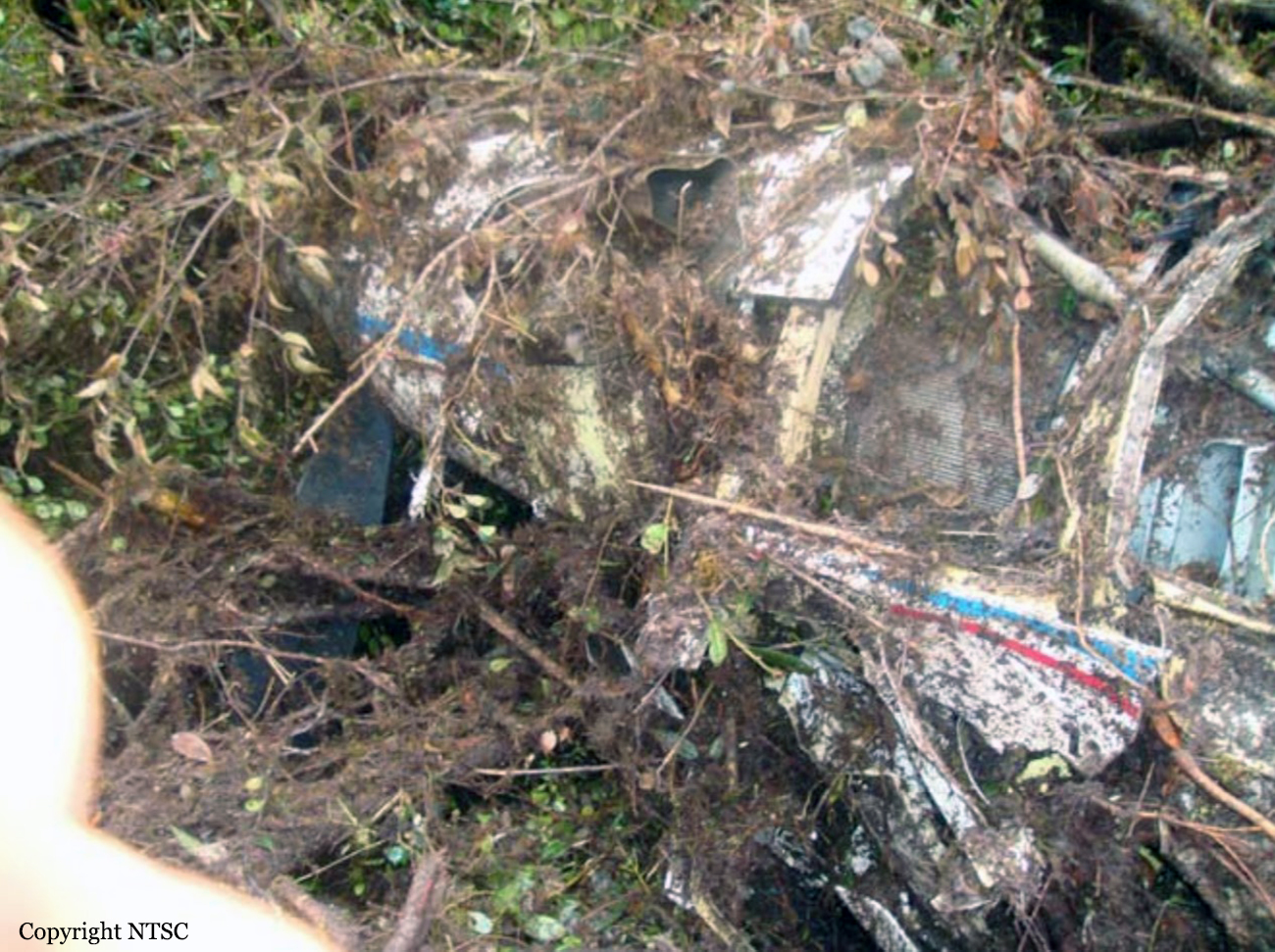
Crash of a De Havilland DHC-6 Twin Otter 300 near Oksibil: 15 killed

Date & Time: Aug 2, 2009 at 1100 LT
Operator:

Registration:
PK-NVC
Flight Phase:
Survivors:
No
Site:
Schedule:
Jayapura - Oksibil
MSN:
626
YOM:
1979
Flight number:
MZ9760D
Country:
Region:
Crew on board:
3
Crew fatalities:
Pax on board:
12
Pax fatalities:
Other fatalities:
Total fatalities:
15
Captain / Total flying hours:
8387
Captain / Total hours on type:
8387.00
Copilot / Total flying hours:
1207
Copilot / Total hours on type:
1207
Aircraft flight hours:
27336
Circumstances:
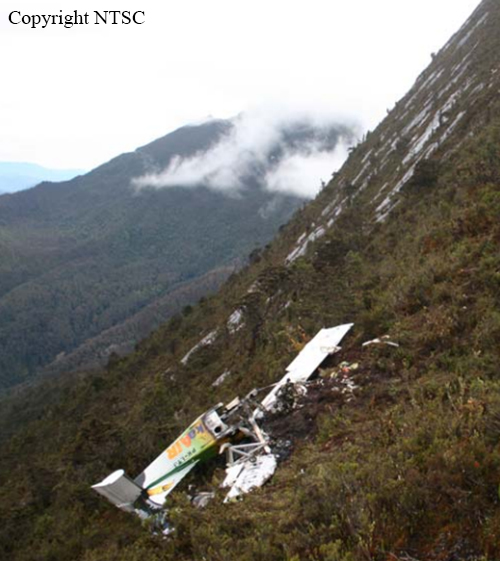
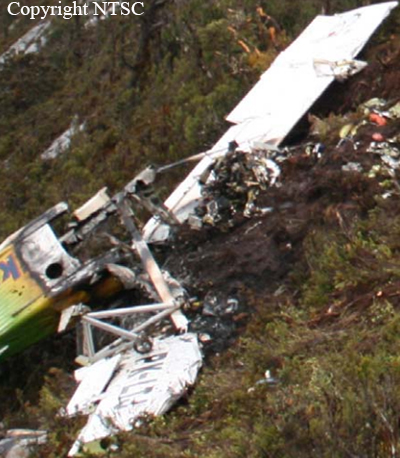
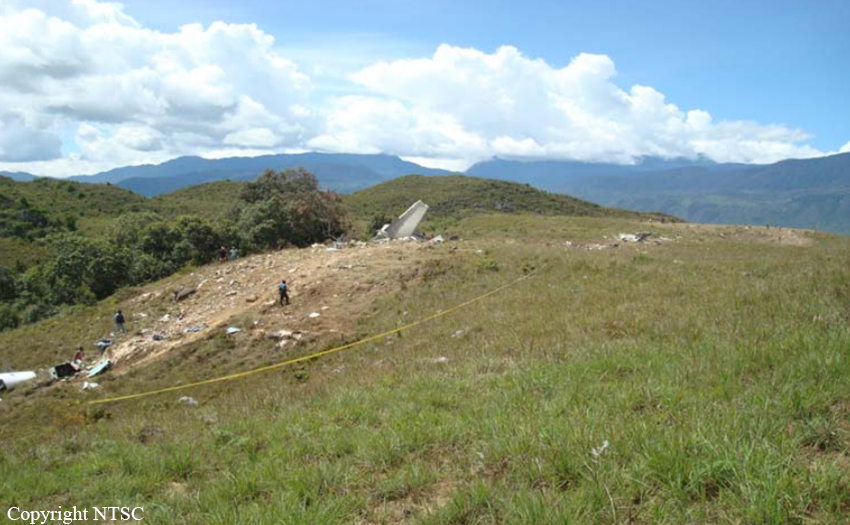
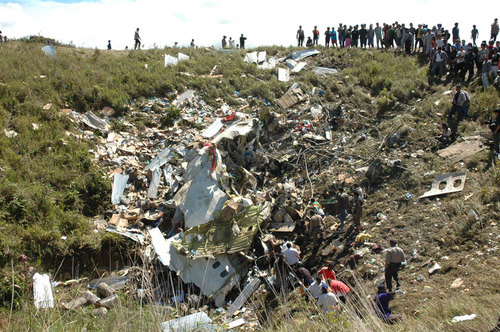
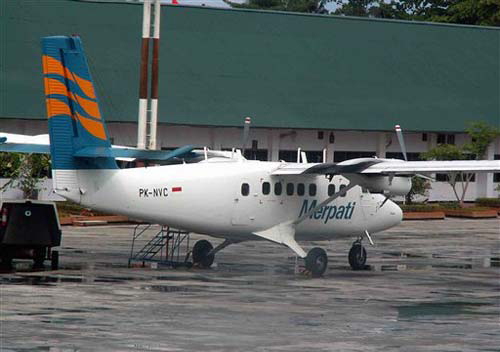
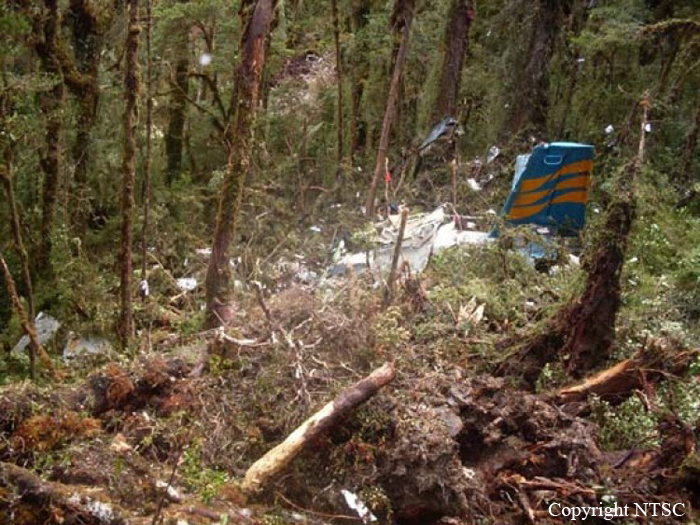
On the morning of Sunday, 2 August 2009, a de Havilland DHC-6 Twin Otter aircraft, registered PK-NVC, operated by PT. Merpati Nusantara Airlines as flight number MZ-7960D, departed from Sentani Airport, Jayapura for Oksibil Airport. The flight was planned in accordance with the visual flight rules (VFR). There were 15 persons on board; two pilots, one engineer, 10 adult passengers and two infants. The estimated flight time was 50 minutes. The fuel on board was sufficient for 2 hours and 50 minutes flight time. About 15 minutes prior to the estimated time of arrival at Oksibil the crew of another aircraft informed the Twin Otter crew that the weather in the Oksibil area was partly cloudy. There were no further reports of radio transmissions from the Twin Otter, and it did not arrive at Oksibil. A search was initiated at the time the aircraft would have run out of fuel. On the morning of 4 August 2009, searchers located the wreckage of the Twin Otter at an elevation of about 9,300 feet about 6 Nm from Oksibil. The aircraft was destroyed by impact forces, and all of the occupants were fatally injured.
Probable cause:
The pilots did not maintain visual flight procedures when flying below lowest safe altitude, and the aircraft was flown into cloud in the vicinity of gap north west of Oksibil. In conclusion, the accident was consistent with controlled flight into terrain.
Final Report:
Crash of a De Havilland DHC-6 Twin Otter 300 near Wamena: 3 killed

Date & Time: Jun 29, 2009 at 1601 LT
Operator:
Registration:
PK-BRO
Flight Phase:
Flight Type:
Survivors:
No
Site:
Schedule:
Dekai - Wamena
MSN:
756
YOM:
1981
Country:
Region:
Crew on board:
3
Crew fatalities:
Pax on board:
0
Pax fatalities:
Other fatalities:
Total fatalities:
3
Circumstances:
The twin engine aircraft departed Dekai Airport at 1530LT on a cargo flight to Wamena, carrying three crew members and a load of 1,600 kilos of various goods. Between 1554LT and 1600LT, the crew was in contact with Wamena. At 1601LT, while cruising at an altitude of 9,600 feet in limited visibility, the aircraft collided with a mountain slope. The wreckage was found a day later about 19 km southeast from Wamena. The aircraft disintegrated on impact and all three occupants were killed.
Probable cause:
Controlled flight into terrain after the crew was flying under VFR mode in IMC conditions. IFR approach to Wamena are not possible, VFR only.

Crash of a Lockheed C-130H Hercules in Madiun: 100 killed

Date & Time: May 20, 2009 at 0630 LT
Type of aircraft:
Operator:
Registration:
A-1325
Flight Type:
Survivors:
Yes
Schedule:
Jakarta – Madiun
MSN:
4917
YOM:
1982
Country:
Region:
Crew on board:
14
Crew fatalities:
Pax on board:
98
Pax fatalities:
Other fatalities:
Total fatalities:
100
Circumstances:
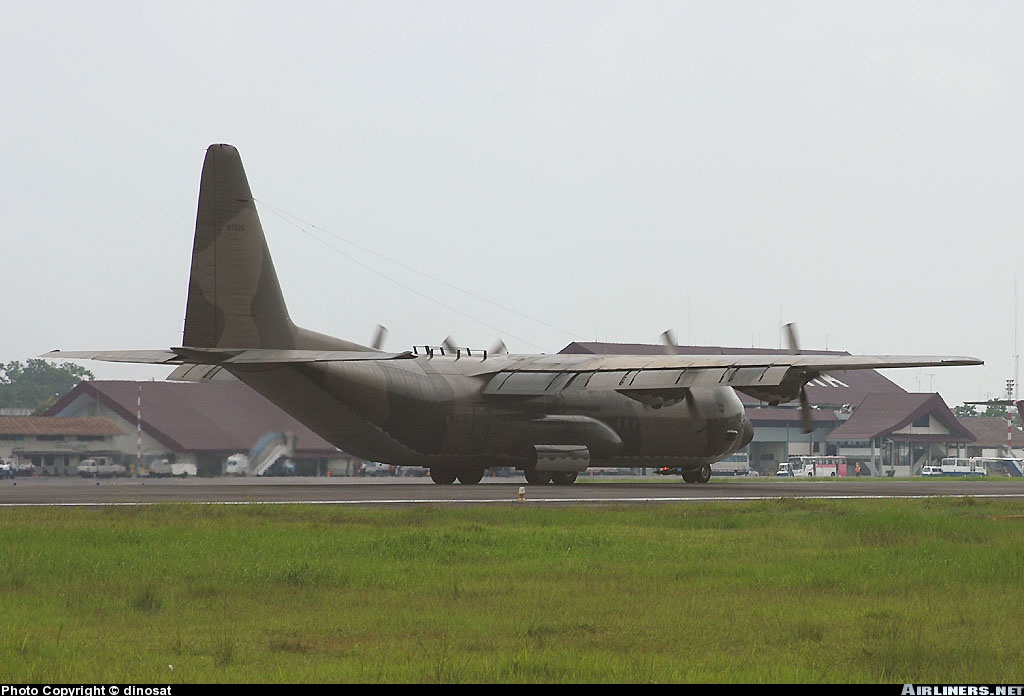
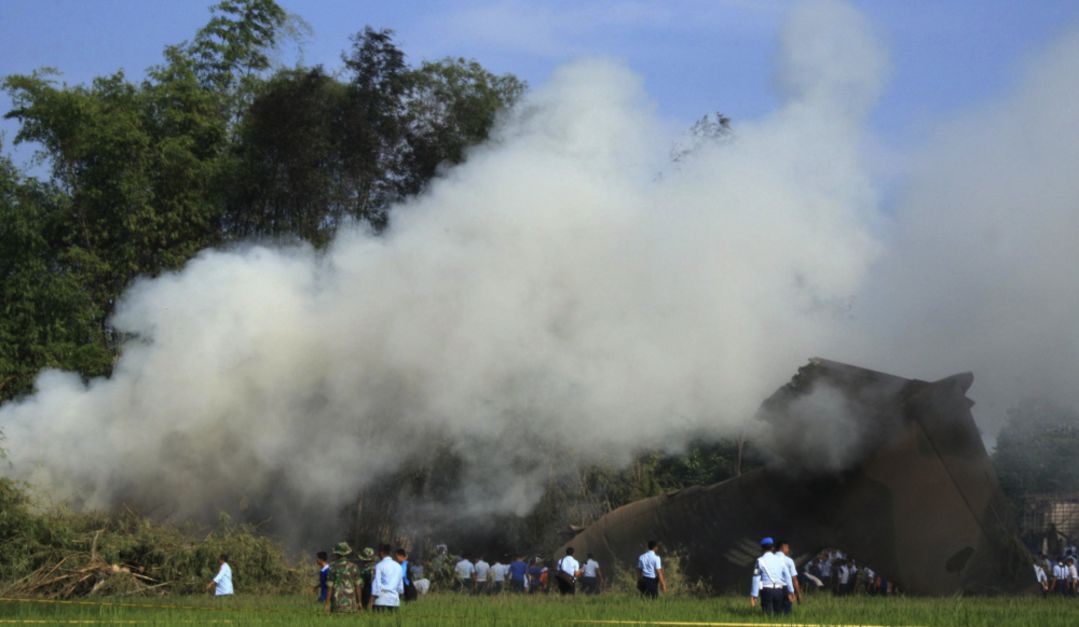
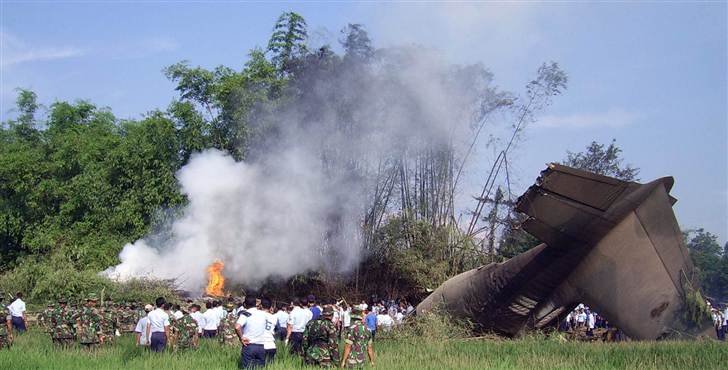
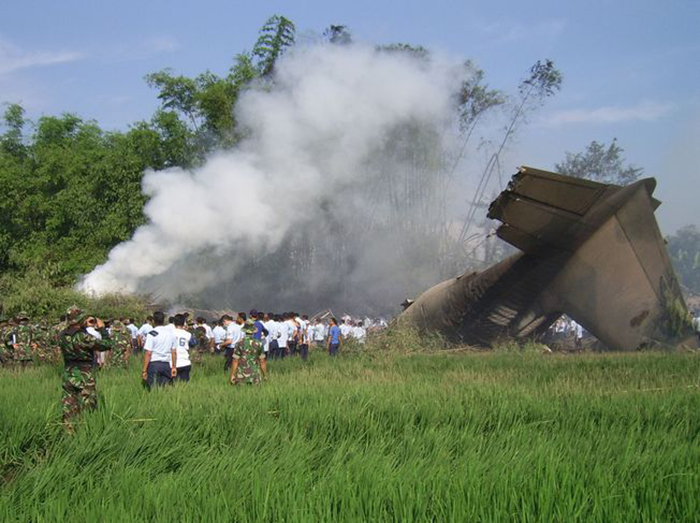
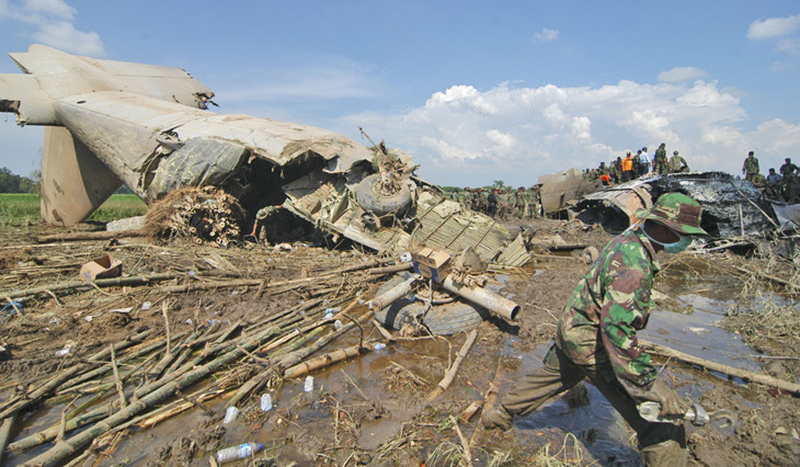
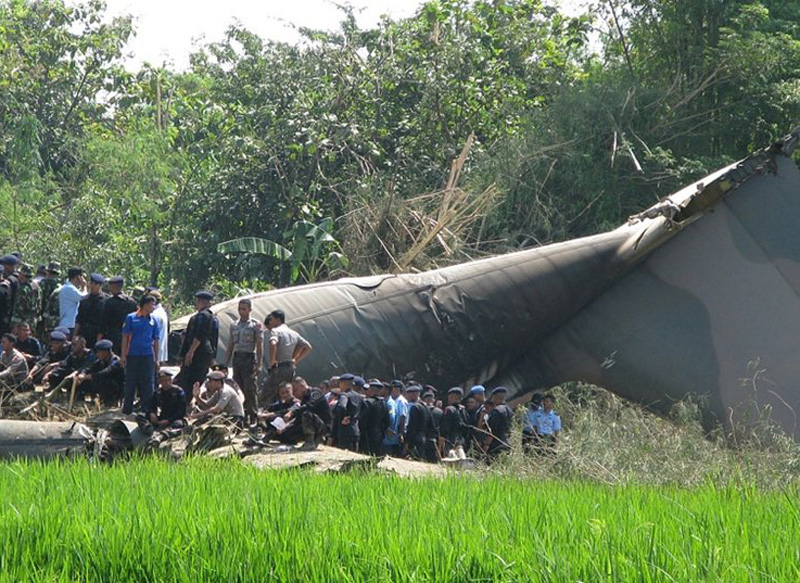
The four engine aircraft departed Jakarta-Halim Perdana Kusuma Airport on a flight to Madiun, carrying Indonesian soldiers/officers and family members. On final approach to Madiun-Iswahyudi Airport, the crew failed to realize his altitude was too low when the aircraft collided with four houses and eventually crashed in a rice paddy field. 98 occupants as well as two people on the ground were killed while 14 other occupants were seriously injured.

Crash of a Pilatus PC-6/B2-H4 Turbo Porter near Mulia: 11 killed

Date & Time: Apr 17, 2009 at 1015 LT
Operator:
Registration:
PK-LTJ
Flight Phase:
Survivors:
No
Site:
Schedule:
Ilaga - Mulia
MSN:
959
YOM:
2008
Country:
Region:
Crew on board:
2
Crew fatalities:
Pax on board:
9
Pax fatalities:
Other fatalities:
Total fatalities:
11
Captain / Total flying hours:
2664
Captain / Total hours on type:
1412.00
Aircraft flight hours:
542
Circumstances:
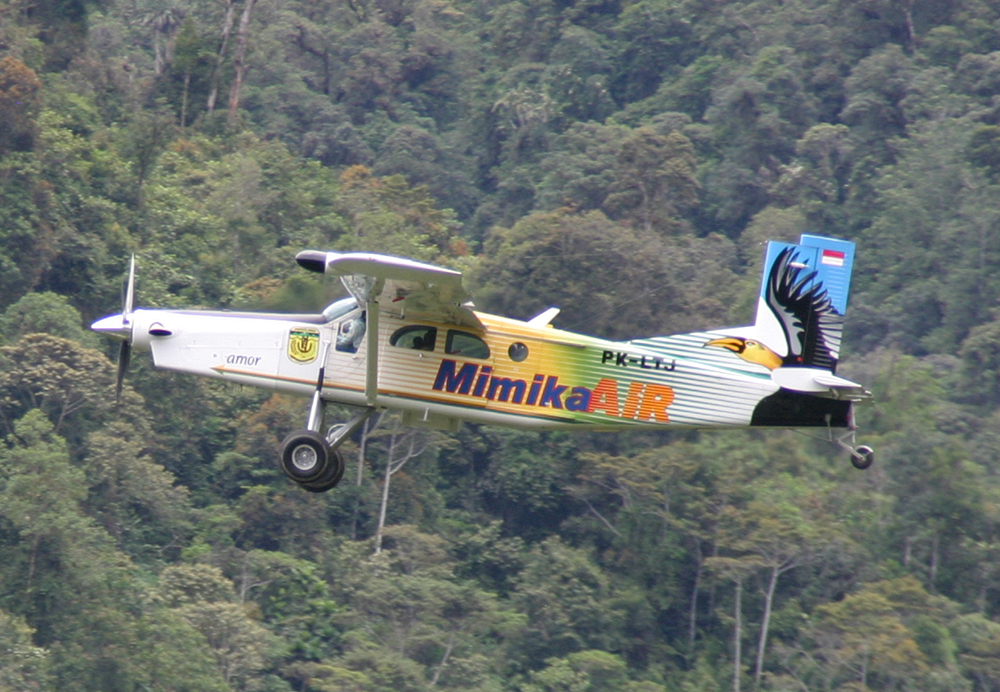
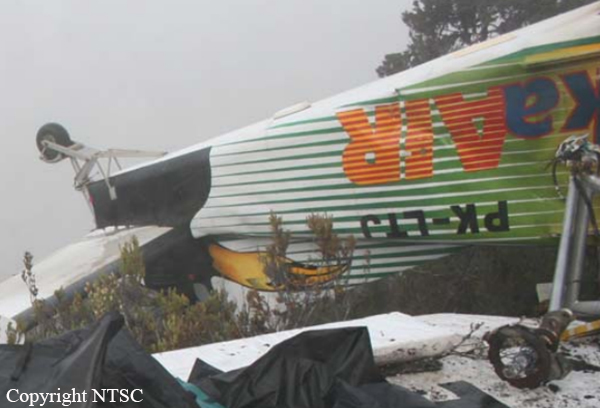
On the morning of 17 April 2009, a Pilatus PC-6/B2-H4 Turbo Porter aircraft, registered PK-LTJ, operated by PT. Mimika Air, charter flight from Ilaga to Mulia in the Puncak Jaya District of Papua. The Mimika Local Government owned the aircraft. There were 11 people on board; one pilot, one observer, and nine passengers comprised of eight adults and one infant. The aircraft was also carrying National Government election boxes. The flight in accordance with the visual flight rules was estimated to take 18 minutes. There was no record of communication with the aircraft during the flight. Two minutes after the estimated time of arrival, when the Porter had not arrived, a search was commenced. On 18 April, search aircraft located the wreckage of the Porter at an elevation of about 12,000 feet on Mt Gergaji. The location was on the direct track between Ilaga and Mulia. The aircraft impacted the ground in an inverted attitude, and was destroyed by the impact forces and the post-impact fire. All occupants were fatally injured. The weather in the valleys along the route was mostly clear, with cloud on the mountains. The route flown by the pilot was the direct track, which passed over a mountain range, with a high peak adjacent to, and west of the track at about the midway point, at 13,700 feet. The investigation determined that it was likely that the pilot had flown the aircraft into cloud and lost control of the aircraft in instrument meteorological conditions. The impact signature was consistent with uncontrolled flight at the time of impact. This probably resulted from the pilot becoming spatially disoriented after entering cloud.
Probable cause:
The pilot may not have had adequate knowledge of the route and weather conditions, and may have been relying on Global Positioning System navigation, and was attempting to climb on the direct track over Mt Gergaji. It was likely that the pilot became spatially disoriented after entering cloud while operating under visual flight procedures, leading to a loss of control and uncontrolled impact with terrain.
Final Report:
Crash of a BAe 146-300 in Wamena: 6 killed

Date & Time: Apr 9, 2009 at 0743 LT
Type of aircraft:
Operator:
Registration:
PK-BRD
Flight Type:
Survivors:
No
Schedule:
Jayapura - Wamena
MSN:
E3189
YOM:
1990
Country:
Region:
Crew on board:
6
Crew fatalities:
Pax on board:
0
Pax fatalities:
Other fatalities:
Total fatalities:
6
Captain / Total flying hours:
8305
Captain / Total hours on type:
958.00
Copilot / Total flying hours:
12389
Copilot / Total hours on type:
191
Aircraft flight hours:
22225
Circumstances:
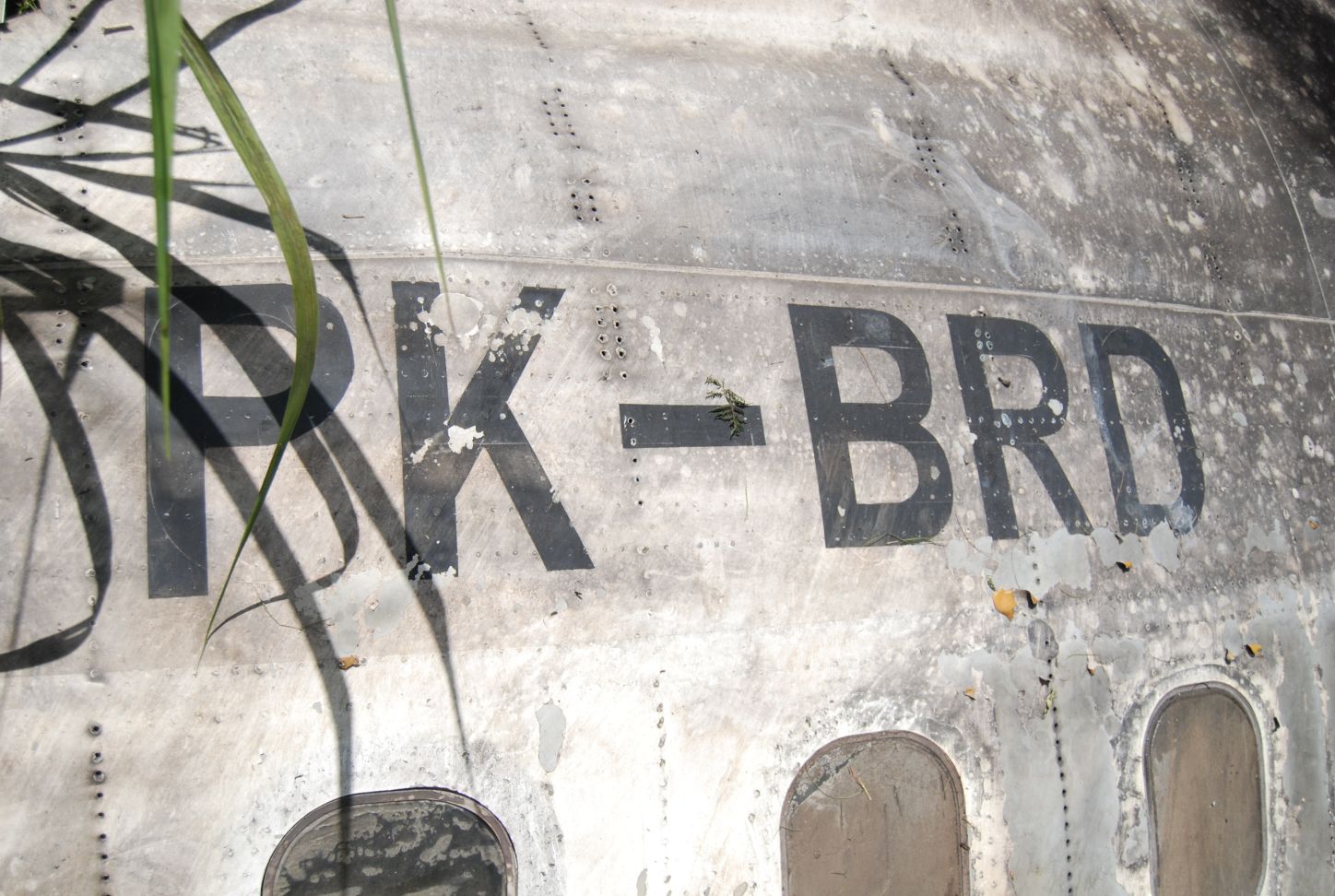
On the morning of 9 April 2009, a British Aerospace BAe 146-300 aircraft, registered PK-BRD, was being operated by PT. Aviastar Mandiri Airlines as a scheduled passenger and cargo flight from Sentani Airport to Wamena Airport, Papua. The crew consisted of two pilots, two flight attendants, an engineer, and a load master. The aircraft performed a go-around from the initial landing approach on runway 15 at Wamena. The flight crew positioned the aircraft on a right downwind leg for another landing approach. As the aircraft was turned towards the final approach for the second landing approach at Wamena it impacted terrain and was destroyed. All of the occupants were fatally injured. The Enhanced Ground Proximity Warning System (EGPWS) manufacturer performed simulations using data from the flight recorders, and two separate terrain data sources. The manufacturer informed the investigation that “the GPWS/EGPWS alerts recorded in the CVR were issued as designed”. However the enhanced Look-Ahead function appeared to have been inhibited following the go around. There was no evidence from the CVR that the crew had deliberately inhibited the terrain function of the EGPWS. The investigation determined that the EGPWS issued appropriate warnings to the flight crew, in the GPWS mode. The pilot in command did not take appropriate remedial action in response to repeated EGPWS warnings. The investigation concluded that flight crew’s lack of awareness of the aircraft’s proximity with terrain, together with non conformance to the operator’s published operating procedures, resulted in the aircraft’s impact with terrain. As a consequence of this accident, the operator took safety action to address deficiencies in its documentation for missed approach procedures at Wamena. As a result of this accident, the National Transportation Safety Committee (NTSC) also issued safety recommendations to the operator and to the Directorate General Civil Aviation (DGCA) to ensure that relevant documented safety procedures are implemented. During the investigation, safety issues were identified concerning modification of aircraft and DGCA approval of those modifications. While those safety issues did not contribute to the accident, they nevertheless are safety deficiencies. Accordingly, the NTSC report includes recommendations to address those identified safety issues.
Probable cause:
The crew did not appear to have awareness of the aircraft’s proximity with terrain until impact with terrain was imminent. The flight crew did not act on the Enhanced Ground Proximity Warning System aural warnings, and did not conform to the operator’s published operating procedures. Together, those factors resulted in the aircraft’s impact with terrain.
Final Report:
Crash of a Fokker F27 Friendship 400M in Bandung: 24 killed

Date & Time: Apr 6, 2009 at 1230 LT
Type of aircraft:
Operator:
Registration:
A-2703
Survivors:
No
Schedule:
Bandung - Bandung
MSN:
10538
YOM:
1976
Country:
Region:
Crew on board:
6
Crew fatalities:
Pax on board:
18
Pax fatalities:
Other fatalities:
Total fatalities:
24
Circumstances:
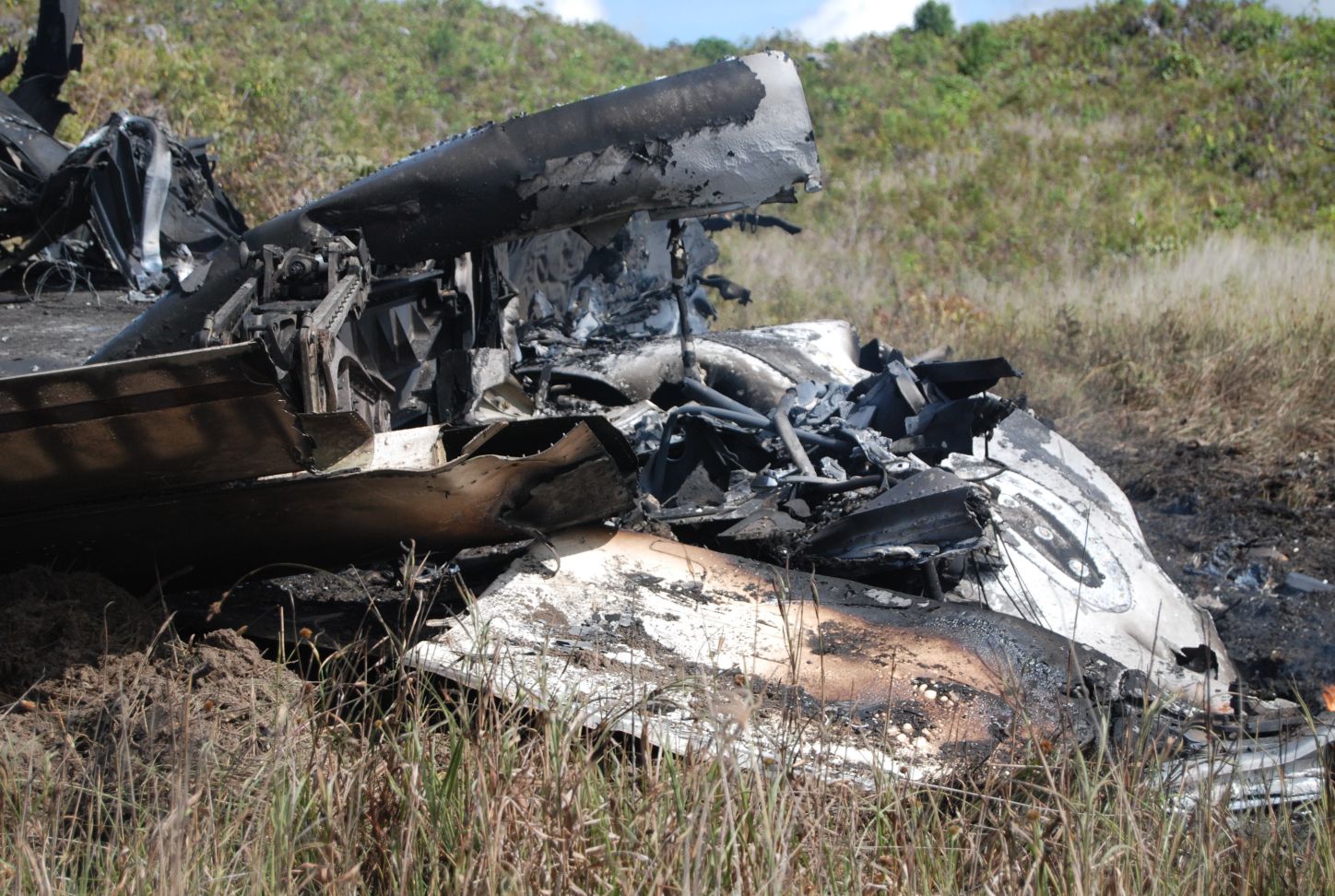
The aircraft was performing a paratroopers/skydiving mission in the region of Bandung, taking part to a military program with members of the Special Forces on board. While approaching runway 29 with 20 knots crosswind, the aircraft went out of control and crashed onto a hangar, bursting into flames. All 24 occupants were killed, among them 17 paratroopers, one instructor and 6 crew members.

Crash of a McDonnell Douglas MD-90-30 in Jakarta

Date & Time: Mar 9, 2009 at 1535 LT
Type of aircraft:
Operator:
Registration:
PK-LIL
Survivors:
Yes
Schedule:
Ujung Pandang - Jakarta
MSN:
53573/2182
YOM:
1997
Flight number:
LNI793
Country:
Region:
Crew on board:
6
Crew fatalities:
Pax on board:
166
Pax fatalities:
Other fatalities:
Total fatalities:
0
Captain / Total flying hours:
25000
Captain / Total hours on type:
5000.00
Copilot / Total flying hours:
5000
Copilot / Total hours on type:
800
Aircraft flight hours:
18695
Aircraft flight cycles:
14507
Circumstances:
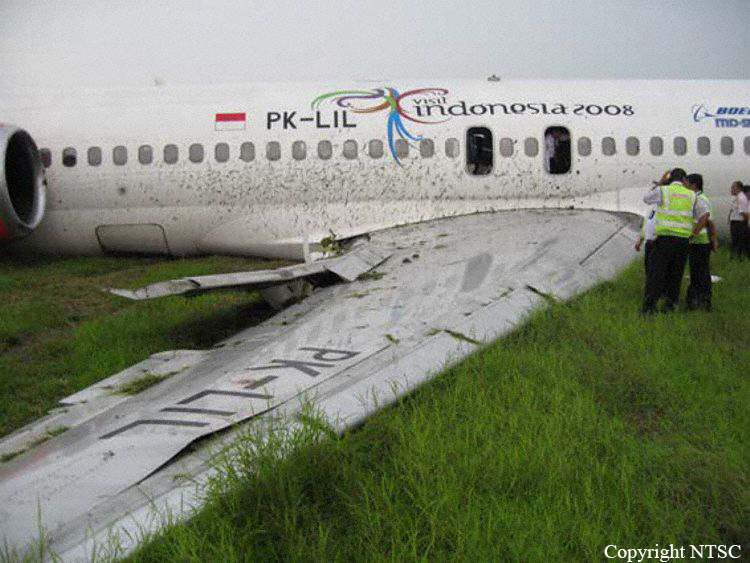
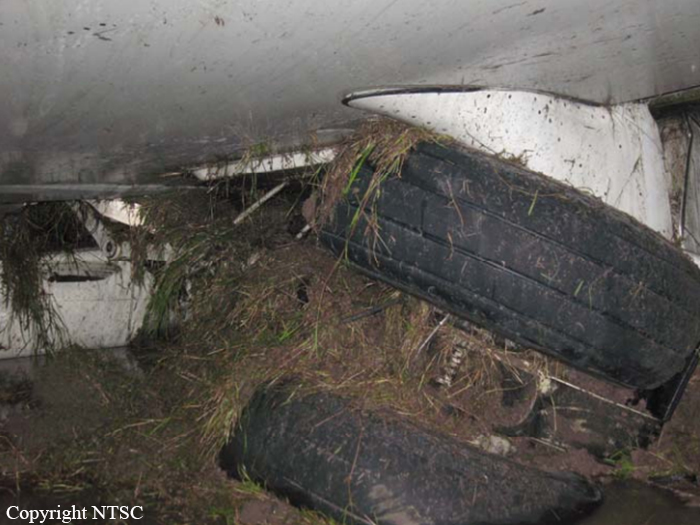
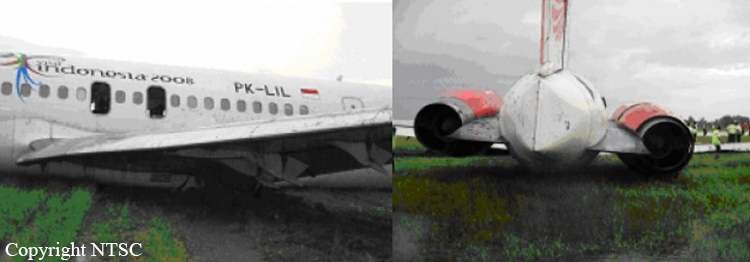
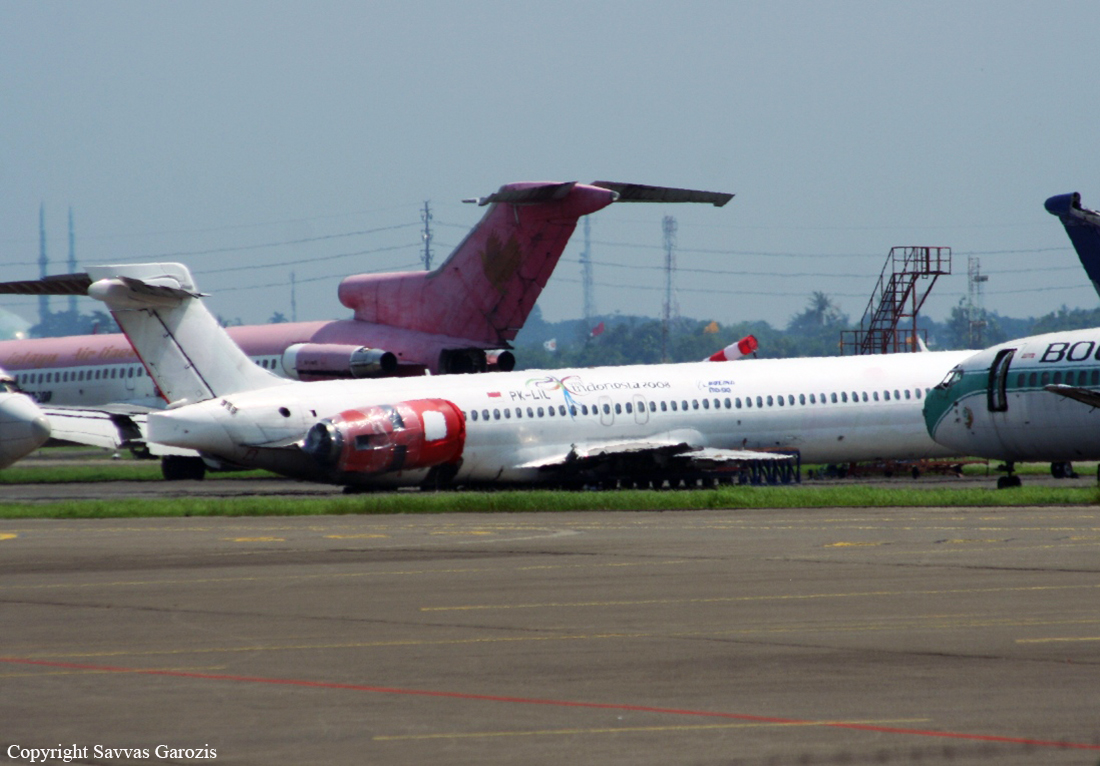
Lion Mentari Airline (Lion Air) as flight number LNI-793, departed from Sultan Hasanuddin Airport (WAAA), Makassar, Ujung Pandang, Sulawesi at 0636 UTC for Soekarno-Hatta International Airport (WIII), Jakarta. The estimated flight hour from Makassar to Jakarta was 2 hours. The crew consisted of two pilots and four flight attendants. There were 166 adult passengers. The copilot was the pilot flying for the sector, and the pilot in command (PIC) was the support/monitoring pilot. During the approach to runway 25L at Jakarta, the weather at the airport was reported as wind direction 200 degrees, wind speed 20 knots, visibility 1,000 meters, and rain. The PIC reported that he decided to take over control from the copilot. The PIC later reported that he had the runway in sight passing through 1,000 feet on descent, and he disengaged the autopilot at 400 feet. At about 50 feet the aircraft drifted to the right and the PIC initiated corrective action to regain the centreline. The aircraft touched down to the left of the runway 25L centerline and then commenced to drift to the right. The PIC reported that he immediately commenced corrective action by using thrust reverser, but the aircraft increasingly crabbed along the runway with the tail to the right of runway heading. The investigation subsequently found that the right thrust reverser was deployed, but left thrust reverser was not deployed. The aircraft stopped at 0835 on the right side of the runway 25L, 1,095 meters from the departure end of the runway on a heading of 152 degrees; 90 degrees to the runway 25L track. The main landing gear wheels collapsed, and still attached to the aircraft, were on the shoulder of the runway and the nose wheel was on the runway. The passengers and crew disembarked via the front right escape slide and right emergency exit windows. None of the occupants were injured
Probable cause:
The aircraft was not stabilized approach at 100 feet above the runway.
Final Report:
Crash of a Dornier DO328-100TP in Fakfak

Date & Time: Nov 6, 2008 at 1033 LT
Type of aircraft:
Operator:
Registration:
PK-TXL
Survivors:
Yes
Schedule:
Sorong - Fakfak
MSN:
3037
YOM:
1995
Flight number:
XAR9000
Country:
Region:
Crew on board:
4
Crew fatalities:
Pax on board:
32
Pax fatalities:
Other fatalities:
Total fatalities:
0
Captain / Total flying hours:
10190
Captain / Total hours on type:
2365.00
Copilot / Total flying hours:
4673
Copilot / Total hours on type:
15
Aircraft flight hours:
24404
Aircraft flight cycles:
21916
Circumstances:
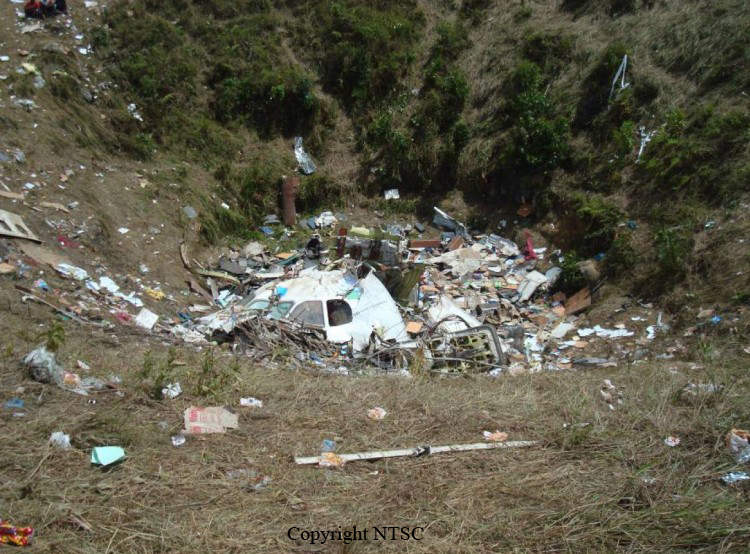
The aircraft touched down heavily approximately 5 meters before the touch-down area of runway 10 at Torea Airport, Fak-Fak at 01:33. The investigation found that the left main landing gear touched the ground first (5 meters before the end of the runway), and the right main landing gear touched the ground (4.5 meters from the end of the runway). It stopped on the runway, approximately 700 meters from the touch-down area. The left main landing gear fractured in two places; at the front pivot point, and the aft pivot point. The left fuselage contacted the runway surface 200 meters from the touch-down point and the aircraft slid with the left fuselage on the ground for a further 500 meters, before it stopped at the right edge of the runway. The wing tip and left propeller blade tips also touched the runway and were damaged. The passengers and crew disembarked normally; there were no injuries. Following an inspection of the landing gear and temporary replacement of the damaged left main landing gear, the aircraft was moved to the apron on 8 November 2008 at 04:00. The runway was closed for 5 days.
Probable cause:
The Digital Flight Data Recorder data showed evidence that the aircraft descended suddenly and rapidly when it was on short final approach before the aircraft was above the touchdown area. Propeller RPM was reduced suddenly and rapidly to 70% less than 10 seconds before ground contact. Given that the propellers are constant speed units, the sudden and rapid changes could not be explained other than the probability that a crew member had made the control inputs. The PIC (pilot monitoring/flight instructor) did not monitor the operation of the aircraft sufficiently to ensure timely and effective response to the pilot induced excessive sink rate.
Other Factors:
The airport did not meet the ICAO Annex 14 Standard with respect to the requirement to have runway end safety areas.
Final Report:
Crash of a Boeing 737-2H6 in Jambi: 1 killed

Date & Time: Aug 27, 2008 at 1634 LT
Type of aircraft:
Operator:
Registration:
PK-CJG
Survivors:
Yes
Schedule:
Jakarta - Jambi
MSN:
23320/1120
YOM:
1985
Flight number:
SJY062
Location:
Country:
Region:
Crew on board:
6
Crew fatalities:
Pax on board:
124
Pax fatalities:
Other fatalities:
Total fatalities:
1
Captain / Total flying hours:
7794
Captain / Total hours on type:
6238.00
Copilot / Total flying hours:
5254
Copilot / Total hours on type:
4143
Aircraft flight hours:
49996
Aircraft flight cycles:
54687
Circumstances:
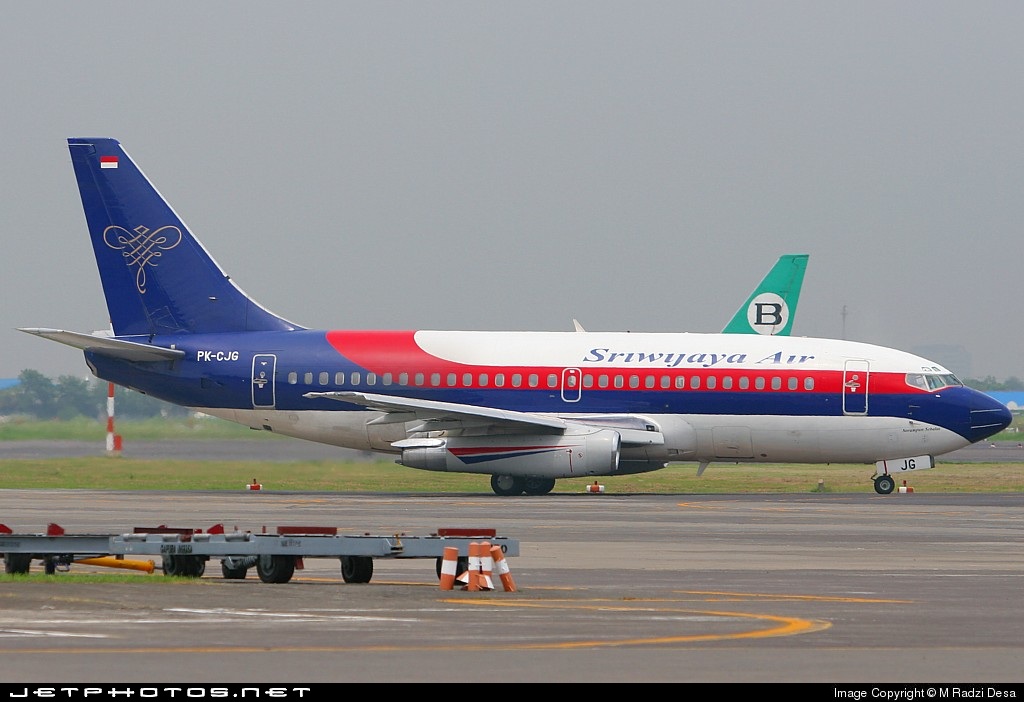
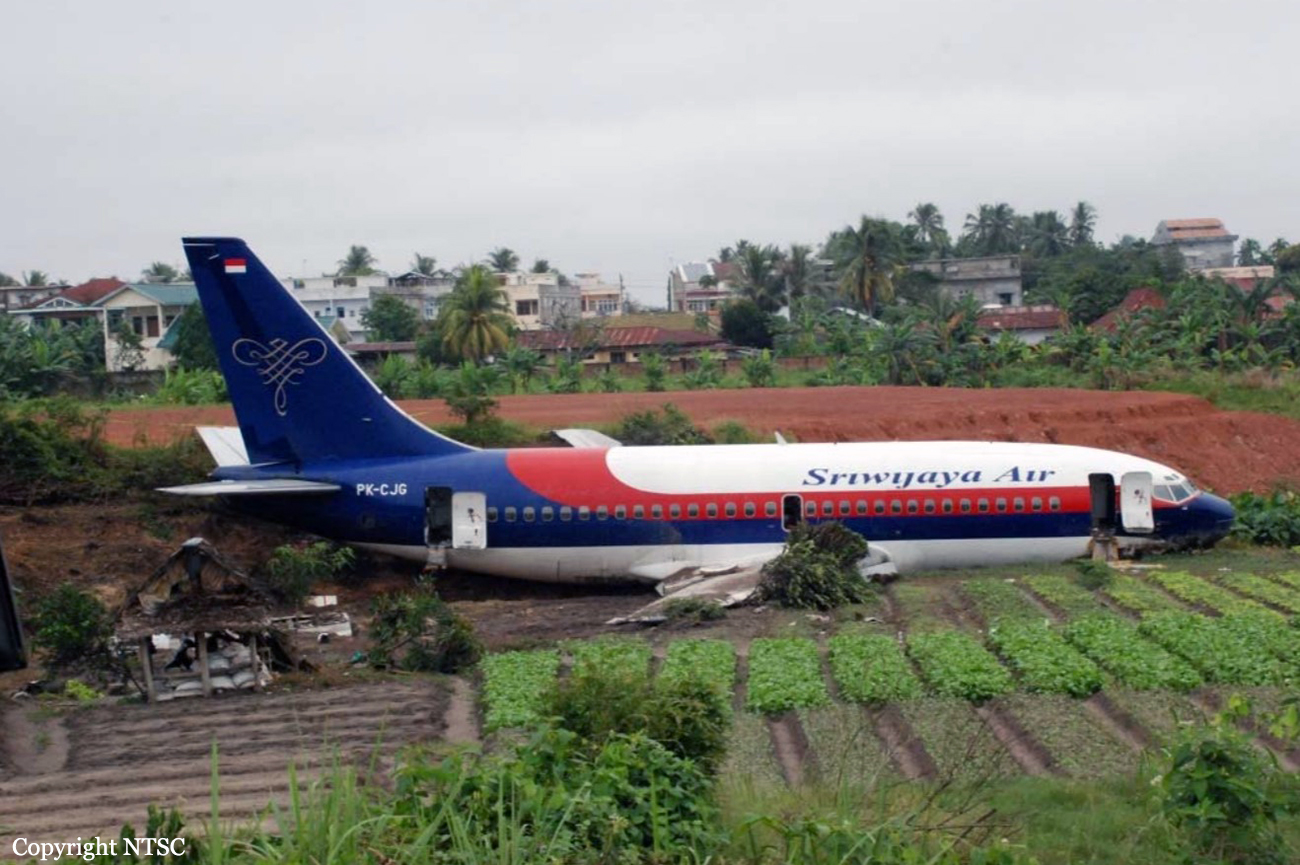
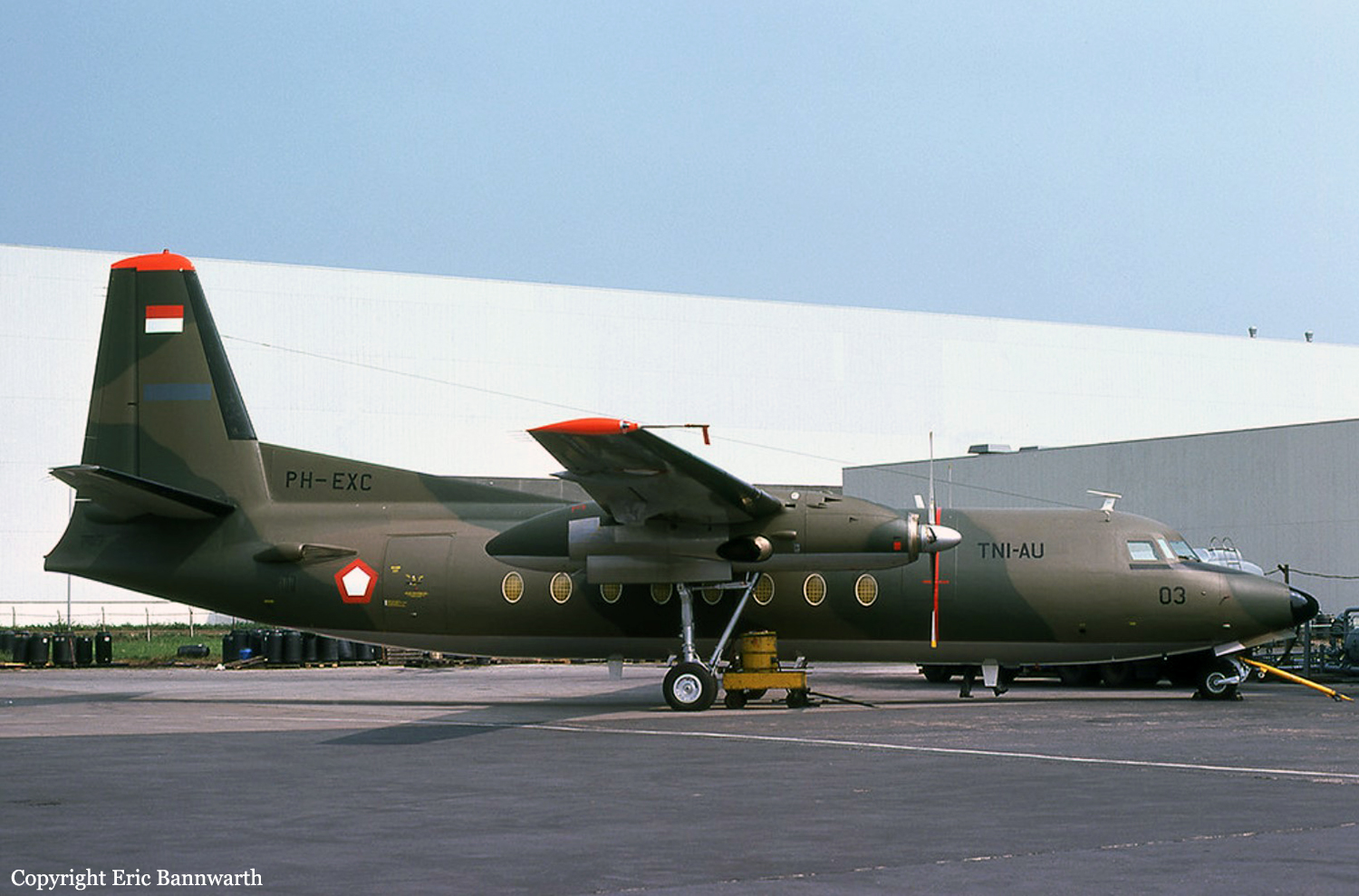
On 27 August 2008, a Boeing 737-200 aircraft, registered PK-CJG, was being operated on a scheduled passenger service from Soekarno-Hatta International Airport, Jakarta to Sultan Thaha Airport, Jambi with flight number SJY062. On board the flight were two pilots, four flight attendants, and 124 passengers. The Pilot in Command (PIC) acted as Pilot Flying (PF) while the Second in Command (SIC) acted as Pilot Monitoring (PM). The flight time from Jakarta to Jambi was estimated to be about one hour and the aircraft was dispatched with approximately 4 hours of fuel endurance. The number one electrical engine driven generator was unserviceable, as such the Auxiliary Power Unit (APU) generator was used during the flight to maintain two generators operation. Prior to descent into Jambi, the PIC conducted the crew briefing and stated a plan for Makinga straight-in approach to runway 31 with flap 40°, reviewed the go-around procedures and stated that Palembang was the alternate airport.There was no abnormality recorded nor reported until the PIC commenced the approach to Jambi. At 09:18 UTC, the SIC contacted Thaha Tower controller and reported that the aircraft was descending and passing FL160 and had been cleared by Palembang Approach control to descend to 12,000 feet. The Thaha Tower controller issued a clearance to descend to 2500 feet and advised that runway 31 was in use. The SIC asked about the weather conditions and was informed that the wind was calm, rain over the field and low cloud on final approach to runway 31. The PIC flew the aircraft direct to intercept the final approach to runway 31. While descending through 2500 feet, and about 8 miles from the VOR, the flap one degree and flap 5° were selected. Subsequently the landing gear was extended and flap 15° was selected. 13 seconds after flap 15 selection, the pilots noticed that the hydraulic system A low pressure warning light illuminated, and also the hydraulic system A quantity indicator showed zero. The PIC commanded the SIC to check the threshold speed for the existing configuration of landing, weight and with flap 15°. The SIC called out that the threshold speed was 134 kts and the PIC decided to continue with the landing. The PIC continued the approach and advised the SIC that he aimed to fly the aircraft slightly below the normal glide path in order to get more distance available for the landing roll. The aircraft touched down at 0930 UTC and during the landing roll, the PIC had difficulty selecting the thrust reversers. The PIC the applied manual braking. During the subsequent interview, the crew reported that initially they felt a deceleration then afterward a gradual loss of deceleration. The PIC reapplied the brakes and exclaimed to the SIC about the braking condition, then the SIC also applied the brakes to maximum in responding to the situation. The aircraft drifted to the right of the runway centre line about 200 meters prior to departing off the end of the runway, and stopped about 120 meters from the end of the runway 31 in a field about 6 meters below the runway level. Three farmers who were working in that area were hit by the aircraft. One was fatally injured and the other two were seriously injured. The pilots reported that, after the aircraft came to a stop, they executed the Emergency on Ground Procedure. The PIC could not put both start levers to the cut-off position, and also could not pull the engines and APU fire warning levers. The PIC also noticed that the speed brake lever did not extend. The radio communications and the interphone were also not working. The flight attendants noticed a significant impact before the aircraft stopped. They waited for any emergency command from the PIC before ordering the evacuation. However, the passengers started to evacuate the aircraft through the right over-wing exit window before commanded by the flight attendants. The flight attendants subsequently executed the evacuation procedure without command from the PIC. The left aft cabin door was blocked by the left main landing gear that had detached from the aircraft and the flight attendants were unable to open the door. The right main landing gear and both engines were also detached from the aircraft. The Airport Rescue and Fire Fighting (ARFF) come to the crash site and activated the extinguishing agent while the passengers were evacuating the aircraft. The PIC, SIC and FA1 were the last persons to evacuate the aircraft. The APU was still running after all passengers and crew evacuation completed, afterward one company engineer went to the cockpit and switched off the APU. All crew and passengers safely evacuated the aircraft. No significant property damage was reported.
Probable cause:
Contributing Factors:
- When the aircraft approach for runway 31, the Loss of Hydraulic System A occurred at approximately at 1,600 feet. At this stage, there was sufficient time for pilots to conduct a missed approach and review the procedures and determine all the consequences prior to landing the aircraft.
- The smooth touchdown with a speed 27 kts greater than Vref and the absence of speed brake selection, led to the aircraft not decelerating as expected.
Final Report:

Crash of a Pilatus PC-6/B2-H4 Turbo Porter near Ndundu: 1 killed
Date & Time: Aug 9, 2008 at 2000 LT
Operator:
Registration:
PK-RCZ
Flight Phase:
Flight Type:
Survivors:
No
Site:
Schedule:
Wamena - Ndundu
MSN:
903
YOM:
1994
Country:
Region:
Crew on board:
1
Crew fatalities:
Pax on board:
0
Pax fatalities:
Other fatalities:
Total fatalities:
1
Captain / Total flying hours:
4624
Captain / Total hours on type:
2275.00
Aircraft flight hours:
6321
Circumstances:
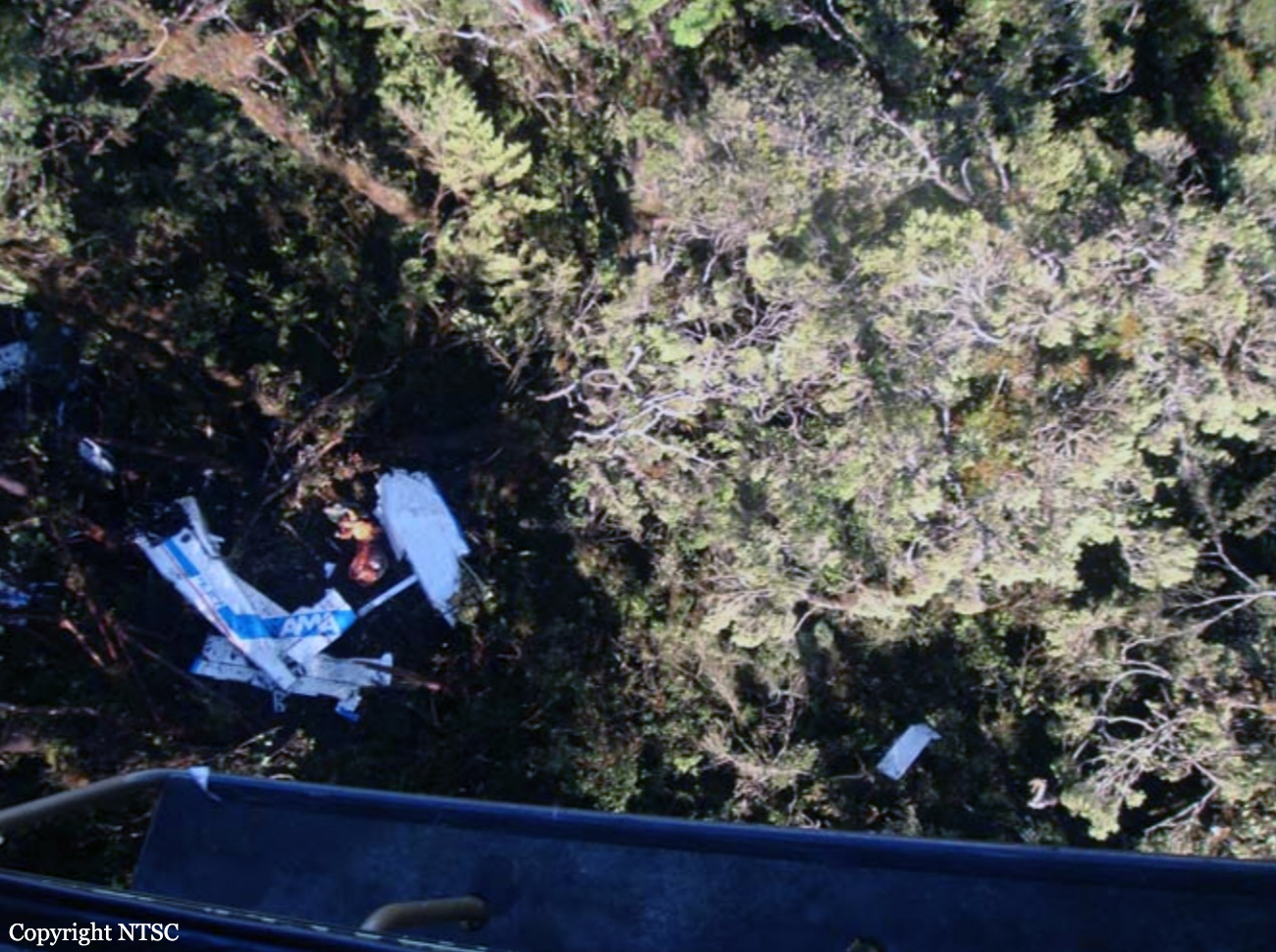
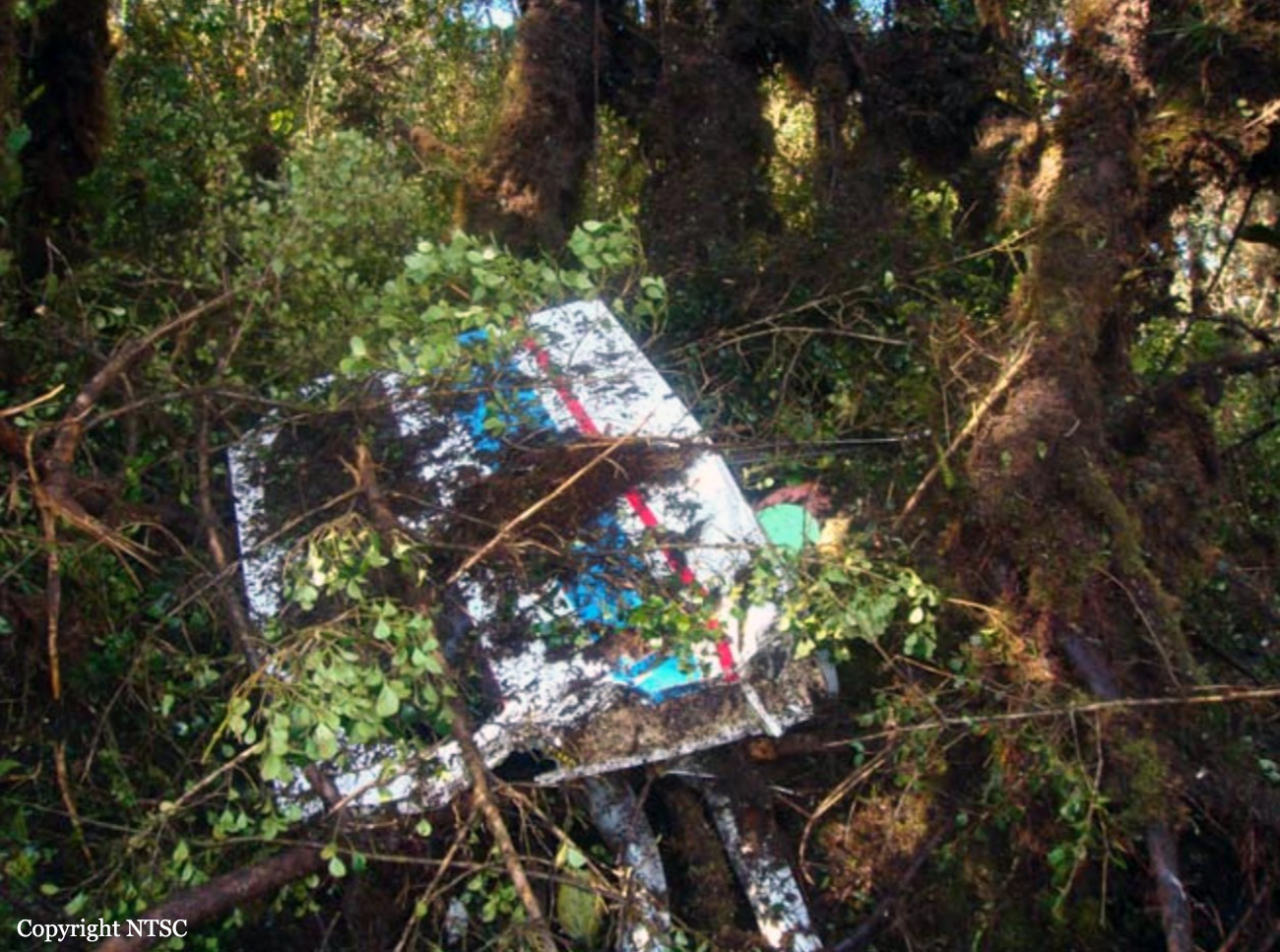
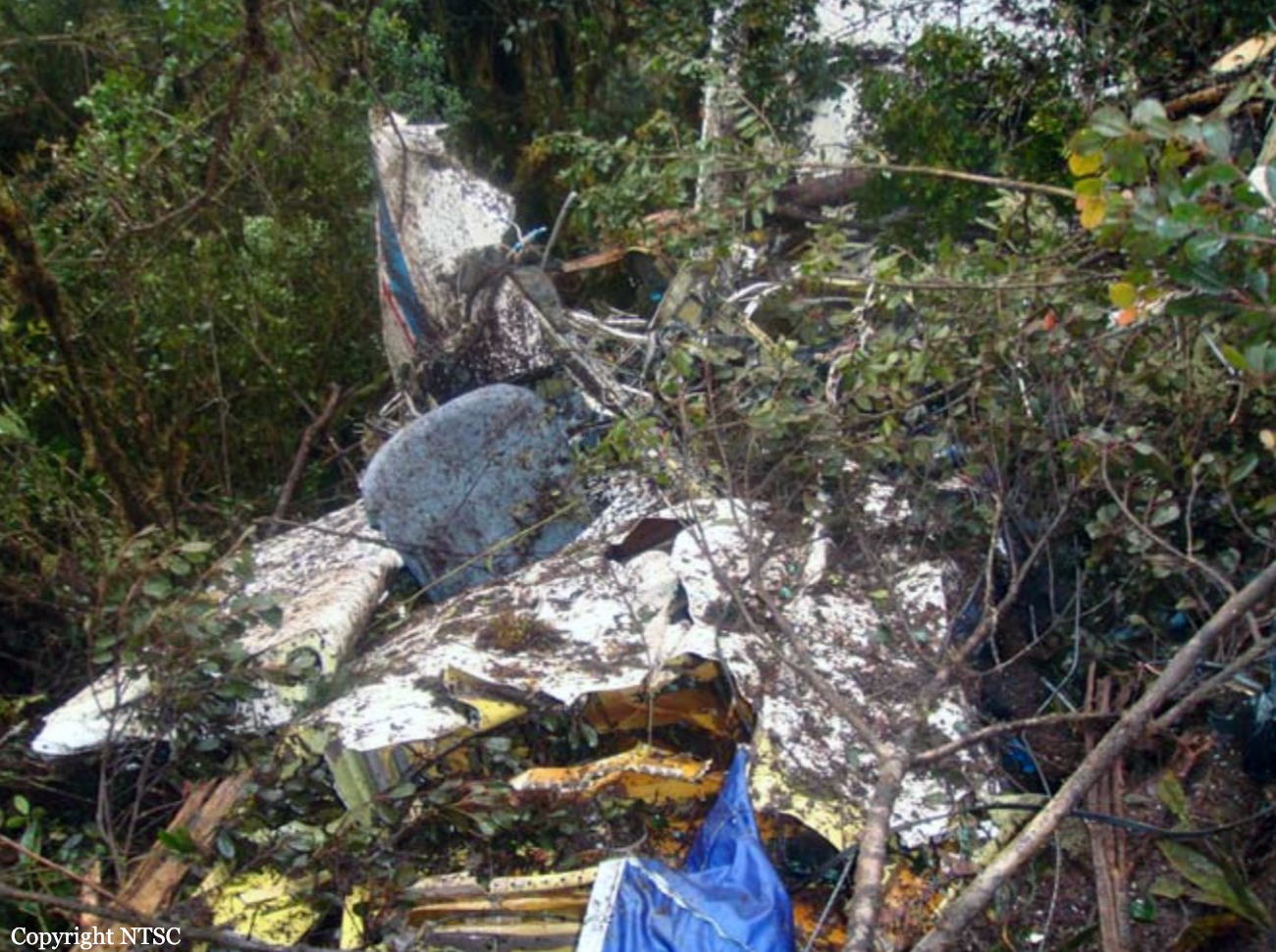
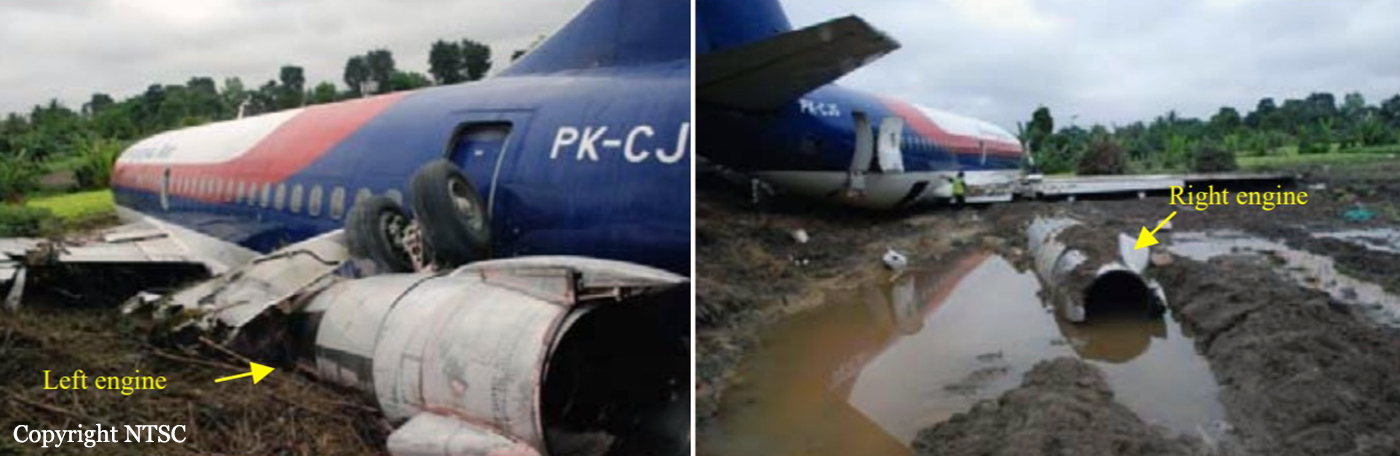
On the Saturday 9 August 2008, a Pilatus Porter PC-6 B2-H4 aircraft, registered PK-RCZ, operated by AMA (Association of Mission Aviation) on a charter flight from Wamena, Papua, to Taive II, Papua departed at 1000 UTC. The aircraft was to pick up a medical patient from Taive II. After landing and unloading cargo at Taive II, the aircraft departed from Taive II for NduNdu, Papua, at 1106 with an estimated time of arrival of 1113. The flight was to be operated in accordance with the visual flight rules (VFR), remaining clear of cloud and navigating visually. When the aircraft had not arrived by 1213, the Wamena authorities decided to search for the aircraft. Three operators assisted the search; Association of Mission Aviation (AMA), Mission Aviation Fellowship (MAF), and Yajasi. They all reported hearing PK-RCZ’s emergency locator transmitter (ELT) signal, but were unable to reach the crash site due to the weather conditions. At 2020 (0520 local time on Sunday 10 August), the aircraft wreckage was found at an elevation of 6,400 feet at the coordinates 03° 26’ 08” S, 138° 21’ 58” E, in the area of NduNdu Pass, on the aircraft’s planned track. The crash site was about 200 feet to the left (east) of the southerly track across the Pass, on the slope of an 11,000 foot mountain. The coordinates and elevation of the lowest point in the NduNdu Pass were
03° 26’ 26” S, 138° 21’ 22” E and 5,700 feet. The pilot, the sole occupant, was fatally injured.
Probable cause:
The pilot continued the flight into cloud and did not initiate action to maintain visual flight conditions. The sector of the flight across the mountain pass was not conducted in conformance with the visual flight rules, and the pilot was did ensure that the aircraft remained clear of the terrain.
Final Report: