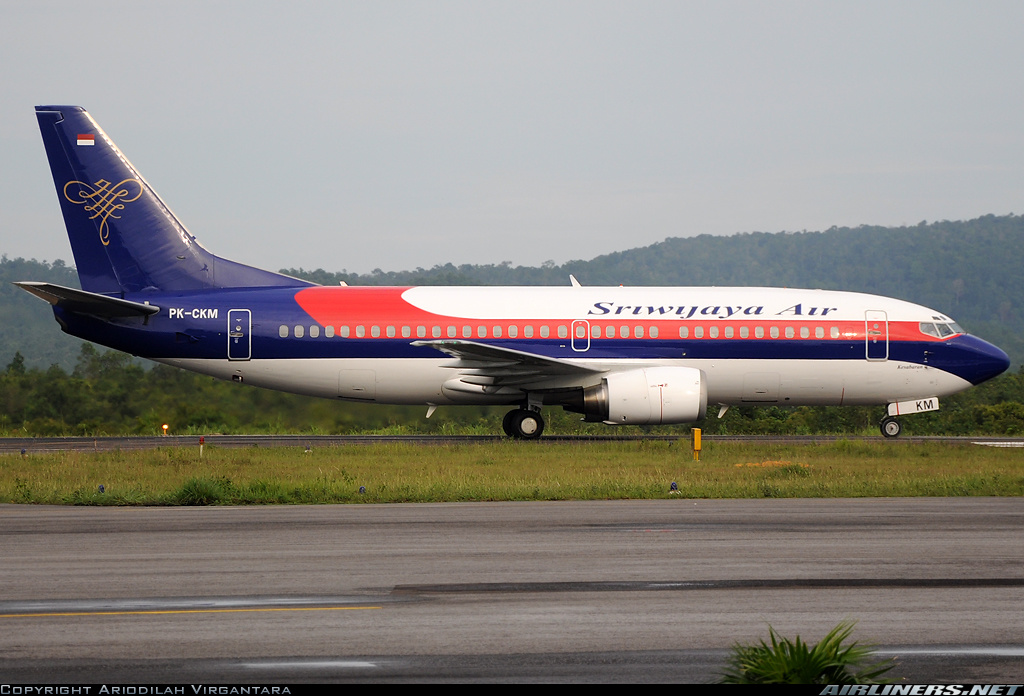
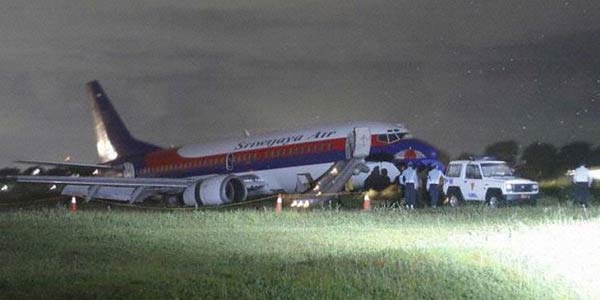
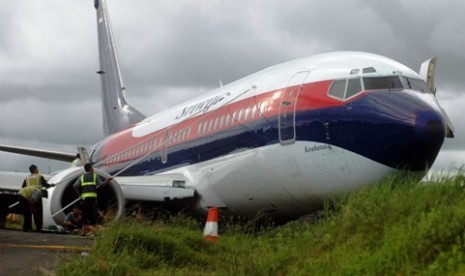
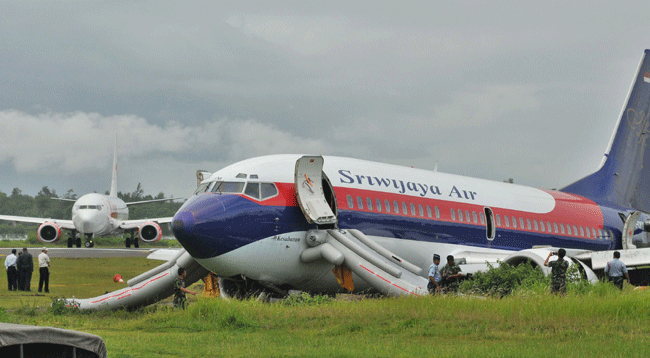
Crash of a Boeing 737-36M in Yogyakarta

Date & Time: Dec 20, 2011 at 1713 LT
Type of aircraft:
Operator:
Registration:
PK-CKM
Survivors:
Yes
Schedule:
Jakarta - Yogyakarta
MSN:
28333/2810
YOM:
1996
Flight number:
SJY230
Country:
Region:
Crew on board:
6
Crew fatalities:
Pax on board:
131
Pax fatalities:
Other fatalities:
Total fatalities:
0
Captain / Total flying hours:
29801
Copilot / Total flying hours:
562
Aircraft flight hours:
31281
Aircraft flight cycles:
21591
Circumstances:
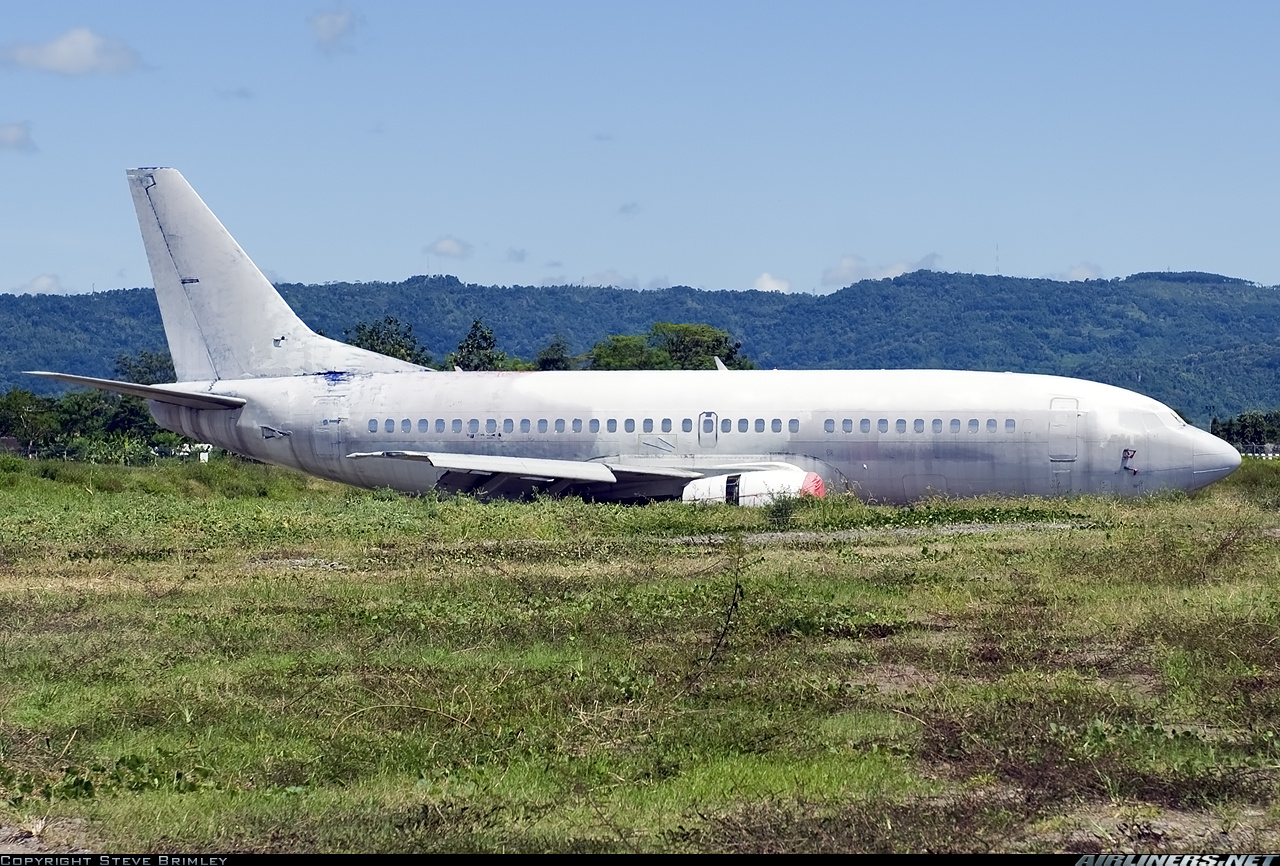
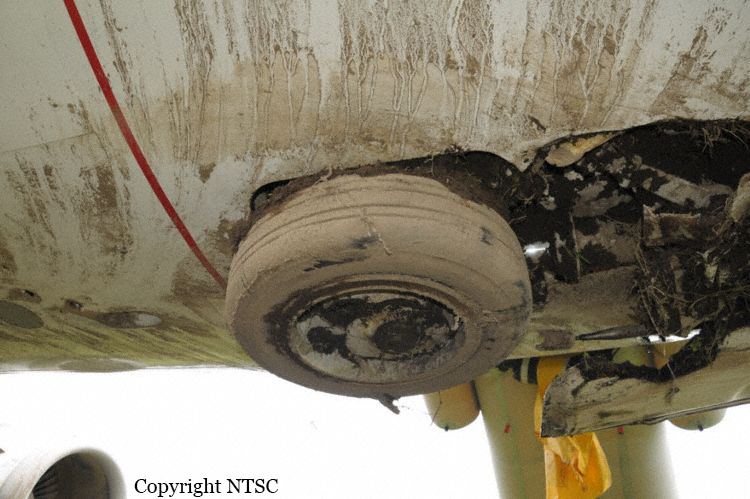
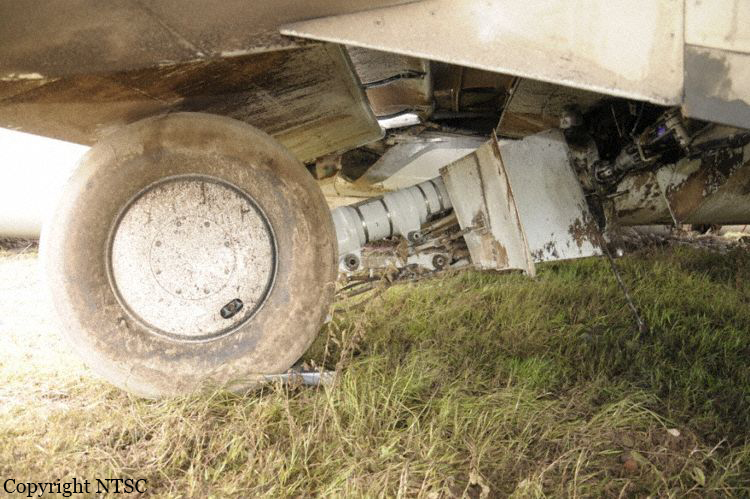
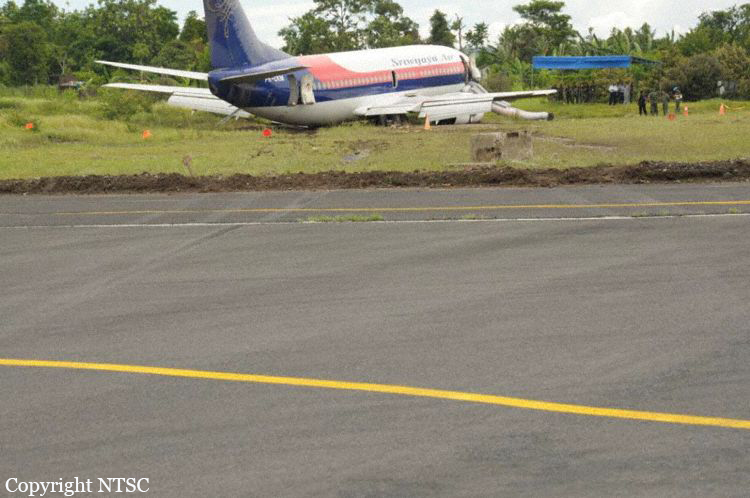
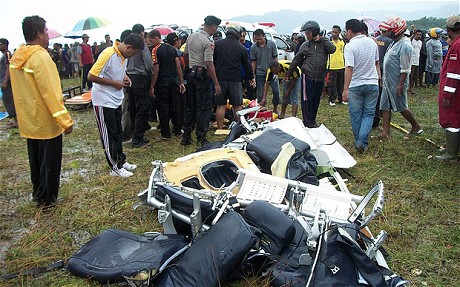
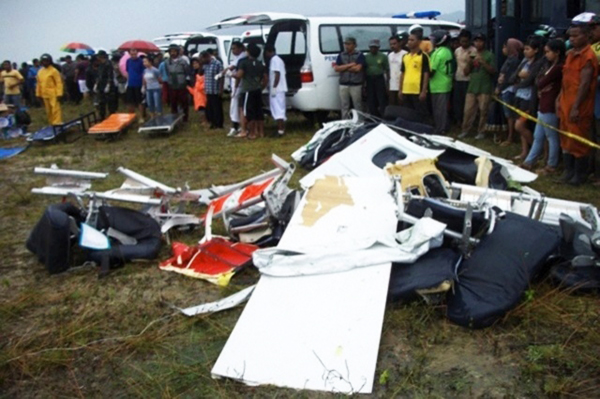
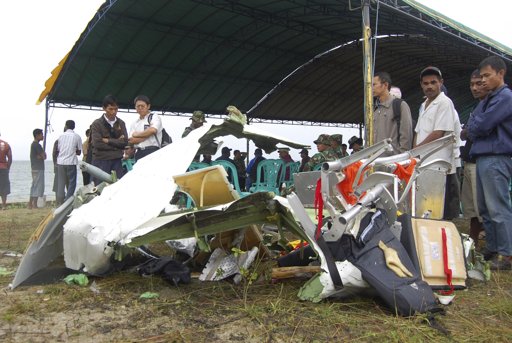
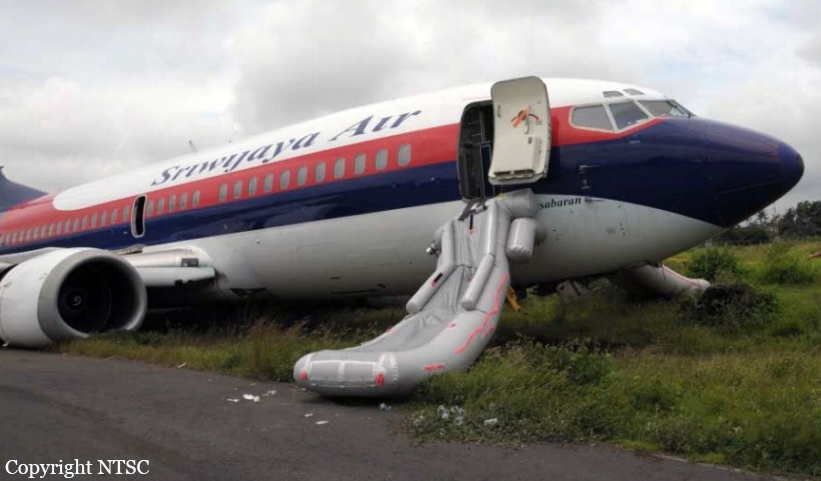
On 20 December 2011, a Boeing 737-300 aircraft, registered PK-CKM, was being operated by PT. Sriwijaya Air on a schedule passenger flight SJ230 from Soekarno Hatta International Airport (WIII) Jakarta to Adisutjipto International Airport (WARJ), Yogyakarta. There were 141 persons on board; two pilots, four cabin crews and 135 passengers consisted124 adult, 7 children and 4 infant. The aircraft departed from Jakarta at 14.00 LT (07.00 UTC), the pilot in command was the pilot flying and the co-pilot was the pilot monitoring. At 08.10 UTC the aircraft made holding at 8 NM from JOG VOR due to bad weather. After the second holding and the weather was deteriorated, the airport authority closed the airport for takeoff and landing. The pilot requested divert to Juanda Airport (WARR), Surabaya and landed at 08.40 UTC. After refuelling and received the information about weather improvement in Yogyakarta then the aircraft departed, at 09.20 UTC, in this sequence of flight the PIC acted as PF, with 137 persons on board consisted of two pilots, four cabin crews and 131 passengers consisted 120 adult, 7 children and 4 infant. The aircraft was on the fifth sequence from seven aircraft approaching Adisucipto airport Yogyakarta. Passing JOG VOR it was seen on radar screen that the aircraft speed was read 203 Kts at 2700 ft. Approach Controller instructed to reduce the speed. At about 1200 ft, the pilot had the runway insight and disengaged the autopilot and auto throttle. The pilot made correction to the approach profile by roll up to 25 degrees and rate of descend up to 2040 ft per minute. The GPWS warning of ‘pull up’ and sink ‘rate were’ activated. Aircraft touched down at speed 156 Kts of 138 Kts target landing speed. During landing roll, the auto-brake and spoiler activated automatically. The thrust reverse were deployed and the N1 were recorded on the FDR increase and decrease to idle before increased to 80% prior to aircraft stop. The PIC noticed that the aircraft would not be able to stop in the runway and decided to turn the aircraft to the left. The aircraft stopped at 75 meter from the end of runway 09 and 54 meter on the left side of the centre line. Most of the passenger evacuated through left and right forward escape slides. All passengers were evacuated safely. The passenger on the stretcher case was evacuated by the airport rescue. 6 passengers reported minor injured while all crew and the remaining passengers were not injured. The aircraft suffered major damage on the right main and nose wheel.
Probable cause:
Findings:
1. The aircraft was airworthy prior the accident. There was no evidence that the aircraft had malfunction during the flight.
2. The crew had valid license and medical certificate. There was no evidence of crew incapacitation.
3. In this flight Pilot in Command acted as Pilot Flying and Second In command acted as Pilot Monitoring.
4. The flight crew did not conduct approach crew briefing.
5. There was no checklist reading.
6. The PIC as Pilot Flying did not have the instrument approach procedure immediately available to review during approach.
7. During the approach, the PIC course indicator was set at 091 and the SIC was at 084.
8. The rate of descend recorded vary and up to 1920 ft per minute and below 500 ft AGL the rate of descend recorded up to 2040 ft per minute.
9. The approach did not meet the stabilize approach criteria as stated in the FCOM.
10. There were several GPWS warning of ‘sink rate’ and ‘pull up’ activated during approach.
11. The aircraft touched down at speed 156 Kt before bounced, instead of 138 Kt target landing speed.
12. The flap extended to 40 after the aircraft touch down.
13. The FDR recorded reduction in N1 during thrust reverser activation after landing.
14. The CRM was not well implemented.
Factors:
Unsuccessful to recognize the two critical elements, namely fixation and complacency affected pilot decision to land the aircraft while the approach was not meet the criteria of stabilized approach.
Final Report:

Crash of a PAC 750XL in Abmisibil: 2 killed

Date & Time: Dec 17, 2011 at 0740 LT
Operator:
Registration:
PK-RCD
Survivors:
Yes
Schedule:
Jayapura - Abmisibil
MSN:
149
YOM:
2009
Country:
Region:
Crew on board:
1
Crew fatalities:
Pax on board:
4
Pax fatalities:
Other fatalities:
Total fatalities:
2
Circumstances:
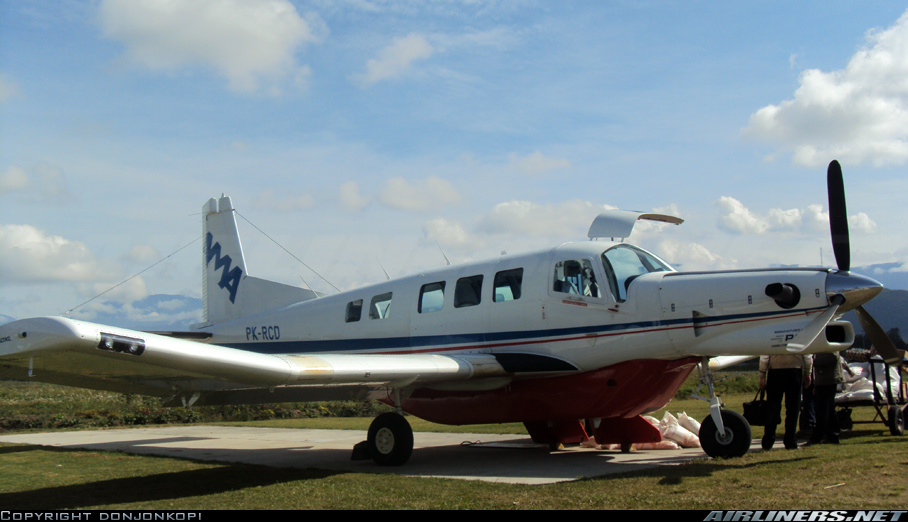
After landing on a wet runway at Abmisibil Airport, the single engine aircraft went out of control, veered off runway and came to rest in a ravine, bursting into flames. The pilot was killed and a passenger died few hours later. All three other occupants were seriously injured and the aircraft was destroyed by impact forces and a post crash fire.

Crash of a Casa 212 Aviocar 200 in Larat

Date & Time: Dec 3, 2011 at 1308 LT
Type of aircraft:
Operator:
Registration:
PK-NCZ
Survivors:
Yes
Schedule:
Langur - Larat
MSN:
274/79N
YOM:
1986
Flight number:
MNA9933
Location:
Country:
Region:
Crew on board:
4
Crew fatalities:
Pax on board:
19
Pax fatalities:
Other fatalities:
Total fatalities:
0
Captain / Total flying hours:
7500
Captain / Total hours on type:
5500.00
Copilot / Total flying hours:
343
Copilot / Total hours on type:
72
Aircraft flight hours:
26935
Aircraft flight cycles:
30064
Circumstances:
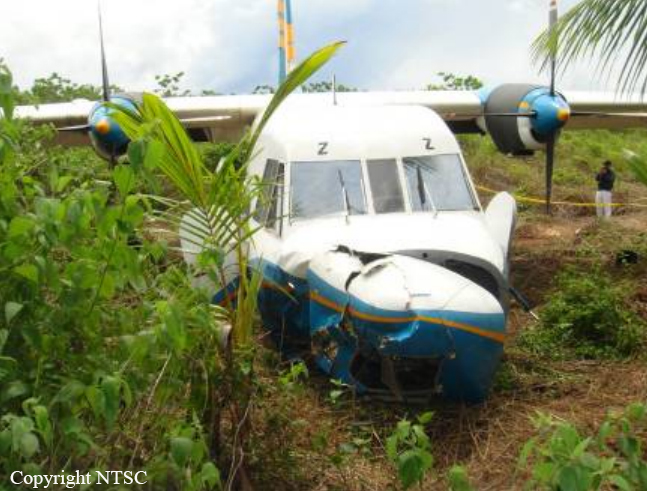
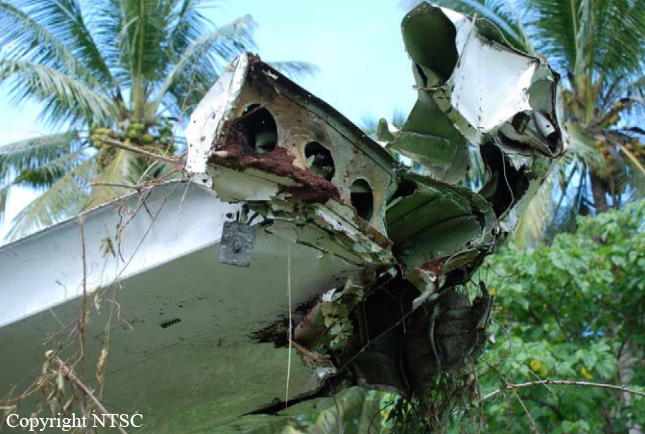
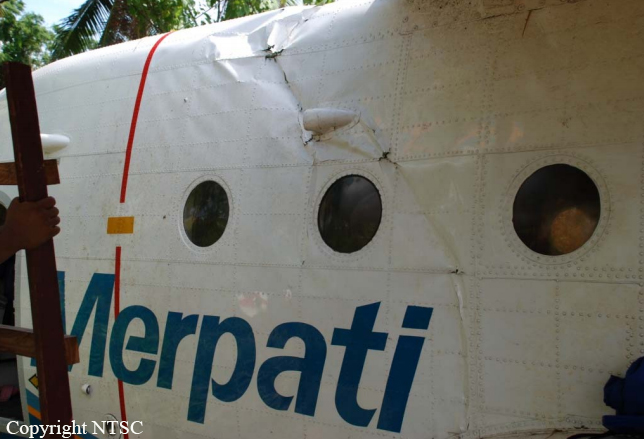
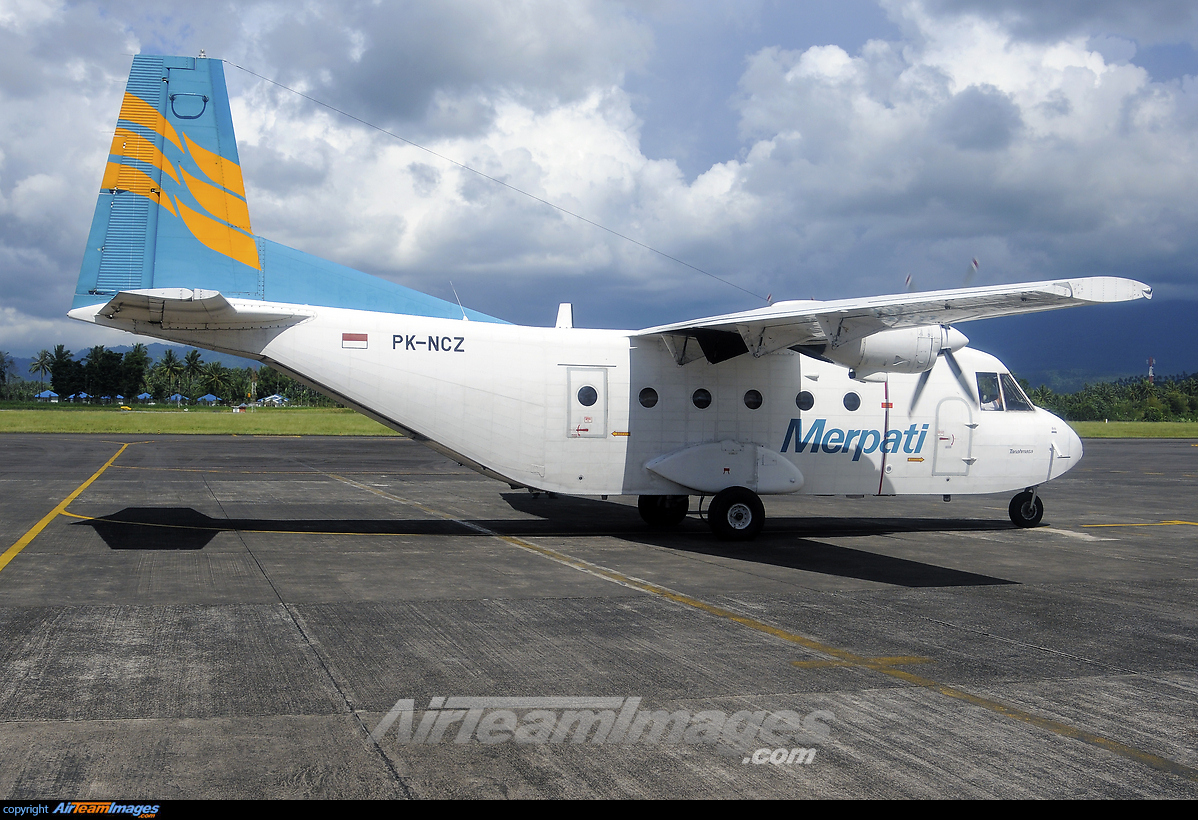
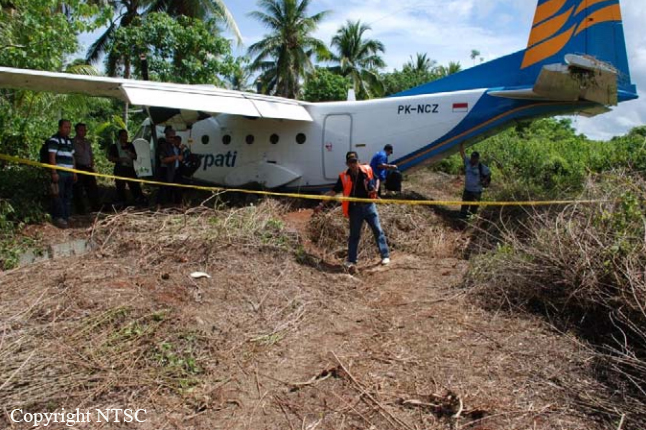
The Casa 212-200 aircraft registered PK-NCZ operated by PT. Merpati Nusantara Airlines on a scheduled flight from Langur to Larat, touched down at 224 meters from runway 09, was bouncing twice to the left of runway centre line, out of the runway and stopped at 607 meters from runway 09 touch down area as final position, and 15 meters to the left of runway edge. The Pilot Flying was First Officer, and after second bouncing, PIC took over, and he tried to bring the aircraft to the centre line of the runway without success. The aircraft continued rolled to the shoulder away from the runway and stopped at the final position. This is the second landing at Larat runway on the same day. There were 15 passengers, 3 children, one baby, Pilot In Command, two First Officers, one First Officer was Pilot Flying from Langur to Larat, one engineer on board. One passenger was serious injured, another one passenger minor injured.
Final Report:

Crash of a Cessna 208B Grand Caravan in Bilogai-Sugapa: 1 killed

Date & Time: Nov 23, 2011 at 0942 LT
Type of aircraft:
Operator:
Registration:
PK-VVG
Flight Type:
Survivors:
Yes
Schedule:
Nabire - Bilogai-Sugapa
MSN:
208B-1308
YOM:
2007
Country:
Region:
Crew on board:
2
Crew fatalities:
Pax on board:
0
Pax fatalities:
Other fatalities:
Total fatalities:
1
Captain / Total flying hours:
1859
Captain / Total hours on type:
1550.00
Copilot / Total flying hours:
690
Copilot / Total hours on type:
231
Aircraft flight hours:
4331
Aircraft flight cycles:
5375
Circumstances:
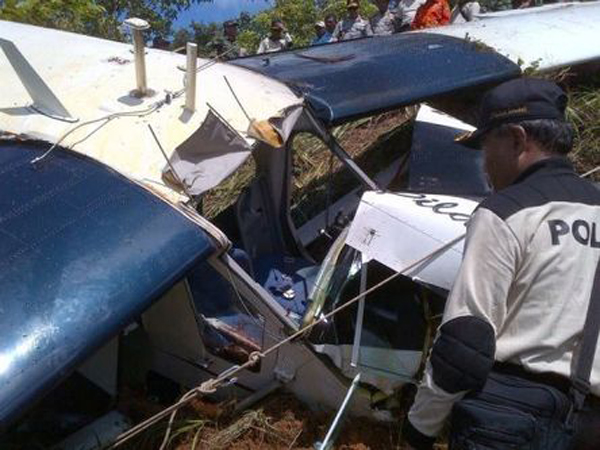
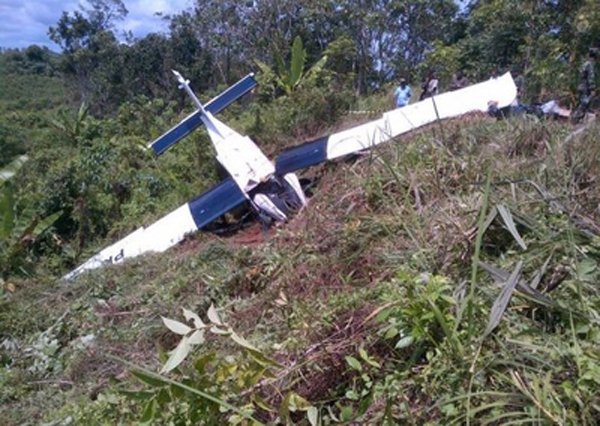
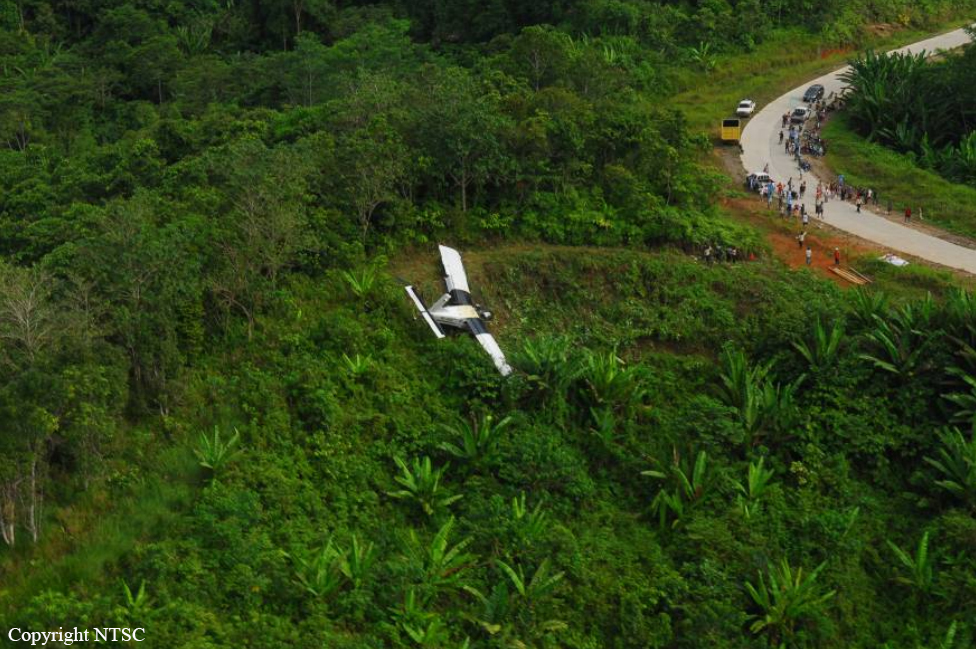
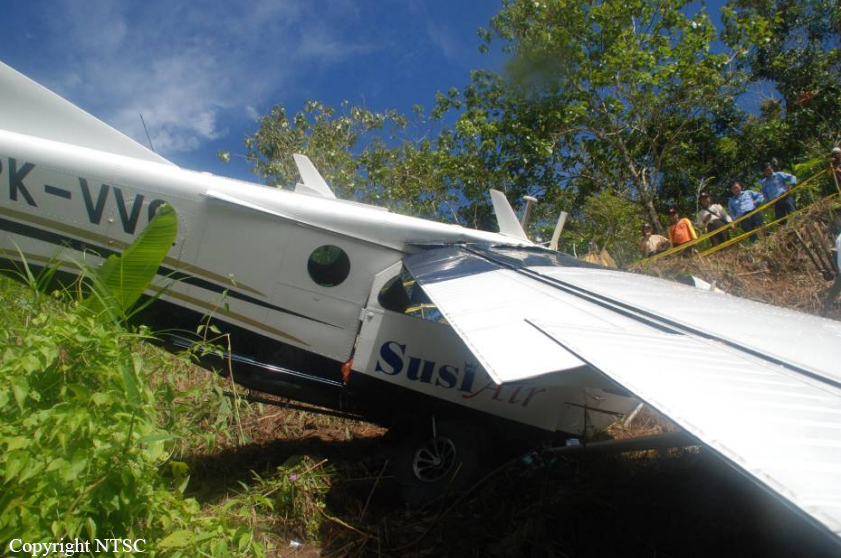
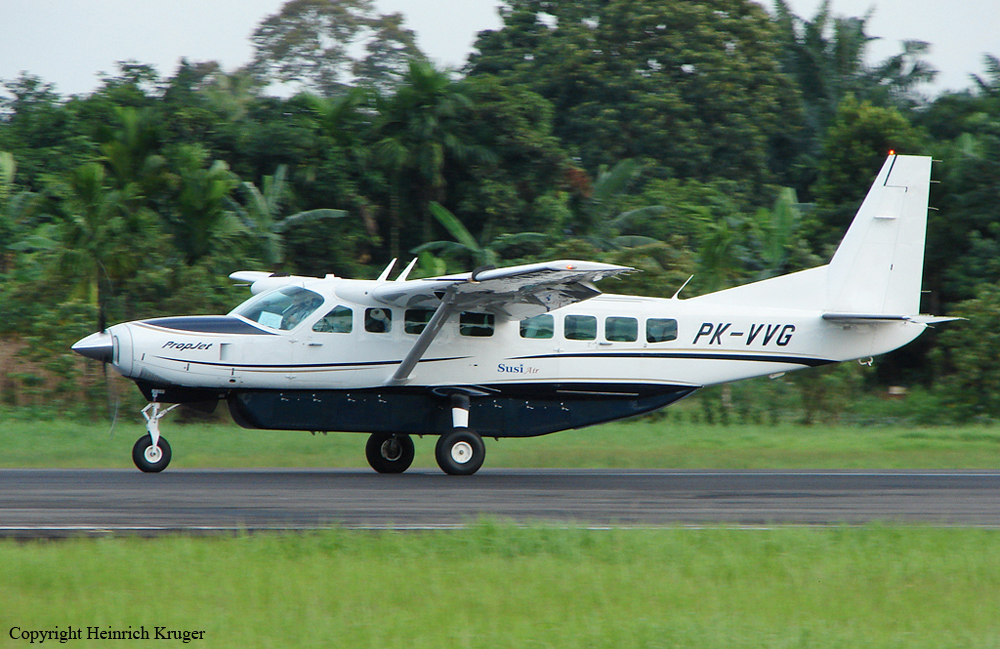
The flight route was Nabire to Bilogai as an unscheduled cargo flight. There were two pilots on board and the freight load was a mixture of food, palm oil, and cement. The aircraft departed from Nabire at 2355 UTC (0855 LT), the estimate time of arrival of Bilogai was 0045 UTC. At 0042 UTC the aircraft was reported above touchdown zone and the altitude recorded of 6,960 feet, direction 277 degrees and air speed 94 knots. The aircraft executed a go around due to an unauthorized person entering the shoulder of the runway 27, the aircraft then continued to climb and headed left. It was reported while the aircraft initially was climbing with the nose up but following lost altitude. During go around manoeuvre the aircraft attitude was in high nose up position, caused the angle of attack was too high and beyond a stall margins caused the aircraft stall. The aircraft bank to the right and crashed on a corn farm at coordinate S 03 44.58 E 137 0.96 and altitude about 6,550 feet with heading about 260 degrees. The aircraft was destroyed on impact with the ground. The captain seriously injured and still on seat in the aircraft wearing the shoulder harness. The second in command was fatally injured outside of the aircraft at the crashed site.
Probable cause:
FINDINGS :
• The aircraft was airworthy prior the accident and there was no evidence of system malfunction during the flight.
• The crew had valid license and medical certificate.
• There were no fences at the airport perimeter.
• There was a local plantation area nearby the runway.
• Unauthorized person entering the shoulder of the runway 27.
• There was no warning signal to alert if unauthorized persons entering the runway, especially during any aircraft Takeoff and Landing.
• The valley (gap) on the south side of the runway was too narrow for successful go around manoeuvre by a caravan aircraft.
• The aircraft most probably stalled due to very high angle of attack, when the aircraft was manoeuvre to avoid the surrounding terrain and bank to the right.
• The communication of incoming and outgoing Susi Air aircraft from and to Bilogai was only to Susi Air ground handling Agent at Sugapa.
CAUSES :
The aircraft was executed a Go Around due to a unauthorized person entering the shoulder of the runway 27, after go around, crew tried to avoid terrain impact, increasing the aircraft attitude more pitching up caused the angle of attack was higher and beyond a stall margins , finally stall just before impact.
Final Report:
Crash of a Casa 212 Aviocar 200 near Bohorok: 18 killed

Date & Time: Sep 29, 2011 at 0750 LT
Type of aircraft:
Operator:
Registration:
PK-TLF
Flight Phase:
Survivors:
No
Site:
Schedule:
Medan - Kuta Cane
MSN:
88N/283
YOM:
1989
Flight number:
NBA823
Country:
Region:
Crew on board:
2
Crew fatalities:
Pax on board:
16
Pax fatalities:
Other fatalities:
Total fatalities:
18
Captain / Total flying hours:
5935
Captain / Total hours on type:
3730.00
Copilot / Total flying hours:
2500
Copilot / Total hours on type:
1100
Aircraft flight hours:
11329
Aircraft flight cycles:
13626
Circumstances:
On 29 September 2011, a CASA 212-200 aircraft registered PK-TLF was being operated by Nusantara Buana Air as a non-scheduled passenger flight from Polonia International Airport (MES/WIMM), Medan - North Sumatera1 to Alas Leuser Airstrip Kuta Cane, South East Aceh. The flight was conducted under Visual Flight Rules (VFR) The aircraft departed from Medan at 0728 LT (0028 UTC) and scheduled to be arrived at Kuta Cane at 0058 UTC. There were 18 person on board consisted of two pilots and 16 passengers including two children and two infants. The aircraft radar target was last observed on the radar screen at about 0050 UTC, while at position on radial 262˚ and 35 NM from MDN VOR. The aircraft was found impacted to a of 70º slope terrain at 5,055 feet altitude in the Leuser Mountain National Park, direction of 109 and 16 Nm from Kuta Cane on coordinate N 030 24’ 00” E 0980 01’ 00”. All 18 occupants were fatally injured and the aircraft was severely damage.
Probable cause:
Factors:
1. The flight was in VFR however both pilots agreed to fly into the cloud, consequently, the flight crew had lack of situation awareness due to lost of visual references to the ground and no or late recovery action prior to impact due to low visibility.
2. There was lack of good crew coordination due to steep cockpit transition gradient.
3. There was no checklist reading and crew briefing.
Final Report:

Crash of a Pilatus PC-6/B2-H4 Turbo Porter near Yahatma: 3 killed

Date & Time: Sep 22, 2011 at 1313 LT
Operator:
Registration:
PK-UCE
Flight Phase:
Survivors:
No
Site:
Schedule:
Pagai - Wamena
MSN:
943
YOM:
2004
Country:
Region:
Crew on board:
1
Crew fatalities:
Pax on board:
2
Pax fatalities:
Other fatalities:
Total fatalities:
3
Captain / Total flying hours:
11312
Captain / Total hours on type:
2647.00
Aircraft flight hours:
5774
Aircraft flight cycles:
6662
Circumstances:
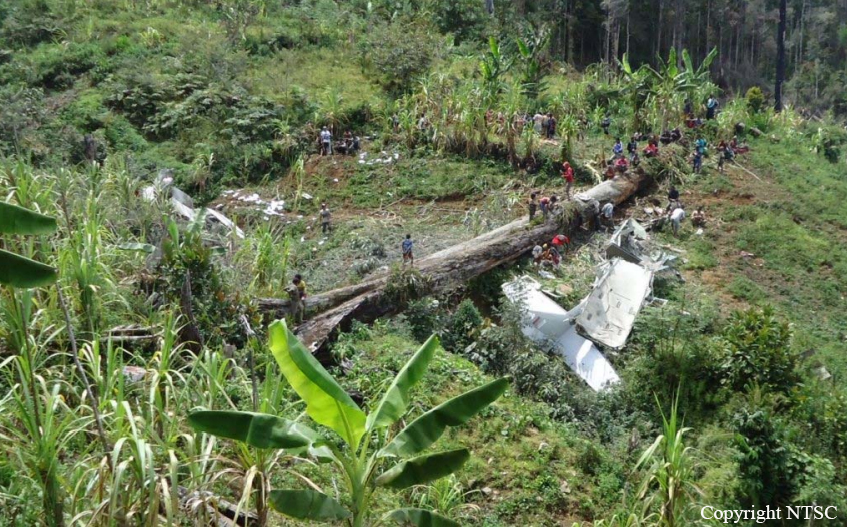
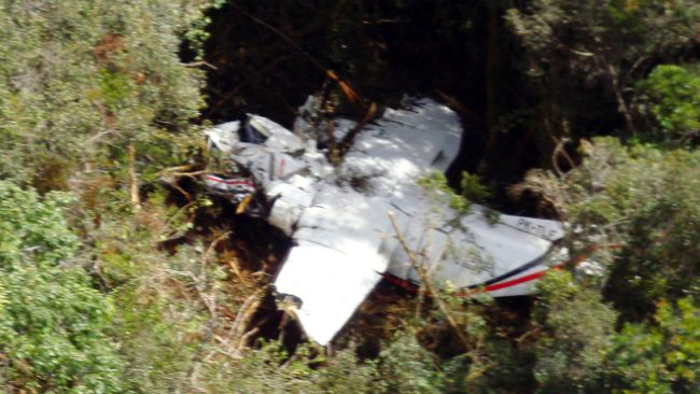
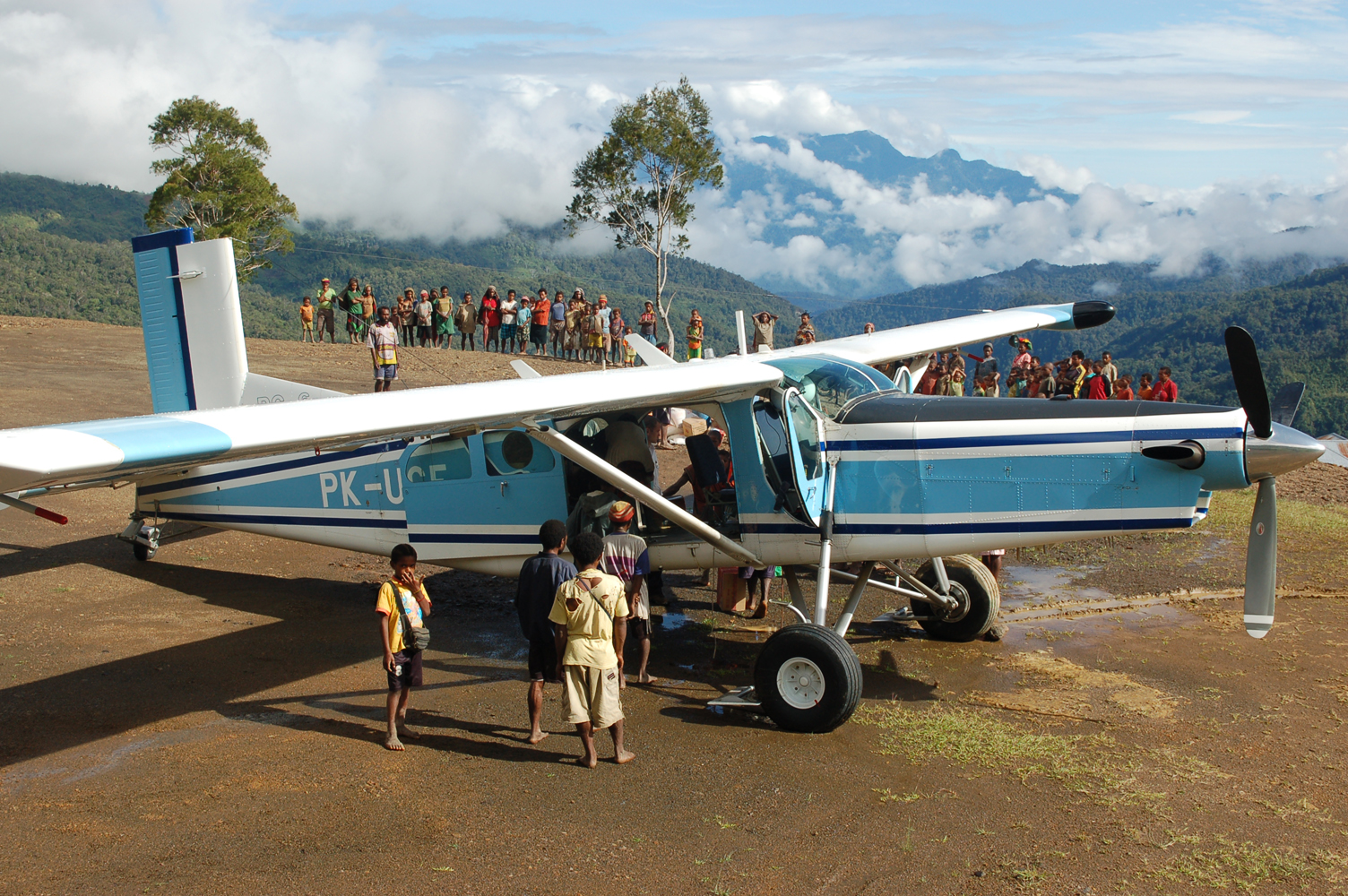
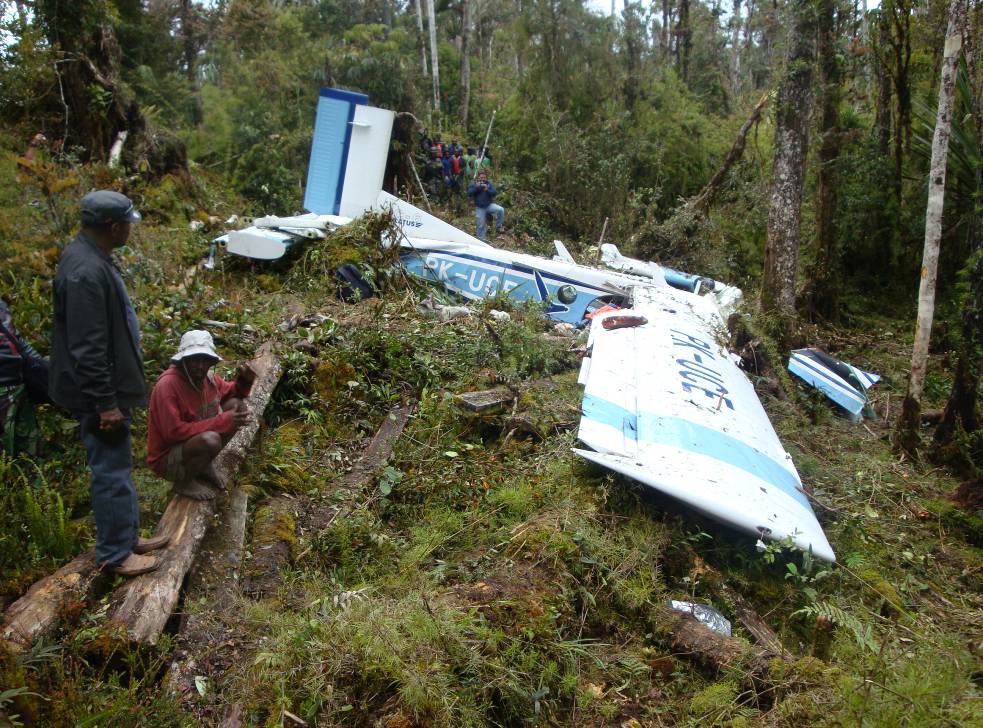
On 22 September 2011, a PC 6 Pilatus Porter aircraft, registration PK-UCE was being operated by Yayasan Jasa Aviasi Indonesia (YAJASI) departed from Pagai to Wamena. The aircraft departed at 0403 UTC1 (1303 LT) and estimated to arrive at Wamena was at 0436 UTC. Aircraft cruise at altitude of 10,000 feet and conducted under Visual Flight Rules (VFR) and followed the visual route via North Gap corridor, which one of visual route to Wamena. Prior to enter the North Gap corridor at time 0413 UTC, the pilot sent a message via a system they called AFFIS to the company Flight Following Officer at Sentani Airport, which was the operation base. The pilot also sent a blind transmission message through Wamena Tower radio frequency. This was local procedure, to submit the message consists of position, altitude and destination to make the other aircraft pilots aware each other. As in the intern YAJASI flight following procedure, pilot should send message when the flying passes the North Gap corridor. In this flight, until the normal elapsed time, the pilot did not send any message to their Flight Following Officer at Sentani that the flight has passed the North Gap corridor. Since there was no message nor radio contact from the pilot until the ETA in Wamena, the Flight Following Officer at Sentani informed to the other personnel at the operation base, and alarmed to the other YAJASI aircraft which were flying in that area to start search the PK-UCE. Some other aircrafts which were flying in the vicinity also contacted to search the PKUCE. PK-UCE was found in mountain location adjacent to Pass Valley airstrip. The accident site was at coordinate S 030 54’ 54.4’’, E 1390 02’ 24.3”, the aircraft was hit the trees and the ground where the elevation was about 7500 feet , the propeller blades was not on feather and bent rearward, the left wing was broken and the aircraft stopped on heading about 85°.
Probable cause:
The pilot decided to descend from the cruise altitude 10000 feet to penetrate the area of marginal weather was most likely not as what his perceive. The pilot avoided the cloud to the left of the VFR route guidance and most likely that the space available was less than the requirement stated for the Weather Minimum class F.
Final Report:
Crash of a Cessna 208B Grand Caravan near Notnare: 2 killed

Date & Time: Sep 9, 2011 at 1230 LT
Type of aircraft:
Operator:
Registration:
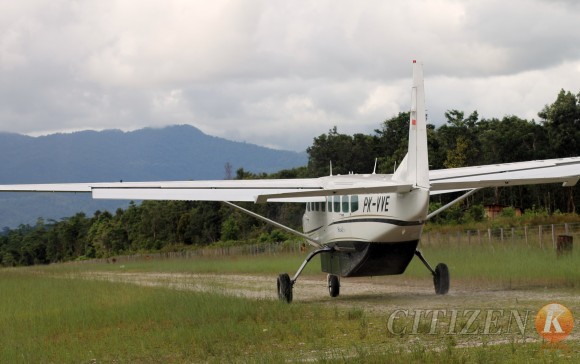
PK-VVE
Flight Phase:
Flight Type:
Survivors:
No
Site:
Schedule:
Wamena - Kenyam
MSN:
208B-1287
YOM:
2007
Country:
Region:
Crew on board:
2
Crew fatalities:
Pax on board:
0
Pax fatalities:
Other fatalities:
Total fatalities:
2
Captain / Total flying hours:
1546
Captain / Total hours on type:
1315.00
Copilot / Total flying hours:
927
Copilot / Total hours on type:
147
Aircraft flight hours:
3926
Aircraft flight cycles:
5267
Circumstances:
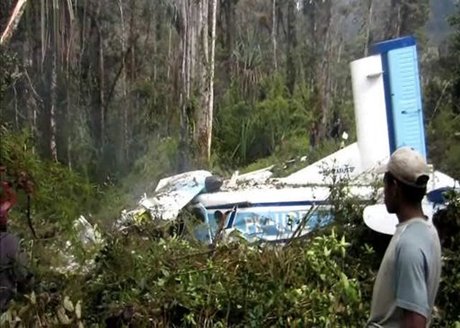
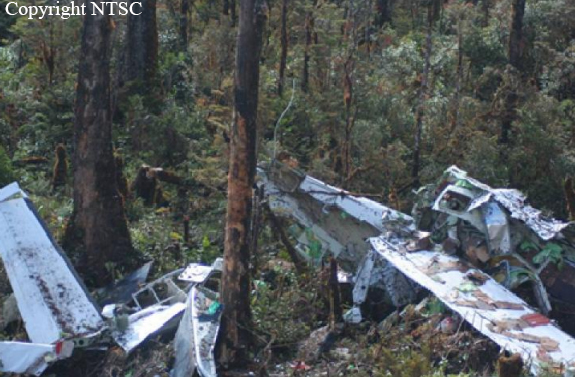
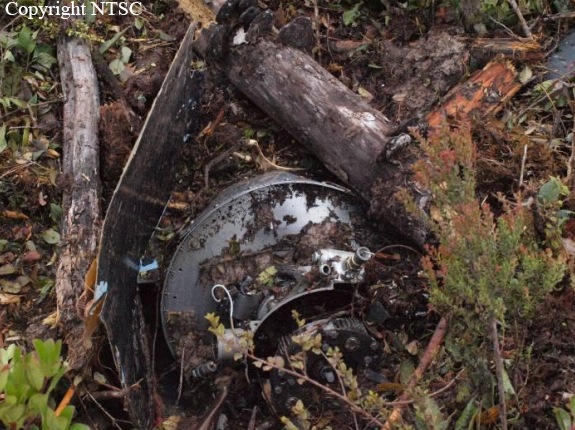
A Cessna 208B Grand Caravan I was destroyed when it crashed in the Yahukimo District, Indonesia. Both crew members were killed. The airplane was being operated on a non-scheduled cargo flight from Wamena Airport to Kenyam Aerodrome in Papua, Indonesia. The flight was being conducted under visual flight rules (VFR) and the pilot reported to ATC that the planned altitude was 9,500 feet. On board the aircraft were two pilots, a manifested load of diesel drums and grocery items, and a non-manifested load of 25 bags of rice weighing 827 lb (375 kg). The takeoff weight, based on the manifested cargo and the additional load of rice was estimated by the investigation to be 9,681 lb (4,391 Kg) which was 619 lb (281 Kg) above the certificated maximum takeoff weight. Also, the aircraft Centre of Gravity (C of G) was outside the certificated C of G envelope. The aircraft took off from Wamena runway 15 at 12:17 local time. The aircraft was then flown along a track toward Kenyam which was consistent with the route used by other company pilots and previously flown by the pilot in command. The additional loading contributed to a reduced rate of climb during the flight which resulted in the aircraft being below 10,000 ft as it approached the high terrain. This altitude was 1,500 ft lower than the altitude specified in the operator's route guide for operations between Wamena and Kenyam, and lower than the altitude flown by other company pilots when operating in the area, including three other flights on the day of the accident which overflew the high terrain between 11,200 and 12,500 ft. At 12:29:43, as the aircraft approached the high terrain at an altitude of 9,538 ft, the airspeed commenced decreasing which was accompanied by the average rate of climb increasing to about 390 fpm. It is probable that the pilots recognized the proximity of the terrain and attempted to improve the aircraft's angle of climb by decelerating towards the best angle of climb speed of 72 kts. The recorded data showed that 31 seconds after the airspeed started to decrease, the engine power varied with a maximum engine torque of 1,675 ft/lb being recorded at 12:30:30 with changes in the other engine parameters being consistent with a selection of a higher power setting. This is likely to have been associated with the pilot's attempts to improve terrain clearance. The recorded data then showed the aircraft in a descending right turn for about 6 seconds. The altitude reduced over a period of 4 seconds from 9,865 ft to 9,728 ft at an average rate of descent of about 2,000 fpm. This turn was likely to have been initiated to either avoid cloud or improve terrain clearance. The aircraft subsequently commenced to roll to the left at 12:30:35 with the left roll continuing for the following 14 seconds. It was likely that the left turn was initiated to avoid either cloud or terrain. During the left turn, the angle of bank reached a maximum value of 46° and the aircraft descended from 9,728 ft to 9,045 ft at a high rate of descent. The airspeed also increased from 92 kts to 122 kts during the descent. The engine power was reduced to idle soon after the aircraft commenced descending which was most likely due to the handling pilot attempting to recover from the high descent rate and increasing airspeed. The recorded data indicated that three EGPWS alerts activated during the descent. The aircraft had stopped descending at 12:30:50 and had commenced climbing with a reducing left angle of bank when the airplane impacted terrain at an elevation of 9,100 feet.
Probable cause:
Factors that contributed to the accident are as follows:
a. The aircraft was loaded to a weight in excess of the maximum certificated takeoff weight.
b. The aircraft climb performance was adversely affected by the aircraft being operated above the certificated maximum takeoff weight.
c. The aircraft approached high terrain along the proposed route at an altitude which was below that specified in the operator's route guide.
d. The aircraft entered a high rate of descent during a terrain avoidance maneuver.
e. Recovery from the abnormal flight path was not achieved before the aircraft collided with terrain.
Final Report:

Crash of a Xian MA60 off Kaimana: 25 killed

Date & Time: May 7, 2011 at 1405 LT
Type of aircraft:
Operator:
Registration:
PK-MZK
Survivors:
No
Schedule:
Jayapura - Sorong - Kaimana - Nabire - Biak
MSN:
06 03
YOM:
2008
Flight number:
MZ8968
Country:
Region:
Crew on board:
4
Crew fatalities:
Pax on board:
21
Pax fatalities:
Other fatalities:
Total fatalities:
25
Captain / Total flying hours:
24470
Captain / Total hours on type:
199.00
Copilot / Total flying hours:
370
Copilot / Total hours on type:
234
Aircraft flight hours:
615
Aircraft flight cycles:
764
Circumstances:
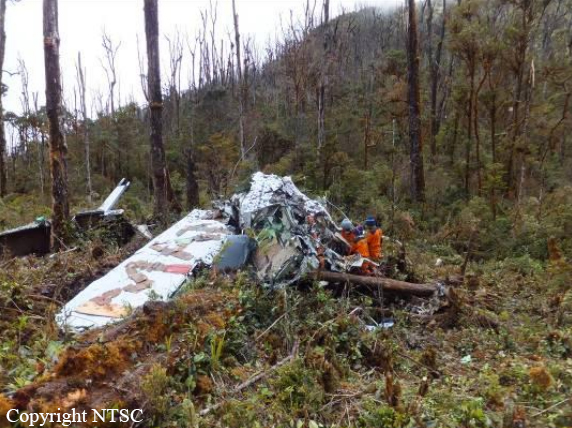
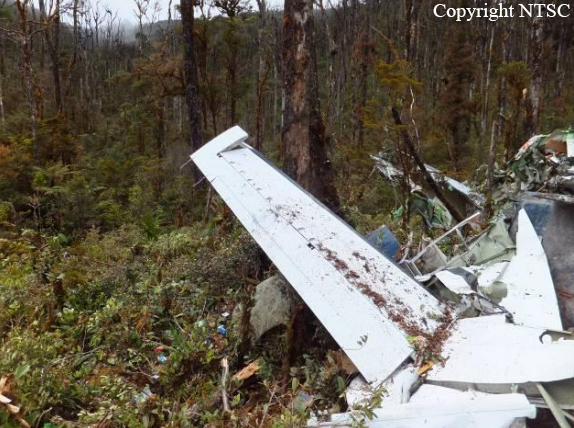
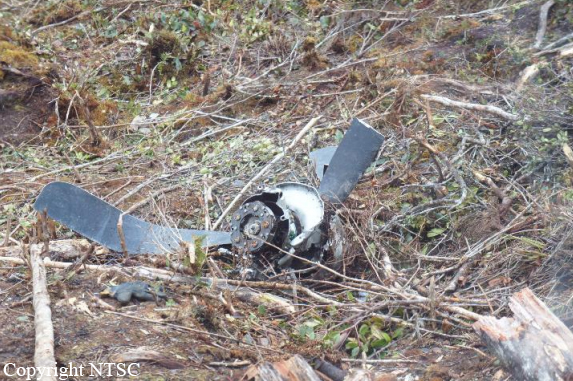
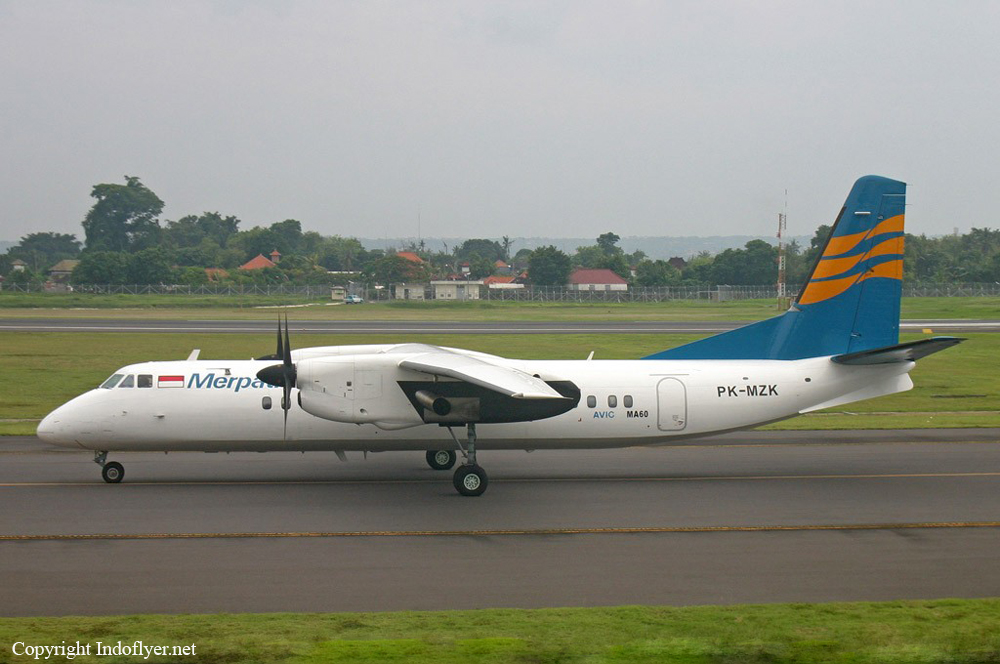
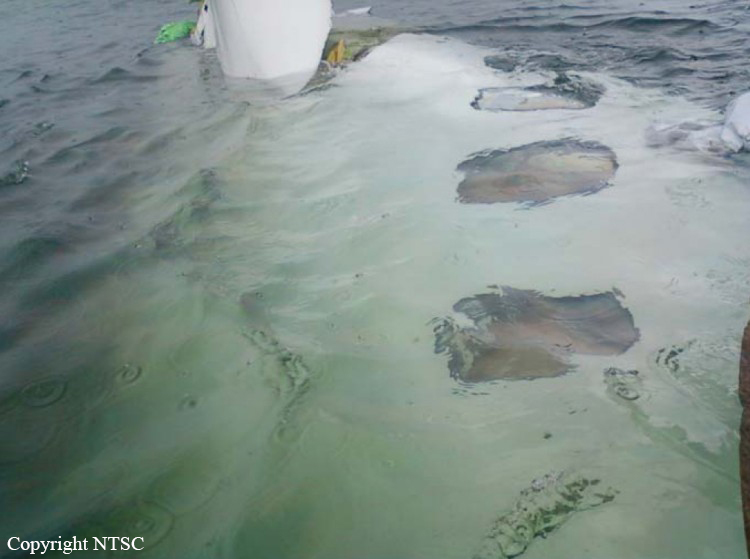
On 7 May 2011, an Xi ’An MA60 aircraft, registered PK-MZK was being operated by PT. Merpati Nusantara Airline as a scheduled passenger flight MZ 8968, from Domine Eduard Osok Airport, Sorong, Papua Barat to Utarom Airport (WASK), Kaimana1, Papua Barat. The accident flight was part of series of flight scheduled for the crew. The aircraft departed from Sorong at 0345 UTC2 and with estimated arrival time in Kaimana at 0454 UTC. In this flight, the Second in Command (SIC) was as Pilot Flying (PF) and the Pilot in Command (PIC) as Pilot Monitoring (PM). On board the flight were 2 pilots, 2 flight attendants, 2 engineers and 19 passengers consisting of 16 adults, 1 child and 2 infants. The flight from Sorong was planned under the Instrument Flight Rules (IFR)3. The destination, Kaimana, had no published instrument approach procedure. Terminal area operations, including approach and landing, were required to be conducted under the Visual Flight Rules (VFR). At about 0425 UTC, after passing waypoint JOLAM the crew of MZ 8968 contacted Kaimana Radio and informed that the weather at Kaimana was raining, horizontal visibility of 3 to 8 kilometers, cloud Cumulonimbus broken at 1500 feet, south westerly wind at a speed of 3 knots, and ground temperature 29°C. The last communication with the crew of MZ 8968 occurred at about 0450 UTC. The flight crew asked whether there were any changes in ground visibility and the AFIS officer informed them that the ground visibility remained at 2 kilometer. The visual flight rules requires a visibility of minimum 5 km and cloud base higher than 1500 feet. The evidence indicates that during the final segment of the flight, both crew member were looking outside the aircraft to sight the runway. During this period the flight path of the aircraft varied between 376 to 585 feet and the bank angle increased from 11 to 38 degree to the left. The rate of descent then increased significantly up to about 3000 feet per minute and finally the aircraft impacted into the sea. The accident site was about 800 meters south west of the beginning of runway 01 or 550 meters from the coastline. Most of the wreckage were submerged in the shallow sea between 7 down to 15 meter deep. All 25 occupants were fatally injured. The aircraft was destroyed and submerged into the sea.
Probable cause:
FINDINGS:
1. The aircraft was airworthy prior the accident. There is no evidence that the aircraft had malfunction during the flight.
2. The crew had valid flight license and medical certificate. There was no evidence of crew incapacitation.
3. In this flight the SIC acted as Pilot Flying until the PIC took control of the aircraft at the last part of the flight.
4. According to company operation manual (COM), in a VMC (Visual Meteorological Condition), a “minimum, minimum” EGPWS alert while the approach was not stabilized should be followed by the action of abandoning the approach.
5. The cockpit crew did not conduct any crew approach briefing and checklist reading.
6. As it was recorded in the CVR during the final segment of the flight, both crews member were looking out-side to look for the runway. It might reduce the situational awareness.
7. At the final segment of the flight, the FDR recorded as follows:
• The approach was discontinued started at 376 feet pressure altitude (250 feet radio altitude) and reached the highest altitude of 585 feet pressure altitude. While climbing the aircraft was banking to the left reaching a roll angle of 38 degree. The torque of both engines was increased reaching 70% and 82% for the left and right engine respectively.
• During the go-around, the flaps were retracted to 5 and subsequently to 0 position, and the landing gears were retracted. The aircraft started to descend, and the pitch angle reached 13 degree nose down.
• The rate of descend increased significantly reaching about 3000 feet per minute, and finally the aircraft crashed into the shallow sea.
8. The rapid descent was mainly a result of a combination of situations such as high bank angle (up to 38 deg to the left) and the flaps retracted to 5 and subsequently to 0 position, and also the combination of other situations: engine torque, airspeed, and nose-down pitch.
9. The ERS button was determined in the CRUISE mode instead of TOGA mode. This had led the torque reached 70% and 82% during discontinuing the approach.
10. The flaps were retracted to 5 and subsequently to 0, while the MA-60 standard go-around procedure is to set the flaps at 15.
11. There was limited communications between the crew along the flight. This type of interaction indicated that there was a steep trans-cockpit authority gradient.
12. The SIC was trained in the first three batches which was conducted by the aircraft manufacturer instructor and syllabus, while the PIC was trained by Merpati instructor using modified syllabus. Inadequacy/ineffectivity in the training program may lead to actions that deviated from the standard procedure and regression to the previous type.
13. The investigation found that the Flight Crew Operation Manual (FCOM) and Aircraft Maintenance Manual (AMM) used non-standard English Aviation Language. This finding was supported by a review performed by the Australian Transport Safety Bureau (ATSB).
OTHER FINDINGS:
1. The DFDR does not have the Lateral and Longitudinal acceleration. These two parameters which were non safety related items were mandatory according to the CASR parts 121.343 and 121.344, and at the time of the MA 60 certification, the CCAR 121 did not require those two parameters.
2. Due to impact forces and immersion in water, the Emergency Locator Transmitter (ELT) did not transmit any signal.
FACTORS:
Factors contributed to the accident are as follows:
1. The flight was conducted in VFR in condition that was not suitable for visual approach when the visibility was 2 km. In such a situation a visual approach should not have been attempted.
2. There was no checklist reading and crew briefing.
3. The flight crew had lack of situation awareness when tried to find the runway, and discontinued the approach.
4. The missed approach was initiated at altitude 376 feet pressure altitude (250 feet radio altitude), the pilot open power to 70% and 82% torque followed by flap retracted to 5 and subsequently to 0. The rapid descent was mainly caused by continuously increase of roll angle up to 38 degree to the left and the retraction of flaps from 15 to 0 position.
5. Both crew had low experience/flying time on type.
6. Inadequacy/ineffectivity in the training program may lead to actions that deviated from the standard procedure and regression to the previous type.
Final Report:
Crash of a Casa 212 Aviocar 100 near Tanjung Pinang: 5 killed

Date & Time: Feb 12, 2011 at 1342 LT
Type of aircraft:
Operator:
Registration:
PK-ZAI
Flight Phase:
Flight Type:
Survivors:
No
Schedule:
Batam - Tanjung Pinang
MSN:
120/18N
YOM:
1980
Country:
Region:
Crew on board:
2
Crew fatalities:
Pax on board:
3
Pax fatalities:
Other fatalities:
Total fatalities:
5
Captain / Total flying hours:
13027
Captain / Total hours on type:
3311.00
Copilot / Total flying hours:
2577
Copilot / Total hours on type:
152
Aircraft flight hours:
29990
Aircraft flight cycles:
35128
Circumstances:
On 12 February 2011, a CASA C212-100 aircraft, registered PK-ZAI, operated by Sabang Merauke Raya Air Charter (SMAC), departed from Hang Nadim Airport, Batam (BTH/WIDD) at 1318 LT (0618 UTC)1 for a test flight following an engine replacement to the engine number one. The test flight was conducted over Tanjung Pinang Island area. There were five persons on board consisted of two pilots, and three company engineers. At 0628 UTC the aircraft appeared on Tanjung Pinang Approach radar display and was flying toward Tanjung Pinang area. Tanjung Pinang Approach controller informed that the aircraft was identified flying over Tanjung Pinang at 2000 feet. At 0633 UTC the aircraft received clearance to climb to 4000 feet. At 0644 UTC the aircraft disappeared from Tanjung Pinang radar display. The last position of the aircraft identified on the radar display was on 16 miles radial 010º from Tanjung Pinang airport. Tanjung Pinang Approach controller could not communicate with the PK-ZAI. At 0705 UTC, the controller requested relay by another aircraft to search PK-ZAI. The other aircrafts could not communicate with PK-ZAI. At 0706 UTC Tanjung Pinang Approach controller received information from Indonesian Air Force Base at Gunung Bintan that an aircraft had crashed at Gunung Kijang forest, Bintan Island. After receiving the information, Tanjung Pinang Airport staff coordinated with SAR Bureau, local police, and Indonesian Army for search and rescue operation. The aircraft was found at Gunung Kijang forest, Bintan Island at coordinate 1° 10’ 45” N; 104° 34’ 22” E, about 30 km north of Tanjung Pinang Airport. All occupants were fatally injured in this accident. The aircraft was substantially damaged.
Probable cause:
Factors contributed to the accident are as follows:
• The flight test was not properly well prepared; there was no flight test plan.
• The current and applicable CMM is dissimilar the According to the CASA 212-100 and Garrett TPE331-5 Maintenance Manuals related to flight test requirement after the change of only one engine.
• The left engine was shut down using normal/ ground shut down procedure. It used the fuel shut off switches off followed by pulling the Power Lever rearward to reverse, as indicated by the propeller pitch.
• The right engine most likely shut down by wind milling prior the impact, it was indicated the propellers piston distance position to the cylinder was about normal flight range position and no indication of rotating impact on the blades.
• The Casa Service Bulletin No. 212-76-07 Revision 1 issued dated 23 December 1991 (Anti Reverse) that applicable for Casa 212 -100/200, was not incorporated to this aircraft.
• The PIC with pareses or paralysis vestibular organ or system could not response normally to the three dimensional motion or movement. This condition may the subject more sensitive to suffer Spatial Disorientation (SDO). The SDO is the pilot could not perceived rightly his position motion and attitude to the earth horizontal or to his aircraft or other aircraft and could as the dangerous precondition for unsafe action.
• The Director (DGCA) decree No 30/II/200 issued on 20 February 2009 stated that for issuing medical certificate for pilot after 60th birthday require several additional medical examination items. Point 1.b of this decree states the Video Nystagmography examination.(differed the ICAO Doc 8984).
Final Report:
Crash of a Boeing 737-4Y0 in Pontianak

Date & Time: Nov 2, 2010 at 1118 LT
Type of aircraft:
Operator:

Registration:
PK-LIQ
Survivors:
Yes
Schedule:
Jakarta – Pontianak
MSN:
24911/2033
YOM:
1991
Flight number:
JT712
Country:
Region:
Crew on board:
6
Crew fatalities:
Pax on board:
169
Pax fatalities:
Other fatalities:
Total fatalities:
0
Captain / Total flying hours:
8190
Copilot / Total flying hours:
656
Aircraft flight hours:
49107
Aircraft flight cycles:
28889
Circumstances:
On 2 November 2010, a Boeing Company B737-400 aircraft, registered PK-LIQ, was being operated by Lion Mentari Airlines on a passenger schedule flight with flight number JT 712. This flight was the first flight for the crew and was scheduled for departure at 09.30 LT (02.30 UTC). On board the flight was 175 person included 2 pilots and 4 flight attendants and 169 passengers consisted 2 infants and one engineer. The pilots stated that the aircraft had history problem on the difficulty of selection the thrust reversers and automatic of the speed brake deployment. This problem was repetitive since the past three months. The aircraft pushed back at 0950 LT (0250 UTC). During taxi out, the yaw damper light illuminated for two times. The pilot referred to the Quick Reference Handbook (QRH) which guided the pilot to turn off the yaw dumper switch then back to turn on. Considered to these problems, the pilot asked the engineer to come to cockpit and asked to witness the problem. The aircraft departed Soekarno Hatta International Airport, Jakarta at 1012 LT (0312 UTC) with destination of Supadio Airport, Pontianak. The Pilot in Command acted as pilot flying (PF) and the Second in Command acted as pilot monitoring (PM). The flight to Pontianak until commenced for descent was uneventful. Prior to descend, the PF performed approach crew briefing with additional briefing included review of the past experiences on the repetitive problems of thrust reversers which sometimes hard to operate and the speed brake failed to auto deploy. Considering these problems, the PF asked to the PM to check and to remind him to the auto deployment of the speed brake after the aircraft touch down. During descend, the pilot was instructed by Pontianak Approach controller to conduct Instrument Landing System (ILS) approach for runway 15 and was informed that the weather was slight rain. On the initial approach, the auto pilot engaged, flaps 5° and aircraft speed 180 knots. After the aircraft captured the localizer at 1300 feet, the PF asked to the PM to select the landing gear down, flaps 15° and the speed decreased to 160 knots. The PF aimed to set the flaps landing configuration when the glide slope captured. When the glide slope captured, the auto pilot did not automatically follow the glide path and the aircraft altitude maintained at 1300 feet, resulted in the aircraft slightly above the normal glide path. The PF realized the condition then disengaged the auto pilot and the auto throttle simultaneously, and fly manually to correct the glide path by pushing the aircraft pitch down. While trying to regain the correct the glide path, the PF commanded for flaps 40° and to complete the landing checklist. The flap lever has been selected to 40°, but the indicator indicated at 30°. Realized to the flaps indication, the PF asked the landing speed for flaps 30° configuration in case the flaps could not move further to 40°. When aircraft altitude was 600 feet and the pilots completing the landing checklist, the PM reselected the flap from 30° to 40° and was successful. The pilots realized that the aircraft touched down was beyond the touchdown zone and during the landing roll the PF tried to select the thrust reverser but the levers were hard to select and followed by the speed brake failed to automatic-deploy. The pilots did not feel the deceleration, and then the PF applied maximum manual braking and selected the speed brake handle manually. Afterward, the thrust reversers successfully operated and a loud sound was heard prior to the aircraft stop. The Supadio tower controller on duty noticed that the aircraft was about to overrun the runway and immediately pressed the crash bell. The aircraft stopped at approximately 70 meters from the runway or 10 meters from the end of stop-way. The PIC then commanded to the flight attendants to evacuate the passengers through the exits. No one injured in this accident.
Probable cause:
The following factors were identified:
- Inconsistency to the Aircraft Maintenance Manual (AMM) for the rectifications performed during the period of the reversers and auto speed brake deployment problem was might probably result of the unsolved symptom problems.
- The decision to land during the un-stabilized approach which occurred from 1000 feet to 50 feet above threshold influenced by lack of crew ability in assessing to accurately perceive what was going on in the flight deck and outside the airplane.
- The effect of delayed of the speed brake and thrust reverser deployment effected to the aircraft deceleration which required landing distance greater than the available landing distance.
Final Report: