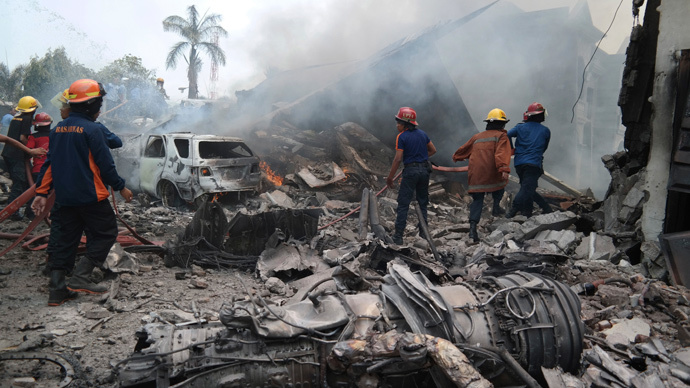
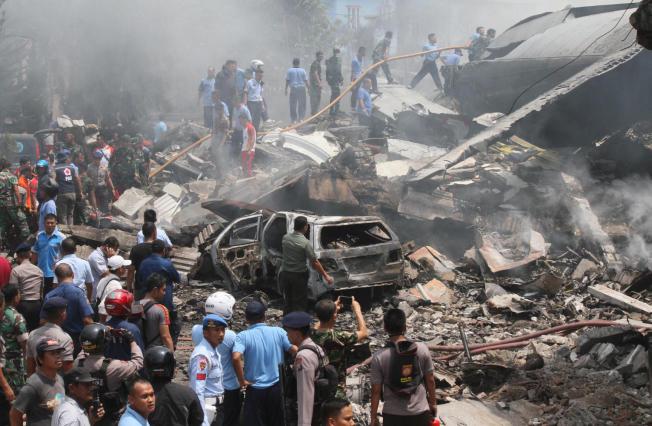
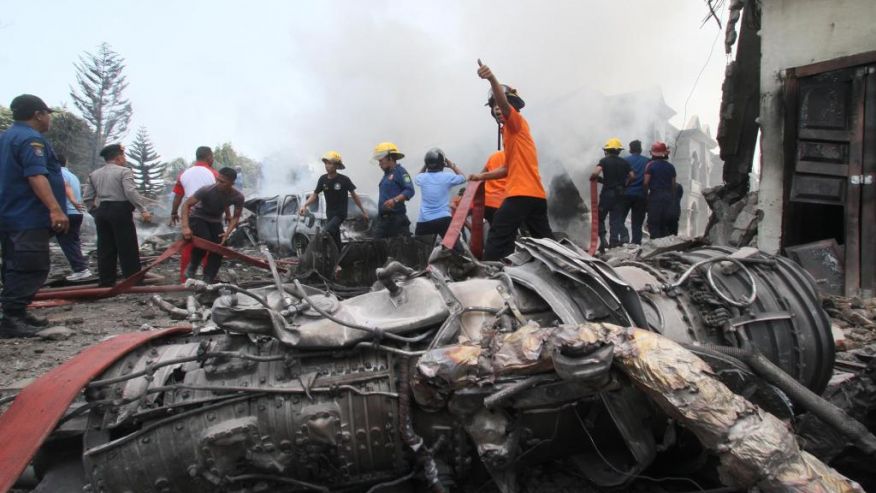
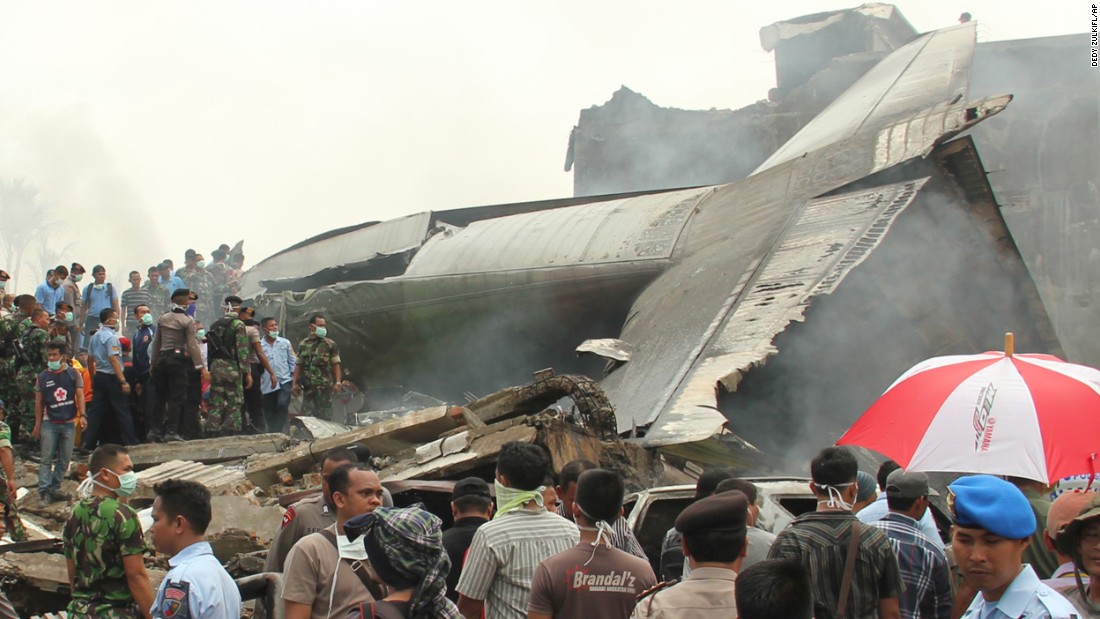
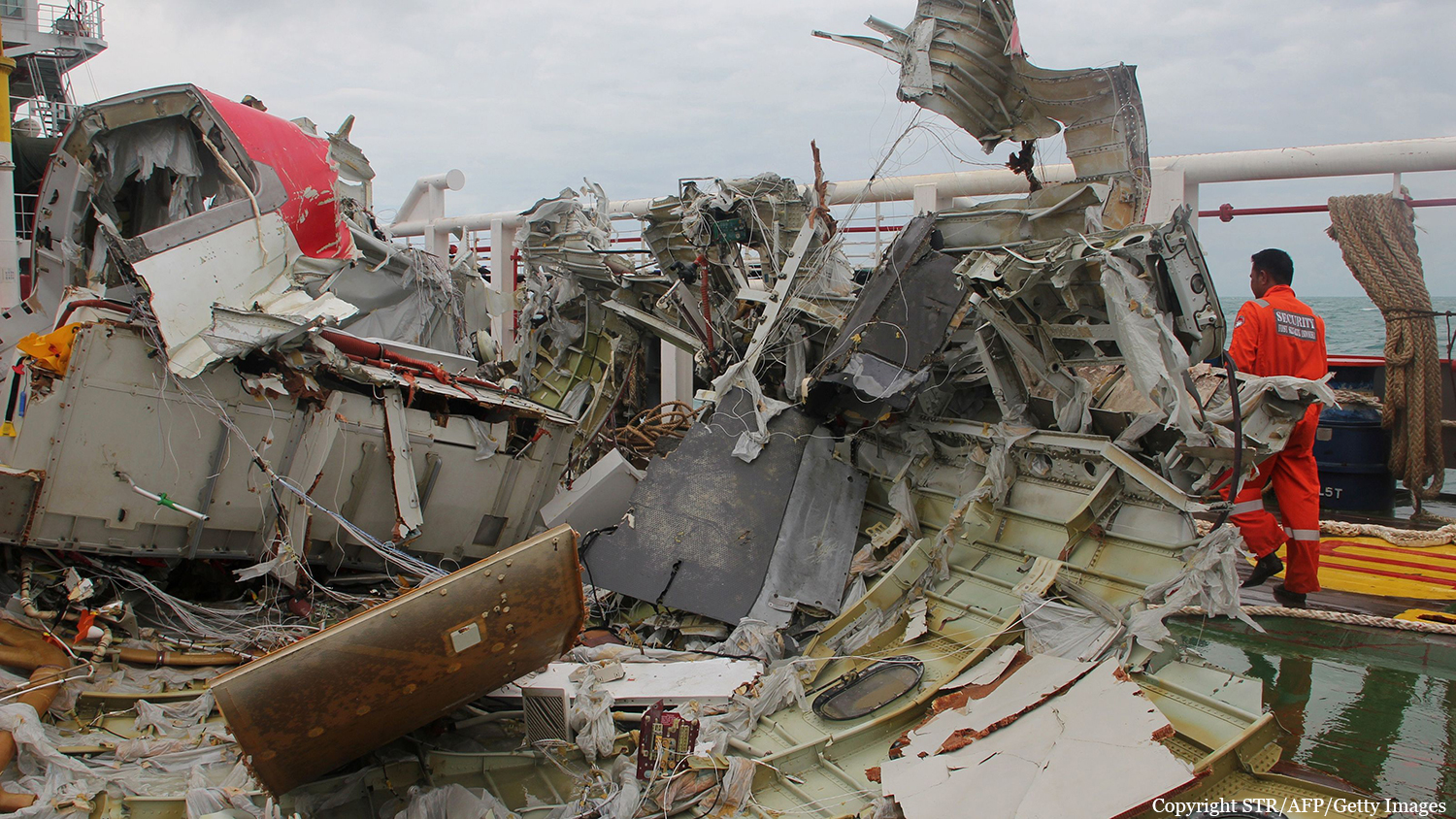
Crash of a De Havilland DHC-6 Twin Otter 300 on Mt Bajaja: 10 killed

Date & Time: Oct 2, 2015 at 1451 LT
Operator:
Registration:
PK-BRM
Flight Phase:
Survivors:
No
Site:
Schedule:
Masamba – Makassar
MSN:
741
YOM:
1981
Flight number:
VIT7503
Country:
Region:
Crew on board:
2
Crew fatalities:
Pax on board:
8
Pax fatalities:
Other fatalities:
Total fatalities:
10
Captain / Total flying hours:
2911
Captain / Total hours on type:
2911.00
Copilot / Total flying hours:
4035
Copilot / Total hours on type:
4035
Aircraft flight hours:
45242
Aircraft flight cycles:
75241
Circumstances:
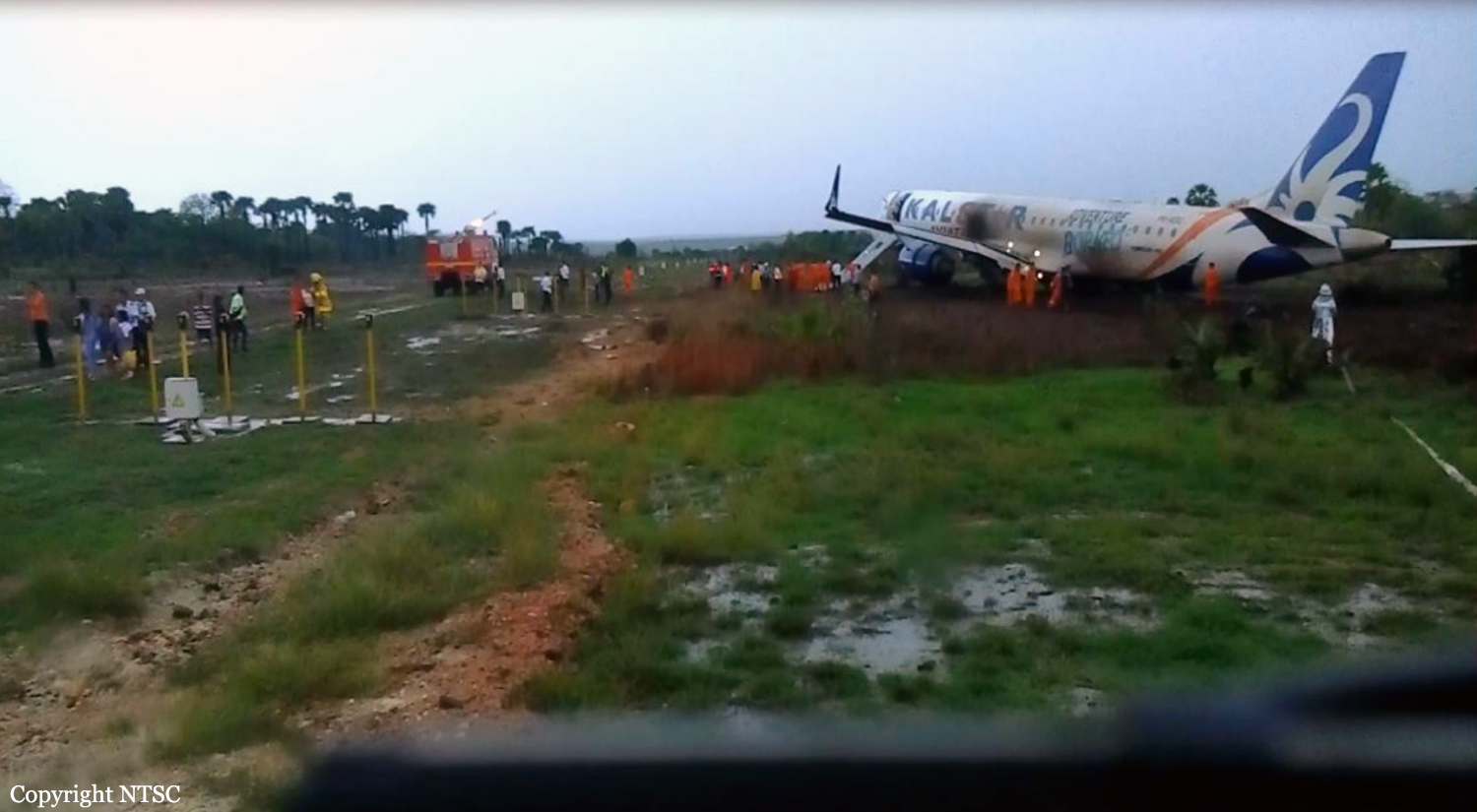
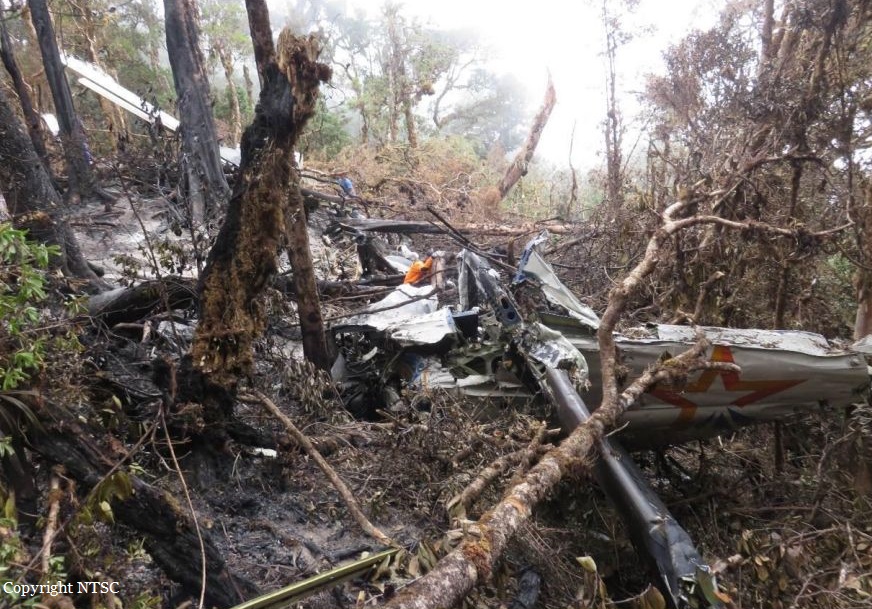
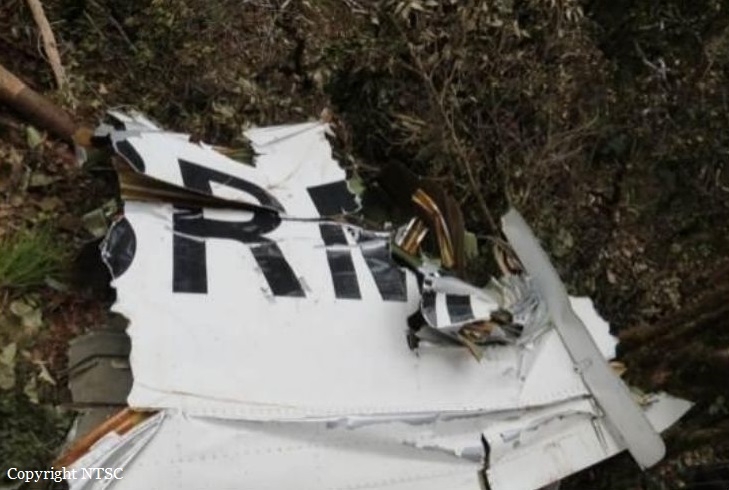
On 2 October 2015, a DHC-6 Twin Otter, registered PK-BRM, was being operated by PT. Aviastar Mandiri as a scheduled passenger flight with flight number MV 7503. The aircraft departed from Andi Jemma Airport, Masamba (WAFM)1 with the intended destination of Sultan Hasanuddin International Airport, Makassar (WAAA) South Sulawesi, Indonesia. On board the flight were 10 persons consisting of two pilots and eight passengers, including one company engineer. The previous flights were from Makassar – Tana Toraja – Makassar – Masamba – Seko - Masamba and the accident flight was from Masamba to Makassar which was the 6th sector of the day. The aircraft departed from Masamba at 1425 LT (0625 UTC2 ) with an estimated time of arrival at Makassar of 0739 UTC. The Pilot in Command (PIC) acted as Pilot Flying (PF) while the Second in Command (SIC) acted as Pilot Monitoring (PM). The flight was conducted under the Visual Flight Rules (VFR) and cruised at an altitude of 8,000 feet. At 0630 UTC, the pilot reported to Ujung Pandang Information officer that the aircraft passed an altitude of 4,500 feet and was climbing to 8,000 feet. The Ujung Pandang Information officer requested the pilot of the estimate time of aircraft position at 60 Nm out from MKS VOR/DME. At 0632 UTC, the pilot discussed about the calculation of estimate time to reach 60 Nm out from MKS and afterward the pilot informed Ujung Pandang Information officer that the estimate at 60 Nm was at 0715 UTC. At 0633 UTC, the Ujung Pandang Information officer informed the pilot to call when reaching 8,000 feet and was acknowledged by the pilot. At 0636 UTC, the pilot informed the Ujung Pandang Information officer that the aircraft had reached 8,000 feet and requested the squawk number (ATC transponder code). The Ujung Pandang Information officer acknowledged and gave the squawk number of A5616, which was acknowledged by the pilot. At 0637 UTC, the pilots discussed to fly direct to BARRU. BARRU is a town located at about 45 Nm north of Makassar. Both pilots agreed to fly direct and the SIC explained the experience of flying direct on the flight before. At 0651 UTC, the PIC told the SIC that he wanted to climb and one second later the CVR recorded the sound of impact.
Probable cause:
The following findings were identified:
1. The aircraft had valid Certificate of Airworthiness prior to the accident and was operated within the weight and balance envelope.
2. Both pilots had valid licenses and medical certificates.
3. The accident flight from Masamba (WAFM) to Makassar (WAAA) was the 6th sector for the aircraft and the crew that day. The PIC acted as Pilot Flying and the
SIC acted as Pilot Monitoring.
4. The satellite image published by BMKG at 0700 UTC showed that there were cloud formations at the accident area. The local villagers stated that the weather
on the accident area was cloudy at the time of the accident.
5. The aircraft departed Masamba at 0625 UTC (1425 LT), conducted under VFR with cruising altitude of 8,000 feet and estimated time of arrival Makassar at 0739 UTC.
6. After reached cruising altitude, at about 22 Nm from Masamba, the flight deviated from the operator visual route and directed to BARRU on heading 200° toward the area with high terrain and cloud formation based on the BMKG satellite image
7. The pilots decision making process did not show any evidence that they were concerned to the environment conditions ahead which had more risks and required correct flight judgment.
8. The CVR did not record EGPWS aural caution and warning prior to the impact. The investigation could not determine the reason of the absence of the EGPWS.
9. The CVR data and cut on the trees indicated that the aircraft was on straight and level flight and there was no indication of avoid action by climb or turn.
10. The SAR Agency did not receive any crashed signal from the aircraft ELT most likely due to the ELT antenna detached during the impact.
11. Regarding to the operation of the EGPWS for the flight crew, a special briefing was performed however there was no special training.
12. The operational test of TAWS system was not included in the pilot checklist.
13. The investigation could not determine the installation and the last revision of TAWS terrain database.
14. The investigation could not find the functional test result document after the installation of the TAWS.
15. Some of the DHC-6 pilots have not been briefed for the operation of the TAWS and EGPWS.

Contributing Factors:
Deviation from the company visual route without properly considering the elevated risks of cruising altitude lower than the highest terrain and instrument meteorological condition in addition with the absence of the EGPWS warning resulted in the omission of avoidance actions.
Final Report:

Crash of a Boeing 737-3Q8 in Wamena

Date & Time: Aug 28, 2015 at 1547 LT
Type of aircraft:
Operator:
Registration:
PK-BBY
Flight Type:
Survivors:
Yes
Schedule:
Jayapura – Wamena
MSN:
23535/1301
YOM:
1986
Flight number:
8F189
Country:
Region:
Crew on board:
2
Crew fatalities:
Pax on board:
0
Pax fatalities:
Other fatalities:
Total fatalities:
0
Captain / Total flying hours:
13880
Captain / Total hours on type:
4877.00
Copilot / Total flying hours:
608
Copilot / Total hours on type:
342
Aircraft flight hours:
54254
Aircraft flight cycles:
38422
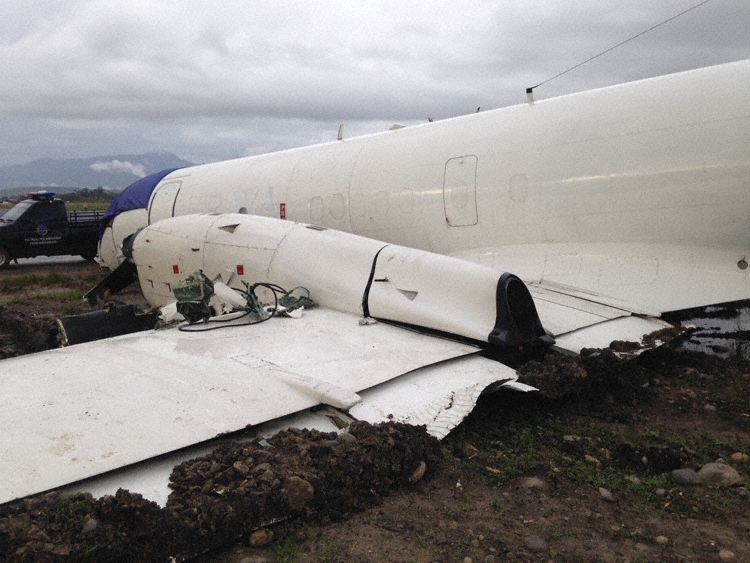
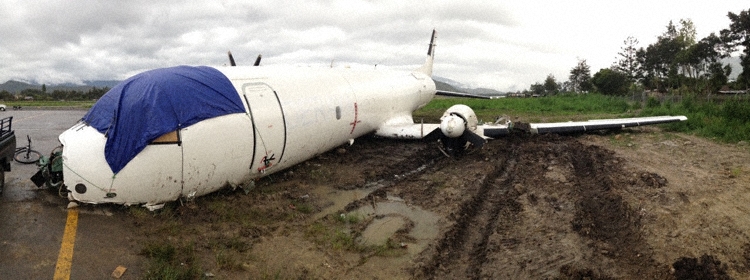
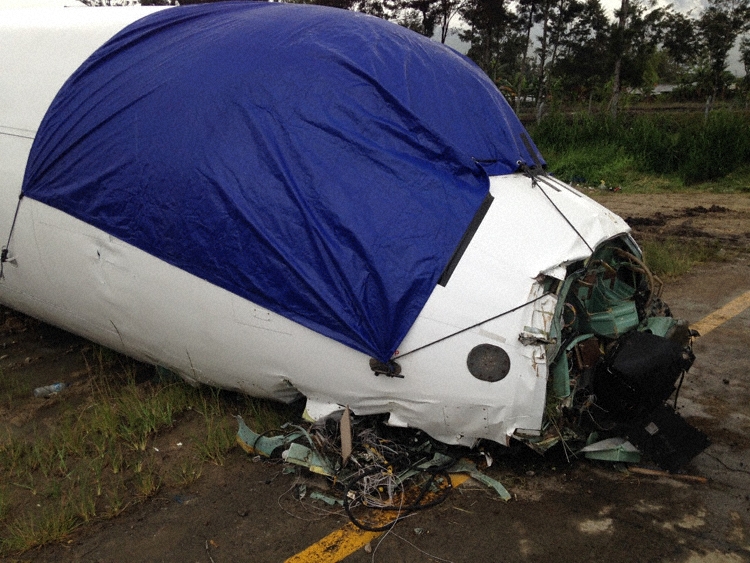
Circumstances:
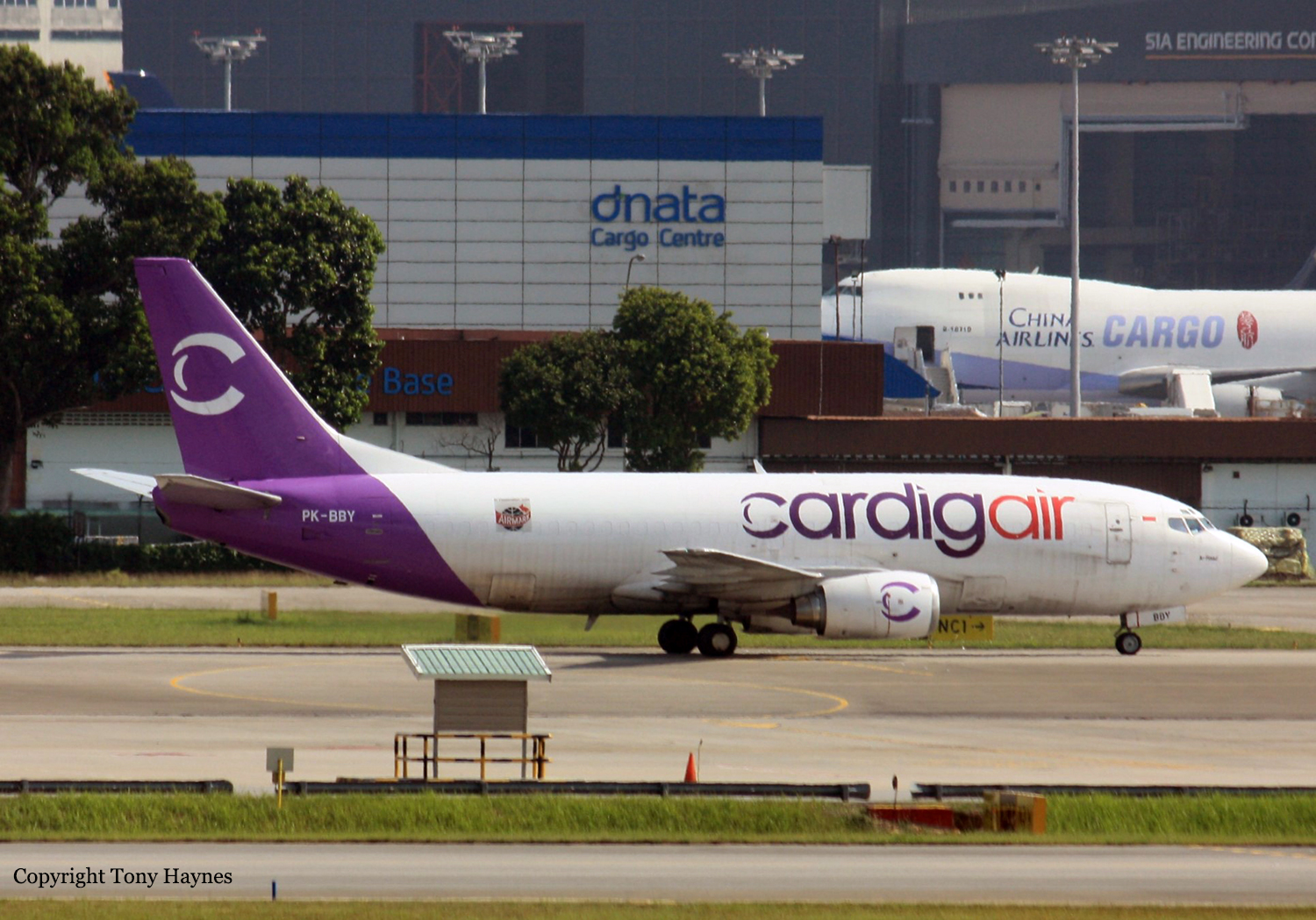
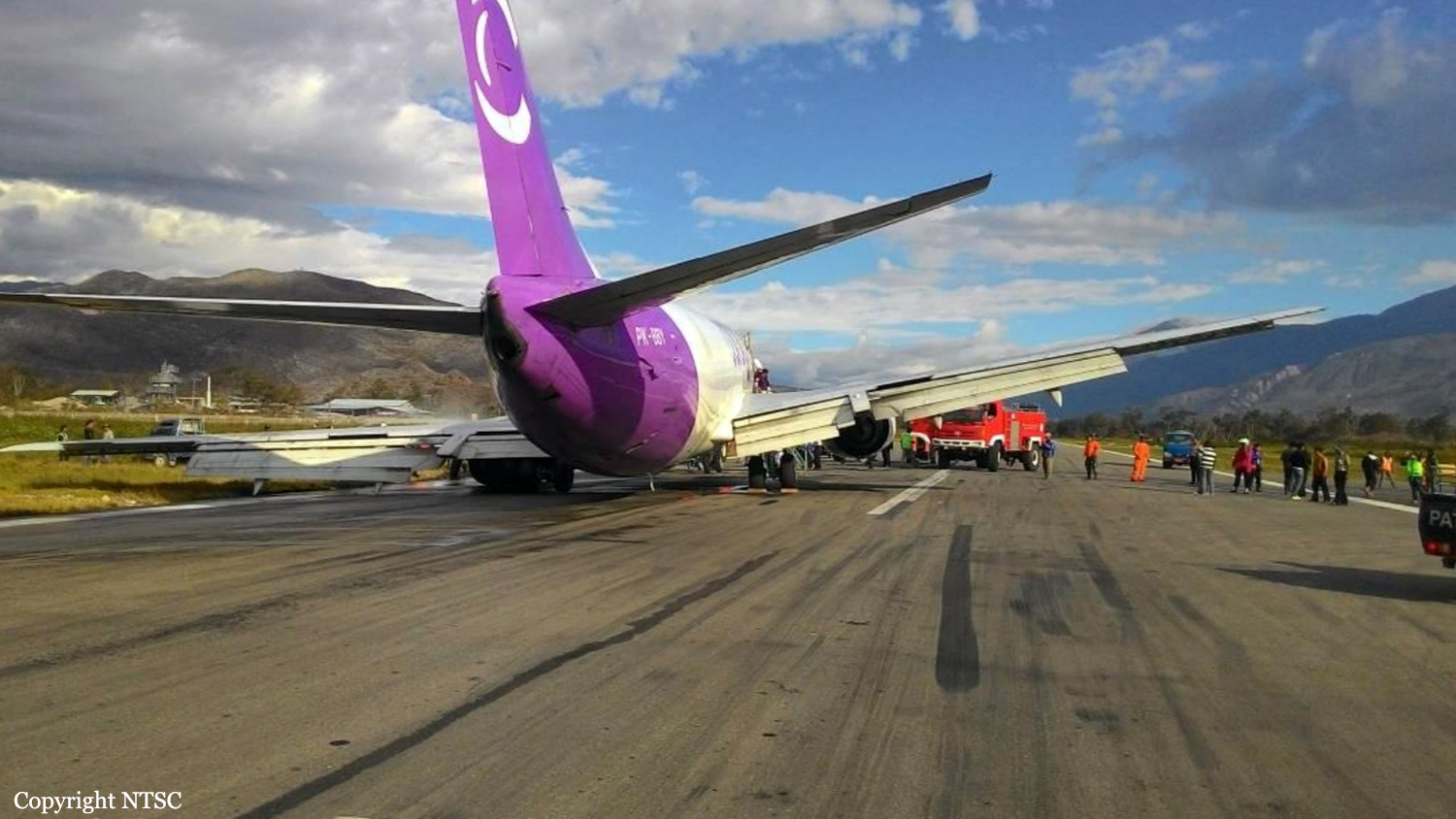
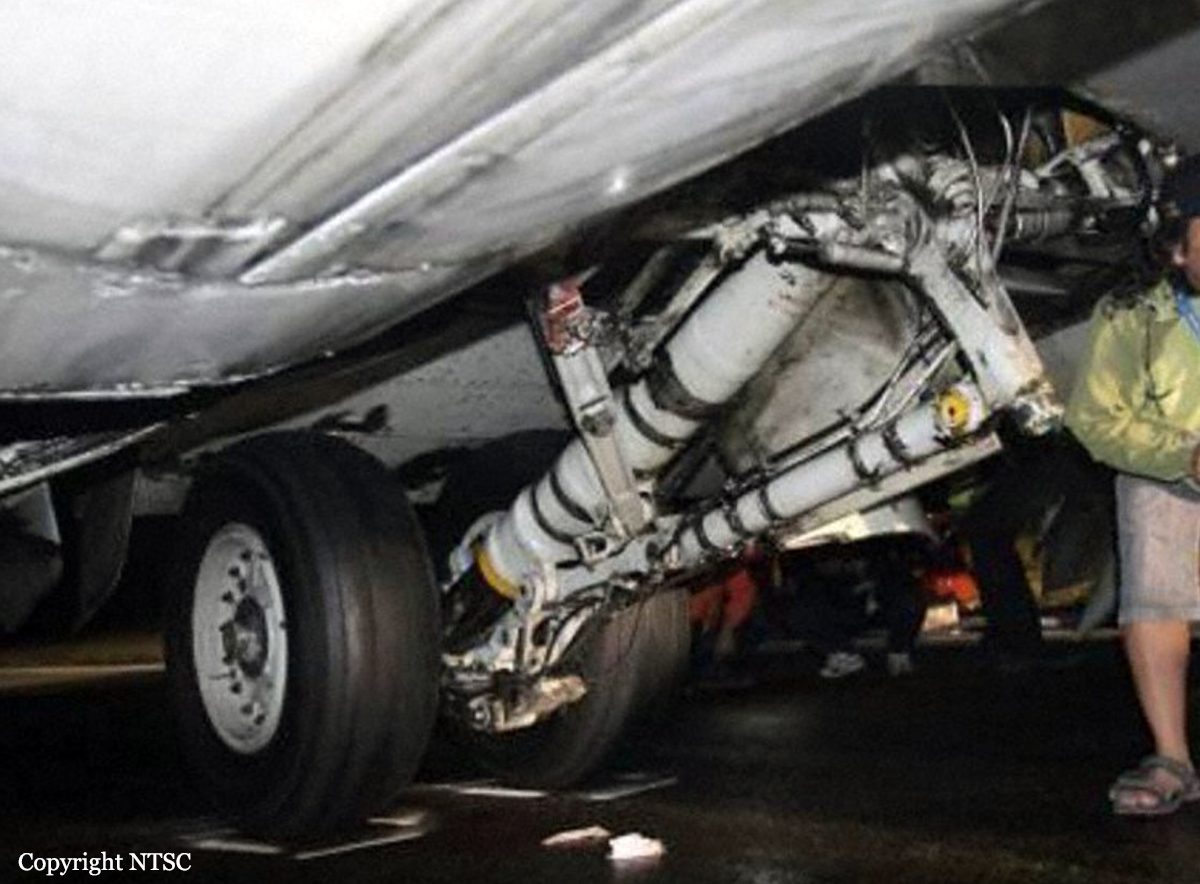
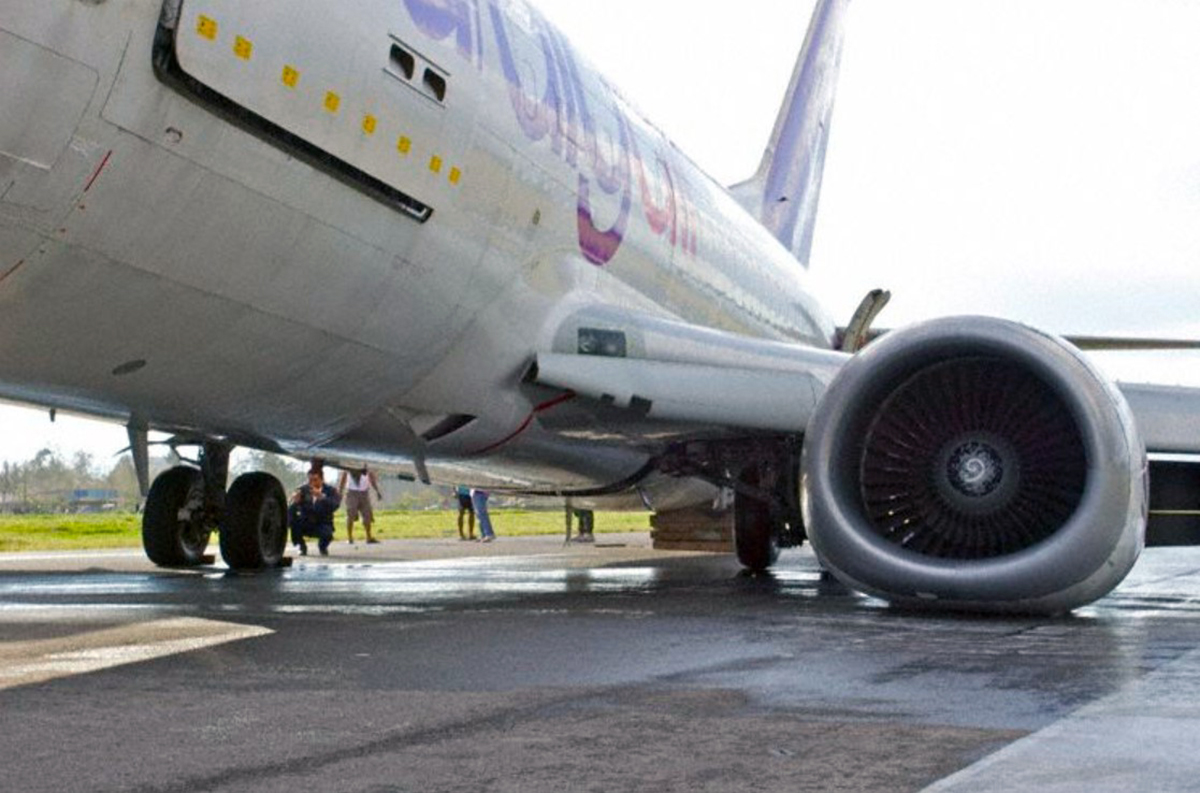
On 28 August 2015 a Boeing 737-300 Freighter, registered PK-BBY was being operated by PT. Cardig Air on a scheduled cargo flight from Sentani Airport (WAJJ) Jayapura to Wamena Airport (WAVV) Papua, Indonesia. At 1234 LT (0334 UTC), the aircraft departed to Wamena and on board the aircraft were two pilots, and 14,610 kg of cargo. The Pilot in Command (PIC) acted as Pilot Flying (PF) while the Second in Command (SIC) who was under line training acted as Pilot Monitoring (PM). There was no reported or recorded aircraft system abnormality during the flight until the time of occurrence. At 0637 UTC, when the aircraft approaching PASS VALLEY, the Wamena Tower controller provided information that the runway in use was runway 15 and the wind was 150°/18 knots, QNH was 1,003 mbs and temperature was 23 °C. At 0639 UTC, the pilot reported position over PASS VALLEY, descended passing FL135. The Wamena Tower controller instructed the pilot to report position over JIWIKA. At 0645 UTC, the pilot reported position over JIWIKA and continued to final runway 15. At 0646 UTC, the pilot reported position on final runway 15 and Wamena Tower controller provided landing clearance with additional information of wind 150°/15 knots and QNH 1,003 mbs. At 0647 UTC, the aircraft touched down about 35 meter before the beginning runway 15 with vertical acceleration of 3.68 G. The left main landing gear collapsed and the left engine contacted to the runway surface. The aircraft stopped at about 1,500 meters from runway threshold. No one was injured on this occurrence.
Probable cause:
According to factual information during the investigation, the Komite Nasional Keselamatan Transportasi determines the findings of the investigation are listed as follows:
1. The pilots held valid licenses and medical certificates.
2. The aircraft had a valid Certificate of Airworthiness (C of A) and Certificate of Registration (C of R), and was operated within the weight and balance envelope.
3. There were no reports of aircraft system abnormalities during the flight.
4. After passed JIWIKA on altitude 10,000 feet, the FDR recorded the engines were on idle, the average rate of descend was approximately 2,000 feet per minute.
5. At altitude approximately 8,000 feet, the flap selected to 40 position and moved to 39.9° one minute 25 seconds later.
6. The BMKG weather report was wind 150°/14-19 knots and the Wamena Tower controller reported to the pilot that the wind was 150°/15 knots. The information of gust wind, which indicated the possibility of windshear, was not reported to the pilot.
7. The EGPWS “CAUTION WINDSHEAR” active on altitude of 5,520 feet.
8. 06:45:43 UTC, the engine power increased when the aircraft altitude was on 5,920 feet prior the EGPWS altitude call “ONE HUNDRED” heard.
9. Started from 06:45:45 UTC, the FDR recorded the CAS increased from 148 knots to 154 knots followed by N1 decreased gradually from 73% to 38%. Three seconds before touched down, the rate of descend was constant on value 1,320 feet per minute followed by EGPWS warning “SINK RATE”.
10. The aircraft touched down at about 35 meters before the beginning runway 15 with the vertical acceleration recorded of 3.68 G.
11. The trunnion link of the left Main Landing Gear (MLG) assembly was found broken and the left main landing gear collapsed.
12. The FDR data contained of 107 flight hours consisted of 170 flight sectors which recorded five times of the vertical acceleration more than 2 G during landing at Wamena. The accumulation of such value of vertical acceleration might lead to landing gear strength degradation.
13. The Visual Approach Slope Indicator (VASI) of runway 15 was not operated after the runway extension.
14. The investigation found several touchdown marks on the pavement before the runway 15.
15. Excessive rubber deposit was found on the surface of runway 15 at about 600 meter started from the runway threshold.
16. The absence of speed correction following the information of headwind of 15 knots and pilot crew briefing after activation of EGPWS caution windshear indicated that the pilot did not aware of the existing windshear, that might be contributed by the absence of gust wind information.
17. The large thrust reduction was not in accordance with the FCOM for windshear precaution and resulted in rapid descend.
18. The accident flight collapsed the landing gear, the FDR recorded the vertical acceleration was 3.683 G which was within the landing gear design limit. This indicated the degradation of landing gear strength.

Contributing Factor:
The large thrust reduction during the windshear resulted in rapid descend and the aircraft touched down with 3.683 G then collapsed the landing gear that had strength degradation.
Final Report:
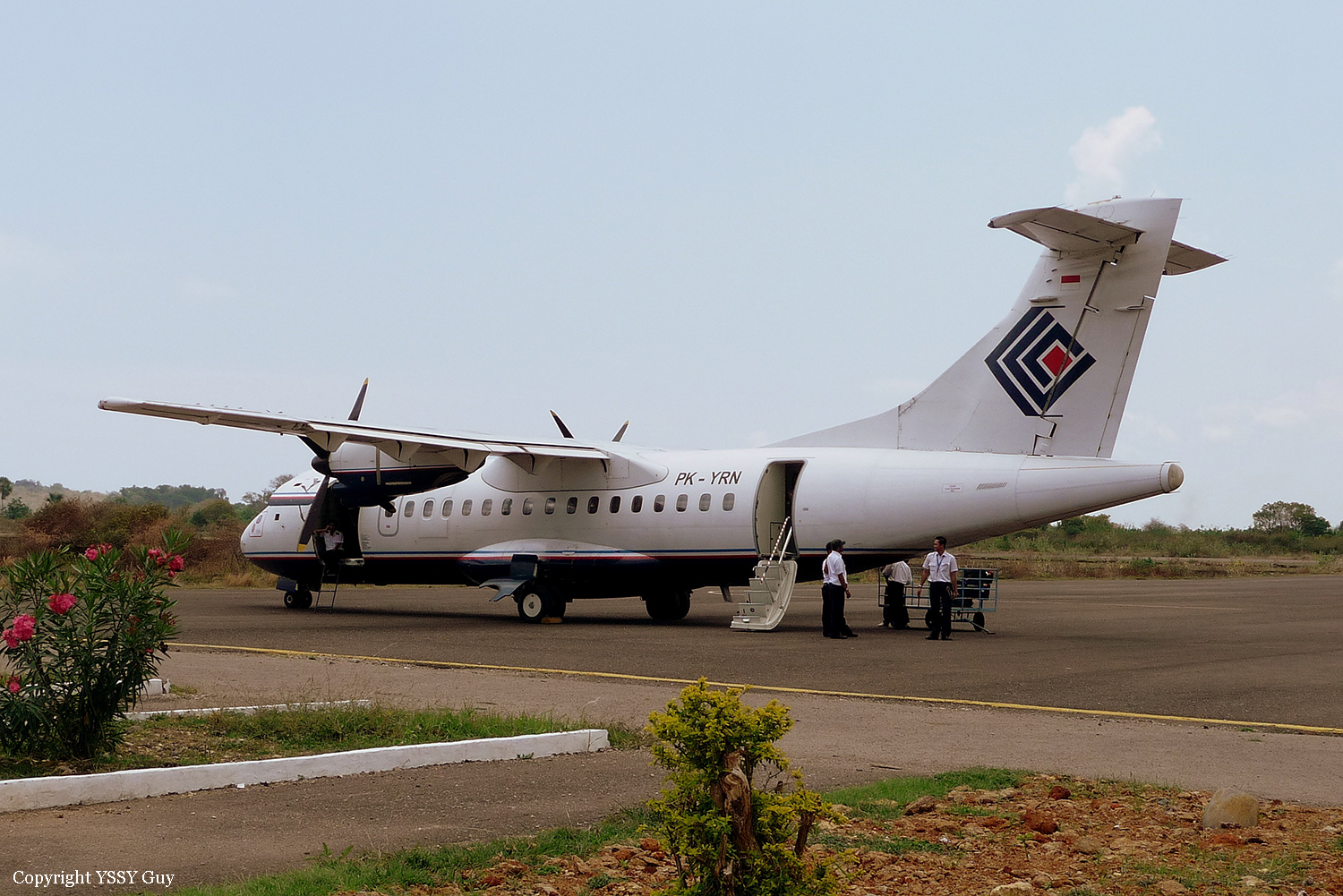
Crash of an ATR42-300 near Oksibil: 54 killed

Date & Time: Aug 16, 2015 at 1455 LT
Type of aircraft:
Operator:
Registration:
PK-YRN
Flight Phase:
Survivors:
No
Site:
Schedule:
Jayapura - Oksibil
MSN:
102
YOM:
1988
Flight number:
TGN267
Country:
Region:
Crew on board:
4
Crew fatalities:
Pax on board:
50
Pax fatalities:
Other fatalities:
Total fatalities:
54
Captain / Total flying hours:
25287
Captain / Total hours on type:
7340.00
Copilot / Total flying hours:
3818
Copilot / Total hours on type:
2640
Aircraft flight hours:
50133
Aircraft flight cycles:
55663
Circumstances:
An ATR 42-300 aircraft registered PK-YRN was being operated by PT Trigana Air Service on 16 August 2015 as scheduled passenger flight with flight number IL267 from Sentani to Oksibil. On board of this flight were 54 persons. This flight was the fifth flight of the day and the second flight from Sentani to Oksibil. The aircraft departed Sentani at 0522 UTC and estimated time of arrival Oksibil was at 0604 UTC. The Second in Command (SIC) acted as Pilot Flying while the Pilot in Command (PIC) acted as Pilot Monitoring. The weather at Oksibil reported that the cloud was broken (more than half area of the sky covered by cloud) and the cloud base was 8,000 feet (4,000 feet above airport elevation) and the visibility was 4 up to 5 km. The area of final approach path was covered by clouds. The flight cruising at 11,500 feet and at 0555 UTC, the pilot made first contact with Oksibil Aerodrome Flight Information Services (AFIS) officer, reported on descent at position Abmisibil and intended to direct left base leg runway 11. At 0600 UTC, Oksibil AFIS officer expected the aircraft would have been on final but the pilot had not reported, the AFIS officer contacted the pilot but did not reply. The AFIS officer informed Trigana in Sentani that they had lost contact with IL267. The aircraft wreckage was found on a ridge of Tanggo Mountain, Okbape District, Oksibil at approximately 8,300 feet AMSL at coordinates of 04°49’17.34” S, 140°29’51.18” E, approximately 10 NM from Oksibil Aerodrome on bearing of 306°. All occupants were fatally injured and the aircraft was destroyed by impact force and post impact fire. The Flight Data Recorder (FDR) and Cockpit Voice Recorder were recovered and transported to KNKT recorder facility. The recovery of FDR data was unsuccessful while the recovery of CVR data successfully retrieved accident flight data. The CVR did not record any crew briefing, checklist reading not EGPWS warning prior to impact. The CVR also did not record EGPWS altitude call out on two previous flights. The investigation concluded that the EGPWS was probably not functioning.
Probable cause:
The following findings were identified:
1. The aircraft had valid Certificate of Airworthiness and was operated within the weight and balance envelope.
2. All crew had valid licenses and medical certificates.
3. The flight plan form was filed with intention to fly under Instrument Flight Rule (IFR), at flight level 155, with route from Sentani to MELAM via airways W66 then to Oksibil. The MORA of W66 between Sentani to MELAM was 18,500 feet.
4. The flight was the 5th flight of the day for the crew with the same aircraft and the second flight on the same route of Sentani to Oksibil.
5. The CVR data revealed that the previous flight from Sentani to Oksibil the flight cruised at altitude of 11,500 feet and the approach was conducted by direct to left base runway 11.
6. The CVR data also revealed that on the accident flight, the flight cruised at altitude 11,500 feet and intended to direct left base leg runway 11 which was deviate from the operator visual guidance approach that described the procedure to fly overhead the airport prior to approach to runway 11.
7. The witness stated that most of the time, the flight crew deviated from the operator visual approach guidance. The deviation did not identify by the aircraft operator.
8. The downloading process to retrieve data from the FDR was unsuccessful due to the damage of the FDR unit that most likely did not record data during the accident flight. The repetition problems of the FDR unit showed that the aircraft operator surveillance to the repair station was not effective.
9. The CVR did not record any crew briefing, checklist reading and EGPWS altitude callout prior to land on two previous flights nor the EGPWS caution and warning prior to impact.
10. The spectrum analysis of the CVR determined that both engines were operating prior to the impact.
11. Several pilots, had behavior of pulling the EGPWS CB to eliminate the nuisance of EGPWS warning. The pilots stated that the reason for pulling the EGPWS CB was due to the pilots considered this warning activation was not appropriate for the flight conditions. The correction to this behavior was not performed prior to the accident.
12. The investigation could not determine the actual EGPWS CB position during the accident flight.
13. The installation of EGPWS by the aircraft operator was not conducted according to the Service Bulletin issued by the aircraft manufacturer.
14. The terrain data base installed in the EGPWS of PK-YRN was the version MK_VIII_Worldwide_Ver_471 that was released in 2014. The Oksibil Airport was not included in the high-resolution update in this version of terrain database.
15. The information for Oksibil published in AIP volume IV (Aerodrome for Light Aircraft/ALA) did not include approach guidance. The operator issued visual guidance of circling approach runway 11 for internal use.
16. The visual approach guidance chart stated that the minimum safe altitude was 8,000 feet while the aircraft impacted with terrain at approximately 8,300 feet. This indicated an incorrect information in the chart. The investigation considered that the pattern on the approach guidance chart was not easy to fly, as many altitudes and heading changes.
17. Several maintenance records such as component status installed on the aircraft and installation of EGPWS was not well documented. This indicated that the maintenance management was not well performed.
18. The investigation could not find any regulation that describes the pilot training requirement for any addition or modification of aircraft system which affect to the aircraft operation.
19. There was no information related to the status of ZX NDB published on NOTAM prior to the accident.
20. Several safety issues indicated that the organization oversight of the aircraft operator by the regulator was not well implemented.
Contributing Factors:
1. The deviation from the visual approach guidance in visual flight rules without considering the weather and terrain condition, with no or limited visual reference to the terrain resulted in the aircraft flew to terrain.
2. The absence of EGPWS warning to alert the crew of the immediate hazardous situation led to the crew did not aware of the situation.
Final Report:
Crash of a Pacific Aerospace PAC750XL in Ninia: 1 killed

Date & Time: Aug 12, 2015 at 0748 LT
Operator:
Registration:
PK-KIG
Survivors:
Yes
Schedule:
Wamena – Ninia
MSN:
170
YOM:
2010
Country:
Region:
Crew on board:
1
Crew fatalities:
Pax on board:
5
Pax fatalities:
Other fatalities:
Total fatalities:
1
Captain / Total flying hours:
1537
Captain / Total hours on type:
395.00
Aircraft flight hours:
757
Aircraft flight cycles:
1315
Circumstances:
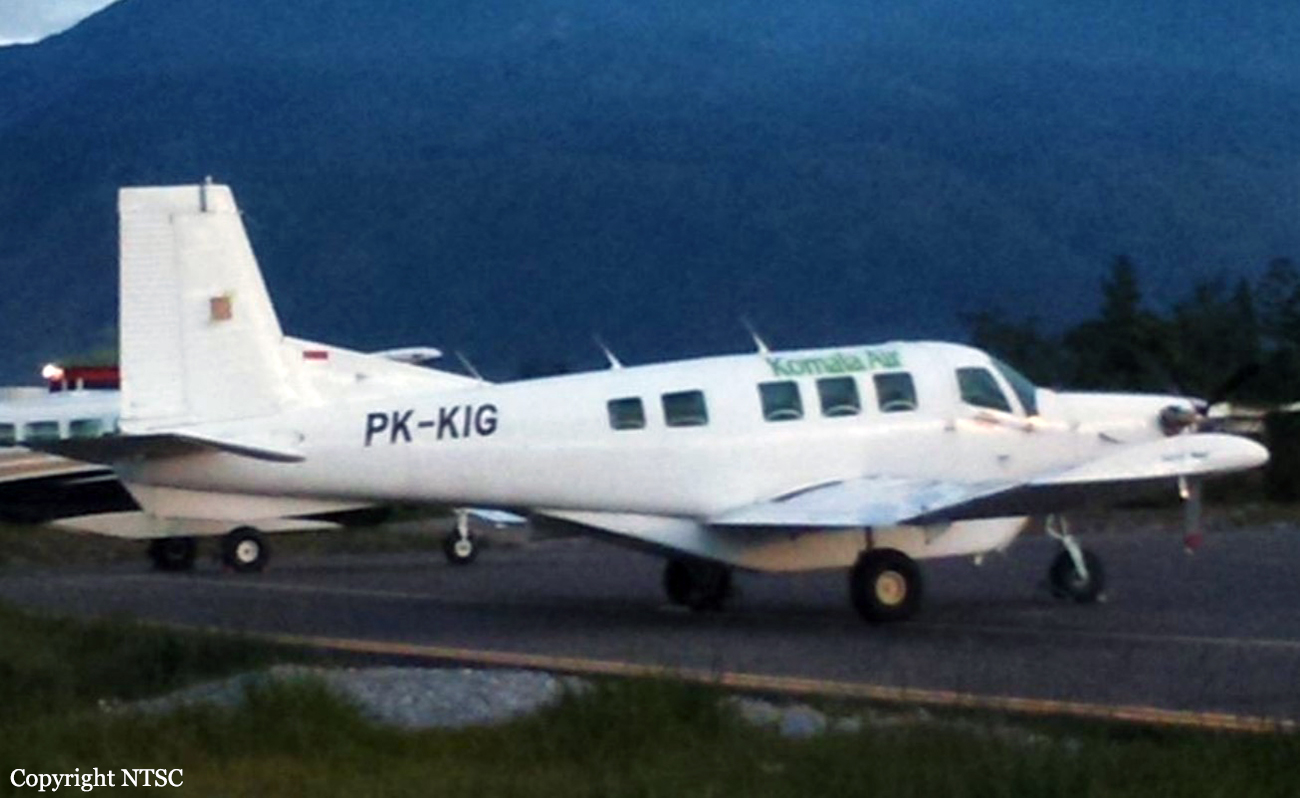
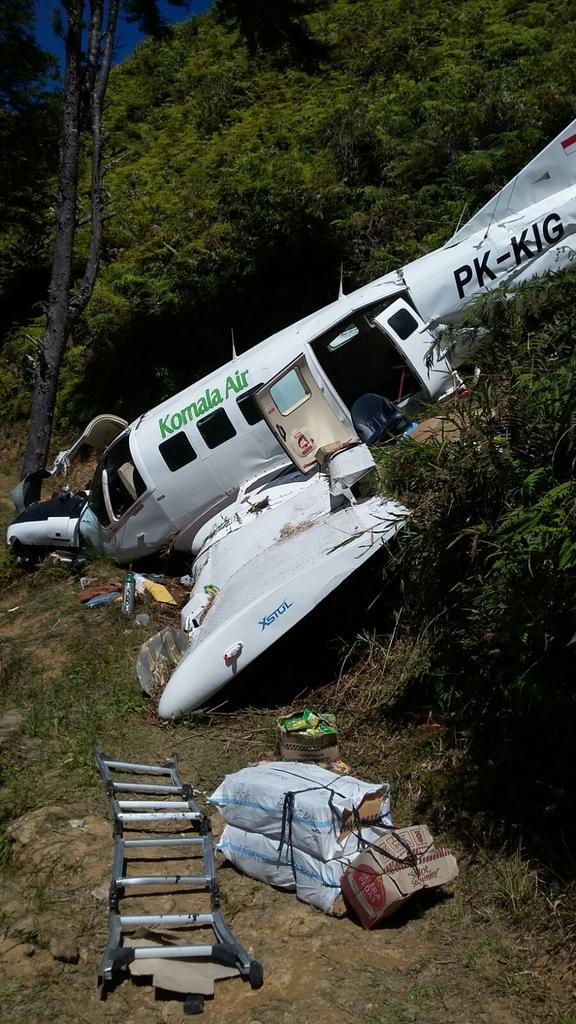
On 12 August 2015, a PAC-750XL aircraft, registered PK-KIG, was being operated by PT. Komala Indonesia on an unscheduled passenger flight from Wamena Airport (WAJW) Papua to Ninia Airstrip , Yahukimo, Papua that was located on radial 127° from Wamena with a distance of approximately 26 Nm. At 0733 LT (2233 UTC), the aircraft departed from Wamena Airport with an estimated time of arrival at Ninia of 2248 UTC. The flight was uneventful until approaching Ninia. On board the aircraft were one pilot, one engineer and 4 passengers. According to the pilot statement, an airspeed indicator malfunction occurred during flight. Video footage taken by a passenger showed that, during the approach at an altitude of approximately 6,500 feet, the airspeed indicators indicated zero and the aural stall warning activated. The aircraft then flew on the left side and parallel to the runway. Thereafter the aircraft climbed, turned left and impacted the ground about 200 meters south-west of the runway. The engineer on board was fatally injured, one passenger had minor injuries and the other occupants, including the pilot, were seriously injured. Two occupants were evacuated to a hospital in Jayapura Airport and four others, including the fatally injured, were evacuated to a hospital in Wamena.
Probable cause:
The following findings were identified:
1. Continuing the flight with both airspeed indicators unserviceable increased the complexity of the flight combined with high-risk aerodrome increased the pilot workload.
2. The improper corrective action at the time of the aural stall warning activating on the final approach, and the aircraft flew to insufficient area for a safe maneuver.
3. The unfamiliarity to the airstrip resulted in inappropriate subsequent escape maneuver and resulted in the aircraft stalling.
4. The pilot was not provided with appropriate training and familiarization to fly into a high-risk airstrip
Final Report:
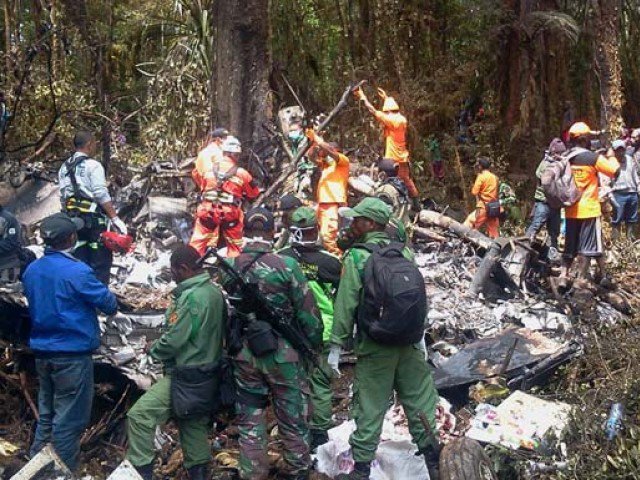
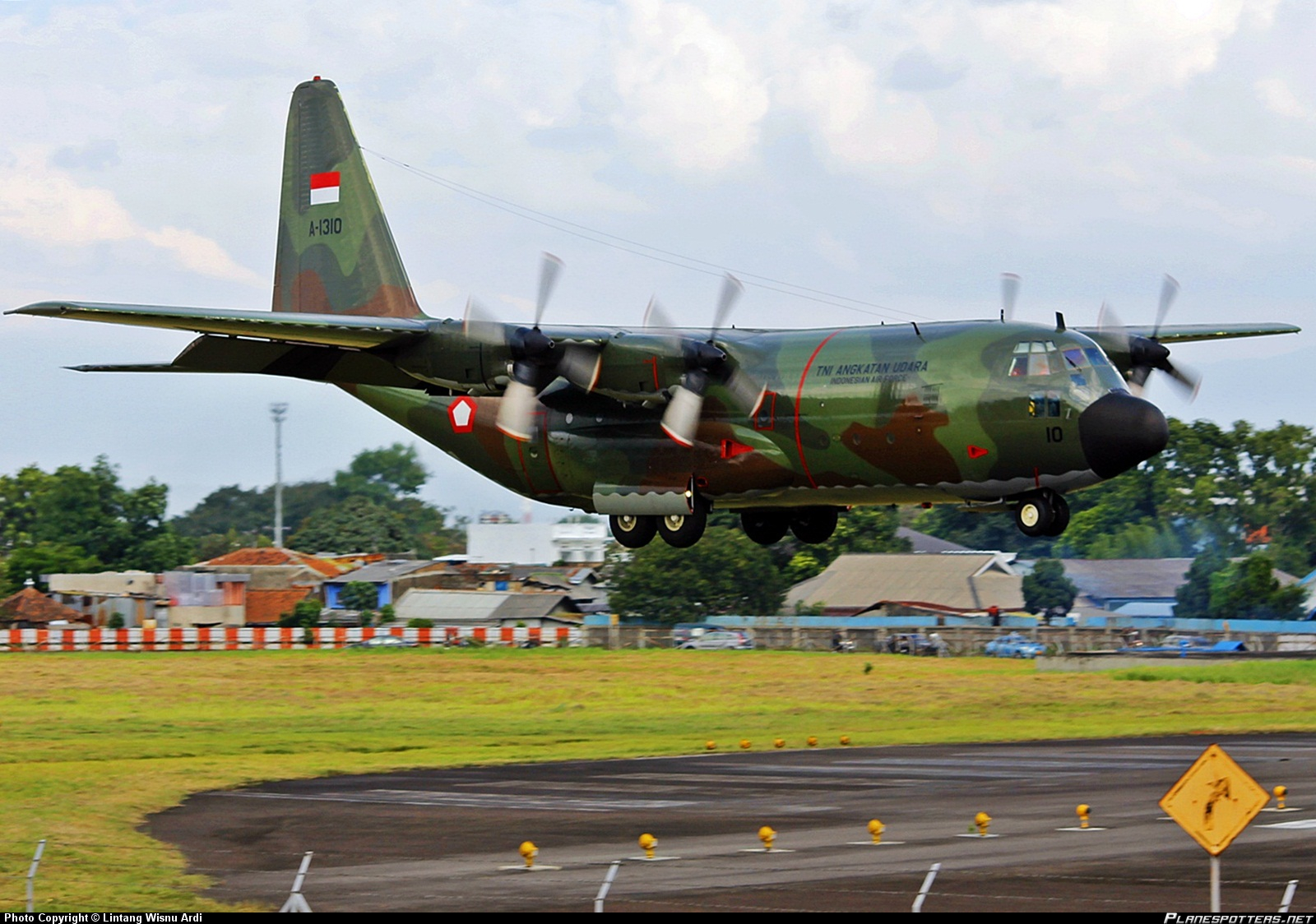
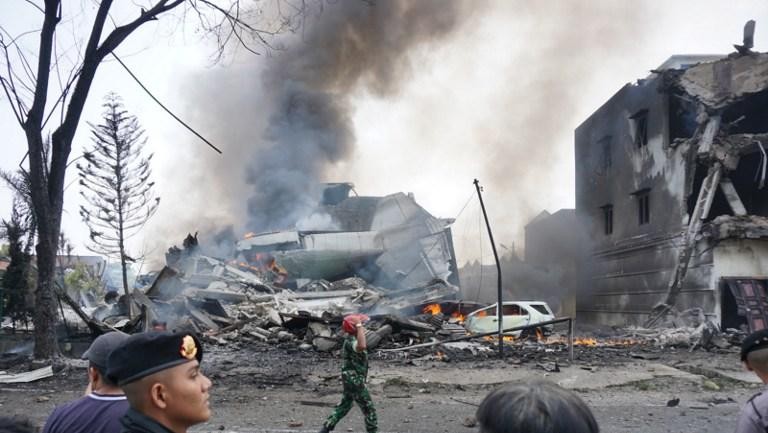
Crash of a Lockheed KC-130B Hercules in Medan: 139 killed

Date & Time: Jun 30, 2015 at 1150 LT
Type of aircraft:
Operator:
Registration:
A-1310
Flight Phase:
Flight Type:
Survivors:
No
Site:
Schedule:
Medan – Tanjung Pinang
MSN:
3616
YOM:
1961
Country:
Region:
Crew on board:
11
Crew fatalities:
Pax on board:
111
Pax fatalities:
Other fatalities:
Total fatalities:
139
Circumstances:
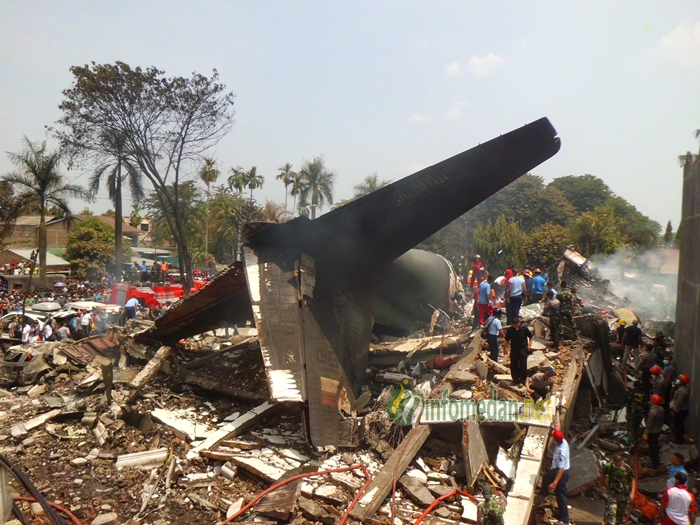
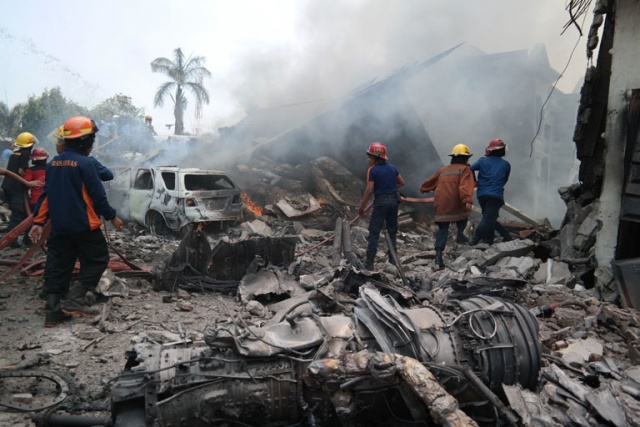
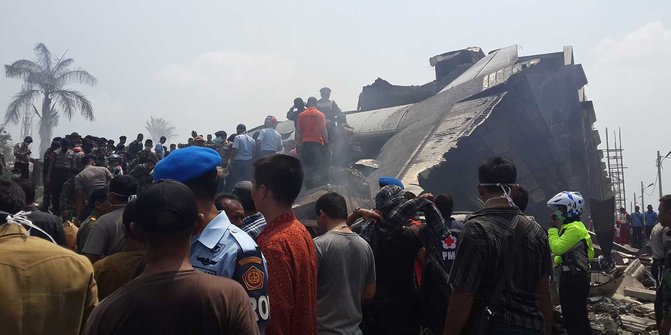
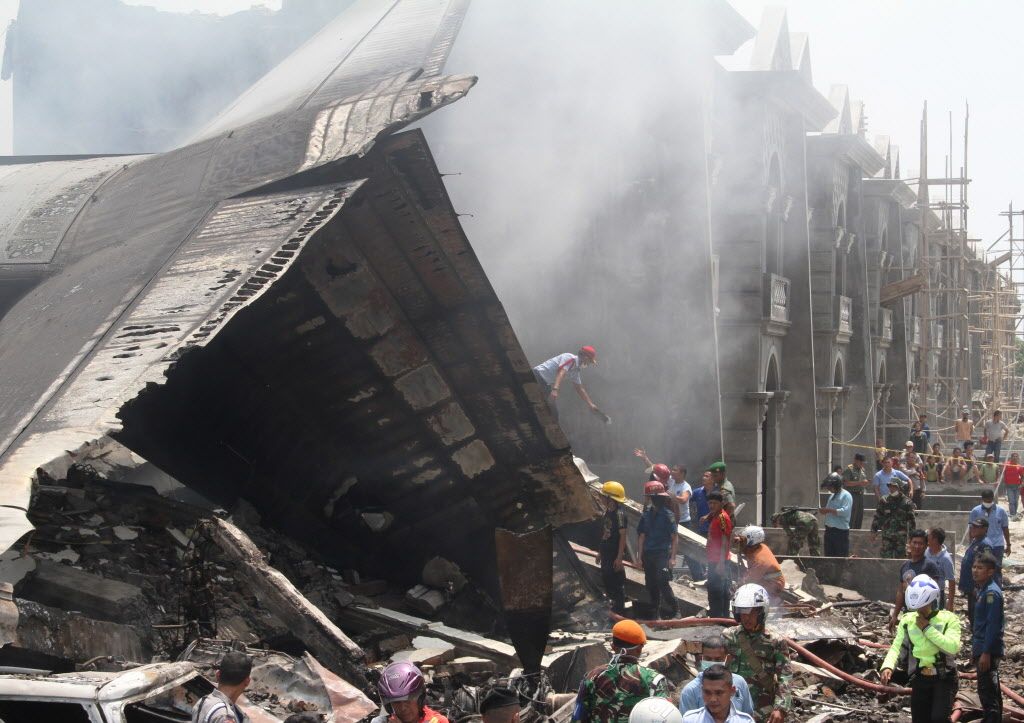
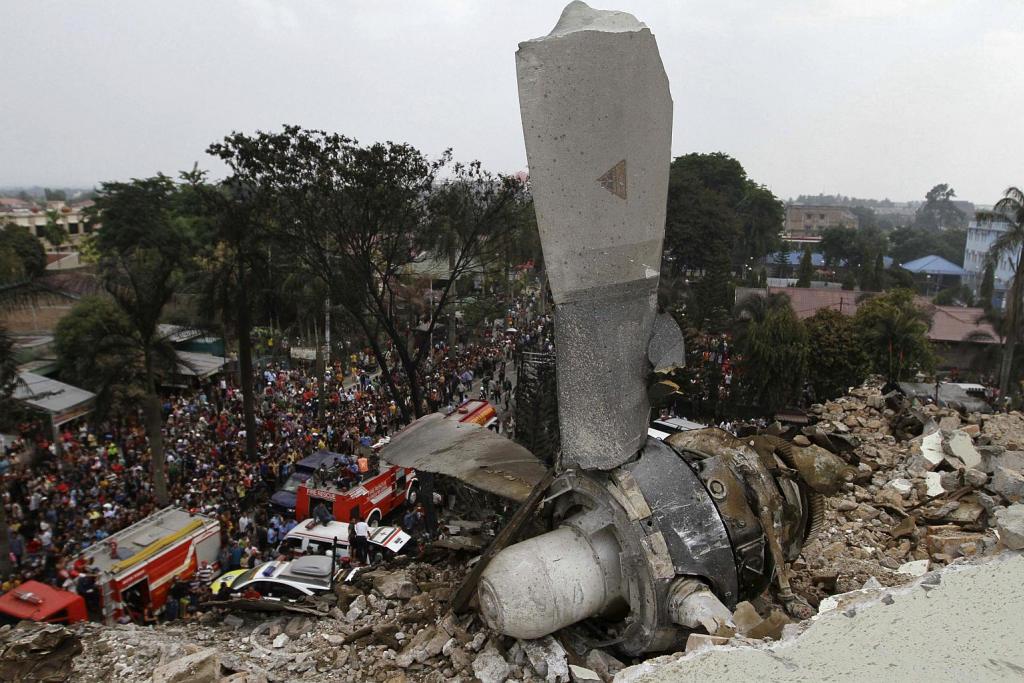
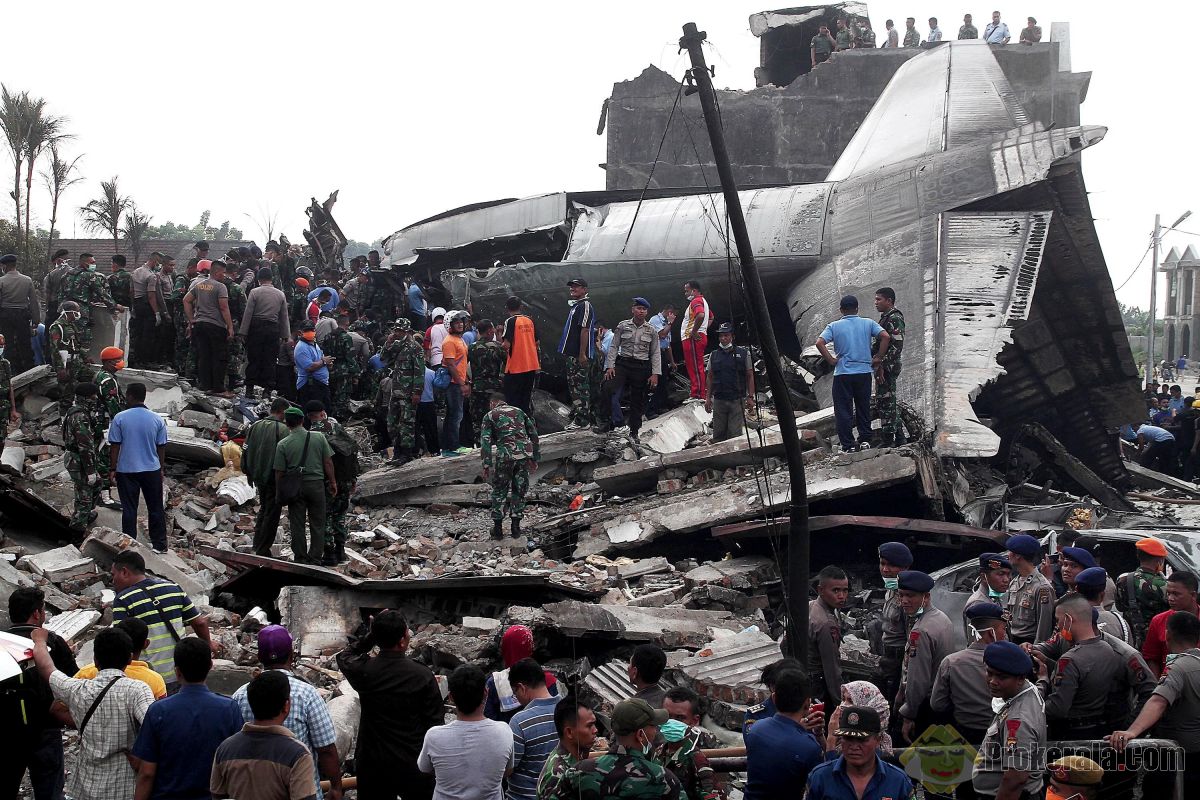
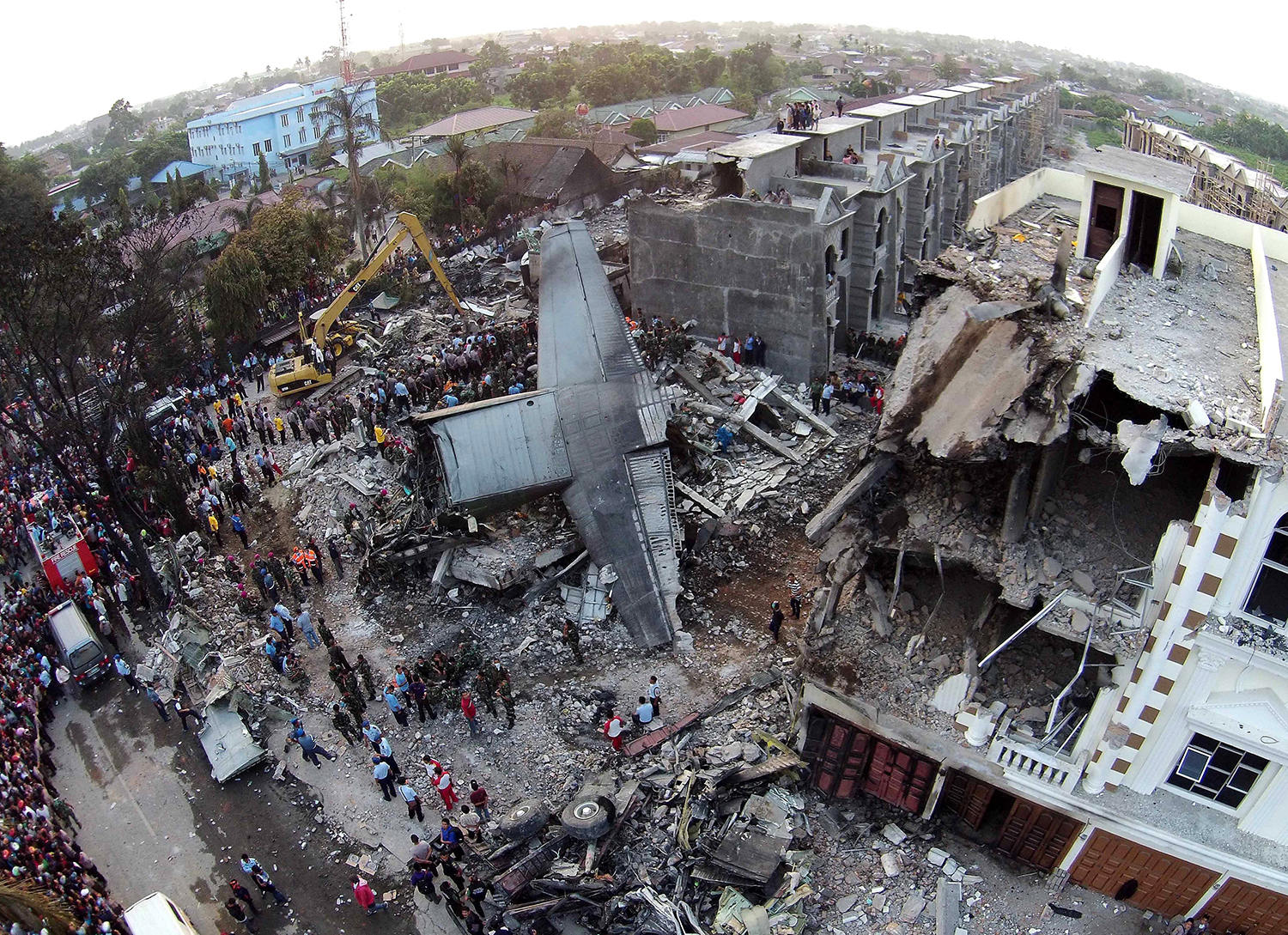
Two minutes after takeoff from Medan-Soewondo AFB Airport Runway 23, while climbing in good weather conditions, the crew reported technical problem. The aircraft encountered difficulties to gain height, banked to the right, hit a utility pole and the roof of a building then crashed inverted in a huge explosion in a suburb located less than 5 km from the airport. The aircraft was destroyed by impact forces and a post crash fire and several buildings were destroyed as well. All 122 occupants as well as 17 people on the ground were killed. 20 others were injured. It is believed that an engine failed during initial climb.
Crew:
1st Lt Sandi Permana, pilot,
1st Lt Pandu Setiawan, copilot,
Lt Dian Sukman P, copilot,
Cpt Riri Setiawan, navigator,
Serma Bambang H, radio operator,
Peltu Ibnu Kohar, flight engineer,
Pelda Andik S, flight engineer,
Peltu Ngateman, load master,
Peltu Yahya Komari,
Pelda Agus P,
Dan Prada Alvian.

Crash of a BAe ATP-F in Wamena

Date & Time: Mar 4, 2015 at 1515 LT
Type of aircraft:
Operator:
Registration:
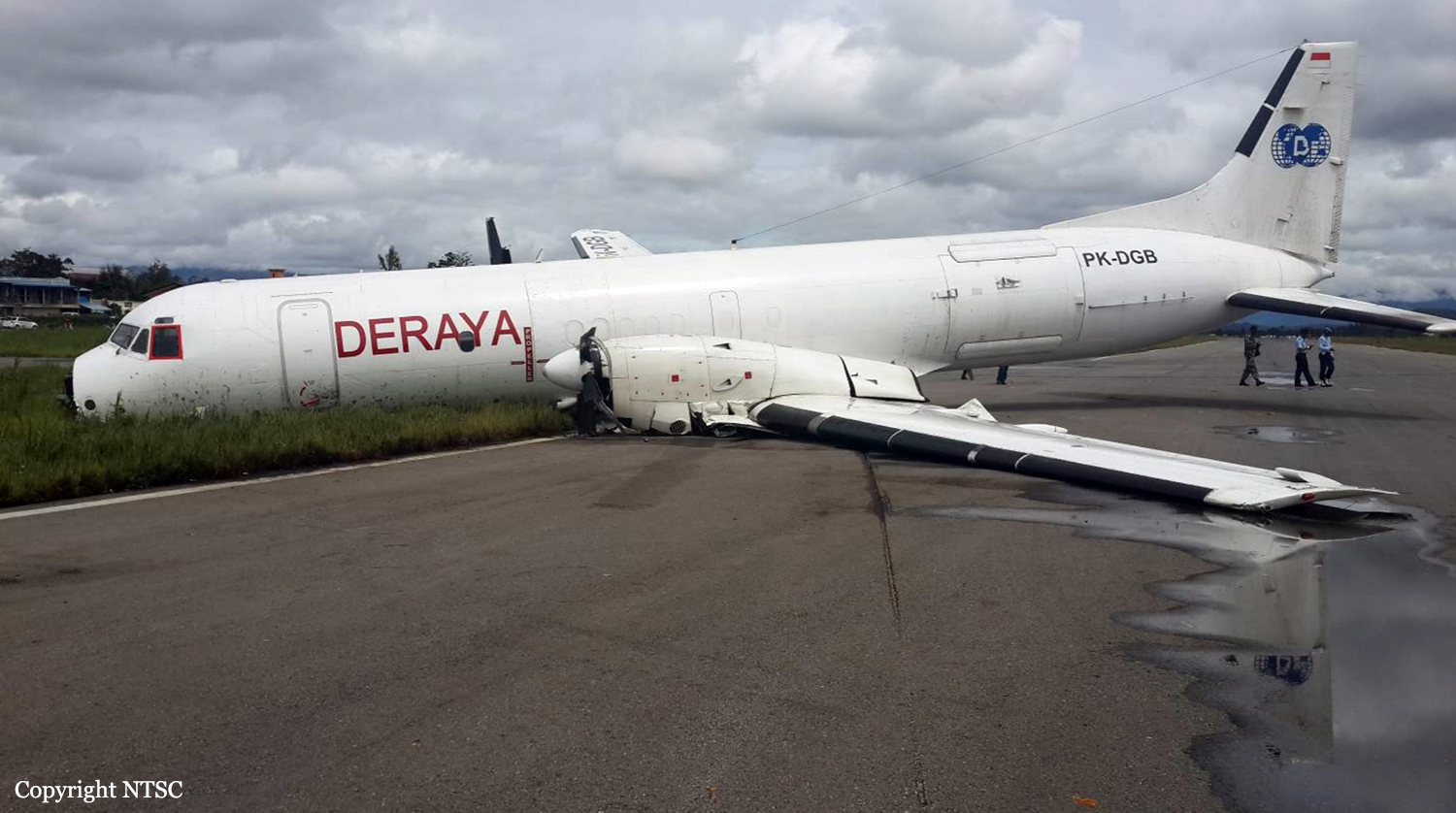
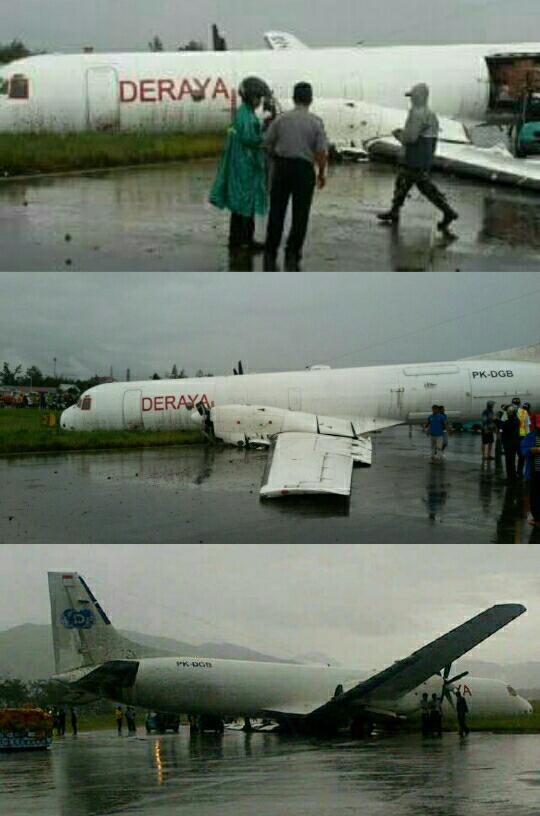
PK-DGB
Flight Type:
Survivors:
Yes
Schedule:
Jayapura – Wamena
MSN:
2029
YOM:
1990
Country:
Region:
Crew on board:
2
Crew fatalities:
Pax on board:
0
Pax fatalities:
Other fatalities:
Total fatalities:
0
Captain / Total flying hours:
3912
Captain / Total hours on type:
833.00
Copilot / Total flying hours:
415
Copilot / Total hours on type:
45
Aircraft flight hours:
200845
Aircraft flight cycles:
27921
Circumstances:
On 4 March 2015 a BAe-ATP registration PK-DGB operated by PT. Deraya Air as scheduled cargo flight from Sentani to Wamena Airport. On board of this flight was two pilots while the Pilot in Command (PIC) acted as pilot flying and First Officer (FO) acted as pilot monitoring. The aircraft departed Sentani at 0524 UTC to Wamena airport. The pilot contacted Wamena Tower controller while position on Jiwika way point at altitude 10,000 feet. Wamena Tower controller instructed to use runway 33 and to proceed to left runway 33. At 0602 UTC the pilot requested to proceed to Pyramid waypoint and to descend to 8,000 feet and made holding due to weather. At 0613, a C-130 pilot that was on approach reported making go around runway 33 and ATC instructed to C-130 pilot to proceed to Pyramid waypoint and hold. At 0619 UTC, Wamena Tower controller informed that the weather reported continuous heavy rain, visibility was reported 2 up to 3 km and wind was from 060° with velocity of 6 knots. The PK-DGB aircraft left Pyramid waypoint for approach runway 33. The aircraft proceed to left downwind and descent to 6,500 feet. During turning base leg, the pilot observed runway insight and continued the approach. At 0620 UTC, the aircraft touched down, thereafter veered off to the right of the runway and skid. The aircraft re-entered the runway at approximately 400 meters from beginning runway 33 and stopped near taxiway Delta at approximately 800 meters from beginning runway 33.

Crash of an Airbus A320-216 into the Java Sea: 162 killed

Date & Time: Dec 28, 2014 at 0618 LT
Type of aircraft:
Operator:
Registration:
PK-AXC
Flight Phase:
Survivors:
No
Schedule:
Surabaya – Singapore
MSN:
3648
YOM:
2008
Flight number:
QZ8501
Country:
Region:
Crew on board:
6
Crew fatalities:
Pax on board:
156
Pax fatalities:
Other fatalities:
Total fatalities:
162
Captain / Total flying hours:
20537
Captain / Total hours on type:
4687.00
Copilot / Total flying hours:
2247
Copilot / Total hours on type:
1367
Aircraft flight hours:
23039
Aircraft flight cycles:
13610
Circumstances:
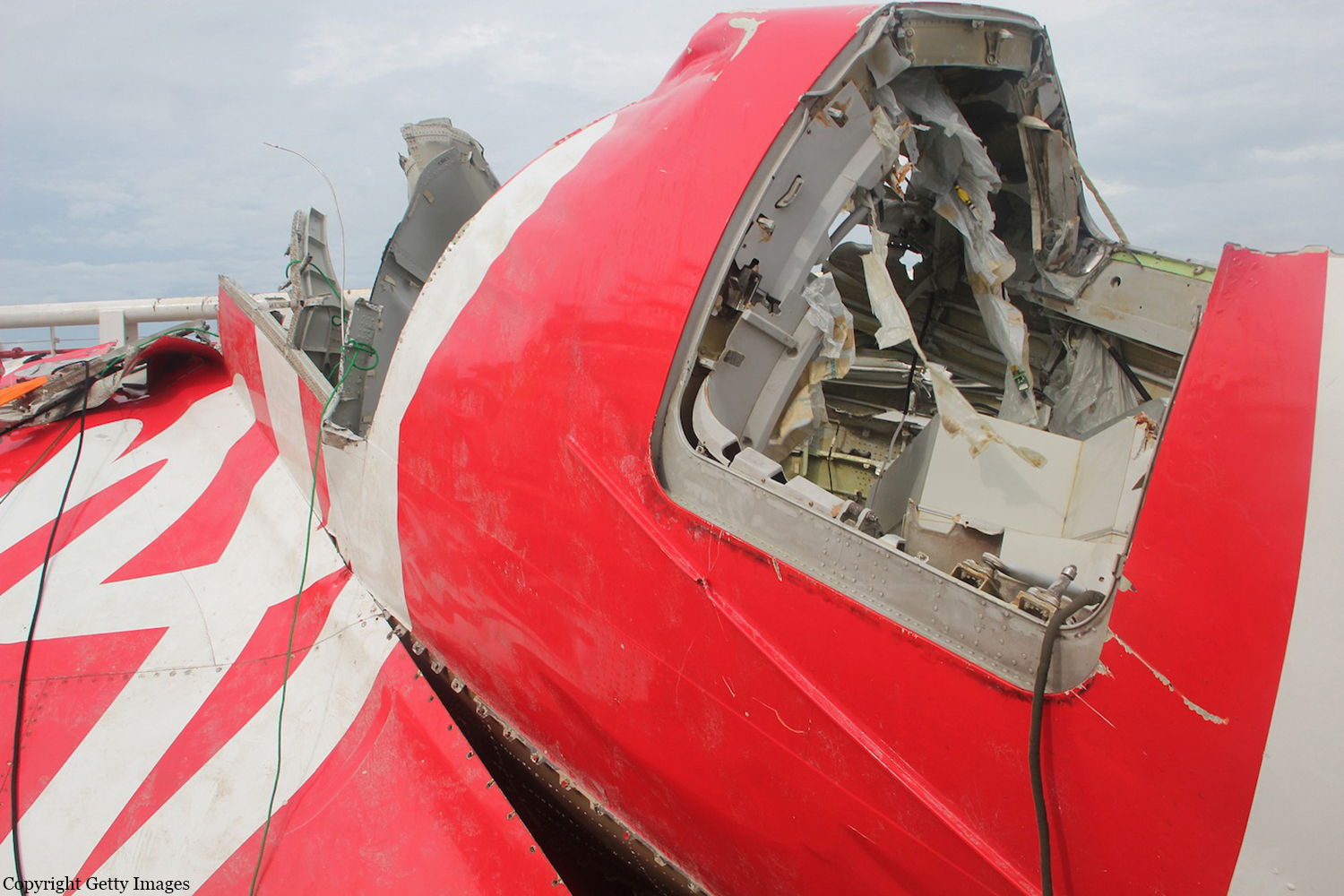
The aircraft left Surabaya-Juanda Airport at 0535LT and climbed to its assigned altitude of FL320 that he reached 19 minutes later. The crew contacted ATC to obtain the authorization to climb to FL380 and to divert to 310° due to bad weather conditions. At 0617, the radio contact was lost with the crew and a minute later, the transponder stopped when the aircraft disappeared from the radar screen. At this time, the aircraft was flying at the altitude of 36,300 feet and its speed was decreasing to 353 knots. It is believed the aircraft crashed some 80 nautical miles southeast off the Pulau Belitung Island, some 200 km from the Singapore Control Area. The Indonesian Company confirmed there were 156 Indonesian Citizens on board, three South Korean, one Malaysian, one Singapore and one French (the copilot) as well. At the time of the accident, the weather conditions were marginal with storm activity, rain falls and turbulence in the area between Pulau Belitung and Kalimantan. First debris were spotted by the Indonesian Navy some 48 hours later, about 150 NM east-south-east off the Pulau Belitung Island. About forty dead bodies were found up to December 30. The tail was recovered on January 10, 2015 and the black boxes were localized a day later. On January 12 and 13 respectively, the DFDR and the CVR were out of water and sent to Jakarta for analysis and investigations.
Probable cause:
The cracking of a solder joint of both channel A and B resulted in loss of electrical continuity and led to RTLU (rudder travel limiter unit) failure.
The existing maintenance data analysis led to unresolved repetitive faults occurring with shorter intervals. The same fault occurred 4 times during the flight.
The flight crew action to the first 3 faults in accordance with the ECAM messages. Following the fourth fault, the FDR recorded different signatures that were similar to the FAC CB‟s being reset resulting in electrical interruption to the FAC‟s.
The electrical interruption to the FAC caused the autopilot to disengage and the flight control logic to change from Normal Law to Alternate Law, the rudder deflecting 2° to the left resulting the aircraft rolling up to 54° angle of bank.
Subsequent flight crew action leading to inability to control the aircraft in the Alternate Law resulted in the aircraft departing from the normal flight envelope and entering prolonged stall condition that was beyond the capability of the flight crew to recover.
Final Report:
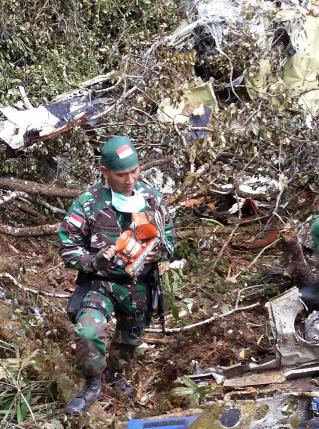
Crash of a Quest Kodiak 100 in Doyo Baru: 2 killed

Date & Time: Apr 9, 2014 at 0940 LT
Type of aircraft:
Operator:
Registration:
PK-SDF
Flight Phase:
Survivors:
Yes
Schedule:
Doyo Baru – Ninia
MSN:
100-0049
YOM:
2011
Country:
Region:
Crew on board:
1
Crew fatalities:
Pax on board:
6
Pax fatalities:
Other fatalities:
Total fatalities:
2
Captain / Total flying hours:
25530
Captain / Total hours on type:
1752.00
Aircraft flight hours:
1752
Aircraft flight cycles:
2211
Circumstances:
A Kodiak-100 aircraft, registered PK-SDF, on 9 April 2014 was being operated by PT. Adventist Aviation Indonesia as non-schedule flight from Doyo Baru Airstrip with intended destination of Ninia Airstrip, Papua. On board in this flight were 7 persons consist of one pilot and six passengers. This flight was the fourth flights for the pilot who has performed flights from Doyo Baru (DOB) – Puldamat (PUL) at 2138-2228 UTC; Puldamat (PUL) –Soya (SOY) at 2243-2247 UTC; Soya (SOY) – Doyo Baru (DOB) at 2256-2344 UTC. The flight time to destination was estimated of 1 hour with cruising altitude of 10,000 feet and the fuel on board were sufficient for 4 hours flight time. Doyo Baru Airstrip located at approximately 10 NM North West of Sentani Airport (WAJJ). Air traffic movement to and from Doyo Baru Airstrip was controlled by Sentani Tower controller. At 0015 UTC, the pilot contacted to Sentani Tower controller, requested for start engine and clearance to fly to Ninia. The requests were approved and to report when ready for departure. At 0021 UTC, the pilot reported to the Sentani Tower controller ready for departure from Doyo Baru Airstrip. The Sentani Tower Controller instructed the pilot to hold to wait an aircraft took off from Sentani Airport. At 0024 UTC, the pilot received clearance for takeoff with additional traffic information and to report after airborne. At 0027 UTC, Sentani Tower controller has not received reports from the PK-SDF pilot and tried to call but was not responded. After several observations toward Doyo Baru area and did not see PK-SDF aircraft, The Sentani Tower controller reported to the Chief Section of Sentani Tower Air Navigation. At 0030 UTC, The Chief Section of Sentani Tower Air Navigation clarified the condition of PK-SDF aircraft to one of Indonesian Adventist Aviation pilot in Doyo Baru and obtained information that the aircraft had experienced in accident during takeoff at Doyo Baru. An engineer after received the information went to the accident site and saw appearance of white smoke came out from the side of the river which was known as the accident aircraft located. After arrived at the accident site the engineer saw the Adventist’s staffs and local people tried to extinguish the fire on the aircraft engine by throwing some water and used two fire extinguishers while some people moved the passengers from the wreckage. Two occupants including the pilot were fatally injured and five other passengers were seriously injured. All occupants were taken to Yowari Hospital (Rumah Sakit Umum Daerah – RSUD Yowari).
Probable cause:
Contributing Factors:
- The failure to airborne was due to the aircraft was not in correct takeoff configuration which required wing flap 20° while the flap was found at approximately 6° position during impact.
- The actions to recover the situation by selection of emergency power and flap were not proper for particular condition.
Final Report:
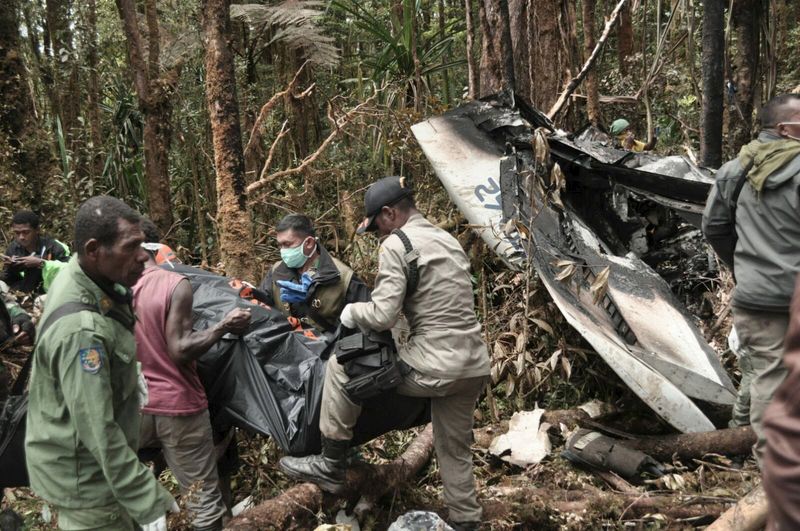
Crash of a Piper PA-31-350 Navajo Chieftain in Langgur: 4 killed
Date & Time: Jan 19, 2014 at 1225 LT
Operator:
Registration:
PK-IWT
Flight Type:
Survivors:
No
Schedule:
Jayapura – Langgur – Kendari – Surabaya
MSN:
31-7752090
YOM:
1977
Country:
Region:
Crew on board:
1
Crew fatalities:
Pax on board:
3
Pax fatalities:
Other fatalities:
Total fatalities:
4
Captain / Total flying hours:
2860
Captain / Total hours on type:
1045.00
Aircraft flight hours:
5859
Circumstances:
On 19 January 2014, a PA-31-350 Piper Chieftain, registered PK-IWT, was being operated by PT. Intan Angkasa Air Service, on positioning flight from Sentani Airport, Jayapura with intended destination of Juanda Airport, Surabaya for aircraft maintenance. The positioning flight was planned to transit at Dumatubun Airport Langgur of Tual, Maluku and Haluoleo Airport, Kendari at South East Sulawesi for refuelling. On the first sector, the aircraft departed Sentani Airport at 2351 UTC (0851 WIT) and estimated arrival at Langgur was 0320 UTC. On board on this flight was one pilot, two company engineers and one ground staff. At 0240 UTC the pilot contacted to the Langgur FISO, reported that the aircraft position was 85 Nm to Langgur Airport at altitude 10,000 feet and requested weather information. Langgur FISO acknowledged and informed that the weather was rain and thunderstorm and the runway in used was 09. When the aircraft passing 5,000 feet, the pilot contacted the Langgur FISO and reported that the aircraft position was 50 Nm from langgur and informed the estimated time of arrival was 0320 UTC. The Langgur FISO acknowledged and advised the pilot to contact when the aircraft was at long final runway 09. At 0318 UTC, the pilot contacted Langgur FISO, reported the position was 25 Nm to Langgur at altitude of 2,500 feet and requested to use runway 27. The Langgur FISO advised the pilot to contact on final runway 27. At 0325 UTC, Langgur FISO contacted the pilot with no reply. At 0340 UTC, Langgur FISO received information from local people that the aircraft had crashed. The aircraft was found at approximately 1.6 Nm north east of Langgur Airport at coordinate 5° 38’ 30.40” S; 132° 45’ 21.57” E. All occupants fatally injured and the aircraft destroyed by impact force and post impact fire. The aircraft was destroyed by impact forces and post impact fire, several parts of the remaining wreckage such as cockpit could not be examined due to the level of damage. The aircraft was not equipped with flight recorders and the communication between ATC and the pilot was not recorded. No eye witness saw the aircraft prior to impact. Information available for the investigation was limited. The analysis utilizes available information mainly on the wreckage information including the information of the wings, engines and propellers.
Probable cause:
The investigation concluded that the left engine most likely failed during approach and the propeller did not set to feather resulted in significant asymmetric forces. The asymmetric forces created yaw and roll tendency and the aircraft became uncontrolled, subsequently led the aircraft to impact to the terrain.
Final Report: