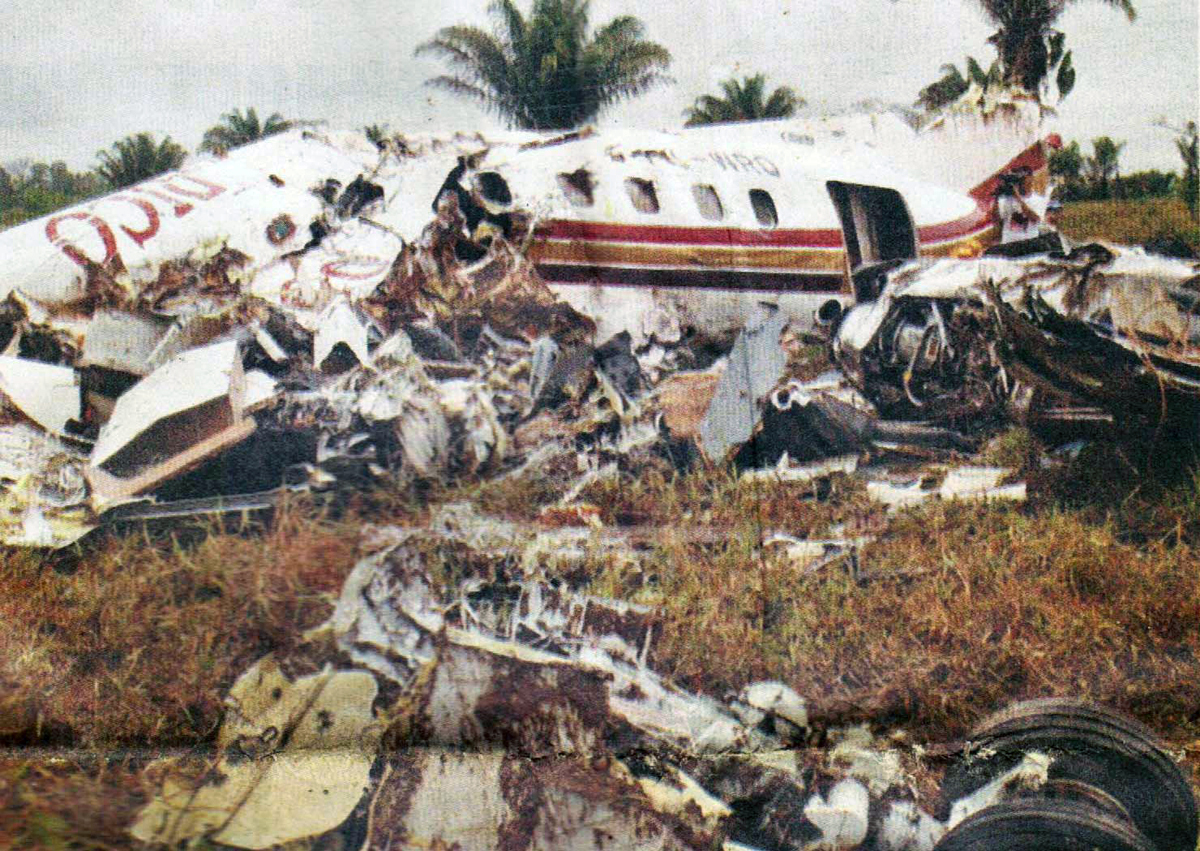
Crash of a Cessna 551 Citation II/SP in Sorocaba: 1 killed

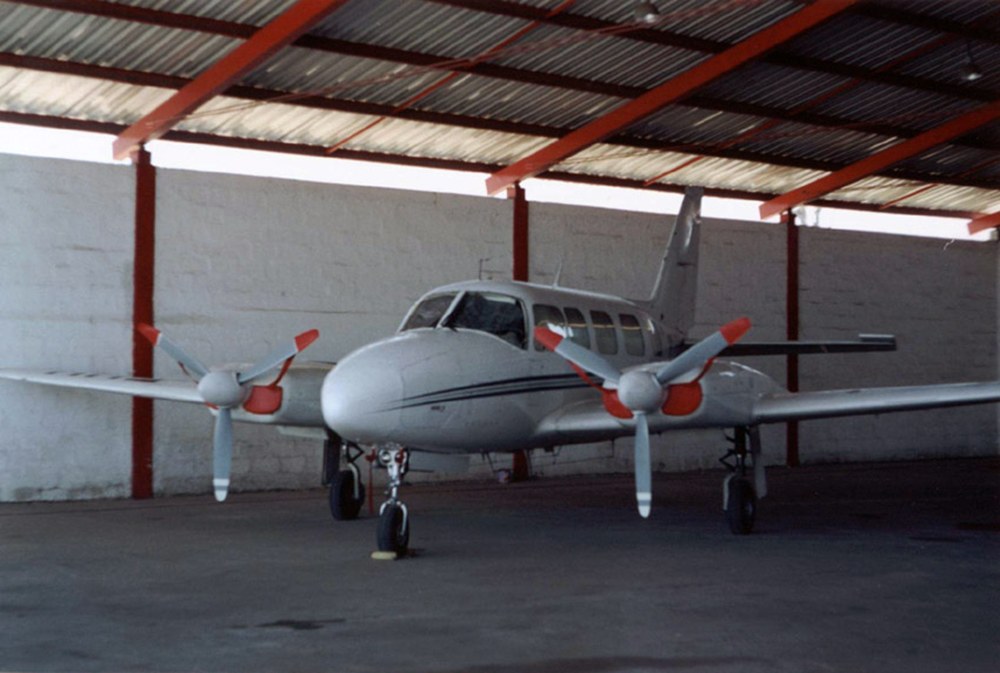
Date & Time: Jul 23, 2003 at 0840 LT
Type of aircraft:
Operator:
Registration:
PT-LME
Flight Type:
Survivors:
Yes
Schedule:
Lins - Sorocaba
MSN:
551-0023
YOM:
1980
Country:
Crew on board:
2
Crew fatalities:
Pax on board:
1
Pax fatalities:
Other fatalities:
Total fatalities:
1
Captain / Total flying hours:
3920
Captain / Total hours on type:
1300.00
Copilot / Total flying hours:
1000
Copilot / Total hours on type:
90
Aircraft flight hours:
8761
Circumstances:
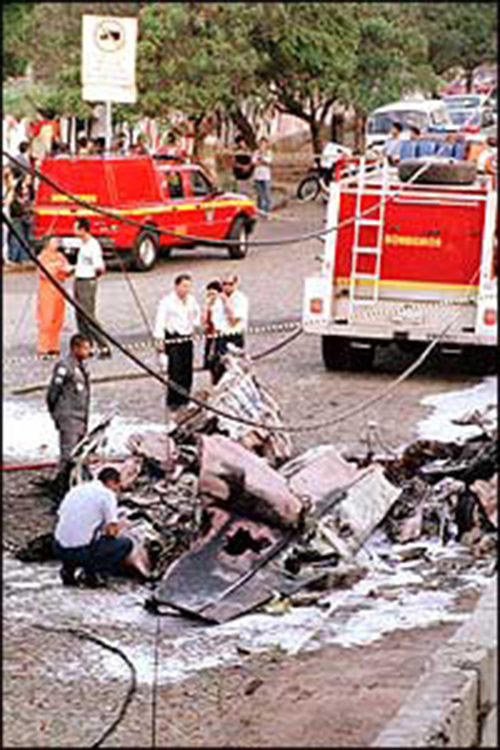
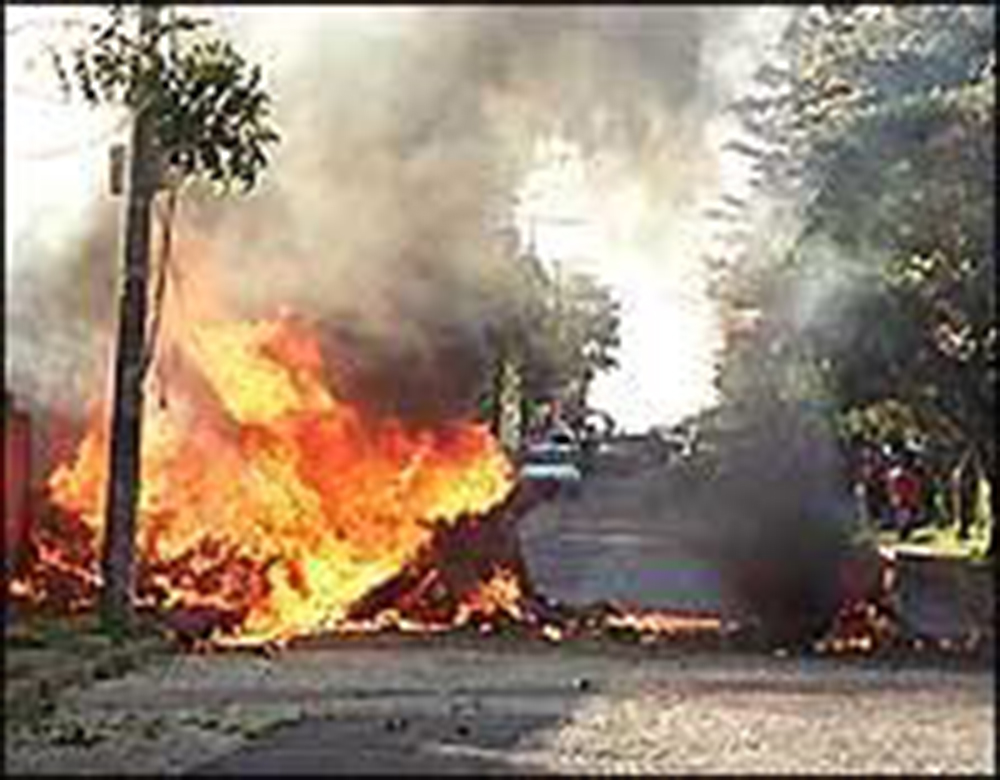
The aircraft departed Lins Airport on a ferry flight to Sorocaba with two pilots on one passenger (the owner) on board. The aircraft was transferred to Sorocaba Airport for maintenance purposes. While descending, the crew was informed that runway 36 was in use and that three small aircraft were completing local training in the circuit. In good weather conditions, the captain decided to complete a straight-in approach to runway 18. After touchdown, the aircraft was unable to stop within the remaining distance. It overran, crossed a road and came to rest into a ravine. The passenger escaped uninjured, the copilot was seriously injured and the captain was killed. The aircraft was destroyed.
Probable cause:
Wrong approach configuration on part of the crew who completed an unstabilized approach and landed too far down the runway (about a half way down) at an excessive speed. In such conditions, the aircraft could not be stopped within the remaining distance. The following contributing factors were identified:
- The crew did not make any approach briefing,
- The crew failed to follow the approach checklist,
- The aircraft had deficiencies in maintenance, particularly with regard to the brakes systems,
- The techlogs were out of date,
- Maintenance was periodic but insufficient,
- Although the runway 36 was in use, the captain preferred to land on runway 18,
- The aircraft was unstable on short final and landed too far down the runway, reducing the landing distance available,
- The aircraft' speed upon landing was excessive, preventing the reverse thrust systems to be activated,
- The captain took over control and activated the reverse thrust system on the right engine only,
- Poor crew coordination,
- The crew was operating in a conflict environment after touchdown,
- Poor judgment of the situation,
- Poor flight planning,
- Lack of crew discipline.
Final Report:
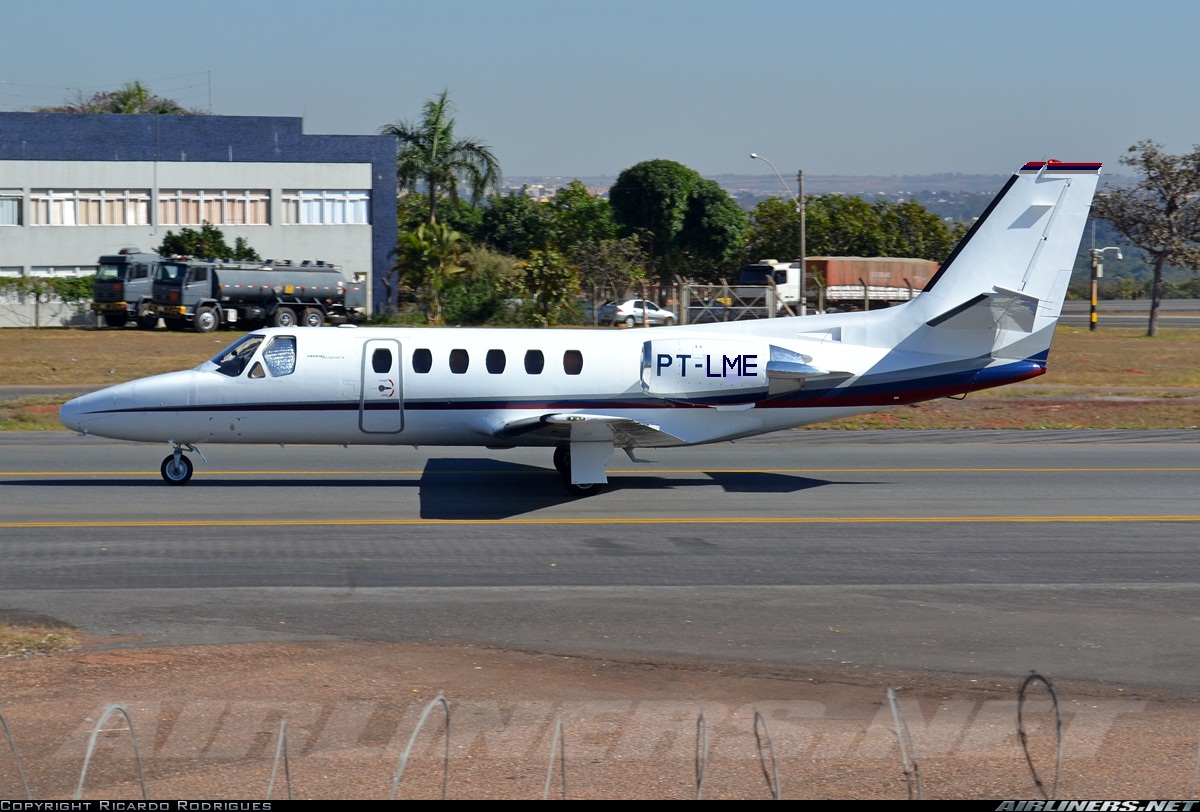
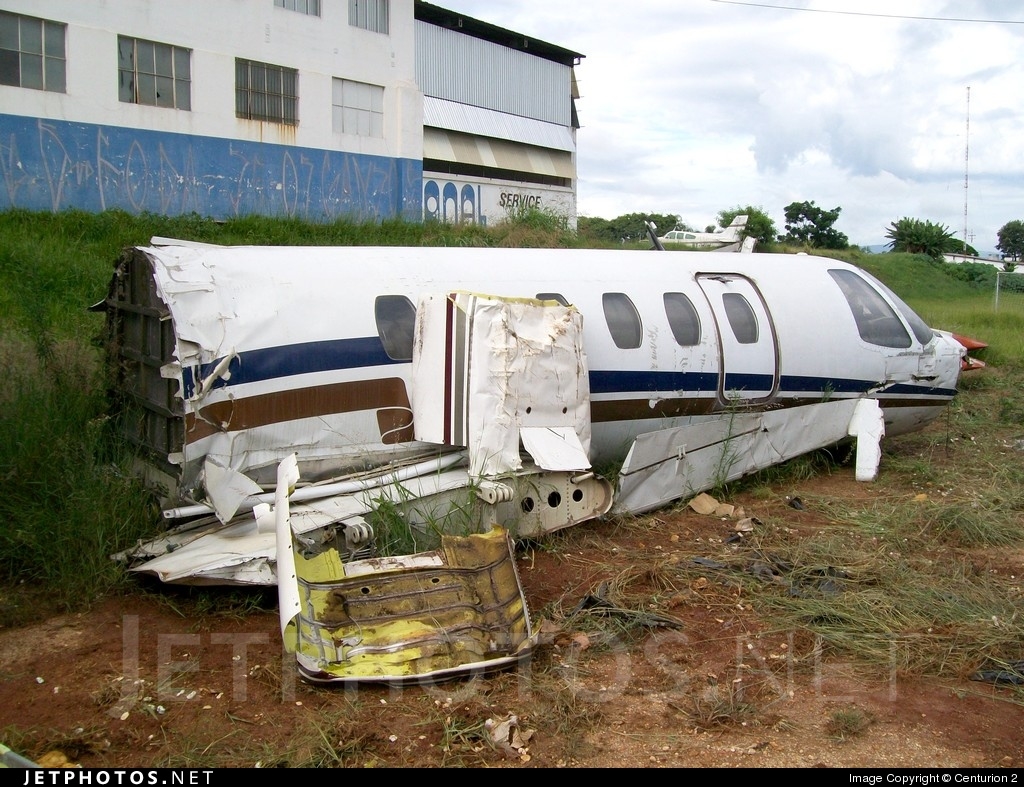
Crash of a Mitsubishi MU-2B-35 Marquise in Belém: 4 killed

Date & Time: Jul 1, 2003 at 1957 LT
Type of aircraft:
Operator:
Registration:
PT-LFX
Survivors:
No
Schedule:
São Luis – Belém
MSN:
650
YOM:
1974
Country:
Crew on board:
2
Crew fatalities:
Pax on board:
2
Pax fatalities:
Other fatalities:
Total fatalities:
4
Captain / Total flying hours:
11236
Captain / Total hours on type:
4886.00
Copilot / Total flying hours:
1015
Copilot / Total hours on type:
359
Circumstances:
The twin engine aircraft was completing a taxi flight from São Luis to Belém, carrying two passengers, two pilots and a load of briefcases with bank documents. On approach to Belém-Val de Cans Airport by night, the crew encountered poor weather conditions with limited visibility, CB's, rain falls and severe turbulences. On final approach, the aircraft went out of control and crashed on the Ilha das Onças Island, about 5,5 km west of runway 06 threshold. The aircraft was destroyed and all four occupants were killed.
Probable cause:
It was determined that both engines were running normally at impact and no technical anomalies were found on the aircraft and its equipments. Both pilots were properly licenced and experienced on this type of aircraft. At the time of the accident, weather conditions were poor with CB's, rains falls, severe turbulences, strong winds and probable windshear that may have been a contributing factor.
Final Report:

Crash of an Embraer EMB-820C Navajo in Belo Horizonte: 4 killed

Date & Time: Jun 11, 2003 at 1600 LT
Registration:
PT-EHH
Survivors:
No
Schedule:
Belo Horizonte – Juiz de Fora
MSN:
820-044
YOM:
1977
Country:
Crew on board:
2
Crew fatalities:
Pax on board:
2
Pax fatalities:
Other fatalities:
Total fatalities:
4
Captain / Total flying hours:
180
Copilot / Total flying hours:
150
Circumstances:
The twin engine aircraft departed Belo Horizonte-Pampulha Airport at 1522LT on a taxi flight to Juiz de Fora, carrying two pilots, two passengers and a load of valuables. While cruising about 35 nm south of Belo Horizonte, the crew encountered technical problems with the engines and elected to return for an emergency landing. On approach to runway 13, the aircraft was too high and the crew was cleared to make a 360 turn to reduce his altitude. Doing so and after he completed 270° of this turn, the aircraft entered an uncontrolled descent and crashed 2 km short of runway, bursting into flames. The aircraft was totally destroyed by impact forces and a post crash fire and all four occupants were killed.
Probable cause:
The right engine suffered a oil leak in flight following the failure of a hose due to poor maintenance. The following contributing factors were identified:
- Both pilots did not have sufficient experience nor training on this type of aircraft,
- The copilot was flying for this operator for the first time,
- The operator was unable to provide any maintenance documentation nor crew training documentation to investigators,
- Both engines were running at impact but with limited power,
- The right propeller was feathered at impact.
Final Report:

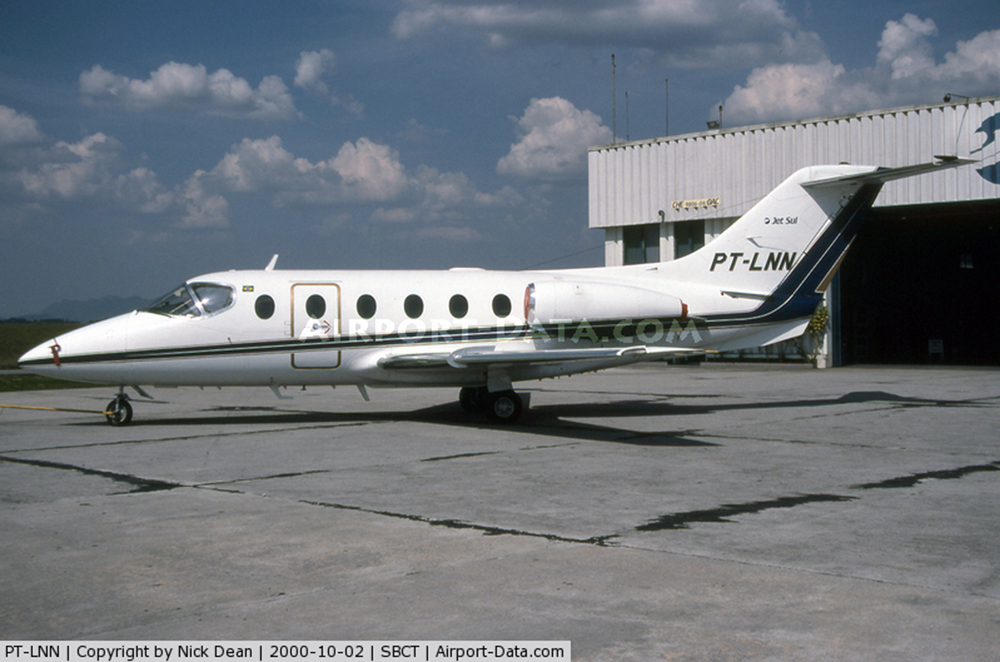
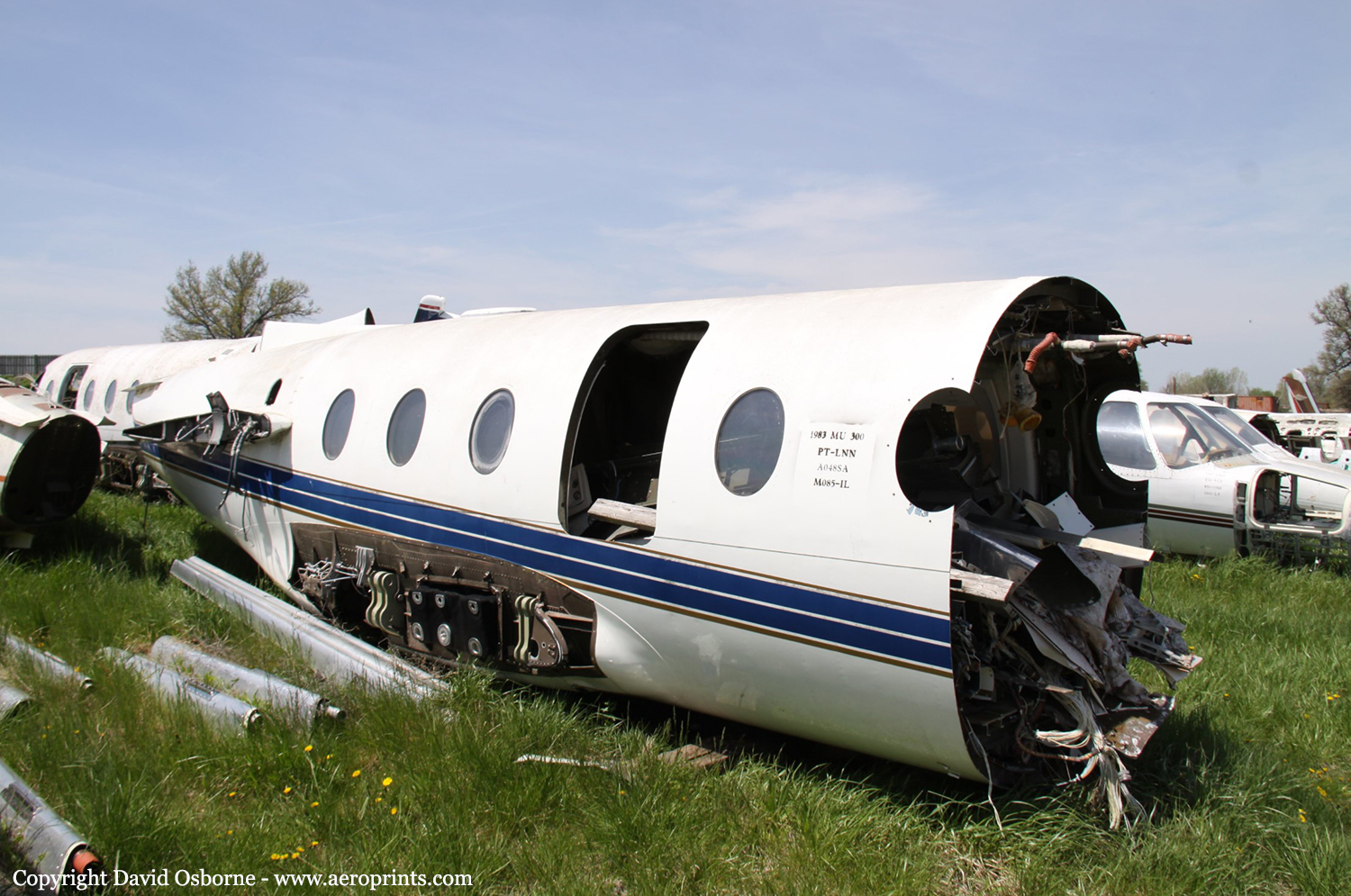
Crash of a Mitsubishi MU-300 Diamond 1A in Santos

Date & Time: Mar 23, 2003 at 1025 LT
Type of aircraft:
Registration:
PT-LNN
Survivors:
Yes
Schedule:
Rio de Janeiro – Santos
MSN:
0048
YOM:
1982
Country:
Crew on board:
2
Crew fatalities:
Pax on board:
1
Pax fatalities:
Other fatalities:
Total fatalities:
0
Captain / Total flying hours:
12500
Captain / Total hours on type:
35.00
Copilot / Total flying hours:
4500
Copilot / Total hours on type:
19
Circumstances:
The aircraft departed Rio de Janeiro-Santos Dumont Airport on a flight to Santos, carrying one passenger and two pilots. Following an approach via the local NDB, the crew started the descent to Santos Airport but was forced to initiate a go-around procedure because he was not properly aligned. A second attempt to land was started to runway 35 with a tailwind component. Following an unstabilized approach, the aircraft landed 450 metres past the runway threshold (runway 35 is 1,390 metres long). Unable to stop within the remaining distance, the aircraft overran and came to rest in the Bertioga Canal. All three occupants evacuated safely while the aircraft was damaged beyond repair.
Probable cause:
Wrong approach configuration on part of the crew who continued the descent while the aircraft was unstable and moreover with a tailwind component. The aircraft landed at an excessive speed about 450 metres past the runway threshold, reducing the landing distance available. The tailwind component and the crew inexperience was contributing factors.
Final Report:

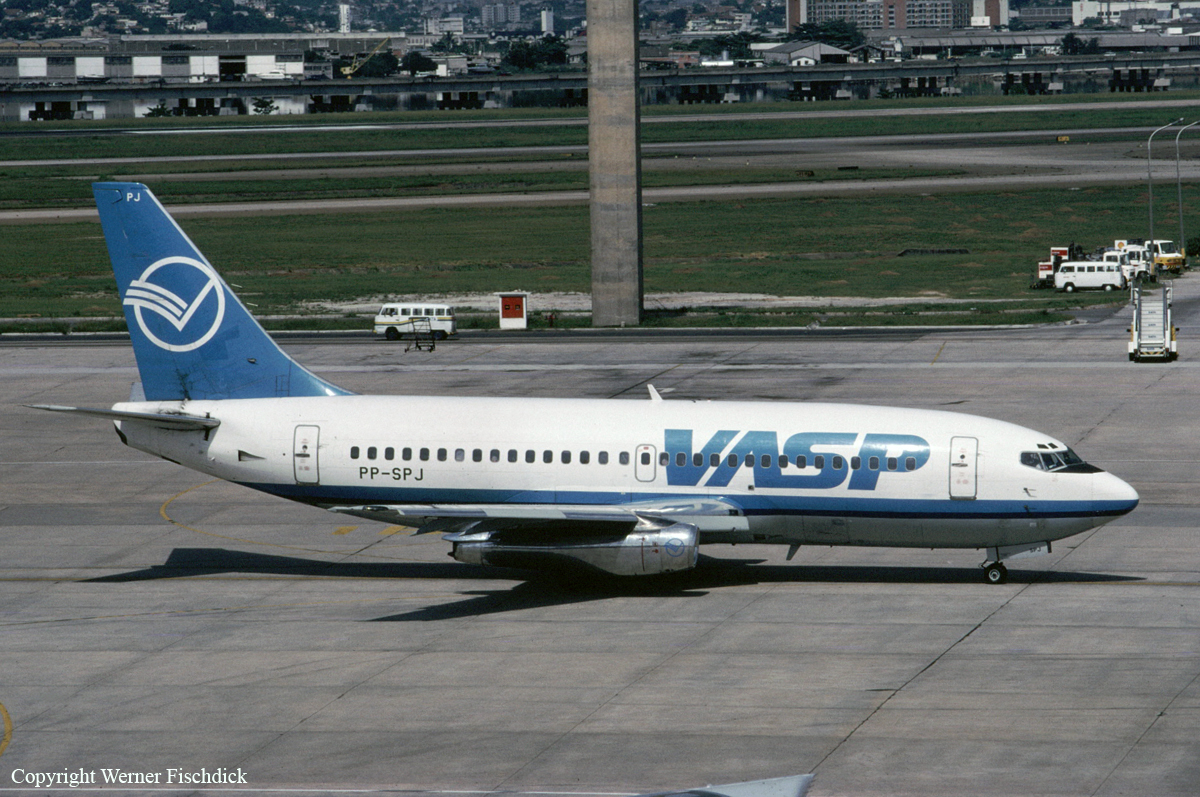
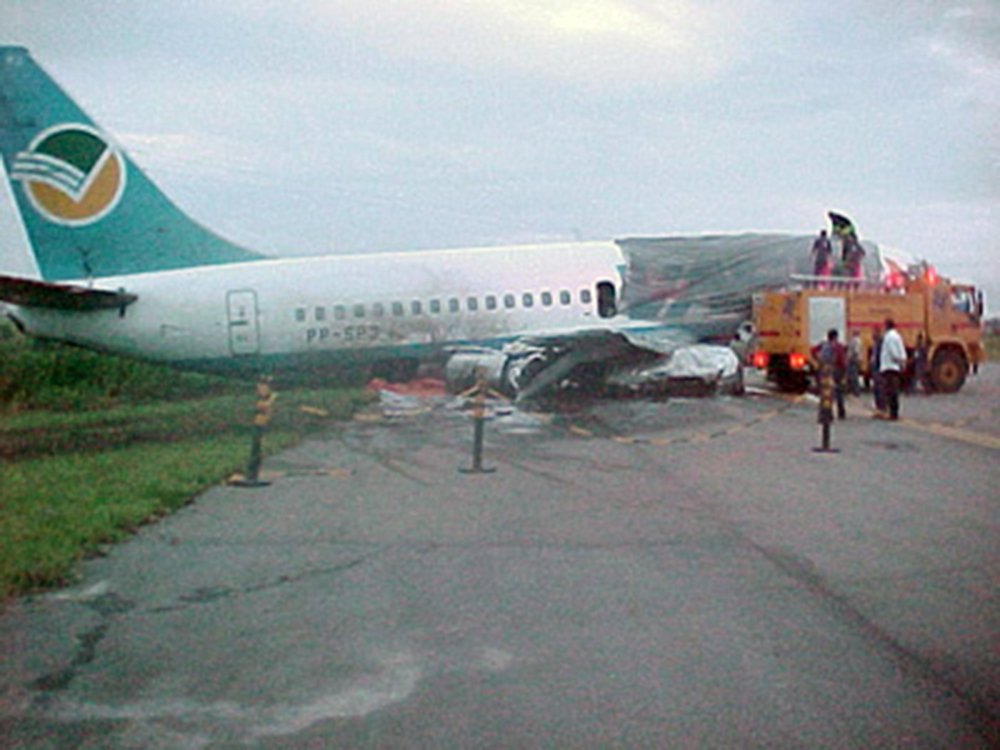
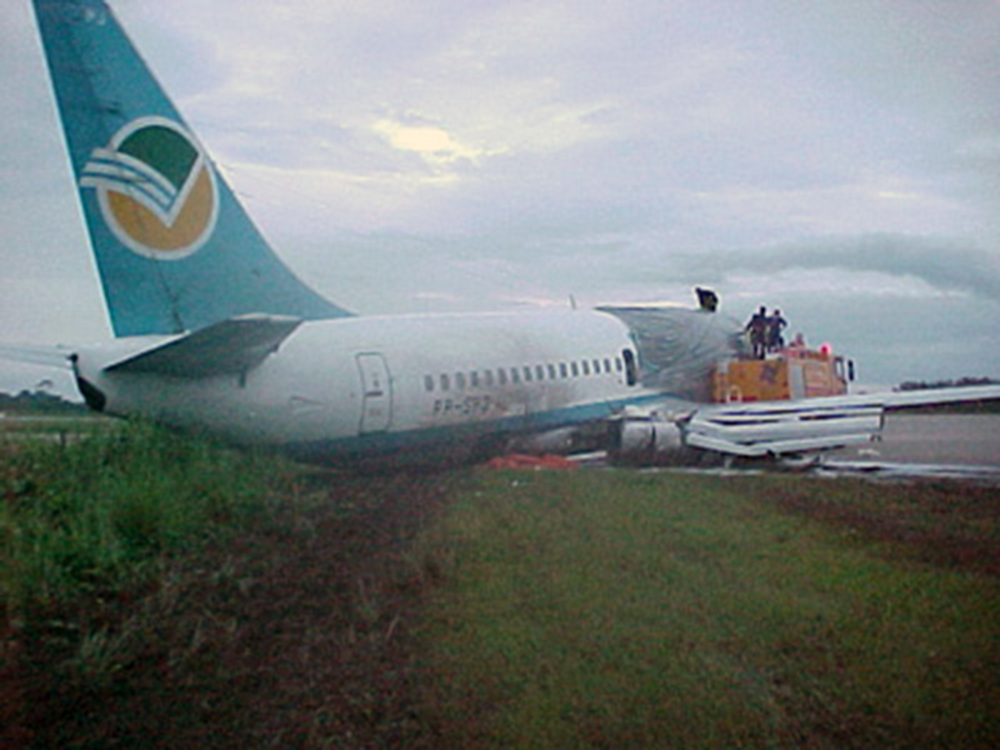
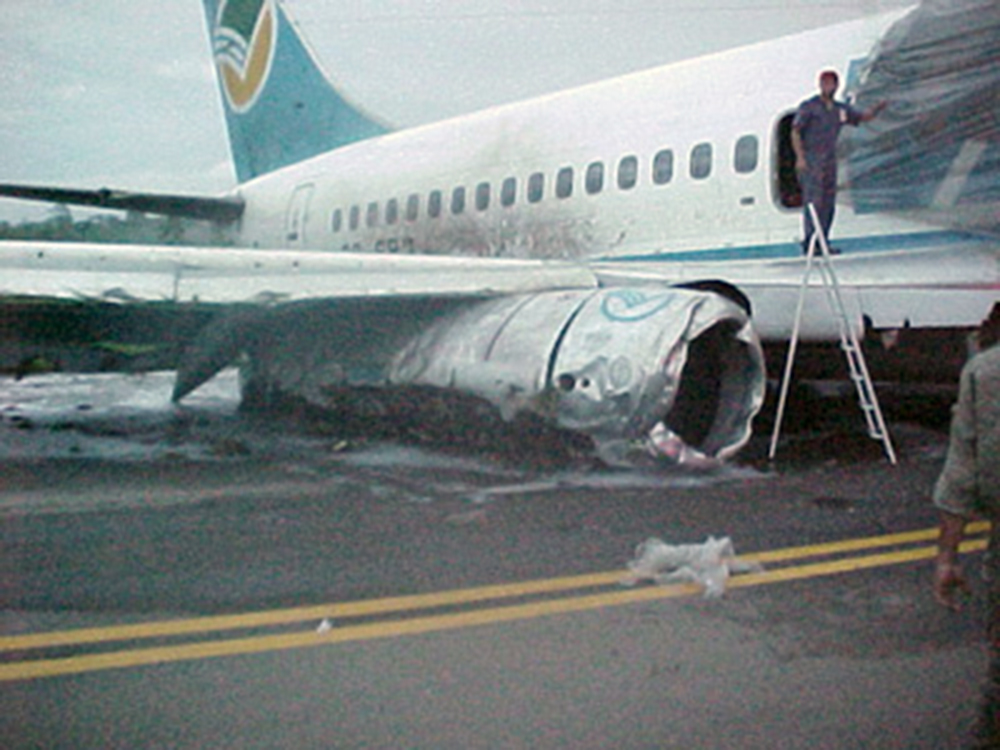
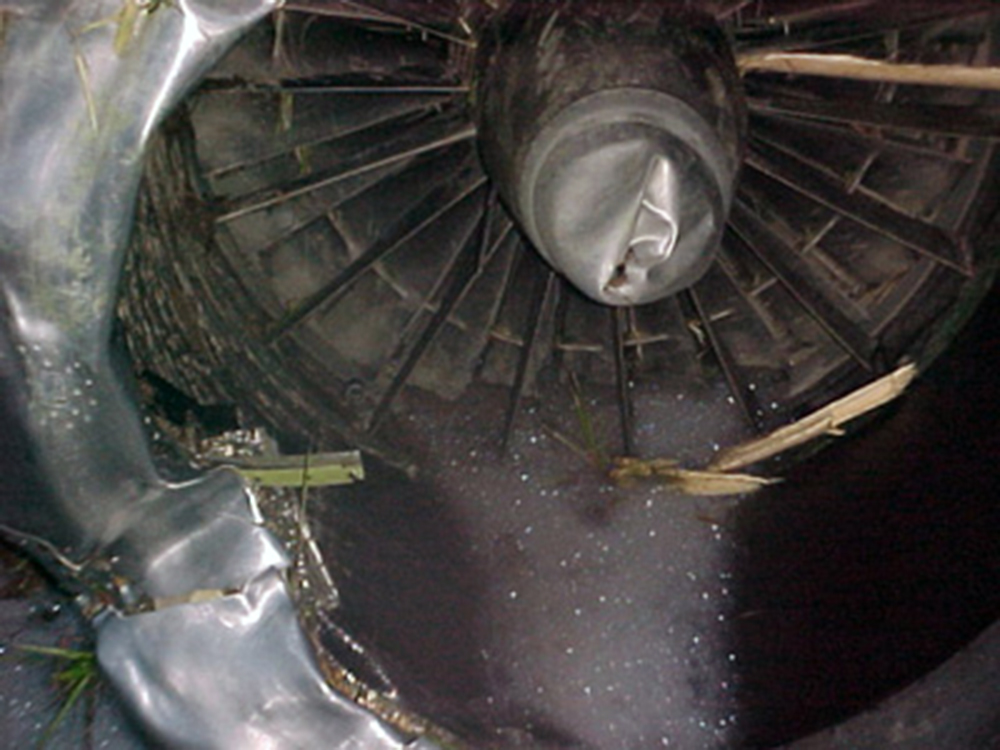
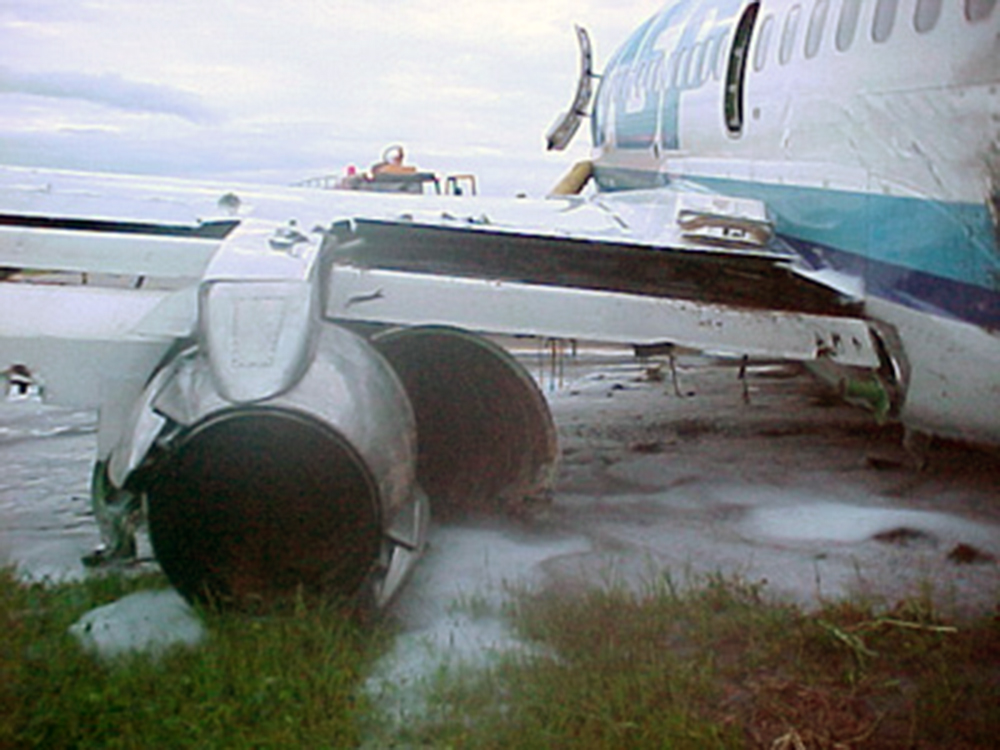
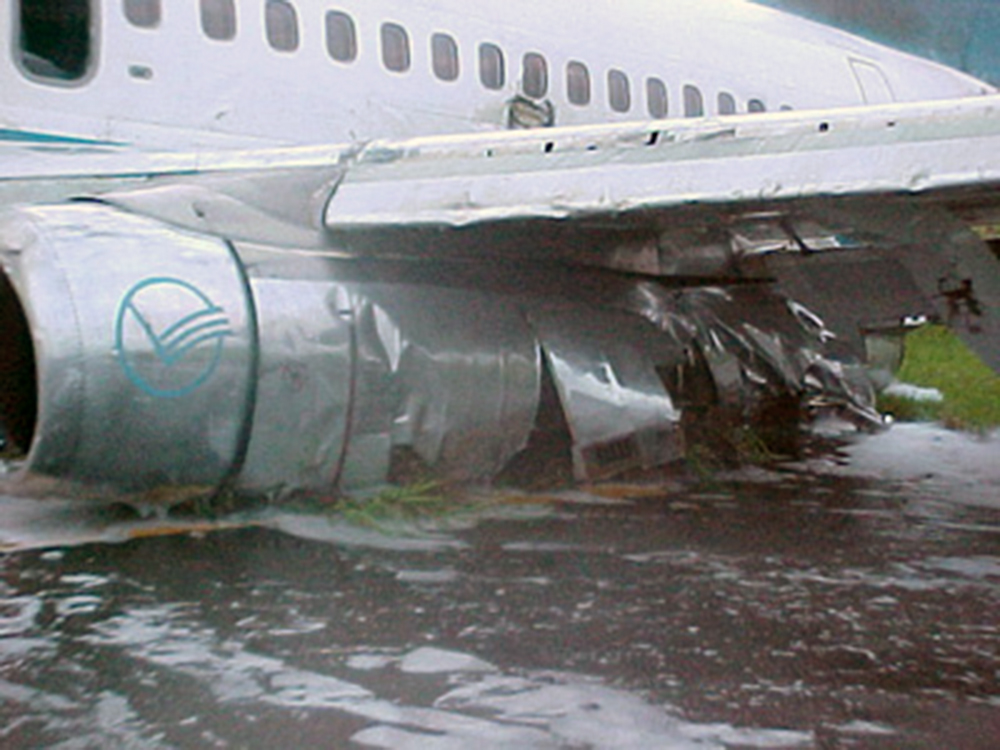
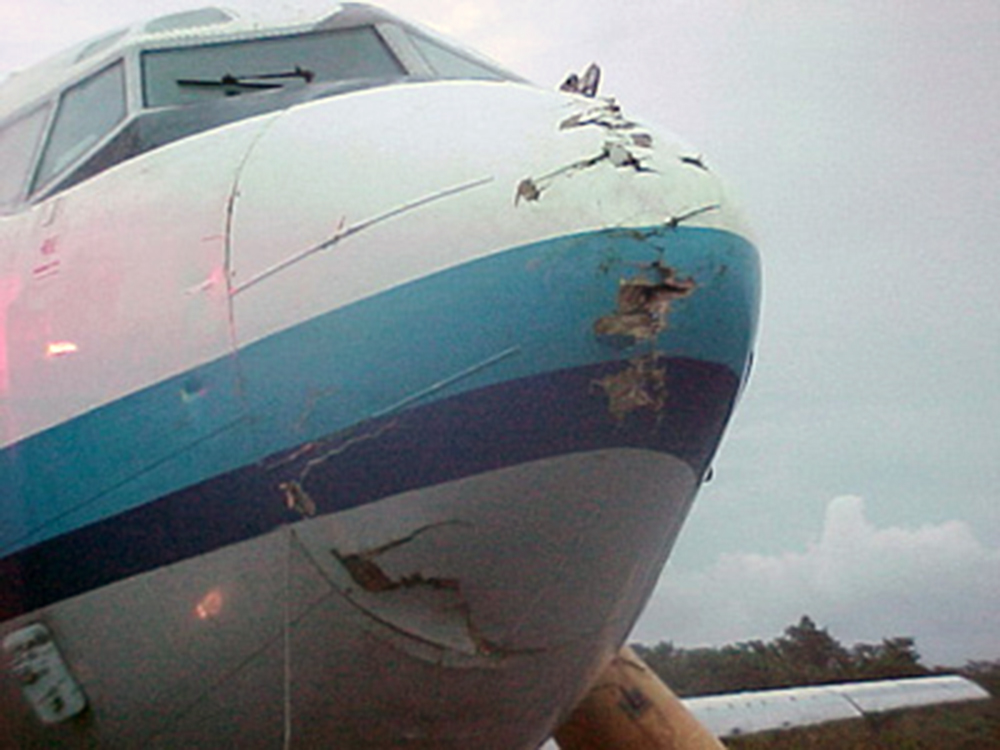
Crash of a Boeing 737-2M9 in Rio Branco

Date & Time: Jan 26, 2003 at 1415 LT
Type of aircraft:
Operator:
Registration:
PP-SPJ
Survivors:
Yes
Schedule:
Belém – Manaus – Rio Branco
MSN:
21236
YOM:
1976
Country:
Crew on board:
6
Crew fatalities:
Pax on board:
89
Pax fatalities:
Other fatalities:
Total fatalities:
0
Captain / Total flying hours:
7120
Captain / Total hours on type:
5271.00
Copilot / Total flying hours:
1348
Copilot / Total hours on type:
310
Aircraft flight hours:
54989
Circumstances:
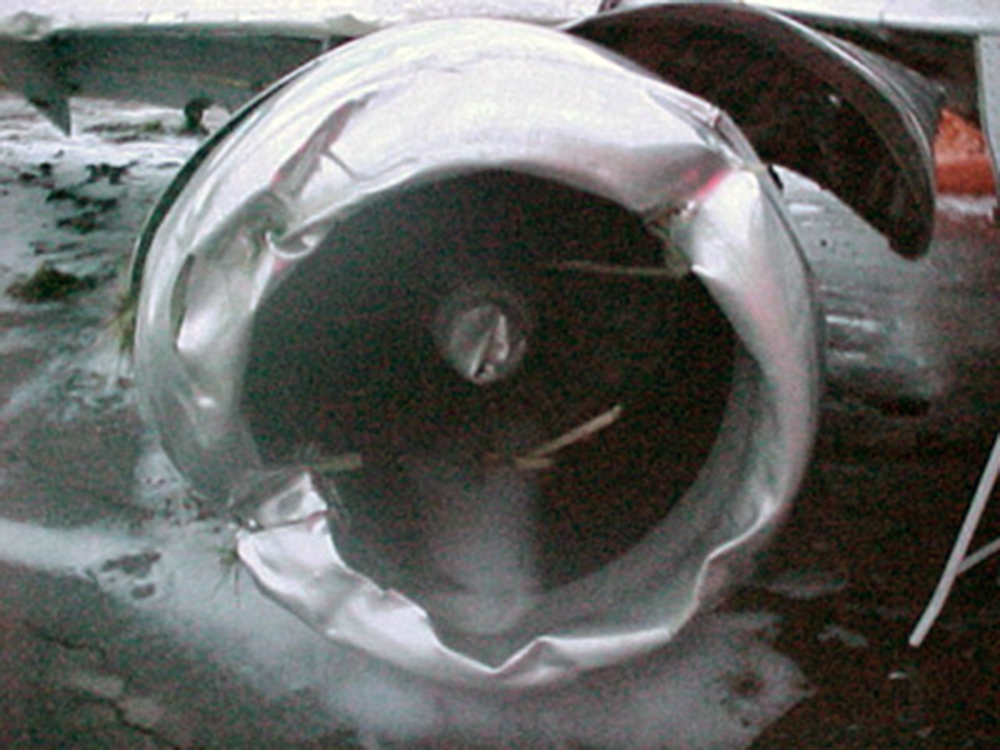
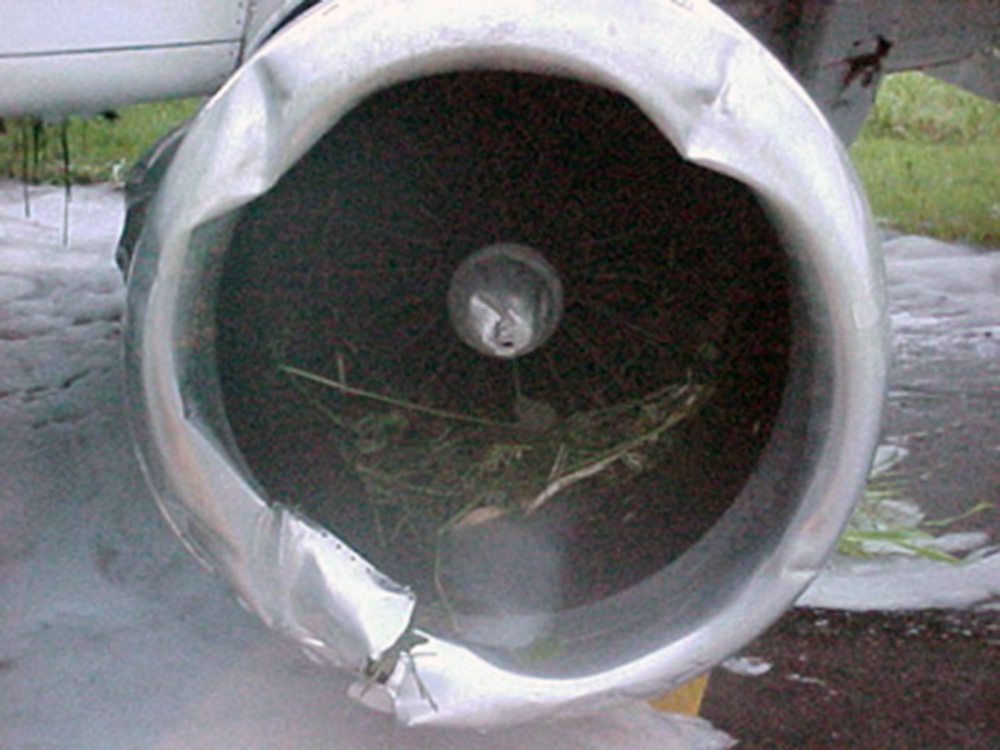
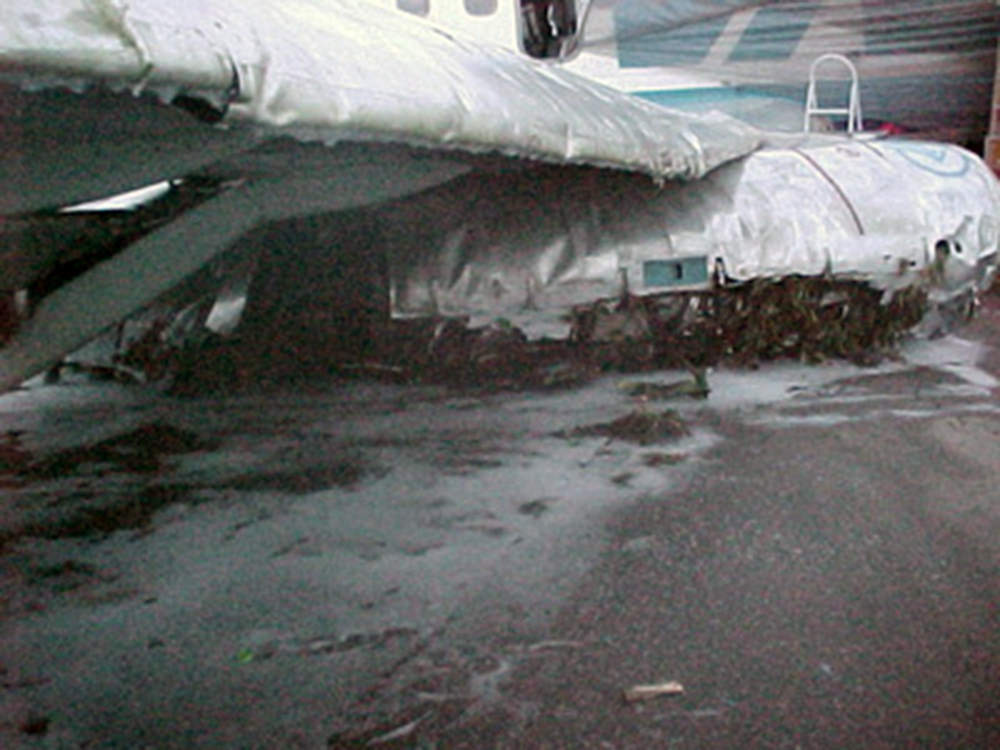
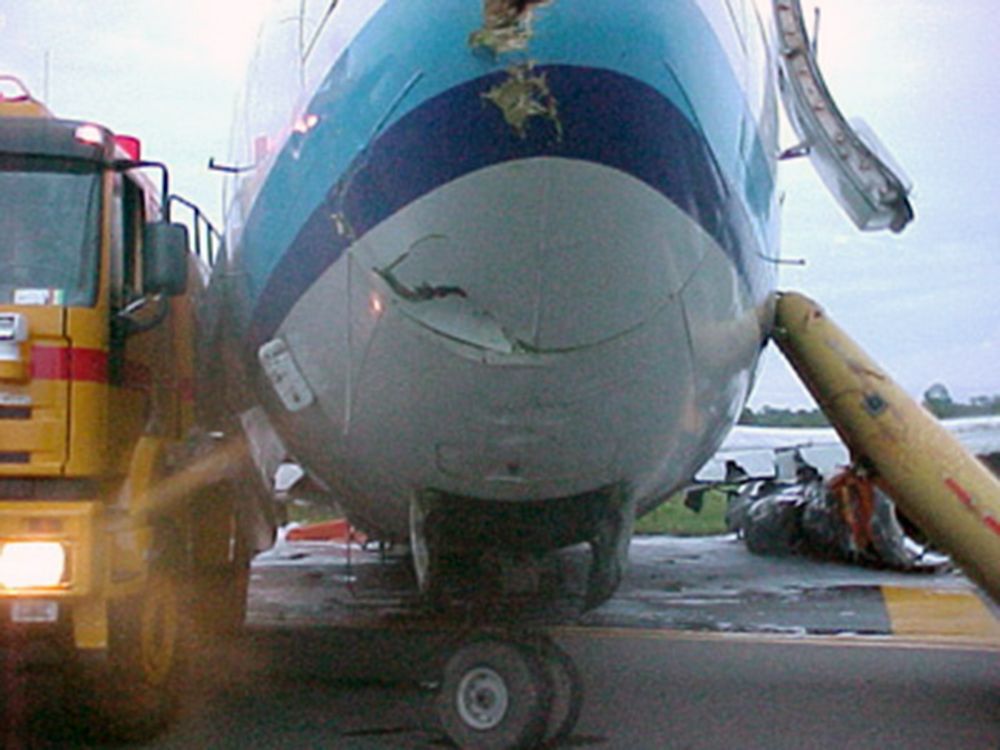
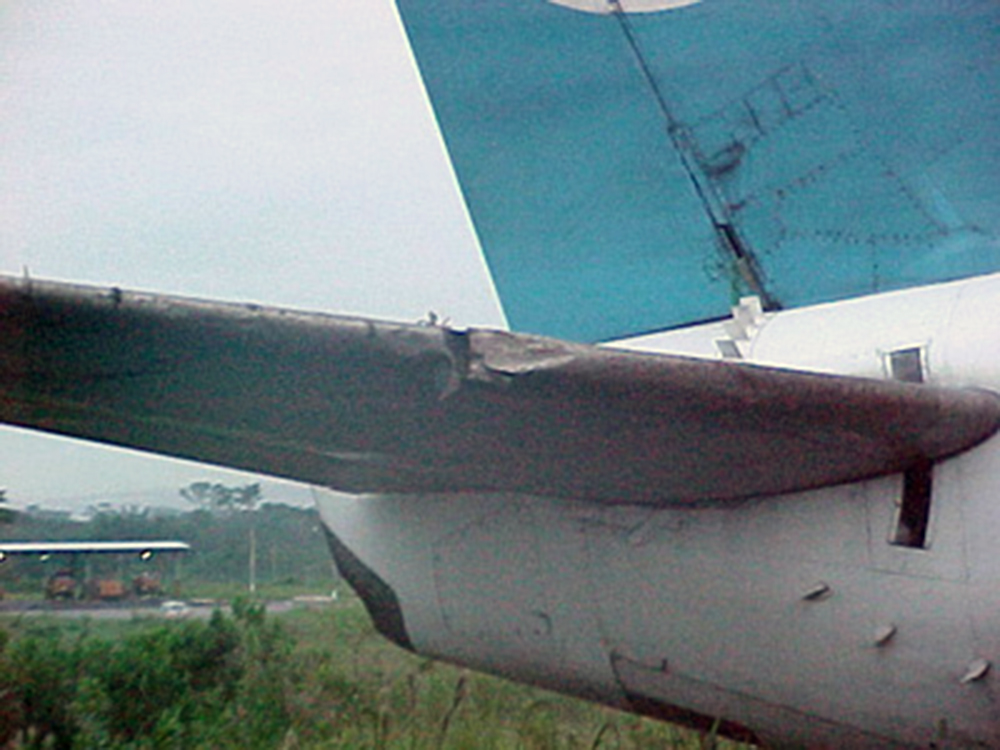
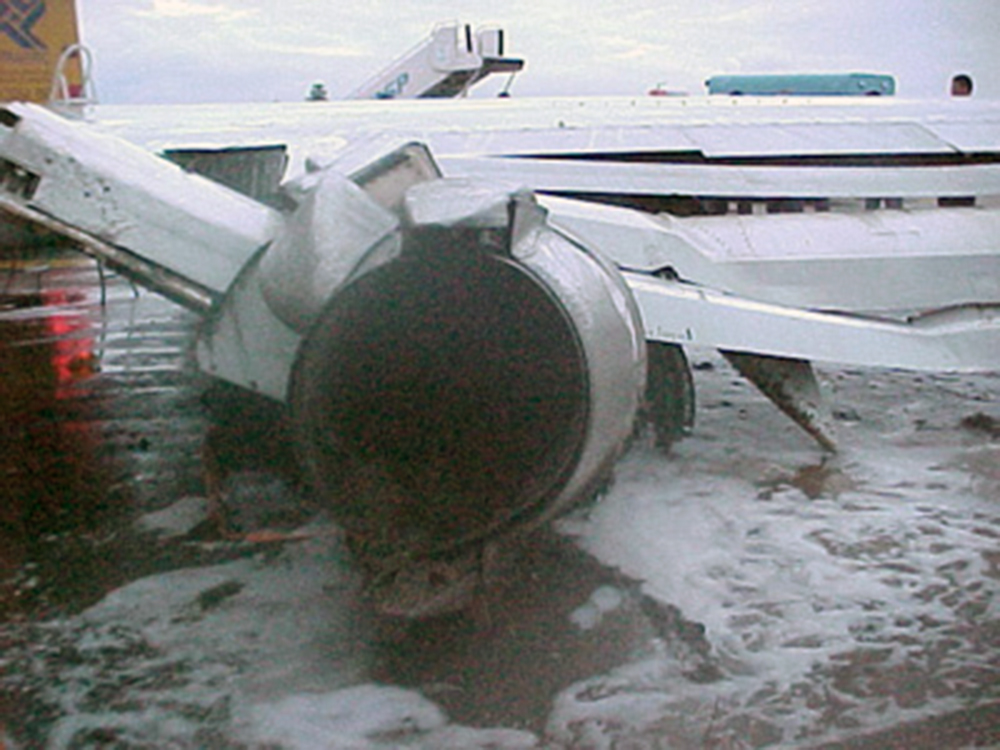
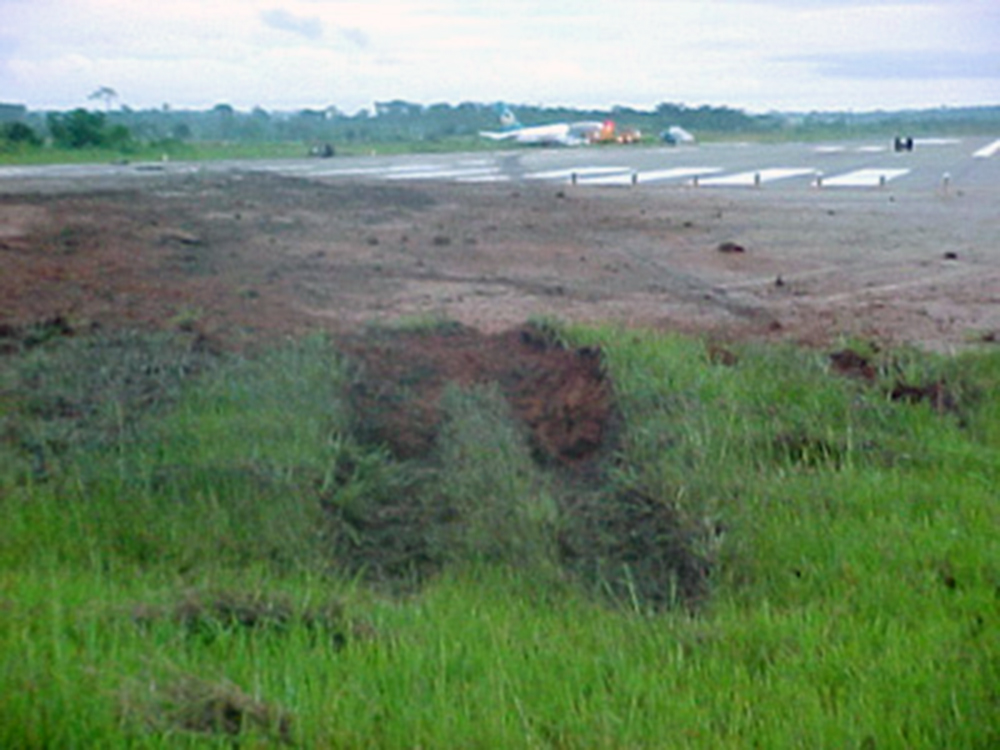
Following an uneventful flight from Manaus, the crew started the descent to Rio Branco-Presidente Médici Airport runway 06 in marginal weather conditions with limited visibility due to fog. After passing the MDA at 1,150 feet, the crew continued the approach with an excessive rate of descent of 1,222 feet per minute. At a height of 57 feet, the aircraft struck trees located 360 metres short of runway 06 threshold. The engines lost power, the aircraft lost speed and height then struck the ground about 100 metres short of runway. Upon impact, the undercarriage were torn off and the aircraft slid on a distance of 600 metres before coming to rest. All 95 occupants escaped uninjured while the aircraft was destroyed.
Probable cause:
Poor approach configuration on part of the flying crew who continued the approach after passing the MDA at 1,150 feet while the aircraft was not stabilized and the crew did not establish a visual contact with the obstacles on short final. The following contributing factors were identified:
- Following the first impact with trees, branches and pieces of wood entered the engines, causing a loss of power followed by a loss of speed and altitude,
- Complacency on the part of the crew,
- Pressure and stress,
- Visual perception issues,
- Violation of the standard operating procedures,
- Loss of situational awareness,
- Lack of crew resources management,
- Poor approach and landing planning,
- Poor weather conditions,
- Relative low experience of the copilot.
Final Report:

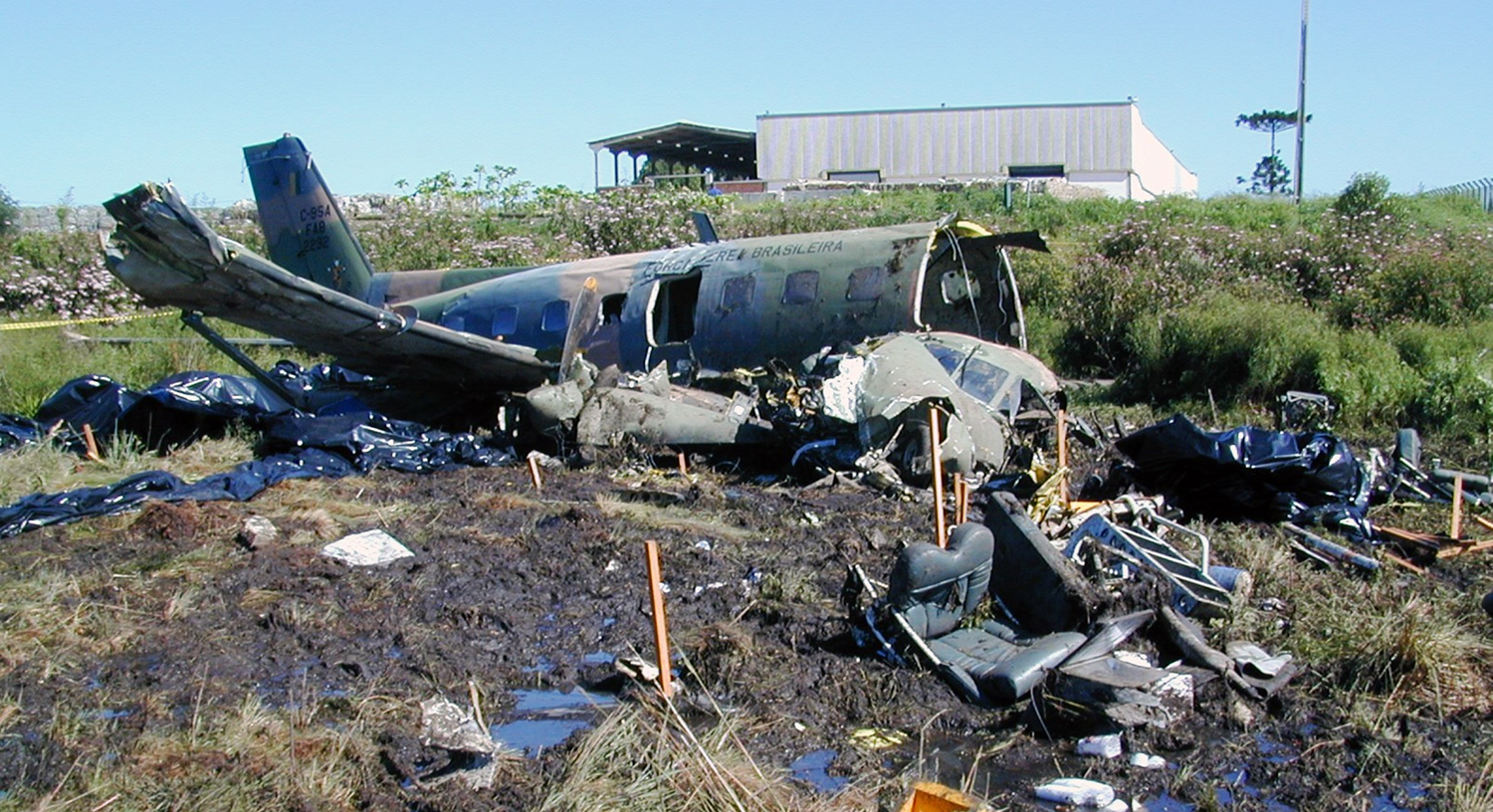
Crash of an Embraer C-95A Bandeirante in Curitiba: 3 killed

Date & Time: Dec 26, 2002 at 1120 LT
Type of aircraft:
Operator:
Registration:
2292
Flight Type:
Survivors:
Yes
Schedule:
São Paulo – Florianópolis – Porto Alegre
MSN:
110-174
YOM:
1978
Country:
Crew on board:
3
Crew fatalities:
Pax on board:
13
Pax fatalities:
Other fatalities:
Total fatalities:
3
Circumstances:
The twin engine aircraft departed Campo de Marte AFB near São Paulo on a flight to Porto Alegre with an intermediate stop in Florianópolis, carrying 13 passengers and three crew members. En route to Florianópolis, while in cruising altitude, the crew encountered technical problems, declared an emergency and was cleared to divert to Curitiba-Afonso Pena Airport. On final approach to runway 33, the aircraft stalled and crashed in a grassy area located 3,600 metres short of runway. Two passengers and one pilot were killed while 13 other occupants were injured.
Probable cause:
Double engine failure caused by a fuel exhaustion. It was determined that the crew did not prepare the flight according to procedures and took off with an insufficient fuel quantity on board.

Crash of a Cessna 500 Citation I in Marília

Date & Time: Dec 1, 2002 at 2310 LT
Type of aircraft:
Registration:
PT-LIY
Survivors:
Yes
Schedule:
Goiânia – Marília
MSN:
500-0219
YOM:
1975
Country:
Crew on board:
2
Crew fatalities:
Pax on board:
5
Pax fatalities:
Other fatalities:
Total fatalities:
0
Captain / Total flying hours:
2200
Captain / Total hours on type:
1200.00
Copilot / Total flying hours:
1300
Copilot / Total hours on type:
200
Circumstances:
Following an uneventful flight from Goiânia-Santa Genoveva Airport, the crew started the descent to Marília Airport by night. Poor weather conditions at destination forced the crew to make a direct approach to runway 03. After landing, the aircraft was unable to stop within the remaining distance, overran, lost its undercarriage and came to rest in bushes 143 metres past the runway end. All seven occupants were rescued, among them four were injured. The aircraft was damaged beyond repair.
Probable cause:
Poor approach configuration on part of the crew who landed the aircraft 750 metres past the runway threshold, reducing the landing distance available. The following contributing factors were identified:
- The crew completed an unstabilized approach,
- Poor approach planning,
- Limited visibility due to the night and poor weather conditions,
- The braking action was low because the runway surface was wet,
- The crew failed to initiate a go-around procedure.
Final Report:
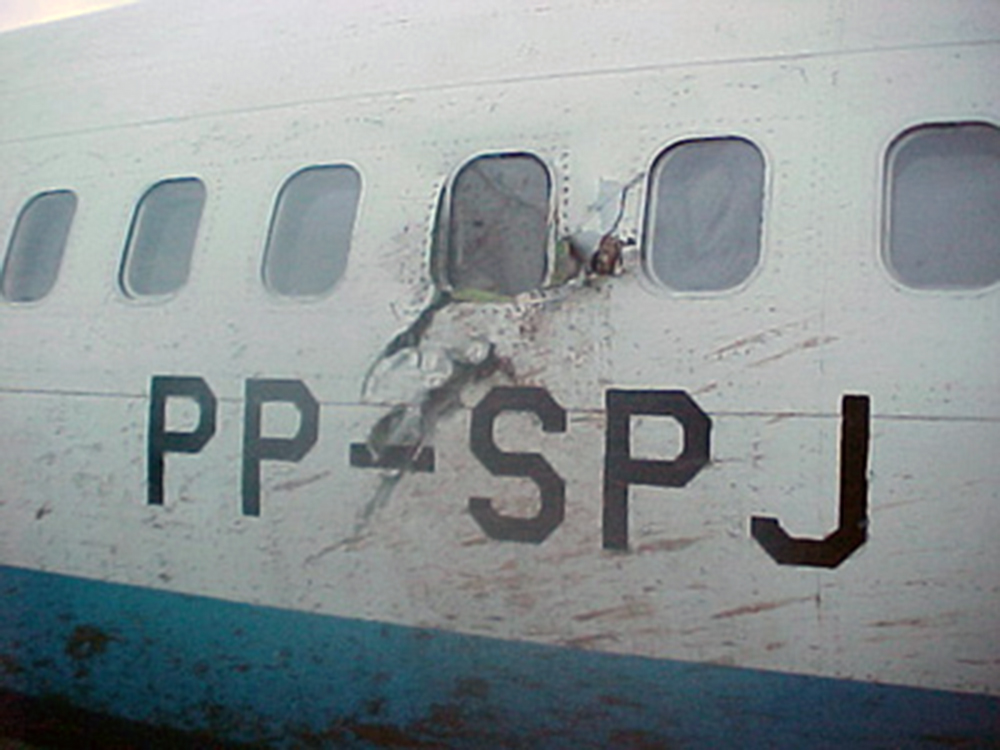
Crash of a Learjet 60 in Santa Cruz do Sul: 1 killed

Date & Time: Oct 7, 2002 at 0910 LT
Type of aircraft:
Operator:
Registration:
N5027Q
Survivors:
Yes
Schedule:
Marília – Santa Cruz do Sul
MSN:
60-242
YOM:
2002
Country:
Crew on board:
3
Crew fatalities:
Pax on board:
2
Pax fatalities:
Other fatalities:
Total fatalities:
1
Captain / Total flying hours:
3694
Captain / Total hours on type:
535.00
Copilot / Total flying hours:
1687
Circumstances:
The approach to Santa Cruz do Sul Airport was completed in poor weather conditions with rain falls. After touchdown on runway 26, the aircraft was unable to stop within the remaining distance. It overran and eventually collided with an embankment located 50 metres further and came to rest. The captain was seriously injured and the copilot was killed, all three other occupants escaped with minor injuries. The aircraft was destroyed. Runway 26 at Santa Cruz do Sul is 4,000 feet and it was determined that the aircraft landed some 400 metres past the runway threshold at an excessive speed.
Probable cause:
The following findings were identified:
- The visibility was reduced by rain falls,
- The runway surface was wet,
- The braking action was poor,
- The crew landed the aircraft too far down the runway, about 400 metres past the runway threshold, reducing the landing distance available,
- The aircraft's speed at touchdown was excessive,
- The copilot was inexperienced and did not have any training of qualification on such type of aircraft,
- Lack of crew coordination,
- Poor crew resources management,
- Uncomplete approach briefing.
Final Report:
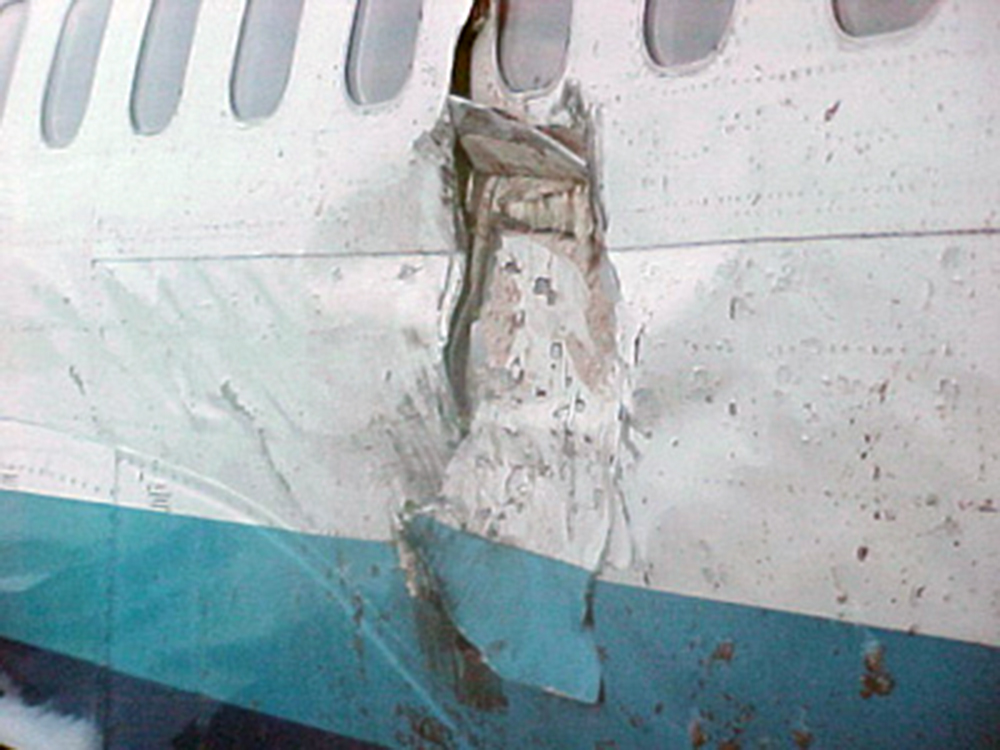
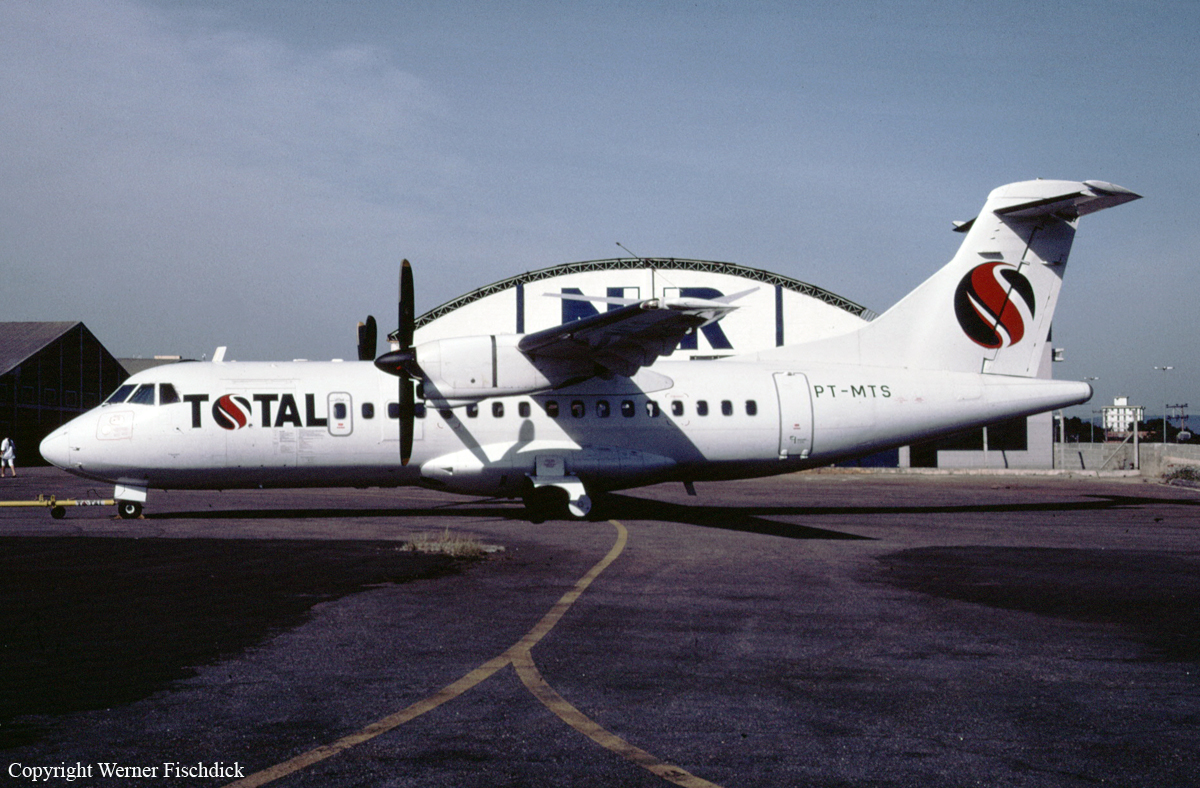
Crash of an ATR42-312 near Paranapanema: 2 killed

Date & Time: Sep 14, 2002 at 0540 LT
Type of aircraft:
Operator:
Registration:
PT-MTS
Flight Phase:
Flight Type:
Survivors:
No
Schedule:
São Paulo – Londrina
MSN:
026
YOM:
1986
Flight number:
TTL5561
Country:
Crew on board:
2
Crew fatalities:
Pax on board:
0
Pax fatalities:
Other fatalities:
Total fatalities:
2
Captain / Total flying hours:
6627
Captain / Total hours on type:
3465.00
Copilot / Total flying hours:
2758
Copilot / Total hours on type:
1258
Aircraft flight hours:
33371
Aircraft flight cycles:
22922
Circumstances:
The twin engine airplane departed São Paulo-Guarulhos Airport at 0440LT on a postal service (flight TTL5561) to Londrina with two pilots on board. About an hour into the flight, while cruising at an altitude of 18,000 feet, the autopilot disconnected while the crew was encountering technical problems with the elevator trim system. The captain asked the copilot to pull out the circuit breaker but this instruction was not understood immediately. Nevertheless, the copilot executed this request few seconds later. Shortly later, the aircraft nosed down and the Vmo alarm sounded, indicating to the crew that the aircraft's speed was above the maximum operating speed. The crew reduced the engine power to 10% but the aircraft entered an uncontrolled descent and crashed at a speed of 366 knots in an open field located 38 km south of Paranapanema. The aircraft was totally destroyed upon impact and both pilots were killed. Some debris were found at a depth of three metres.
Probable cause:
The following findings were identified:
- The pilots' perception about the situation was affected by lack of specific training and procedures, which, coupled with the limited time available for action and lack of clarity in communications, influenced the time elapsed for taking corrective actions.
- Communication between the crew was not clear at the time of emergency, making the co-pilot did not understand at first, the action to be performed, which increased the time spent to disarm the CB. Such facts, however, can not be separated from the situation experienced by pilots with inadequate training for emergency and in a short time to identify the problem and take the corrective actions.
- The company had not provided a regular CRM training to pilots. Furthermore, the captain did not receive simulator training for over one year. It was impossible to determine, however, if the regular training and updating of the CRM simulator training of the pilot would have prevented the accident.
- The removal of the pilot from his seat at the time of the emergency may have increased the time spent in identifying the crash and taking corrective actions, but it was not possible to establish whether the accident would be avoided if he would have been in the cockpit. The copilot was slow to understand the situation and initiate corrective actions, although the alarm 'whooler' has sounded, also increasing the elapsed time.
- The operational testing under J IC 27-32-00 allowed the partial completion of the procedures due to lack of clarity, which allowed the release of the aircraft for flight with a defective relay.
Furthermore, although the elevator trim system has been certified, no procedure for emergency triggering of the compensator in the manuals provided by the manufacturer, no replacement intervals of the components of the elevator trim system in "Time Limits" systems normal and reserves were not independent and the system had a low tolerance for errors.
Final Report:
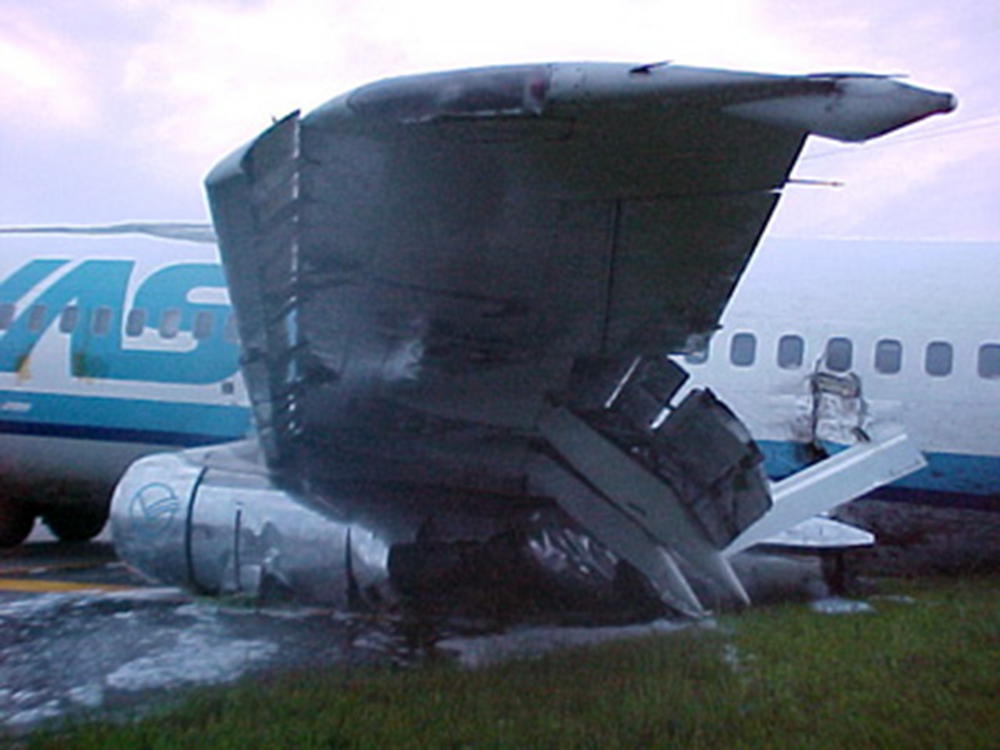
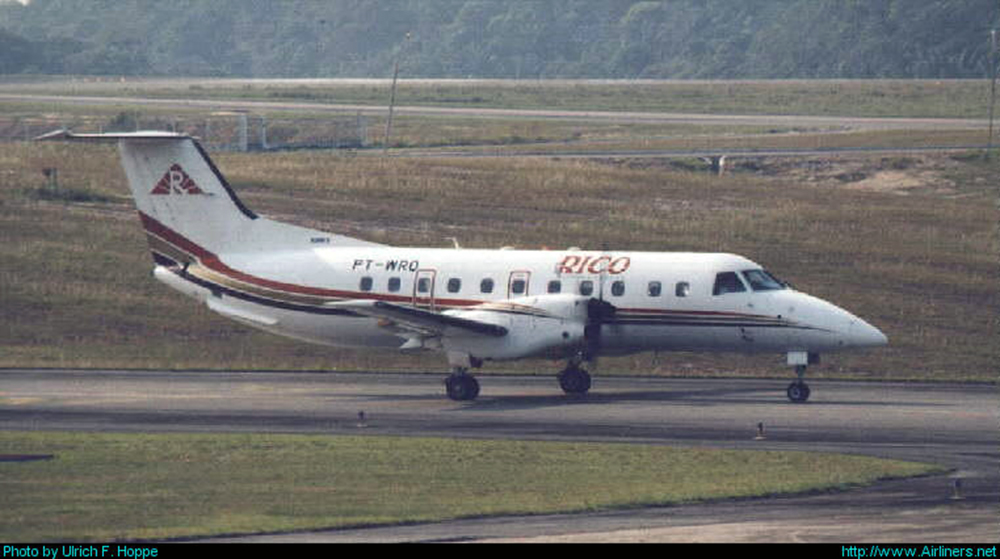
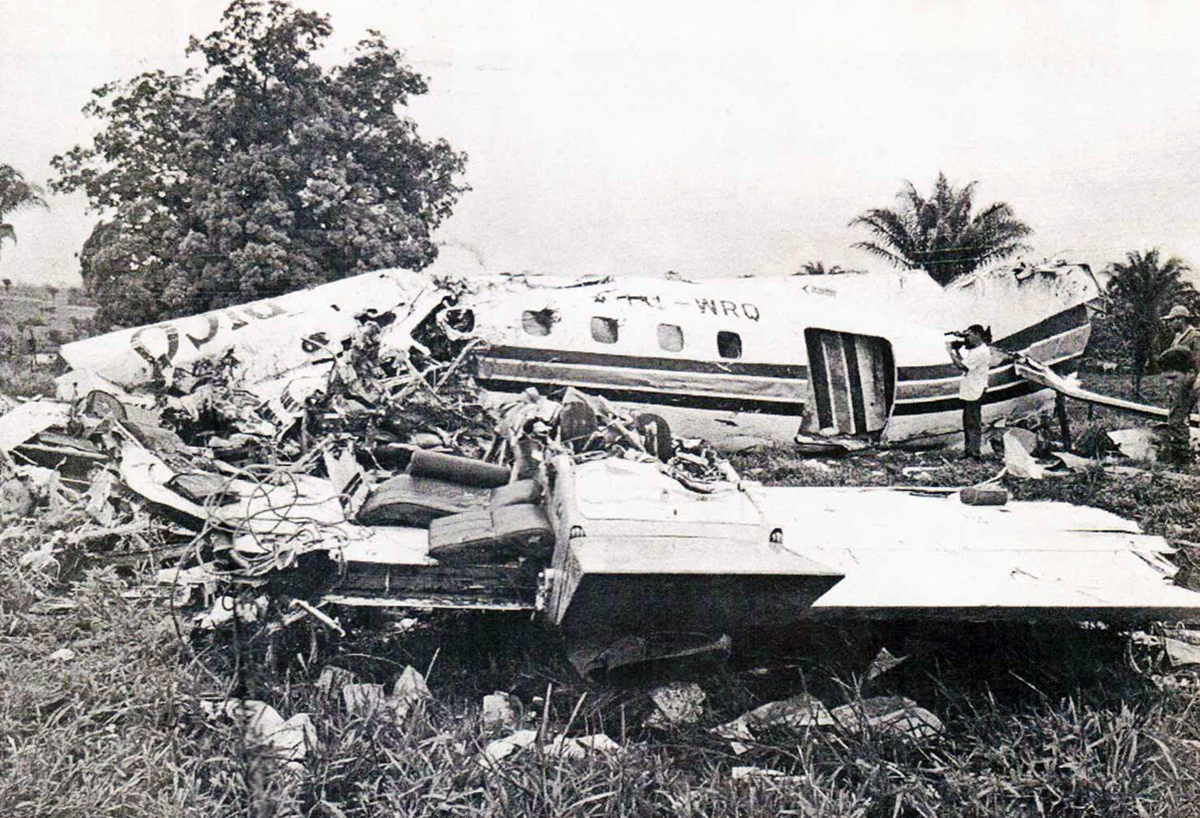
Crash of an Embraer EMB-120ER Brasília in Rio Branco: 23 killed

Date & Time: Aug 30, 2002 at 1800 LT
Type of aircraft:
Operator:
Registration:
PT-WRQ
Survivors:
Yes
Schedule:
Cruzeiro do Sul – Tarauacá – Rio Branco
MSN:
120-043
YOM:
1987
Flight number:
RLE4823
Country:
Crew on board:
3
Crew fatalities:
Pax on board:
28
Pax fatalities:
Other fatalities:
Total fatalities:
23
Captain / Total flying hours:
9315
Captain / Total hours on type:
4560.00
Copilot / Total flying hours:
4242
Copilot / Total hours on type:
3585
Circumstances:
Following an uneventful flight from Tarauacá, the crew started the descent to Rio Branco-Presidente Médici Airport in limited visibility due to the night and rain falls. On final, the aircraft descended below the MDA and, at a speed of 130 knots, struck the ground and crashed in a field located 4 km short of runway 06. The aircraft was totally destroyed. Eight passengers were rescued while 23 other occupants were killed, among them the Brazilian politician Ildefonço Cardeiro.
Probable cause:
The exact cause of the accident could not be determined with certainty. However, it is believed that the accident was the consequence of a controlled flight into terrain after the crew continued the approach in poor weather conditions and descended below the MDA until the aircraft, in a flaps and gear down configuration, impacted ground. The following contributing factors were identified:
- A difference of 70 feet in the settings was noted between both pilot's altimeters,
- Poor crew coordination,
- Complacency on part of the flying crew caused several deviations from procedures during the approach,
- Lack of crew resources management,
- The crew failed to check the altitude during the final stage of the approach,
- Poor weather conditions.
Final Report: