Crash of a Vickers 832 Viscount near Winton: 24 killed

Date & Time: Sep 22, 1966 at 1303 LT
Type of aircraft:
Operator:
Registration:
VH-RMI
Flight Phase:
Survivors:
No
Schedule:
Mount Isa – Longreach – Brisbane
MSN:
416
YOM:
1959
Flight number:
AN149
Country:
Region:
Crew on board:
4
Crew fatalities:
Pax on board:
20
Pax fatalities:
Other fatalities:
Total fatalities:
24
Captain / Total flying hours:
14288
Captain / Total hours on type:
10003.00
Copilot / Total flying hours:
2803
Copilot / Total hours on type:
249
Aircraft flight hours:
18634
Aircraft flight cycles:
6586
Circumstances:
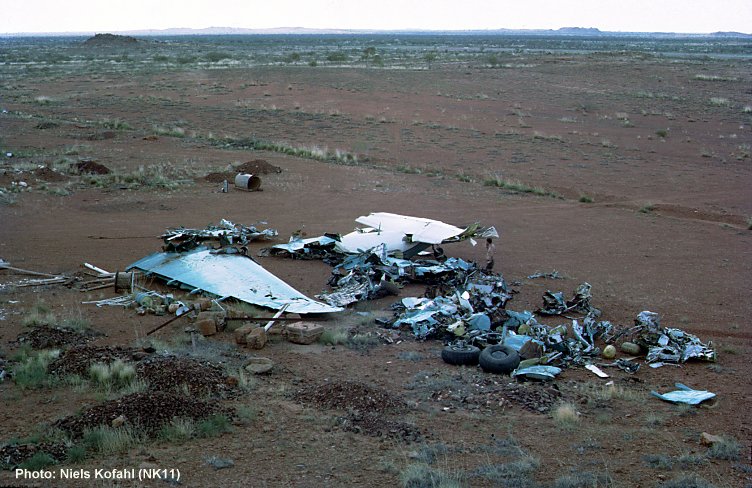
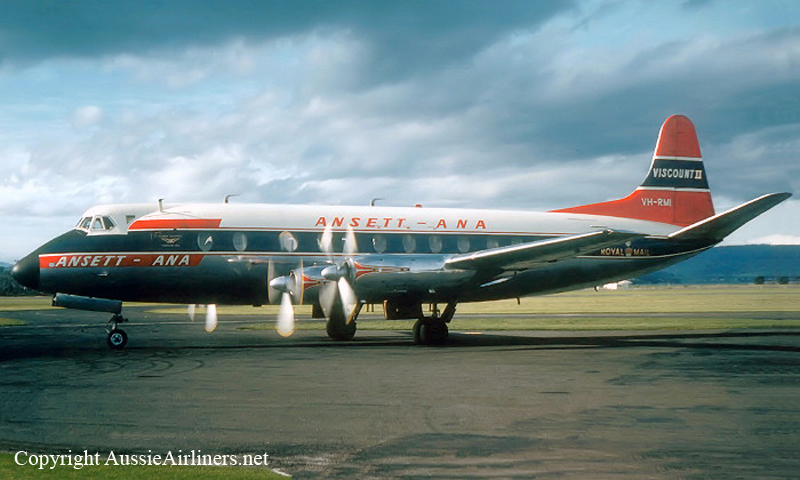
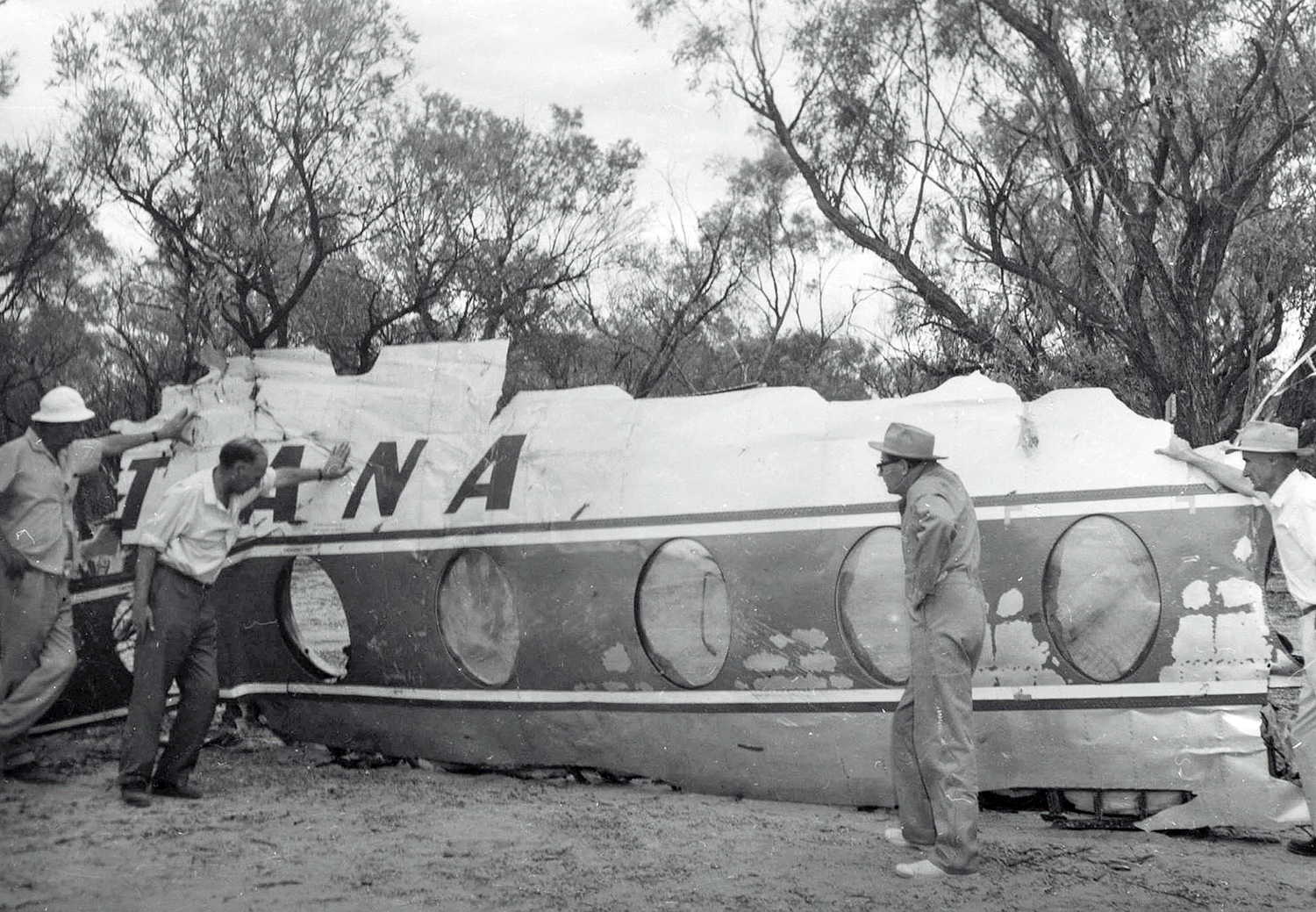
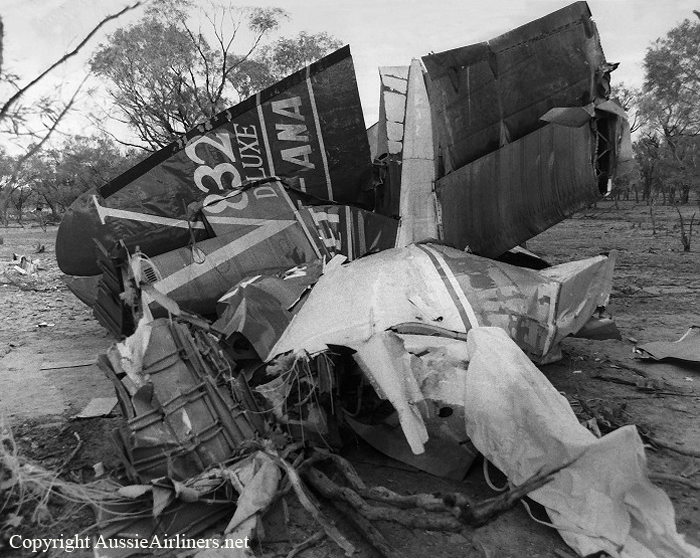
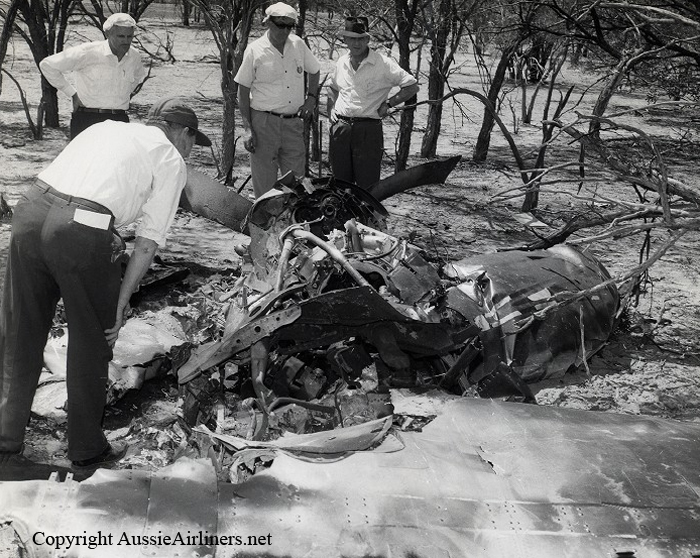
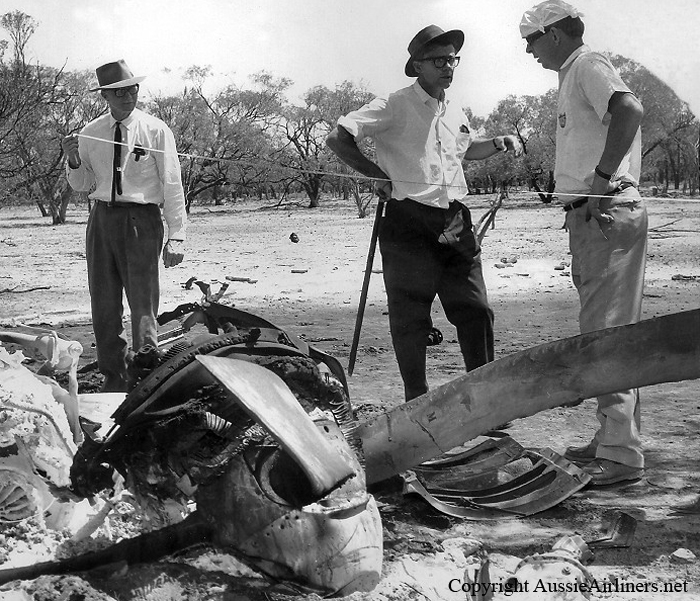
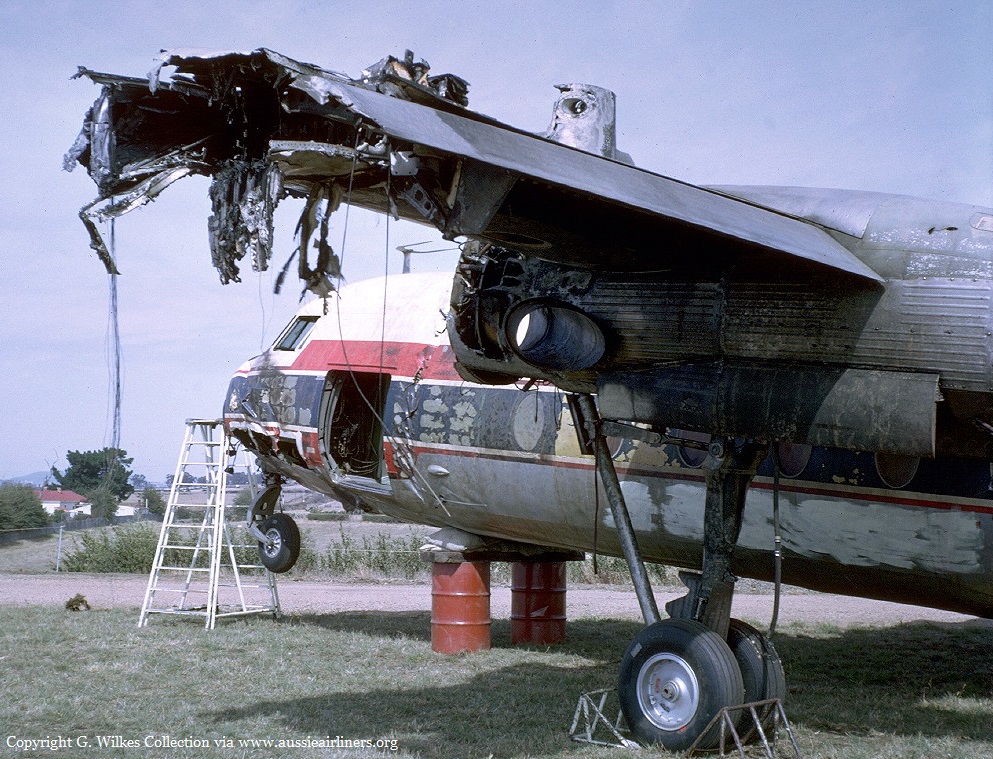
On 22 September 1966, the Viscount 832 aircraft registered VH-RMI, was engaged on a regular public transport service, designated Flight 149, from Mt. Isa to Longreach in Queensland, Australia, with a crew of four and twenty passengers on board. The flight departed from Mt. Isa at 1208 hours Australian Eastern Standard Time climbing to Flight Level 175 with an expected time interval of 73 minutes to Longreach. The flight progressed, apparently uneventfully, until 1252 hours when the Longreach Flight Service Unit heard the crew of VH-RMI say that it was on an emergency descent and to stand by. Two minutes later the aircraft advised that there were fire warnings in respect of Nos. 1 and 2 engines, that one of these warning conditions had ceased and that the propeller of the other engine could not be feathered. At 1259 hours information from the crew of VH-RMI, relayed to Longreach through the crew of another aircraft in the vicinity, indicated that there was a visible fire in No. 2 engine and that the aircraft was diverting below 5 000 ft to Winton. The town of Winton is located some 20 miles to port of the planned track and is 90 miles short of Longreach. No further communications were received from the aircraft but at 1303 hours a number of people located in the Winton area saw black smoke in the air west of the town, and it was subsequently established that this was associated with VH-RMI which had crashed in light timber on level ground some 131 miles short of the Winton aerodrome. The aircraft disintegrated on impact and all 24 occupants have been killed.
Probable cause:
The probable cause of the accident was that the means of securing the oil metering unit to the No. 2 cabin blower became ineffective and this led to the initiation of a fire within the blower, which propagated to the w$ng fuel tank and substantially reduced the strength of the main spar upper boom. It is probable that the separation of the oil metering unit arose from an out-of-balance condition induced by rotor break-up but the source of the rotor break-up could not be determined.
The following findings were reported:
- The crash of the aircraft followed the failure in an upward direction of the port wing between No. 1 and No. 2 engines at approximately 1302:30 hours Eastern Standard Time when the aircraft was at a height of 3 500 ft to 4 000 ft above ground level,
- The port wing failed as a result of a weakening of the main spar due to a fire in No. 2 cell of No. 2 fuel tank,
- The fire originated in the No. 2 cabin blower and travelled through the rear of No. 2 engine nacelle and port wheel bay to the fuel tank,
- The fire in No. 2 cabin blower was initiated as a result of a rotor break-up, the blower subsequently being driven in an out-of-balance condition by the quill shaft long enough for the metering unit to become separated from the rear end cover by the resulting vibration,
- The metering unit continued to be driven after separation and lubricating oil continued to be supplied. The driven rotor lost its rear stub shaft radial location and caused metal-to-metal contact which generated a temperature sufficiently high to ignite the oil in that area,
- It is not possible on the evidence to determine what was the cause of the rotor break-up.
Final Report:


Crash of a De Havilland Australia DHA-3 Drover 3 in Thargomindah

Date & Time: Jan 5, 1966
Operator:
Registration:
VH-FDR
Flight Phase:
Flight Type:
Survivors:
Yes
MSN:
5006
YOM:
1951
Country:
Region:
Crew on board:
1
Crew fatalities:
Pax on board:
2
Pax fatalities:
Other fatalities:
Total fatalities:
0
Circumstances:
Take off was abandoned when, in moderate quartering wind, the pilot was unable to maintain directional control. The aircraft moved sideways off the strip and both undercarriage struts were torn away after striking rocks. All three occupants escaped uninjured while the aircraft was considered as damaged beyond repair.
Probable cause:
Loss of control during takeoff due to quartering wind.

Crash of a De Havilland DH.89B Dominie in Brisbane

Date & Time: Oct 25, 1965
Operator:
Registration:
VH-BIF
Flight Phase:
Flight Type:
Survivors:
Yes
Schedule:
Brisbane - Brisbane
MSN:
6903
YOM:
1945
Country:
Region:
Crew on board:
2
Crew fatalities:
Pax on board:
0
Pax fatalities:
Other fatalities:
Total fatalities:
0
Circumstances:
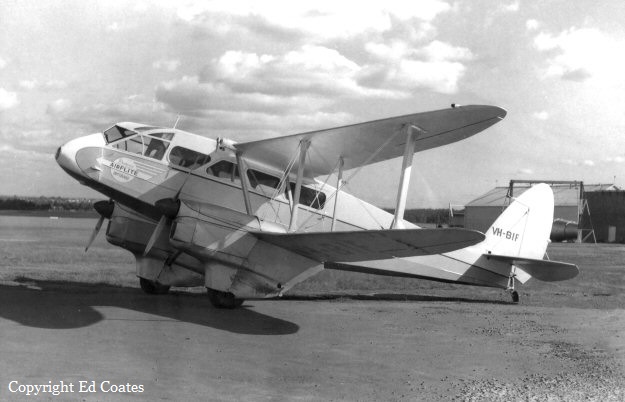
Crashed in unknown circumstances at Brisbane-Archerfield Airport while completing a local training flight with skydivers. Both occupants were uninjured while the aircraft was considered as damaged beyond repair.

Crash of a Beechcraft C18S in Cresswell Downs

Date & Time: Aug 12, 1965
Type of aircraft:
Operator:
Registration:
VH-CLG
Survivors:
Yes
MSN:
4213
YOM:
1942
Country:
Region:
Crew on board:
4
Crew fatalities:
Pax on board:
2
Pax fatalities:
Other fatalities:
Total fatalities:
0
Circumstances:
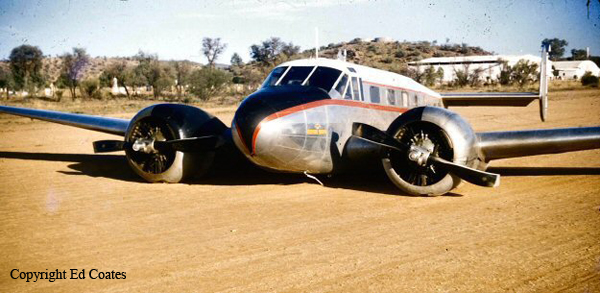
Upon landing at Cresswell Downs Airstrip, the right wheel separated from its axle and rolled away. The airplane sank on its belly and slid for several yards before coming to rest. All six occupants escaped uninjured while the airplane was damaged beyond repair. Among the passengers were two additional pilots on a positioning flight.
Probable cause:
Failure of the right wheel on landing.

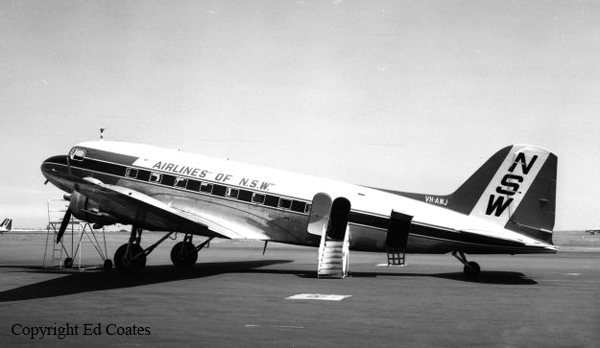
Crash of a Douglas C-47-DL in Warrnambool

Date & Time: Apr 2, 1965 at 0817 LT
Operator:
Registration:
VH-ANJ
Flight Phase:
Survivors:
Yes
Schedule:
Warrnambool – Melbourne
MSN:
9105
YOM:
1943
Flight number:
WX001
Country:
Region:
Crew on board:
3
Crew fatalities:
Pax on board:
20
Pax fatalities:
Other fatalities:
Total fatalities:
0
Captain / Total flying hours:
6181
Captain / Total hours on type:
1738.00
Copilot / Total flying hours:
1770
Copilot / Total hours on type:
1561
Circumstances:
Flight No. 1 was a scheduled domestic flight from Hamilton to Melbourne via Warrnambool, Victoria, and the aircraft landed at Warrnambool at 2159 hours GMT after an uneventful flight. After a stay on the ground of 17 minutes, during which time there were load changes, the aircraft taxied for take-off on runway 31. The pre-take-off checks did not indicate any abnormality and the aircraft proceeded to take off. After becoming airborne, but prior to undercarriage retraction, a loss of engine power occurred and the pilot- in-command deduced that the port engine had failed. He feathered the port engine and then became aware that the starboard engine was delivering only partial power, which was insufficient to sustain the aircraft in flight. A suitable area was selected immediately and a landing with wheels and flaps retracted was made in grassy paddocks on level terrain, but the aircraft passed through three fences before coming to rest. All occupants survived while the aircraft was written off.
Probable cause:
The cause of the accident was that the pilot-in-command, on becoming aware of a loss of engine power, took action to feather the propeller after adopting procedures which failed to ensure correct identification of the defective engine.
Final Report:
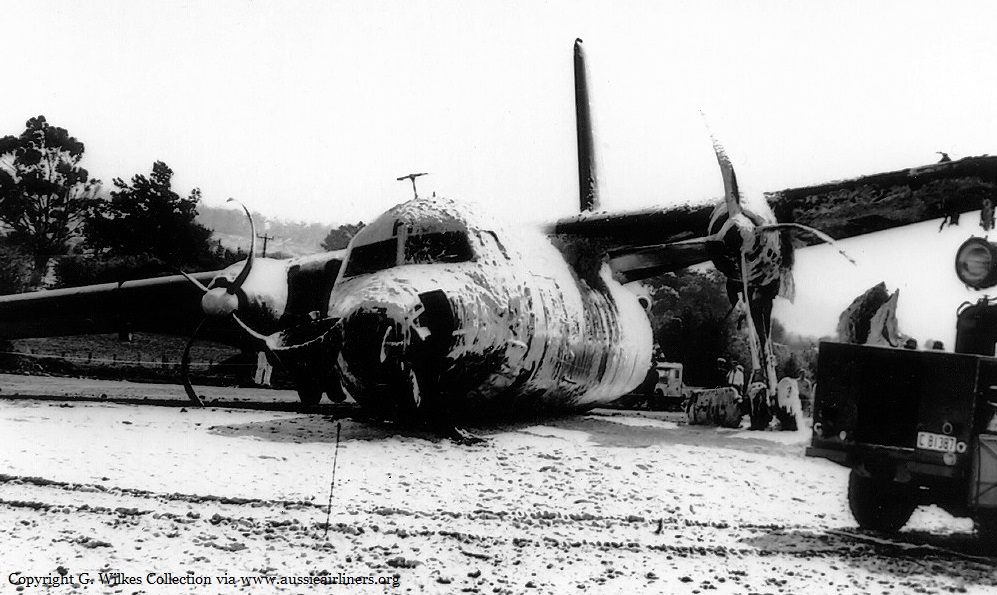
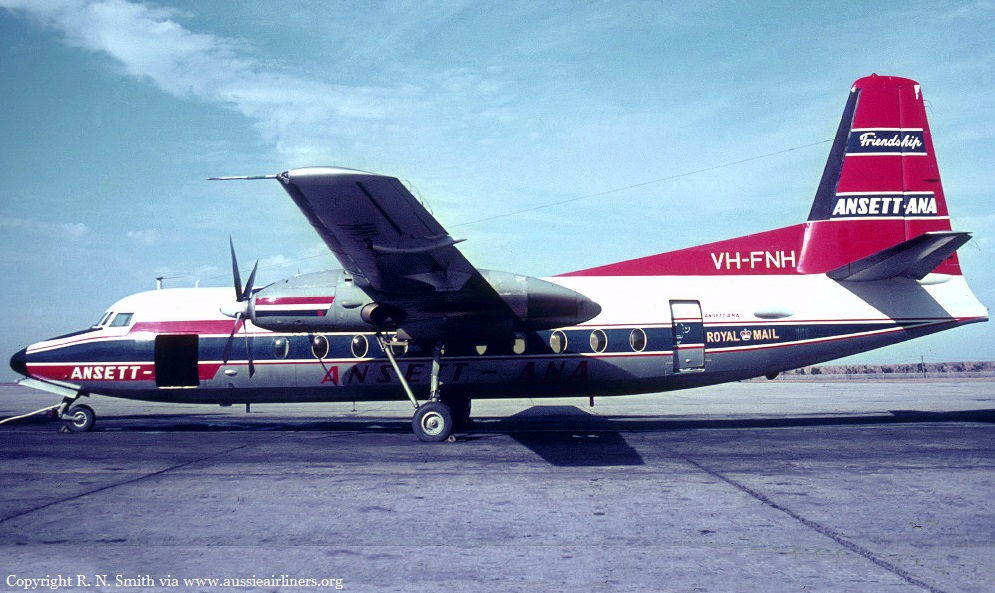
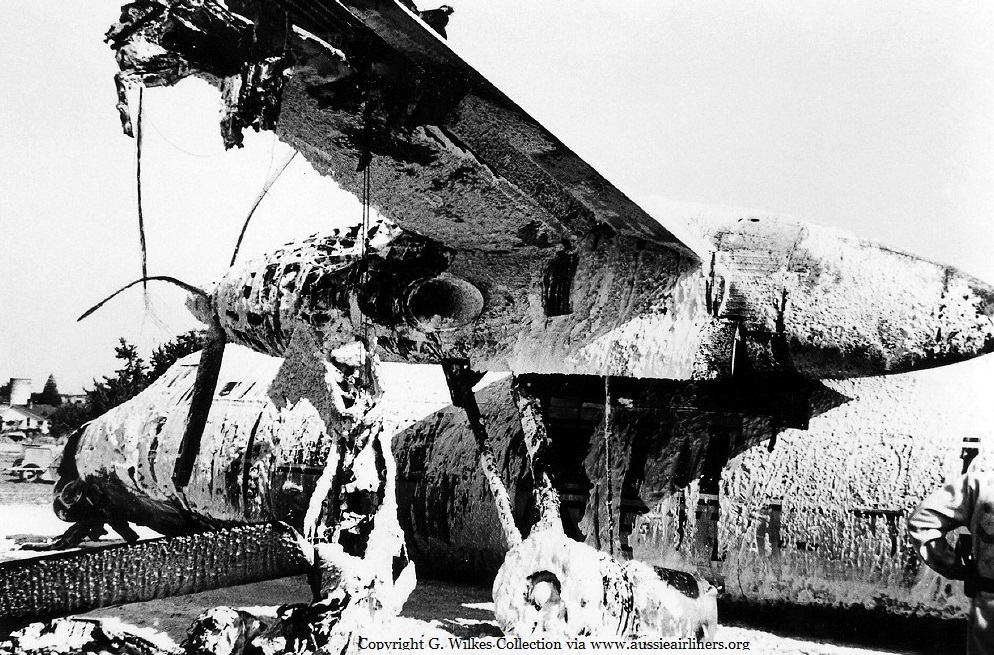
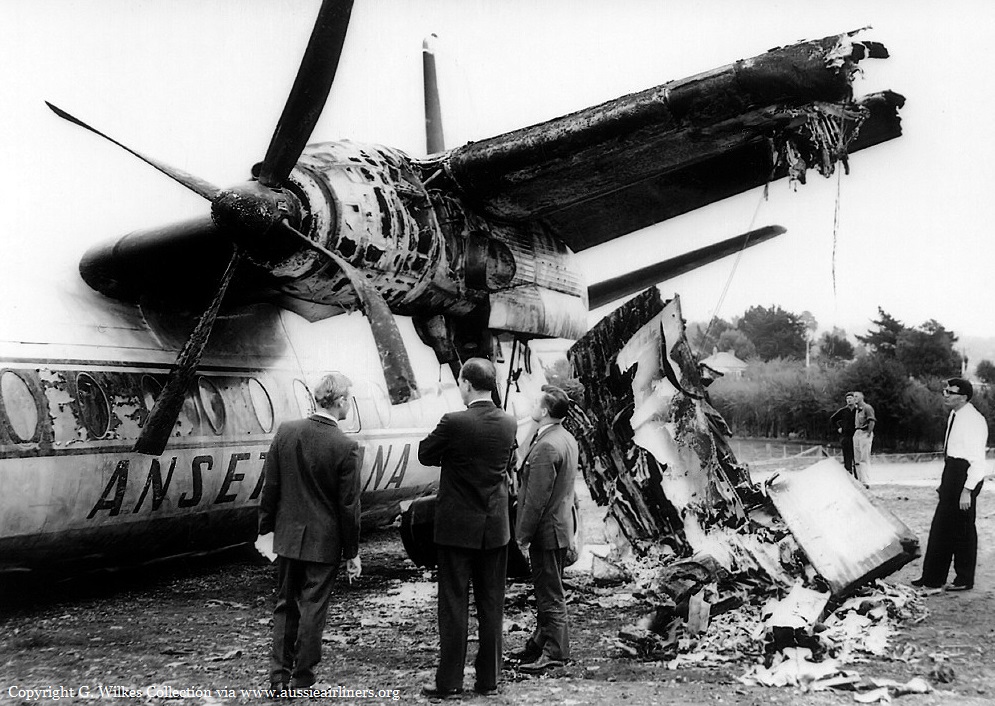
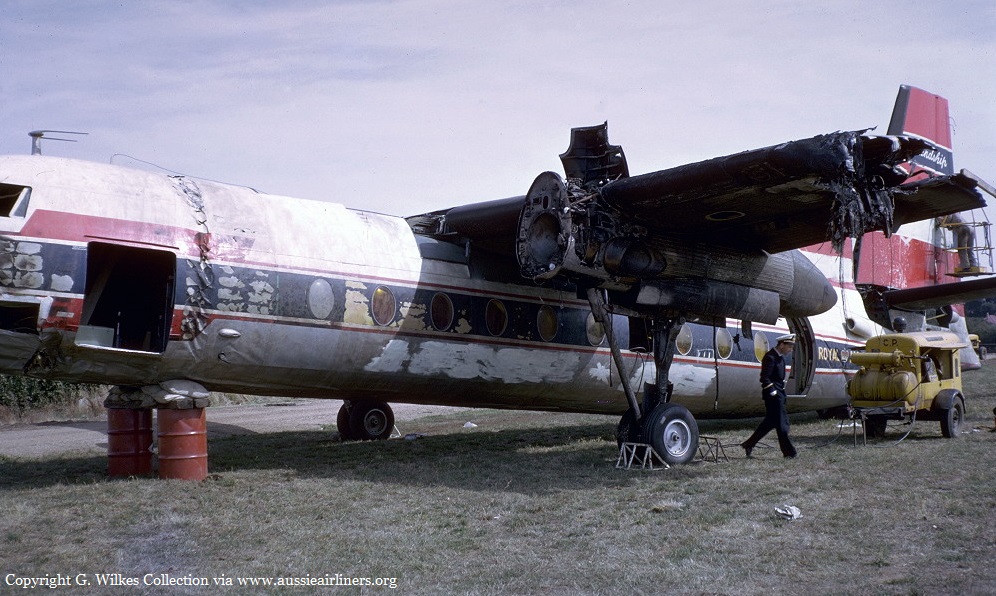
Crash of a Fokker F27 Friendship 200 in Launceston

Date & Time: Mar 17, 1965
Type of aircraft:
Operator:
Registration:
VH-FNH
Survivors:
Yes
Schedule:
Melbourne – Launceston – Hobart
MSN:
10180
YOM:
1961
Country:
Region:
Crew on board:
4
Crew fatalities:
Pax on board:
19
Pax fatalities:
Other fatalities:
Total fatalities:
0
Aircraft flight hours:
7500
Aircraft flight cycles:
8011
Circumstances:
To avoid turbulence over the mountain area near Launceston, the cruising level was maintained prior to entry into the airport circuit pattern. Just prior to turning for finals, trouble was experienced in the pitch-lock mechanism of the no. 1 prop. The prop was feathered and the approach was continued with full flaps, but without immediately increasing power on the remaining engine. The high rate of descent was not arrested during the turn, resulting in a slightly low altitude. Power was added and speed reduced to control the descent rate, but the crew were unable to maintain runway heading. An overshoot was attempted, but the speed had dropped below minimum control speed. The left wing dropped as full power was applied to the no. 2 engine. The wing struck the ground and the aircraft crashed, coming to rest 740 feet abeam the runway threshold. Fuel tanks ruptured and caused a fire, which was quickly extinguished. All 23 occupants escaped uninjured while the aircraft was destroyed.

Crash of a De Havilland DHC-2 Beaver in Aberfoyle: 1 killed

Date & Time: Jul 9, 1964
Type of aircraft:
Operator:
Registration:
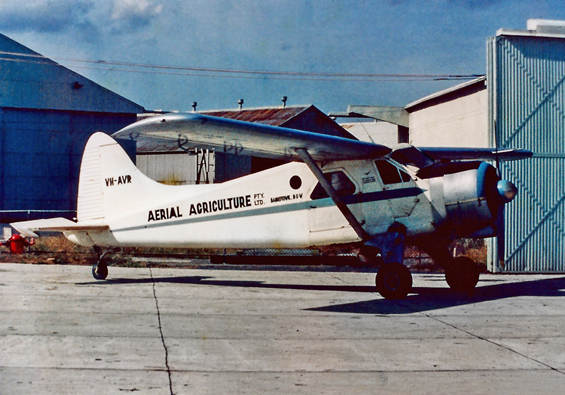
VH-AVR
Flight Phase:
Survivors:
No
Schedule:
Armidale - Armidale
MSN:
741
YOM:
1954
Country:
Region:
Crew on board:
1
Crew fatalities:
Pax on board:
0
Pax fatalities:
Other fatalities:
Total fatalities:
1
Circumstances:
The pilot was performing a spraying mission in Aberfoyle when flying at low height, the airplane went out of control, dove into the ground and crashed. The pilot was killed.
Probable cause:
Loss of control in flight because a wing broke away due to the failure of a wing strut fitting.

Crash of a De Havilland DHC-4A Caribou in Nowra

Date & Time: Jul 1, 1964
Type of aircraft:
Operator:
Registration:
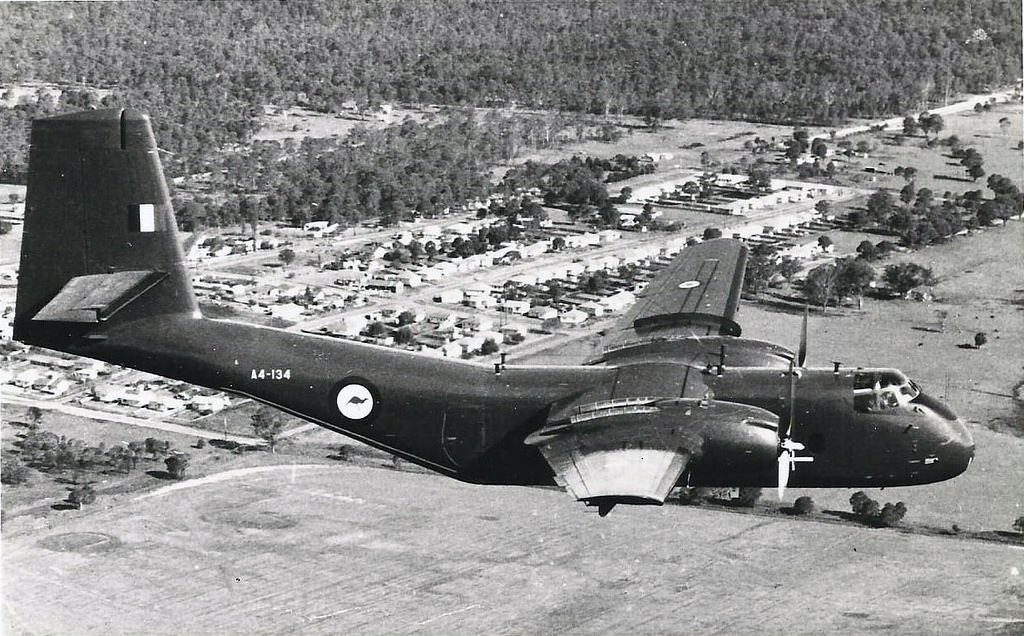
A4-134
Flight Type:
Schedule:
Nowra - Nowra
MSN:
134
YOM:
1964
Country:
Region:
Crew on board:
0
Crew fatalities:
Pax on board:
0
Pax fatalities:
Other fatalities:
Total fatalities:
0
Circumstances:
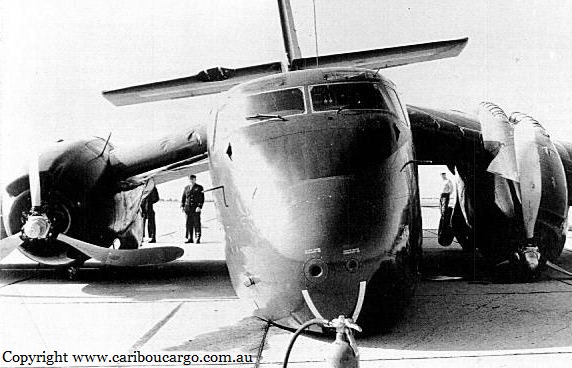
The crew was completing a local training flight at Nowra Airport. On final approach, the airplane crashed short of runway threshold and was damaged beyond repair. There were no casualties.

Crash of a De Havilland DHC-2 Beaver in Tilbuster: 1 killed

Date & Time: Sep 10, 1963
Type of aircraft:
Operator:
Registration:
VH-AAQ
Flight Phase:
Survivors:
No
MSN:
1009
YOM:
1956
Country:
Region:
Crew on board:
1
Crew fatalities:
Pax on board:
0
Pax fatalities:
Other fatalities:
Total fatalities:
1
Circumstances:
The pilot, sole on board, was engaged in a crop spraying mission in Tilbuster, north of Armidale, New South Wales. He had been spreading superphosphate in a paddock owned by Mr. D. Walker when the airplane went out of control and into a barrel roll. Then the left wing detached and the airplane dove into the ground. The aircraft was destroyed and the pilot, Ronald Leslie Gilmour, was killed.

Crash of a De Havilland DHC-2 Beaver in Woolbrook

Date & Time: Feb 21, 1962
Type of aircraft:
Operator:
Registration:
VH-AAP
Flight Phase:
Survivors:
Yes
MSN:
643
YOM:
1954
Country:
Region:
Crew on board:
1
Crew fatalities:
Pax on board:
0
Pax fatalities:
Other fatalities:
Total fatalities:
0
Circumstances:
Crashed in unknown circumstances in Woolbrook while performing a local spraying mission. The pilot, sole on board, was slightly injured.