Crash of a Douglas C-47-DL in Tsile Tsile: 9 killed

Date & Time: Aug 15, 1943
Operator:
Registration:
41-18668
Flight Type:
Survivors:
No
Schedule:
Port Moresby - Tsile Tsile
MSN:
6029
YOM:
1942
Region:
Crew on board:
4
Crew fatalities:
Pax on board:
5
Pax fatalities:
Other fatalities:
Total fatalities:
9
Circumstances:
While approaching Tsile Tsile-Maralina Airfield at low height, the aircraft was attacked by a Japanese Nakajima Ki-43 Oscar. The aircraft went out of control and crashed 8 miles south of the airfield, killing all nine occupants. No trace of the aircraft was found.
Crew (374th TCG):
1st Lt Charles O. Cathcart, pilot,
F/O Darwin R. Hamilton, copilot,
Sgt Theodore Slocki, flight engineer,
Sgt William H. Fetzer, radio operator.
Passengers:
Cpl Jeremiah J. Ryan,
Pfc Austin J. Lothschutz,
Pvt Sam Rothstein,
Cpl Thomas B. Renkes,
Earl L. Kahler.
Probable cause:
Shot down by a Japanese fighter.

Crash of a Douglas C-47-DL in Tsile Tsile: 6 killed

Date & Time: Aug 15, 1943
Operator:
Registration:
41-18682
Flight Type:
Survivors:
No
Schedule:
Port Moresby - Tsile Tsile
MSN:
6088
YOM:
1942
Region:
Crew on board:
4
Crew fatalities:
Pax on board:
2
Pax fatalities:
Other fatalities:
Total fatalities:
6
Circumstances:
While approaching Tsile Tsile-Maralina Airfield at low height, the aircraft was attacked by a Japanese Nakajima Ki-43 Oscar. During this first attack, a passenger was killed and the aircraft caught fire. The captain attempted to make an emergency landing when on a second attack, he was killed. The aircraft hit trees and crashed in a wooded area. Five crew members were killed while a passenger was seriously injured and transferred to the hospital in Port Moresby where he died few hours later.
Crew (374th TCG):
1st Lt Enoch P. Burley, pilot,
1st Lt James F. Miles, copilot,
T/Sgt Edward R. Bering, crew chief,
Pvt John Kvaka Jr., radio operator.
Passengers:
Cpt Robert C. Heller,
Cpl Virgil H. Dockery.
Probable cause:
Shot down by a Japanese fighter.

Crash of a Consolidated B-24D-CO Liberator into the Solomon Sea: 11 killed

Date & Time: Aug 15, 1943
Operator:
Registration:
41-11903
Flight Phase:
Survivors:
No
Schedule:
Port Moresby - Port Moresby
MSN:
399
YOM:
1941
Country:
Region:
Crew on board:
11
Crew fatalities:
Pax on board:
0
Pax fatalities:
Other fatalities:
Total fatalities:
11
Circumstances:
The four-engine aircraft left Port Moresby-5 Mile Airfield in the morning on a patrol flight over New Britain and then Solomon Sea. At 1316LT, the crew informed ground that they sighted seven enemy ships and that they will attack. This was the last radio contact. The aircraft christened 'Hells Angels' most probably crashed into the Solomon Sea and no trace of it nor the crew was found.
Crew (90th Squadron):
1st Lt Lewis G. Jones, pilot,
2nd Lt Samuel A. Robinson, copilot,
2nd Lt Julien H. Hicks, navigator,
1st Lt Billy D. Hunter, bombardier,
T/Sgt Irving S. Berman, flight engineer,
T/Sgt John J. Hennessey, radio operator,
S/Sgt Chester L. Bull, air gunner,
S/Sgt Samuel P. Culp, assistant radio,
S/Sgt Billie D. Feather, assistant engineer,
S/Sgt Emerson C. Fie, photographer,
S/Sgt Robert W. Whitehead, air gunner.
Source:
http://www.pacificwrecks.com/aircraft/b-24/41-11903.html

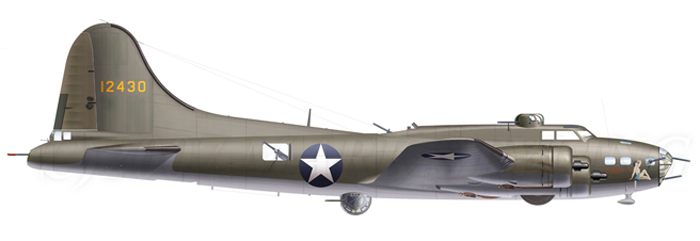
Crash of a Boeing B-17E Flying Fortress into the Baining Mountains: 9 killed

Date & Time: Jun 26, 1943
Operator:
Registration:
41-2430
Flight Phase:
Flight Type:
Survivors:
Yes
Site:
Schedule:
Port Moresby - Dobodura - Port Moresby
MSN:
2241
YOM:
1941
Region:
Crew on board:
10
Crew fatalities:
Pax on board:
0
Pax fatalities:
Other fatalities:
Total fatalities:
9
Circumstances:
The airplane departed Dobodura Airfield at 0145LT to bomb the Rabaul-Vunakanau Airport. Following an uneventful mission, the crew was returning to base when the bomber was attacked by the pilot of a Japanese fighter (Nakajima). The airplane named 'Naughty But Nice' went out of control and only the navigator was able to bail out before the aircraft crashed into the Baining Mountains, south of Rabaul. Nine crew members were killed.
Crew (43rd BG):
1st Lt William J. Sarsfield Jr., pilot, †
2nd Lt Charles E. Trimingham, copilot, †
1st Lt Francis G. Peattie, bombardier, †
1st Lt Jose L. Holguin, navigator
2nd Lt Herman H. Knott, bomb aimer, †
T/Sgt Robert L. Christopherson, flight engineer, †
S/Sgt Henry Garcia, second flight engineer, †
T/Sgt Leonard A. Gionet, radio operator, †
S/Sgt Robert E. Griebel, assistant to the radio operator, †
S/Sgt Pace P. Payne, air gunner. †
Probable cause:
Shot down by a Japanese fighter.

Crash of a Boeing B-17E Flying Fortress in Put Put: 7 killed

Date & Time: May 21, 1943 at 0420 LT
Operator:
Registration:
41-9011
Flight Phase:
Flight Type:
Survivors:
Yes
Schedule:
Port Moresby - Dobodura - Port Moresby
MSN:
2483
YOM:
1941
Region:
Crew on board:
11
Crew fatalities:
Pax on board:
2
Pax fatalities:
Other fatalities:
Total fatalities:
7
Circumstances:
The airplane departed Port Moresby-7 Mile Drome bound to Dobodura where a stock of bombs was loaded. It departed Dobodura to attack the Rabaul-Vunakanau Airport. Following an uneventful mission, it was shot down by a Japanese fighter over the Lihir Island and crashed in Put Put. Seven crew members were killed and four others became PoW.
Crew (43rd BG):
1st Lt Leslie W. Neuman, pilot,
2nd Lt Emil Gentry, copilot, †
T/Sgt William R. Moore, flight engineer, †
2nd Lt William A. Bujold, navigator, †
S/Sgt Ernest W. Burnside, radio operator,
2nd Lt Saul Albert, bombardier, †
Cpl John J. Mulligan,air gunner,
Pvt John L. Honold, air gunner, †
Pvt Robert E. George, air gunner.
Passengers:
Cpt Joseph W. Geddes, †
2nd Lt Leon S. King. †
Probable cause:
Shot down by a Japanese fighter.

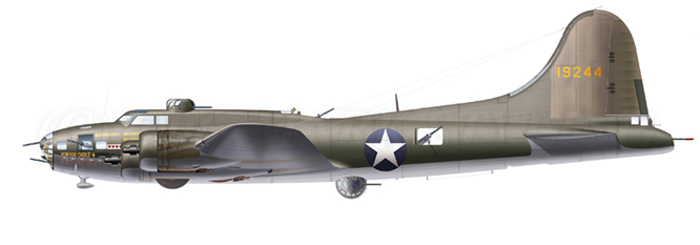
Crash of a Boeing B-17E Flying Fortress off Rabaul: 8 killed

Date & Time: May 21, 1943
Operator:
Registration:
41-9244
Flight Phase:
Flight Type:
Survivors:
Yes
Schedule:
Port Moresby - Dobodura - Port Moresby
MSN:
2716
YOM:
1941
Region:
Crew on board:
10
Crew fatalities:
Pax on board:
1
Pax fatalities:
Other fatalities:
Total fatalities:
8
Circumstances:
The airplane departed Port Moresby-7 Mile Drome in the morning bound to Dobodura where a stock of bombs was loaded. It departed Dobodura to attack the Rabaul-Vunakanau Airport. While approaching the target area, the aircraft what shot down by a Japanese fighter. All four engines were hit by bullets and the captain ordered his crew to bail out but only three crewmen were able to do so. Out of control, the aircraft went into a spin and crashed into the St George Channel off Rabaul. Eight crew members were killed and three others became PoW.
Crew (43rd BG):
Maj Paul I. Williams, pilot, †
2nd Lt John S. Rippy, copilot,
S/Sgt Robert B. Gills Jr., flight engineer, †
2nd Lt Richard U. Aguirre, navigator, †
Sgt Edward Driscoll, radio operator, †
M/Sgt Gordon R. Manuel, bombardier,
Sgt Lawrence L. Rexroat, air gunner, †
Sgt Robert A. Curry, air gunner,
Pfc William R. Smith, air gunner, †
Sgt Joseph F. Murray, air gunner, †
Passenger:
1st Lt Robert F. Heller. †
Probable cause:
Shot down by a Japanese fighter.

Crash of a Douglas C-47-DL near Kokoda: 5 killed

Date & Time: May 12, 1943
Operator:
Registration:
41-18651
Flight Phase:
Flight Type:
Survivors:
No
Site:
Schedule:
Dobodura – Port Moresby
MSN:
6012
YOM:
1942
Location:
Region:
Crew on board:
5
Crew fatalities:
Pax on board:
0
Pax fatalities:
Other fatalities:
Total fatalities:
5
Circumstances:
The airplane departed Dobodura Airfield on a flight to Port Moresby, carrying five crew members and a load of fuel drums. En route, the crew encountered poor weather conditions with low ceiling. While cruising over the Owen Stanley range, the airplane impacted the slope of a mountain located south of Kokoda. As the airplane failed to arrive at destination, SAR operation were initiated and the wreckage was found on 15 may 1943 at an altitude of 2,042 metres. The airplane was destroyed by impact forces and a post crash fire. All five occupants were killed.
Crew (374th TCG):
1st Lt Walter B. Thompson, pilot,
F/O Robert P. Ranges, copilot,
T/Sgt Darrell D. Loy, flight engineer,
T/Sgt Willis Cheek, radio operator,
Sgt Elwood H. Wolfsberger, assistant radio operator.
Probable cause:
Controlled flight into terrain.

Crash of a Douglas C-47-DL near Myola Lake: 10 killed

Date & Time: May 12, 1943
Operator:
Registration:
41-18661
Flight Phase:
Flight Type:
Survivors:
No
Site:
Schedule:
Dobodura – Port Moresby
MSN:
6022
YOM:
1942
Location:
Region:
Crew on board:
4
Crew fatalities:
Pax on board:
6
Pax fatalities:
Other fatalities:
Total fatalities:
10
Circumstances:
The airplane departed Dobodura Airfield on a flight to Port Moresby, carrying six passengers, four crew members and a load of fuel drums. En route, the crew encountered poor weather conditions with low ceiling. While cruising over the Owen Stanley range, the airplane impacted the slope of a mountain located near Myola Lake, in the region of Kokoda. As the airplane failed to arrive at destination, SAR operation were initiated and the wreckage was found on 30 may 1943. All 10 occupants were killed.
Crew (374th TCG):
2nd Lt Lorenzo R. Gower, pilot,
1st Lt Robert W. Wood, copilot,
Cpl Dominic P. Verdi, flight engineer,
Cpl James G. Hickman, radio operator.
Passenger:
Col John H. Brewer,
1st Lt Richard A. Keefer,
Mr. Roger W. Parkhurst,
Mr. Stewart Markell Brown,
Cpt Francis E. Williams accompanied by his personal cooker, a Papua citizen.
Probable cause:
Controlled flight into terrain.

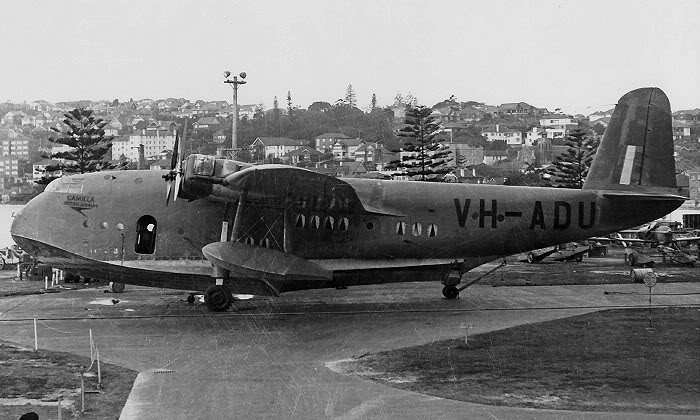
Crash of a Short S.23 Empire Flying Boat off Port Moresby: 13 killed

Date & Time: Apr 22, 1943 at 2000 LT
Operator:
Registration:
VH-ADU
Survivors:
Yes
Schedule:
Townsville – Port Moresby
MSN:
S.844
YOM:
1937
Region:
Crew on board:
4
Crew fatalities:
Pax on board:
27
Pax fatalities:
Other fatalities:
Total fatalities:
13
Aircraft flight hours:
6500
Circumstances:
At 1250LT, the engines were started and the seaplane named 'Camilla' took off from Townsville. Aboard with 27 passengers including 22 from the Royal Australian Air Force and 5 from the USAAF. The weather reports before departing and radio reports en route were favorable. After climbing to 2,000 feet, Camilla flew northward towards New Guinea. At 1600LT, Koch heard reports from other aircraft that Port Moresby was experiencing light rain with a ceiling of 1,000 feet and visibility of 2,000 yards. Despite the bad weather, he elected to proceed believing it was only localized weather that would pass. As he neared the southern coast of New Guinea clouds were increasing and he took a sun sight bearing twenty minutes off Hood Point before receiving reports that the weather was deteriorating, with a ceiling of 600 feet and visibility of 1,100 yards. While over Hood Point, Camilla received another weather report that conditions were improving with 1,000 feet ceiling and 2,000 yards visibility. Flying westward, the weather over Bootless Bay appeared to be clear, but Koch opted not to land there fearing the presence of mines and proceed toward Basilisk Light at the edge of the Basilisk Passage on Natera Reef off Port Moresby but flew into light rain showers and dense overcast. By radio, Camilla was advised to wait to land until a flare path was laid in Fairfax Harbor. While waiting, Camilla circled Basilisk Light twice at 500 feet. Due to fatigue from circling on instruments, Koch opted to fly to the northwest but found the weather was no better and returned to Basilisk Light, but conditions had further deteriorated and Koch opted to fly to the northwest toward Yule Island in hopes of landing there, but was unable to find the island or see the coastline due to poor weather conditions and climbed to 4,700 feet. Another radio message stated the flare path was still being laid. Koch ordered the crew to instruct the passengers about the possibility of an emergency landing and for everyone to don their life jackets and prepare to use the life rafts. At 1727LT, Camilla's radio operator asked Port Moresby to turn on their radio direction finding station, but it was not functioning, but a USAAF beacon was on as of 1700LT and a RAAF beacon was turned on at 1730LT. Flying eastward again, Camilla returned toward Port Moresby using the radio direction finding beacons. Radio messages stated the flare path was still being laid and weather conditions were not improving. By 1820LT, the RAAF marine section had laid a flare path on Fairfax Harbor but was having problems keeping them lit due to heavy rain. At 1855LT, Koch requested that search lights be turned on. At 1910LT, three searchlights were on converging at 4,000 feet and the flare path was reported as laid but visibility was nil. Due to the poor weather, Koch decided to attempt to land at sea south of Port Moresby towards the southeast towards Hood Point but the sea proved to be too rough and the landing was aborted and Camilla returned to Port Moresby using the radio beacon signals. Flying southward at 3,000 feet the sea was less rough and Camilla turned northward towards Port Moresby but were unable to observe the flare path, but were able to briefly see searchlights at 5 Mile Drome and 7 Mile Drome. Airborne for roughly seven hours, Camilla had only 90 gallons of fuel aboard and Koch prepared to make an emergency landing then taxi into Fairfax Harbor and radioed at 1955LT that he was going to land at sea. Flying south of Port Moresby and descending to 1,500 feet before landing with quarter flaps descending at 200 feet per minute at approximately 105 mph with the engines throttled back to a quarter power and the autopilot on. Before landing, purser Barley served cold drinks to the pilots to quench their thirst. During the descent, clouds were observed outside even at 100' altitude before the sea was visible. Before landing at altimeter reading of zero, the autopilot was disengaged and nose elevated to decease the speed further. Realizing they were still above the sea, the throttles were increased but the right engine did not immediately respond and the left engine throttle was closed as Camilla nosed down descending at 400 feet per minute and altitude of -30' before impacting the surface of the sea.
Crew:
Cpt Albert Aubrey Koch, pilot,
F/O Sydney William John Peak, copilot,
P/O Theo J. Phillips, radio operator, †
P/O Walter R. Bartley, purser. †
Passengers:
Ac1 Alan R. Stephens, †
Sgt Ernest John Grady, †
Sgt Ernest Alfred Flanagan, †
Ac1 James A. Harris, †
Lac Alfred J. Ellis, †
Ac1 Vincent E. Grogan, †
Cpl Donald W. Nicholson, †
Ac1 Jack S. Sherwin,
Pvt John F. Walters, †
Pfc Clyde Dobbs Jr., †
1st Lt Norman B. Slote, †
Sgt Frederick A. Burness Jr, †
T/Sgt O'Dell 14.
Source: http://www.pacificwrecks.com/aircraft/short/camilla.html


Crash of an Avro 652 Anson I near Port Moresby

Date & Time: Mar 11, 1943
Type of aircraft:
Operator:
Registration:
AW674
Flight Type:
Survivors:
Yes
Region:
Crew on board:
3
Crew fatalities:
Pax on board:
0
Pax fatalities:
Other fatalities:
Total fatalities:
0
Circumstances:
On approach to Port Moresby, the pilot encountered an unexpected situation and was forced to attempt an emergency landing. The airplane belly landed 12 km northeast of the airport and was damaged beyond repair. All three crewmen escaped unhurt.