Crash of a Cessna 208B Grand Caravan off Fort Lauderdale

Date & Time: Jul 6, 2001 at 1900 LT
Type of aircraft:
Operator:
Registration:
N812MA
Flight Phase:
Flight Type:
Survivors:
Yes
Schedule:
Freeport – Fort Lauderdale
MSN:
208B-0553
YOM:
1996
Crew on board:
2
Crew fatalities:
Pax on board:
0
Pax fatalities:
Other fatalities:
Total fatalities:
0
Captain / Total flying hours:
3700
Captain / Total hours on type:
1200.00
Aircraft flight hours:
5936
Circumstances:
While in cruise flight at 6,500 feet, the airplane's engine jolted and made a whining noise. The propeller stopped and feathered. Attempts to restore engine power were unsuccessful. An emergency was declared, and the airplane was ditched into the Atlantic Ocean 20 miles east of Ft. Lauderdale, Florida. The airplane was not recovered for post-crash examination.
Probable cause:
The undetermined malfunction of the propeller system.
Final Report:

Crash of a Beechcraft C90 King Air in Fort Lauderdale: 1 killed

Date & Time: Jun 13, 2001 at 2122 LT
Type of aircraft:
Operator:
Registration:
YV-2466P
Flight Type:
Survivors:
Yes
Schedule:
Charallave – Fort Lauderdale
MSN:
LJ-591
YOM:
1973
Crew on board:
1
Crew fatalities:
Pax on board:
2
Pax fatalities:
Other fatalities:
Total fatalities:
1
Captain / Total flying hours:
3205
Captain / Total hours on type:
1800.00
Aircraft flight hours:
8279
Circumstances:
The Venezuelan registered Beech King Air C90 departed Caracas, Venezuela's Óscar Machado Zuloaga International Airport at 1516 eastern daylight time with a pilot and two passengers aboard, and flew to Fort Lauderdale-Hollywood International Airport, Florida. The route of flight filed with air traffic control was: after departure, direct to Maiquetia, thence Amber Route-315 to Bimini, thence Bahama Route 57V to Fort Lauderdale. The {planned} flight level was 220, and the pilot stated that 7 hours 15 minutes of fuel was aboard. Immigration/customs general declaration papers found aboard the wreckage stated the flight's intended destination was Nassau, and the pilot's daughter stated he always stopped at Nassau for fuel on many previous trips. After 6 hours 6 minutes, the aircraft crashed into a highway abutment about 1,700 feet short of his intended landing runway at Fort Lauderdale with total accountable onboard fuel of 3 to 4 gallons. One passenger received fatal injuries, one passenger received serious injuries, and the pilot received serious injuries. Engine factory service center disassembly examination revealed that the engines and their components exhibited no evidence of any condition that would have precluded normal operation, precrash. No precrash abnormalities with the propellers, their respective components, or any other aircraft system component were noted. Type certification data sheets for the C90 state that the unusable fuel aboard is 24 lbs., (3.6 gallons of Jet-A fuel).
Probable cause:
The pilot's failure to properly plan fuel consumption and to perform an en route refueling, resulting in a total loss of engine power due to fuel exhaustion while on downwind leg for landing at eventual destination, causing an emergency descent and collision with a highway embankment.
Final Report:

Crash of a Beechcraft 200 Super King Air off Bimini: 2 killed

Date & Time: Sep 19, 1999 at 1115 LT
Registration:
YV-385CP
Flight Phase:
Flight Type:
Survivors:
No
Schedule:
Fort Lauderdale - Caracas
MSN:
BB-740
YOM:
1981
Location:
Country:
Crew on board:
1
Crew fatalities:
Pax on board:
1
Pax fatalities:
Other fatalities:
Total fatalities:
2
Aircraft flight hours:
1841
Circumstances:
A Beechcraft 200 Super King Air, YV-385CP, crashed into the Atlantic Ocean about 9 miles southwest of Bimini, Bahamas, while on personal flight. Visual meteorological conditions prevailed in the area at the time, and an instrument flight rules flight plan was filed. The aircraft was destroyed, and the commercial-rated flight instructor and a pilot-rated passenger were both fatally injured. The flight originated from Fort Lauderdale International Airport, the same day, about 10:53. At 11:14, the pilot of YV-385CP told FAA ARTCC that he was experiencing an emergency, and he asked for immediate directions to Bimini. There were no further communications. According to radar information, at 11:13:33, the altitude was about 23,600 feet, and at 11:14:58 it had descended to 2,800 feet. Sound spectrum analysis of an FAA re-recording of communications between the pilot and ATC, indicated there were electronic signatures present, attributable to propeller noise, at cruise setting, for that type of aircraft. Records obtained from Venezuela indicated that earlier, YV-385CP had been involved in an accident, and had incurred extensive structural damage. The aircraft had been repaired in Venezuela, and was subsequently flown to the Unites States for additional repairs. Records obtained from the U.S. repair station indicated that the airplane incurred an extensive maintenance history, with needed repairs including damaged wiring, and leaks in the fuel system, as well as structural leaks, which had lead to several pressurization difficulties.
Probable cause:
Due to lack of evidences, the exact cause of the accident could not be determined.

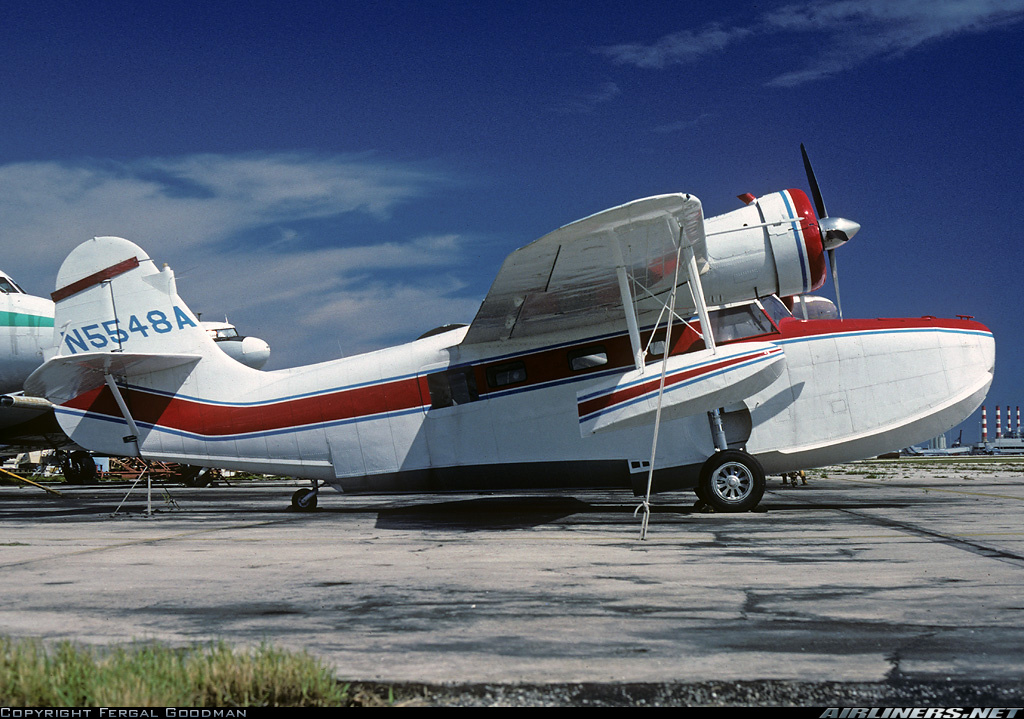
Crash of a Grumman G-21A Goose in Fort Lauderdale: 1 killed

Date & Time: Mar 25, 1999 at 1139 LT
Type of aircraft:
Registration:
N5548A
Flight Type:
Survivors:
Yes
Schedule:
Watson Island - Fort Lauderdale
MSN:
1150
YOM:
1942
Crew on board:
1
Crew fatalities:
Pax on board:
1
Pax fatalities:
Other fatalities:
Total fatalities:
1
Captain / Total flying hours:
10000
Captain / Total hours on type:
520.00
Aircraft flight hours:
13136
Circumstances:
The pilot was receiving a competency flight in the seaplane from an FAA inspector. The pilot was returning to their initial departure airport, descended to 1,000 feet, contacted the control tower for landing instructions, and was instructed to enter on a right base. Before he could acknowledge the landing instructions the engines started to make loud, rough, and unusual noises. The pilot informed the control tower that he was 2 miles south , declared an emergency, and stated he had a bad engine on the left side. The FAA inspector stated the pilot started the emergency procedure, the manifold pressure and rpm was fluctuating. The inspector could not determine the dead engine by the dead foot, dead engine method, because her rudder pedals were stowed. She pointed out a pasture and the pilot stated they were going to the water. She did not recall the pilot shutting down the engine or feathering the propeller. She could not recall the final seconds of the flight. The airplane collided with a tree, canal bank, and came to rest inverted in the canal. Examination of the airframe and flight control systems revealed no evidence of a precrash mechanical failure or malfunction. Examination of the left propeller revealed it was not feathered. The No. 6 front forward spark plug ignition lead was disconnected from the spark plug. The ignition lead shroud threaded coupling on the No. 4 front forward spark plug was unscrewed and the carbon wire was exposed. The left and right engines were removed from the airplane and transported to an authorized FAA approved repair station. The left engine was placed in an engine test cell. The engine was started, developed rated power, and achieved takeoff power. The spark plug lead was removed from the No.6 forward cylinder. The left magneto had a 125 rpm drop during the magneto check. The right magneto had a 75 rpm drop. The magneto drop exceeded the allowable drop indicated by the engine overhaul manual. The right engine was placed in a engine test cell. The engine was started, developed rated power, and achieved takeoff power. Review of the FAA inspectors FAA Form 4040.6 revealed she was not Event Based Current (EBC) for the 4th quarter of the Flight Standards EBC program, and she did not meet the EBC quarterly events required by the end of the 14-day grace period. FAA Order 4040.9 states for an FAA inspector to be eligible / assigned to perform flight certification job function they must be EBC current., and inspectors should not accept assignments without being in compliance with the FAA Order. Managers and supervisors should not assign inspectors who are not current. The FAA inspector's supervisor was aware that the inspector was not current. He contacted the FAA Safety Regulation Branch, FAA Southern Region Headquarters, and stated that FAA Southern Region indicated that the inspector could administer the checkride. FAA Southern Region stated at no time did they approve or agree to an operation outside the parameters of the FAR's, Inspector Handbook or FAA Order.
Probable cause:
The pilots failure to correctly identify an in-flight emergency (fluctuating manifold pressure and rpm due to a disconnected spark plug lead / unscrewed ignition lead shroud) and failure to complete the engine shutdown procedure once it was initiated (propeller not feathered). This resulted in a forced landing and subsequent in-flight collision with a tree, dirt bank and canal. Contributing to the accident was the FAA inspectors improper supervision of the pilot, and the improper supervision of the inspector by her supervisor, in his failure to follow written procedures / directives in assigning a non-current inspector to conduct a competency flight.
Final Report:

Crash of a Cessna 402B off Pahokee: 3 killed

Date & Time: Dec 8, 1998 at 1902 LT
Type of aircraft:
Operator:
Registration:
N788SP
Flight Type:
Survivors:
No
Schedule:
Fort Lauderdale - Pahokee
MSN:
402B-1312
YOM:
1978
Location:
Crew on board:
3
Crew fatalities:
Pax on board:
0
Pax fatalities:
Other fatalities:
Total fatalities:
3
Captain / Total flying hours:
1440
Captain / Total hours on type:
8.00
Aircraft flight hours:
7940
Circumstances:
The flight departed Fort Lauderdale's Executive Airport (FXE) at about 1833 on a northwesterly heading for the co-located Pahokee VOR/airport (PHK) on the second training session of the day for the 2 front seat occupants. This particular flight had a dual purpose, in that the left seat occupant/new-hire was getting a 'pre-check ride' by the right seat occupant/instructor/PIC, and the instructor was being observed by the air taxi's director of operations in anticipation of an endorsement for an FAA designation as a company check airman. The flight was not in contact with any ATC facility and was squawking a transponder code consistent with non-controlled, VMC flight. At 1902, the Miami ARTCC lost radar contact at the 334 degree radial/12 nmi from the PHK VOR at 1,300 feet agl. Eight days later, the wreckage with its 3 occupants still inside, was located and recovered from the lake bottom. The location roughly corresponds with the radial of the PHK VOR that would have to be tracked while performing the VOR Runway 17 approach. The wreckage was intact except for 2 nacelle doors, the nose cone, and the left propeller, and revealed no engine, airframe, or component failure or malfunction. There was no evidence of a bird strike. Evidence revealed that both engines were developing power and the airplane was wings level in the approach configuration and attitude at water contact.
Probable cause:
The pilot's failure to maintain adequate altitude during the approach.
Final Report:

Crash of a Cessna 402B in Fort Lauderdale

Date & Time: Nov 2, 1997 at 1745 LT
Type of aircraft:
Operator:
Registration:
N69312
Survivors:
Yes
Schedule:
Andros Town - Fort Lauderdale
MSN:
402B-0430
YOM:
1973
Crew on board:
1
Crew fatalities:
Pax on board:
6
Pax fatalities:
Other fatalities:
Total fatalities:
0
Captain / Total flying hours:
5017
Captain / Total hours on type:
2175.00
Aircraft flight hours:
7482
Circumstances:
The pilot was on approach for landing when the right main landing gear did not indicate that it was down. The pilot made a go-around and remained in left closed traffic performing emergency gear extension procedures with negative results. The pilot departed closed traffic and proceeded offshore to burn off fuel before attempting an emergency landing. A company airplane was dispatched to verify the landing gear position. The pilot started a straight in approach for landing five miles from the airport. The right engine started surging and quit. The left engine started surging one mile from the runway. He switched fuel tanks. The engine started and quit. He made a forced landing straight ahead and collided with runway approach lights about 1/4 mile from the end of the runway. The pilot stated he ran out of fuel.
Probable cause:
The pilot's improper management of fuel resulting in a total loss of engine power on both engines due to fuel exhaustion.
Final Report:

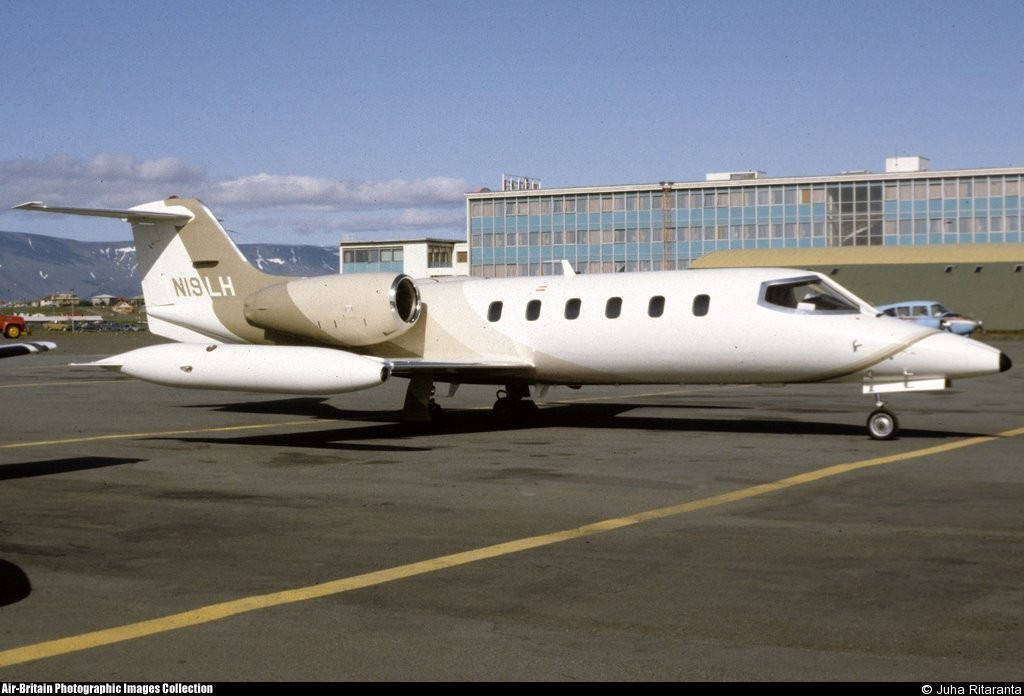
Crash of a Learjet 35A in Avon Park

Date & Time: Jul 15, 1997 at 1953 LT
Type of aircraft:
Registration:
N19LH
Flight Type:
Survivors:
Yes
Schedule:
Fort Lauderdale - Avon Park
MSN:
35-279
YOM:
1980
Crew on board:
2
Crew fatalities:
Pax on board:
0
Pax fatalities:
Other fatalities:
Total fatalities:
0
Captain / Total flying hours:
20076
Captain / Total hours on type:
1500.00
Aircraft flight hours:
13726
Circumstances:
Witnesses near the airport saw the flight approach on a left base to runway 4, touchdown on the runway, and takeoff again. One witness, a pilot, said the airplane turned onto final to the 'south' (right) of the runway centerline.' The airplane made a 'sharp' turn to the left to realign with the runway center, slightly overshot the runway to the left, turned to the right 'sharply,' and touched down on the runway. The witness further stated, '...by the time the pilot was on the runway he had wasted approximately 1,200 to 1,500 feet of runway 4, they hit reverse thrusters [sic] and were on full bore till they crossed runway 27 and 9.' The witness saw heat come out of both engine thrust reversers, the nose gear touched down and then came up again. He then saw the airplane come off the ground about 30 to 40 feet, wobble left and right at a 'slow airspeed,' crossover a highway at a low altitude, right wing low, strike some wires, go into a field, and catch fire. The pilot said, when he touched down on the runway, the airplane seemed to 'lurch' to the side. He said at this point his airspeed was 126 knots. He elected to abort the landing, and applied full power. He said the engines would not develop thrust and he elected to land in a field less than 1/4 mile in front of him. Examination of the left thrust reverser revealed that the translator was in the deployed position, with the blocker doors fully open. Both the left and right pneumatic latches were found in the unlocked position. Examination of the right thrust reverser revealed that the translator was in the deployed position, with the blocker doors fully closed. The left pneumatic latch was found in the locked position. The right pneumatic latch was found in the unlocked position. The inboard sequence latches were found about 2 inches forward of full aft travel. The thrust reverser switch was found in the 'NORMAL' position. According to Gates Lear Jet Airworthiness Directive (AD) 79-08-01, '...to preclude inadvertent thrust reverser deployment and possible loss of aircraft control....,' the following limitations apply to all gates Lear Jet Model 35, 36, 35A, 36A, aircraft equipped with Aeronca Thrust reversers. According to the AD, Section I-LIMITATION; '....Thrust Reversers must not be operated prior to takeoff...Thrust Reversers must not be used for touch and go landings...After Thrust Reversers have been deployed, a visual check of proper door stowing must be made prior to takeoff...Operational Procedures in this Thrust Reverser Supplement are mandatory.' According to Lear Jet and FlightSafety International, the procedures that are taught to Lear Jet pilots in the use of thrust reverse and spoilers during landings are; '...pilots [are] to use thrust reverse only on full stop Lear Jet landings. Pilot are trained not to deploy spoilers or thrust reverse during touch and go's or during balked landings.' The pilot-in-command of N19LH at the time of the accident, told the NTSB investigator-in-charge (IIC) that he was 'aware' of the limitations on the Aeronca Thrust Reverser and he knew that once the Thrust Reverser was deployed that he was 'committed' to land. The pilot told the IIC that he knew of the limitations and that he was committed to land.
Probable cause:
A loss of engine power as a result of the thrust reversers being deployed and subsequent inflight collision was wires. Factors in this accident were the pilot's disregard for procedures, and the improper use of the thrust reversers.
Final Report:

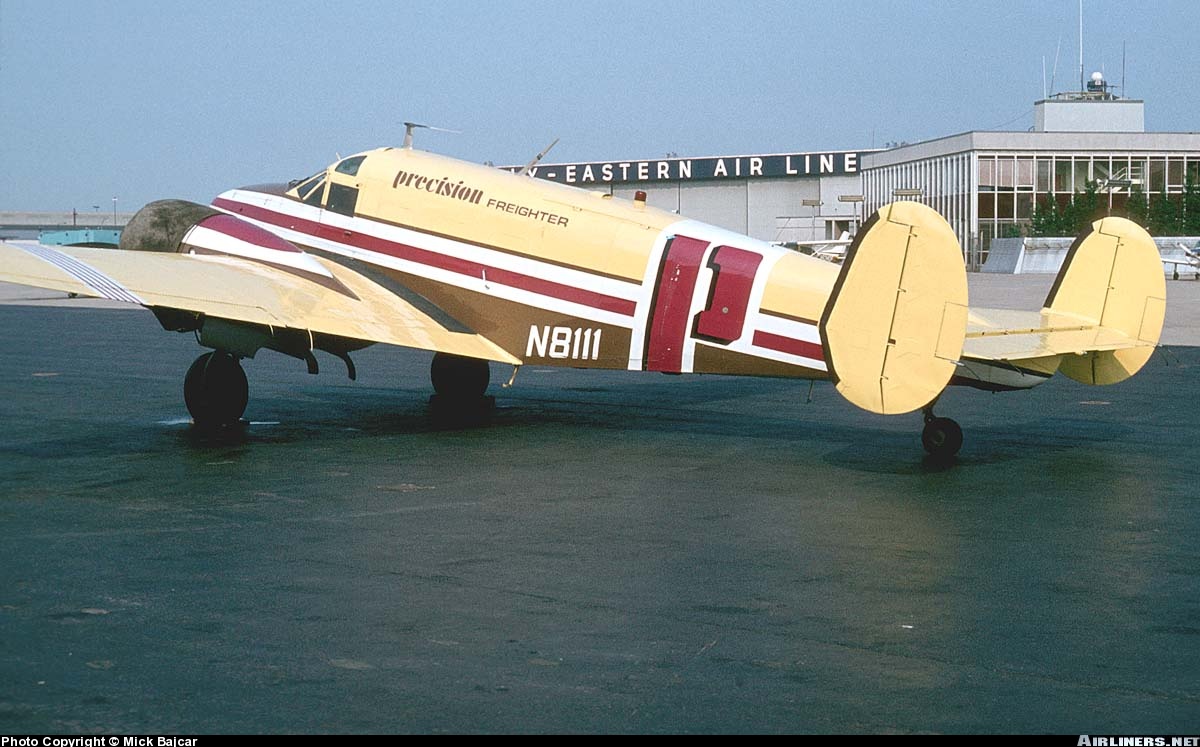
Crash of a Beechcraft E18S off Walker's Cay

Date & Time: Mar 23, 1995 at 1500 LT
Type of aircraft:
Registration:
N8111
Flight Type:
Survivors:
Yes
Schedule:
Fort Lauderdale - Walker's Cay
MSN:
BA-113
YOM:
1955
Country:
Crew on board:
1
Crew fatalities:
Pax on board:
1
Pax fatalities:
Other fatalities:
Total fatalities:
0
Circumstances:
Following a wrong approach configuration, the twin engine aircraft landed too far down the runway at Walker's Cay Airfield. After touchdown, the pilot realized his mistake and initiated a go-around procedure. He asked the passenger seating on the right seat (a pilot rated passenger) to retract the flaps. Mistakenly, the passenger raised the landing gear instead. The aircraft sank on its belly, causing both propellers to struck the runway surface. The aircraft caught fire and the pilot elected to continue. During initial climb, he eventually ditched the airplane few dozen metres offshore. Both occupants were seriously injured and the aircraft was destroyed.

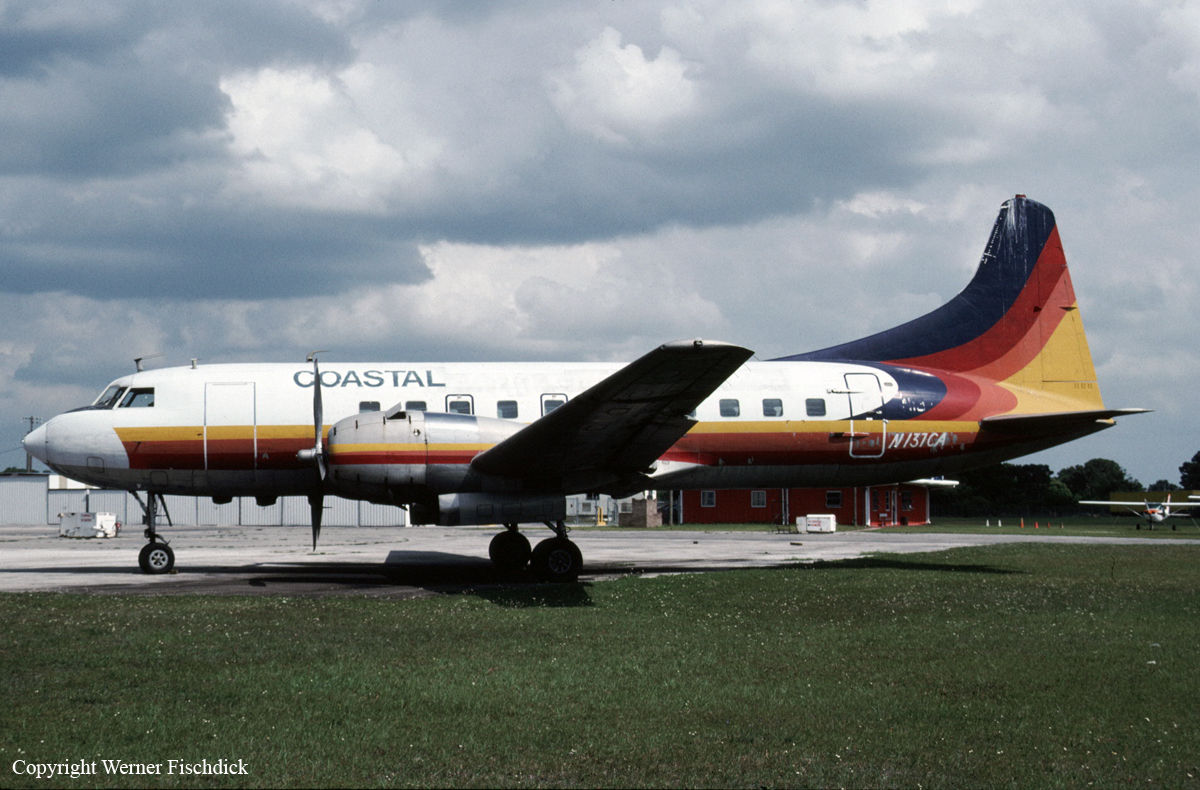
Crash of a Convair CV-440 Metropolitan in Cap Haïtien

Date & Time: Mar 18, 1995 at 1321 LT
Registration:
N137CA
Survivors:
Yes
Schedule:
Fort Lauderdale - Cap Haïtien
MSN:
317
YOM:
1956
Country:
Crew on board:
2
Crew fatalities:
Pax on board:
29
Pax fatalities:
Other fatalities:
Total fatalities:
0
Circumstances:
Leased from Winemiller Aviation, the aircraft was completing a charter flight from Fort Lauderdale to Cap Haïtien on behalf of the Metro Nord Travel Club. On approach to Cap Haïtien, flaps and undercarriage were selected down when the hydraulic pressure dropped. The crew continued the approach and the emergency air brake was armed. Upon touchdown, both tyres on the left main gear burst after the brakes locked. The aircraft veered off runway to the left and eventually collided with a parked UH-60 helicopter. All 31 occupants were evacuated safely and the aircraft was damaged beyond repair.
Probable cause:
It was determined that both tyres on the left main gear burst after the brakes locked due to a reported malfunction of the air brake system.

Crash of a Beechcraft G18S in Fort Lauderdale

Date & Time: Feb 16, 1994 at 0921 LT
Type of aircraft:
Registration:
N49K
Flight Type:
Survivors:
Yes
Schedule:
Fort Lauderdale - Freeport
MSN:
BA-519
YOM:
1960
Crew on board:
1
Crew fatalities:
Pax on board:
0
Pax fatalities:
Other fatalities:
Total fatalities:
0
Captain / Total flying hours:
8700
Captain / Total hours on type:
5000.00
Aircraft flight hours:
12099
Circumstances:
The pilot stated the left engine backfired and began to run rough shortly after takeoff. The engine was shut down and the propeller was feathered. He decided to return and land on the departure runway. Witnesses observed the aircraft on the downwind leg at 800 to 1,000 feet with the landing gear extended. As the aircraft turned to base leg it yawed sharply to the left and the left wing dropped. The aircraft descended rapidly. The pilot stated that as he turned from base to final leg at 75 to 100 feet the aircraft was buffeting and beginning to stall. He realized he would not make the runway and crash landed in a vacant lot. Examination of the left engine after the accident revealed no evidence to indicate precrash failure or malfunction of the engine.
Probable cause:
The pilot-in-command's improper approach planning and premature extension of the landing gear, resulting in the flight being unable to maintain sufficient altitude and airspeed to reach the runway. The loss of engine power on one engine was a factor.
Final Report: