Crash of a Piper PA-31-310 Navajo near Jamestown: 6 killed

Date & Time: Jan 6, 1969 at 2040 LT
Type of aircraft:
Operator:
Registration:
N440DL
Flight Phase:
Survivors:
No
Site:
Crew on board:
2
Crew fatalities:
Pax on board:
4
Pax fatalities:
Other fatalities:
Total fatalities:
6
Captain / Total flying hours:
176
Circumstances:
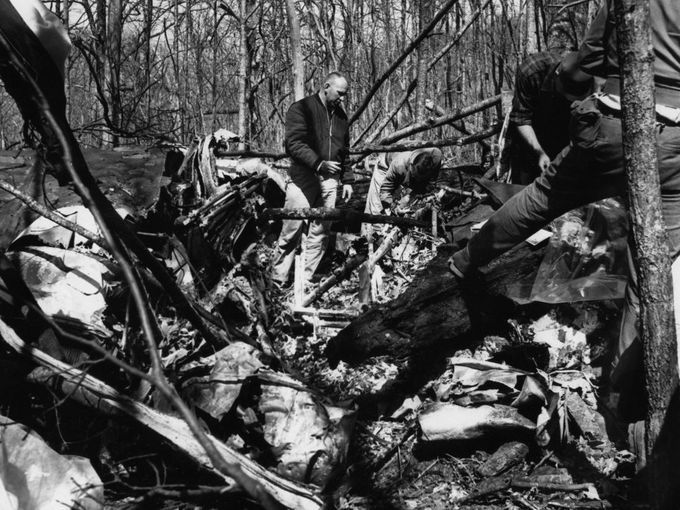
While cruising by night in marginal weather conditions, the pilot lost control of the airplane that crashed on the top of a hill. The aircraft was destroyed and all six occupants were killed.
Probable cause:
Loss of control for undetermined reason. The following contributing factors were reported:
- Icing conditions including sleet and freezing rain,
- Turbulences associated with clouds and thunderstorm,
- Snow,
- Witnesses heard the aircraft circling at low altitude.
Final Report:


Crash of a Rockwell Aero Commander 680 in Spring City: 1 killed

Date & Time: Dec 2, 1966 at 1945 LT
Operator:
Registration:
N6857S
Flight Phase:
Flight Type:
Survivors:
No
Crew on board:
1
Crew fatalities:
Pax on board:
0
Pax fatalities:
Other fatalities:
Total fatalities:
1
Captain / Total flying hours:
8095
Circumstances:
While in cruising altitude under IFR mode, the pilot encountered poor weather with icing conditions. The airplane entered an uncontrolled descent until it crashed in an open field located near Spring City. The pilot was killed and the aircraft was destroyed.
Probable cause:
The pilot continued IFR into area of knowing icing conditions with an aircraft that was not equipped with deicers or anti-icers systems.
Final Report:

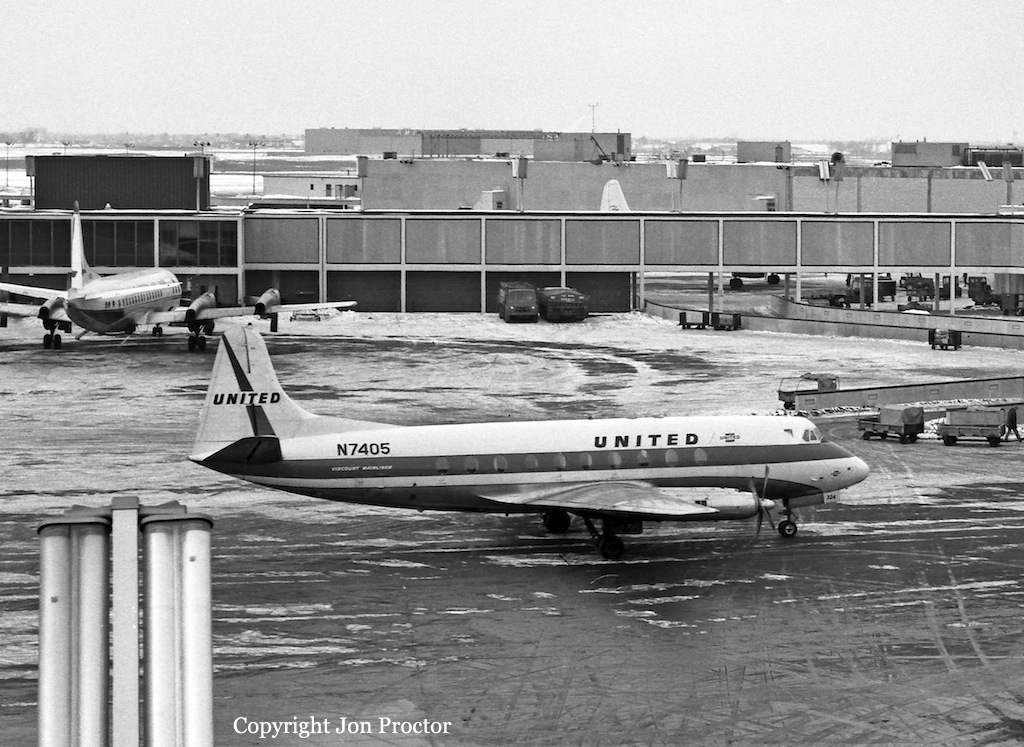
Crash of a Vickers 745D Viscount near Parrottsville: 39 killed

Date & Time: Jul 9, 1964 at 1815 LT
Type of aircraft:
Operator:
Registration:
N7405
Flight Phase:
Survivors:
No
Site:
Schedule:
Philadelphia – Washington DC – Knoxville – Huntsville
MSN:
103
YOM:
1955
Flight number:
UA823
Crew on board:
4
Crew fatalities:
Pax on board:
35
Pax fatalities:
Other fatalities:
Total fatalities:
39
Captain / Total flying hours:
15665
Captain / Total hours on type:
1700.00
Copilot / Total flying hours:
7715
Copilot / Total hours on type:
2100
Aircraft flight hours:
23804
Circumstances:
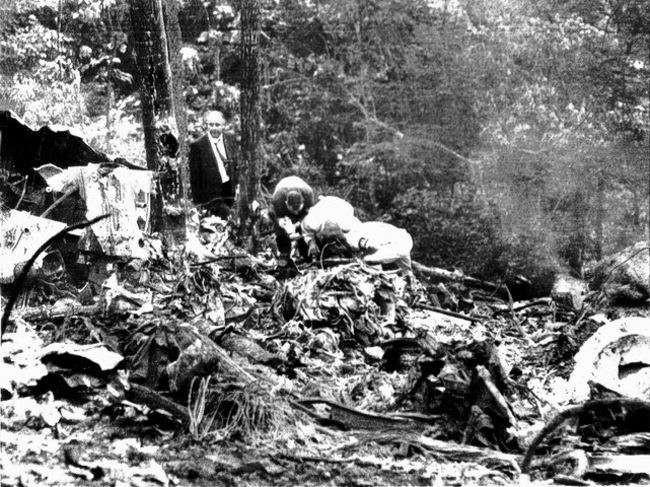
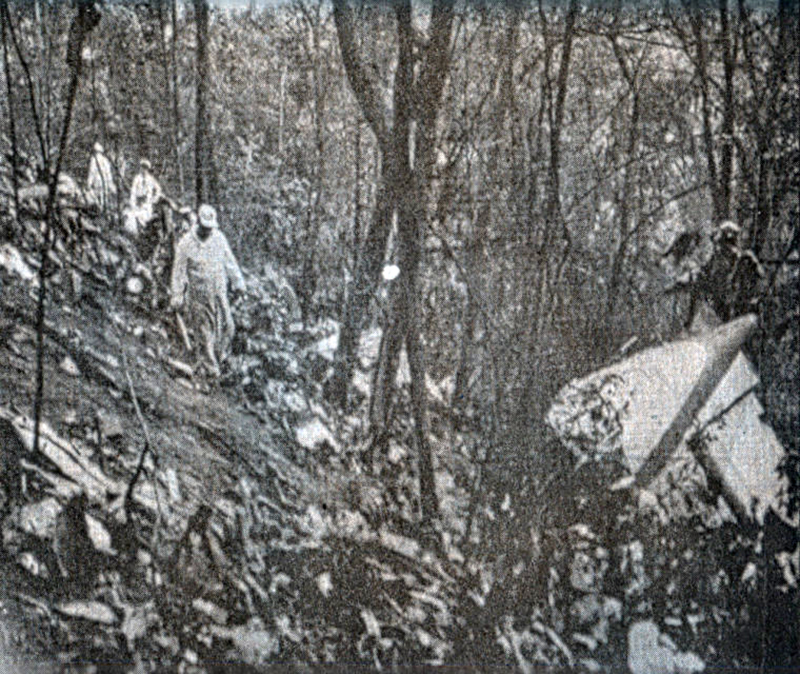
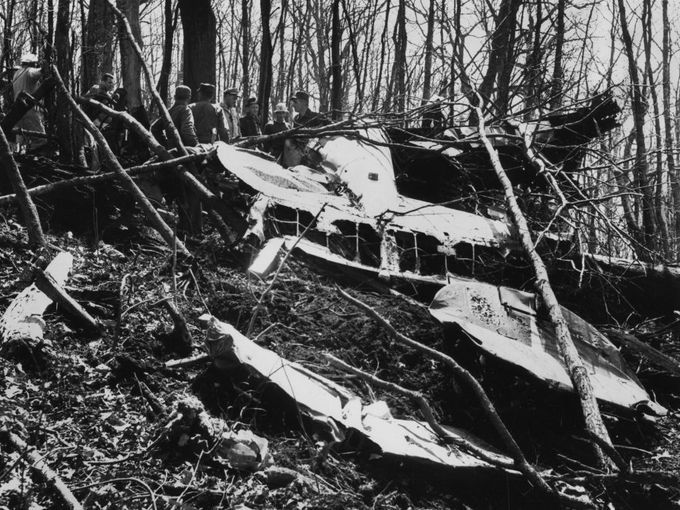
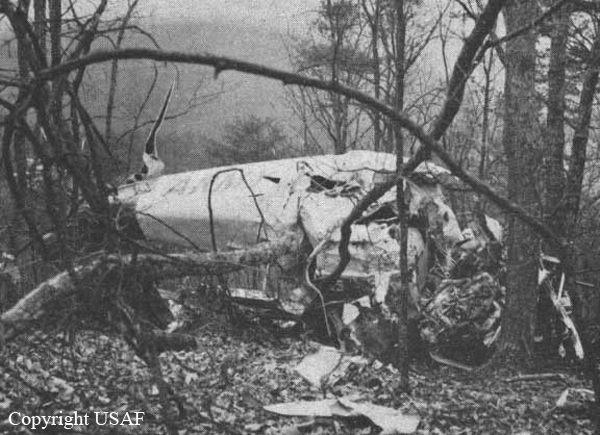
A United Air Lines, Inc., Vickers Viscount 745D, N7405, Flight 823, crashed 2-1/4 rules northeast of Parrottsville Tennessee, at 1815 e.s.t., July 9, 1964. Thirty-four passengers and the four crew members died in the crash. One passenger died of injuries following a free fall from the aircraft before the crash. The aircraft was destroyed by fire and impact damage. Flight 823 was a regularly scheduled operation from Philadelphia, Pennsylvania, to Huntsville, Alabama, with en route stops at Washington, D. C., and Knoxville, Tennessee. The flight operated without any reported discrepancies or difficulties until approximately 1810 e.s.t., when it was observed flying at low altitude trailing smoke. The flight continued in a southwesterly direction and at a point approximately 1.6 nautical rules before the impact site, a passenger was seen falling from the aircraft, and a short time later a cabin window was seen falling. The aircraft was then observed going into a nose-high attitude, the left wing and the nose went down, and the aircraft dived into the ground, exploded, and burned.
Probable cause:
The Board determines that the probable cause of this accident was an uncontrollable in-flight fire of undetermined origin, in the fuselage, which resulted in a loss of control of the aircraft.
Final Report:

Crash of a Beechcraft D18S in Memphis

Date & Time: May 31, 1964 at 1150 LT
Type of aircraft:
Operator:
Registration:
N80492
Flight Phase:
Flight Type:
Survivors:
Yes
MSN:
A-326
YOM:
1946
Crew on board:
1
Crew fatalities:
Pax on board:
1
Pax fatalities:
Other fatalities:
Total fatalities:
0
Captain / Total flying hours:
7708
Captain / Total hours on type:
1457.00
Circumstances:
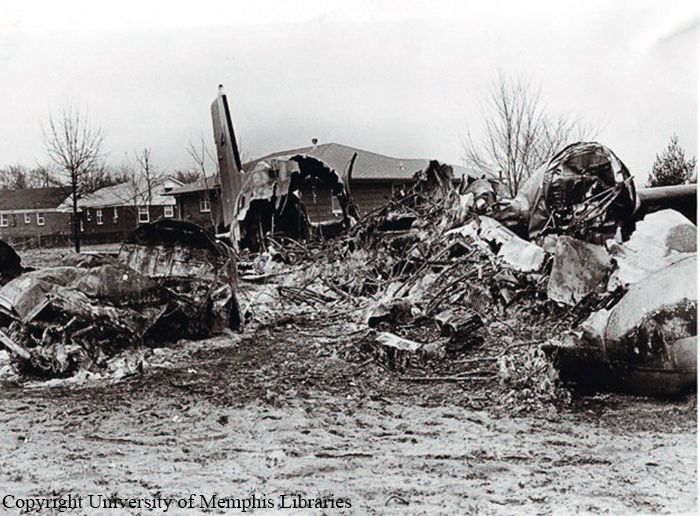
Shortly after takeoff from Memphis Airport, the pilot reported engine problems and elected to return for a safe landing. Unable to maintain control of the airplane, he attempted an emergency landing in an open field. The aircraft slid for several yards before coming to rest. Both occupants were uninjured while the aircraft was damaged beyond repair.
Probable cause:
Improper operation of the anti/de-icing equipment caused conditions conducive to carburetor/induction system icing. The non-instrument rated pilot attempted operation in below VFR minimum conditions.
Final Report:

Crash of a Beechcraft E18S near Knoxville: 6 killed

Date & Time: Mar 21, 1964 at 1155 LT
Type of aircraft:
Operator:
Registration:
N110WB
Flight Phase:
Survivors:
No
Site:
MSN:
BA-263
YOM:
1957
Crew on board:
2
Crew fatalities:
Pax on board:
4
Pax fatalities:
Other fatalities:
Total fatalities:
6
Captain / Total flying hours:
12450
Captain / Total hours on type:
800.00
Circumstances:
While cruising in a limited visibility due to snow showers, the twin engine aircraft struck the slope of a mountain and crashed in flames near Knoxville. All six occupants were killed. At the time of the accident, the ceiling was at 2,000 feet and the visibility was limited due to snow falls. Also, the mountain was shrouded in clouds.
Probable cause:
Inadequate flight preparation on part of the flying crew who continued under VFR mode into adverse weather conditions and flew at an altitude below obstructing terrain.
Final Report:

Crash of a Douglas DC-7C in Nashville

Date & Time: Sep 28, 1963 at 2030 LT
Type of aircraft:
Operator:
Registration:
N843D
Survivors:
Yes
MSN:
45449
YOM:
1958
Crew on board:
5
Crew fatalities:
Pax on board:
40
Pax fatalities:
Other fatalities:
Total fatalities:
0
Captain / Total hours on type:
458.00
Aircraft flight hours:
15975
Circumstances:
Following an uneventful flight, the crew started the approach to Nashville Airport in poor weather conditions with fog, rain showers and a 400 feet ceiling. After touchdown, the airplane suffered an asymmetrical thrust reversal. Due to high pressure, the nose gear collapsed and the airplane slid on runway for several yards before coming to rest. All 45 occupants were evacuated safely while the aircraft was considered as damaged beyond repair.
Probable cause:
Improper operation of powerplant & powerplant controls on part of the pilot-in-command and the thrust reversal-asymmetrical was considered as a miscellaneous act.
The following factors were considered as contributing:
- Failure of the pilot-in-command to initiate a go-around,
- Low ceiling,
- Rain,
- Poorly planned approach,
- Overload failure.
Final Report:

Crash of a Douglas R4D-8 in Millington

Date & Time: Mar 15, 1963 at 2040 LT
Operator:
Registration:
17158
Flight Type:
Survivors:
Yes
Schedule:
Saint Louis – Millington
MSN:
43368
YOM:
1944
Crew on board:
3
Crew fatalities:
Pax on board:
30
Pax fatalities:
Other fatalities:
Total fatalities:
0
Circumstances:
The approach to Millington was completed by night and in poor weather conditions. On final, the pilot declared an emergency as an engine failed. As the aircraft was not properly aligned with the runway, the crew elected to make a go around. A second attempt to land was completed in thunderstorm activity when the airplane stalled, hit a pecan tree and crashed in Hill Street, just near some houses. On ground, it lost its right wing and came to rest in flames. All 33 occupants evacuated safely while the aircraft was destroyed by fire.
Probable cause:
Engine failure on final.

Crash of a Lockheed C-130A Hercules at Smyrna AFB: 5 killed

Date & Time: Nov 26, 1962
Type of aircraft:
Operator:
Registration:
56-0488
Flight Phase:
Flight Type:
Survivors:
No
Schedule:
Sewart - Sewart
MSN:
3096
YOM:
1957
Crew on board:
5
Crew fatalities:
Pax on board:
0
Pax fatalities:
Other fatalities:
Total fatalities:
5
Circumstances:
The crew was involved in a local training mission at Smyrna-Sewart AFB, Tennessee. Shortly after takeoff, while in initial climb, the airplane banked left, lost height and crashed near the runway end. All five crew members were killed.
Probable cause:
Loss of control caused by the failure of both left engines shortly after rotation.

Crash of a Lockheed L-188A Electra in Knoxville

Date & Time: Aug 6, 1962 at 1731 LT
Type of aircraft:
Operator:
Registration:
N6102A
Survivors:
Yes
Schedule:
Dallas – Little Rock – Memphis – Knoxville – Washington DC – New York
MSN:
1019
YOM:
1958
Flight number:
AA414
Crew on board:
5
Crew fatalities:
Pax on board:
67
Pax fatalities:
Other fatalities:
Total fatalities:
0
Captain / Total flying hours:
20634
Captain / Total hours on type:
878.00
Copilot / Total flying hours:
11000
Copilot / Total hours on type:
423
Aircraft flight hours:
6947
Circumstances:
On August 6, 1962, at 1731 e.s.t., Flight 414, an American Airlines, Inc., Lockhead Electra, N 6102A, crashed during a landing on runway 4L at McGhee-Tyson Airport, Knoxville, Tennessee. Sixty-seven passengers and five crew members were on board the aircraft. All escaped injury except one passenger who suffered a minor injury. The aircraft was substantially damaged. During the landing made by the captain in an area of thunderstorm activity and heavy rain showers, the aircraft skidded to the right off the runway. It struck a newly constructed taxiway the surface of which was approximately 17 inches above ground level, causing failure of the right main landing gear. The right wing became separated front the aircraft. The remainder of the aircraft continued to deviate to the right off the side of the runway for a short distance and came to rest 3,010 feet from the approach end of the runway on a heading of 200 degrees magnetic.
Probable cause:
The Board determines that the probable cause of this accident was the loss of directional control as a result of the improper technique employed in a crosswind landing in adverse weather conditions.
Final Report:

Crash of a De Havilland L-20A Beaver in Piney Flats: 1 killed

Date & Time: Dec 27, 1960 at 0030 LT
Type of aircraft:
Operator:
Flight Phase:
Flight Type:
Survivors:
No
Site:
Schedule:
El Paso - Davison
Crew on board:
1
Crew fatalities:
Pax on board:
0
Pax fatalities:
Other fatalities:
Total fatalities:
1
Circumstances:
The pilot, sole on board, was performing a flight from Biggs AAF and Davison AAF (Fort Belvoir, Virginia). While cruising by night, he did not realized he was flying too low when the airplane struck tree tops and crashed in a wooded area on Mt Holston located near Piney Flats, Tennessee. The aircraft was destroyed and the pilot was killed.