Crash of a Lockheed L-414 Hudson I at RCAF Torbay: 8 killed

Date & Time: May 6, 1942 at 1442 LT
Type of aircraft:
Operator:
Registration:
761
Flight Phase:
Flight Type:
Survivors:
No
Schedule:
Torbay - Dartmouth
MSN:
414-1742
YOM:
1940
Country:
Crew on board:
3
Crew fatalities:
Pax on board:
5
Pax fatalities:
Other fatalities:
Total fatalities:
8
Captain / Total flying hours:
757
Captain / Total hours on type:
616.00
Circumstances:
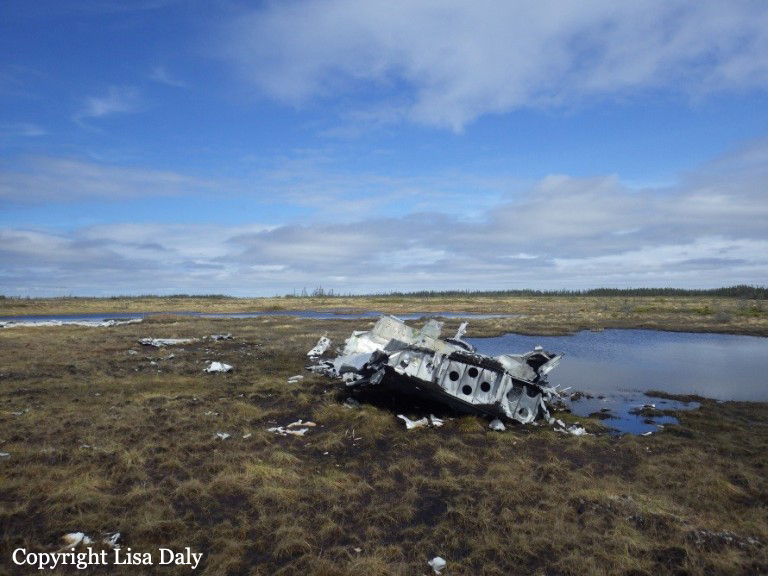
The twin engine airplane departed RCAF Torbay in Saint John's, returning to base in Dartmouth for maintenance purposes. On board were five passengers and three crew members. When the aircraft was a few feet off the ground, one or both engines sputtered momentarily. The aircraft sank to the ground, the engines picked up and the aircraft cleared the runway to continue in a straight climb. At 50 feet, a left bank was assumed with grew steeper developing a sideslip. The aircraft commenced to sink, throttles appeared closed. The aircraft struck the ground, burst into flames and was totally destroyed. All eight crew members were killed.
Crew:
F/Lt Joseph Hyacinthe Ulysses Le Blanc, pilot,
F/Sgt William Freeborne Colville, navigator,
F/Sgt Harold Fulford Taylor, wireless operator.
Passengers:
Sgt Monty Holt Brothers,
Lac Smith Edward Crymes,
F/Lt Rudolph Irwin Ehrlichman,
Cpl Charles Frederick Else,
Lac Norman Clifford Fleischman.
Probable cause:
While the cause of the accident remains obscure, the following must be regarded as contributory factors:
- The aircraft was overloaded,
- The load was incorrectly distributed,
- Partial failure of the starboard engine,
- Misuse of controls by the pilot.
Examination of documents concerning the aircraft revealed that there had been to NCO percentage check on this aircraft between 23 March 1942 and the date of the accident, since the airplane left Dartmouth.
Final Report:

Crash of a Douglas Digby I in Gander

Date & Time: Mar 26, 1942 at 1035 LT
Type of aircraft:
Operator:
Registration:
753
Flight Type:
Survivors:
Yes
Schedule:
Gander - Gander
MSN:
1645
YOM:
1936
Country:
Crew on board:
4
Crew fatalities:
Pax on board:
0
Pax fatalities:
Other fatalities:
Total fatalities:
0
Captain / Total flying hours:
974
Captain / Total hours on type:
735.00
Circumstances:
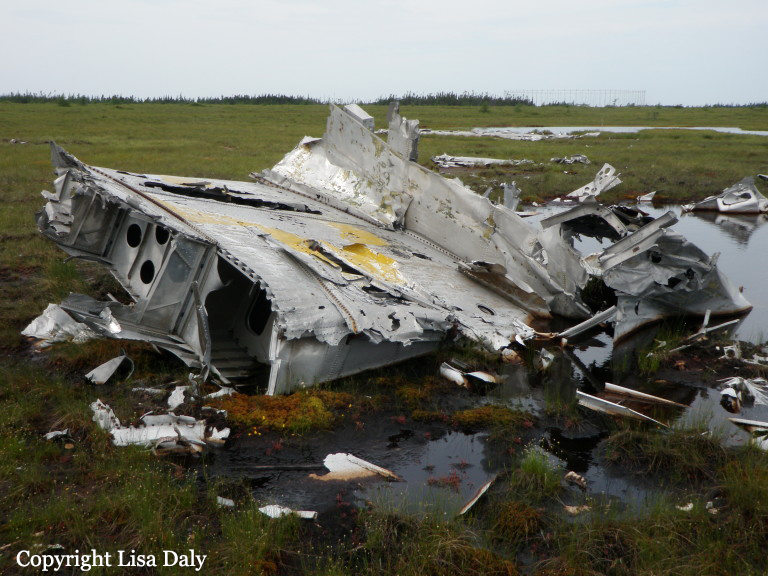
The crew was completing practice instrument approaches at Gander Airport. On short final, at a height of 20 feet, the airplane stalled and the wing dropped. Full power was added but the airplane bounced lightly on its undercarriage. The wing caught on runway boundary snowbank 30 yards from point wheels touched the runway and the airplane crashed. All four crew members escaped uninjured.
Crew:
F/Lt E. M. William, pilot,
P/O D. F. Raymes, copilot,
P/O Johnson, wireless operator,
Sgt Corbitt, wireless operator.
Probable cause:
Error in judgment on part of the pilot, in that he commenced to level out for landing at too great a height and allowed the airplane to stall while at 20 feet.
Final Report:

Crash of a Lockheed L-414 Hudson I in Newfoundland

Date & Time: Jan 28, 1942 at 1600 LT
Type of aircraft:
Operator:
Registration:
768
Flight Phase:
Survivors:
Yes
Schedule:
Saint John's - Saint John's
MSN:
414-1752
YOM:
1940
Country:
Crew on board:
4
Crew fatalities:
Pax on board:
0
Pax fatalities:
Other fatalities:
Total fatalities:
0
Captain / Total flying hours:
837
Captain / Total hours on type:
837.00
Copilot / Total flying hours:
291
Copilot / Total hours on type:
230
Circumstances:
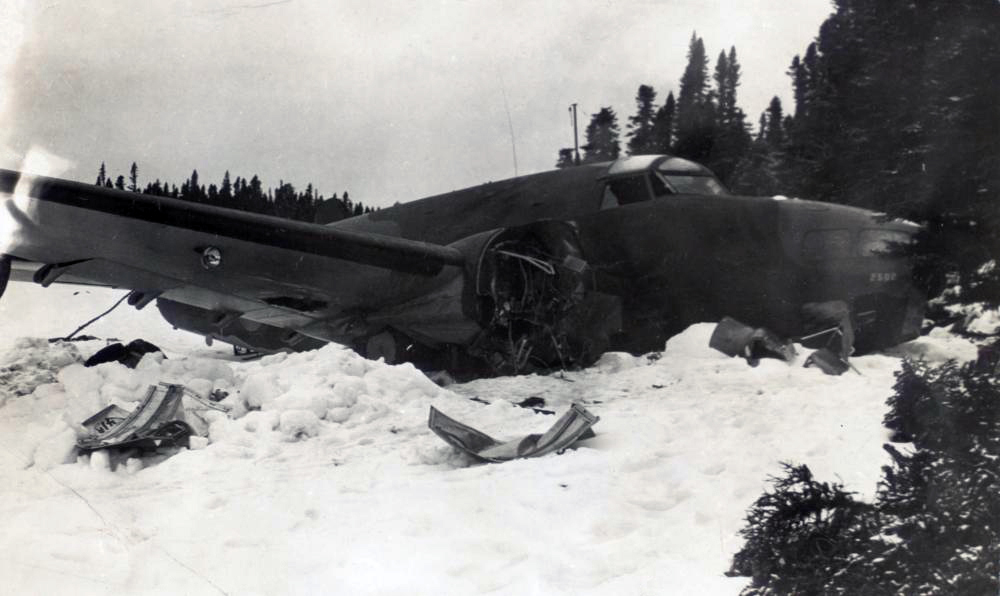
The twin engine airplane departed St John's (Torbay) Airport on a maritime patrol flight with a crew of four on board. While returning to base, the crew encountered bad weather when one of the engine failed after the carburetor got iced. The pilot made a wheels up landing in dead timber in East Newfoundland. All four crew members were rescued in February and transferred to local hospital in good condition. The airplane was damaged beyond repair.
Crew:
F/Lt A. S. Pilcher, pilot,
Sgt H. A. Wishart, copilot,
Sgt H. F. Taylor, wireless operator and air gunner,
Sgt L. A. McGregor, wireless operator and air gunner.
Probable cause:
Engine failure cause by icing conditions.
Final Report:

Crash of a Boeing B-17B Flying Fortress at Argentia NAS

Date & Time: Jan 16, 1942
Operator:
Registration:
39-009
Flight Phase:
Flight Type:
Survivors:
Yes
MSN:
2041
YOM:
1938
Country:
Crew on board:
0
Crew fatalities:
Pax on board:
0
Pax fatalities:
Other fatalities:
Total fatalities:
0
Circumstances:
During the takeoff roll at Argentia NAS, the airplane suffered a technical failure. It went out of control, veered off runway and came to rest. There were no injuries among the crew.
Probable cause:
Loss of control after the engine supercharger regulator failed during takeoff.

Crash of a Boeing B-17E Flying Fortress in Gander

Date & Time: Jan 9, 1942
Operator:
Registration:
41-2393
Flight Type:
Survivors:
Yes
MSN:
2204
YOM:
1941
Country:
Crew on board:
0
Crew fatalities:
Pax on board:
0
Pax fatalities:
Other fatalities:
Total fatalities:
0
Circumstances:
After touchdown at Gander Airport, the airplane veered off runway and crashed into a snow bank. There were no injuries but the airplane was damaged beyond repair.

Crash of a Douglas Digby I in Freshwater Bay

Date & Time: Jan 2, 1942 at 1020 LT
Type of aircraft:
Operator:
Registration:
738
Flight Phase:
Survivors:
Yes
Schedule:
Gander - Gander
MSN:
1630
YOM:
1936
Country:
Crew on board:
6
Crew fatalities:
Pax on board:
0
Pax fatalities:
Other fatalities:
Total fatalities:
0
Captain / Total flying hours:
866
Captain / Total hours on type:
436.00
Circumstances:
The aircraft took off from base at 0940LT on a patrol duty on convoy. About 40 minutes into the flight, the starboard engine became very rough and the propeller was feathered. The Aircraft was losing altitude, bombs were dropped but height could not be maintained. As the aircraft was below the altitude of some hills, the captain landed on the water in Locker Bay. The the captain instructed the radio operator to try to contact base, but upon turning on the master switch, fire broke out in the cabin, forcing all personnel to leave the aircraft. The crew paddle ashore in the dinghy where they were found by some fishermen from Wellington who took them to town. The airplane was later towed to shore but was damaged beyond repair.
Crew:
F/O D. G. J. Maltby, pilot,
P/O P. Hutchinson, copilot,
P/O D. W. Morrisson, navigator,
P/O F. S. Johnston, radio operator,
Sgt G. F. Davidson, air gunner,
Sgt A. C. Collville, air gunner.
Probable cause:
Failure of the starboard engine in flight.
Final Report:

Crash of a Douglas Digby I in Gander: 6 killed

Date & Time: Jul 26, 1941 at 0040 LT
Type of aircraft:
Operator:
Registration:
742
Flight Type:
Survivors:
No
Schedule:
Gander - Gander
MSN:
1634
YOM:
1936
Country:
Crew on board:
6
Crew fatalities:
Pax on board:
0
Pax fatalities:
Other fatalities:
Total fatalities:
6
Captain / Total flying hours:
630
Captain / Total hours on type:
300.00
Circumstances:
At 1856 GMT on 24 July 1941, RCAF Douglas Digby 742 left Gander with a crew of six for the purpose of convoy patrols. At 2320 GMT the weather began to deteriorate and the Meteorological Office predicted that the ceiling would remain at about 1500 feet with showers. At 2326 GMT the aircraft was recalled, but Digby 742 did not immediately respond. The recall notice was repeated four times by Gander Station and twice by RCAF Station, Sydney. The recall was acknowledged at 0030 GMT and at 0151 GMT the aircraft was in range of the Gander airbase. Digby 742 was spotted by Airport Control, but the aircraft reported that it could not see the airport. By this time, the ceiling had deteriorated to 200 feet with rain and increased wind and the cloud had begun to blow across the runway. When Digby 742 arrived, RCAF Digby 756 was attempting to land at Gander and Digby 742 was instructed to circle until Digby 756 had landed. Digby 756 landed safely at 0219 GMT but for approximately the next twenty minutes, Digby 742 was out of communication range. Captain Tomsett was instructed to proceed to Dartmouth where the weather conditions were more favourable but the Captain stated that he would attempt to land at Gander one final time and would proceed to Dartmouth if that landing was unsuccessful. At 0310 GMT a loud explosion was heard and there was no further communication with the aircraft. At 0330 GMT, the ceiling began to steadily rise becoming 1400 feet by 0530 GMT.
Crew:
F/Lt Martin Edward Tomsett, pilot,
P/O William Hume Mather, pilot,
P/O Allan Gower Pratt, navigator,
Cpl Thomas James Larmour Crawford, wireless operator,
Sgt Mervyn Samuel Hunt, air gunner,
Sgt Ronald Laird McDavid, air gunner.
Source & photo:
http://www.planecrashgirl.ca/2016/02/19/rcaf-digby-742/
Probable cause:
Although weather conditions had deteriorated, at this time there were no regulations for minimum ceiling. The conditions that were present at the time of the crash were poor and landing should only have been attempted by an experience pilot. As a result of this crash, recommendations were made to the RCAF to put in place regulations for landing in poor conditions based on the time of day (day or night flying) and the experience of the pilot; an experienced pilot is considered to have completed at least 300 hours of flying on that specific type of aircraft. The determination that weather conditions are poor would be based on the ceiling level and at the discretion of the Aerodrome Control Officer.
Final Report:

Crash of a Douglas Digby I off Cape Race

Date & Time: Jun 22, 1941 at 0930 LT
Type of aircraft:
Operator:
Registration:
752
Flight Phase:
Survivors:
Yes
Schedule:
Dartmouth - Dartmouth
MSN:
1644
YOM:
1936
Country:
Crew on board:
4
Crew fatalities:
Pax on board:
0
Pax fatalities:
Other fatalities:
Total fatalities:
0
Circumstances:
The airplane departed Dartmouth on a convoy patrol mission. Due to bad weather conditions and unable to obtain position by wireless, the pilot ditched the airplane off Cape Race. About 10 days later, on early July, the crew was rescued by a schooner. The aircraft was equipped with flotation cells in the wings and did not sink. It was later towed ashore but was damaged beyond repair.
Crew:
F/Lt Ashman, pilot,
F/O Horne, copilot,
Cpl H. W. Stewart, navigator,
AC1 L. W. J. Hanley, navigator,
AC1 I. S. G. Mackie, navigator.
Probable cause:
Precautionary landing at sea due to lack of gas and bad weather.
Final Report:

Crash of a Lockheed L-414 Hudson III in Seven Mile Pond: 3 killed

Date & Time: Feb 20, 1941 at 2030 LT
Type of aircraft:
Operator:
Registration:
T9449
Flight Phase:
Flight Type:
Survivors:
Yes
MSN:
414-2502
YOM:
1941
Country:
Crew on board:
3
Crew fatalities:
Pax on board:
1
Pax fatalities:
Other fatalities:
Total fatalities:
3
Circumstances:
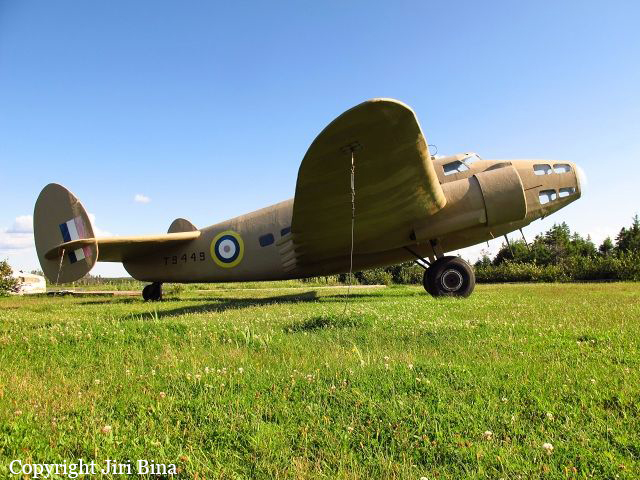
The airplane departed Gander Airport at 1958LT on a flight to England via Greenland and Iceland, and was completing a delivery mission with a group of five other similar machines. While flying some 50 miles northeast off Gander, over the Atlantic Ocean, the oil pressure failed on the right engine. The crew shut down the engine but was unable to feather the propeller. The captain decided to return to Gander but while approaching the coast, the left engine suffered the same problem. Eventually, the crew decided to attempt an emergency landing in a snow covered field. After touchdown, the airplane slid for few dozen metres, lost its both engines and came to rest nearby a wooded area located on the Seven Mile Pond, between Musgrave Harbour and Gander. The radio operator and the navigator were killed while the pilot and the passenger were seriously injured. The following day, the passenger died from injuries sustained.
Crew:
Joseph Mackey, pilot,
William Bird, navigator, †
William Snailham, radio operator. †
Passenger:
Frederick Grant Branting, famous Canadian medical scientist, Nobel Laureate and co-discover of insulin. †
Probable cause:
Engine failure caused by an oil leak.

Crash of a Fairchild 71C in the Canada Bay

Date & Time: Apr 30, 1940
Type of aircraft:
Registration:
VO-AFG
MSN:
14
YOM:
1936
Country:
Crew on board:
0
Crew fatalities:
Pax on board:
0
Pax fatalities:
Other fatalities:
Total fatalities:
0
Circumstances:
Crashed in unknown circumstances into the Canada Bay while completing a flight from England. The exact date remains unknown, somewhere in April 1940. Occupant's fate unknown.