Country
code
FL
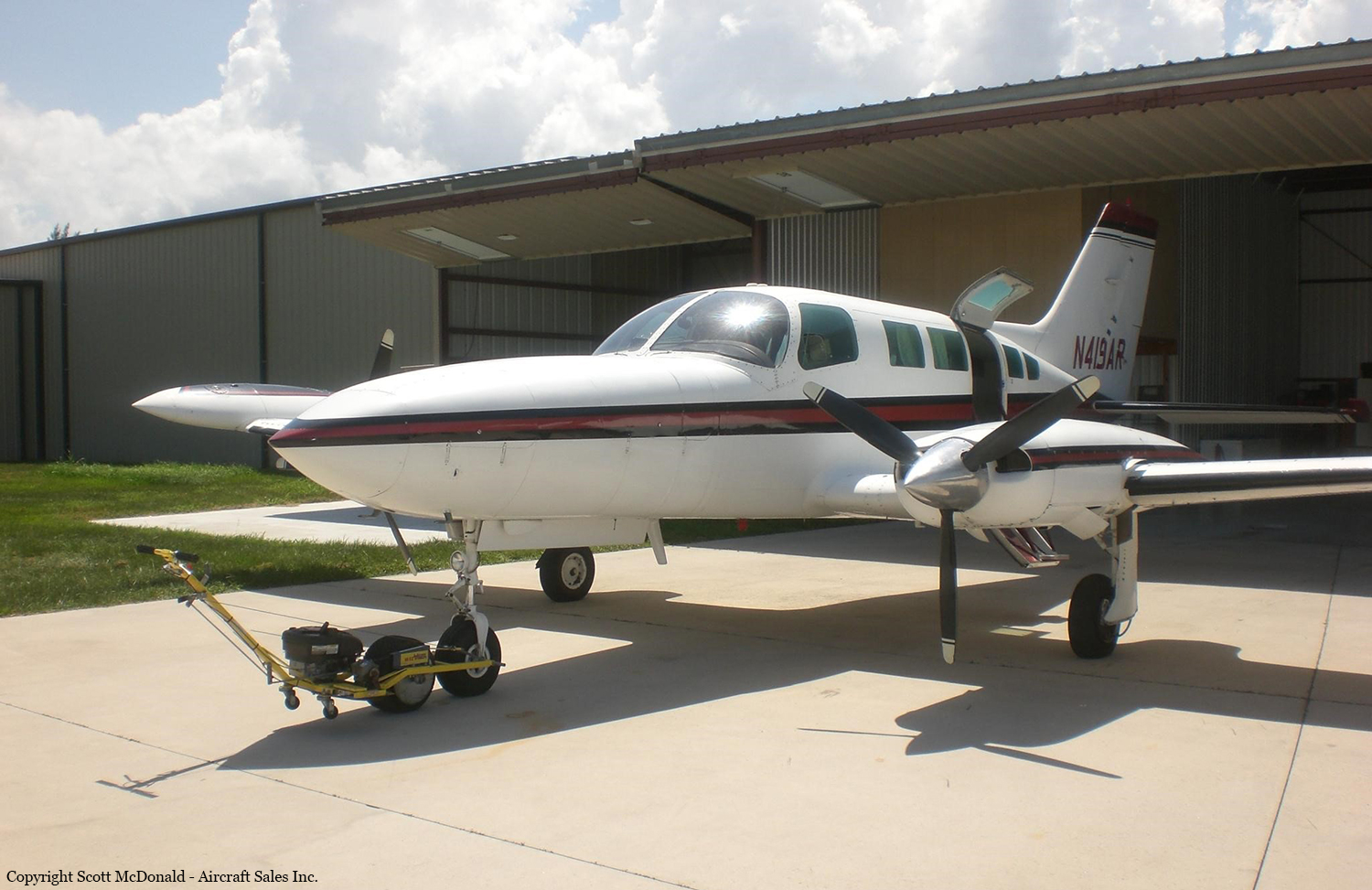
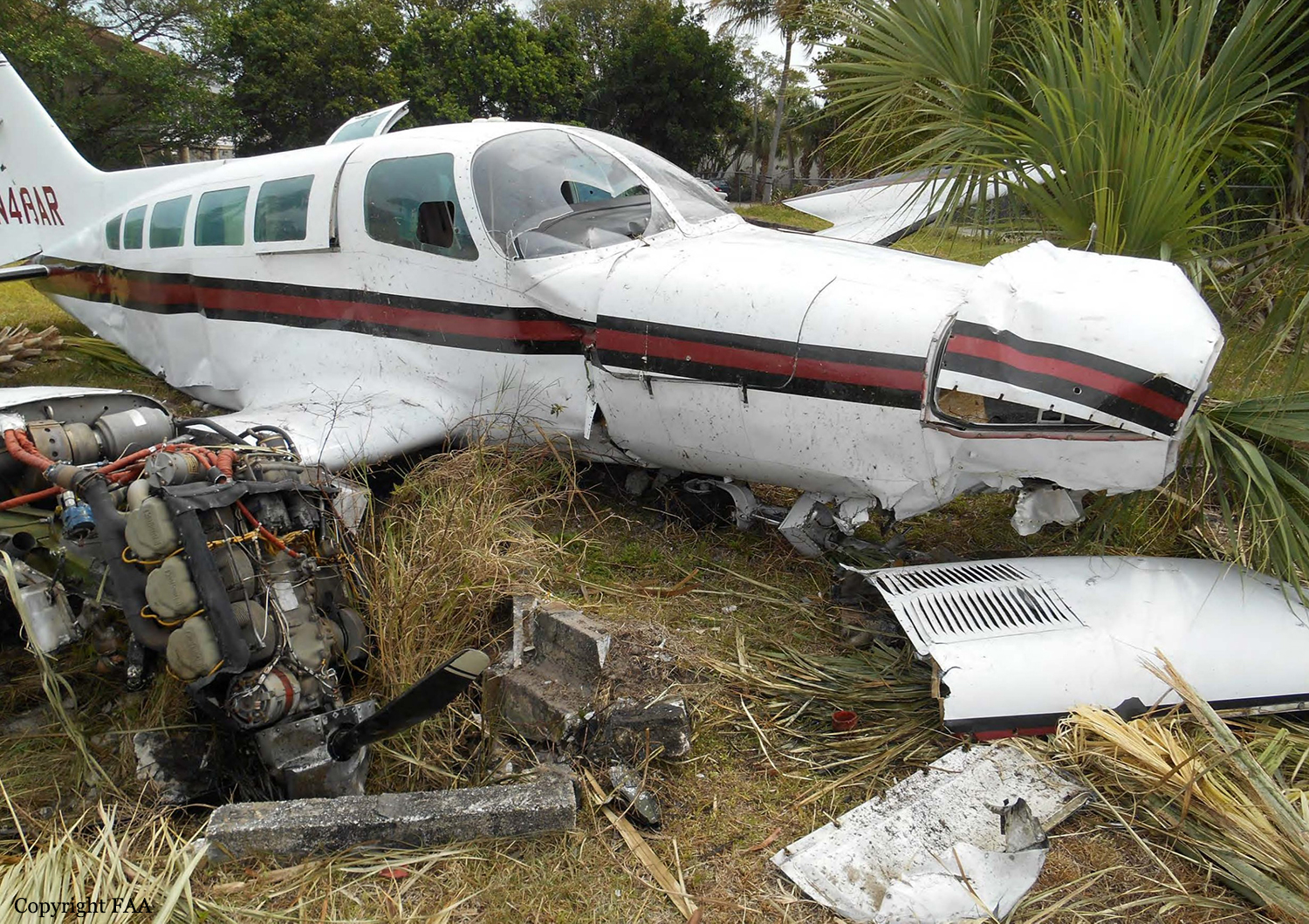
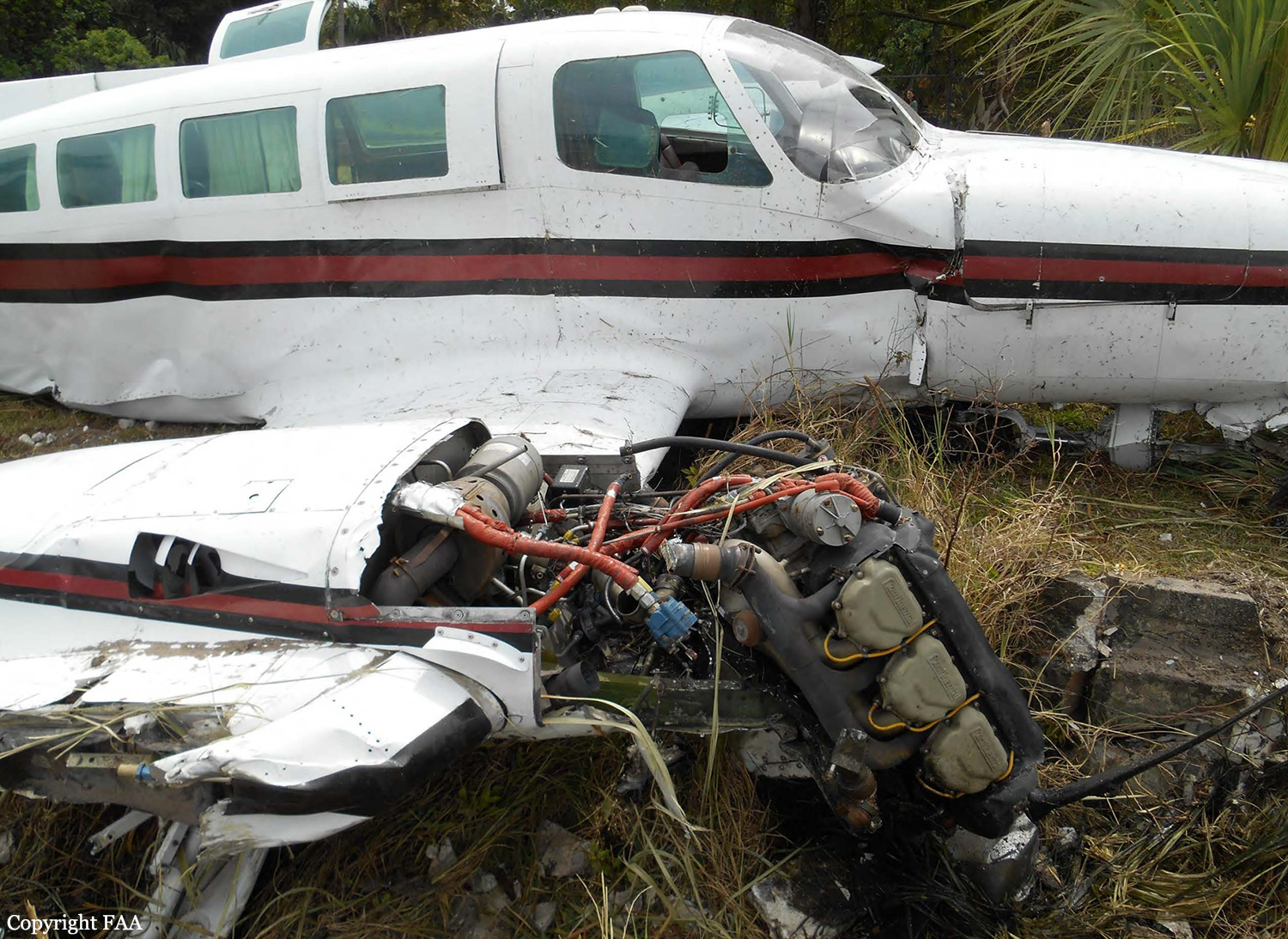
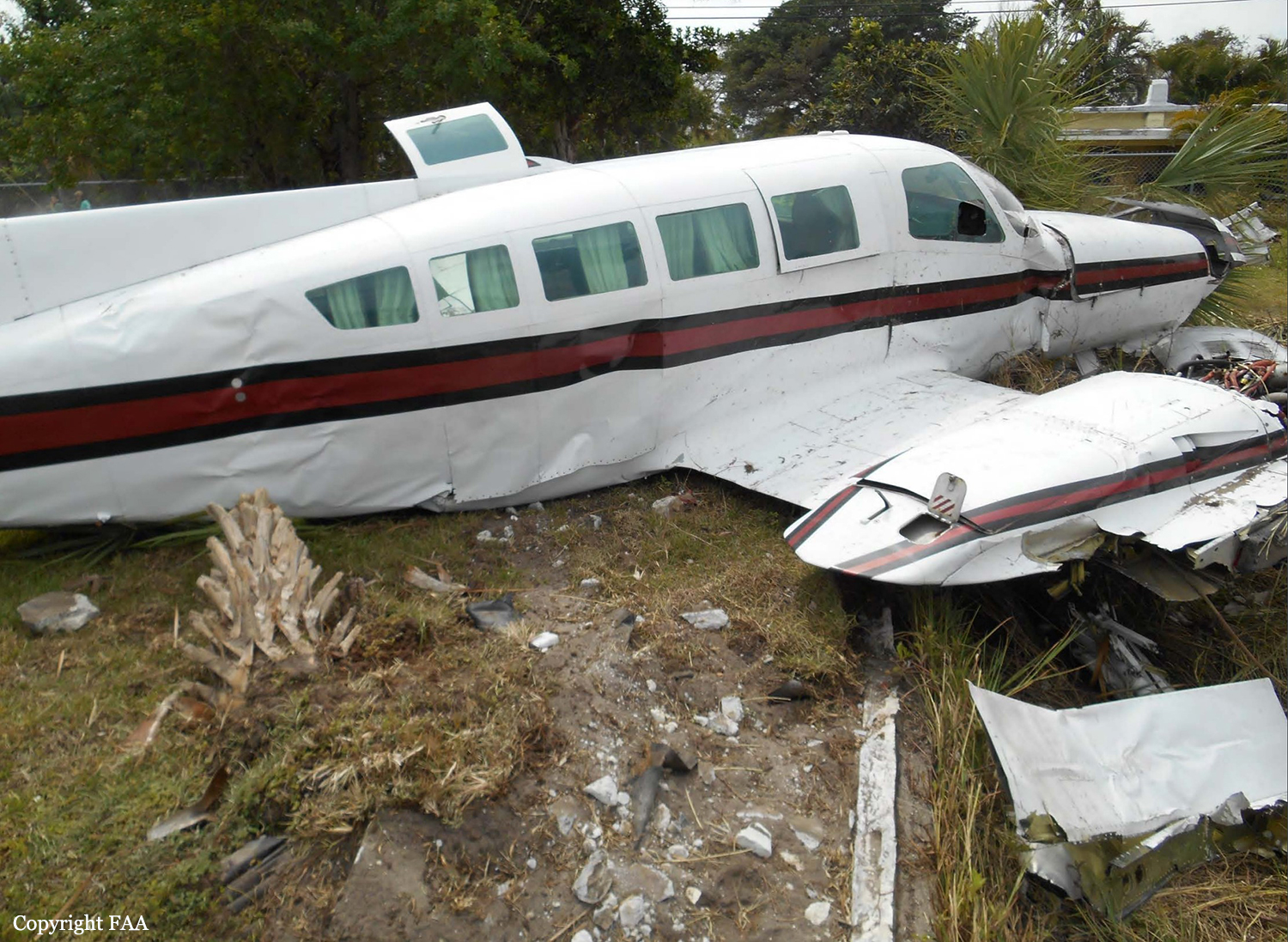
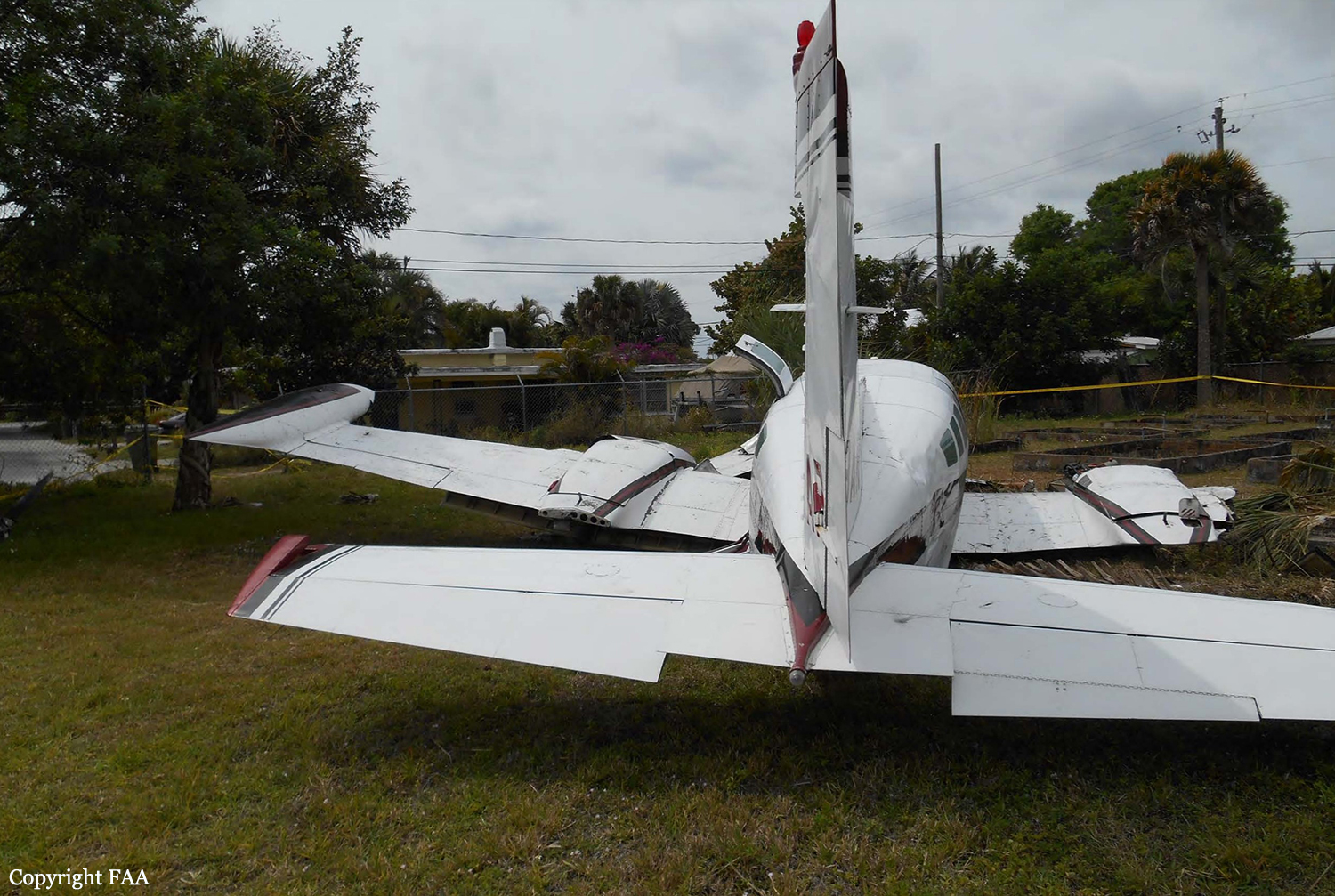
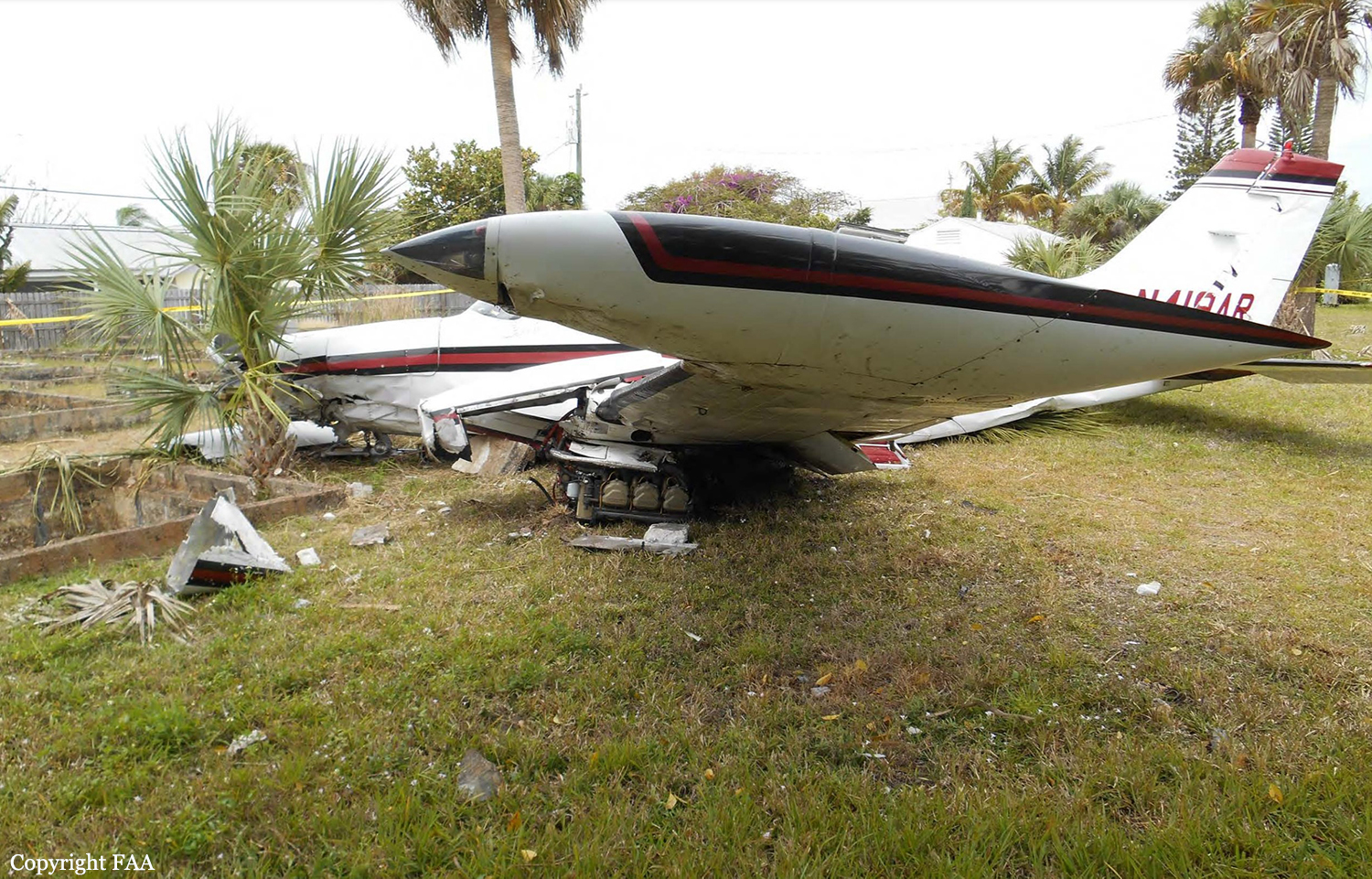
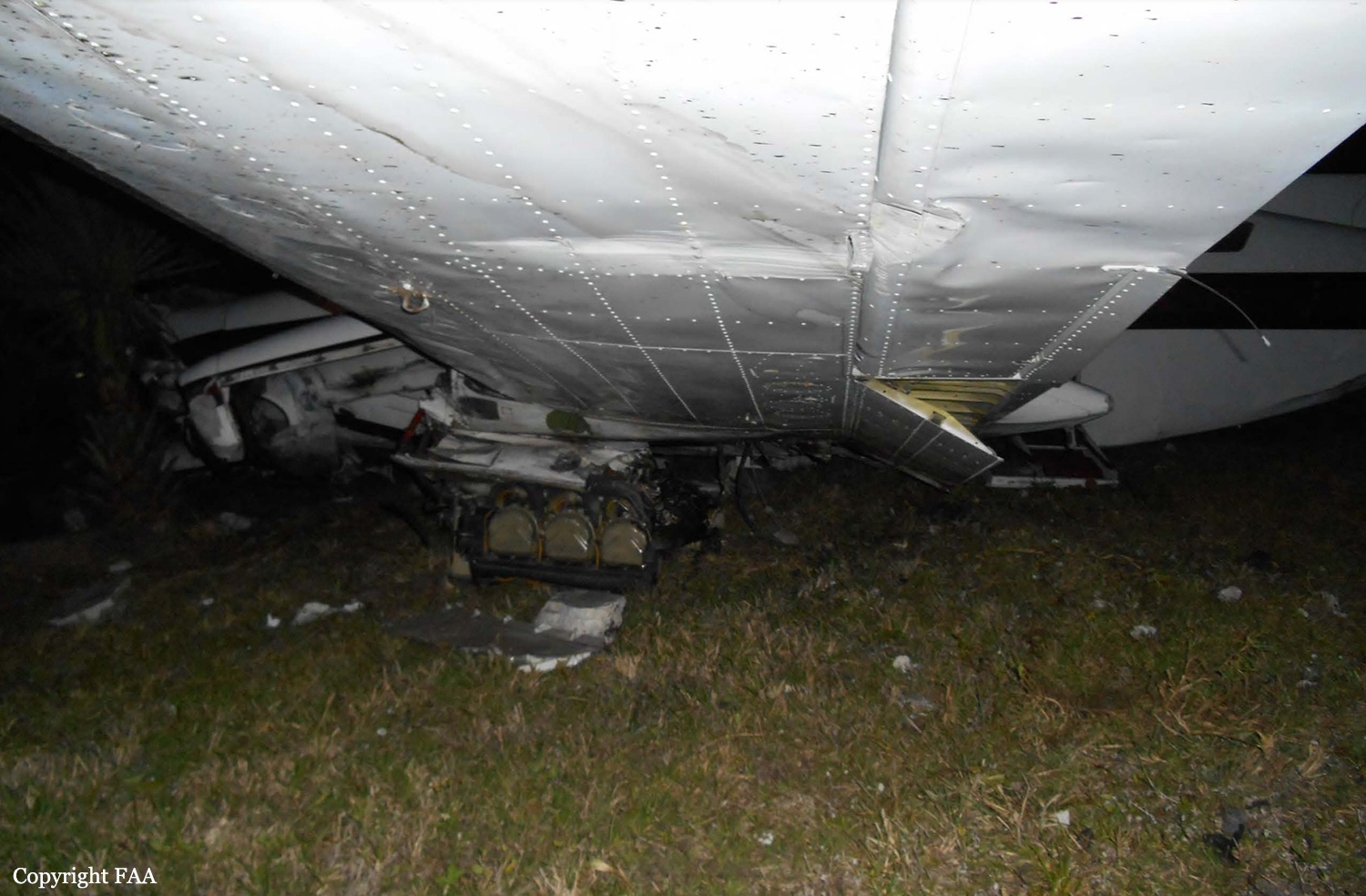
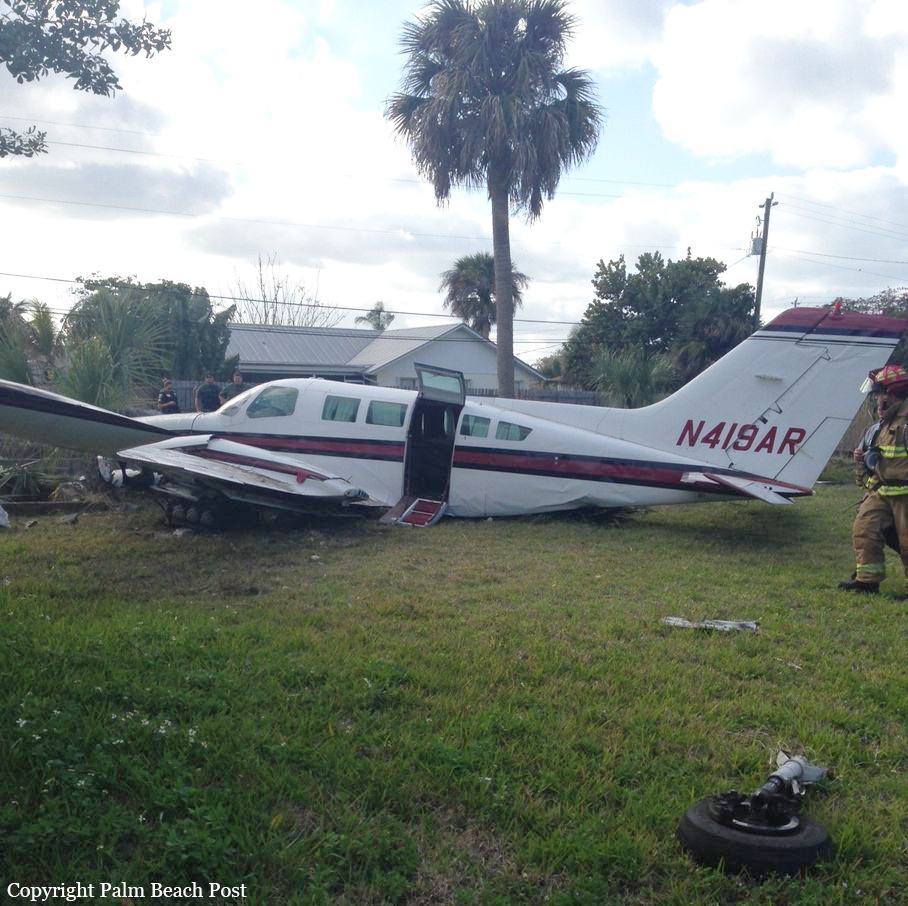
Crash of a Cessna 402B in Stuart
Date & Time:
Mar 14, 2014 at 1730 LT
Registration:
N419AR
Survivors:
Yes
Schedule:
Fort Pierce - Stuart
MSN:
402B-0805
YOM:
1974
Crew on board:
1
Crew fatalities:
Pax on board:
0
Pax fatalities:
Other fatalities:
Total fatalities:
0
Captain / Total hours on type:
8000.00
Aircraft flight hours:
5860
Circumstances:
According to the pilot, he checked the fuel gauges before departure and believed he had enough fuel for the flight. As he approached his destination airport, he was instructed by an air traffic controller to enter a 2-mile left base. About 3 miles from the airport, the controller advised him to intercept a 6-mile final. About 1 1/2 miles from the runway, the left engine “quit.” The pilot repositioned the fuel valve to the left inboard fuel tank and was able to restart the engine, but, shortly after, the right engine “quit.” He then attempted to reposition the right fuel valve to the right inboard fuel tank to restart the right engine, but the left engine “quit” again, and the pilot subsequently made a forced landing in a field. An examination of the engine and airplane systems revealed no anomalies that would have precluded normal operation. The left wing fuel tanks were found empty. The right wing was found separated from the fuselage. No evidence of fuel was noted in the right wing fuel tanks, and no evidence of fuel leakage was found at the accident site. The pilot reported that he saw fuel leaking out of the right wing fuel vent after the accident; it is possible that a small quantity of the airplane’s unusable fuel for the right tank could have leaked out immediately after the accident. Although the pilot believed that the airplane had enough fuel onboard for the flight, his assessment was based on his calculations of the airplane’s fuel burn during several short flights he made after having the airplane topped off with fuel the night before the accident; he did not visually check the fuel level in the tanks before departing on the accident flight. The lack of fuel in the fuel tanks, the lack of evidence of fuel leakage, the loss of engine power in both engines, and the lack of mechanical anomalies are consistent with fuel exhaustion.
Probable cause:
The pilot’s improper preflight planning and fuel management, which resulted in a total loss of power in both engines due to fuel exhaustion.
Final Report:

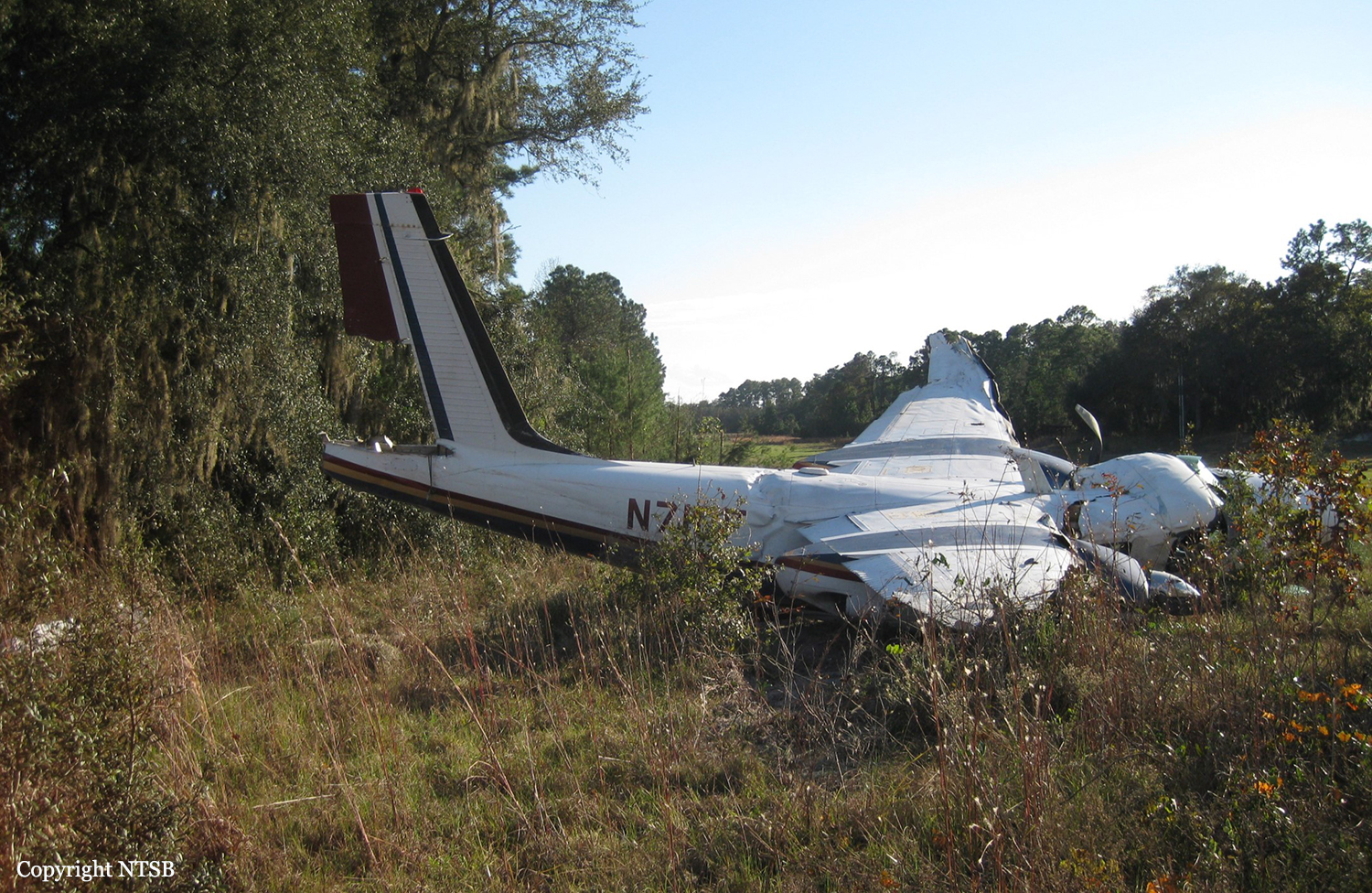
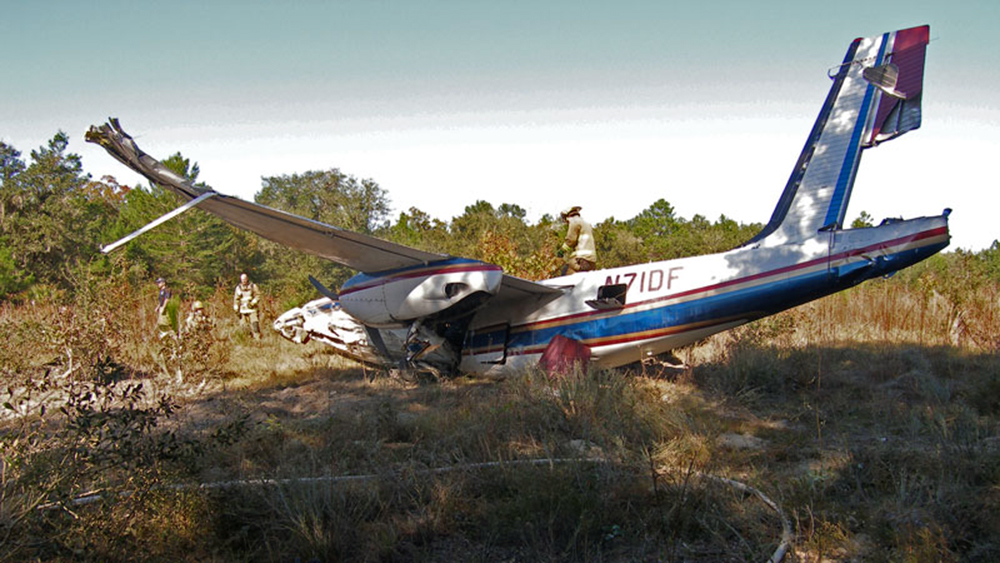
Crash of a Rockwell Grand Commander 680E in Crescent City
Date & Time:
Dec 3, 2013 at 0937 LT
Registration:
N71DF
Survivors:
Yes
Schedule:
Crescent City - Palatka
MSN:
680E-672-12
YOM:
1958
Crew on board:
1
Crew fatalities:
Pax on board:
3
Pax fatalities:
Other fatalities:
Total fatalities:
0
Captain / Total hours on type:
100.00
Aircraft flight hours:
8400
Circumstances:
The pilot reported that the airplane "hesitated" during the takeoff roll due to the added weight of the passengers on board and the grass surface of the departure airstrip (Jim Finlay Farm Airstrip). He said he then added "extra" engine power at rotation, and that the left engine accelerated more quickly than the right, which resulted in an adverse yaw to the right and collision with trees along the right side of the runway. The subsequent collision with trees and terrain resulted in substantial damage to the airframe. According to the pilot, there were no mechanical deficiencies with the airplane that would have prevented normal operation.
Probable cause:
The pilot's failure to maintain directional control during takeoff.
Final Report:

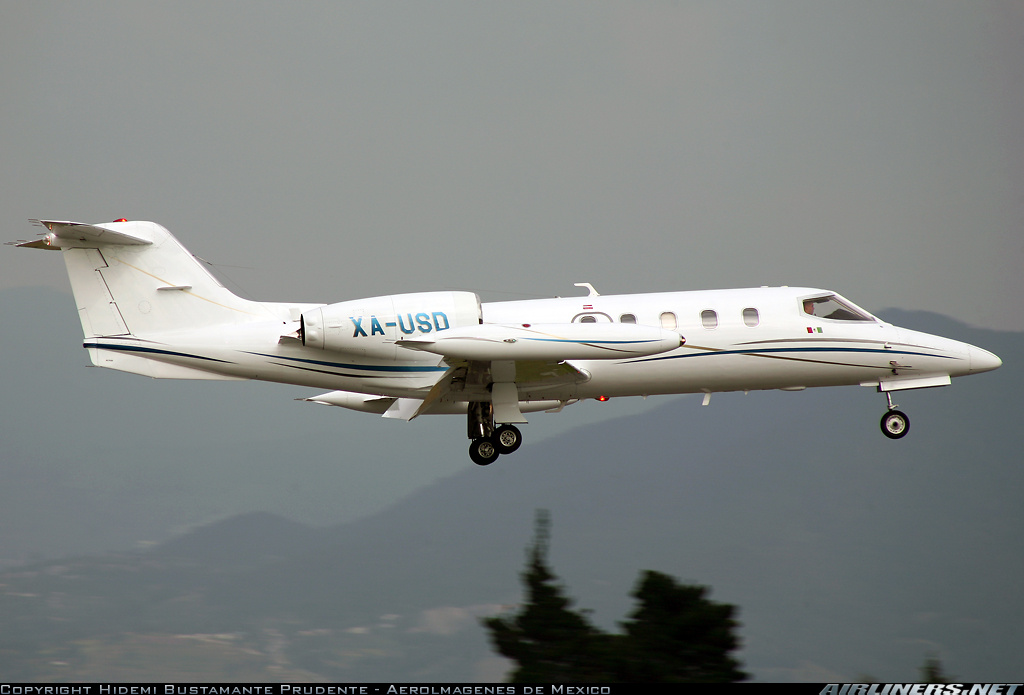
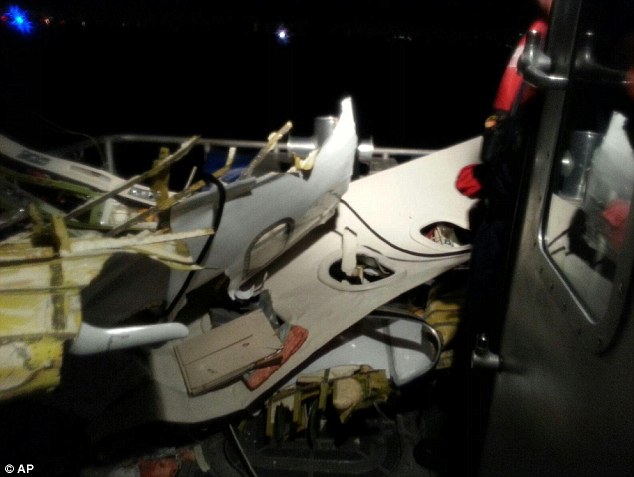
Crash of a Learjet 35A off Fort Lauderdale: 4 killed
Date & Time:
Nov 19, 2013 at 1956 LT
Operator:

Registration:
XA-USD
Survivors:
No
Schedule:
Fort Lauderdale - Cozumel
MSN:
35A-255
YOM:
1979
Crew on board:
2
Crew fatalities:
Pax on board:
2
Pax fatalities:
Other fatalities:
Total fatalities:
4
Captain / Total hours on type:
1400.00
Copilot / Total hours on type:
175
Aircraft flight hours:
6842
Circumstances:
During takeoff to the east over the ocean, after the twin-engine jet climbed straight ahead to about 2,200 ft and 200 knots groundspeed, the copilot requested radar vectors back to the departure airport due to an "engine failure." The controller assigned an altitude and heading, and the copilot replied, "not possible," and requested a 180-degree turn back to the airport, which the controller acknowledged and approved. However, the airplane continued a gradual left turn to the north as it slowed and descended. The copilot subsequently declared a "mayday" and again requested vectors back to the departure airport. During the next 3 minutes, the copilot requested, received, and acknowledged multiple instructions from the controller to turn left to the southwest to return to the airport. However, the airplane continued its slow left turn and descent to the north. The airplane slowed to 140 knots and descended to 900 ft as it flew northbound, parallel to the shoreline, and away from the airport. Eventually, the airplane tracked in the direction of the airport, but it continued to descend and impacted the ocean about 1 mile offshore. According to conversations recorded on the airplane's cockpit voice recorder (CVR), no checklists were called for, offered, or used by either flight crewmember during normal operations (before or during engine start, taxi, and takeoff) or following the announced in-flight emergency. After the "engine failure" was declared to the air traffic controller, the pilot asked the copilot for unspecified "help" because he did not "know what's going on," and he could not identify the emergency or direct the copilot in any way with regard to managing or responding to the emergency. At no time did the copilot identify or verify a specific emergency or malfunction, and he did not provide any guidance or assistance to the pilot. Examination of the recovered wreckage revealed damage to the left engine's thrust reverser components, including separation of the lower blocker door, and the stretched filament of the left engine's thrust reverser "UNLOCK" status light, which indicated that the light bulb was illuminated at the time of the airplane's impact. Such evidence demonstrated that the left engine's thrust reverser became unlocked and deployed (at least partially and possibly fully) in flight. Impact damage precluded testing for electrical, pneumatic, and mechanical continuity of the thrust reverser system, and the reason the left thrust reverser deployed in flight could not be determined. No previous instances of the inflight deployment of a thrust reverser on this make and model airplane have been documented. The airplane's flight manual supplement for the thrust reverser system contained emergency procedures for responding to the inadvertent deployment of a thrust reverser during takeoff. For a deployment occurring above V1 (takeoff safety speed), the procedure included maintaining control of the airplane, placing the thrust reverser rocker switch in the "EMER STOW" position, performing an engine shutdown, and then performing a single-engine landing. Based on the wreckage evidence and data recovered from the left engine's digital electronic engine control (DEEC), the thrust reverser rocker switch was not placed in the "EMER STOW" position, and the left engine was not shut down. The DEEC data showed a reduction in N1 about 100 seconds after takeoff followed by a rise in N1 about 35 seconds later. The data were consistent with the thrust reverser deploying in flight (resulting in the reduction in N1) followed by the inflight separation of the lower blocker door (resulting in the rise in N1 as some direct exhaust flow was restored). Further, the DEEC data revealed full engine power application throughout the flight. Although neither flight crewmember recognized that the problem was an inflight deployment of the left thrust reverser, certification flight test data indicated that the airplane would have been controllable as it was configured on the accident flight. If the crew had applied the "engine failure" emergency procedure (the perceived problem that the copilot reported to the air traffic controller), the airplane would have been more easily controlled and could have been successfully landed. The airplane required two fully-qualified flight crewmembers; however, the copilot was not qualified to act as second-in-command on the airplane, and he provided no meaningful assistance to the pilot in handling the emergency. Further, although the pilot's records indicated considerable experience in similar model airplanes, the pilot's performance during the flight was highly deficient. Based on the CVR transcript, the pilot did not adhere to industry best practices involving the execution of checklists during normal operations, was unprepared to identify and handle the emergency, did not refer to the appropriate procedures checklists to properly configure and control the airplane once a problem was detected, and did not direct the copilot to the appropriate checklists.
Probable cause:
The pilot's failure to maintain control of the airplane following an inflight deployment of the left engine thrust reverser. Contributing to the accident was the flight crew's failure to perform the appropriate emergency procedures, the copilot's lack of qualification and capability to act as a required flight crewmember for the flight, and the inflight deployment of the left engine thrust reverser for reasons that could not be determined through postaccident investigation.
Final Report:
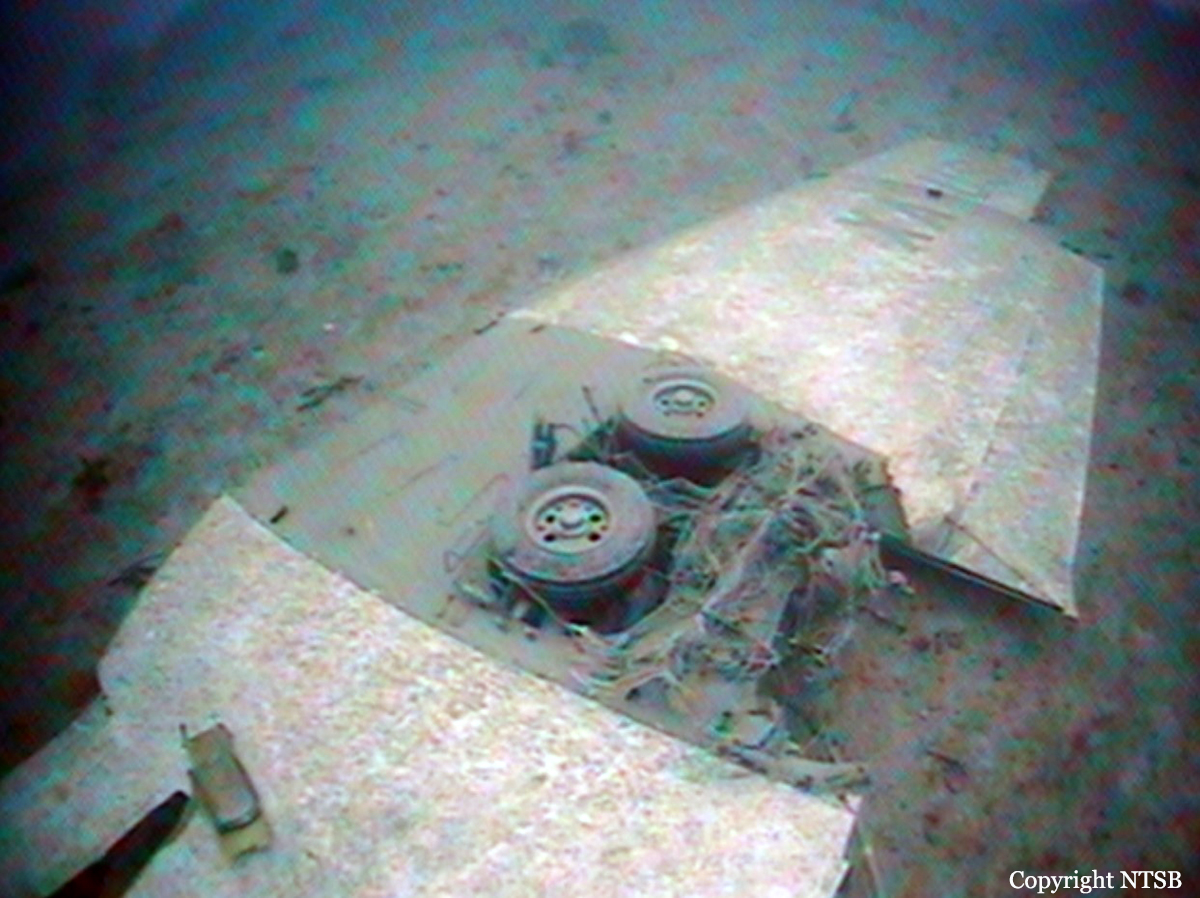
Crash of a Cessna 340A near Boynton Beach: 1 killed
Date & Time:
Jun 8, 2013 at 1002 LT
Registration:
N217JP
Survivors:
No
Schedule:
Fort Lauderdale – Leesburg
MSN:
340A-0435
YOM:
1978
Crew on board:
1
Crew fatalities:
Pax on board:
0
Pax fatalities:
Other fatalities:
Total fatalities:
1
Captain / Total hours on type:
56.00
Aircraft flight hours:
4209
Circumstances:
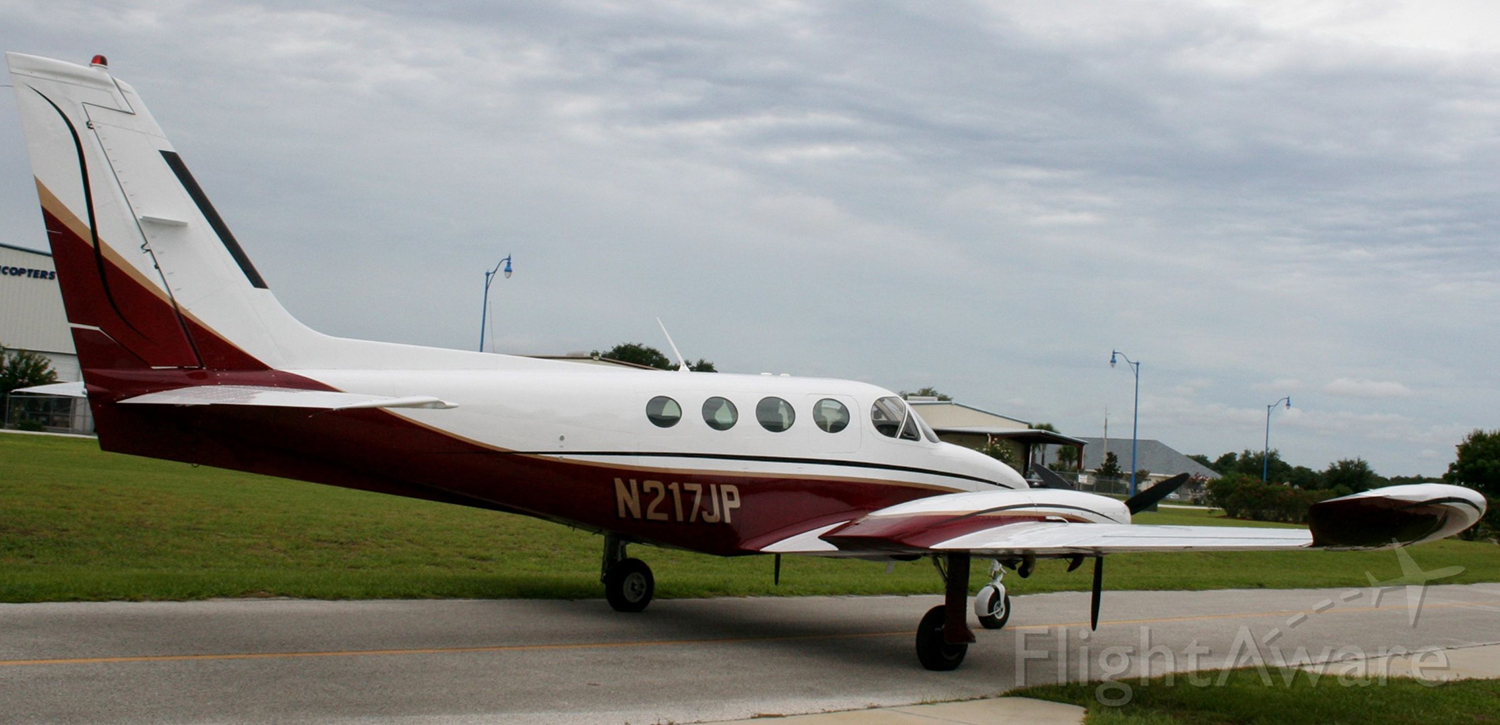
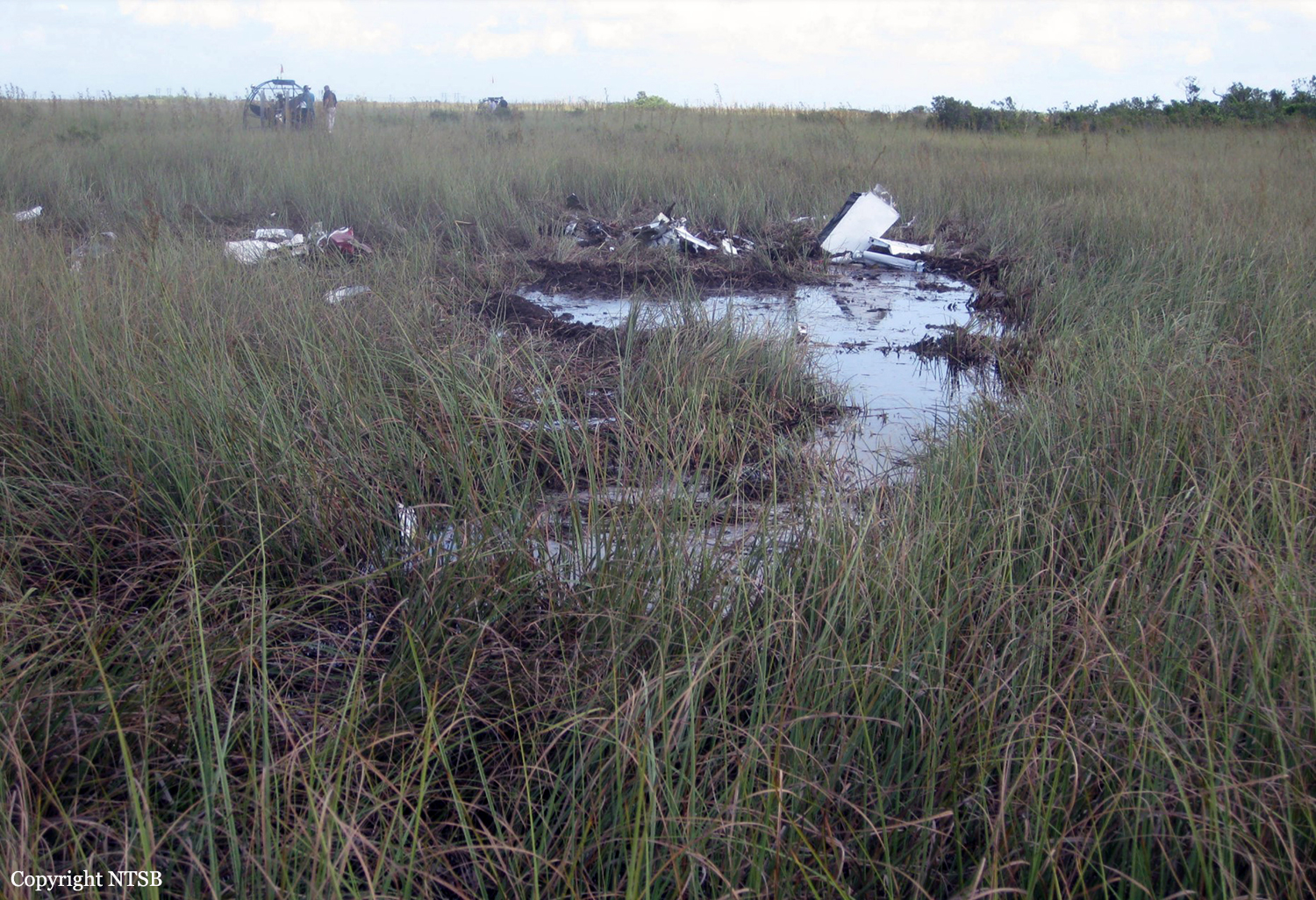
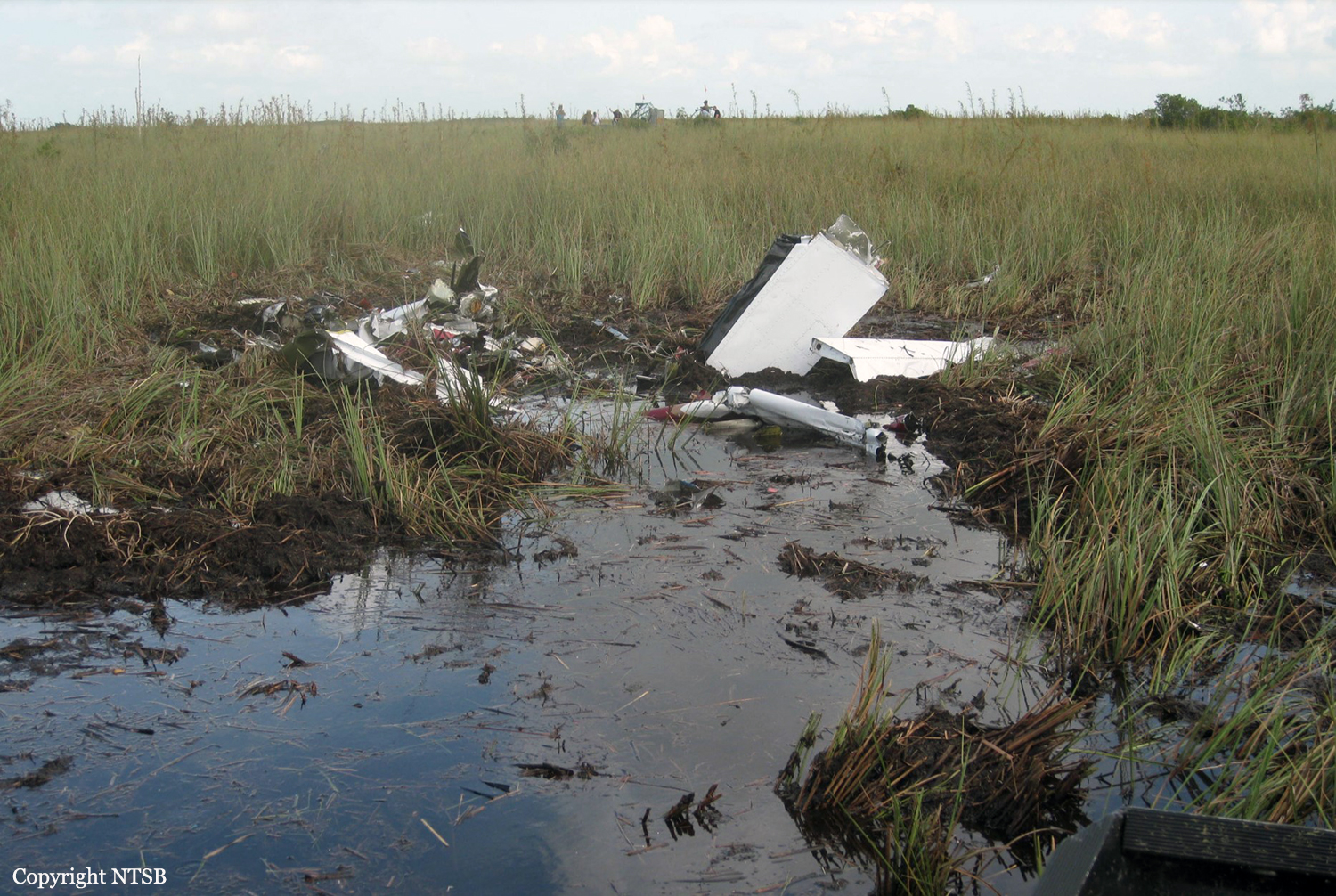
Four minutes after taking off on an instrument flight rules flight, during an assigned climb to 4,000 feet, the pilot advised the departure air traffic controller that the airplane was having "instrument problems" and that he wanted to "stay VFR" (visual flight rules), which the controller acknowledged. As directed, the pilot subsequently contacted the next sector departure controller, who instructed him to climb to 8,000 feet. The pilot stated that he would climb the airplane after clearing a cloud and reiterated that the airplane was having "instrument problems." The controller told the pilot to advise when he could climb the airplane. About 30 seconds later, the pilot told the controller that he was climbing the airplane to 8,000 feet, and, shortly thereafter, the controller cleared the airplane to 11,000 feet, which the pilot acknowledged. Per instruction, the pilot later contacted a center controller, who advised him of moderate-to-heavy precipitation along his (northbound) route for the next 10 miles and told him that he could deviate either left or right and, when able, proceed direct to an intersection near his destination. The pilot acknowledged the direct-to-intersection instruction, and the controller told the pilot to climb the airplane to 13,000 feet, which the pilot acknowledged. The pilot did not advise the center controller about the instrument problems. The airplane subsequently began turning east, eventually completing about an 80-degree turn toward heavier precipitation, and the controller told the pilot to climb to 15,000 feet, but the pilot did not respond. After two more queries, the pilot stated that he was trying to maintain "VFR" and that "I have an instrument failure here." The controller then stated that he was showing the airplane turning east, which "looks like a very bad idea." He subsequently advised the pilot to turn to the west but received no further transmissions from the airplane. Radar indicated that, while the airplane was turning east, it climbed to 9,500 feet but that, during the next 24 seconds, it descended to 7,500 feet and, within the following 5 seconds, it descended to just above ground level (the ground-based radar altitude readout was 0 feet). The pilot recovered the airplane and climbed it northeast-bound to 1,500 feet during the next 20 seconds. It then likely stalled and descended northwest-bound into shallow waters of a wildlife refuge. Weather radar returns indicated that the airplane's first descent occurred in an area of moderate-to-heavy rain but that the second descent occurred in light rain. The ceiling at the nearest recording airport, located about 20 nautical miles from the accident site, was 1,500 feet, indicating that the pilot likely climbed the airplane back into instrument meteorological conditions (IMC)before finally losing control. The investigation could not determine the extent to which the pilot had planned the flight. Although a flight plan was on file, the pilot did not receive a formal weather briefing but could have self-briefed via alternative means. The investigation also could not determine when the pilot first lost situational awareness, although the excessive turn to the east toward heavier precipitation raises the possibility that the turn likely wasn't intentional and that the pilot had already lost situational awareness. Earlier in the flight, when the pilot reported an instrument problem, the two departure controllers coordinated between their sectors in accordance with air traffic control procedures, allowing him to remain low and out of IMC. Although the second controller told the pilot to advise when he was able to climb, the pilot commenced a climb without further comment. The controller was likely under the impression that the instrument problem had been corrected; therefore, he communicated no information about a potential instrument problem to the center controller. The center controller then complied with the level of service required by advising the pilot of the weather conditions ahead and by approving deviations. The extent and nature of the deviation was up to the pilot with controller assistance upon pilot request. The pilot did not request further weather information or assistance with deviations and only told the center controller that the airplane was having an instrument problem after the controller pointed out that the airplane was heading into worsening weather. Due to impact forces, only minimal autopsy results could be determined. Federal Aviation Administration medical records indicated that the 16,560-hour former military pilot did not have any significant health issues, and the pilot's wife was unaware of any preexisting significant medical conditions. The wreckage was extremely fractured, which precluded thorough examination. However, evidence indicated that all flight control surfaces were accounted for at the accident scene and that the engines were under power at the time of impact. The airplane was equipped with redundant pilot and copilot flight instruments, redundant instrument air sources, onboard weather radar, and a storm scope. The pilot did not advise any of the air traffic controllers about the extent or type of instrument problem, and the investigation could not determine which instrument(s) might have failed or how redundant systems could have been failed at the same time. Although the pilot stated on several occasions that the airplane was having instrument problems, he opted to continue flight into IMC. By doing so, he eventually lost situational awareness and then control of airplane but regained both when he acquired visual ground contact. Then, for unknown reasons, he climbed the airplane back into IMC where he again lost situational awareness and airplane control but was then unable to regain them before the airplane impacted the water.
Probable cause:
The pilot's loss of situational awareness, which resulted in an inadvertent aerodynamic stall/spin after he climbed the airplane back into instrument meteorological conditions (IMC). Contributing to the accident was the pilot's improper decision to continue flight into IMC with malfunctioning flight instrument(s).
Final Report:
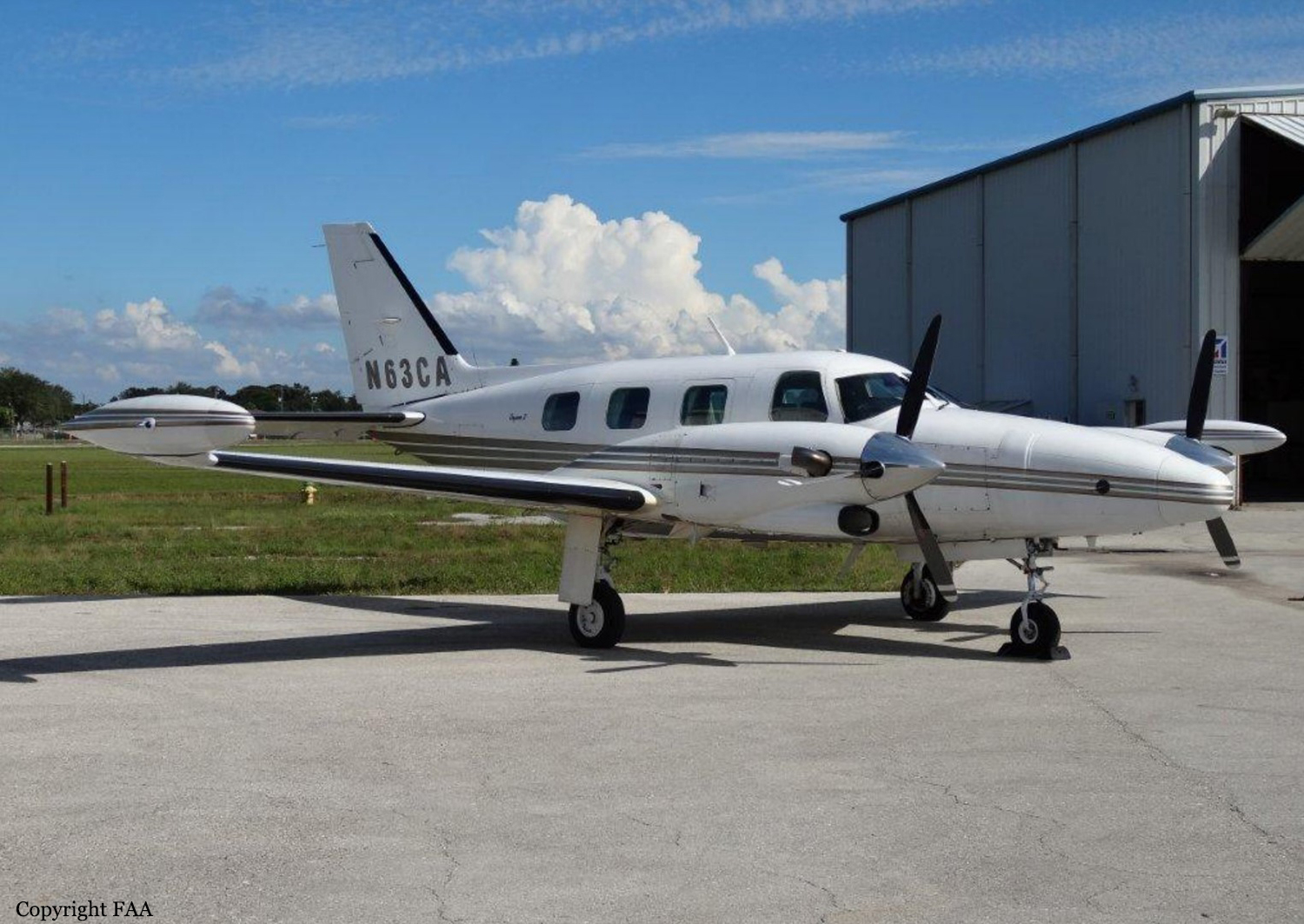
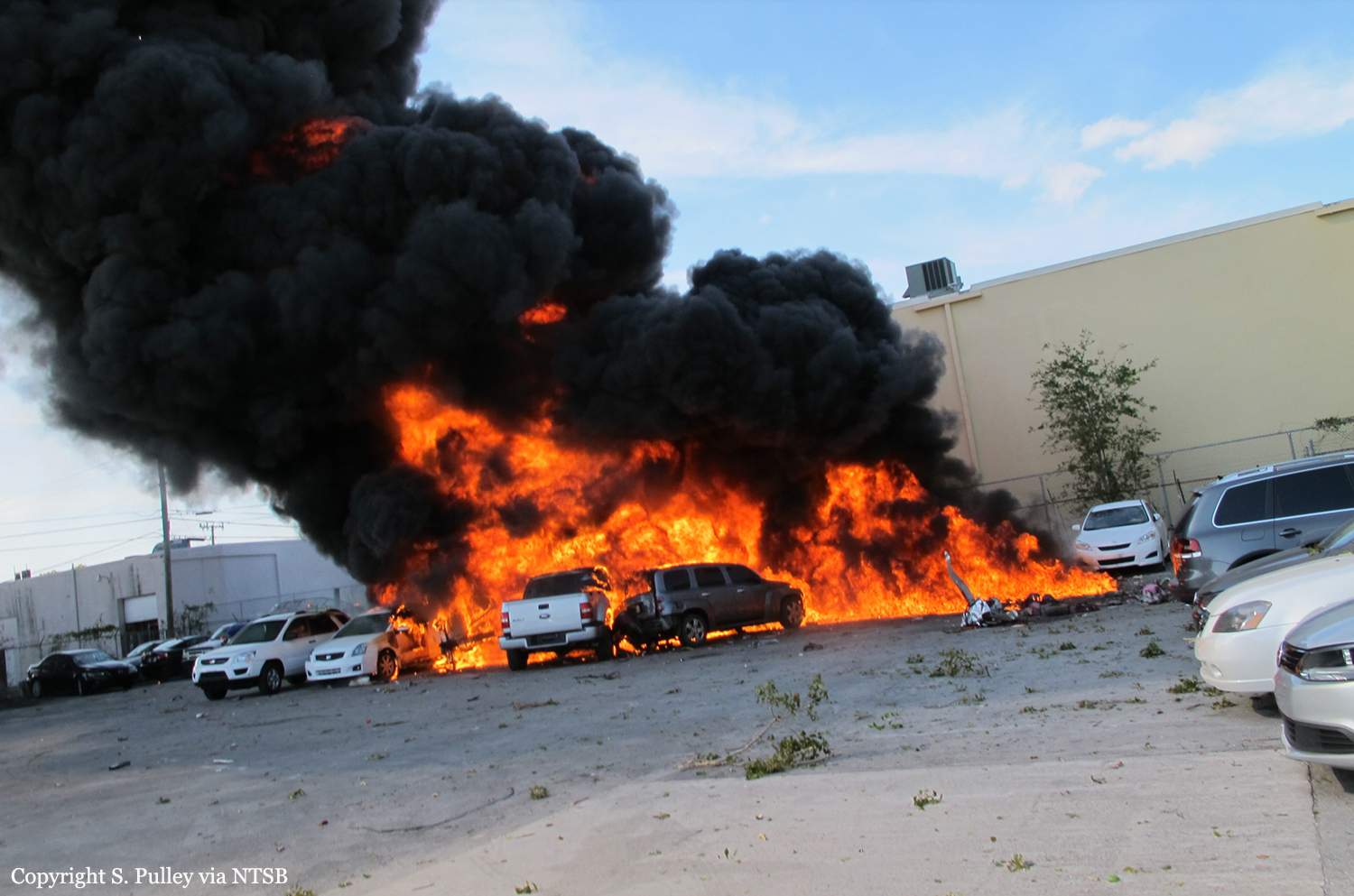
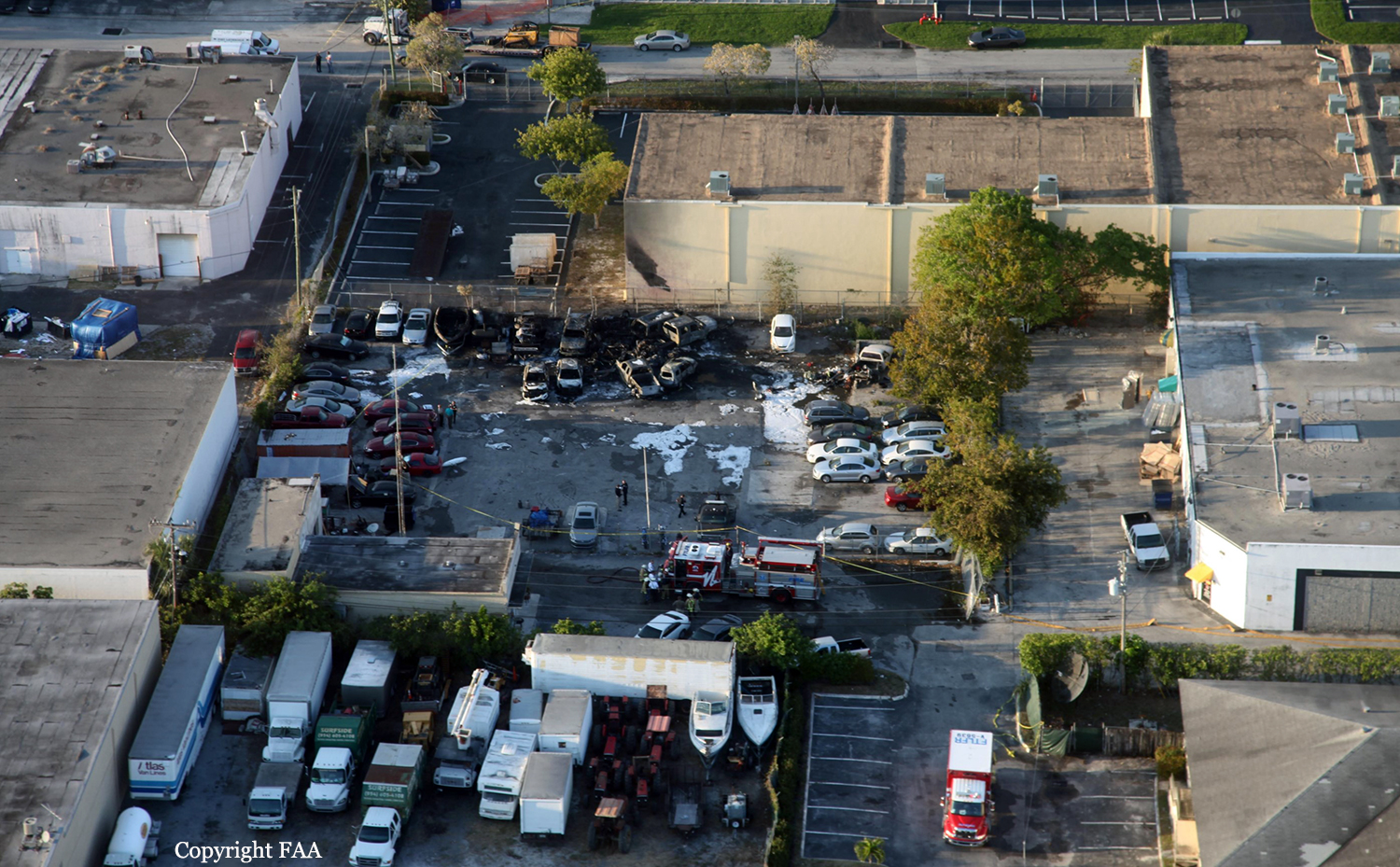
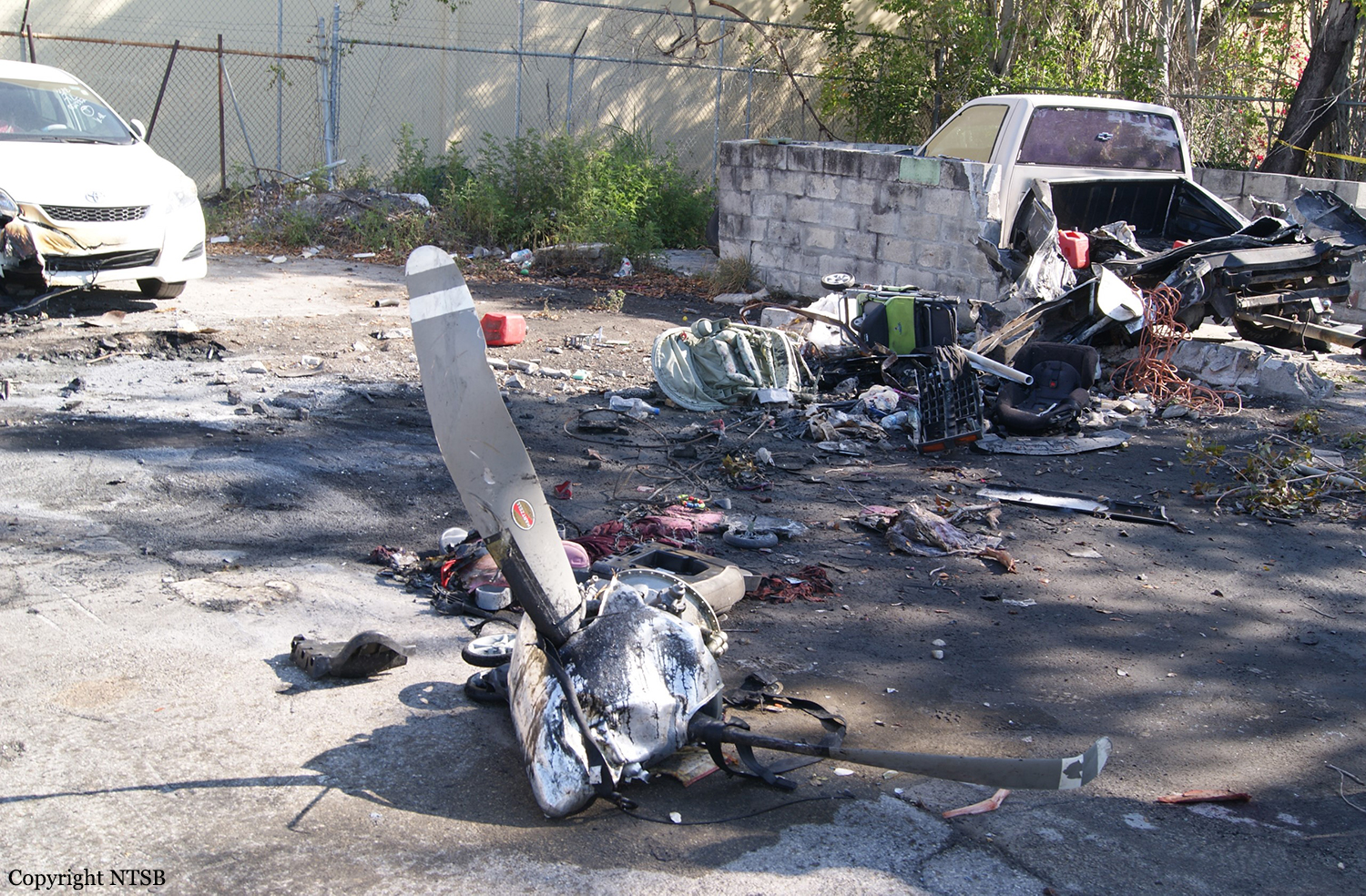
Crash of a Piper PA-31T Cheyenne II in Fort Lauderdale: 3 killed
Date & Time:
Mar 15, 2013 at 1621 LT
Registration:
N63CA
Survivors:
No
Schedule:
Fort Lauderdale - Fort Lauderdale
MSN:
31-7820033
YOM:
1978
Crew on board:
1
Crew fatalities:
Pax on board:
2
Pax fatalities:
Other fatalities:
Total fatalities:
3
Aircraft flight hours:
5006
Circumstances:
The multiengine airplane had not been flown for about 4 months and was being prepared for export. The pilot was attempting a local test flight after avionics upgrades had been performed. Shortly after takeoff, the pilot transmitted that he was experiencing an "emergency"; however, he did not state the nature of the emergency. The airplane was observed experiencing difficulty climbing and entered a right turn back toward the airport. It subsequently stalled, rolled right about 90 degrees, and descended. The airplane impacted several parked vehicles and came to rest inverted. A postcrash fire destroyed the airframe. Both engines were destroyed by fire and impact damage. The left propeller assembly was fire damaged, and the right propeller assembly remained attached to the gearbox, which separated from the engine. Examination of wreckage did not reveal any preimpact malfunctions. It was noted that the left engine displayed more pronounced rotational signatures than the right engine, but this difference could be attributed to the impact sequence. The left propeller assembly displayed evidence of twisting and rotational damage, and the right propeller assembly did not display any significant evidence of twisting or rotational damage indicative of operation with a difference in power. The lack of flight recorders and the condition of the wreckage precluded the gathering of additional relevant information.
Probable cause:
The pilot's failure to maintain airplane control following an emergency, the nature of which could not be determined because of crash and fire damage, which resulted in an aerodynamic stall.
Final Report: