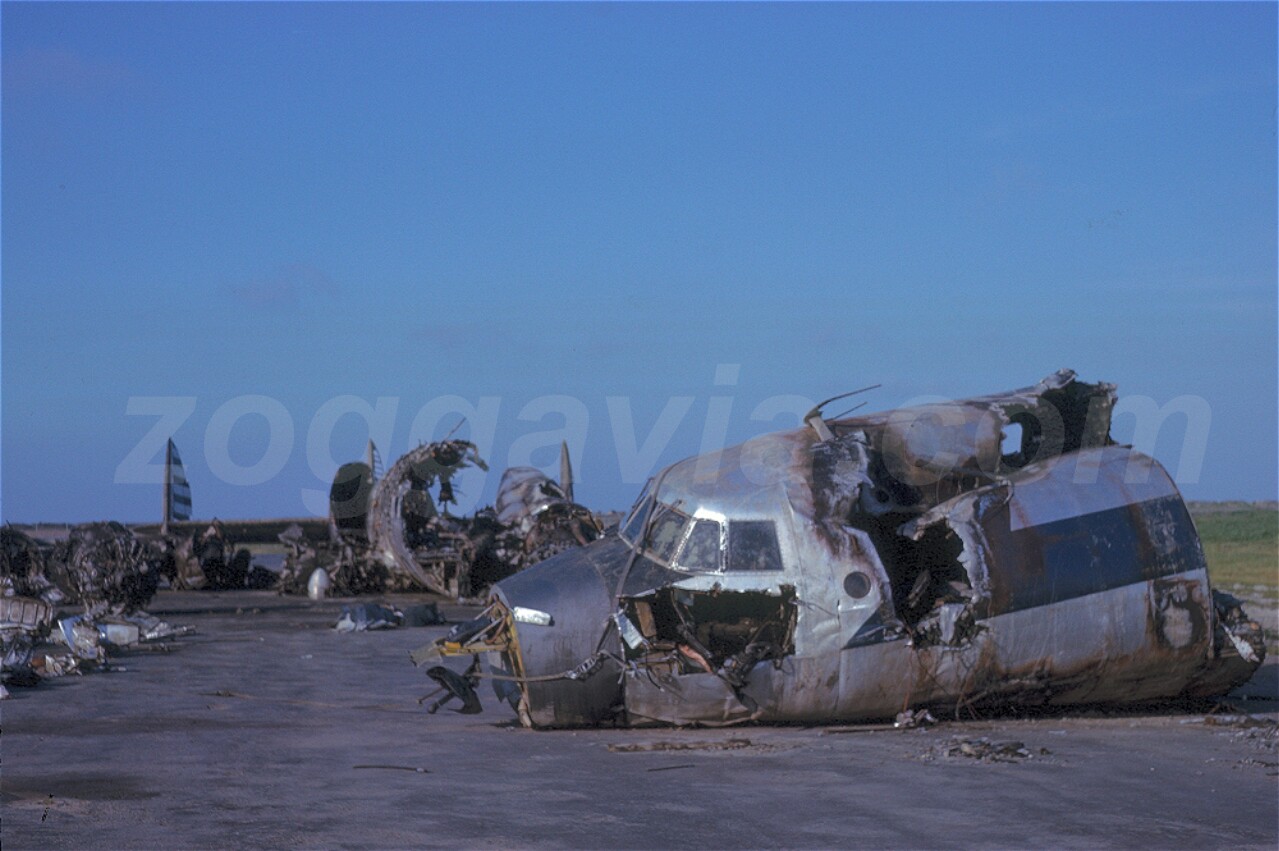
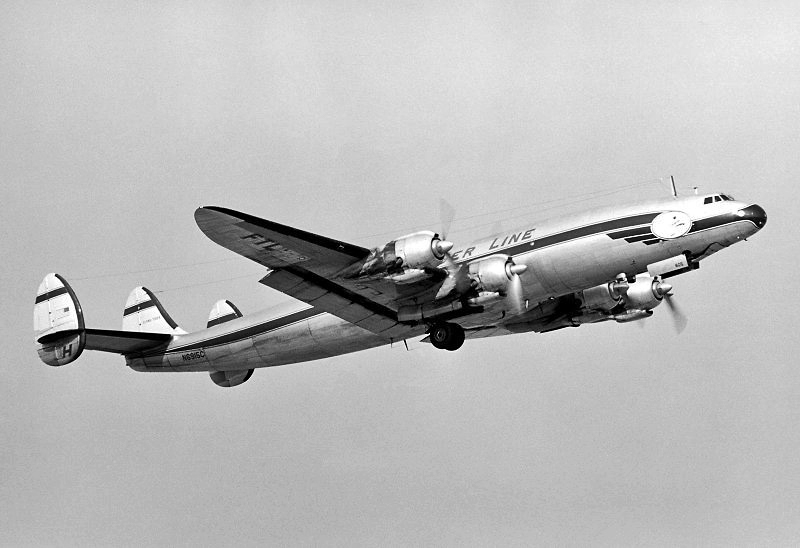
Crash of a Lockheed L-1049H Super Constellation in San Francisco: 3 killed

Date & Time: Dec 24, 1964 at 0031 LT
Operator:

Registration:
N6915C
Flight Phase:
Flight Type:
Survivors:
No
Site:
Schedule:
San Francisco – New York
MSN:
4812
YOM:
1957
Flight number:
FT282
Crew on board:
3
Crew fatalities:
Pax on board:
0
Pax fatalities:
Other fatalities:
Total fatalities:
3
Captain / Total flying hours:
14911
Captain / Total hours on type:
3942.00
Copilot / Total flying hours:
4113
Copilot / Total hours on type:
3811
Circumstances:
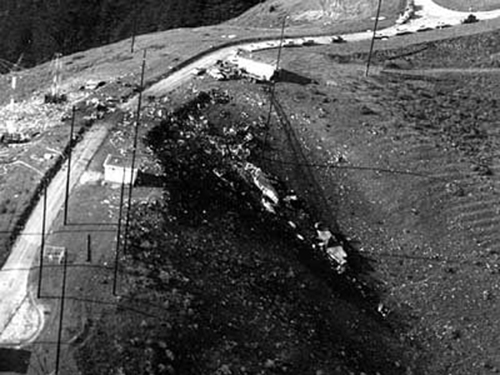
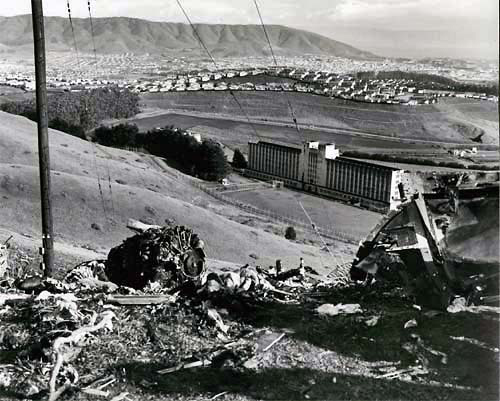
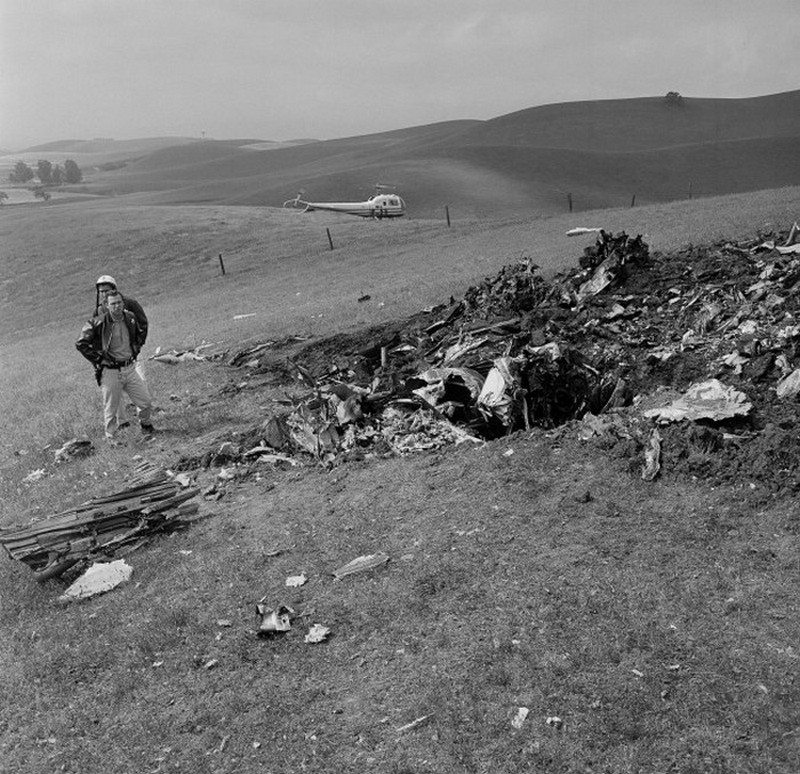
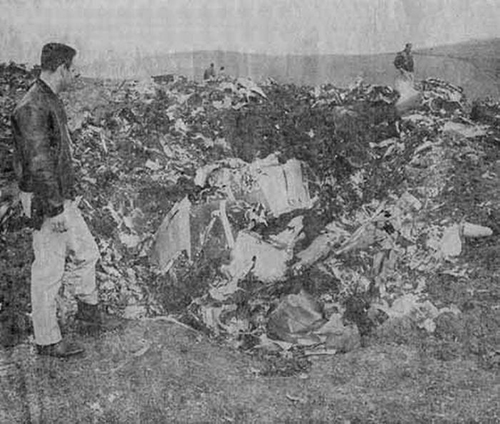
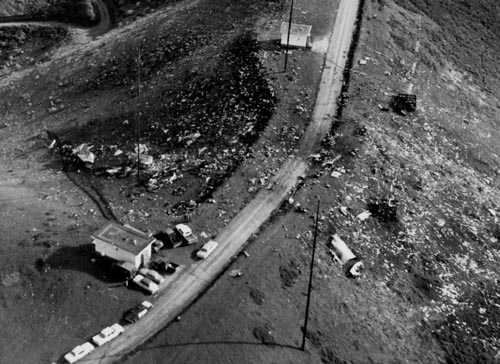
Flight 282 was a scheduled domestic cargo flight from San Francisco International Airport, California, to John F. Kennedy International Airport, New York. It was originally scheduled to depart at 2100 hours, Pacific Standard Time, on 23 December, but the flight was delayed because of the non-availability of a flight engineer. An engineer obtained from Los Angeles arrived in San Francisco at 2315 hours and the flight departed at 0028 hours on 24 December. At 0015 hours, while taxiing to runway 28L, the flight advised Ground Control that because of a heavy load, they would like to proceed out past the GAP Radio Beacon to the Golden Gate Intersection, and thence via Victor 150 to Sacramento instead of direct to Sacramento as originally filed. The request was coordinated with Oakland Air Route Traffic Control Centre and approval obtained. The crew was then advised that for take-off on runway 28L there would be a 'heavy' left crosswind from 210° at 18 to 25 knots which they acknowledged. After having switched to clearance delivery frequency, the flight was cleared to Kennedy Airport via Victor one fifty Sacramento, Victor six north, and requested to climb out on the San Francisco two eight seven radial for a vector to Golden Gate Intersection to intercept Victor one fifty. This was acknowledged. The Clearance Delivery Controller then stated: " You can disregard the vector, climb outbound San Francisco 287° radial to Golden Gate Intersection, then Victor 150, and, depending on your altitude, they probably will give you a vector to intercept (Victor) 150 before you get to Golden Gate". This was also acknowledged. The Local Controller, who was also Tower Supervisor, noted the time of 0030 on his clock as the aircraft became airborne and passed the tower. An eyewitness observed the landing lights retracting as the aircraft crossed the end of the runway. However, several witnesses along the flight path, including some located at points just prior to the crash, saw both landing lights on. Landing lights of the L-1049H may be retracted flush with the lower wing surface and remain on until switched off. After take-off, witnesses stated the aircraft made a slight turn to the right, then a steeper turn to the left, and then was observed returning to a wings-level attitude as it entered the clouds. At 0030:22, the flight was advised to contact Departure Control and did so immediately. The Departure Controller advised the flight at 0030:57 that he had radar contact with it and requested it to report leaving thousand-foot altitudes. At 0031:05, the crew asked how they were tracking toward the GAP. The Departure Controller switched his radar scope from the 30 to the 10-mile setting and requested the flight's altitude. The crew!replied they were at 900 ft. At 0031:20, the Departure Controller advised that they were left of the San Francisco 287° radial. As he received no acknowledgement he repeated his message. The Departure Controller stated that within seconds after the second transmission, the target stopped, bloomed, and disappeared from the radar scope. Repeated attempts to communicate with the flight after its disappearance from the scope were unsuccessful. At this time, 0032:30, the controller placed a time hack on the communications tape. Ground impact was computed to have occurred at approximately 0031:30. Main impact occurred 860 ft above sea level on Sweeney's Ridge, at approximately 4.3 miles on the 257° radial of the SFO TVOR. The coordinates of the impact area were 122° 28' 00" W longitude and 37° 38' 28" N latitude. The aircraft disintegrated on impact and all three crew members were killed.
Probable cause:
The pilot, for undetermined reasons, deviated from departure course into an area of rising terrain where downdraught activity and turbulence affected the climb capability of the aircraft sufficiently to prevent terrain clearance.
Final Report:
Crash of a Grumman G-21A Goose off Avalon

Date & Time: Jul 13, 1964 at 0740 LT
Type of aircraft:
Operator:
Registration:
N4221A
Flight Phase:
Survivors:
Yes
Schedule:
Avalon – Long Beach
MSN:
1029
YOM:
1939
Crew on board:
1
Crew fatalities:
Pax on board:
9
Pax fatalities:
Other fatalities:
Total fatalities:
0
Captain / Total flying hours:
7600
Captain / Total hours on type:
4100.00
Circumstances:
Shortly after takeoff from the Bay of Avalon, while climbing, the pilot apparently encountered engine problems. He elected to make an emergency landing but the seaplane was ditched and later sank. All 10 occupants were evacuated safely.
Probable cause:
The cause of the accident was undetermined.
Final Report:

Crash of a Boeing KC-135A-BN Stratotanker in the Death Valley National Park: 4 killed

Date & Time: Jul 8, 1964
Type of aircraft:
Operator:
Registration:
60-0340
Flight Phase:
Flight Type:
Survivors:
No
Site:
Schedule:
Larson - Larson
MSN:
18115
YOM:
1961
Crew on board:
4
Crew fatalities:
Pax on board:
0
Pax fatalities:
Other fatalities:
Total fatalities:
4
Circumstances:
The KC-135 was engaged in a refueling mission out from Larson AFB, Washington, and was carrying a crew of four. At an altitude of 26,000 feet, following a successful refueling mission of a USAF Republic F-105D-15-RE Thunderchief registered 61-0091, the crew of the KC-135 attempted to leave the area and the pilot-in-command made a turn to the right when the engine number four struck the cockpit window of the Thunderchief. Out of control, both aircraft dove into the ground and crashed in a mountainous area located in the Death Valley National Park. All four crew members on board the KC-135 as well as the pilot of the Thunderchief were killed.
KC-135 crew:
Cpt Thomas F. Dozier, pilot,
1st Lt Erwin W. Boelter Jr., copilot,
1st Lt Ronald D. Williams, navigator,
S/Sgt Robert J. Graves, boom operator.
Thunderchief pilot:
Cpt Leonard F. Reynolds.
Probable cause:
The exact cause of the midair collision remains unclear.

Crash of a Fairchild F-27A in San Ramon: 44 killed

Date & Time: May 7, 1964 at 0649 LT
Type of aircraft:
Operator:
Registration:
N2770R
Flight Phase:
Survivors:
No
Schedule:
Reno – Stockton – San Francisco
MSN:
36
YOM:
1959
Flight number:
PC773
Crew on board:
3
Crew fatalities:
Pax on board:
41
Pax fatalities:
Other fatalities:
Total fatalities:
44
Captain / Total flying hours:
20434
Captain / Total hours on type:
2793.00
Copilot / Total flying hours:
6640
Copilot / Total hours on type:
988
Aircraft flight hours:
10252
Circumstances:
A Pacific Air Lines, Inc., Fairchild F-27, N2770R, operating as Flight 773, crashed near San Ramon, California, at approximately 0649, May 7, 1964, while en route from Reno, Nevada, to San Francisco, California. None of the 44 occupants aboard, including the three crew members and 41 passengers, survived the crash. The aircraft was destroyed by impact. The flight proceeded in a routine manner until approximately 26 nautical miles from its destination, the San Francisco International Airport. At that point, a message was received by Oakland Approach Control and the radar target associated with Flight 773 disappeared from the controller's radar scope. The recorded message, later determined to have been that of the copilot of N2770R was: "... Skippers shot. We're ben shot. (I was) Try'in ta help." A .357 Smith and Wesson Magnum revolver identified as having belonged to one of the passengers on the flight was found in the wreckage area. It contained six empty cartridges, which had been fired from the weapon.
Probable cause:
The Board determines the probable cause of this accident was the shooting of the captain and first officer by a passenger during flight.
Final Report:

Crash of a Beechcraft SNB-2C Navigator near Mt Whitney: 4 killed

Date & Time: Mar 31, 1964
Type of aircraft:
Operator:
Registration:
29581
Flight Phase:
Flight Type:
Survivors:
No
Site:
YOM:
1944
Crew on board:
2
Crew fatalities:
Pax on board:
2
Pax fatalities:
Other fatalities:
Total fatalities:
4
Circumstances:
While in cruising altitude on a liaison flight, weather conditions worsened. In a limited visibility due to snow falls, the twin engine aircraft struck the slope of a mountain located 7 miles southwest of Mt Whitney. All four occupants were killed.

Crash of a Boeing B-52B-10-BO Stratofortress in Tranquility

Date & Time: Feb 7, 1964 at 1900 LT
Type of aircraft:
Operator:
Registration:
52-0009
Flight Phase:
Flight Type:
Survivors:
Yes
Schedule:
Castle - Castle
MSN:
16500
YOM:
1952
Crew on board:
7
Crew fatalities:
Pax on board:
0
Pax fatalities:
Other fatalities:
Total fatalities:
0
Circumstances:
The crew was engaged in a mission from Castle AFB and while in cruising altitude, a fire erupted in the hydraulic system. All seven crew members ejected and abandoned the aircraft that dove into the ground and crashed in a rice field located in Tranquility. All seven crew members were found alive while the aircraft was destroyed.
Probable cause:
In-flight fire in the hydraulic system.

Crash of a Beechcraft C18 Expeditor in Oakdale

Date & Time: Jan 18, 1964 at 1500 LT
Type of aircraft:
Operator:
Registration:
N5046N
Flight Type:
Survivors:
Yes
MSN:
8175
YOM:
1945
Crew on board:
2
Crew fatalities:
Pax on board:
0
Pax fatalities:
Other fatalities:
Total fatalities:
0
Captain / Total flying hours:
1000
Captain / Total hours on type:
1000.00
Circumstances:
While flying at a relative low altitude in the vicinity of the Oakdale Airport, the crew informed ATC that the aircraft suffered a double engine failure and requested the permission for an emergency landing. Due to low speed, the airplane stalled and crashed in a field located near the airport. Both pilots were uninjured while the aircraft was damaged beyond repair.
Probable cause:
Dual engine failure caused by a fuel starvation. Due to a mismanagement of fuel, the crew was forced to attempt an emergency landing.
Final Report:

Crash of a Douglas C-133B-DL Cargomaster at Travis AFB: 9 killed

Date & Time: Apr 10, 1963 at 1612 LT
Type of aircraft:
Operator:
Registration:
59-0523
Flight Type:
Survivors:
No
Schedule:
Travis - Travis
MSN:
45574
YOM:
1959
Crew on board:
9
Crew fatalities:
Pax on board:
0
Pax fatalities:
Other fatalities:
Total fatalities:
9
Circumstances:
The crew was completing a local training flight at Travis AFB. After few circuits, the pilot-in-command started a new approach to runway 21L in poor weather conditions when control was lost. The airplane crashed in a huge explosion 0,8 mile short of runway threshold and was destroyed. All nine crew members were killed.

Crash of a Lockheed L-1049H Super Constellation in San Francisco: 4 killed

Date & Time: Feb 3, 1963 at 1207 LT
Operator:
Registration:
N9740Z
Flight Type:
Survivors:
Yes
Schedule:
Norfolk – Dallas – China Lake
MSN:
4851
YOM:
1958
Flight number:
SL40Z
Crew on board:
3
Crew fatalities:
Pax on board:
5
Pax fatalities:
Other fatalities:
Total fatalities:
4
Captain / Total flying hours:
18000
Captain / Total hours on type:
882.00
Copilot / Total flying hours:
18600
Copilot / Total hours on type:
232
Aircraft flight hours:
4257
Circumstances:
A Slick Airways Lockheed 1049H, N9740Z, crashed and burned during an ILS approach to runway 28R at the San Francisco International Airport at approximately 1207 P.s.t., February 3, 1963. Due to an inoperative glide slope receiver, the crew was listening radar advisories on the localizer receiver for altitude information. The aircraft struck approach lights 1,170 feet from the runway threshold, climbed to about 200 feet and then crashed approximately 1,900 feet beyond the threshold and on the left edge of runway 28L. Of the three crew members and five passengers aboard, the captain, first officer, and two passengers received fatal injuries. The remaining persons aboard received serious injuries. The aircraft was destroyed by subsequent fire.
Probable cause:
The Board determines the probable cause of this accident was the continuation of an instrument approach after adequate visual reference was lost below authorized minimums. Inadequate monitoring of the instrument approach by the PAR controller was a contributing factor.
Final Report:

Crash of a Lockheed P2V-7S Neptune off Alameda NAS

Date & Time: Jan 7, 1963
Type of aircraft:
Operator:
Registration:
140966
Flight Phase:
Survivors:
Yes
Schedule:
Alameda - Alameda
MSN:
726-7068
Crew on board:
0
Crew fatalities:
Pax on board:
0
Pax fatalities:
Other fatalities:
Total fatalities:
0
Circumstances:
Shortly after takeoff from Alameda NAS, the port auxiliary jet engine caught fire. The crew attempted to return but the airplane became uncontrollable and crashed into the San Francisco Bay. The crew was rescued while the aircraft was lost.
Probable cause:
Engine fire after takeoff.