Crash of a PZL-Mielec AN-2R near Rodina: 2 killed

Date & Time: Jun 20, 2019 at 1000 LT
Type of aircraft:
Operator:
Registration:
UP-A0116
Flight Phase:
Survivors:
Yes
Schedule:
Rodina - Rodina
MSN:
1G232-38
YOM:
1989
Location:
Country:
Region:
Crew on board:
3
Crew fatalities:
Pax on board:
0
Pax fatalities:
Other fatalities:
Total fatalities:
2
Circumstances:
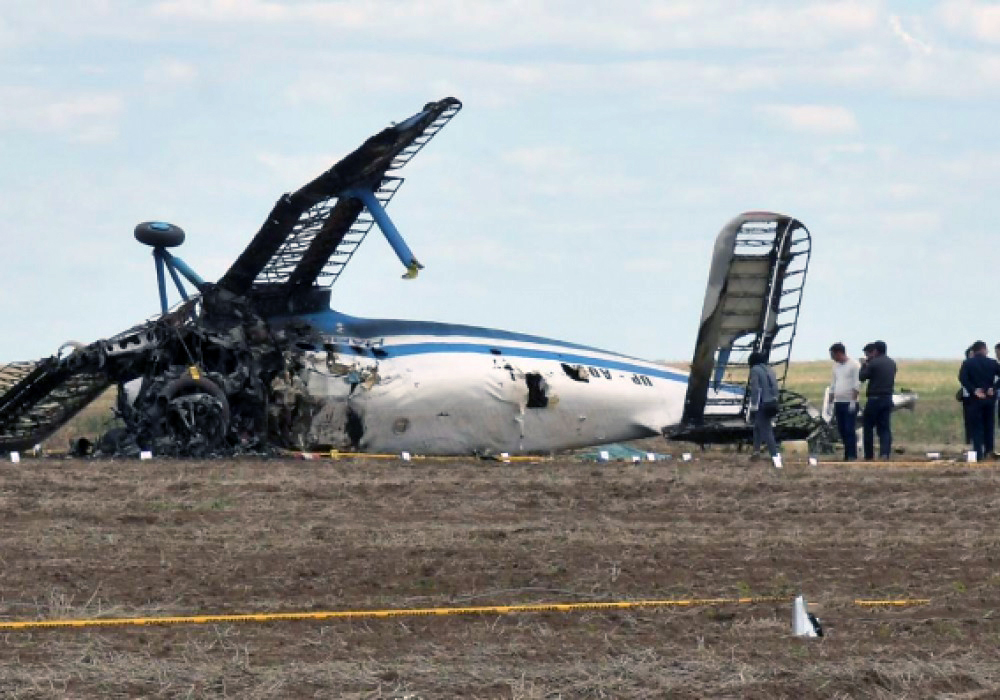
The crew was engaged in a spraying mission on behalf of Rodina Agrofirm and completed five rotations in the morning. After refueling with chemicals, the airplane took off from an airfield located about 10 km from the village of Rodina. Shortly after takeoff, it collided with the wooden pillar of an electric power line, lost height and crashed in flames 100 metres further. The captain was killed while two other occupants were seriously injured. The following day, the copilot died from his injuries.

Crash of a PZL-Mielec AN-2R near Dabady

Date & Time: Jun 9, 2019 at 1624 LT
Type of aircraft:
Operator:
Registration:
RA-81519
Flight Phase:
Survivors:
Yes
Site:
Schedule:
Kyren - Kyren
MSN:
1G208-19
YOM:
1984
Country:
Region:
Crew on board:
2
Crew fatalities:
Pax on board:
0
Pax fatalities:
Other fatalities:
Total fatalities:
0
Captain / Total flying hours:
6921
Captain / Total hours on type:
6912.00
Copilot / Total flying hours:
3561
Aircraft flight hours:
3720
Circumstances:
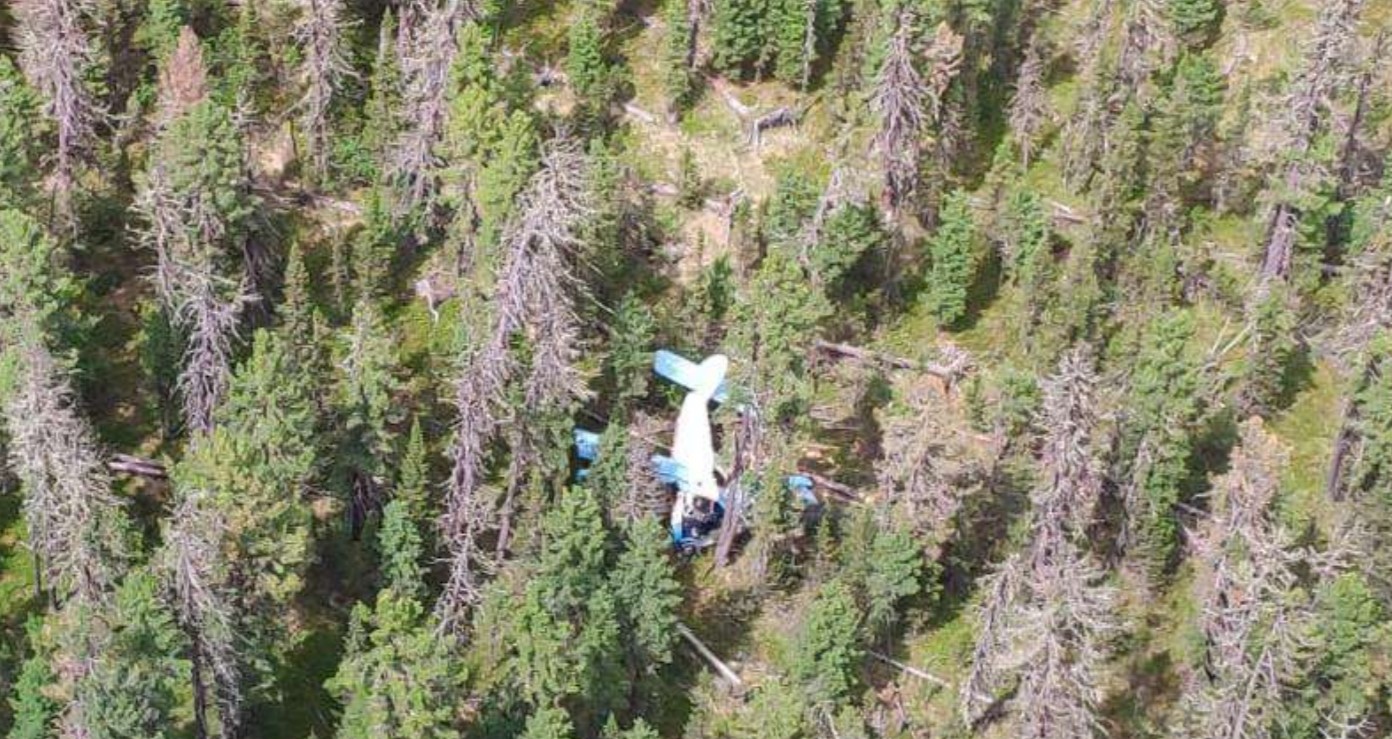
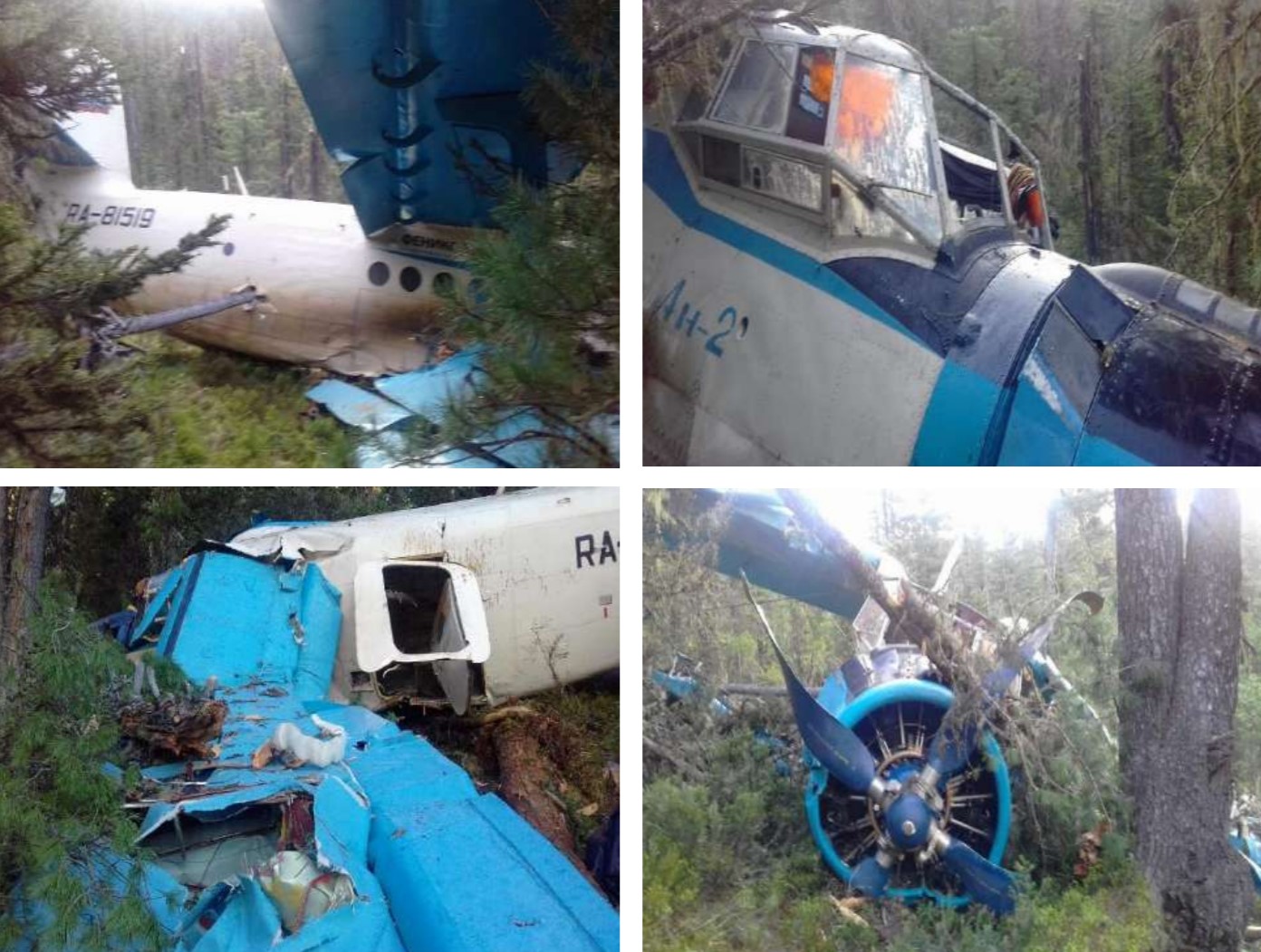
The crew departed Kyren Airport on a crop spraying mission to treat forests. About 40 minutes into the flight, while flying at a speed of 140 km/h, the crew encountered downdrafts and the airplane lost height. Due to mountainous terrain, the crew made a turn to the right but the airplane continued to descend. The captain attempted an emergency landing when, at a speed of 85 km/h, the aircraft struck trees and crashed in a wooded area located 16 km southeast of Dabady. Both pilots were injured and evacuated to Irkutsk a day later. The aircraft was damaged beyond repair.
Probable cause:
Most likely, the reason for the accident with the An-2 RA-81519 aircraft was the execution by the flight crew along the route in the mountainous terrain to the area of ​​the AHR at an altitude not ensuring its safety, which did not allow crossing the mountain pass, led to the need to perform an emergency landing and damage to the aircraft.
The contributing factors were most likely:
- Non-consideration by the crew of a significant increase of the outside air temperature during the day,
- The crew did not set the altimeter properly,
- Lack of instrument control over the flight altitude,
- Downdraft air currents on the leeward side of the mountain slope;
- Operating fatigue, leading to a weakening of attention and a decrease in level of situational awareness.
Final Report:

Crash of an Antonov AN-32 near Lipo: 13 killed

Date & Time: Jun 3, 2019 at 1300 LT
Type of aircraft:
Operator:
Registration:
K2752
Flight Phase:
Flight Type:
Survivors:
No
Site:
Schedule:
Jorhat - Mechuka
MSN:
10 09
YOM:
1987
Country:
Region:
Crew on board:
8
Crew fatalities:
Pax on board:
5
Pax fatalities:
Other fatalities:
Total fatalities:
13
Circumstances:
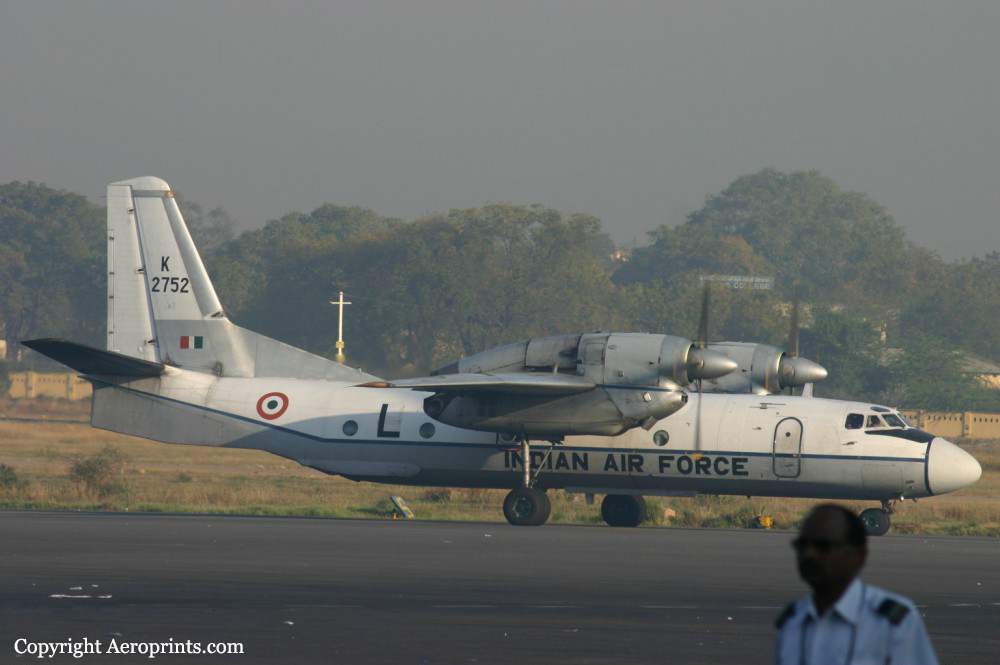
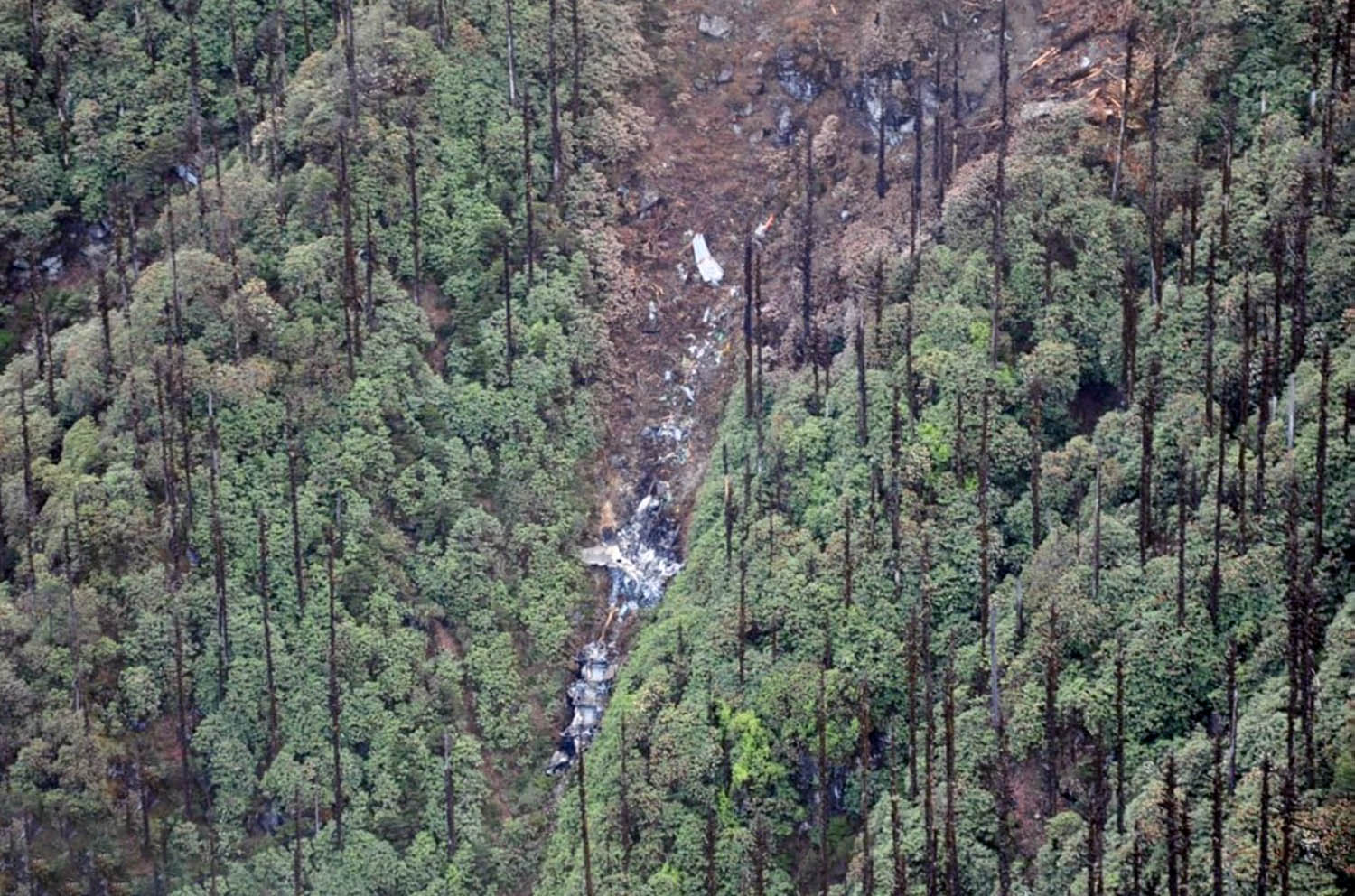
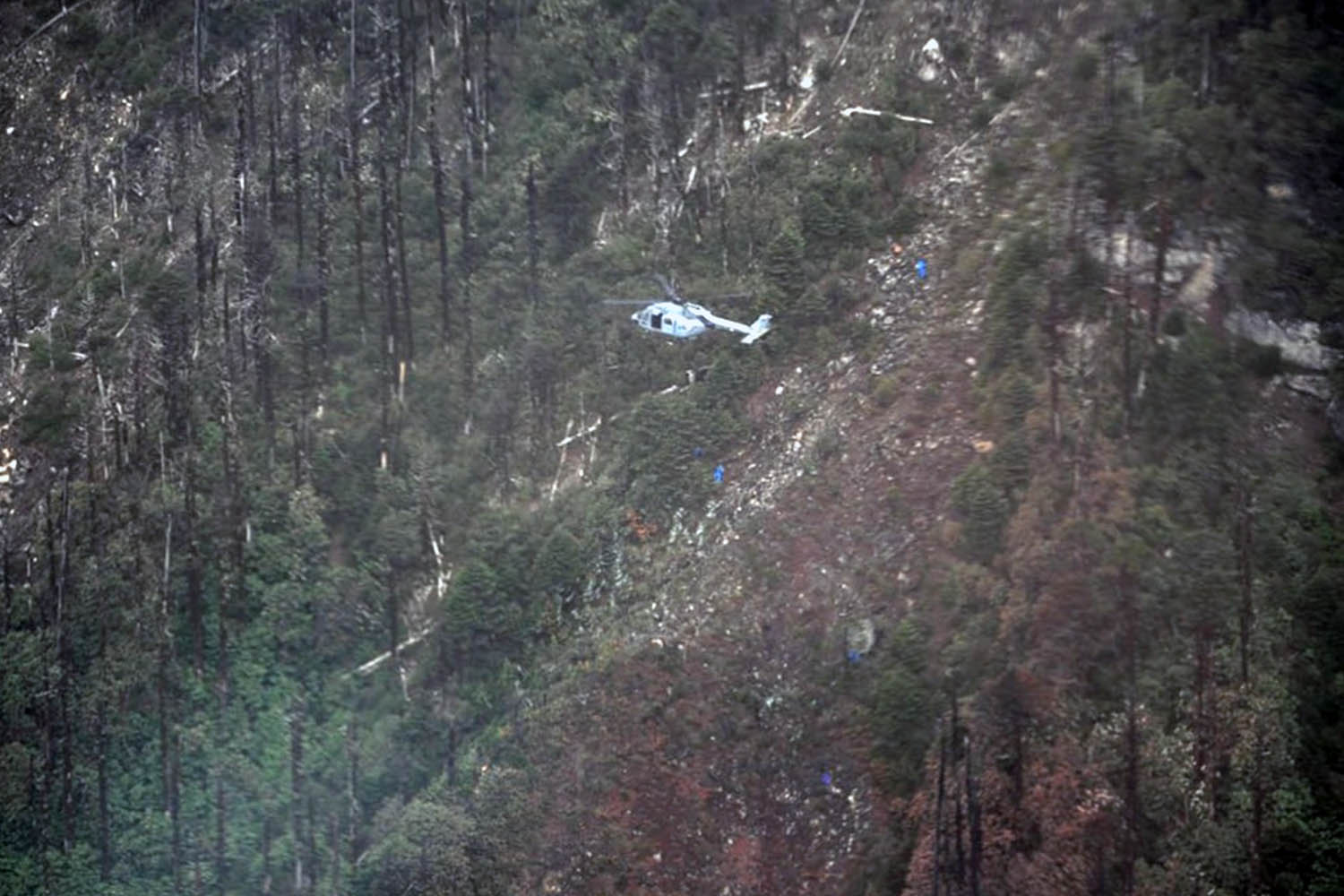
The airplane departed Jorhat Airport at 1227LT on a flight to Mechuka, Arunachal Pradesh. About half an hour later, while in cruising altitude, radio and radar contact were lost. SAR operations were quickly initiated and the wreckage was spotted eight days later, on June 11, by the crew of a Mil Mi-17 helicopter. The wreckage was found at an altitude of 12,000 feet in a wooded and steep area, about 16 km north of Lipo and 32 km east of Mechuka Airport. The aircraft was totally destroyed and all 13 occupants were killed.

Crash of a De Havilland Dash-8-Q402 in Yangon

Date & Time: May 8, 2019 at 1852 LT
Operator:
Registration:
S2-AGQ
Survivors:
Yes
Schedule:
Dhaka - Yangon
MSN:
4367
YOM:
2011
Flight number:
BG060
Country:
Region:
Crew on board:
6
Crew fatalities:
Pax on board:
28
Pax fatalities:
Other fatalities:
Total fatalities:
0
Captain / Total flying hours:
9646
Captain / Total hours on type:
1474.00
Copilot / Total flying hours:
580
Copilot / Total hours on type:
405
Aircraft flight hours:
8115
Circumstances:
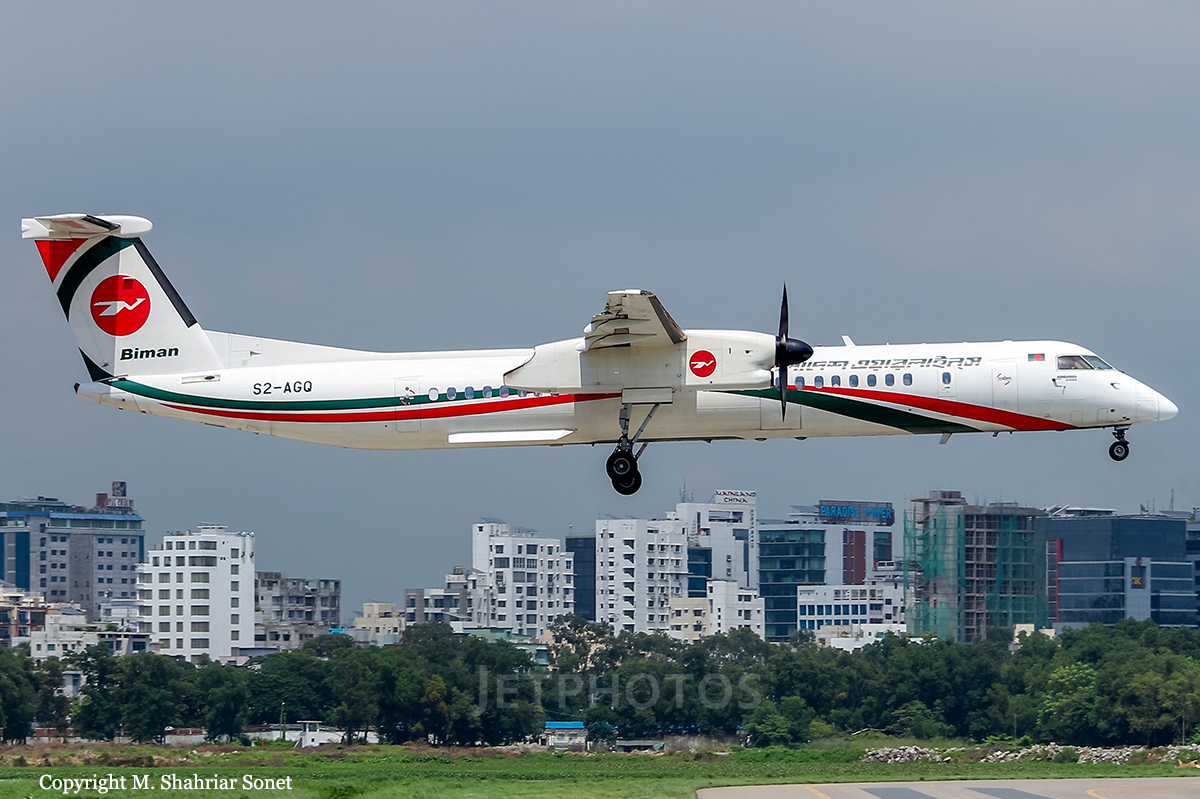
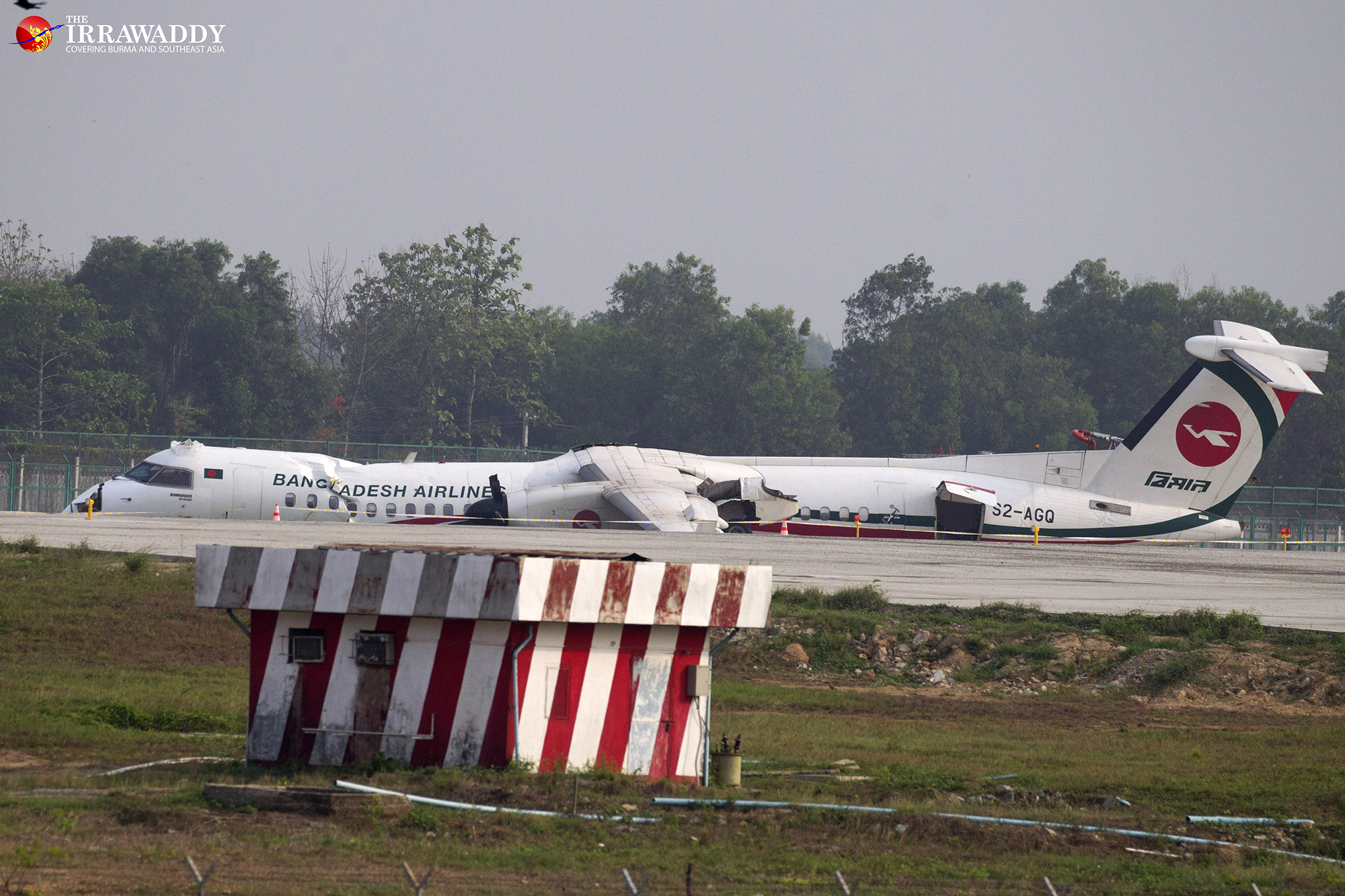
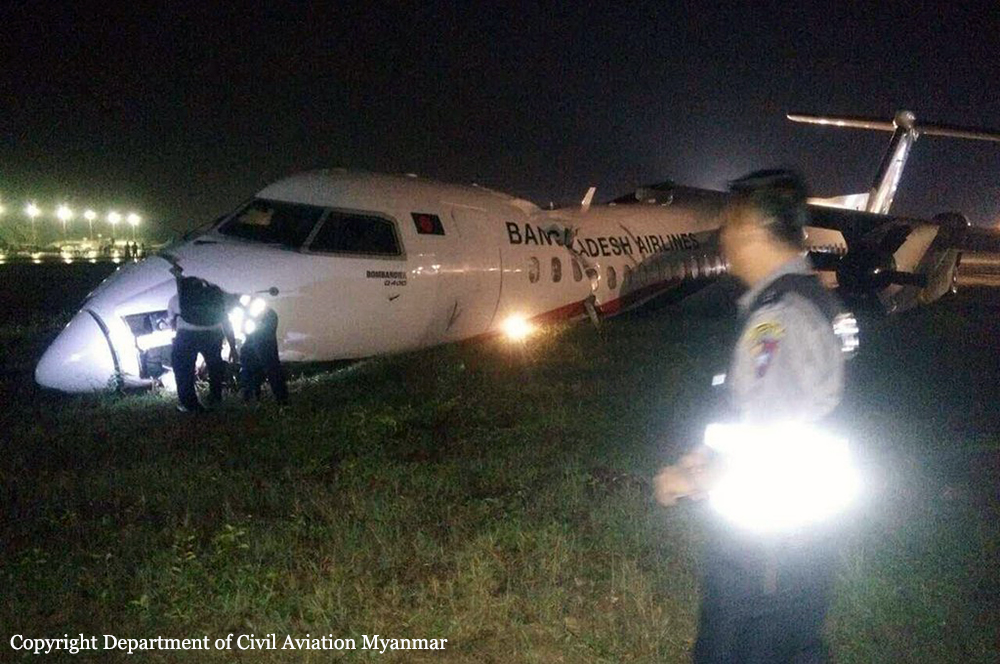
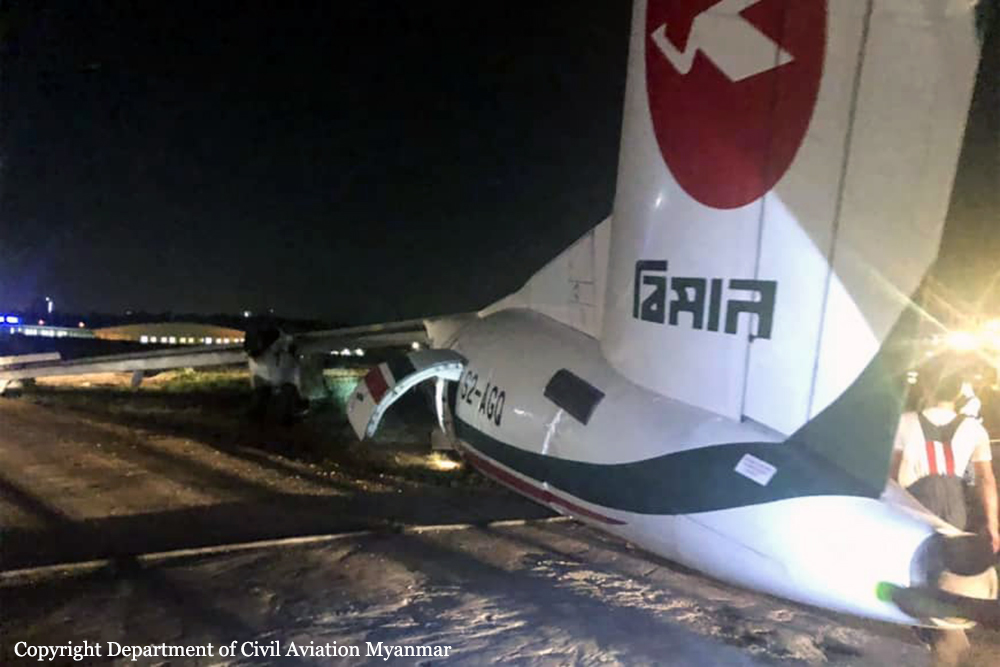
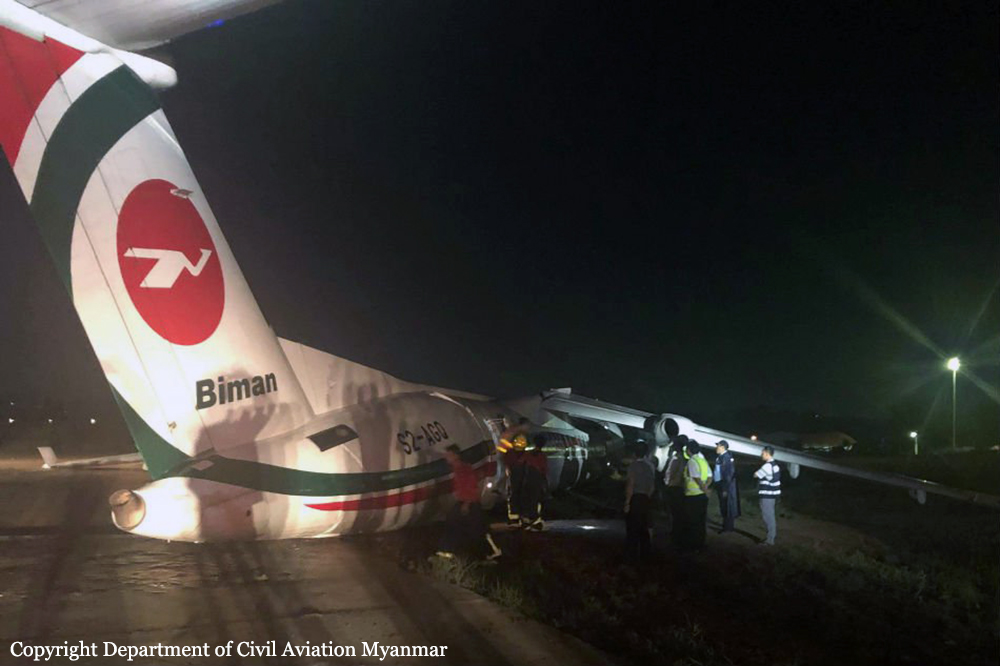
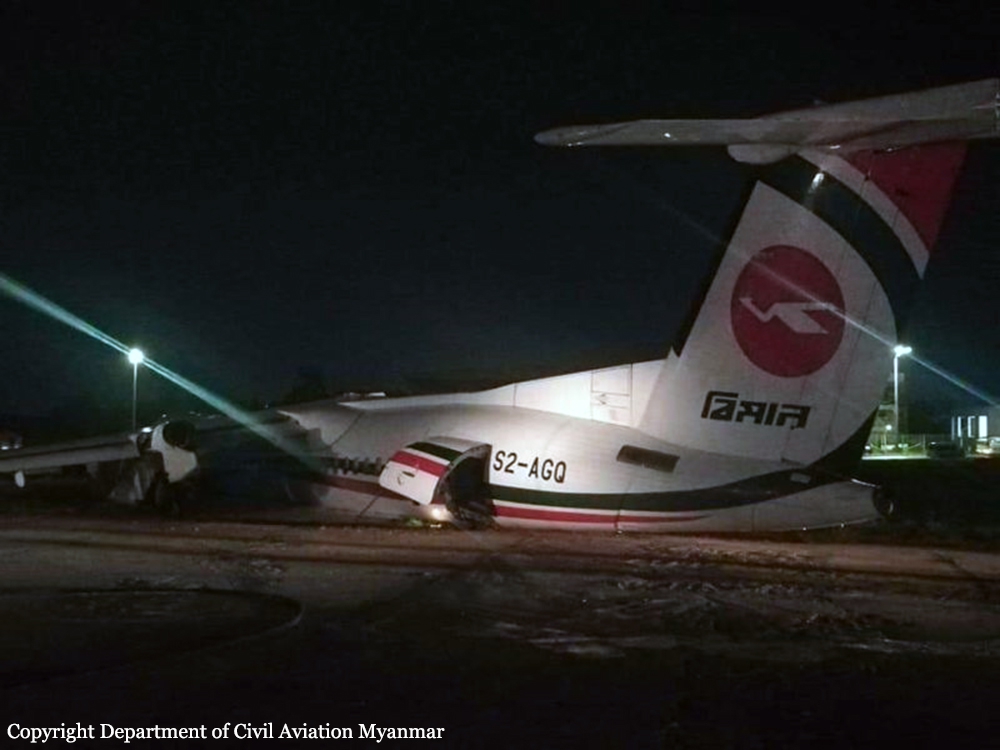
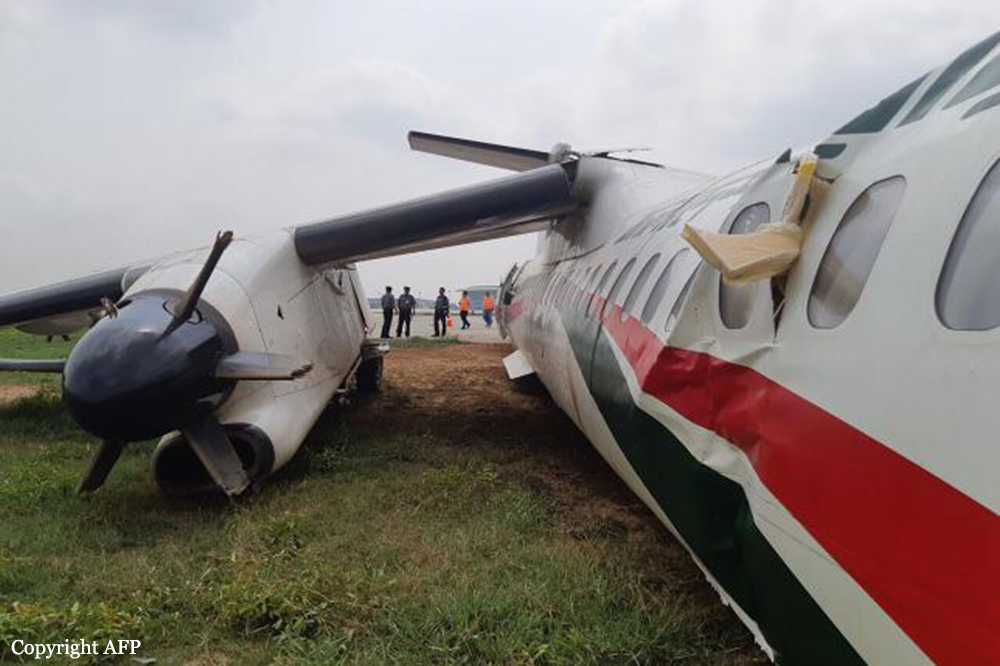
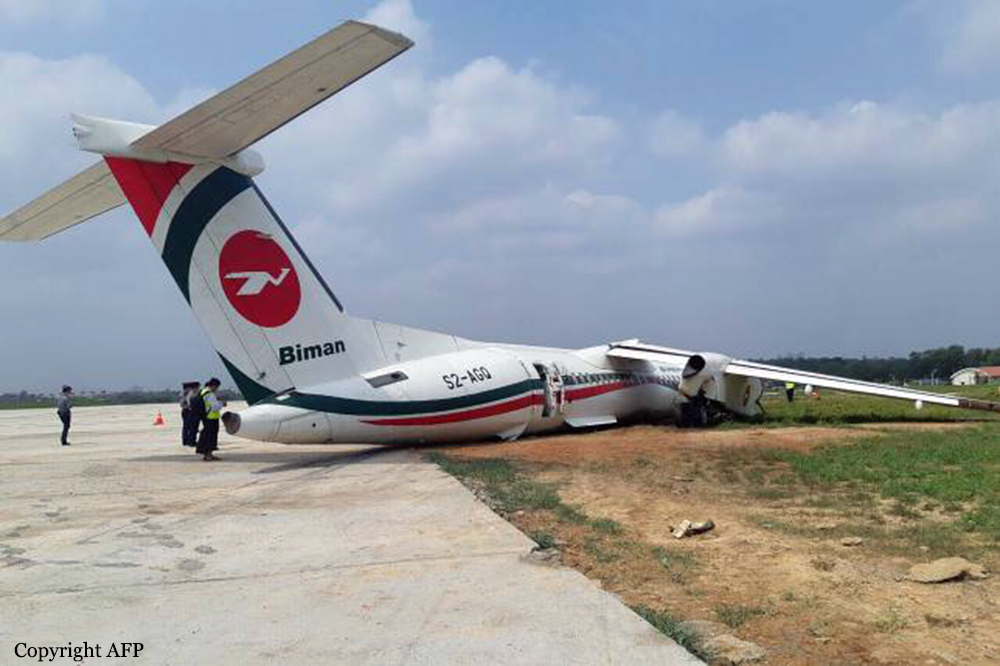
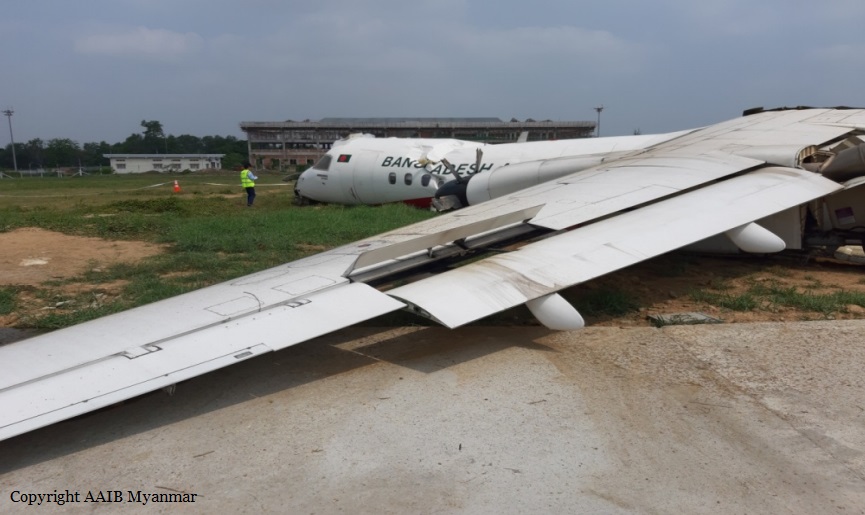
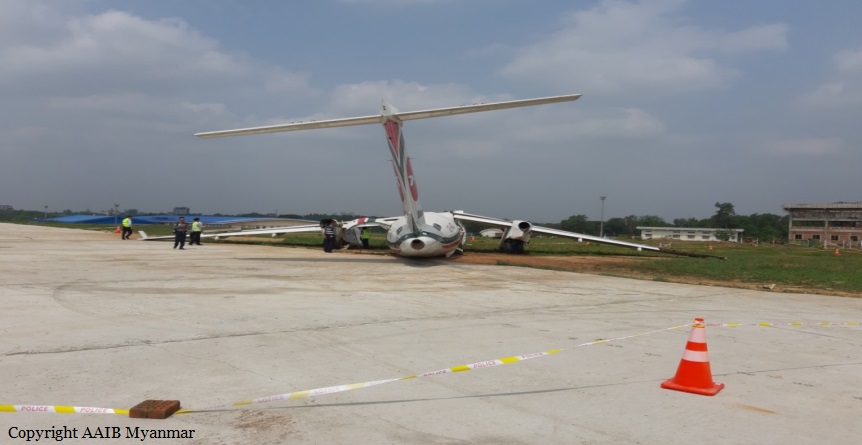
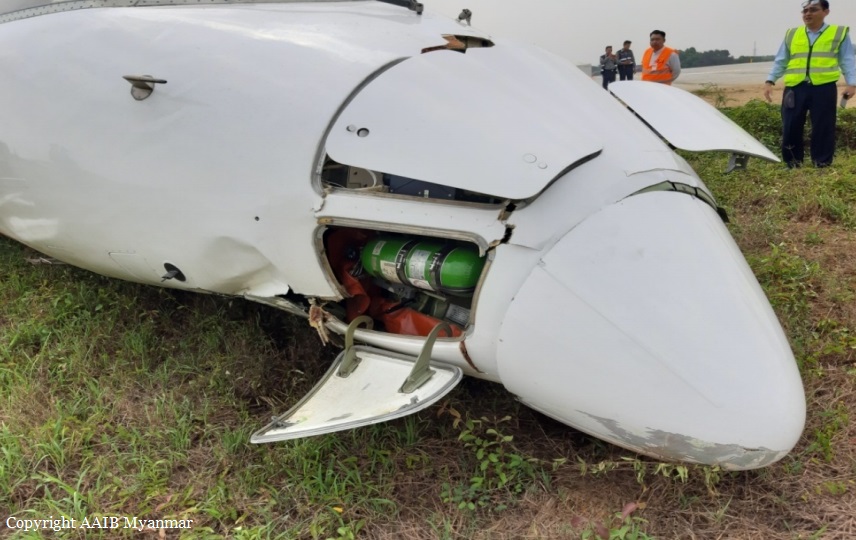
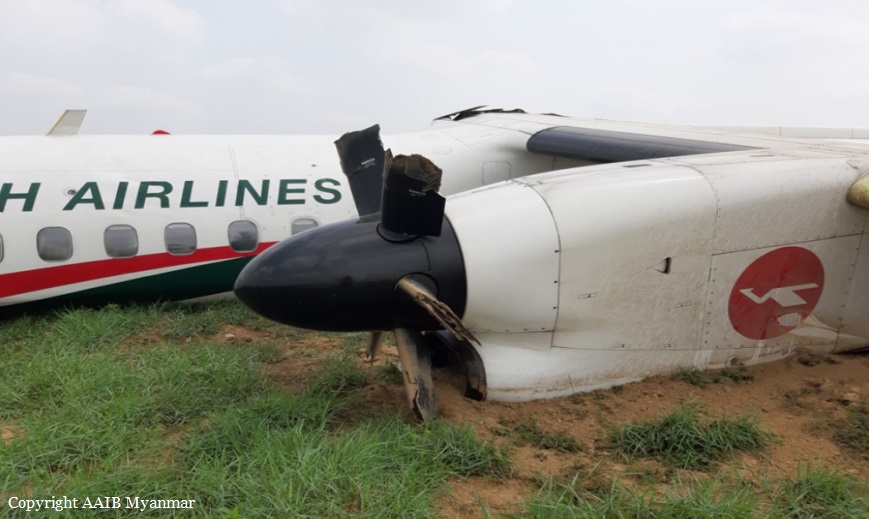
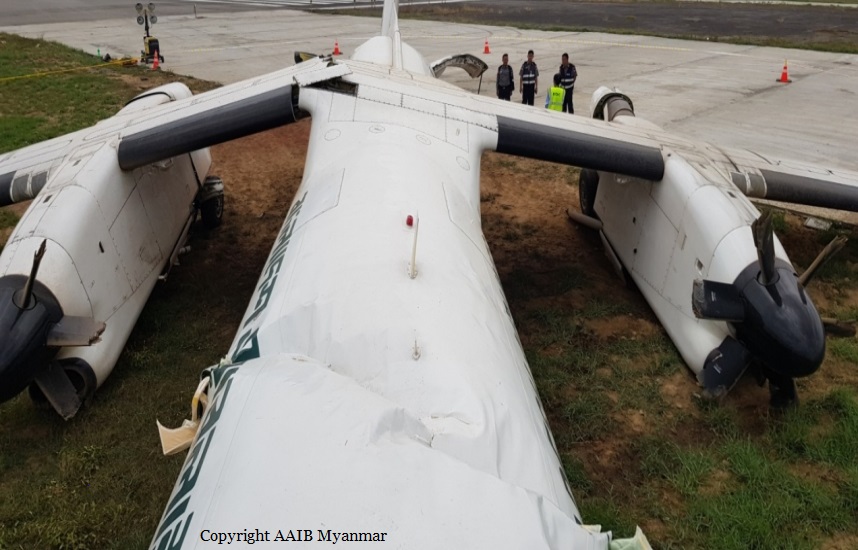
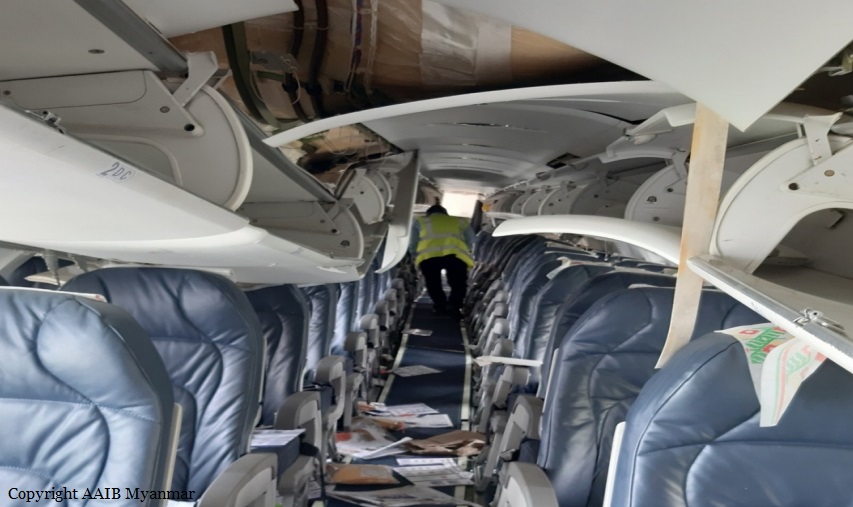
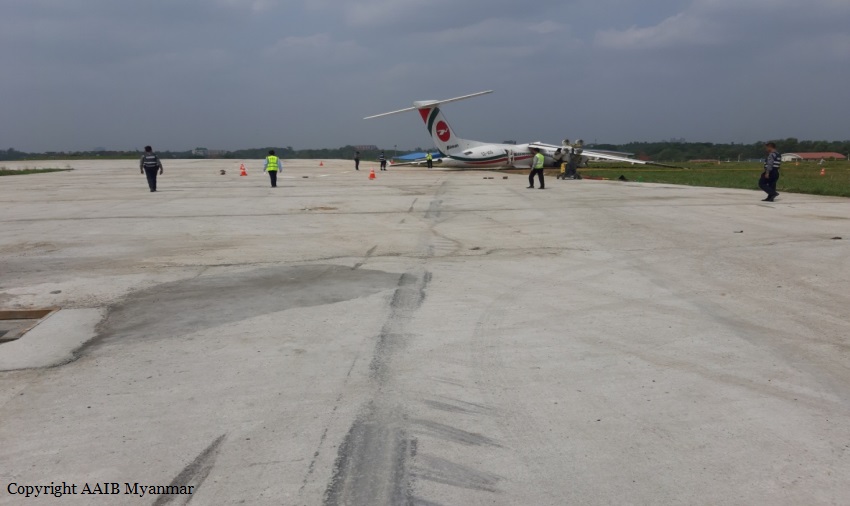
The route of the aircraft on that day was DAC-RGN-DAC. At (18:03) the Bombardier DHC-8-402 aircraft, registered (S2-AGQ) contacted Yangon control tower and at (18:16) had ILS established and reported to the Yangon control tower. Due to adverse weather, Yangon control tower asked them to execute a go-around and the aerodrome operations was closed for the aviation safety for 2 hours. When the weather condition got better, the aerodrome operations was opened. And then the DHC-8-402 aircraft, registered S2-AGQ made RNP approach because only localizer was available at that moment. While the Bombardier DHC-8-402 aircraft was and making approach to runway 21, it was a bit higher than on slope 3 degree and landed on runway 21, remaining on the ground for upwards of 7 seconds, but the aircraft ran parallel to the runway, and then it flew up in the air up to 44 ft above the ground and sank again and collided with runway 03 and slid forward out of the runway and came to a complete stop on the over-run of the runway 03. There was no fire. All gears were collapsed and fuselage was broken into three sections. All 33 occupants were evacuated, among them 20 were injured. The aircraft was destroyed.
Probable cause:
While the aircraft was unstabilized on approach, the pilot did not execute a go-around.
Final Report:

Crash of a Sukhoi Superjet 100-95B in Moscow: 41 killed

Date & Time: May 5, 2019 at 1830 LT
Type of aircraft:
Operator:
Registration:
RA-89098
Survivors:
Yes
Schedule:
Moscow - Murmansk
MSN:
95135
YOM:
2017
Flight number:
SU1492
Country:
Region:
Crew on board:
5
Crew fatalities:
Pax on board:
73
Pax fatalities:
Other fatalities:
Total fatalities:
41
Captain / Total flying hours:
6801
Captain / Total hours on type:
1570.00
Copilot / Total flying hours:
774
Copilot / Total hours on type:
624
Aircraft flight hours:
2710
Aircraft flight cycles:
1658
Circumstances:
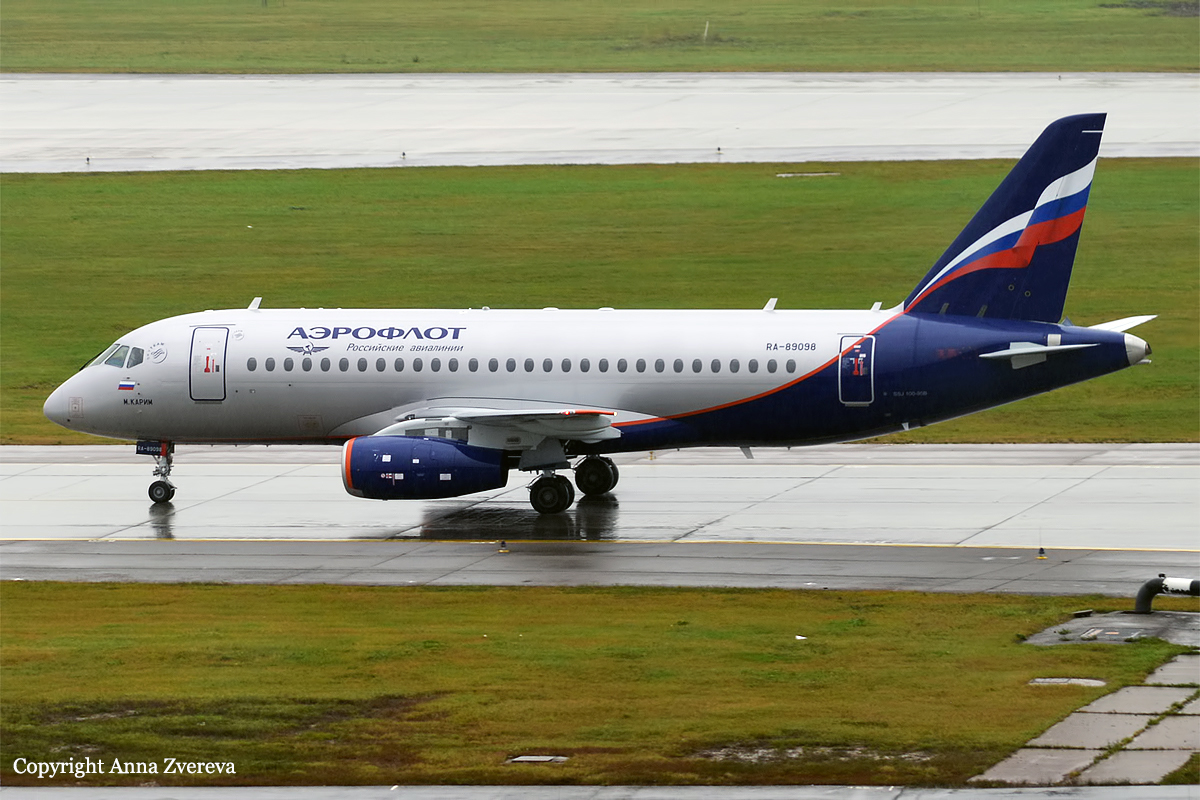
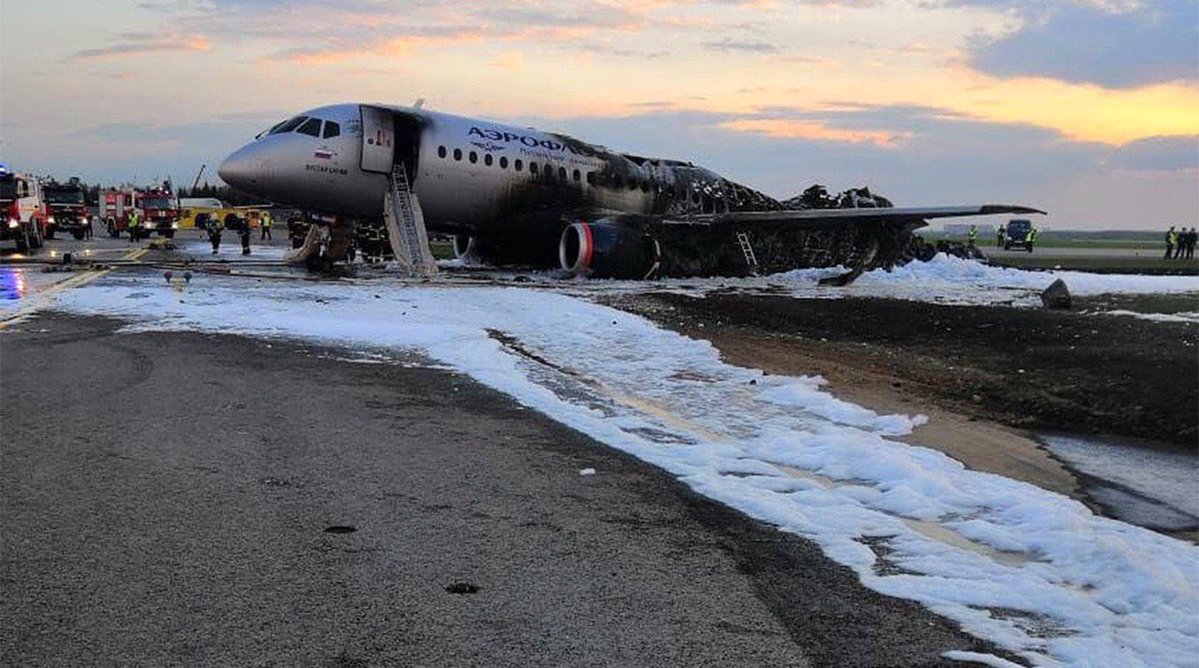
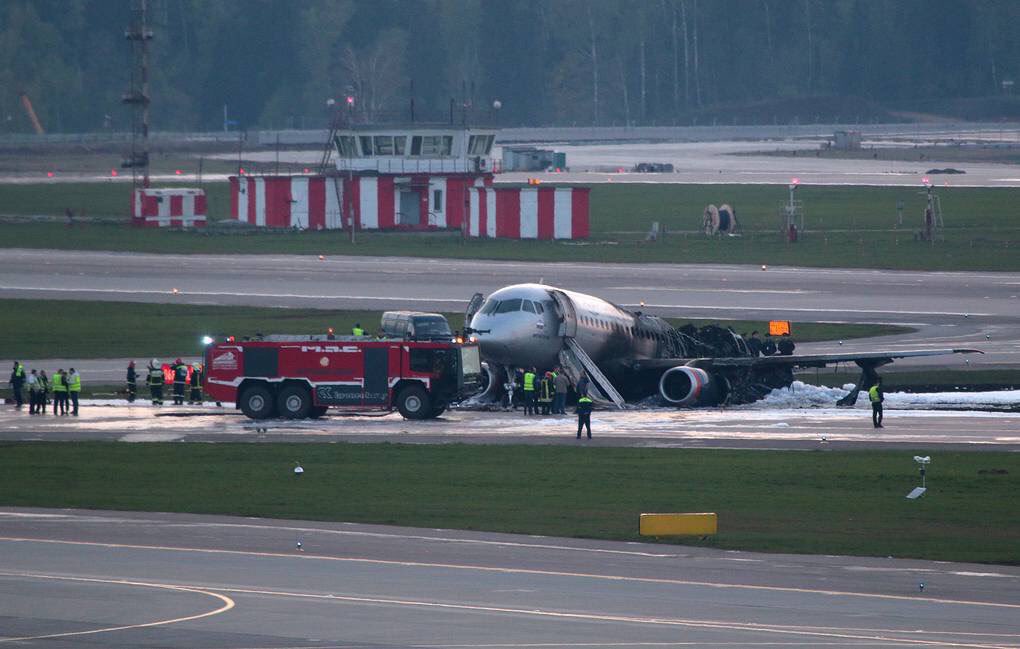
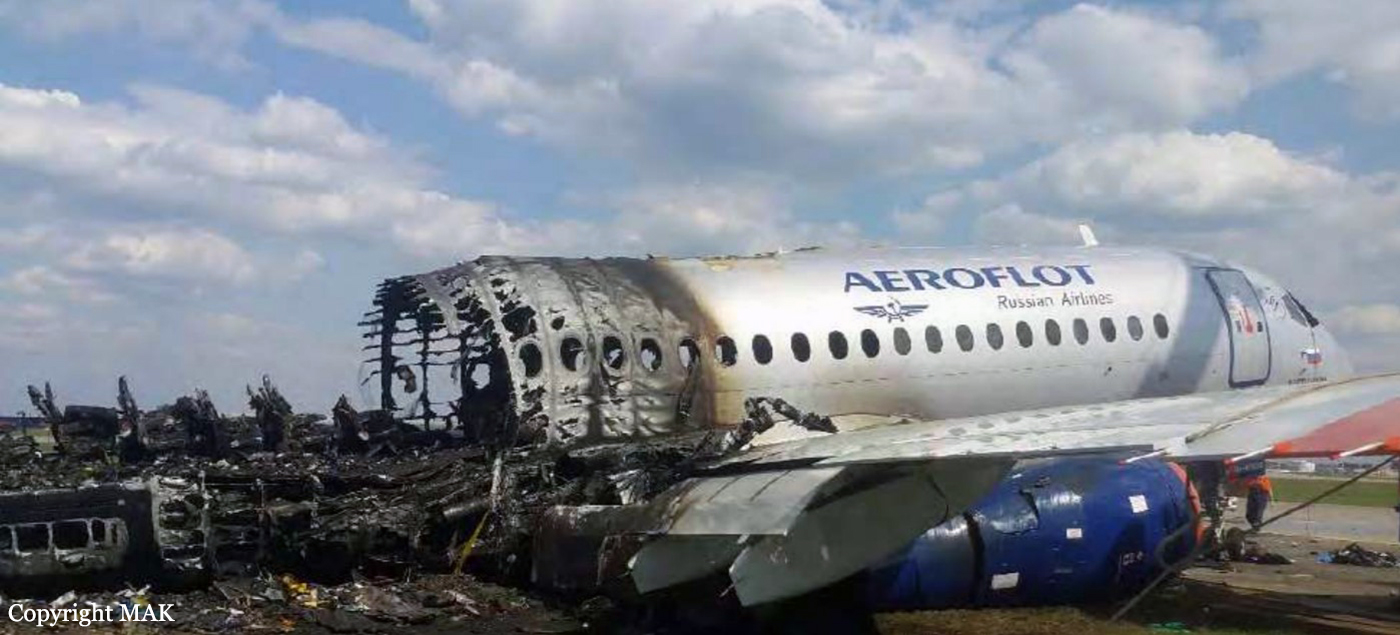
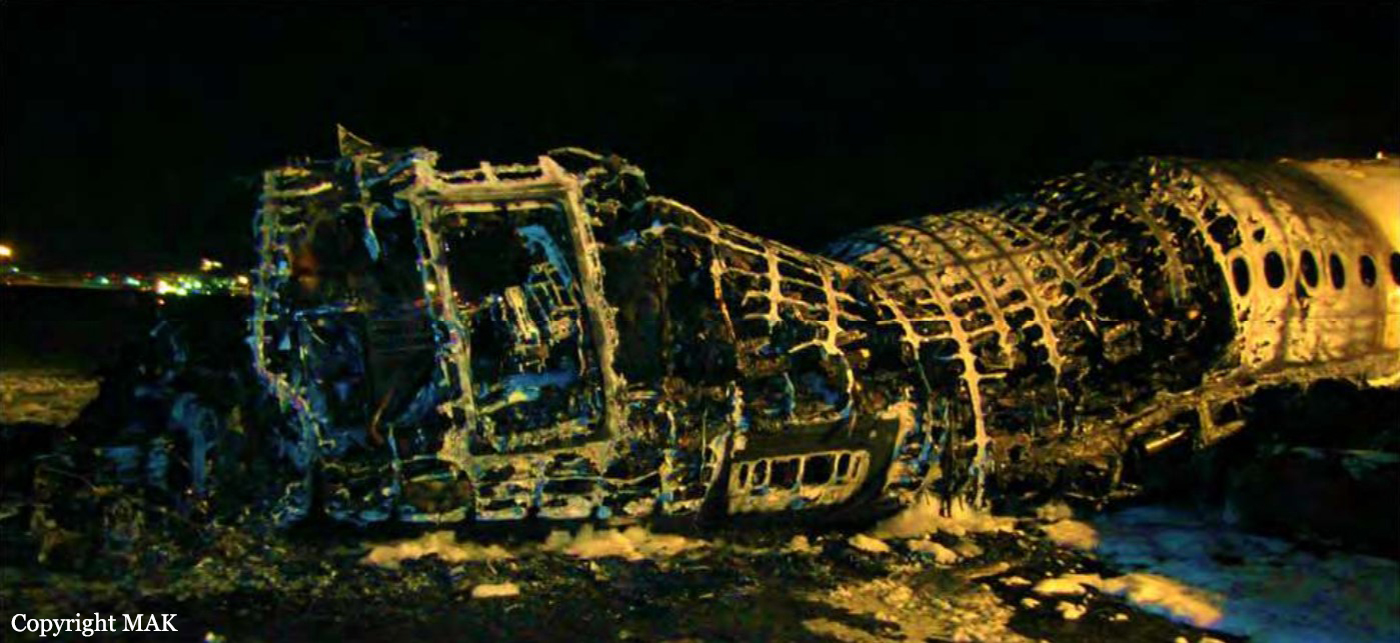
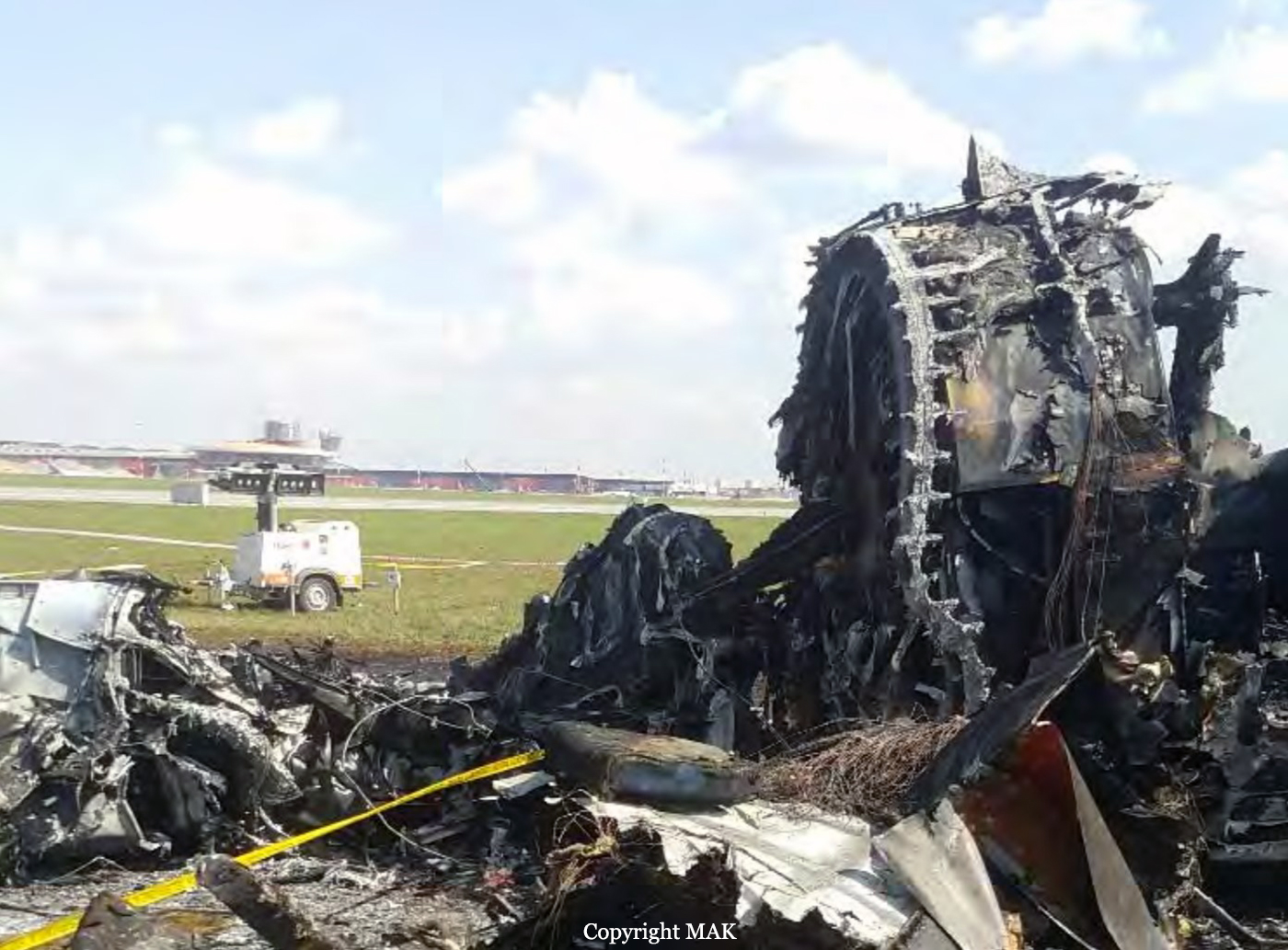
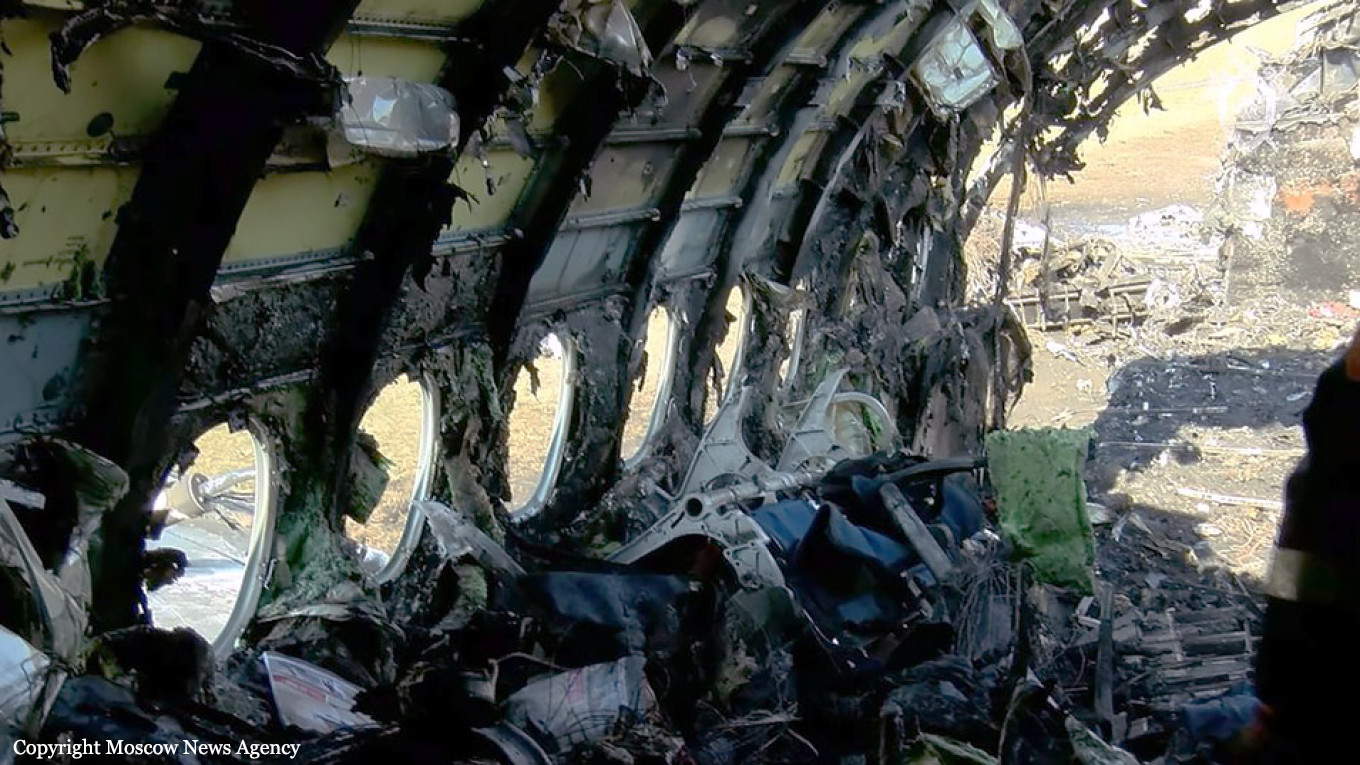
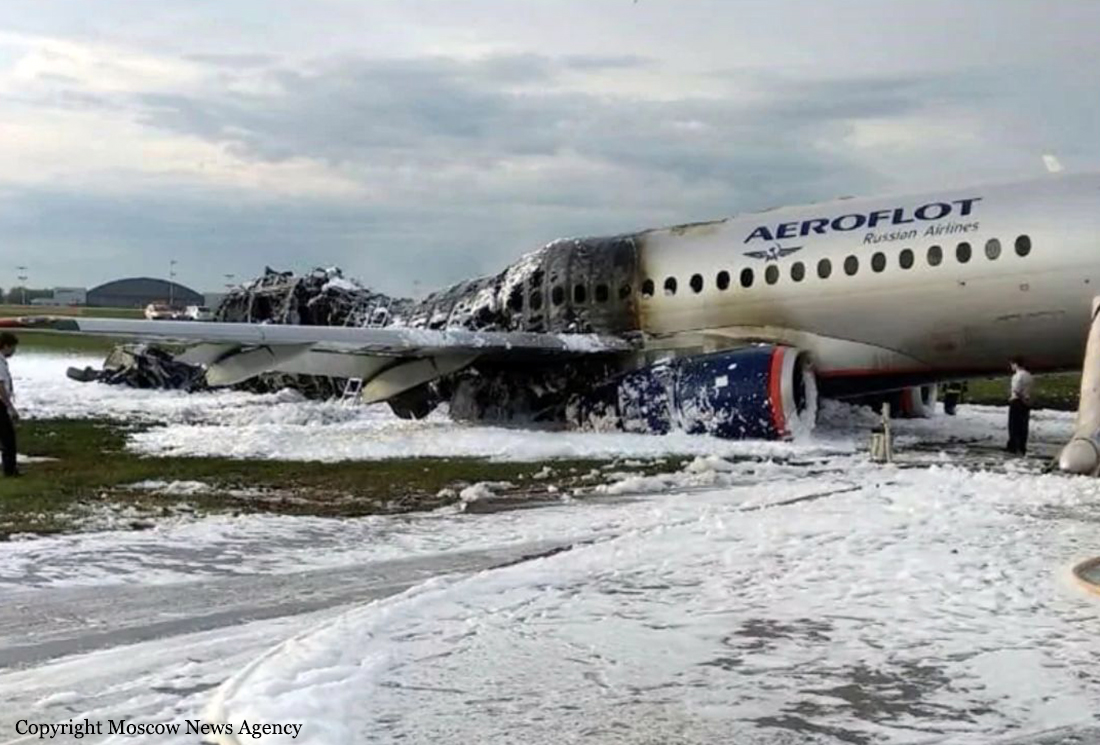
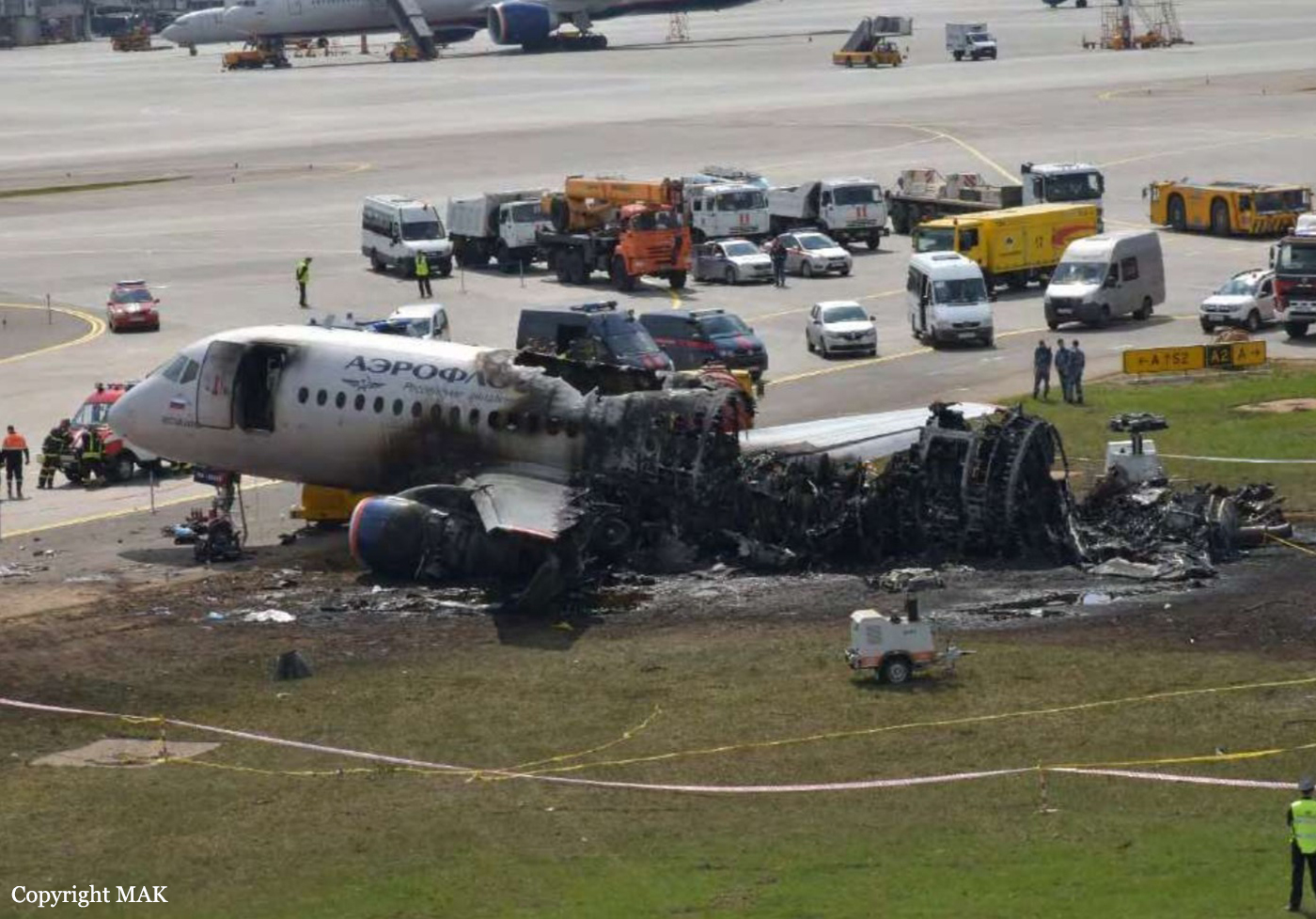
On May 05, 2019 the Aeroflot, PJSC flight crew out of the PIC and F/O was performing the SU-1492 scheduled passenger flight en route from Sheremetyevo airport (UUEE) to Murmansk airport (ULMM) aboard the RRJ-95B RA-89098 aircraft. 3 cabin crew members were also indicated in the flight assignment. The crew arrived to the airport at about 2 hrs prior to departure. After having undergone the mandatory preflight procedures (the medical check, briefing etc) the crew took up their duties at the flight deck. The passengers boarding was proceeded through the left front door. By 14:40 all the passenger and baggage holds doors had been closed. At 14:45:30 the ATC officer approved the engines start up. At 14:50:15 the crew initiated taxiing. At 14:57:20, after having been issued the clearance, the crew lined up at RWY 24C, where held the position for about 5 min. At 15:02:23 the ATC officer issued clearance for takeoff. After takeoff at 15:03:36 at the QNH altitude of 1250 ft. (380 m), the radio altitude of 690 ft. (210 m) and the IAS of 160 kt (296 km/h) the A/P was engaged. At 15:03:56 the Sheremetyevo Radar ATC officer cleared the climb to the QFE 1200 m altitude as per the KN 24E SID. At 15:05:18 the Sheremetyevo Radar ATC officer instructed the crew to climb to FL60. At 15:05:33 the crew set QNE of 760 mm of mercury/1013 hPa. At 15:06:57 the Sheremetyevo Radar ATC officer instructed the crew to climb to FL70 and contact the Approach ATC. After having initiated the contact with the Approach ATC officer the crew was instructed to climb to FL90. Between 15:07:30 and 15:07:33 the dialogue as follows was recorded in the crew: PIC: «It is going to bump now», – F/O: «Crap», – PIC: «That's all right». At 15:07:34 the Approach ATC officer instructed to climb to FL100. At 15:08:03 the Approach ATC officer instructed to climb to FL110. After the F/O confirmed this instruction the CVR recorded the noise effect of 1.5 sec. duration, starting from 15:08:09.7. Most probably at that point the aircraft encountered the atmospheric electricity strike. At 15:08:11.9 the A/P was disconnected, accompanied by the respective sound warning, as well as by the reversion of the FBWCS to DIRECT MODE with the DIRECT MODE. DIRECT MODE synthetic voice triggered. The A/T continued to operate. The aircraft at that moment was proceeding flight in right roll of about 20°, passing FL89 (2700 m) in climb. From 15:08:16 the manual control from the left duty station was initiated. The aircraft was proceeding the right turn as per the KN 24E SID and climb. At 15:08:47 the A/T was disconnected with the «override» (the TLA was changed from ~ 29.5° to ~ 19°). The further flight was continued by a manual control at the FBWCS DIRECT MODE. At 15:09:17 the aircraft was pulled out of the right turn to a heading of about 60°. After a short discussion in the crew the PIC made the decision to return to the departure aerodrome and commanded the F/O to declare PAN–PAN (an urgency signal). After several unsuccessful attempts to establish contact with the ATC officer at the operating frequency with the use of VDR 1 (this radio unit was used for communications from the beginning of the flight), at 15:09:32, after discussion, the 7600 squawk code was set by the crew. At 15:09:35, the radio communication was resumed on the emergency frequency (121.5 MHz) with the use of VDR 2. After radio communication was restored, at 15:09:39, the F/O reported to the Approach ATC officer: «Moscow Approach, and we request return 14 -92, radio contact lost and aircraft in DIRECT MODE». The ATC officer instructed to descend to FL80. The maximum altitude the aircraft reached was 10600 ft. (3230 m) QNE. The crew replied: «Aeroflot 14-92, heading 0-57, descending 8-0». The flight further on until glideslope interception was proceeded by vectoring. At 15:24:38 to the ATC request on the approach type for landing the crew advised that it would be an ILS approach. At 15:26:30 the crew set the 7700 squawk code. The reason for setting was not reported to the ATC. At 15:27:20 the glideslope descent was initiated. At 15:27:51 the ATC officer relayed the weather information to the crew and cleared landing: «Aeroflot 14-92 surface wind 160 7, gusts 10 meters per second, runway 24L, cleared for landing». At 15:30:00 at the distance of ≈ 900 m off the RWY entry threshold and at IAS of 158 kt (293 km/h) there occurred the RWY first touchdown. The touchdown occurred practically on «three points», with the vertical acceleration of not less than 2.55G with a subsequent aircraft separation/bounce off the RWY. Another touchdown occurred in 2.2 sec. after the first one at the IAS of 155 kt (287 km/h). The touchdown occurred with the advancement on the NLG. Vertical acceleration amounted to not less than 5.85G. There occurred another aircraft bounce off the RWY. At 15:30:06 at the IAS of 140 kt (258 km/h) the third touchdown occurred with the vertical acceleration of not less than 5G. As a consequence of hard touchdowns the MLG legs and the airframe structural elements were destroyed with the fuel spillage and the subsequent onset of fire. Into the further movement of the aircraft there occurred its RWY veering off to the left. At 15:30:38 the airplane stopped. The aircraft stop occurred on the soil between TWY2 and TWY3 at the point with the reference position 55°58′06.20″ N, 37°24′07.20″ E, ∆h = 185 m, with true heading ≈ 128°. The distance off the RWY 24L entry threshold amounted to ≈ 2720 m, lateral deviation was about 110 m to the left off the RWY 24L centerline.
Probable cause:
The air accident to the RRJ-95B RA-89098 aircraft was caused by the uncoordinated control inputs by the PIC at the flare, landing and through the several repeated bounces of the aircraft off the RWY (the porpoising), having manifested in the several disproportionate alternating sidestick inputs in pitch with keeping the sidestick retained against each stop. The indicated control inputs had resulted in three hard touchdowns of the aircraft, as a consequence at the second and third touchdowns the absorbed energy significantly exceeded the maximum values, for which the structural integrity had been evaluated at the aircraft type certification, which led to the destruction of the airframe structural elements, the fuel tanks with the fuel spillage and the fire onset.
The contributing factors to the accident were:
- The ineffectiveness of the RRJ-95 flight personnel approved training programs as for the actions into the major failure condition//abnormal situation at the FBWCS reversion to DIRECT MODE and, consequently, the insufficient knowledge and skills at the flight crew members to operate the airplane in this mode. The training programs met the minimum requirements, determined by FAR, but did not account for the specific nature of a particular emergency;
- The ineffectiveness of the airline SMS in terms of the monitoring of the piloting sustainable skills development at the pilots, which prevented the identification and elimination of the PIC’s common systematic errors at the sidestick pitch control at the stage of landing, including these, associated with its forward inputs beyond neutral (to nose down) into the flare;
- The failure to identify the biases (hazards) in the airline flight crews’ piloting technique as far the previous events of the FBWCS reversion to DIRECT MODE are concerned and thus the failure to implement preventive measures;
- The aircraft operational documentation unclear wording in terms of the piloting peculiarities at flare and the correction of the deviations at the landing (counteracting the consecutive aircraft separations off the RWY);
- The failure of the crew to comply to the FAR and OM requirements at the flight preparation and performance at the actual and forecast thunderstorm activity, as well as at the availability to observe these zones on the weather radar display, which had resulted in the aircraft encounter the atmospheric electricity, the EIUs reboot and the FBWCS reversion to DIRECT MODE. As per the certification results the FBWCS reversion to DIRECT MODE had been assessed as «the major failure condition», the in-flight onset of «the major failure condition» at the lightning or static electricity exposure does not contradict the applicable certification requirements;
- The dramatic increase of the psycho emotional stress at the PIC because of the aircraft exposure to atmospheric electricity and the failure within a long time to ensure the acceptable piloting precision at the FBWCS in DIRECT MODE, which led to the psychological dominant mindset formation to perform immediate landing together with the lack of readiness to initiate go around (not go-around minded);
- Psychological personality traits of the flight crew members that determine their behavior in the stress environment, as well as the PIC’s insufficient training in human factor/performance and threat and error management approach, which prevented the objective assessment of his psycho emotional condition and the ability to control the airplane, to choose the optimal strategy to proceed the flight, as well as to establish the required interaction and CRM;
- The failure of the PIC to ensure the aircraft pitch trim under the manual control, including at the glideslope descent;
- The incorrect assessment of the situation by the crew at the Predictive Windshear warning (GO AROUND WINDSHEAR AHEAD) trigger at the flight on glideslope and, consequently, the non-initiation of a go-around maneuver, that resulted in the aircraft encounter the wind microburst at the early flare and affected the aircraft flight path. The documentation by the aircraft designer and the airline allows the crew to ignore the subject warning activation, if it made sure there is «no windshear threat», still the operational documentation and the OM do not integrate the respective clear criteria of «no threat»;
- The purposeful ducking under the glideslope by the PIC at the final approach (after passing DH);
- The difference between the airline OM provisions as for the crew actions at the glideslope warning activation (the excessive deviation off the glideslope equisignal zone) and the similar provisions in the aircraft designer documentation. Subject to the provisions of the aircraft designer documentation the crew should have performed go-around;
- The unjustified extension by the airline of the approach «stabilized condition» criteria as for the acceptable deviations range off the target speed, which at the actual IAS of 15 kt higher against the target one and the FBWCS in DIRECT MODE resulted in the unexpected for the PIC increased aircraft response to the sidestick input in pitch;
- The failure by the crew to carry out the SOP on the manual speed brakes deployment at the aircraft touchdown. The operational documentation unclear wording and the monitoring algorithms of the landing configuration, used at the aircraft that require to arm the speedbrakes for the automatic deployment, including at FBWCS in DIRECT MODE, in which the automatic deployment is disabled, degrade the crew’s situational awareness as for this aspect.
- The TR actuation after the first bounce off the RWY, which had made the subsequent go-around impossible. As per the results of the forensic medical examination the death of 40 out of 41 fatally injured people had been caused by the exposure to open flame, accompanied with the burns of the upper respiratory tract through the inhalation of hot air. The fire erupted after the aircraft third touchdown due to the disintegration of the wing fuel tanks and the fuel spillage. The fuel spillage occurred as due to the destruction at the landing gear retraction/extension actuating cylinders attachment points, as well as due to the destruction of the other wing parts. The landing gear structure had been damaged at the second touchdown that is at the third touchdown functioned beyond the expected operational conditions and had not been able to bear the applied landing loads as designed. The operation (destruction) of the landing gear fuse pins («weak links») at the second touchdown had been consistent with the design integrated logic. With that the loads, actually accomplished, had been less of those in use to demonstrate compliance to AR-25 item 25.721 at the aircraft type certification, which prevented the MLG legs to completely separate off the airplane structure (it is only the Attachment A fuse pins that had been destructed). No correlation between the certification requirements for the structure, including MLG legs structure, and the conditions for demonstrating their safe separation off results in actual significant risks of the fuel tanks disintegration and the fuel spillage even in case of compliance demonstration to every single of these requirements. At its very onset the fire by its nature had been the deflagration flash, which had been accompanied with an intense smoke release with the onset of a steady burning in two seconds. By the point of the evacuation initiation the fire had been propagated inside the cabin through a row of cabin windows at the rear fuselage along the right and left sides, with that the airworthiness standards do not set up the requirements for the cabin windows as to the external fire protection. That situation had been beyond the expected operational conditions as there had been no time margin (90 sec), at which the crew and passengers’ emergency evacuation is demonstrated at the type certification.
Most probably the following factors had contributed to the increase in the severity of the consequences:
- The running engines of the aircraft, having been not timely shut down by the crew;
- Large amount of fuel, spilling out of both wing panels, which penetrated the area of the exhaust-mixing nozzles, exposed directly to their jet streams;
- The inability to evacuate through both of the rear emergency exits;
- The manifestation of the flashover effect at the rear passenger cabin;
- The crush and panic among the passengers;
- The efforts by a number of passengers to pick up their carry-on luggage at the evacuation;
- The CFA’s error in operating the PACIS, and consequently the decline in the passengers’ situational awareness as for the evacuation procedure.
Final Report:

Crash of a PZL-Mielec AN-2R in Vyun

Date & Time: May 4, 2019 at 1335 LT
Type of aircraft:
Registration:
RA-01443
Flight Type:
Survivors:
Yes
Schedule:
Ust-Nera - Vyun
MSN:
1G231-24
YOM:
1988
Country:
Region:
Crew on board:
2
Crew fatalities:
Pax on board:
0
Pax fatalities:
Other fatalities:
Total fatalities:
0
Captain / Total flying hours:
9700
Aircraft flight hours:
6305
Circumstances:
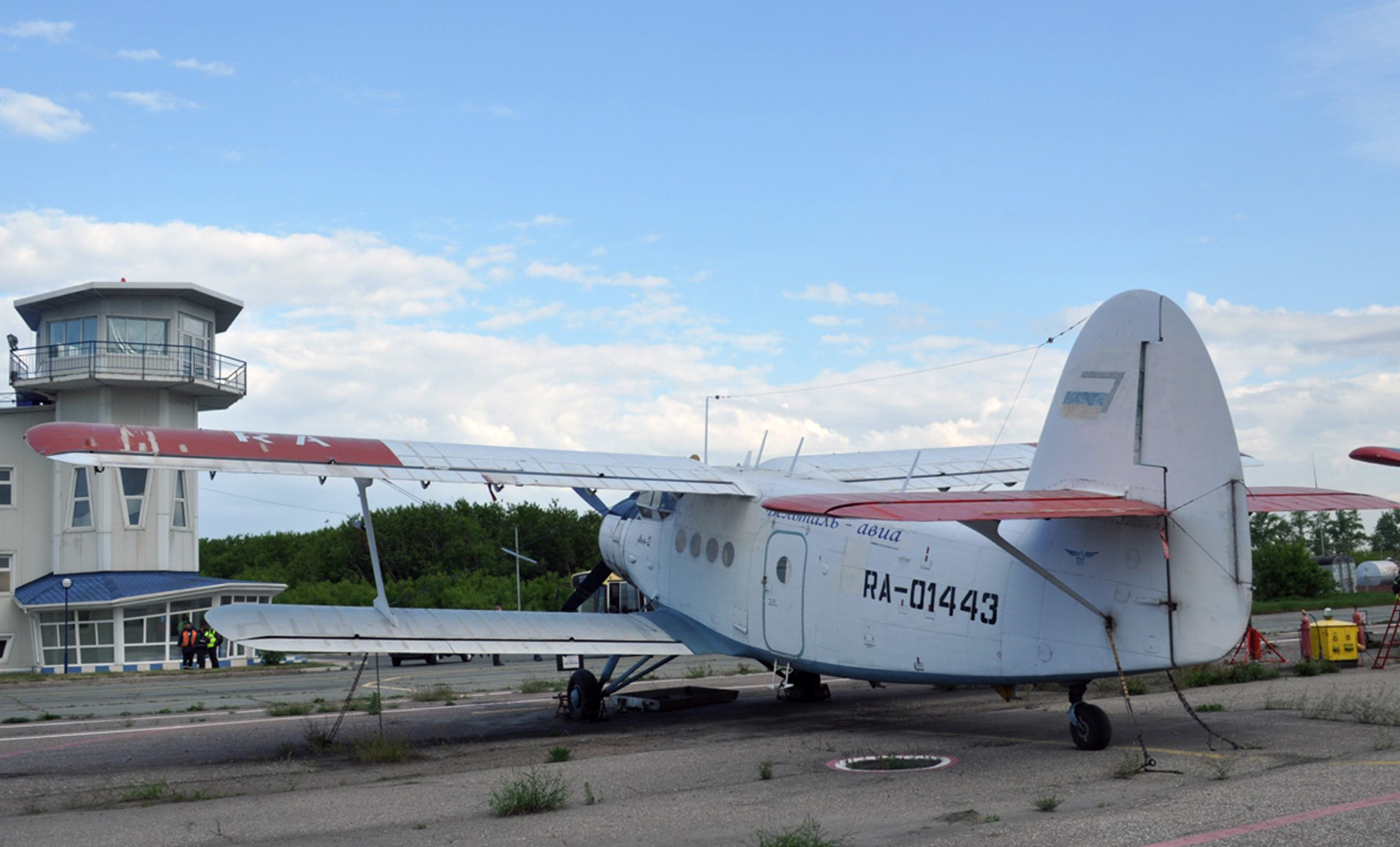
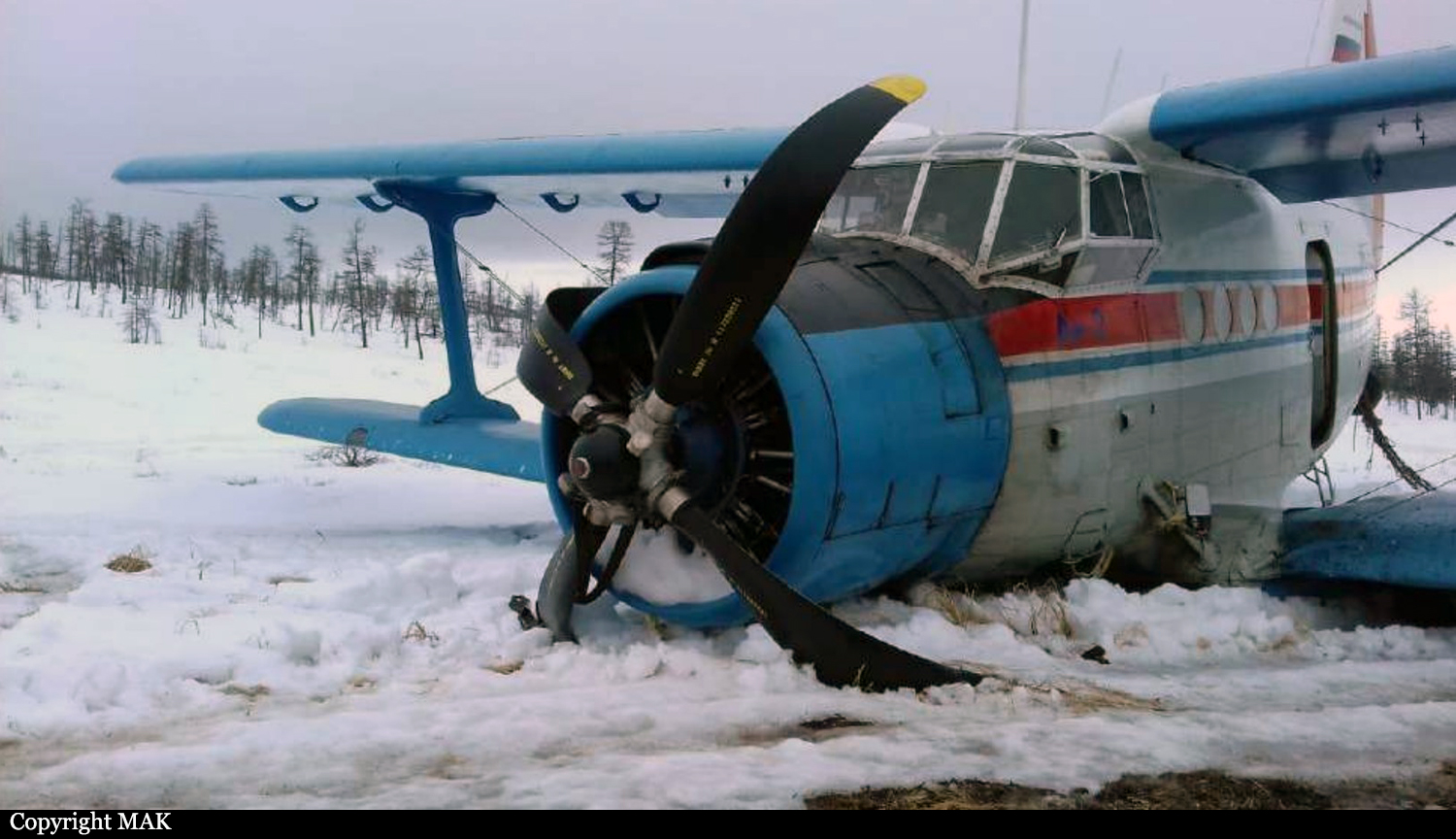
The single engine airplane departed Ust-Nera on a cargo flight to Vyun, carrying two pilots and a load of various equipment destined for the employees of a local gold mine. Upon landing on an unprepared terrain, the undercarriage collapsed. The airplane slid on its belly and came to rest. Both pilots escaped uninjured and the aircraft was damaged beyond repair. The accident occurred at location N 65° 54' E 138° 20'.
Probable cause:
The accident was the result of the destruction of the right main landing gear strut upon landing.
The following contributing factors were identified:
- Unsatisfactory performance of the welded joint in the manufacture of the strut with the formation of welding cracks in one of the most stressed zones of the strut,
- Pilot errors, which led to an early landing of the aircraft, possibly rough, on an unprepared (uncleared) area with possible obstacles.
Final Report:

Crash of a Let L-410UVP-E20 in Lukla: 3 killed

Date & Time: Apr 14, 2019 at 0907 LT
Type of aircraft:
Operator:
Registration:
9N-AMH
Flight Phase:
Flight Type:
Survivors:
Yes
Schedule:
Lukla - Manthali
MSN:
13 29 14
YOM:
2013
Flight number:
GO802D
Country:
Region:
Crew on board:
3
Crew fatalities:
Pax on board:
0
Pax fatalities:
Other fatalities:
Total fatalities:
3
Captain / Total flying hours:
15652
Captain / Total hours on type:
3558.00
Copilot / Total flying hours:
865
Copilot / Total hours on type:
636
Aircraft flight hours:
4426
Aircraft flight cycles:
5464
Circumstances:
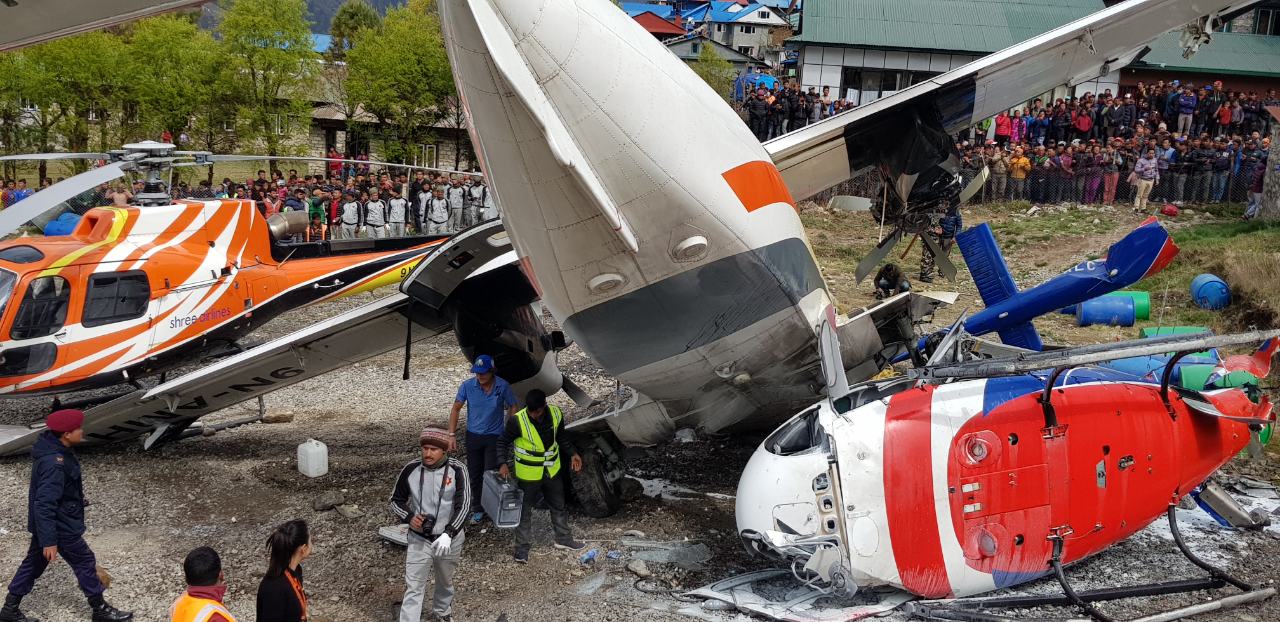
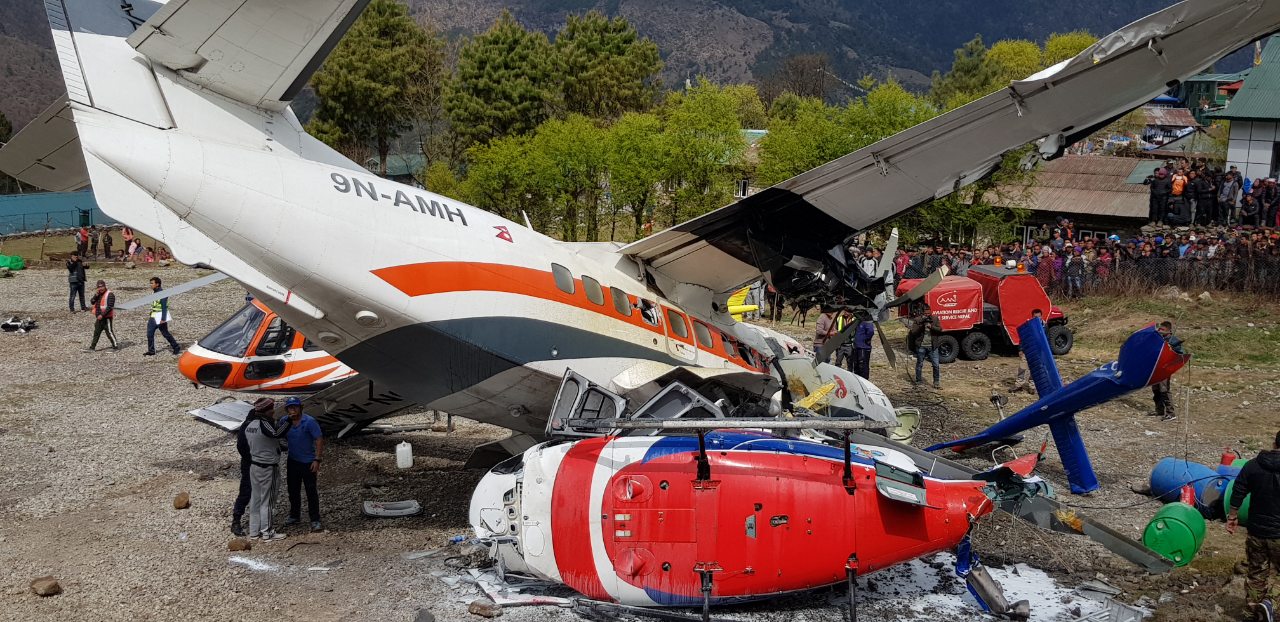
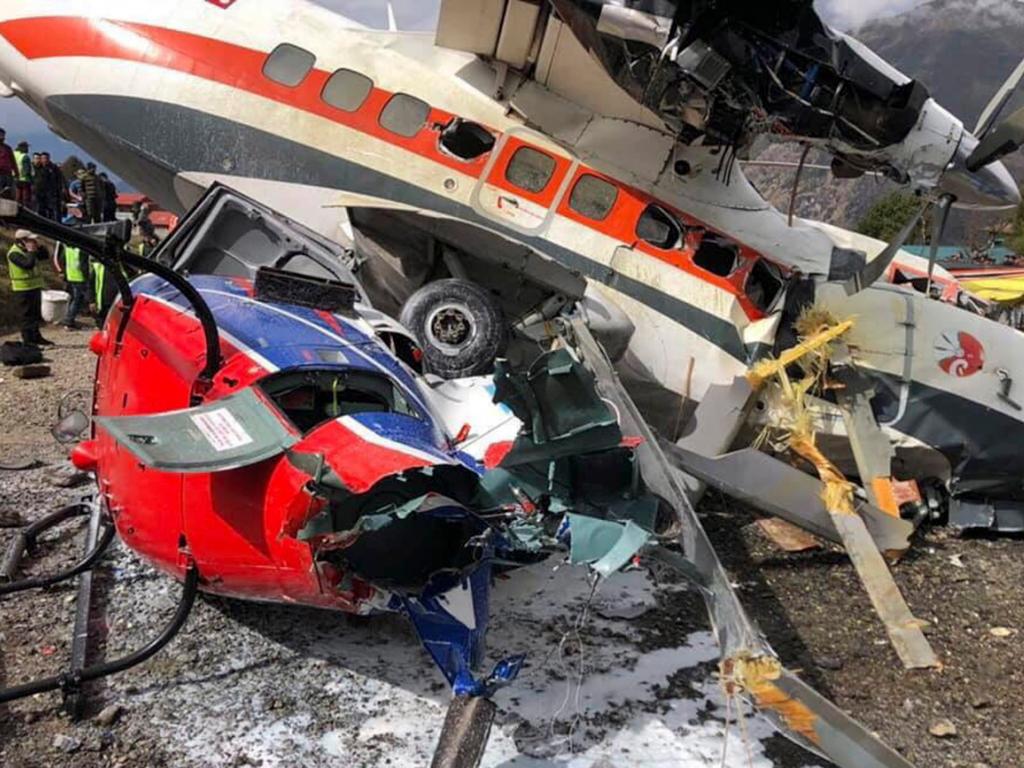
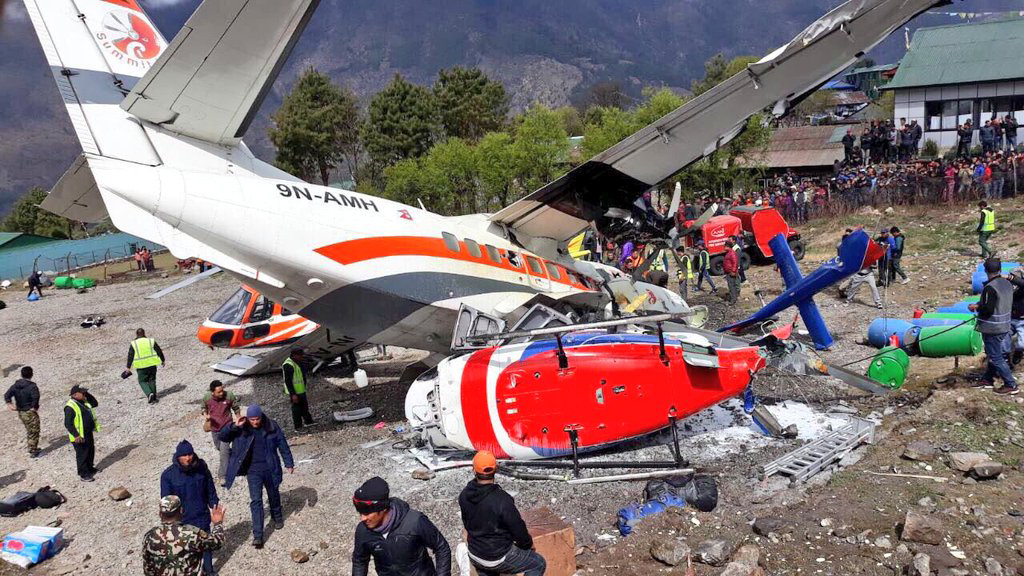
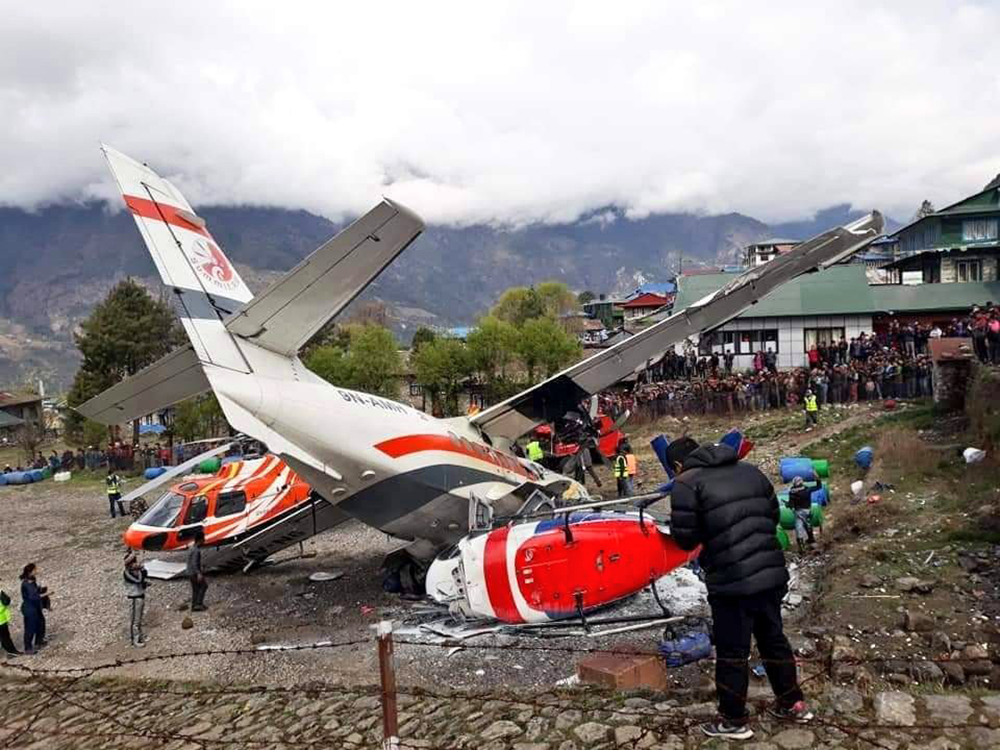
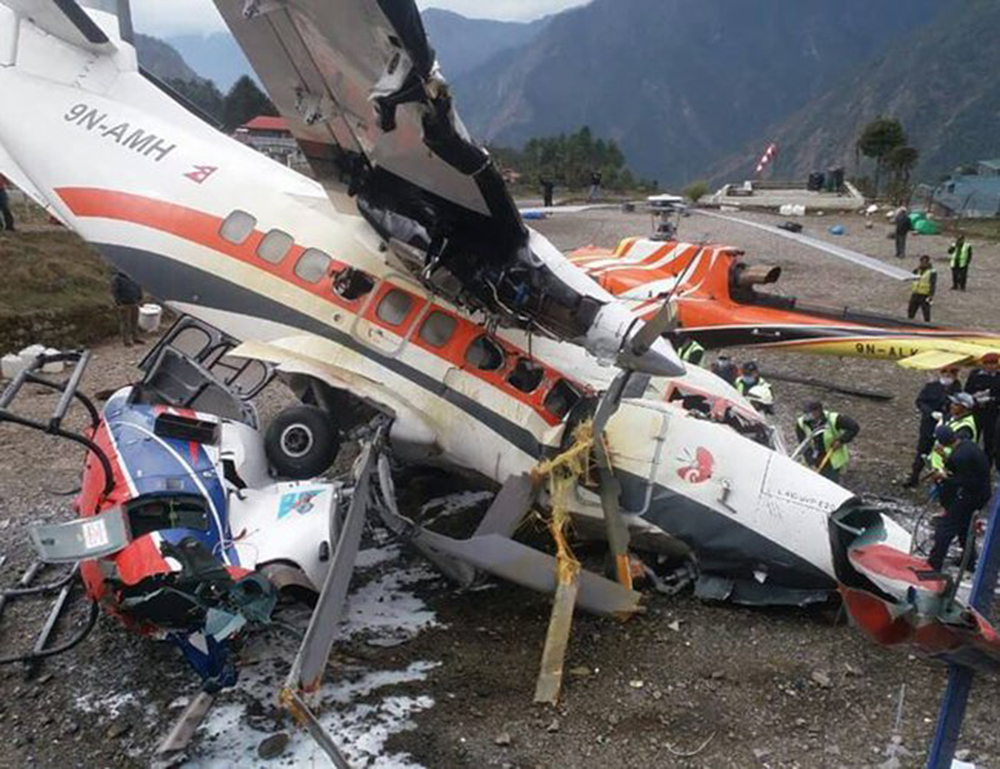
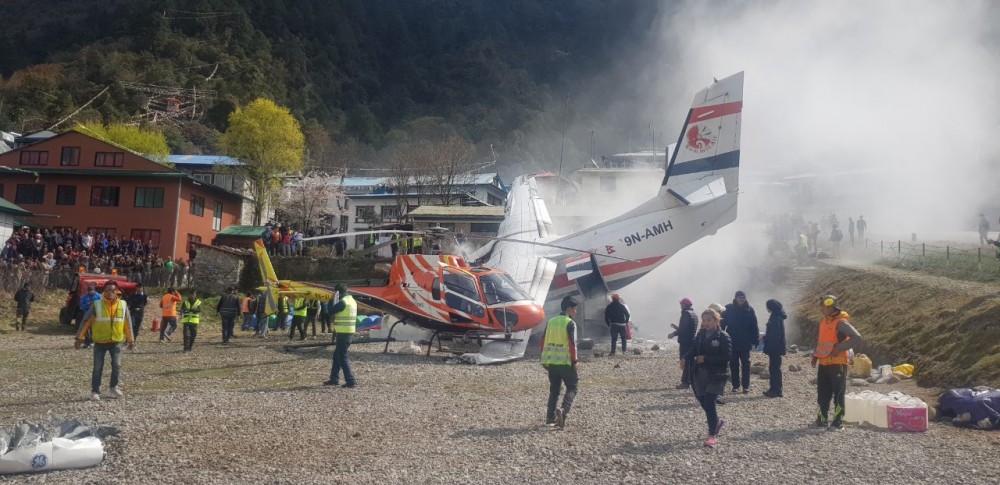
On 14 April 2019, around 0322Hrs, Aircraft Industries' L410UPV-E20, registration 9NAMH, owned and operated by Summit Air Pvt. Ltd. met with an accident at Tenzing-Hillary Airport, Lukla when it veered right and excurred the runway during take-off roll from runway 24. The aircraft first collided with Manang Air's helicopter, AS350B3e, registration 9N-ALC, with its rotor blade running on idle power and then with Shree Airlines' helicopter, AS350B3e, registration 9N-ALK just outside the inner perimeter fence of the aerodrome into the helipad before coming to a stop. The PIC and Cabin Crew of 9N-AMH survived the accident, whereas the Co-pilot and one security personnel on ground were killed on the spot. One more security personnel succumbed to injury later in hospital during the course of treatment. 9N-AMH and 9N-ALC both were substantially damaged by impact forces. There was no post-crash fire. Prior to the accident the aircraft had completed 3 flights on Ramechhap-Lukla-Ramechhap sector. According to PIC, he was in the left seat as the pilot monitoring (PM) and the co-pilot, in the right seat was the pilot flying (PF). According to CCTV footages, the aircraft arrived at the apron from VNRC to VNLK at 0315Hrs and shut its LH engine. The PIC started the LH engine at about 0318 Hrs after unloading cargo and passengers. At 0322:30 Hrs, the PIC aligned the aircraft with the runway at the runway threshold 24 and then handed over the controls to the co-pilot for the take-off roll. The take-off roll commenced at 0322:50 Hrs. CCTV footage captured that within 3 seconds the aircraft veered right and made an excursion. The aircraft exited the runway and travelled about 42.8 ft across the grassy part on right side of runway 24, before striking the airport inner perimeter fence. It then continued to skid for about 43 ft, into the upper helipad, crashing into 9N-ALC. Eye witnesses statements, CCTV footages and initial examination of the wreckage showed that rotor blades of helicopter 9N-ALC were on idle when RH wing of the aircraft swept two security personnel (on ground) before slashing its rotor shaft. The moving rotors cut through the cockpit on the right side slaying the Co-pilot immediately. The helicopter toppled onto the lower helipad 6 ft below. The LH wing of the aircraft broke the skid of helicopter 9NALK and came to a halt with toppled 9N-ALC beneath its RH main wheel assembly. Due to 2impact, 9N-ALK shifted about 8 ft laterally and suffered minor damages. There was no post-crash fire. The PIC switched off the battery and came out of the aircraft through emergency exit along with the cabin crew. The captain of the helicopter 9N-ALC was rescued immediately. 9N-ALC's crew sustained a broken tail-bone whereas 9N-ALK's crew escaped without sustaining major injuries. All three deceased were Nepalese citizens. Aircraft 9N-AMH and helicopter 9N-ALC were substantially damaged while the helicopter 9N-ALK endured partial damages.
Probable cause:
The commission concluded that the probable cause of the accident was aircraft's veering towards right during initial take-off roll as a result of asymmetric power due to abrupt shifting of right power lever rearwards and failure to abort the takeoff by crew. There were not enough evidences to determine the exact reason for abrupt shifting of the power lever.
Contributing Factors:
1. Failure of the PF(being a less experienced co-pilot) to immediately assess and act upon the abrupt shifting of the right power lever resulted in aircraft veering to the right causing certain time lapse for PIC to take controls in order to initiate correction.
2. PIC's attempted corrections of adding power could not correct the veering. Subsequently, application of brakes resulted in asymmetric braking due to the position of the pedals, and further contributed veering towards right.
Final Report:

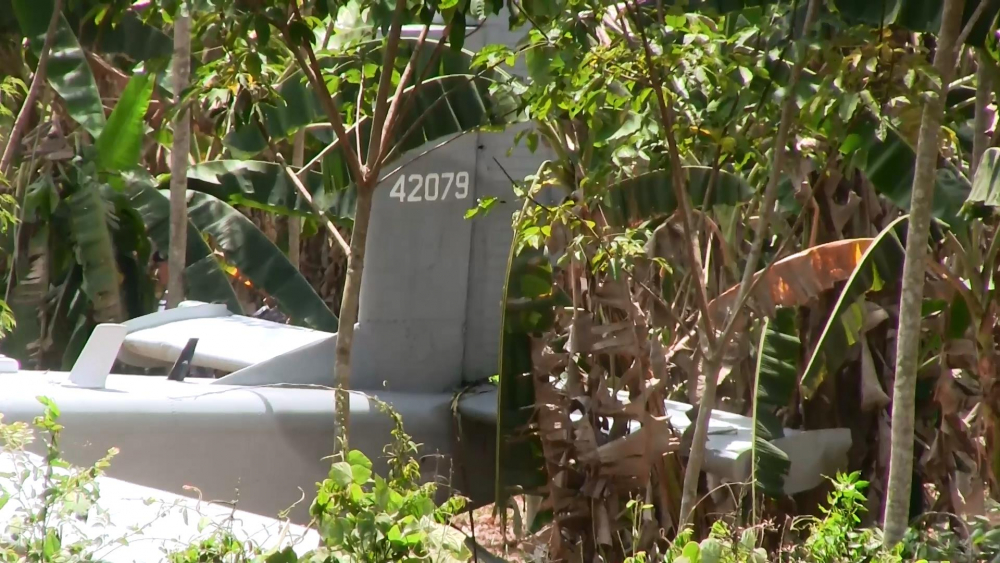
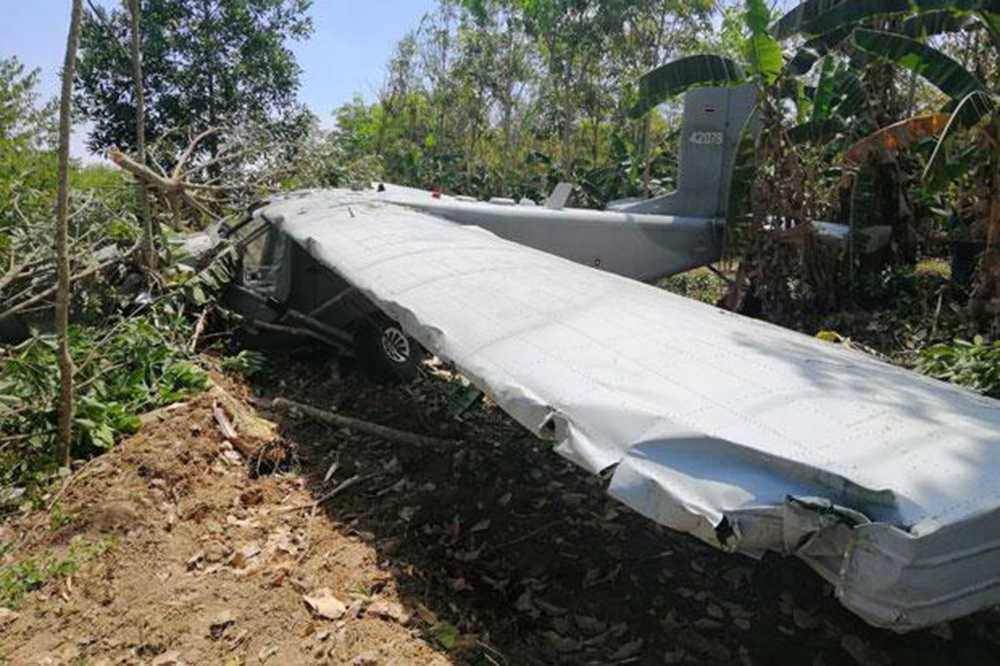
Crash of a Pilatus AU-23A Turbo Porter in Wat Bang Sala

Date & Time: Mar 5, 2019 at 1300 LT
Operator:
Registration:
74-2079
Flight Phase:
Flight Type:
Survivors:
Yes
Schedule:
Pattani - Hat Yai
MSN:
2079
YOM:
1974
Country:
Region:
Crew on board:
3
Crew fatalities:
Pax on board:
0
Pax fatalities:
Other fatalities:
Total fatalities:
0
Circumstances:
The single engine airplane departed Pattani (9th AF Command) at 1156LT bound for the Wing 56 Air Division 4 located at Hat Yai Airport. En route, the crew encountered technical problems with the engine and attempted an emergency landing when the airplane crashed in a banana plantation located in the region of Wat Bang Sala. All three occupants were injured and the aircraft was damaged beyond repair.

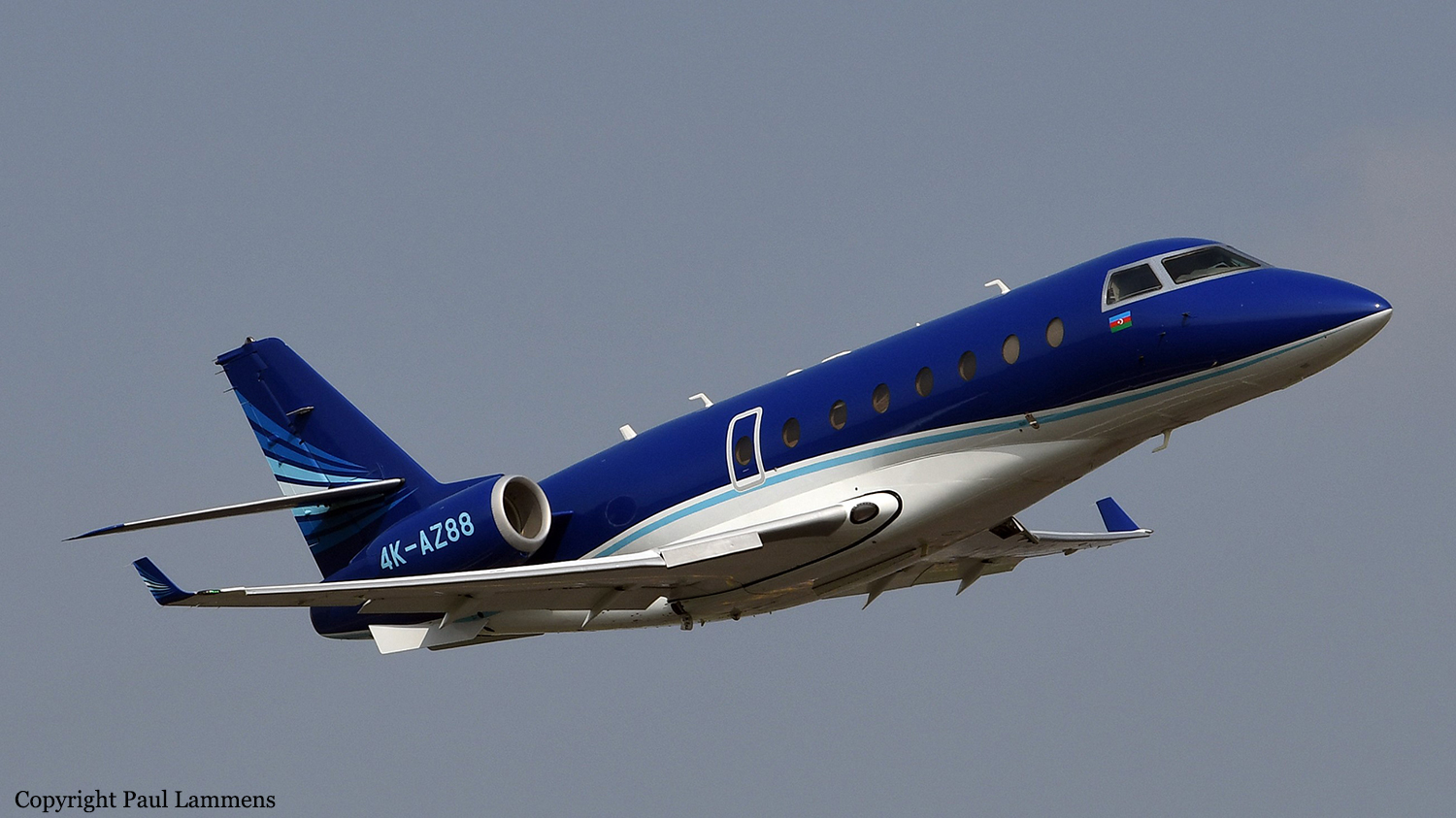
Crash of a Gulfstream G200 in Moscow

Date & Time: Feb 26, 2019 at 1244 LT
Type of aircraft:
Operator:
Registration:
4K-AZ88
Survivors:
Yes
Schedule:
Baku - Moscow
MSN:
189
YOM:
2008
Flight number:
EWS88
Country:
Region:
Crew on board:
3
Crew fatalities:
Pax on board:
3
Pax fatalities:
Other fatalities:
Total fatalities:
0
Captain / Total flying hours:
7608
Captain / Total hours on type:
2356.00
Copilot / Total flying hours:
2554
Copilot / Total hours on type:
609
Aircraft flight hours:
4174
Aircraft flight cycles:
1787
Circumstances:
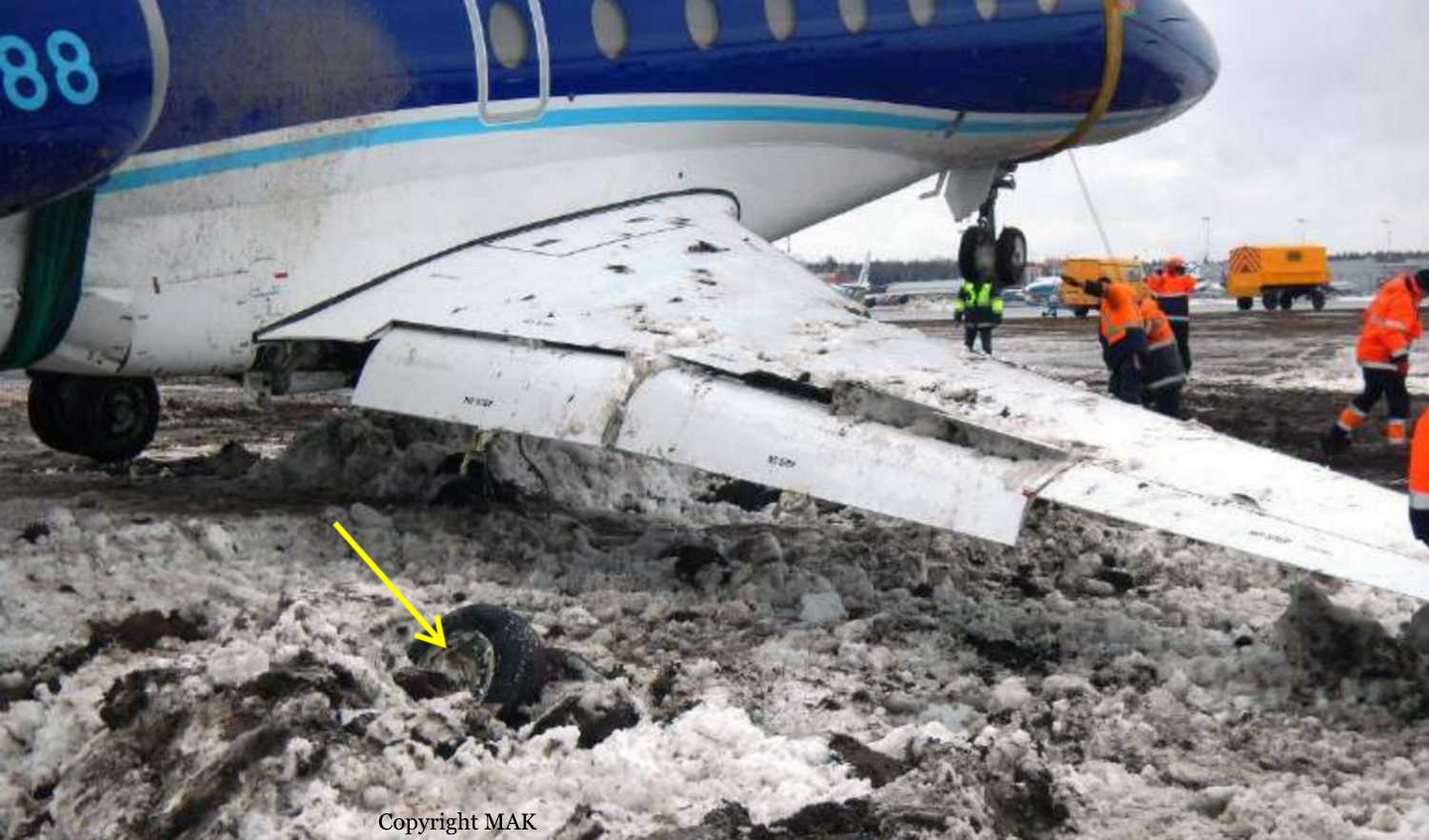
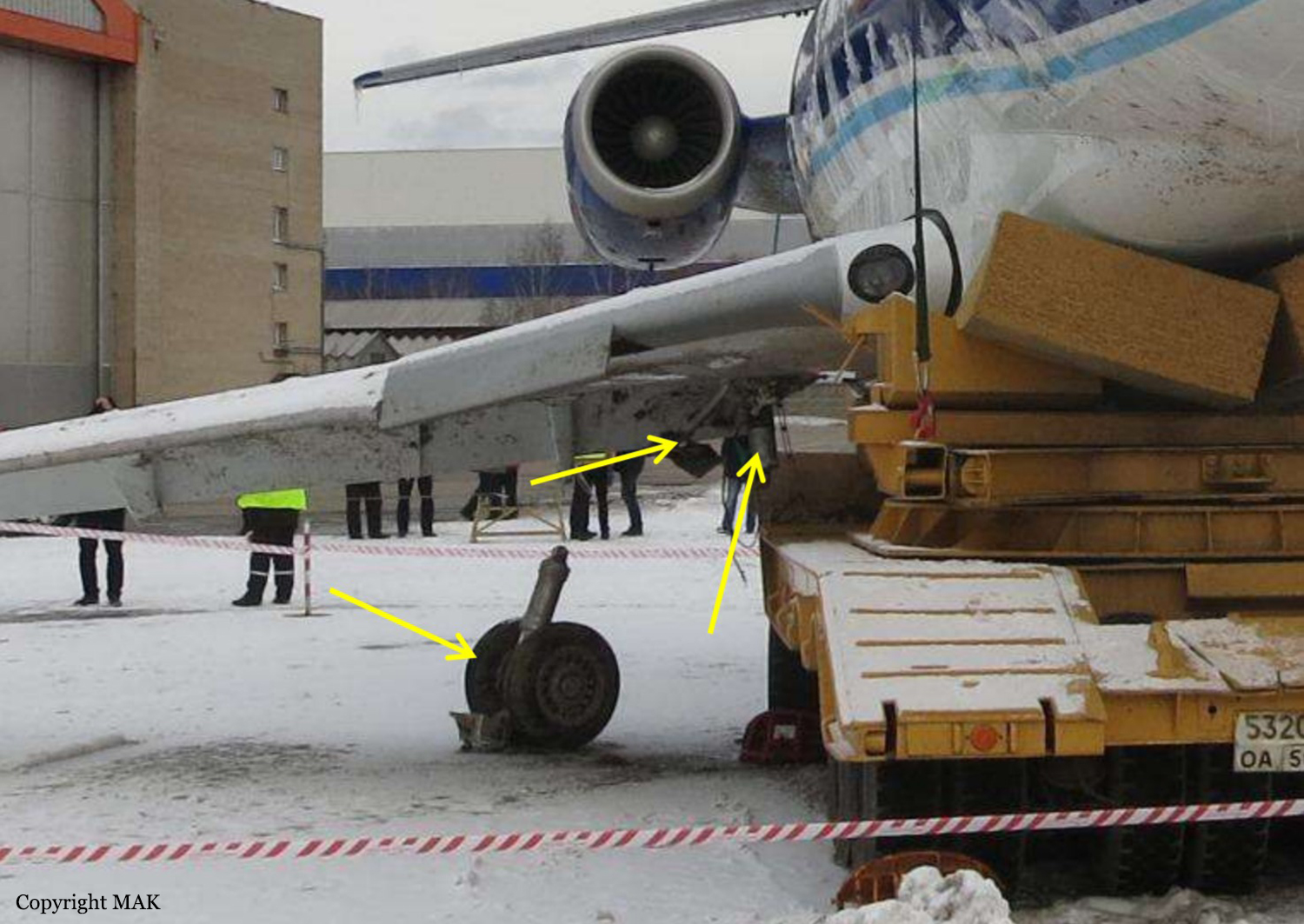
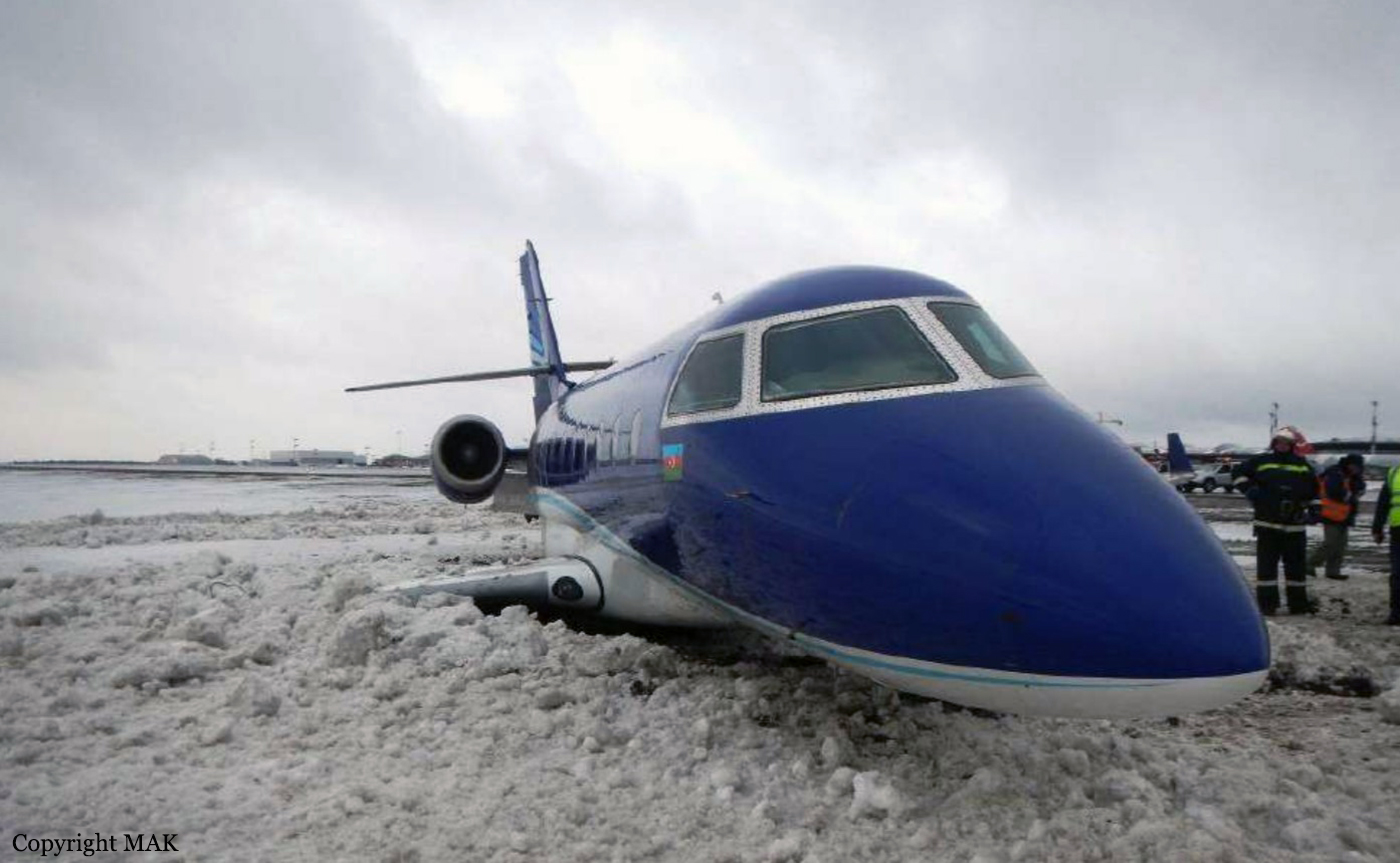
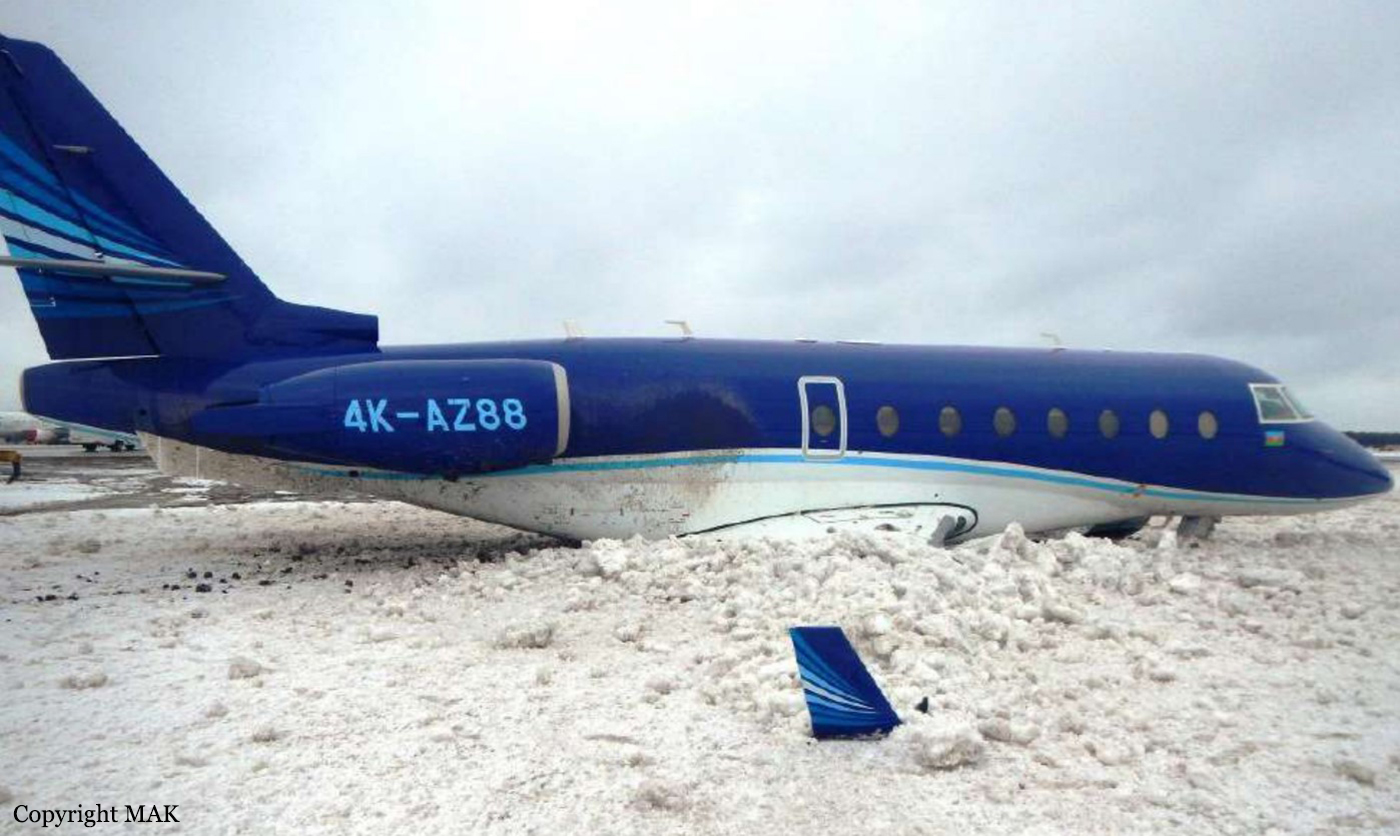
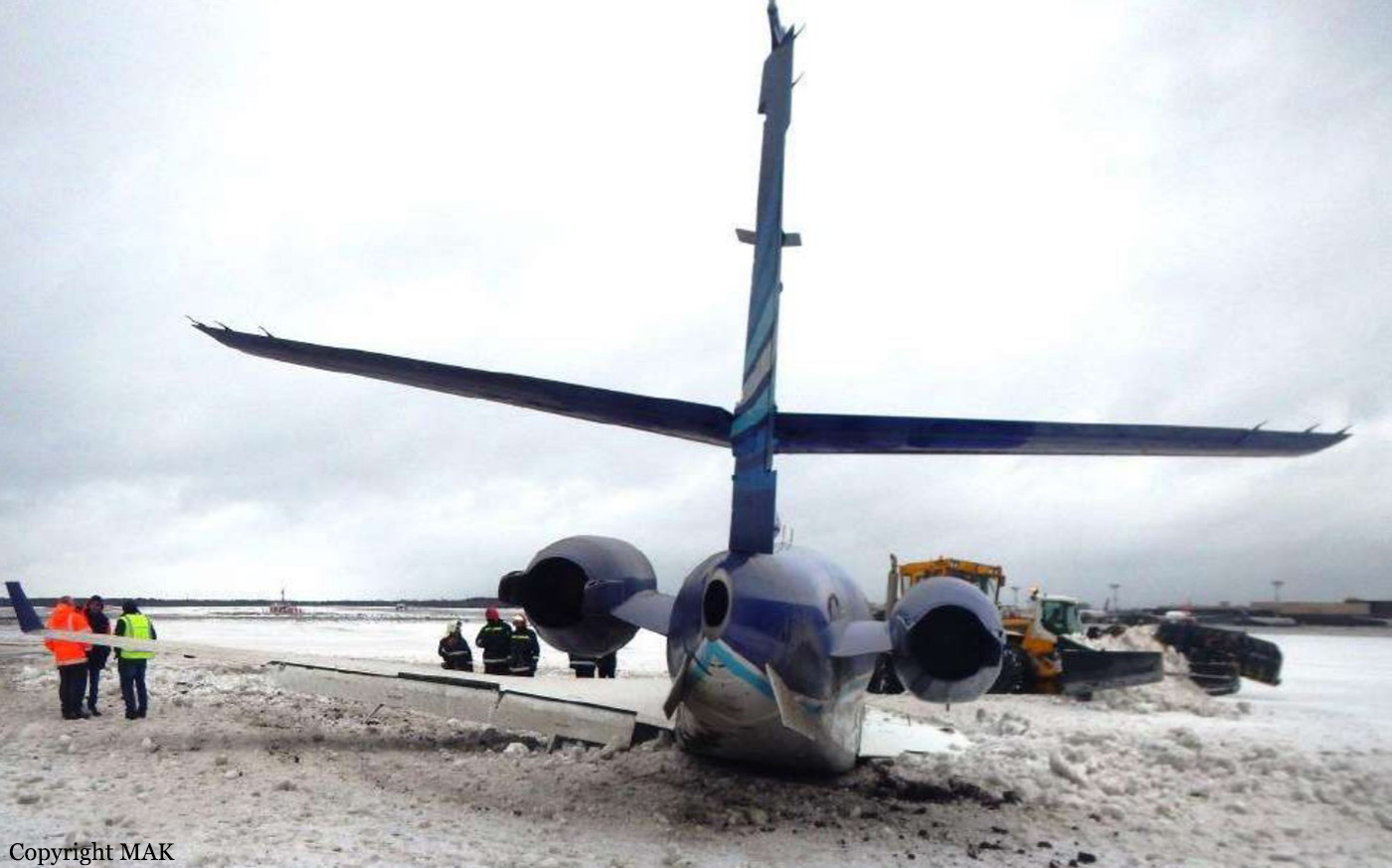
The airplane departed Baku-Bina Airport on a charter flight to Moscow, carrying three passengers and three crew members. Following an uneventful flight, the crew was cleared for an approach to Moscow-Sheremetyevo Airport runway 24C. The aircraft landed at a speed of 150 knots some 250 metres past the runway threshold. After touchdown, the crew started the braking procedure and activated the thrust reversers. After a course of several hundred metres, the aircraft deviated to the left, made an almost 180 turn and veered off runway to the left. While contacting soft ground, the right main gear was torn off and the aircraft came to rest in a snow covered area. All six occupants evacuated safely and the aircraft was damaged beyond repair.
Probable cause:
The reason for the accident with the Gulfstream G200 4K-AZ88 was the stowing of the right-engine reverser by the pilot KVS from maximum thrust reversal while maintaining maximum thrust reversal on the left engine, which led to the appearance of a significant turning moment to the left. The aircraft turning to the left in the presence of a cross wind to the right, as well as turbulence of the airflow near the rudder due to the open thrust reversal mechanism of the left engine and possible ice deposition on the outer surfaces of the aircraft, which led to the development of a significant swing moment on the rudder. The development of a significant articulated moment on the rudder, in the absence of power steering in the rudder control system, led to its deviation to the leftmost position despite significant (up to 82 kg or 180 pounds) forces exerted by the crew on the pedals. The deviation of the rudder (pedals) to the left also led to the deviation of the nose wheel to the left. The total moment from the running reverse of the left engine, from the right engine in direct draft mode, and from the rudder and nose wheel deflection to the left, led to the aircraft rolling out of the runway and its damage. Separate braking applied by the crew could not prevent the aircraft from rolling out.

The following contributing factors were identified:
- The crew did not take into account the provisions of the AOM about the possible "destabilizing" effect of the thrust reverse when landing with a cross wind on the runway with a reduced braking coefficient;
- Increased psycho-emotional tension of the crew members due to long dissatisfaction and emotional discussion of instructions and actions of ATC controllers. At the same time, the instructions and actions of the ATC service controllers were in line with established procedures.
Final Report:

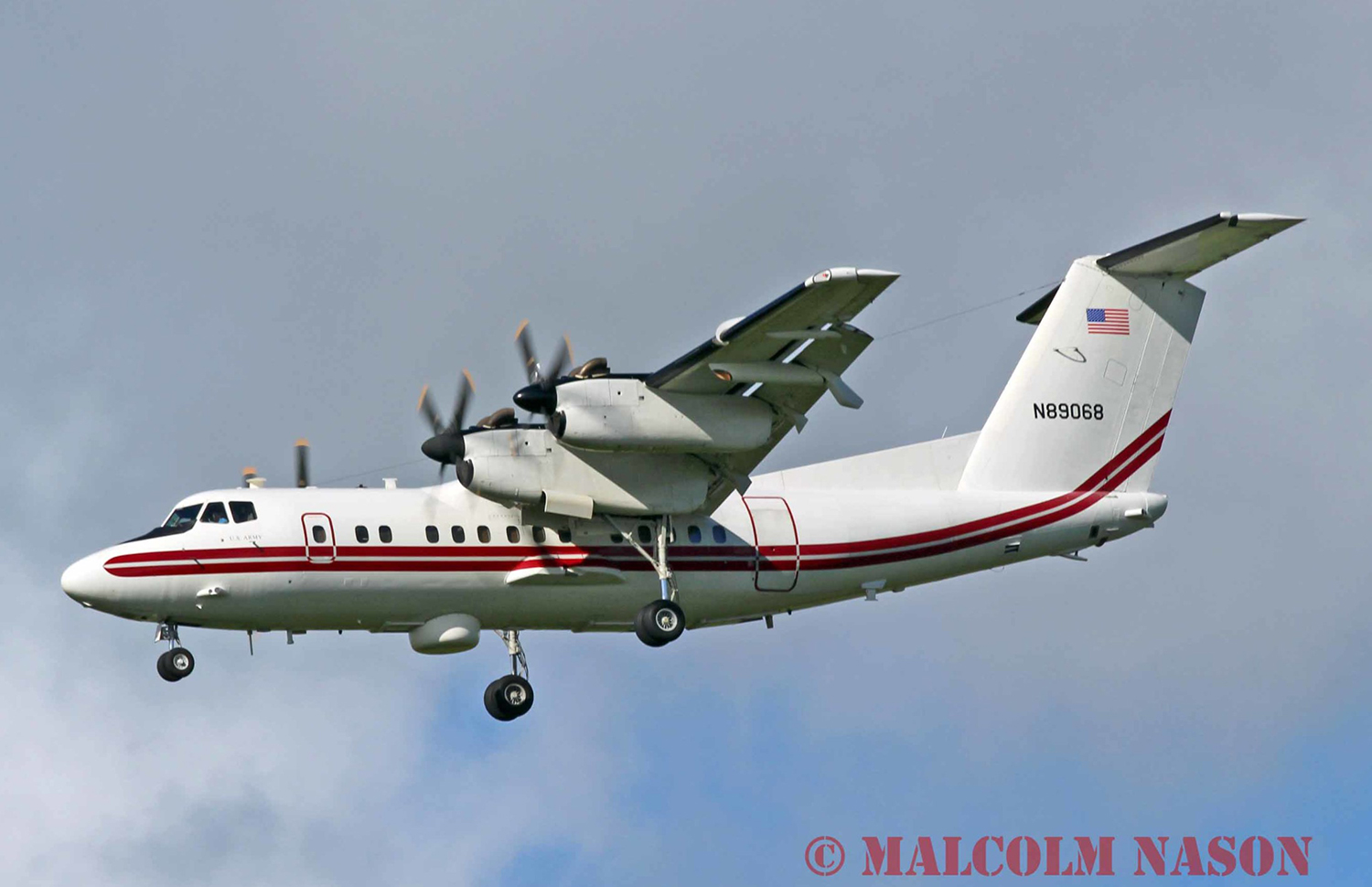
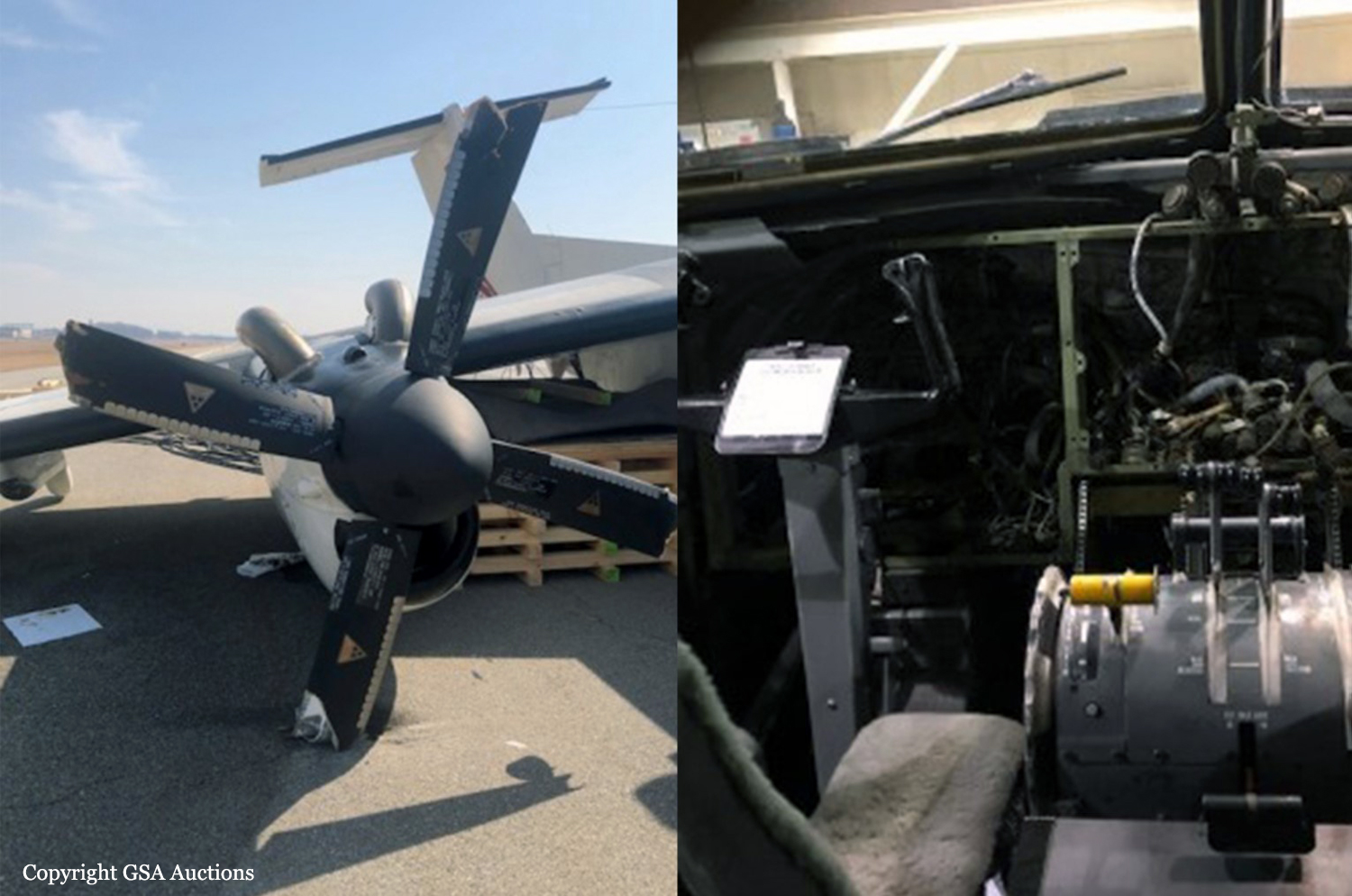
Crash of a De Havilland EO-5C (Dash-7-102) at Pyongtaek-Desiderio AAF

Date & Time: Feb 25, 2019
Operator:
Registration:
N89068
Flight Type:
Survivors:
Yes
Schedule:
Pyongtaek - Pyongtaek
MSN:
88
YOM:
1982
Country:
Region:
Crew on board:
0
Crew fatalities:
Pax on board:
0
Pax fatalities:
Other fatalities:
Total fatalities:
0
Circumstances:
The aircraft was complering a survey mission on behalf of the US Ministry of Defense. For unknown reasons, the four engine airplane landed hard at Pyongtaek-Desiderio AAF (Camp Humphreys), causing the right main gear to collapse. The right wing fell on the ground and the aircraft slid for few dozen metres before coming to rest. All occupants evacuated safely and the aircraft was damaged beyond repair.