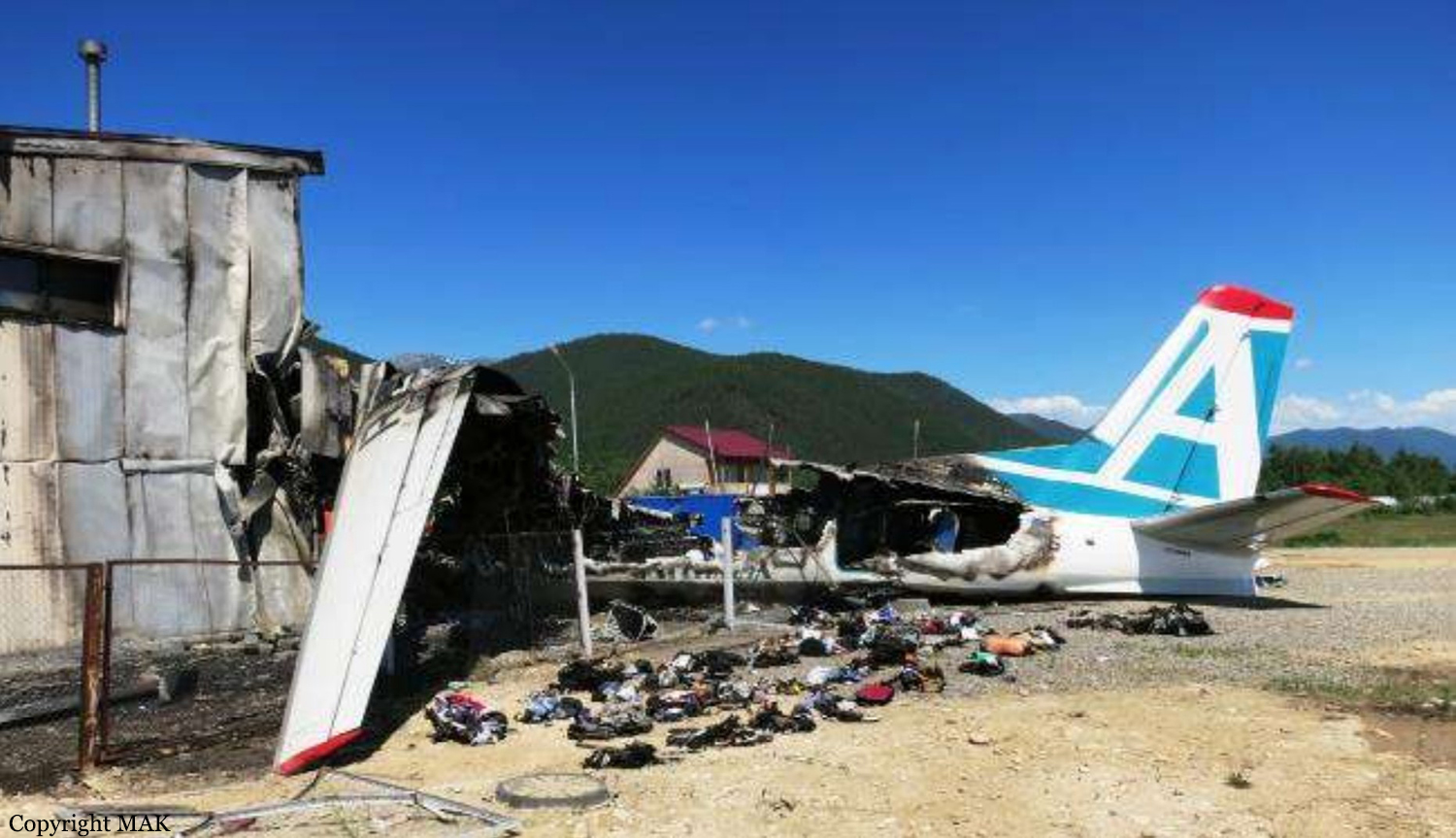
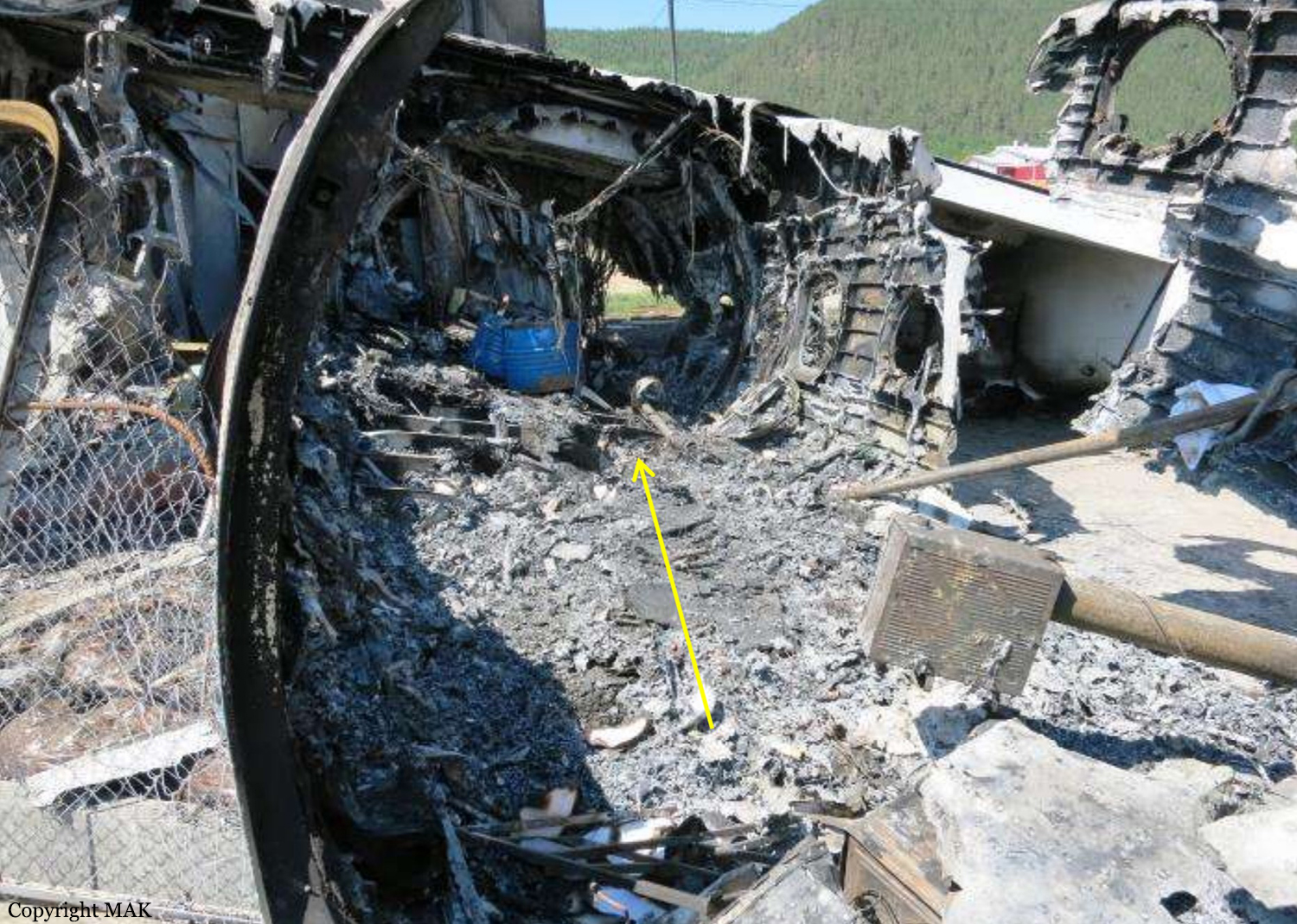
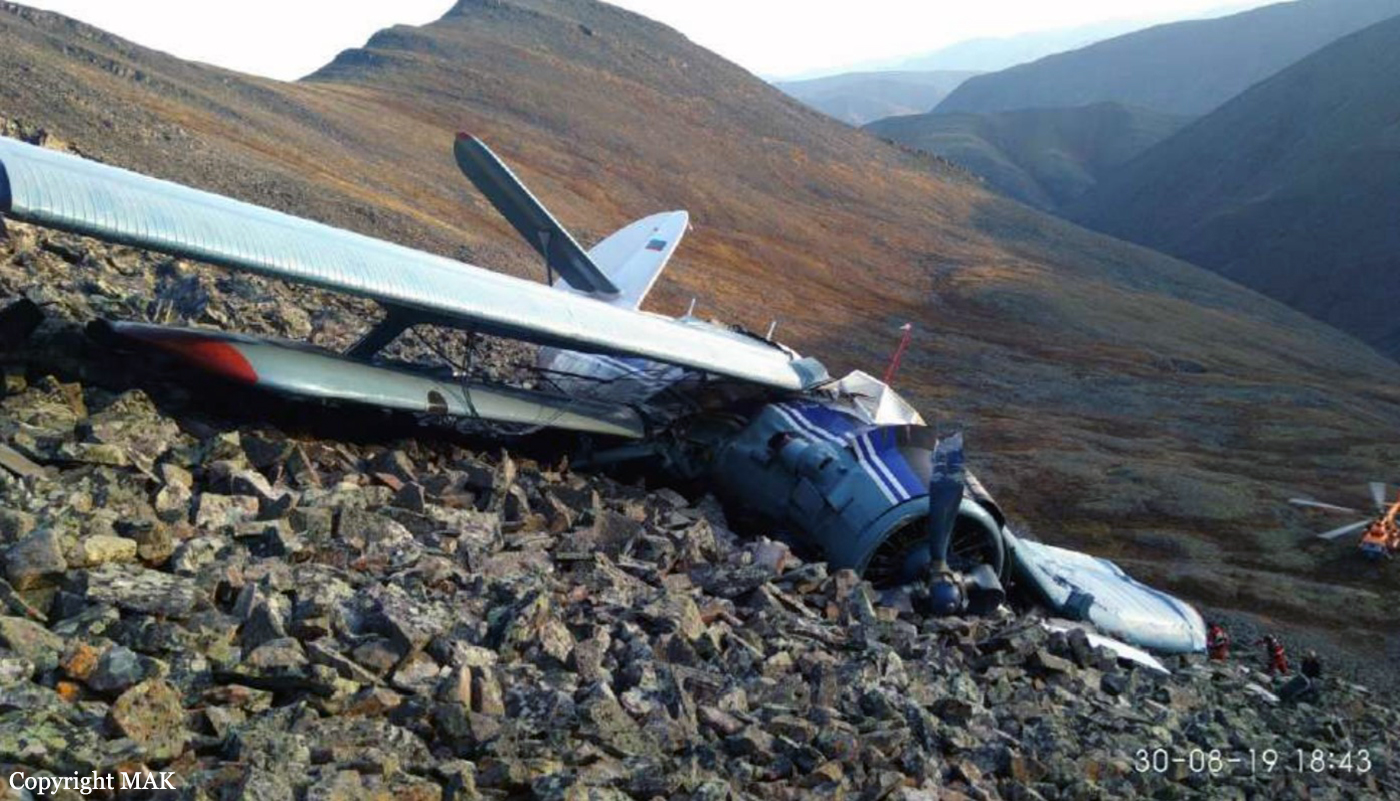
Crash of a PZL-Mielec AN-2R near Lake Siljan-Kuel: 2 killed

Date & Time: Aug 30, 2019 at 0730 LT
Type of aircraft:
Operator:
Registration:
RA-33061
Flight Phase:
Flight Type:
Survivors:
Yes
Site:
Schedule:
Us-Khatyn – Suordakh
MSN:
1G218-48
YOM:
1986
Country:
Region:
Crew on board:
2
Crew fatalities:
Pax on board:
5
Pax fatalities:
Other fatalities:
Total fatalities:
2
Captain / Total flying hours:
12500
Captain / Total hours on type:
3806.00
Aircraft flight hours:
3848
Circumstances:
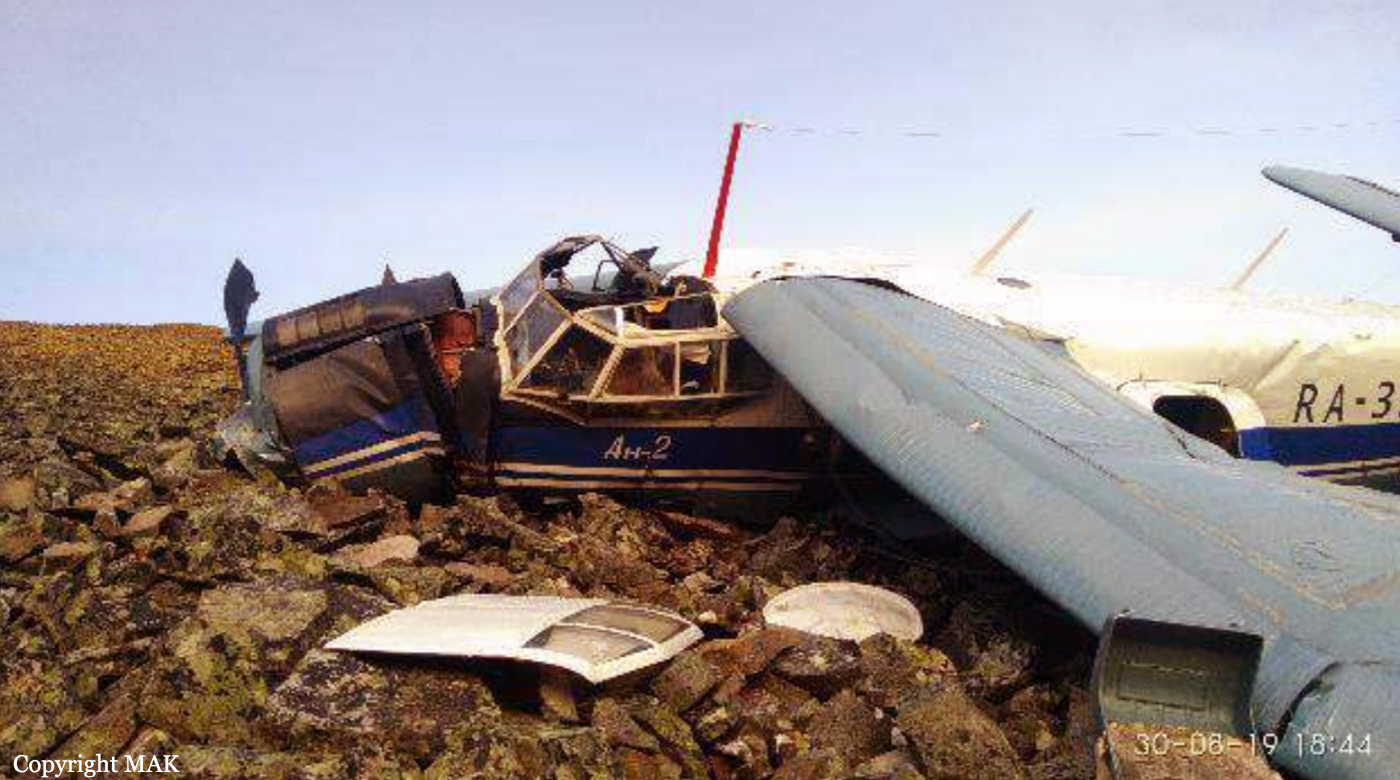
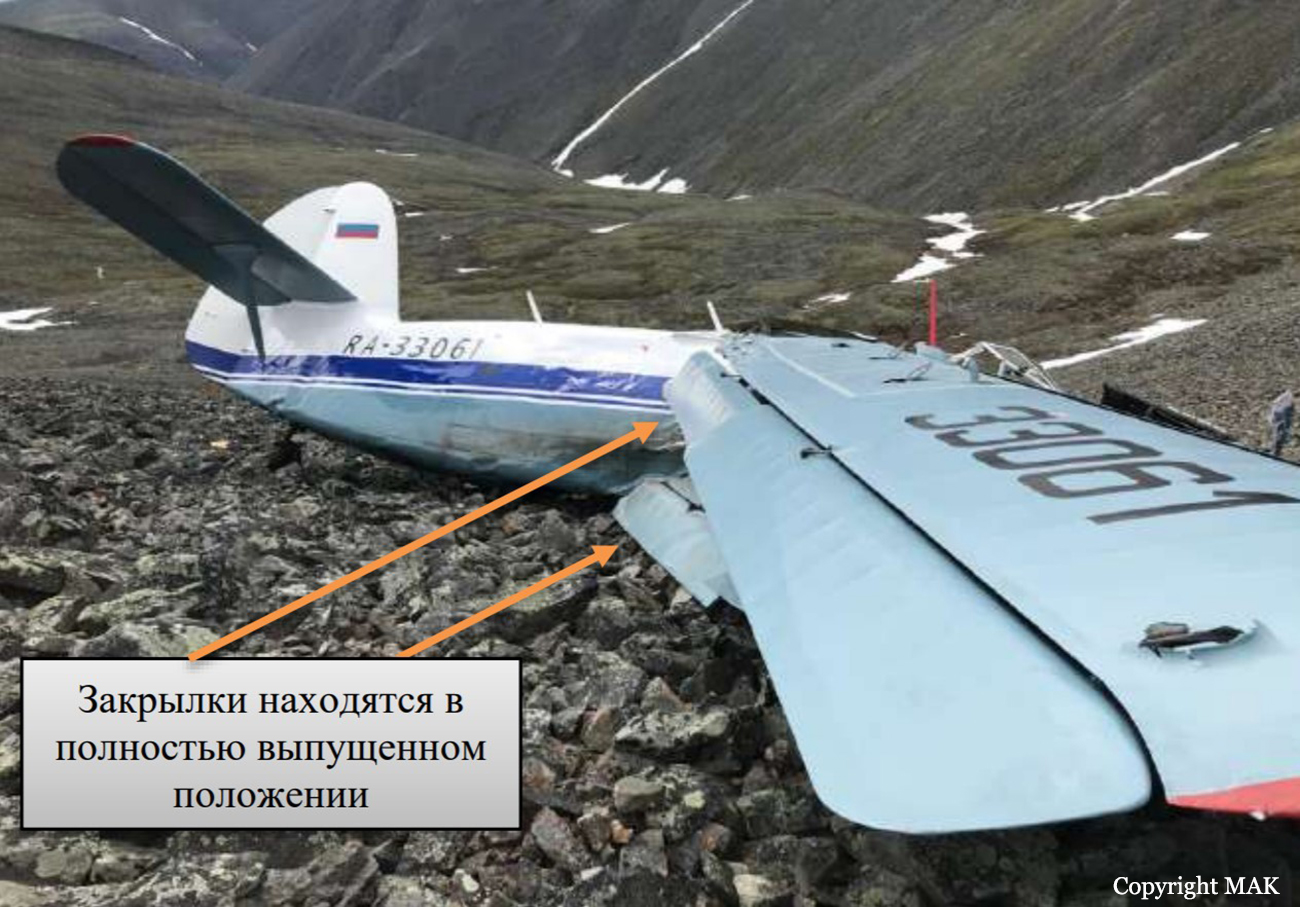
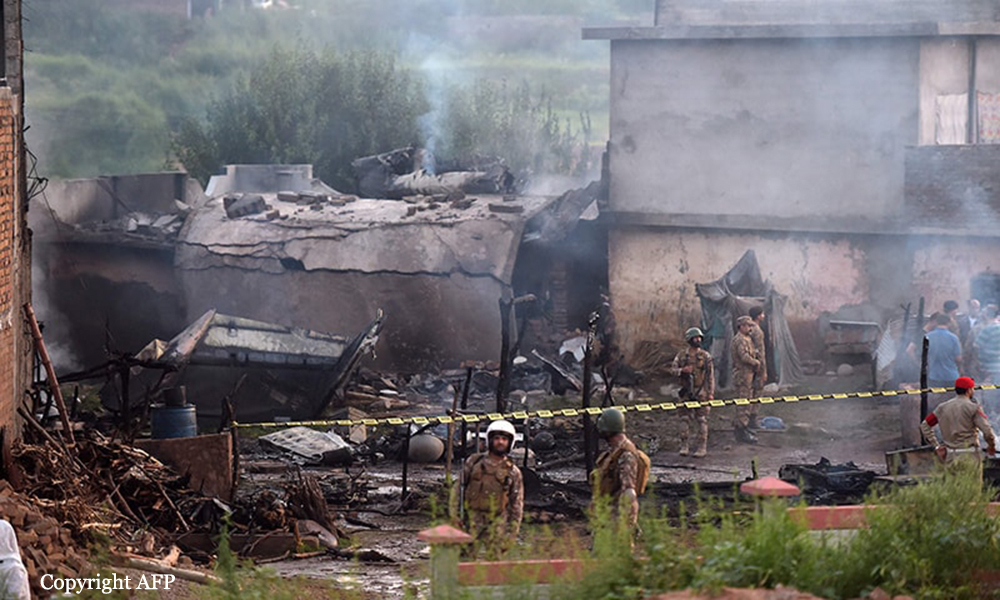
The single engine airplane departed Us-Khatyn on a flight to Suordakh, carrying five passengers, two pilots and a load consisting of 600 kilos of various goods. While cruising at an altitude of about 1,450 metres, the crew encountered moderate atmospheric turbulences and was unable to maintain the altitude. The aircraft lost height and crashed on the rocky slope of amountain located 15 km southeast from the Lake Siljan-Kuel, some 250 km from the destination. Two passengers were killed while five others occupants were injured. The aircraft was destroyed.
Probable cause:
The accident was caused by the fact that the PIC did not maintain a safe flight altitude in mountainous terrain, which led to the aircraft getting into strong downdrafts while flying over the leeward side of the ridge, uncontrolled descent and collision with the top of the mountain.
The contributing factors of AP, most likely, were:
- insufficient analysis of meteorological conditions and the possibility of the formation of strong ascending and descending air currents in the mountains;
- Failure of the PIC to take safety measures when flying in the mountains and to act in case of falling into downward air currents when crossing a mountain ridge;
- the use of motor gasoline with an octane rating of less than 95, which led to a decrease in engine power;
- performing a mission on the An-2 aircraft without the procedure for restoring skills and admission to flights on this type after a significant break in flights (about 15 years).
Final Report:

Ground fire of an Airbus A330-343 in Beijing

Date & Time: Aug 27, 2019 at 1648 LT
Type of aircraft:
Operator:
Registration:
B-5958
Flight Phase:
Survivors:
Yes
Schedule:
Beijing - Tokyo
MSN:
1587
YOM:
2014
Flight number:
CA183
Country:
Region:
Crew on board:
14
Crew fatalities:
Pax on board:
147
Pax fatalities:
Other fatalities:
Total fatalities:
0
Aircraft flight hours:
19007
Aircraft flight cycles:
4596
Circumstances:
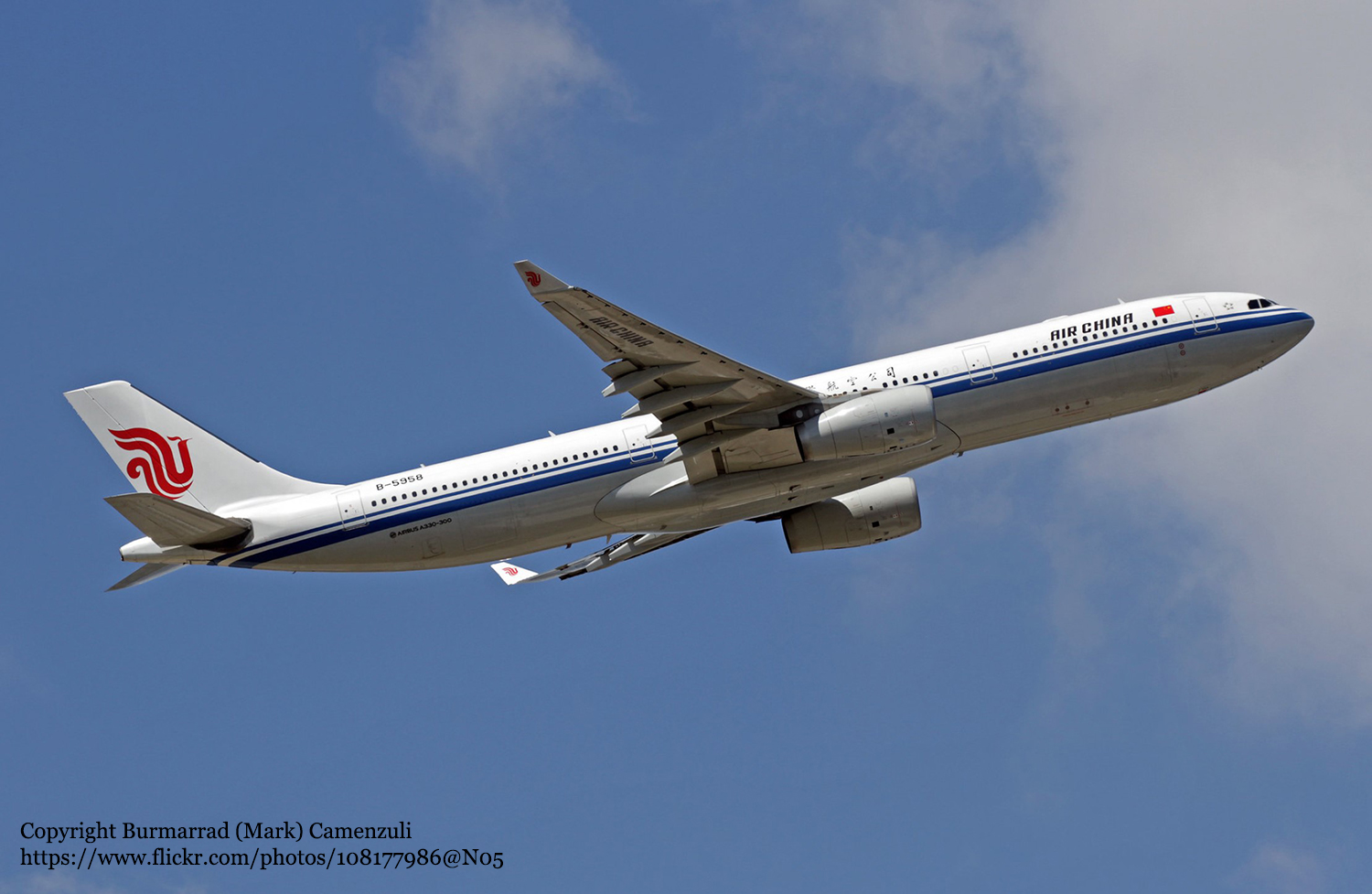
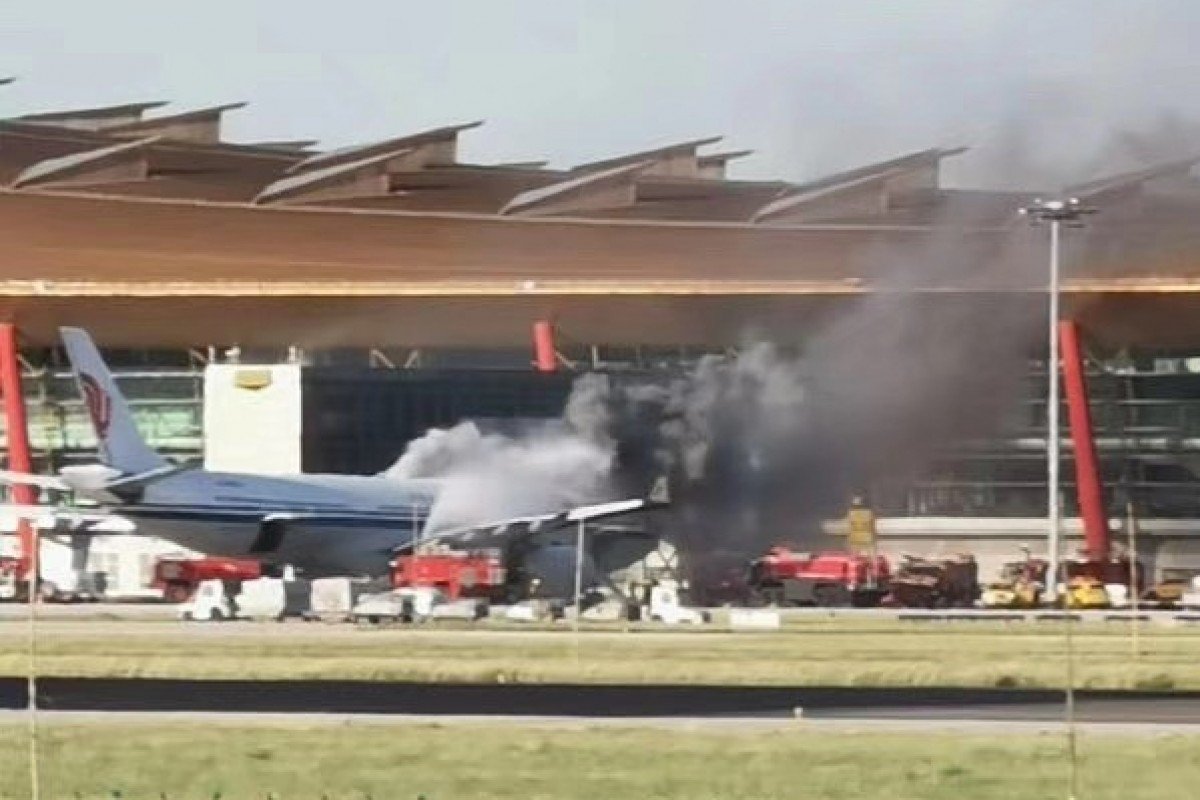
The airplane was parked at gate 530 (Terminal 3) at Beijing Capital and being prepared for flight CA183 to Tokyo-Haneda. 14 crew members were on board as well as 147 passengers when an abnormal sound was heard coming from the L2 door connected to the jetbridge. The cargo smoke alarm came on in the cockpit while smoke spread in the cabin. The pilot declared an emergency and decision was taken to evacuate all 161 occupants and no one was injured while the aircraft was partially destroyed by fire. The origin of the fire is still under investigation.

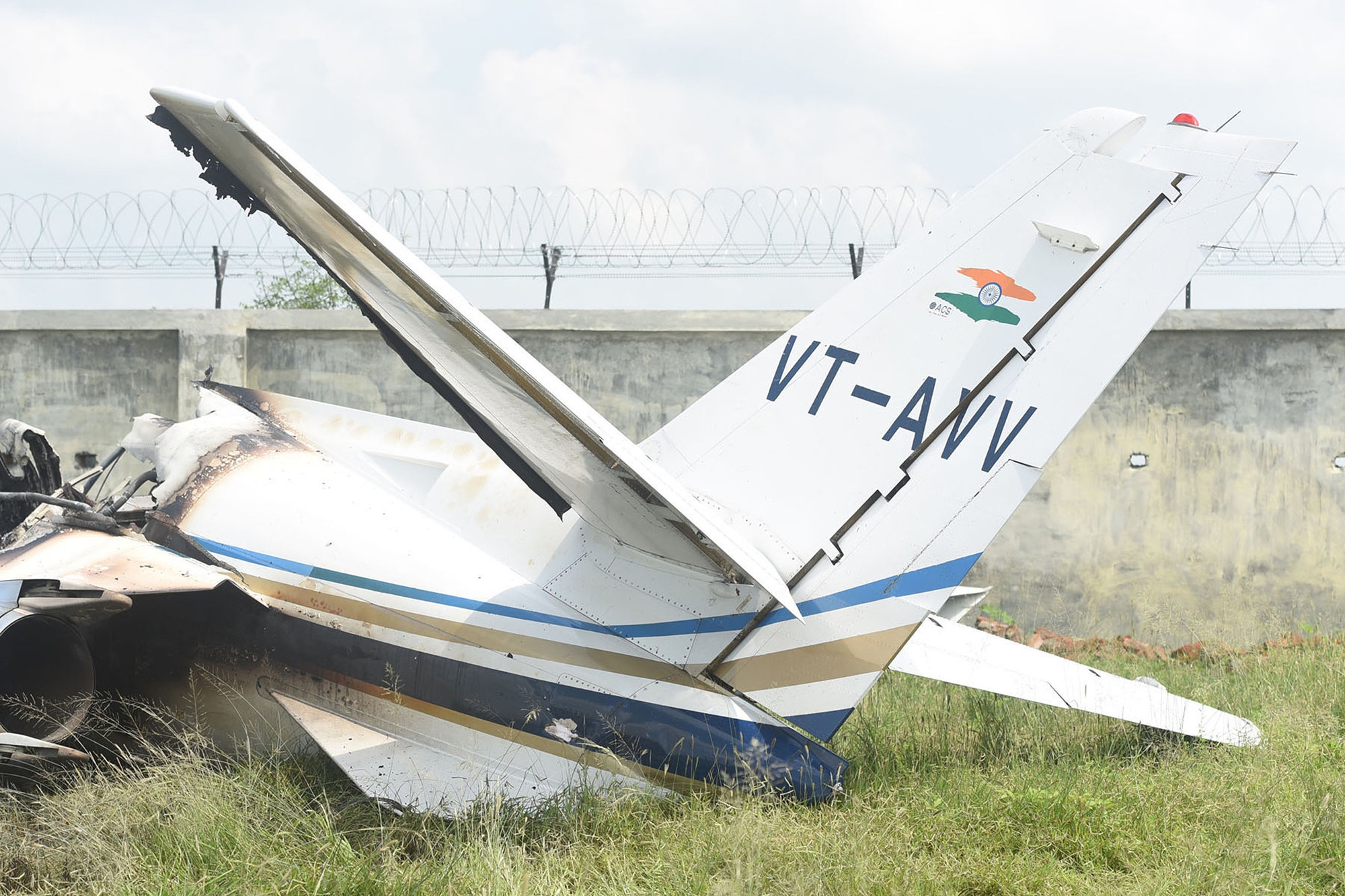
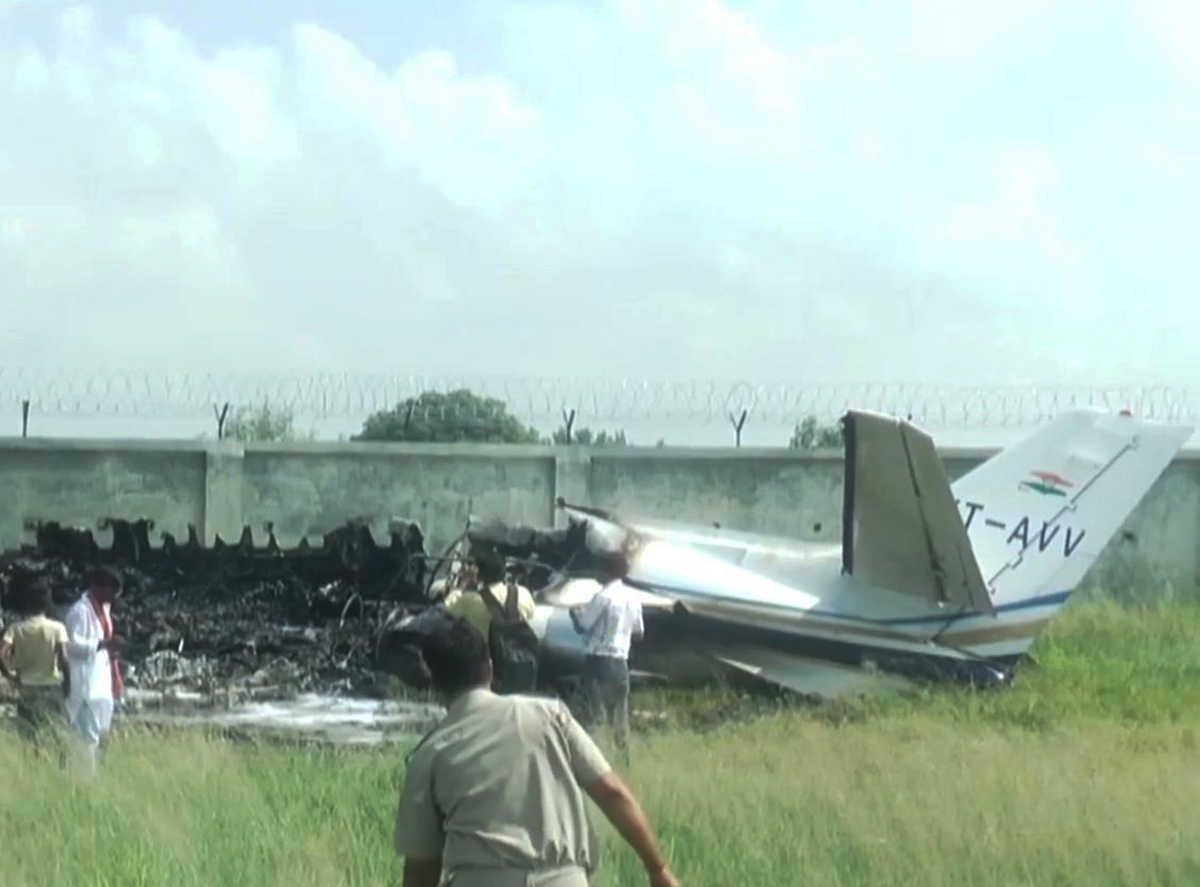
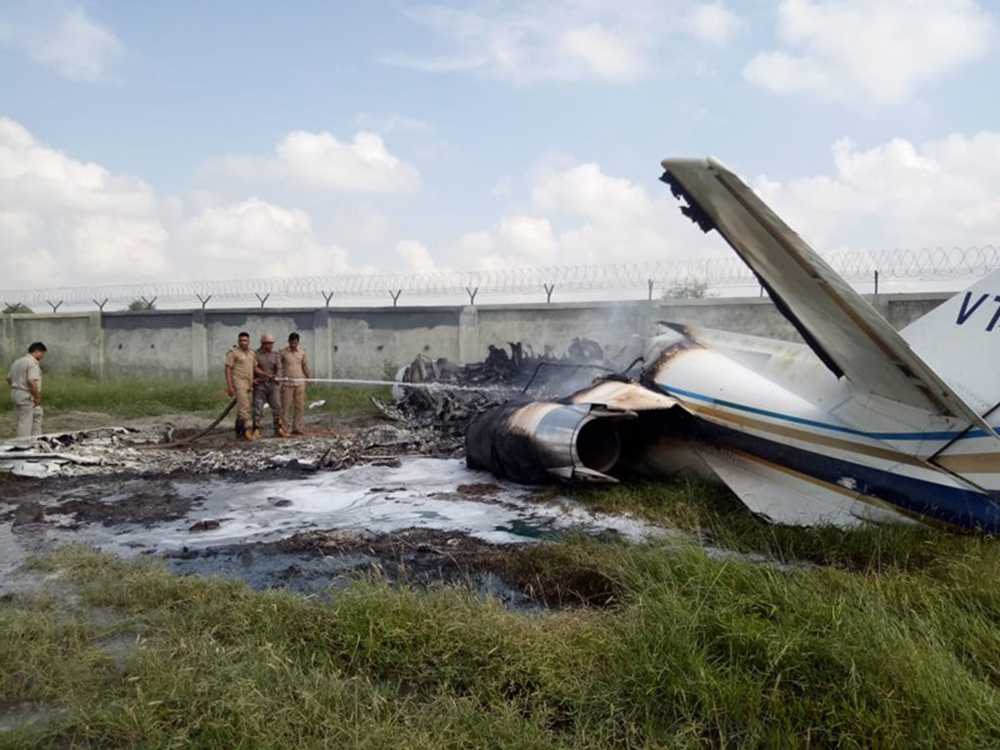
Crash of a Cessna 560XL Citation Excel in Aligarh

Date & Time: Aug 27, 2019 at 0840 LT
Operator:
Registration:
VT-AVV
Flight Type:
Survivors:
Yes
Schedule:
New Delhi - Aligarh
MSN:
560-5259
YOM:
2002
Country:
Region:
Crew on board:
2
Crew fatalities:
Pax on board:
4
Pax fatalities:
Other fatalities:
Total fatalities:
0
Captain / Total flying hours:
5484
Captain / Total hours on type:
1064.00
Copilot / Total flying hours:
1365
Copilot / Total hours on type:
1060
Aircraft flight hours:
7688
Circumstances:
On 27 Aug 19, M/s Air Charter Services Pvt Ltd Cessna Citation 560 XL aircraft (VTAVV), while operating a flight from Delhi to Aligarh (Dhanipur Airstrip) was involved in an accident during landing on runway 11.The operator is having a maintenance facility at Aligarh Airport and aircraft was scheduled to undergo ADS-B modification. There were 02 cockpit crew and 04 SOD onboard the aircraft. The aircraft was under the command of a PIC, who was an ATPL holder duly qualified on type with a CPL holder co-pilot, duly qualified on type as Pilot Monitoring. This was the first flight of the day for both pilots. Both, PIC and Co-Pilot had prior experience of operating to Aligarh airport, which is an uncontrolled airport. As per the flight plan, ETD from Delhi was 0800 IST and ETA at Aligarh was 0820 IST. The crew had reported around 0630 IST at Delhi airport and underwent BA test. The MET report to operate the aircraft to Aligarh was well within the VFR conditions. The aircraft Take-off weight was within limits including 1900 Kgs of fuel on board. As per the statement of PIC, the Co-pilot was briefed about pre departure checklists including METAR before approaching the aircraft. Once at the aircraft, prefight checks were carried out by PIC before seeking clearance from Delhi delivery (121.95 MHz). Aircraft was accorded start up clearance by Delhi ground (121.75 Mhz) at 0800 IST.ATC cleared the aircraft to line up on runway 11 and was finally cleared for takeoff at 0821 IST. After takeoff, aircraft changed over to Delhi radar control from tower frequency for further departure instructions. Aircraft was initially cleared by Radar control to climb to FL090 and was given straight routing to Aligarh with final clearance to climb to FL130. Thereafter, aircraft changed to Delhi area control for further instructions. While at approximately 45 Nm from Aligarh, VT-AVV made contact with Aligarh (personnel of M/s Pioneer Flying Club manning radio) on 122.625 MHz. Ground R/T operator informed “wind 100/2-3 Kts, QNH 1005, Runway 11 in use” and that flying of Pioneer Flying Club is in progress. Further, he instructed crew to contact when at 10 Nm inbound. After obtaining initial information from ground R/T operator, VT-AVV requested Delhi area control for descent. The aircraft was cleared for initial descent to FL110 and then further to FL080. On reaching FL080, aircraft was instructed by Delhi area control to change over to Aligarh for further descent instruction in coordination with destination. At approx 10 Nm, VT-AVV contacted ground R/T operator on 122.625 MHz and requested for long finals for runway 11. In turn, ground R/T operator asked crew to report when at 5 Nm inbound. As per PIC, after reaching 5 Nm inbounds, Aligarh cleared VTAVV to descend to circuit altitude and land on runway 11. Aircraft had commenced approach at 5 Nm at an altitude of 2200 ft. Approach and landing checks briefing including wind, runway in use were carried out by PIC. During visual approach, Co-pilot called out to PIC “Slightly low on profile”. As per PIC, Co-pilot call out was duly acknowledged and ROD was corrected. Thereafter, PIC was visual with runway and took over controls on manual. Co-pilot was monitoring instruments and parameters. While PIC was focused on landing, a loud bang from left side of the aircraft was heard by PIC when the aircraft was below 100 feet AGL. Aircraft started pulling towards left and impacted the ground short of runway 11 threshold. After impact, aircraft veered off the runway and its left wing caught fire. The aircraft stopped short of airfield boundary wall. Crew carried out emergency evacuation. Co-pilot opened main exit door from inside of the aircraft for evacuation of passengers. Aircraft was destroyed due to post crash fire. The fire tender reached the crash site after 45 Minutes.
Probable cause:
While landing on runway 11, aircraft main landing gears got entangled in the powerline crossing extended portion of runway , due to which aircraft banked towards left and crash landed on extended portion of runway 11.
Contributory factors:
- It appears that there was a lack of proper pre-flight briefing, planning, preparation and assessment of risk factors.
- Non-Adherence to SOP.
- Sense of complacency seems to have prevailed.
Final Report:

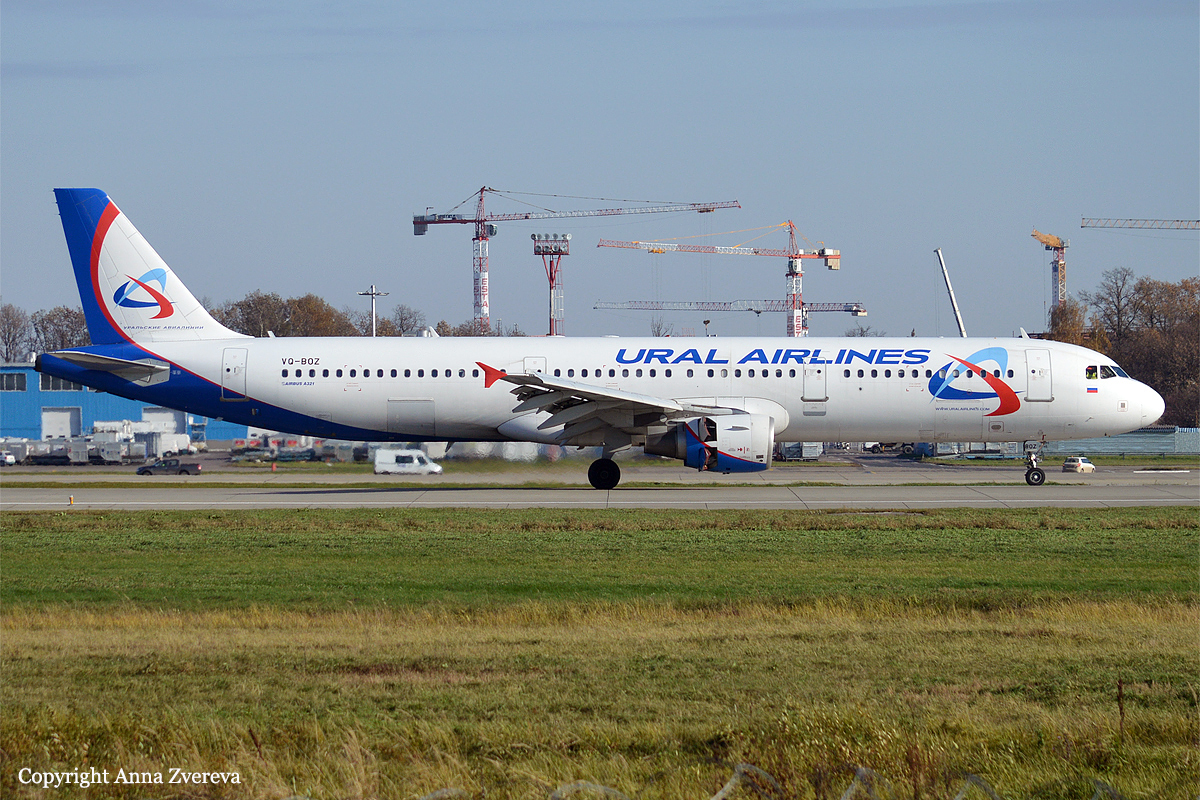
Crash of an Airbus A321-211 in Moscow

Date & Time: Aug 15, 2019 at 0615 LT
Type of aircraft:
Operator:
Registration:
VQ-BOZ
Flight Phase:
Survivors:
Yes
Schedule:
Moscow - Simferopol
MSN:
2117
YOM:
2003
Flight number:
U6178
Country:
Region:
Crew on board:
7
Crew fatalities:
Pax on board:
226
Pax fatalities:
Other fatalities:
Total fatalities:
0
Captain / Total flying hours:
4275
Captain / Total hours on type:
4125.00
Copilot / Total flying hours:
780
Copilot / Total hours on type:
624
Aircraft flight hours:
48980
Aircraft flight cycles:
20132
Circumstances:
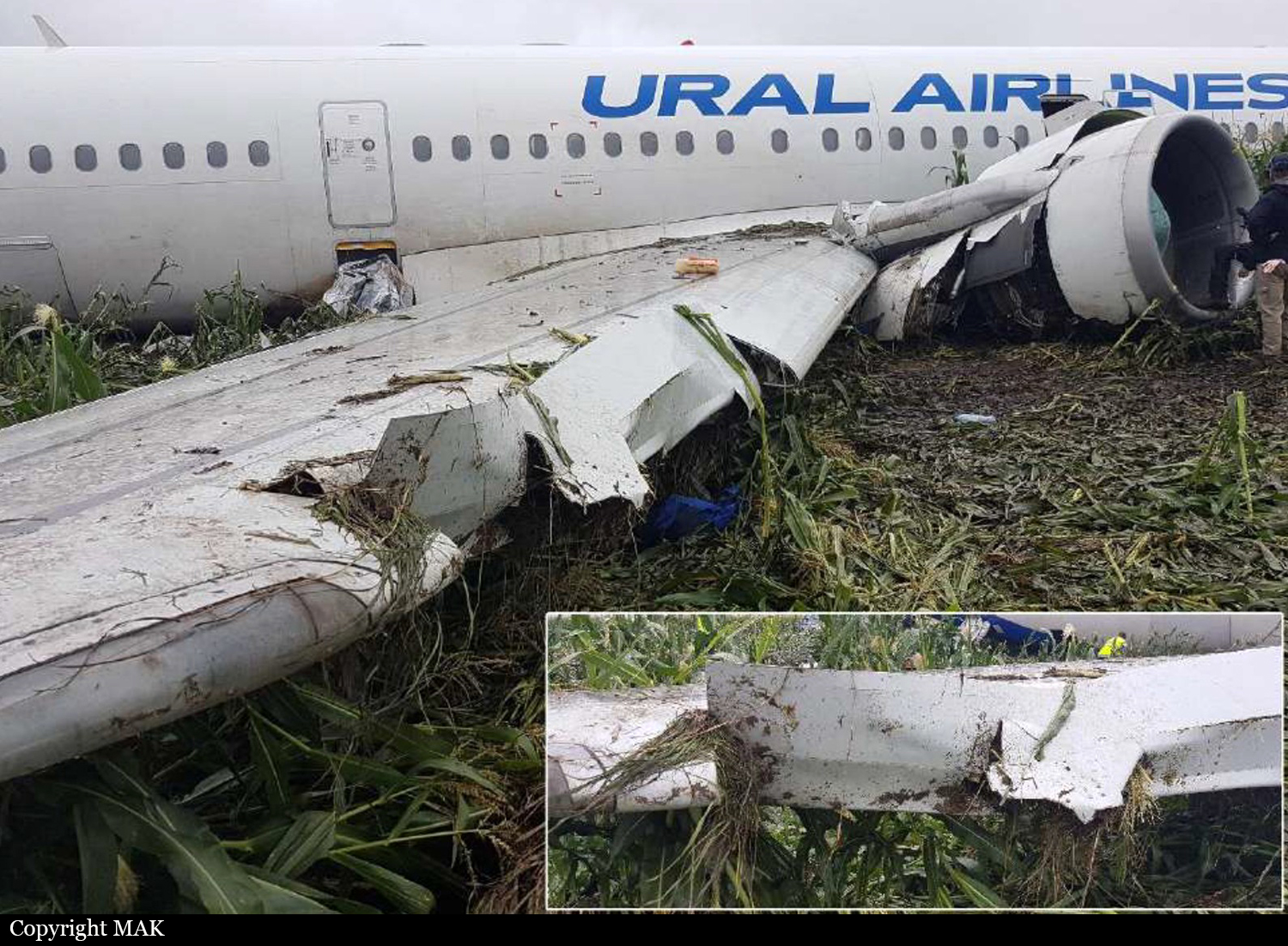
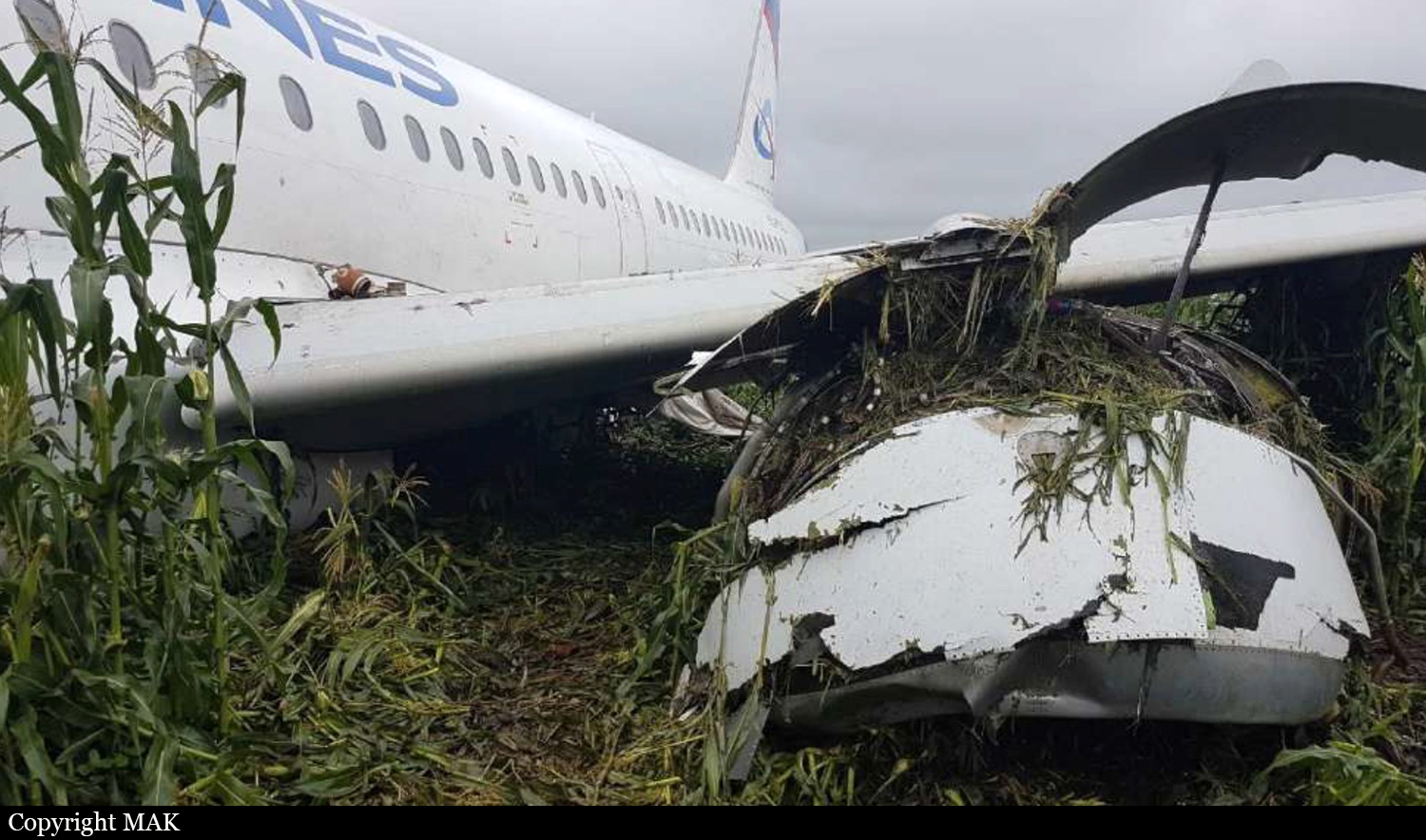
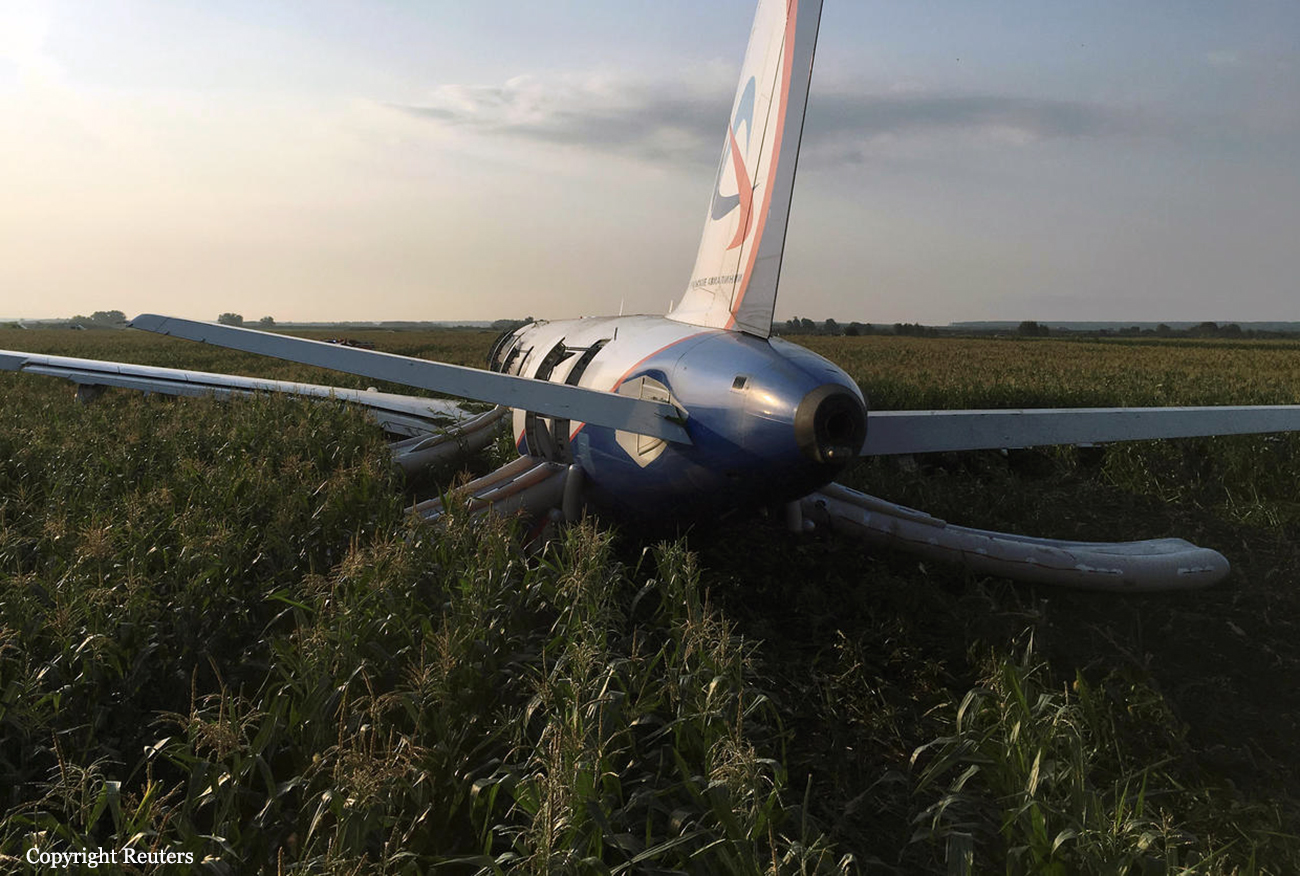
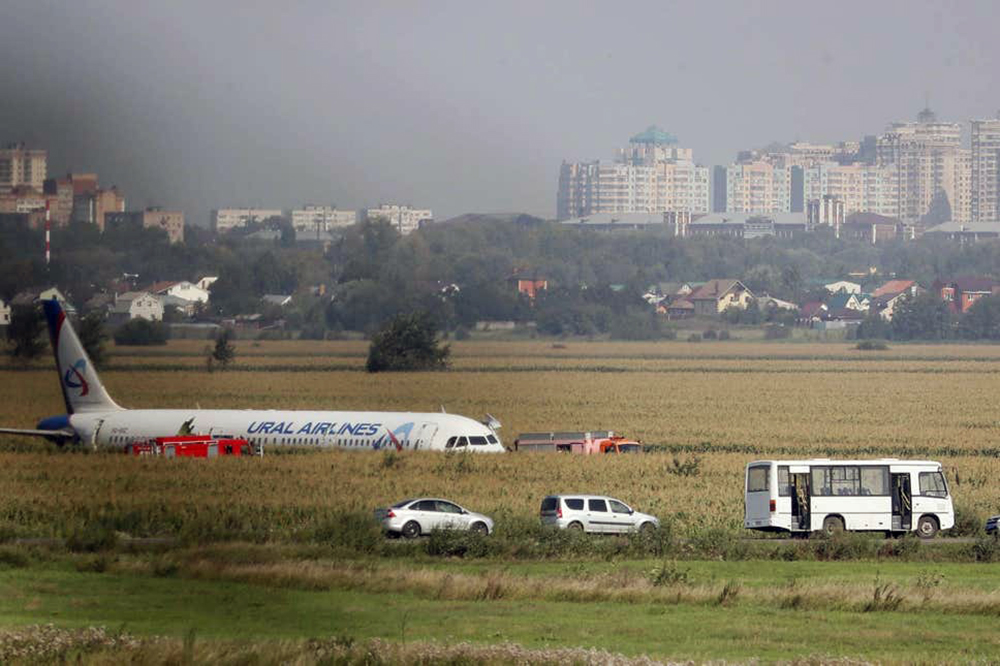
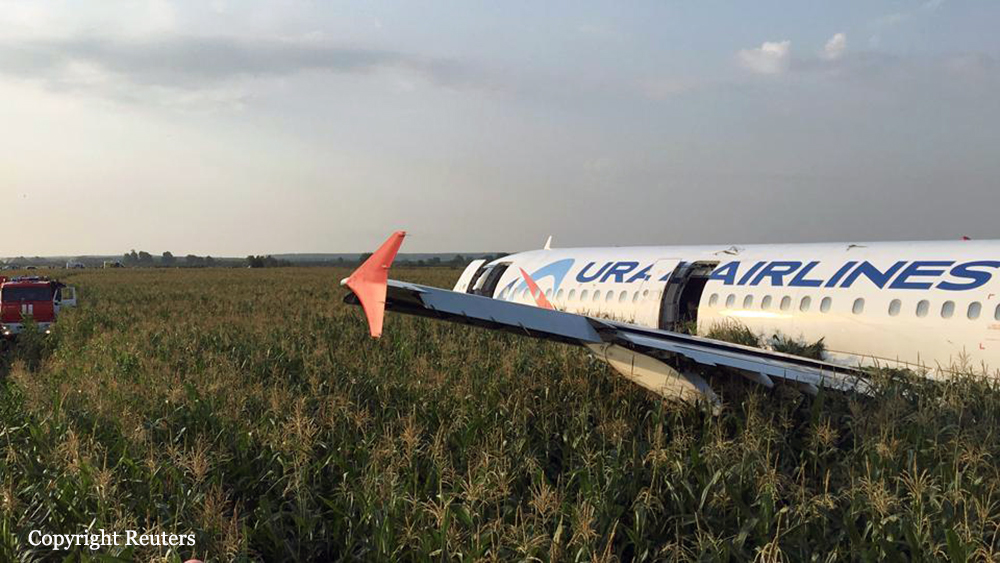
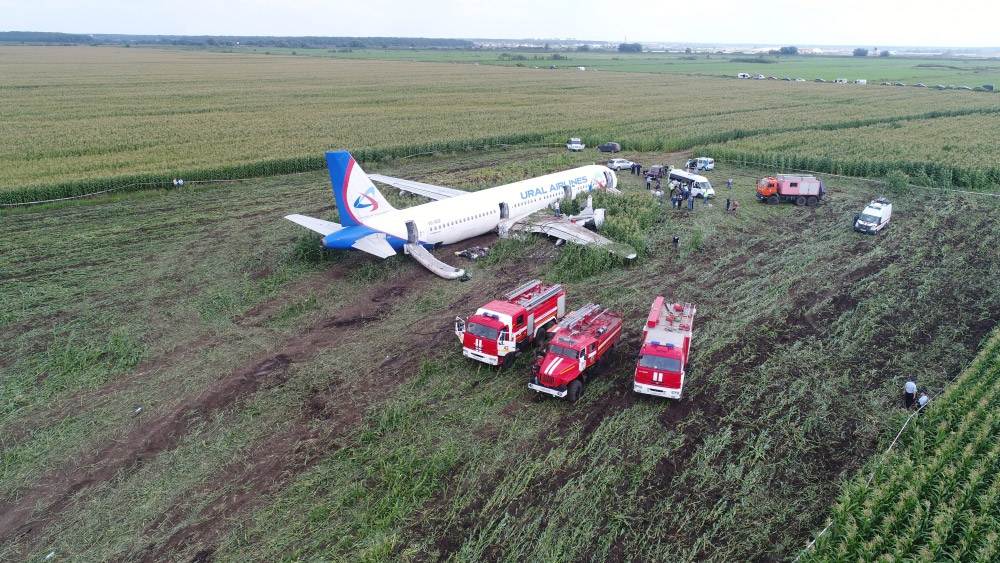
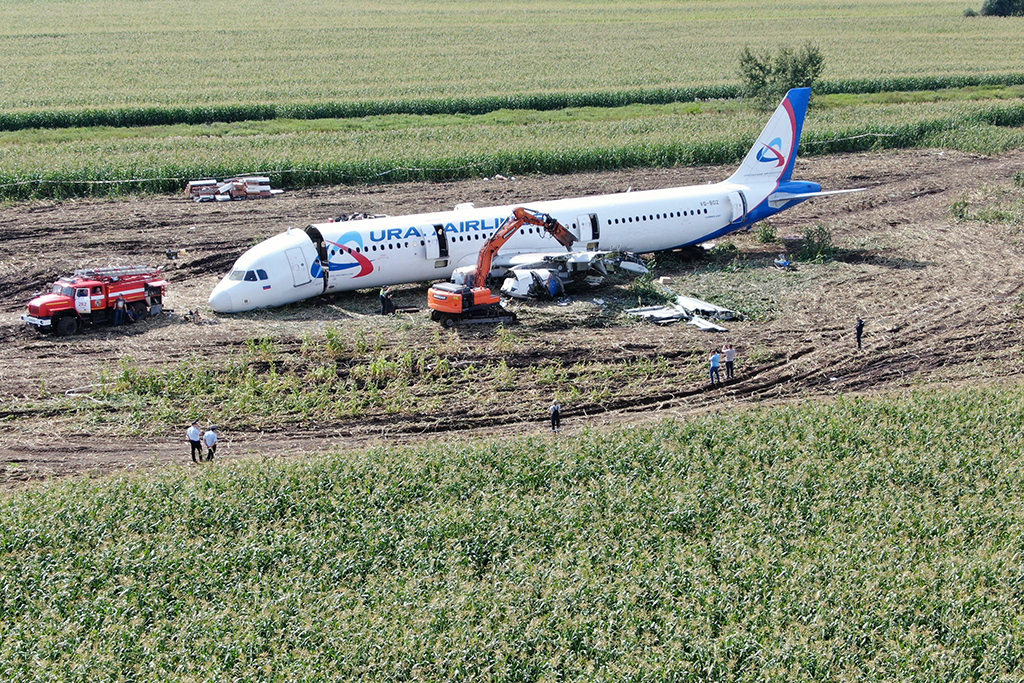
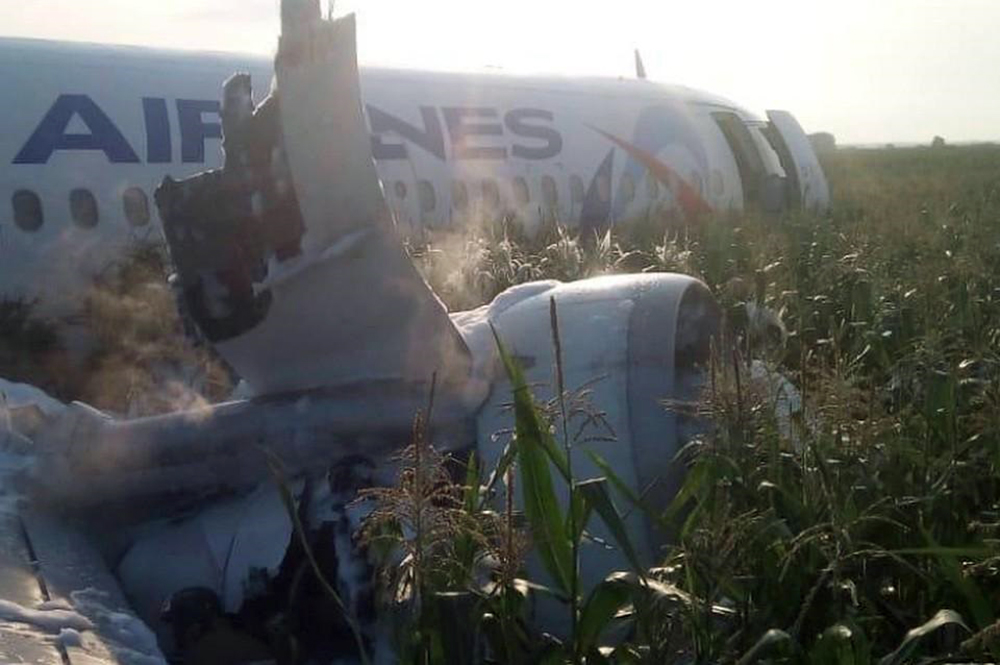
The airplane departed Moscow-Zukhovski (Ramenskoye) Airport runway 12 at 0615LT on a flight to Simferopol, carrying 226 passengers and a crew of 7. Immediately after takeoff, while climbing to a height estimated between 60 cm and 1,2 meter, the airplane collided with a flock of birds (sea gulls). Some of them were ingested by both engines that lost power. It was later reported by the crew that the left engine stopped almost immediately while the right engine lost power and run irregularly. Unable to maintain a positive rate of climb, the captain decided to attempt an emergency landing in a cornfield. The airplane belly landed approximately 3,5 km past the runway end and slid for few dozen metres before coming to rest with its both engines partially torn off. All 233 occupants were able to evacuate the cabin and it is reported that 23 people were slightly injured. The airplane was damaged beyond repair.
Probable cause:
The accident occurred during takeoff, in daytime (06:15 local time), under visual meteorological conditions, as a result of the aircraft striking a flock of seagulls immediately after liftoff, at an altitude of 0.6–1.2 m (2–4 ft). Some of the birds had an individual mass exceeding 1.13 kg (2.5 lbs), which corresponds to the certification category of a “large bird.” The bird strike caused mechanical damage to both engines, reducing their combined available thrust to a level below that of a single functioning engine operating at FLEX 49 (the takeoff setting used). This made it impossible to continue the flight in the aircraft’s actual configuration (landing gear not yet retracted), resulting in a forced landing outside the airport. In terms of available engine thrust, the situation exceeded the operational conditions anticipated during the aircraft type certification. Given the extent of the engine damage, even maintaining the limited available thrust could not be guaranteed had the crew attempted to continue the flight. Taking into account that the situation exceeded expected operational conditions—meaning there were no standard operating procedures for such circumstances—and considering the aircraft manufacturer’s position during the investigation that the ability to safely continue the flight would have depended critically on extremely precise pilot handling (control inputs during maneuvering, turns, etc.) and external factors (wind gusts, turbulence), it is not possible to unambiguously classify the hazards identified in the investigation as contributing factors. However, because these hazards pose clear risks to flight safety and require risk-reduction measures, they are listed below:
- Non-compliance of the main regulatory document in force at the time of the accident (ROOP GA-89, governing wildlife hazard management at civil aerodromes of the Russian Federation) with ICAO documentation, best international practice, and modern ornithological knowledge. This document was declared invalid by the Russian Ministry of Transport on 04.12.2020 (Order No. 541). No replacement document defining the procedure for airport wildlife hazard management has been issued, creating unacceptable risks given the complex bird-strike environment at many Russian aerodromes.
- The presence of a significant number of bird-attracting features (bodies of water, landfills, agricultural fields, etc.) in close proximity to the aerodrome, and landfills located in violation of the requirements of the Ramenskoye Airport Wildlife Hazard Management Instruction.
- Deficiencies in the organization of wildlife hazard management at Ramenskoye Airport, including ecological-ornithological assessment, implementation of bird-scaring measures, and runway inspections.
- A widespread practice (not only at Ramenskoye) of routinely informing crews about “bird movements” regardless of the actual threat level, which caused the warnings to lose their alerting value and become mere background noise.
- Lack of regulatory provisions and/or standard operating procedures describing required crew actions when the presence of birds on or near the runway is suspected (but cannot be visually confirmed) that could pose a risk to flight safety.
- Limited ability of airlines to assess avian-hazard risks due to the lack of reliable data sources on the bird environment at the aerodrome, resulting in insufficient information provided to flight crews about ornithological hazards at Ramenskoye.
- A discrepancy between the actual in-flight situation and scenarios practiced in simulators, caused by a false momentary indication of an “open thrust-reverser door” on the left engine triggered by the bird strike. This contributed to a psychophysiological surge (stress spike) and temporary disorganization of the crew’s actions during the continued takeoff procedure, including the omission of landing gear retraction.
Final Report:

Crash of an Antonov AN-2 in Fakhrabad: 1 killed

Date & Time: Aug 4, 2019 at 1040 LT
Type of aircraft:
Operator:
Registration:
RT-15-305
Survivors:
Yes
Schedule:
Fakhrabad - Fakhrabad
Country:
Region:
Crew on board:
2
Crew fatalities:
Pax on board:
0
Pax fatalities:
Other fatalities:
Total fatalities:
1
Circumstances:
The crew was completing a local skydiving mission in the region of Fakhrabad, about 30 km southwest of Dushanbe. After eight skydivers departed the cabin, the crew was returning to Fakhrabad Airfield when, on final approach, the airplane crashed in unknown circumstances. The copilot was seriously injured and the captain was killed.

Crash of a Beechcraft 350i Super King Air in Islamabad: 19 killed

Date & Time: Jul 30, 2019 at 1400 LT
Operator:
Registration:
766
Flight Phase:
Flight Type:
Survivors:
No
Site:
Schedule:
Chaklala - Chaklala
MSN:
FL-766
YOM:
2011
Country:
Region:
Crew on board:
5
Crew fatalities:
Pax on board:
0
Pax fatalities:
Other fatalities:
Total fatalities:
19
Circumstances:
The twin engine airplane departed Chaklala-Nur Khan AFB with five crew members on board for a local training flight. In flight, it went out of control and crashed onto several houses located in the suburb of Mora Kalu, about 10 km south of Chaklala-Nur Khan AFB, Islamabad, bursting into flames. The aircraft and several houses were destroyed. All five crew members as well as 14 people on the ground were killed.

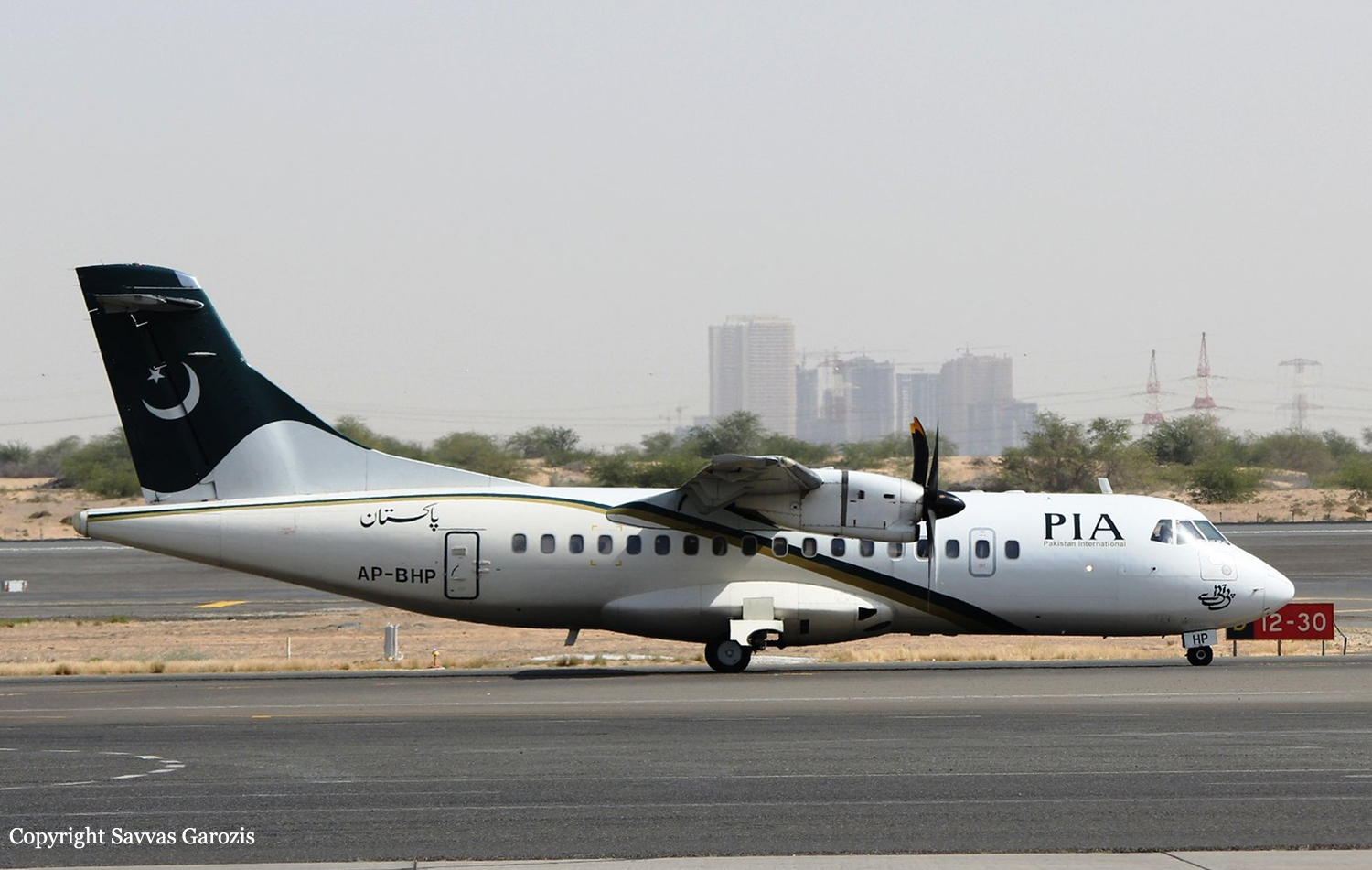
Crash of an ATR42-500 in Gilgit

Date & Time: Jul 20, 2019 at 0815 LT
Type of aircraft:
Operator:
Registration:
AP-BHP
Survivors:
Yes
Schedule:
Islamabad – Gilgit
MSN:
665
YOM:
2007
Flight number:
PK605
Country:
Region:
Crew on board:
4
Crew fatalities:
Pax on board:
49
Pax fatalities:
Other fatalities:
Total fatalities:
0
Captain / Total flying hours:
7951
Captain / Total hours on type:
1210.00
Copilot / Total flying hours:
757
Copilot / Total hours on type:
557
Aircraft flight hours:
22235
Aircraft flight cycles:
22057
Circumstances:
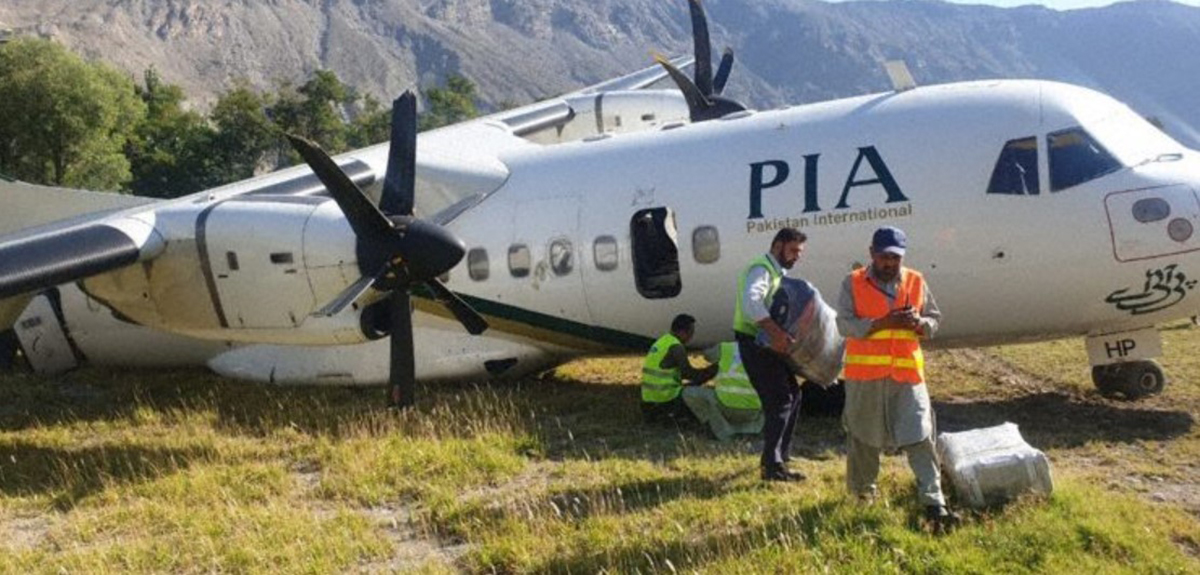
Flight PIA 605 ATR 42-500 aircraft Reg. No. AP-BHP was a scheduled passenger flight from IIAP, Islamabad to Gilgit Airport. There was no abnormality reported in the aircraft prior to the flight. Aircraft loading was within normal limits of 24.7% Centre of Gravity (CG) with Take-off Gross Weight (TOGW) 18,600 kilograms (kg). The aircrew was current and had adequate experience both on the aircraft as well as for flights to Gilgit Airport. Gilgit Airport is located at an altitude of 4,784 ft Above Mean Sea Level (AMSL) with R/W dimensions 5,400 x 100 ft and is deemed fit for operations under PCAA regulations. For this sector, Captain was Pilot Flying (PF) while the First Officer (FO) was Pilot Monitoring (PM). The aircraft took off from IIAP, Islamabad at 02:02 hours (h) and Auto Pilot (AP) was engaged at 260 ft Radio Altimeter (RA) height and the climb was performed under AP using Vertical Speed (VS) mode. This mode is not recommended as per Flight Crew Operations Manual (FCOM). As a consequence the aircraft Indicated Air Speed (IAS) dropped to 130 knots (kt) as opposed to standard climb speed of 160 kt. However, the enroute flight at Flight Level (FL) 165 subsequently remained uneventful. During the cruise, the lowest RA height prior to descent was recorded as 2,636 ft; however, this is in accordance with PIA Standard Operating Procedures (SOPs) for Northern Area flights where minimum separation of 2,000 ft Above Ground Level (AGL) is allowed and considered mandatory due to mountainous terrain. While approaching Gilgit Airport, Captain initiated the descent at 02:36:37 h at the designated point but maintained a higher speed accelerating up to 245 kt as opposed to the standard descent speed of 200 kt as per PIA SOPs. Despite being earlier than planned Estimated Time of Arrival (ETA) for Gilgit Airport, the Captain still elected to maintain higher speeds. The FO pointed out the anomaly of higher-than-normal speed, but Captain did not take any action to bring the aircraft to correct parameters. Moreover, the Enhanced Ground Proximity Warning System (EGPWS) warning also triggered at 02:45:10 h due to higher speeds as the aircraft descended into the valley for Approach. The Approach is mandatorily as per Visual Flight Rules (VFR) whereby the aircrew is to remain visual all the time with the terrain. As Gilgit Airport is located in a valley, Approach for Landing is a visual approach whereby the aircraft executes a base turn to align with the R/W for Landing after Approaching almost perpendicular to the R/W on base leg. This is because a standard Approach is not possible due to the presence of mountains all around. During base leg, at 02:48:54 h Captain announced tail wind picking up, whereas Gilgit Airport was reporting wind as calm. As per data available, the tail wind speed above 1,500 ft AGL was as high as 19 kt; however, it started to reduce progressively with decrease of altitude whereby it reduced to 4-5 kt upon touchdown. Due to high speed maintained by the Captain, the aircraft could not be brought to correct Landing configuration even during base leg. At 02:49:11 h, the Captain asked the FO’s opinion for carrying out a 360° turn to reduce the speed for Landing configuration. However, the FO left the decision to the Captain as, in his opinion, the speed was too high for executing the turn inside the valley. Moreover, as the Captain was more experienced and also his instructor, he trusted the Captain’s judgment and skill to make a successful Landing. Since the FO did not give any opinion on the Captain’s suggestion for a 360° turn, the Captain continued the Approach. As the aircraft continued towards the R/W, Flaps were selected to 15° below 180 kt and 491 ft AGL. Landing Gears (L/G) were lowered immediately after Flaps at 442 ft AGL and speed 174 kt instead of correct speed of 170 kt. Additionally, the Captain made an angling Approach to the R/W instead of executing a correct base turn as per procedure which describes a semi-circular arc. The Flaps came down to 15° position at 257 ft AGL whereas the L/G were in down and locked position only once the aircraft was rolling out on R/W heading at an altitude of approximately 50 ft AGL at a speed of 162-163 kt. Full Flaps could not be lowered and aircraft touched down on the R/W at time 02:47:50 h at approximately 150 kt in Flaps 15° configuration around 2,000 ft down the R/W. After touchdown, the Captain applied brakes, but without using Thrust Reversers. However, aircraft could not be stopped after the Landing Roll and departed from the far end of the R/W coming to a stop at 41 ft from the R/W threshold.
Probable cause:
Primary Causes:
- Involuntary runway excursion due to an intentional high-speed approach and landing by the pilot-in-command (PM).
- Failure to adhere to SOP's.
- Lack of situational awareness and anticipation resulting in inadequate decision making.
Contributing Factors:
- Lack of assertiveness by the pilot-in-command (PM).
- Inadequate application of Crew Resources Management (CRM).
Final Report:

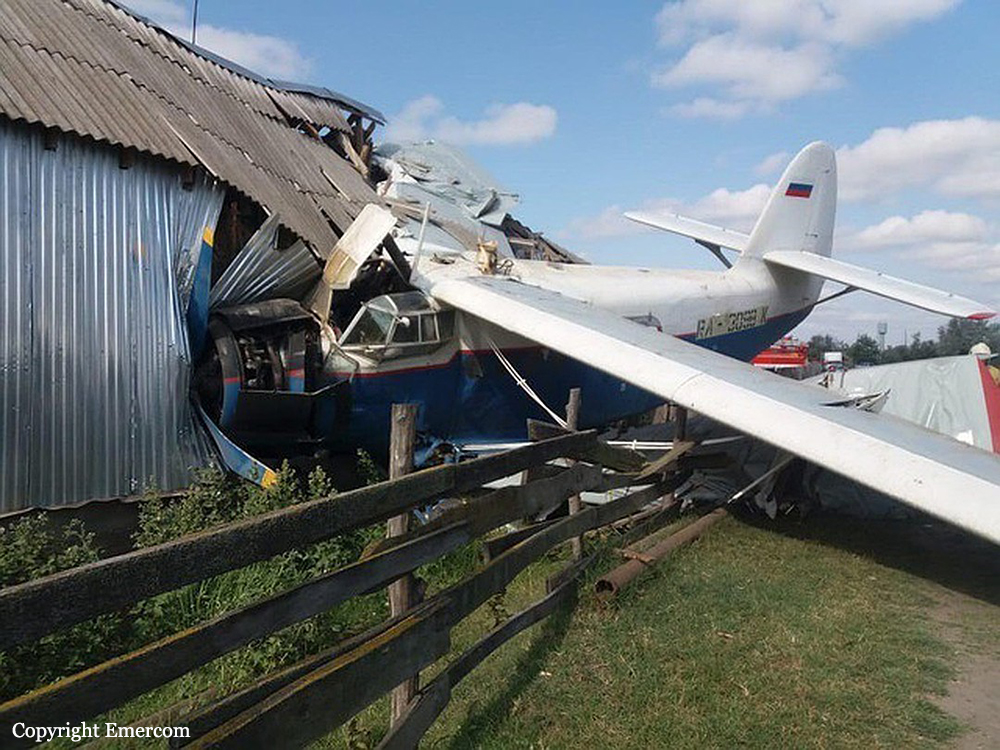
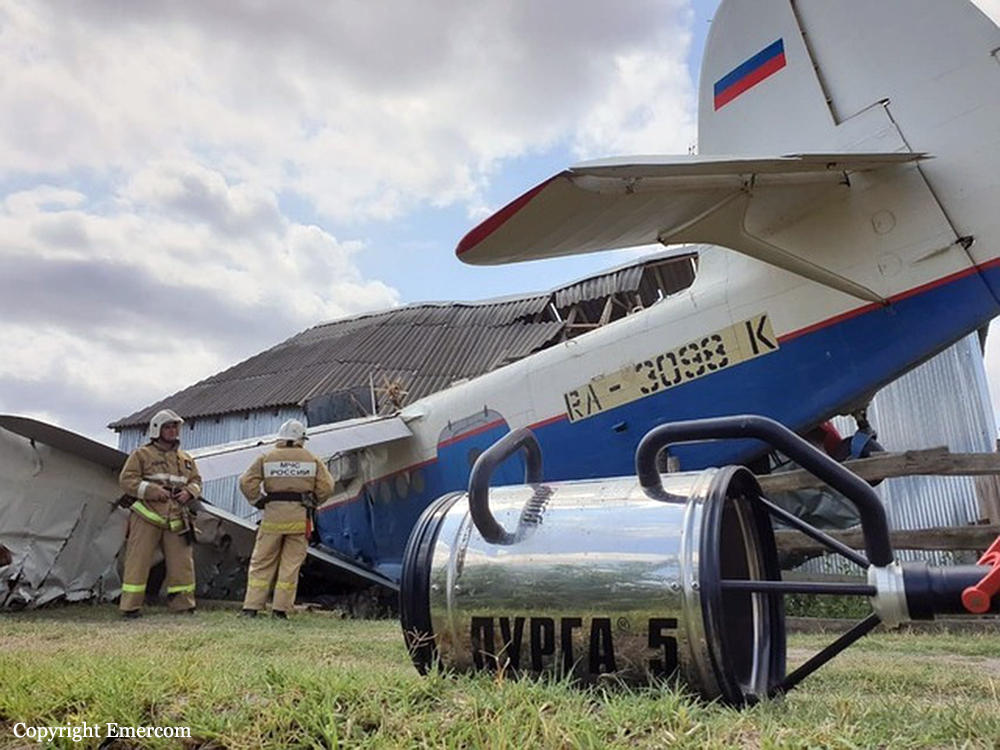
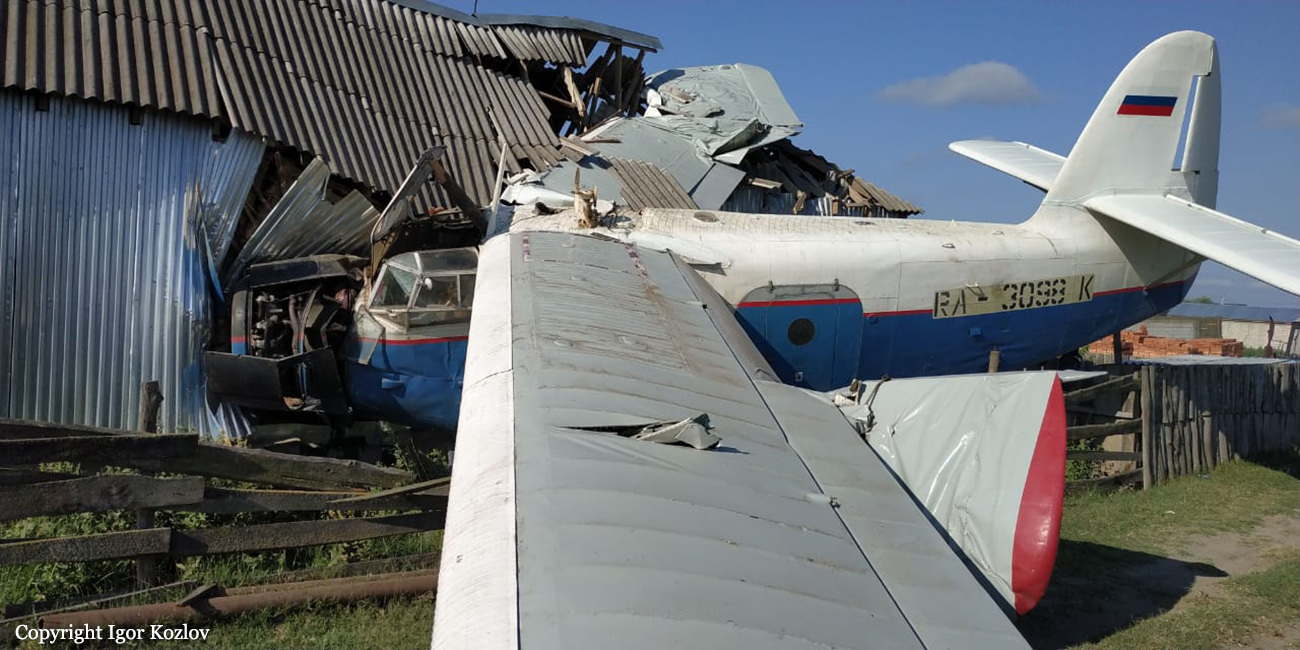
Crash of an Antonov AN-2 in Novoshchendrinskaya

Date & Time: Jul 16, 2019
Type of aircraft:
Operator:
Registration:
RA-3098K
Flight Phase:
Flight Type:
Survivors:
Yes
Site:
Country:
Region:
Crew on board:
1
Crew fatalities:
Pax on board:
0
Pax fatalities:
Other fatalities:
Total fatalities:
0
Circumstances:
The pilot, sole on board, was engaged in an aerial photography mission. In flight, he encountered engine problems and was forced to attempt an emergency landing. The aircraft crashed onto a barn located in Novoshchedrinskaya, about 15 km north of Gudermes. The pilot and three people in the barn were injured.

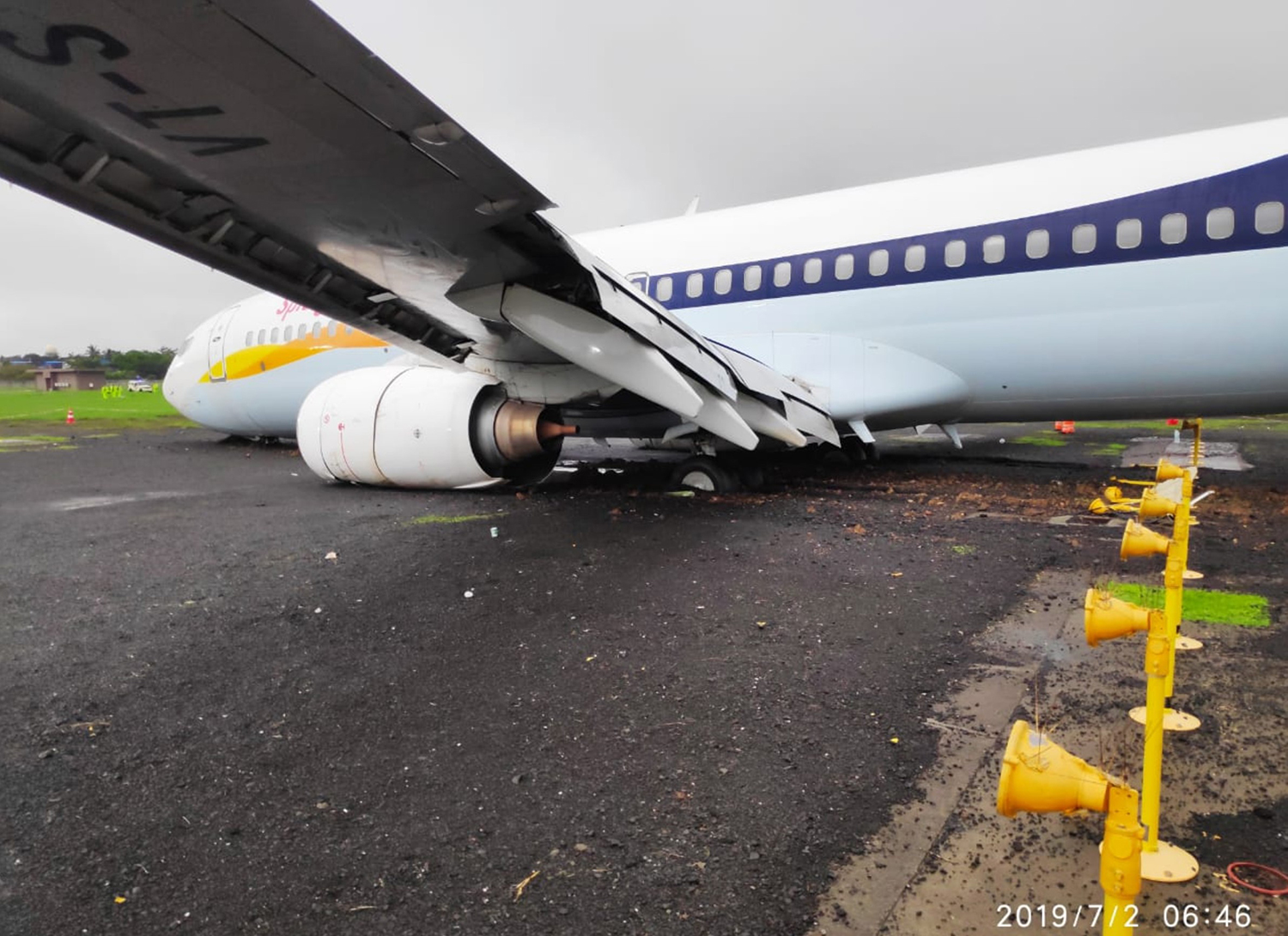
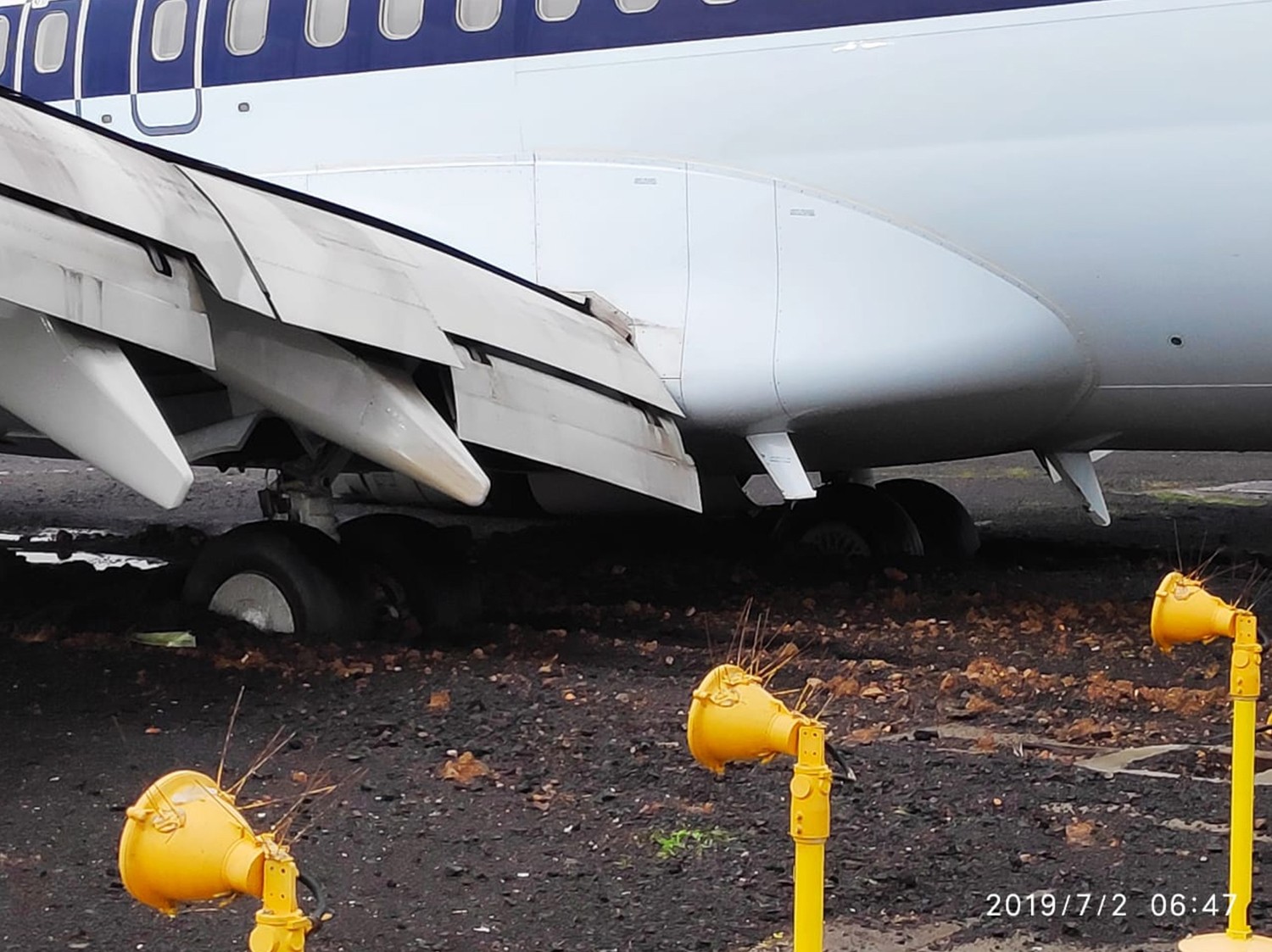
Crash of a Boeing 737-85R in Mumbai

Date & Time: Jul 1, 2019 at 2351 LT
Type of aircraft:
Operator:
Registration:
VT-SYK
Survivors:
Yes
Schedule:
Jaipur - Mumbai
MSN:
30410/1228
YOM:
2002
Flight number:
SG6237
Country:
Region:
Crew on board:
7
Crew fatalities:
Pax on board:
160
Pax fatalities:
Other fatalities:
Total fatalities:
0
Captain / Total flying hours:
5355
Captain / Total hours on type:
5113.00
Copilot / Total flying hours:
4826
Copilot / Total hours on type:
4625
Circumstances:
On 01.07.2019, B737-800 aircraft was involved in an accident (runway excursion) at Mumbai airport while landing in moderate to heavy rain. The aircraft was under the command of an ATPL holder (PF) with a CPL holder as First Officer (PM). There were 160 passengers and 7 crew members on board. There was no injury to any of the passengers or crew members. The aircraft suffered substantial damage. The subject flight was fifth of the day for the aircraft and second for the flight crew. The flight crew had earlier operated Mumbai-Jaipur sector and the incident flight was from Jaipur to Mumbai. There were no technical issues reported by the flight crew either during Mumbai Jaipur sector or on the return leg (Jaipur- Mumbai) till descent into Mumbai. The pilots had carried out briefing amongst themselves for the approach including the weather and Go Around actions, if required. The aircraft commenced descent into Mumbai in the late evening hours. As per the reported weather at the time of approach visibility was 2100 metres in rain making it dark. Reported winds were 090/12 Knots. Runway was wet and the trend provided was ³temporary reduction in visibility to 1500 metres with thunder/ showers of rain´. During descend at approximately 7000' Pressure Altitude, the crew observed an indication for IAS disagree, indicating a discrepancy of airspeed between the instrument sources for the flight crew. Although this indication was momentary, the 'Non-Normal Checklist' was carried out. The indication discrepancy did not recur for the remainder of the flight. The aircraft was radar vectored for an ILS approach for Runway 27 at Mumbai. The approach was stabilized by 3800' Pressure Altitude with landing gear down, flaps 30 and auto brake selected at 3. The autopilot was engaged throughout the descent phase and during approach, the second autopilot was also coupled for the ILS approach. At 100', the autopilot and the auto-throttle were disengaged by the PF. The flare manoeuvre consumed approximately 5807' of the runway length prior to the aircraft touchdown with 3881' of runway remaining. After touchdown, the speed brakes deployed automatically and maximum reverse thrust and wheel brakes were applied. The aircraft exited the paved surface at 65 Knots and came to rest at a distance of 615' beyond the end of the runway. Once the aircraft came to rest, the flight crew advised cabin crew to be at their stations. The pilots were unable to contact ATC through VHF communication. The PF contacted his airline personnel using mobile phone and informed that the aircraft had overrun the runway and requested for step ladders. The ATC activated fire services and the runway was closed for operation. The Cabin crew carried out check on the passengers in the cabin. The fire services reached the aircraft location and verbal communication was established with the flight crew once the cockpit window was opened. Two Fire Services personnel boarded the aircraft from the L1 door using a fire ladder. An assessment of the aircraft structure and occupants was made and the fire services personnel informed the cabin crew that deplaning was to be carried out using fire ladders. There were no injuries during evacuation or otherwise.
Probable cause:
The runway excursion occurred because of combination of:
- Disconnection of auto pilot at an altitude 118' RA with the nose up trim bias without adequate compensation.
- Disconnection of auto throttle at 118' RA at a higher thrust setting for that phase of flight.
- Late touchdown of the aircraft on the runway.
- Reduced visual cues due to heavy rain impacting depth perception and ascertaining of actual touchdown position.
- Tailwind conditions at the time of landing resulting In increasing the distance covered during the extended flare (float).
- Approach with lower flaps (30) than recommended (40).
Final Report:
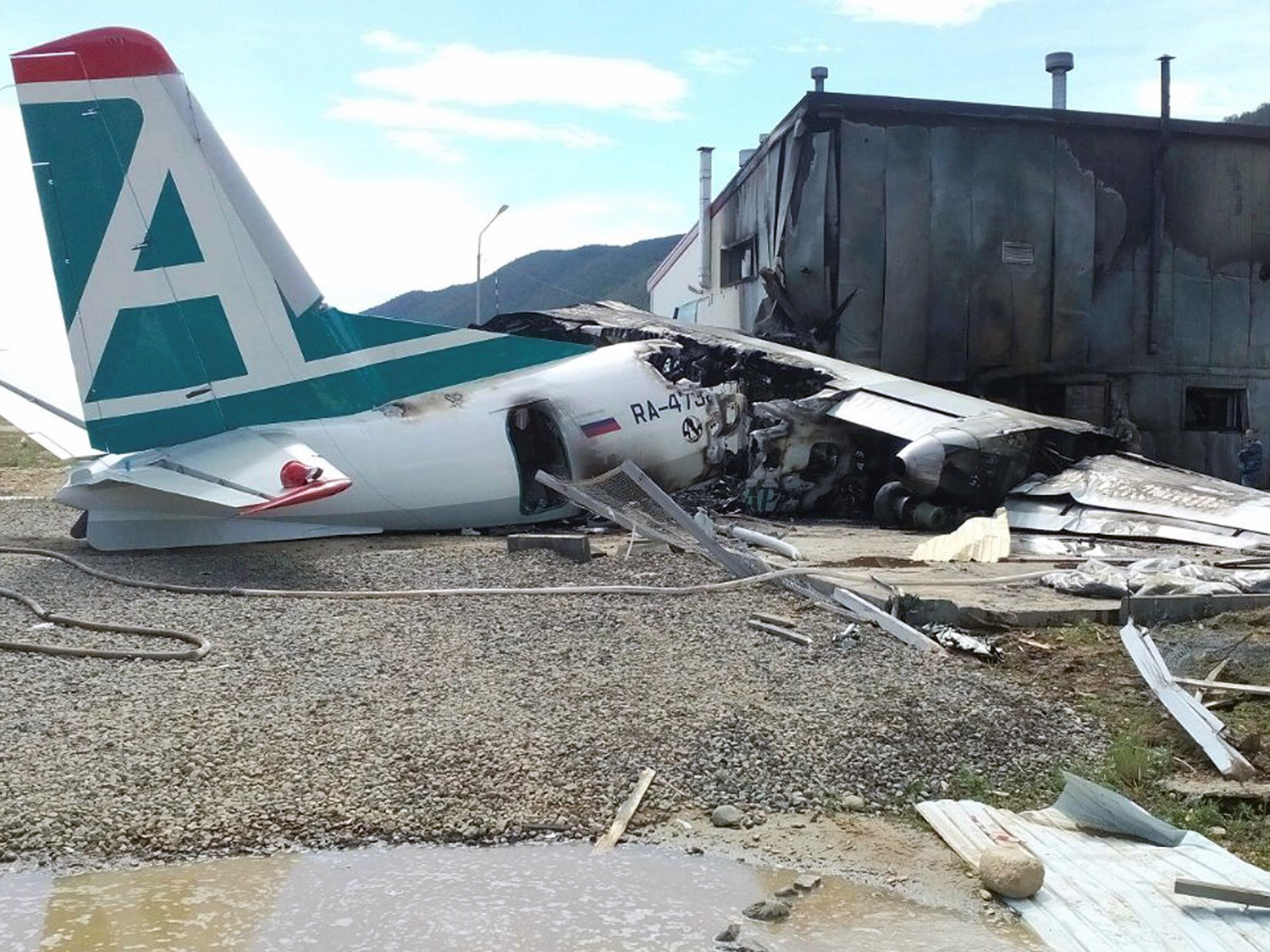
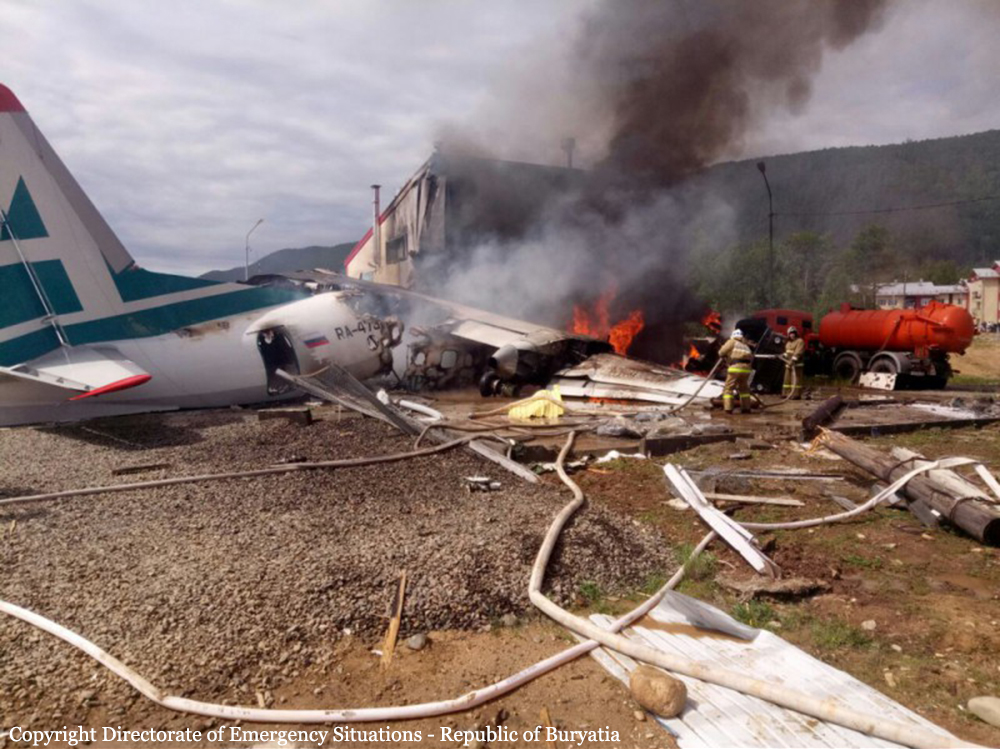
Crash of an Antonov AN-24RV in Nizhneangarsk: 2 killed

Date & Time: Jun 27, 2019 at 1025 LT
Type of aircraft:
Operator:
Registration:
RA-47366
Survivors:
Yes
Schedule:
Ulan-Ude - Nizhneangarsk
MSN:
7 73 108 04
YOM:
1977
Flight number:
AGU200
Country:
Region:
Crew on board:
4
Crew fatalities:
Pax on board:
43
Pax fatalities:
Other fatalities:
Total fatalities:
2
Captain / Total flying hours:
15167
Captain / Total hours on type:
10667.00
Copilot / Total flying hours:
6012
Copilot / Total hours on type:
1325
Aircraft flight hours:
38014
Aircraft flight cycles:
18584
Circumstances:
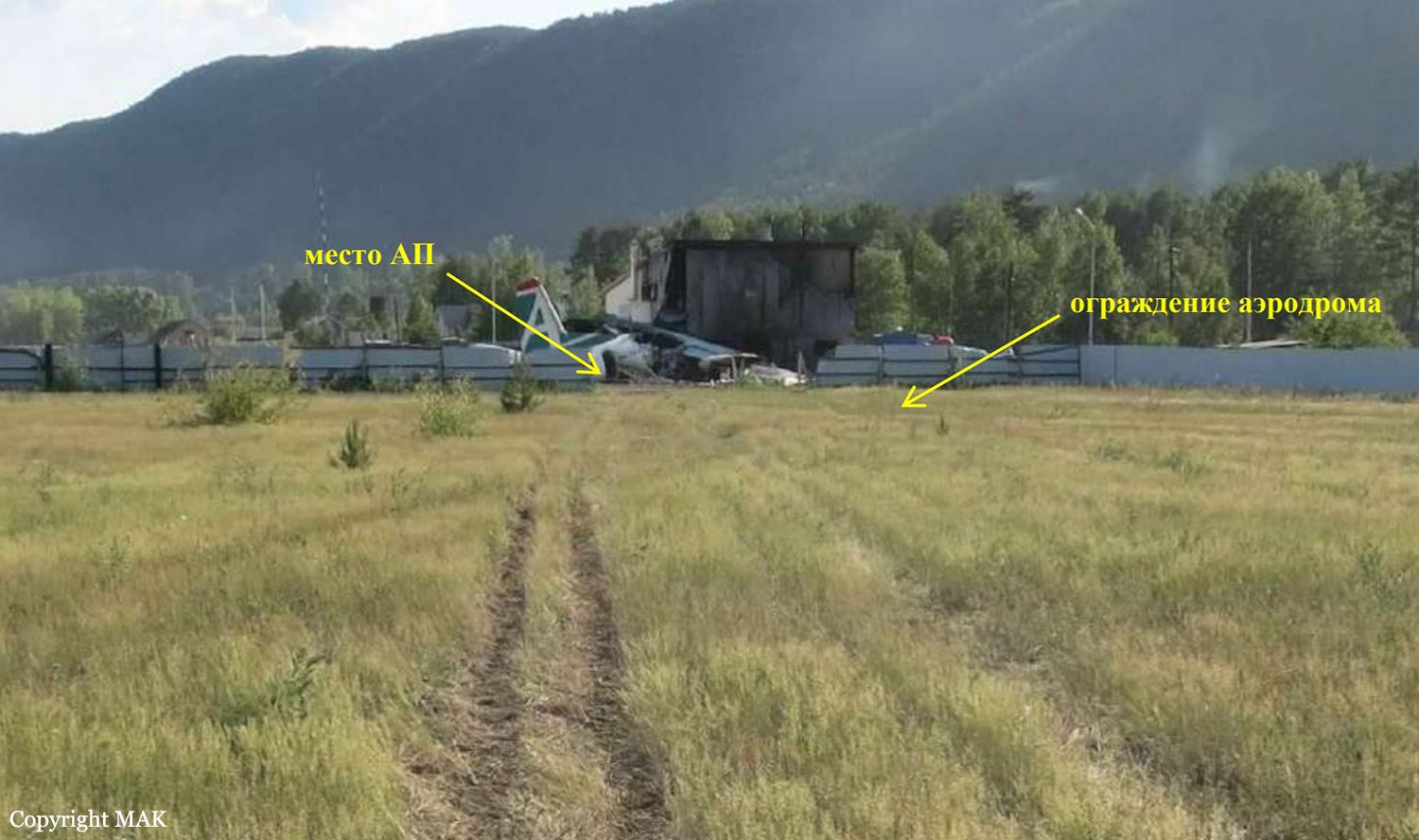
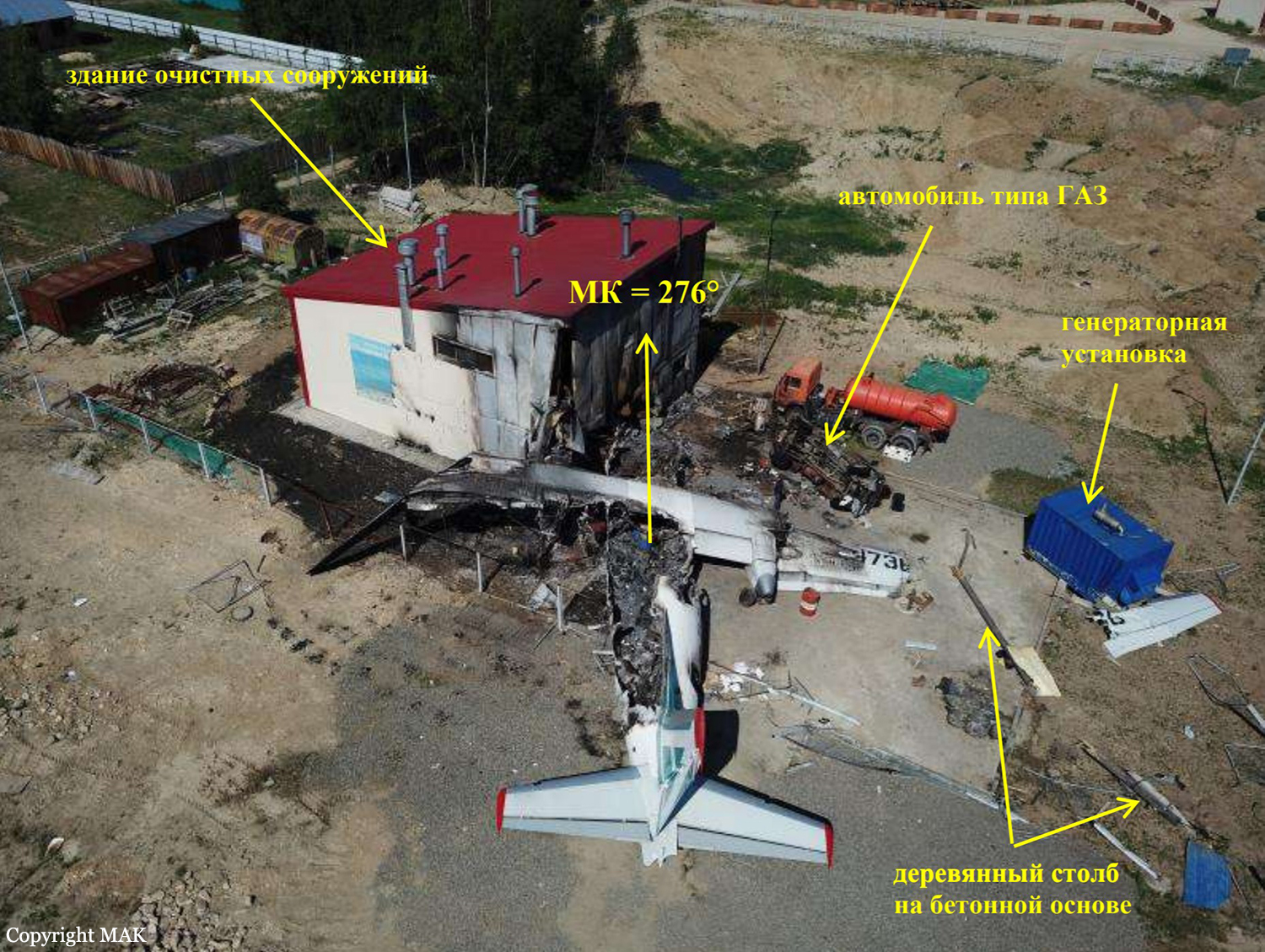
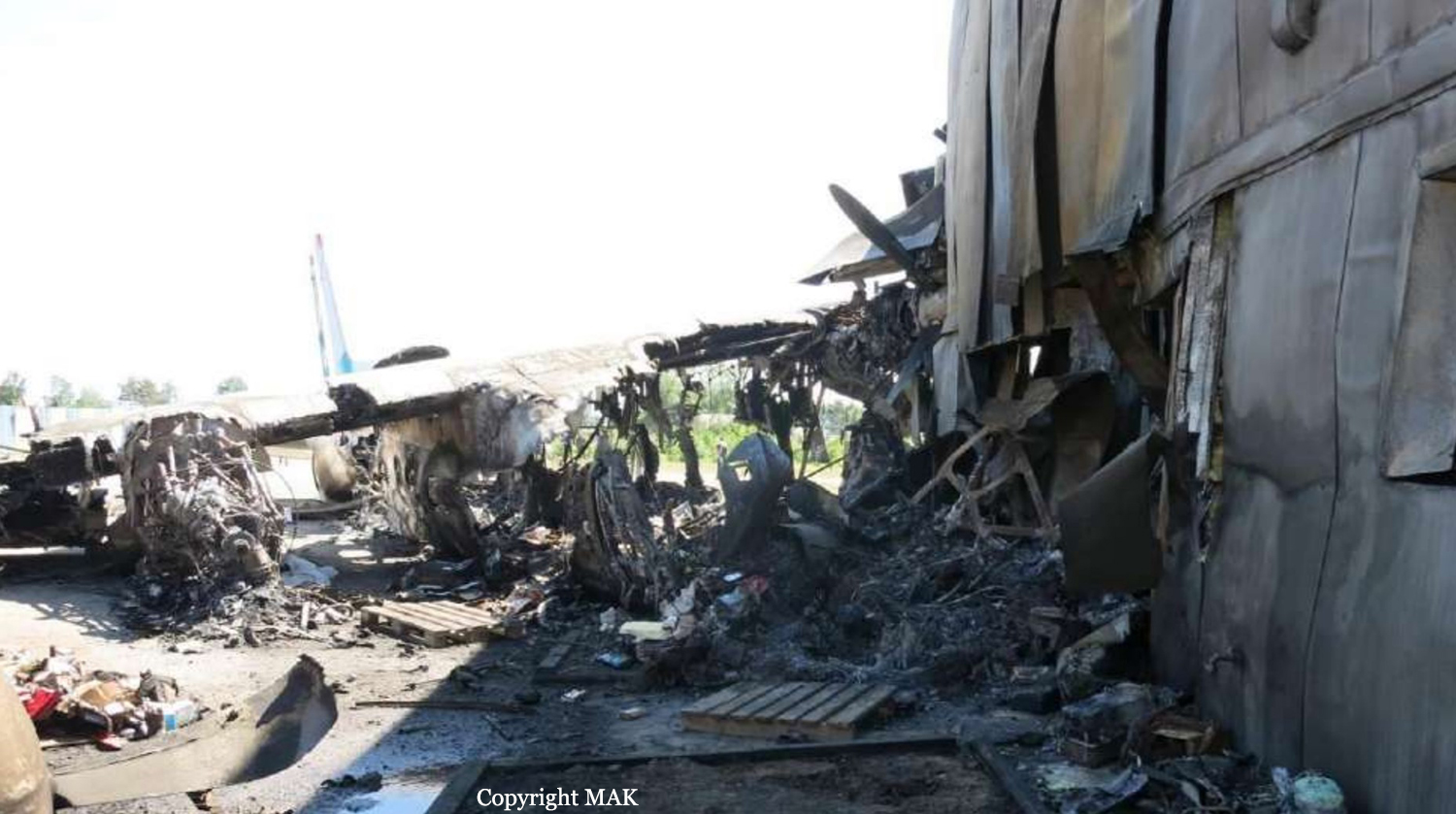
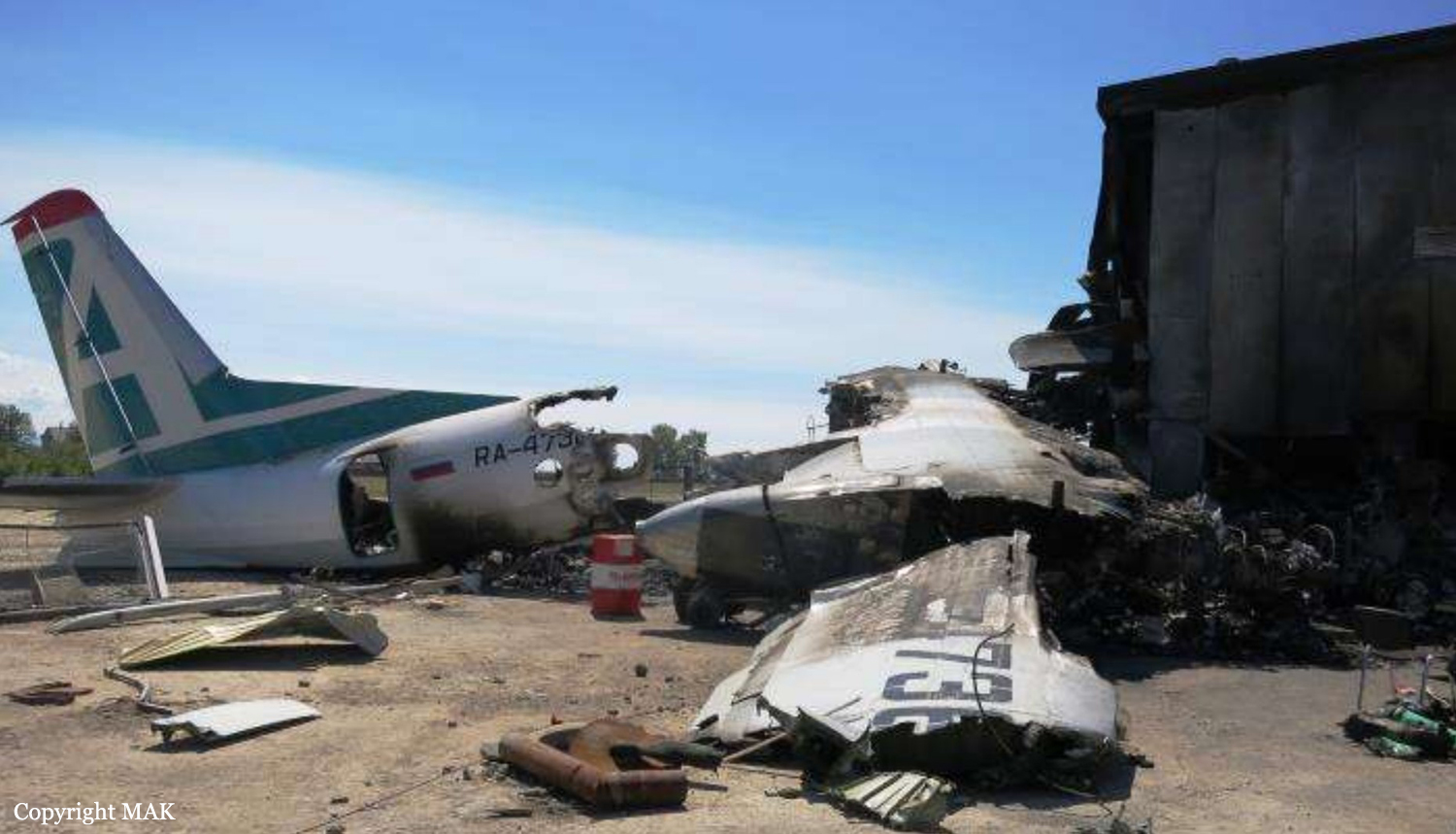
On a flight from Ulan-Ude to Nizhneangarsk, while descending to an altitude of 3,050 metres about 30 km from the destination airport, the crew contacted ATC and reported the failure of the left engine. The approach was continued to runway 22. After touchdown, the crew initiated the braking procedure when the airplane deviated to the right then veered off runway. It rolled in a grassy area, went through the perimeter fence and eventually impacted the building of a sewage treatment plant located 380 metres to the right of the runway centerline. The airplane was destroyed by a post crash fire. The captain and the flight engineer were killed while the copilot was seriously injured. 10 other occupants were injured.
Probable cause:
The accident occurred during landing with one engine inoperative as a result of a longitudinal-lateral rollout beyond the runway and subsequent collision with a building outside the aerodrome, resulting in damage to the aircraft structure and a fire. The landing was performed on a runway with an available landing distance of 1,503 metres that was significantly less than the distance required of 2,160 metres for the actual conditions.
Most likely, the accident was the result of the combination of the following factors:
- The decision by the pilot-in-command (pilot flying) to land without calculating the required landing distance;
- The incorrect choice by the pilot-in-command of the type and trajectory of the approach, which made it impossible to reduce the flight speed in time. Instead of visual maneuvering ('circle-to-land' maneuver) provided for in the approach pattern and agreed upon by the crew with the air traffic controller, the crew performed a visual approach;
- The absence in the airline's flight manual and the aircraft's flight manual of procedures for performing a visual approach maneuver ('circle-to-land' maneuver);
- Failure of the crew to take measures to go around for a second approach despite a significant discrepancy between the actual flight parameters and the criteria for a stabilized approach specified in the airline's flight procedures;
- Lack of crew coordination and cross-checking;
- Failure to follow a number of standard operating procedures in terms of informing the PIC (pilot in command) by other crew members about significant deviations of actual flight parameters from the published values;
- Insufficient crew resource management;
- Landing at a significant high speed (275 km/h instead of the recommended 220 km/h), which led the aircraft to land 530 metres pas the runway threshold;
- Incorrect use of the main landing gear wheel braking system by the crew, resulting in premature compression of the brake pedals (in the air), which, upon repeated contact, led to landing on the braked wheels of the right main landing gear with destruction of the tires and, subsequently, to the aircraft rolling sideways;
- Increased psychological and emotional stress on the part of the captain, compounded by his particular mental characteristics, contributed to the adoption of unreasonable decisions in the situation that had arisen.
- The left engine failed in flight due to abnormal operation of the fuel control system, probably the ADT-24. Due to the high degree of destruction of the system due to fire, it was not possible to definitively determine which unit failed and the cause of the failure. The abnormal adjustments of the left engine and deviations in the operation of its fuel control system manifested themselves long before the day of the accident and could have been detected by both flight and engineering personnel.
Final Report: