Country
Operator Image

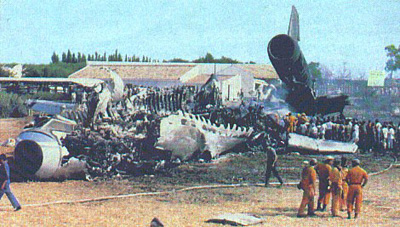
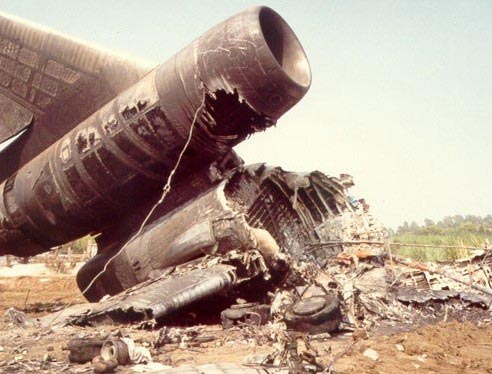
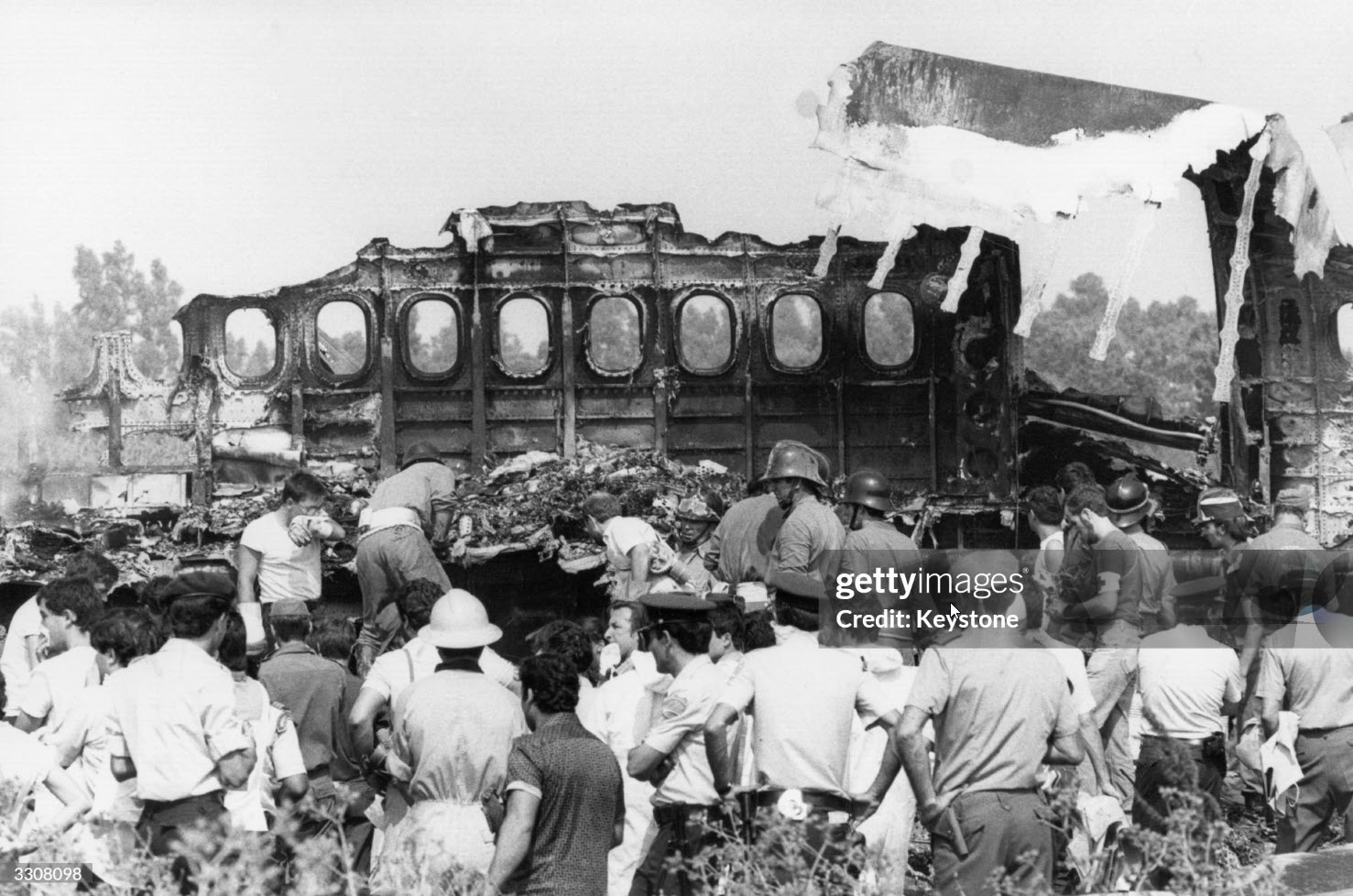
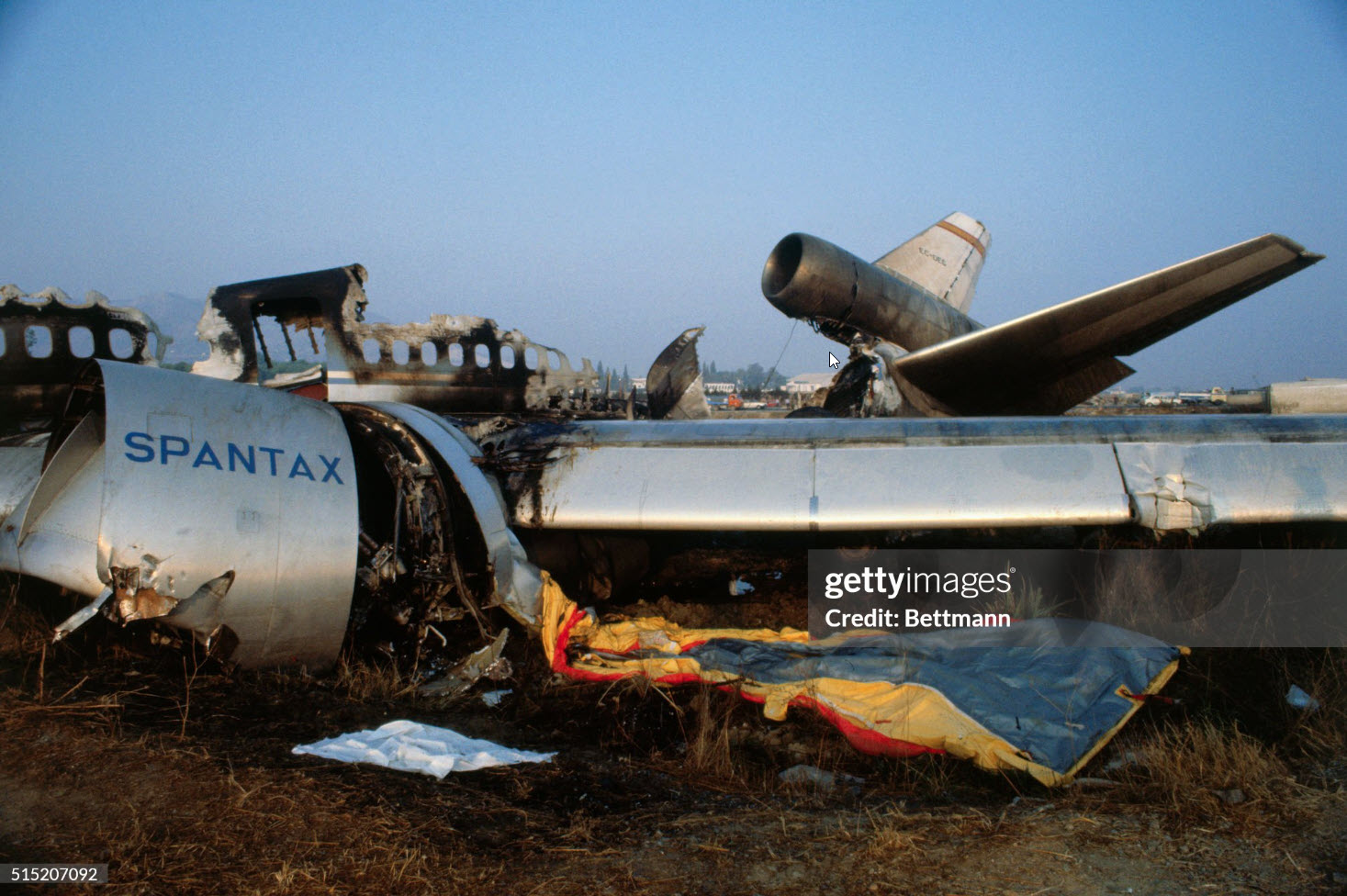
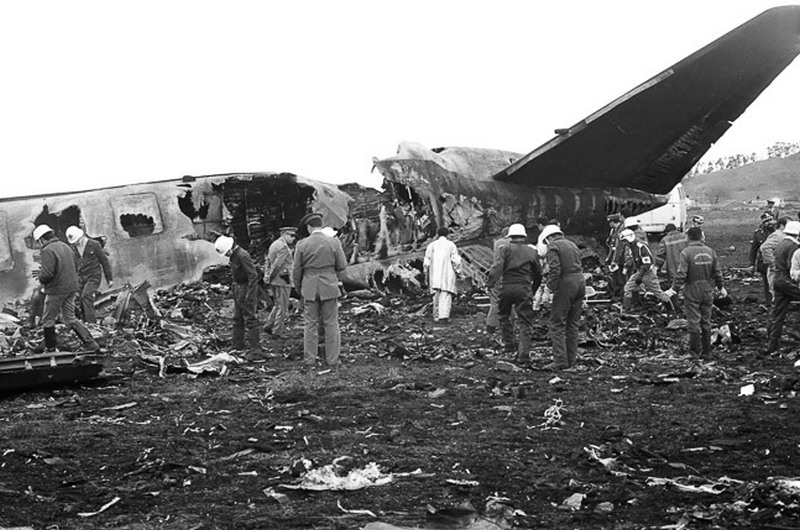
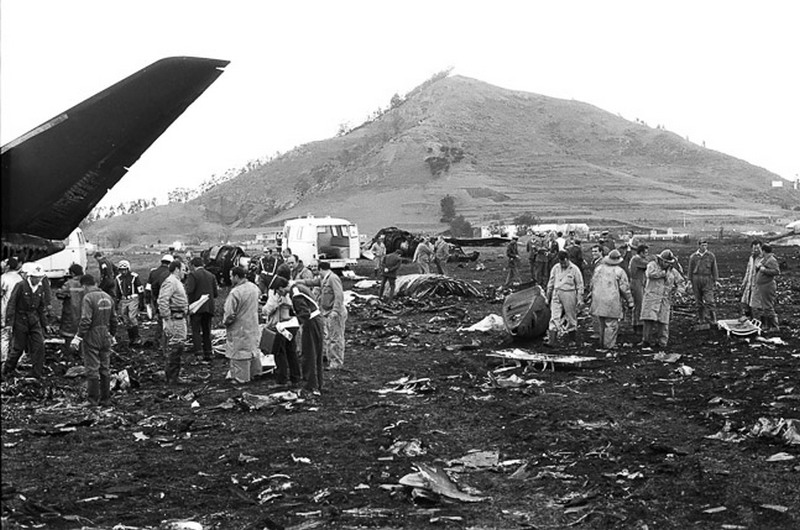
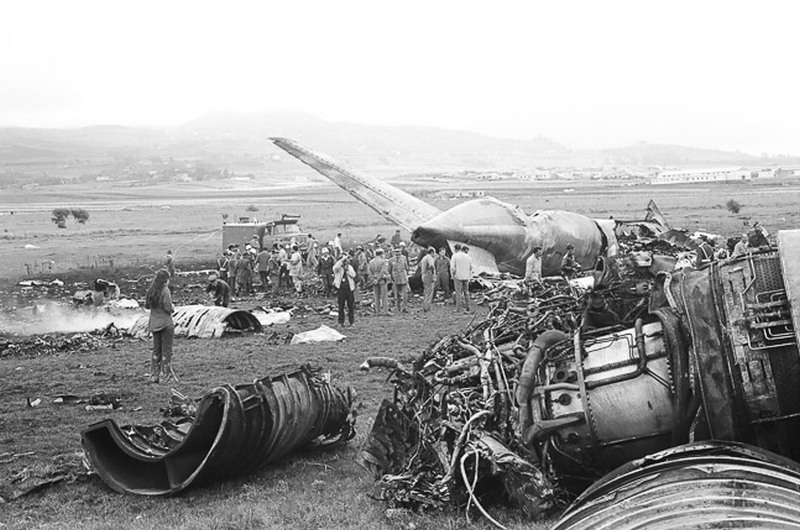
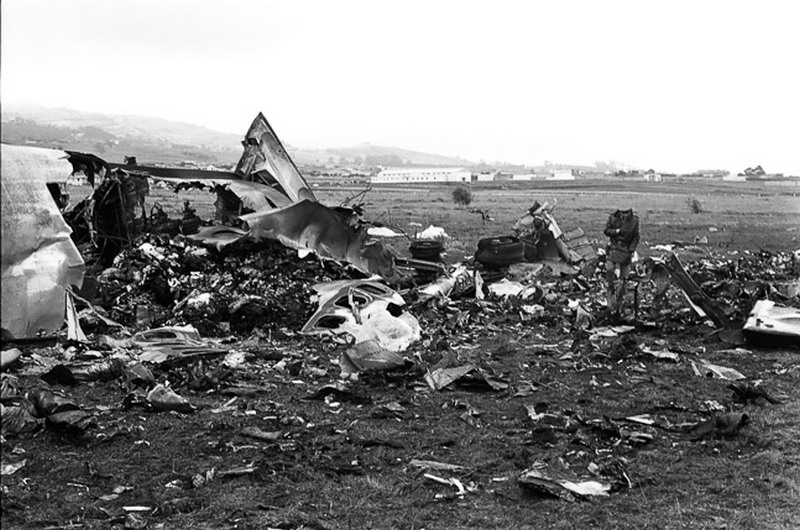
Crash of a Douglas DC-10-30CF in Málaga: 50 killed

Date & Time: Sep 13, 1982 at 1200 LT
Type of aircraft:
Operator:
Registration:
EC-DEG
Flight Phase:
Survivors:
Yes
Schedule:
Madrid – Málaga – New York
MSN:
46962
YOM:
1977
Flight number:
BX995
Country:
Region:
Crew on board:
13
Crew fatalities:
Pax on board:
381
Pax fatalities:
Other fatalities:
Total fatalities:
50
Captain / Total flying hours:
16129
Captain / Total hours on type:
2119.00
Copilot / Total flying hours:
6840
Copilot / Total hours on type:
2165
Aircraft flight hours:
15364
Aircraft flight cycles:
4008
Circumstances:
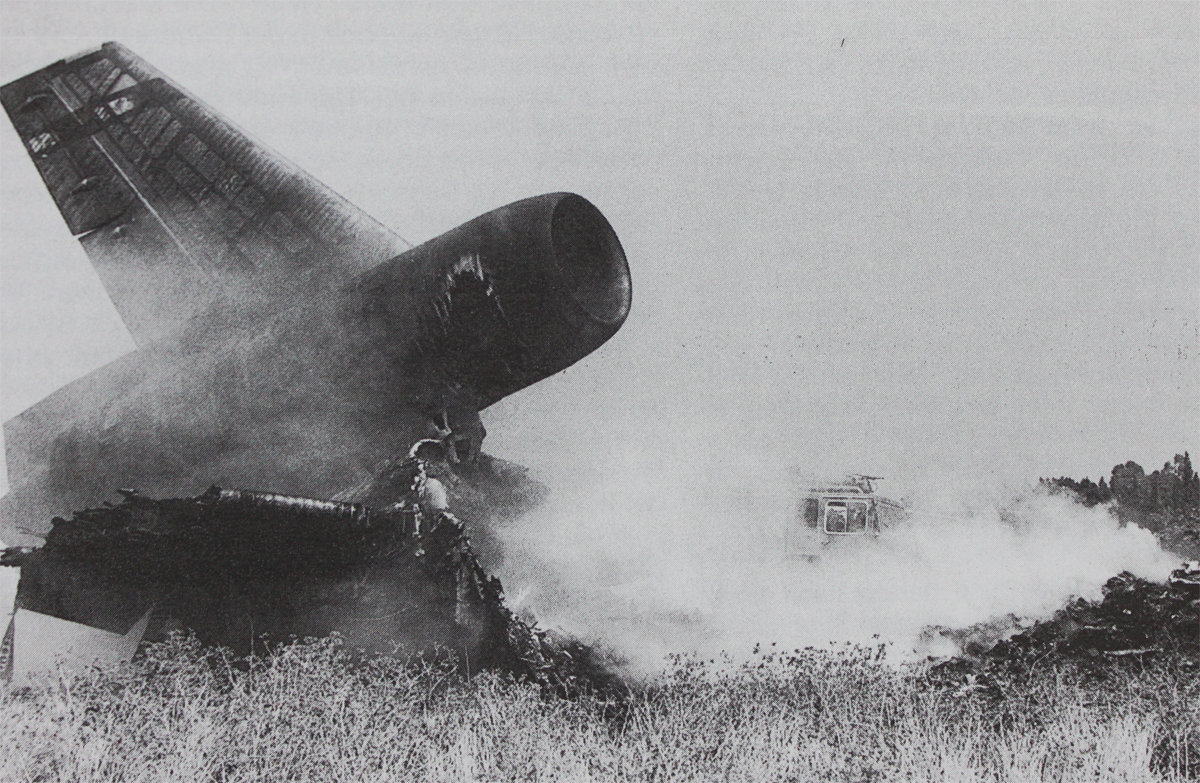
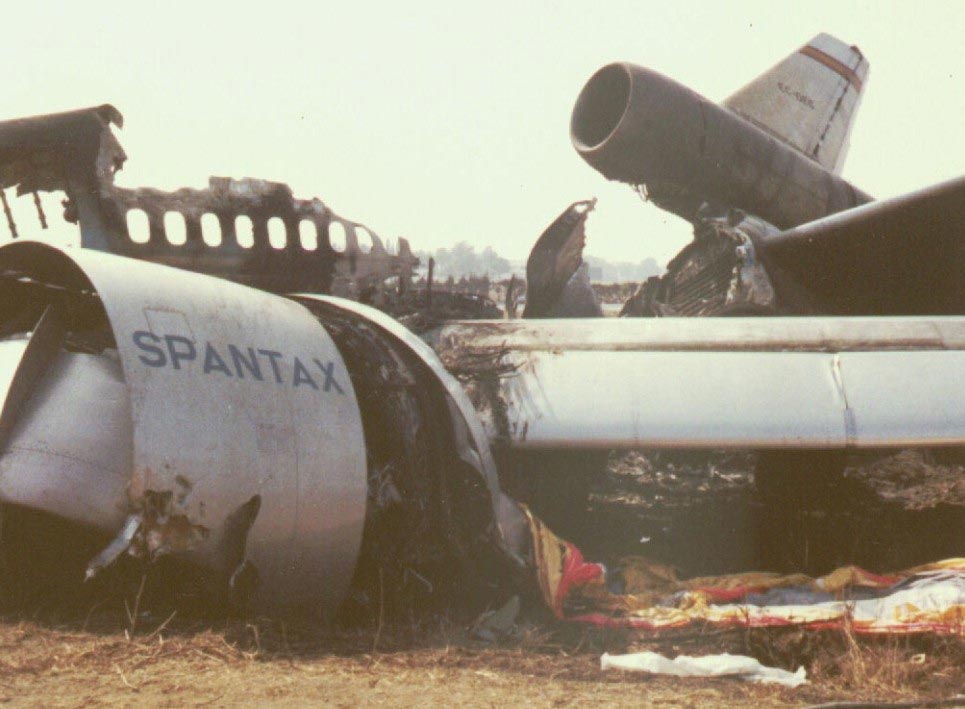
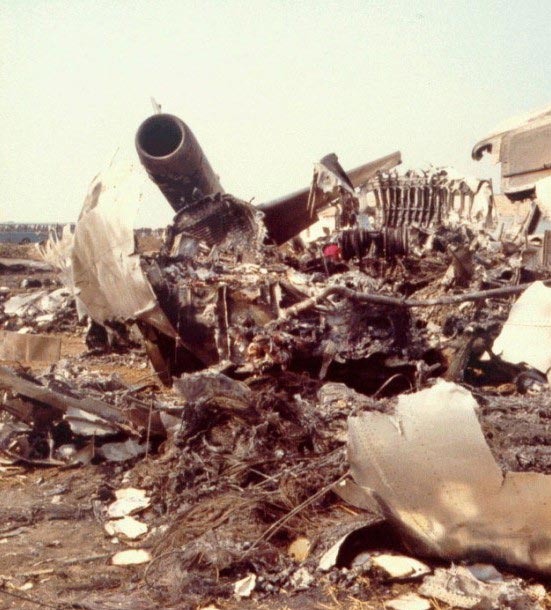
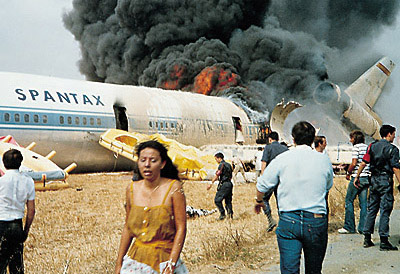
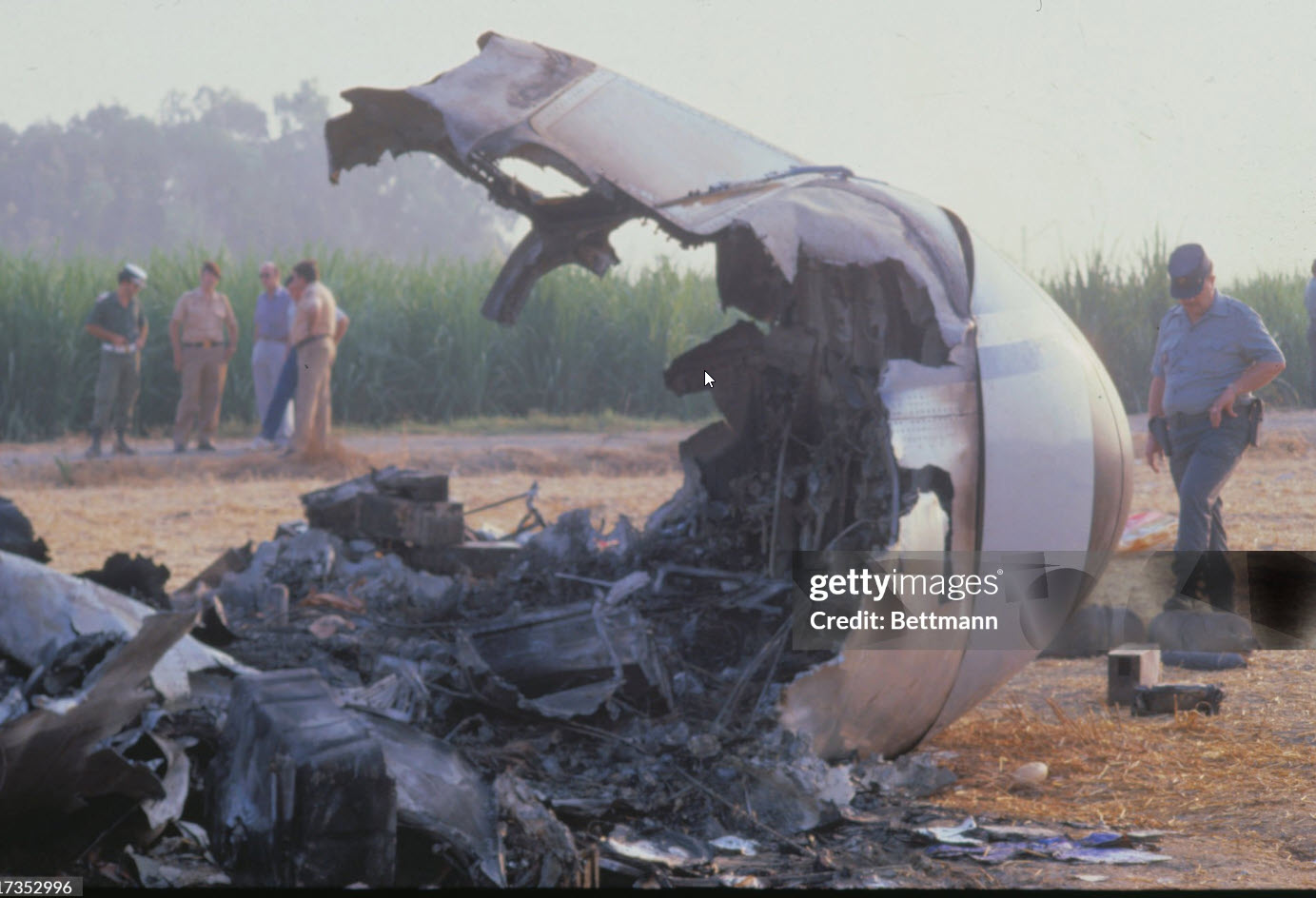
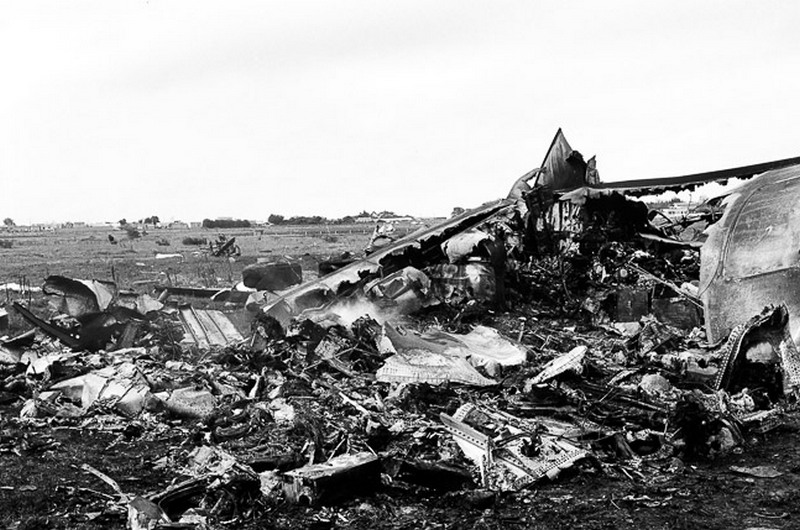
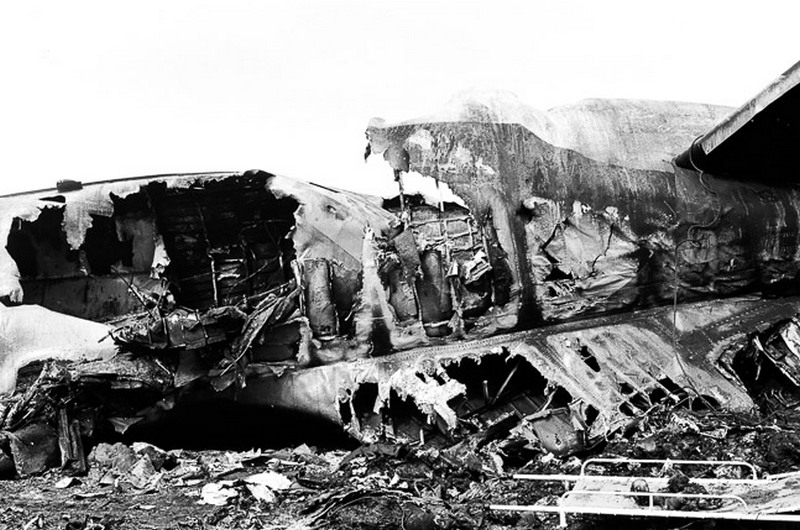
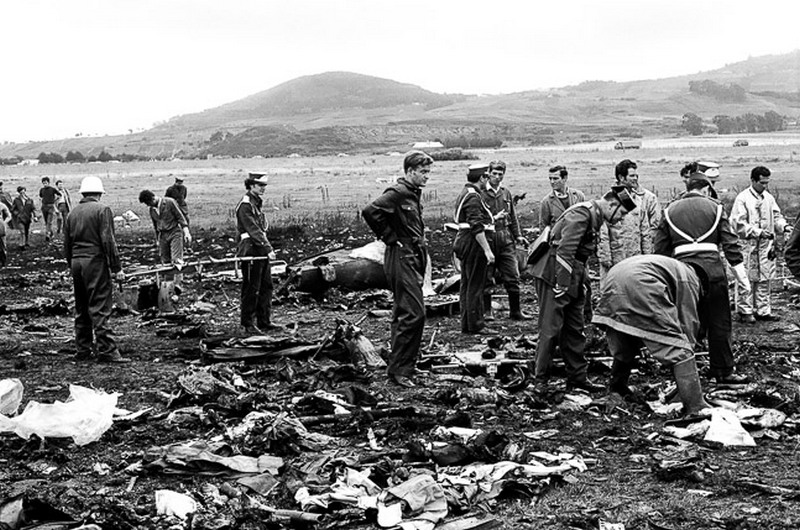
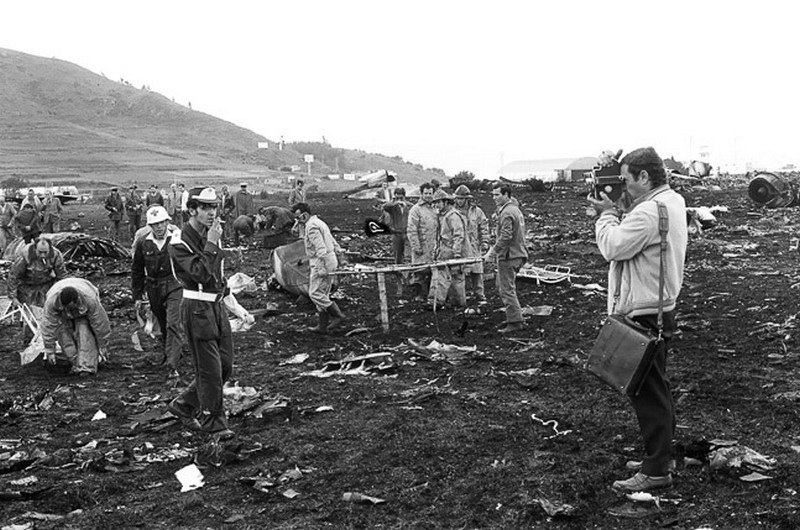
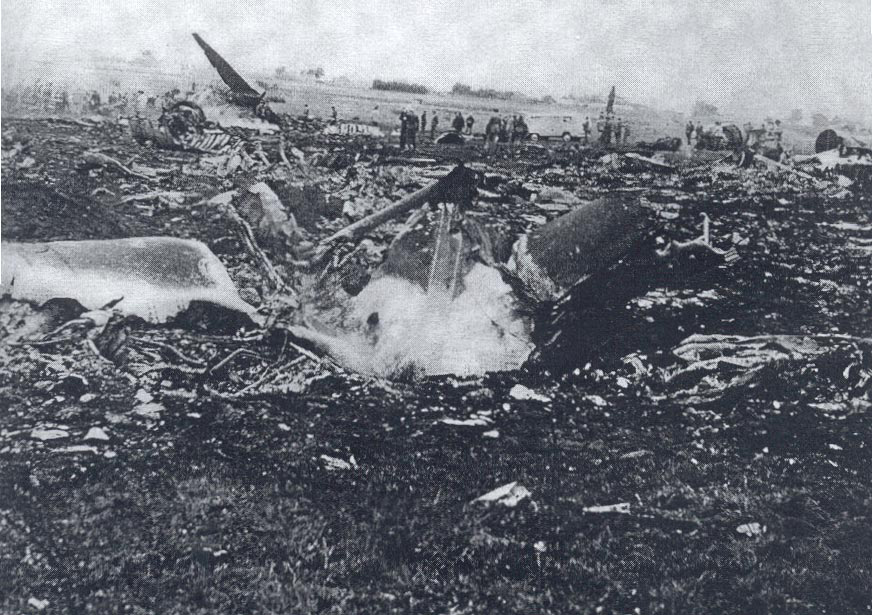
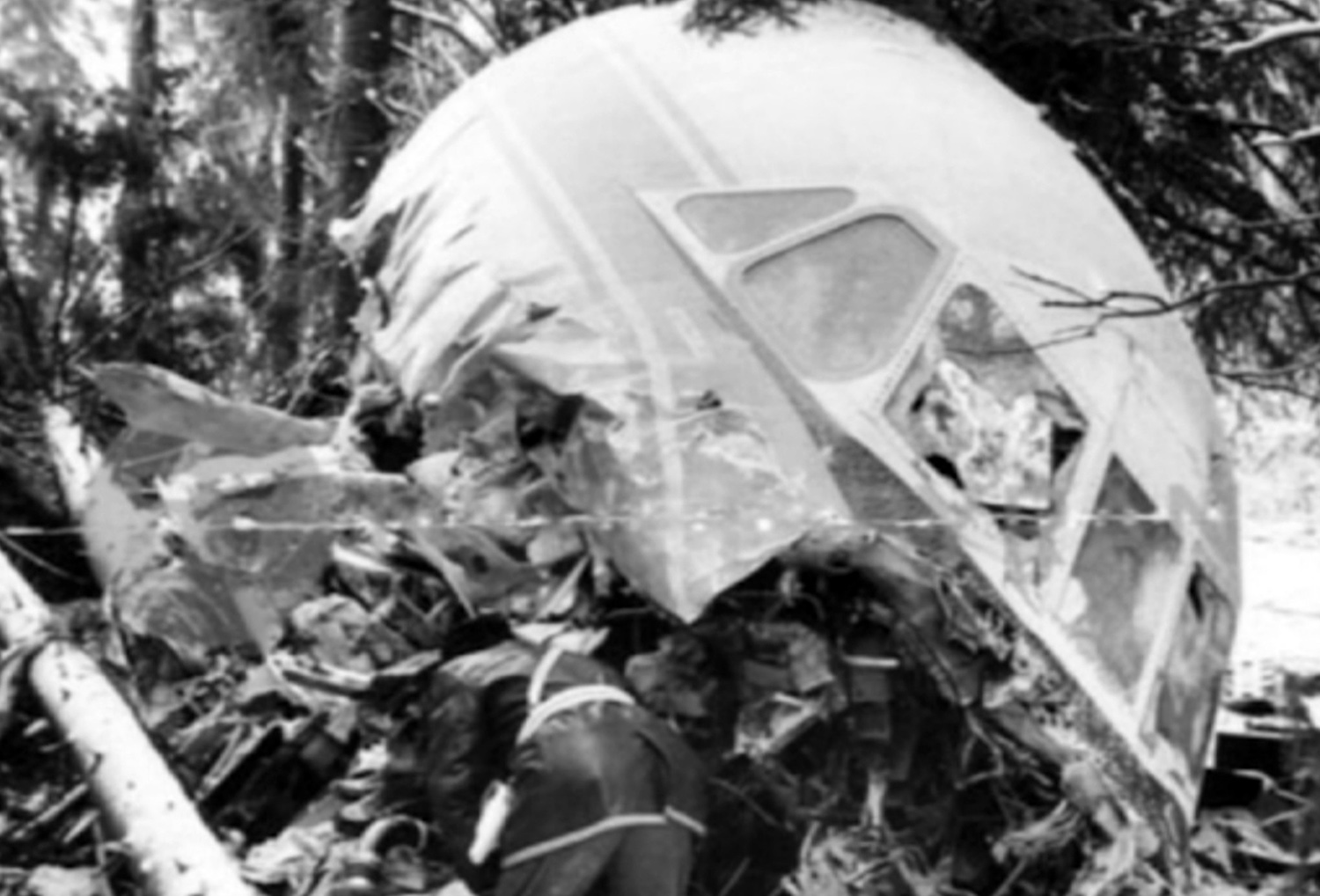
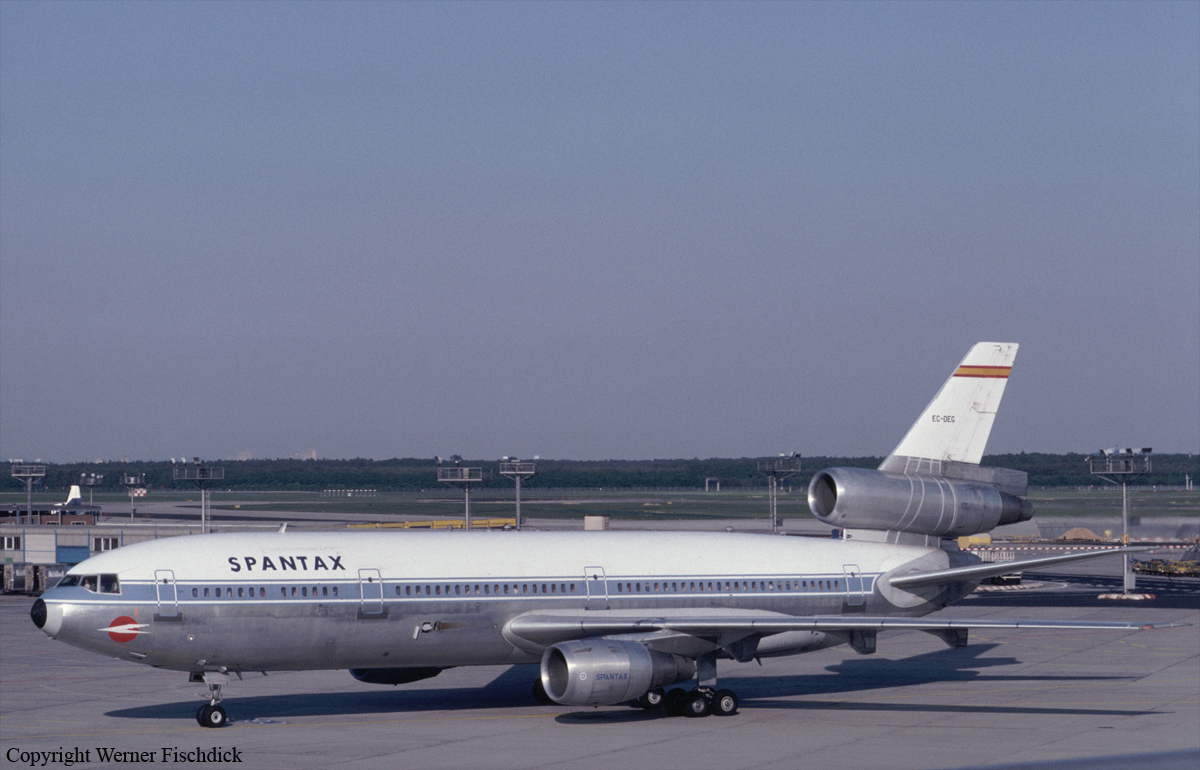
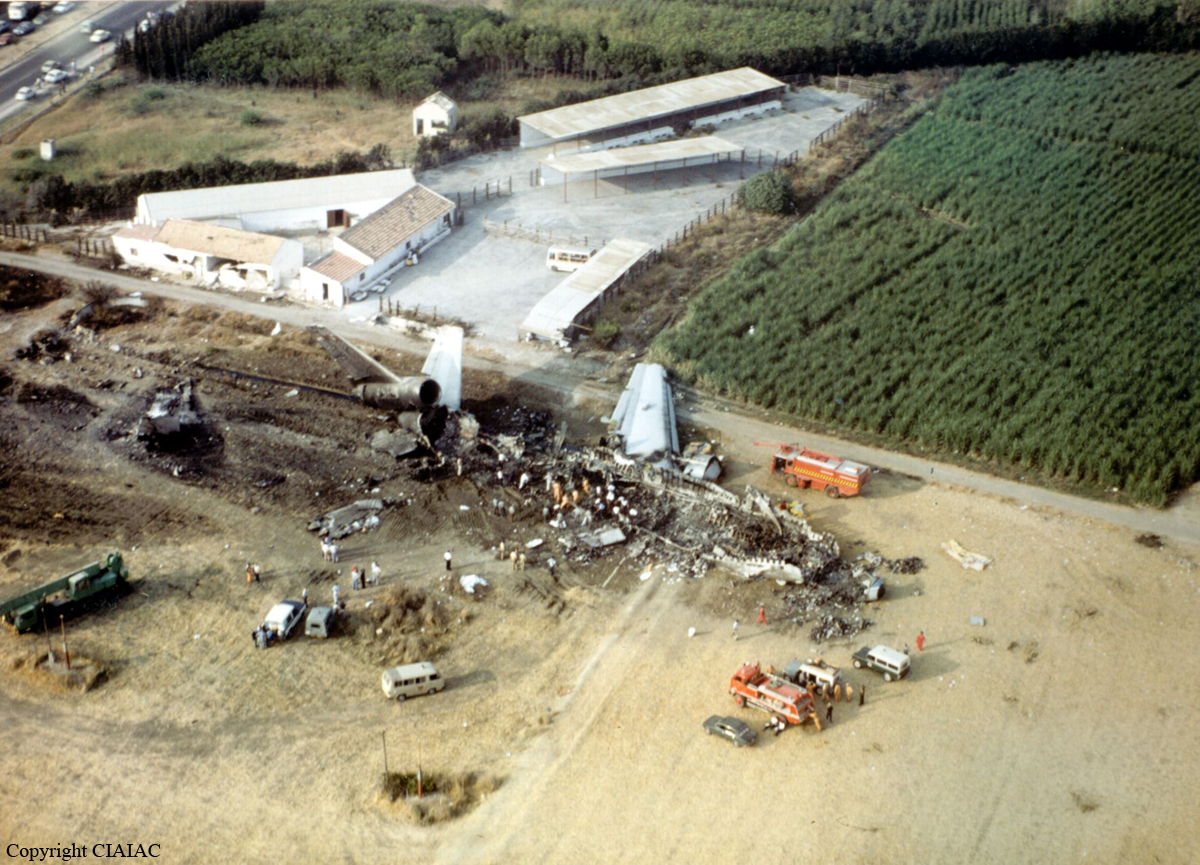
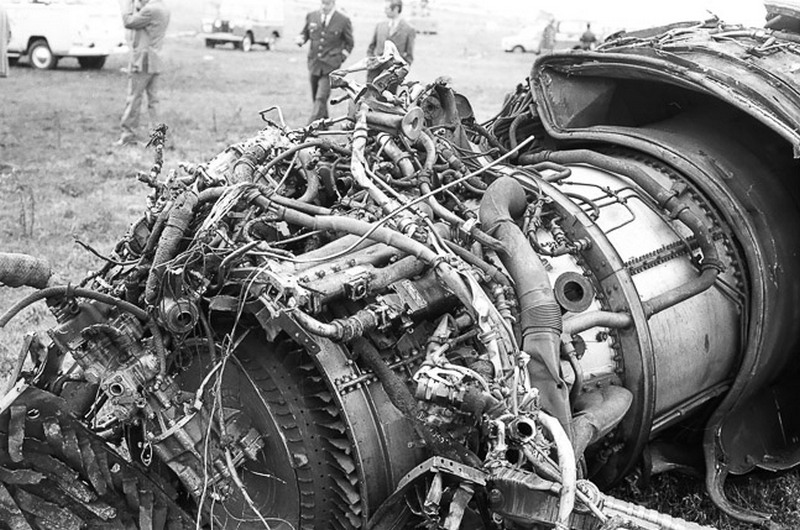
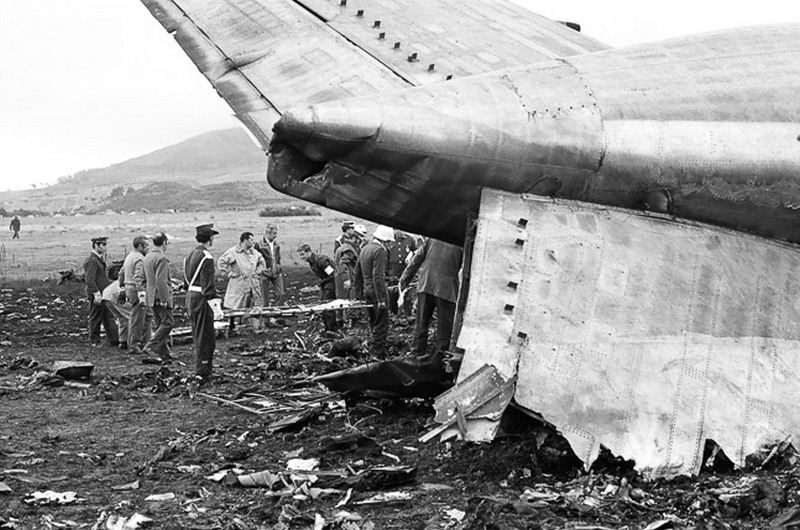
Takeoff acceleration was normal, failure was not detected on engines, systems or structures. The crew registered a strong vibration at or close to V1. The captain felt how this vibration was highly increased as he began rotation, consequently rejecting the takeoff at a speed between VR and V2. Physical evidence shows how detachment of the tread of a tire of the nose gear, retreated, began before the aircraft had reached V1. The reject of takeoff began where there were another 1,295 meters (4,250 feet) of runway left. The aircraft crossed the runway end at a speed slightly over 110 knots, colliding with an ILS concrete building, breaking the metal fencing of the airport, crossing a highway, causing damage to three vehicles on the same, colliding then with farming construction. Engine number three detached after impact with the ILS building. Approximately three quarters of the right wing as well as the right horizontal stabilizer were detached as a result of the impact with the afore mentioned farming construction. The fuselage also ran over the construction with which the right wing collided. The aircraft stopped 450 meters (1,475 feet) away from the end of runway 14, and approximately 40 meters (130 feet) off to the left from the centerline. Neither the passenger department nor the cockpit showed damage that could impede survival when the aircraft stopped. Fuel was spilled off the right wing, from the time it collided with the farming construction, and the fire began in the rear of the fuselage. The fire destroyed the aircraft completely. There were 381 passengers and 13 crew members on board. 333 passengers and 10 crew survived, and as a result of the fire subsequent to the impact, 47 passengers and three assistant crew members died.
Probable cause:
The Commission determines the cause of the accident to be the fractional detachment of the retread of the right wheel of the nose gear, originating a strong vibration which could not be identified by the captain, leading him into the belief that the aircraft would become uncontrollable in flight, and thus deciding to abandon the take-off over VR. The decision of aborting the take-off, though not in accordance with the standard operation procedure, is in this case considered reasonable, on the base of the irregular circumstances that the crew had to face, the short period of time available to take the decision, the lack of training in case of wheel failure and the absence of take-off procedures when failure other than that of the engines occurs.
Final Report:
Crash of a Learjet 35A in Palma de Mallorca: 4 killed

Date & Time: Aug 13, 1980 at 2156 LT
Type of aircraft:
Operator:
Registration:
EC-DFA
Survivors:
No
Schedule:
Madrid - Palma de Mallorca
MSN:
35-196
YOM:
1978
Country:
Region:
Crew on board:
2
Crew fatalities:
Pax on board:
2
Pax fatalities:
Other fatalities:
Total fatalities:
4
Circumstances:
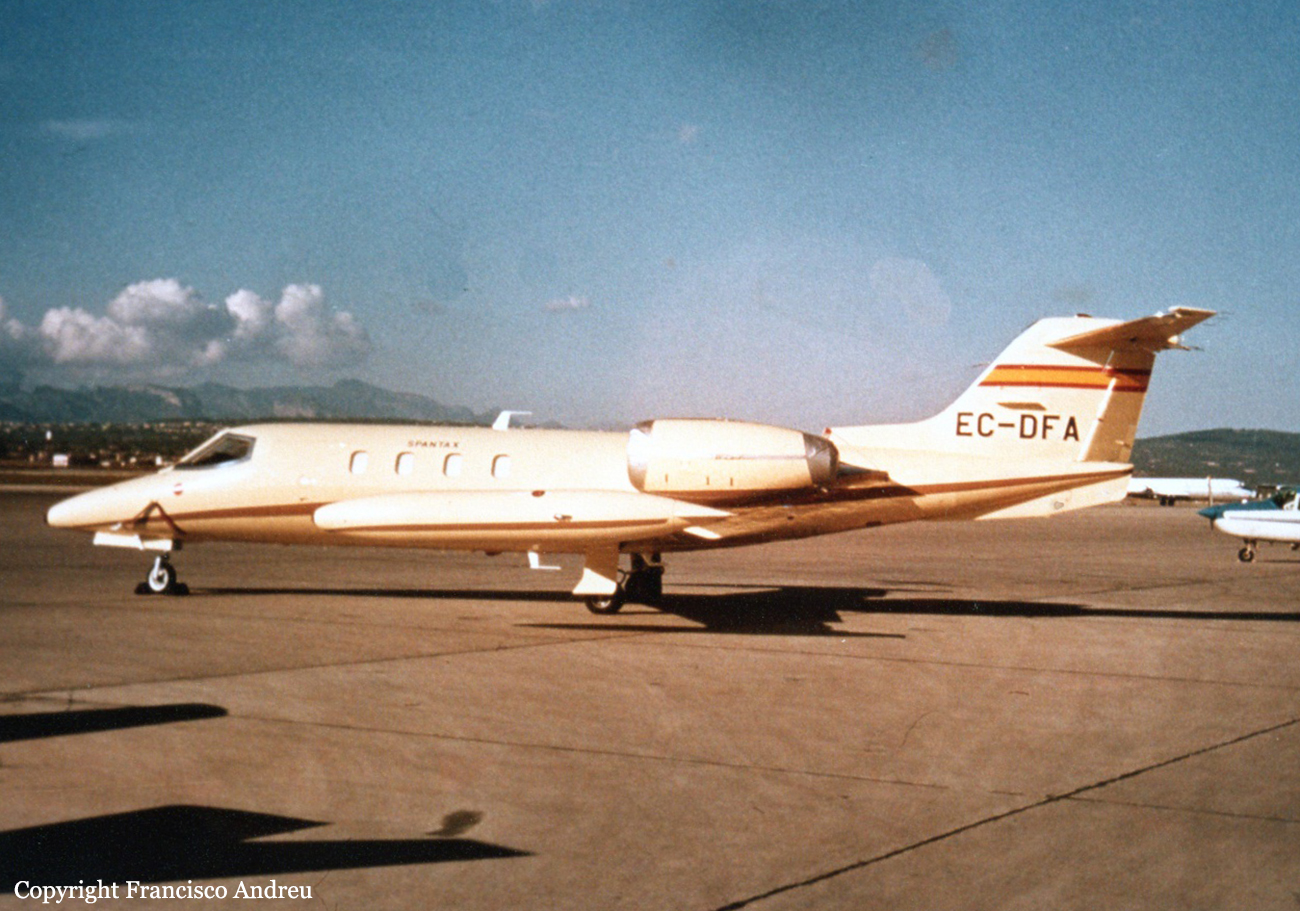
While on a visual approach to runway 24, the crew failed to realize his altitude was too low when the airplane struck the slope of a mountain located 8 km short of runway. The aircraft was destroyed by impact forces and all four occupants were killed.
Probable cause:
Controlled flight into terrain.

Crash of a Convair CV-990-30A-5 in Tenerife: 155 killed

Date & Time: Dec 3, 1972 at 0733 LT
Type of aircraft:
Operator:
Registration:
EC-BZR
Flight Phase:
Survivors:
No
Schedule:
Tenerife - Munich
MSN:
30-10-25
YOM:
1962
Country:
Region:
Crew on board:
7
Crew fatalities:
Pax on board:
148
Pax fatalities:
Other fatalities:
Total fatalities:
155
Circumstances:
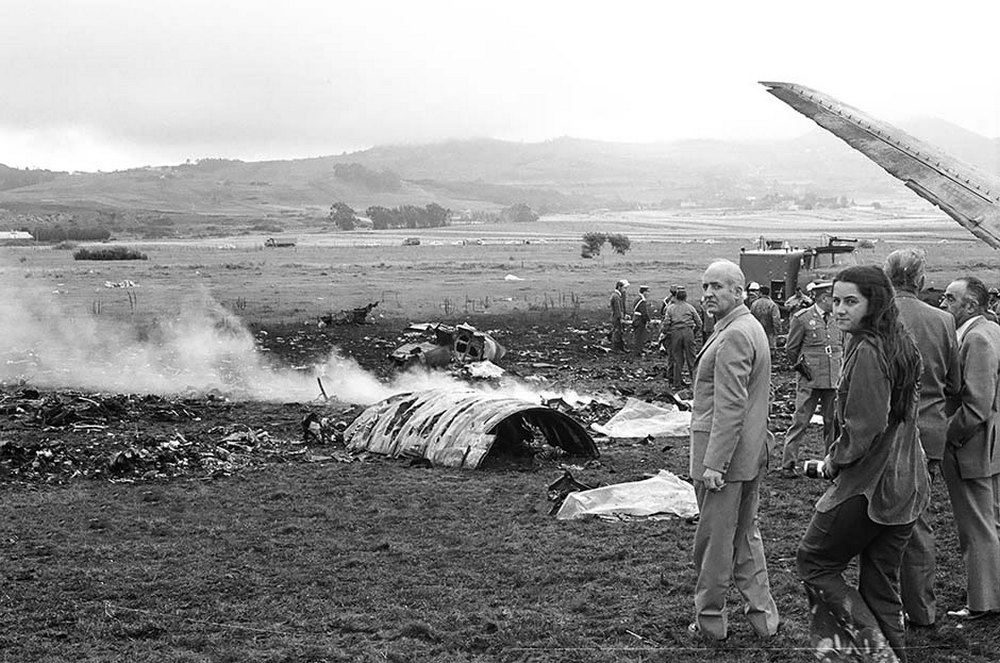
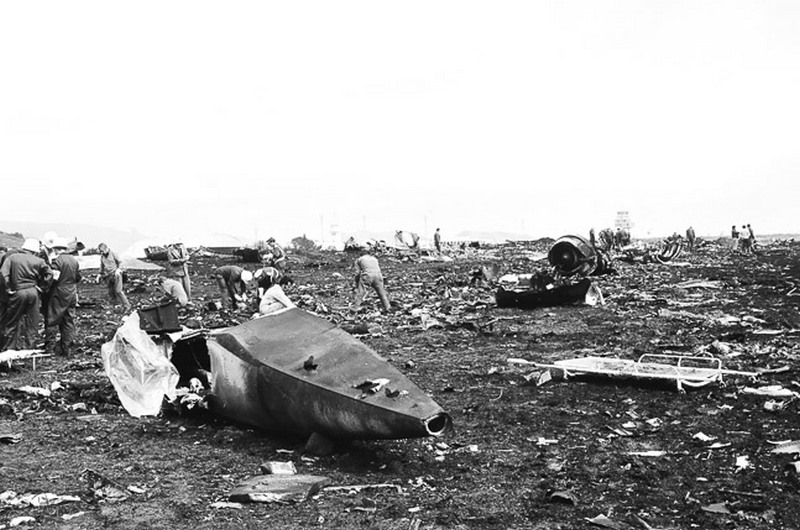
After liftoff at Tenerife-Norte-Los Rodeos Airport, while climbing to a height of 100 meters, the airplane went out of control, plunged into the earth and crashed in a huge explosion about 325 meters past the runway end. The airplane was totally destroyed by impact forces and a post crash fire and all 155 occupants, 148 West German tourists and 7 Spanish crew members were killed. At the time of the accident, the visibility was near zero due to low ceiling and fog.
Probable cause:
It is believed that the accident was caused by inadapted reaction and manoeuvres on part of the pilot-in-command who probably suffered a spatial disorientation immediately after takeoff in an almost zero visibility configuration.

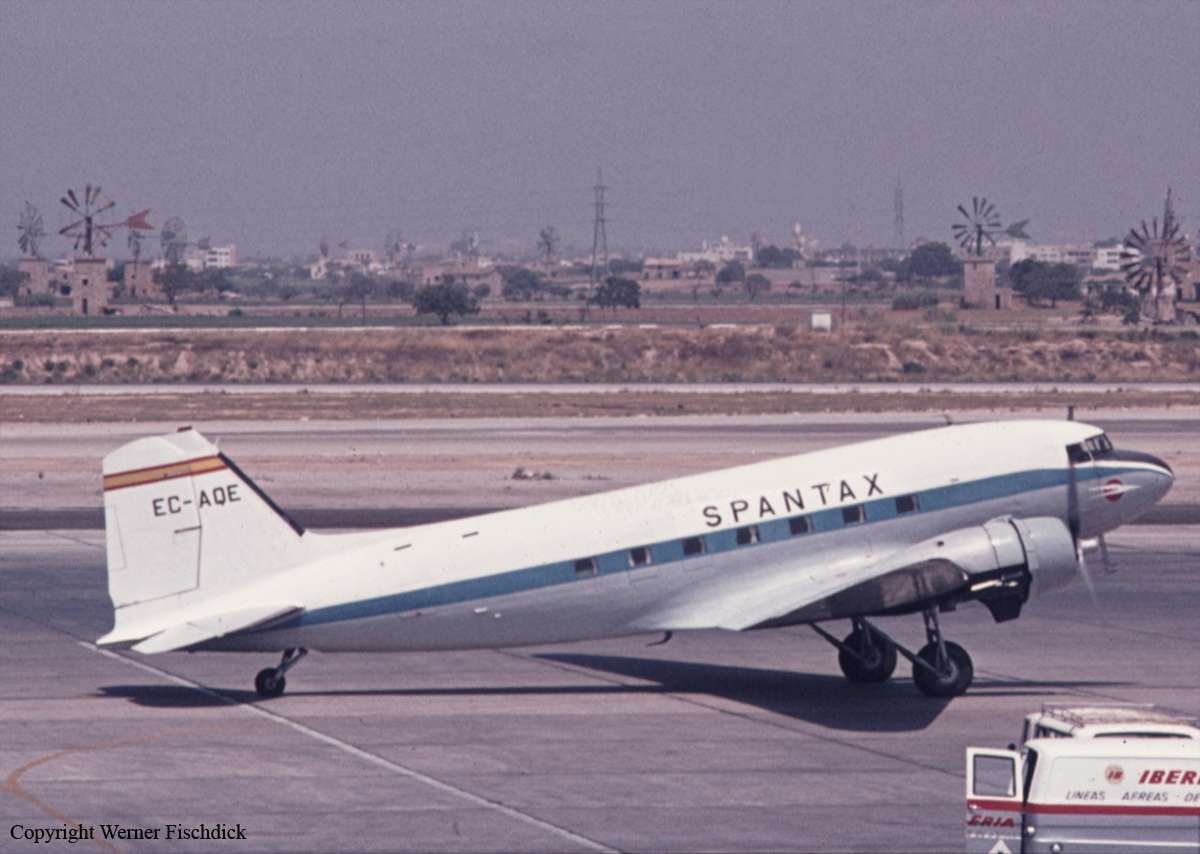
Crash of a Douglas C-47B-1-DK in Madrid: 1 killed

Date & Time: Sep 30, 1972
Operator:
Registration:
EC-AQE
Flight Phase:
Flight Type:
Survivors:
Yes
Schedule:
Madrid - Madrid
MSN:
14196/25641
YOM:
1944
Country:
Region:
Crew on board:
6
Crew fatalities:
Pax on board:
0
Pax fatalities:
Other fatalities:
Total fatalities:
1
Circumstances:
The crew was completing a local training flight at Madrid-Barajas. At liftoff, the airplane lost height, stalled and crashed. A pilot was killed while five other occupants were injured. The aircraft was destroyed.
Probable cause:
It was determined that the pilot-in-command (a student under training) pulled up to abruptly on the control column and initiated the rotation prematurely as the aircraft's speed was insufficient (between 65 and 70 knots), causing the aircraft to adopt a wrong takeoff configuration and to stall.

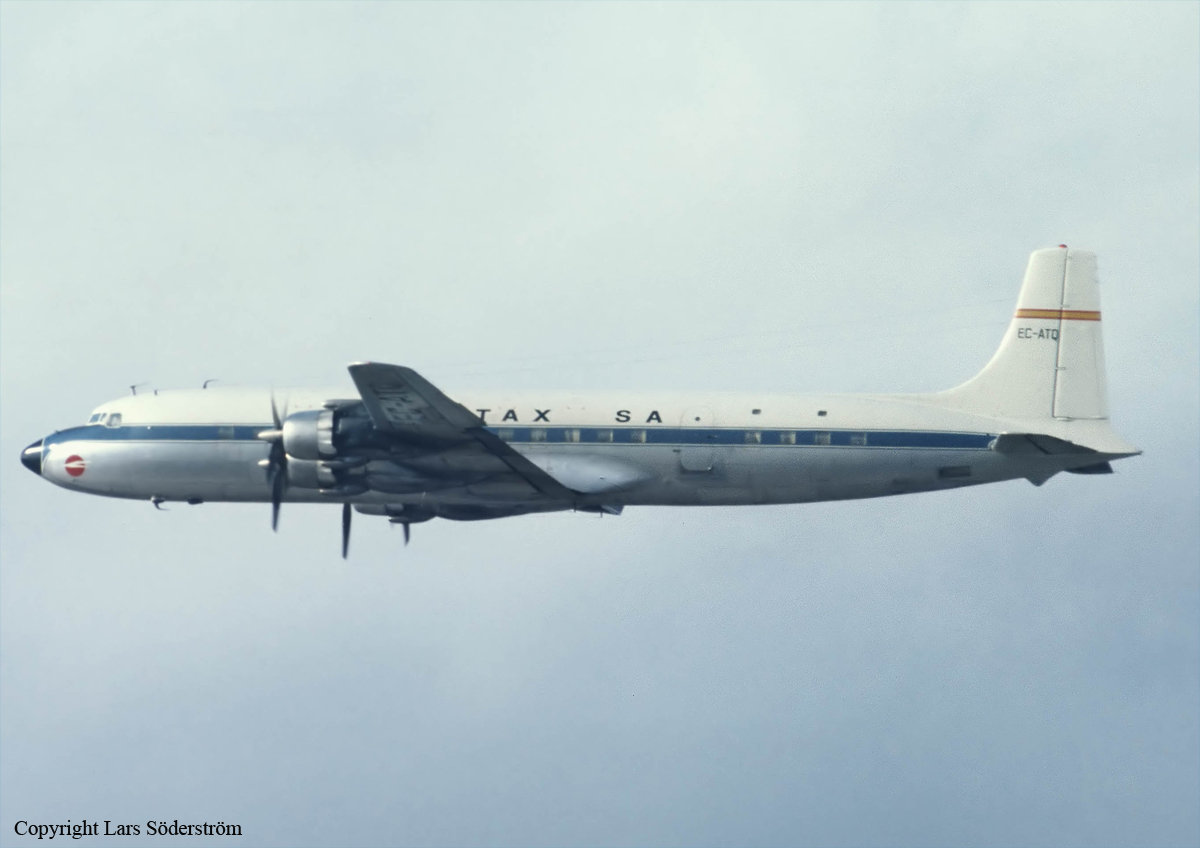
Ground accident of a Douglas DC-7 in Madrid

Date & Time: Oct 2, 1970
Type of aircraft:
Operator:
Registration:
EC-ATQ
Survivors:
Yes
MSN:
45162
YOM:
1957
Country:
Region:
Crew on board:
0
Crew fatalities:
Pax on board:
0
Pax fatalities:
Other fatalities:
Total fatalities:
0
Circumstances:
Suffered a ground accident at Madrid-Barajas Airport. No casualties.

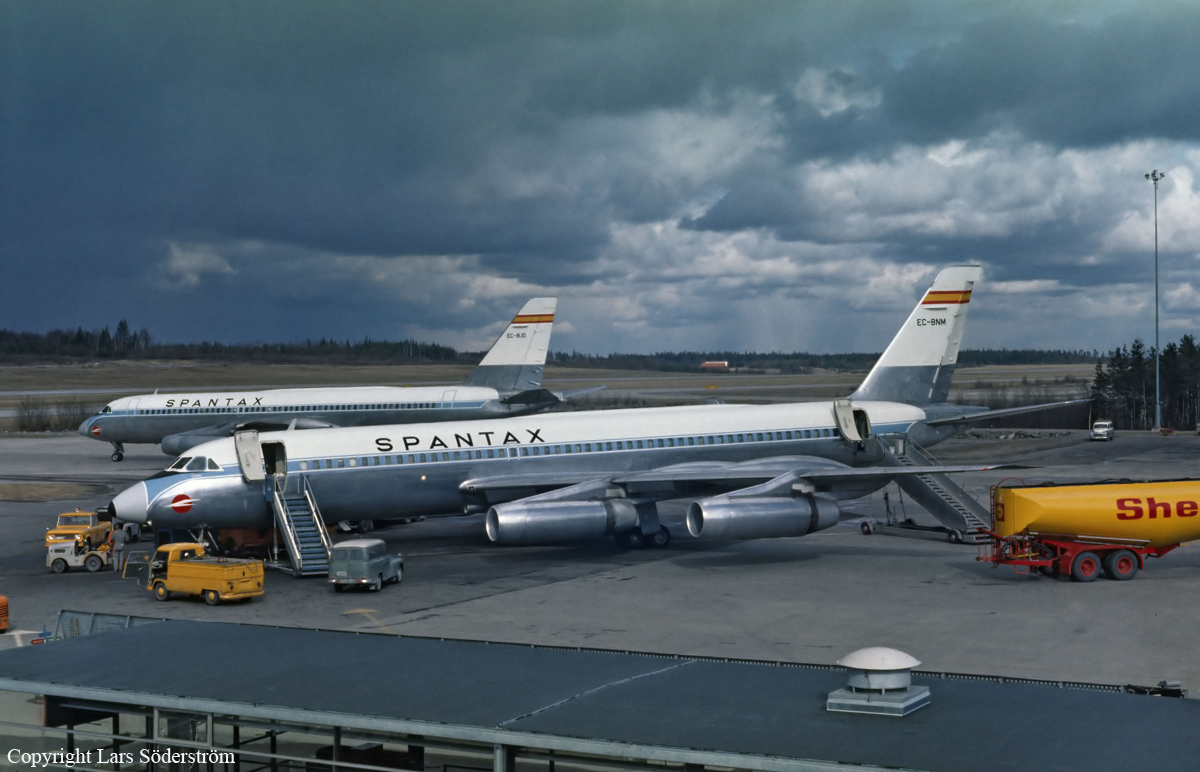
Crash of a Convair CV-990-30A-5 in Stockholm: 5 killed

Date & Time: Jan 5, 1970 at 2225 LT
Type of aircraft:
Operator:
Registration:
EC-BNM
Flight Phase:
Flight Type:
Survivors:
Yes
Schedule:
Stockholm - Zurich
MSN:
30-10-32
YOM:
1962
Country:
Region:
Crew on board:
3
Crew fatalities:
Pax on board:
7
Pax fatalities:
Other fatalities:
Total fatalities:
5
Captain / Total flying hours:
10019
Captain / Total hours on type:
2218.00
Copilot / Total flying hours:
5861
Copilot / Total hours on type:
758
Aircraft flight hours:
16940
Circumstances:
The aircraft was originally planned to fly a non-scheduled international flight from Stockholm-Arlanda to Palma de Mallorca. During the take-off run No. 4 engine did not function properly; the take-off was aborted and the aircraft was taxiied back to the apron. Inspection of the engine revealed damage to the compressor. After consultation with the Spantax Operations Department in Madrid, it was decided to ferry the aircraft on three engines to Zurich, where No. 4 engine would be changed. The technical preparation of the aircraft for the ferry flight was supervised by a ground engineer from Spantax. Meanwhile, the flight crew planned the flight. As the ATS briefing office at Arlanda was closed after 2100 hours, the co-pilot phoned the ATS flight plan to Stockholm Control Centre (ACC) . Neither when phoning the flight plan nor at the weather briefing did the crew advise that the flight was a 3-engine ferry flight. However, the Air Traffic Controller (Tower) in some other way had been informed about the nature of the flight. At 2208 hours the crew received a taxi clearance to Runway 08, but as they considered that this runway was too short for a 3-engine take-off , they requested permission to use Runway 19 and this was granted. Another advantage of using Runway 19 was that it made it possible to join the outbound track with minor heading changes. During taxiing the aircraft and the engine anti-icing system were checked according to the checklist. (After checking the engine anti-icing was switched OFF.) At 2221 hours the flight was cleared to take-off, and at 2224 hours the crew reported "Rolling". According to the pilot-in-command,maximum EPR take-off power was set on engines Nos. 1, 2 and 3 with brakes on, then, after having checked the instruments, No. 1 engine was throttled back to 85 per cent and the brakes were released. When the aircraft had rolled for 5-10 seconds the nose wheel skidded to the right and to regain heading he had to retard throttle No. 1 to 80-60 per cent. When back on the centre line he slowly opened the throttle again. Maximum EPR take-off power was set when the aircraft reached a speed of 100 kt. He rotated the aircraft at the calculated speed Vr - 134 kt (27° of flaps) and it became airborne. He retracted the gear when positive climb was indicated. Just after lift off he was blinded by the aircraft landing lights illuminating unexpectedly low clouds over the runway. Initially he kept the speed at V2 (145 kt) and noticed a rate- of-climb of 800 ft/min. He had to apply extremely hard left rudder to centre the turn indicator (ball). He did not observe any bank or turn tendency, but noted that the indicated airspeed (IAS) was not increasing normally and shortly thereafter that the rate-of-climb and speed decreased. The pilot-in-command felt they urgently needed more power, but all happened very quickly and shortly after he had noticed the speed drop the aircraft collided with the terrain. From the time take-off power had been set on the runway the throttle positions were not changed. The co-pilot stated that they had to taxi down the runway to avoid ice patches on the first part of the runway. He could not say how far they taxiied and it was not possible to determine it in any other way. During preparation for take-off he asked the pilot-in-command if they should use 10° flaps, but the decision of the pilot- in-command to uae 27° was not changed. He completed the pre-take-off instrument check and did not notice any abnormal readings. The three gyro horizons indicated no differences. When rolling he kept the control column forward, to increase the friction on the nose wheel, and gave full left aileron. Gradually he decreased the pressure on the column and reduced left aileron deflection. At V1 the pilot-in-command took mr the controls. The co-pilot kept his left hand on the throttles and verified that no changes were made on throttles Nos. 2 and 3 after takeoff power was set, but he noticed that the pilot-in-command had to vary the No. 1 throttle setting several times during the roll. After lift-off when the gear was retracted the co-pilot received a message from the tower giving the take-off time and instruction to change over to STOCKHOLM RADAR on 124.1 MHz. He never acknowledged the message but when leaning forward to select the new frequency he noticed on his horizon a banking to the right of 4 to 60. He also observed the gyro horizon of the pilot-in-command indicating o bank to the right. Zhe speed had dropped to 10 kt belau V2 and he called: "The speed, the speed". Ifc felt no buffeting in the aircraft aud noted no tendency to Dutch roll. Be also stated that he observed a power drop of about 2 per cent below EPR take-off power. Shortly after the first contact with the treetops the banking to the right had increased to 10-lSO and the co-pilot retarded the throttles. The flight and the ground engineers sitting in the cockpit observed nothing abnormal until the crash. None of them observed any indications of power changes on the instruments. No buffeting was felt in the aircraft, neither were any warning signals heard. Whilst in a right bank of 4-6° the aircraft collided with tree-tops approximately 26 m above and 1 060 m from the far end of Runway 19, or about 1 800 m from the point of lift-off, having turned through about 25 degrees from the runway heading. The aircraft came to a final stop approximately 500 m after first contact with the trees on a heading of 240°. The aircraft was destroyed and five occupants were killed while five others were injured.
Probable cause:
During a 3-engine take-off the aircraft entered an uncontrollable attitude with increased drag and decreased indicated airspeed wing to the following combined circumstances : unexpected, early loss of external visual references after lift off. During transition from visual to instrument flying the pilot lost directional control, this again resulting in increased drag due to yaw. The presence of a temperature inversion reducing thrust and indicated airspeed. The presence of wind shear causing further decrease of indicated airspeed, which resulted in large drag increase. The following findings were reported:
- Patches of ice on the runway reduced the friction and thereby the capability of the nose wheel to take up side forces. During acceleration to 100 kt, the average thrust used on engine No. 1 was probably 50 per cent. Full power on all three engines was, however, set well below V1,
- There was a marked temperature inversion in the air close to the ground,
- There was a windshear. The wind was reported calm at surface but was blowing from the NNW at 5-10 kt at 30-50 ft producing a tail wind component for aircraft taking off on Runway 19,
- The crew was not informed about the temperature inversion and windshear,
- Neither the actual weather reports nor the forecast for Arlanda contained any information about the possibility that the existing low clouds of stratus would be as low as 30-50 ft above the far end of Runway 19 and in the climb out area,
- These clouds were illuminated by the landing lights and possibly by the approach lights to Runway 01, which blinded the pilot forcing him to change to instrument flying earlier than could have been expected,
- During the climb-out, the co-pilot was requested by the Tower to change radio frequency. This preoccupation diverted his attention from his primary duty of watching the instrument panel.
Final Report:
Crash of a Douglas C-47A-25-DK in Tenerife: 32 killed

Date & Time: Dec 7, 1965 at 1840 LT
Operator:
Registration:
EC-ARZ
Flight Phase:
Survivors:
No
Schedule:
Tenerife – Las Palmas
MSN:
13474
YOM:
1944
Country:
Region:
Crew on board:
4
Crew fatalities:
Pax on board:
28
Pax fatalities:
Other fatalities:
Total fatalities:
32
Aircraft flight hours:
19245
Circumstances:
The flight was a non-scheduled domestic flight from Tenerife to Las Palmas. It took off from runway 30 at Tenerife Airport with an IFR flight plan at 1830 hours and disappeared from the view of the tower controller in low cloud about 500 m before the end of the runway. According to the tower controller, the pilot acknowledged the last instructions from the tower two minutes after takeoff and did not re-establish contact afterwards. The aircraft was not seen again until a few moments before the accident which was presumed to have occurred between 1834 and 1840 hours according to witnesses. It was later determined that the airplane went into a dive and crashed few km from the airfield, killing all 32 occupants, most of them Scandinavian tourists.
Probable cause:
In the light of the investigation, the cause of this accident was considered to be unknown, and was, therefore, classified as "undetermined". However, the reasons which may have caused the aircraft to enter a spin are listed hereunder: One probable cause was a failure of the suction pump or the vacuum system. If the vacuum system had failed the artificial horizon, directional gyro and turn-and-bank indicator would have become inoperative. A failure of this sort, aggravated by turbulence, would deprive the pilot of the means to control the aircraft which, in these conditions, might have stalled one or more times. Another cause which might have produced a spin was flying into very severe turbulence with loss of control leading to a stall. Engine failure was not considered probable, although a malfunctioning of one of the propellers was not ruled out. It was considered that the pilot would have alerted the tower if an emergency has occurred, whereas it was considered unlikely that he would have done so if the instruments failed or if he encountered severe turbulence, as in these circumstances his entire attention would have been concentrated on trying to restore the aircraft to a normal attitude.
Final Report:
Crash of an Airspeed AS.65 Consul into the Atlantic Ocean

Date & Time: May 25, 1960 at 1700 LT
Type of aircraft:
Operator:
Registration:
EC-AJV
Flight Phase:
Survivors:
Yes
Schedule:
El Aaiun - Las Palmas
MSN:
4339
YOM:
1946
Country:
Region:
Crew on board:
1
Crew fatalities:
Pax on board:
3
Pax fatalities:
Other fatalities:
Total fatalities:
0
Circumstances:
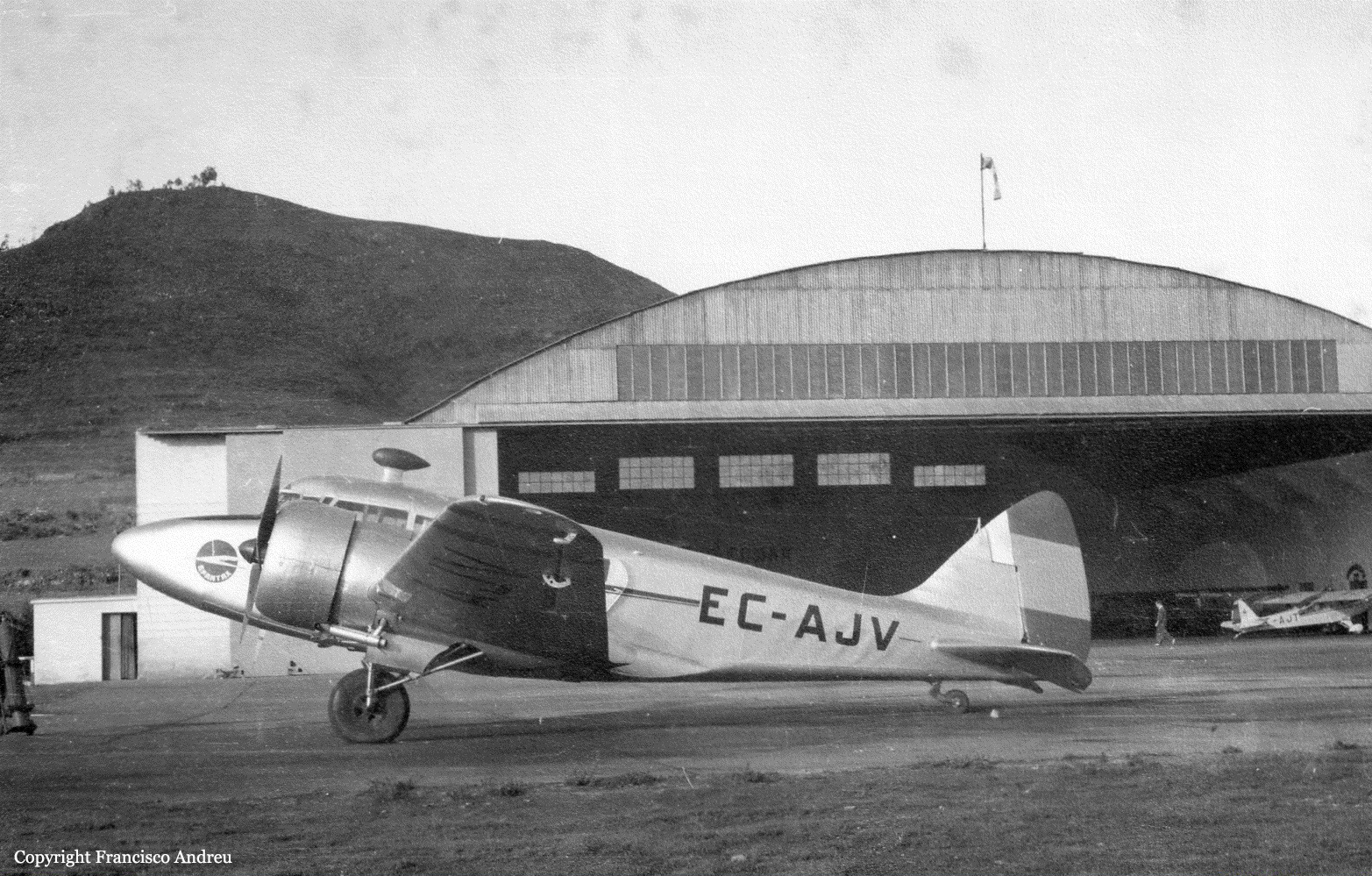
The twin engine aircraft departed Al Aaiun Airport at 1605LT on a schedule flight to Las Palmas-Gando, Canary Islands. Less than one hour later, while cruising, the left engine hydraulic pressure dropped. Unable to maintain a safe altitude, the pilot ditched the airplane about 74 km east of the Canary coast. All four occupants were rescued while the airplane sank and was lost.
Probable cause:
Failure of the left engine in flight due to hydraulic pressure issue.