

Country
Operator Image

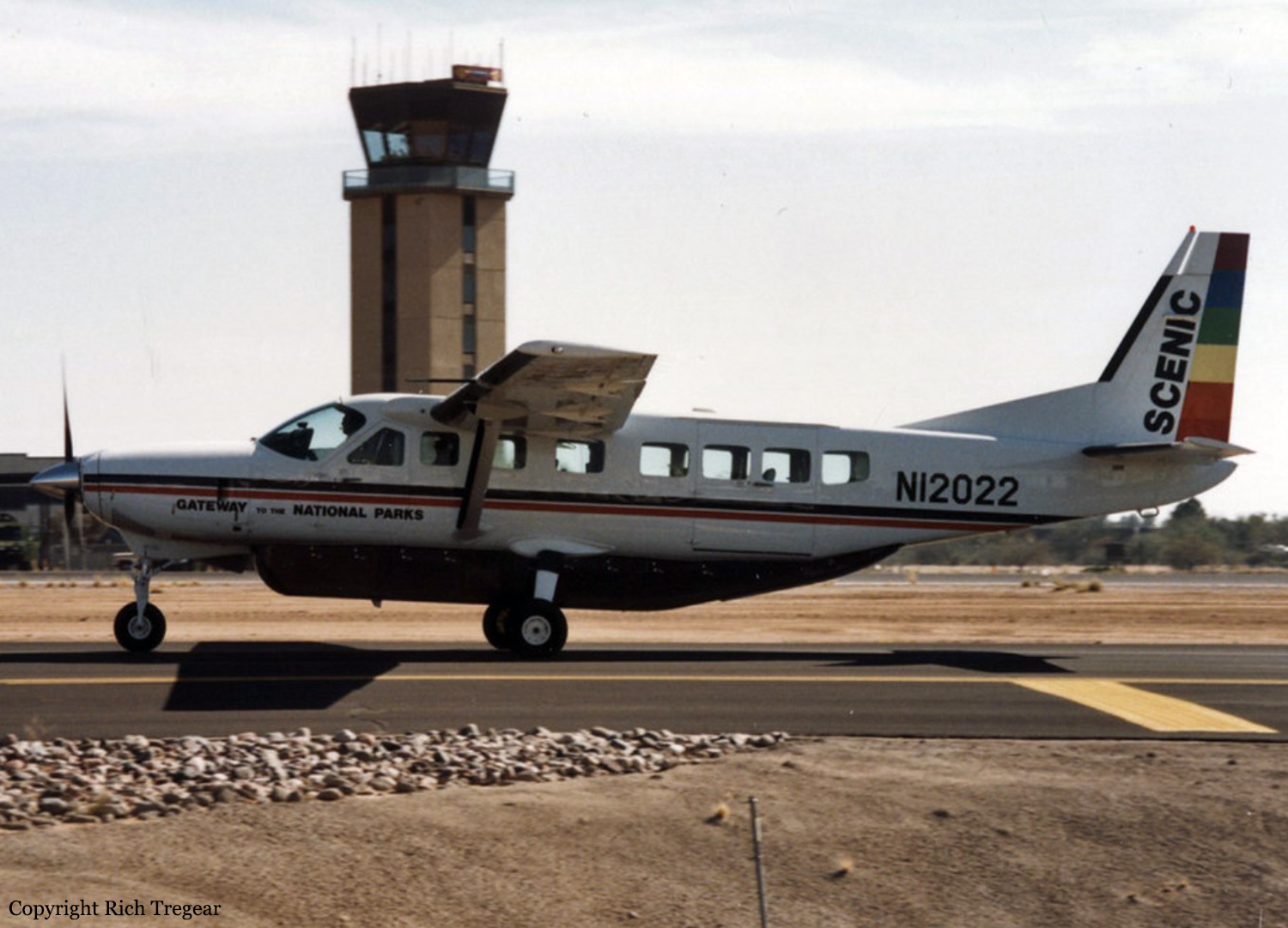
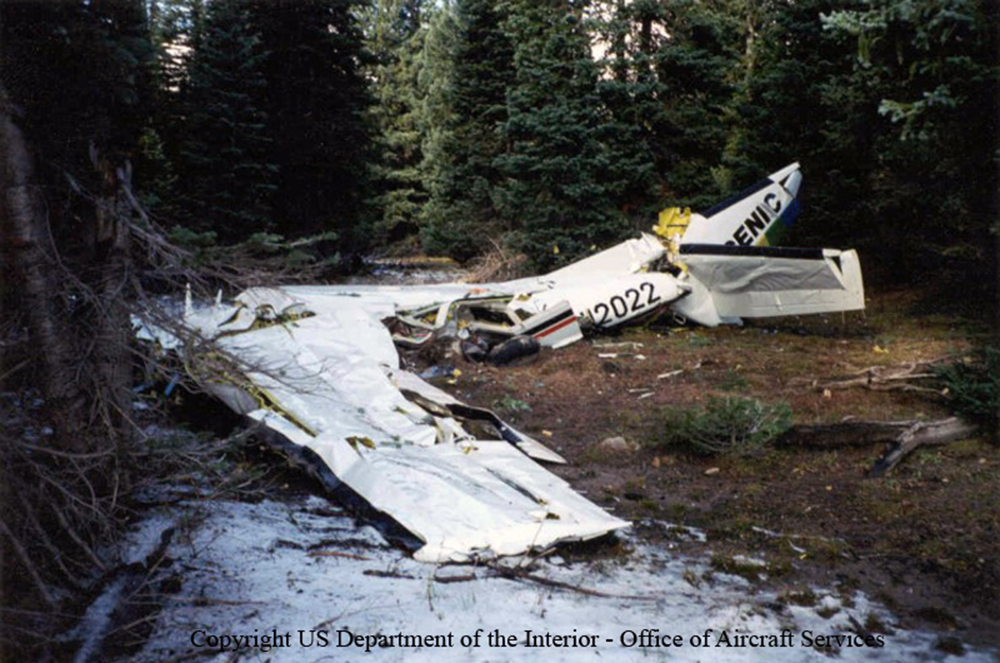
Crash of a Cessna 208B Grand Caravan in the Uncompahgre National Forest: 9 killed
Date & Time:
Oct 8, 1997 at 0723 LT
Operator:
Registration:
N12022
Survivors:
No
Schedule:
Montrose - Page
MSN:
208B-0432
YOM:
1995
Crew on board:
1
Crew fatalities:
Pax on board:
8
Pax fatalities:
Other fatalities:
Total fatalities:
9
Captain / Total hours on type:
1546.00
Aircraft flight hours:
2599
Aircraft flight cycles:
3680
Circumstances:
The airplane departed under visual flight rules (VFR) for a flight over mountainous terrain. It was tracked by radar from the departure area to the accident site. While climbing at the normal rate of climb to 15,400 feet, the airplane abruptly disappeared from radar. The wreckage was located among pine trees and exhibited evidence of a steep flight path angle and damage consistent with a stall/spin event. Investigation revealed no indication of airframe or flight control anomalies, and the powerplant and propeller damage was consistent with engine operation at moderate to high power. Evidence indicated that the airplane was free of airframe ice at impact. Postaccident calculations indicate that the airplane was near the maximum certificated gross weight and aft center of gravity limit. The pilot did not maintain instrument flying currency and reportedly avoided instrument meteorological conditions (IMC). Evidence indicated that the pilot did not use oxygen, as required (when flying above 12,000 feet). Ground observations and satellite and Doppler radar imagery indicated widespread cloudiness over the mountains west of Montrose on the day of the accident. Satellite data showed variable cloud tops higher than the airplane's flight altitude in the vicinity of the accident. The radar plot of the aircraft during the climb above 10,000 feet indicated course changes from the southwest to the northwest, back to the southwest and then a sharp turn to the right just prior to the rapid descent.
Probable cause:
the pilot's failure to maintain sufficient airspeed for undetermined reasons while maneuvering the airplane near the maximum gross weight and aft cg in or near instrument meteorological conditions, resulting in the loss of control and entry into a stall/spin. Factors contributing to the accident were the pilot's improper in-flight planning and decision-making and his failure to use proper stall/spin recovery techniques.
Final Report:
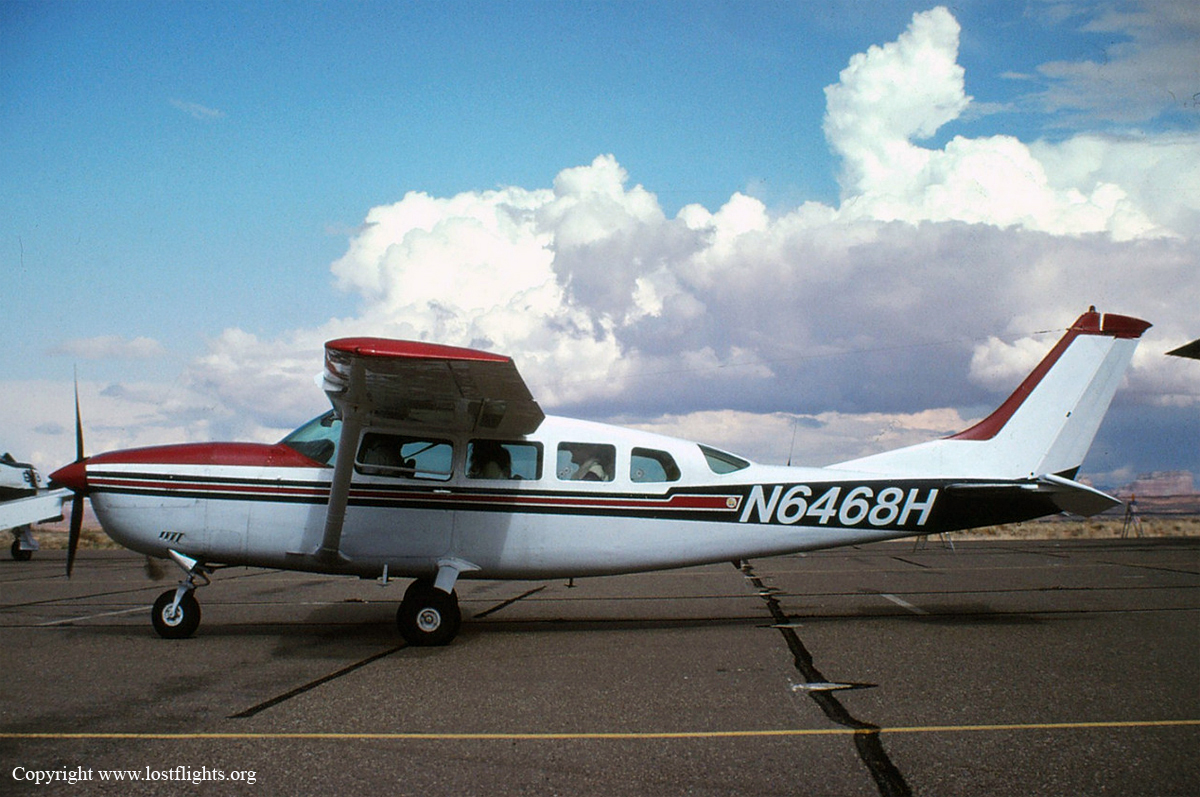
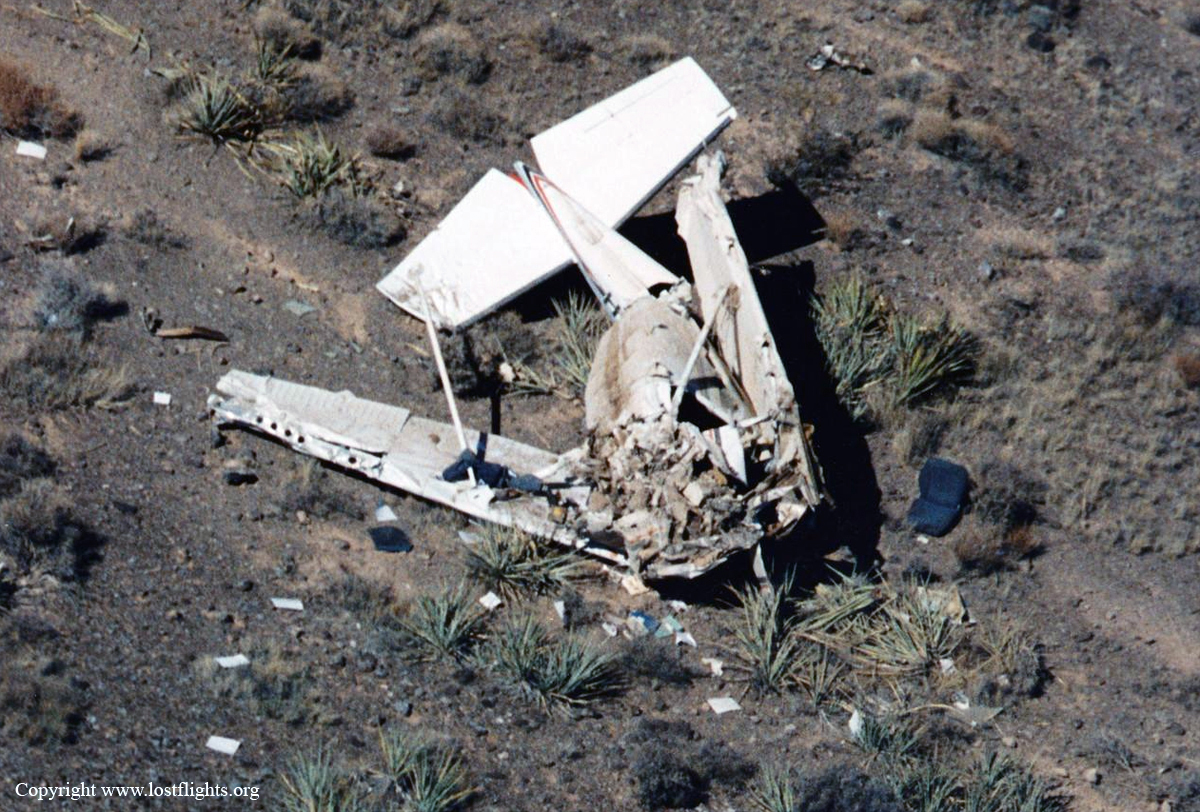
Crash of a Cessna T207A Skywagon near Littlefield: 1 killed
Date & Time:
Sep 20, 1996 at 1939 LT
Operator:
Registration:
N6468H
Survivors:
No
Schedule:
Grand Canyon - Saint George
MSN:
207-0532
YOM:
1979
Crew on board:
1
Crew fatalities:
Pax on board:
0
Pax fatalities:
Other fatalities:
Total fatalities:
1
Captain / Total hours on type:
7.00
Aircraft flight hours:
10009
Circumstances:
The airplane was being positioned to another airport at night. The flight was over mountainous terrain. The airplane collided with the top of a 4,600-foot bluff. The pilot had a history of transient global amnesia. Examination of the accident site revealed a 567-foot long wreckage path, oriented along the direct course line from the departure point to the destination. Damage to the engine and propeller indicated that the engine was developing power at impact.
Probable cause:
The pilot's failure to maintain clearance with terrain during descent for undetermined reasons. Contributing factors were the dark night and mountainous terrain.
Final Report:
Crash of a Cessna 404 Titan II in Grand Canyon: 8 killed
Date & Time:
Jul 21, 1980 at 1702 LT
Operator:
Registration:
N2683S
Survivors:
No
Schedule:
Grand Canyon - Phoenix
MSN:
404-0606
YOM:
1979
Flight number:
YR306
Crew on board:
1
Crew fatalities:
Pax on board:
7
Pax fatalities:
Other fatalities:
Total fatalities:
8
Captain / Total hours on type:
323.00
Aircraft flight hours:
718
Circumstances:
At 1702, Scenic Airlines flight 306, a Cessna 404, VFR commuter flight to Phoenix, crashed approximately three miles south of runway 21 after takeoff from the Grand Canyon National Park Airport. The aircraft cut a swath through a densely wooded area on a magnetic heading of 165° and came to rest upright about 230 feet from the initial point of impact with trees. Impact forces and an intense fire destroyed the aircraft. The pilot and six of the seven passengers were killed in the accident. One passenger survived the accident but died five days later as a result of thermal injuries.
Probable cause:
The probable cause of the accident was a substantial loss of power from the left engine at a critical point in the takeoff an the failure of the pilot to establish a minimum drag configuration which degraded the marginal single-engine climb performance of the aircraft. The loss of power resulted from the seizure of the turbocharger following a progressive failure of the turbine wheel blades initiated by foreign object ingestion which had occurred previous to this flight and was not detected during maintenance on the engine 4 days before the accident.
Final Report:
Crash of a Cessna 402A in Elko: 2 killed
Date & Time:
Nov 30, 1975 at 0909 LT
Operator:
Registration:
N52SA
Survivors:
No
Schedule:
Ely - Alko
MSN:
402A-0078
YOM:
1969
Crew on board:
1
Crew fatalities:
Pax on board:
1
Pax fatalities:
Other fatalities:
Total fatalities:
2
Captain / Total hours on type:
2100.00
Circumstances:
On approach to Elko, the pilot encountered poor weather conditions with low ceiling, snow falls, turbulences associated with clouds and thunderstorm. He descended below the MDA until the twin engine airplane struck a hill located few miles from the airport. The wreckage was found three days later on December 2. Both occupants have been killed.
Probable cause:
Controlled flight into terrain following improper IFR operation. The following contributing factors were reported:
- Failed to follow approved procedures,
- Low ceiling,
- Snow,
- Turbulences associated with clouds and thunderstorm
- High obstructions,
- Blowing snow,
- The pilot did not use available instrument approach chart for reference.
- Failed to follow approved procedures,
- Low ceiling,
- Snow,
- Turbulences associated with clouds and thunderstorm
- High obstructions,
- Blowing snow,
- The pilot did not use available instrument approach chart for reference.
Final Report:
Crash of a Cessna 402 near Peach Springs: 10 killed
Date & Time:
Oct 16, 1971 at 0945 LT
Operator:
Registration:
N3250Q
Survivors:
No
Schedule:
Las Vegas - Grand Canyon
MSN:
402-0050
YOM:
1967
Crew on board:
1
Crew fatalities:
Pax on board:
9
Pax fatalities:
Other fatalities:
Total fatalities:
10
Captain / Total hours on type:
415.00
Circumstances:
The twin engine airplane departed Las Vegas Airport on a charter flight to Grand Canyon, carrying nine passengers, tourists from the US, France and Germany. En route, the pilot encountered poor weather conditions and elected to turning around when he lost control of the airplane that dove into the ground and crashed about 39 miles north of Peach Springs. The wreckage was found a day later in the Shivwits Plateau near Parashant Canyon. The aircraft disintegrated on impact and all 10 occupants have been killed.
Crew:
Wayne Leeth.
Passengers:
James Allen Jr,
Florence Allen,
Mr. R. Lynch,
Mrs. R. Lynch,
Mr. P. Dosmond, France,
Mrs. P. Dosmond, France,
Paul Haack, West Germany,
Renate Haack, West Germany,
Walter Pilgram, West Germany.
Crew:
Wayne Leeth.
Passengers:
James Allen Jr,
Florence Allen,
Mr. R. Lynch,
Mrs. R. Lynch,
Mr. P. Dosmond, France,
Mrs. P. Dosmond, France,
Paul Haack, West Germany,
Renate Haack, West Germany,
Walter Pilgram, West Germany.
Probable cause:
The pilot continued VFR flight into adverse weather conditions. The following factors were reported:
- Low ceiling, rain and snow.
- Low ceiling, rain and snow.
Final Report: