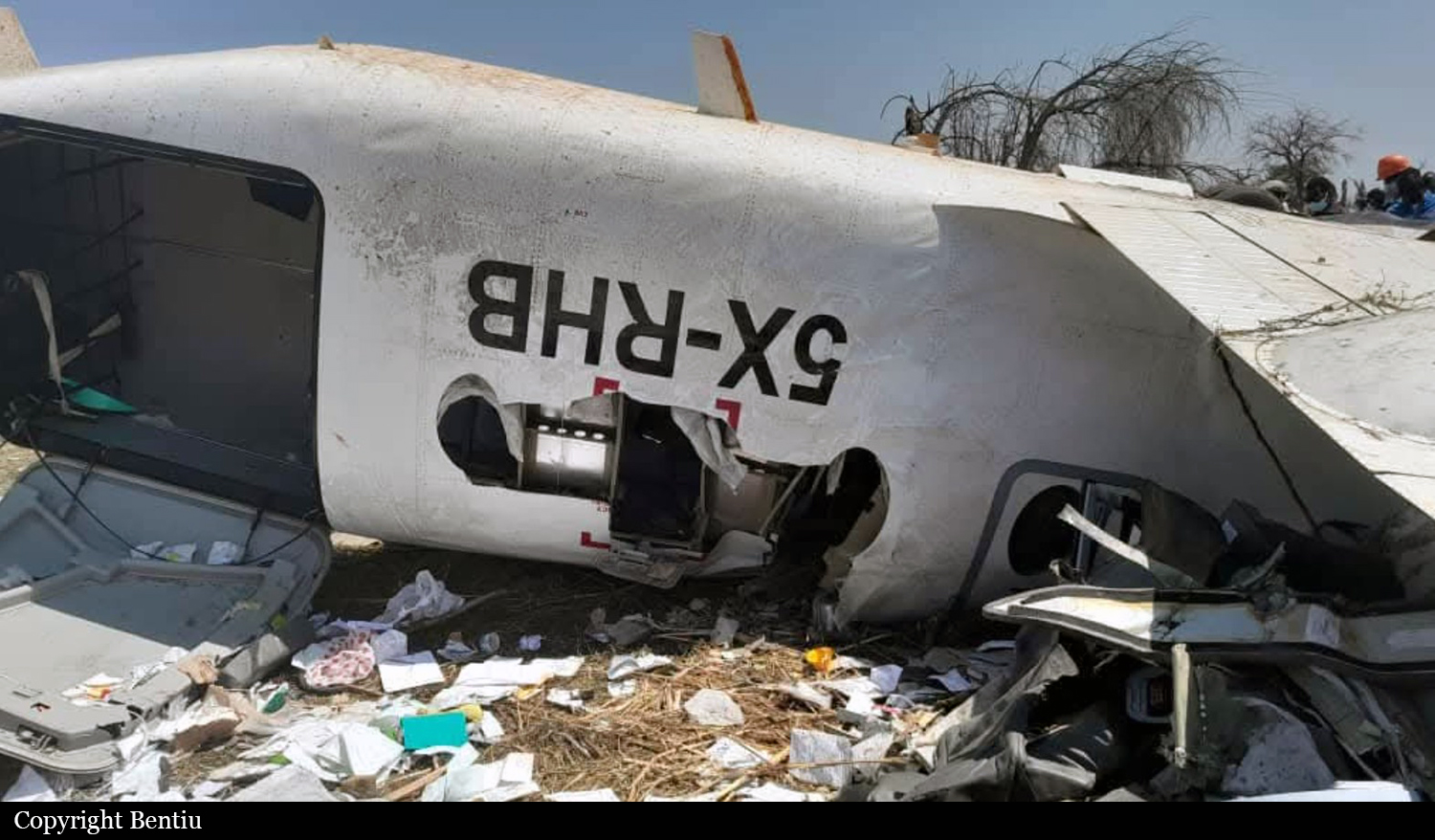
Crash of a Beechcraft 1900D in GPOC Unity: 20 killed

Date & Time: Jan 29, 2025 at 1030 LT
Type of aircraft:
Operator:
Registration:
5X-RHB
Flight Phase:
Survivors:
Yes
Schedule:
GPOC Unity - Juba
MSN:
UE-429
YOM:
2002
Country:
Region:
Crew on board:
2
Crew fatalities:
Pax on board:
19
Pax fatalities:
Other fatalities:
Total fatalities:
20
Circumstances:
The airplane was chartered by the Greater Pioneer Operating Company (GPOC) to carry oil workers from the GPOC Unity Airfield to Juba. Shortly after takeoff, the airplane went out of control and crashed 500 metres from the airfield, coming to rest upside down. One passenger survived while 20 other occupants were killed.

Crash of a Cessna 402C near Urrao: 10 killed

Date & Time: Jan 8, 2025 at 1732 LT
Type of aircraft:
Operator:
Registration:
HK-2522
Flight Phase:
Survivors:
No
Site:
Schedule:
Juradó – Medellín
MSN:
402C-0322
YOM:
1980
Location:
Country:
Crew on board:
2
Crew fatalities:
Pax on board:
8
Pax fatalities:
Other fatalities:
Total fatalities:
10
Captain / Total flying hours:
3689
Captain / Total hours on type:
2900.00
Copilot / Total flying hours:
754
Copilot / Total hours on type:
485
Aircraft flight hours:
7582
Aircraft flight cycles:
14387
Circumstances:
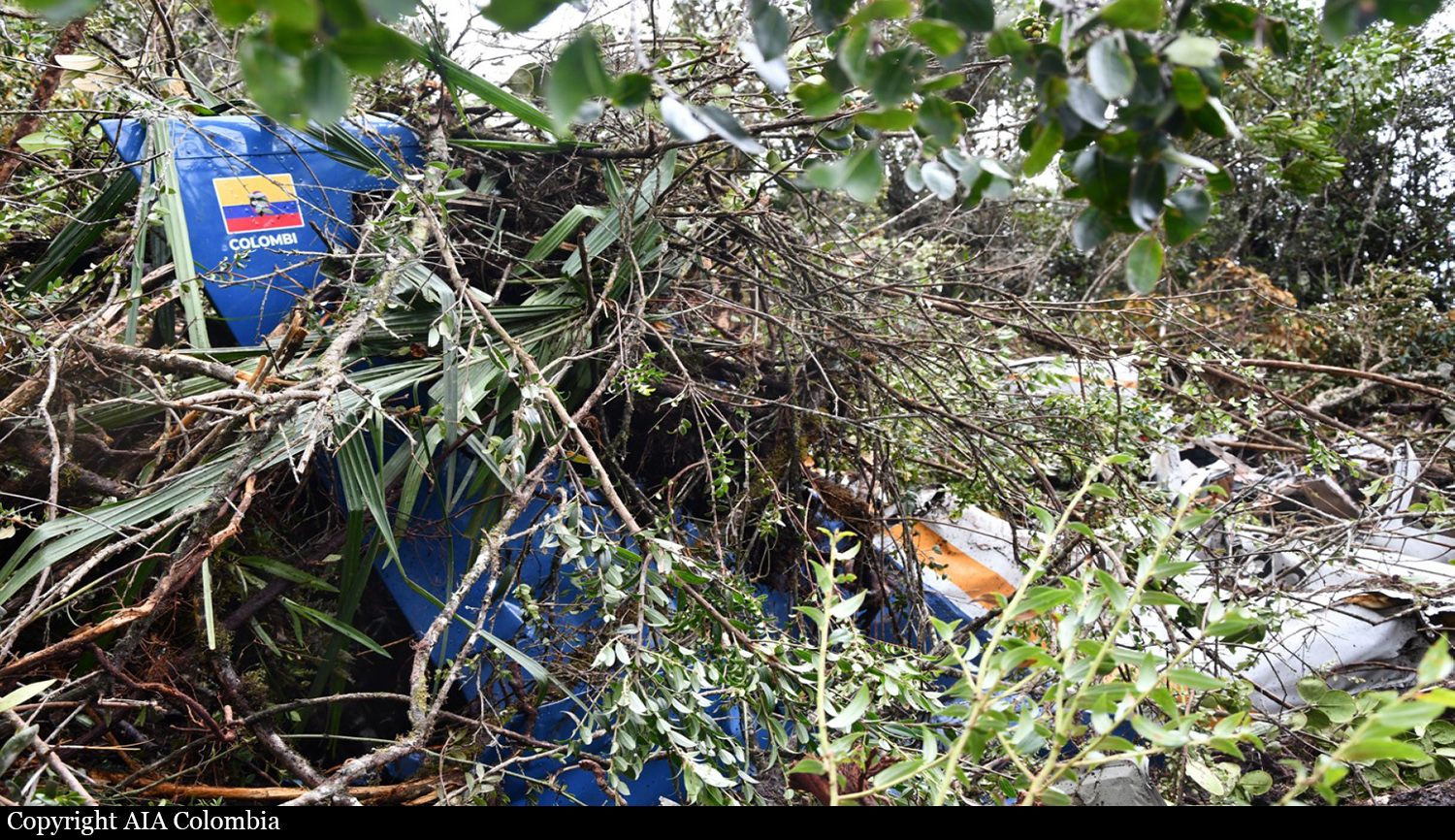
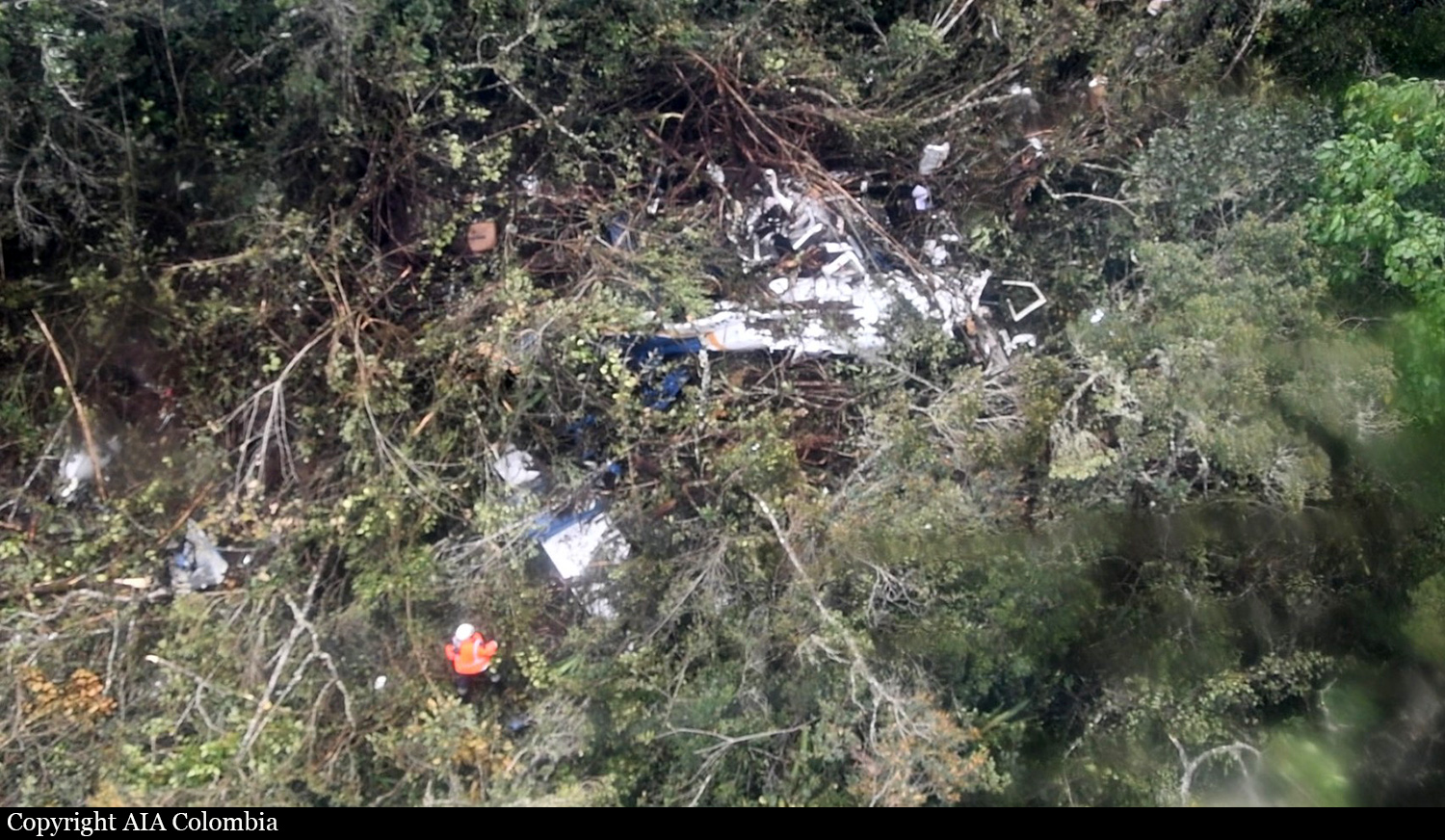
The twin engine airplane departed Juradó Airport at 1653LT on a VFR charter flight to Medellín, carrying eight passengers and two pilots. En route, weather conditions worsened and necessitated an IFR flight. While cruising at an altitude of 10,675 feet at a speed of 176 knots and heading 107°, the airplane contacted trees and crashed in a dense wooded area located on the slope of Mt Aná-La Virgen, 15 km east of Urrao. The wreckage was found the following day. The airplane was destroyed by impact forces and all 10 occupants were killed.
Probable cause:
Controlled flight into terrain (CFIT) after the airplane entered adverse weather conditions while cruising under visual flight rules.
The following contributing factors were identified:
- Deficiencies in the effective control and monitoring of flights by the operations; adequate control or monitoring of the flight by the operator was not evident.
- Deficiencies in dispatch procedures; insufficient provision of preflight meteorological information.
- Deficiencies in the inspection, monitoring, and oversight procedures by the Aeronautical Authority.
Final Report:

Crash of a Cessna 208 Caravan I off Rottnest Island: 3 killed

Date & Time: Jan 7, 2025 at 1600 LT
Type of aircraft:
Operator:
Registration:
VH-WTY
Flight Phase:
Survivors:
Yes
Schedule:
Rottnest Island - Perth
MSN:
208-00586
YOM:
2016
Country:
Region:
Crew on board:
1
Crew fatalities:
Pax on board:
6
Pax fatalities:
Other fatalities:
Total fatalities:
3
Circumstances:
After takeoff from the Thomson Bay in Rottnest Island, the single engine seaplane banked left, causing the left wing tip to struck the water surface. The airplane water looped and plunged into the water, floating in a vertical attitude. Three passengers were seriously injured while one was unhurt. Two others (one Swiss and one Danish citizen) as well as the pilot were killed.

Crash of a Britten-Norman BN-2B-26 Islander near Sapmanga: 5 killed

Date & Time: Dec 22, 2024 at 1028 LT
Type of aircraft:
Operator:
Registration:
P2-SAM
Flight Phase:
Survivors:
No
Site:
Schedule:
Wasu - Lae
MSN:
2197
YOM:
1986
Location:
Region:
Crew on board:
1
Crew fatalities:
Pax on board:
4
Pax fatalities:
Other fatalities:
Total fatalities:
5
Captain / Total flying hours:
13694
Captain / Total hours on type:
3600.00
Aircraft flight hours:
19107
Aircraft flight cycles:
38276
Circumstances:
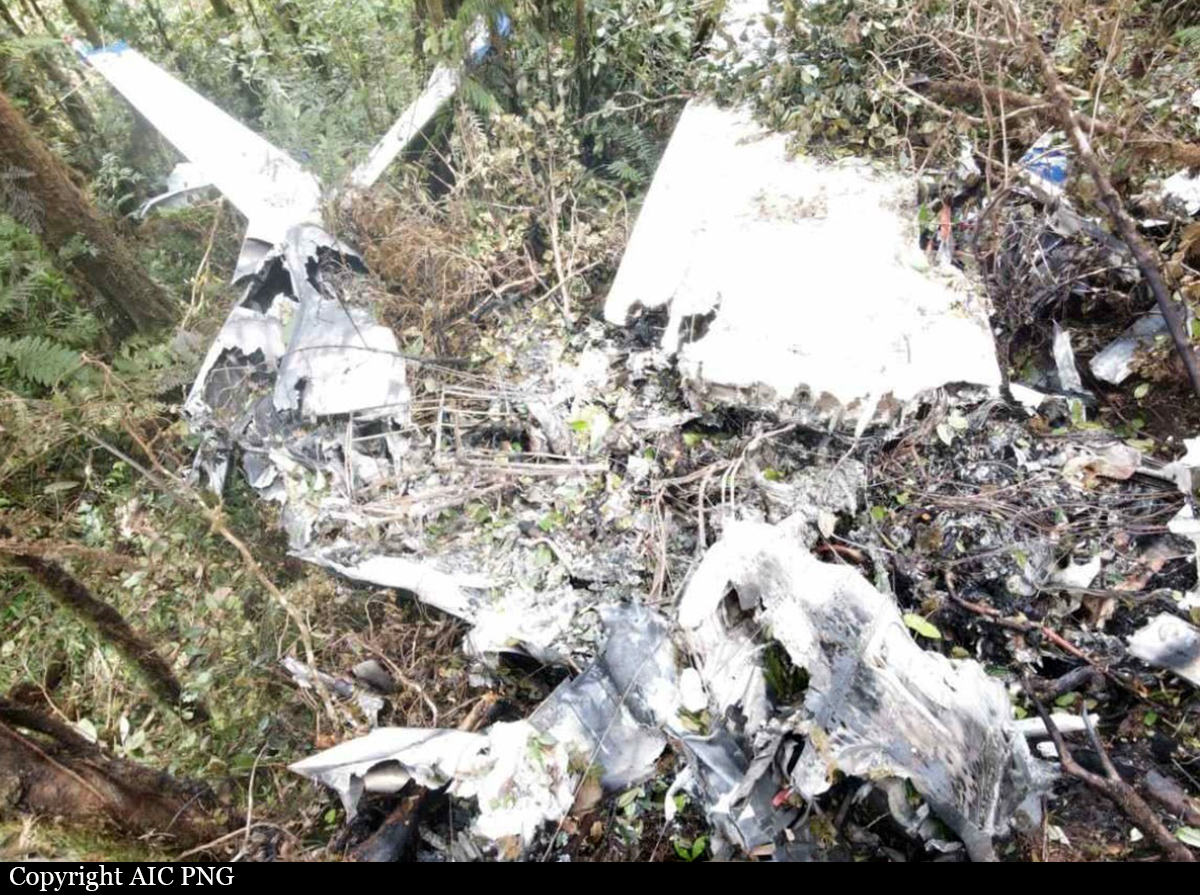
The single engine airplane departed Wasu Airfield at 1012LT on a charter flight to Lae-Nadzab Tomodachi Airport, with an ETA at 1047LT. On board were five people, four passengers and one pilot. The passengers included a member of the Royal Papua New Guinea Constabulary (RPNGC) and an employee from the Housing Ministry. Few minutes after takeoff from Wasu, while cruising at an altitude of 8,400 feet in marginal weather conditions, the airplane impacted trees and crashed in a wooded and hilly terrain near Sapmanga, southwest of Wasu. The airplane was destroyed and all five occupants were killed. The total airframe hours and landings mentioned above stopped to December 3, 2024.
Probable cause:
In an area of rising terrain, the pilot either flew the track in cloud or in markedly reduced visibility, with no reference to terrain, towards steeply rising terrain at an indicated airspeed that was 35 kts above the manufacturer’s (flight tested) promulgated best angle of climb speed to avoid obstacles. There was no evidence of a manoeuvre to avoid the terrain. Furthermore, investigation determined that the aircraft was flown in cloud or in reduced visibility at a cruise climb speed and struck vegetation and the face of a steep ridge resulting in controlled flight into terrain (CFIT). The aircraft was fitted with a Global Navigation System receiver capable of providing visual terrain awareness warnings. It was not fitted with a terrain aural warning interface. Incorporation of an aural warning in conjunction with the visual terrain warning, may have prevented the accident.
Final Report:

Crash of an Antonov AN-3T in Olyokminsk: 1 killed

Date & Time: Oct 13, 2024 at 0747 LT
Type of aircraft:
Registration:
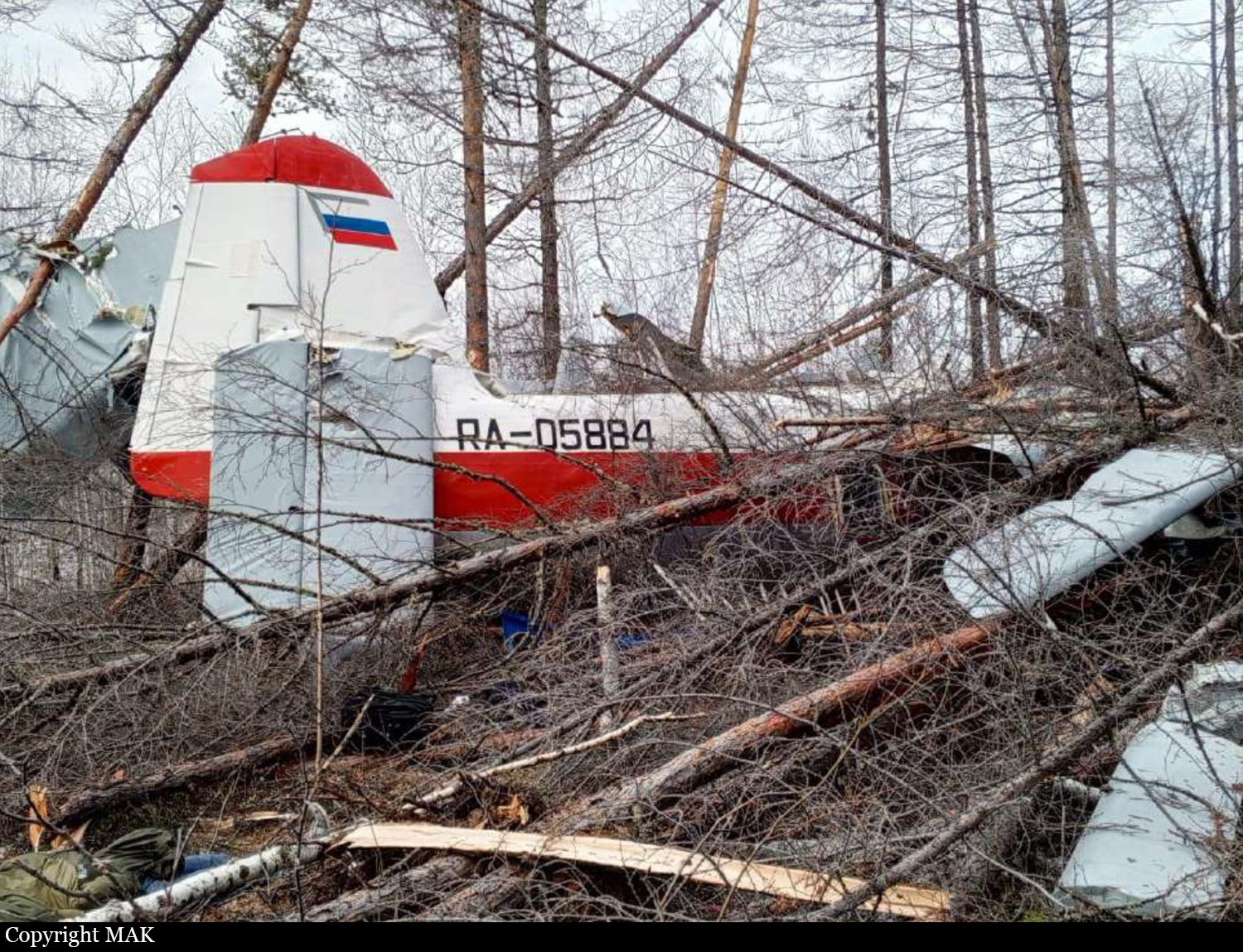
RA-05884
Flight Phase:
Survivors:
Yes
Schedule:
Olyokminsk – Zheleznogorsk-Ilimsky – Shushenskoye
MSN:
1G109-14-2004
YOM:
2000
Flight number:
1
Country:
Region:
Crew on board:
2
Crew fatalities:
Pax on board:
3
Pax fatalities:
Other fatalities:
Total fatalities:
1
Captain / Total flying hours:
4037
Captain / Total hours on type:
1000.00
Copilot / Total flying hours:
8814
Copilot / Total hours on type:
3128
Aircraft flight hours:
1537
Circumstances:
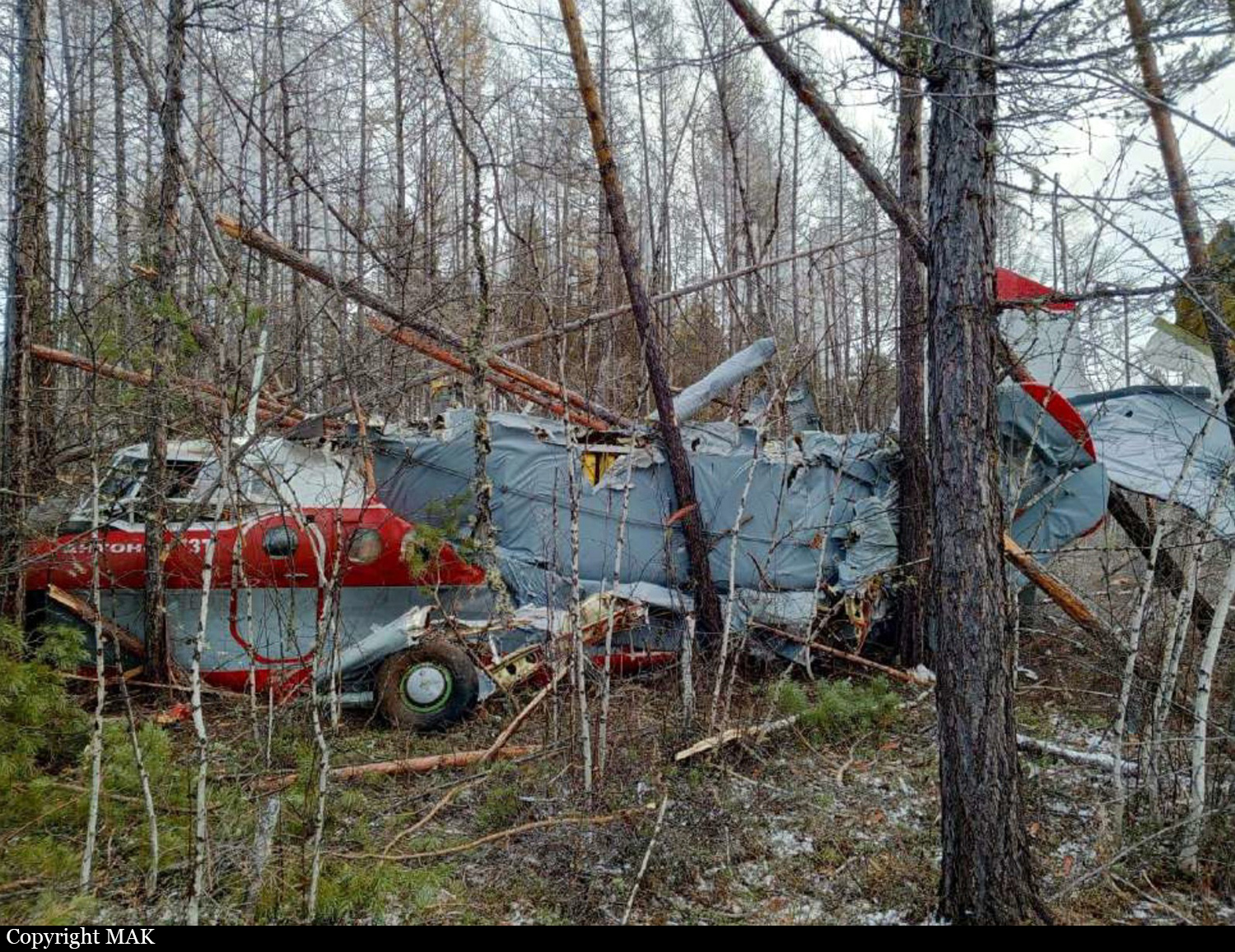
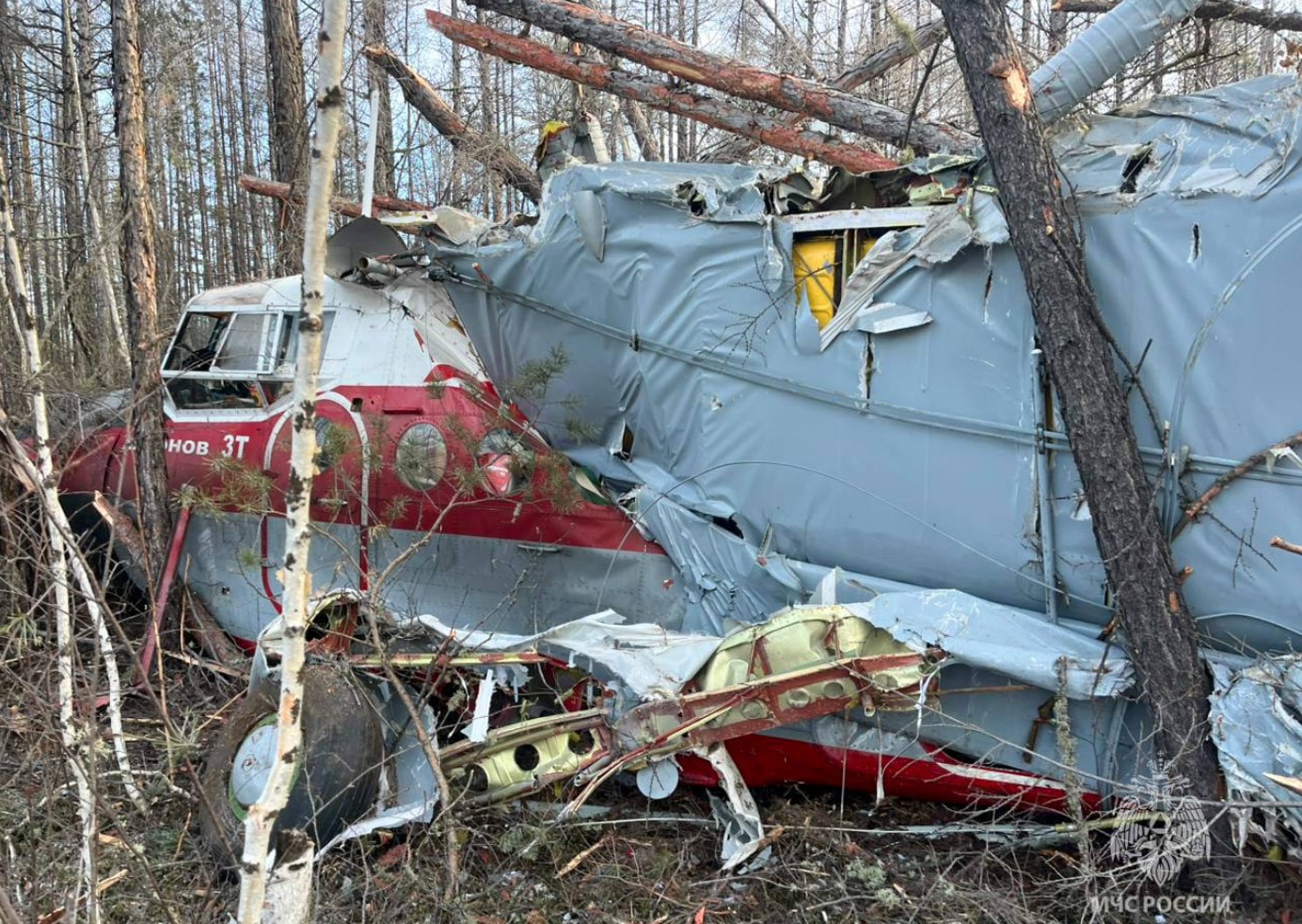
The single engine airplane was engaged in an on-demand charter flight from Olyokminsk to Shushenskoye with an intermediate stop in Zheleznogorsk-Ilimsky. On board were three employees of a gold mine company and two pilots. After takeoff from Olyokminsk Airport, while climbing to a height of 70-100 metres, the crew noticed that the exhaust gas temperature was abnormally high (570°C). The copilot reduced the engine power but the temperature did not decrease. Suddenly, the engine lost power and as the speed started to decrease, the airplane started to descend so the pilot attempted an emergency landing when the airplane crashed in a dense wooded area located 600 metres east from the runway 26 threshold. A passenger was killed and four other occupants were injured. The airplane was destroyed.
Probable cause:
Loss of engine power in flight caused by the failure of the exhaust gas temperature regulator (RT12-7 IIc). This led to a subsequent loss of airspeed, a descent, and the aircraft’s collision with trees and the ground.
The accident resulted from a combination of the following factors:
- Violation of the regulator repair procedures.
- Repairs of the regulator were carried out by personnel who did not have specific training.
- The captain failed to check the proper functioning of the temperature regulator after the engine was started, as required by the Aircraft Flight Manual (AFM).
Final Report:

Crash of a Cessna 207 Skywagon in Saint Mary's: 4 killed

Date & Time: Sep 15, 2024 at 2200 LT
Operator:
Registration:
N90193
Survivors:
No
Schedule:
Bethel - Saint Mary's
MSN:
207-0007
YOM:
1969
Crew on board:
1
Crew fatalities:
Pax on board:
3
Pax fatalities:
Other fatalities:
Total fatalities:
4
Circumstances:
The approach to Saint Mary's Airport was initiated in marginal weather conditions. On short final, the single engine airplane crashed about 800 metres short of runway and was destroyed. All four occupants were killed. The airplane was completing a taxi flight from Bethel.

Crash of a Cessna 208B Grand Caravan in Wat Khao Din: 9 killed

Date & Time: Aug 22, 2024 at 1457 LT
Type of aircraft:
Operator:
Registration:
HS-SKR
Flight Phase:
Survivors:
No
Schedule:
Bangkok - Ko Mai Si
MSN:
208B-1241
YOM:
2007
Flight number:
TFT209
Country:
Region:
Crew on board:
2
Crew fatalities:
Pax on board:
7
Pax fatalities:
Other fatalities:
Total fatalities:
9
Circumstances:
Few minutes after its takeoff from Bangkok-Suvarnabhumi International Airport, the single engine airplane went out of control and crashed for unknown reason in a wooded area located in Wat Khao Din, some 30 km southeast of Suvarnabhumi Airport. The airplane disintegrated on impact and all 9 occupants were killed. The airplane was on a service to the Island of Ko Mai Si.

Crash of a Piper PA-31 Navajo C near Las Horquetas: 7 killed

Date & Time: Aug 9, 2024 at 1000 LT
Type of aircraft:
Operator:
Registration:
CC-CRN
Flight Phase:
Survivors:
No
Site:
Schedule:
Coyhaique - Chile Chico
MSN:
31-7712045
YOM:
1977
Country:
Crew on board:
1
Crew fatalities:
Pax on board:
6
Pax fatalities:
Other fatalities:
Total fatalities:
7
Circumstances:
The twin engine airplane was on a charter flight from Coyhaique to Chile Chico, carrying six passengers and one pilot. Halfway into the flight, the airplane impacted the slope of a mountain located northwest of Las Horquetas, Aysén Region. The wreckage was found in the afternoon on the slope of Cerro Aislado. All seven occupants were killed.

Crash of a Britten-Norman BN-2A Islander in Port Vila: 1 killed

Date & Time: Jul 15, 2024 at 1553 LT
Type of aircraft:
Operator:
Registration:
YJ-AT2
Survivors:
Yes
Schedule:
Aneityum – Port Vila
MSN:
188
YOM:
1970
Country:
Region:
Crew on board:
1
Crew fatalities:
Pax on board:
4
Pax fatalities:
Other fatalities:
Total fatalities:
1
Captain / Total flying hours:
4600
Captain / Total hours on type:
2000.00
Aircraft flight hours:
22027
Circumstances:
The airplane departed Port Vila International Airport at 1229LT, carrying 6 passengers to Tanna, 217 km to the south-south-east. The pilot then continued a further 106 km south-south-east to Mystery Island, Aneityum, arriving at 1402. After picking up 4 passengers, the aircraft departed Aneityum at 1412, destined for Port Vila. About 130 km from Port Vila, the pilot observed the fuel quantity gauges indicating significantly less fuel remaining than expected. The pilot elected to continue over water to Port Vila, and about 24 km from the runway, the right engine surged and subsequently stopped producing power. About 3 minutes later, the pilot advised air traffic control that they were 15 km from the airport at 4,000 ft, and the controller responded with a clearance to land on runway 29. No engine noise was detected in that transmission. Four minutes later, the pilot declared a MAYDAY and advised the controller that they were 9 km from the runway, at 1,500 ft and attempting to land at the airport. During that transmission, one engine surged briefly and then stopped. The pilot then radioed that they were losing altitude and would be landing in a farm. The aircraft collided with 2 coconut trees before impacting the ground. One passenger was fatally injured, 2 passengers sustained serious injuries, the pilot and one passenger sustained minor injuries, and the aircraft was destroyed.
Probable cause:
Double engine failure in flight caused by a fuel starvation.
The following findings were identified:
• The pilot did not ensure there was sufficient fuel on board for the planned flight from Aneityum to Port Vila.
• When the pilot identified that there was less fuel on board and higher fuel flow than planned, they elected to continue to Port Vila rather than divert to other suitable aerodromes. Having committed to continue, the pilot then did not lean the mixtures or attempt to transfer fuel from auxiliary tanks (unaware the right auxiliary tank contained usable fuel) to increase endurance. As a result, the engines stopped due to fuel starvation, with usable fuel remaining in one auxiliary tank.
• The pilot did not feather the propellers when the engines stopped and did not maintain optimal airspeed in the time between the first and second engines stopping. Thes actions reduced the pilot’s options and resulted in a forced landing into a coconut plantation.
• The chief pilot misunderstood the chief engineer's verbal instructions regarding engine run-in requirements as a need to operate the engine with the mixture at full rich for at least 25 hours. The chief pilot then conveyed this to other company pilots without providing amended fuel flow figures for pilots' use in flight planning.
• High operational tempo in the months leading up to the accident, and the absence of flight crew workload management, increased the risk of fatigue affecting pilot performance. (Safety issue)
• The forced landing was conducted with a tailwind and the pilot did not extend flaps to allow a slower airspeed immediately prior to the collision to reduce impact forces, which increased the injury risk.
• The passenger seats were fitted with lap belts only and no upper torso restraints, increasing the risk of injury during a ground collision.
Final Report:

Crash of a Beechcraft 65-B80 Queen Air in Woleai

Date & Time: Jul 12, 2024 at 1110 LT
Type of aircraft:
Operator:
Registration:
N44MA
Flight Phase:
Survivors:
Yes
Schedule:
Woleai – Colonia
MSN:
LD-412
YOM:
1969
Region:
Crew on board:
1
Crew fatalities:
Pax on board:
9
Pax fatalities:
Other fatalities:
Total fatalities:
0
Circumstances:
The pilot reported that, during a short field takeoff on a runway that was flooded by heavy rain, the airplane’s right landing gear wheel went into a deep puddle of water and the airplane veered right. The pilot attempted to lift the airplane into ground effect to regain directional control, but the airplane was traveling too slow. The airplane exited the right side of the runway into tall grass and vegetation. The airplane sustained substantial damage to the wing spar and fuselage. The pilot reported that there were no preaccident mechanical failures or malfunctions with the airplane that would have precluded normal operation. All 10 occupants escaped uninjured and the airplane was damaged beyond repair.


Probable cause:
The pilot's selection of an unsuitable takeoff area, resulting in a loss of directional control. Contributing to the accident was a flooded runway.
Final Report: