Crash of a Boeing 737-3Y0 in Kinshasa

Date & Time: May 5, 2024 at 1900 LT
Type of aircraft:
Operator:
Registration:
9S-AKK
Flight Type:
Survivors:
Yes
MSN:
24916/2066
YOM:
1991
Region:
Crew on board:
2
Crew fatalities:
Pax on board:
0
Pax fatalities:
Other fatalities:
Total fatalities:
0
Circumstances:
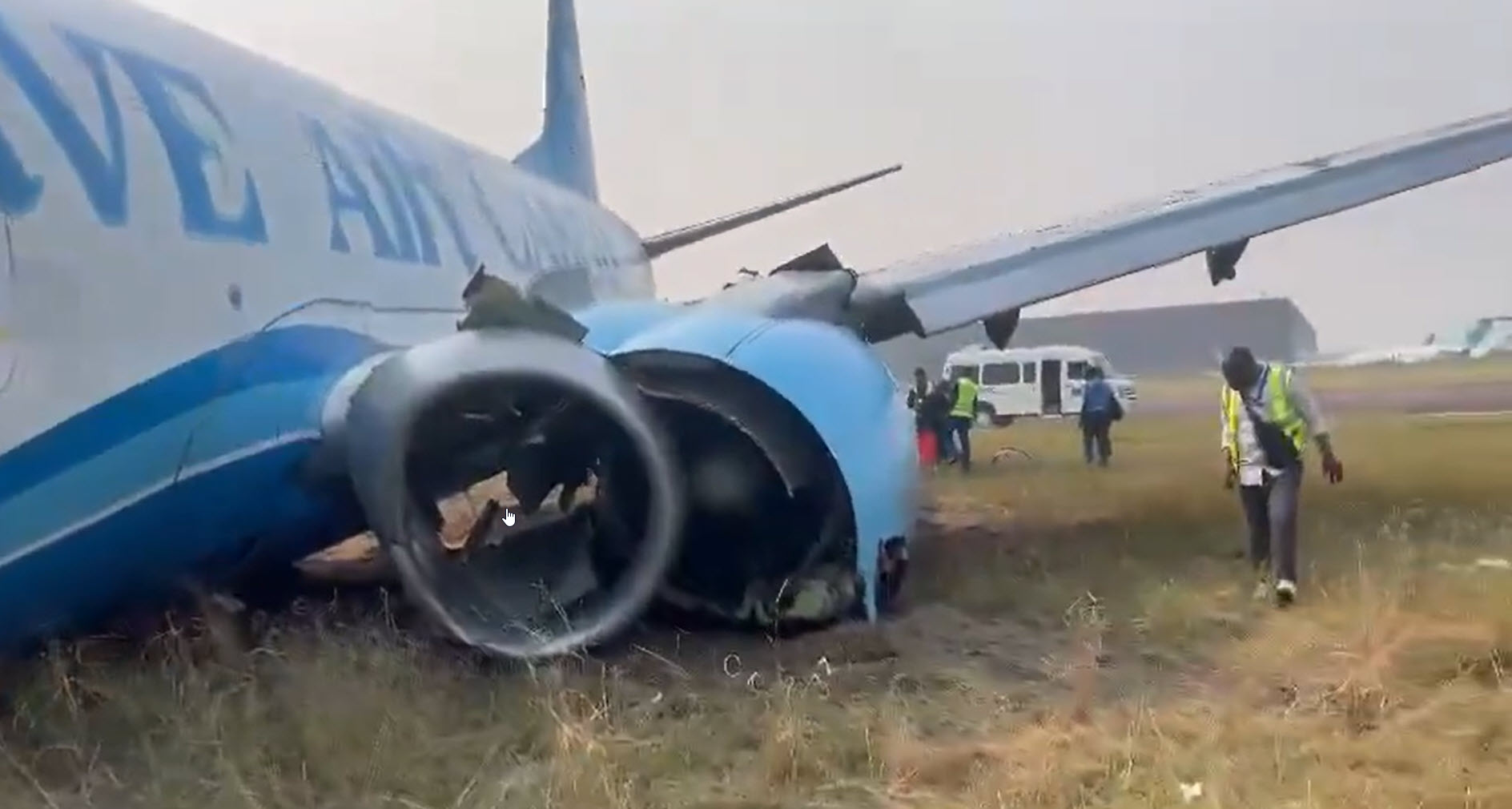
On approach to Kinshasa-N'Djili Airport, at an altitude of 11,000 feet, the crew encountered technical problems with the left engine that was shut down. The crew continued the approach and was cleared to land on runway 24. After touchdown, the crew started the braking procedure and activated the right reverser when the airplane veered off runway to the right and came into soft ground. The nose gear collapsed and the airplane came to rest. There were no injuries among the occupants.

Crash of a Douglas C-54D-DC Skymaster in Fairbanks: 2 killed

Date & Time: Apr 23, 2024 at 1003 LT
Type of aircraft:
Operator:
Registration:
N3054V
Flight Phase:
Flight Type:
Survivors:
No
Schedule:
Fairbanks – Kobuk
MSN:
10547
YOM:
1945
Crew on board:
2
Crew fatalities:
Pax on board:
0
Pax fatalities:
Other fatalities:
Total fatalities:
2
Captain / Total flying hours:
35547
Copilot / Total flying hours:
10769
Aircraft flight hours:
24726
Circumstances:
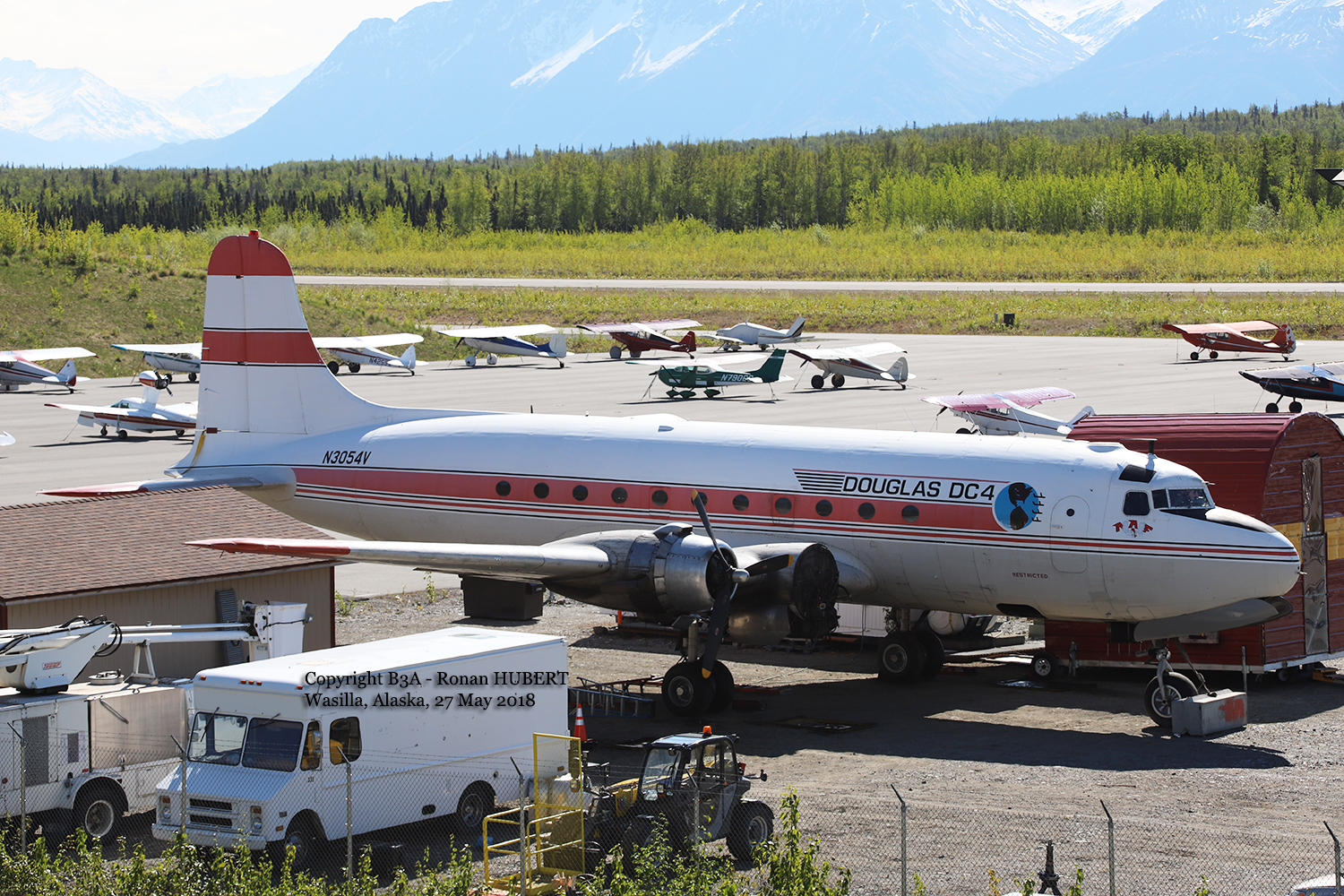
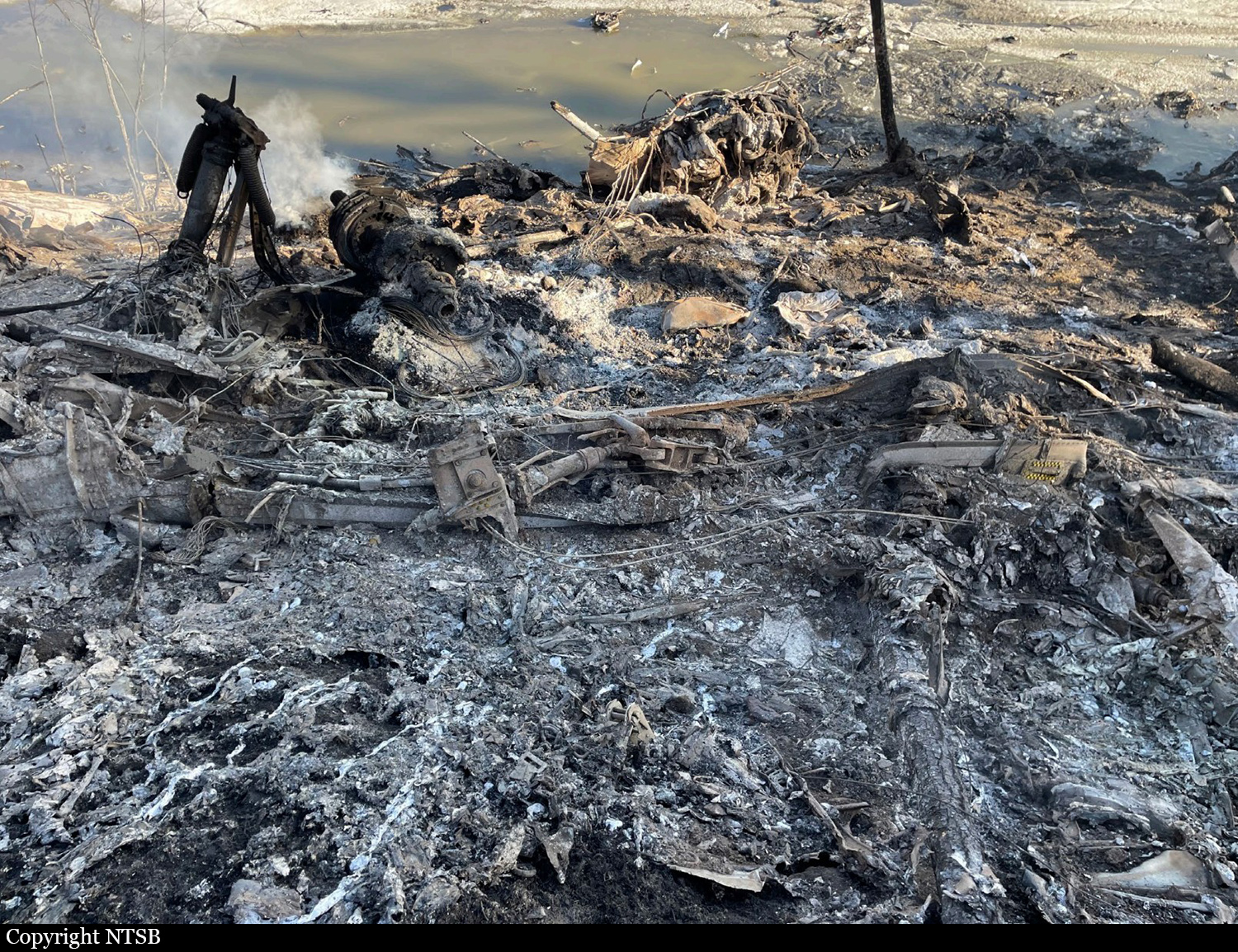
The purpose of the flight was to transport 3,400 gallons of unleaded fuel and two 100-gallon propane tanks from Fairbanks International Airport (FAI), to Kobuk Airport (OBU), Kobuk, Alaska. The airplane departed about 0955. An eyewitness reported seeing the airplane flying to the west and stated that the far left engine was not running. They also noticed a small, white plume of smoke coming from that engine. The airplane started to turn to the south, and at that point he noticed that the engine was on fire. About three minutes after departure, the pilot reported to air traffic control that there was a fire onboard and began a left turn back to the airport. Video surveillance showed white smoke begin to develop behind the No. 1 engine, followed by flames. Seconds later, a bright white explosion could be seen just behind the No. 1 engine. The airplane then entered an uncontrolled, descending left turn into terrain. The No. 1 engine separated from the wing about 100 ft above the ground and landed on a frozen river. About two minutes later, the video showed a large explosion. The University of Alaska Fairbanks (UAF) detected multiple low frequency sound (infrasound) signals associated with the accident. Based on the data collected by UAF, the first explosion was at 1001, the airplane impacted terrain at 1003, and the second explosion was at 1006. The airplane was totally destroyed by impact forces and a post crash fire and both crew members were fatally injured.
Probable cause:
A loss of power of the No. 1 engine for reasons that could not be determined, and the incorrect installation of a B-nut fitting in the propeller feathering system, which allowed engine oil to spray onto the exhaust system when the propeller was feathered following the loss of engine power. Contributing to the accident was an incorrectly repaired fuel leak, which resulted in an explosion that separated the aileron bell housing that resulted in a loss of control and subsequent impact with terrain.
Final Report:

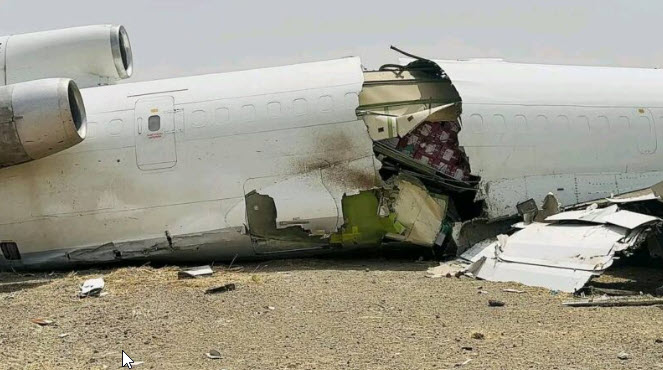
Crash of a Boeing 727-2Q9 in Malakal

Date & Time: Mar 31, 2024
Type of aircraft:
Operator:
Registration:
5Y-IRE
Flight Type:
Survivors:
Yes
Schedule:
Juba - Malakal
MSN:
21931/1531
YOM:
1979
Country:
Region:
Crew on board:
3
Crew fatalities:
Pax on board:
4
Pax fatalities:
Other fatalities:
Total fatalities:
0
Circumstances:
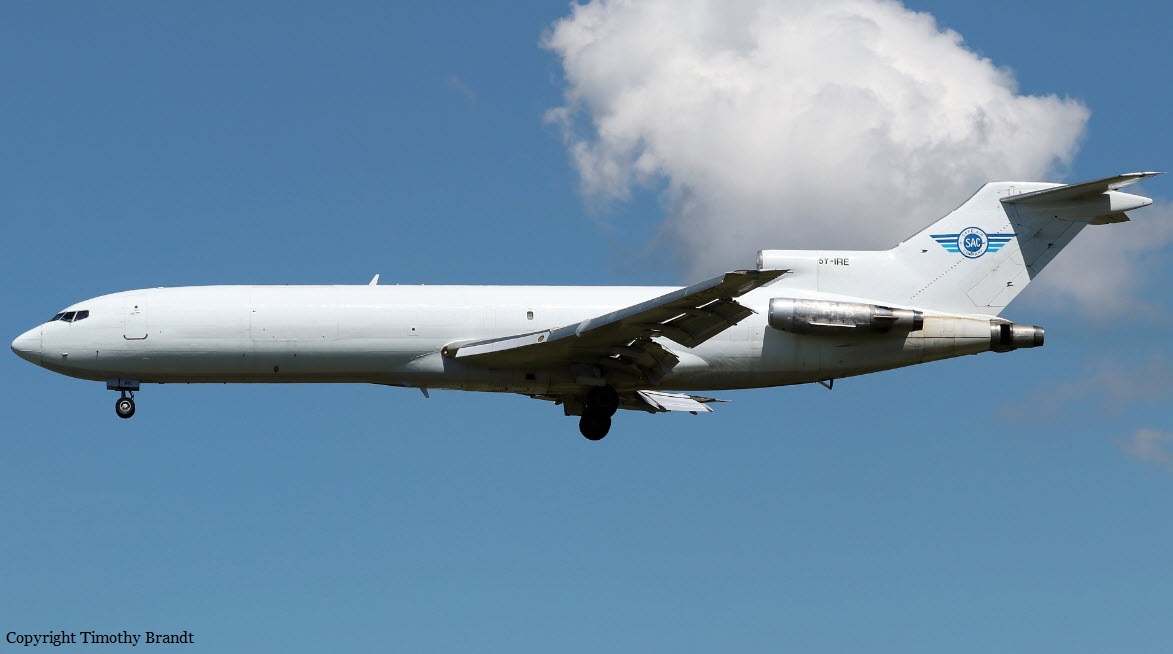
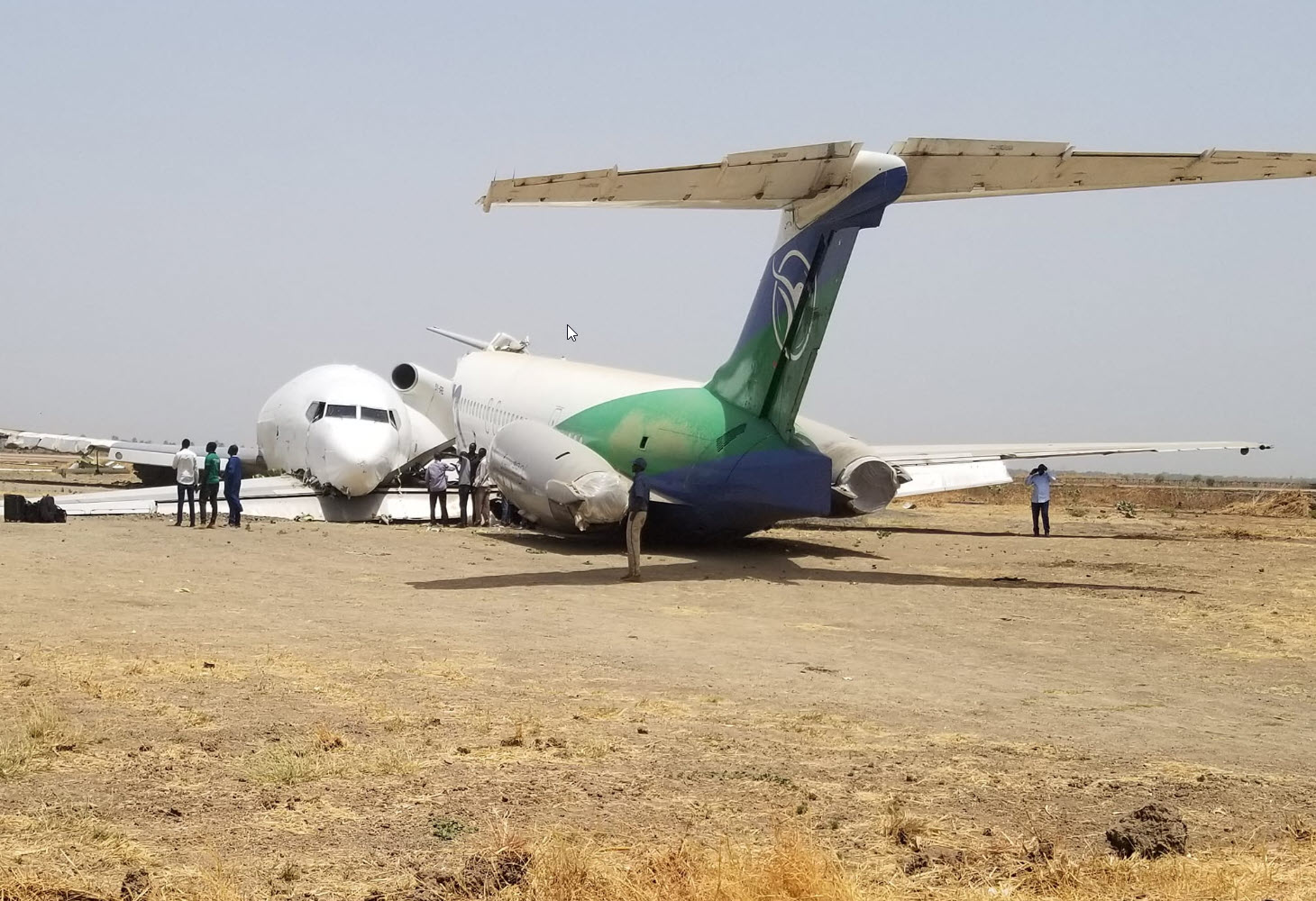
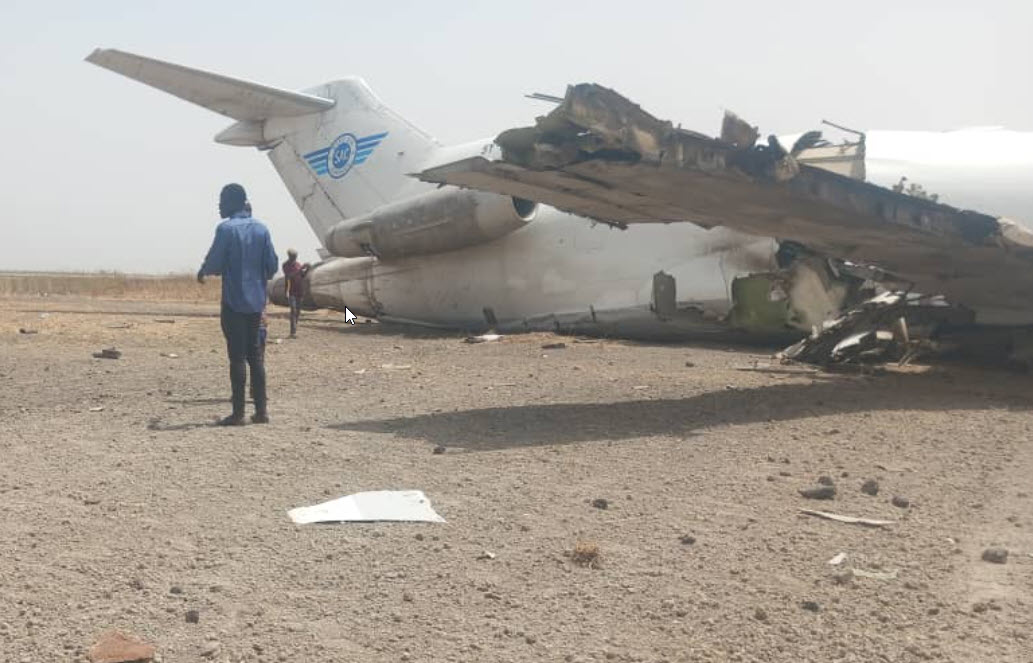
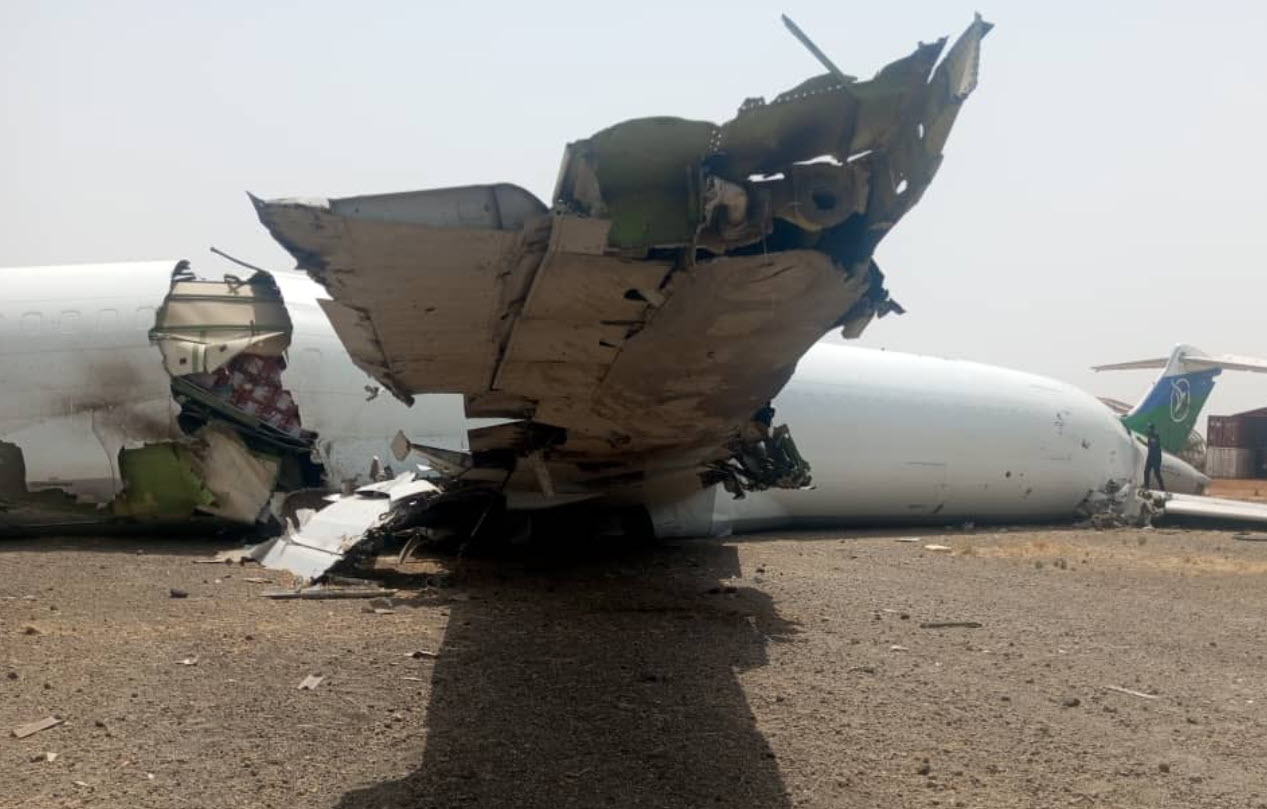
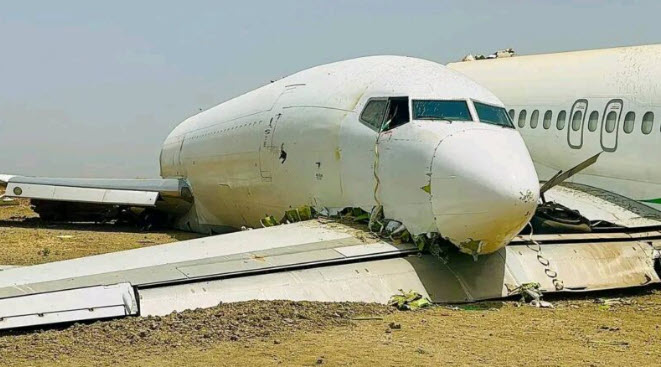
Following a cargo flight from Juba, the airplane crashed upon landing at Malakal Airport. It veered off runway and eventually collided with a parked MD-82 registered 5Y-AXL that suffered an accident at the same airport last February 9. The airplane was destroyed and all seven occupants were rescued.

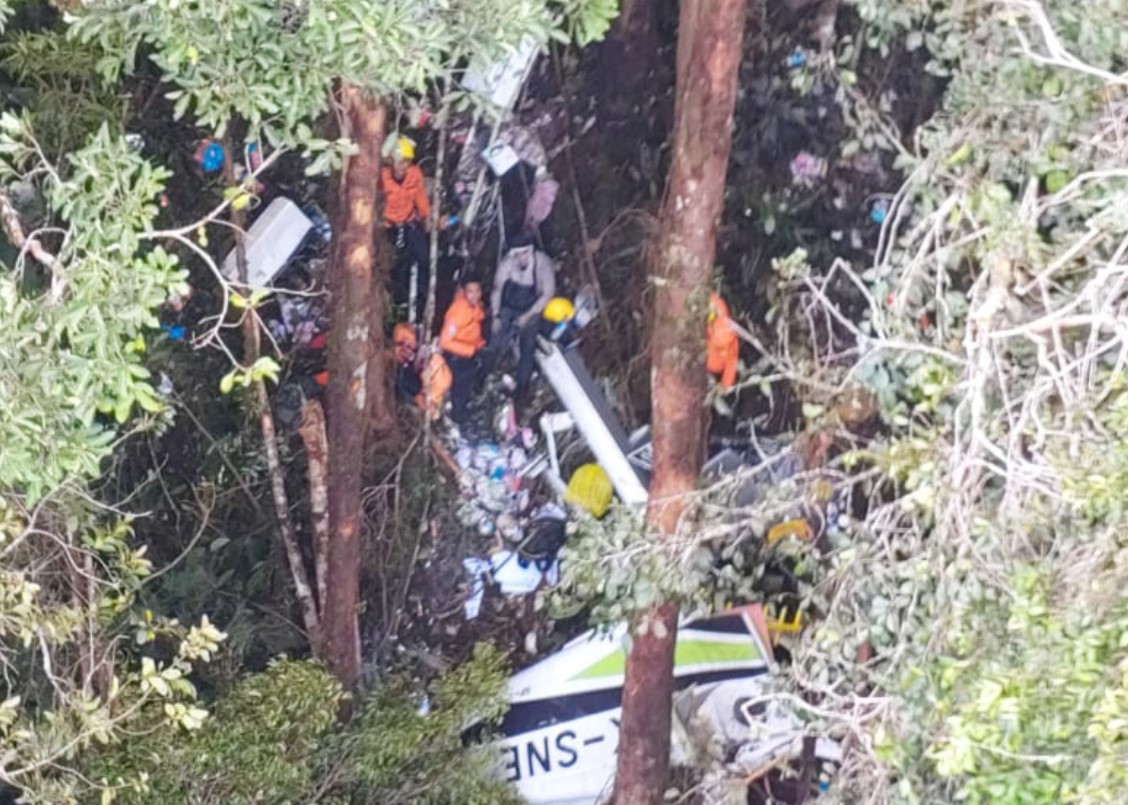
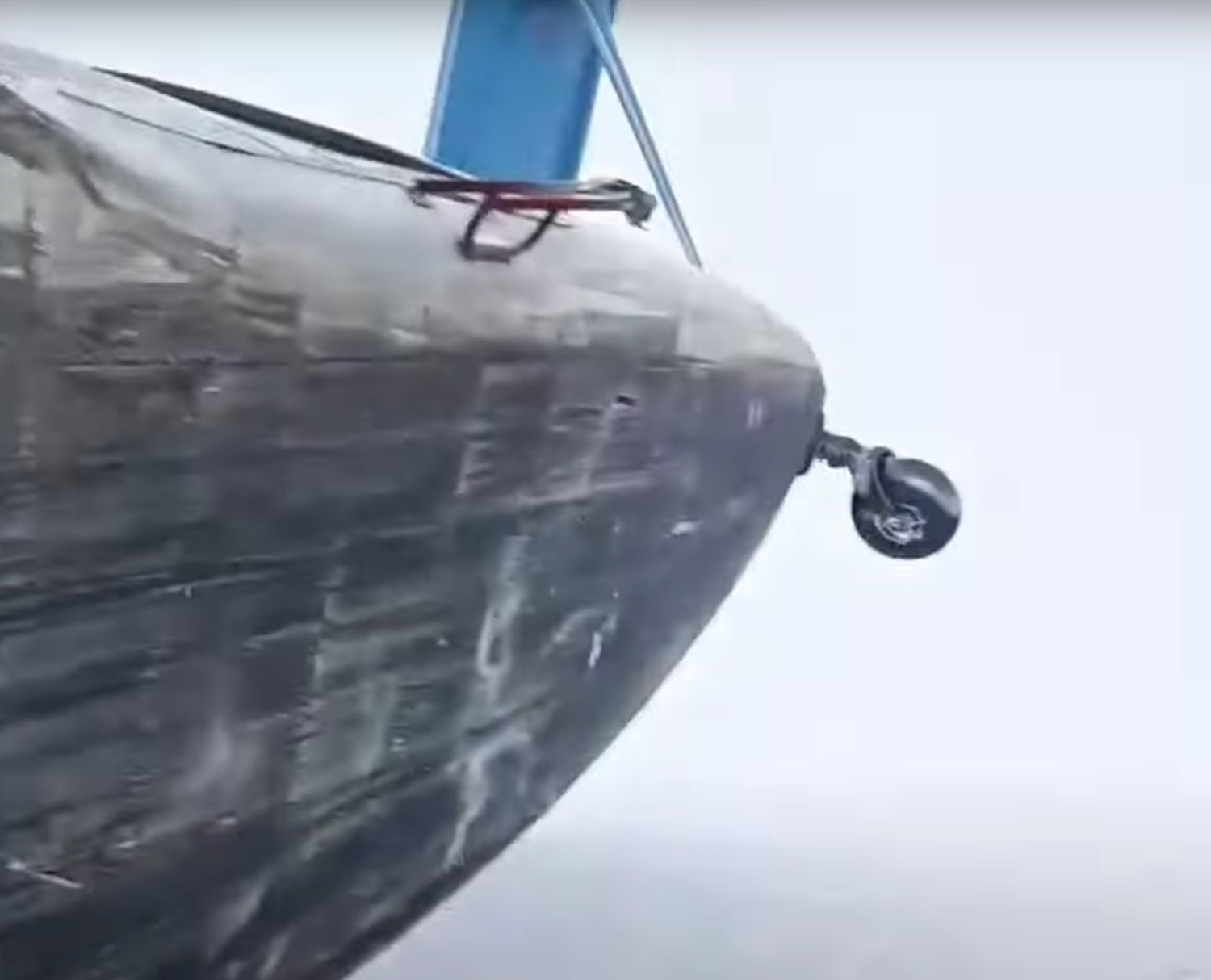
Crash of a Pilatus PC-6/B2-H4 Turbo Porter near Long Liku: 1 killed

Date & Time: Mar 8, 2024 at 0900 LT
Operator:
Registration:
PK-SNE
Flight Phase:
Flight Type:
Survivors:
Yes
Site:
Schedule:
Tarakan - Binuang
MSN:
1017
YOM:
2021
Country:
Region:
Crew on board:
2
Crew fatalities:
Pax on board:
0
Pax fatalities:
Other fatalities:
Total fatalities:
1
Circumstances:
The single engine airplane departed Tarakan on a cargo service to Binuang, carrying two crew members and a load of 583 kilos of food supplies. En route, the airplane collided with trees and crashed on the slope of a wooded mountain located in the Long Liku area. Rescue teams arrive on site the following day. The pilot was injured and the flight engineer was killed. The airplane was destroyed.

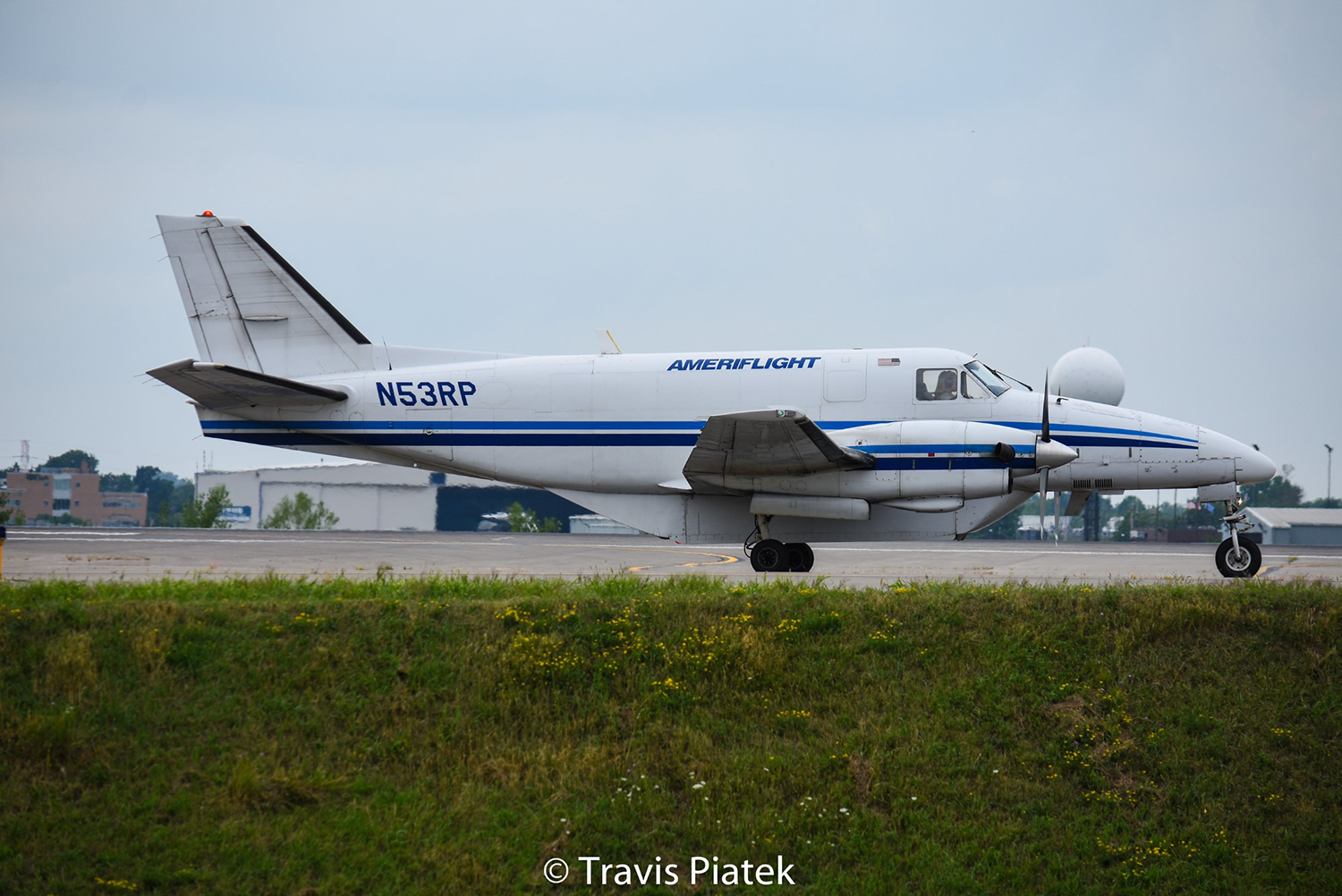
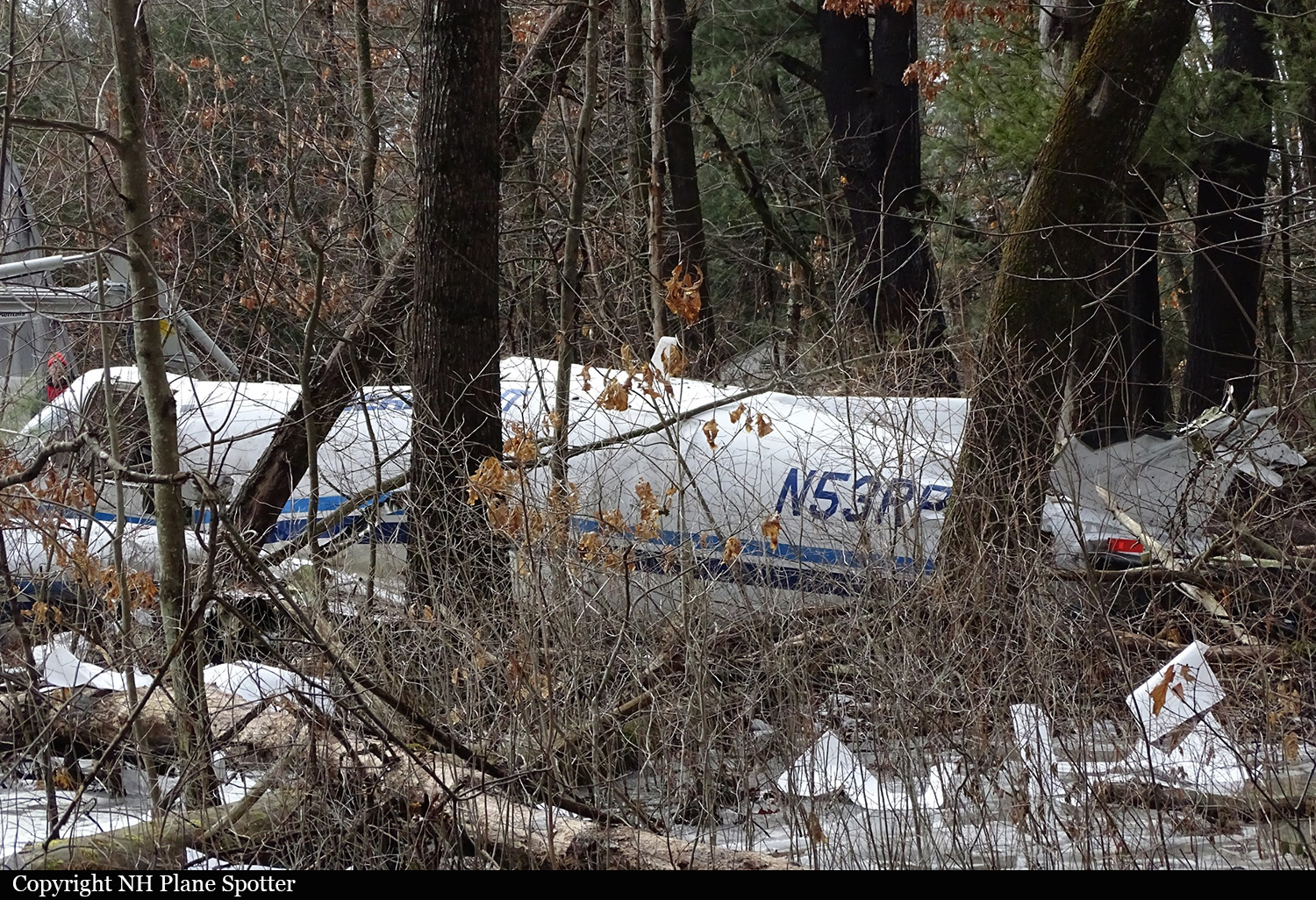
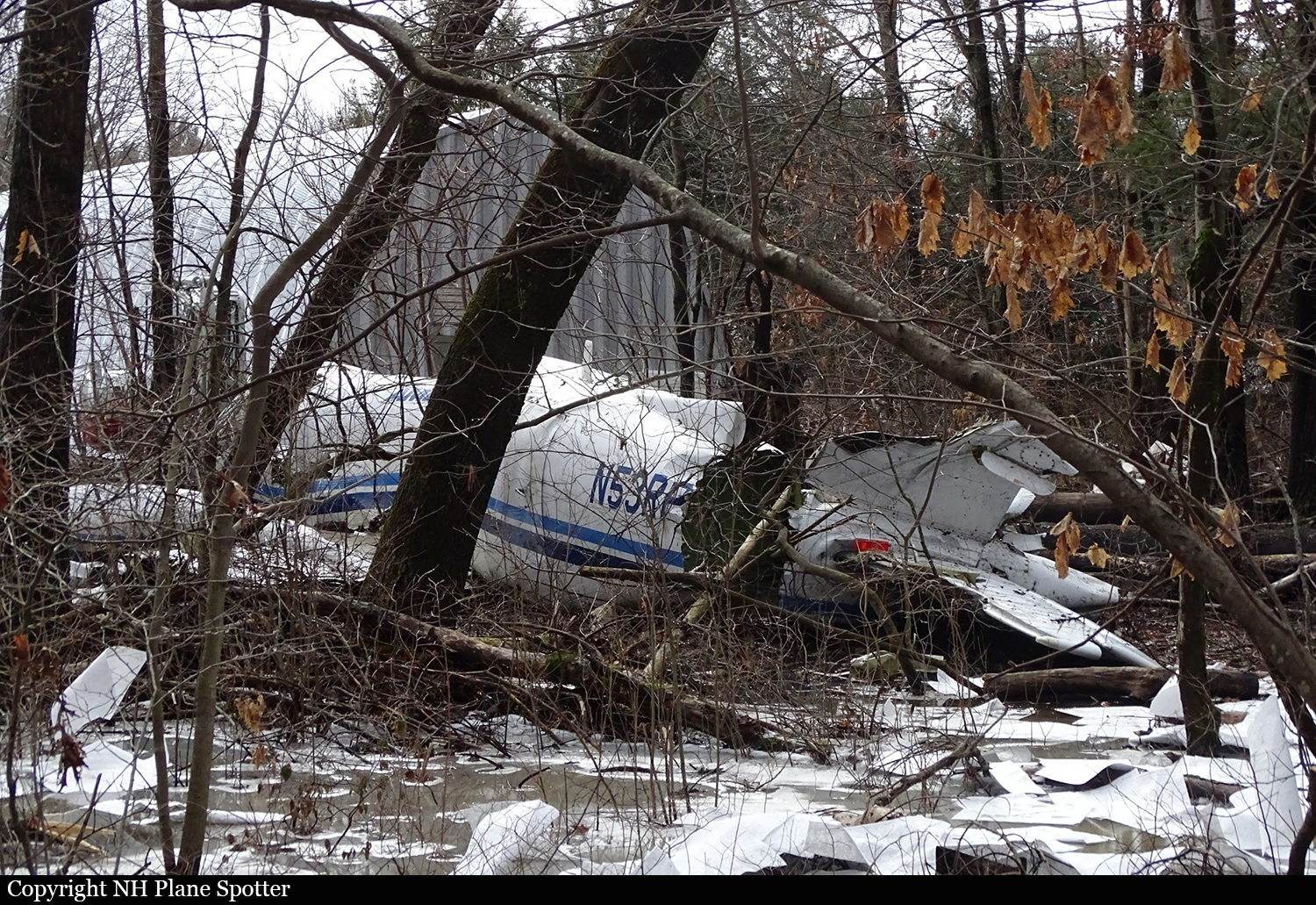
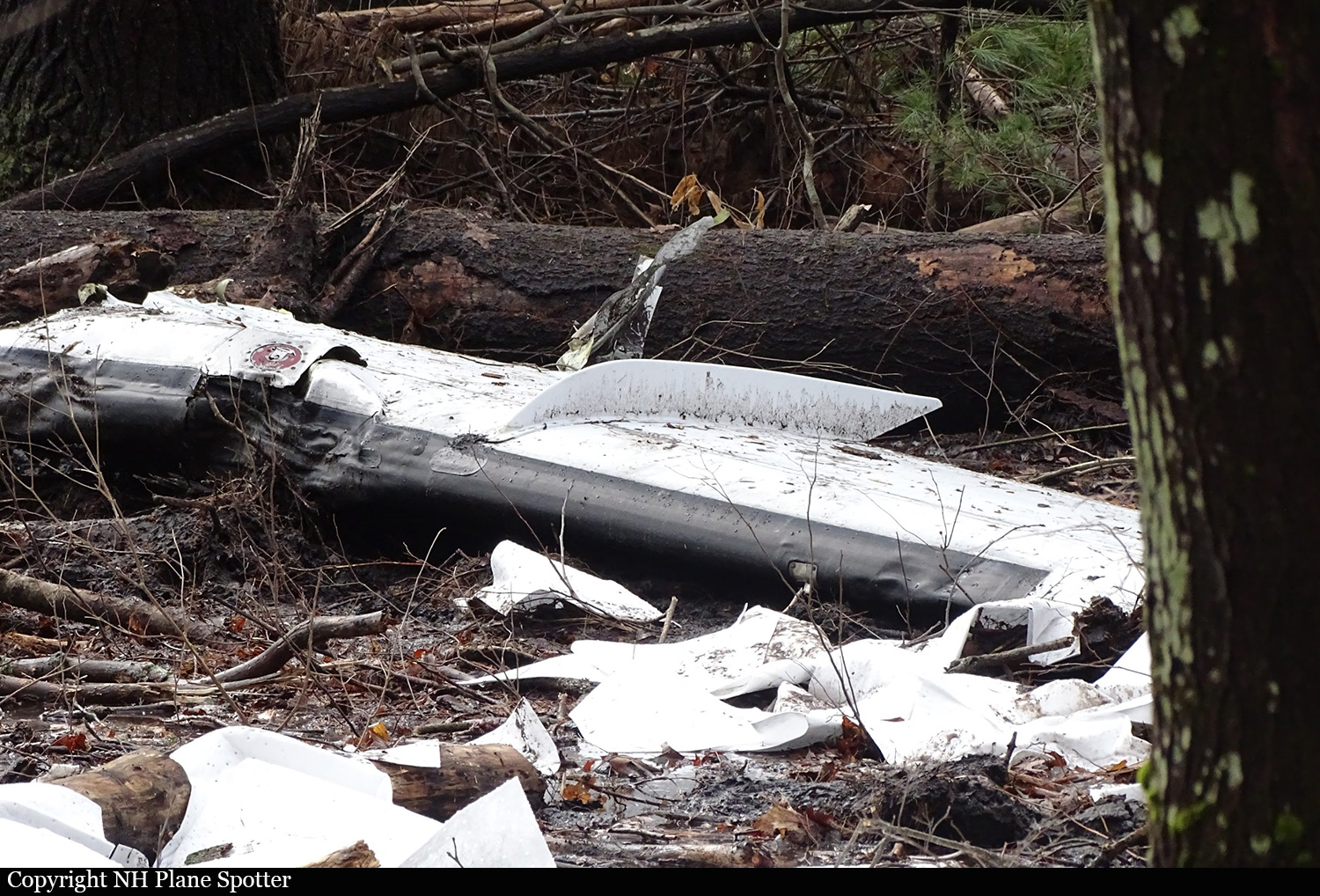
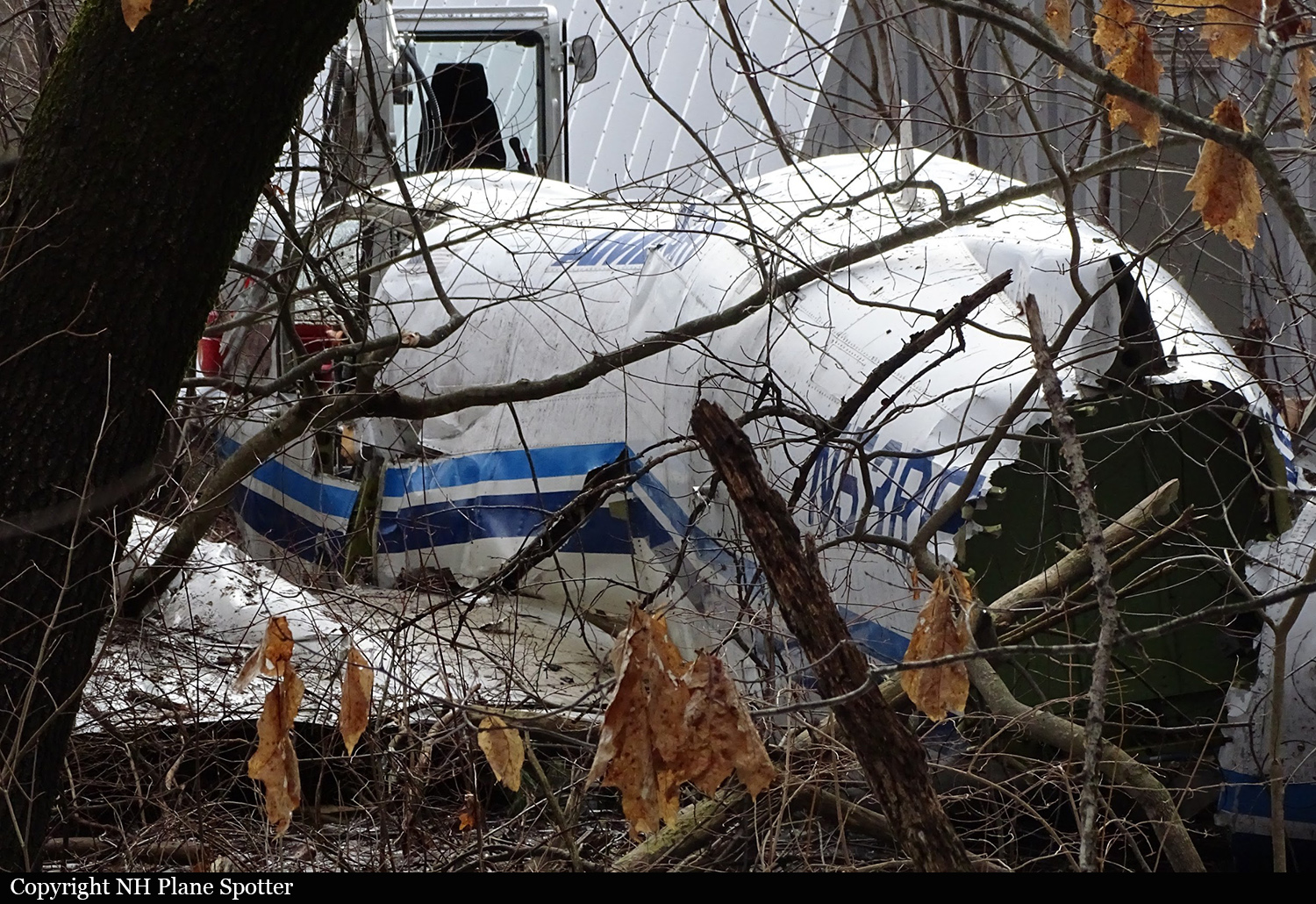
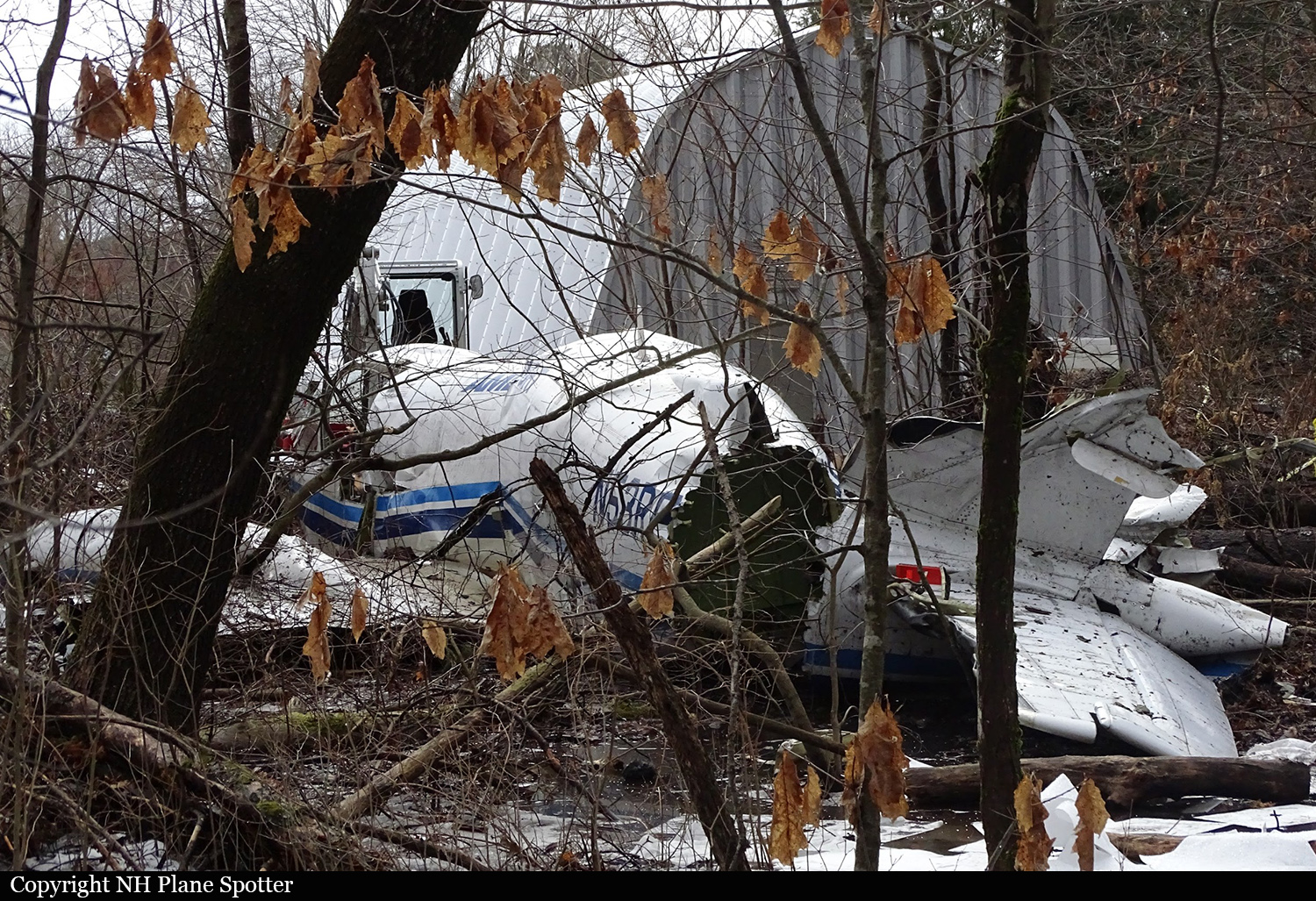
Crash of a Beechcraft C99 Airliner in Londonderry

Date & Time: Jan 26, 2024 at 0726 LT
Type of aircraft:
Operator:
Registration:
N53RP
Flight Phase:
Flight Type:
Survivors:
Yes
Schedule:
Manchester - Presque Isle
MSN:
U-195
YOM:
1982
Flight number:
WIG1046
Crew on board:
1
Crew fatalities:
Pax on board:
0
Pax fatalities:
Other fatalities:
Total fatalities:
0
Captain / Total flying hours:
3551
Captain / Total hours on type:
77.00
Aircraft flight hours:
28882
Circumstances:
The twin engine airplane departed Manchester-Boston Regional Airport Runway 06 at 0710LT on a cargo service (flight WIG1046) to Presque Isle. The weather about the time of departure included visibility of 3 miles in rain and mist, a broken ceiling at 1,000 ft, and an overcast ceiling at 2,400 ft. The pilot stated that during the initial climb, he heard a loud “pop.” The left door/hatch appeared to be partially open, so he grabbed it with his left hand. The door then opened completely while he was still holding on to it, injuring his left hand. He reached up with his right hand and hung on to the door with both hands but was beginning to be pulled out of his seat, so he let go and, shortly after, the door completely separated from the airplane. After the door departed, the airplane went through a series of unusual attitudes as the pilot attempted to return to the departure airport. He did not recall anything after the last unusual attitude. Eventually, the airplane entered a right turn and crashed in a forest located near Londonderry, about 8 km south of Manchester Airport. The accident occurred 16 minutes after departure. The pilot was seriously injured and the airplane was destroyed. The cockpit door was found 16 km from the main wreckage.
Probable cause:
The pilot’s failure to ensure that the cockpit door was secured before flight, which resulted in its separation during initial climb and a subsequent loss of control.
Final Report:

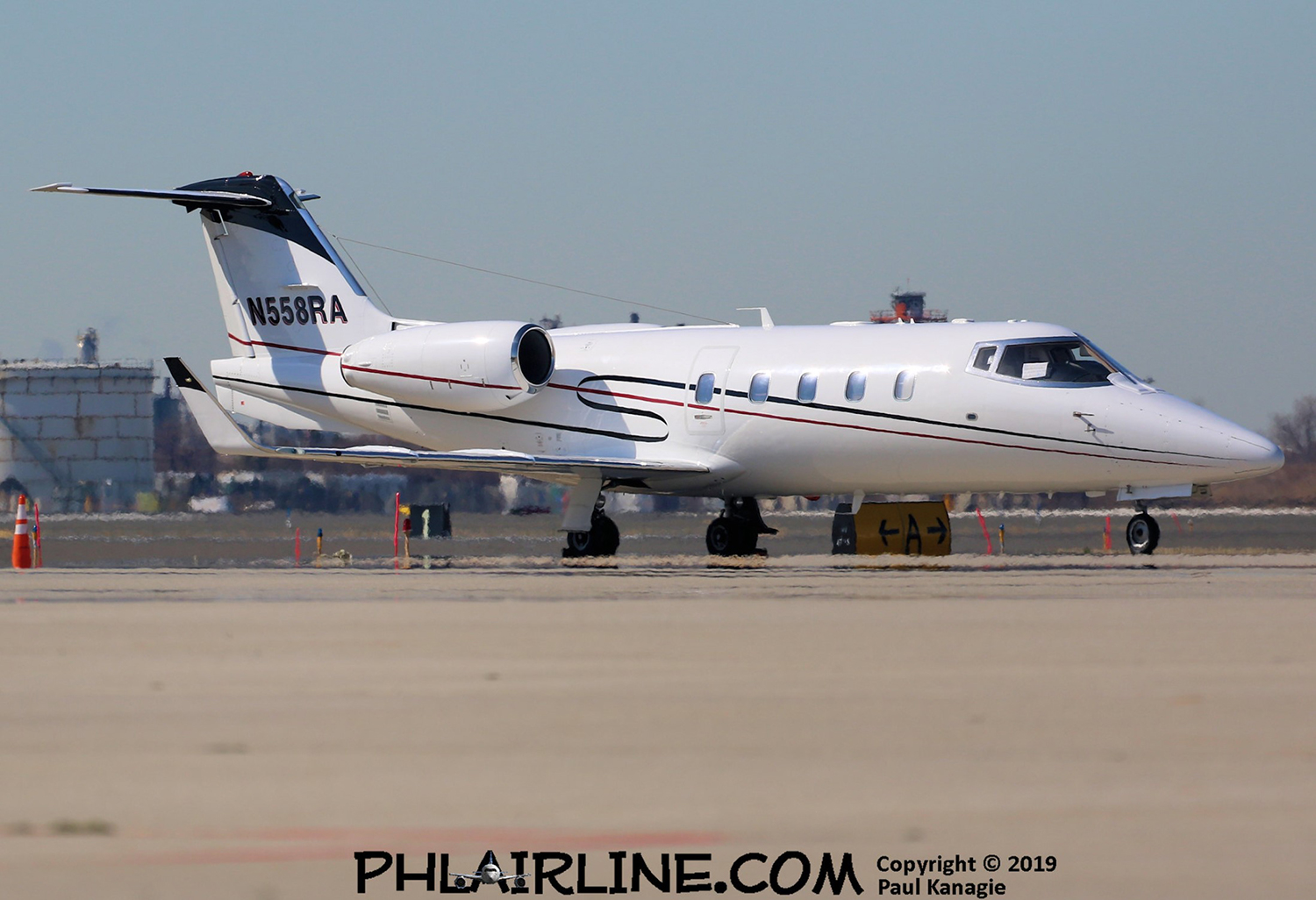
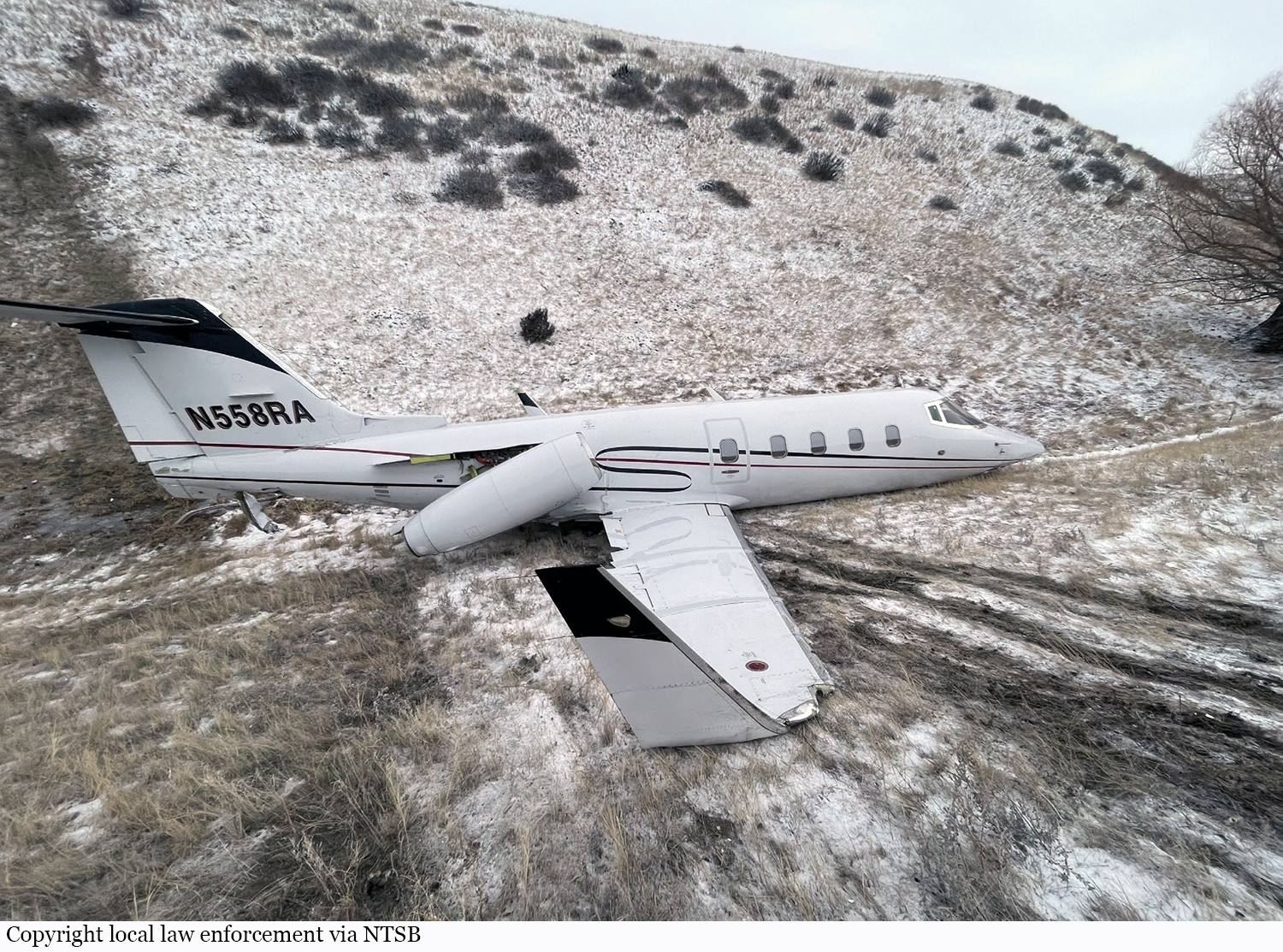
Crash of a Learjet 55 Longhorn in Livingston

Date & Time: Jan 11, 2024 at 0837 LT
Type of aircraft:
Operator:
Registration:
N558RA
Flight Type:
Survivors:
Yes
Schedule:
Pontiac - Livingston
MSN:
55-086
YOM:
1983
Flight number:
RAX698
Crew on board:
2
Crew fatalities:
Pax on board:
0
Pax fatalities:
Other fatalities:
Total fatalities:
0
Captain / Total flying hours:
31800
Captain / Total hours on type:
800.00
Copilot / Total flying hours:
1726
Copilot / Total hours on type:
9
Aircraft flight hours:
14135
Circumstances:
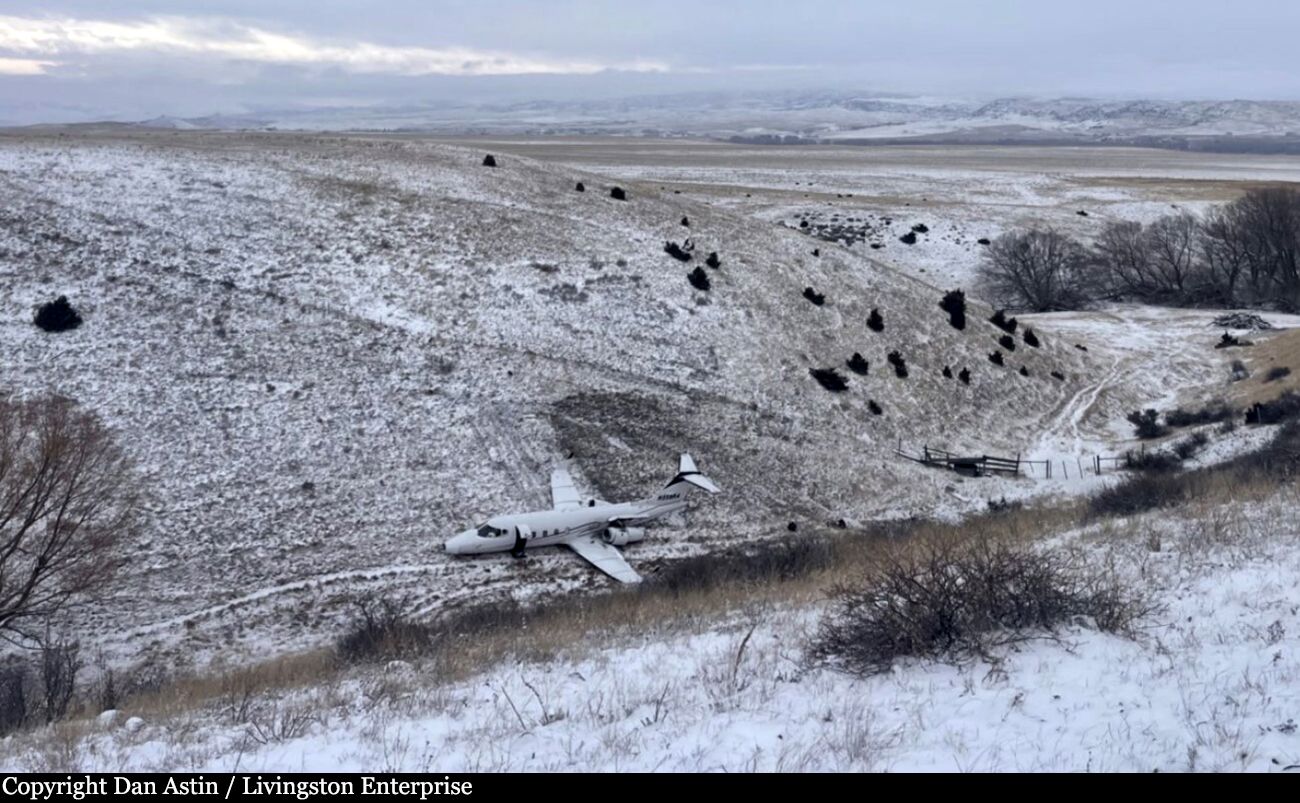
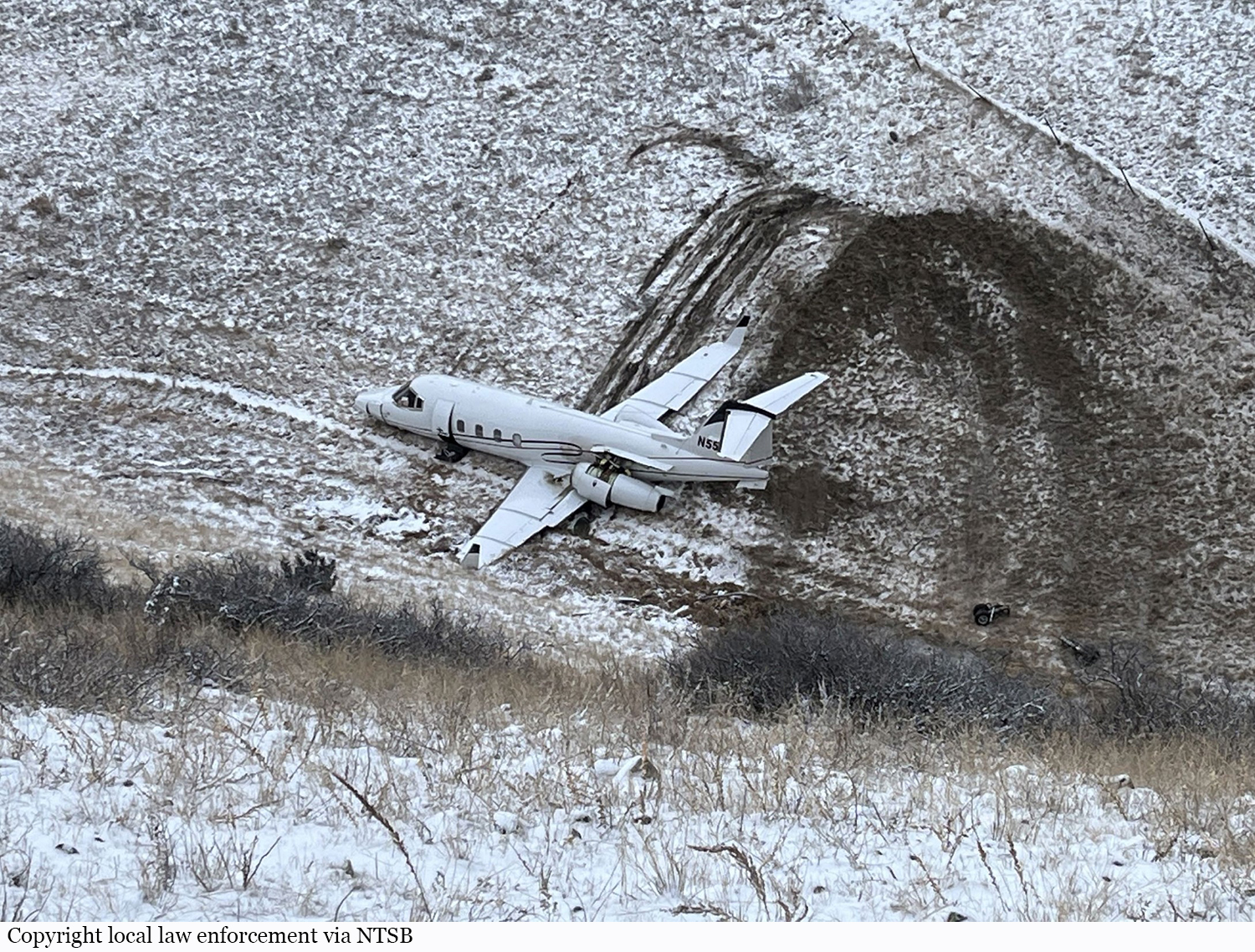
The pilot in command of the airplane reported that, while on an instrument GPS approach, they listened to the automated surface observing system several times and determined that they would be landing with a “light quartering tailwind” on an upsloping runway. Once clear of clouds and with the runway in sight, the pilot canceled the instrument flight rules clearance, announced their position over the airport’s common traffic advisory frequency and received a reply with a report of 1/4 inch of dry snow covering the runway, unplowed. During the landing roll, they applied brakes, extended spoilers, and thrust reversers. Initially the airplane slowed; however, about halfway down the runway, the airplane’s antiskid system was functioning continuously, and the airplane’s rate of deceleration decreased. The pilot was unsure if the thrust reversers deployed, and he cycled the thrust reversers and did not feel any effects. The pilot stated that, in his experience, the airplane’s thrust reversers do not feel very effective. The pilot considered aborting the landing, started to clean up the airplane but thought it was too late. The airplane overran the departure end of the runway, onto a grass covered area and into a deep ravine, resulting in substantial damage to the fuselage and both wings. The pilot reported that there were no preaccident mechanical failures or malfunctions with the airplane that would have precluded normal operation. The automated weather observation station located on the airport reported that, about 44 minutes before the accident, the wind was from 090° at 12 knots. The same automated station reported that, about 16 minutes after the accident, the wind was from 090° at 12 knots. The airplane landed on runway 22. The fixed based operator owner reported that, on the day of the accident, his review of the runway conditions at the airport appeared to be around an inch of snow on the runway surface. Additionally, plowing at the airport so far this year had been “abysmal.” Big windrows and ice chunks have been left; taxiway corners had been built up to the point there could be an occurrence should an airplane be taxiing by. Earlier this year, several departures were delayed due to the runway not being plowed. According to the chairman of the airport board, there is no formal process to conduct runway assessments. However, an airport board member lives in the area and routinely visits the airport to conduct runway assessments. The runway assessments and frequency of the observations are not documented but are conveyed verbally to the airport board via cell phone. To the best of his knowledge, there is no formal snow or ice removal plan. When the runway is required to be cleared, a board member will use county provided equipment to clear the runway. The frequency of the snow removal is not documented. The airport snow removal equipment is limited to clear substance to ½ inch of the runway surface. On the day of the accident, he was not aware of a Notice to Air Misson (NOTAM) issued for the conditions of the runway environment. According to the airplane manufacturer, the estimated landing distance on a dry runway was about 3,350 ft, with loose snow and no tailwind the estimated landing distance was about 6,700 ft, and on loose snow with tailwind, the estimated landing distance was 7,531 ft. According to the Federal Aviation Administration, the airport is not required to have a snow and ice control plan. However, the airport was provided federal funds (grant) to purchase/acquire a snowplow to maintain the airport surfaces during inclement weather conditions. There may be times where issues arise, and action is delayed. In that case it is expected that a NOTAM be issued as outlined in the grant agreement.
Probable cause:
The flight crew’s decision to land on a snow-covered runway with a tailwind, resulting in a runway excursion and subsequent impact with terrain. Contributing to the accident, was the failure of the airport authority to plow the runway.
Final Report:

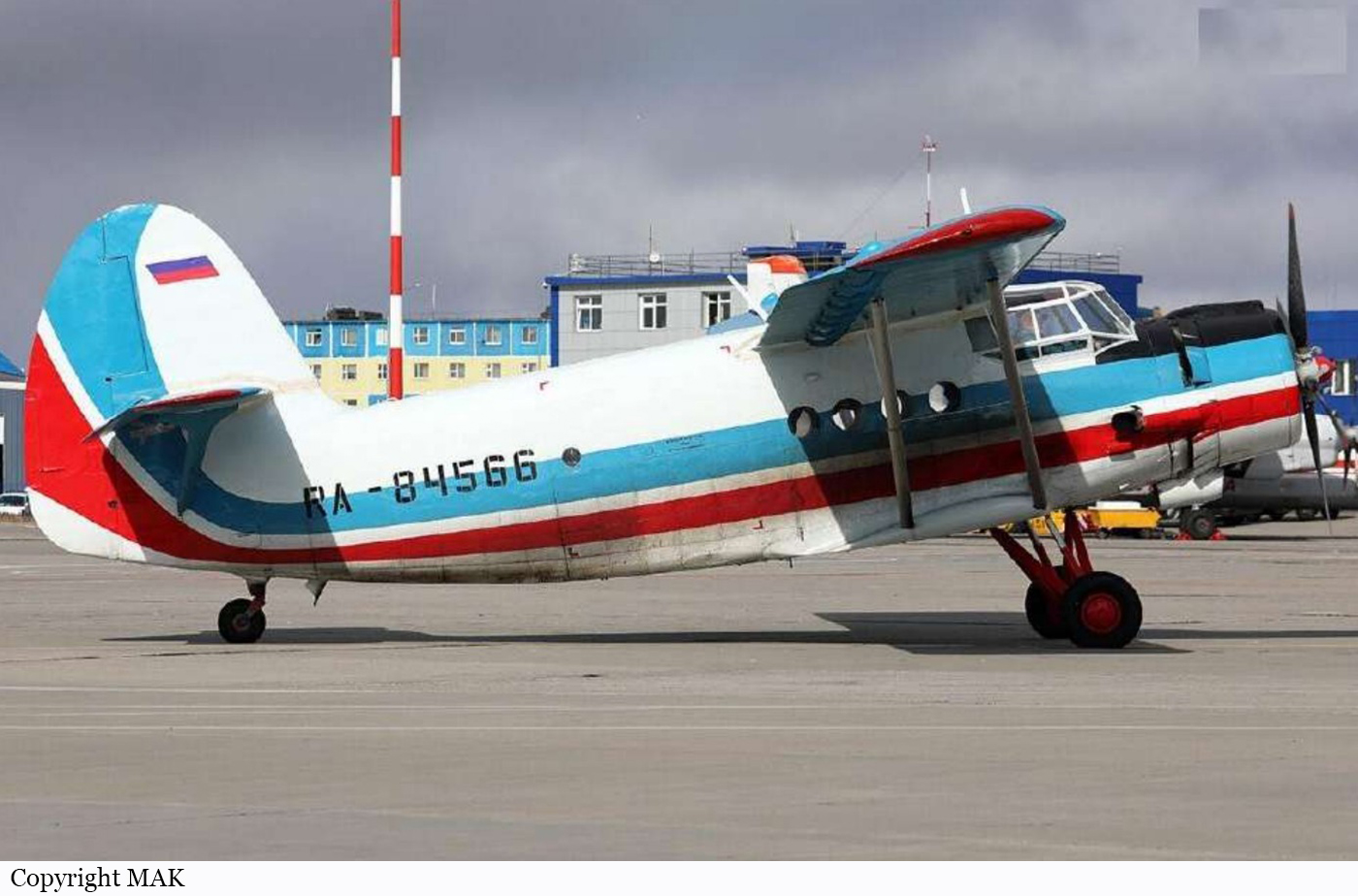
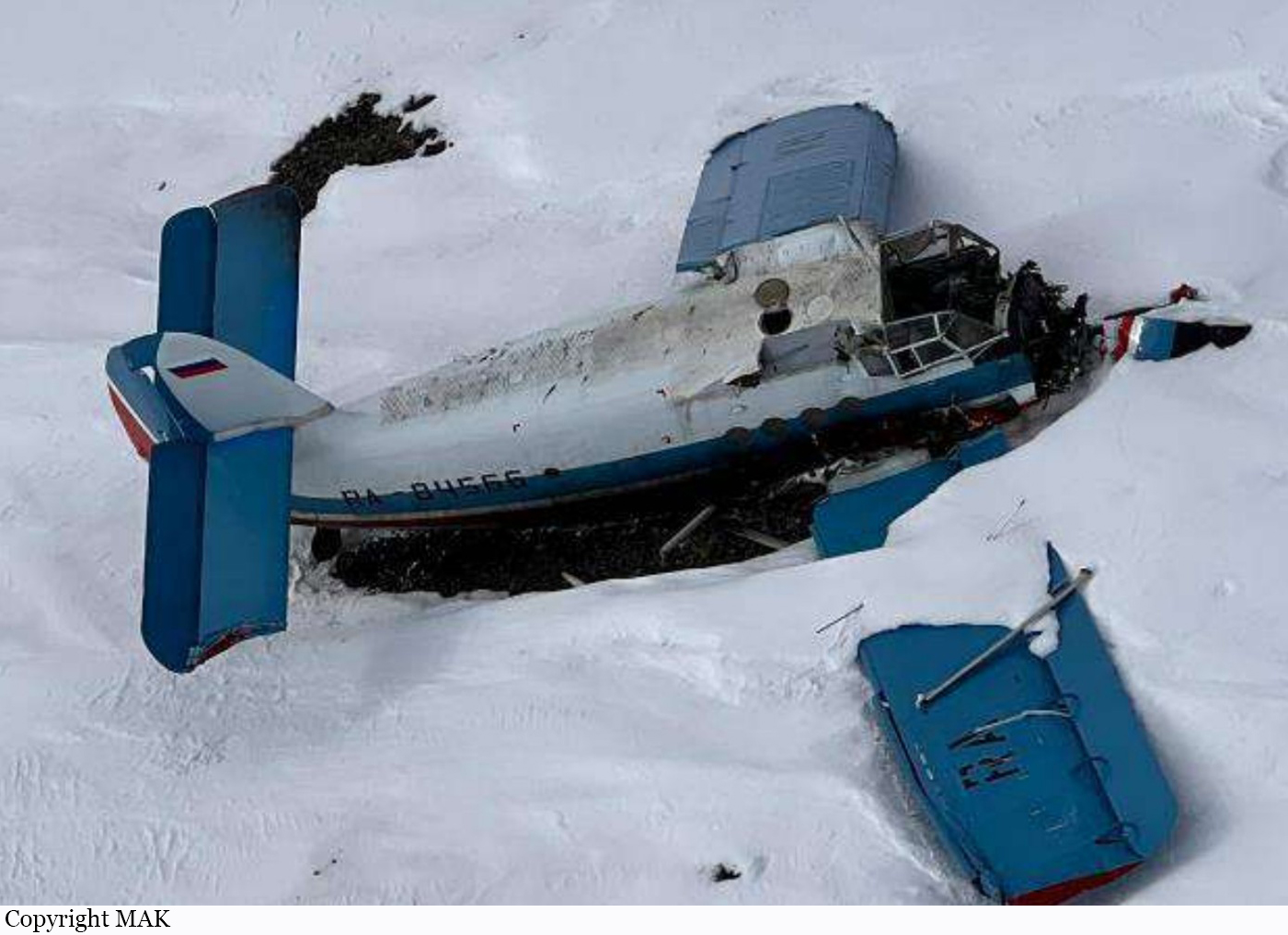
Crash of a PZL-Mielec AN-2R near Polyarny

Date & Time: Nov 10, 2023 at 1242 LT
Type of aircraft:
Operator:
Registration:
RA-84566
Flight Phase:
Flight Type:
Survivors:
Yes
Schedule:
Pevek - Polyarny
MSN:
1G189-33
YOM:
1980
Country:
Region:
Crew on board:
1
Crew fatalities:
Pax on board:
2
Pax fatalities:
Other fatalities:
Total fatalities:
0
Captain / Total flying hours:
7978
Captain / Total hours on type:
851.00
Aircraft flight hours:
345
Circumstances:
The single engine airplane departed Pevek on a cargo flight to Polyarny, carrying two passengers, one pilot and a load of 150 kg of various goods. Approaching the destination, weather conditions deteriorated with heavy rain falls. In limited visibility, the airplane impacted the ground and crashed in the snow covered tundra few km from Polyarny. The wreckage was found few hours later and all three occupants were injured, the captain seriously. The airplane was a TR-301, a version of the AN-2 without the lower wings. Modification were performed by Tekhnoregion under MSN ТR301.21.004.
Probable cause:
The collision with a mountainside occurred in a mountainous area during daylight under Instrument Meteorological Conditions (IMC) that did not permit Visual Flight Rules (VFR) operations, as a result of the pilot-in-command (PIC) losing visual contact with the ground.
The following contributing factors were identified:
- The decision by the PIC to proceed with the flight despite forecasted meteorological conditions along the route and at the landing site that did not permit VFR operations (due to heavy precipitation).
- The failure of the PIC to take appropriate measures to avoid an hazardous area when signs of dangerous meteorological phenomenons became evident during the flight.
- Conducting the flight in violation of the aircraft's operational limitations under conditions unsuitable for VFR.
- The PIC's failure to make a timely decision to return to the departure airport or divert to an alternate airport when weather conditions deteriorated to levels below the minimums established for VFR operations.
Final Report:

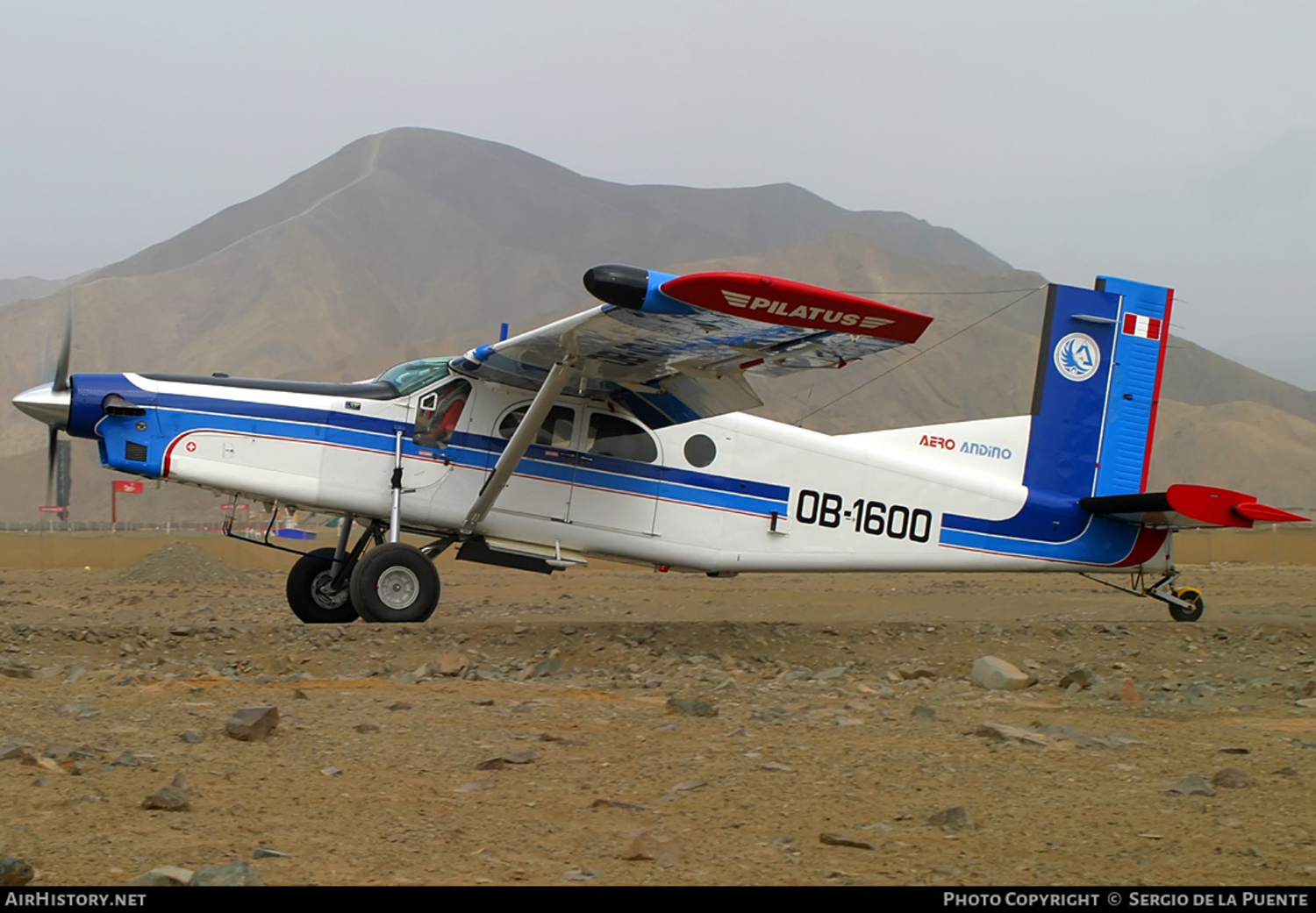
Crash of a Pilatus PC-6/B2-H4 Turbo Porter in Breu: 1killed

Date & Time: Oct 29, 2023 at 1100 LT
Operator:
Registration:
OB-1600
Flight Type:
Survivors:
Yes
Schedule:
Pucallpa – Breu
MSN:
789
YOM:
1977
Location:
Country:
Crew on board:
2
Crew fatalities:
Pax on board:
0
Pax fatalities:
Other fatalities:
Total fatalities:
1
Circumstances:
The single engine airplane departed Pucallpa-Captain David Abensur Rengifo Airport around 1000LT on a cargo flight to Breu with two pilots on board. On approach to Breu-Tipishsa Airport, the airplane crashed in unknown circumstances in a wooded area located about 4 km northwest of Breu. The captain was killed and the copilot was injured.

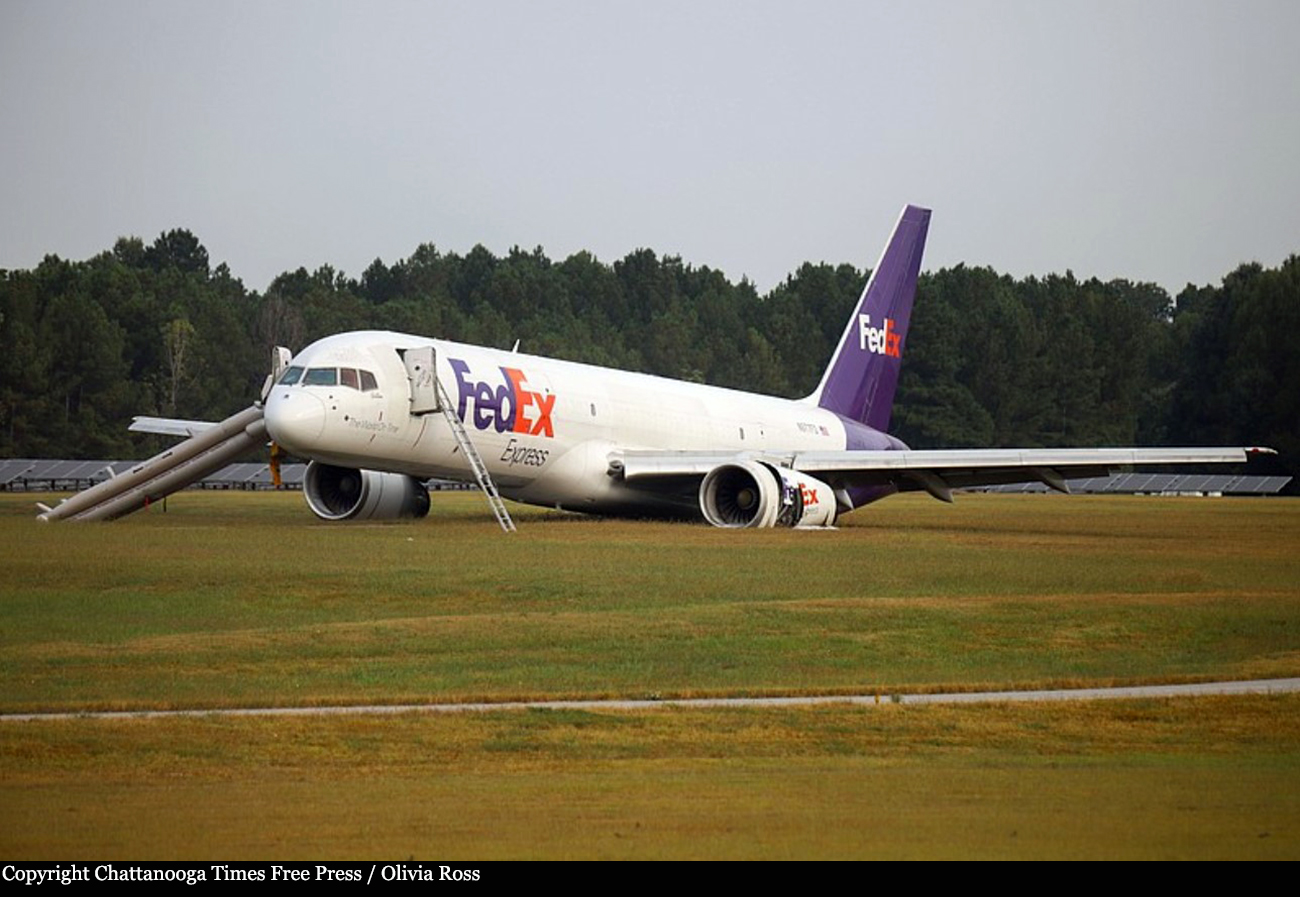
Crash of a Boeing 757-236 in Chattanooga

Date & Time: Oct 4, 2023 at 2347 LT
Type of aircraft:
Operator:
Registration:
N977FD
Flight Type:
Survivors:
Yes
Schedule:
Chattanooga – Memphis
MSN:
24118/163
YOM:
1988
Flight number:
FDX1376
Crew on board:
3
Crew fatalities:
Pax on board:
0
Pax fatalities:
Other fatalities:
Total fatalities:
0
Captain / Total hours on type:
393.00
Copilot / Total hours on type:
1651
Aircraft flight hours:
52468
Circumstances:
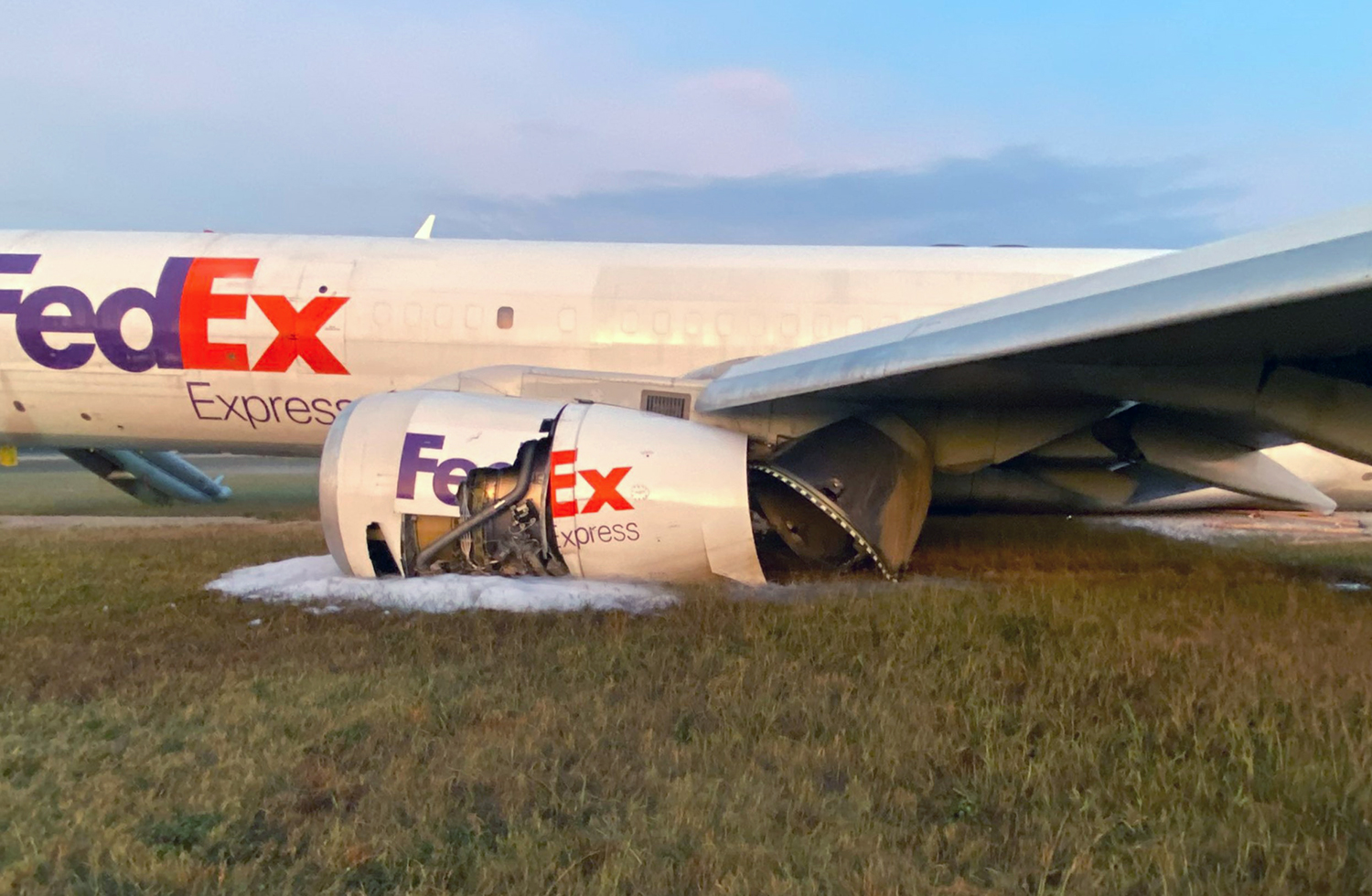
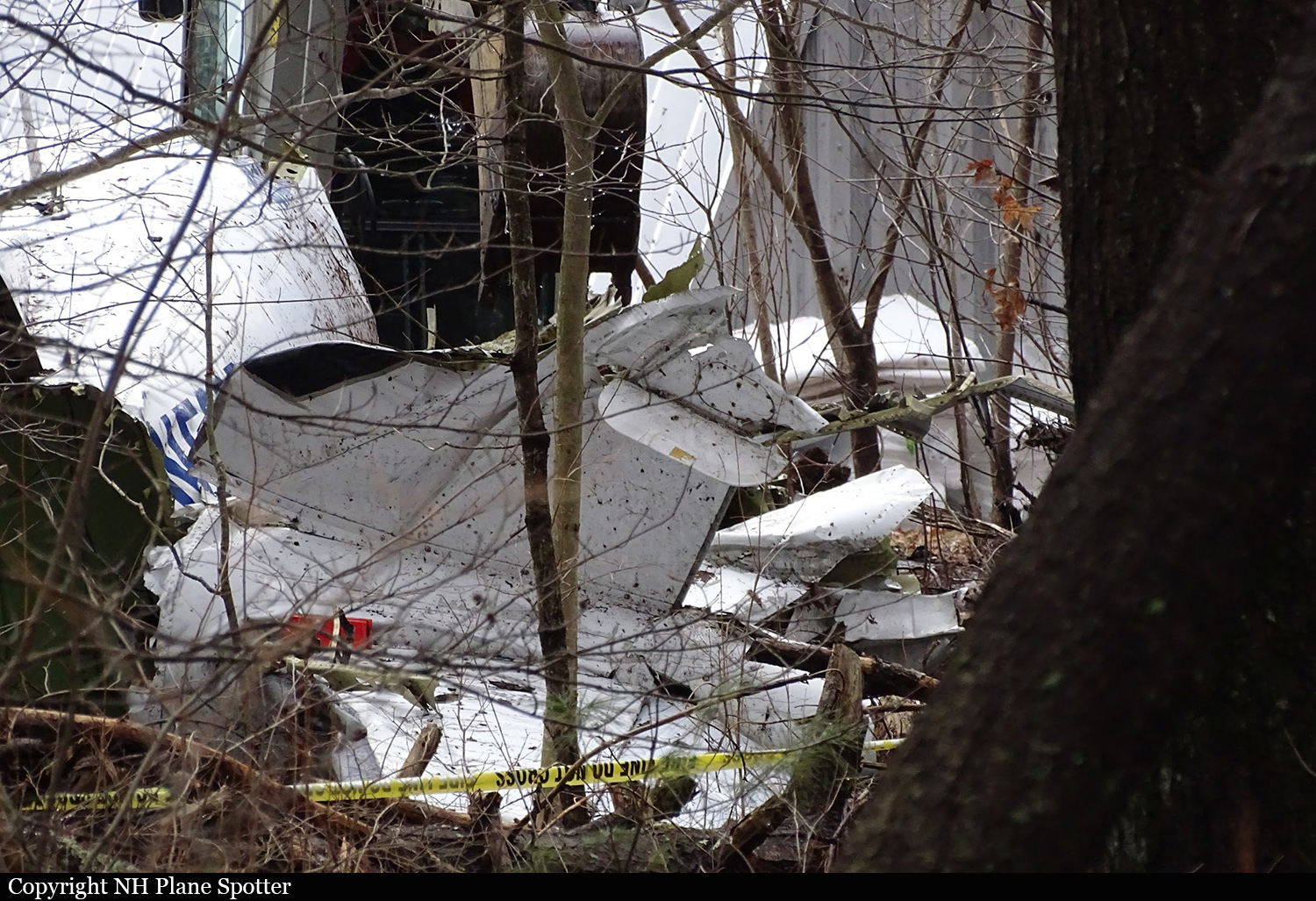
This accident occurred when the flight crew of Federal Express flight 1376, a Boeing 757-236, was unable to extend the landing gear during their approach to Chattanooga Metropolitan Airport-Lovell Field (CHA), Chattanooga, Tennessee. The main landing gear (MLG) and nose landing gear (NLG) are hydraulically retracted and extended under normal conditions by the left hydraulic system. To retract or extend the landing gear, a flight crew member must move the landing gear control lever out of its detent and position it to its up or down position. Lever movement is transmitted through control cables to the landing gear selector valve. Operation of the valve supplies left hydraulic pressure through hydraulic lines to either retract or extend the landing gear and operate the landing gear doors. Shortly after takeoff from CHA, the captain of flight 1376 called for gear up and the first officer (FO) raised the landing gear control lever to retract the landing gear. The flight crew indicated that both the MLG and the NLG retracted to their up and locked position. Digital flight data recorder (DFDR) data showed that 22 seconds after gear retraction the hydraulic fluid quantity and pressure in the left hydraulic system began to decrease. A left hydraulic system low quantity indication and master caution were recorded shortly thereafter. After troubleshooting the hydraulic issue per the procedures in the Quick Reference Handbook (QRH), the flight crew made the decision to return to CHA. While preparing to land, the MLG and NLG did not extend as expected after the landing gear control lever was positioned to its down position. Cockpit voice recorder (CVR) data indicated that a triple chime was audible, and the captain said, “Gear disagree.” The first officer confirmed, “Gear disagree. The gear is not coming down.” The captain contacted air traffic control (ATC) to break off their approach and reported that they had an unsafe gear indication. Following the failed attempt to lower the landing gear, the crew went methodically through the Hydraulic System Pressure checklist of their QRH. Following the procedures, the crew attempted to lower the landing gear using the alternate landing gear extension system. This system uses a dedicated hydraulic circuit within the left hydraulic system to release the uplocks on the landing gear doors and gear when activated. To extend the gear with this system, a flight crew member would move the ALTN GEAR EXTEND switch (a guarded switch) to the down position. Because the checklist indicated that nose wheel steering would be inoperative following the alternate gear extension and the aircraft would not be able to clear the runway on its own, the crew declared an emergency with ATC. The crew performed the alternate gear extension procedure, and the landing gear did not come down. The crew completed the procedure several more times over the next 7 minutes, including re-completing the Hydraulic System Pressure (L only) checklist in full. As the crew set the aircraft up for the final approach, they began following the Gear Disagree checklist. ATC cleared the flight to land. The captain briefed the FO that he was planning to aim close to the runway threshold and the FO verbally updated the captain on wind conditions and airspeeds. They agreed that a jump seat occupant on board the airplane would open the left forward main entry door after they landed. Upon landing on runway 20, the flight crew was unable to stop the airplane, and it slid off the departure end of the runway and impacted localizer antennas before coming to rest about 830 ft beyond the end of the runway. All three crew members evacuated safely and the airplane was damaged beyond repair.
Probable cause:
The failure of the alternate gear extension system, which prevented the landing gear from being lowered. The cause of the system failure was a broken wire, due to tensile overload, between the alternate gear extend switch and the alternate extension power pack (AEPP), preventing the AEPP from energizing and supplying hydraulic fluid to the door lock release actuators for the nose landing gear and main landing gear. Contributing to the accident was the loss of the left hydraulic system due to a ruptured left main gear door actuator hose from fatigue, which prevented normal landing gear operation.
Final Report:

Crash of a Beechcraft C99 Airliner in Lansing

Date & Time: Aug 15, 2023 at 0805 LT
Type of aircraft:
Operator:
Registration:
N261SW
Flight Phase:
Flight Type:
Survivors:
Yes
Schedule:
Lansing – Pellston
MSN:
U-202
YOM:
1983
Flight number:
AMF1304
Crew on board:
1
Crew fatalities:
Pax on board:
0
Pax fatalities:
Other fatalities:
Total fatalities:
0
Captain / Total flying hours:
1218
Captain / Total hours on type:
26.00
Aircraft flight hours:
27642
Circumstances:
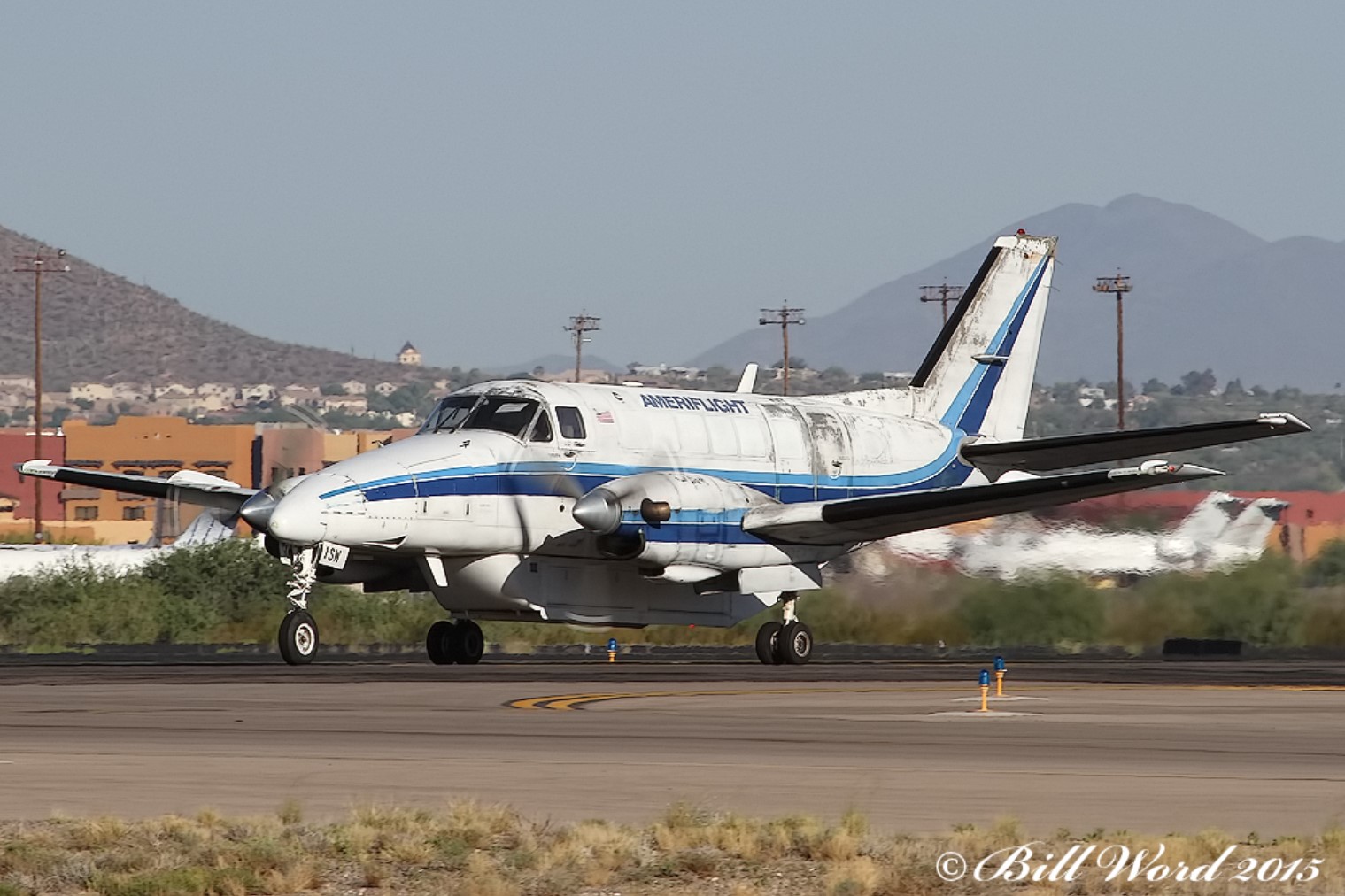
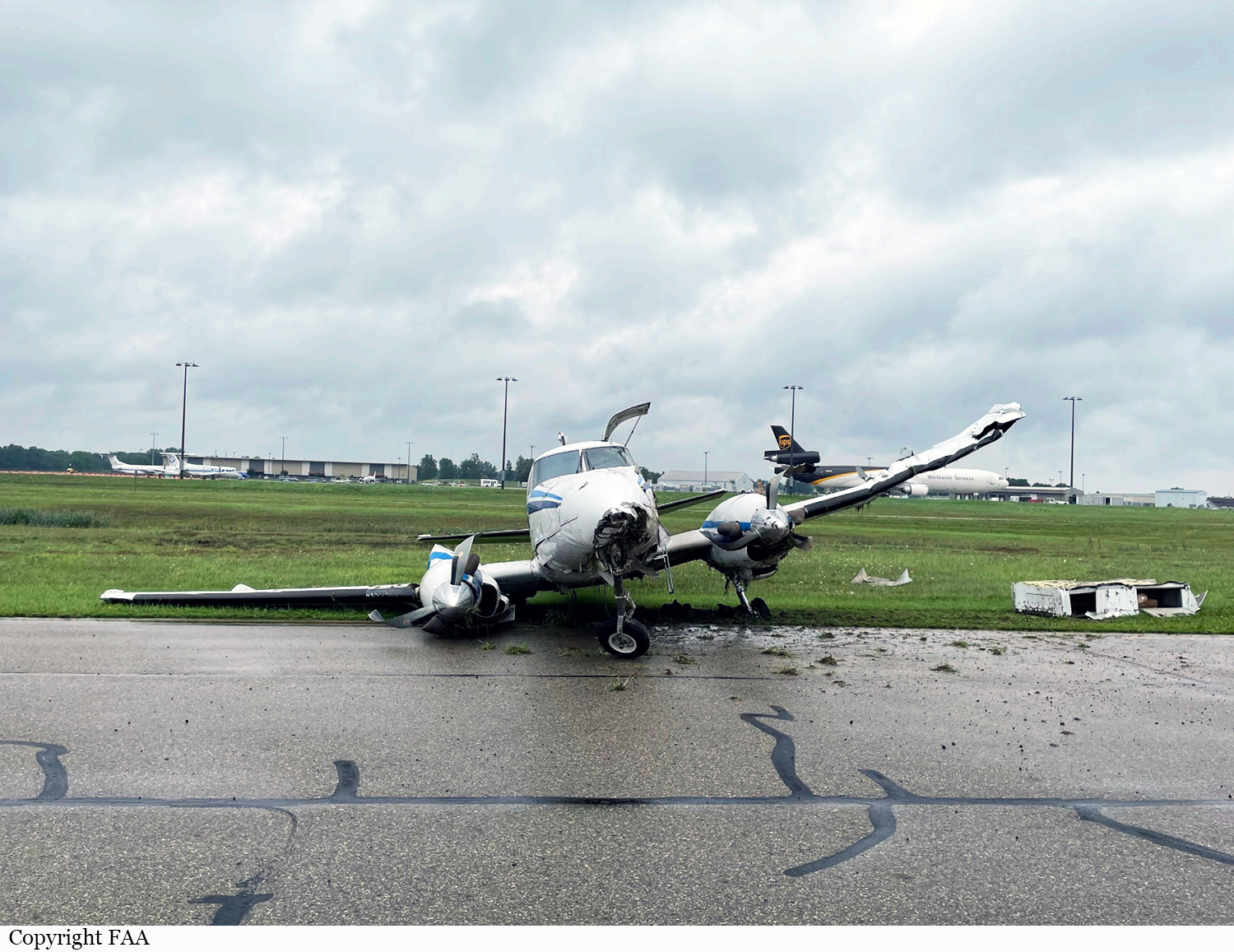
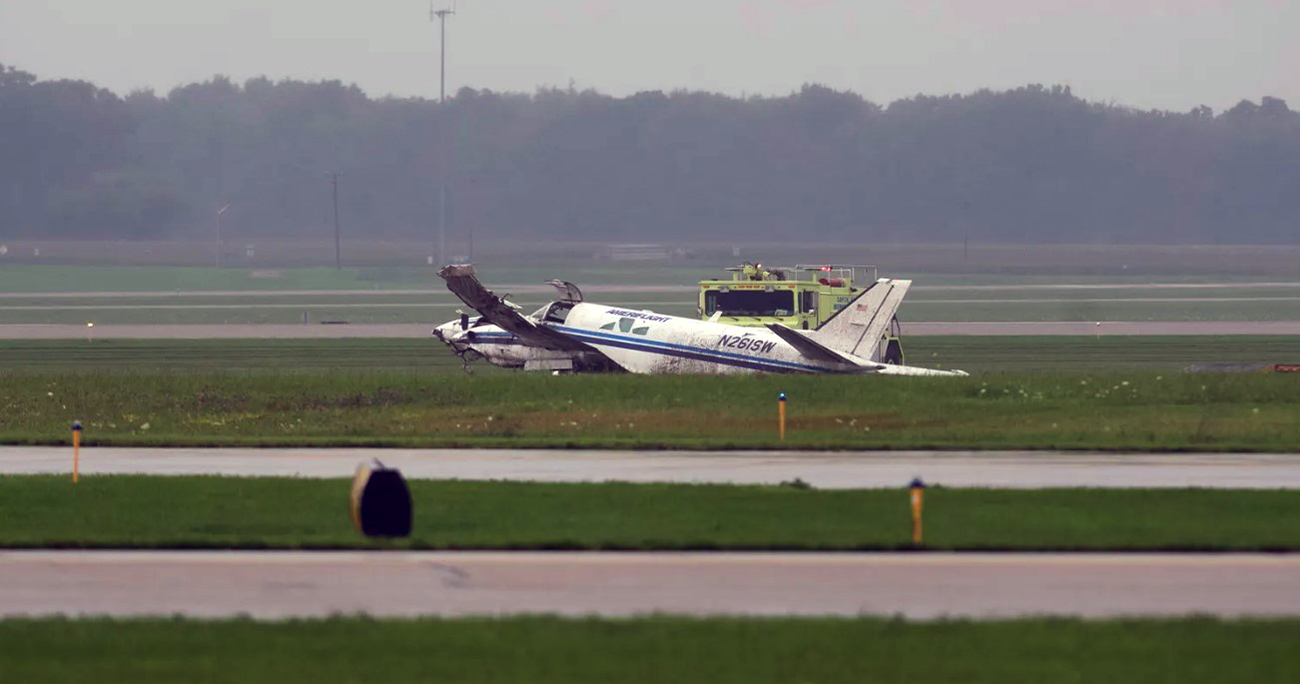
The pilot reported that after a normal start and taxi, the airplane was cleared for takeoff. During the takeoff roll, the airplane drifted right and the pilot corrected with the left rudder. When the airplane reached 100 knots, he rotated the airplane, and about 30 feet in altitude, the airplane experienced a roll to the right. The pilot tried to correct the roll with left rudder but was unable to provide sufficient left rudder. At this point, the airplane had drifted to the right of the runway and over the adjacent parallel taxiway. He was able to regain partial control by reducing engine power and banking the airplane to the left. The pilot attempted to land on the taxiway but was unable to judge his height above ground due to the low visibility, and subsequently impacted terrain to the right of the taxiway. Both wings and the fuselage sustained substantial damage. Prior to exiting the airplane, the pilot noted that the rudder trim was set to the full nose-right position. The pilot reported no preaccident mechanical malfunctions or failures with the airplane that would have precluded normal operation. Prior to the accident, maintenance was completed that consisted of an “Event II & Routine” inspection. The inspection procedure required the rudder trim system to be lubricated, a trim tab free play inspection, and an operational check prior to returning the airplane to service. Review of the maintenance procedures revealed there was no guidance on returning the rudder trim control system back to a neutral position at completion of the inspection.
Probable cause:
The pilot’s failure to properly set the rudder trim position which resulted in a loss of directional control during takeoff. Contributing was the pilot’s inadequate checklist procedures prior to takeoff.
Final Report: