Crash of a Cessna 208 Caravan I in Jenkinsburg: 17 killed

Date & Time: Sep 29, 1985 at 1230 LT
Type of aircraft:
Registration:
N551CC
Flight Phase:
Survivors:
No
Schedule:
Jenkinsburg - Jenkinsburg
MSN:
208-0017
YOM:
1985
Crew on board:
1
Crew fatalities:
Pax on board:
16
Pax fatalities:
Other fatalities:
Total fatalities:
17
Captain / Total flying hours:
4907
Aircraft flight hours:
350
Circumstances:
As the pilot and 16 jumpers departed on a skydiving flight, the engine lost power at approximately 300 feet agl. The aircraft then banked steeply left, spiraled in a steep nose down attitude and crashed. An exam revealed fuel in the tanks was contaminated with water and foreign material with the appearance of brown algae. Milky fluid (approximately 65% jet fuel and 34% water) was found in the engine fuel control, as well as iron contaminants. Dark stringy material was found in the fuel filters. The aircraft had been refueled from 55 gallons drums which contained contaminated fuel. The drums were stored upright and rain water could leak thru the filler caps. N551CC had a history of fuel contamination which on occasions caused the fuel bypass indicator to display. Reportedly, the stall warning circuit breaker had been disengaged on other occasions, so as not to startle the jumpers; however, due to damage, its preimpact position could not be verified. Aircraft was estimated to be 370 lbs over its max weight limit and 1 foot forward of the cg limit. The nine pax seats had been removed to haul up to 18 jumpers. Pax seat belts were not used. Lack of FAA surveillance was noted. All 17 occupants were killed.
Probable cause:
Occurrence #1: loss of engine power (total) - nonmechanical
Phase of operation: takeoff - initial climb
Findings
1. (c) maintenance, service of aircraft/equipment - improper - company/operator management
2. (f) fuel system - contamination
3. Fuel system,filter - blocked (partial)
4. (c) operation with known deficiencies in equipment - performed - company/operator
Management
5. (f) inadequate surveillance of operation - faa (organization)
6. (c) fluid, fuel - contamination
7. (c) fluid, fuel - water
----------
Occurrence #2: loss of control - in flight
Phase of operation: maneuvering - turn to landing area (emergency)
Findings
8. Aircraft weight and balance - exceeded - pilot in command
9. (f) electrical system, circuit breaker - not engaged
10. (f) warning system (other) - disabled
11. (f) improper use of procedure - pilot in command
12. (c) airspeed - not maintained - pilot in command
13. (c) stall - inadvertent - pilot in command
14. (c) spiral - inadvertent - pilot in command
----------
Occurrence #3: in flight collision with terrain/water
Phase of operation: descent - uncontrolled
Findings
15. Seat belt - not used - passenger
Final Report:

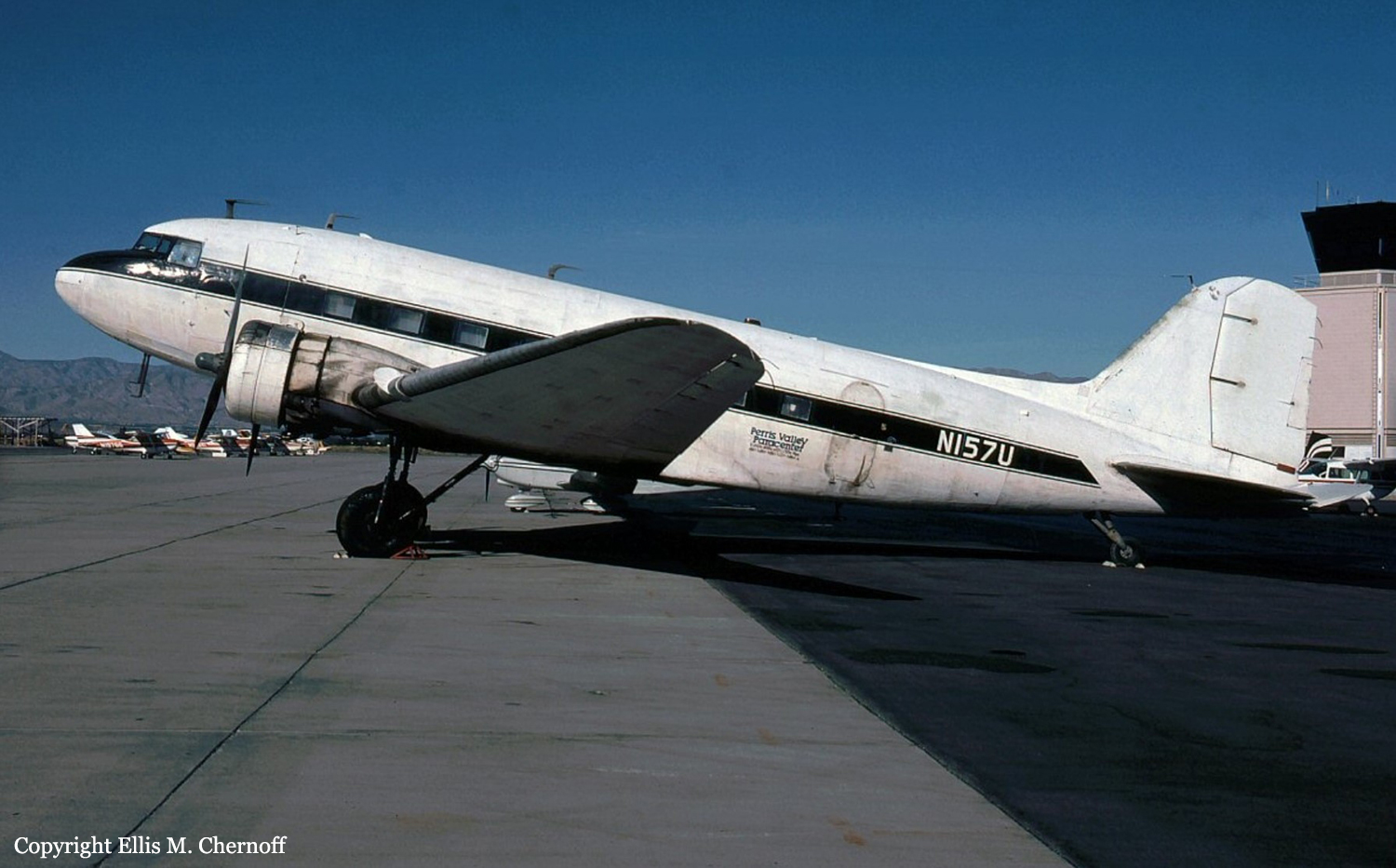
Crash of a Douglas DC-3-313D in Perris Valley

Date & Time: May 4, 1985 at 1920 LT
Type of aircraft:
Operator:
Registration:
N157U
Flight Phase:
Survivors:
Yes
Schedule:
Perris Valley - Perris Valley
MSN:
4132
YOM:
1941
Crew on board:
2
Crew fatalities:
Pax on board:
31
Pax fatalities:
Other fatalities:
Total fatalities:
0
Captain / Total flying hours:
2200
Captain / Total hours on type:
800.00
Aircraft flight hours:
42950
Circumstances:
The aircraft's left engine caught fire during the takeoff roll. The pilot managed to stop the aircraft on the runway and all 31 skydivers and the two member crew evacuated without injury. The left engine propeller had lost one blade which was found several days later 3,000 feet west of the wreckage. There was no evidence found to substantiate compliance with a mandatory airworthiness directive on the propeller blade.
Probable cause:
Occurrence #1: airframe/component/system failure/malfunction
Phase of operation: takeoff - roll/run
Findings
1. (c) propeller system/accessories, blade - failure, total
2. (f) maintenance, compliance with ad - not obtained - company maintenance personnel
3. (c) propeller system/accessories, blade - separation
----------
Occurrence #2: fire/explosion
Phase of operation: takeoff - roll/run
Final Report:

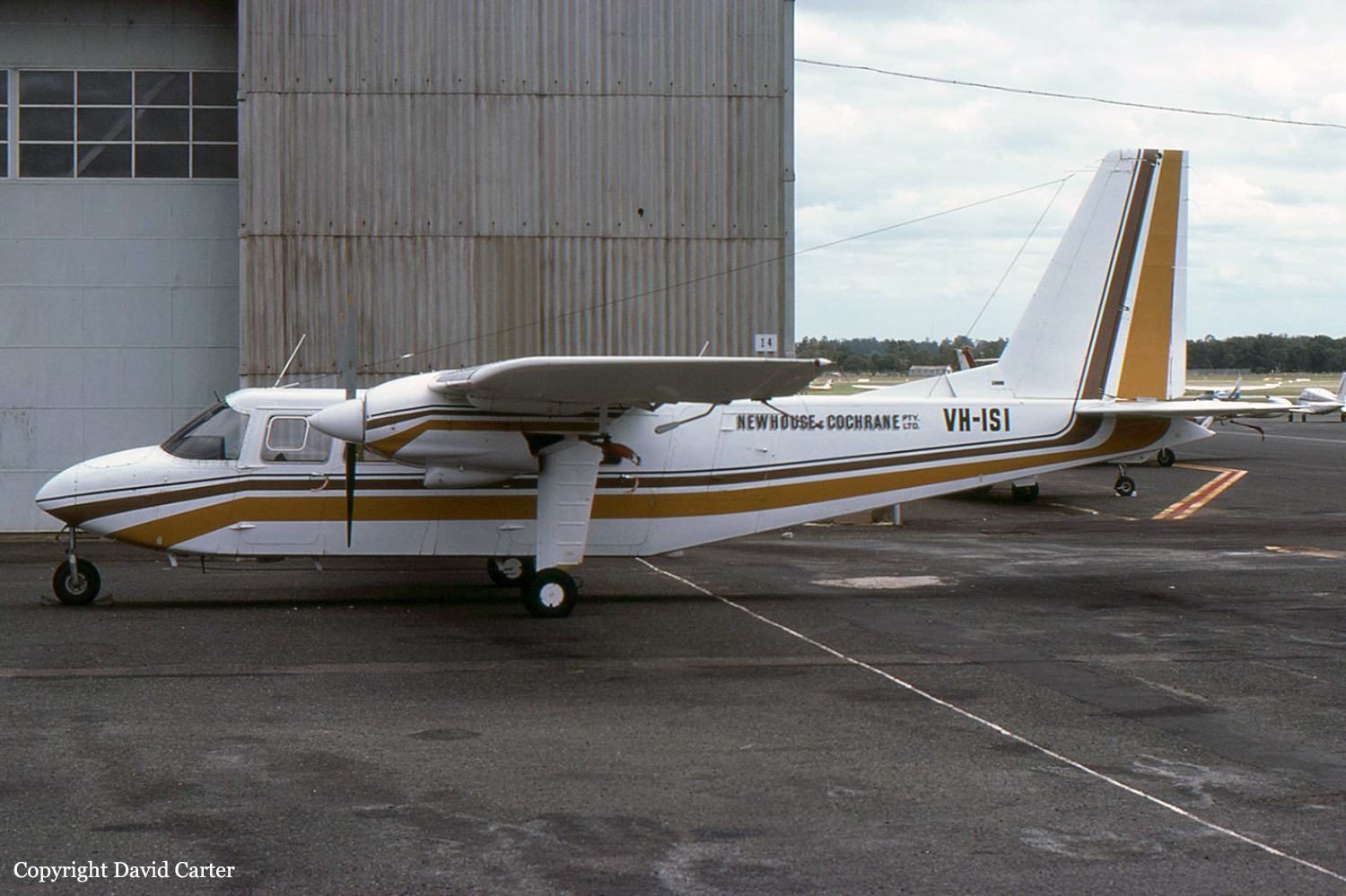
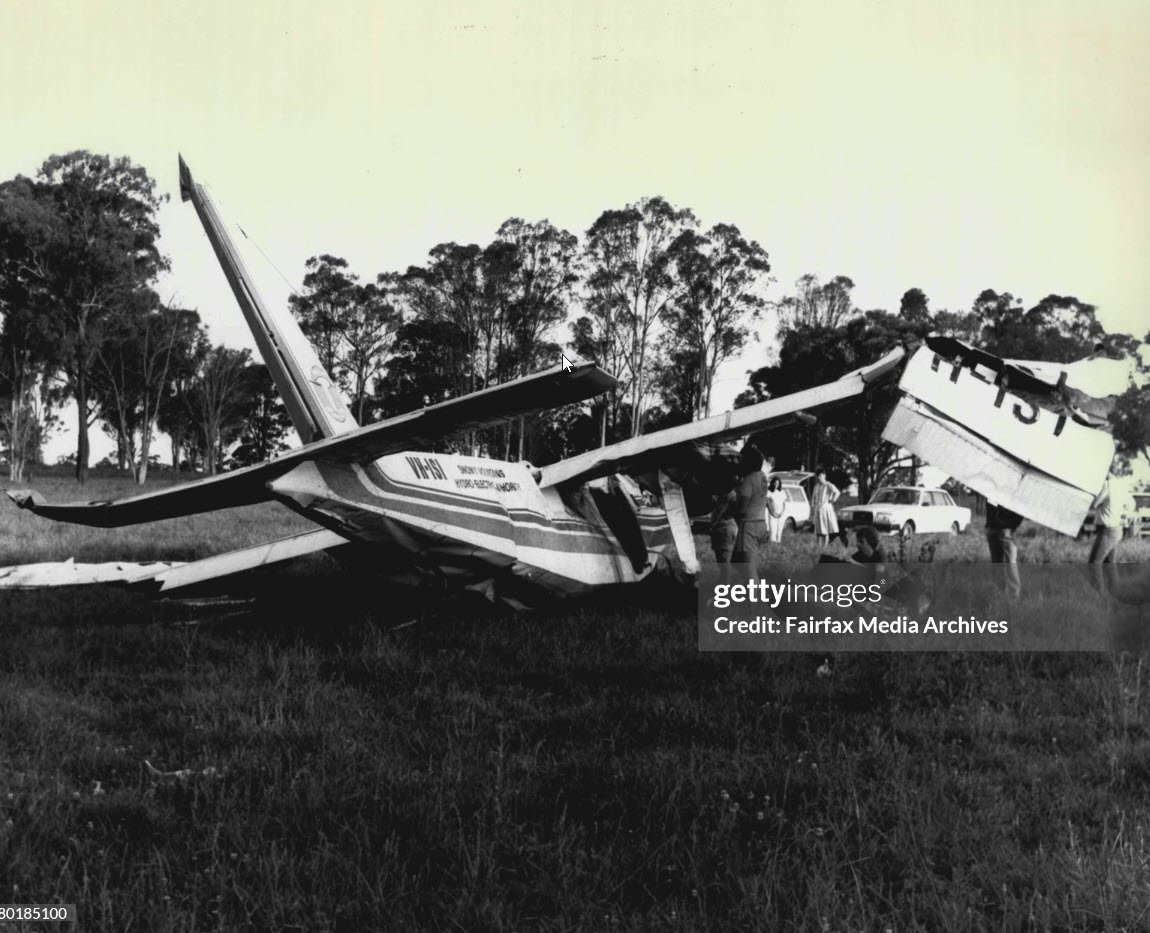
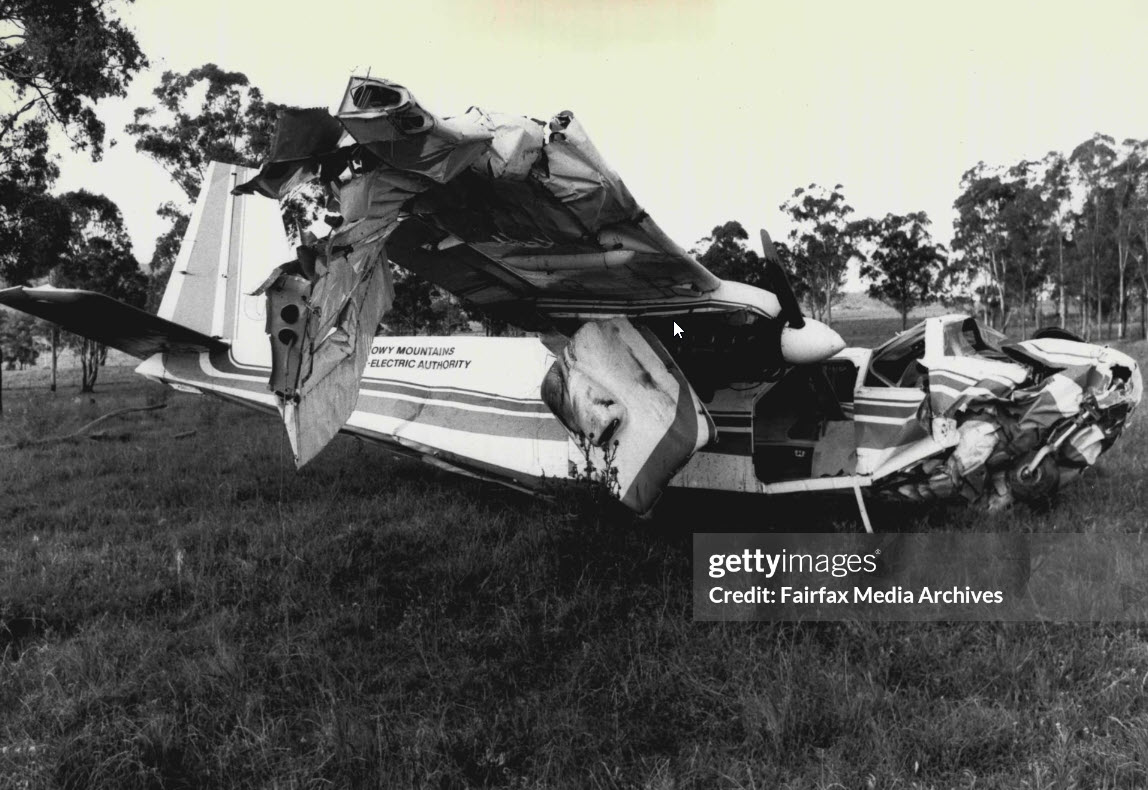
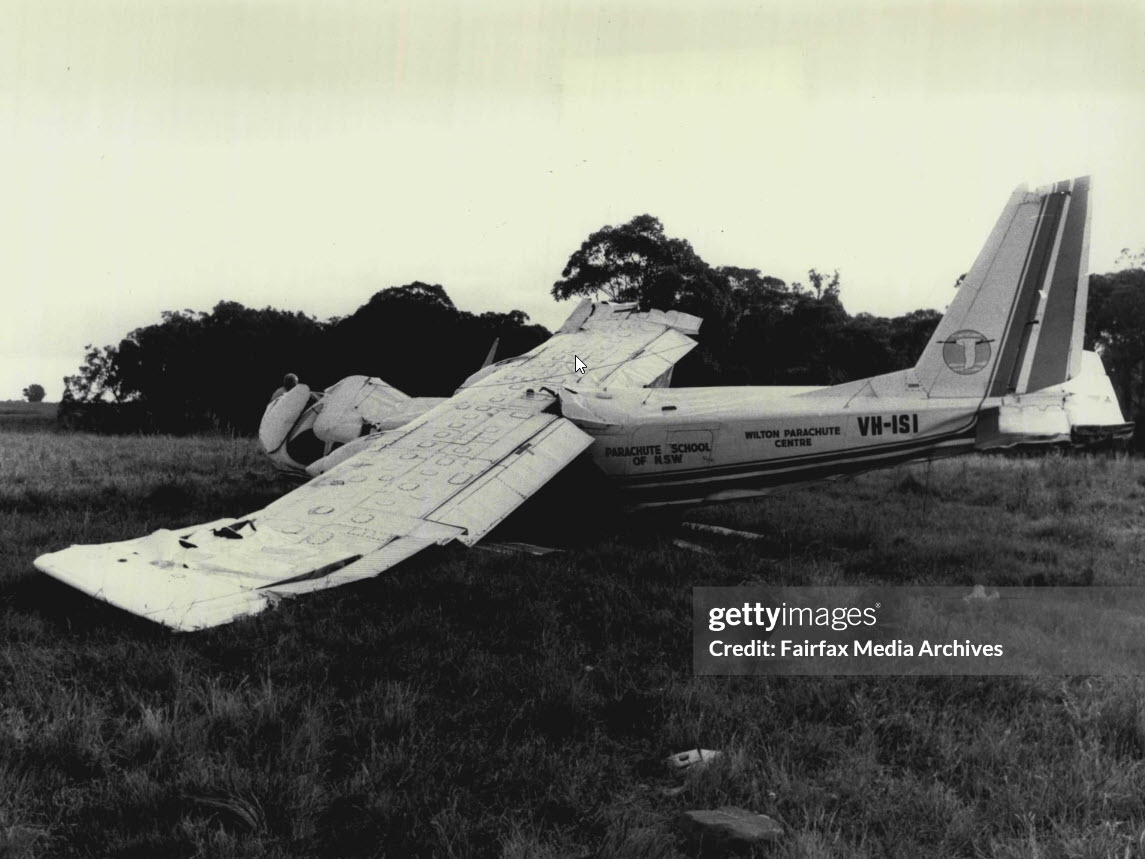
Crash of a Britten-Norman BN-2A-21 Islander in Wilton

Date & Time: Nov 25, 1984 at 1248 LT
Type of aircraft:
Operator:
Registration:
VH-ISI
Flight Phase:
Survivors:
Yes
Schedule:
Wilton - Wilton
MSN:
329
YOM:
1973
Country:
Region:
Crew on board:
1
Crew fatalities:
Pax on board:
12
Pax fatalities:
Other fatalities:
Total fatalities:
0
Circumstances:
At a height of about 200 feet after take-off the right engine lost power. The pilot feathered the propeller and commenced a gentle left turn in order to return to the strip. He later advised that the aircraft began to sink towards some large trees and he was forced to increase the angle of bank in an effort to avoid them. Shortly afterwards the aircraft struck the ground heavily in an adjacent paddock about 1 kilometre from the strip.
Probable cause:
The engine failure was caused by jamming of accessory drive gearing as a result of the effects of excessive wear within a magneto. It was probable that a mandatory inspection of the magneto which fell due 84 flying hours before the accident, was not conducted. On take-off the aircraft weight exceeded the authorised limit, however following the engine failure the pilot was able to maintain straight and level flight. A cleared area of ground lay ahead and just to the left of the flight path but the pilot had considered the aircraft had sufficient performance capability to permit a return to the trip.
Final Report:

Crash of a Fletcher FU-24-950 in Hokitika: 1 killed

Date & Time: Oct 28, 1984
Type of aircraft:
Operator:
Registration:
ZK-DJF
Flight Phase:
Survivors:
Yes
Schedule:
Hokitika - Hokitika
MSN:
177
YOM:
1972
Country:
Region:
Crew on board:
1
Crew fatalities:
Pax on board:
4
Pax fatalities:
Other fatalities:
Total fatalities:
1
Circumstances:
The single engine aircraft departed Hokitika Airport on a local skydiving flight, carrying four skydivers and one pilot. The ripcord of the reserve parachute of one of the jumpers was snagged as he climbed out of the cockpit and the chute streamed and began to deploy. The jumper struck the tailplane as he was dragged aft, damaging it, and the Fletcher went out of control and dived into the ground. The remaining parachutists all escaped the crashing plane by the use of their parachutes but the pilot, who was not wearing a parachute, was killed in the crash. The jumper whose reserve had accidentally deployed suffered a head injury which rendered him unconscious briefly but landed safely.

Crash of a Max Holste M.H.1521M Broussard in Clermont-Ferrand

Date & Time: Jun 15, 1984
Operator:
Registration:
06/F-UQTZ
Flight Phase:
Survivors:
Yes
MSN:
006C
YOM:
1957
Country:
Region:
Crew on board:
0
Crew fatalities:
Pax on board:
0
Pax fatalities:
Other fatalities:
Total fatalities:
0
Circumstances:
Crashed in unknown circumstances. Crew fate unknown.

Crash of a Max Holste M.H.1521M Broussard in Soulac-sur-Mer

Date & Time: Feb 17, 1984
Registration:
F-BMMO
Flight Phase:
MSN:
170
YOM:
1959
Country:
Region:
Crew on board:
0
Crew fatalities:
Pax on board:
0
Pax fatalities:
Other fatalities:
Total fatalities:
0
Circumstances:
Crashed in unknown circumstances. Occupant fate unknown.

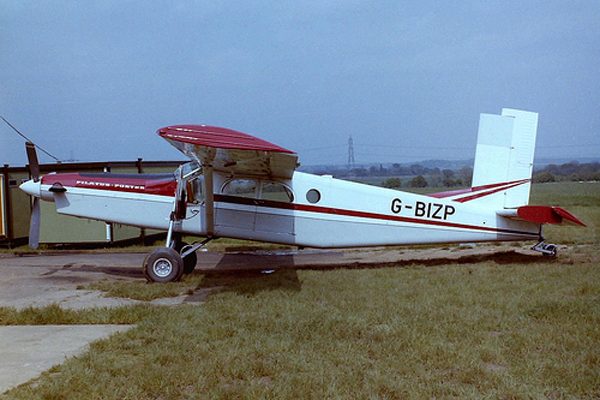
Crash of a Pilatus PC-6/B2-H2 Turbo Porter near Peterborough

Date & Time: Dec 18, 1983 at 1042 LT
Operator:
Registration:
G-BIZP
Flight Phase:
Survivors:
Yes
Schedule:
Peterborough - Peterborough
MSN:
812
YOM:
1981
Region:
Crew on board:
1
Crew fatalities:
Pax on board:
8
Pax fatalities:
Other fatalities:
Total fatalities:
0
Captain / Total flying hours:
2350
Captain / Total hours on type:
700.00
Circumstances:
The aircraft took off on the first flight of the day with eight parachutists, and a reported fuel load of 70 US gallons. At an altitude of approximately 11,000 feet it was decided that the cloud cover at that time was obscuring the dropping zone to an unacceptable degree, and so the detail was cancelled. During the subsequent descent, on rolling out of a left turn at about 4,500 feet, a bang was heard, and the left aileron was seen to have become partially detached. After a violent lateral oscillation of the control column lasting a few seconds, the right aileron also became partially detached. At this stage the parachutists successfully abandoned the aircraft on the orders of the pilot. The aircraft then adopted an angle of bank to the right of approximately 45° despite the application of full left rudder. The descent was continued until the pilot realized that the aircraft was approaching the village of Yarwell; he therefore applied engine power to ensure that the aircraft would clear the houses. The bank angle then increased to 60° and the aircraft struck the ground right wing low, coming to rest upright, and facing the opposite direction. The pilot sustained minor injuries, and there was no fire.
Probable cause:
Subsequent examination showed that, on each aileron, the centre of the three attachments to the wing had suffered an in-flight failure, leading to the subsequent detachment of one half of each aileron control surface. Detailed inspection revealed the presence of fatigue in each of the rear angle brackets, located within the wing, to which are attached the aileron supports. Preliminary indications are that the point of primary failure occurred at the left aileron rear angle bracket; the remaining brackets had failed subsequently as a result of overload.
Final Report:

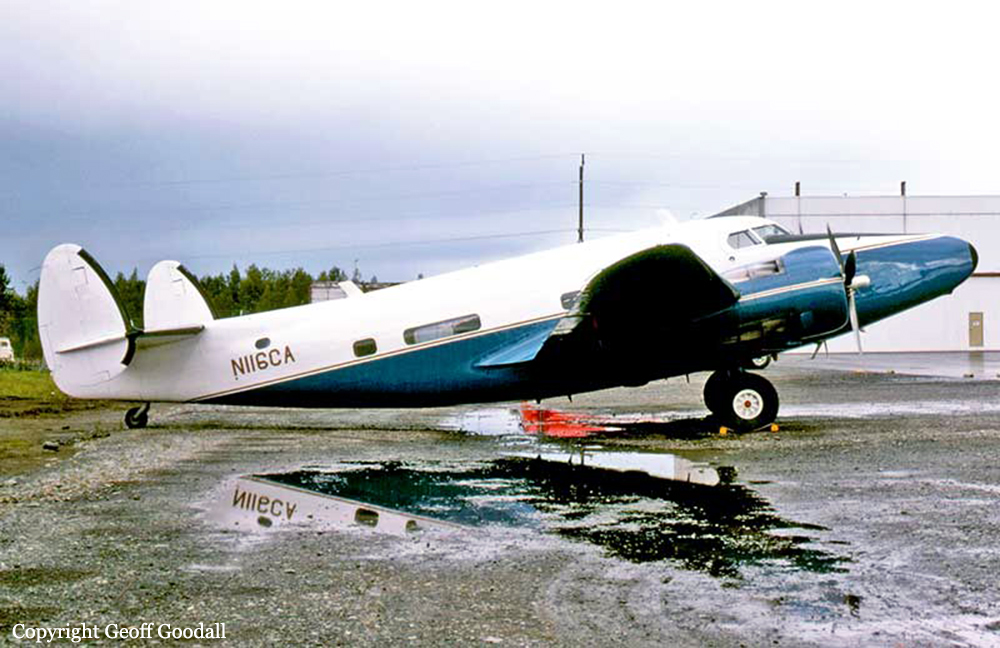
Crash of a Lockheed 18-56 LodeStar in Silvana: 11 killed

Date & Time: Aug 21, 1983 at 1832 LT
Type of aircraft:
Registration:
N116CA
Flight Phase:
Survivors:
Yes
Schedule:
Silvana - Silvana
MSN:
2472
YOM:
1943
Crew on board:
2
Crew fatalities:
Pax on board:
24
Pax fatalities:
Other fatalities:
Total fatalities:
11
Captain / Total flying hours:
9000
Captain / Total hours on type:
110.00
Circumstances:
The aircraft was on a sport parachute flight to carry 24 parachutists to 12,500' over a drop zone (dz) for a mass jump. It was in a cargo configuration with no passenger seats, but it had one jump seat. There were 24 seat belts on the floor of the cargo area. Also, the cabin door had been removed and an unapproved step and 4 handholds were installed outside and forward of the cabin door for parachutists. The usual jump-run procedure was for the aircraft to be slowed to 95 to 100 knots, extend the gear and approach flaps and reduce power on the left engine. The jumpers remained in position without using seat belts until approaching the dz, then two moved outside the aircraft while others moved close to the doorway. The first jumpers were unaware of any problem, but saw the aircraft enter a steep bank, roll over and spiral nose down. 16 jumpers exited the aircraft, but three hit the stabilizer. The aircraft crashed in a near vertical descent. Investigation revealed the cg was behind the aft limit for takeoff and the jump. The elevator trim actuator was found in a position for full nose-up trim.
Probable cause:
Occurrence #1: loss of control - in flight
Phase of operation: other
Findings
1. Maintenance,modification - performed
2. (c) supervision - improper - company/operator management
3. (c) aircraft weight and balance - exceeded - pilot in command
4. Airspeed - reduced - pilot in command
5. (c) stall - inadvertent - pilot in command
----------
Occurrence #2: in flight collision with terrain/water
Phase of operation: descent - uncontrolled
Final Report:

Crash of a Beechcraft C-45H Expeditor in Taft: 14 killed

Date & Time: Oct 17, 1982 at 1245 LT
Type of aircraft:
Operator:
Registration:
N403SE
Flight Phase:
Survivors:
No
Schedule:
Taft - Taft
MSN:
AF-701
YOM:
1954
Location:
Crew on board:
1
Crew fatalities:
Pax on board:
13
Pax fatalities:
Other fatalities:
Total fatalities:
14
Circumstances:
The aircraft was on a local flight involving a parachute jumping activity. In addition to the pilot, there were 12 parachutists and an observer on board. The pilot initiated his takeoff on runway 18. A witness stated that shortly after takeoff, the engine power was reduced to climb power, followed by the gear retraction. Reportedly, the aircraft had climbed to about 150 feet agl when the nose pitched up, the plane rolled to the left and then it crashed in a steep left bank, nose down attitude. An investigation revealed that the aircraft was loaded well beyond its maximum gross weight and aft cg limits. The amount of fuel on board was not verified, but even with no fuel, the plane would have been about 580 lbs over the maximum limit. With 100 gallons, the estimated gross weight would have been about 9,939 lbs with the cg at about 121 inches. The maximum certificated gross weight was 8,750 lbs with an aft cg limit of 117.6 inches. Extensive ground fire damage, but no preimpact, mechanical discrepancies evident.
Probable cause:
Occurrence #1: loss of control - in flight
Phase of operation: takeoff - initial climb
Findings
1. (c) preflight planning/preparation - inadequate - pilot in command
2. (c) aircraft weight and balance - exceeded - pilot in command
3. Aircraft handling - not possible - pilot in command
4. Stall - uncontrolled - pilot in command
5. (c) preflight planning/preparation - inadequate - pilot in command
6. (c) aircraft weight and balance - exceeded - pilot in command
7. Aircraft handling - not possible - pilot in command
8. Stall - uncontrolled - pilot in command
----------
Occurrence #2: in flight collision with terrain/water
Phase of operation: descent - uncontrolled
Final Report:

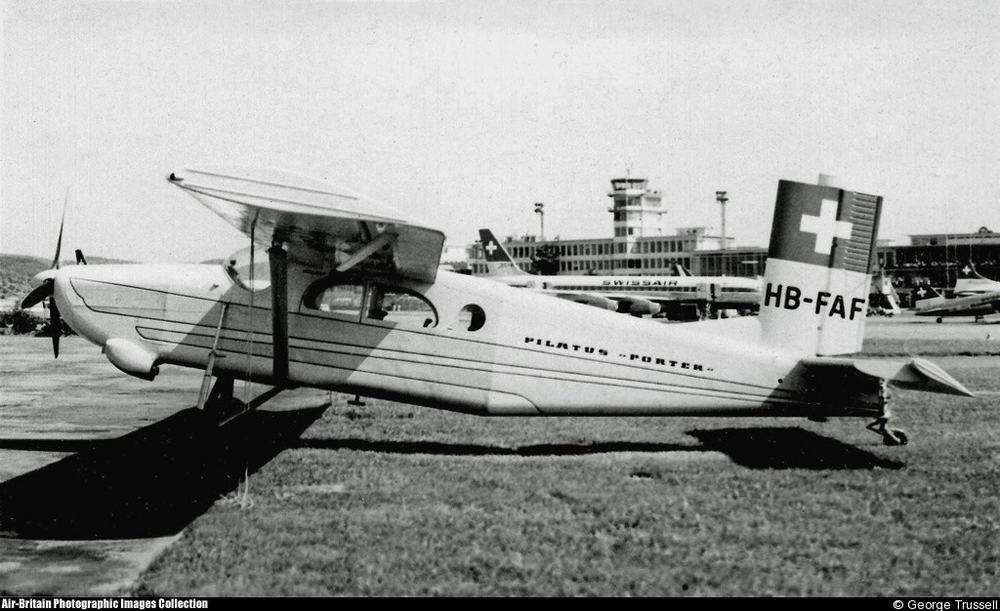
Crash of a Pilatus PC-6/B1-H2 Turbo Porter in Triengen

Date & Time: Oct 3, 1982 at 1825 LT
Operator:
Registration:
HB-FAF
Flight Phase:
Survivors:
Yes
Site:
Schedule:
Triengen - Triengen
MSN:
516
YOM:
1961
Country:
Region:
Crew on board:
1
Crew fatalities:
Pax on board:
1
Pax fatalities:
Other fatalities:
Total fatalities:
0
Captain / Total flying hours:
445
Captain / Total hours on type:
86.00
Aircraft flight hours:
2083
Circumstances:
The single engine airplane departed Triengen Aerodrome for a local skydiving flight, carrying eight skydivers and one pilot. At an altitude of 3,000 meters, after seven skydivers jumped out, the left ailerons detached. The pilot and the remaining passenger abandoned the aircraft that entered a dive and crashed onto a house located in the village of Triengen. The aircraft and the house were destroyed while there were no injuries and no casualties.
Probable cause:
In-flight detachment of the left ailerons caused by the failure of the aileron control cable that had previously been damaged for reasons that investigations were unable to determine.
Final Report: