Crash of a Douglas A-26 Invader at Apiay AFB

Date & Time: Dec 28, 1966 at 1130 LT
Type of aircraft:
Operator:
Flight Phase:
Flight Type:
Survivors:
Yes
Schedule:
Apiay - Apiay
Country:
Crew on board:
2
Crew fatalities:
Pax on board:
0
Pax fatalities:
Other fatalities:
Total fatalities:
0
Circumstances:
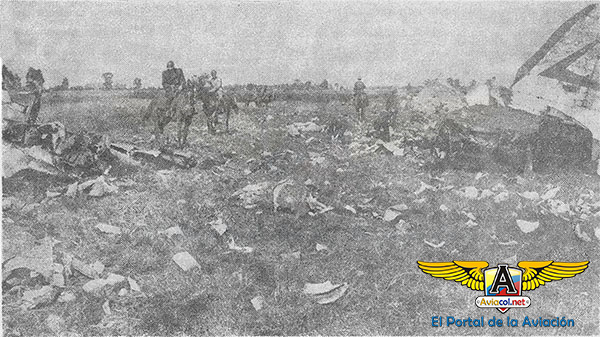
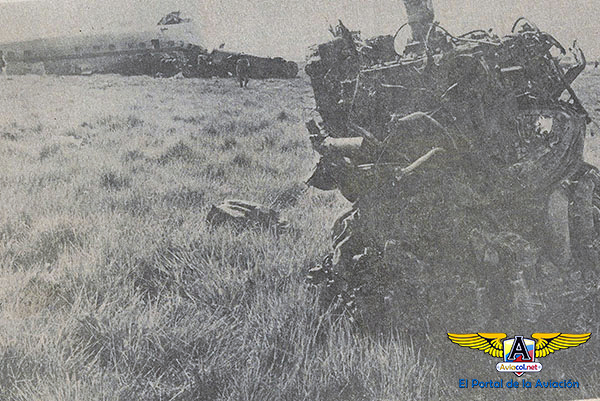
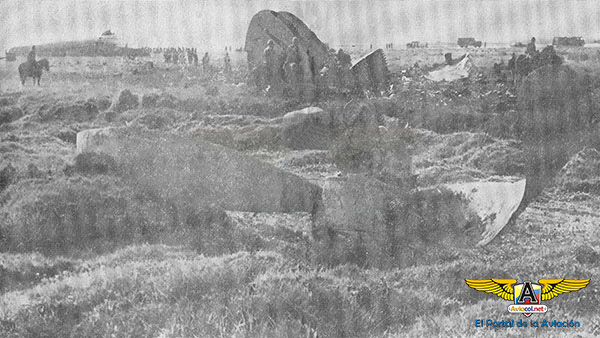
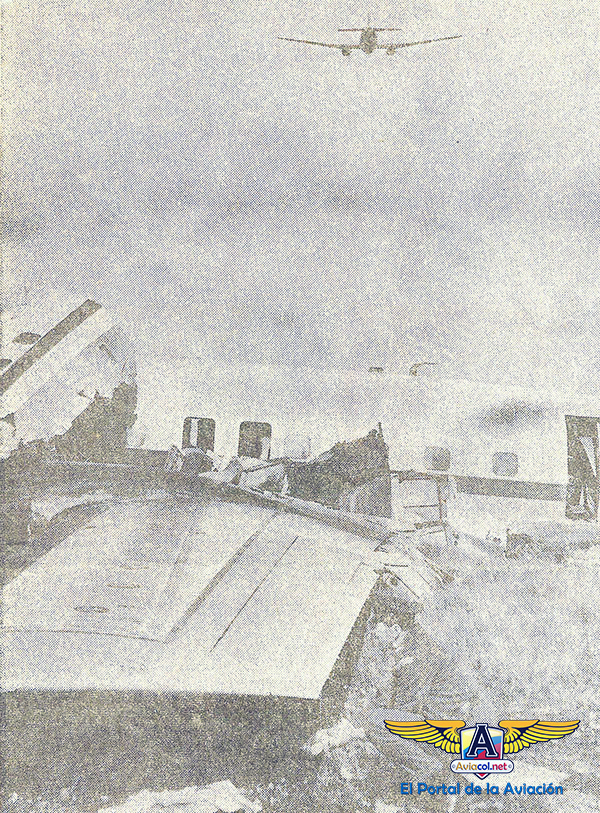
While completing a local training flight, the twin engine aircraft went out of control and crashed in flames in an open field located 4 km from Apiay AFB. The aircraft was destroyed by a post crash fire and both pilots were injured.

Crash of a Douglas C-47A-80-DL on Tajumbina Peak: 29 killed

Date & Time: Dec 24, 1966 at 0956 LT
Operator:

Registration:
HK-161
Flight Phase:
Survivors:
No
Site:
Schedule:
Bogotá – Pasto
MSN:
19630
YOM:
1944
Flight number:
AV729
Country:
Crew on board:
3
Crew fatalities:
Pax on board:
26
Pax fatalities:
Other fatalities:
Total fatalities:
29
Captain / Total flying hours:
6653
Captain / Total hours on type:
2069.00
Copilot / Total flying hours:
1701
Copilot / Total hours on type:
1097
Aircraft flight hours:
28422
Circumstances:
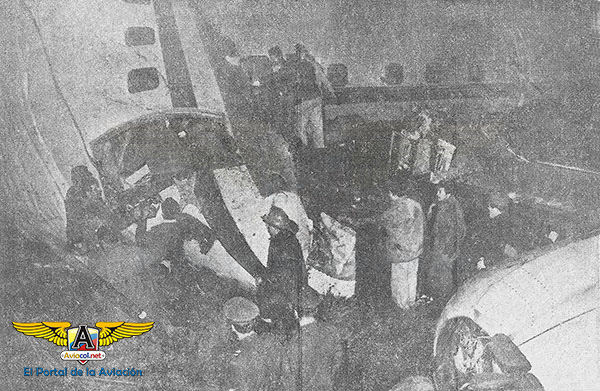
Flight 739 was a scheduled domestic flight from Bogotá-El Dorado Airport to Pasta-Cano Airport. It was scheduled to depart Bogotá at 0615 hours local time; however, when the crew reported to the Avianca operations office at 0550 hours they were advised that Eldorado Airport was closed owing to thick fog. The airport was reopened to operations at 0750 hours. At about 0830 hours Flight 729 was observed to have commenced taxiing and entered the runway system without having received a clearance to do so. The flight was then given instructions for Runway 30 but further transmissions on 121.9 mc/s were not acknowledged. The flight was subsequently contacted on 118.1 mc/s and the pilot stated he had confused instructions with those given to another aircraft. Take-off was made on runway 10 and when over the threshold of Runway 12 the aircraft commenced a very steep turn to the left in a nose-high attitude. Recovery was effected and the aircraft departed at 0838 hours on a VFR flight plan. After the take-off and climb the flight left the Bogota tower frequency and subsequently contacted Bogota Control and Route Control on 5589 Kc/s. The following position reports were received: 12 500 ft over Guataqui at 0842 hrs, over El Paso at 0902 hrs, over Tuluá at 0924 hrs; at 8 500 ft over Cali, at 0942 hrs, and at 8 500 it over Santander at 0948 hrs estimating Dos Rios at 1014 hrs. No position report for Dos Rios was received. The Tuluá position report was transmitted to Cali as follows: "Tuluá 0922 descending to 8 500, estimating Cali 0942". As the message was very weak the flight was requested to confirm its departure and position; it reported on route frequency 5476.5 KC/S its departure as 0825/38. The flight was then requested to change to VHF frequency 119.1 for radio contact when approaching Cali. It did so but as its signals were not heard it returned to the route frequency stating that it would remain on that frequency since it had not been able to establish contact on the VHF frequency. At 1030 hrs Cali requested information on the flight from Pasto, which reported that the flight had not arrived and there was no information about it. From 1030 hrs onwards the aircraft was called on all available frequencies but no reply was received. An alert phase was declared at 1100 hrs and followed by a distress phase at 1125 hrs. The wreckage of the aircraft was found on 3 January 1967 after 11 days of searching. It had crashed and caught fire at an elevation of approximately 11 600 ft on the southern slopes of Tajumbina Peak (elevation 13 572 ft) in the El Descanse Police Inspectorate. Coordinates of the site of accident were 1° 20' 30" N 76° 47' 30" W. The accident occurred at approximately 0956 hrs on 24 December 1966. The aircraft was destroyed by impact forces and a post crash fire and all 29 occupants have been killed.
Probable cause:
The accident was attributed to pilot error consisting of inflight indiscipline and rash imprudence on the part of the pilot-in-command of the aircraft for:
- Not having made use of the regulation rest period and having consumed alcoholic drinks a few hours before flying,
- Not having followed the route recommended in the Manual of Colombian Air Routes, which he reported he was taking; having reported positions that did not correspond to reality,
- Continuing a visual flight in unfavourable IFR conditions thereby failing to comply with the standards laid down in Part V of the Manual of Aeronautical Rules,
- Having flown at an altitude below the minimum safety altitude laid down for visual flying in Part V of the Manual of Aeronautical Rules (he flew along the Canon del Rfo Cascabel and subsequently crashed at an altitude of about 11 600 ft),
A possible contributory cause of this accident was inadequate supervision by the Airline consisting of a lack of control over the flight crews.
Final Report:


Crash of a Lockheed L-1649A Starliner in Bogotá: 17 killed

Date & Time: Dec 18, 1966 at 0255 LT
Type of aircraft:
Operator:
Registration:
N7301C
Survivors:
Yes
Schedule:
Miami - Bogotá
MSN:
1002
YOM:
1957
Country:
Crew on board:
7
Crew fatalities:
Pax on board:
52
Pax fatalities:
Other fatalities:
Total fatalities:
17
Captain / Total flying hours:
22000
Captain / Total hours on type:
600.00
Copilot / Total flying hours:
18000
Copilot / Total hours on type:
350
Aircraft flight hours:
11068
Circumstances:
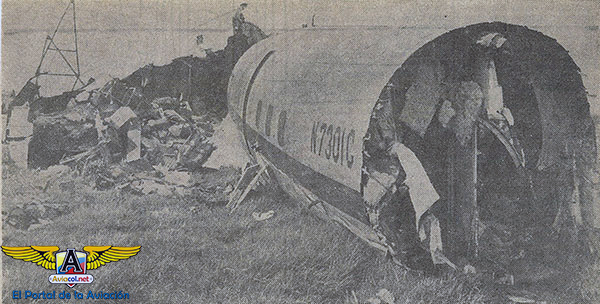
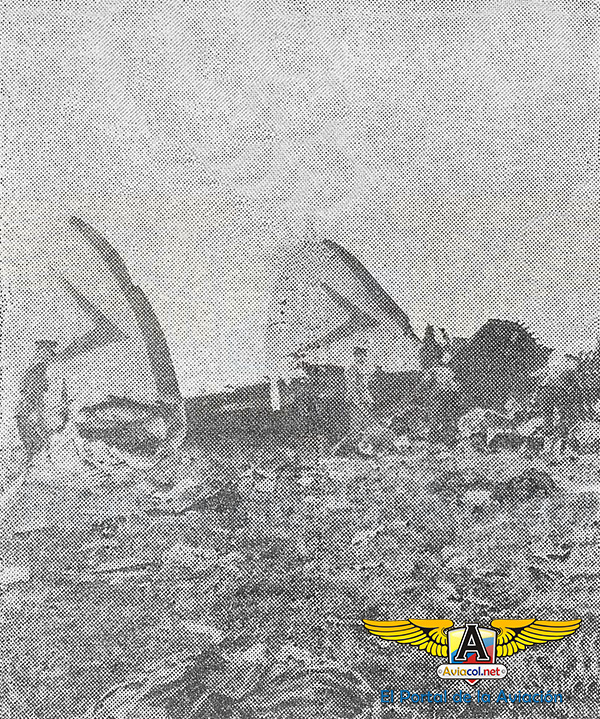
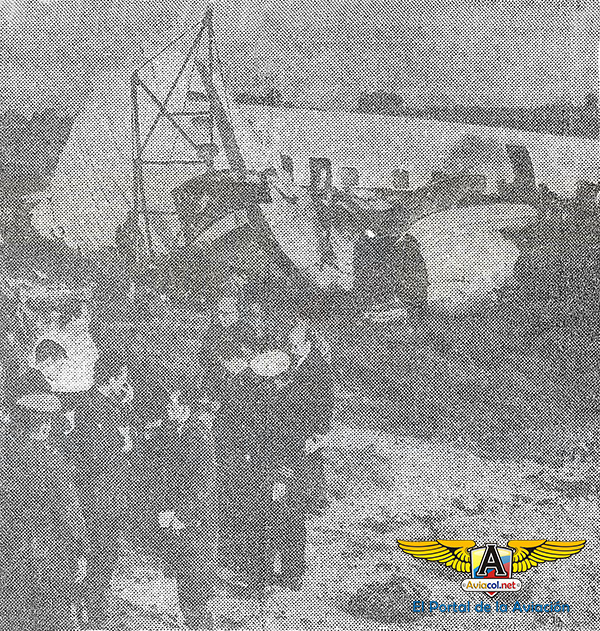
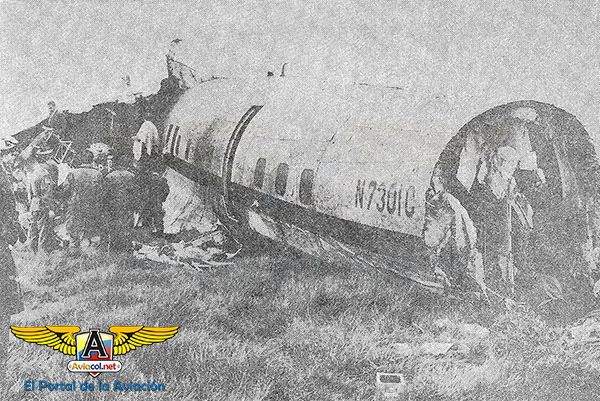
The aircraft, which was on wet lease from Passaat Ltd., Miami, U.S.A., to Aerocondor de Colombia, was on a non-scheduled international flight from Miami International Airport, U.S.A., to Bogotá-El Dorado Airport, Colombia. The flight took off from Miami at 2040 hours local time on 17 December and proceeded normally. At 0240 hours local time, on 18 December, it reported over the Bogotá VOR at 12,000 feet and requested from the Air Route Traffic Control Centre authorization to change over to frequency 118.1 mcs and to contact El Dorado Control Tower. This was granted and communications were established with the Control Tower. The flight was given a QNH of 30.14 in. Hg. and was cleared for landing on Runway 12; however, it requested permission to land on Runway 30. It was then instructed to proceed directly to the inner marker for Runway 12, at 8,895 feet (elevation of the airport was 8,364 feet) and if visual to make a circling approach to Runway 30. There were fog patches on and in the vicinity of the aerodrome. The tower communications tape recording revealed that the flight reported proceeding inbound to Runway 12 and that it was instructed to continue its approach to Runway 12 as the fog appeared to be thinning out in that direction. Shortly thereafter the tower asked "how is visibility in the direction of 12" and the flight replied "It is a little better, I think we can make it in a second". At 0753 hours GMT the flight requested permission to land and the tower replied 'I... correct, cleared to land if you can do so, lights are at maximum intensity, let us know if it is necessary to reduce them'. The flight advised the lights were OK and reported on final approach. It was cleared to land and was advised again that the wind was calm and the QNH was 30.14 in. Hg. It acknowledged the message by "Thanks". Some 10 to 20 sec. later an explosion was heard and the control tower called the flight several times in vain. The fire crews were immediately alerted and directed to the threshold of Runway 12. They reported that the wreckage of the aircraft was some 10 to 20 m before the threshold of Runway 12. Four crew members and 13 passengers were killed while 42 other occupants were injured. The aircraft was destroyed.
Probable cause:
The accident was attributed to pilot error. The pilot-in-command misjudged the distance between the aeroplane and the ground and undershot the landing area. He also exercised poor judgement in taking the decision to land in variable weather conditions which perhaps precluded proper visibility of the VASI lights and identification of the exact location of the threshold of Runway 12, and in failing to follow the missed approach procedure specified on the Eldorado International Airport chart. The following findings were reported:
- The crew of the aircraft held valid licences with appropriate type rating at the time of the accident; however, the pilot-in-command held a "second class" medical certificate which, according to the U.S. FAA regulations did not entitle him to act as pilot-in-command of an airline commercial transport aircraft carrying passengers,
- The copilot and flight engineer held valid medical certificates,
- The aircraft had a valid Certificate of Airworthiness in accordance with the FAA regulations and had been inspected on 2 September 1966. Maintenance was carried out at an FLU approved base,
- There were variable fog patches at Eldorado Airport at the time of the final approach to land; however, the pilot considered that the weather conditions were satisfactory,
- The landing weight of the aircraft at Eldorado Airport was 5 800 lb above the limit specified by the manufacturer,
- The investigations carried out at the scene of the accident indicated that the aircraft, its controls and the powerplants were operating properly. Furthermore, no technical deficiencies had been reported by the crew,
- It was concluded that the accident was due to an error of the pilot who misjudged the distance between the aircraft and the ground, and who exercised poor judgement in taking the decision to land in variable weather conditions which possibly reduced the visibility of the VASI lights and precluded proper identification of the threshold of the runway,
- The recording of the communications between the aircraft and the control tower revealed the presence of a fourth person in the cockpit during the final approach. All communications from the aircraft were made in Spanish. The official report of the FAA's operations inspector stated that the pilot-in-command spoke a little Spanish but not fluently. It was concluded that the Manager of Aerocondor was the person in direct contact with the control tower and that his presence in the cockpit may have disturbed the execution of the landing operation by the pilot-in-command and caused him to exceed his abilities.
Final Report:

Crash of a Consolidated PBY-5A Catalina off La Pedrera: 12 killed

Date & Time: Nov 26, 1966 at 1424 LT
Type of aircraft:
Operator:
Registration:
FAC-621
Flight Phase:
Survivors:
Yes
Schedule:
La Pedrera – Leticia
Country:
Crew on board:
3
Crew fatalities:
Pax on board:
10
Pax fatalities:
Other fatalities:
Total fatalities:
12
Circumstances:
Shortly after takeoff from runway 33 at La Pedrera Airport, while in initial climb, the seaplane stalled and crashed into the Rio Caquetá. A passenger was rescued while 12 other occupants were killed.

Crash of a Curtiss C-46A-35-CU Commando in Bogotá

Date & Time: Nov 4, 1966 at 0730 LT
Type of aircraft:
Registration:
HK-512
Flight Phase:
Flight Type:
Survivors:
Yes
Schedule:
Bogotá – Cali
MSN:
26784
YOM:
1944
Country:
Crew on board:
2
Crew fatalities:
Pax on board:
0
Pax fatalities:
Other fatalities:
Total fatalities:
0
Circumstances:
Shortly after takeoff from Bogotá-El Dorado Airport, while climbing, the electrical system failed. The crew decided to reduce his altitude and to attempt an emergency landing in a field located in Funza, about six km northwest of the airfield. While the airplane was damaged beyond repair, both occupants were uninjured.
Probable cause:
Failure of the electrical system during initial climb.

Crash of a Douglas DC-4-1009 in Bogotá: 2 killed

Date & Time: Sep 22, 1966 at 0315 LT
Type of aircraft:
Operator:
Registration:
HK-174
Flight Phase:
Flight Type:
Survivors:
No
Schedule:
Bogotá - Barranquilla
MSN:
42929
YOM:
1946
Flight number:
AV870
Country:
Crew on board:
2
Crew fatalities:
Pax on board:
0
Pax fatalities:
Other fatalities:
Total fatalities:
2
Captain / Total flying hours:
13000
Captain / Total hours on type:
3244.00
Copilot / Total flying hours:
1965
Circumstances:
Flight 870 was a scheduled domestic cargo flight from Bogotá-El Dorado International Airport to Barranquilla-Soledad Airport. The aircraft took off from runway 30 at 0315 hours local time. According to some witnesses it appeared to lift off with difficulty opposite the control tower and when it reached the airport boundary the crew announced that they were returning to land. The Control Tower asked why they were returning but received no reply. After the accident tower control personnel stated that during take-off the noise of the engines was louder than usual, as if more than one engine was overspeeding, and that when the aircraft started to turn they observed a sudden flash following which they lost visual contact with the aircraft. Shortly thereafter the aircraft struck some trees 400 m from the "San Ramón" property, in a field belonging to the "Laguna Vieja" estate, between the roads leading to Funza and Engativá. The aircraft was destroyed by impact forces and a post crash fire and both pilots were killed.
Probable cause:
Material failure consisting in fatigue failure of a number of teeth of the pinion of the governor control unit, which was jammed against the rack in the "up" position and therefore set for maximum rpm, thus causing the engine to overspeed. This would be in keeping with the fact that the dome ring was at maximum low pitch setting, i.e. high rpm and a runaway propeller on take-off. Was considered as a contributing factor the faulty supervision by the Company. This consisted in briefing the pilot-in-command of the aircraft to make a night flight when he was not qualified for DC-4s, since he was still undergoing training for conversion to L-759.
Final Report:

Crash of a De Havilland DHC-2 Beaver in Medellín: 8 killed

Date & Time: Jul 30, 1966 at 1531 LT
Type of aircraft:
Operator:
Registration:
HK-1009
Flight Phase:
Survivors:
No
Schedule:
Medellín –Puerto Berrío
MSN:
1197
YOM:
1958
Country:
Crew on board:
1
Crew fatalities:
Pax on board:
7
Pax fatalities:
Other fatalities:
Total fatalities:
8
Circumstances:
Shortly after takeoff from Medellín Airport, while climbing, the engine failed. The pilot elected to make an emergency landing when control was lost. The airplane crashed in flames an industrial area located near the airport, killing all eight occupants.
Probable cause:
Engine failure during initial climb.

Crash of a Douglas C-54B-1-DO Skymaster in Cartagena: 56 killed

Date & Time: Jan 14, 1966 at 2051 LT
Type of aircraft:
Operator:
Registration:
HK-730
Flight Phase:
Survivors:
Yes
Schedule:
Cartagena – Bogotá
MSN:
18325
YOM:
1944
Flight number:
AV03
Country:
Crew on board:
4
Crew fatalities:
Pax on board:
60
Pax fatalities:
Other fatalities:
Total fatalities:
56
Captain / Total flying hours:
10839
Captain / Total hours on type:
1495.00
Copilot / Total flying hours:
1426
Copilot / Total hours on type:
188
Aircraft flight hours:
42511
Circumstances:
Shortly after takeoff from runway 36 at Cartagena-Crespo Airport, while climbing to a height of 70 feet, the airplane descended and crashed into the sea some 1,310 metres past the runway end. All four crew members and 52 passengers were killed while eight others were rescued. The aircraft was destroyed.
Crew:
Humberto Gómez Mejia, pilot,
José Maria Macea Causil, copilot,
Abel Piramanrique, steward,
Susana Gonzalez, stewardess.
Probable cause:
The accident was attributed to a maintenance error resulting from inadequate inspection periodic, daily, nightly and transit servicing and consisting in failure to notice the absence of a pin looseness and/or absence of a nut which joins the torsion links of the left landing gear. A possible contributing factor in the accident was pilot error, consisting in involuntary negligence in observing or wrongly interpreting the aircraft instruments during takeoff, at the time of changing over from VFR to IFR flight and/or loss of control of the aircraft by the pilot-in-command when checking the cause of a failure in the landing gear well and n°2 engine.
Final Report:

Crash of a Douglas C-47 near Chipaque: 11 killed

Date & Time: Jan 6, 1966 at 1822 LT
Operator:
Registration:
FAC-675
Flight Phase:
Survivors:
No
Site:
Schedule:
Bogotá – Barranca de Upía – San Pedro de Arimena – Orocué – San Luis de Palenque – Aguazul – Monterrey – Paz de Ariporo – Cravo Norte – Coroza – Tame – Bogotá
Country:
Crew on board:
2
Crew fatalities:
Pax on board:
9
Pax fatalities:
Other fatalities:
Total fatalities:
11
Circumstances:
The aircraft was completing a special flight out from Bogotá and return on behalf of the Bank of Bogotá, carrying people from isolated area. Following stopover in Barranca de Upía, San Pedro de Arimena, Orocué, San Luis de Palenque, Aguazul, Monterrey, Paz de Ariporo, Cravo Norte, Coroza and Tame, the aircraft was returning to the capital city with nine passengers and two pilots on board. About eight minutes before the ETA at El Dorado Airport, the airplane struck the slope of a mountain located near Chipaque. The aircraft was destroyed and all 11 occupants were killed.

Crash of a Curtiss C-46D-15-CU Commando near Urrao: 4 killed

Date & Time: Nov 23, 1965 at 0515 LT
Type of aircraft:
Operator:
Registration:
N1210W
Flight Phase:
Flight Type:
Survivors:
No
Site:
MSN:
33595
YOM:
1945
Location:
Country:
Crew on board:
2
Crew fatalities:
Pax on board:
2
Pax fatalities:
Other fatalities:
Total fatalities:
4
Circumstances:
The crew was completing a cargo flight to Ecuador, carrying a load of cigarettes. While flying by night in heavy rain falls, the airplane struck the slope of a mountain in the region of Urrao. As the airplane failed to arrive at destination, SAR operations were conducted and the wreckage was found on the slope of Mt Cerro Pelado, between the cities of Urrao and Frontino, on January 10, 1966. The aircraft was destroyed and all four occupants were killed. Operated by Vicair, the aircraft was leased from Atlantic Aircraft Corporation who subleased from Associated Aviation Industries.
Probable cause:
The accident was the consequence of a control flight into terrain.
Final Report: