Crash of a Learjet 35A in Río Grande: 4 killed

Date & Time: Jul 1, 2022 at 1410 LT
Type of aircraft:
Operator:
Registration:
LV-BPA
Flight Phase:
Flight Type:
Survivors:
No
Schedule:
Río Grande – San Fernando
MSN:
35-143
YOM:
1978
Country:
Crew on board:
2
Crew fatalities:
Pax on board:
2
Pax fatalities:
Other fatalities:
Total fatalities:
4
Captain / Total flying hours:
9338
Captain / Total hours on type:
2122.00
Copilot / Total flying hours:
6913
Copilot / Total hours on type:
717
Aircraft flight hours:
13917
Aircraft flight cycles:
13170
Circumstances:
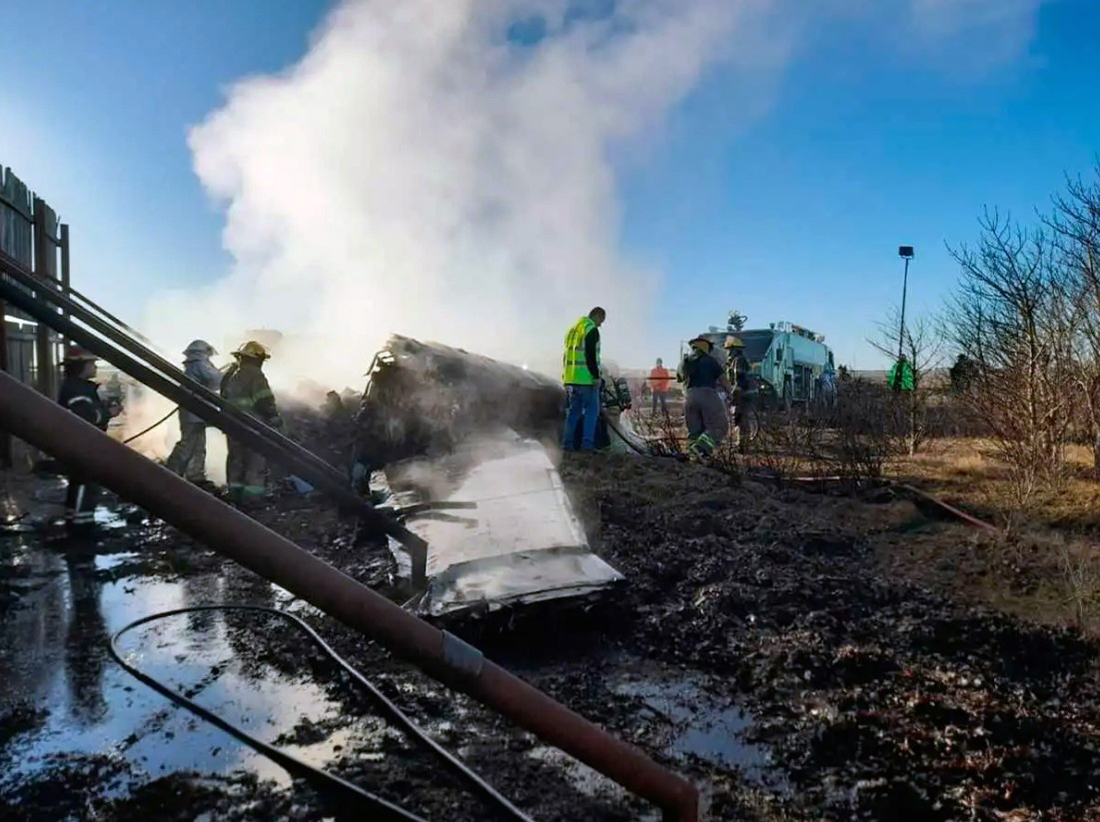
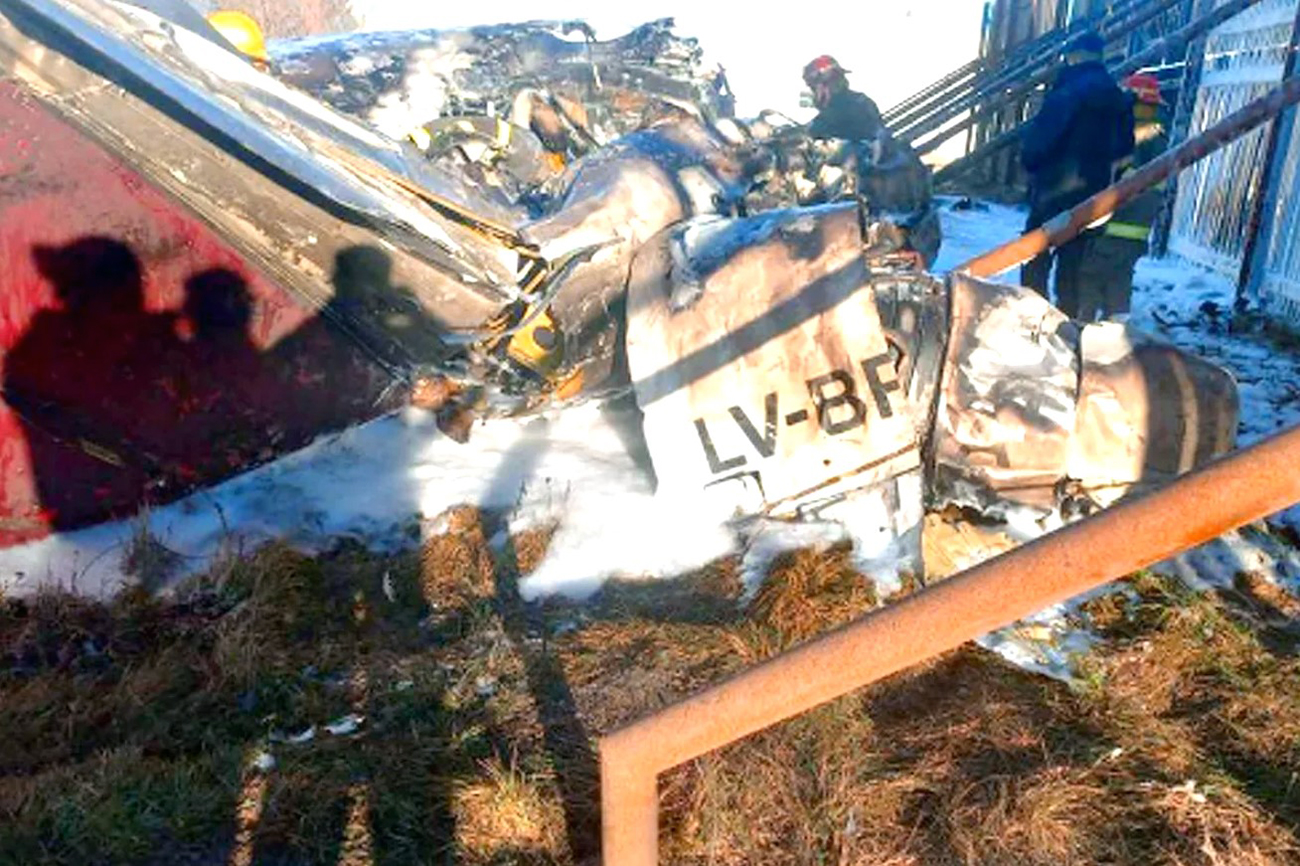
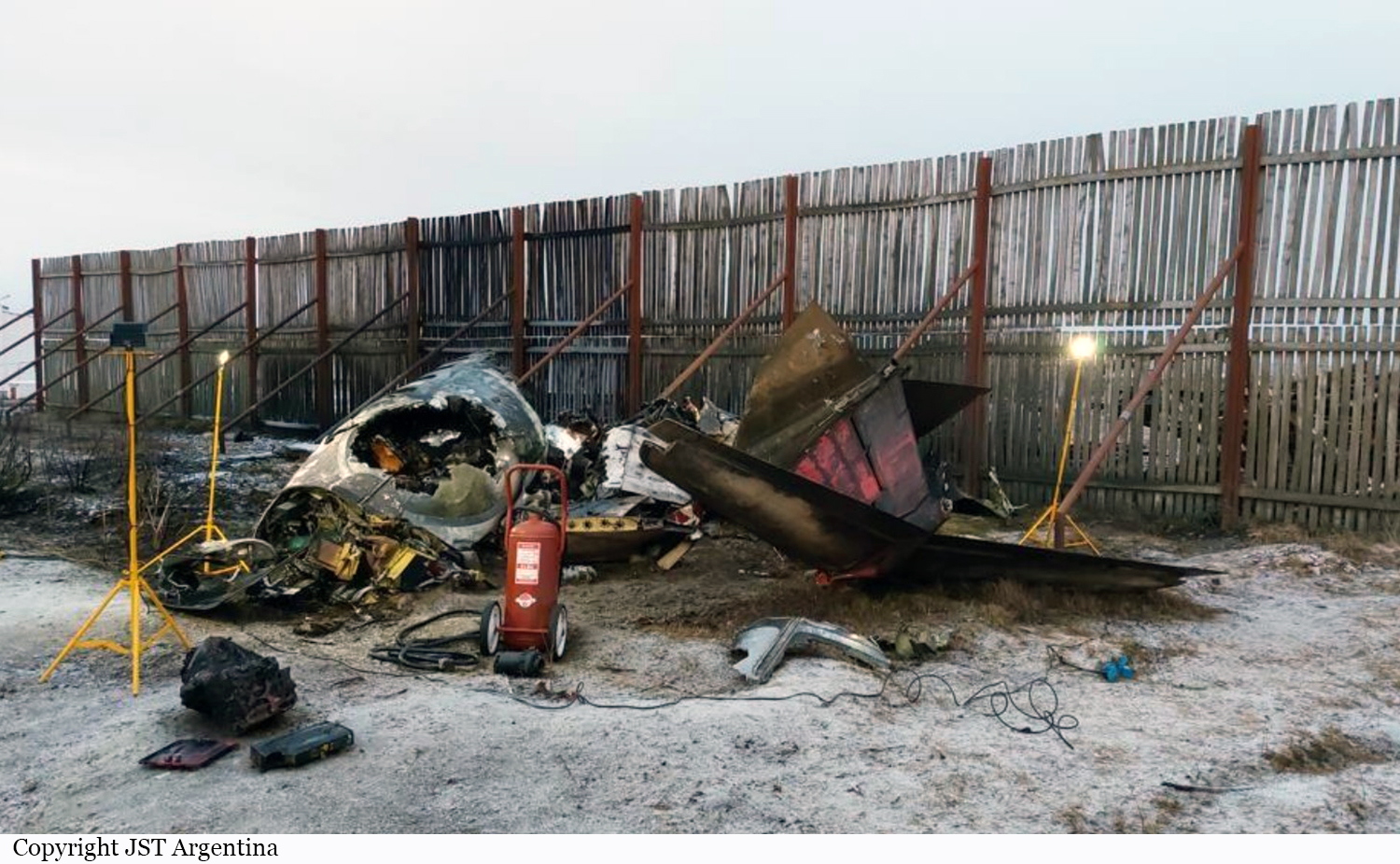
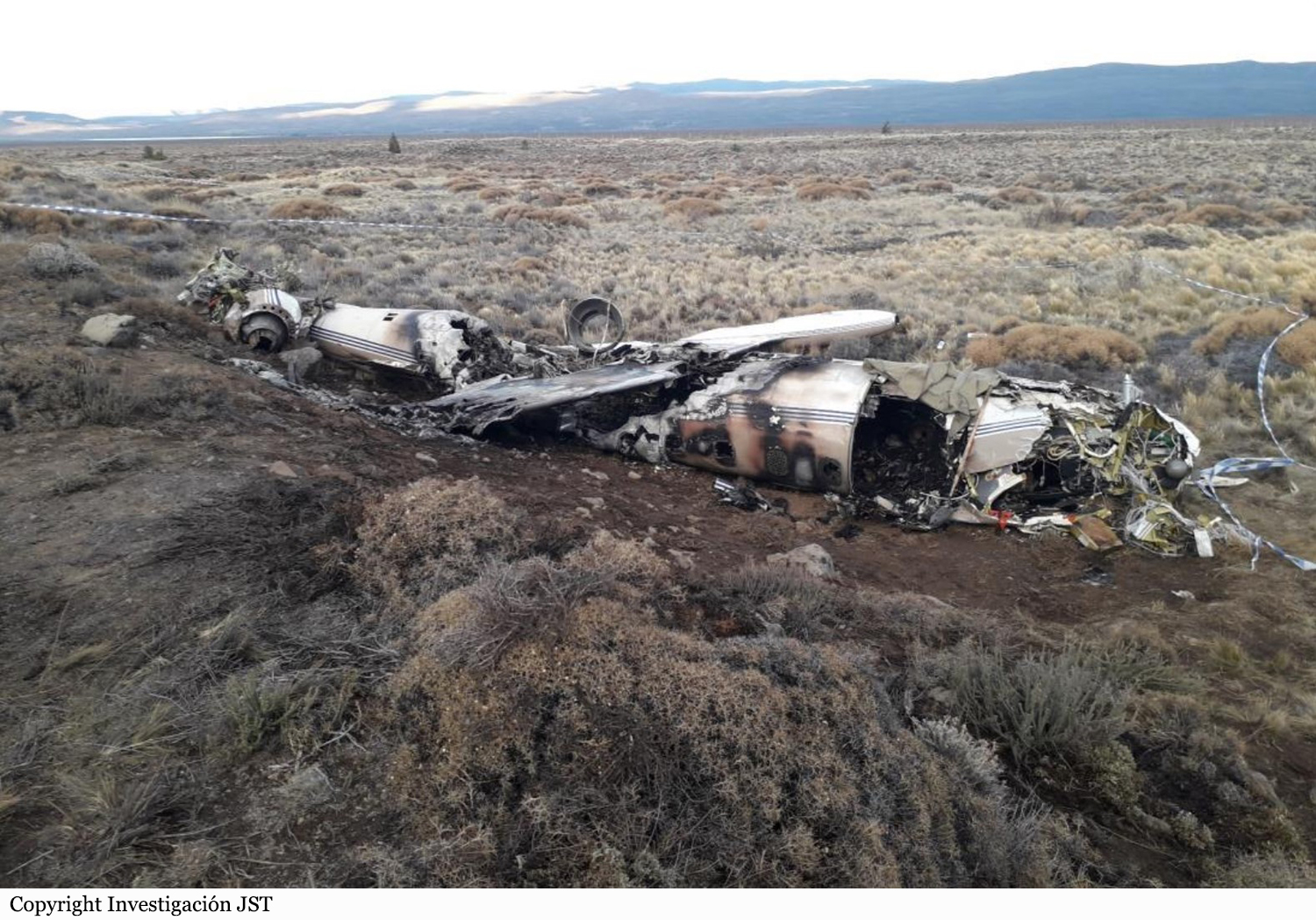
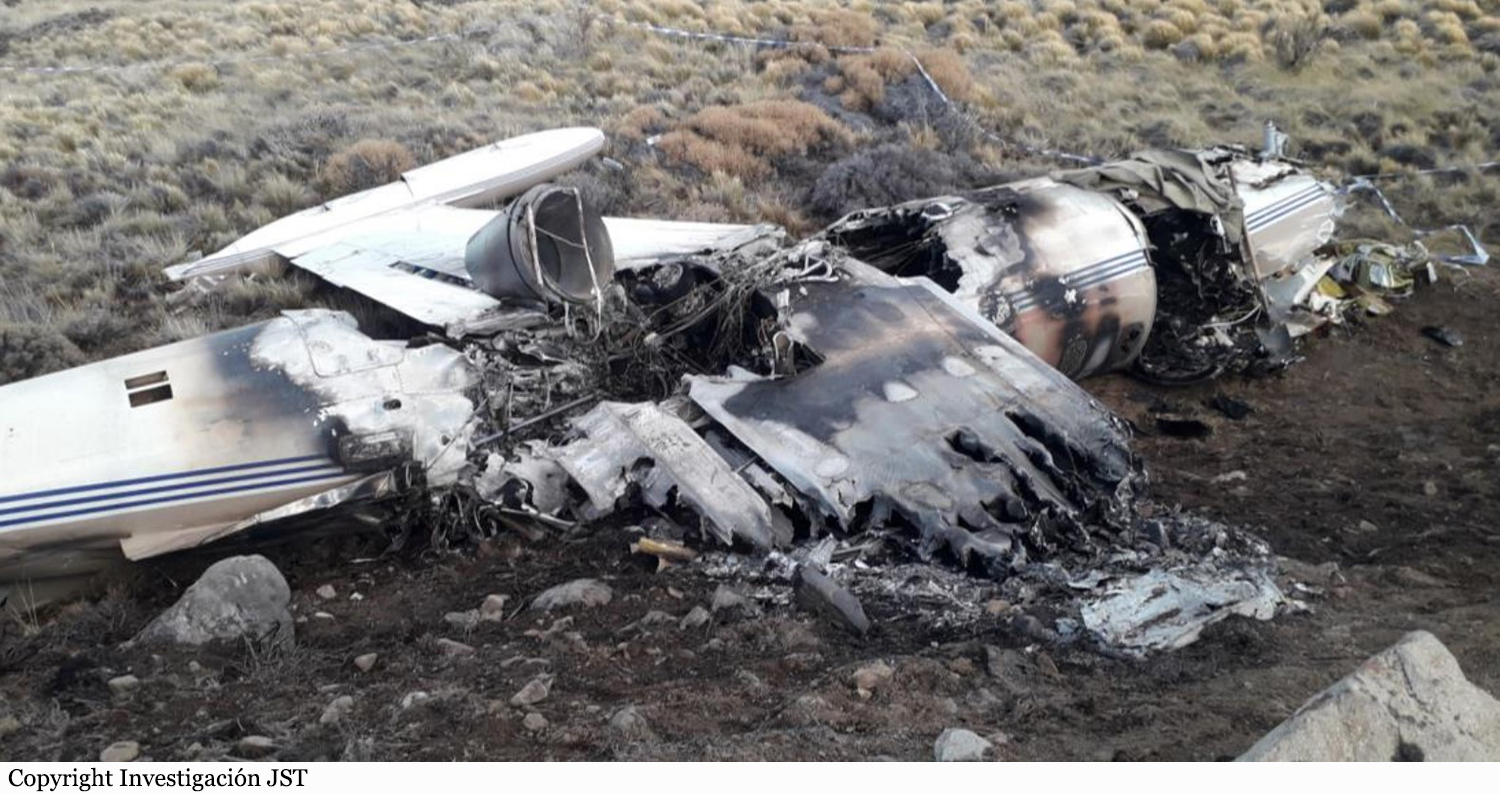
The airplane was returning to its base in San Fernando following an ambulance flight from Comodoro Rivadavia to Río Grande. Shortly after takeoff from Río Grande-Gobernador Ramón Trejo Noel Airport Runway 26, while in initial climb, the airplane rolled to the left, stabilized momentarily then rolled again to the left, lost lift and crashed in a huge explosion 1,870 metres pas the runway end and 300 metres to its left. The airplane was destroyed by impact forces and a post crash fire and all four occupants were killed.
Crew:
Claudio Canelo, pilot,
Héctor Vittore, copilot.
Passengers:
Diego Ciolfi, doctor,
Denise Torres Garcá, nurse.
Probable cause:
During the climb, immediately after takeoff, the aircraft rolled to the left, stabilized momentarily, and then rolled again to the same side. The second roll caused excessive bank, resulting in localized lift loss on the left wing, which led to a loss of altitude until impact with the ground. Information obtained during the investigation suggests that the aileron interconnection cable was disconnected at the time of the accident. Disconnection of the aileron interconnection cable causes a loss of synchronization between the left (pilot) and right (copilot) controls, allowing only right turns from the left control and left turns from the right control. This disconnection likely generated asymmetrical responses in the control inputs, making it difficult to control the aircraft and contributing to the loss of control. Cockpit conversations suggest that the copilot, seated on the right, began the takeoff run and, after the second left bank, transferred control to the pilot, seated on the left. At low altitude, the attempt to correct the left wing tilt, once in a stall situation, proved ineffective. According to the aircraft's maintenance records, the last replacement of the aileron interconnection cable was performed at 13,217.5 total flight hours July 18, 2016. The procedure for replacing the aileron interconnection cable did not clearly establish the removal and installation of the locking clips. The procedure for checking the tension of the aileron system cables, carried out on February 28, 2020, at 13,695.7 flight hours, did not clearly establish the installation of the locking clips. It is reasonable to conclude that the cable became disconnected due to the absence of the locking clips, which would have allowed the tensioner to gradually unscrew under the dynamic loads resulting from successive flights. The conclusion that the cable detachment was due to the absence of the locking clip suggests shortcomings in the training of the personnel responsible for inspecting the aircraft, as well as in the supervision of maintenance tasks by the maintenance manager. No evidence of failure of other flight control components that could have contributed to the accident was found.
Final Report:

Crash of a Learjet 35A in Esquel: 3 killed

Date & Time: May 5, 2020 at 2238 LT
Type of aircraft:
Operator:
Registration:
LV-BXU
Flight Type:
Survivors:
Yes
Schedule:
San Fernando – Esquel
MSN:
35-462
YOM:
1982
Location:
Country:
Crew on board:
2
Crew fatalities:
Pax on board:
2
Pax fatalities:
Other fatalities:
Total fatalities:
3
Captain / Total flying hours:
1498
Copilot / Total flying hours:
2612
Aircraft flight hours:
11711
Aircraft flight cycles:
10473
Circumstances:
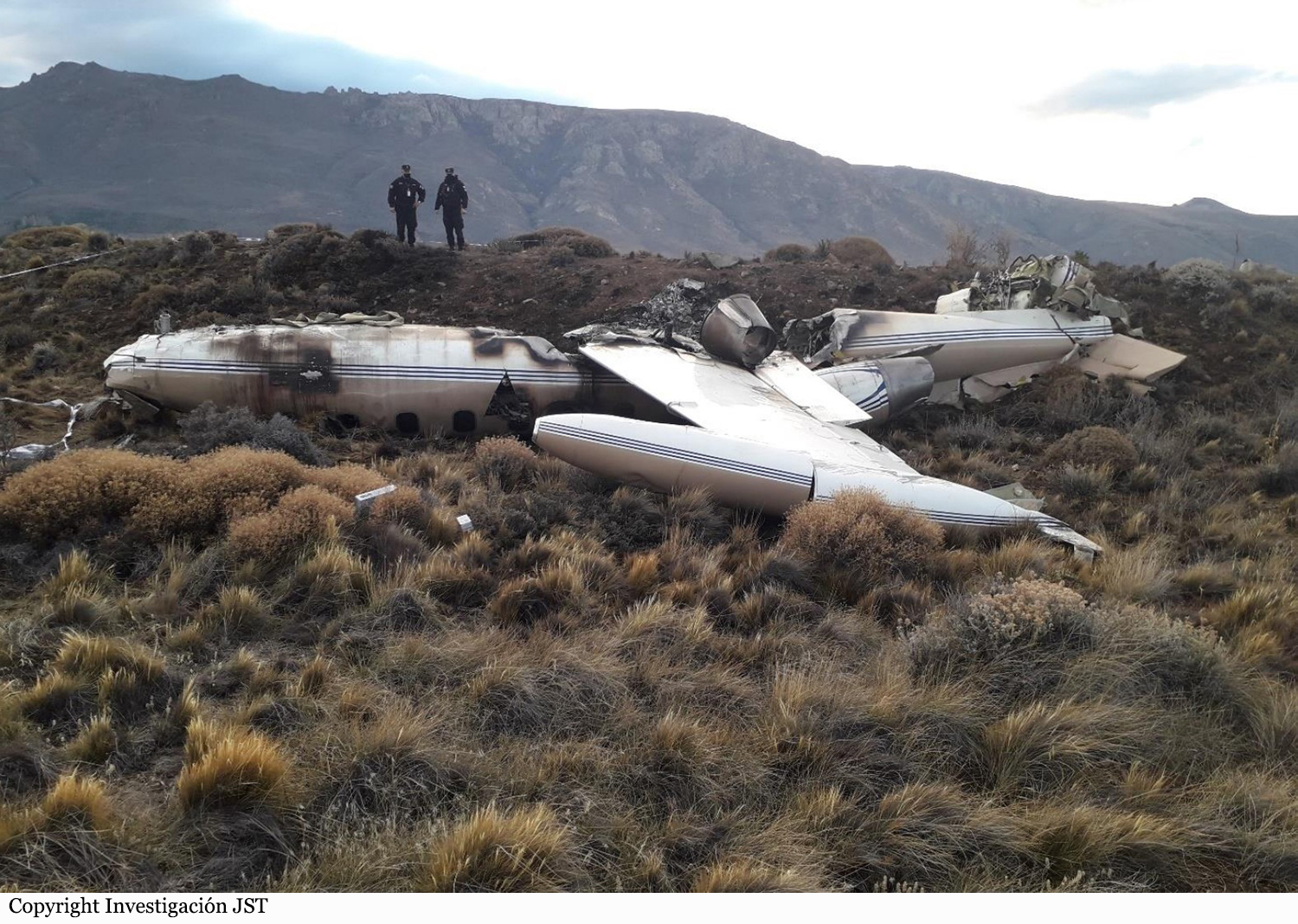
The airplane departed San Fernando Airport on an ambulance flight to Esquel, carrying a doctor, a nurse and two pilots. On approach to Esquel-Brigadier General Antonio Parodi Airport at night, the crew encountered poor visibility (200 metres) and the visual contact with the runway was lost intermittently. Nevertheless, the crew continued the approach and at decision height, the captain decided to continue the descent. After crossing Runway 23 threshold at a height of 78 feet, the pilot-in-command initiated a go-around procedure and turned to the left. The airplane continued in a left hand turn, causing the left wing tip fuel tank to struck the ground. Out of control, the airplane crashed on a small embankment located about 400 metres to the left of the runway centerline, coming to rest upside down and bursting into flames. Both passengers were killed and both pilots were seriously injured. Two days later, the copilot died from injuries sustained.
Probable cause:
It was determined that the accident was the consequence of a controlled flight into terrain (CFIT) and the airplane did not suffer any technical anomalies.
The following contributing factors were identified:
- The crew failed to check the approach charts according to SOP's,
- The approach was initiated and continued in conditions that were below weather minimums,
- Visibility data transmitted by Tower to the crew were inaccurate, leading to confusion on the part of the pilots and their decision-making,
- Both engines were at full power upon impact as the crew was initiating a go-around procedure.
Final Report:

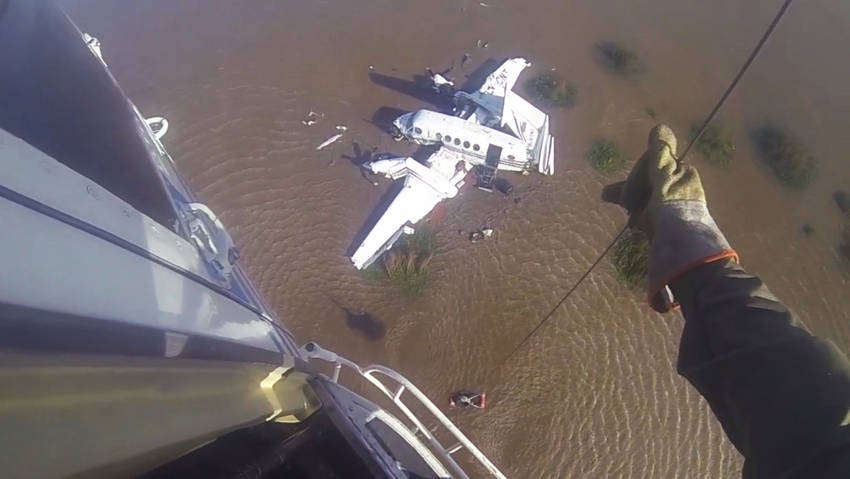
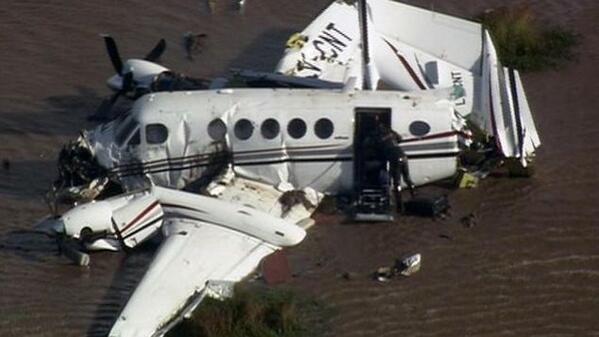
Crash of a Beechcraft B200 Super King Air near Carmelo: 5 killed

Date & Time: May 27, 2014 at 1240 LT
Operator:
Registration:
LV-CNT
Survivors:
Yes
Schedule:
San Fernando - Carmelo
MSN:
BB-1367
YOM:
1990
Location:
Country:
Crew on board:
1
Crew fatalities:
Pax on board:
8
Pax fatalities:
Other fatalities:
Total fatalities:
5
Captain / Total flying hours:
8039
Captain / Total hours on type:
478.00
Aircraft flight hours:
4616
Aircraft flight cycles:
4490
Circumstances:
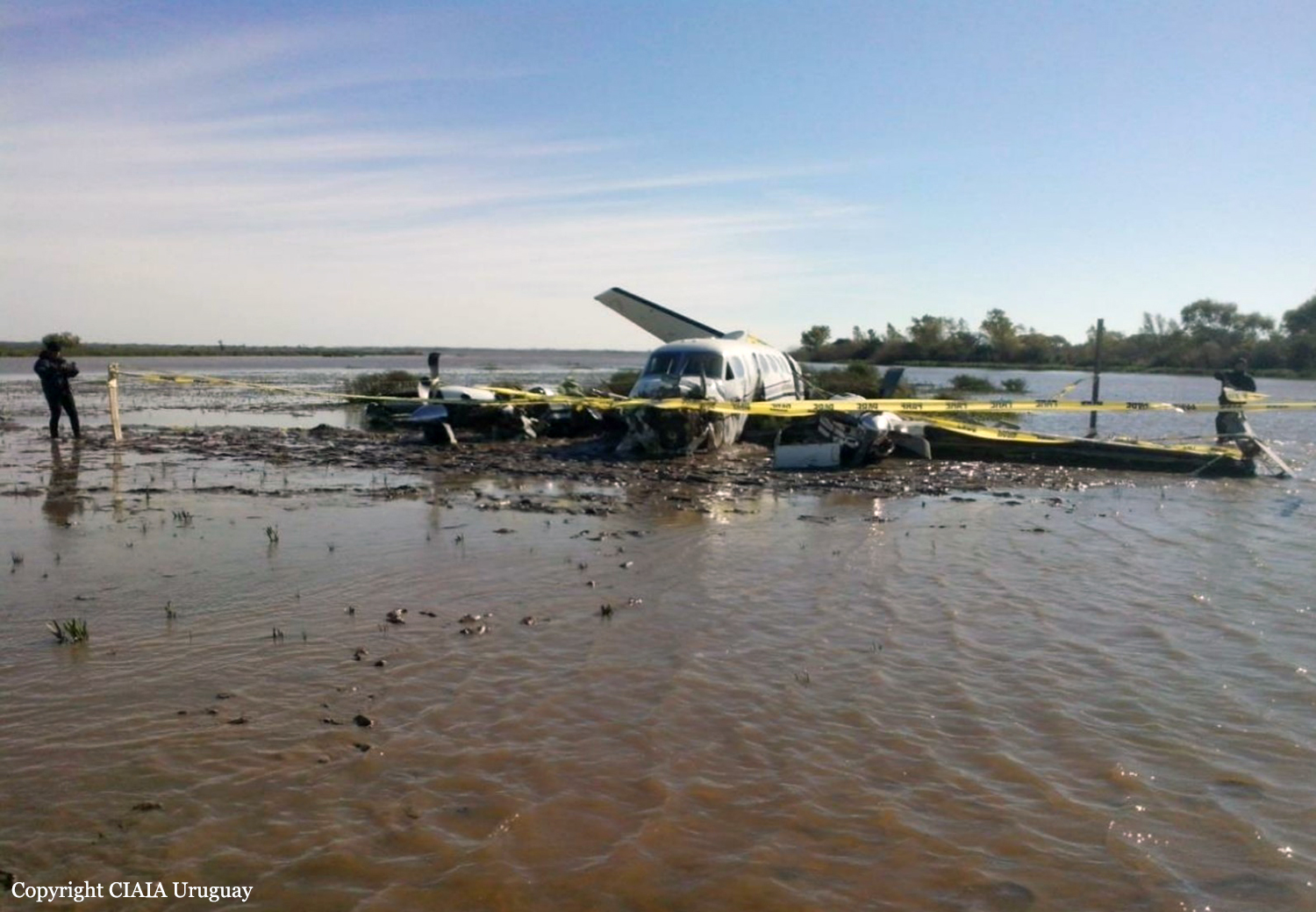
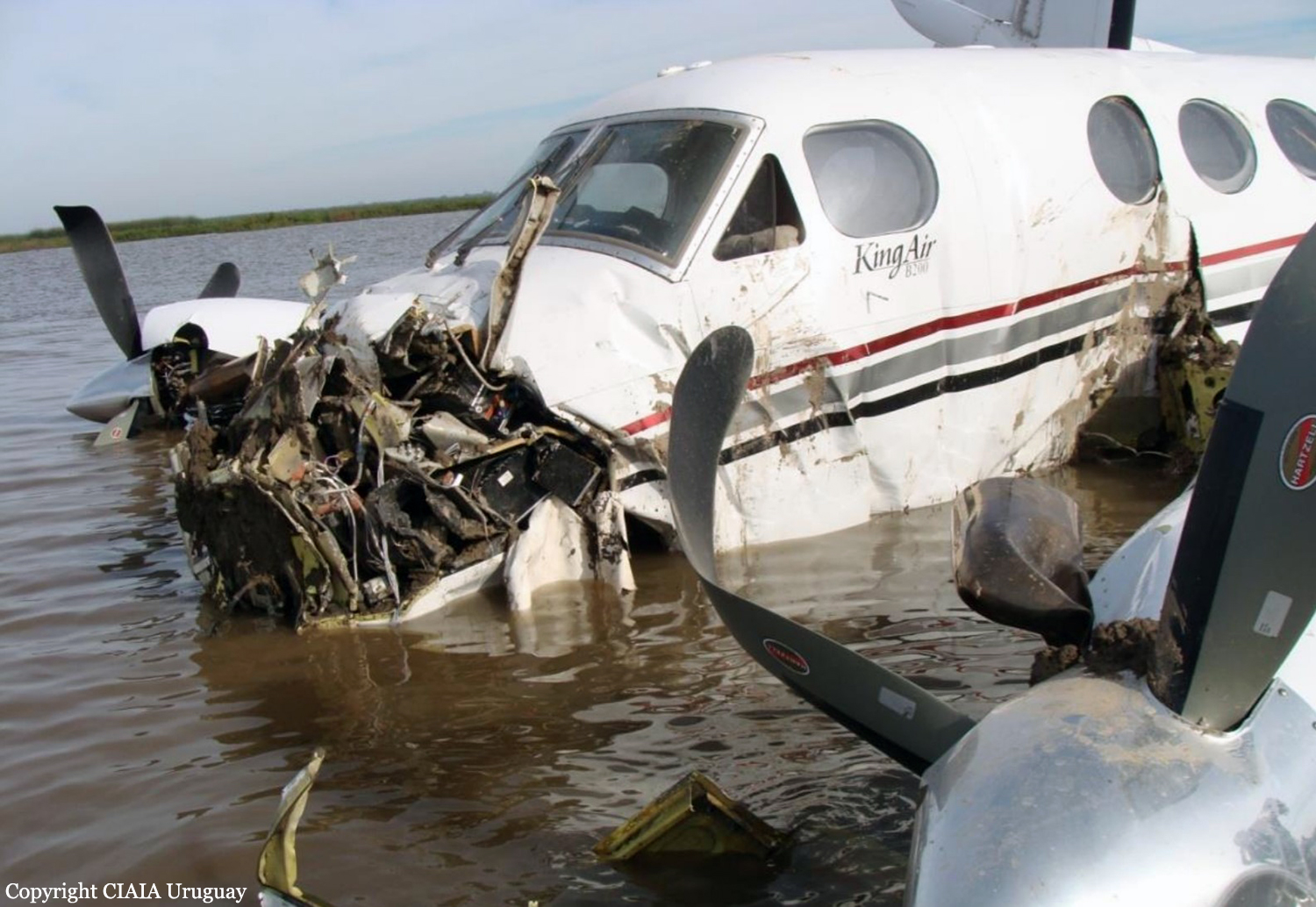
Owned by Grupo Kowzef (Federico Alejandro Bonomi), the twin engine aircraft departed San Fernando (Buenos Aires) at 1222LT on an executive flight to Carmelo, Uruguay. On approach to Carmelo-Zagarzazú Airport runway 35, the pilot encountered marginal weather conditions and initiated a go-around procedure. Few minutes later, he attempted a second approach under VFR mode. While completing a slight turn to the left in descent, the aircraft impacted the surface of the Río de la Plata and came to rest in shallow water some 10 km southwest of Carmelo Airport. The pilot and four passengers were killed and four other occupants were injured. The aircraft was destroyed.
Probable cause:
The accident was the consequence of a controlled flight into terrain after the pilot suffered a loss of situational awareness due to a poor evaluation of the flight conditions upon arrival. The following contributing factors were identified:
- The pilot failed to return to his departure airport or to divert to the alternate airport due to poor weather conditions at the destination airport,
- The pilot continued the approach under VFR mode in IMC conditions with visibility below minimums,
- Poor evaluation of the flight conditions at destination on part of the pilot due to the combination of psychological and physiological factors.
Final Report:

Crash of a Cessna 208B Grand Caravan near Roque Pérez: 10 killed

Date & Time: Apr 28, 2001 at 0517 LT
Type of aircraft:
Registration:
LV-WSC
Flight Phase:
Survivors:
No
Schedule:
San Fernando – Trelew
MSN:
208B-0580
YOM:
1996
Country:
Crew on board:
2
Crew fatalities:
Pax on board:
8
Pax fatalities:
Other fatalities:
Total fatalities:
10
Captain / Total flying hours:
4700
Captain / Total hours on type:
605.00
Aircraft flight hours:
1467
Circumstances:
Owned by the Argentinian company Les Grands Jorasses, the single engine airplane was completing a charter flight from San Fernando to Trelew, carrying eight passengers and two pilots, among them the President of the Techint Group and the managing editor of the La Nación newspaper. After departure from San Fernando Airport, the crew was cleared to climb to 6,000 feet then 8,000 feet and later 10,000 feet. Because he encountered icing conditions, the crew asked ATC to climb to 12,000 feet and was cleared to proceed when control was lost. The aircraft entered a dive and crashed in a farmland. The aircraft was totally destroyed by impact forces and all 10 occupants were killed.
Probable cause:
Impact with the ground following a spiral fall due to a stall probably consecutive to an asymmetric accumulation of ice on the fuselage.
Final Report:

Crash of a Cessna 208A Caravan 675 in Estancia Las Cruces: 1 killed

Date & Time: Apr 1, 2000 at 0800 LT
Type of aircraft:
Operator:
Registration:
LV-ZSR
Flight Phase:
Flight Type:
Survivors:
No
Schedule:
Estancia Las Cruces - San Fernando
MSN:
208-0311
YOM:
1999
Country:
Crew on board:
1
Crew fatalities:
Pax on board:
0
Pax fatalities:
Other fatalities:
Total fatalities:
1
Aircraft flight hours:
121
Circumstances:
After takeoff from Estancia Las Cruces Airport, while climbing in foggy conditions, the aircraft lost height and impacted ground in a wooded area located about 3 km from the airfield. The aircraft was destroyed and the pilot, sole on board, was killed.
Probable cause:
The aircraft impacted ground after takeoff while in instrument conditions. The pilot was not qualified nor trained for this type of flight.
Final Report:

Crash of a Cessna 402 in La Rioja: 2 killed

Date & Time: Mar 15, 1989
Type of aircraft:
Operator:
Registration:
LV-JOD
Flight Phase:
Flight Type:
Survivors:
Yes
Schedule:
La Rioja – San Fernando del Valle de Catamarca
MSN:
402-0127
YOM:
1967
Country:
Crew on board:
2
Crew fatalities:
Pax on board:
5
Pax fatalities:
Other fatalities:
Total fatalities:
2
Circumstances:
Shortly after takeoff from La Rioja-Capitán Vicente Almandos Amonacid Airport, while in initial climb, the twin engine aircraft stalled and crashed near the runway end. Both pilots were killed while all five passengers were injured.