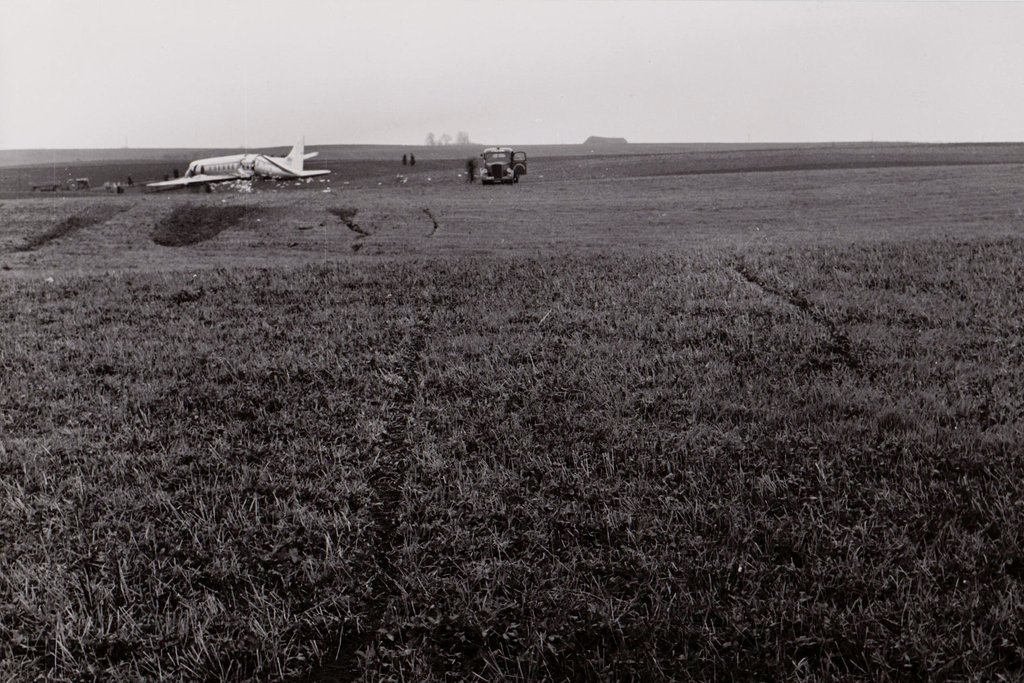
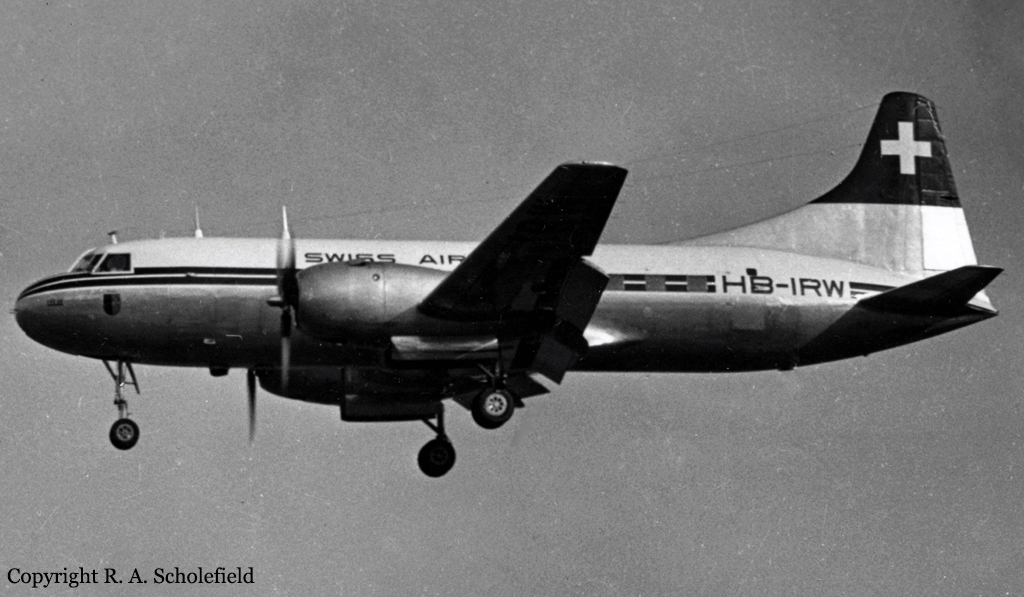
Crash of a Vickers 802 Viscount in London

Date & Time: Jan 7, 1960
Type of aircraft:
Operator:
Registration:
G-AOHU
Survivors:
Yes
Schedule:
Dublin – London
MSN:
169
YOM:
1957
Region:
Crew on board:
5
Crew fatalities:
Pax on board:
54
Pax fatalities:
Other fatalities:
Total fatalities:
0
Circumstances:
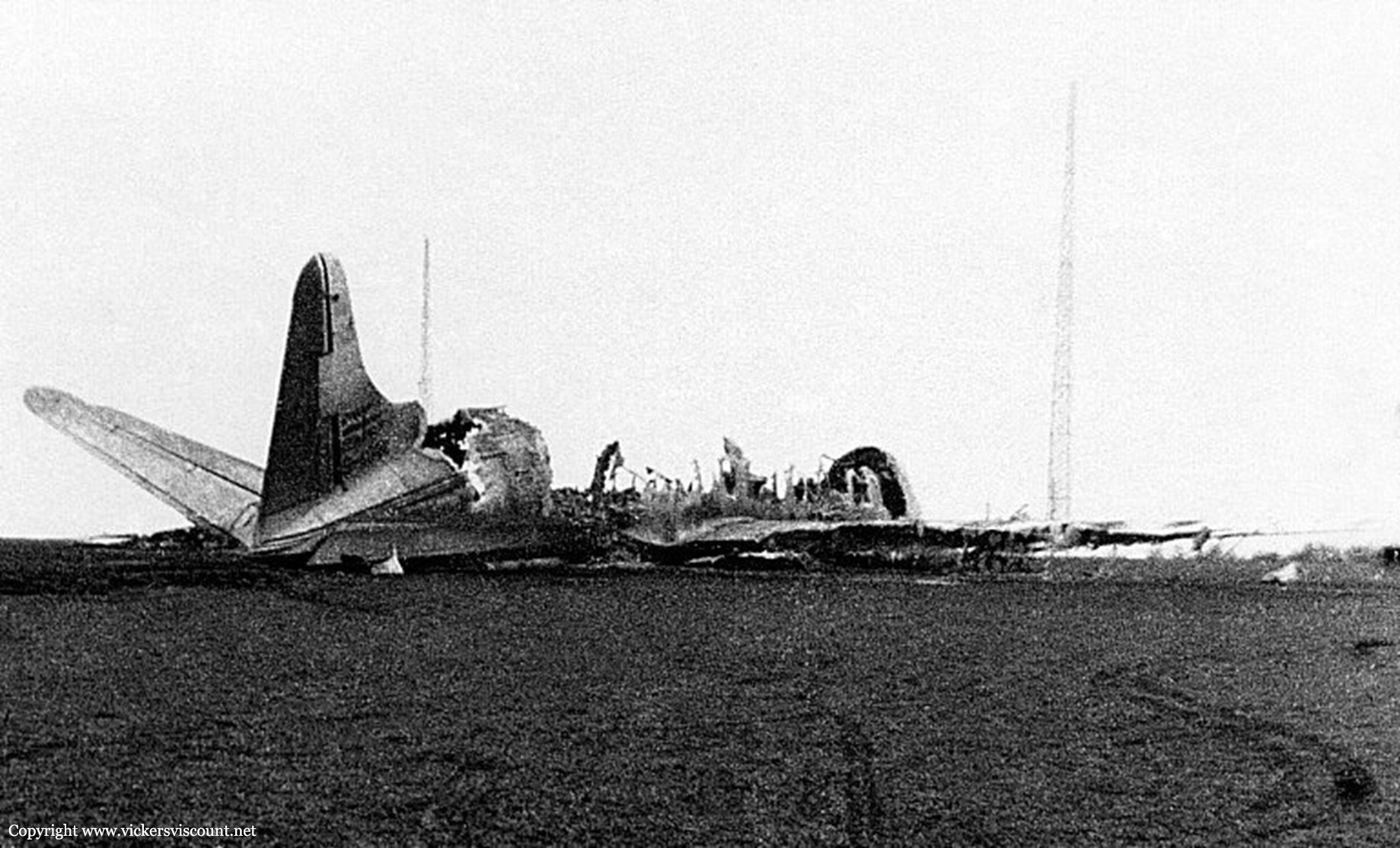
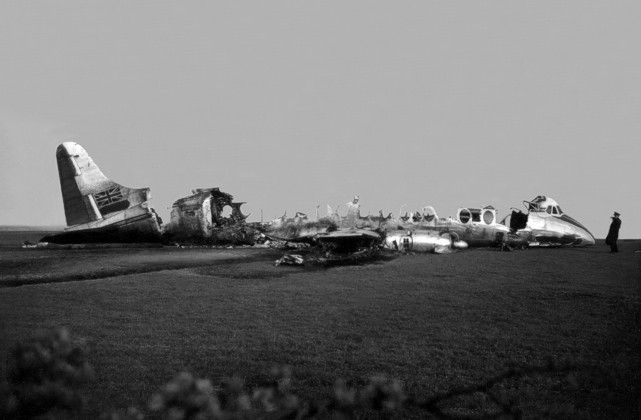
Upon landing, the nose gear collapsed. The airplane skidded for about 500 yards before coming to rest in flames. All 59 occupants were evacuated safely while the aircraft was destroyed by a post crash fire.
Probable cause:
The failure of Air Traffic Control to notify the captain of a critical deterioration in runway Visual Range during his final approach. In consequence he attempted to land in a visibility which gave him insufficient visual reference with the result that the nosewheels contacted the runway before the mainwheels thereby overstressing the nose wheel unit and fracturing its attachments.
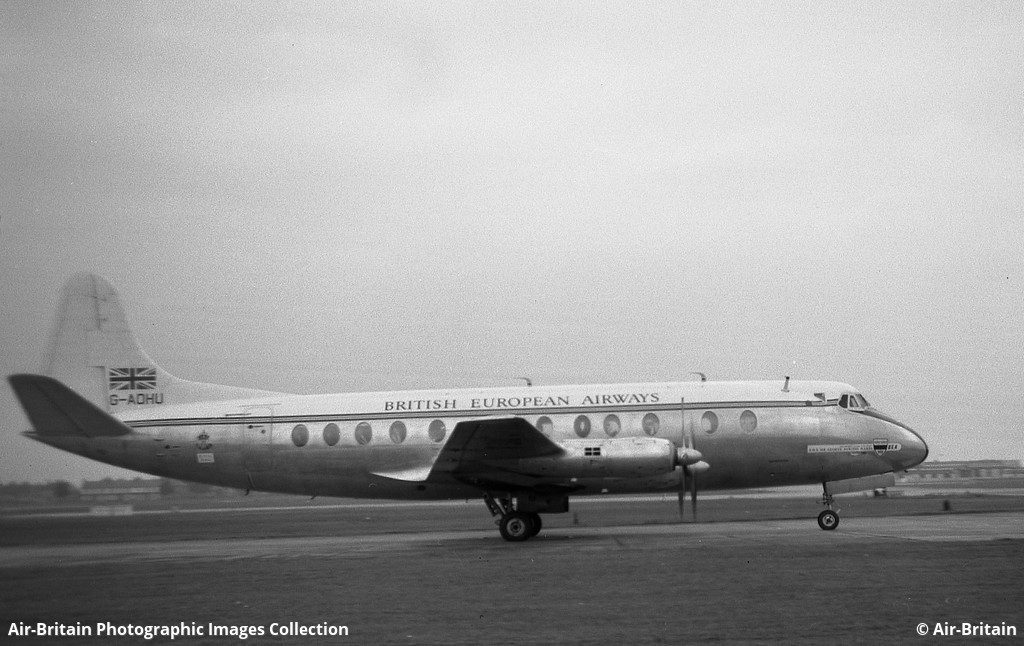
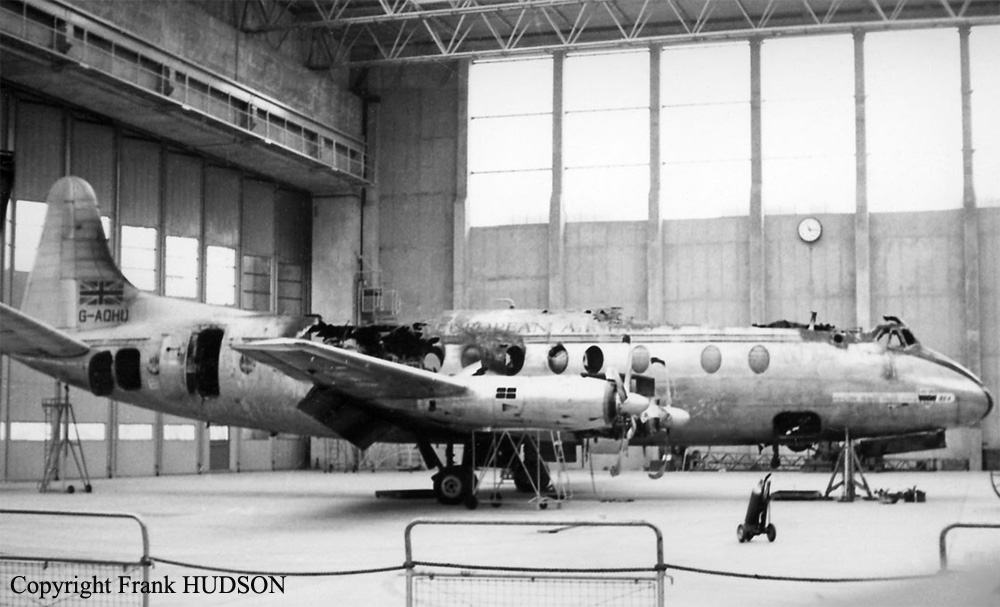
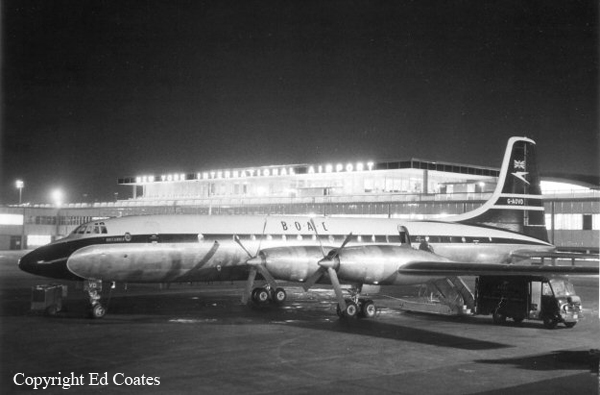
Crash of a Bristol 175 Britannia 312 in Winkton: 9 killed

Date & Time: Dec 24, 1958 at 1158 LT
Type of aircraft:
Operator:
Registration:
G-AOVD
Flight Phase:
Flight Type:
Survivors:
Yes
Schedule:
London - London
MSN:
13235
YOM:
1957
Location:
Region:
Crew on board:
3
Crew fatalities:
Pax on board:
9
Pax fatalities:
Other fatalities:
Total fatalities:
9
Circumstances:
The airplane departed London-Heathrow Airport at 1010LT on a test flight regarding the renewal of its Certificate of Airworthiness. After performing the necessary test, the crew requested a descent from 12,000 feet to 3,000 feet. Three minutes after starting the descent, while cruising in a visibility reduced by fog, the aircraft struck the ground and crashed in a field located in Winkton, southeast of Bournemouth-Hurn Airport. Seven occupants were killed while three others were seriously injured. The aircraft disintegrated on impact.
Probable cause:
The accident was the result of the aircraft being flown into ground obscured by fog. This was caused by a failure on the part of both the captain and the first officer to establish the altitude of the aircraft before and during the final descent. The responsibility for the accident must rest with the captain. The height presentation afforded by the type of three-pointer altimeter fitted to the subject aircraft was such that a higher degree of attention was required to interpret it accurately than is desirable in so vital an instrument. This, when taken into conjunction with the nature of the flight on which the aircraft was engaged was a contributory factor.

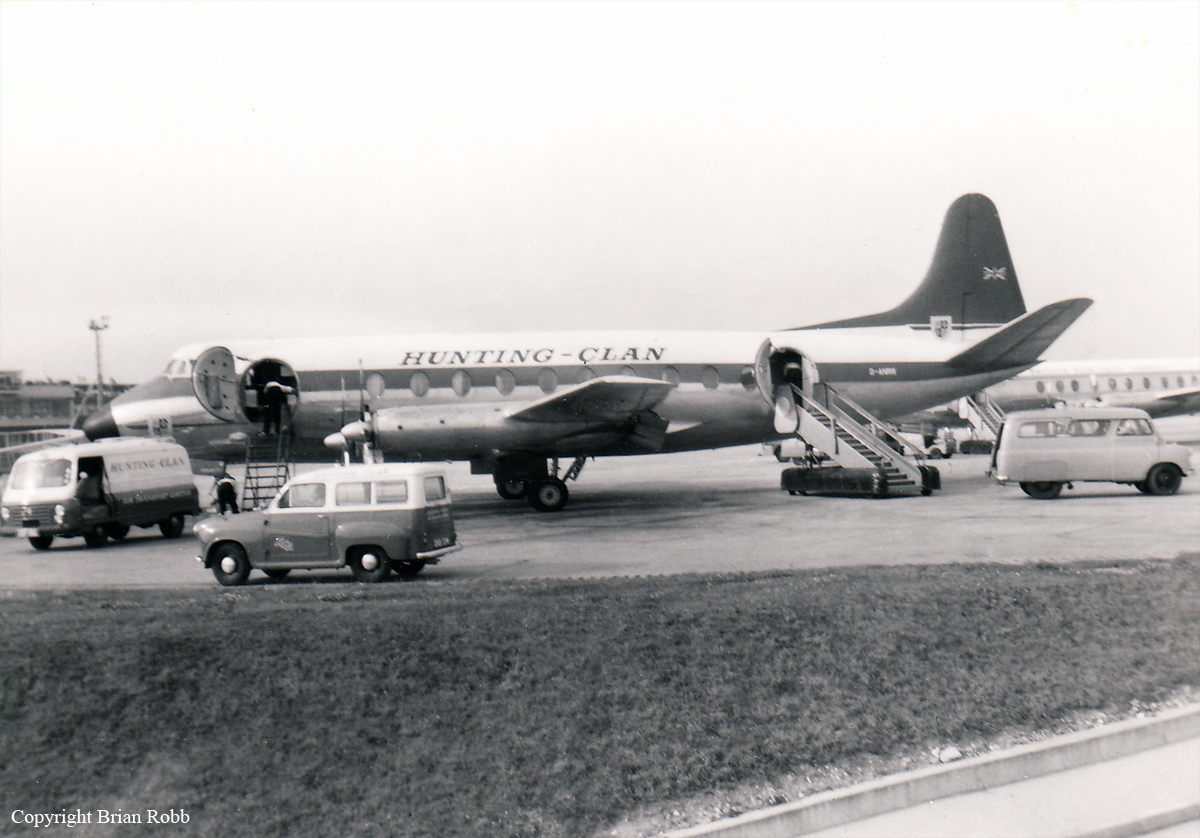
Crash of a Vickers 732 Viscount in Frimley: 6 killed

Date & Time: Dec 2, 1958
Type of aircraft:
Operator:
Registration:
G-ANRR
Flight Phase:
Flight Type:
Survivors:
No
Schedule:
London - London
MSN:
74
YOM:
1955
Location:
Region:
Crew on board:
6
Crew fatalities:
Pax on board:
0
Pax fatalities:
Other fatalities:
Total fatalities:
6
Circumstances:
Following a major overhaul, the crew (pilots and engineers) left London-Heathrow Airport in the morning for a post-maintenance check flight. Ten minutes after takeoff, while cruising at an altitude of 1,000 feet, the right wing failed and detached. Out of control, the airplane dove into the ground and crashed in a field located in Frimley. The aircraft was destroyed upon impact and all six occupants were killed.
Probable cause:
The accident was due to the elevator spring tab operating in the reversed sense. This involved the pilot in involuntary manoeuvres which overstressed the aircraft and caused the wing to break off. Work done to the spring tab mechanism during overhaul had been carried out incorrectly and the persons responsible for inspection failed to observe the faulty operation of the tab because they were neglectful in the performance of their duty.

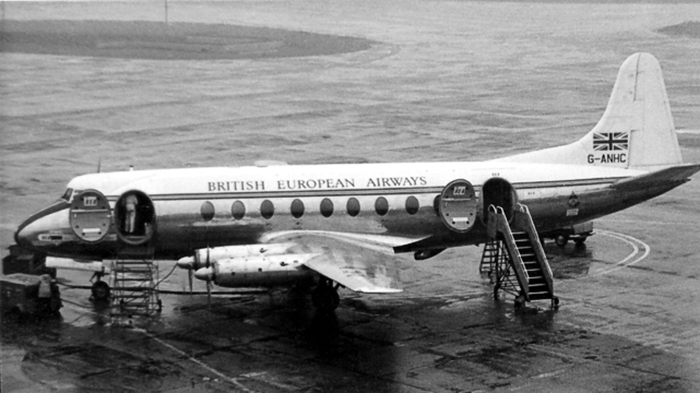
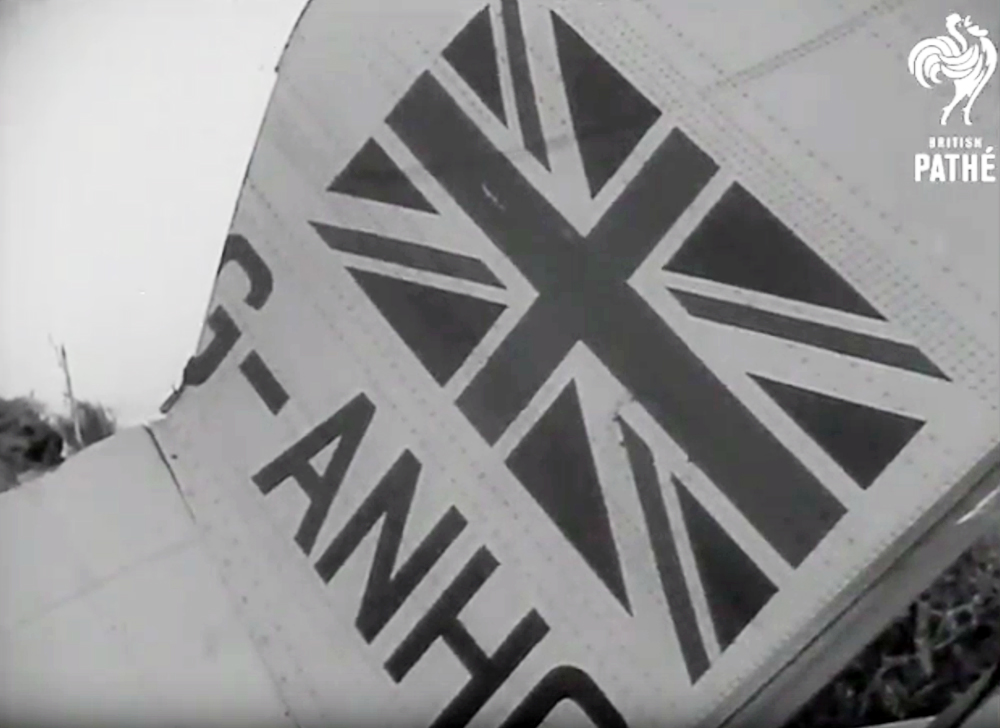
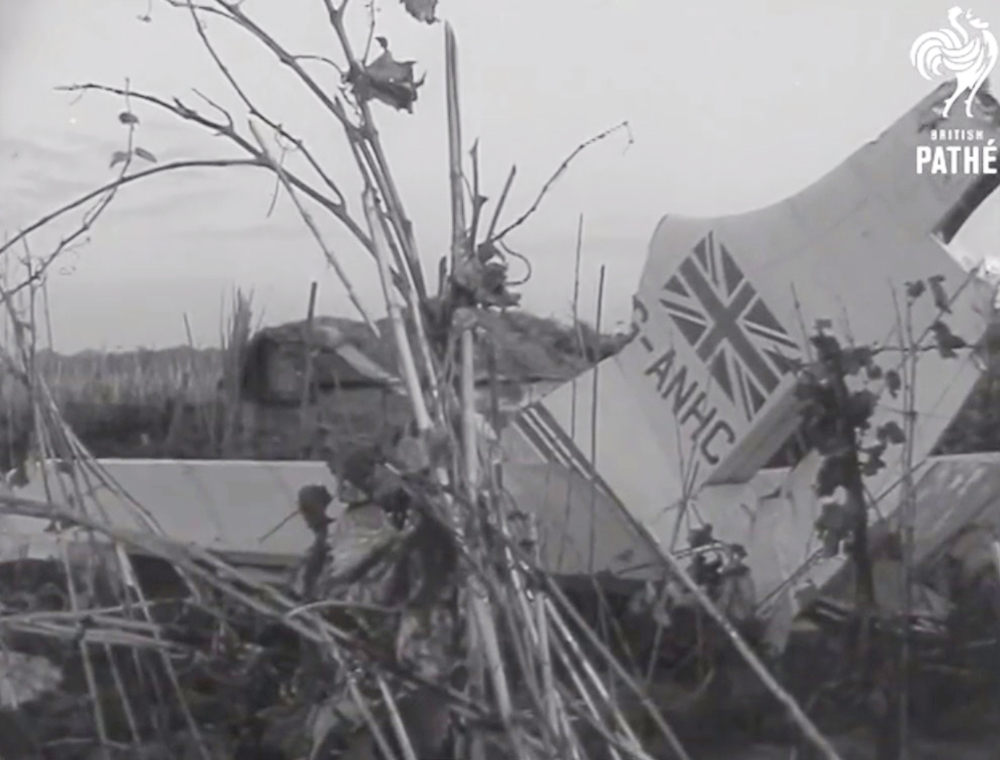
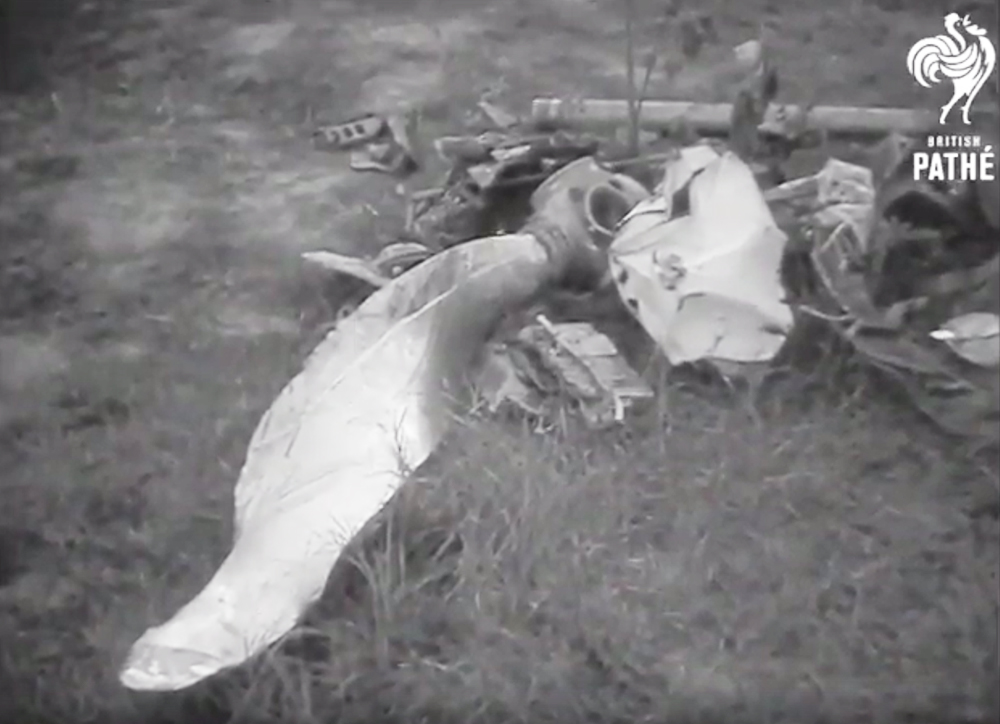
Crash of a Vickers 701C Viscount in Anzio: 31 killed

Date & Time: Oct 22, 1958 at 1150 LT
Type of aircraft:
Operator:
Registration:
G-ANHC
Flight Phase:
Survivors:
No
Schedule:
Londres – Naples – Valetta
MSN:
63
YOM:
1954
Flight number:
BE142
Location:
Country:
Region:
Crew on board:
5
Crew fatalities:
Pax on board:
26
Pax fatalities:
Other fatalities:
Total fatalities:
31
Circumstances:
The Viscount, en route from London to Naples, flying on Airway Amber 1, reported over Ostia at 23,500 feet at 1144 hours advising that it was continuing to Ponza, estimating arrival over this point at 1157. At 1150 it collided east of Nettuno with an Italian Air Force F-86 Sabre which was taking part in group training of aerobatic maneuvers. The 26 passengers and 5 crew aboard the Viscount were killed in the accident, and the pilot of the F-86 parachuted to safety. Both aircraft were destroyed.
Probable cause:
The accident was attributed to 'an Act of God' since neither of the pilots saw the other aircraft before they collided. A contributory cause of the accident was deviation of the Viscount from the airway which placed it in a prohibited area reserved for military activities. 7 members of the board consider assumption that the deviation of the Viscount was the result of a navigational error on part of its crew.
Final Report:

Crash of a Vickers 610 Viking 1B in Kamershoek

Date & Time: Oct 17, 1958 at 1210 LT
Type of aircraft:
Registration:
D-BELA
Flight Phase:
Flight Type:
Survivors:
Yes
Schedule:
London – Düsseldorf
MSN:
250
YOM:
1947
Country:
Region:
Crew on board:
3
Crew fatalities:
Pax on board:
0
Pax fatalities:
Other fatalities:
Total fatalities:
0
Circumstances:
The crew departed London-Heathrow Airport at 1001LT on a cargo flight to Düsseldorf, Germany. The flight proceeded normally until halfway roughly between Dover and Wulpen. At this time, at an altitude of 7,000 feet, the crew perceived some hiccups in the right engine. The boost fluctuated and the RPM varied /- 50 revolutions/min. The captain assumed that it was caused by icing, activated carburetor heaters and gave some brief shots of alcohol. After these actions the situation seemingly became normal. Just before reaching Wulpen, the right hand engine boost fell to 25". The oil pressure fell to 60 - 70 psi (normal pressure is 80 psi). The cylinder temperature was normal. The captain decided to shut down the engine and feather the prop. The crew contacted Brussels and were cleared to descend and divert to Brussels Airport. The pilot manoeuvred around some rain showers during the descent towards Brussels. At 11:55 local time the flight reported at 1500 feet, and almost at the Mackel beacon. The flight crew were not able to maintain altitude so the captain decided to restart the no. 2 engine. He instructed the copilot to carry out the restart. The copilot failed to use a checklist while performing the actions to restart the engine. A few minutes later the crew noticed that the right engine was on fire. Three fire extinguishing bottles were fired, but the fire was not contained. The captain then carried out an emergency descent. The airplane came down in a field next to the village of Kamershoek. It burst into flames after the three crew members exited the plane.
Source:
https://aviation-safety.net/database/record.php?id=19581017-1
Probable cause:
- The incident that led the captain to stop the right engine and feather the corresponding propeller has not been clarified.
- The captain could not maintain altitude on one engine in flight, while the AFM indicated that it was possible, especially as the aircraft was below its maximum weight. The fact of operating with the remaining engine at a boost of 33" and later 44" was allowed, while maintaining temperature, power was reduced below the required value.
- The restart of the engine without complying with the formal procedure sparked a fire that required the emergency landing.

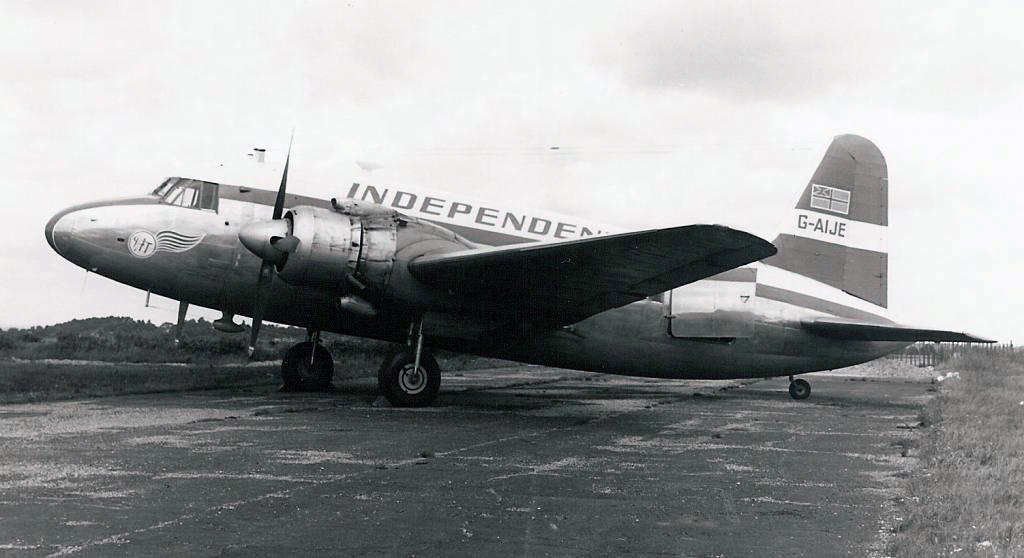
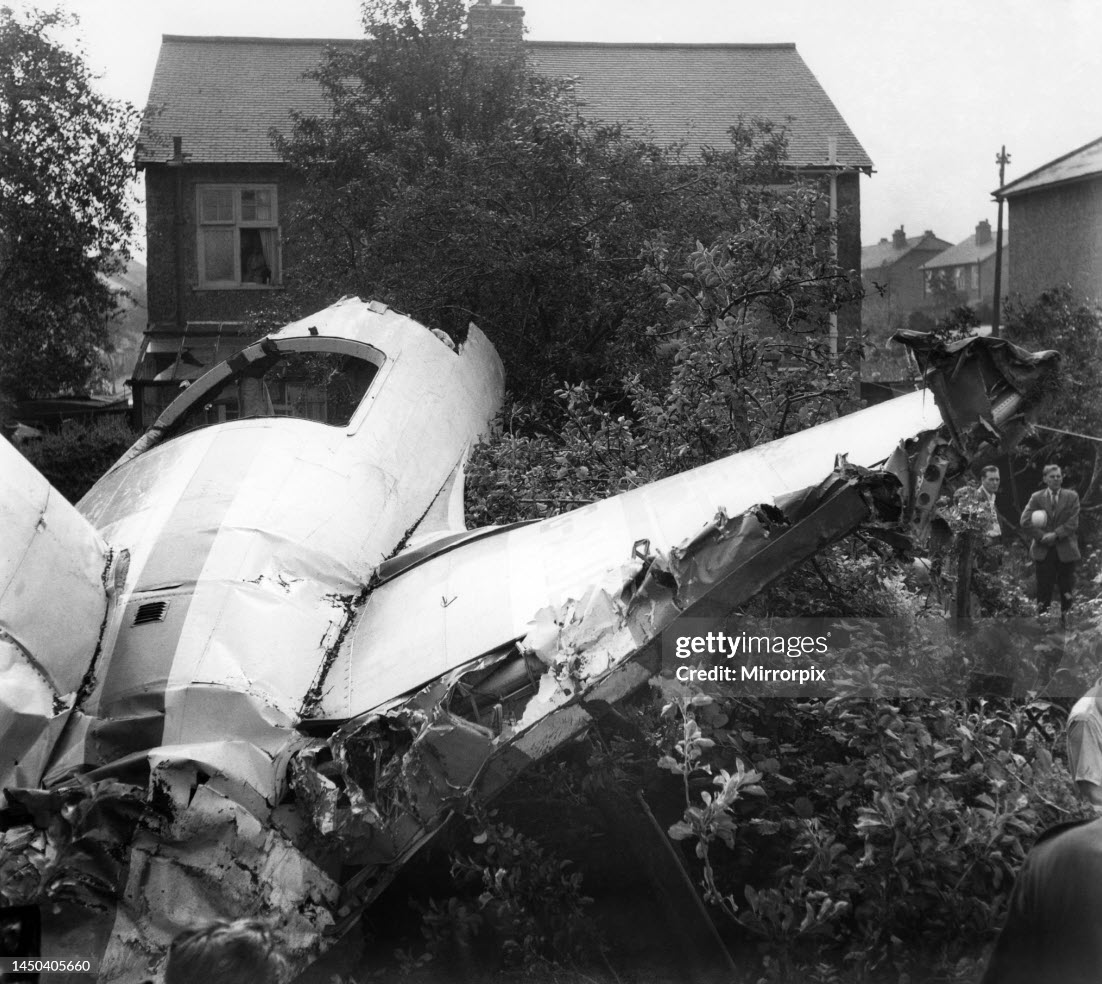
Crash of a Vickers 621 Viking 1 in Southall: 7 killed

Date & Time: Sep 2, 1958 at 0632 LT
Type of aircraft:
Registration:
G-AIJE
Flight Type:
Survivors:
No
Site:
Schedule:
London – Nice – Brindisi – Athens – Tel Aviv
MSN:
127
YOM:
1946
Region:
Crew on board:
3
Crew fatalities:
Pax on board:
0
Pax fatalities:
Other fatalities:
Total fatalities:
7
Captain / Total flying hours:
13000
Copilot / Total flying hours:
1000
Aircraft flight hours:
2319
Circumstances:
The Viking took off from London Airport at 0554 hours GMT with a crew of 3 for a flight to Nice, Brindisi, Athens and Tel Aviv. Fifteen minutes later the cap tain informed London Airport that he had engine trouble and wished to return to Blackbushe. During the return flight the aircraft initially maintained 7,000 feet. Clearance was given to descend to 3000 feet but the descent was apparently continued to 1,000 feet without informing control. Shortly afterwards the aircraft reported "having difficulty maintaining height" and six minutes later, at 0632LT, it crashed in Southall, about 3 miles from the airport. The aircraft was totally destroyed upon impact as well as several houses. All three crew members and four people on the ground were killed. Fifteen other people on the ground were injured.
Probable cause:
The aircraft was allowed to lose height and flying speed with the result that the pilot was no longer able to exercise asymmetric control. The conduct of the pilot and the whole course of events outlined were contributed to by the deliberate policy of this Company, which was to keep its aircraft in the air and gainfully employed regardless of the regulations or of the elementary requirements which should enjoin consideration for the conditions of working of its employees or the maintenance of its aircraft. Any responsibility of the captain is to be viewed in the light of his position as an employee upon whose shoulders an intolerable burden was placed. At the time of the accident, the airplane was overloaded and the captain was overduty as he had been on duty for 31 hours 30 minutes, a gross breach of Article 34E of the Order, since the maximum permissible flying duty period for a two-pilot crew is 16 hours.
Final Report:

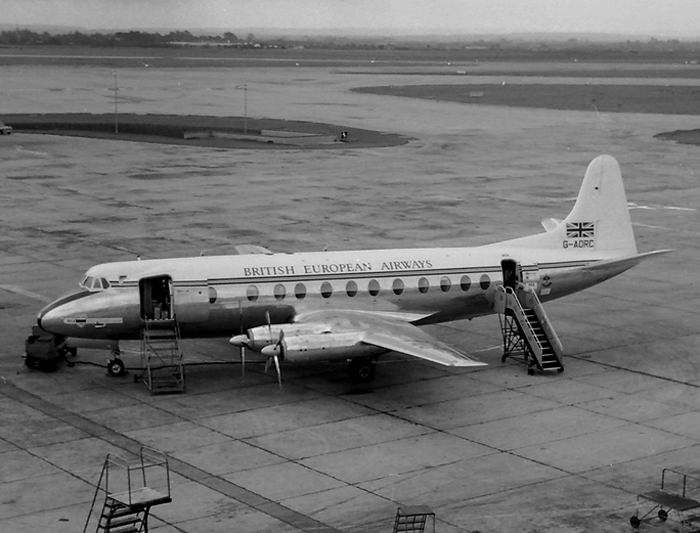
Crash of a Vickers 802 Viscount in Craigie

Date & Time: Apr 28, 1958 at 2208 LT
Type of aircraft:
Operator:
Registration:
G-AORC
Flight Type:
Survivors:
Yes
Schedule:
London - Prestwick
MSN:
254
YOM:
1957
Region:
Crew on board:
5
Crew fatalities:
Pax on board:
0
Pax fatalities:
Other fatalities:
Total fatalities:
0
Circumstances:
The accident occurred at 2208 hours during an unscheduled flight from London to Prestwick where the aircraft mas to pick up passengers for BOAC under a charter arrangement and fly them to London. The aircraft took off at 2042 hours GMT from London Airport, cruised on the Airways at 18 500 ft and then commenced the descent to Prestwick with an initial clearance to 8 500 ft. Within a few minutes the clearance was amended to cross the Prestwick radio beacon at 4 000 ft. The descent appeared to the pilots to be normal until the aircraft struck the ground close to the site of the beacon very shortly after the captain had reported passing 11 000 ft in the holding pattern. The aircraft slid along the ground for 400 yards, and fire broke out in the starboard wing, Of the five crew aboard the aircraft, three were seriously injured. The airplane was totally destroyed by fire.
Probable cause:
The captain flew the aircraft into the ground during the descent to Prestwick after misreading the altimeter by 10 000 ft. Whilst a somewhat ambiguous presentation of height on the pressure altimeter may have initiated this misreading. A lack of cooperation between the captain and first officer and a lack of alertness on the part of the first officer were the main contributory factors.
Final Report:

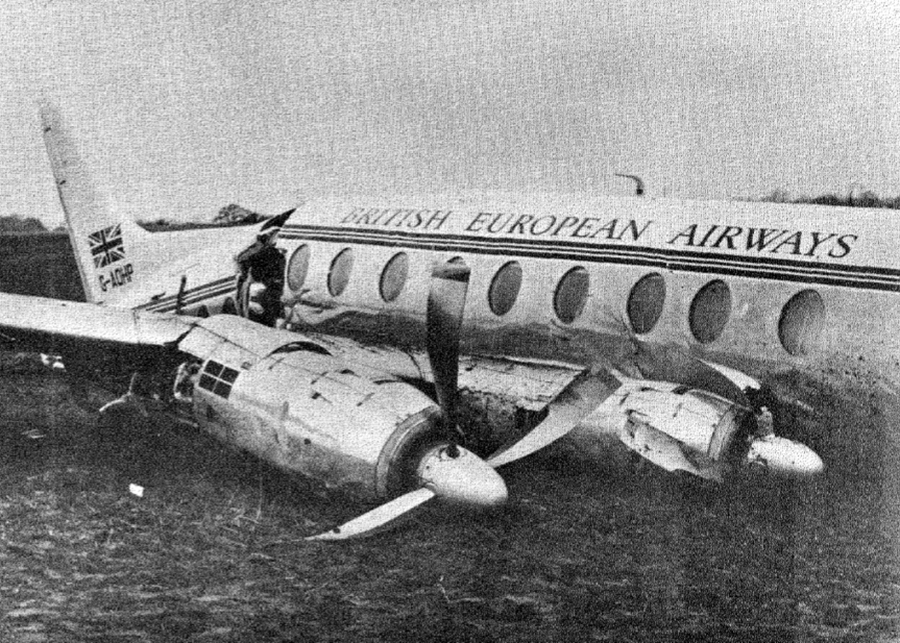
Crash of a Vickers 802 Viscount in Ballerup

Date & Time: Nov 17, 1957 at 0503 LT
Type of aircraft:
Operator:
Registration:
G-AOHP
Flight Type:
Survivors:
Yes
Schedule:
London – Copenhagen
MSN:
165
YOM:
17
Country:
Region:
Crew on board:
2
Crew fatalities:
Pax on board:
0
Pax fatalities:
Other fatalities:
Total fatalities:
0
Captain / Total flying hours:
9034
Captain / Total hours on type:
426.00
Circumstances:
On the day of the accident the aircraft had taken off from London Airport at 0130 hours GMT on a scheduled flight to Kastrup Airport, Copenhagen, carrying a crew of 2 and a cargo of mail, freight and newspapers. The flight was without incident until when holding over Radio Beacon Bella, three of the aircraft's four engines stopped. It lost height and a forced landing was made at 0403 hours GMT, 14 miles northwest of Kastrup. The aircraft was considerably damaged, but there was no fire. The crew were not injured.
Probable cause:
The cause of the engine failures, which brought about the accident, lay in the accumulation of ice on the engine cowlings which, because of malfunctioning of the de-icing system, was allowed to build up before being dislodged. Passage of the lumps of ice through the engines caused partial flame out, which produced sufficient loss of power to initiate the auto-feathering and thus to stop the engines.
Final Report:

Crash of a De Havilland DH.104 Dove 2 at London-Heathrow

Date & Time: Dec 9, 1955 at 2152 LT
Type of aircraft:
Operator:
Registration:
G-ALTM
Flight Type:
Survivors:
Yes
Schedule:
London-Heathrow - London-Heathrow
MSN:
04236
YOM:
1949
Region:
Crew on board:
1
Crew fatalities:
Pax on board:
2
Pax fatalities:
Other fatalities:
Total fatalities:
0
Circumstances:
The aircraft was carrying two filmmakers and one pilot who were in charge to make a movie of the Heathrow Airport. Following an uneventful mission, the pilot returned to the airport when, on final approach, the right engine suffered technical problems and failed. In a certain confusion, the pilot mistakenly shut down the left engine, causing the aircraft to stall and to crashed short of runway. All three occupants were evacuated while the aircraft was written off.
Probable cause:
Failure of the right engine on final approach and wrong engine shut down by the pilot.

Crash of a Convair CV-240-4 off Folkestone: 3 killed

Date & Time: Jun 19, 1954 at 2300 LT
Type of aircraft:
Operator:
Registration:
HB-IRW
Flight Phase:
Survivors:
Yes
Schedule:
Geneva – London
MSN:
61
YOM:
1948
Location:
Region:
Crew on board:
4
Crew fatalities:
Pax on board:
5
Pax fatalities:
Other fatalities:
Total fatalities:
3
Circumstances:
While overflying The Channel by night at an altitude of 12,000 feet, the port engine stopped. The captain feathered its propeller, informed ATC about his position and obtained the permission to divert to Manston Airport. Few minutes later, the right engine failed as well. The crew decided to ditch the aircraft about 12 km off Folkestone. After one hour, four crew members and two passengers were rescued by the crew of a boat while three other passengers drowned. The aircraft later sank and was lost.
Probable cause:
Failure of both engine in flight following a fuel exhaustion. It was determined that at the time of the accident, fuel tanks were empty as the aircraft was not refueled prior to takeoff from Geneva Airport. Investigations revealed that the crew requested to refuel before takeoff but for unknown reason, this operation was not completed. Also, both pilots failed to follow the pre-departure checklist and failed to check the fuel jauges prior to departure.