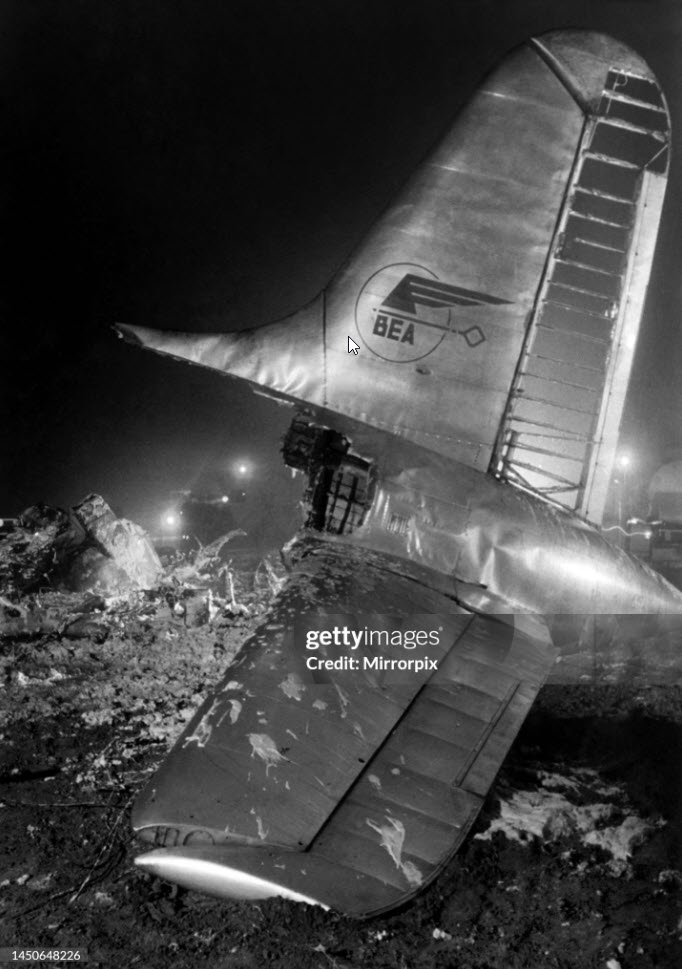
Crash of a De Havilland DH.106 Comet 1 off Elbe Island: 35 killed

Date & Time: Jan 10, 1954 at 1105 LT
Type of aircraft:
Operator:
Registration:
G-ALYP
Flight Phase:
Survivors:
No
Schedule:
Singapore – Beirut – Rome – London
MSN:
6003
YOM:
1951
Flight number:
BA781
Country:
Region:
Crew on board:
6
Crew fatalities:
Pax on board:
29
Pax fatalities:
Other fatalities:
Total fatalities:
35
Captain / Total flying hours:
6566
Captain / Total hours on type:
291.00
Copilot / Total flying hours:
4915
Copilot / Total hours on type:
262
Aircraft flight hours:
3681
Circumstances:
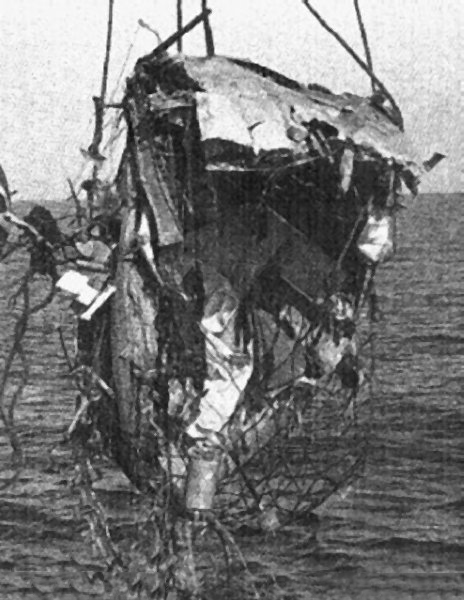
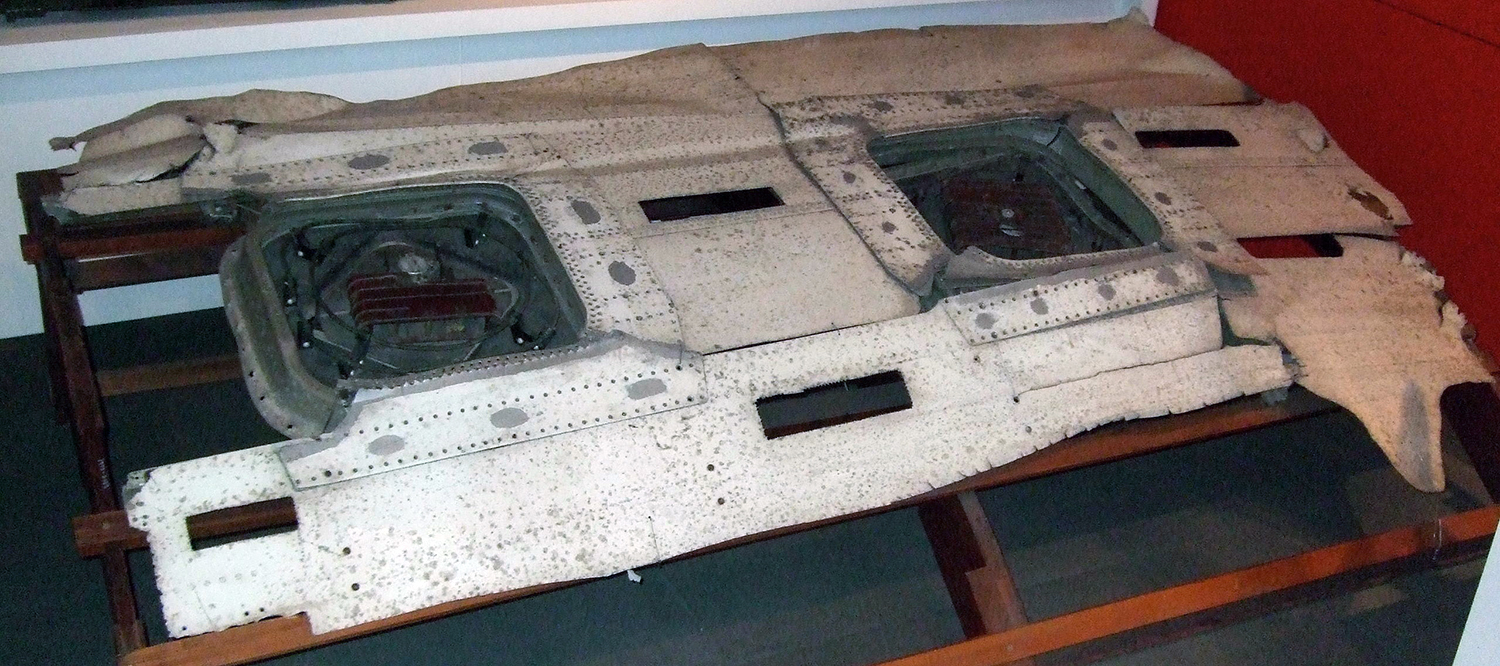
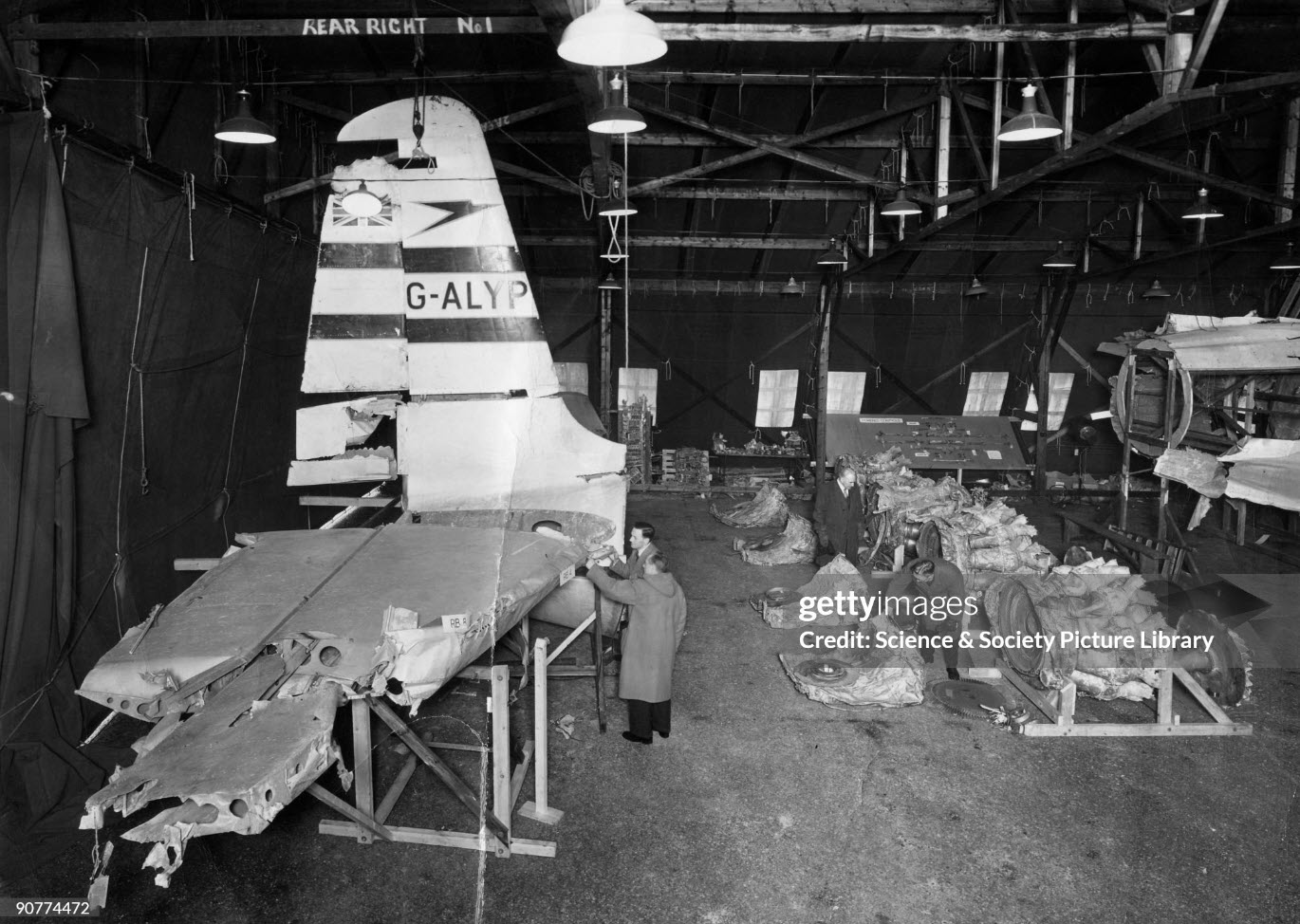
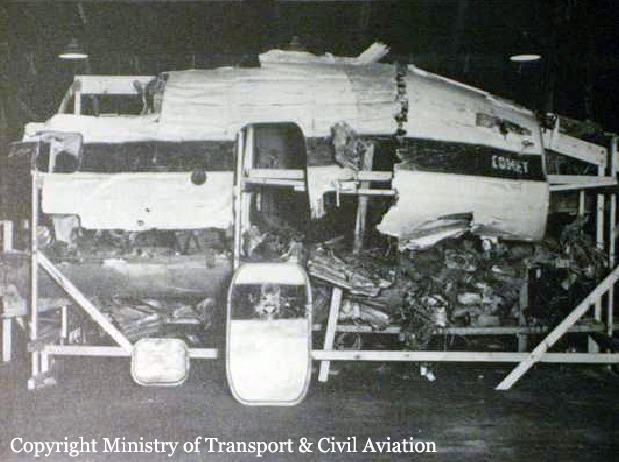
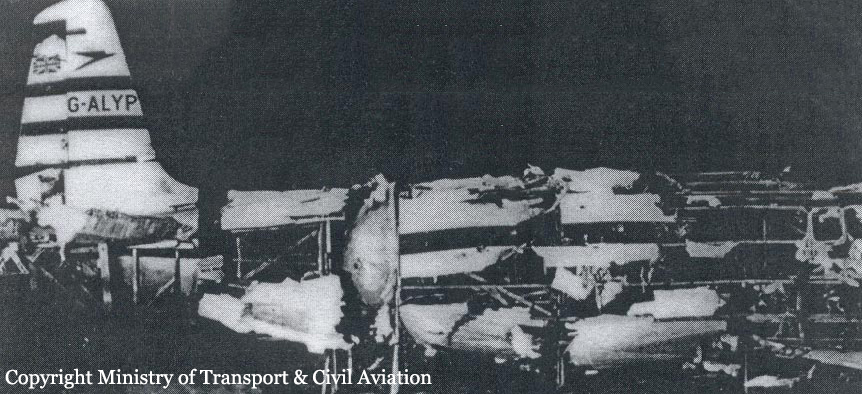
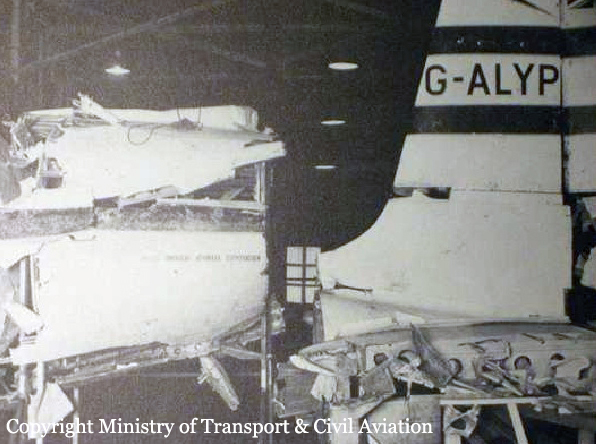
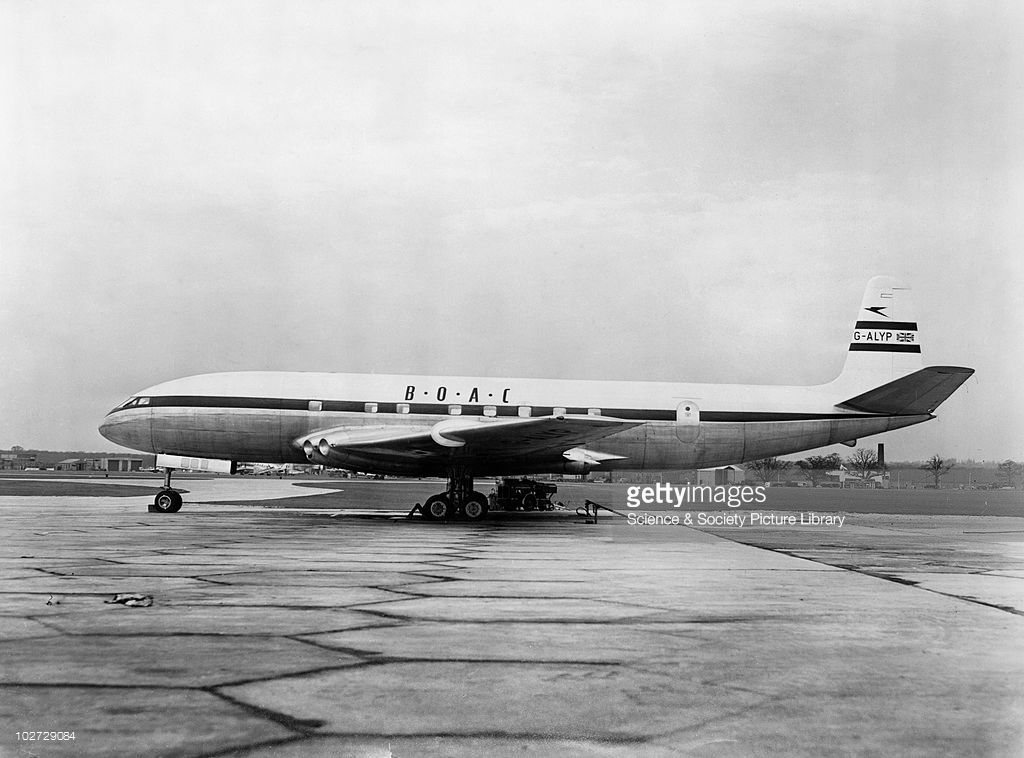
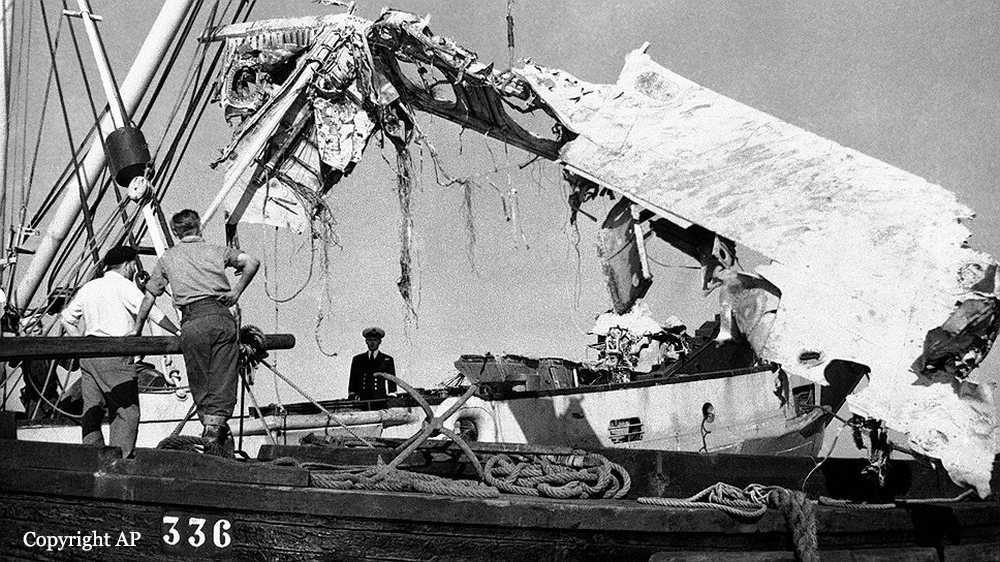
About twenty minutes after its takeoff from Rome-Ciampino Airport, while cruising at an altitude of 27,000 feet between the islands of Elbe and Montecristo, the airplane suffered a brutal decompression, disappeared from radar screens and crashed into the Tyrrhenian Sea. Some debris were found floating about 16 km south of Elbe Island and the main wreckage sank by a depth of 600 meters. All 35 occupants were killed. About 70% of the debris were recovered and the airplane was rebuilt in UK for investigations. As there were suspicions of technical issues, BOAC, Air France and SAA decided to suspend all Comet flights. After fifty modifications and improvements, the airplane started to fly again two months later. It was eventually discovered that the airplane suffered a structural failure and exploded in flight.
Probable cause:
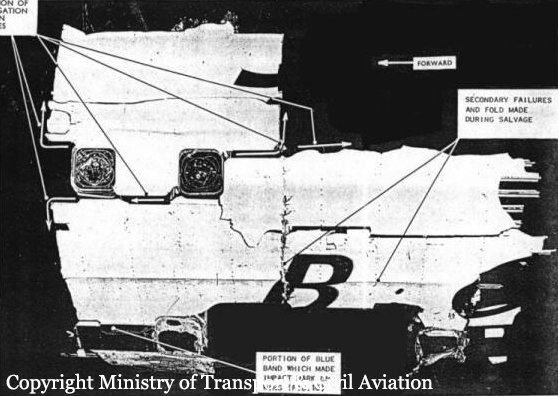
It was the opinion of the Board that the accident was caused by structural failure of the pressure cabin, brought about by fatigue. Investigators reach this opinion for the following reasons:
- The low fatigue resistance of the cabin has been demonstrated by the test described in Part 3, and the test result is interpretable as meaning that there was, at the age of the Elba aeroplanes a definite risk of fatigue failure occurring,
- The cabin was the first part of the aeroplane to fail in the Elba accident,
- The wreckage indicates that the failure in the cabin was of the same basic type as that produced in the fatigue test,
- This explanation seems to us to be consistent with all the circumstantial evidence,
- The only other defects found in the aeroplane were not concerned at Elba, as demonstrated by the wreckage.
Final Report:
Crash of a De Havilland DH.89A Dragon Rapide in London

Date & Time: Aug 1, 1952
Registration:
G-ALBB
Survivors:
Yes
Schedule:
London - London
MSN:
6829
YOM:
1948
Region:
Crew on board:
1
Crew fatalities:
Pax on board:
8
Pax fatalities:
Other fatalities:
Total fatalities:
0
Circumstances:
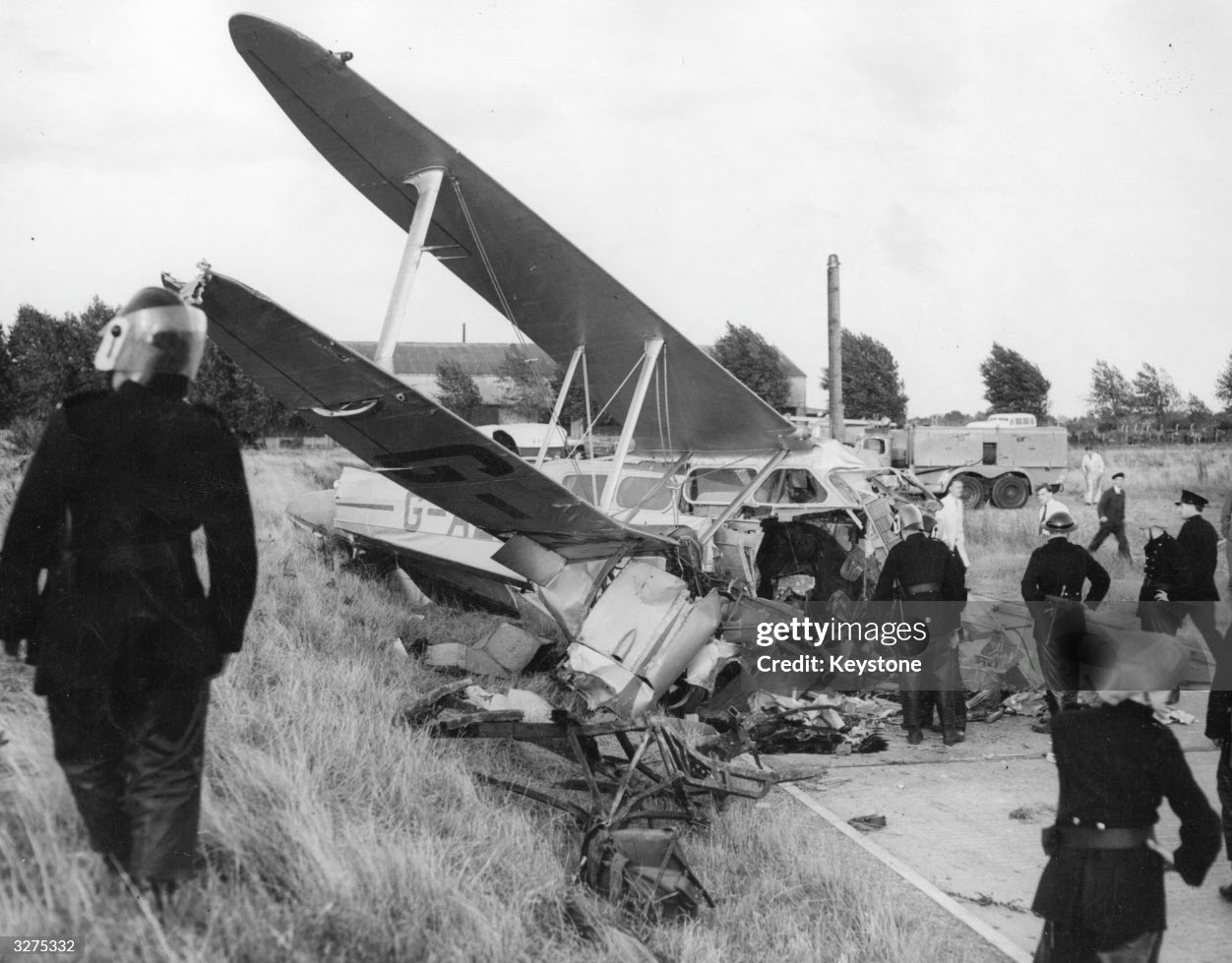
The aircraft was approaching to land at London Airport on runway 23L after a five-minute local pleasure flight. It was coming in after a Stratocruiser and had reached a point between the beginning of the runway approach lighting and the Bath Road when it encountered turbulent air at a height of 300 feet. The pilot lost control and the aircraft crashed just inside the aerodrome and 475 yards from the threshold of the runway. On impact with the ground the nose of the aircraft disintegrated and the pilot was thrown out and severely injured. Five of the eight passengers received injuries of a lesser degree.
Probable cause:
Loss of control on final approach caused by the wake turbulences created by a Boeing 377 Stratocruiser that just landed on the same runway.
Final Report:

Crash of a Vickers 610 Viking 1B in London-Heathrow: 28 killed

Date & Time: Oct 31, 1950 at 1954 LT
Type of aircraft:
Operator:
Registration:
G-AHPN
Survivors:
Yes
Schedule:
Paris – Northolt
MSN:
155
YOM:
1947
Region:
Crew on board:
4
Crew fatalities:
Pax on board:
26
Pax fatalities:
Other fatalities:
Total fatalities:
28
Circumstances:
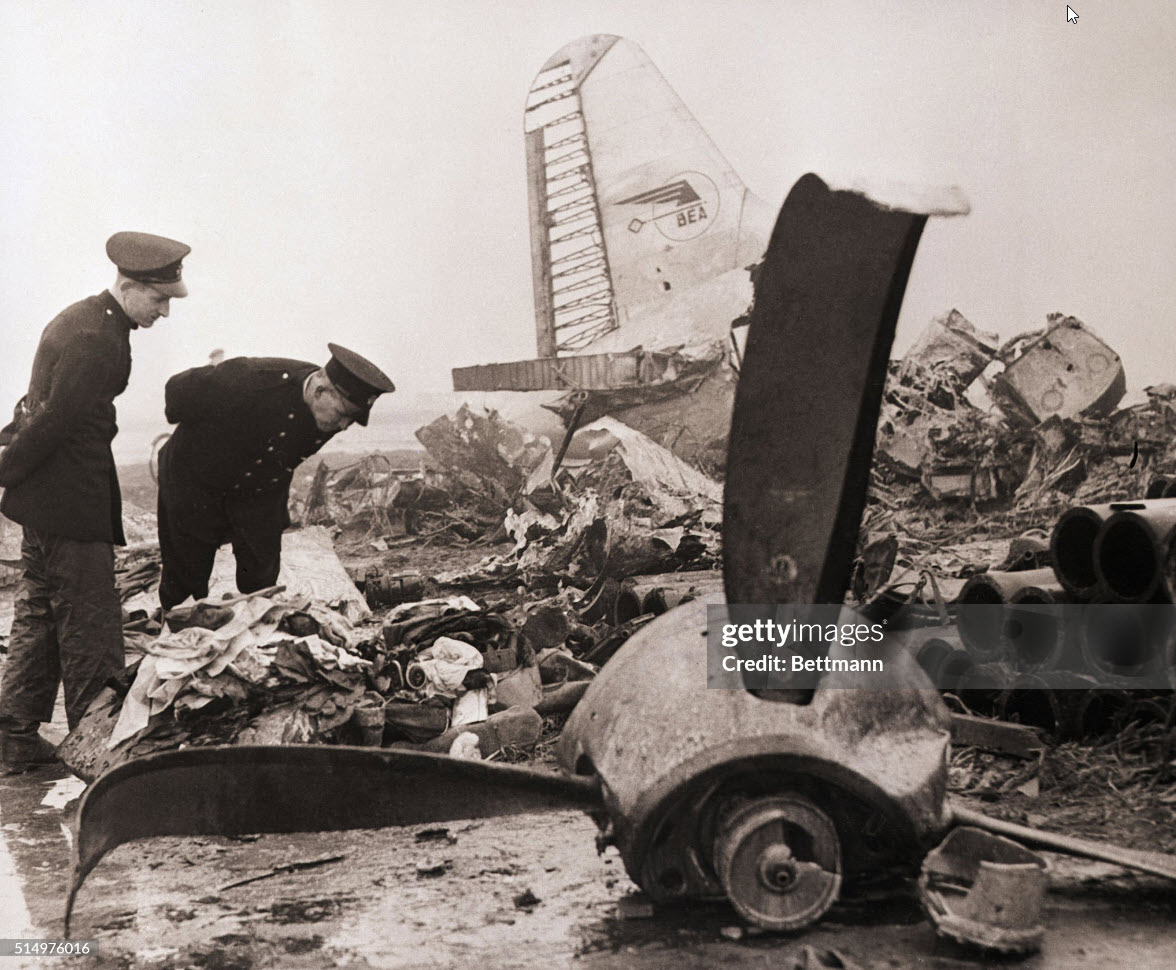
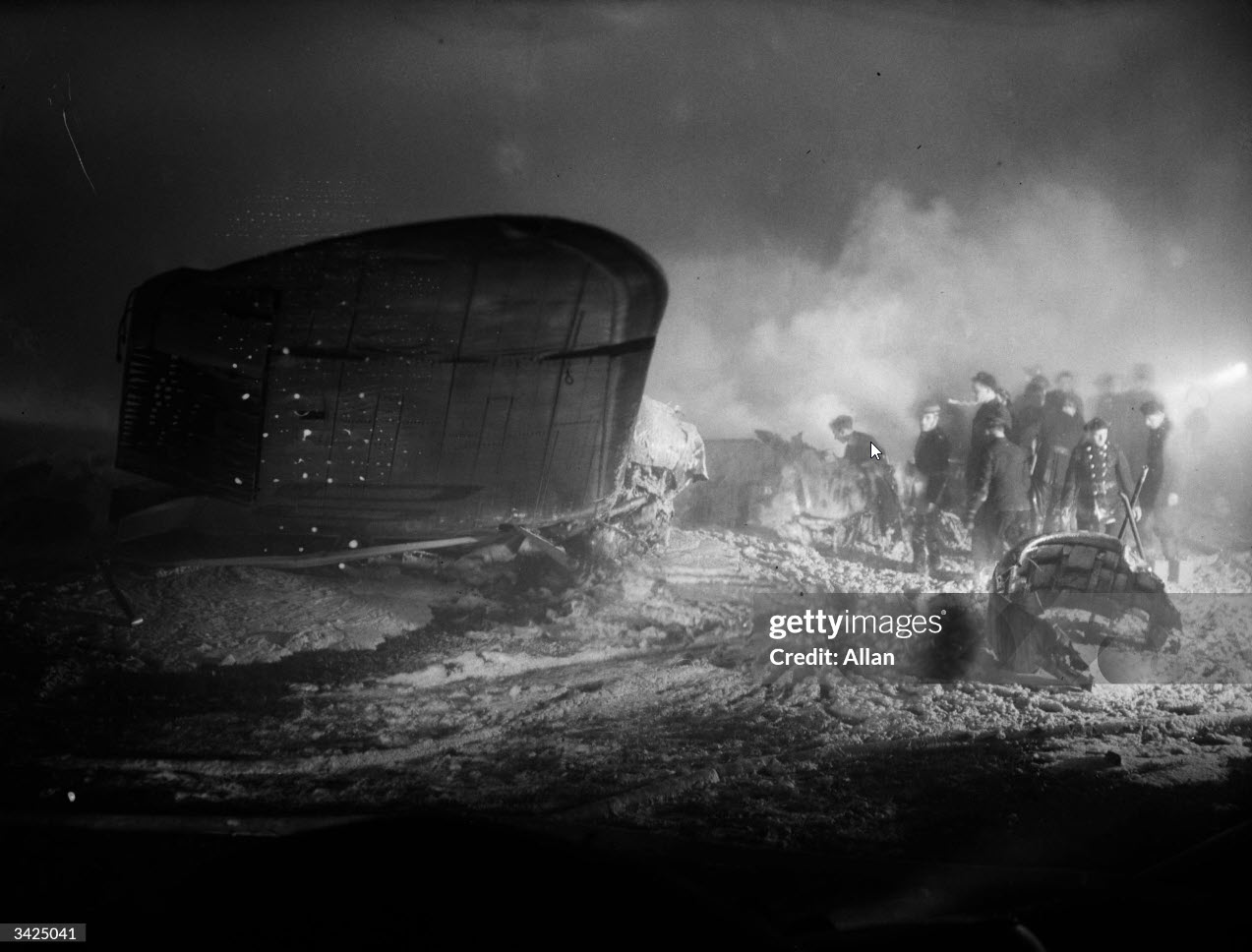
The aircraft left Paris-Le Bourget Airport at 1839LT bound for Northolt. While descending to Northolt at an altitude of 4,500 feet, the crew was informed by ATC that fog had reduced the visibility at Northolt to 50 yards. On receiving this information, the pilot announced that he would attempt to land at London-Heathrow. Although visibility at Heathrow was 40 yards only, it had the facilities for a Ground Controlled Approach (GCA). The pilot told ATC that if he could not safely land at London Airport, he would divert to Blackbushe Airport in Hampshire or Manston Airport in Kent. The aircraft carried out what appeared to be a normal GCA, reaching the decision height of 140 feet at about 400 yards short of runway threshold. As the pilot was unable to locate the runway, he decided to go around, increased power and raised the landing gear. Few seconds later, the aircraft struck the runway surface and skidded for about 140 feet before regaining the air. With both propellers damaged by the initial contact with the ground, it stalled and crashed approximately 3,000 feet past the runway threshold. The starboard wing being torn off and the aircraft bursting into flames as it came to rest next to a store of drain-pipes. The thick fog hindered rescue attempts and it took the fire and rescue teams 16 to 17 minutes to find the crashed aircraft. Of the 30 people on board there were only two survivors, a stewardess and a passenger, both had been seated near the tail.
Probable cause:
Although it cannot be established with certainty, the probable explanation of the known facts may be that the captain deliberately came down below break-off point and then at 100 feet or less came into fog which abruptly reduced the visibility of the runway lights and that then and not till then he started overshoot procedure with fatal results.
Final Report:

Crash of a Grumman G-73 Mallard in London: 6 killed

Date & Time: Oct 28, 1949 at 0100 LT
Type of aircraft:
Operator:
Registration:
NC2956
Flight Phase:
Survivors:
Yes
MSN:
J-15
YOM:
1947
Region:
Crew on board:
3
Crew fatalities:
Pax on board:
4
Pax fatalities:
Other fatalities:
Total fatalities:
6
Aircraft flight hours:
1235
Circumstances:
After takeoff from London-Heathrow Airport, while climbing to a height of some 30-50 feet, the seaplane banked left to an angle of 40° and then lost height and hit the ground some 150 yards to the left of the runway. The aircraft continued for some 450 yards before coming to rest in flames. A crew member was seriously injured while six other occupants were killed.

Crash of a Douglas DC-3D in London-Heathrow: 20 killed

Date & Time: Mar 2, 1948 at 2114 LT
Type of aircraft:
Operator:
Registration:
OO-AWH
Survivors:
Yes
Schedule:
Brussels – London
MSN:
43154
YOM:
1947
Region:
Crew on board:
3
Crew fatalities:
Pax on board:
19
Pax fatalities:
Other fatalities:
Total fatalities:
20
Circumstances:
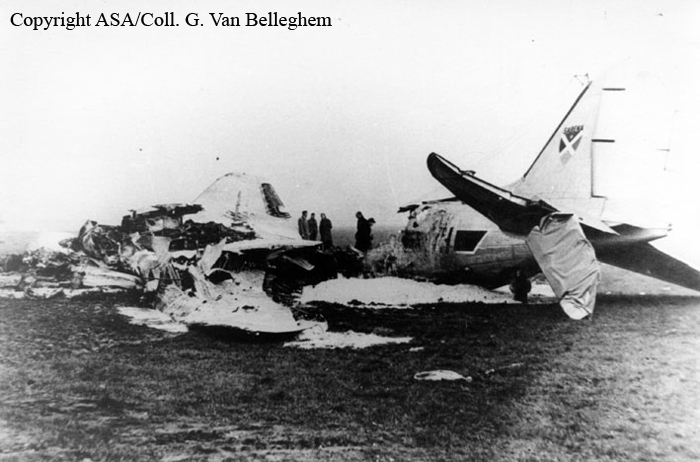
The approach to London-Heathrow Airport was completed in reduced visibility due to the night and foggy conditions. On final, the airplane impacted the ground, exploded and came to rest short of the runway threshold, bursting into flames. Two passengers survived the crash and were seriously injured while 20 other occupants were killed.
Crew:
Henri Goblet, pilot,
Jean Lomba, radio operator,
Louis De Geyndt, steward.
Probable cause:
The pilot continued the approach below the minimum safe altitude and was unable to distinguish the ground due to the low visibility caused by night and fog. At the time of the accident, the visibility was 200 yards.

Crash of an Avro 683 Lancaster B3 in Heathrow

Date & Time: Oct 23, 1947
Type of aircraft:
Operator:
Registration:
G-AGUL
Flight Type:
Survivors:
Yes
Schedule:
London-Heathrow - London-Heathrow
YOM:
1945
Region:
Crew on board:
4
Crew fatalities:
Pax on board:
0
Pax fatalities:
Other fatalities:
Total fatalities:
0
Circumstances:
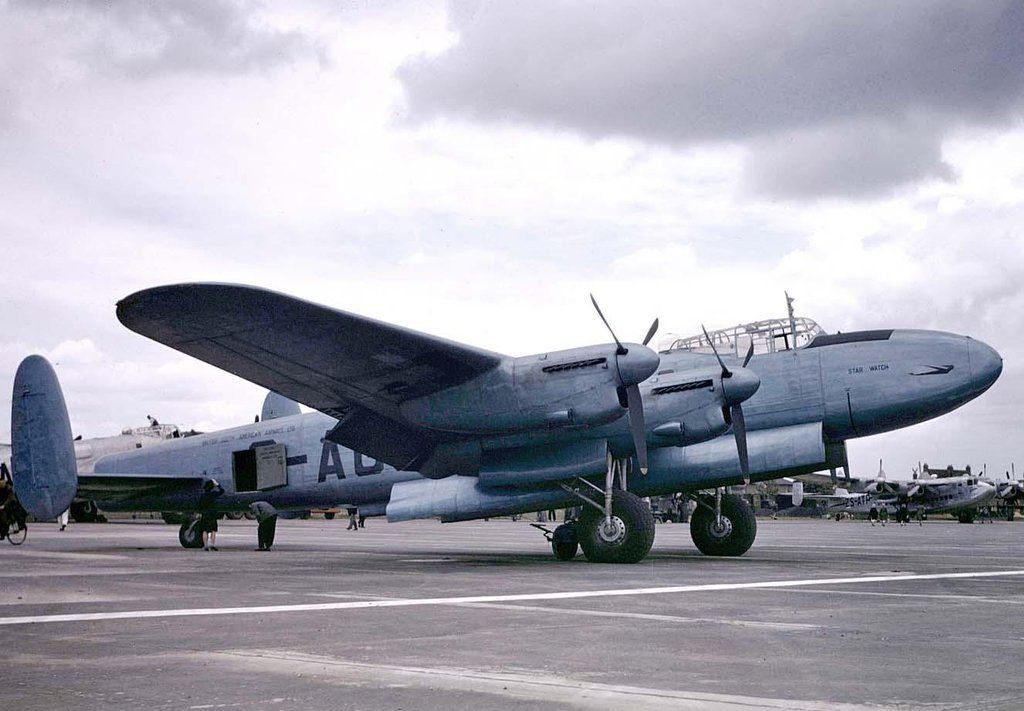
The crew was completing a night training mission in London-Heathrow Airport. On touchdown, the aircraft went out of control, ground looped and came to rest. All four crew members were unhurt while the aircraft christened 'Star Watch' was damaged beyond repair.

Crash of an Avro 685 York C.1 in London-Heathrow

Date & Time: Jul 25, 1947
Type of aircraft:
Operator:
Registration:
G-AIUP
Survivors:
Yes
Schedule:
Berlin – London
MSN:
1374
YOM:
1946
Region:
Crew on board:
7
Crew fatalities:
Pax on board:
17
Pax fatalities:
Other fatalities:
Total fatalities:
0
Circumstances:
After landing, the four engine aircraft encountered brakes problem and was unable to stop within the remaining distance. It overran and came across a river 250 yards further on. All 24 occupants were evacuated safely, four of them were slightly injured. The aircraft was written off.
Probable cause:
Failure of brake systems due to a broken cable, probably due to an excessive use during the preceding days.

Crash of a Handley Page H.P.70 Halifax VIII in Heathrow

Date & Time: Jun 5, 1947
Operator:
Registration:
G-AIHW
Flight Type:
Survivors:
Yes
Schedule:
Valencia - London
MSN:
1357
YOM:
1946
Region:
Crew on board:
4
Crew fatalities:
Pax on board:
0
Pax fatalities:
Other fatalities:
Total fatalities:
0
Circumstances:
Following a wrong approach configuration, the aircraft landed very hard. After being parked on apron, the technician proceeded to a complete inspection which revealed that the fuselage was buckled. The aircraft was declared as damaged beyond economical repair.
Probable cause:
Wrong approach configuration on part of the crew who failed to follow the published approach procedure and failed to complete a correct flare, causing the aircraft to land hard.

Crash of a Handley Page H.P.70 Halifax VIII off Knokke-Heist: 1 killed

Date & Time: Sep 26, 1946 at 0600 LT
Operator:
Registration:
G-AHZN
Flight Phase:
Flight Type:
Survivors:
Yes
Schedule:
Bergamo – London-Heathrow
MSN:
1328
YOM:
1946
Country:
Region:
Crew on board:
3
Crew fatalities:
Pax on board:
1
Pax fatalities:
Other fatalities:
Total fatalities:
1
Circumstances:
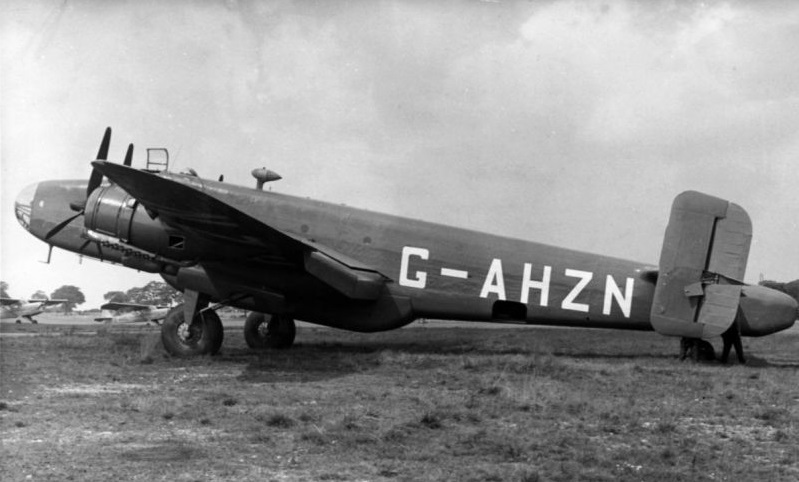
Enroute, the pilot encountered technical problems and was unable to receive Radio Navigation Directional Bearings. To avoid any fuel shortage, he decided to ditch the aircraft off Knokke-Heist in the early morning. The aircraft landed about 100 yards offshore and sank. While all three crew members were able to swim to the beach, the passenger, a Norwegian citizen, was drowned. The aircraft was carrying a load of grapes.