Crash of a Fokker F27 Friendship 200 in Al Dabbah

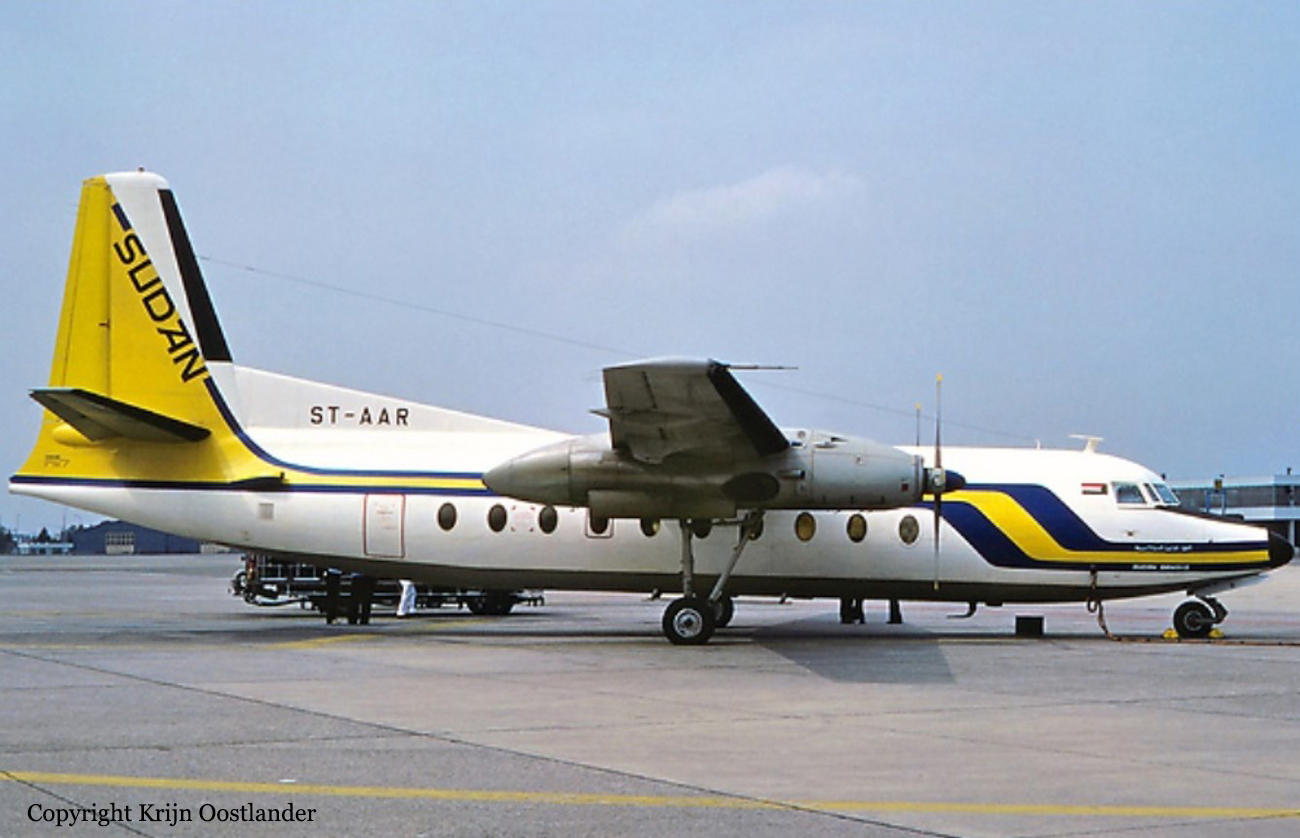
Date & Time: Jul 2, 1985
Type of aircraft:
Operator:
Registration:
ST-AAR
Survivors:
Yes
Schedule:
Khartoum – Al Dabbah – Dongola – Wadi Halfa
MSN:
10193
YOM:
1962
Country:
Region:
Crew on board:
5
Crew fatalities:
Pax on board:
26
Pax fatalities:
Other fatalities:
Total fatalities:
0
Aircraft flight hours:
38491
Aircraft flight cycles:
26104
Circumstances:
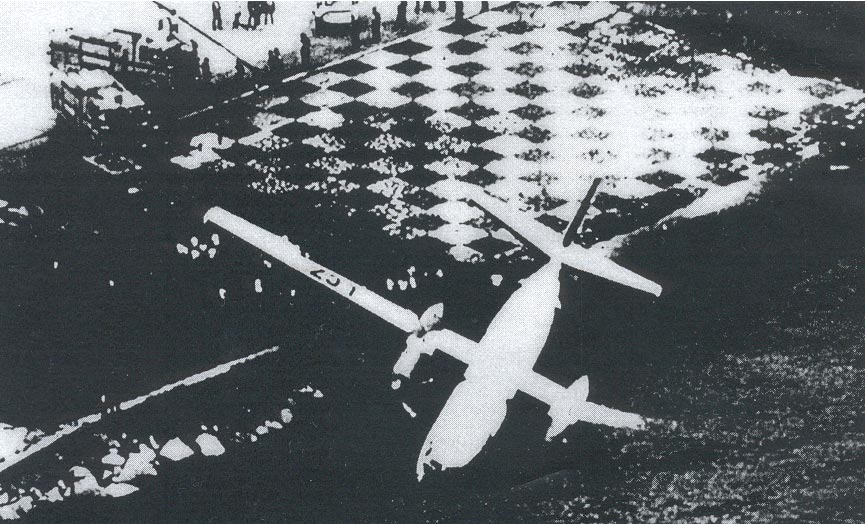
For unknown reasons, the aircraft landed hard at Al Dabbah Airport. After touchdown, the pilot completed the braking procedure and after the aircraft had been parked, all 31 occupants were evacuated safely. Due to excessive g loads and severe structural damages, the aircraft was considered as damaged beyond repair.

Crash of a Fokker F27 Friendship 100 in Greenland: 2 killed

Date & Time: Apr 20, 1985 at 1932 LT
Type of aircraft:
Operator:
Registration:
YN-BZF
Flight Phase:
Flight Type:
Survivors:
Yes
Schedule:
Keflavik – Sondreströmfjord
MSN:
10118
YOM:
1959
Country:
Region:
Crew on board:
5
Crew fatalities:
Pax on board:
0
Pax fatalities:
Other fatalities:
Total fatalities:
2
Aircraft flight hours:
45111
Aircraft flight cycles:
58384
Circumstances:
The Fokker F-27, registration YN-BZF, was engaged on a delivery flight from North Yemen to Nicaragua. For the purpose of extended range two 200 US gal auxiliary ferry fuel tanks had been installed in the cabin of the aircraft. YN-BZF departed on 11 April 1985 from North Yemen (Sanaa) via Saudi Arabia (Jeddah), Egypt (Cairo) to Greece (Athens). The flight proceeded from Greece on 19 April 1985 via Italy (Genoa) to Scotland (Prestwick). On 20 April 1985 the flight proceeded from Prestwick via Stornoway to Reykjavik (Iceland) where it arrived at 15:48 hours. Since the crew had been unable to retrieve fuel from the auxiliary ferry fuel system during the preceding part of the flight, they checked the system during the stay at Reykjavik, and they found it to be in working order. An additional check was done by experienced Icelandic F-27 engineers. In the opinion of the ground engineers the auxiliary fuel system "was not very professionally looking" and they "got the feeling that the crew was not quite certain of how to operate it". They advised the crew on how to operate the fuel system and do a ground run to see if it worked. After having received weather information and ATC clearance, the crew took off at 17:21 hours, heading for Kangerlussuaq-Søndre Strømfjord Airport. At 18:32 the Pilot-in-Command transmitted a message to Iceland radio, whom he asked to extend his thanks to the Icelandic engineers with the message that the auxiliary ferry fuel system was working correctly. This message was transmitted prior to passage of Kulusuk at 19:35 hours. During the flight from Reykjavík, Iceland to Greenland the crew informed the air traffic control that problems had arisen with retrieving fuel from the auxiliary ferry fuel system. At 19:50, approximately 50 NM west of Kulusuk, the crew radioed to the radar station BIG GUN about fuel problems, as it had been discovered that the auxiliary ferry fuel system did not function after all. Thus encountering a reduction of fuel reserves by approximately 400 US gal together with a ground speed of only 180 knots the crew decided to return for landing at Kulusuk Airport. However, due to deteriorating weather conditions the aerodrome could not be located. The flight diverted hereafter westbound for an emergency landing at a radar station, "SOB STORY", on the icecap. During descent the aircraft collided with the icecap.
Probable cause:
The following findings were reported:
- The crew was properly certified for the flight,
- According to the crew the normal aircraft systems, except for the FDR and the cockpit right front window electrical deicing system, were functioning normally, which was also determined by the on site investigation,
- The auxiliary ferry fuel system was not functioning properly. The cause of this has not been conclusively established,
- The crew did not undertake a satisfactory functional airborne check of the auxiliary ferry fuel system to ensure that it worked prior to the essential appliance of the system for flight, (cause-factor),
- It is the opinion of this department from the evidence available that a deficiency in the procedures applied for operating the auxiliary ferry fuel system may have been a major factor,
- The assistance rendered to the flight of YN-BZF was active and generally professional. However, the AFIS operator erroneously stated the distance from the KK NDB of 3 NM to be 10 NM.,
- Furthermore the bearing from the KK NDB was not stated by the AFIS operator at BGKK on request from the crew of YN-BZF,
- In the opinion of this department the lack of this information does not seem to have had any important bearing on the possibility of locating the aerodrome,
- Weather conditions were a major factor in this accident, at the time of the approach into BGKK, as well as at the accident site, (cause-factor),
- The Search and Rescue operation was anticipated at an early stage and put into effect immediately after the aircraft was considered to have had an accident,
- The conditions offered on the accident site: low visibility approaching darkness, and consequently the inability to evaluate surface conditions, precluded successful rescue in the first attempt.

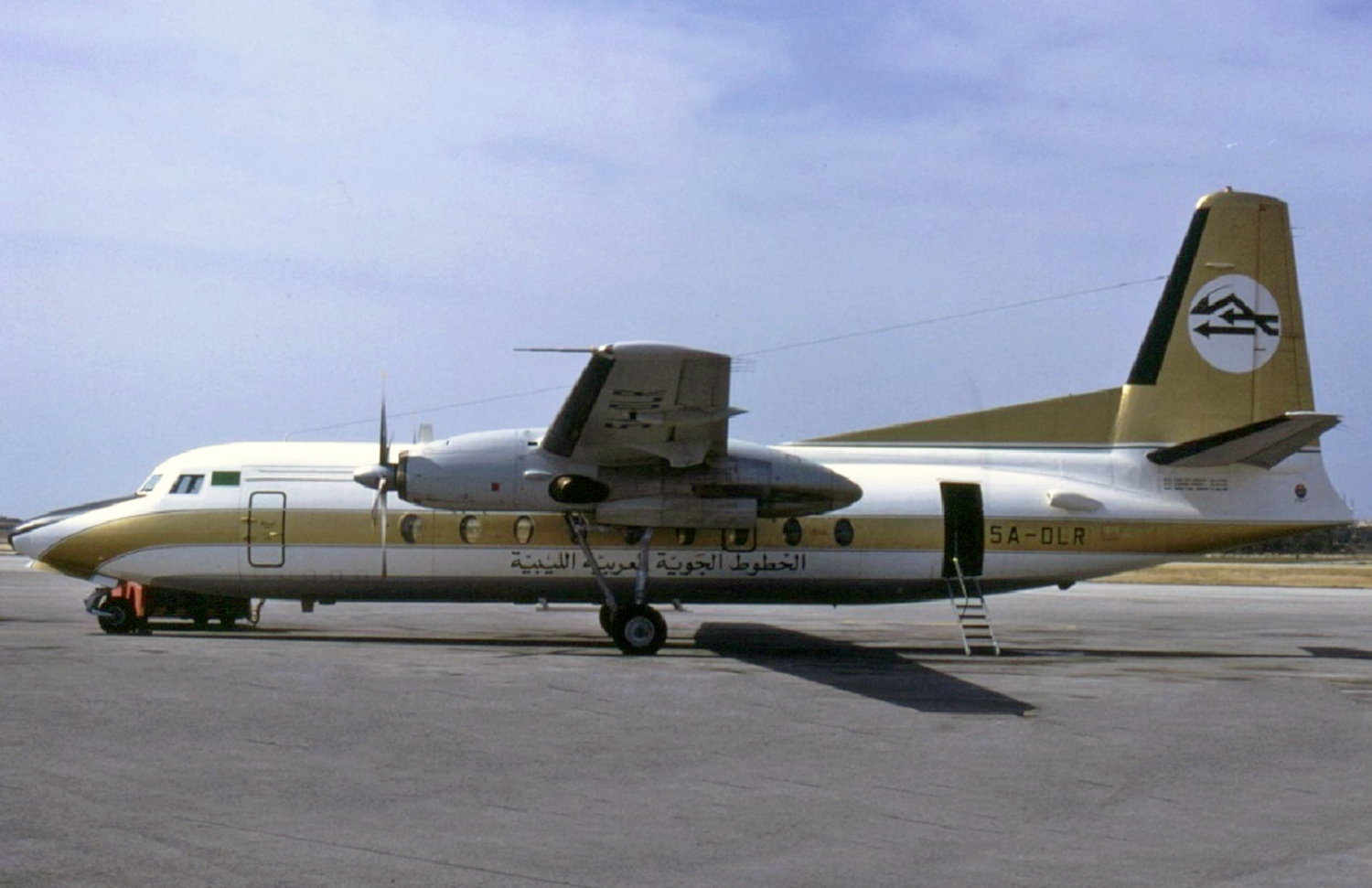
Crash of a Fokker F27 Friendship 600 in Giallo

Date & Time: Mar 6, 1985
Type of aircraft:
Operator:
Registration:
5A-DLR
Survivors:
Yes
MSN:
10647
YOM:
1983
Country:
Region:
Crew on board:
0
Crew fatalities:
Pax on board:
0
Pax fatalities:
Other fatalities:
Total fatalities:
0
Circumstances:
The runway 18/36 was closed to traffic due to maintenance and the surface on the south part was removed. Only the runway 09/27 was available for traffic. For unknown reasons (poor flight preparation, misunderstanding or poor crew coordination), the aircraft landed on the south part of the runway 18/36. In the center of the runway, the aircraft struck a two meters trench. Upon impact, the left main gear collapsed and the aircraft came to rest on its belly. There were no casualties and the aircraft was written off.

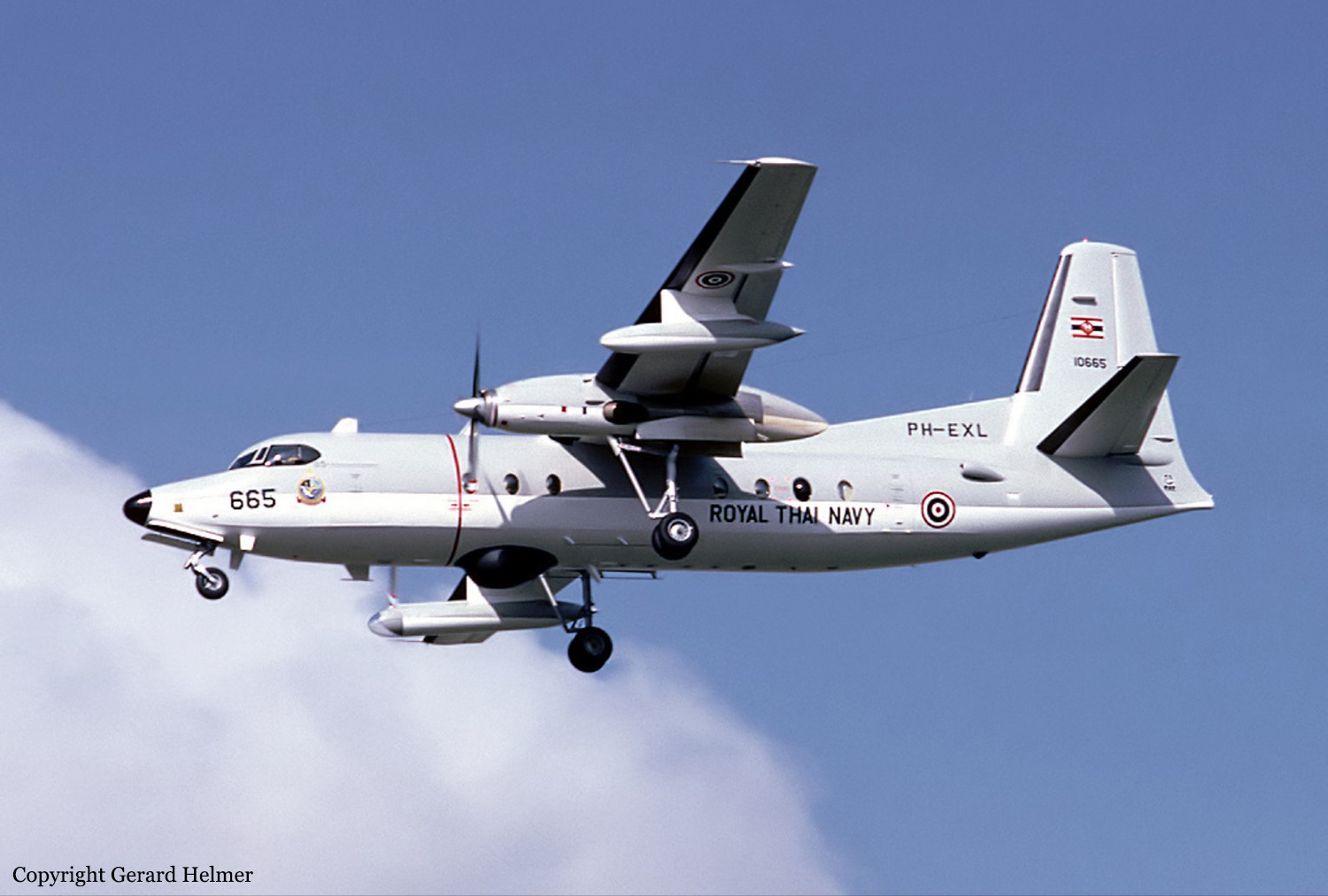
Crash of a Fokker F27 Friendship 200MAR in Bangkok

Date & Time: Jan 8, 1985
Type of aircraft:
Operator:
Registration:
10665
Flight Type:
Survivors:
Yes
Schedule:
U-Tapao - Bangkok
MSN:
10665
YOM:
1984
Country:
Region:
Crew on board:
2
Crew fatalities:
Pax on board:
6
Pax fatalities:
Other fatalities:
Total fatalities:
0
Circumstances:
On approach to Bangkok-Don Mueang Airport, the crew encountered poor visibility due to heavy rain falls. Instead of landing on the main runway, the captain attempted to land on a small runway located near the military facilities. Misaligned, the aircraft landed in the adjacent grassy area. Upon touchdown, it lost its undercarriage, slid for few dozen meters, lost its both wings and tail and came to rest with one engine on fire. All eight occupants escaped injured.

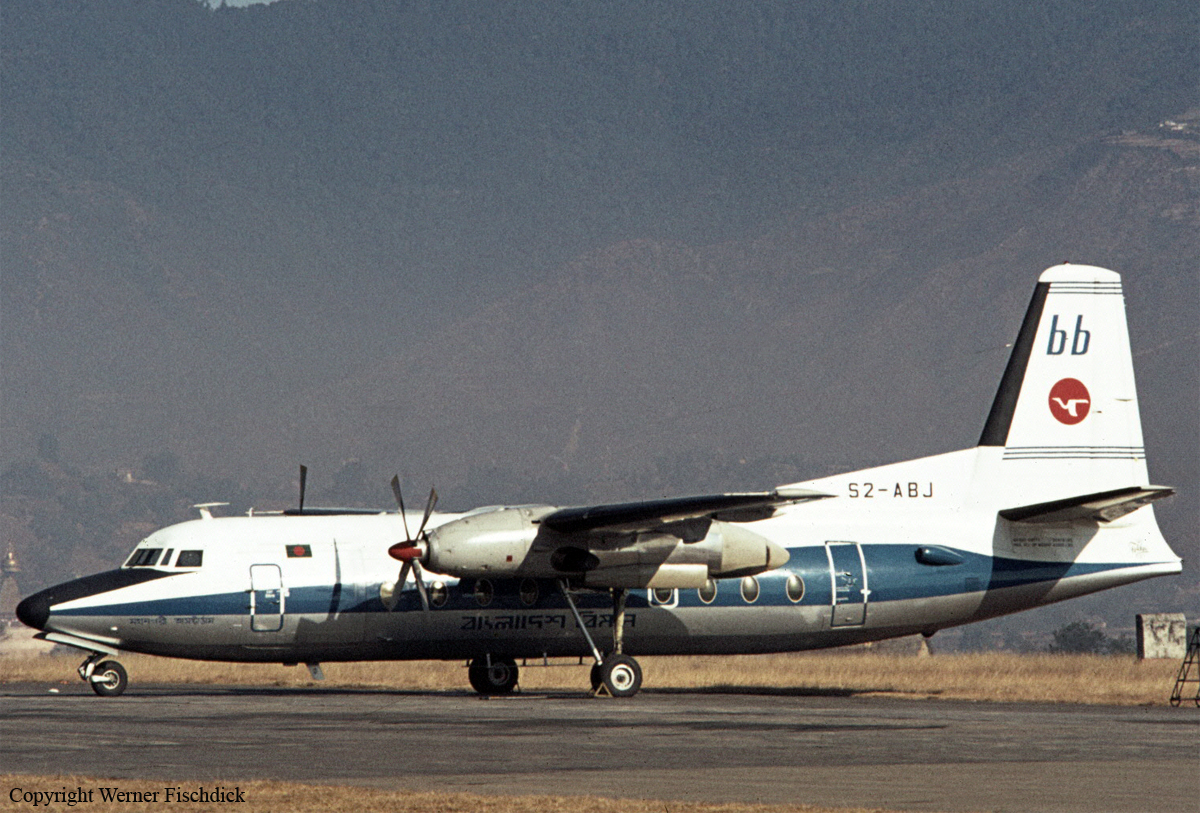
Crash of a Fokker F27 Friendship 600 in Dhaka: 49 killed

Date & Time: Aug 5, 1984
Type of aircraft:
Operator:
Registration:
S2-ABJ
Survivors:
No
Schedule:
Chittagong - Dhaka
MSN:
10453
YOM:
1971
Country:
Region:
Crew on board:
5
Crew fatalities:
Pax on board:
44
Pax fatalities:
Other fatalities:
Total fatalities:
49
Aircraft flight hours:
15595
Aircraft flight cycles:
24085
Circumstances:
On approach to Dhaka-Zia Ul-Haq Airport runway 32, the crew encountered poor weather conditions with limited visibility due to heavy rain falls. The captain abandoned the approach and initiated a go-around maneuver. Few minutes later, he attempted a second approach to runway 14 but again was forced to make a go-around. During a third attempt to land on runway 14, the crew descended below the MDA until the aircraft struck the ground and crashed in a swampy area located about 550 meters short of runway. The aircraft was totally destroyed upon impact and all 49 occupants were killed.
Probable cause:
Controlled flight into terrain after the crew decided to continue the approach below the MDA without any visual contact with the ground/runway.

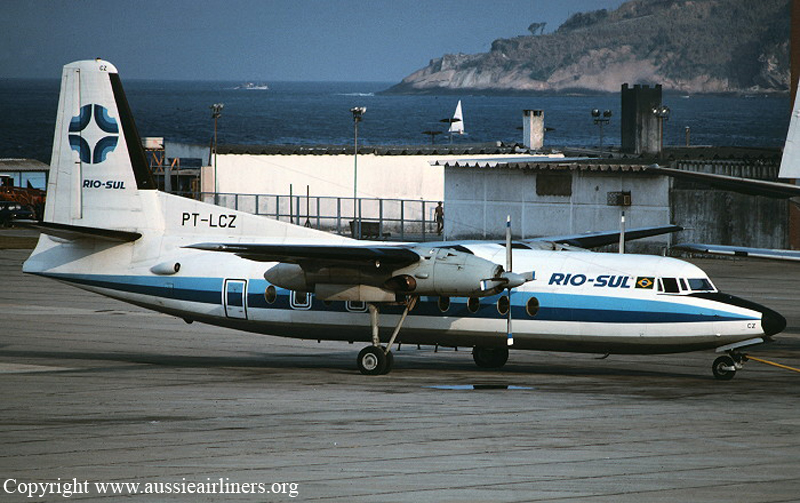
Crash of a Fokker F27 Friendship 200 in Rio de Janeiro

Date & Time: Aug 3, 1984
Type of aircraft:
Operator:
Registration:
PT-LCZ
Flight Type:
Survivors:
Yes
Schedule:
Rio de Janeiro - Rio de Janeiro
MSN:
10291
YOM:
1965
Country:
Crew on board:
7
Crew fatalities:
Pax on board:
0
Pax fatalities:
Other fatalities:
Total fatalities:
0
Aircraft flight hours:
39366
Aircraft flight cycles:
38942
Circumstances:
The crew was completing a local training flight at Rio de Janeiro-Santos Dumont Airport. After touchdown, the aircraft encountered difficulties and was unable to stop within the remaining distance. It overran and came to rest in the Guanabara Bay. All seven occupants were rescued while the aircraft was damaged beyond repair.
Crash of a Fokker F27 Friendship 100 in New York

Date & Time: Jan 13, 1984 at 1442 LT
Type of aircraft:
Operator:
Registration:
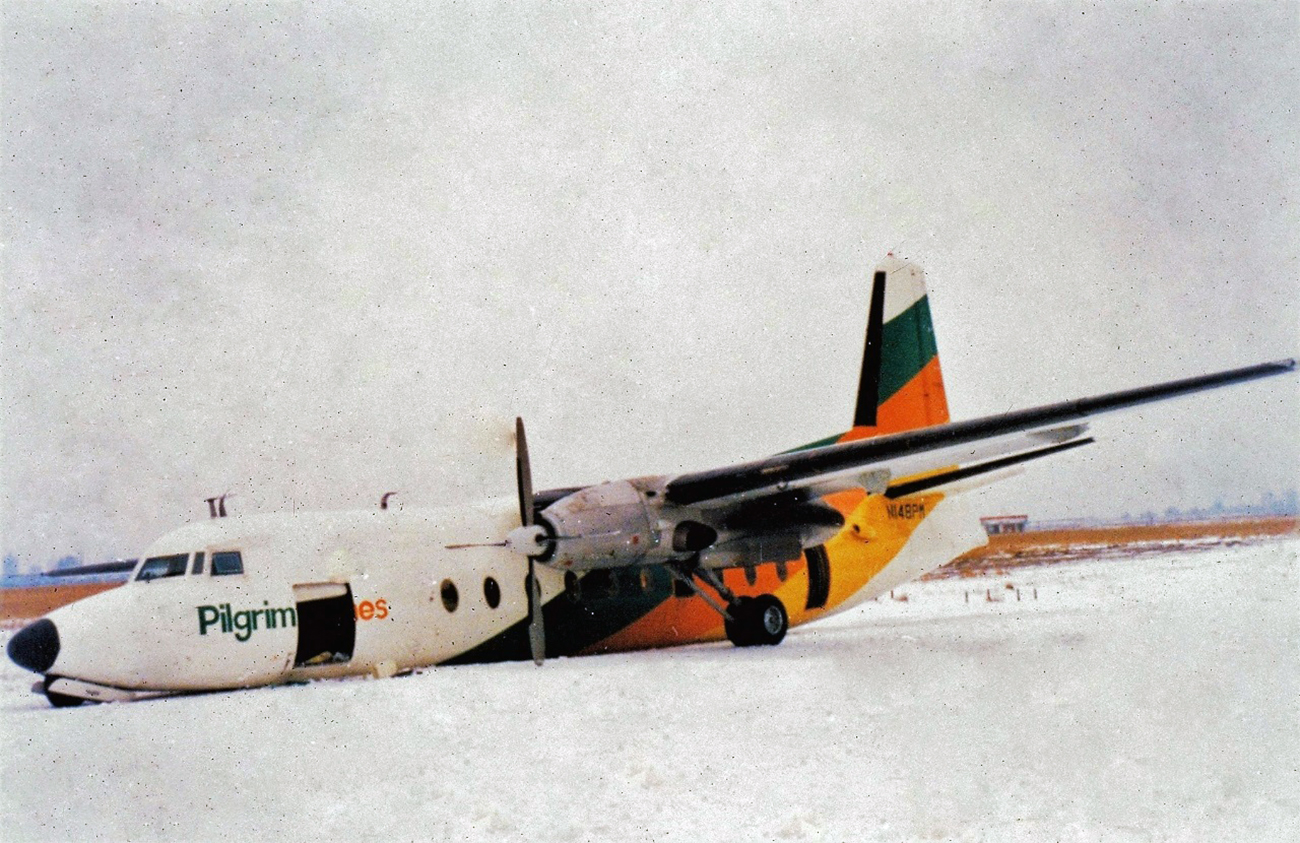
N148PM
Flight Phase:
Survivors:
Yes
Schedule:
New York - Ottawa
MSN:
10108
YOM:
1958
Flight number:
PM035
Crew on board:
3
Crew fatalities:
Pax on board:
21
Pax fatalities:
Other fatalities:
Total fatalities:
0
Captain / Total flying hours:
7012
Captain / Total hours on type:
799.00
Copilot / Total flying hours:
3151
Copilot / Total hours on type:
197
Aircraft flight hours:
42040
Aircraft flight cycles:
39945
Circumstances:
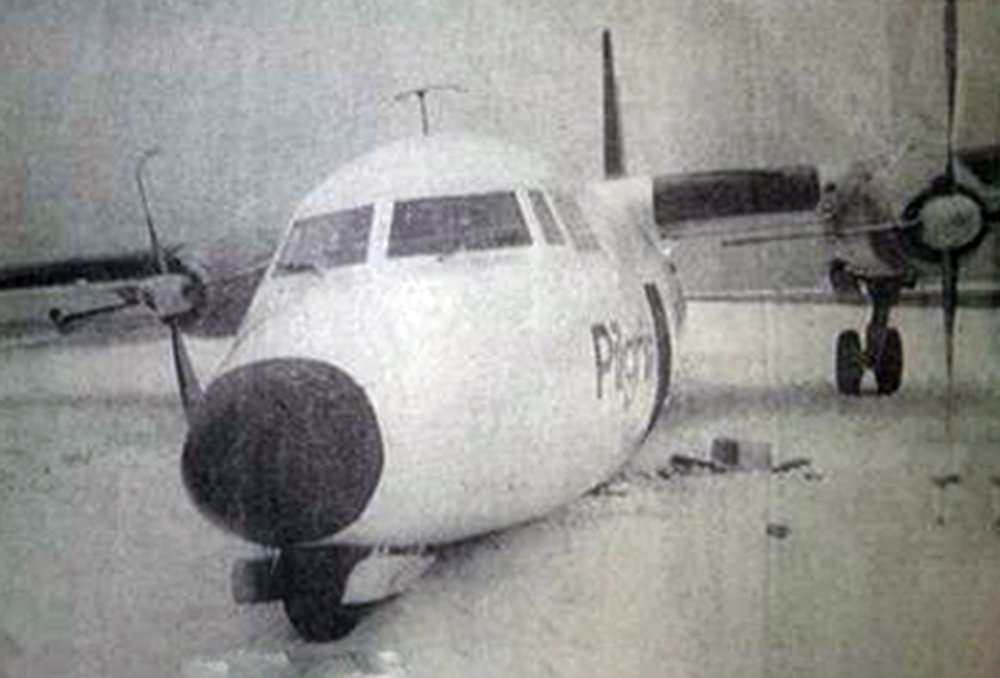
At 1442 on January 13, 1984, Pilgrim Airline Flight 35, a scheduled 14 CFR Part 121 flight with 21 passengers and a crew of three took off from runway 04L at John F. Kennedy International Airport, Jamaica, New York, en route to Ottawa, Canada. The weather was, in part, ceiling 2,700 feet overcast, visibility 7 miles; wind, 050° at I4 knots; and temperature 26°. As the captain raised the landing gear, the propeller on the left engine autofeathered. The captain initiated emergency procedures and told the first officer that he was retarding the power lever for the left engine. Concurrently, according to the cockpit voice recorder, the right engine experienced a power loss, and the airplane began to descend. The first officer, who was flying the airplane, maintained directional control, and the captain immediately put the landing gear lever down. however, the airplane struck the runway before the landing gear extended fully, and slid about 1,200 feet before stopping near the intersection of taxiway "G" and runway 04L. The captain and 13 passengers incurred minor injuries, and the flight attendant incurred a fracture of the spine. The airplane was damaged substantially; there was no postcrash fire.
Probable cause:
The flight crew's failure to use engine anti-ice on the inbound flight to JFK, the captain's failure to conduct a thorough pre-flight inspection, and the flight crew's decision to use engine anti-ice on take-off from JFK which led to power losses on both engines.
Final Report:

Crash of a Fokker F27 Friendship 200 in Merowe

Date & Time: Oct 5, 1982
Type of aircraft:
Operator:
Registration:
ST-AAS
Survivors:
Yes
Schedule:
Khartoum - Merowe
MSN:
10194
YOM:
1962
Country:
Region:
Crew on board:
3
Crew fatalities:
Pax on board:
17
Pax fatalities:
Other fatalities:
Total fatalities:
0
Aircraft flight hours:
33950
Aircraft flight cycles:
23052
Circumstances:
Crashed upon landing at Merowe Airport in unknown circumstances. There were no injuries among the 20 occupants.

Crash of a Fokker F27 Friendship 600 in Amberley

Date & Time: Jun 9, 1982
Type of aircraft:
Operator:
Registration:
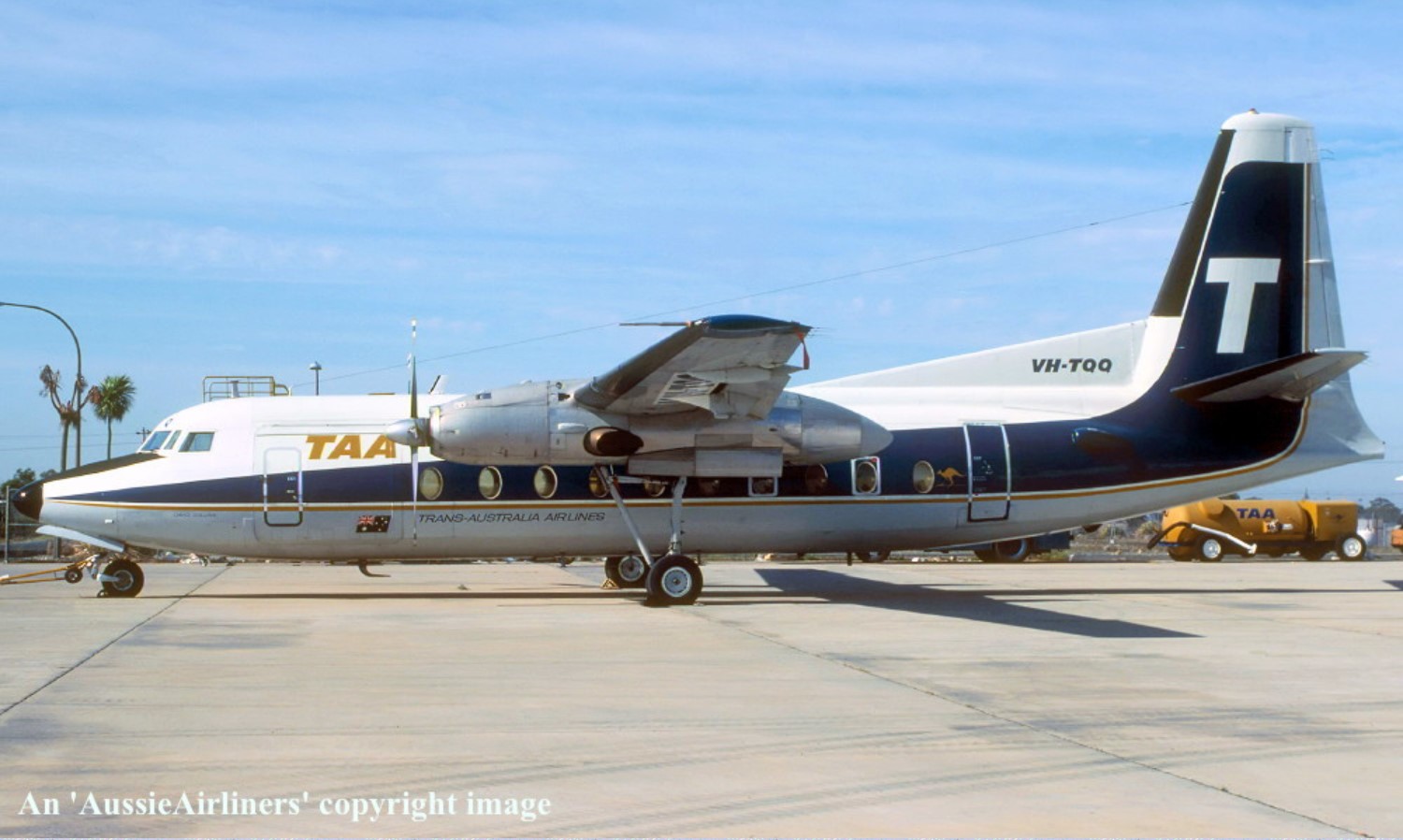
VH-TQQ
Flight Type:
Survivors:
Yes
Schedule:
Amberley - Amberley
MSN:
10388
YOM:
1969
Country:
Region:
Crew on board:
3
Crew fatalities:
Pax on board:
0
Pax fatalities:
Other fatalities:
Total fatalities:
0
Aircraft flight hours:
33311
Aircraft flight cycles:
32482
Circumstances:
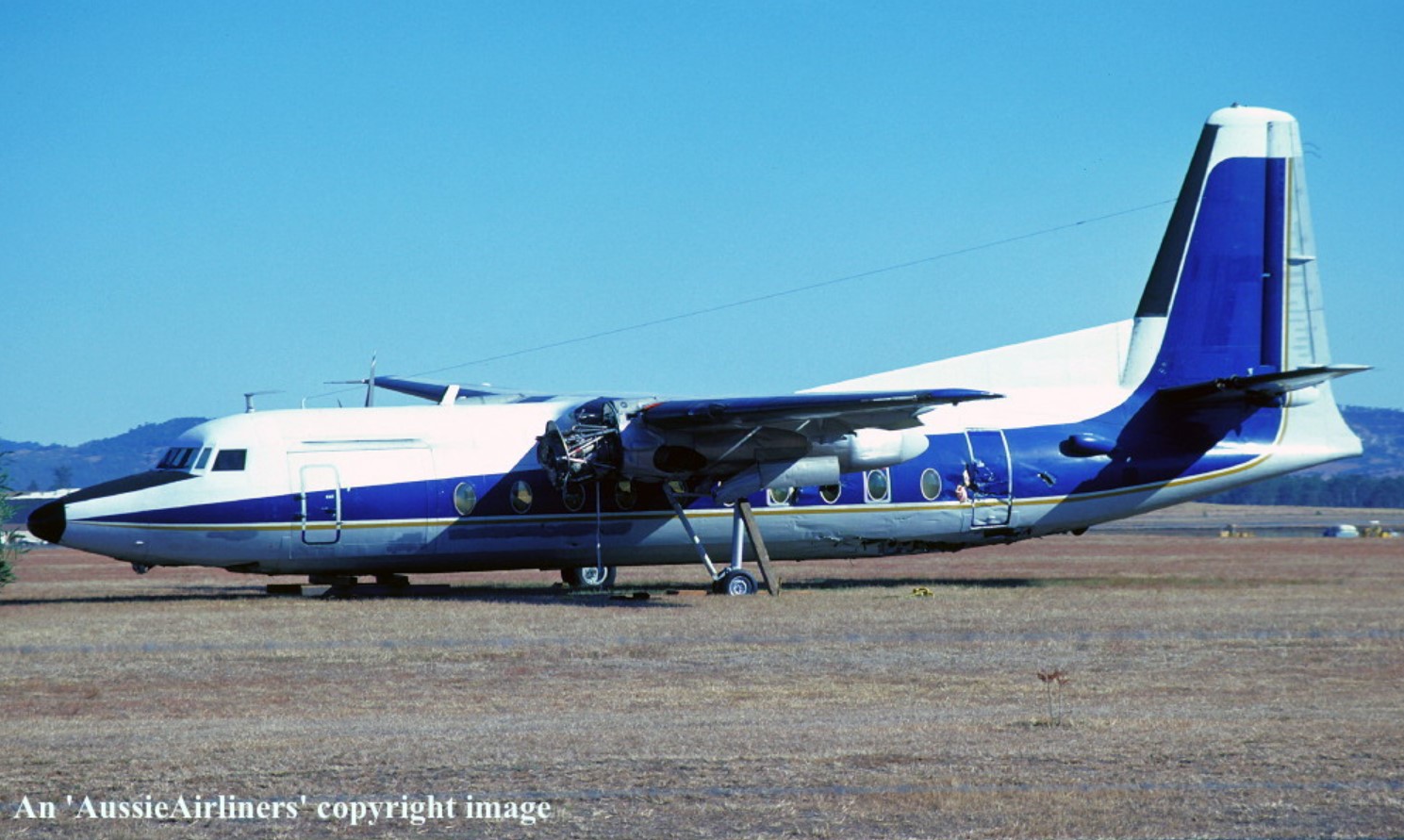
The crew as completing a local training flight at Amberley Airport. On final approach, the instructor simulated a left engine failure. The airplane lost height on short final, went into a nose-down attitude and landed hard. The nose gear collapsed and the left engine partially detached. The airplane veered off runway and came to rest. While all three crew members escaped uninjured, the aircraft was damaged beyond repair.
Probable cause:
Power was reduced on the left engine at a lower than approved altitude. Directional control was lost when the trainee applied full power on the right engine.

Crash of a Fokker F27 Friendship 400 near Kufra

Date & Time: Nov 28, 1981
Type of aircraft:
Operator:
Registration:
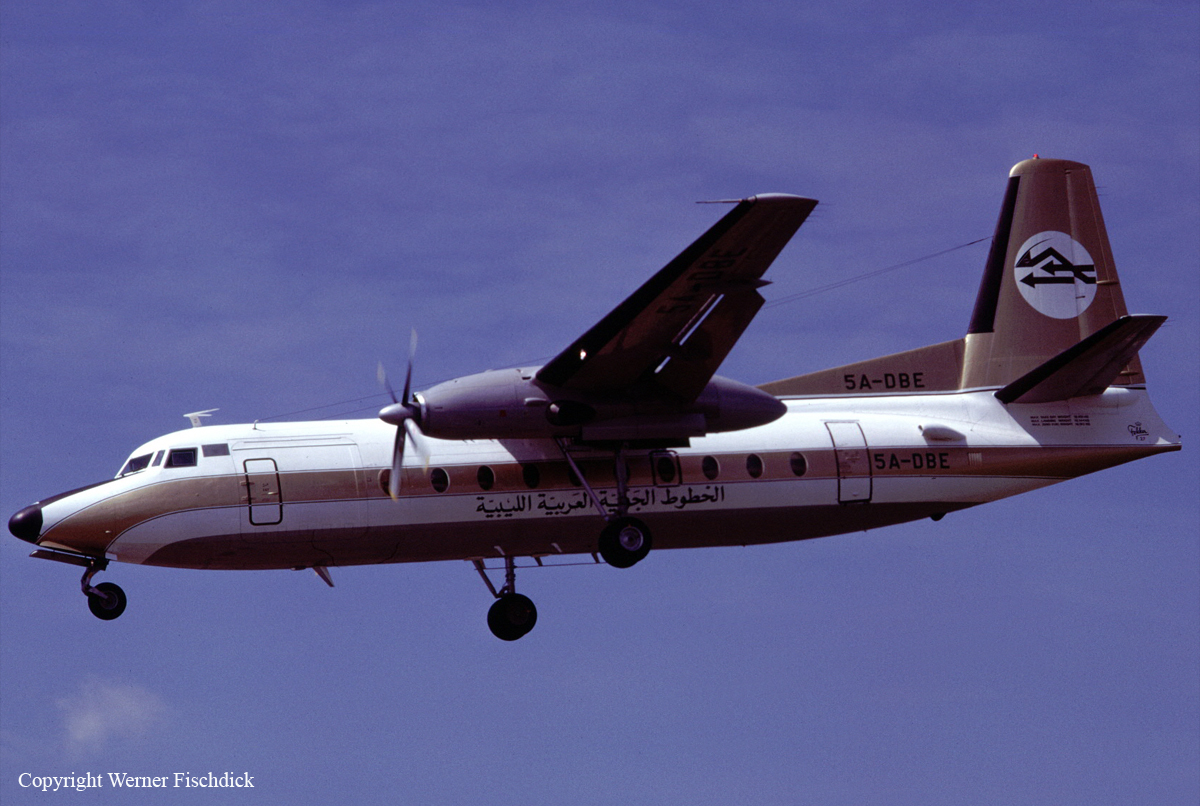
5A-DBE
Flight Phase:
Survivors:
Yes
Site:
MSN:
10275
YOM:
1965
Country:
Region:
Crew on board:
0
Crew fatalities:
Pax on board:
0
Pax fatalities:
Other fatalities:
Total fatalities:
0
Aircraft flight hours:
20196
Aircraft flight cycles:
13716
Circumstances:
While descending to Kufra, both engines failed. The crew completed an emergency belly landing in a sandy area located 56 km from Kufra. There were no casualties while the aircraft was damaged beyond repair. It was reported that the aircraft ran out of fuel.