Country
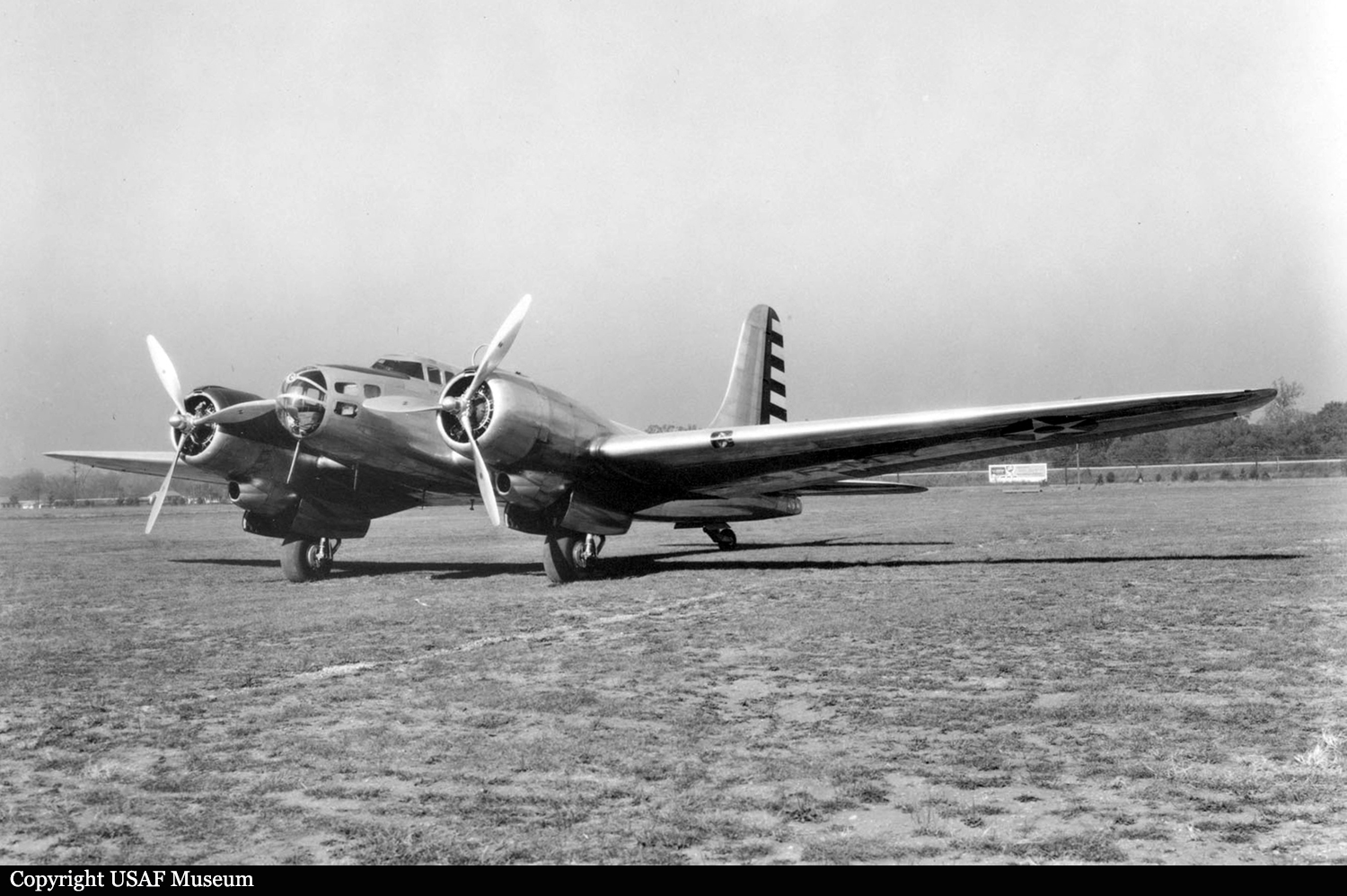
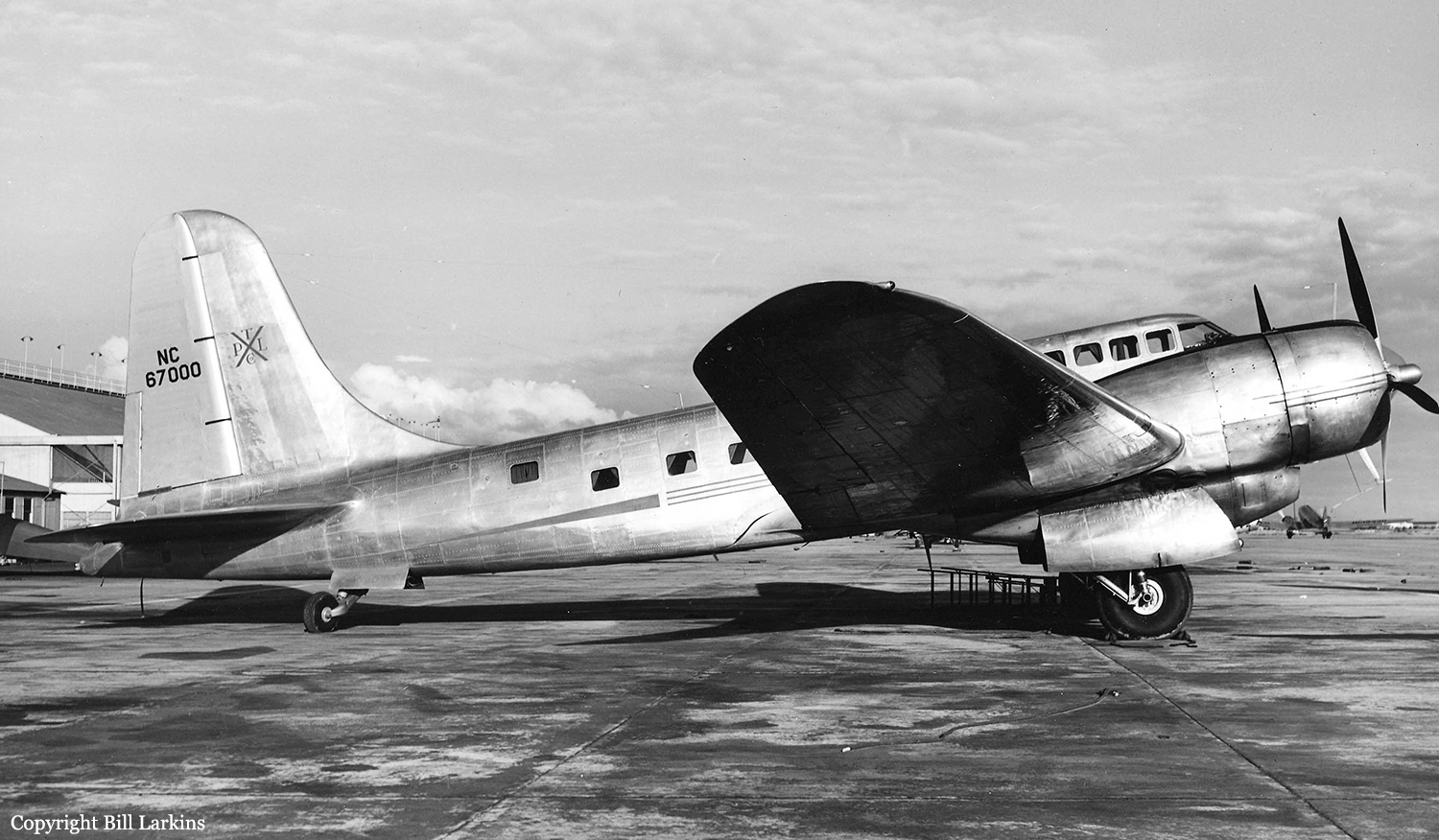
Crash of a Douglas B-23 Dragon at Akron-Canton
Date & Time:
Mar 29, 1954 at 1725 LT
Registration:
N67000
Survivors:
Yes
MSN:
2734
YOM:
1940
Crew on board:
2
Crew fatalities:
Pax on board:
4
Pax fatalities:
Other fatalities:
Total fatalities:
0
Circumstances:
On approach to runway 36 at Akron-Canton Airport, the pilot informed ATC about technical problems with the undercarriage. In accordance with ATC, he completed a low pass over the runway and passed just in front of the control tower before making a turn to the left to join the approach circuit. On short final, the twin engine airplane stalled and crashed in flames about 300 yards short of runway threshold. All six occupants were injured while the aircraft was destroyed by fire.
Final Report:
Crash of a Douglas B-23 Dragon in Dunsmuir-Mott
Date & Time:
Oct 20, 1951
Operator:

Registration:
NC44890
Survivors:
Yes
MSN:
2746
YOM:
1944
Crew on board:
2
Crew fatalities:
Pax on board:
2
Pax fatalities:
Other fatalities:
Total fatalities:
0
Circumstances:
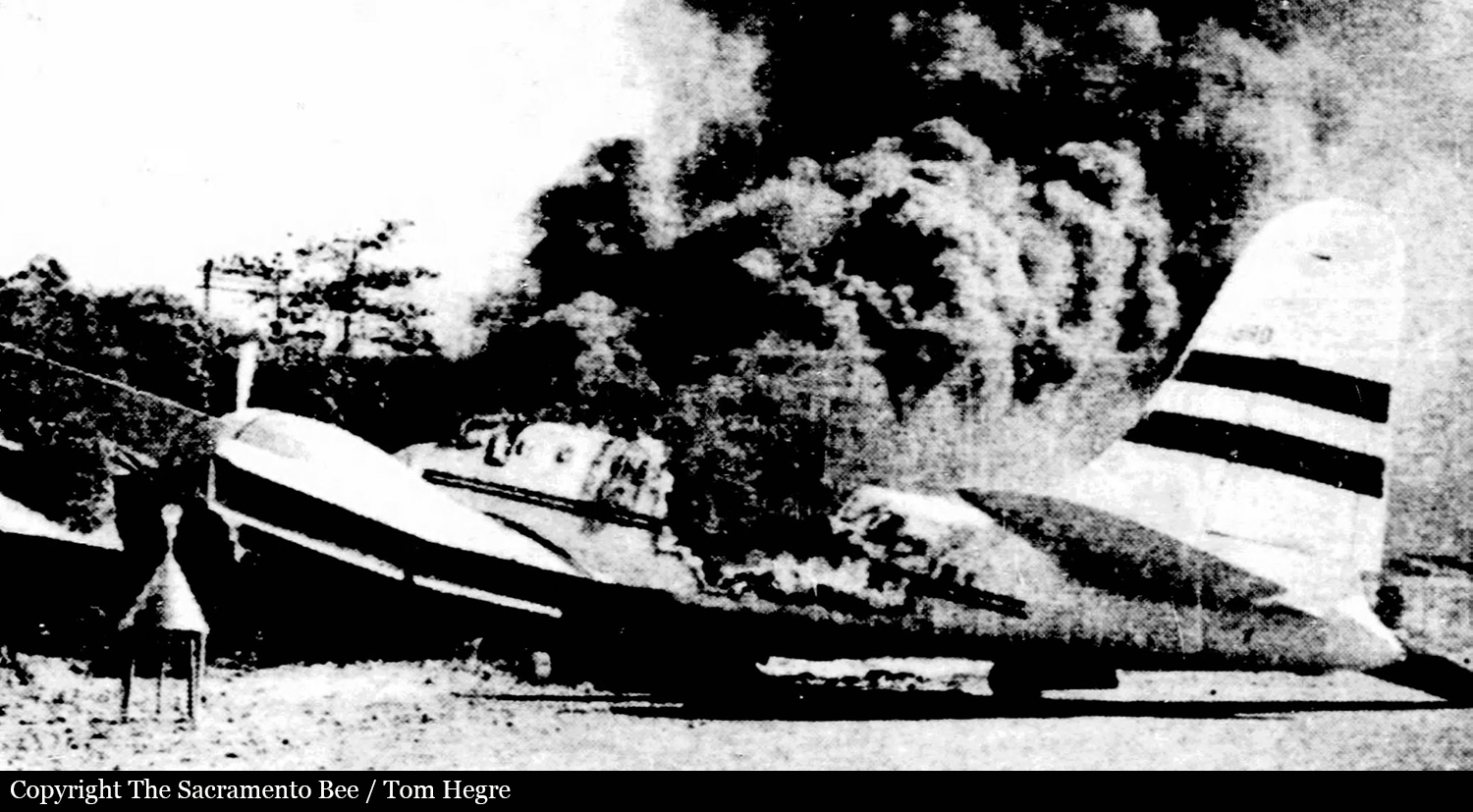
Upon landing at Dunsmuir-Mott Airfield, the airplane encountered downdraft. It went out of control, veered off runway and came to rest against an embankment, bursting into flames. All four occupants escaped uninjured while the airplane was destroyed by fire. Both passengers were visiting William Randolph Hearst estate in McCloud, 11 km east of the airport.
Crew:
M. E. Bell, pilot,
Charles Hardshaw, copilot.
Passengers:
C. A. Mayers,
Mrs. Mayers.
Crew:
M. E. Bell, pilot,
Charles Hardshaw, copilot.
Passengers:
C. A. Mayers,
Mrs. Mayers.
Crash of a Douglas UC-67 Dragon near Johnson City: 11 killed
Date & Time:
May 31, 1943
Operator:

Registration:
39-29
Survivors:
No
MSN:
2715
YOM:
1939
Crew on board:
3
Crew fatalities:
Pax on board:
8
Pax fatalities:
Other fatalities:
Total fatalities:
11
Circumstances:
The twin engine airplane crashed in unknown circumstances east of Johnson City, some 58 km west of Austin. All 11 occupants were killed.
Crew:
Col Philip R. Love, pilot,
1st Lt George Adams,
1st Lt Earle Victor Anderson,
T/Sgt Stanley Krysztowiak,
Cpl Don C. Brill,
Cpl Warner L. Corey,
Cpl Frank A. Fugazza,
Cpl Freddie E. Jones,
Cpl Albert R. Schneider,
Cpl Hugo Knight Visscher Jr.,
Pvt Ralph M. Godsell.
Crew:
Col Philip R. Love, pilot,
1st Lt George Adams,
1st Lt Earle Victor Anderson,
T/Sgt Stanley Krysztowiak,
Cpl Don C. Brill,
Cpl Warner L. Corey,
Cpl Frank A. Fugazza,
Cpl Freddie E. Jones,
Cpl Albert R. Schneider,
Cpl Hugo Knight Visscher Jr.,
Pvt Ralph M. Godsell.
Crash of a Douglas UC-67 Dragon in Loon Lake
Date & Time:
Jan 29, 1943
Operator:
Registration:
39-52
Survivors:
Yes
Schedule:
Tonopah – McChord
MSN:
2738
YOM:
1939
Crew on board:
8
Crew fatalities:
Pax on board:
0
Pax fatalities:
Other fatalities:
Total fatalities:
0
Circumstances:
The airplane went down at Loon Lake (elevation 5,280 feet) with eight men aboard. The plane was returning to McChord AFB, Washington from a training mission in Nevada when it flew into a heavy snow storm near Pendleton, Oregon. Unable to maintain altitude, the pilot, Robert R. Orr, decided to attempt a landing in Boise. The approach was hampered by heavy icing and a failed radio. An order to prepare to parachute was given at 13,000 feet. Just then a hole developed in the cloud cover. A frozen lake was spotted and a landing was attempted. Frozen flaps caused the first approach to be abandoned. In a successful second approach, the plane touched down on the frozen lake, sliding across the ice and through the trees. With both wings sheared off, the plane came to rest 150 feet from the shore of Loon Lake in the timber. All eight men survived. A broken kneecap was the only injury. After waiting five days for rescue, the crew selected three men to go for help. On February 3rd, the three left Loon Lake with a shotgun and chocolate rations. They followed the Secesh River downstream. Then, hiking over Lick Creek Summit, elevation 6,700 feet, they reached the Lake Fork Guard Station. Once inside, an exhausted crew member picked up the telephone and spoke to the operator in McCall. The three men had hiked for 14 days and approximately 42 miles through waist deep snow. On February 18th, the wreckage was spotted by bush pilot, Penn Stohr, of Cascade, Idaho. He returned and notified authorities. Stohr made two more flights, landing on the frozen lake to fly the crew out. After some 21 days in the harsh winter climate of Idaho’s primitive area, all eight men were rescued.
Source: https://www.secesh.net/B23.htm
Source: https://www.secesh.net/B23.htm
Probable cause:
Snowstorm, icing and radio failure.

Crash of a Douglas UC-67 Dragon near McDavid: 10 killed
Date & Time:
Jan 26, 1943 at 1000 LT
Operator:
Registration:
39-43
Survivors:
No
Schedule:
McDill - Brookley
MSN:
2729
YOM:
1939
Crew on board:
5
Crew fatalities:
Pax on board:
5
Pax fatalities:
Other fatalities:
Total fatalities:
10
Circumstances:
The twin engine airplane departed McDill AFB on a flight to Brookley AFB, Mobile, carrying five passengers and five crew members. While cruising in poor weather conditions, the airplane suffered a major structural failure, disintegrated in the air and crashed in an open field located near McDavid, some 75 km northeast of Brookley AFB. The airplane was totally destroyed and all 10 occupants were killed.
Crew:
Maj Sidney B. Gimble Jr., pilot,
F/O Glenn A. Johnson, copilot,
M/Sgt Pius C. Witherow, flight engineer,
S/Sgt J. C. Melder, radio operator,
Lt Edward A. Drucia.
Passengers:
Br Gen Carlyle Hilton Wash, commanding general of the Second Air Support Command,
Lt Col James H. Cunnigham,
Lt Col James A. Cain Jr.,
Maj John R. Lee,
Lt John A. Simon.
Crew:
Maj Sidney B. Gimble Jr., pilot,
F/O Glenn A. Johnson, copilot,
M/Sgt Pius C. Witherow, flight engineer,
S/Sgt J. C. Melder, radio operator,
Lt Edward A. Drucia.
Passengers:
Br Gen Carlyle Hilton Wash, commanding general of the Second Air Support Command,
Lt Col James H. Cunnigham,
Lt Col James A. Cain Jr.,
Maj John R. Lee,
Lt John A. Simon.
Probable cause:
In-flight structural failure for unknown reasons.
Crash of a Douglas UC-67 Dragon off Washington DC
Date & Time:
Jan 22, 1943
Operator:
Registration:
39-55
Survivors:
Yes
MSN:
2741
YOM:
1939
Crew on board:
6
Crew fatalities:
Pax on board:
0
Pax fatalities:
Other fatalities:
Total fatalities:
0
Circumstances:
Shortly after takeoff from Bolling Field, the twin engine airplane stalled and crashed into the Potomac River off Washington DC. All six crew members were seriously injured and the aircraft was destroyed.
Probable cause:
Engine failure shortly after takeoff.
Crash of a Douglas B-23 Dragon near Beaumont: 7 killed
Date & Time:
Oct 12, 1941
Operator:
Registration:
39-42
Survivors:
No
Schedule:
Albuquerque - March
MSN:
2728
YOM:
1939
Crew on board:
2
Crew fatalities:
Pax on board:
5
Pax fatalities:
Other fatalities:
Total fatalities:
7
Circumstances:
The airplane was returning to its base at March AFB on a flight from Albuquerque, carrying seven people. While cruising in poor visibility due to fog and rain falls, the airplane impacted the slope of a mountain located about 10 km northeast of Beaumont. The airplane disintegrated on impact and all seven occupants were killed.
Crew:
John E. Overstreet +6.
Crew:
John E. Overstreet +6.
Probable cause:
Controlled flight into terrain.