Country
code

Queensland

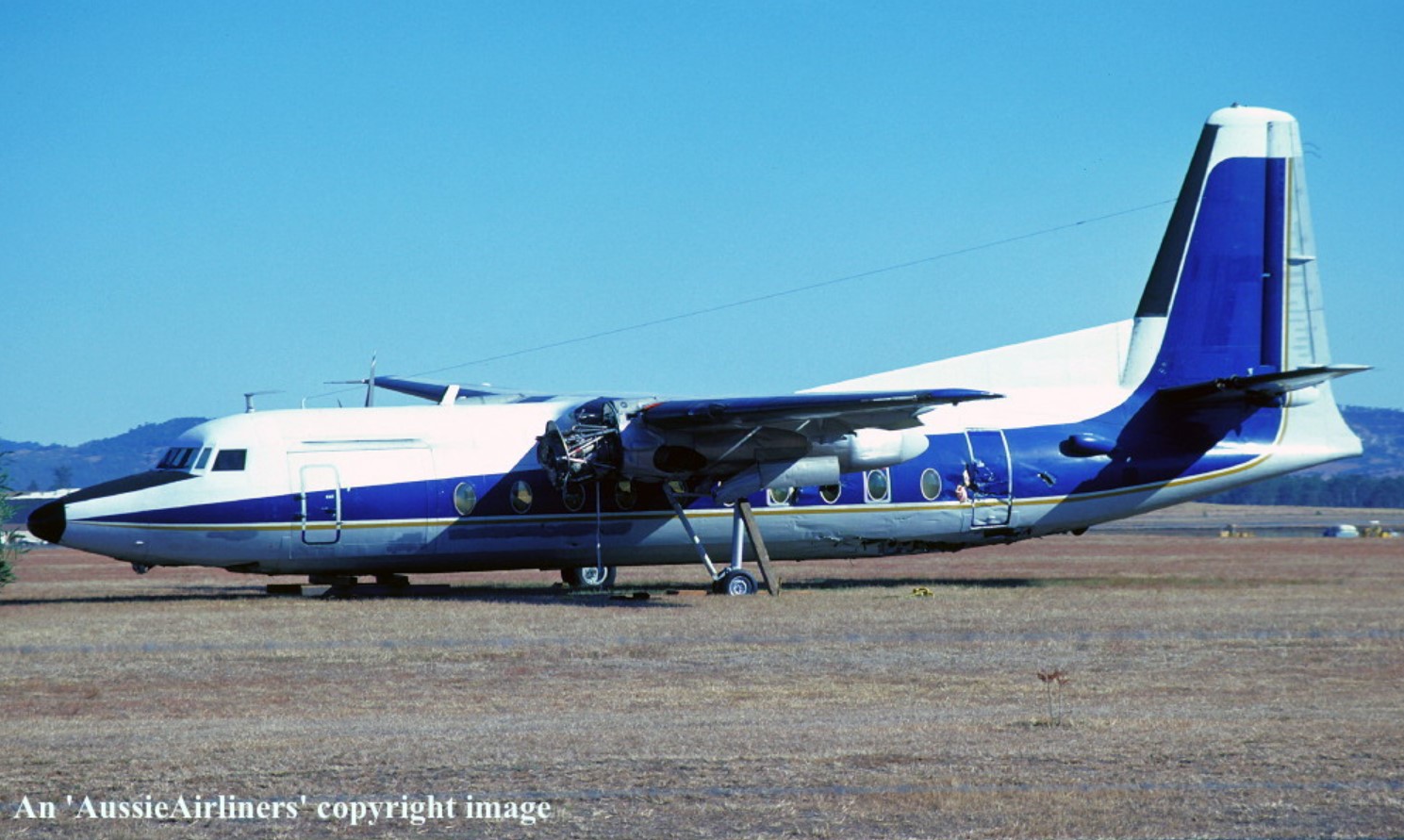
Crash of a Cessna 402C in Bundaberg: 4 killed

Date & Time: Jun 21, 1987 at 0318 LT
Type of aircraft:
Operator:
Registration:
VH-WBQ
Flight Phase:
Flight Type:
Survivors:
Yes
Schedule:
Bundaberg - Brisbane
MSN:
402C-0627
YOM:
1982
Country:
Region:
Crew on board:
1
Crew fatalities:
Pax on board:
4
Pax fatalities:
Other fatalities:
Total fatalities:
4
Circumstances:
The flight had been arranged to transport a critically injured patient to hospital in Brisbane. The pilot evidently experienced some difficulty in starting one of the engines. However, witnesses reported that the engines sounded normal as the aircraft commenced moving from the parking area. At 0310 hours the pilot contacted Brisbane Flight Service Unit and reported that the aircraft was taxying. He advised that he was in a hurry, and indicated that he would provide details of the flight after takeoff. Two minutes later he advised that takeoff was being commenced from Runway 14. No further transmissions were received from the aircraft. The aircraft was seen to become airborne and shortly afterwards enter a fog bank. Other witnesses subsequently reported hearing the sounds of an impact. The flight had been arranged to transport a critically injured patient to hospital in Brisbane. The pilot evidently experienced some difficulty in starting one of the engines. However, witnesses reported that the engines sounded normal as the aircraft commenced moving from the parking area. At 0310 hours the pilot contacted Brisbane Flight Service Unit and reported that the aircraft was taxying. He advised that he was in a hurry, and indicated that he would provide details of the flight after takeoff. Two minutes later he advised that takeoff was being commenced from Runway 14. No further transmissions were received from the aircraft. The aircraft was seen to become airborne and shortly afterwards enter a fog bank. Other witnesses subsequently reported hearing the sounds of an impact. The flight had been arranged to transport a critically injured patient to hospital in Brisbane. The pilot evidently experienced some difficulty in starting one of the engines. However, witnesses reported that the engines sounded normal as the aircraft commenced moving from the parking area. At 0310 hours the pilot contacted Brisbane Flight Service Unit and reported that the aircraft was taxying. He advised that he was in a hurry, and indicated that he would provide details of the flight after takeoff. Two minutes later he advised that takeoff was being commenced from Runway 14. No further transmissions were received from the aircraft. The aircraft was seen to become airborne and shortly afterwards enter a fog bank. Other witnesses subsequently reported hearing the sounds of an impact. The investigation revealed that the aircraft had collided with a tree 800 metres beyond the aerodrome boundary, while tracking about 10 degrees to the right of the extended centreline of the runway. It had then continued on the same heading until striking the ground 177 metres beyond the initial impact point. The wreckage was almost totally consumed by fire.
Probable cause:
The extensive fire damage hampered the investigation of the accident. The surviving passenger believed that the aircraft was on fire before the collision with the tree. No other evidence of an in-flight fire could be obtained, and it was considered possible that the survivor's recall of the accident sequence had been affected by the impact and the fire. Such discrepancies in recall are not uncommon among accident survivors. The elevator trim control jack was found to be in the full nose-down position, but it was not possible to establish whether the trim was in this position prior to impact. Such a pre-impact position could indicate either a runaway electric trim situation or that, in his hurry to depart, the pilot had not correctly set the trim for takeoff. The aircraft was known to have had an intermittent fault in the engine fire warning system. The fault apparently caused the fire warning light to illuminate, and the fire bell to sound, usually just after the aircraft became airborne. The pilot was aware of this fault. It was considered possible that, if the fault occurred on this occasion as the aircraft entered the fog shortly after liftoff, the pilot's attention may have been focussed temporarily on the task of cancelling the warnings. During this time he would not have been monitoring the primary flight attitude indicator, and would have had no external visual references. It was also possible that, if for some reason the pilot was not monitoring his flight instruments as the aircraft entered the fog, he suffered a form of spatial disorientation known as the somatogravic illusion. This illusion has been identified as a major factor in many similar accidents following night takeoffs. As an aircraft accelerates, the combination of the forces of acceleration and gravity induce a sensation that the aircraft is pitching nose-up. The typical reaction of the pilot is to counter this apparent pitch by gently applying forward elevator control, which can result in the aircraft descending into the ground. In this particular case, the pilot would probably have been more susceptible to disorientating effects, because he was suffering from a bronchial or influenzal infection. Although all of the above were possible explanations for the accident, there was insufficient evidence available to form a firm conclusion. The precise cause of the accident remains undetermined.
It is considered that some of the following factors may have been relevant to the development of the accident
1. The pilot was making a hurried DEPARTURE. It is possible that he did not correctly set the elevator trim and/or the engines may not have reached normal operating temperatures before the takeoff was commenced.
2. Shortly after liftoff the aircraft entered a fog bank, which would have deprived the pilot of external visual references.
3. The aircraft had a defective engine fire warning system. Had the system activated it may have distracted the pilot at a critical stage of flight.
4. The aircraft might have suffered an electric elevator trim malfunction, or an internal fire, leading to loss of control of the aircraft.
5. The pilot may have experienced the somatogravic illusion and inadvertently flown the aircraft into the ground. The chances of such an illusion occurring would have been increased because the pilot was evidently suffering from an infection.
Final Report:
Crash of a Cessna 402B in Mount Dianne: 5 killed

Date & Time: Feb 2, 1987 at 0639 LT
Type of aircraft:
Operator:
Registration:
VH-TLQ
Survivors:
Yes
Schedule:
Cairns – Mount Dianne
MSN:
402B-1236
YOM:
1977
Country:
Region:
Crew on board:
1
Crew fatalities:
Pax on board:
7
Pax fatalities:
Other fatalities:
Total fatalities:
5
Circumstances:
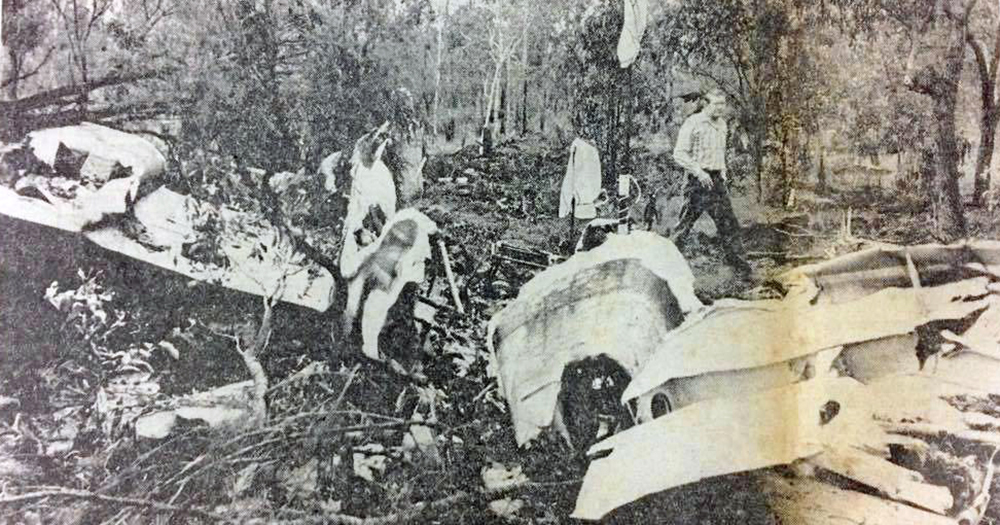
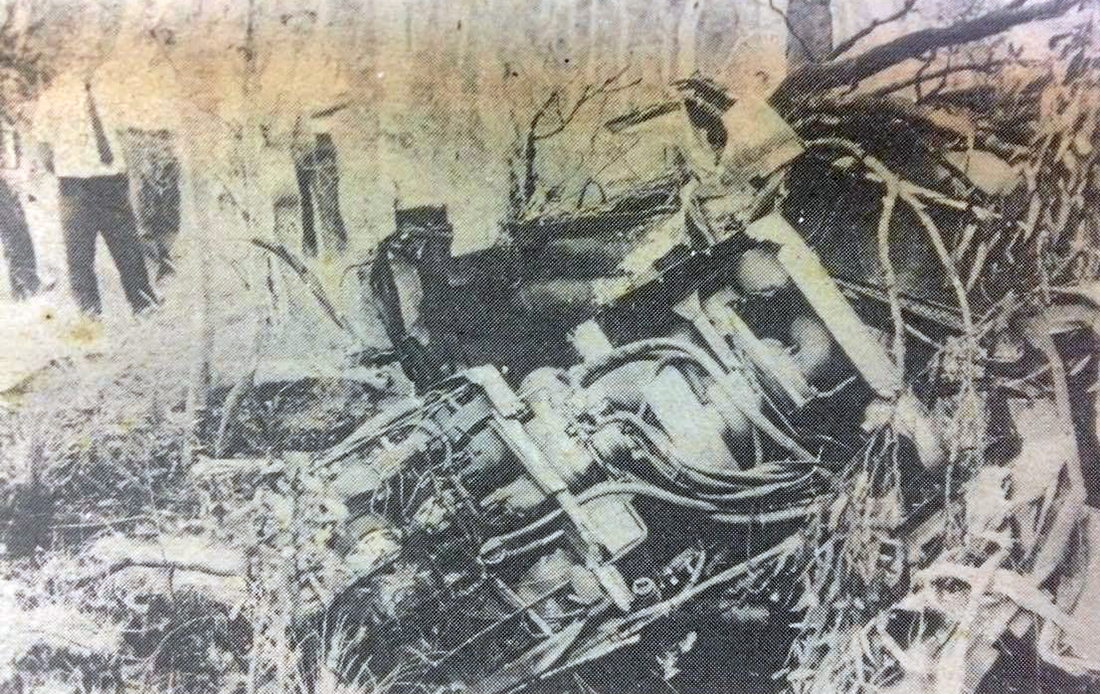
The aircraft was the first of a group of four aircraft being used to return staff to an alluvial gold mine after a weekend break. The weather in the area of the destination was not suitable for a visual arrival and the aircraft was initially held for several minutes in an area five kilometres to the south of the strip, awaiting an improvement in the weather. The aircraft was then flown towards the strip and the pilot reported to a following aircraft that there had been a lot of rain and that the strip looked wet. He also advised that he intended to carry out a precautionary circuit and check if it was safe to land. No further transmissions were received from VH-TLQ. The wreckage of the aircraft was subsequently found burning in a river valley, 300 metres west of the threshold of runway 34. Surviving passengers stated that the aircraft struck trees shortly before impact. There were no ground witnesses. The aircraft had impacted the ground in a steep nose down left wing low attitude, at a low forward speed, then cartwheeled up rising ground before coming to rest inverted, 42 metres from the point of impact. The cabin area was destroyed by an ensuing fire.
Probable cause:
An inspection of wreckage did not reveal any mechanical defect or failure that could have contributed to the accident. The reasons for the apparent loss of control of the aircraft could not be determined.
Final Report:

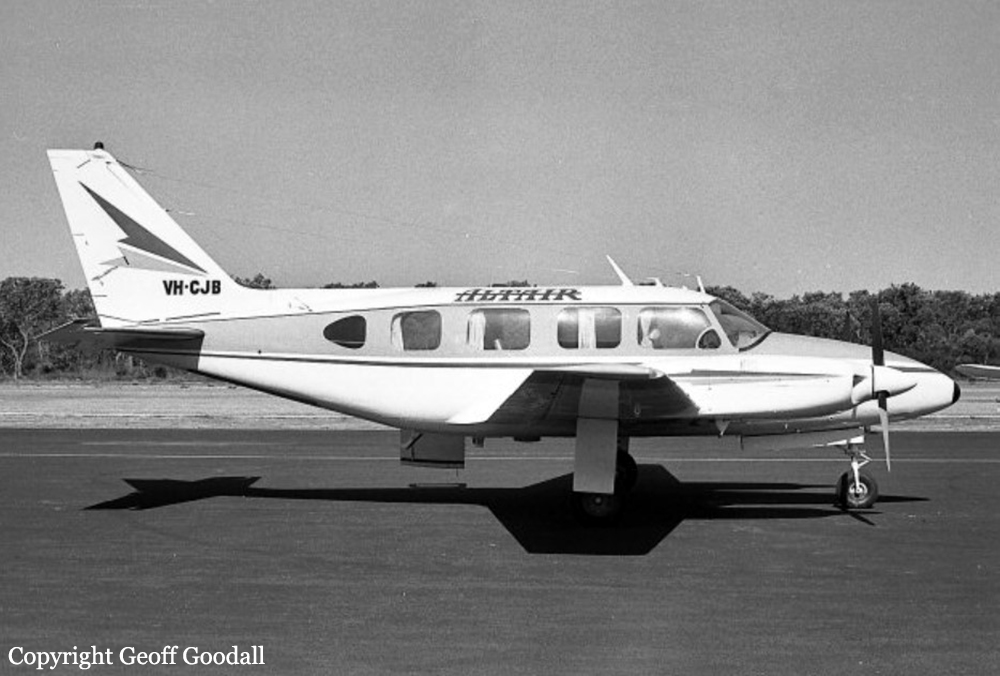
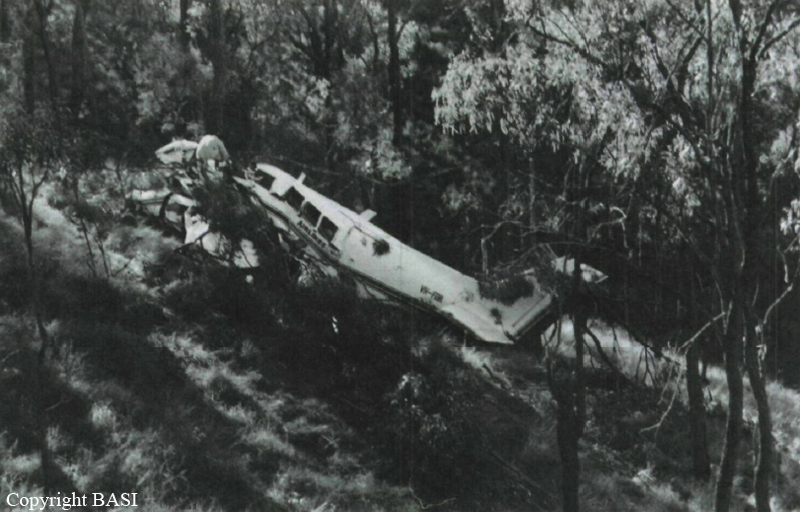
Crash of a Piper PA-31-310 Navajo in Cairns: 8 killed

Date & Time: Sep 2, 1986 at 1408 LT
Type of aircraft:
Operator:
Registration:
VH-CJB
Flight Phase:
Flight Type:
Survivors:
No
Site:
Schedule:
Cairns - Mount Isa
MSN:
31-249
YOM:
1968
Country:
Region:
Crew on board:
1
Crew fatalities:
Pax on board:
7
Pax fatalities:
Other fatalities:
Total fatalities:
8
Circumstances:
The pilot hired the aircraft privately from his employer to conduct a holiday flight during his leave. The journey commenced at Moorabbin on 25 August and the aircraft arrived at Cairns about midday 30 August, after stopovers at Coolangatta and Proserpine. The pilot and his passengers then spent the next three days at leisure in the Cairns area. On the day of the accident, the pilot attended the Cairns Briefing Office where he collected the relevant weather forecasts and submitted a flight plan. The flight plan indicated that the flight would be conducted in accordance with Instrument Flight Rules. It contained a deficiency in that no details were given for the first route segment from Cairns to Biboohra. It is apparent that the pilot had not noticed that the tracks to the west of Cairns, on the relevant enroute chart, emanate from Biboohra and not Cairns. There was no track line which joined Cairns and Biboohra. Such a line might have alerted the pilot at the time he planned the flight. The error in the flight plan was not detected when the plan was submitted. When the pilot was issued with an airways clearance prior to DEPARTURE it was apparent that he did not understand the terms of the clearance, which gave the initial tracking point as Biboohra. The location of this point was explained to the pilot and he subsequently accepted the clearance. He elected to depart using visual procedures, after being offered a choice of these or the published Standard Instrument DEPARTURE profile. A visual DEPARTURE from the particular runway in use allows an aircraft proceeding towards Biboorha to intercept the required track sooner than is possible with an instrument DEPARTURE. The aircraft was issued with takeoff instructions which included clearance for the pilot to make a right turn after takeoff. Witnesses observed that the aircraft complied with this clearance and headed in a southwesterly direction before turning to the north-west and subsequently entering cloud. The cloud base was estimated to be between 2000 and 2500 feet above mean sea level. No further communications were received from the aircraft and a search was commenced that afternoon. The search effort was hampered by the weather and the wreckage was not located until the following afternoon.
Probable cause:
Inspection of the wreckage indicated that the aircraft struck the the top of a ridge line, 250 metres south-west of the highest point of the Mt Williams area. At the time, the aircraft was on a west-north-westerly heading, flying wings level and climbing at a angle of about five degrees. No fault was found with the aircraft that could have contributed to the occurrence. At the time the aircraft entered cloud, the pilot should have reverted to Instrument Flight Rules procedures. To comply with these procedures a pilot is required, inter alia, to ensure that adequate terrain clearance is achieved during climb to the lowest safe altitude. The relevant altitude for the route segment Cairns to Biboohra is 4500 feet above mean sea level (amsl). As the aircraft was apparently under control at the time of impact with the ground at about 3250 feet amsl, it was likely that the pilot had overlooked the lowest safe altitude requirements.
Final Report:

Crash of a Beechcraft 65-A80 Queen Air near Biloela: 1 killed

Date & Time: Aug 7, 1985 at 0350 LT
Type of aircraft:
Operator:
Registration:
VH-FDR
Flight Phase:
Flight Type:
Survivors:
No
Schedule:
Brisbane - Rockhampton
MSN:
LD-234
YOM:
1965
Country:
Region:
Crew on board:
1
Crew fatalities:
Pax on board:
0
Pax fatalities:
Other fatalities:
Total fatalities:
1
Circumstances:
This aircraft had only recently been acquired by the company. It had a fuel system different to other aircraft of the same type in the fleet. On the other aircraft there were three detents for each fuel selector, On, Off, Crossfeed. On this aircraft there were four detents, Off, Outboard, Inboard, Crossfeed. The pilot had not previously flown this aircraft. After a flight time of about 110 minutes the pilot reported that both engines had stopped and he was unable to access fuel from the outboard tanks. When the wreckage was located no evidence of fuel was found in the inboard tanks. The pilot, sole on board, was killed.
Probable cause:
An inspection of the wreckage did not reveal any fault with the engines or fuel system which may have contributed to the occurrence. It was evident that the engines had stopped when the fuel from the inboard tanks was exhausted. A quantity of fuel remained in the outboard tanks. The day prior to this flight the pilot was briefed on the fuel system of VH-FDR by the company check pilot. The briefing was carried out with the use of the Pilots Operating Manual for the aircraft. Because VH-FDR was not available at the time, the pilot was not able to study the fuel management panel in daylight hours. It is not known if the pilot familiarised himself with the panel before commencing the flight. The aircraft is normally operated with the inboard tanks selected for takeoff. Evidence was obtained from flight documentation found in the wreckage which indicated that the pilot had changed the fuel selections from Inboard, about 30 minutes before he reported that the engines had stopped. However, the exhaustion of the fuel contained in the inboard tanks indicates that the selectors could not have been correctly positioned in the detents for the outboard tanks. Tests carried out found that if the selectors were positioned between the inboard and outboard detents, sufficient fuel, to allow the engines to be operated, would still be drawn from the inboard tanks. The reason the pilot was unable to access fuel from the outboard tanks could not be determined.
Final Report:

Crash of a Cessna 500 Citation in Proserpine: 2 killed

Date & Time: Feb 20, 1984 at 2016 LT
Type of aircraft:
Operator:
Registration:
VH-FSA
Flight Type:
Survivors:
No
Schedule:
Cairns – Townsville – Proserpine – Brisbane
MSN:
500-0237
YOM:
1974
Country:
Region:
Crew on board:
2
Crew fatalities:
Pax on board:
0
Pax fatalities:
Other fatalities:
Total fatalities:
2
Circumstances:
The aircraft was engaged on a night freighter service from Cairns (CNS) to Brisbane (BNE) with intermediate stops at Townsville (TSV) and Proserpine (PPP). The flight departed Cairns at 18:47 hours. After arriving at Townsville the aircraft was refuelled and additional freight loaded before departing for Proserpine at 19:47 hours. The aircraft was cleared to track direct to Proserpine on climb to FL250. At 20:08 hours the pilot reported that the aircraft had left FL250 on descent into Proserpine and requested a clearance to track to intercept the 310 omni radial inbound for a DME Arrival. This request was approved and a short time later the aircraft reported established on the radial. At 20:16 hours, in answer to a question from Townsville Control, the aircraft reported at 2600 feet and was instructed to call Townsville Flight Service Unit. The aircraft complied with this instruction, and after the initial contact no further transmissions were received from the aircraft. The wreckage was located approximately 4 kilometres north-west of the threshold of runway 11 and in line with that runway. The aircraft had been destroyed by impact forces and the ensuing fire. A witness, who lived near the final approach path of the aircraft, reported that she observed the aircraft when it was on final approach. Analysis of her observations indicated that when she sighted the aircraft it was at a lower height than normal for the type of approach that the pilot reported would be flown. At the time of the sighting she did not notice anything unusual about the operation of the aircraft. Other persons at the Proserpine Aerodrome at the time of the accident reported rainstorms and strong winds in the vicinity.
Probable cause:
An inspection of the aircraft and its systems did not reveal any defect that could have contributed to the accident. Despite the extensive investigation, no evidence could be found to indicate why the aircraft was below the normal glide path during the approach.

Crash of a Mitsubishi MU-2B-30 Marquise in Cairns

Date & Time: Nov 15, 1983 at 0625 LT
Type of aircraft:
Registration:
VH-CJP
Flight Type:
Survivors:
Yes
Schedule:
Townsville – Cairns
MSN:
505
YOM:
1970
Country:
Region:
Crew on board:
2
Crew fatalities:
Pax on board:
0
Pax fatalities:
Other fatalities:
Total fatalities:
0
Circumstances:
The aircraft was established on final by the pilot under check. A 5 knot downwind component prevailed. The flare was commenced higher than is normal and the airspeed decreased below the optimum. The pilot did not react to prompting by the the check-pilot but, at about 20 feet, retarded the throttles. The aircraft struck the runway heavily in a left wing low attitude and the left main and nose landing gear was torn off. Command responsibility for the flight was not discussed and the check-pilot was under the misapprehension that his role was only that of safety pilot. Due to flight rescheduling, the pilot under check slept for only two and a half hours prior to commencing duty. The autopilot was unserviceable and the pilot under check flew the aircraft by hand for most of the four flight legs. During the last leg the check-pilot twice simulated an engine failure. The second failure was simulated on final approach at about 7 DME. Power was reinstated shortly afterwards and the approach continued normally until close to the threshold. At this time the pilot under check had been on duty for five and a half hours and the check-pilot for over twelve hours. Overseas research has shown that subtle errors in visual perception may be induced by an event which causes stress, and that this condition may persist for several minutes after the event. Fatigue may aggravate the problem. The errors in perception are the result of changes in focal length of the lens of the eye caused by the physiological effects of the stress resulting from the event. The experimental research and information from accident data has provided evidence that the effect of the changes in focal length may cause a pilot on final approach to perceive a runway to be on a higher plane than it actually is. In this case, with the particular combination of factors prevailing at the time, it is possible that the imposition of a simulated engine failure on approach within a few minutes prior to the final landing of a long and fatiguing night's operations caused a stress reaction in the pilot under check. The level of stress induced in this fatigued pilot may have been sufficient to cause the kind of perceptual error described above. The runway would thus appear to the pilot slightly higher than it actually was. His judgement of flare height, being based on this false perception, would therefore be incorrect.
Probable cause:
Schedule changed; auto-pilot unserviceable; both pilots fatigued; command responsibility unresolved; pilot under check misjudged flare; check-pilot did not take over in time to recover control. Possible Factor Visual perception errors resulting from stress induced by the pilot's reaction to the simulated engine failure.
Final Report:

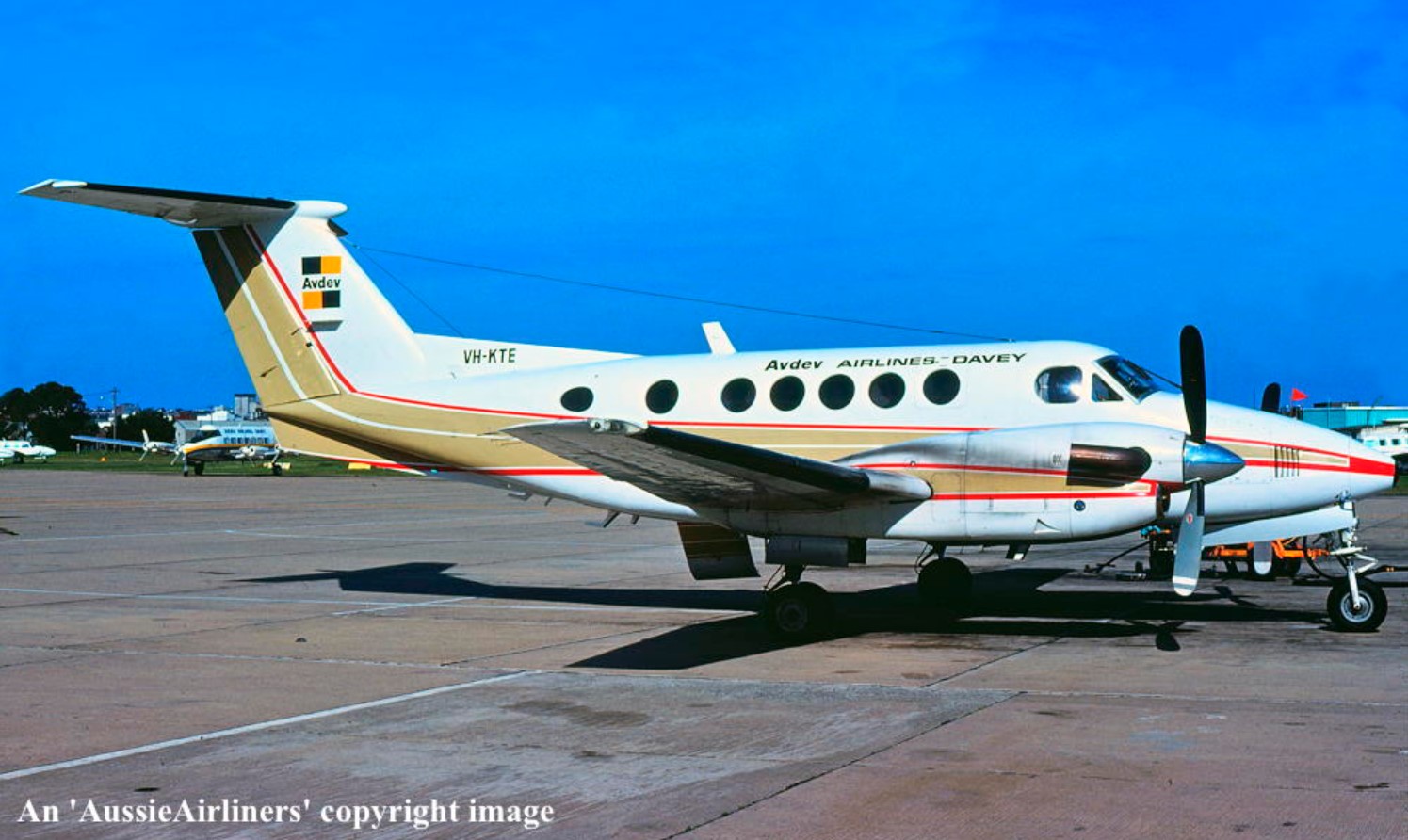
Crash of a Beechcraft 200 Super King Air in Adavale: 12 killed

Date & Time: Aug 28, 1983 at 2145 LT
Registration:
VH-KTE
Flight Phase:
Survivors:
No
Schedule:
Windorah - Toowoomba
MSN:
BB-320
YOM:
1978
Country:
Region:
Crew on board:
1
Crew fatalities:
Pax on board:
11
Pax fatalities:
Other fatalities:
Total fatalities:
12
Captain / Total flying hours:
4203
Captain / Total hours on type:
203.00
Aircraft flight hours:
7206
Circumstances:
While cruising at an altitude of 27,000 feet in good weather conditions and just passing over the city of Adavale, the twin engine aircraft went out of control and entered a dive. It descended for about 7,000 feet when excessive g loads caused both wings and the fuselage to breakup. The wreckage was found about 3,5 km south of Adavale and all 12 occupants were killed.
Probable cause:
There is insufficient evidence to determine the circumstances and factors which led to the inflight breakup of the aircraft.
Final Report:

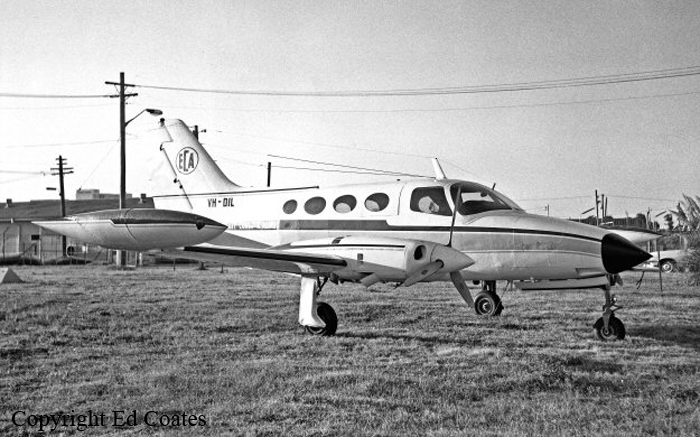
Crash of a Cessna 402 near Nagoorin: 1 killed

Date & Time: Feb 21, 1983 at 0405 LT
Type of aircraft:
Operator:
Registration:
VH-DIL
Flight Phase:
Flight Type:
Survivors:
No
Schedule:
Brisbane – Gladstone – Rockhampton
MSN:
402-0142
YOM:
1967
Country:
Region:
Crew on board:
1
Crew fatalities:
Pax on board:
0
Pax fatalities:
Other fatalities:
Total fatalities:
1
Circumstances:
The aircraft was engaged in operating a night freight flight from Brisbane to Gladstone and Rockhampton. The pilot departed Rockhampton as a passenger in another company aircraft at about 2100 hours the night before the accident and was flown to Caloundra. He then flew VH-DIL to Brisbane and after arriving submitted a flight plan for the return flight to Rockhampton giving an estimated time of DEPARTURE Brisbane of 0230 hours. Before DEPARTURE, however, the pilot was required to await the arrival of another aircraft so that freight could be transhipped to his aircraft. DEPARTURE from Brisbane was made at 0301 hours and at 0400 hours the pilot reported the aircraft's position over Gayndah, the pilot was instructed to call on another radio frequency at 0410 hours. No further transmissions were heard from the aircraft. The wreckage was located two days later in mountainous terrain. The aircraft had impacted the ground in a near vertical attitude. Subsequent investigation did not reveal any fault with the aircraft or its systems that could have contributed to the accident. The day before the accident the pilot rose at about 0730 hours after spending the previous night and day at a friends property near Rockhampton. He spent the day at leisure at the property before returning to Rockhampton in the afternoon. After dining at his parents home he proceeded to the airport for the flight to Caloundra. Before departing Brisbane to return to Rockhampton the only sleep the pilot would have had was about an hour on the flight to Caloundra and possibly another short period at Brisbane Airport while waiting for his aircraft to be loaded.
Probable cause:
The cause of the in-flight loss of control of the aircraft could not be determined. The pilot had had inadequate rest prior to undertaking the flight.
Final Report:

Crash of a Fokker F27 Friendship 600 in Amberley

Date & Time: Jun 9, 1982
Type of aircraft:
Operator:
Registration:
VH-TQQ
Flight Type:
Survivors:
Yes
Schedule:
Amberley - Amberley
MSN:
10388
YOM:
1969
Country:
Region:
Crew on board:
3
Crew fatalities:
Pax on board:
0
Pax fatalities:
Other fatalities:
Total fatalities:
0
Aircraft flight hours:
33311
Aircraft flight cycles:
32482
Circumstances:
The crew as completing a local training flight at Amberley Airport. On final approach, the instructor simulated a left engine failure. The airplane lost height on short final, went into a nose-down attitude and landed hard. The nose gear collapsed and the left engine partially detached. The airplane veered off runway and came to rest. While all three crew members escaped uninjured, the aircraft was damaged beyond repair.
Probable cause:
Power was reduced on the left engine at a lower than approved altitude. Directional control was lost when the trainee applied full power on the right engine.

Crash of a Piper PA-31-310 Navajo in Dysart: 2 killed

Date & Time: Mar 3, 1982 at 0453 LT
Type of aircraft:
Operator:
Registration:
VH-CLU
Flight Type:
Survivors:
No
Schedule:
Rockhampton – Dysart
MSN:
31-588
YOM:
1969
Country:
Region:
Crew on board:
1
Crew fatalities:
Pax on board:
1
Pax fatalities:
Other fatalities:
Total fatalities:
2
Circumstances:
The aircraft was being operated on a regular freight carrying run between Dysart and Rockhampton. On the evening preceding the accident, the aircraft departed Dysart at 2045 hours, arriving at Rockhampton at 2139 hours. At 0222 hours on the following morning the pilot telephoned Brisbane Flight Service Centre to obtain an update on the weather for the return flight to Dysart. The forecast indicated that at the time of arrival at Dysart, light rain with 5 oktas of cloud at 700 feet above ground level, could be expected. The pilot nominated Rockhampton as the alternate for Dysart in the event that weather conditions at the latter aerodrome precluded a safe approach and landing. The aircraft was refuelled to give a total fuel endurance of 290 minutes, and after loading departed Rockhampton at 0354 hours. At 0435 hours, the pilot reported that descent had been commenced into Dysart and because of poor reception on High Frequency radio channels further communications with VH-CLU were relayed by another aircraft in the area, VH-EEF on Very High Frequency channels. After communications with VH-CLU, the pilot of VH-EEF advised Brisbane Flight Service Unit (FSU) at 0453 hours, that the runway lighting was not yet displayed. The runway lighting at Dysart was provided by a number of hand-lit flares. The lighting of these flares was carried out by an employee of the company operating VH-CLU, and normally took about ten minutes. On this occasion the employee had overslept and arrived at the aerodrome at about the same time that the aircraft flew overhead. At 0501 hours further attempts by the pilot of VH-EEF and Brisbane FSU to contact VH-CLU were unsuccessful. The wreckage of the aircraft was later located about 800 metres to the west of the aerodrome. The aircraft had struck trees while heading in a direction aligned with runway 14 but displaced to the west of the runway. It had been destroyed as a result of the impact forces. Witnesses reported that when VH-CLU arrived at Dysart it was not raining, however, low cloud was present. The aircraft was observed to complete three orbits of the aerodrome and at times during these orbits it was obscured by cloud. Both occupants were killed.
Probable cause:
The only fault found with the aircraft during the investigation was a failed fuel pump on the right engine. It was established that the right engine was operating on impact and the failure of the fuel pump is not considered to have substantially affected the operation of the aircraft. The reason the aircraft crashed was not established.
Significant Factors:
1. Low cloud was present at Dysart for the arrival of VH-CLU.
2. The runway lighting had not been illuminated by the time VH-CLU arrived overhead the aerodrome.
3. The pilot attempted to hold in the vicinity of the aerodrome at low level, at night and in marginal weather conditions.
Final Report: