Crash of a De Havilland DHC-2 Beaver off Pickle Lake

Date & Time: May 12, 1977
Type of aircraft:
Registration:
C-GEZT
Flight Type:
Survivors:
Yes
MSN:
903
YOM:
1956
Country:
Crew on board:
1
Crew fatalities:
Pax on board:
1
Pax fatalities:
Other fatalities:
Total fatalities:
0
Circumstances:
Following the crash of a Patricia Air Transport DC-3 at Pickle Lake earlier that day, the operator dispatched a Beaver with a passenger and a pilot on an ambulance mission. While approaching Pickle Lake, the single engine aircraft went out of control and crashed under unknown circumstances into Pickle Lake about 5 km off the airfield. Both occupants were rescued.

Crash of a Douglas DC-3 in Pickle Lake: 1 killed

Date & Time: May 12, 1977
Type of aircraft:
Registration:
C-FBKV
Flight Phase:
Flight Type:
Survivors:
Yes
MSN:
4441
YOM:
1942
Country:
Crew on board:
2
Crew fatalities:
Pax on board:
0
Pax fatalities:
Other fatalities:
Total fatalities:
1
Circumstances:
After takeoff from Pickle Lake Airport, an engine caught fire. The crew elected to make an emergency landing when the airplane crashed 5 km from the airfield. A pilot was seriously injured while the second occupant was killed. The crew was completing a cargo flight on behalf of Ontario Central Airlines.
Probable cause:
Engine fire after takeoff for unknown reasons.

Crash of a Douglas C-47B-20-Dk in Wunnummin Lake

Date & Time: Apr 12, 1977
Operator:
Registration:
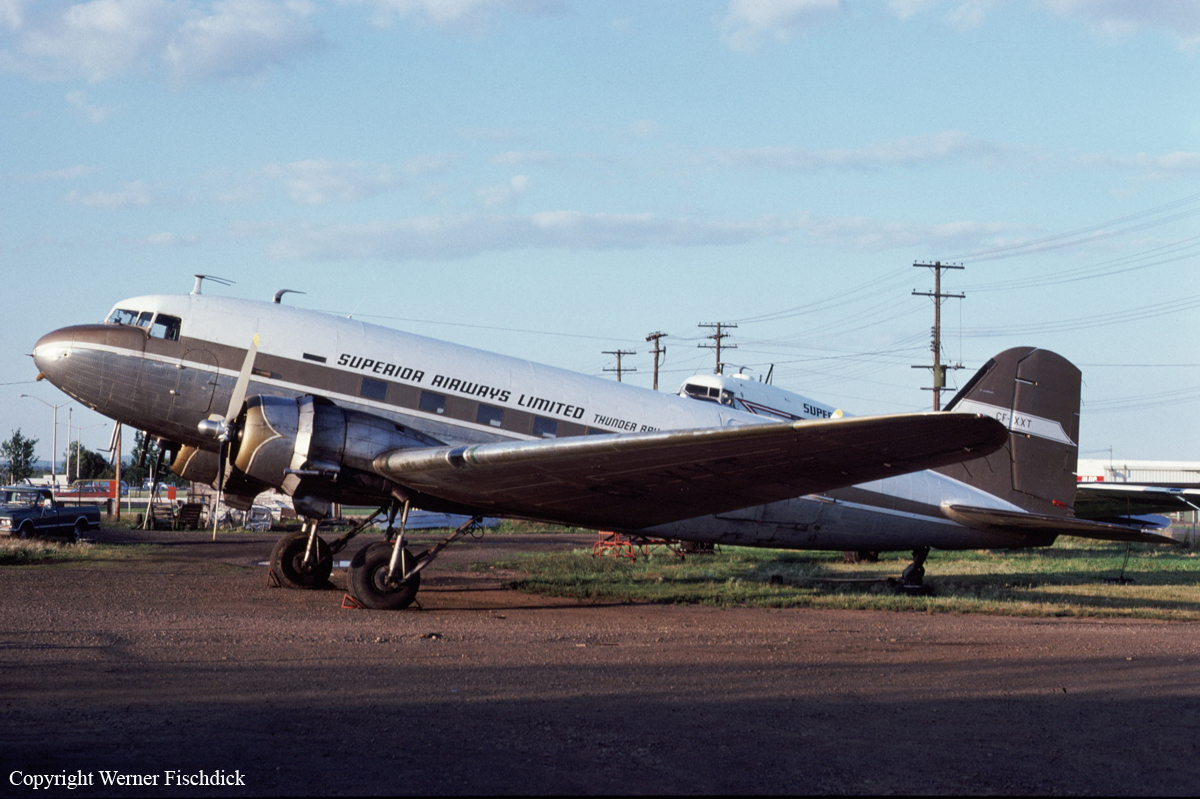
CF-XXT
Flight Phase:
Flight Type:
Survivors:
Yes
Schedule:
Wunnummin Lake - Kasabonika
MSN:
15767/27212
YOM:
1945
Country:
Crew on board:
3
Crew fatalities:
Pax on board:
0
Pax fatalities:
Other fatalities:
Total fatalities:
0
Circumstances:
The undercarriage was torn off during the aborted takeoff when a groundloop was attempted to avoid an area of weak ice.

Crash of a Douglas C-47A-90-DL in Kenora

Date & Time: Feb 27, 1977
Operator:
Registration:
C-GRMH
Flight Phase:
Flight Type:
Survivors:
Yes
MSN:
20196
YOM:
1944
Location:
Country:
Crew on board:
2
Crew fatalities:
Pax on board:
0
Pax fatalities:
Other fatalities:
Total fatalities:
0
Circumstances:
The aircraft crashed into trees on the left side of the runway after liftoff from Kenora-Wiebenville Airport. Both pilots were injured.

Crash of a De Havilland DHC-3 Otter in Abitibi Canyon: 10 killed

Date & Time: Sep 4, 1976 at 1337 LT
Type of aircraft:
Operator:
Registration:
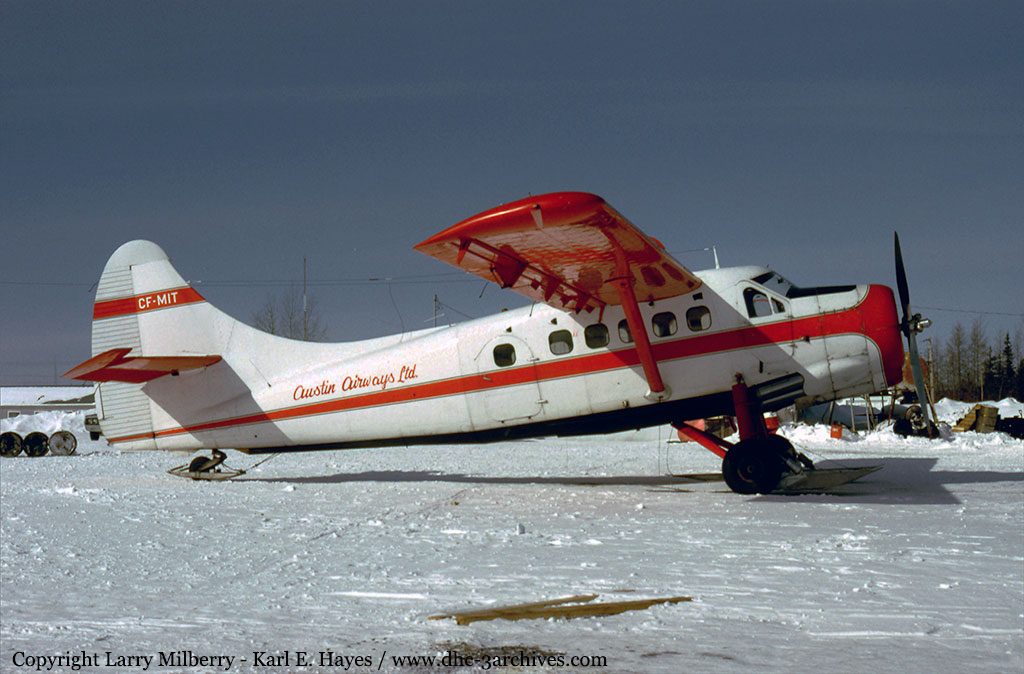
CF-MIT
Flight Phase:
Survivors:
No
Schedule:
Moosonee - Timmins
MSN:
372
YOM:
1960
Country:
Crew on board:
1
Crew fatalities:
Pax on board:
9
Pax fatalities:
Other fatalities:
Total fatalities:
10
Aircraft flight hours:
11573
Circumstances:
On Saturday 4th September '76 at approximately 12:00 hours, the pilot while preparing Otter MIT for flight, called the local company radio operator to request weather information for his VFR flight to Timmins. The operator transmitted the 11:23 terminal forecast for Timmins, the 10:00 observation for Moosonee and the 11:18 special observation for Timmins. The terminal reports for Moosonee and Timmins were much better than forecast and acceptable for VFR flight. At about 12:10 the radio operator at Moosonee received a special weather observation for Timmins which indicated deteriorating weather but did not pass this vital information to the pilot at that time. The Otter departed at 12:30 and shortly after take off the pilot advised the company operator at Moosonee that his estimated time of arrival at the South Porcupine seaplane base was 14:30. A few minutes later the radio operator attempted several times to contact the aircraft, to pass the new weather information,but without success. No other radio transmission was heard from the Otter. Because the flight was operating under VFR rules and because some of his passengers had limited time to make airline connections at Timmins, the pilot elected for the direct route, a distance of 165 nautical miles between the Moosonee and Timmins NDBs. To follow this route, the pilot would have used his ADF radio equipment and / or map reading techniques. Considering the cloud ceilings were at about one thousand feet and some terrain in the area rises to 950 feet, the deteriorating conditions would have induced the pilot to divert from the planned track. Since the accident site was 28 miles west of the direct track, it is probable that he diverted westward toward lower terrain to go around poor weather. Arriving at the Abitibi River, he followed the river southward to the accident site near the Abitibi Canyon Dam. The valley narrows and the terrain rises at this site of the power dam. It is believed that the pilot found the visibility decreasing rapidly in dense upslope fog in this vicinity. At 13:37 hours the aircraft struck the high tension electrical cables near the generating station and crashed to the ground. After impact a fire developed and consumed the aircraft, which had 11,573 hours on the airframe at the time. From the geometry of the wirestrike, it is probably that the pilot saw the wires and commenced a climbing turn to try and get over them, but had insufficient time to avoid the collision. The airplane has been chartered for the Royal Commission on Electric Power Planning for Ontario.
Source: http://www.dhc-3archive.com & Karl E. Hayes.
Probable cause:
The pilot continued VFR flight into adverse weather conditions.
Crash of a De Havilland DHC-3 Otter in Nym Lake

Date & Time: Jul 23, 1976
Type of aircraft:
Operator:
Registration:
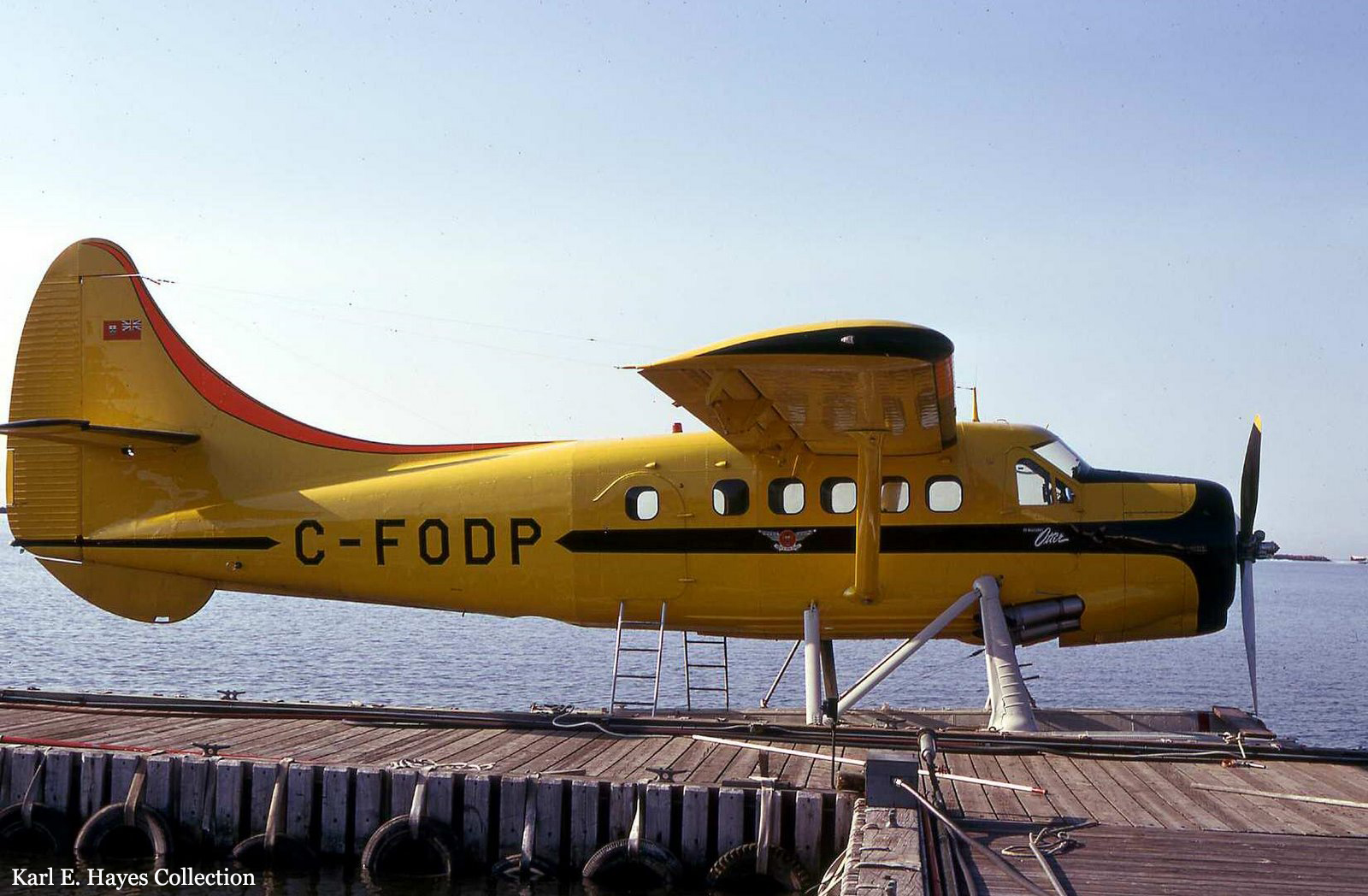
C-FODP
Flight Phase:
Flight Type:
Survivors:
Yes
MSN:
103
YOM:
1956
Country:
Crew on board:
1
Crew fatalities:
Pax on board:
4
Pax fatalities:
Other fatalities:
Total fatalities:
0
Aircraft flight hours:
5586
Circumstances:
Shortly after becoming airborne, the left wing dropped and struck the water. It was a warm, summer's day with a temperature of 23° C and a wind of 15 knots. The aircraft turned approximately 150° after the wing struck the water and crashed on the shore of an island. Fire started on impact and consumed most of the aircraft, although there were no injuries to the pilot and four passengers.
Source: Karl E. Hayes
Probable cause:
The subsequent report blamed the accident on “improper compensation for wind”.

Crash of a Cessna 401A off Toronto: 3 killed

Date & Time: Jul 23, 1976
Type of aircraft:
Operator:
Registration:
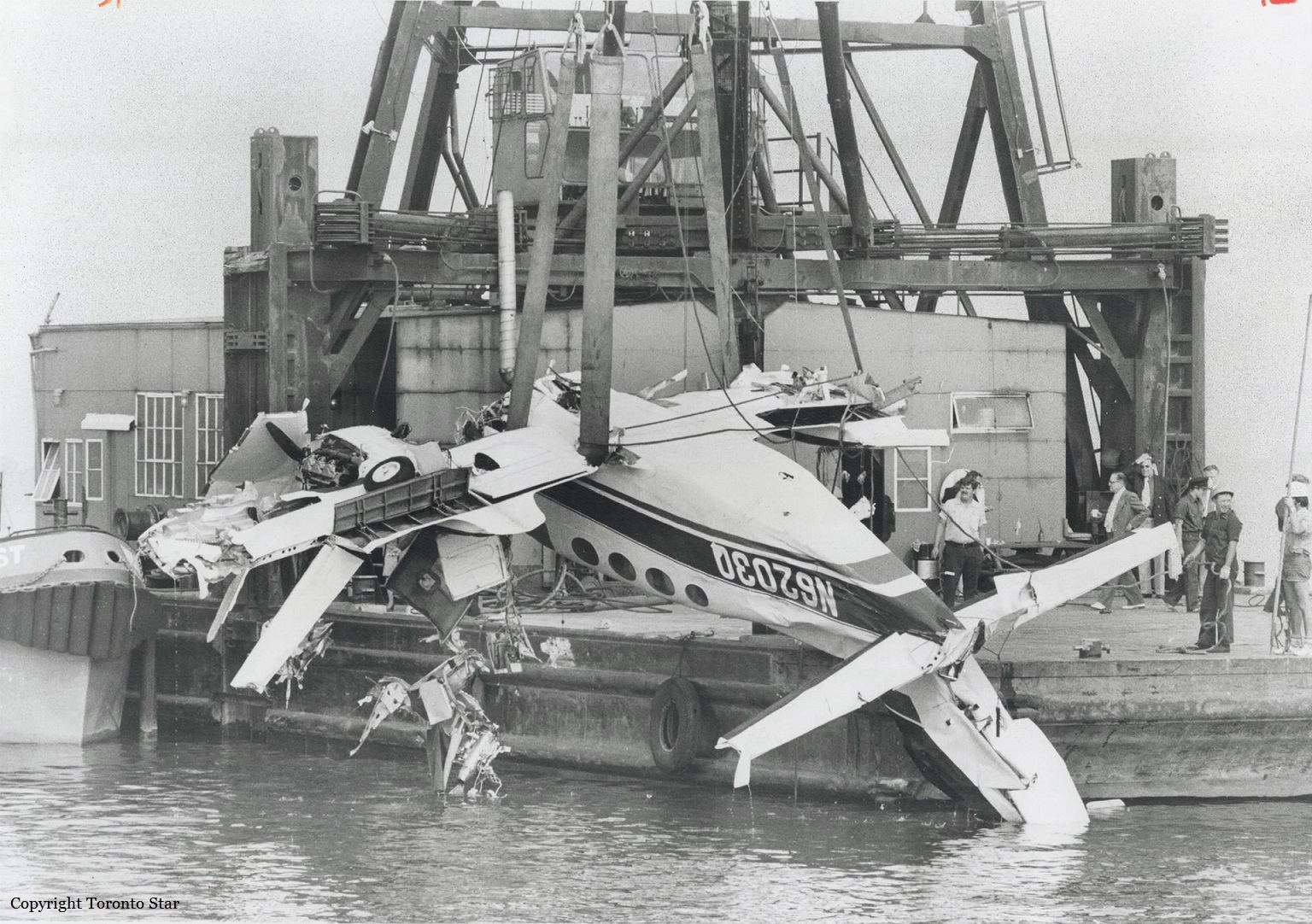
N6203Q
Survivors:
No
MSN:
401A-0003
YOM:
1969
Country:
Crew on board:
1
Crew fatalities:
Pax on board:
2
Pax fatalities:
Other fatalities:
Total fatalities:
3
Circumstances:
On final approach to Toronto City-Billy Bishop Airport, while completing a last turn, the twin engine aircraft went out of control and crashed into the Lake Ontario. The aircraft was destroyed and all three occupants were killed. They were flying to Toronto to take part to a physicians annual convention. The pilot, Dr. Donald Frankel, was the president of the Flying Physicians Association. His secretary Luella Roberts and Jacquelin Ann Boehne were also killed.

Crash of a Beechcraft UC-45B Expeditor 3T off Pickle Lake

Date & Time: Oct 8, 1975
Type of aircraft:
Operator:
Registration:
CF-RMZ
Survivors:
Yes
MSN:
5780
YOM:
1943
Country:
Crew on board:
0
Crew fatalities:
Pax on board:
0
Pax fatalities:
Other fatalities:
Total fatalities:
0
Circumstances:
While landing on rough water at Pickle Lake, the seaplane struck waves. The float dug into water and the airplane overturned and came to rest upside down. All occupants escaped uninjured while the aircraft was damaged beyond repair.

Crash of a Douglas C-47A-75-DL in Fort Severn: 3 killed

Date & Time: Sep 25, 1975 at 2000 LT
Operator:
Registration:
CF-AII
Flight Type:
Survivors:
No
Schedule:
Thunder Bay - Fort Severn
MSN:
19353
YOM:
1943
Country:
Crew on board:
2
Crew fatalities:
Pax on board:
1
Pax fatalities:
Other fatalities:
Total fatalities:
3
Circumstances:
The airplane was completing a cargo flight from Thunder Bay to Fort Severn, carrying building supplies. On approach, the crew encountered heavy fog when on final, the airplane struck the bank of the Severn River. It bounced into the air, took off the roof of an Anglican church and crashed 267 feet away in a graveyard, about 3 km from runway 15 threshold. The aircraft was destroyed and all three occupants were killed.
Probable cause:
At the time of the accident, the visibility was extremely limited due to fog and the crew descended too low until the airplane impacted ground.

Crash of a Noorduyn Norseman in Sachigo Lake: 1 killed

Date & Time: Jun 19, 1974
Type of aircraft:
Operator:
Registration:
CF-BHU
Flight Phase:
Survivors:
Yes
MSN:
N29-8
YOM:
1945
Country:
Crew on board:
1
Crew fatalities:
Pax on board:
2
Pax fatalities:
Other fatalities:
Total fatalities:
1
Circumstances:
En route, the engine failed. The aircraft then stalled and crashed in a prairie. The pilot and a passenger were rescued while a second passenger was killed.
Probable cause:
The engine stopped in flight because the fuel selector was positioned on an empty tank.