Crash of a Fairchild C-119G Flying Boxcar in Hagerstown

Date & Time: Mar 3, 1955
Operator:
Registration:
51-7995
Flight Type:
Survivors:
Yes
Schedule:
Ardmore - Hagerstown
MSN:
10734
YOM:
1951
Crew on board:
13
Crew fatalities:
Pax on board:
0
Pax fatalities:
Other fatalities:
Total fatalities:
0
Circumstances:
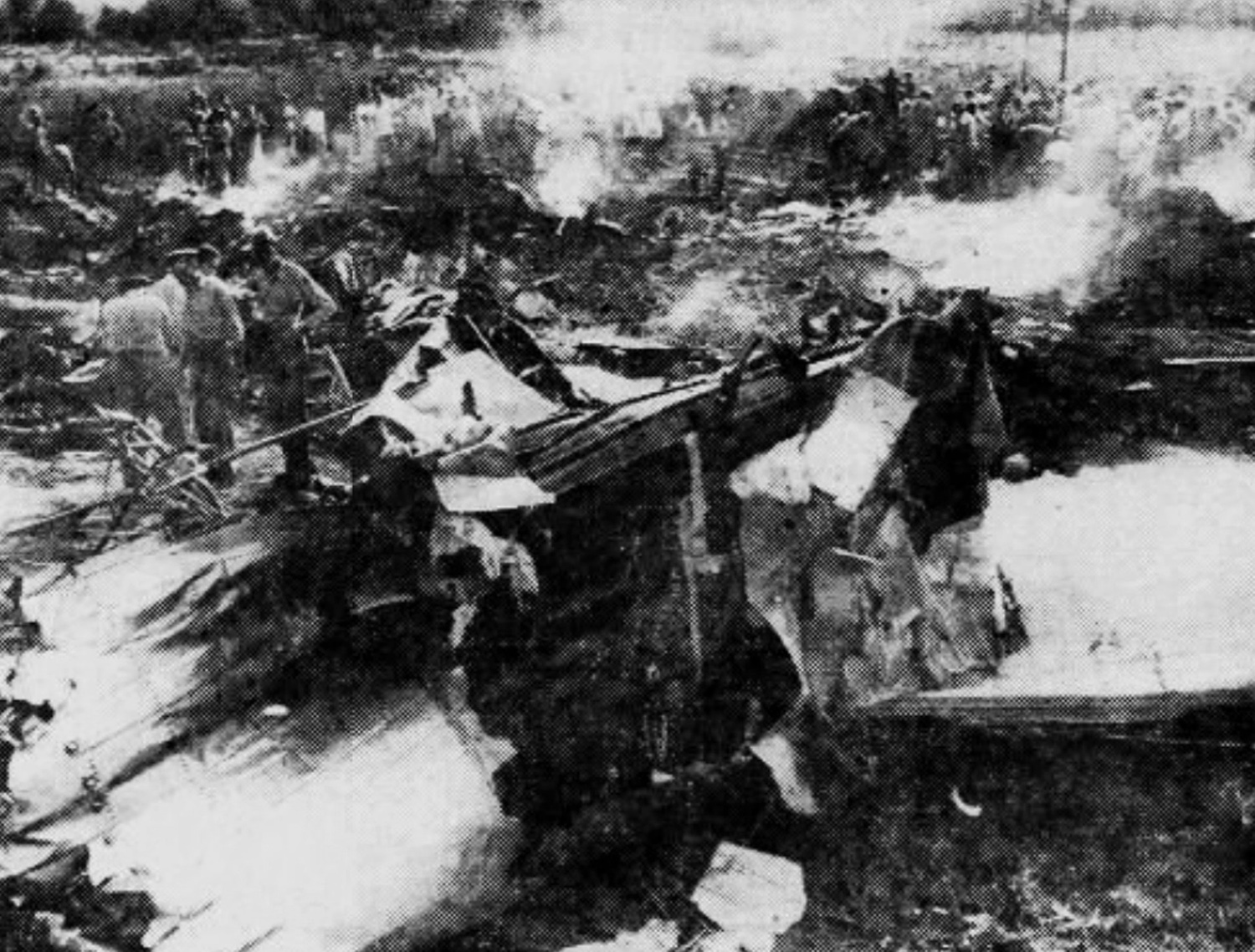
On final approach to Hagerstown-Washington County Airport, the Flying Boxcar was a bit too low and landed few yards short of runway threshold. When it struck the concrete runway, the undercarriage were sheared off. The airplane skidded on the runway, eventually veered off and came to rest in flames. While all 13 crew members evacuated safely, the aircraft was destroyed by fire.
Probable cause:
Too low approach on part of the flying crew.

Crash of a North American TB-25N Mitchell in Baltimore: 5 killed

Date & Time: Nov 28, 1954 at 2215 LT
Operator:
Registration:
44-30651
Flight Type:
Survivors:
Yes
Schedule:
Tulsa - Andrews AFB
MSN:
108-33926
YOM:
1944
Crew on board:
2
Crew fatalities:
Pax on board:
4
Pax fatalities:
Other fatalities:
Total fatalities:
5
Circumstances:
The twin engine airplane departed Tulsa on a flight to Andrews AFB, carrying four passengers and two pilots. While cruising at night, it ran out of fuel and the crew diverted to Baltimore International Airport for an emergency landing. On final approach, the airplane went out of control and crashed in a wooded area located 4 km west of the airport, bursting into flames. A passenger was seriously injured and five other occupants were killed.
Crew:
Maj Wayne G. Shearer, pilot, †
Maj Don Coe, copilot. †
Passengers:
Cpt Richard C. Nagell,
M/Sgt Howard G. Lorentz, †
Sgt Joseph Cadena, †
A1c Robert H. Brown. †
Probable cause:
Fuel exhaustion.

Crash of a Fairchild C-119F-FA Flying Boxcar in Lothian: 18 killed

Date & Time: Mar 19, 1954 at 2229 LT
Operator:
Registration:
51-7993
Flight Phase:
Flight Type:
Survivors:
No
Schedule:
Oklahoma City – Bolling – Mitchel
MSN:
10732
YOM:
1951
Crew on board:
6
Crew fatalities:
Pax on board:
12
Pax fatalities:
Other fatalities:
Total fatalities:
18
Circumstances:
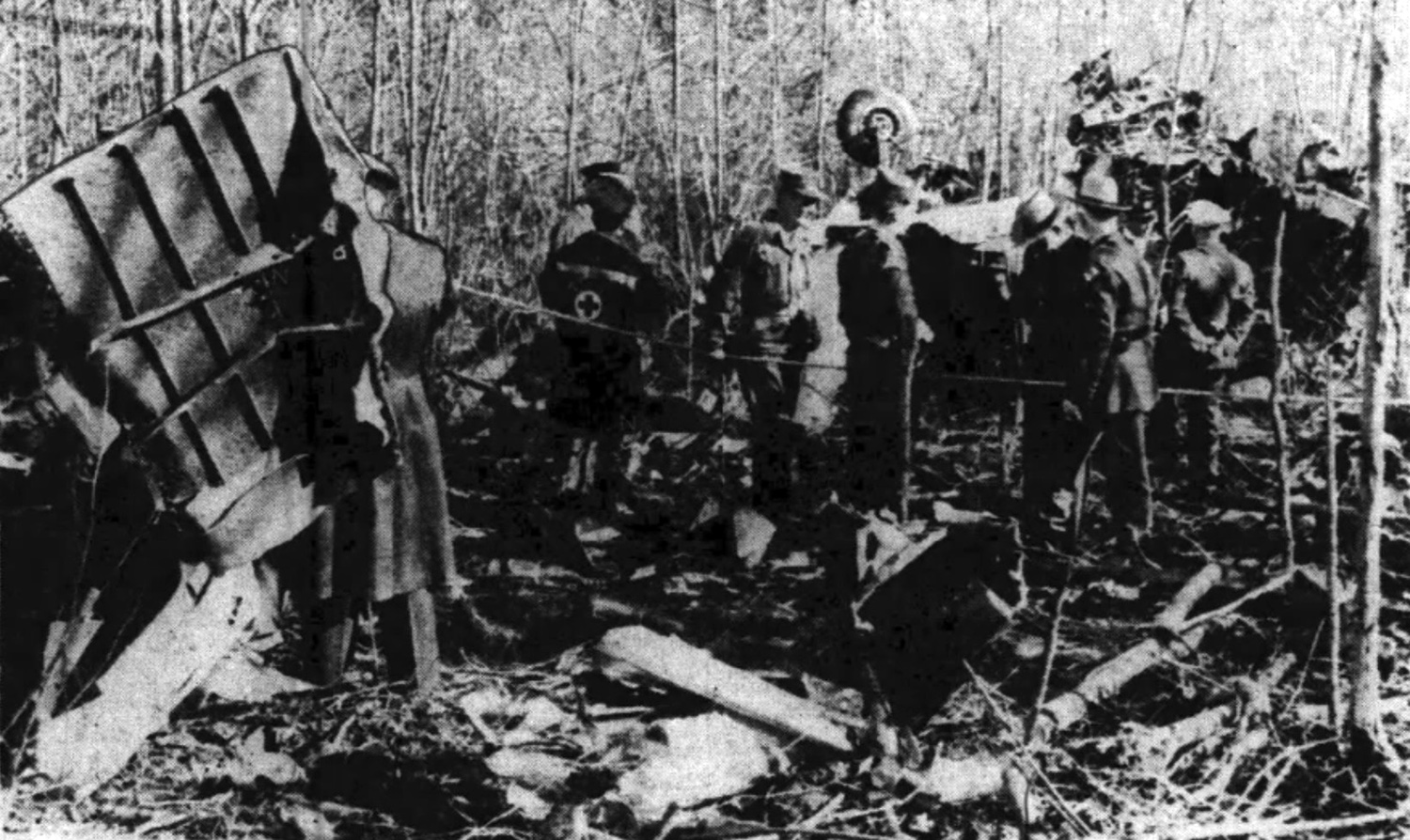
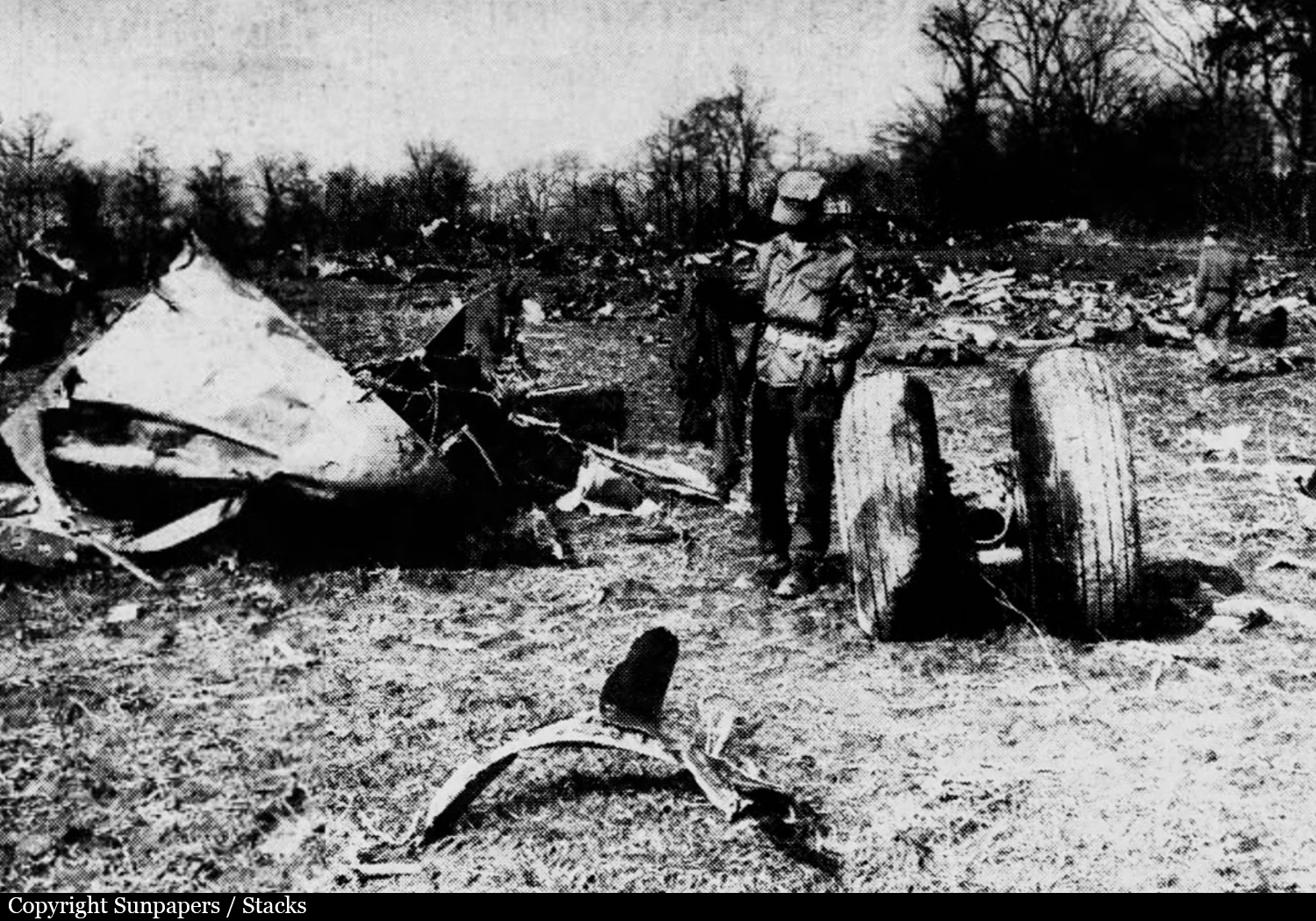
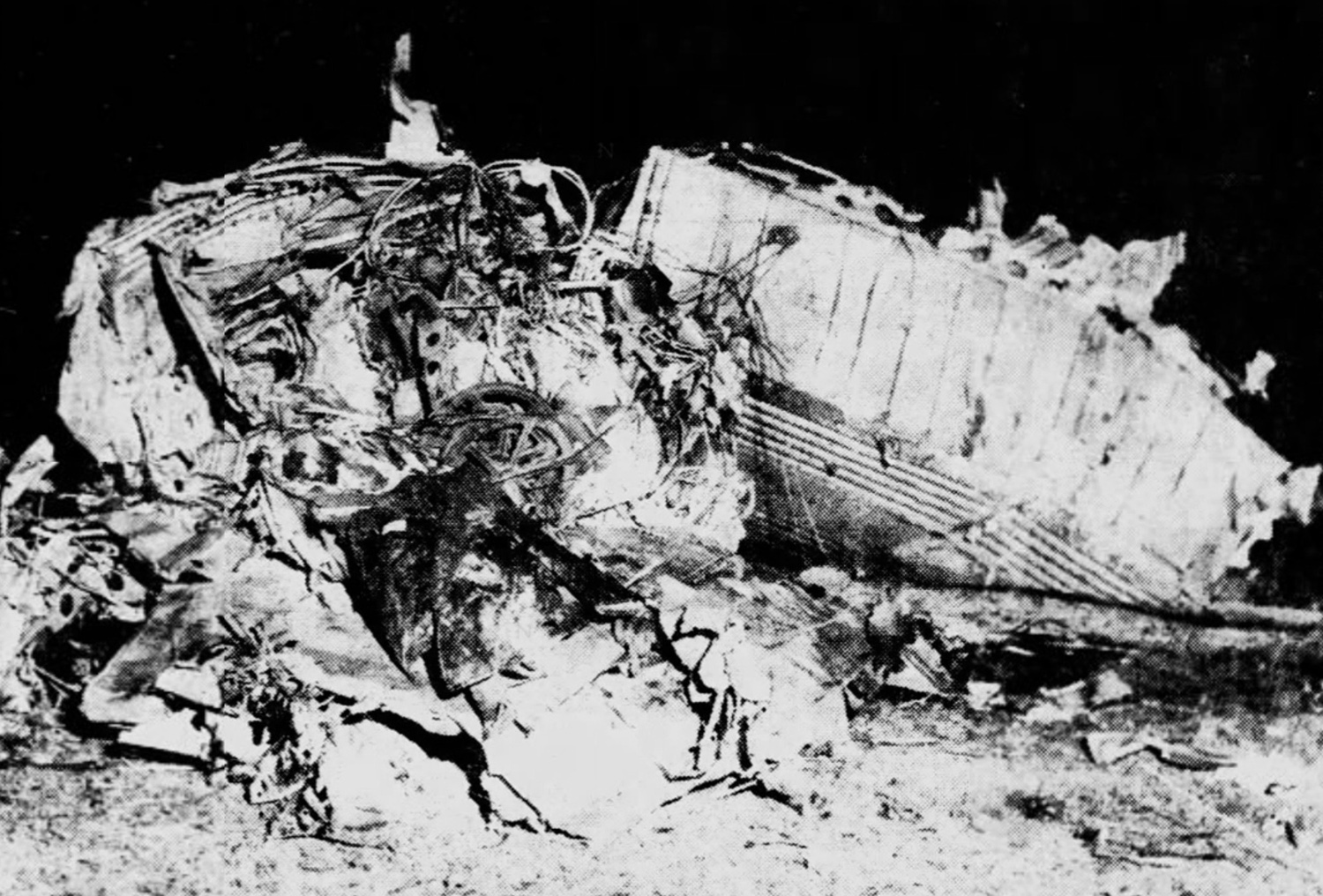
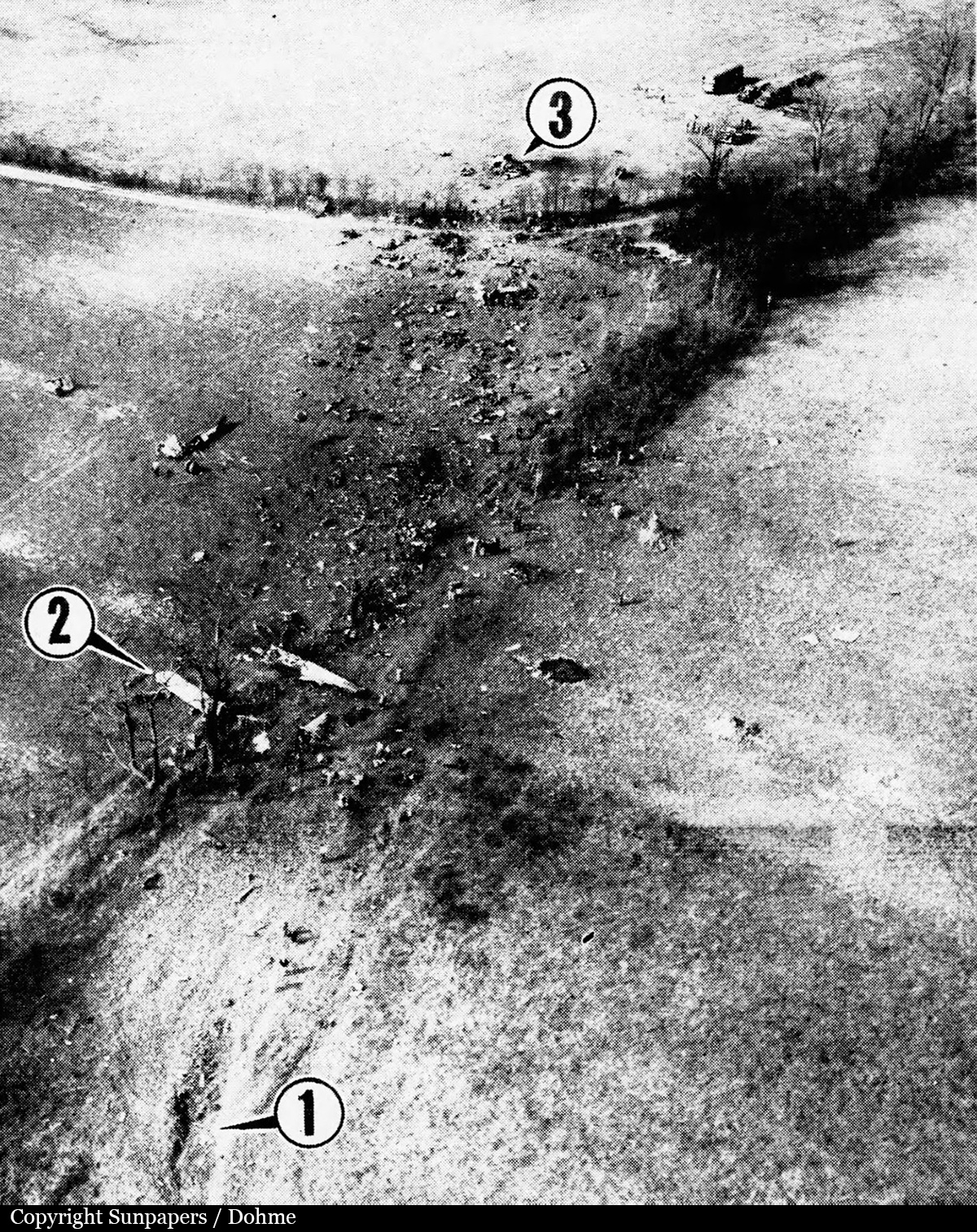
While cruising under VFR in poor weather conditions, the crew contacted ATC and requested the permission to continue under IFR. Awaiting the permission, the pilot-in-command lost control of the airplane that dove into the ground and crashed in Lothian, about 14 miles east of Andrews AFB. All 18 occupants were killed.
Probable cause:
It was determined that weather conditions were poor at the time of the accident and that the crew should never start the flight under VFR rules. While cruising under VFR rules in IFR conditions, the crew lost control of the aircraft.

Crash of a Lockheed R7V-1 Super Constellation near Centreville: 6 killed

Date & Time: Jul 7, 1953
Operator:
Registration:
128440
Flight Phase:
Flight Type:
Survivors:
No
Schedule:
Patuxent River - Patuxent River
MSN:
4107
YOM:
1953
Crew on board:
6
Crew fatalities:
Pax on board:
0
Pax fatalities:
Other fatalities:
Total fatalities:
6
Circumstances:
The crew was completing a training sortie out from Patuxent River NAS. While cruising at an altitude of 10,000 feet, the pilot-in-command started a turn to the left when the tail broke off. The airplane dove into the ground and crashed in a prairie located about three miles north of Centreville and 100 yards from the Chester River. The tail was recovered into the Langford's Bay, about two miles west of the wreckage. All six occupants were killed.

Crash of a Boeing EB-50A Superfortress off Edgewood: 4 killed

Date & Time: Nov 24, 1952
Type of aircraft:
Operator:
Registration:
46-003
Flight Phase:
Flight Type:
Survivors:
No
Schedule:
Phillips - Phillips
MSN:
15723
YOM:
1947
Crew on board:
4
Crew fatalities:
Pax on board:
0
Pax fatalities:
Other fatalities:
Total fatalities:
4
Circumstances:
The crew was engaged in a local test flight out of the Phillips AAF. In flight, the pilot-in-command lost control of the airplane after an engine failed. The aircraft crashed into the Bush River off Edgewood and was lost. All four crew members were killed.
Probable cause:
Engine failure.

Crash of a Douglas R4D-5 in Patuxent River NAS: 2 killed

Date & Time: May 9, 1951
Operator:
Registration:
17114
Flight Phase:
Flight Type:
Survivors:
Yes
Schedule:
Patuxent River - Patuxent River
MSN:
12008
YOM:
1943
Crew on board:
2
Crew fatalities:
Pax on board:
5
Pax fatalities:
Other fatalities:
Total fatalities:
2
Circumstances:
Shortly after takeoff from Patuxent River NAS, while in initial climb, the airplane stalled and crashed. Both pilots were killed while all five passengers were injured. The aircraft was destroyed.
Probable cause:
Failure of the left engine shortly after rotation.

Crash of a Consolidated PB4Y-2 Privateer in Patuxent River NAS: 2 killed

Date & Time: Feb 10, 1949
Operator:
Registration:
66320
Flight Type:
Survivors:
Yes
MSN:
66320
YOM:
1944
Crew on board:
8
Crew fatalities:
Pax on board:
0
Pax fatalities:
Other fatalities:
Total fatalities:
2
Circumstances:
On final approach to Patuxent River NAS, the aircraft crashed 2 miles short of runway threshold. Two crew members were killed while six others were injured.

Crash of a Douglas C-47A-25-DK in Brandywine: 2 killed

Date & Time: Jan 6, 1949 at 0720 LT
Operator:
Registration:
NC53210
Flight Phase:
Flight Type:
Survivors:
No
Schedule:
Miami – West Palm Beach – Raleigh – Boston
MSN:
13777
YOM:
1944
Crew on board:
2
Crew fatalities:
Pax on board:
0
Pax fatalities:
Other fatalities:
Total fatalities:
2
Captain / Total flying hours:
3605
Captain / Total hours on type:
3100.00
Copilot / Total flying hours:
360
Circumstances:
The flight departed from Miami, Fla., for Boston, Mass., at approximately 1610, January, 1949, with a crew consisting of Stuart L. Morrill, pilot, and Theodore Catz, copilot. A landing was made at Morrison Field, West Palm Beach, Fla., where 6,255 pounds of flowers were loaded. With the flowers, 3,600 pounds of fuel, 254 pounds of oil, and the crew, the airplane weighed 26,944 pounds at time of takeoff, which was 44 pounds above the allowable of 26,900 pounds. All cargo was loaded so that the center of gravity of the airplane was within the certificated limits. Departure from West Palm Beach was accomplished at approximately 1900 after which the flight proceeded without incident to its first fueling stop, Raleigh-Durham, NC. While on the Raleigh-Durham Airport the airplane was fueled to its capacity of 700 gallons, which was 100 gallons more than was on board at West Palm Beach. As a result, the airplane weighed 27,544 pounds when taking off from Raleigh, which constituted an overload of 644 pounds. Because of unfavorable weather conditions, takeoff had been delayed until 0610, January 6, 1949. The flight then continued en route to Boston following an instrument flight plan. Forty-five minutes after departure from Raleigh, at 0655, a routine position report was received by Richmond Radio that the flight was over Richmond, Va., at 9,000 feet. Washington Radio attempted to contact the flight at 0707, but no further communication was received from the flight by any CAA communication station although continuous efforts were made for a period of approximately 50 minutes. The airplane was observed at approximately 0720 over Brandywine, MD, at considerable altitude immediately underneath a cloud deck, proceeding in normal level flight in a northerly direction. Then, to those on the ground, it appeared that the airplane turned left and spun for two complete turns, losing considerable altitude. Partial recovery was made, but the airplane began spinning for a second time to the left. Again it appeared that a partial recovery was made, but again the aircraft spun to the left, losing altitude to below 3,000 feet. After this, ground observers watched the aircraft fly level but erratically for a brief period. They were able to see that the right horizontal stabilizer was deflected upward to a near vertical position, and that the right elevator was missing. The airplane then entered a diving left turn, and crashed 1,500 yards southeast of the Brandywine radio range station. Fire started shortly after impact. Both crew members were killed.
Probable cause:
The Board determines that the probable cause of this accident was the loss of control of the aircraft which resulted from an icing condition, turbulence, and lack of alertness on the part of the crew. As a result, the aircraft spun, and during the spins, or attempted recovery from the spins, severe airloads were encountered which failed the left horizontal stabilizer and the elevators.
The following findings were pointed out:
- The aircraft was observed at considerable altitude, immediately underneath a cloud deck, in straight and level flight after which it made a series of three spins,
- After the recovery from the last spin, the aircraft flew level but erratically for a brief period following which it crashed to the ground,
- The left horizontal stabilizer was bent upwards by severe air loads, and it had rotated several times to a near vertical position while the aircraft was in flight,
- The right elevator was bent upwards and had been separated from the stabilizer as a result of extreme air loads; and the left elevator, although not totally separated from the stabilizer, was similarly damaged,
- At the time of the accident, there was an icing condition present in the layer of broken clouds at the flight’s cruising altitude of 9,000 feet, the temperature at that altitude being 32 degrees Fahrenheit or slightly below. Moderate turbulence also existed,
- The aircraft was equipped with anti-icing equipment for the propellers, but it was not equipped with deicer booth for the wings and empennage,
- Before taking off for the flight, the pilots had a rest period of 22 hours previous to which they had completed another flight of 20 hours and 35 minutes.
Final Report:

Crash of a Lockheed R50-4 LodeStar in Baltimore: 4 killed

Date & Time: Jan 24, 1948
Type of aircraft:
Operator:
Registration:
05049
Flight Phase:
Flight Type:
Survivors:
No
Schedule:
Newark – Washington DC
MSN:
2175
YOM:
1941
Crew on board:
4
Crew fatalities:
Pax on board:
0
Pax fatalities:
Other fatalities:
Total fatalities:
4
Circumstances:
The twin engine aircraft was returning from Newark and was diverted from National Airport due to a severe snowstorm, to Baltimore Municipal Airport. While approaching, the airplane crashed in unknown circumstances, killing all four crew members. The wreckage was located two days later after an extensive search by Army, Navy and Coast Guard aircraft.
Crew:
Lcdr Charles W. Schuh,
Lt Jg William N. Killebrew,
Amm1 Charles A. MacArthur,
Arm1 Rudolph H. Schoning.

Crash of a Douglas C-47A-75-DL in Andrews AFB: 1 killed

Date & Time: Jan 18, 1948
Operator:
Registration:
42-100999
Flight Type:
Survivors:
Yes
MSN:
19462
YOM:
1944
Crew on board:
4
Crew fatalities:
Pax on board:
0
Pax fatalities:
Other fatalities:
Total fatalities:
1
Circumstances:
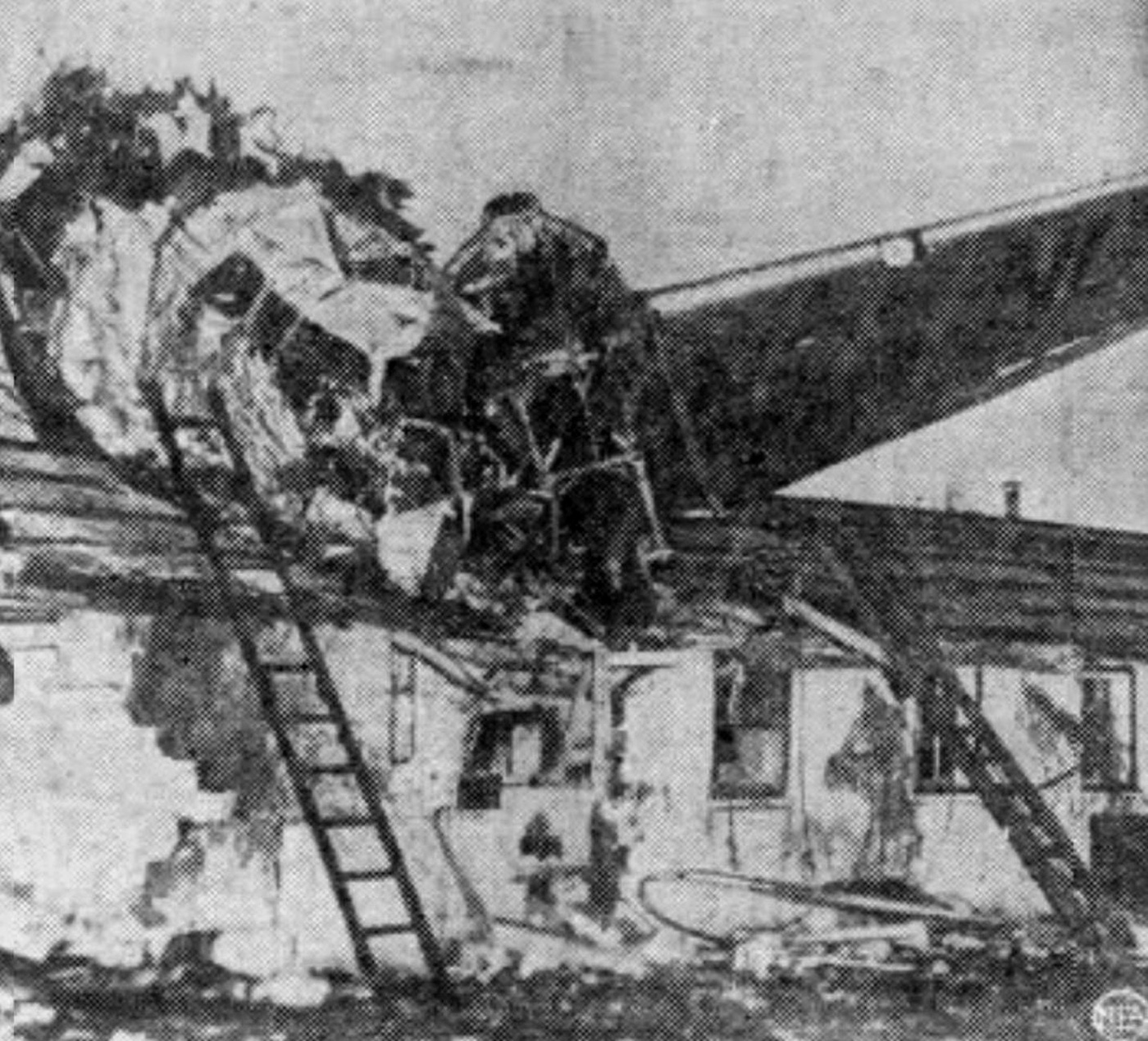
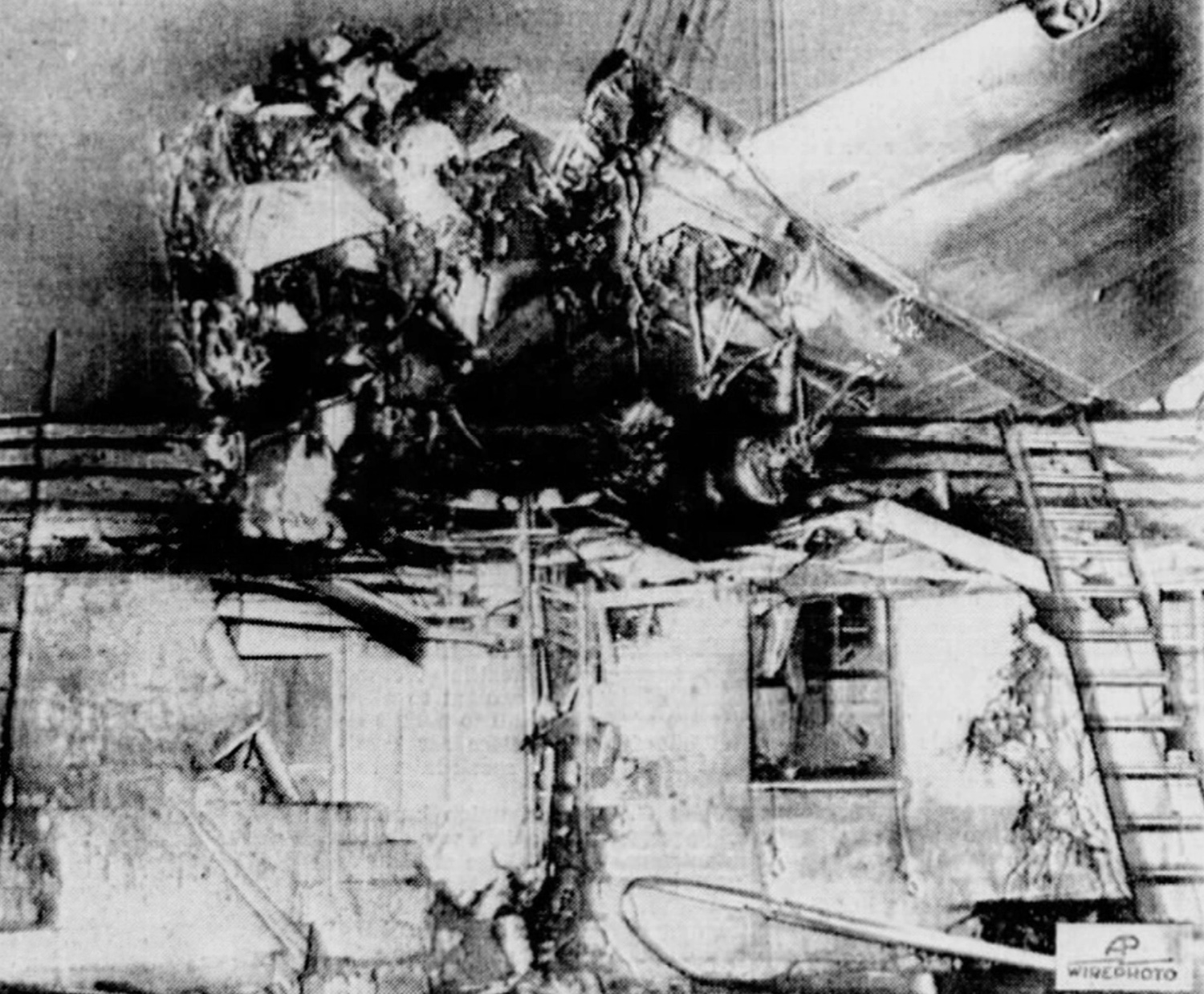
On final approach to Andrews AFB, the aircraft was too low, hit a building and crashed. A crew member was killed while three others were injured.