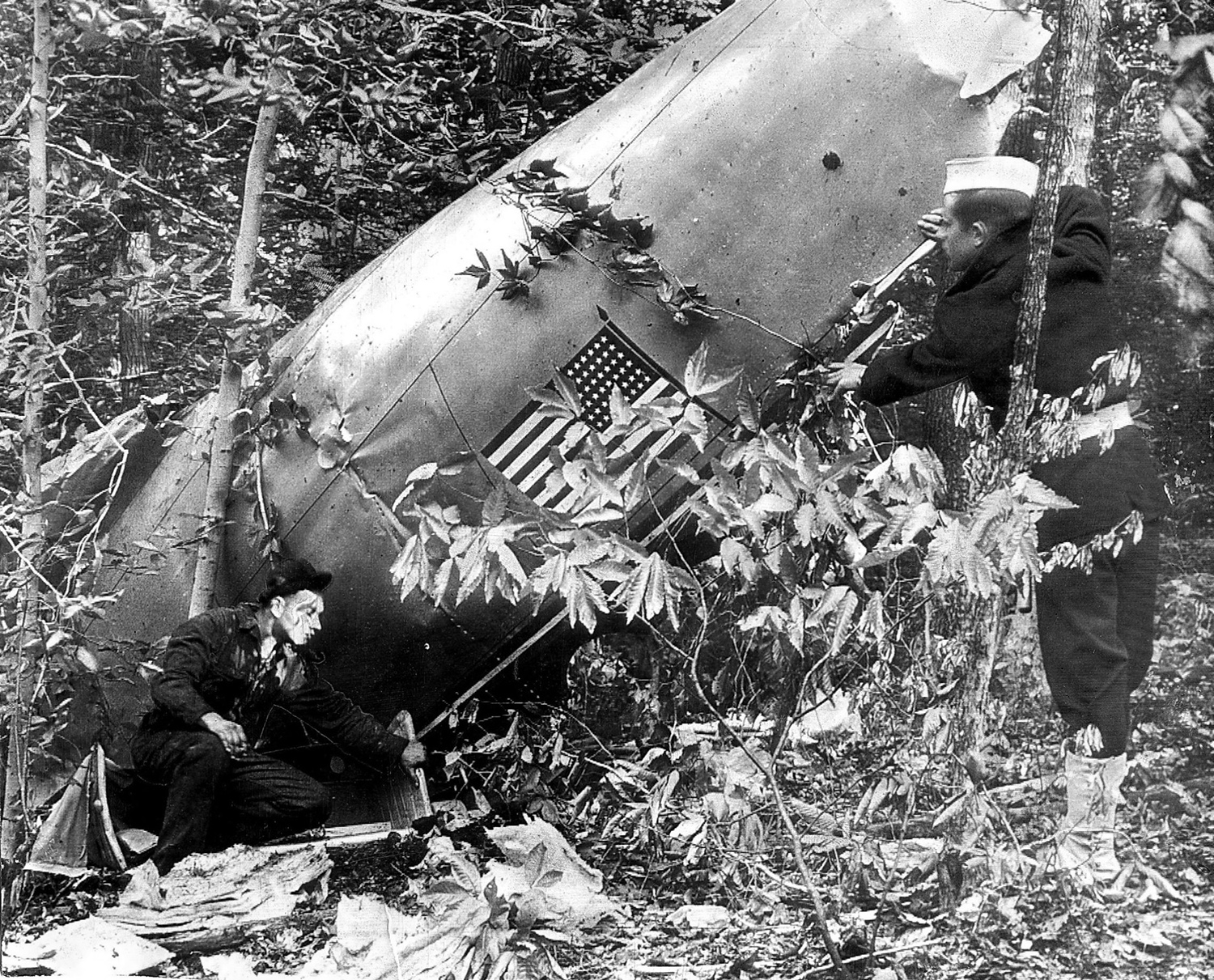
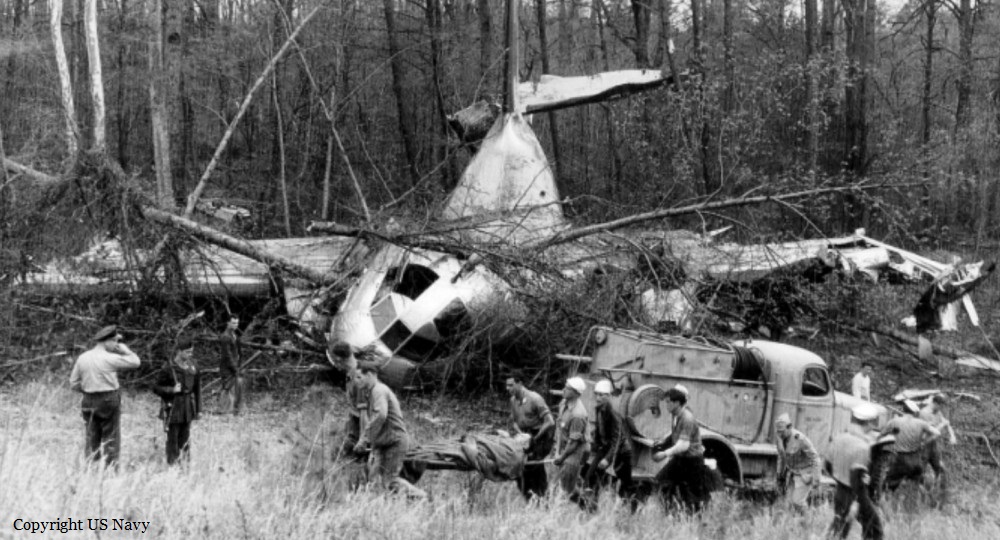
Crash of a Douglas DC-3-201F in Oxon Hill: 5 killed

Date & Time: Jan 13, 1948 at 0436 LT
Type of aircraft:
Operator:
Registration:
NC28384
Survivors:
Yes
Schedule:
Houston – Atlanta – Greenville – Winston – Washington DC
MSN:
4092
YOM:
1941
Flight number:
EA572
Crew on board:
3
Crew fatalities:
Pax on board:
6
Pax fatalities:
Other fatalities:
Total fatalities:
5
Captain / Total flying hours:
7271
Captain / Total hours on type:
5111.00
Copilot / Total flying hours:
4593
Copilot / Total hours on type:
1002
Aircraft flight hours:
29974
Circumstances:
Flight 572 arrived in Atlanta, Georgia, from its point of origin, Houston, Texas, at 2330, January 12, 1948. With a new crew, consisting of Captain Paul J. Saltanis, First Officer Ralph B. Sanborn, Jr., and Flight Attendant Peter L. Philiois, the flight departed from Atlanta at 2355 for Greenville and Winston-Salem, North Carolina, and Washington, D. C. The flight as far as Winston-Salem was routine. At 0306, January 13, 1948, the flight took off from Winston-Salem carrying six passengers, a crew of three, and 600 gallons of fuel. It proceeded at the altitude of 9,000 feet specified in the flight plan, to Washington, via Blackstone and Richmond, Virginia. Shortly after reporting over Blackstone, at 0405, 146 miles southwest of Washington, an airway traffic control clearance was transmitted by company radio to the flight authorizing it to cross the Doncaster fan marker, 27 miles southwest of Washington, at 5,000 feet. Captain Saltanis requested a lower altitude and ten minutes later received another ATC clearance approving 3,000 feet over Doncaster, and permission to descend to 2,500 feet immediately after crossing Doncaster. At 0427, the flight reported its position to the Washington control tower, stating that it was over Doncaster at 3,000 feet. It was instructed by the tower to maintain 2,500 feet, and to report again when it was over Mt. Vernon. 9 miles south of the Washington National Airport. At about this same time another Eastern Air Lines’ flight, No, 454, reported that it was at 4,500 feet over the Arcola range station, which is located 23 miles west-northwest of Washington, D. C. Since the two Eastern Air Lines' flights were converging toward Mt. Vernon, the airport traffic controller thought that flight 454 might fly over Mt. Vernon before it had descended to a safe altitude below Flight 572. To assure that both airplanes would not be over Mt. Vernon at the seine time and altitude, the controller instructed Flight 572 to climb to 3,500 feet Flight 572 acknowledged, advised that it was contact, and asked why it was necessary to climb. Less than a minute later, at approximately 0430, the east bound flight, No. 454, reported that it was “contact” at 2,000 feet and approaching Mt. Vernon. The controller then knowing that a safe altitude separation existed between the two aircraft, cleared night 572 back to its previous approach altitude of 2,500 feet. At 0433, flight 572 was again cleared to the airport by the Washington Tower, and advised to report when leaving 2,500 feet, when leaving Mt. Vernon, and when "VFR." 2 Following this transmission flight 572 was asked to give a short count, since the tower wished to adjust its receiving frequency. The flight complied. Then at 0435, the flight was requested to report the altitude of the base of the clouds. The flight responded, “standby.” According to the tower operator the pilot’s voice when giving the tuning count was normal, but his “standby,” sounded “hurried and preoccupied.” One to two minutes after the east bound flight, No. 454, reported contact approaching Mt. Vernon, an aircraft was observed in the tower’s surveillance radar scope over the vicinity of Mt. Vernon. This aircraft was then tracked continuously, first In the surveillance, and then in the precision beam radar scope until it had landed on runway 36. 3 It was then identified as Eastern's Flight 454. Flight 572, however, was not observed in either scope. From 0435 to 0445 several attempts were made to establish radio contact with flight 572. Forty-five minutes later it was learned that it had crashed in the vicinity of Oxon Hill, Maryland, approximately 5.2 miles south of the Washington National Airport. Three passengers and two crew members were killed in the accident.
Probable cause:
The Board determines that the probable cause of this accident was the failure of the flight to follow prescribed instrument procedure and to maintain a safe altitude during the course of an instrument approach to the Washington National Airport.
Final Report:
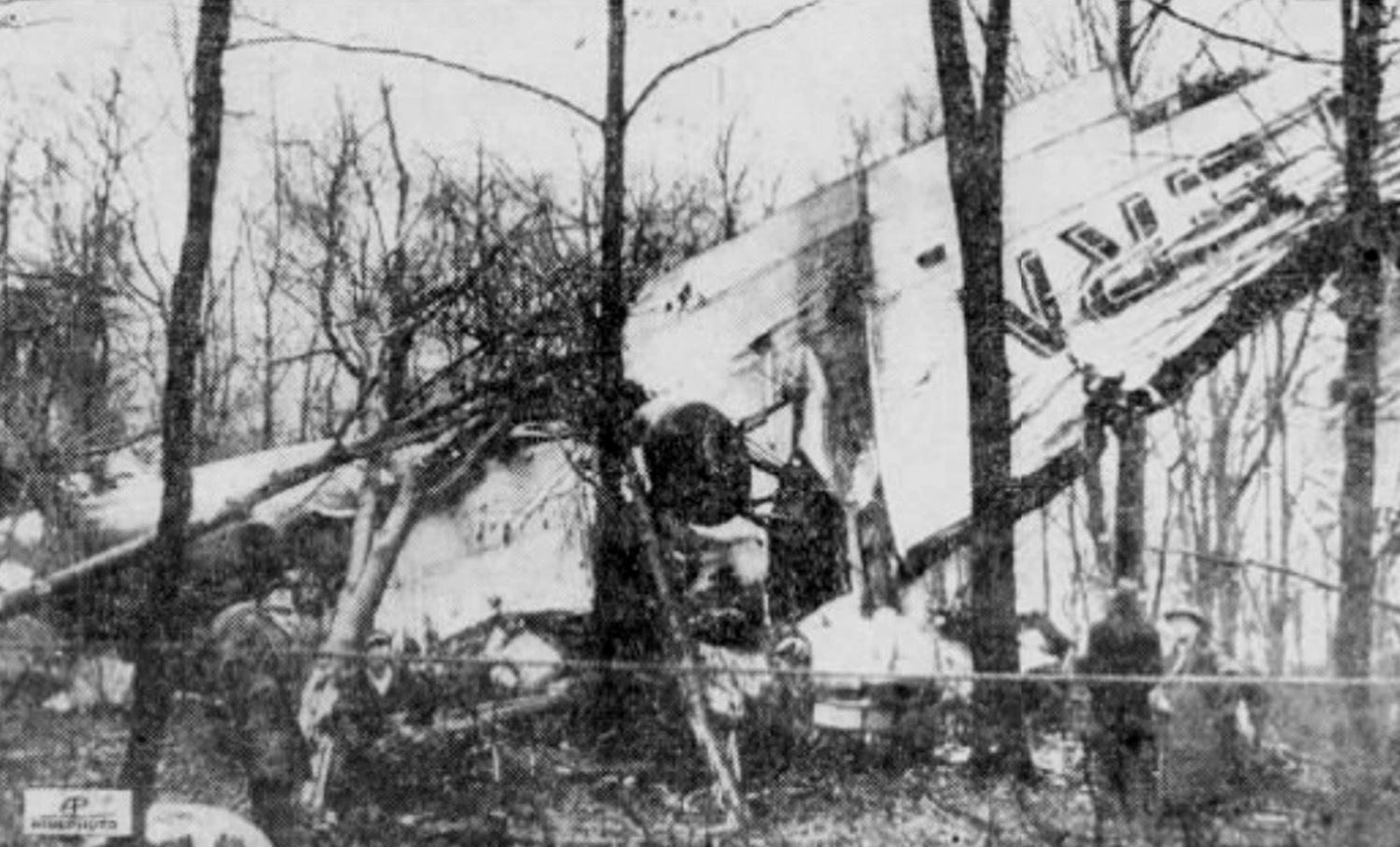

Crash of a Douglas C-47B-50-DK at Andrews AFB:1 killed

Date & Time: Dec 10, 1947
Operator:
Registration:
45-1060
Flight Type:
Survivors:
Yes
Schedule:
Olmsted - Andrews
MSN:
17063/34330
YOM:
1945
Crew on board:
2
Crew fatalities:
Pax on board:
4
Pax fatalities:
Other fatalities:
Total fatalities:
1
Circumstances:
The airplane departed Olmsted AFB, Harrisburg (PA), on a flight to Andrews AFB. On final approach, it crashed 300 metres short of runway, bursting into flames. The copilot was killed and five other occupants were injured.
Crew:
1st Lt J. C. Martin, pilot,
2nd Lt Carl Curtis, copilot. †

Crash of a Douglas C-54B-15-DO Skymaster near Bainbridge: 53 killed

Date & Time: May 30, 1947 at 1741 LT
Type of aircraft:
Operator:
Registration:
NC88814
Flight Phase:
Survivors:
No
Schedule:
Newark – Miami
MSN:
18380
YOM:
1944
Flight number:
EA605
Crew on board:
4
Crew fatalities:
Pax on board:
49
Pax fatalities:
Other fatalities:
Total fatalities:
53
Captain / Total flying hours:
11514
Captain / Total hours on type:
683.00
Copilot / Total flying hours:
2550
Copilot / Total hours on type:
488
Aircraft flight hours:
3623
Circumstances:
The four engine aircraft left Newark Airport at 1704LT on a flight to Miami. While climbing to an altitude of 4,000 feet, the aircraft went out of control, dove into the ground and crashed in a huge explosion in a field located 2 miles east of Bainbridge. The aircraft was totally destroyed and all 53 occupants were killed.
Probable cause:
The Board determines that the probable cause of this accident was a sudden loss of control, for reasons unknown, resulting in a dive to the ground.
Final Report:

Crash of a Douglas R4D-5 in Patuxent River NAS

Date & Time: Jan 24, 1947
Operator:
Registration:
39079
Flight Type:
Survivors:
Yes
MSN:
10206
YOM:
1943
Crew on board:
0
Crew fatalities:
Pax on board:
0
Pax fatalities:
Other fatalities:
Total fatalities:
0
Circumstances:
Went out of control after touchdown and collided with trees. There were no casualties but the aircraft was written off.

Crash of a Douglas R4D-5 in Patuxent River NAS: 4 killed

Date & Time: May 26, 1946
Type of aircraft:
Operator:
Registration:
17144
Flight Phase:
Flight Type:
Survivors:
No
Schedule:
Patuxent River - Patuxent River
MSN:
12334
YOM:
1944
Crew on board:
4
Crew fatalities:
Pax on board:
0
Pax fatalities:
Other fatalities:
Total fatalities:
4
Circumstances:
While flying in the vicinity of the Patuxent River NAS during a local training sortie, the pilot was forced to attempt an emergency landing for unknown reason. The aircraft crashed and all four crew members were killed.

Crash of a Budd RB-1 Conestoga near Patuxent River NAS: 1 killed

Date & Time: Apr 13, 1944
Type of aircraft:
Operator:
Registration:
NX37097
Flight Phase:
Flight Type:
Survivors:
Yes
Schedule:
Patuxent River - Patuxent River
MSN:
002
YOM:
1944
Crew on board:
8
Crew fatalities:
Pax on board:
0
Pax fatalities:
Other fatalities:
Total fatalities:
1
Aircraft flight hours:
14
Aircraft flight cycles:
12
Circumstances:
The crew consisted of pilots and engineers who were performing an evaluation flight for the a Naval Air Training Command (NATC). In flight, the twin engine aircraft went out of control and crashed near the airfield. A crew member was killed while all seven other occupants were injured.

Crash of a Lockheed B-34 Lexington into the Chesapeake Bay: 3 killed

Date & Time: Feb 27, 1943
Type of aircraft:
Operator:
Registration:
AJ390
Flight Phase:
Flight Type:
Survivors:
Yes
MSN:
4528
YOM:
1942
Crew on board:
6
Crew fatalities:
Pax on board:
0
Pax fatalities:
Other fatalities:
Total fatalities:
3
Circumstances:
The twin engine airplane ran out of fuel and was abandoned by the crew who bailed out. Out of control, the airplane crashed into the Chesapeake Bay and was destroyed. Three crew members were rescued and three others drowned.
Crew (16th Antisubmarine Squadron):
2nd Lt Raymond A. Fortin, pilot,
T/Sgt Roy R. Jones, †
Sgt Arthur F. O'Hare, †
T/Sgt Earl E. Ragsdale. †
Probable cause:
Fuel exhaustion.

Crash of a Lockheed C-57 LodeStar in Clinton

Date & Time: Nov 23, 1942
Type of aircraft:
Operator:
Registration:
41-19731
Flight Phase:
Flight Type:
Survivors:
Yes
Schedule:
Bolling - Bolling
MSN:
18-2118
YOM:
1941
Crew on board:
2
Crew fatalities:
Pax on board:
0
Pax fatalities:
Other fatalities:
Total fatalities:
0
Circumstances:
While performing a training flight out from Bolling AFB, the crew was forced to make an emergency landing after both engines could not be restarted, maybe following a deliberate action on part of the crew who wanted to feather the props. The emergency landing was completed in a field in Clinton and the airplane was damaged beyond repair. Both crew members escaped unhurt.
Probable cause:
Emergency landing after both engines could not be restarted in flight.

Crash of a Martin B-26 Marauder in Berlin

Date & Time: Jun 15, 1942
Type of aircraft:
Operator:
Registration:
40-1375
Flight Phase:
Flight Type:
Survivors:
Yes
MSN:
1375
YOM:
1940
Location:
Crew on board:
0
Crew fatalities:
Pax on board:
0
Pax fatalities:
Other fatalities:
Total fatalities:
0
Circumstances:
Crashed in unknown circumstances in Berlin. There were no casualties.

Grumman OA-14 Widgeon off Fort Washington

Date & Time: Mar 25, 1942
Type of aircraft:
Operator:
Registration:
42-38222
Flight Type:
Survivors:
Yes
MSN:
1238
YOM:
1942
Crew on board:
0
Crew fatalities:
Pax on board:
0
Pax fatalities:
Other fatalities:
Total fatalities:
0
Circumstances:
Water looped while landing on the Potomac River off Fort Washington. There were no casualties.
Crew:
Curtis A. Keen.