Crash of an Airbus A321-211 in Moscow

Date & Time: Aug 15, 2019 at 0615 LT
Type of aircraft:
Operator:
Registration:
VQ-BOZ
Flight Phase:
Survivors:
Yes
Schedule:
Moscow - Simferopol
MSN:
2117
YOM:
2003
Flight number:
U6178
Country:
Region:
Crew on board:
7
Crew fatalities:
Pax on board:
226
Pax fatalities:
Other fatalities:
Total fatalities:
0
Circumstances:
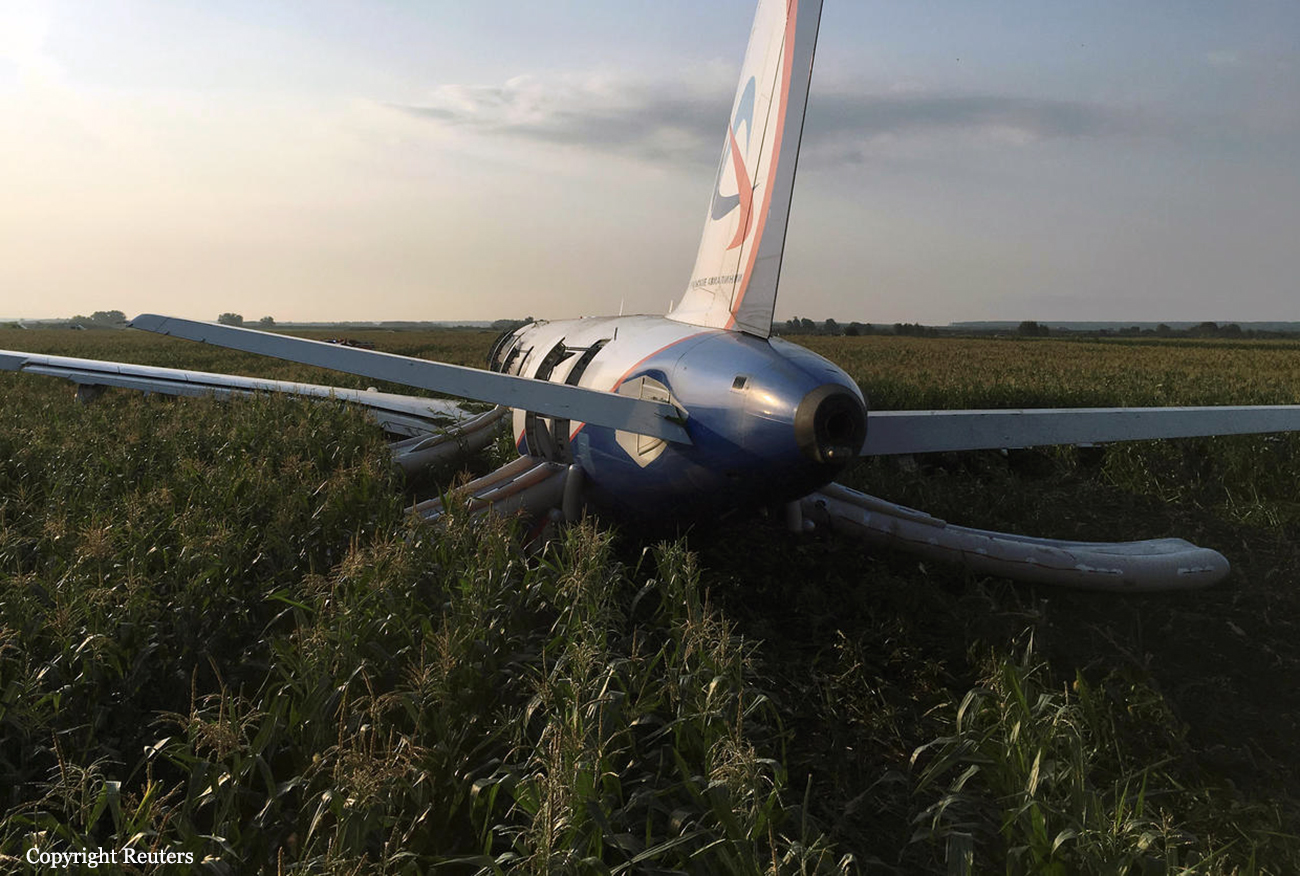
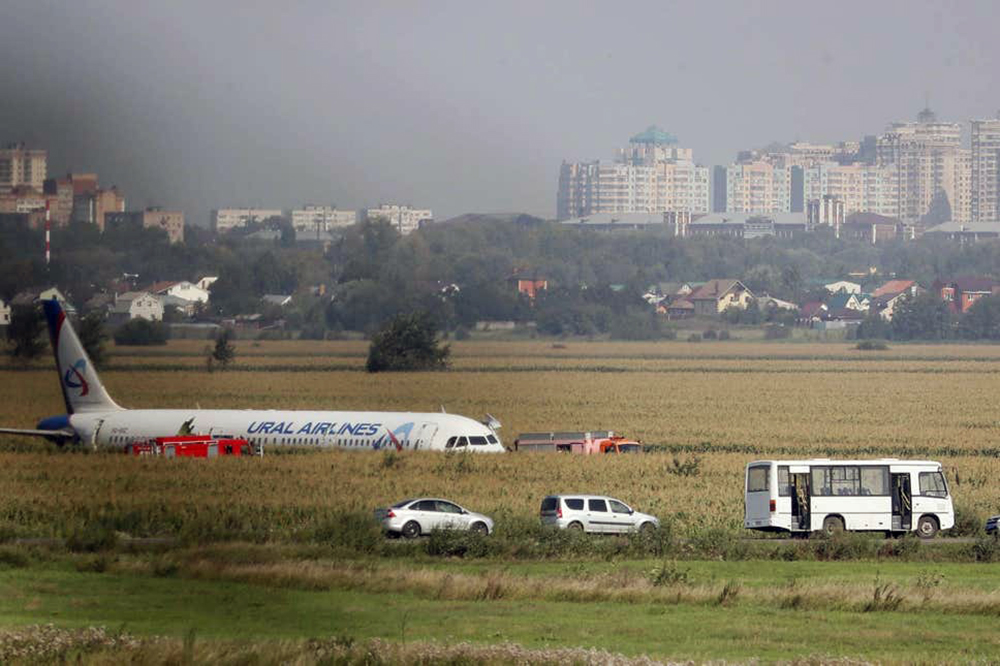
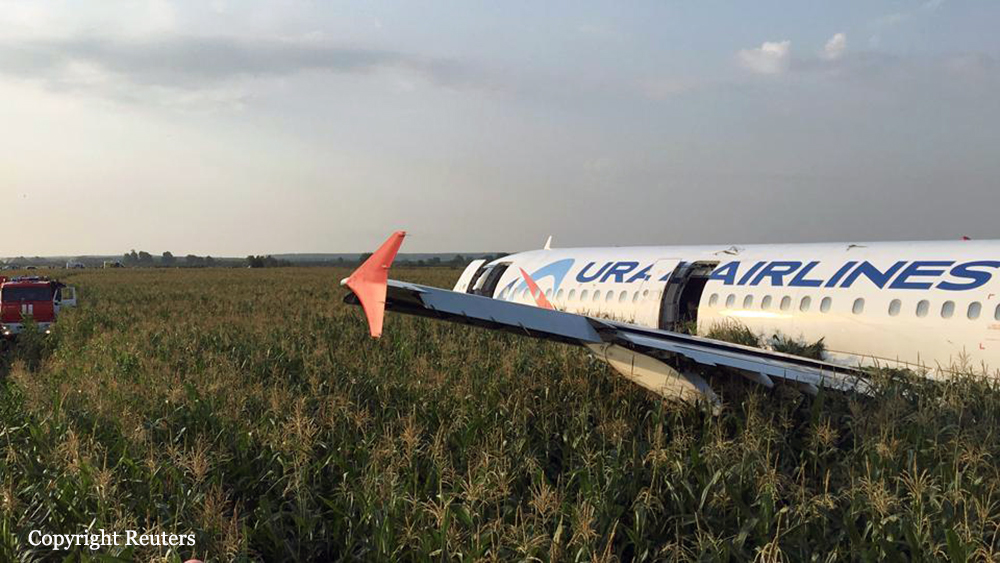
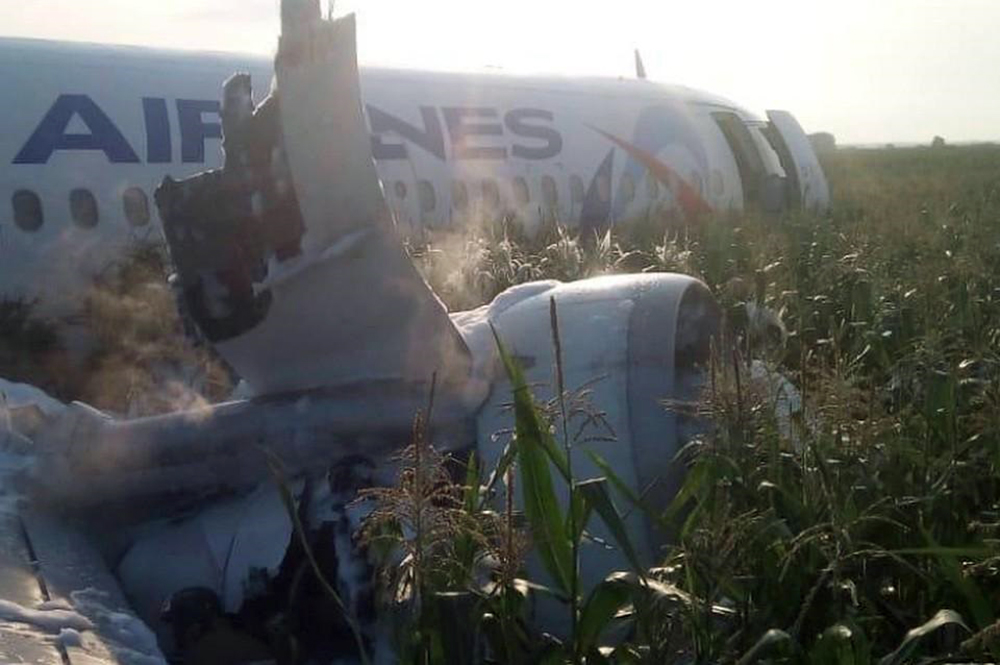
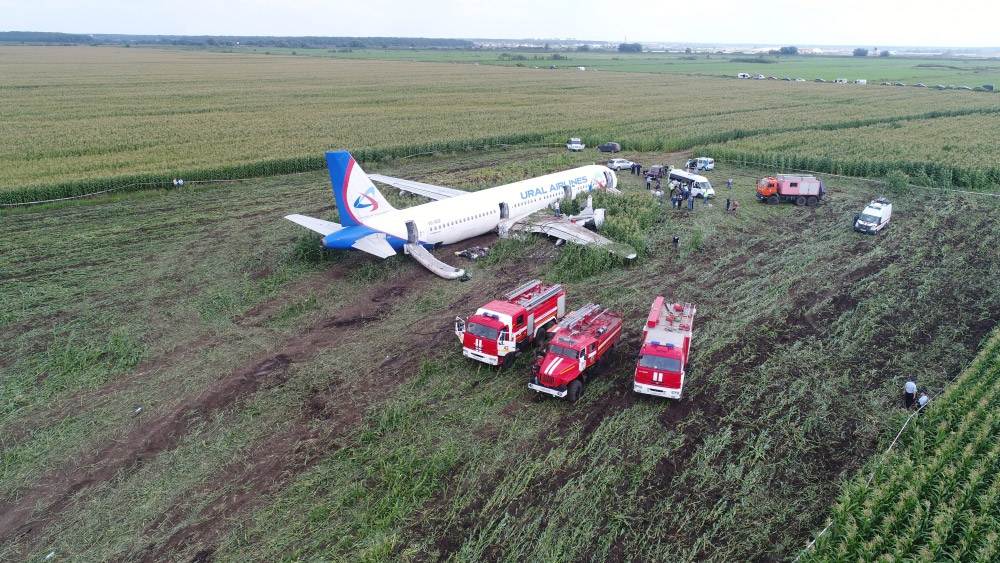
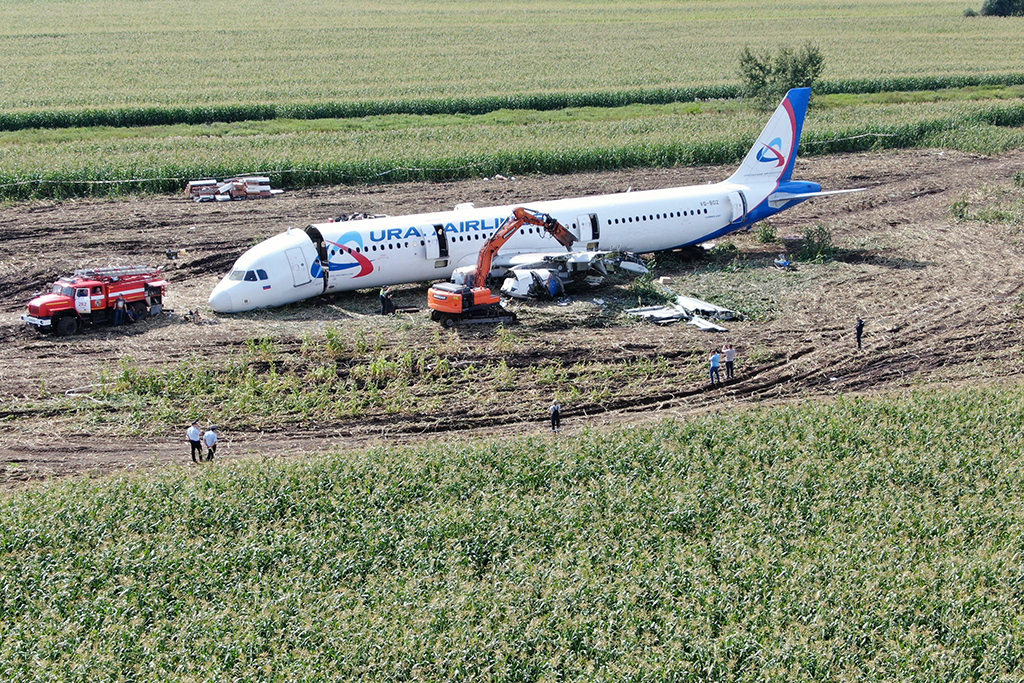
Shortly after takeoff from Moscow-Zukhovski Airport runway 12, while climbing to an altitude of 750 feet in excellent weather conditions, the airplane collided with a flock of birds (sea gulls). Some of them were ingested by both engines that lost power. It was later reported by the crew that the left engine stopped almost immediately while the right engine lost power and run irregularly. Unable to maintain a positive rate of climb, the captain decided to attempt an emergency landing in a cornfield. The airplane belly landed approximately 3,5 km past the runway end and slid for dozen meters before coming to rest with its both engines partially torn off. All 233 occupants were able to evacuate the cabin and it is reported that 23 people were slightly injured.

Crash of a Cessna 510 Citation Mustang in Los Ángeles: 1 killed

Date & Time: Aug 6, 2019 at 1813 LT
Registration:
CC-ANR
Flight Type:
Survivors:
No
Schedule:
Concepción - Los Ángeles
MSN:
510-0455
YOM:
2013
Country:
Crew on board:
1
Crew fatalities:
Pax on board:
0
Pax fatalities:
Other fatalities:
Total fatalities:
1
Captain / Total flying hours:
7440
Captain / Total hours on type:
650.00
Circumstances:
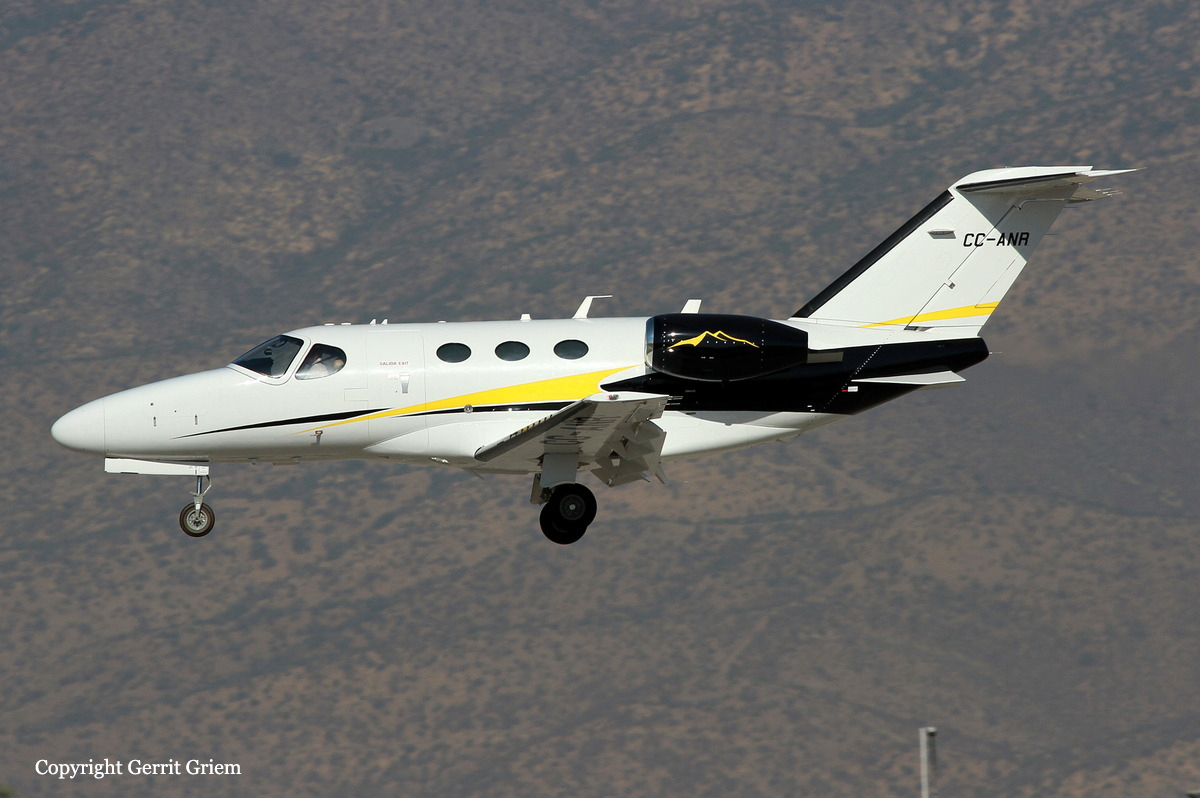
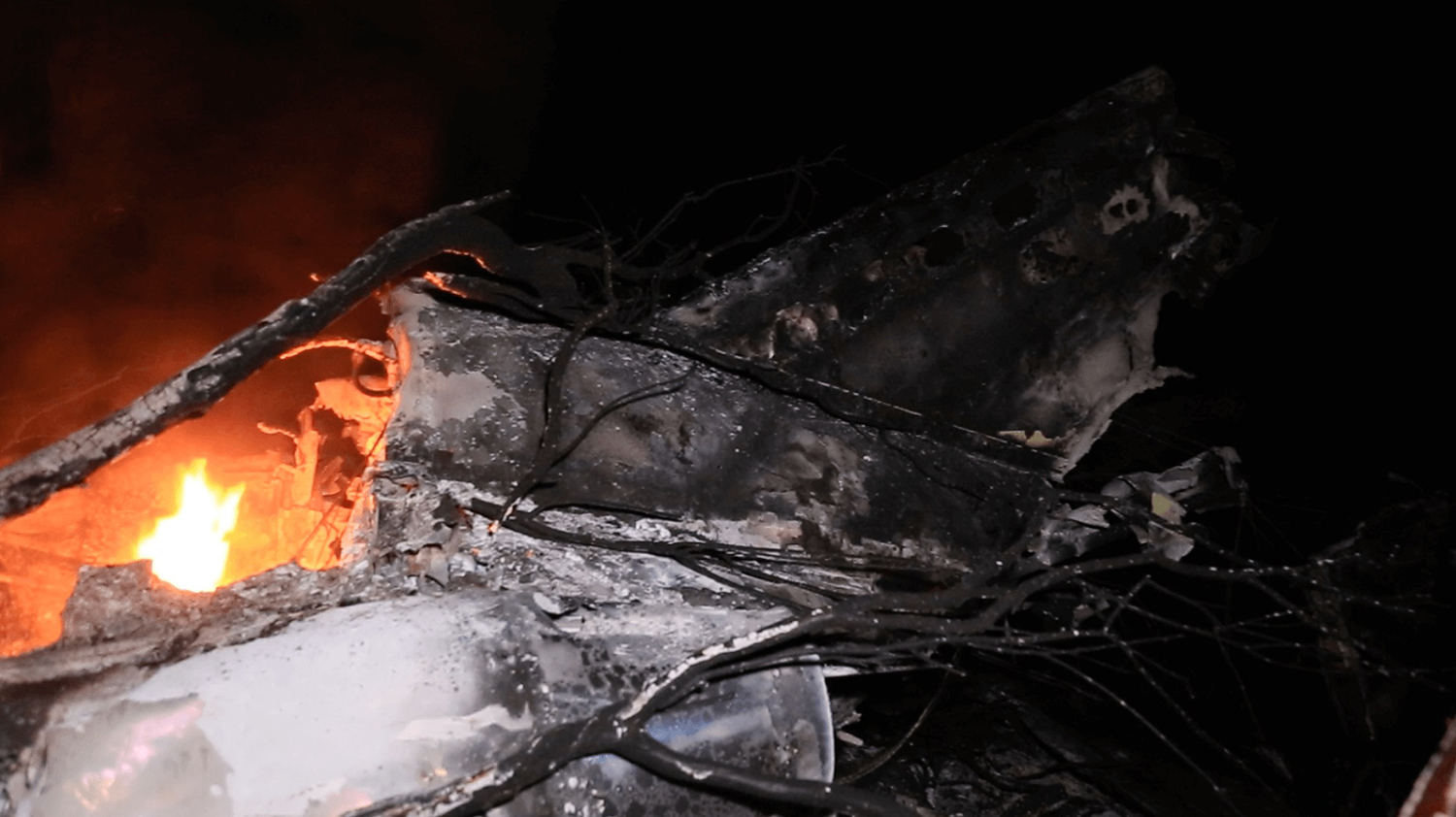
On final approach to Los Ángeles-María Dolores Airport at dusk, the pilot failed to realize his altitude was insufficient. On short final, the airplane impacted trees and crashed in a wooded area, bursting into flames. The wreckage was found 412 metres short of runway 18. The pilot, sole on board, was killed. The accident occurred 19 minutes after sunset.
Probable cause:
Impact with trees on short final while completing a visual approach to runway 18. The approach was unstable, which was considered as a contributing factor.
Final Report:

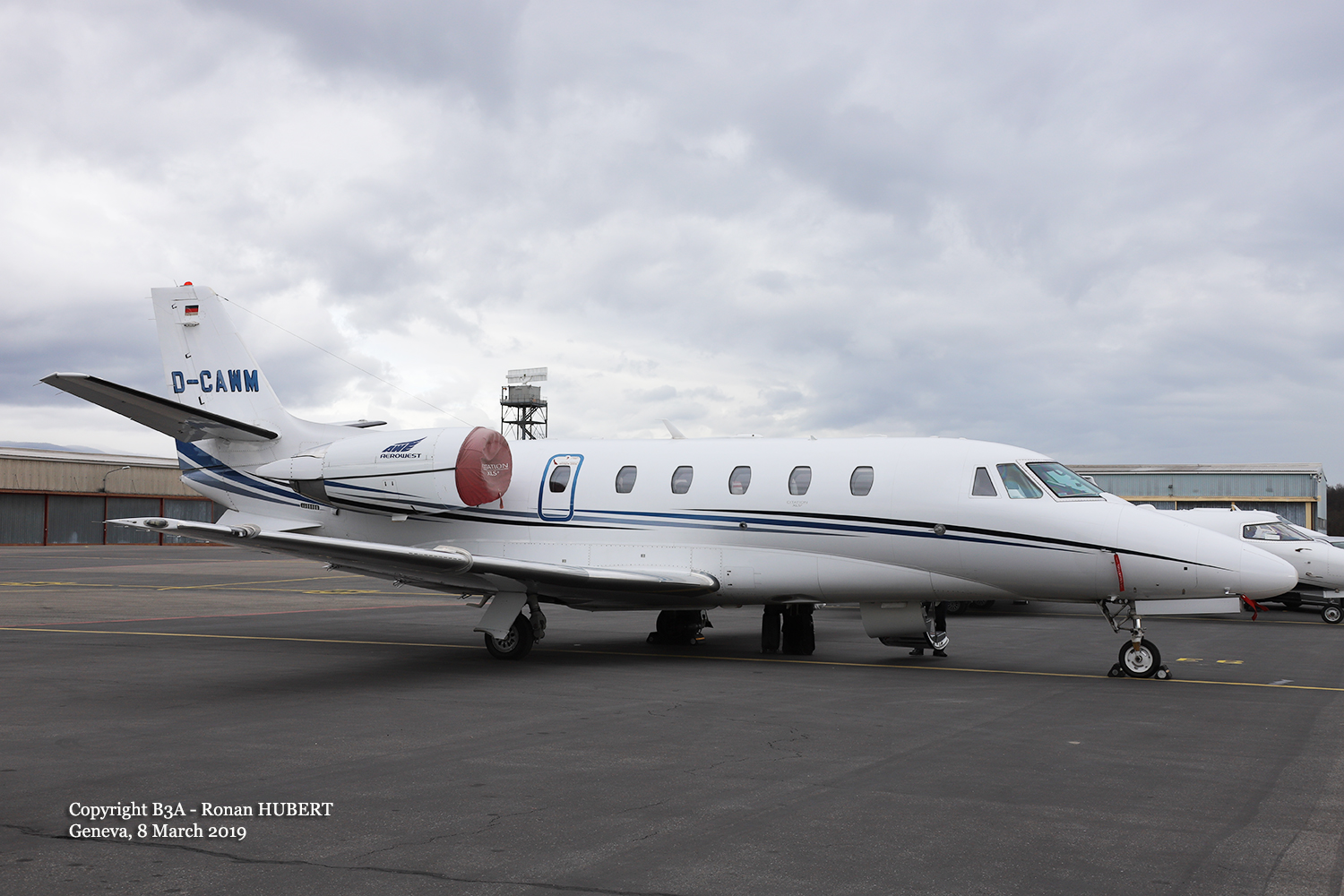
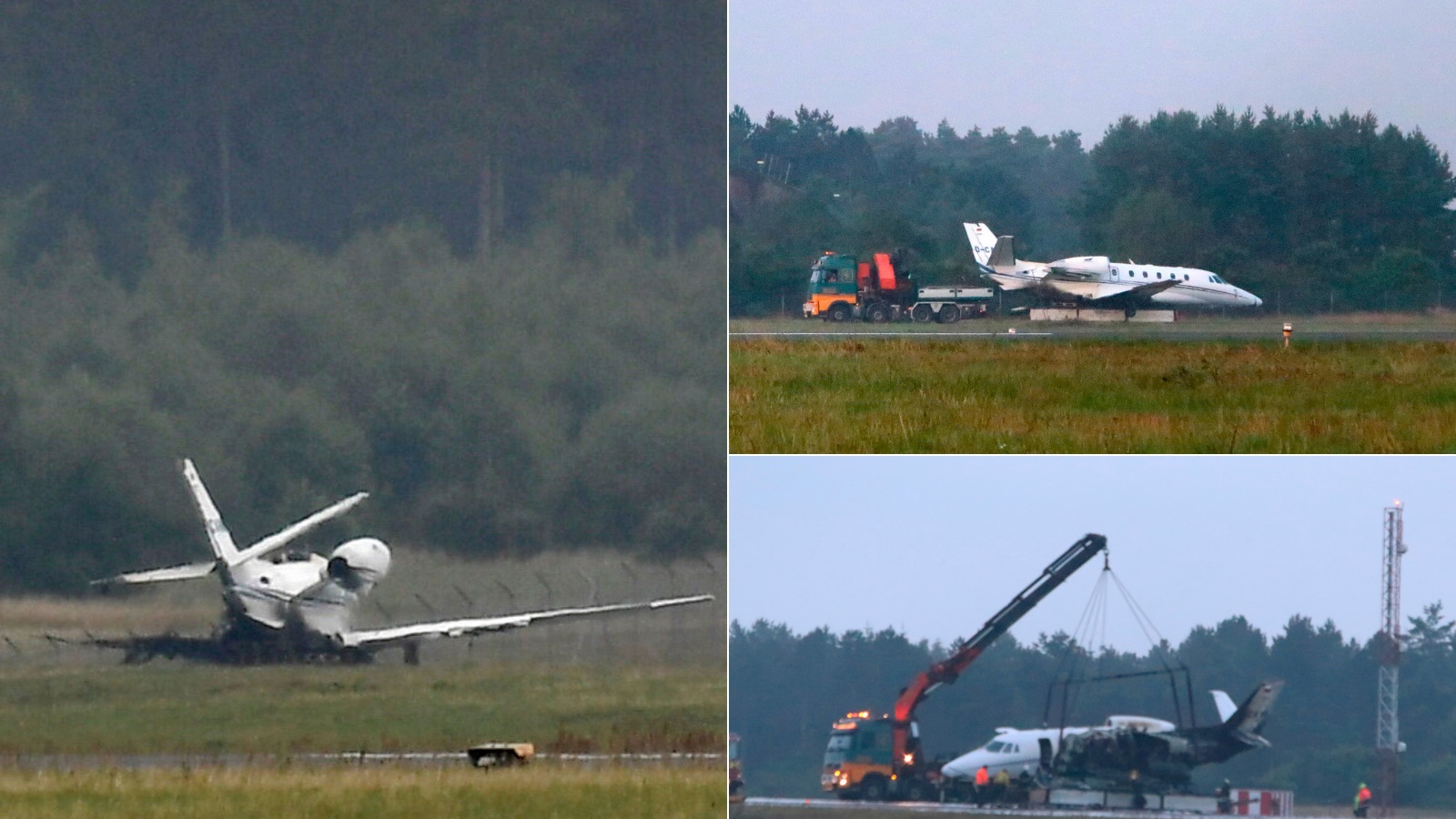
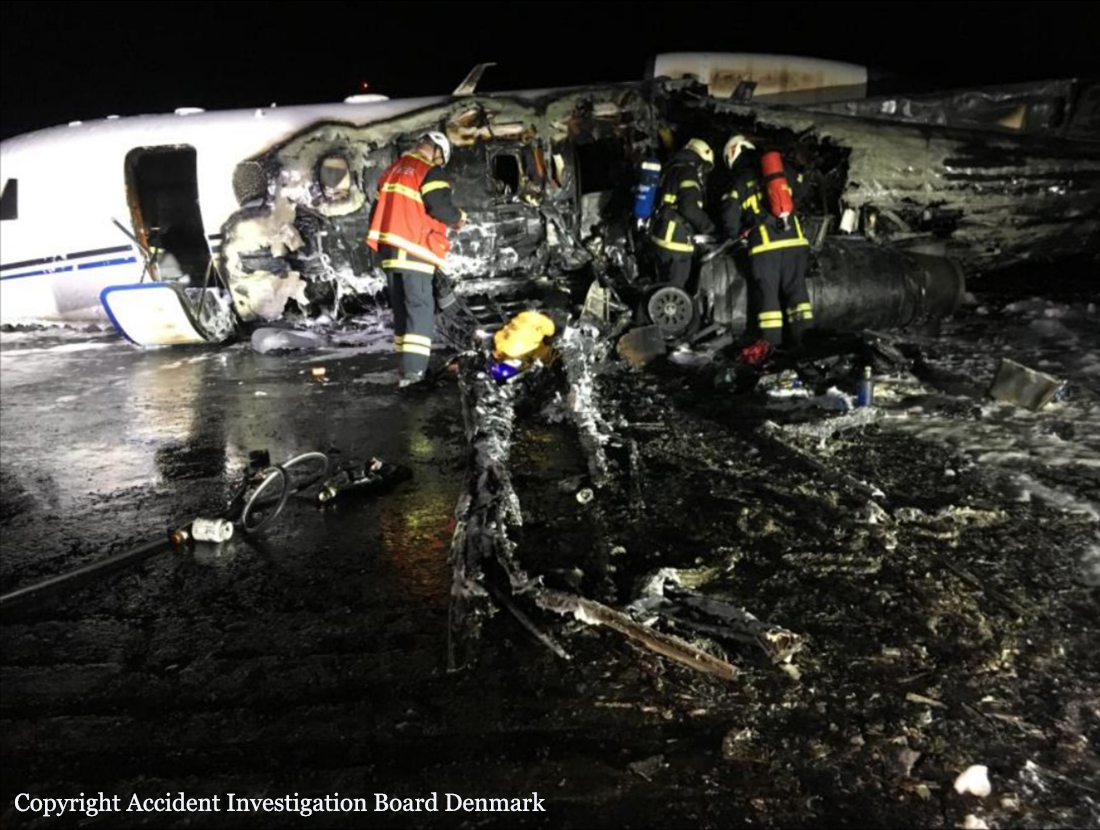
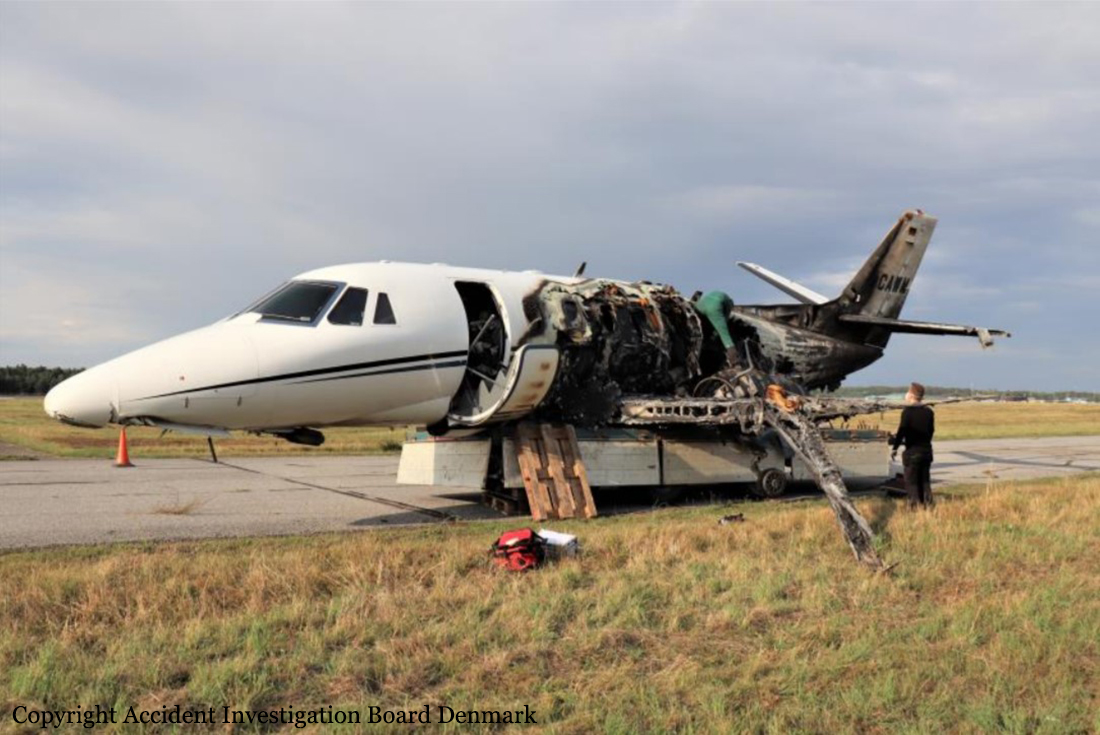
Crash of a Cessna 560XLS+ Citation Excel in Aarhus

Date & Time: Aug 6, 2019 at 0036 LT
Operator:
Registration:
D-CAWM
Survivors:
Yes
Schedule:
Oslo - Aarhus
MSN:
560-6002
YOM:
2008
Country:
Region:
Crew on board:
3
Crew fatalities:
Pax on board:
7
Pax fatalities:
Other fatalities:
Total fatalities:
0
Circumstances:
The accident occurred during an IFR air taxi flight from Oslo (ENGM) to Aarhus (EKAH). The flight was uneventful until the landing phase. The commander was the pilot flying, and the first officer was the pilot monitoring. En route, the flight crew set the Vapp 15° to 123 knots (kt) and the Vref 35° to 116 kt and agreed upon, if foggy at EKAH, to pull the curtains between the cockpit and the passenger cabin in order to avoid blinding from lights in the passenger cabin. During the descent, the flight crew decided not to descend below Flight Level (FL) 170, if the weather did not allow an approach and landing in EKAH. Instead they would continue to a pre-planned destination alternate. The pre-planned and nearest useable destination alternate was Billund (EKBI) at a great circle distance of 60 nautical miles southwest of EKAH. At 22:09 hrs, the first officer established preliminary radio contact with Aarhus Tower (118.525 MegaHertz (MHz)) in order to obtain the latest weather report for EKAH. The air traffic controller at Aarhus Tower communicated the following landing details:
- Expected landing on runway 10R.
- Wind conditions to be 140° 2 kt.
- Meteorological visibility to be 250 meters (m).
- Runway Visual Range (RVR) at landing to be 900 m, 750 m, and 400 m in fog patches.
- Few clouds at 200 feet (ft), few clouds at 6500 ft.
- Temperature 16° Celcius (C) and Dewpoint 15° C.
- QNH 1008 Hectopascal (hPa).
The first officer read back a meteorological visibility of 2500 m to the commander. The flight crew discussed the reported RVR values and agreed that runway 10R would be the preferable landing runway. The commander made an approach briefing for the Instrument Landing System (ILS) for runway 10R including a summary of SOP in case of a missed approach. The first officer pulled the curtain between the cockpit and the passenger cabin. At established radio contact with Aarhus Approach (119.275 MHz) at 22:20 hrs, the air traffic controller instructed the flight crew to descend to altitude 3000 feet on QNH 1008 hPa and to expect radar vectors for an ILS approach to runway 10R. The flight crew performed the approach checklist. The flight crew discussed the weather situation at EKAH with expected shallow fog and fog patches at landing. At 22:28 hrs, the air traffic controller instructed the flight crew to turn right by 10°, descend to 2000 ft on QNH 1008 hPa, and informed that Low Visibility Procedures (LVP) were in operation at EKAH. Due the weather conditions, the air traffic controller radar vectored the aircraft for a long final allowing the flight crew to be properly established before the final approach. The commander called out the instrument presentation of an operative radio altimeter. At 22:31 hrs, the air traffic controller instructed the flight crew to turn left on heading 130° and cleared the flight crew to perform an ILS approach to runway 10R. The commander armed the approach mode of the aircraft Automatic Flight Control System and ordered a flap setting of 15°. When established on the LLZ for runway 10R and shortly before leaving 2000 ft on the GS, the commander through shallow fog obtained and called visual contact with the approach and runway lighting system. At that point, the first officer as well noted the approach and runway lighting system including the position of the green threshold identification lights. The commander ordered a landing gear down selection. The flight crew observed that a fog layer was situated above the middle of the runway. Though visual contact with the approach and runway lighting system, the commander requested altitude call-outs on approach. The commander ordered a flap setting of 35°. The aircraft was established on the ILS (LLZ and GS) for runway 10R in landing configuration. At 22:32 hrs, the first officer reported to Aarhus Approach that the aircraft was established on the ILS for runway 10R. The air traffic controller reported the wind conditions to be 150° 2 kt and cleared the aircraft to land on runway 10R. The flight crew initiated the final checklist. The landing lights were on. The first officer noted two white and two red lights of the Precision Approach Path Indicator (PAPI) to the left of runway 10R. Passing approximately 1500 ft Radio Height (RH), the first officer reported to the commander visual contact with the approach and runway lighting system, fog above the middle of the runway, and that the touchdown zone and the runway end were both visible. The commander confirmed. At approximately 900 ft RH, the commander disengaged the autopilot, and the flight crew completed the final checklist. The aircraft was established on the ILS (LLZ and GS) for runway 10R in landing configuration at a recorded computed airspeed of approximately 128 kt. The first officer called: 500 to minimum (passing approximately 800 ft RH), and the commander called: Runway in sight. The commander confirmed that the intensity of the approach and runway lighting system was okay. The commander informed the first officer that the intention was to touch down at the beginning of the runway. In order to avoid entering fog patches during the landing roll, the commander planned flying one dot below the GS, performing a towed approach, and touching down on the threshold. However, the commander did not communicate this plan of action to the first officer. The aircraft started descending below the GS for runway 10R. The first officer asked the commander whether to cancel potential Enhanced Ground Proximity Warning System (EGPWS) GS warnings. The commander confirmed. At approximately 500 ft RH, the Solid State Flight Data Recorder (SSFDR) recorded cancellation of potential EGPWS GS warnings. The aircraft aural alert warning system announced passing 500 feet RH. The recorded computed airspeed was 125 kt, the recorded vertical speed was approximately 700 ft/minute, and the GS deviation approached one dot below the GS. The commander noted the PAPI indicating the aircraft flying below the GS (one white and three red lights). The first officer called: Approaching minimum. Shortly after, the aircraft aural alert warning system announced: Minimums Minimums. The SSFDR recorded a beginning thrust reduction towards flight idle and a full scale GS deviation (flying below). The commander called: Continue. The commander had visual contact with the approach and runway lighting system. It was the perception of the first officer that the commander had sufficient visual cues to continue the approach and landing. The first officer as pilot monitoring neither made callouts on altitude nor deviation from GS. The commander noticed passing a white crossbar, a second white crossbar and then red lights. To the commander, the red lights indicated the beginning of runway 10R, and the commander initiated the flare. The aircraft collided with the antenna mast system of the LLZ for runway 28L, touched down in the grass RESA for runway 28L, and the nose landing gear collided with a near field antenna (LLZ for runway 28L) and collapsed. The aircraft ended up on runway 10R. Throughout the sequence of events and due to fog, the air traffic controller in the control tower (Aarhus Approach) had neither visual contact with the approach sector, the threshold for runway 10R nor the aircraft on ground, when it came to a full stop. Upon full stop on runway 10R, the first officer with a calm voice reported to Aarhus Approach: Aarhus Tower, Delta Whiskey Mike, we had a crash landing. The air traffic controller did not quite perceive the reporting and was uncertain on the content of the reporting and replied: Say again. The cabin crewmember without instructions from the flight crew initiated the evacuation of the passengers via the cabin entry door. The aircraft caught fire. Aarhus Approach and the Aerodrome Office in cooperation activated the aerodrome firefighting services and the area emergency dispatch centre. Upon completion of the on ground emergency procedure and the evacuation of the aircraft, the flight crew met the cabin crewmember and the passengers at a safe distance in front of the aircraft.
Probable cause:
The following factors were identified:
1. Deviations from SOP in dark night and low visibility combined with the cancellation of a hardware safety barrier compromised flight safety.
2. The commander started flying below the GS.
3. Both pilots accepted and instituted a deactivation of a hardware safety barrier by cancelling potential EGPWS GS alerts for excessive GS deviations.
4. Both pilots accepted and instituted a deviation from SOP by not maintaining the GS upon runway visual references in sight.
5. At low altitude, the first officer made no corrective call-outs on altitude, GS deviation or unstabilized approach.
6. The confusion over and misinterpretation of the CAT 1 approach and runway lighting system resulted in a too early flare and consequently a CFIT.
Final Report:

Crash of a Cessna 208B Grand Caravan in Kilindoni

Date & Time: Aug 6, 2019
Type of aircraft:
Operator:
Registration:
5H-NOW
Flight Phase:
Survivors:
Yes
Schedule:
Kilindoni - Dar es Salaam
MSN:
208B-2209
YOM:
2010
Country:
Region:
Crew on board:
1
Crew fatalities:
Pax on board:
8
Pax fatalities:
Other fatalities:
Total fatalities:
0
Circumstances:
Shortly after takeoff from Kilindoni Airport, the single engine airplane crashed in flames. All nine occupants were able to evacuate the cabin and six of them were injured and transported to local hospital. The aircraft was completely destroyed by fire.
Crash of an Antonov AN-2 in Fakhrabad: 1 killed

Date & Time: Aug 4, 2019 at 1040 LT
Type of aircraft:
Operator:
Registration:
RT-15-305
Survivors:
Yes
Schedule:
Fakhrabad - Fakhrabad
Country:
Region:
Crew on board:
2
Crew fatalities:
Pax on board:
0
Pax fatalities:
Other fatalities:
Total fatalities:
1
Circumstances:
The crew was completing a local skydiving mission in the region of Fakhrabad, about 30 km southwest of Dushanbe. After eight skydivers departed the cabin, the crew was returning to Fakhrabad Airfield when, on final approach, the airplane crashed in unknown circumstances. The copilot was seriously injured and the captain was killed.

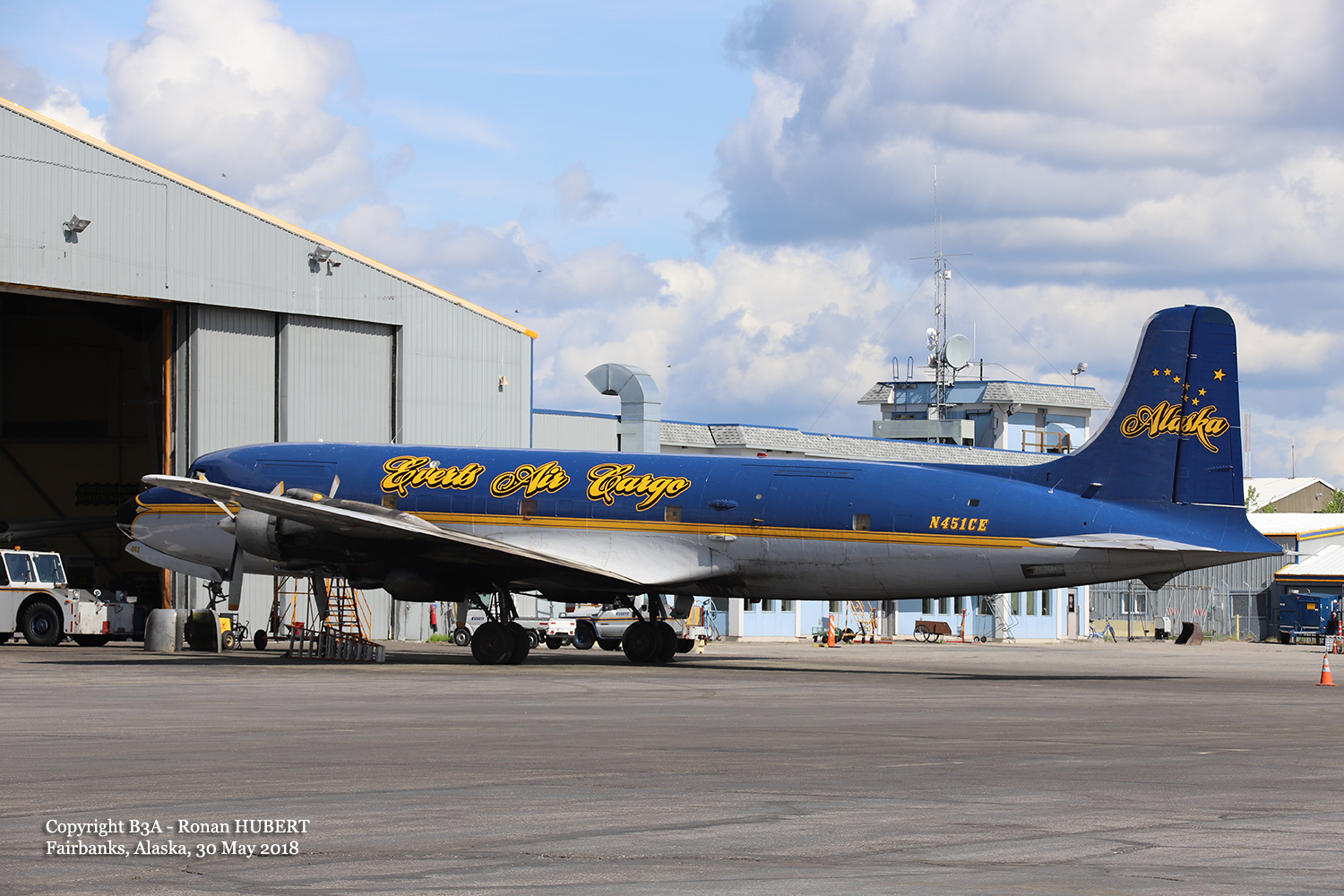
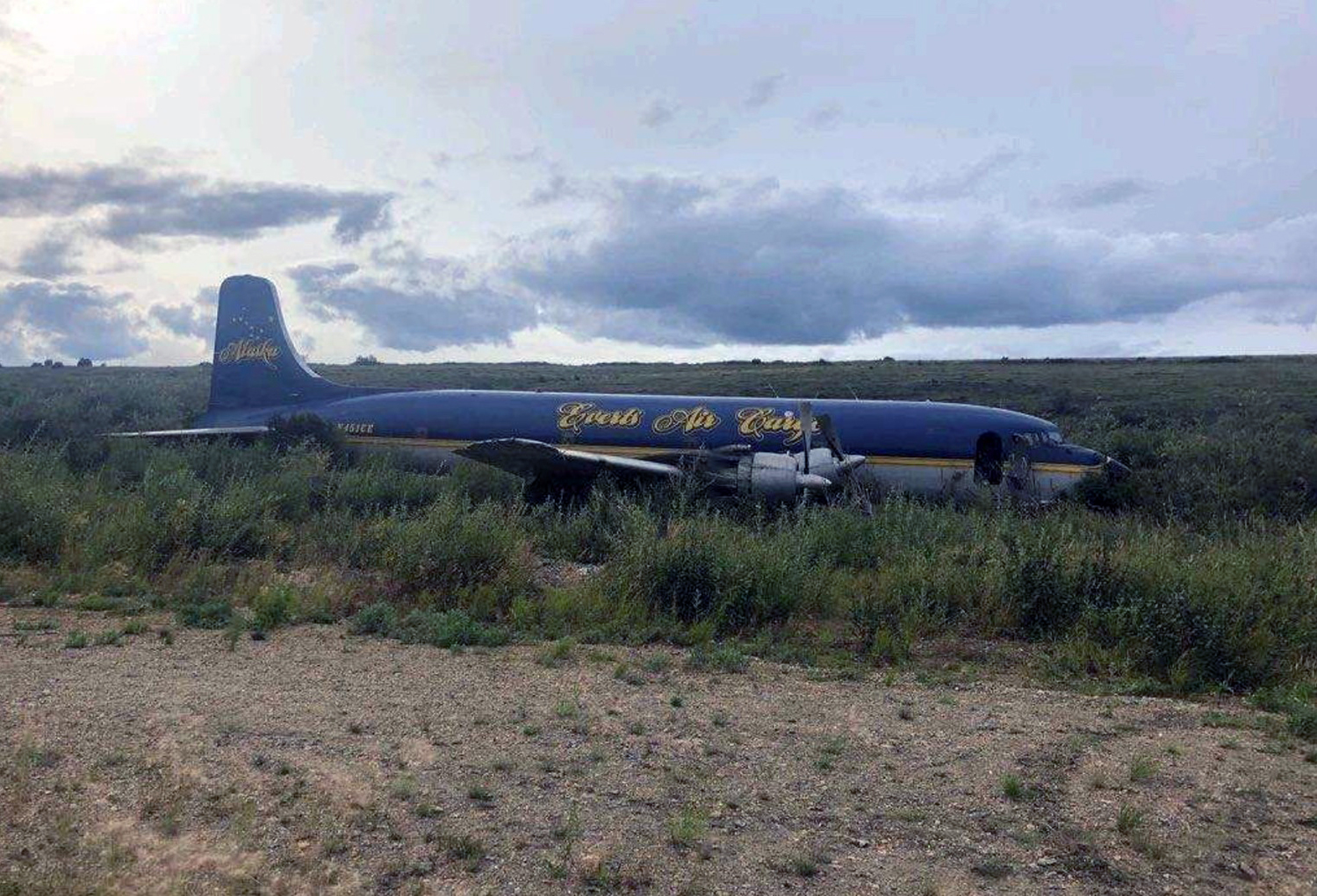
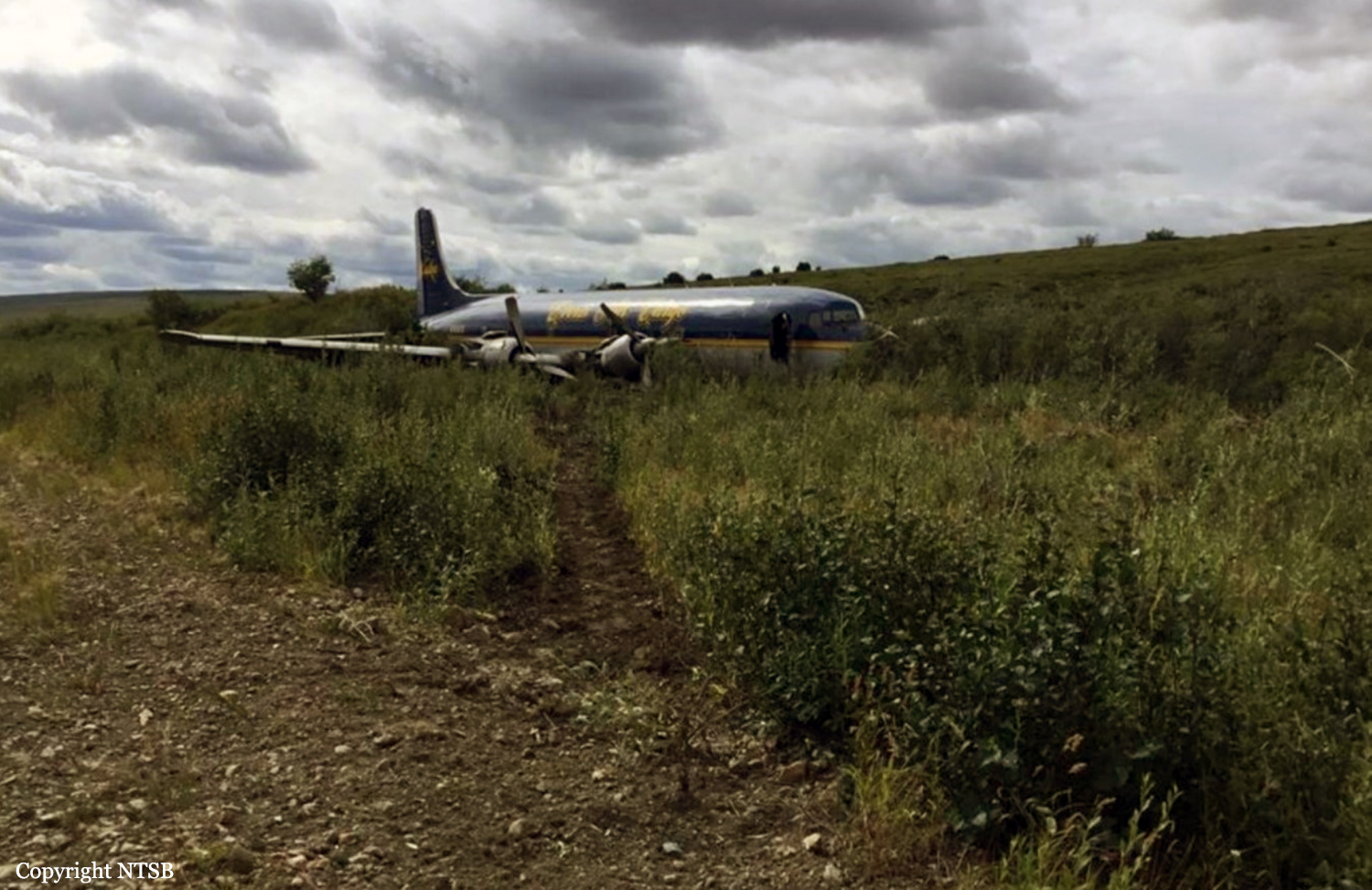
Crash of a Douglas C-118A Liftmaster in Candle

Date & Time: Aug 1, 2019 at 1400 LT
Type of aircraft:
Operator:
Registration:
N451CE
Flight Type:
Survivors:
Yes
Schedule:
Fairbanks – Candle
MSN:
43712/358
YOM:
1953
Location:
Crew on board:
3
Crew fatalities:
Pax on board:
0
Pax fatalities:
Other fatalities:
Total fatalities:
0
Captain / Total flying hours:
9910
Captain / Total hours on type:
147.00
Copilot / Total flying hours:
8316
Copilot / Total hours on type:
69
Aircraft flight hours:
42037
Circumstances:
The flight crew was landing the transport-category airplane at a remote, gravel-covered runway. According to the captain, the terrain on the approach to the runway sloped down toward the approach end, which positioned the airplane close to terrain during the final stages of the approach. A video recorded by a bystander showed that while the airplane was on short final approach, it flew low on the glidepath and dragged its landing gear through vegetation near the approach end of the runway. The video showed that, just before the main landing gear wheels reached the runway threshold, the right main landing wheel impacted a dirt and rock berm. The captain said that to keep the airplane from veering to the right, he placed the No. 1 and No. 2 engine propellers in reverse pitch. The flight engineer applied asymmetric reverse thrust to help correct for the right turning tendency, and the airplane tracked straight for about 2,000 ft. The video then showed that the right main landing gear assembly separated, and the airplane continued straight down the runway before veering to the right, exiting the runway, and spinning about 180°, resulting in substantial damage to the fuselage. On-site examination of the runway revealed several 4-ft piles of rocks and dirt at the runway threshold, which is likely what the right main landing wheel impacted. Given that the airplane landing gear struck vegetation and rocks on the approach to the runway, it is likely that they were below the proper glidepath for the approach. The crew stated there were no preaccident mechanical malfunctions or anomalies that would have precluded normal operation.
Probable cause:
The pilot's failure to maintain an adequate glidepath during the approach, which resulted in the airplane impacting rocks and dirt at the runway threshold, a separation of the right main landing gear, and a loss of directional control.
Final Report:

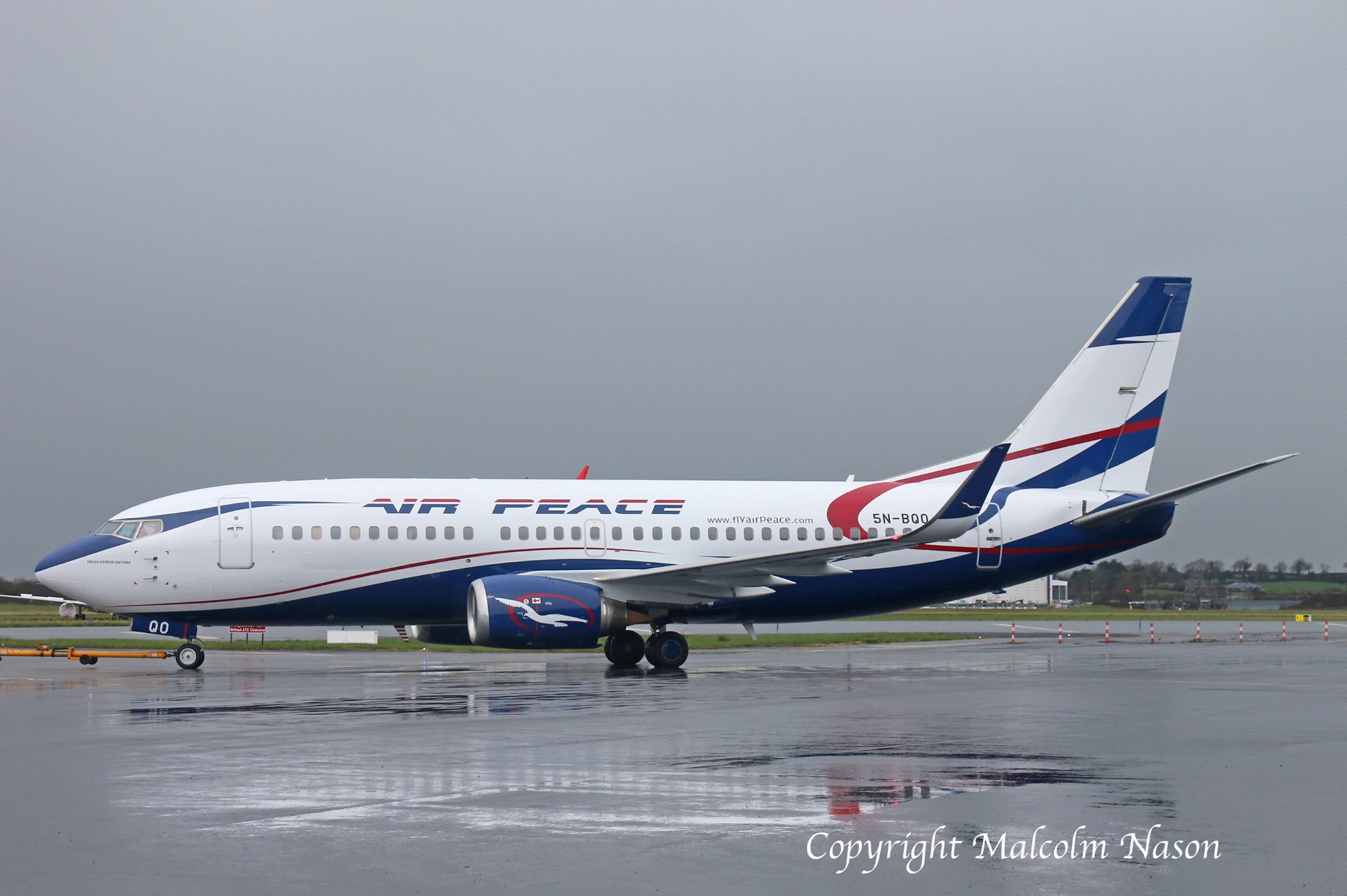
Crash of a Boeing 737-36N in Lagos

Date & Time: Jul 23, 2019 at 1128 LT
Type of aircraft:
Operator:
Registration:
5N-BQO
Survivors:
Yes
Schedule:
Port Harcourt - Lagos
MSN:
28571/3022
YOM:
1998
Flight number:
P47191
Country:
Region:
Crew on board:
6
Crew fatalities:
Pax on board:
133
Pax fatalities:
Other fatalities:
Total fatalities:
0
Aircraft flight hours:
45452
Aircraft flight cycles:
31643
Circumstances:
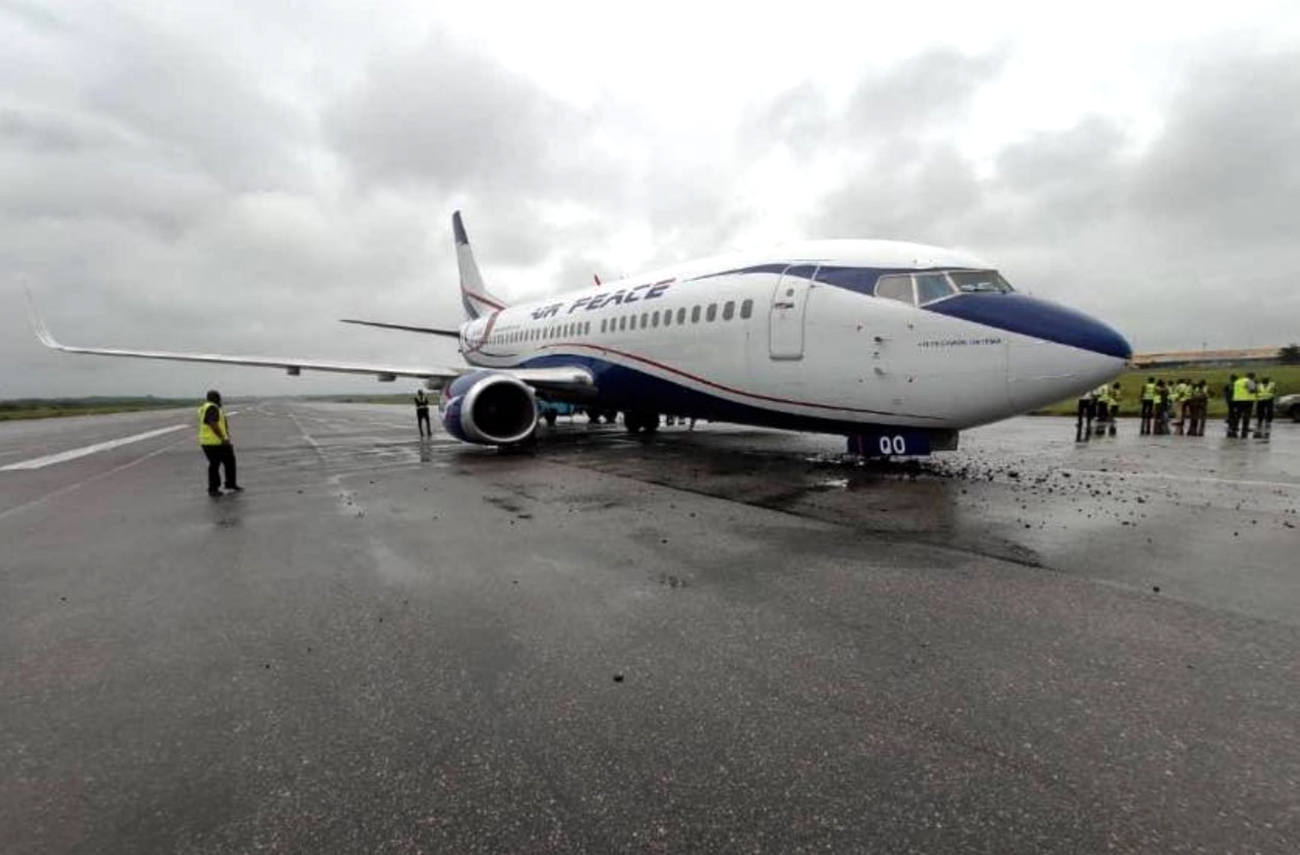
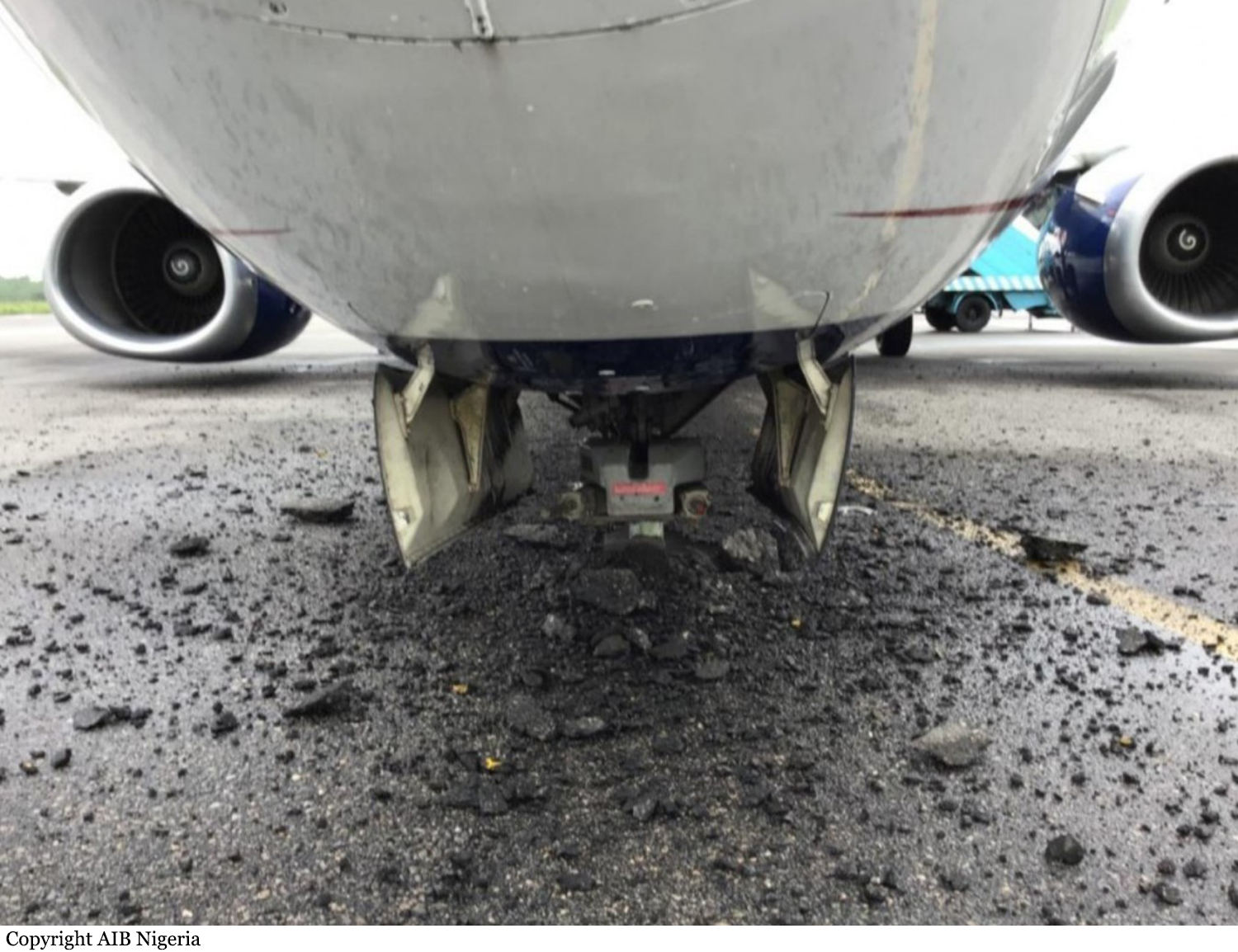
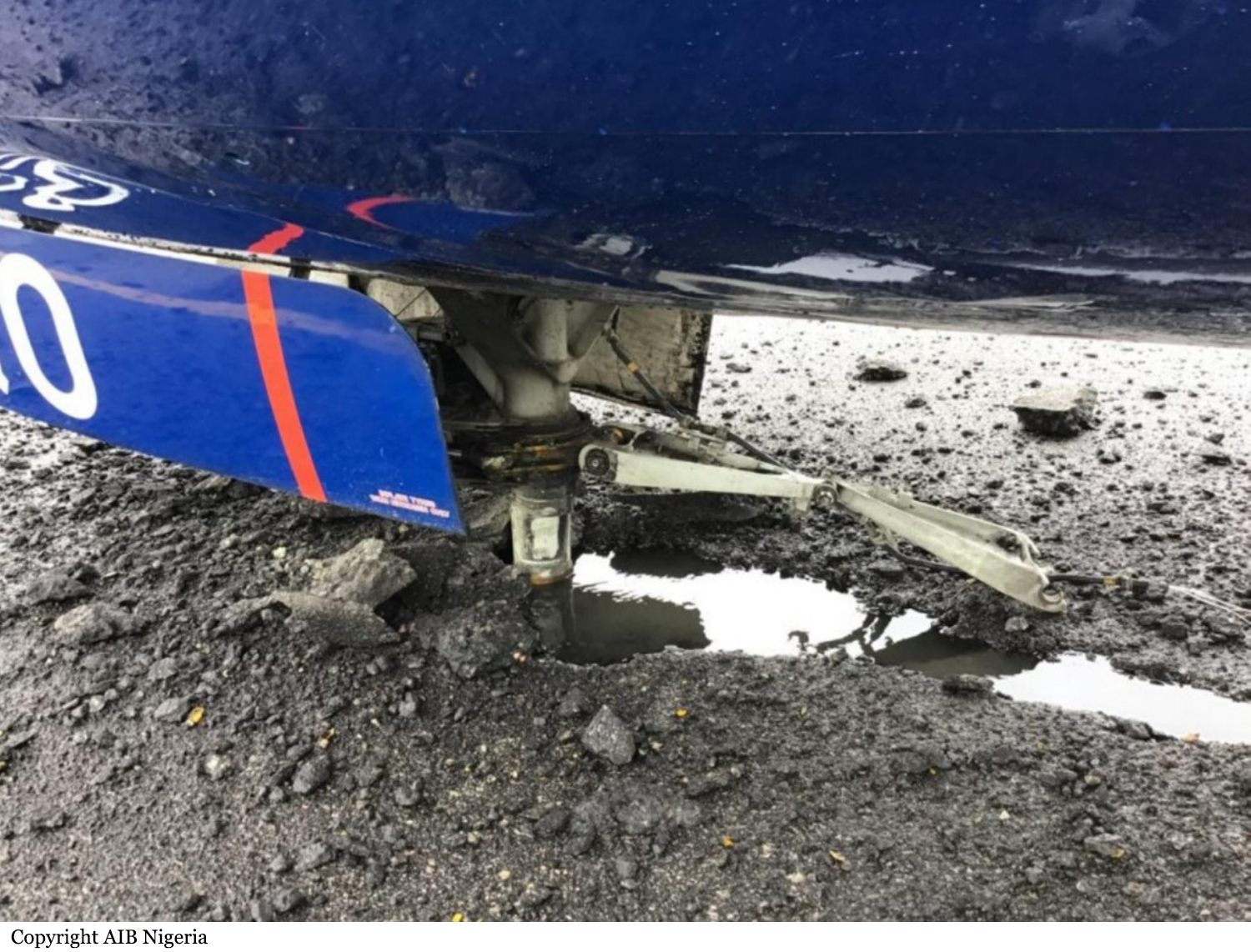
Following an uneventful flight from Port Harcourt, the crew initiated the approach to Lagos-Murtala Muhammed Airport in poor weather conditions with heavy rain falls due to CB's at 1,900 feet. On final, he was cleared to land on runway 18R and informed about a wet runway surface. Both main landing gears touched down normally and when the nose gear landed as well, both wheels apparently separated. The nose gear leg ripped the ground and the airplane rolled for few dozen metres before coming to rest. All 139 occupants evacuated safely and the airplane was later considered as damaged beyond repair.

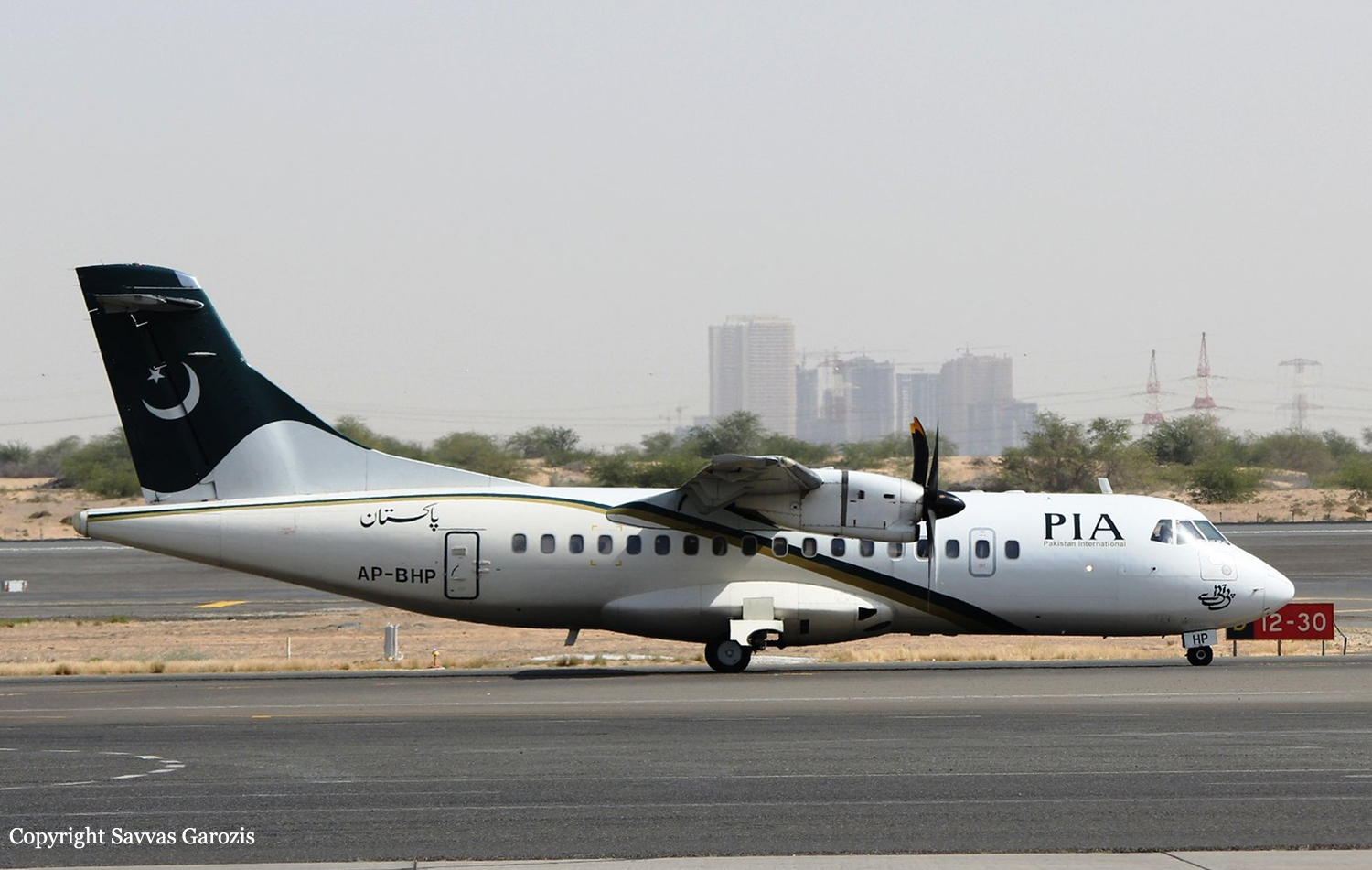
Crash of an ATR42-500 in Gilgit

Date & Time: Jul 20, 2019 at 0815 LT
Type of aircraft:
Operator:
Registration:
AP-BHP
Survivors:
Yes
Schedule:
Islamabad – Gilgit
MSN:
665
YOM:
2007
Flight number:
PK605
Country:
Region:
Crew on board:
4
Crew fatalities:
Pax on board:
49
Pax fatalities:
Other fatalities:
Total fatalities:
0
Captain / Total flying hours:
7951
Captain / Total hours on type:
1210.00
Copilot / Total flying hours:
757
Copilot / Total hours on type:
557
Aircraft flight hours:
22235
Aircraft flight cycles:
22057
Circumstances:
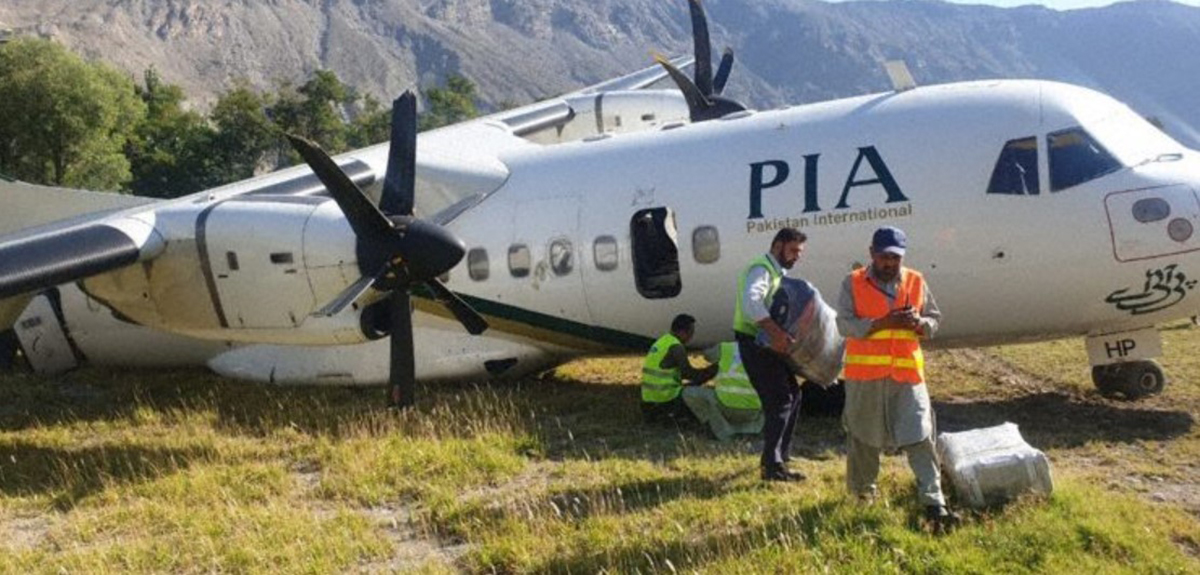
Flight PIA 605 ATR 42-500 aircraft Reg. No. AP-BHP was a scheduled passenger flight from IIAP, Islamabad to Gilgit Airport. There was no abnormality reported in the aircraft prior to the flight. Aircraft loading was within normal limits of 24.7% Centre of Gravity (CG) with Take-off Gross Weight (TOGW) 18,600 kilograms (kg). The aircrew was current and had adequate experience both on the aircraft as well as for flights to Gilgit Airport. Gilgit Airport is located at an altitude of 4,784 ft Above Mean Sea Level (AMSL) with R/W dimensions 5,400 x 100 ft and is deemed fit for operations under PCAA regulations. For this sector, Captain was Pilot Flying (PF) while the First Officer (FO) was Pilot Monitoring (PM). The aircraft took off from IIAP, Islamabad at 02:02 hours (h) and Auto Pilot (AP) was engaged at 260 ft Radio Altimeter (RA) height and the climb was performed under AP using Vertical Speed (VS) mode. This mode is not recommended as per Flight Crew Operations Manual (FCOM). As a consequence the aircraft Indicated Air Speed (IAS) dropped to 130 knots (kt) as opposed to standard climb speed of 160 kt. However, the enroute flight at Flight Level (FL) 165 subsequently remained uneventful. During the cruise, the lowest RA height prior to descent was recorded as 2,636 ft; however, this is in accordance with PIA Standard Operating Procedures (SOPs) for Northern Area flights where minimum separation of 2,000 ft Above Ground Level (AGL) is allowed and considered mandatory due to mountainous terrain. While approaching Gilgit Airport, Captain initiated the descent at 02:36:37 h at the designated point but maintained a higher speed accelerating up to 245 kt as opposed to the standard descent speed of 200 kt as per PIA SOPs. Despite being earlier than planned Estimated Time of Arrival (ETA) for Gilgit Airport, the Captain still elected to maintain higher speeds. The FO pointed out the anomaly of higher-than-normal speed, but Captain did not take any action to bring the aircraft to correct parameters. Moreover, the Enhanced Ground Proximity Warning System (EGPWS) warning also triggered at 02:45:10 h due to higher speeds as the aircraft descended into the valley for Approach. The Approach is mandatorily as per Visual Flight Rules (VFR) whereby the aircrew is to remain visual all the time with the terrain. As Gilgit Airport is located in a valley, Approach for Landing is a visual approach whereby the aircraft executes a base turn to align with the R/W for Landing after Approaching almost perpendicular to the R/W on base leg. This is because a standard Approach is not possible due to the presence of mountains all around. During base leg, at 02:48:54 h Captain announced tail wind picking up, whereas Gilgit Airport was reporting wind as calm. As per data available, the tail wind speed above 1,500 ft AGL was as high as 19 kt; however, it started to reduce progressively with decrease of altitude whereby it reduced to 4-5 kt upon touchdown. Due to high speed maintained by the Captain, the aircraft could not be brought to correct Landing configuration even during base leg. At 02:49:11 h, the Captain asked the FO’s opinion for carrying out a 360° turn to reduce the speed for Landing configuration. However, the FO left the decision to the Captain as, in his opinion, the speed was too high for executing the turn inside the valley. Moreover, as the Captain was more experienced and also his instructor, he trusted the Captain’s judgment and skill to make a successful Landing. Since the FO did not give any opinion on the Captain’s suggestion for a 360° turn, the Captain continued the Approach. As the aircraft continued towards the R/W, Flaps were selected to 15° below 180 kt and 491 ft AGL. Landing Gears (L/G) were lowered immediately after Flaps at 442 ft AGL and speed 174 kt instead of correct speed of 170 kt. Additionally, the Captain made an angling Approach to the R/W instead of executing a correct base turn as per procedure which describes a semi-circular arc. The Flaps came down to 15° position at 257 ft AGL whereas the L/G were in down and locked position only once the aircraft was rolling out on R/W heading at an altitude of approximately 50 ft AGL at a speed of 162-163 kt. Full Flaps could not be lowered and aircraft touched down on the R/W at time 02:47:50 h at approximately 150 kt in Flaps 15° configuration around 2,000 ft down the R/W. After touchdown, the Captain applied brakes, but without using Thrust Reversers. However, aircraft could not be stopped after the Landing Roll and departed from the far end of the R/W coming to a stop at 41 ft from the R/W threshold.
Probable cause:
Primary Causes:
- Involuntary runway excursion due to an intentional high-speed approach and landing by the pilot-in-command (PM).
- Failure to adhere to SOP's.
- Lack of situational awareness and anticipation resulting in inadequate decision making.
Contributing Factors:
- Lack of assertiveness by the pilot-in-command (PM).
- Inadequate application of Crew Resources Management (CRM).
Final Report:

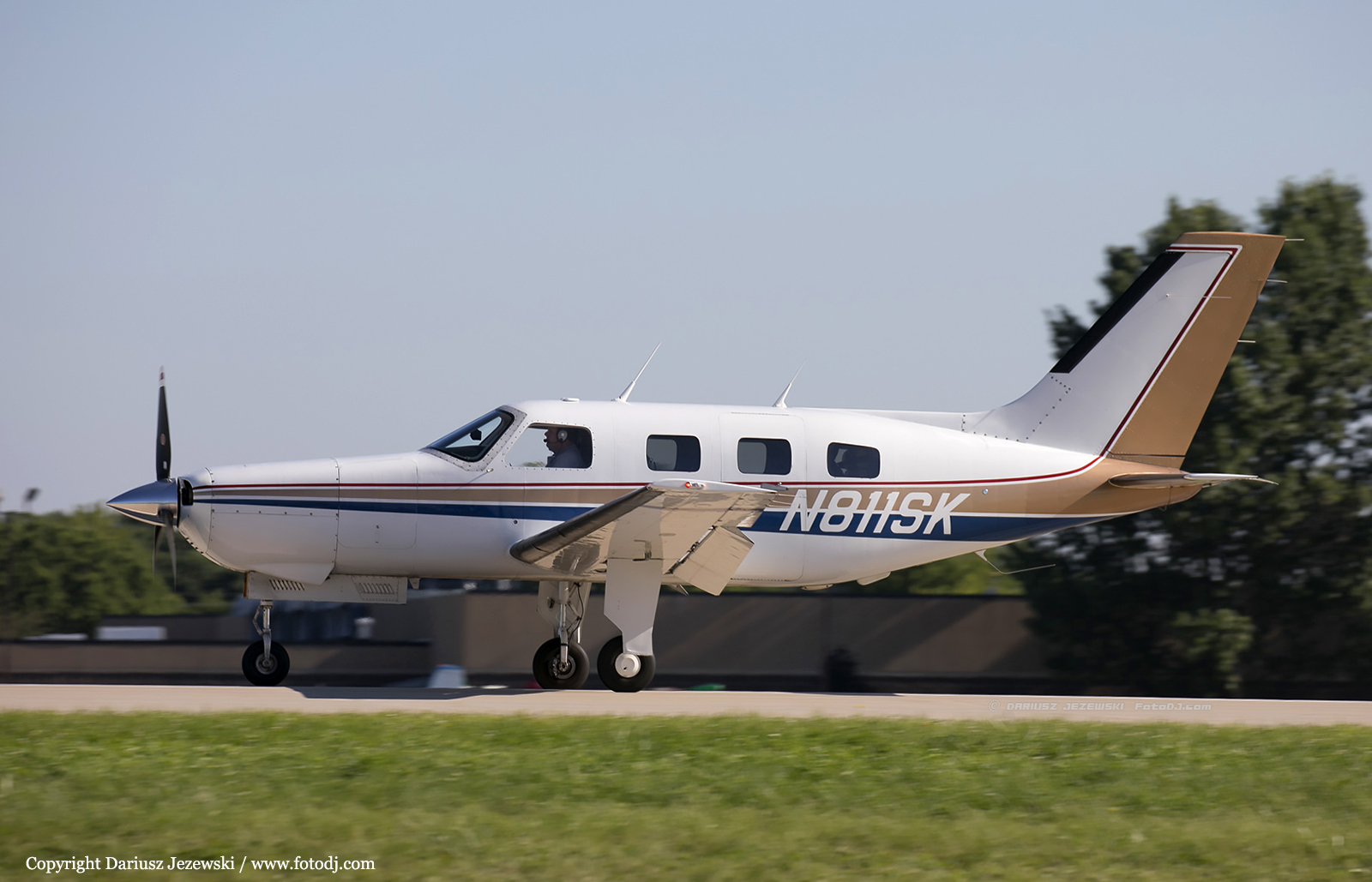
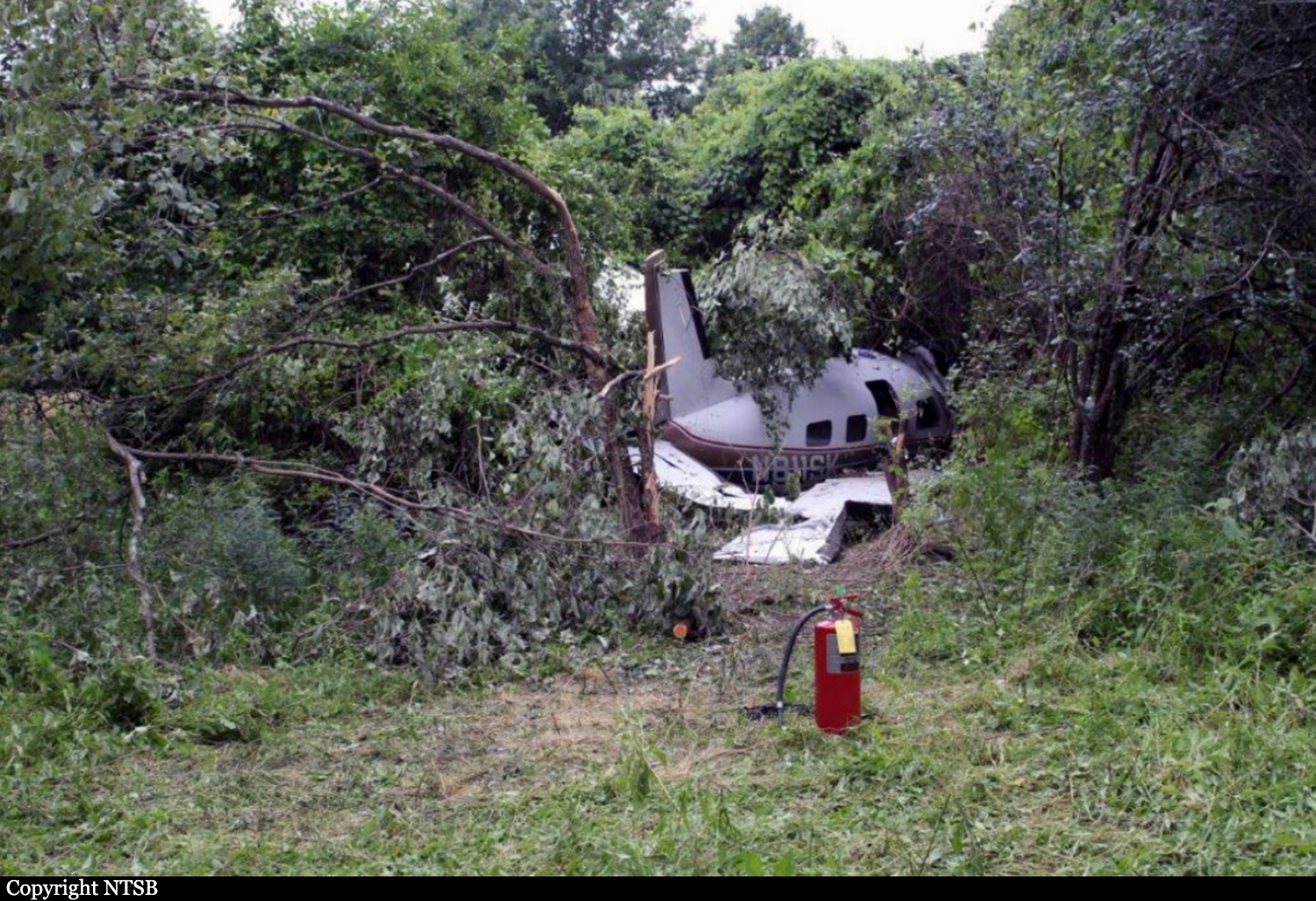
Crash of a Piper PA-46-310P Malibu in Poughkeepsie

Date & Time: Jul 19, 2019 at 1440 LT
Operator:
Registration:
N811SK
Flight Type:
Survivors:
Yes
Schedule:
Akron – Pawtucket
MSN:
46-8508046
YOM:
1985
Crew on board:
1
Crew fatalities:
Pax on board:
3
Pax fatalities:
Other fatalities:
Total fatalities:
0
Captain / Total flying hours:
1300
Captain / Total hours on type:
300.00
Aircraft flight hours:
2641
Circumstances:
The pilot was in cruise flight at an altitude of 19,000 feet mean sea level (msl) for about 1 hour and 10 minutes on an easterly heading when he requested a diversion from his filed destination to an airport along his route of flight to utilize a restroom. Two miles west of his amended destination at 12,000 ft msl, the pilot advised the controller that he had a “fuel emergency light" and wanted to expedite the approach. The controller acknowledged the low fuel warning and cleared the airplane to descend from its assigned altitude. Instead of conducting the descent over the airport, the airplane continued its easterly heading past the airport for nearly 8 miles before reversing course. After reversing course, instead of assuming a direct heading back to the airport, the pilot assumed a parallel reciprocal track and didn’t turn for the airport until the airplane intercepted the extended centerline of the landing runway. The pilot informed the controller that he was unable to make it to the airport and performed a forced landing less than 1 mile from the landing runway. Both fuel tanks were breached during the accident sequence, and detailed postaccident inspections of the airplane’s fuel system revealed no leaks in either the supply or return sides of the system. A computer tomography scan and flow-testing of the engine-driven fuel pump revealed no leaks or evidence of fuel leakage. The engine ran successfully in a test cell. Data recovered from an engine and fuel monitoring system revealed that, during the two flights before the accident flight, the reduction in fuel quantity was consistent with the fuel consumption rates depicted at the respective power settings (climb, cruise, etc). During the accident flight, the reduction in fuel quantity was consistent with the indicated fuel flow throughout the climb; however, the fuel quantity continued to reduce at a rate consistent with a climb power setting even after engine power was reduced, and the fuel flow indicated a rate consistent with a cruise engine power setting. The data also showed that the indicated fuel quantity in the left and right tanks reached 0 gallons within about 10 minutes of each other, and shortly before the accident. Given this information, it is likely that the engine lost power due to an exhaustion of the available fuel supply; however, based on available data and findings of the fuel system and component examinations, the disparate rates of indicated fuel flow and fuel quantity reduction could not be explained.
Probable cause:
A total loss of engine power due to fuel exhaustion as the result of a higher-than-expected fuel quantity reduction. Contributing was the pilot’s continued flight away from his selected precautionary landing site after identification of a fuel emergency, which resulted in inadequate altitude and glide distance available to complete a successful forced landing.
Final Report:

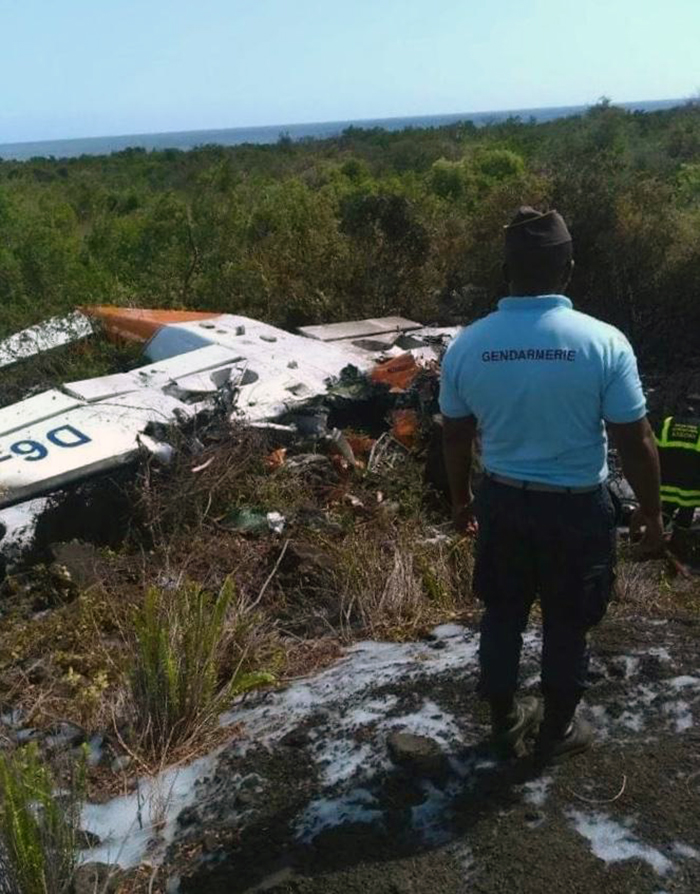
Crash of a Cessna 404 Titan II in Moroni

Date & Time: Jul 18, 2019
Type of aircraft:
Operator:
Registration:
D6-FAT
Flight Phase:
Survivors:
Yes
Schedule:
Moroni - Mohéli
MSN:
404-0216
YOM:
1978
Region:
Crew on board:
1
Crew fatalities:
Pax on board:
10
Pax fatalities:
Other fatalities:
Total fatalities:
0
Circumstances:
Shortly after takeoff from Moroni-Prince Saïd Ibrahim-Hahaya Airport, while climbing, the pilot encountered an unexpected situation and apparently attempted an emergency landing when the twin engine airplane struck the ground past the runway end and came to rest inverted. All 11 occupants were evacuated, a passenger and the pilot were injured. The aircraft was partially destroyed by a post crash fire.