Crash of a Fokker F27 Friendship off Mumbai: 2 killed

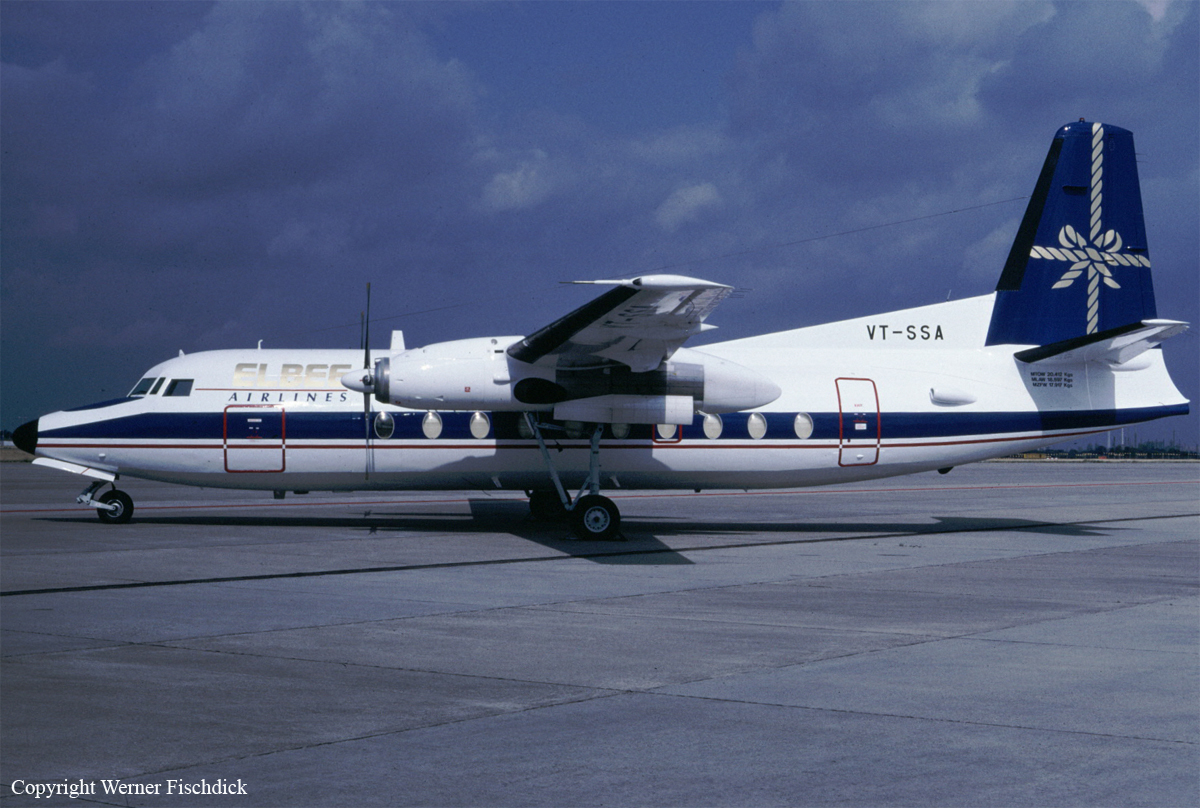
Date & Time: Jul 3, 1997 at 0349 LT
Type of aircraft:
Operator:
Registration:
VT-SSA
Flight Phase:
Flight Type:
Survivors:
No
Schedule:
Mumbai - Bangalore
MSN:
10670
YOM:
1984
Country:
Region:
Crew on board:
2
Crew fatalities:
Pax on board:
0
Pax fatalities:
Other fatalities:
Total fatalities:
2
Captain / Total flying hours:
9322
Captain / Total hours on type:
4585.00
Copilot / Total flying hours:
812
Copilot / Total hours on type:
545
Aircraft flight hours:
10619
Circumstances:
The aircraft took-off from runway 27 of Mumbai Airport at 2216 UTC of 2.7.97 (0346 IST of 3.7.97). After take off the pilot reported to Tower, "VSA is turning left Sir, thousand two hundred, we are entering weather otherwise", to which tower acknowledged and asked VT-SSA to contact Radar. The aircraft contacted Radar and was asked to establish radial 146 and report passing FL080, climb level 170 for which aircraft acknowledged, "Roger, call you establish 146 passing 70 and reaching 170 SA." This was the last transmission from the aircraft. The aircraft crashed into the Arabian Sea off Mumbai coast at about 2219 UTC. The aircraft got destroyed after impact with sea and both occupants on board died in the accident. There was no evidence of fire.
Probable cause:
The pilot possibly lost control when encountered severe weather conditions soon after take off and crashed into the sea. Non-availability of latest weather to the pilot was the contributory factor.
Final Report:

Crash of a Hindustan Aeronautics HAL-748-219-2 in Dubagunta: 22 killed

Date & Time: Dec 24, 1996 at 1540 LT
Operator:
Registration:
H1032
Flight Phase:
Flight Type:
Survivors:
No
Schedule:
Tambaram – Hyderabad
MSN:
528
YOM:
1971
Country:
Region:
Crew on board:
5
Crew fatalities:
Pax on board:
17
Pax fatalities:
Other fatalities:
Total fatalities:
22
Circumstances:
En route from Tambaram to Hyderabad, while in cruising altitude, the captain declared an emergency and informed ATC about the failure of an engine. Shortly later, the aircraft entered an uncontrolled descent and crashed near Dubagunta, killing all 22 occupants.
Probable cause:
It was determined that an engine failed in flight and later detached, causing the separation of a wing. The failure of the high compressor disk was the consequence of fatigue cracks that were not detected during the last maintenance inspection.

Crash of a Let L-410UVP-E9D in Kulu: 9 killed

Date & Time: Jul 11, 1996 at 0855 LT
Type of aircraft:
Operator:
Registration:
VT-ETC
Survivors:
No
Schedule:
New Delhi – Shimla – Kulu
MSN:
94 27 03
YOM:
1994
Country:
Region:
Crew on board:
3
Crew fatalities:
Pax on board:
6
Pax fatalities:
Other fatalities:
Total fatalities:
9
Captain / Total flying hours:
8912
Captain / Total hours on type:
1705.00
Copilot / Total flying hours:
1789
Copilot / Total hours on type:
828
Aircraft flight hours:
3297
Aircraft flight cycles:
2556
Circumstances:
Following an uneventful flight from Shimla, the crew started the descent to Kulu-Bhuntar Airport in poor visibility due to thick fog. On approach, the aircraft struck trees and crashed in a wooded area located on Mt Bandi. The aircraft was destroyed and all nine occupants were killed.
Probable cause:
The was due to a complete lack of safety awareness, proper supervision and operational control in the organisation. The non compliance of safety requirements on part of the operator was a contributing factor.
Final Report:

Crash of a Let L-410UVP-E9D in Kanpur

Date & Time: May 18, 1996 at 0738 LT
Type of aircraft:
Operator:
Registration:
VT-ETB
Survivors:
Yes
Schedule:
New Delhi - Kanpur
MSN:
92 27 02
YOM:
1992
Country:
Region:
Crew on board:
3
Crew fatalities:
Pax on board:
16
Pax fatalities:
Other fatalities:
Total fatalities:
0
Captain / Total flying hours:
8237
Circumstances:
Archana Airways L-410 aircraft VT-ETB was operating a scheduled flight from Delhi to Kanpur civil aerodrome on 18.05.96. The flight from Delhi to Kanpur was uneventful. The aircraft took-off from Delhi with 19 persons including three flight crew. During landing, the aircraft touched down late and could not be stopped within the available runway length and went beyond the runway. The aircraft hit the boundary wall of the airport and came to halt. The aircraft sustained major damages. There was no fire and no injury to persons on board the aircraft.
Probable cause:
The accident was caused due to late touchdown at higher aircraft touchdown speed as a result of which the aircraft overshot the runway and suffered damage by impact with boundary wall.
The following contributing factors were reported:
- Wrong selection of runway,
- Overloading of aircraft,
- Non-deployment of spoilers,
- Lower visibility conditions than the required,
- Disregard of procedures, regulations and instructions on part of the pilot.
Final Report:

Crash of a Boeing 737-2A8 in New Delhi

Date & Time: Dec 2, 1995 at 1253 LT
Type of aircraft:
Operator:
Registration:
VT-ECS
Survivors:
Yes
Schedule:
Bombay – Jaipur – New Delhi
MSN:
20963
YOM:
1974
Flight number:
IC492
Country:
Region:
Crew on board:
6
Crew fatalities:
Pax on board:
102
Pax fatalities:
Other fatalities:
Total fatalities:
0
Captain / Total flying hours:
6088
Circumstances:
Following a wrong approach configuration, the aircraft landed too far down the runway, about 600 metres from the runway end. Unable to stop within the remaining distance, the aircraft overran, struck a concrete wall (45 cm high) and came to rest 450 metres further. All 108 occupants were evacuated safely and the aircraft was damaged beyond repair.
Probable cause:
The accident was the consequence of the combination of the following factors:
- The injudicious and imprudent decision of the Pilot-in-Command to hastily complete the flight in the inadequate time available before the notified closure of Delhi airport for a VVIP flight,
- The dangerously unstabilised approach made by the Pilot-in-Command, primarily due to his failure to decelerate the aircraft in time,
- The failure of the First Officer to call out significant deviations from the stipulated approach parameters,
- The failure of the Pilot-in-Command to carry out a missed approach in spite of his approach being grossly unstabilised,
- The inadvertent omission of the Pilot-in-Command to arm the speed brake before landing,
- Touch-down of the aircraft at excessive speed and too far down the runway,
- Failure of the First Officer and Pilot-in-Command to monitor the automatic deployment of the speed brake, and failure of the Pilot-in-Command to deploy it manually,
- Impact of the aircraft with an 18-inch high cement-concrete cable duct in the kutcha ground beyond the over-run area,
- The pilot disregard of procedures, regulations and instructions.
Final Report:

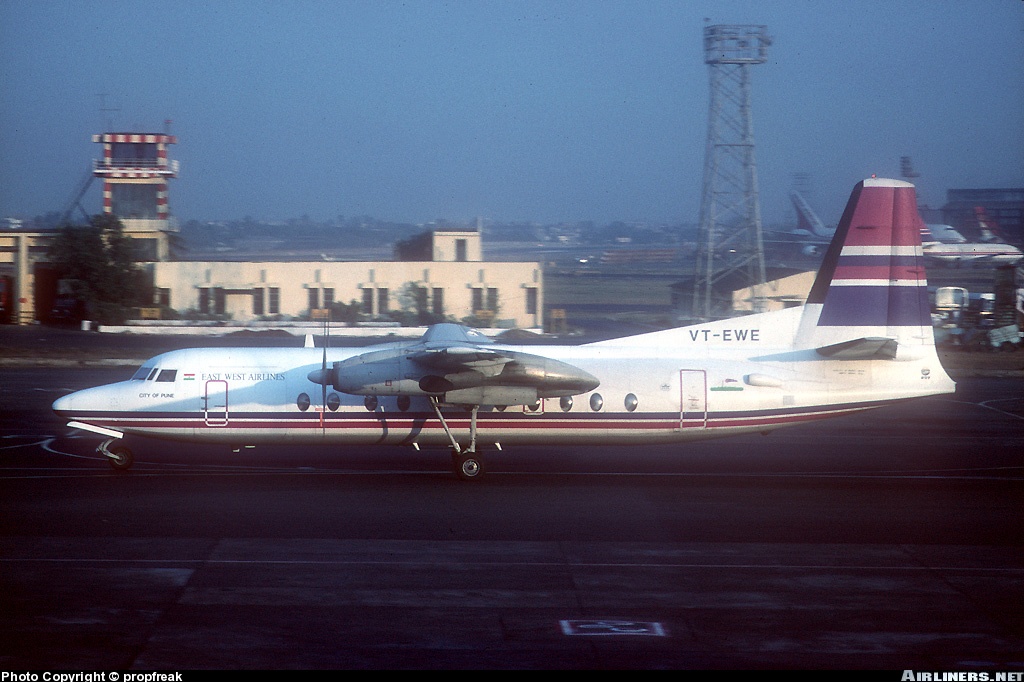
Crash of a Fokker F27 Friendship 500RF in Baroda

Date & Time: Jul 1, 1995 at 0840 LT
Type of aircraft:
Operator:
Registration:
VT-EWE
Flight Type:
Survivors:
Yes
Schedule:
Baroda - Baroda
MSN:
10605
YOM:
1980
Country:
Region:
Crew on board:
3
Crew fatalities:
Pax on board:
0
Pax fatalities:
Other fatalities:
Total fatalities:
0
Captain / Total flying hours:
9360
Circumstances:
The aircraft was engaged in a training flight at Baroda airport. It was under the command of an examiner pilot with the trainee pilot on right hand seat. The first touch and go exercise was uneventful. During the second exercise, immediately on touchdown the left main landing gear failed at its shock strut outer cylinder and the inner cylinder with the main wheel assembly attached to it got liberated. The aircraft continued moving forward with the remaining portion of left shock strut contacting the runway followed by the left engine propellers and fuselage bottom and finally came to rest on the runway left side strip. There was no fire and no injury to persons on board the aircraft.
Probable cause:
The accident occurred during aircraft touchdown due to liberation of the sliding piston along with the wheels of the left main landing gear as a result of failure of the locking arrangement on the piston top end. Non-compliance by the operator of the Service Bulletin issued by the Manufacturer and Mandatory Modifications issued by the DGCA regarding piston-adapter and dowel pin lock fitment, is the Contributory Factor in the accident.
Final Report:

Crash of a Beechcraft 200 Super King Air near Sundar Nagar: 11 killed

Date & Time: Jul 9, 1994 at 0905 LT
Operator:
Registration:
VT-EUJ
Flight Phase:
Flight Type:
Survivors:
No
Site:
Schedule:
Chandigarh – Kulu-Bhuntar
MSN:
BB-1456
YOM:
1993
Country:
Region:
Crew on board:
3
Crew fatalities:
Pax on board:
8
Pax fatalities:
Other fatalities:
Total fatalities:
11
Captain / Total flying hours:
7503
Captain / Total hours on type:
113.00
Copilot / Total flying hours:
6412
Copilot / Total hours on type:
46
Aircraft flight hours:
153
Aircraft flight cycles:
186
Circumstances:
The twin engine aircraft departed Chandigarh Airport at 0850LT on a flight to Kulu-Bhuntar, carrying eight passengers and three crew members, among them Surendra Nath, Governor of Punjab and Himachal Pradesh along with his family members. While in cruising altitude, the crew encountered limited visibility due to cumulus when the aircraft struck trees and rocks and crashed on the slope of a mountain located in the Kamrunag Mountain Range, about 18,5 km southeast of Sundar Nagar, some 50 km south of Kulu-Bhuntar Airport. The aircraft was destroyed and all 11 occupants were killed.
Probable cause:
The accident was caused due to serious errors on the part of the flight crew by not strictly adhering to the VFR conditions for flight to Bhuntar Airfield. As a result, the aircraft after encountering cumulus clouds enroute, deviated from the pre-determined route and collided with the hilltop covered with clouds.
The contributed factors to the accident were:
- Existence of bad weather enroute with cumulus clouds in layers covering the hill tops;
- Pilots not conversant with the topography of the mountains in the region;
- Failure on the part of the flight crew not to refer and follow the maps of the region;
- Mental pressure on the pilot-in-command to complete the flight in time with a view to meet the subsequent flight commitments;
- Failure on the part of the copilot to bring out flight deviations to the notice of the commander,
- Disregard of procedures, regulations and instructions on part of the pilot,
- Operational decision.
Final Report:

Crash of a Boeing 737-2R4C in New Delhi: 5 killed

Date & Time: Mar 8, 1994 at 1454 LT
Type of aircraft:
Operator:
Registration:
VT-SIA
Flight Phase:
Flight Type:
Survivors:
No
Schedule:
New Delhi - New Delhi
MSN:
21763
YOM:
1979
Country:
Region:
Crew on board:
4
Crew fatalities:
Pax on board:
0
Pax fatalities:
Other fatalities:
Total fatalities:
5
Captain / Total flying hours:
7263
Captain / Total hours on type:
2821.00
Copilot / Total flying hours:
556
Copilot / Total hours on type:
166
Aircraft flight hours:
25947
Aircraft flight cycles:
2861
Circumstances:
The aircraft was engaged in a local training flight at New Delhi-Indira Gandhi Airport, carrying one instructor and three trainee pilots. Five circuits and landings were completed uneventfully and during the sixth touch-and-go exercice, after take off from runway 28, the aircraft took a left turn and crashed on the international apron. The aircraft collided with an Aeroflot Ilyushin II-86 registered RA-86119 that was parked on the apron, bay n°45. Both aircraft were destroyed by fire. All four crew members on board the Boeing 737 were killed as well as four people on board the II-86 and one on the ground.
Probable cause:
Loss of control after rotation due to application of wrong rudder by trainee pilot during engine failure exercice. The instructor did not guard/block the rudder control and give clear commands as instructor so as to obviate the application of wrong rudder control by the trainee pilot.
Final Report:

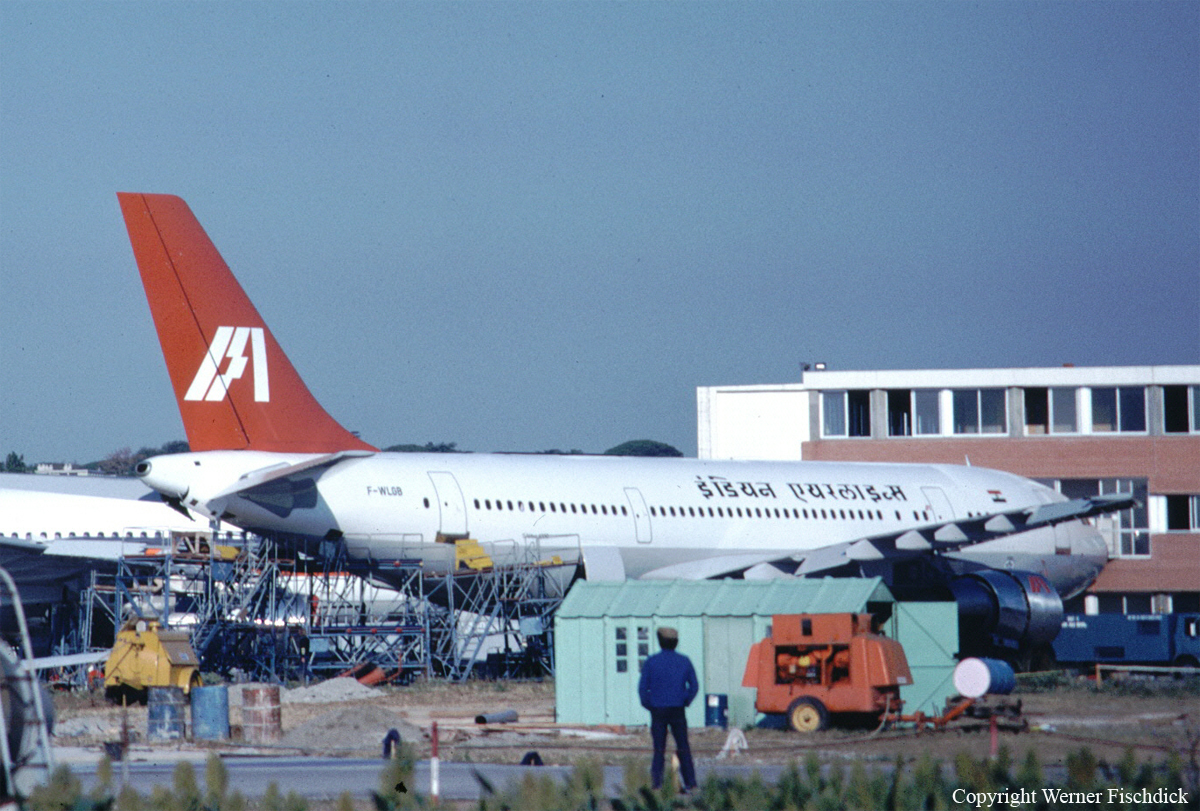
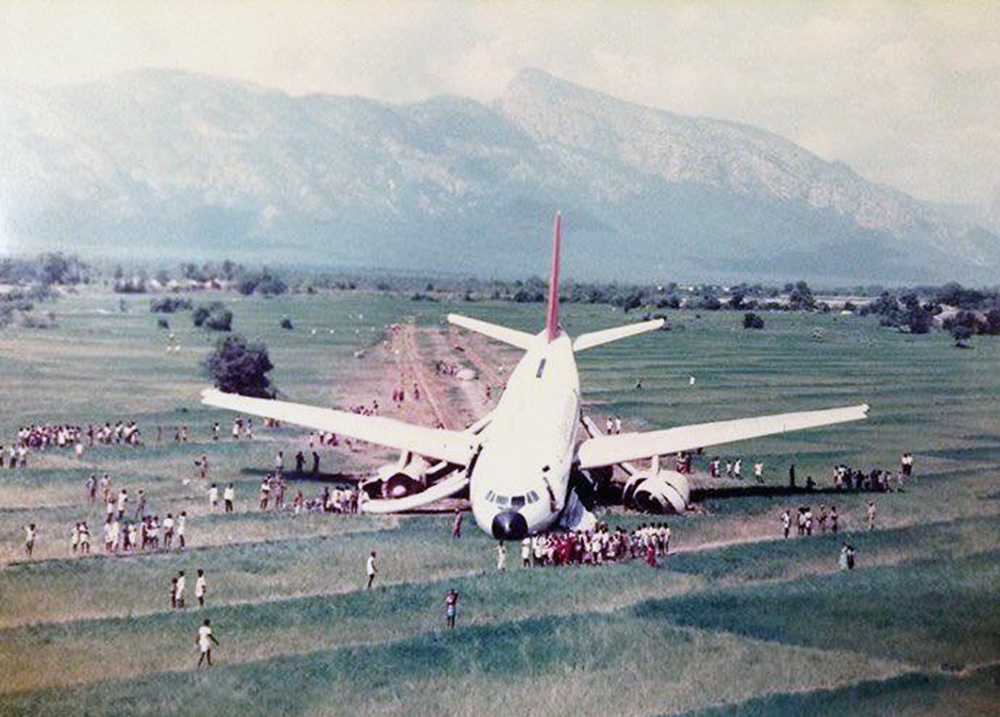
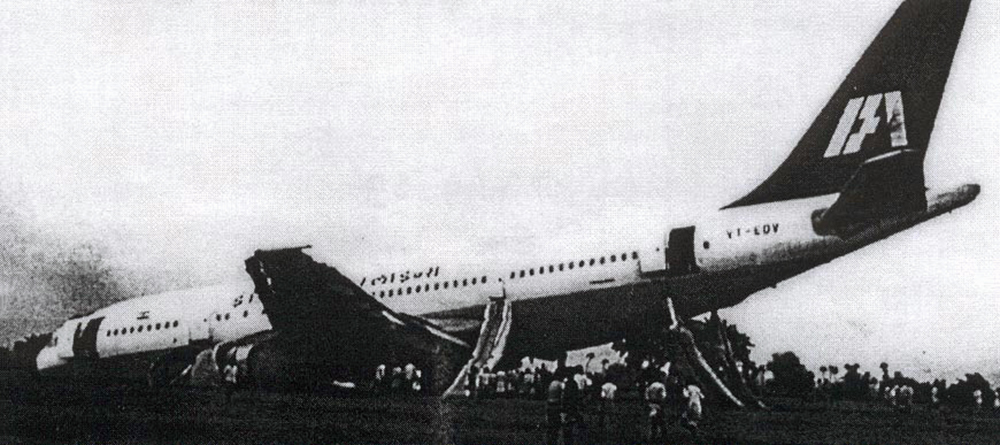
Crash of an Airbus A300B2-101 near Tirupati

Date & Time: Nov 15, 1993 at 0925 LT
Type of aircraft:
Operator:
Registration:
VT-EDV
Flight Phase:
Survivors:
Yes
Schedule:
Madras - Hyderabad
MSN:
034
YOM:
1976
Flight number:
IC440
Country:
Region:
Crew on board:
12
Crew fatalities:
Pax on board:
250
Pax fatalities:
Other fatalities:
Total fatalities:
0
Captain / Total flying hours:
17344
Circumstances:
Indian Airlines Airbus A-300 aircraft VT-EDV was operating scheduled flight IC-440 (Madras - Hyderabad sector) on 15.11.1993. There were a total of 262 persons were on board the aircraft including 247+3 passengers and 12 crew members. The aircraft could not land at Hyderabad due to low visibility and carried out a missed approach. After the missed approach, the aircraft reported "Flap Problem" and was holding overhead at Hyderabad during which the flight crew enquired visibility at nearby Air Force airfields which was also low. The aircraft then diverted to Madras. Due to flaps problem, the crew had to maintain low speed and low altitude as a result of which it experienced fuel shortage and sought permission from Madras control for landing at Tirupati. However, the aircraft could not reach even Tirupati airport and executed forced landing in an open paddy field about 14 nautical miles from Tirupati airport. The aircraft dragged on the soft paddy field before coming to final stop. There was no fire. Passenger evacuation was carried out by means of escape slides. All the persons on board escaped unhurt except four who received minor injuries.
Probable cause:
The probable cause of accident has been attributed to:
- The ill-conceived decision of the aircraft's Commander to divert to Madras, without ensuring that adequate fuel was available for reaching there, when he was faced with a flap-jam and poor
visibility at Hyderabad.
- The failure of the aircraft's Commander and his Flight Crew to monitor fuel consumption correctly, and the failure of the Commander to revise his decision accordingly, until it became impossible to reach any airfield.
- A forced landing due to the eventual shortage of fuel.
Final Report:

Crash of a Cessna 208 Caravan I off Port Blair: 1 killed

Date & Time: Sep 6, 1993 at 1132 LT
Type of aircraft:
Operator:
Registration:
VT-AAN
Survivors:
Yes
Schedule:
Port Blair - Dugong Creek - Hut Bay - Port Blair
MSN:
208-0221
YOM:
1992
Country:
Region:
Crew on board:
1
Crew fatalities:
Pax on board:
3
Pax fatalities:
Other fatalities:
Total fatalities:
1
Captain / Total flying hours:
6300
Circumstances:
Cessna 208 Caravan aircraft VT-AAN operated by Andaman and Nicobar Administration was engaged in a flight from Port Blair - Dugong Creek - Hut Bay - Port Blair. There were four persons on board the aircraft including pilot-in-command. The flight from Dugong Creek to Hut Bay was uneventful. The aircraft took-off from Hut Bay for Port Blair where it was intended to land on sea
adjacent to Viper Island. Soon after touchdown on seawater, the aircraft flipped over its nose and sank thereafter. Three persons including the pilot evacuated the aircraft. However, one person died due to drowning, as he remained strapped in his seat. The aircraft sustained substantial damage. There was no fire.
Probable cause:
The pilot failed to ensure that the landing gears are fully retracted before landing on water thereby causing the aircraft to flip on to its back as a result of abnormally high hydrodynamic drag generated on landing with landing gears remaining extended. Non-availability of the revised pilot's checklist, appropriate to the aircraft configuration and the practice adopted during conversion training of the pilot were the contributory factors.
Final Report: